MarketingWeb Applications
ShopTingle
ShopTingle is a Delhi-based coupon discovery platform that helps users find active discount codes, cashback offers, and deals without the clutter.
A coupon discovery site built for quick browsing
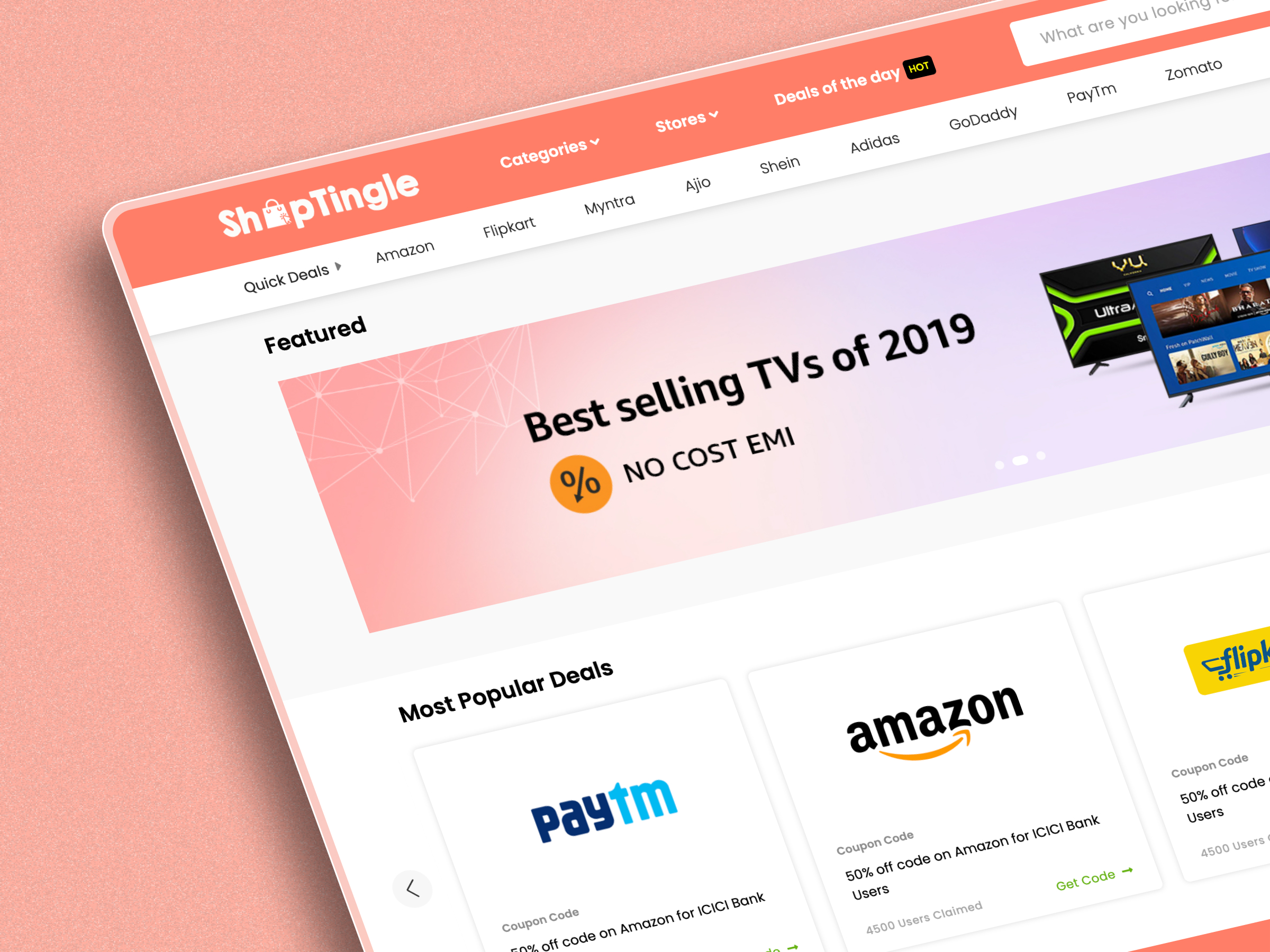
ShopTingle is a Delhi-based coupon and promo code discovery platform — a search and aggregation website where users can find active discount codes, cashback offers, and deals across Indian e-commerce brands. The client had a clear concept and a tight timeline: they needed the website live quickly, without sacrificing on quality or performance.
We delivered the complete website in 15 days for ₹45,000. A fast, mobile-first coupon search platform built in Next.js — purpose-built for SEO, structured for affiliate monetisation, and designed to get users to the right deal with minimal friction.

What the project needed to do
The Indian coupon website market is well-established — GrabOn, CouponDunia, and CouponzGuru have been around for years. Breaking in requires either a niche focus, better UX, or both. ShopTingle's approach was to do the basics exceptionally well: clean search, well-organised deal categories, fast page loads, and a mobile experience that didn't feel like a desktop site crammed onto a phone.
The client also needed the site fast. They had a launch date in mind, partnerships lined up, and couldn't wait months for a build to complete. The brief was efficient: deliver a fully functional, well-built coupon search website in two weeks without cutting corners on structure or SEO.

How we approached it
We planned, designed, and built ShopTingle on Next.js with a Node.js backend — the right choice for a coupon platform where SEO performance and page speed are clearly tied to revenue. Server-side rendering means deal pages and category pages are indexable and fast, even on slower mobile connections.
Coupon Search and Filtering
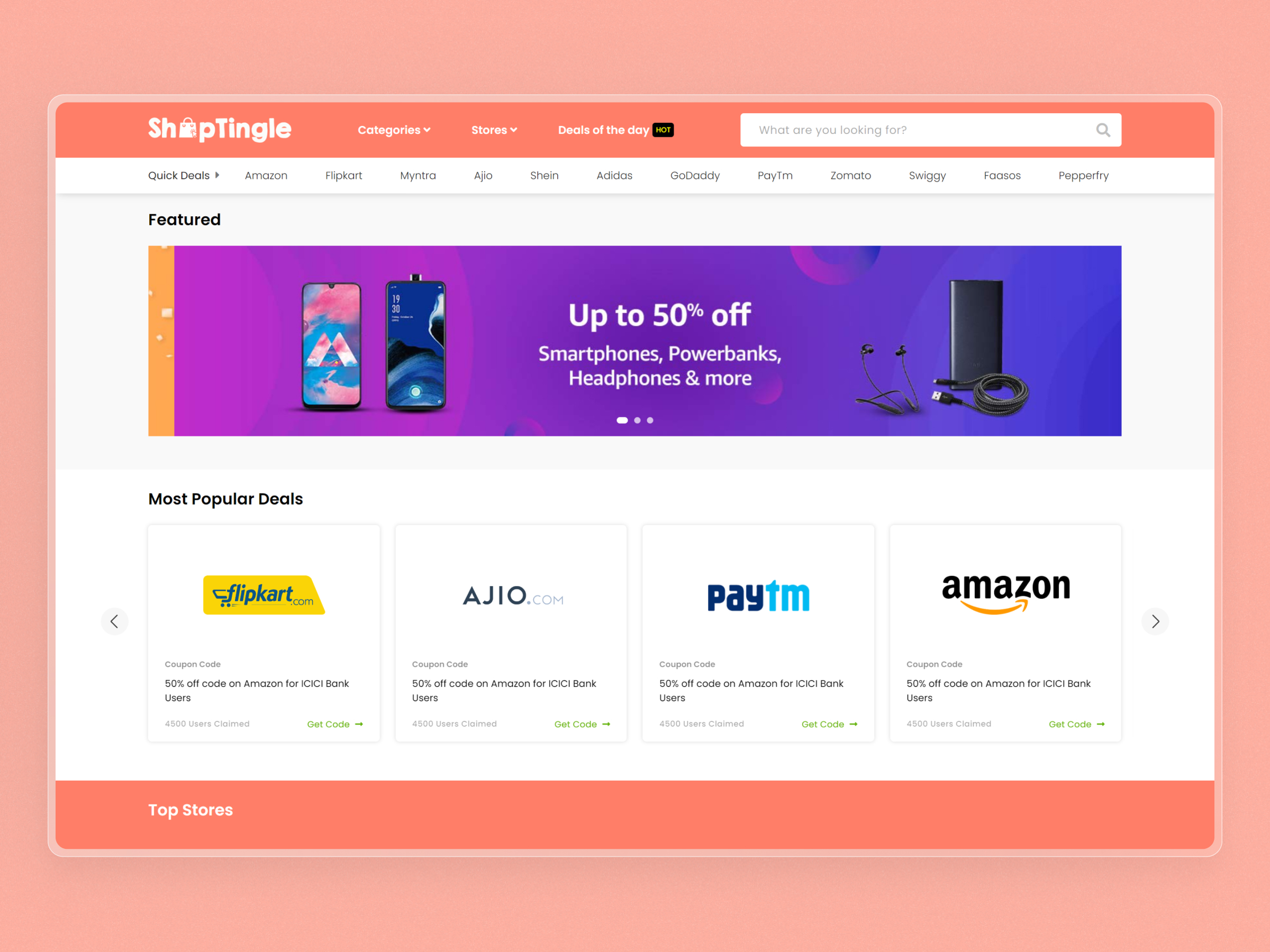
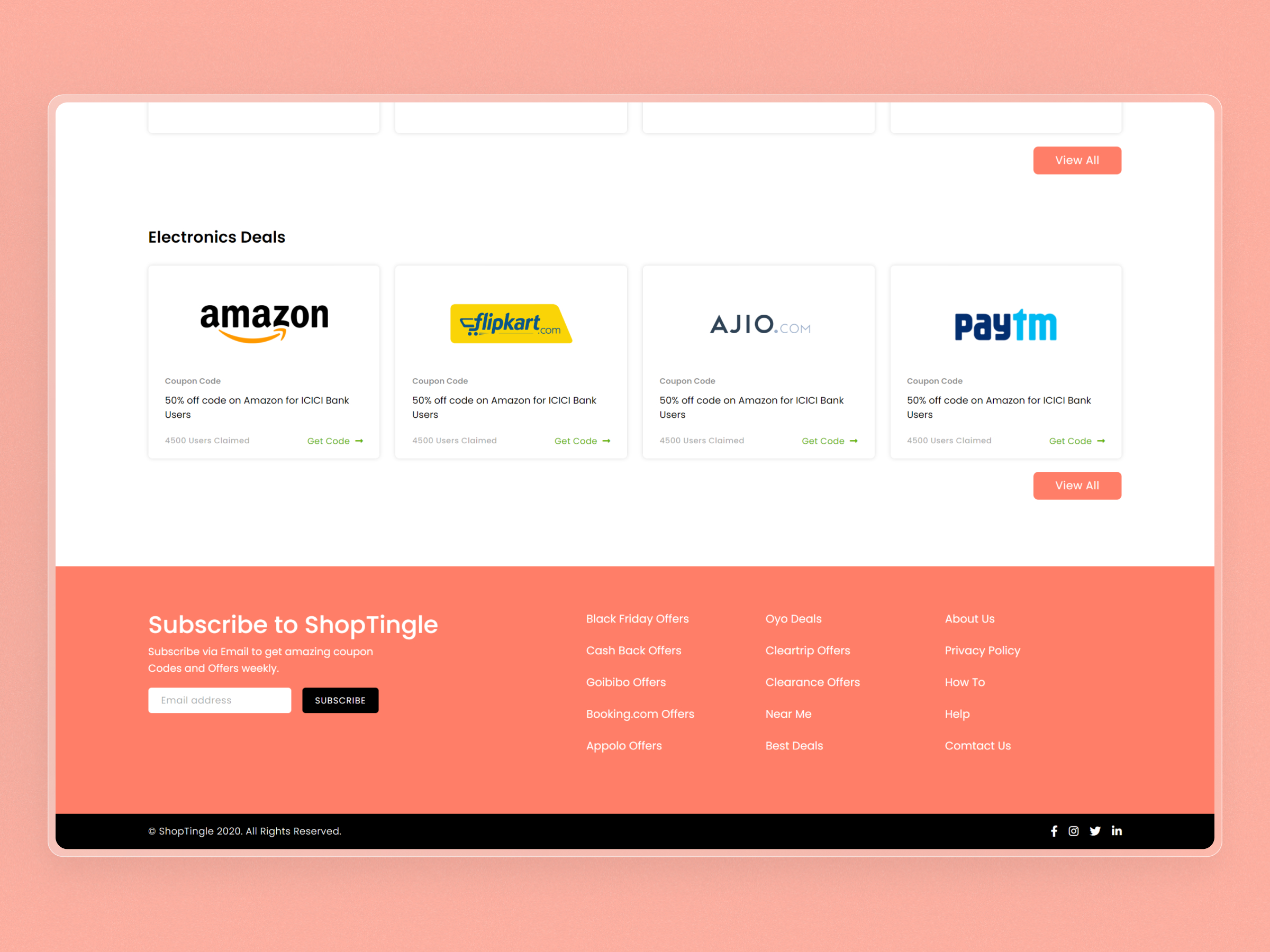
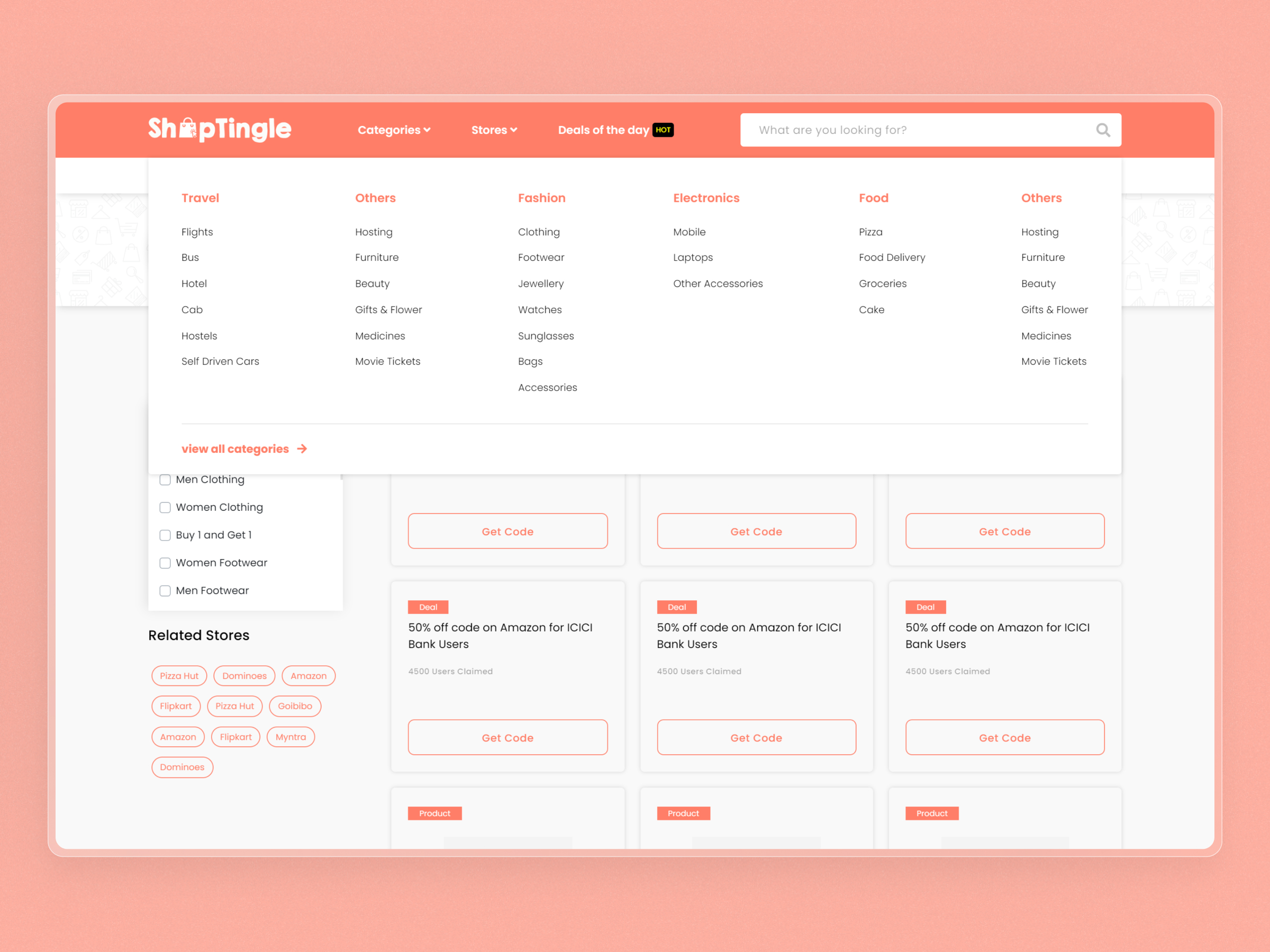
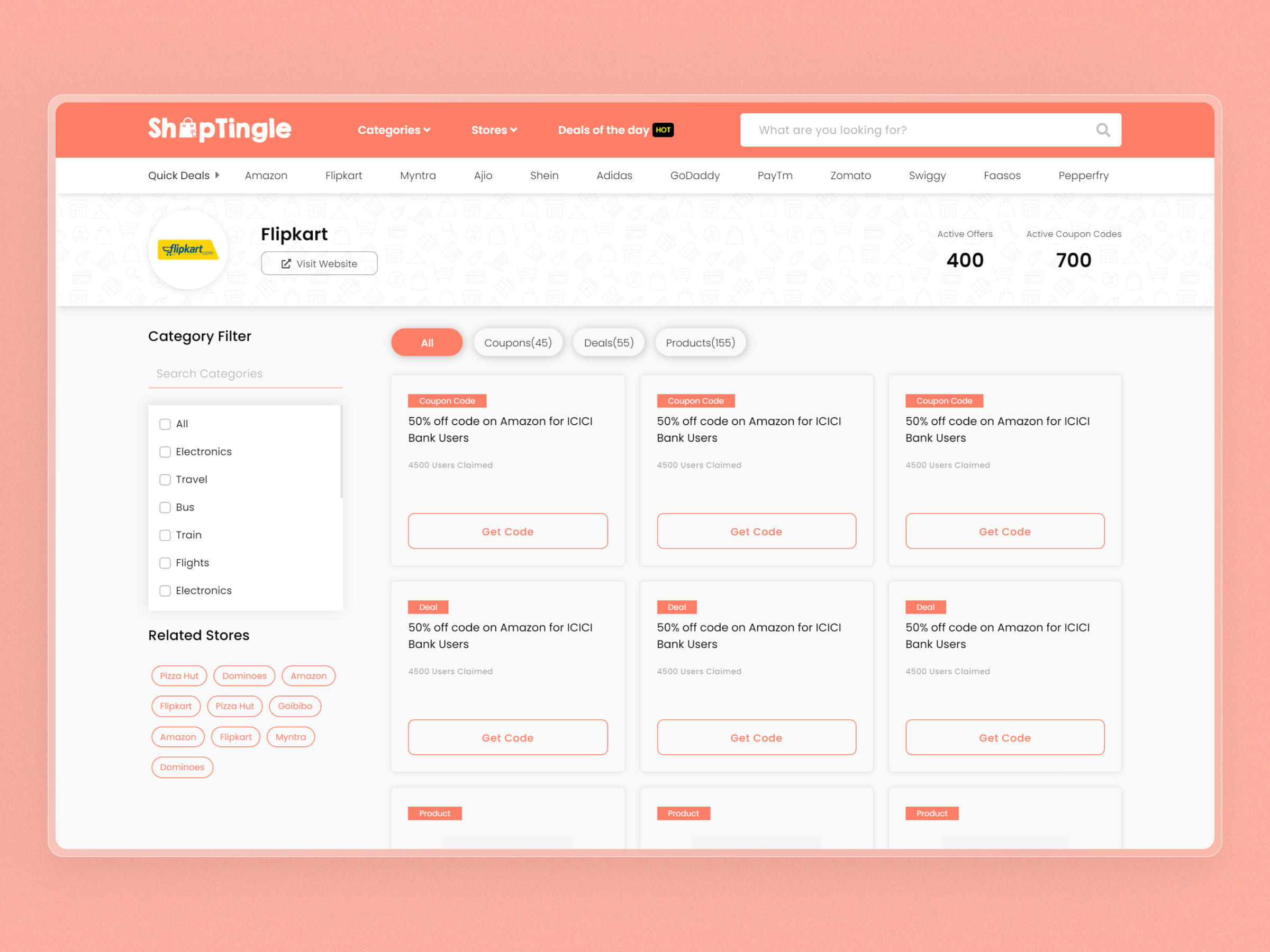
The core experience is search and browse. Users can search by brand name, product category, or deal type (promo code, cashback, free shipping). Category pages cover the major Indian e-commerce verticals — fashion, electronics, food delivery, travel, and groceries — so users who aren't searching for a specific brand can still find relevant deals. Each coupon card shows the offer, expiry date, a verified badge where applicable, and a one-click copy-and-redirect flow that gets the user to checkout without unnecessary steps.
SEO Architecture
For a coupon website, organic search is the primary growth channel. Someone searching "Zomato promo code today" or "Myntra coupon code" needs to find your page, not a competitor's. We planned, designed, and built the site with a proper URL structure and page hierarchy from day one — brand pages, category pages, and deal-specific landing pages all structured for the long-tail keyword searches that drive coupon site traffic. Server-side rendering via Next.js ensures Google can crawl and index every deal page correctly.
What shipped
Delivered in 15 days for ₹45,000. ShopTingle launched on schedule — a fully functional coupon and promo code search website with clean UX, mobile-first performance, and an SEO architecture built for long-term organic growth. For a client who needed speed without compromise, we hit both.

Frequently Asked Questions
Questions about coupon websites,
answered clearly.
Questions about the work, scope, delivery context, and next steps.
The ShopTingle website — a fully functional coupon and promo code search platform with deal categories, brand pages, search and filtering, and an SEO-optimised architecture, built in Next.js for a Delhi-based client — was delivered in 15 days for ₹45,000. For a custom-built coupon website in India, costs typically range from ₹40,000–₹80,000 for a well-structured static or server-side rendered site without a backend CMS, up to ₹1,50,000–₹3,00,000 for a complete-featured platform with affiliate API integration, user accounts, and a content management system. ShopTingle sits at the efficient end for a quality custom build.
Related Work
Similar case studies,
selected for context.
Continue exploring related work, with comparable product and delivery challenges.