Interface DesignsWeb Applications
Better Mind Vibes
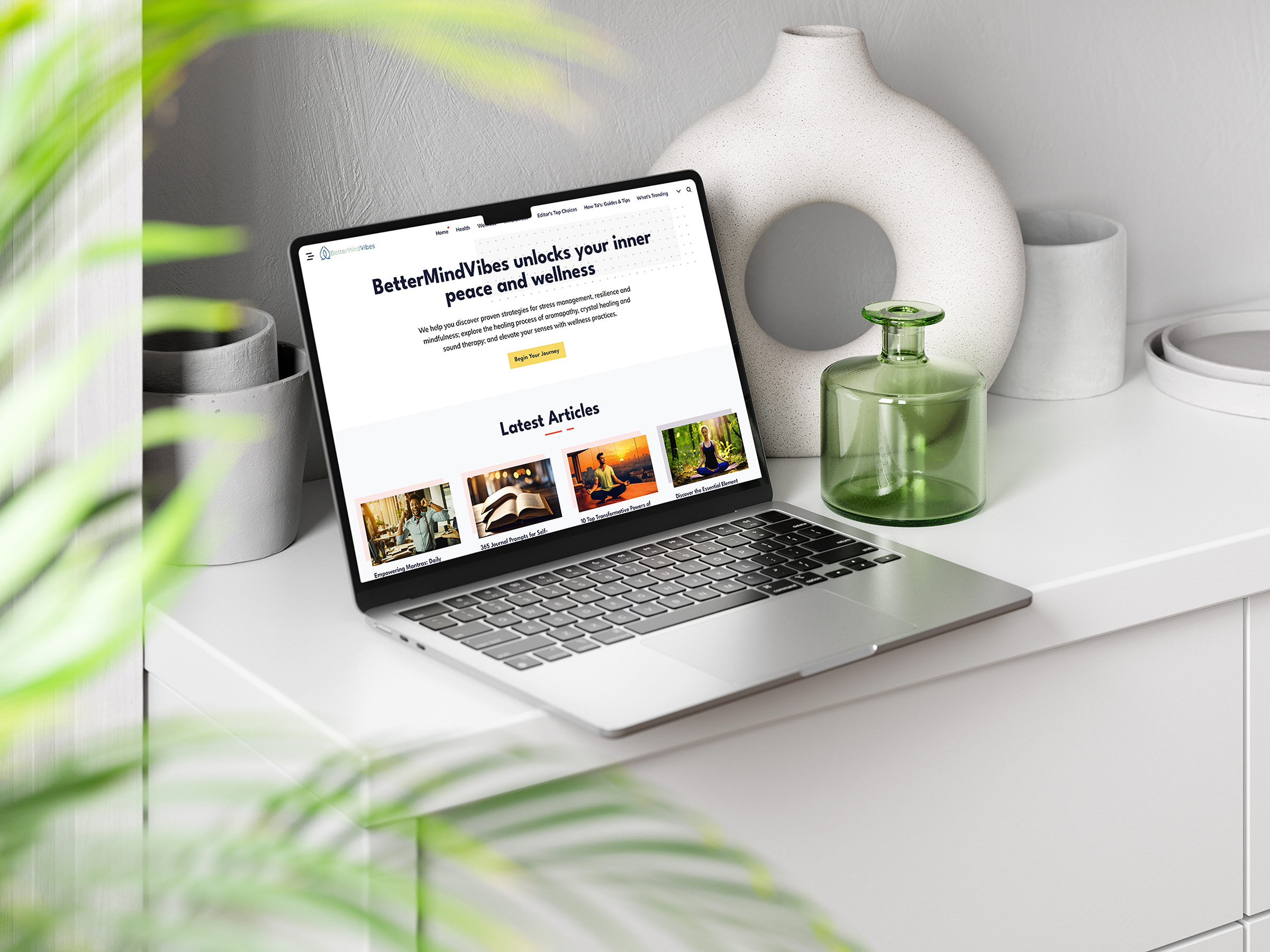
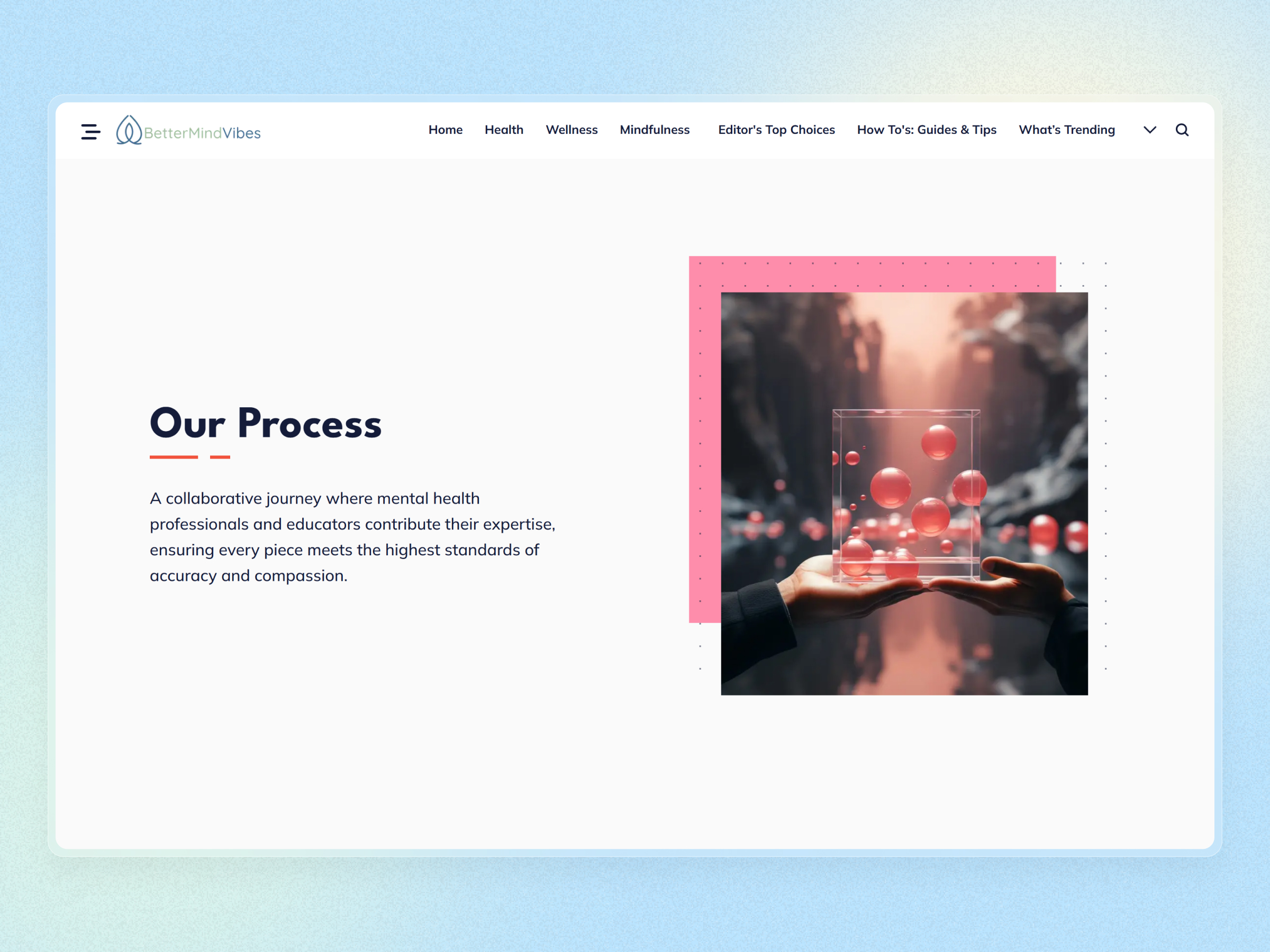
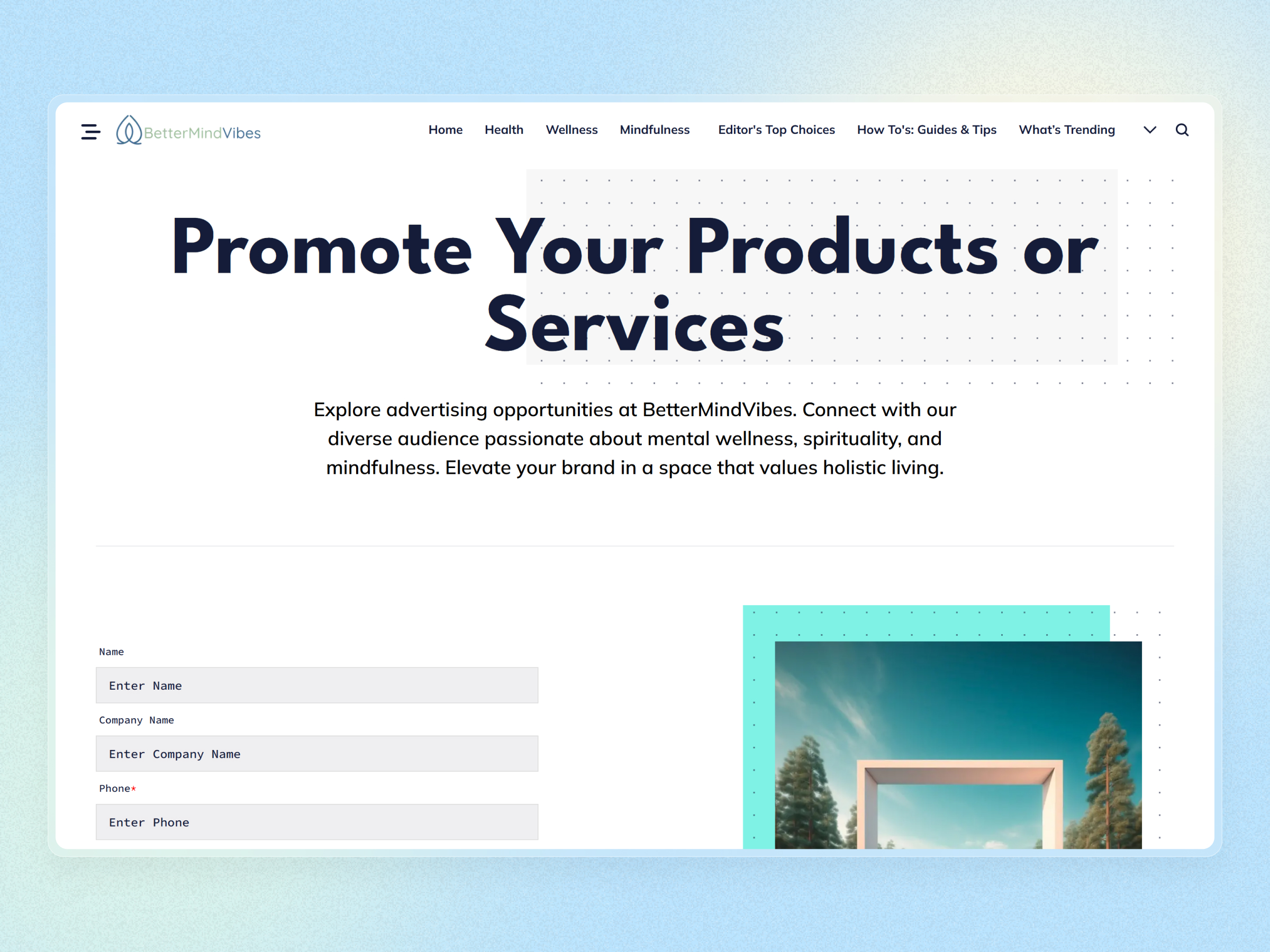
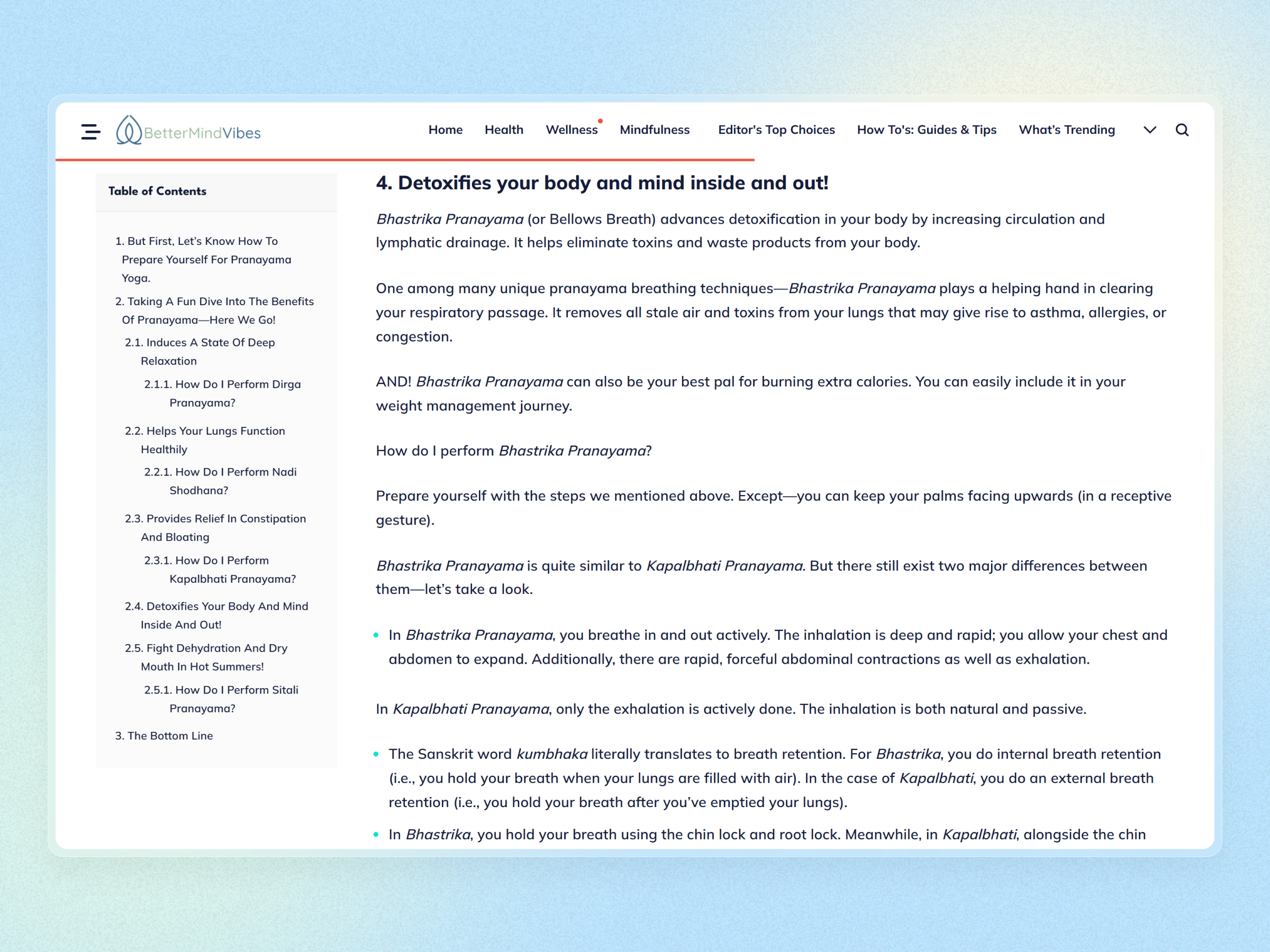
Better Mind Vibes is a health and wellness blog built to publish credible, readable content around mindfulness, mental well-being, and spiritual growth.
A wellness blog built for performance and search
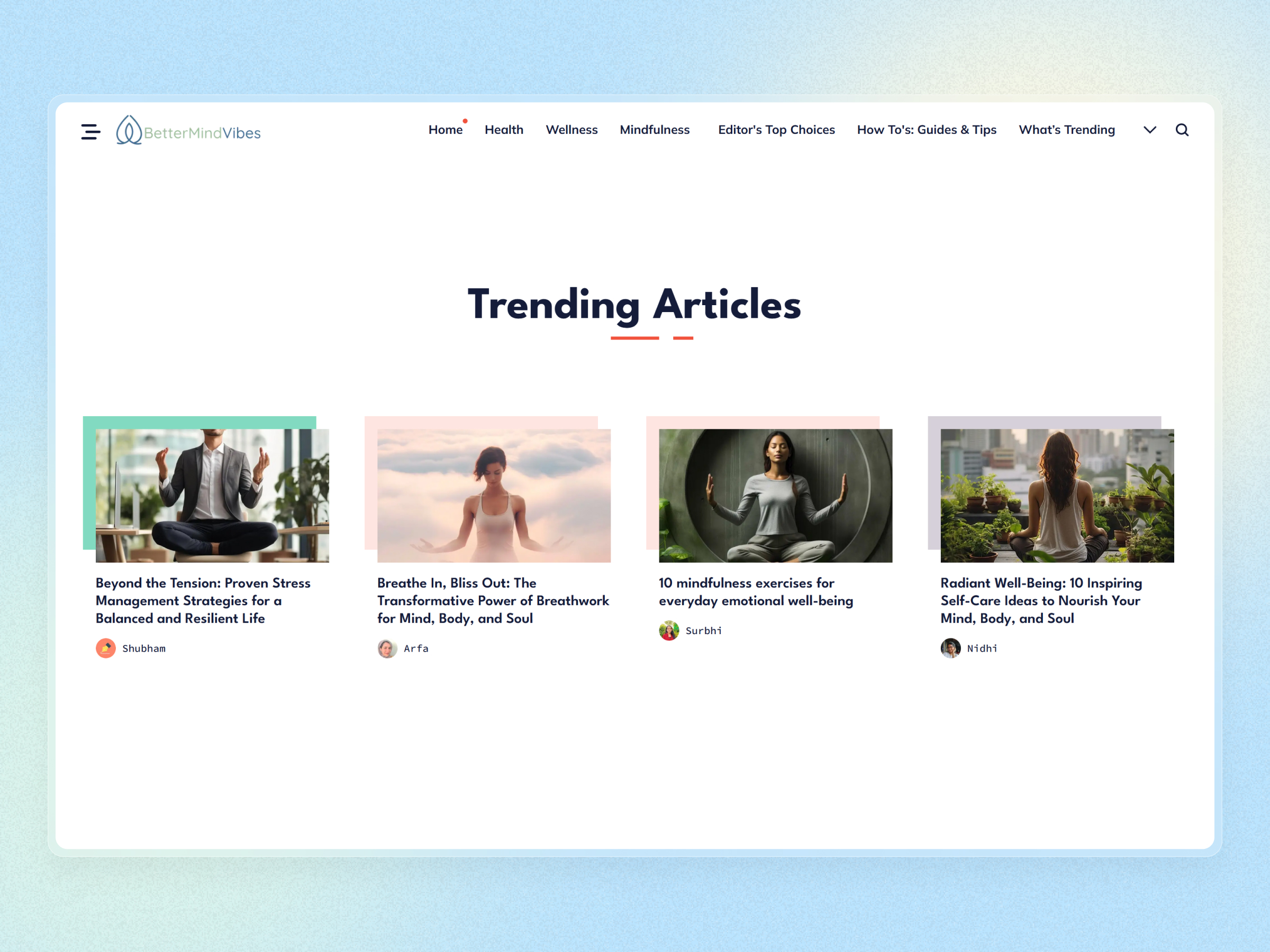
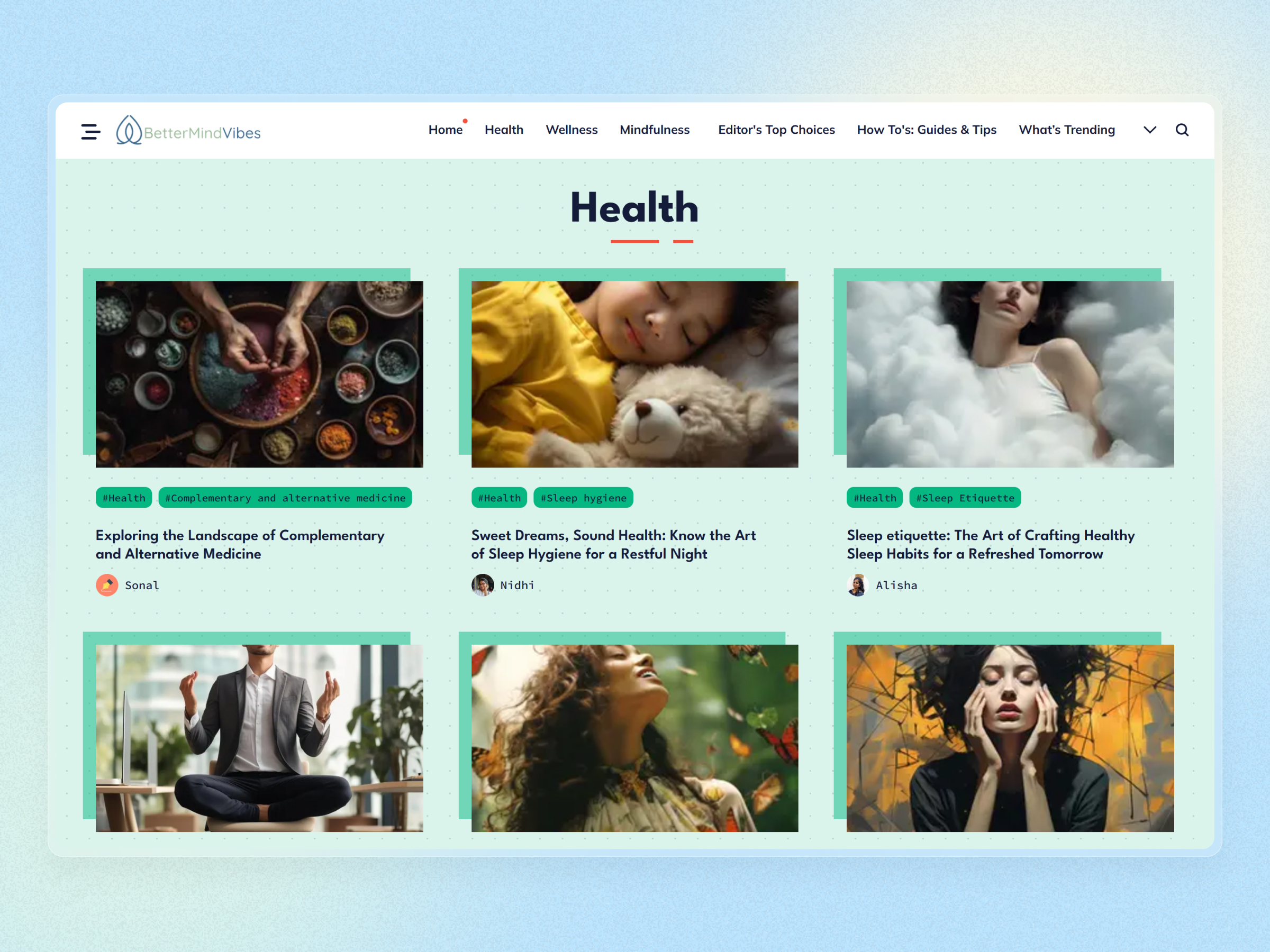
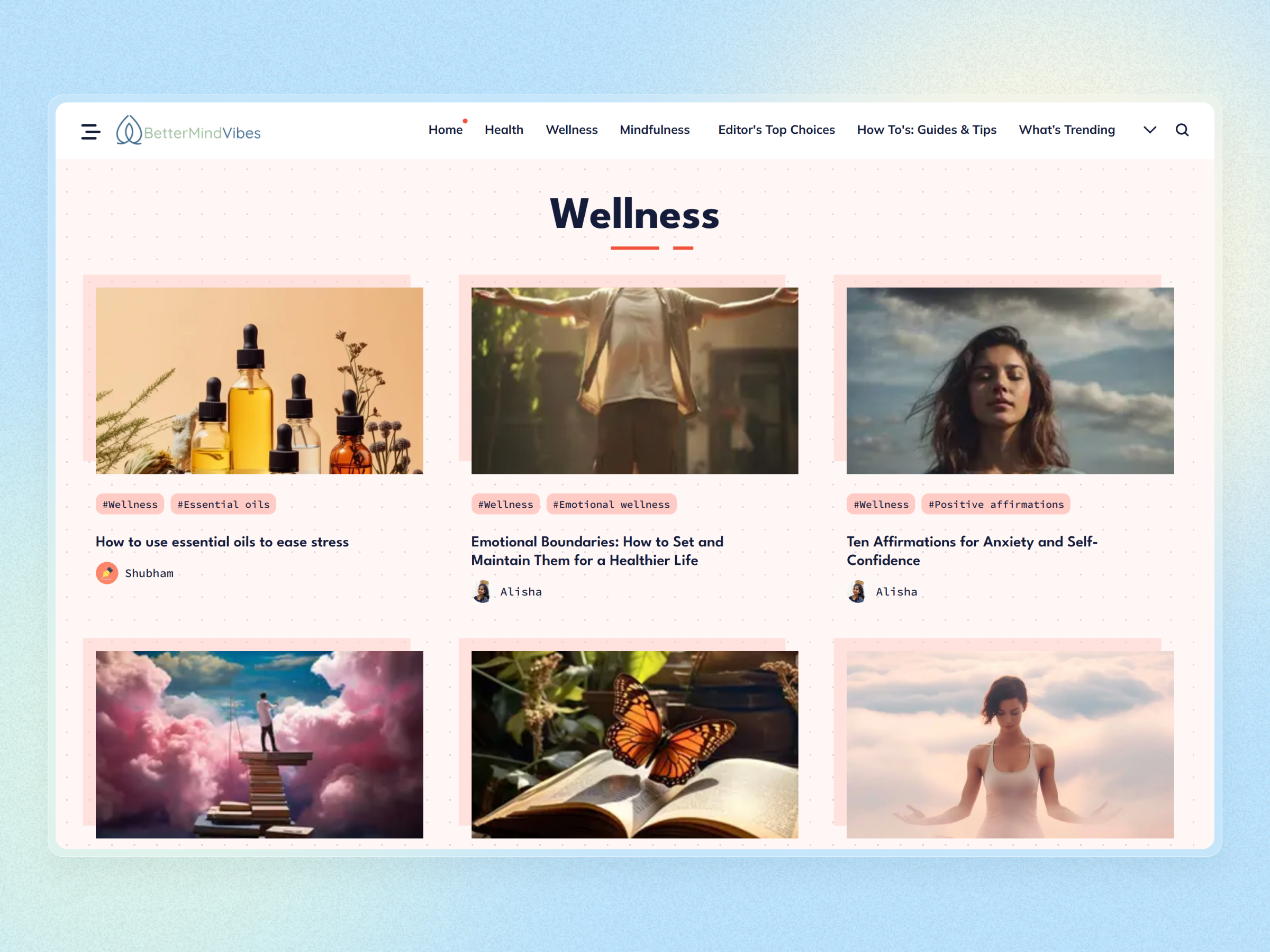
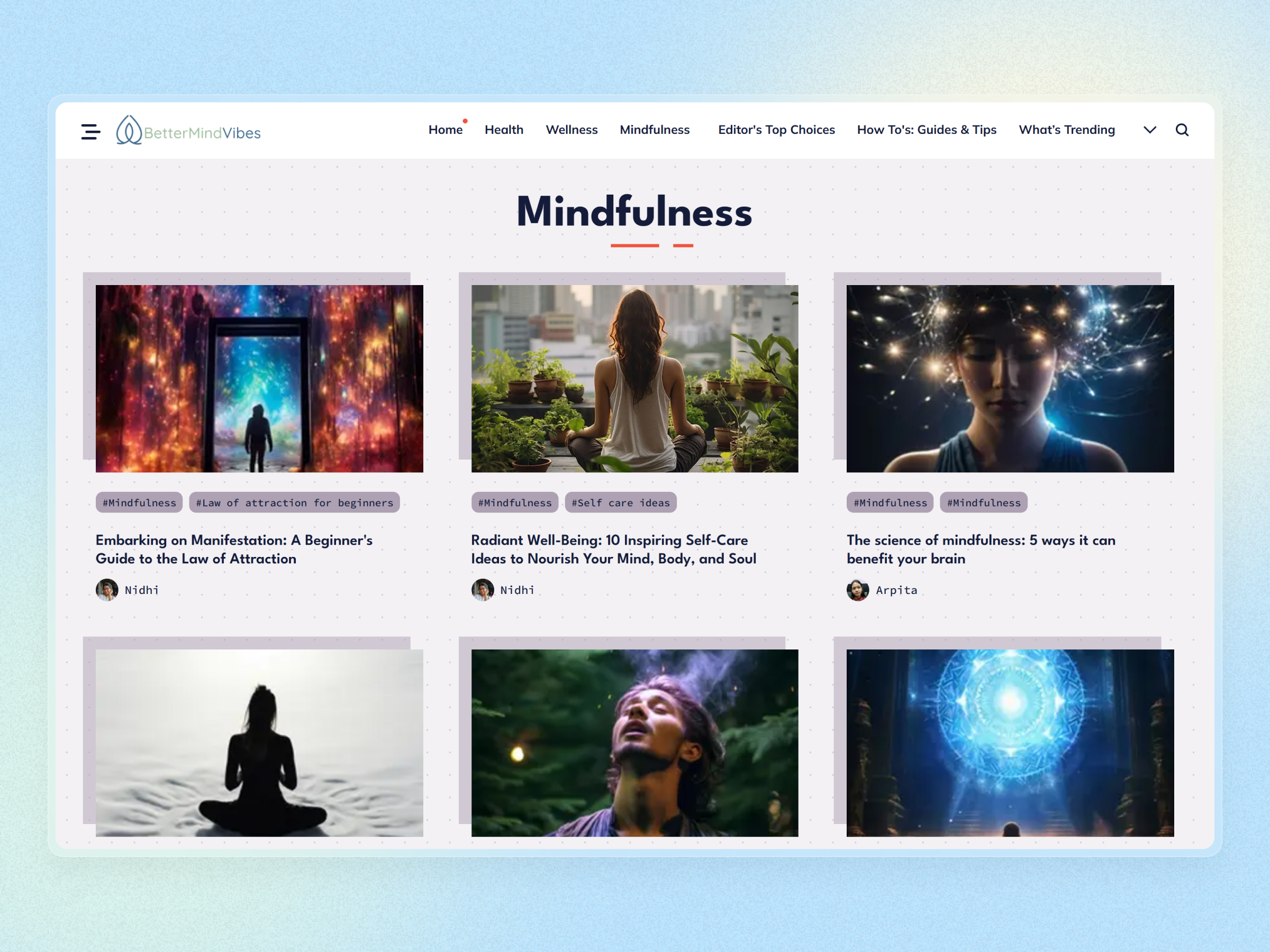
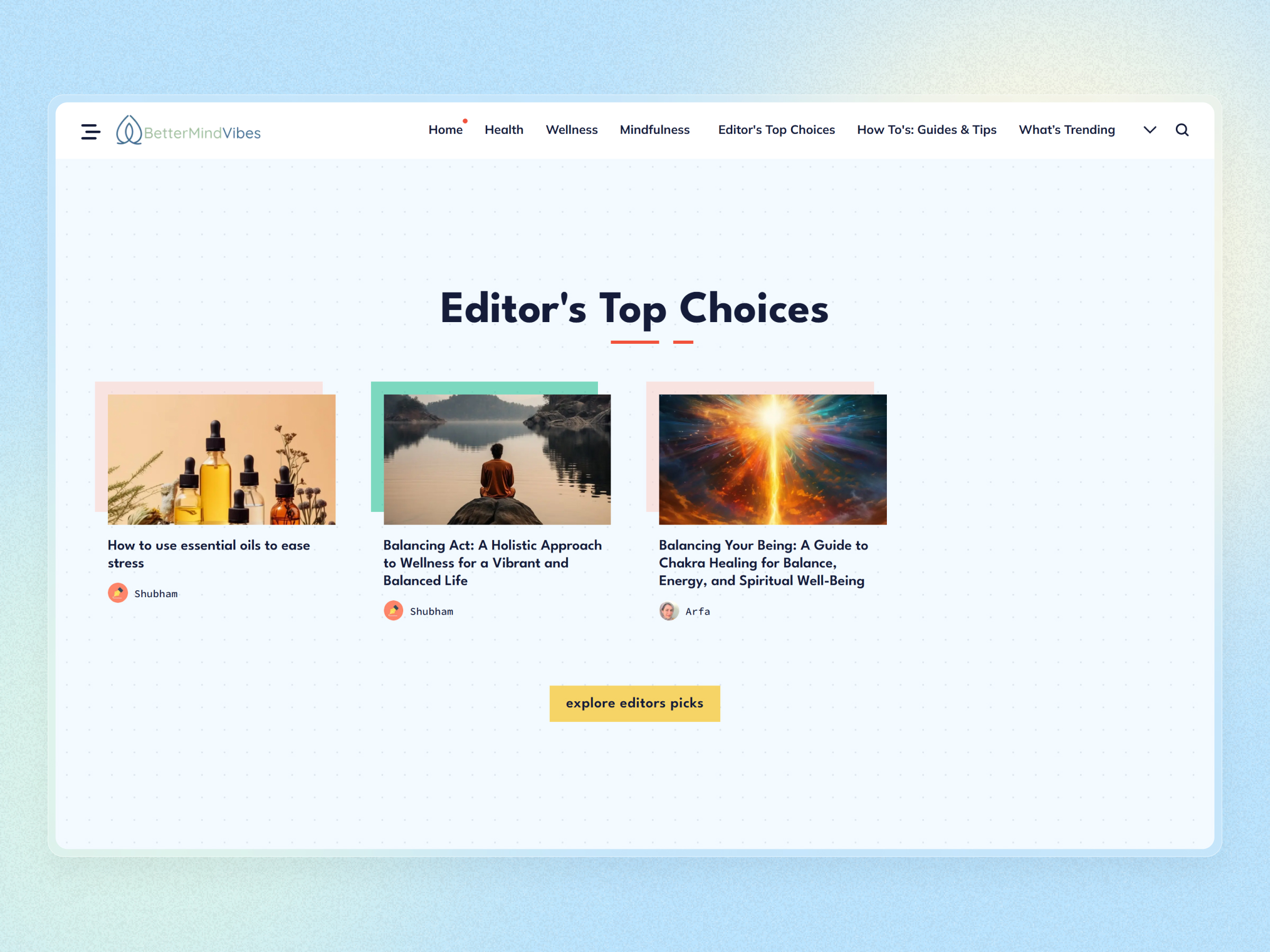
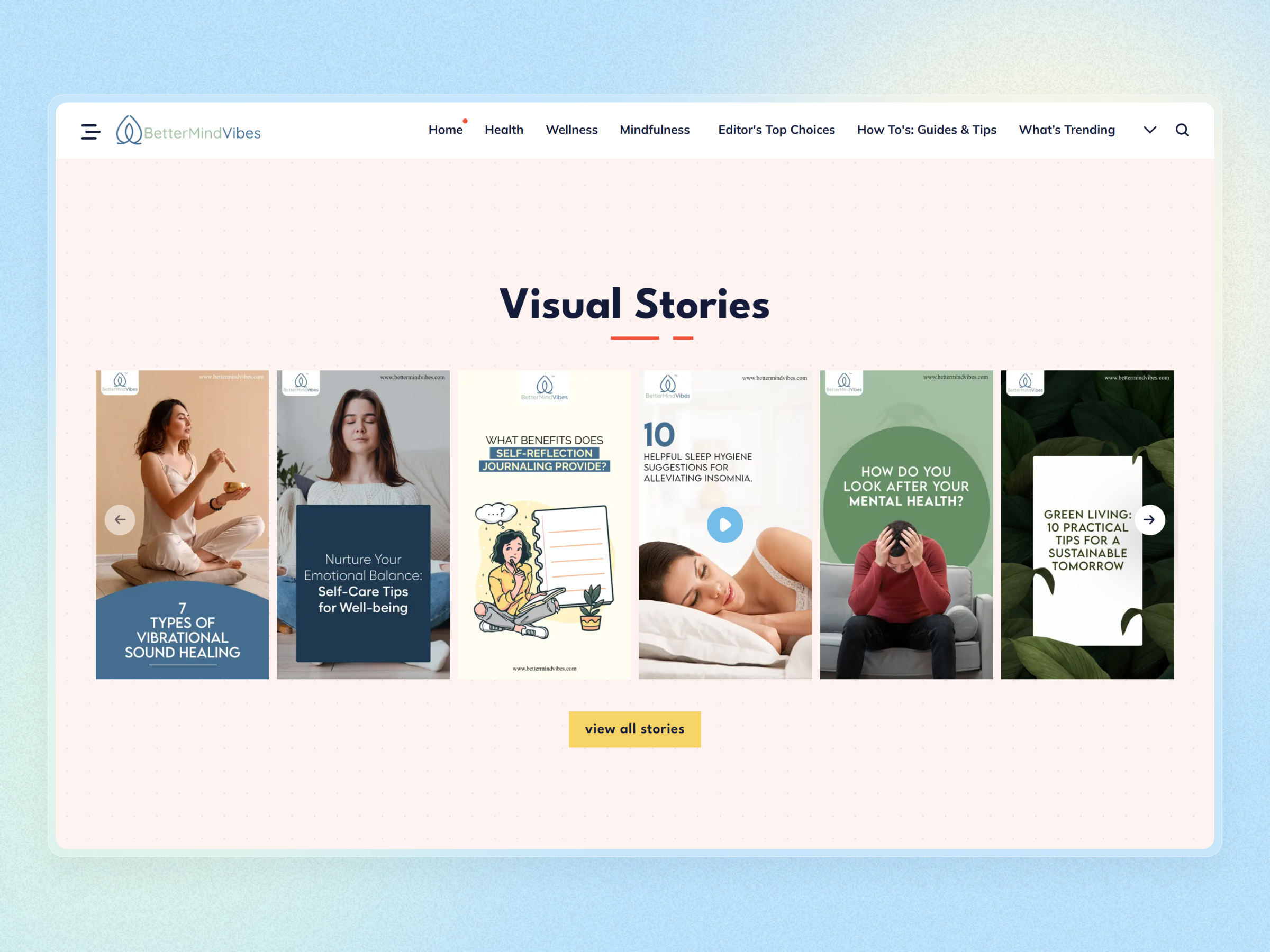
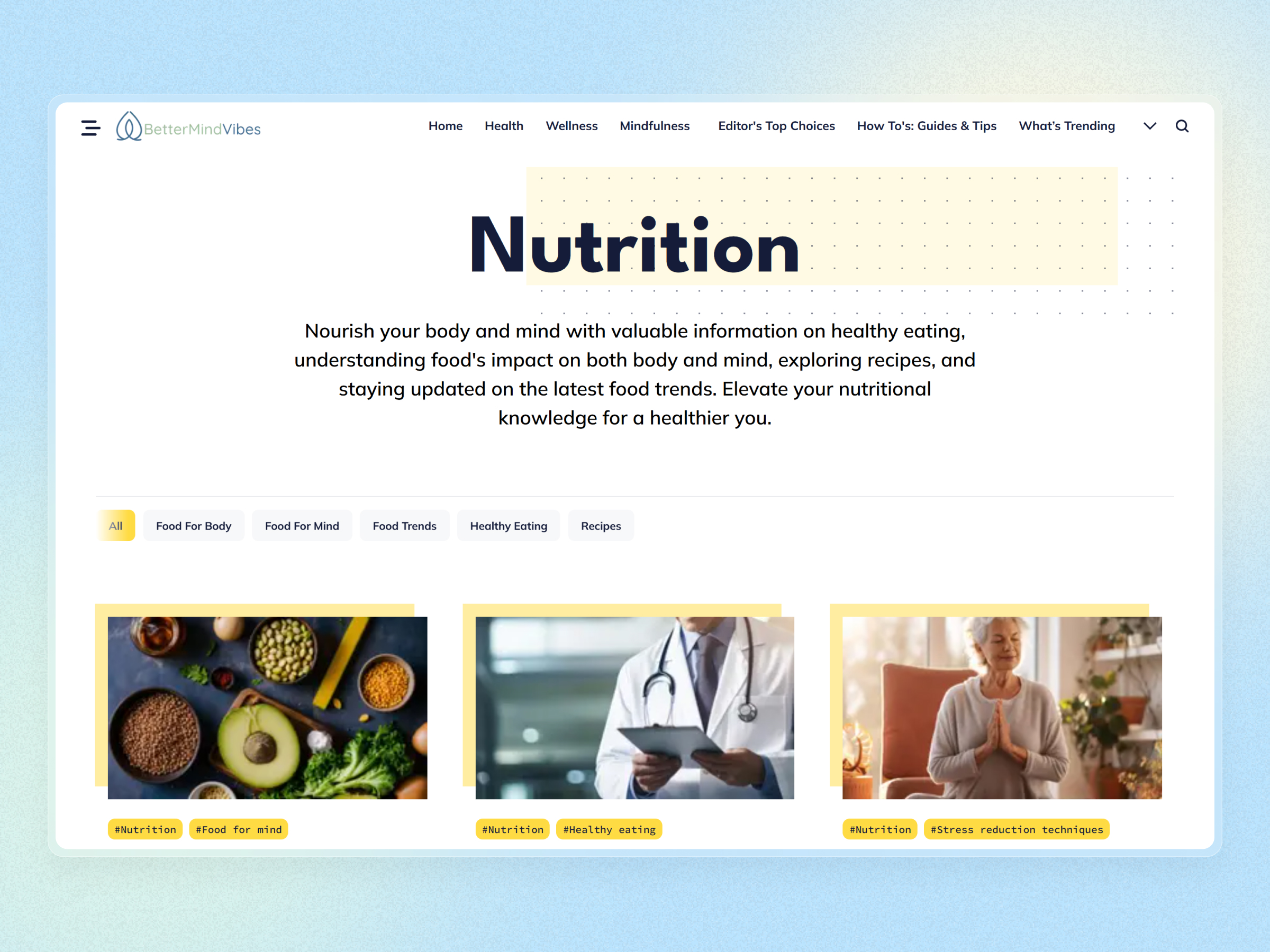
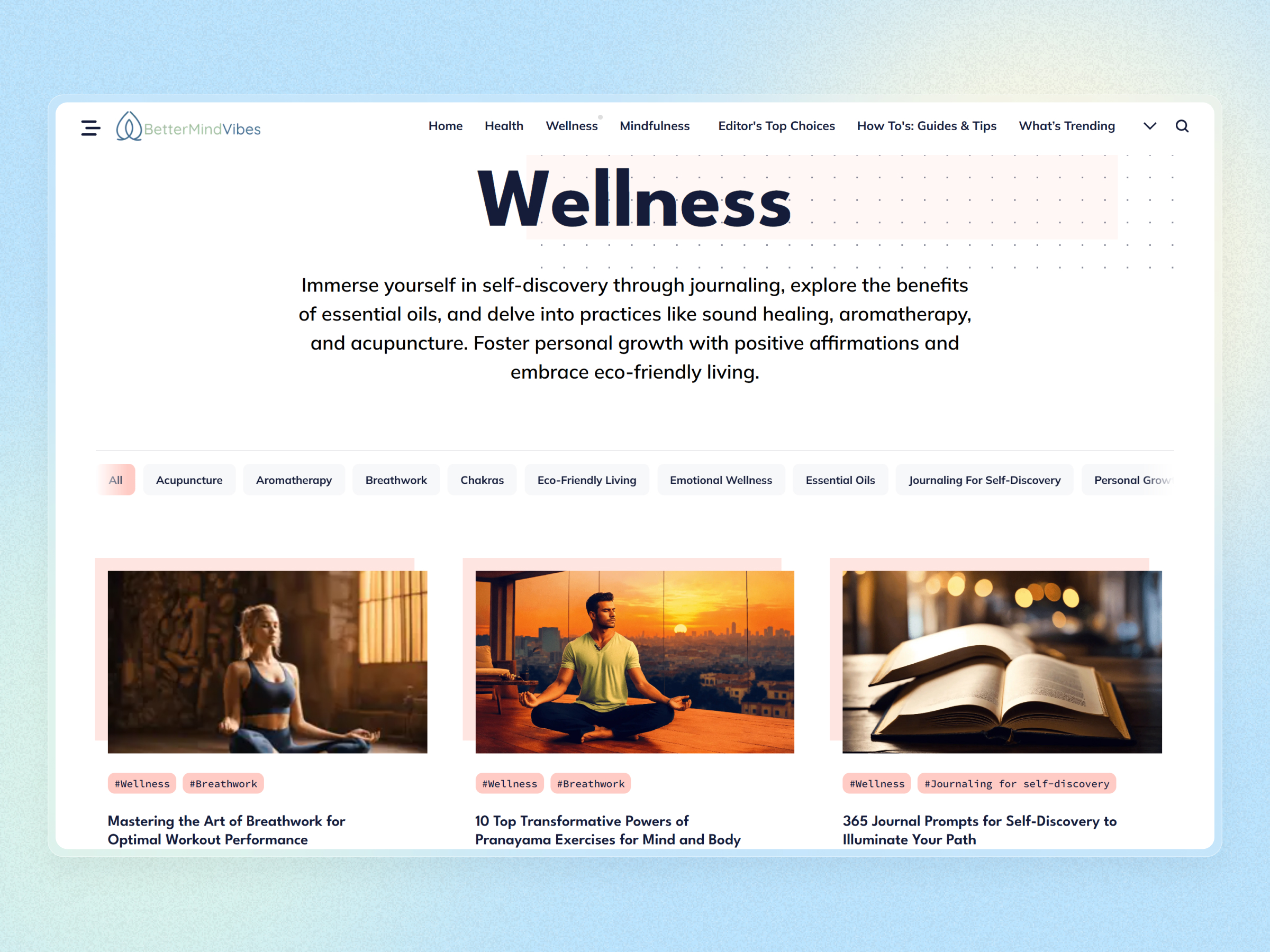
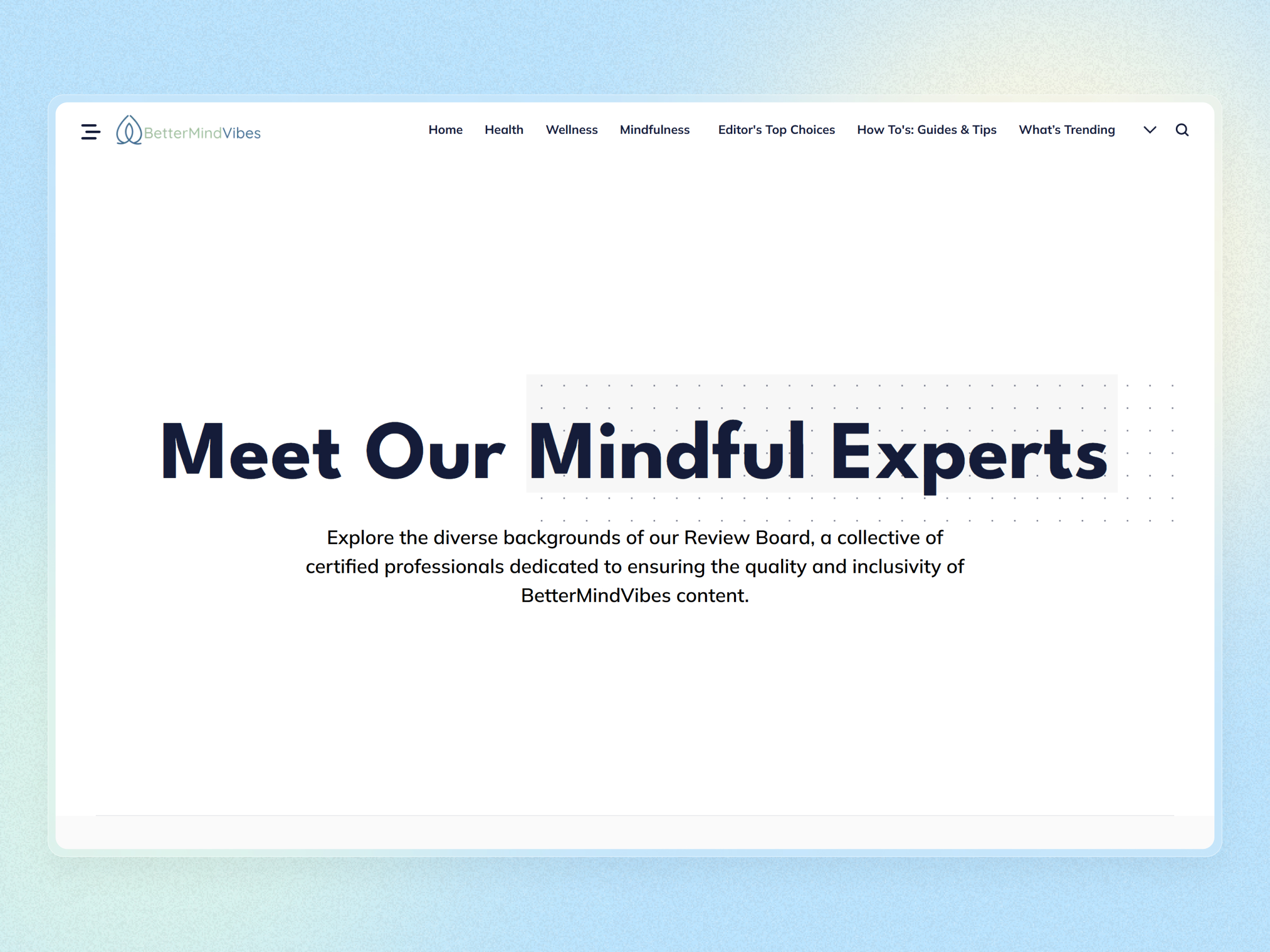
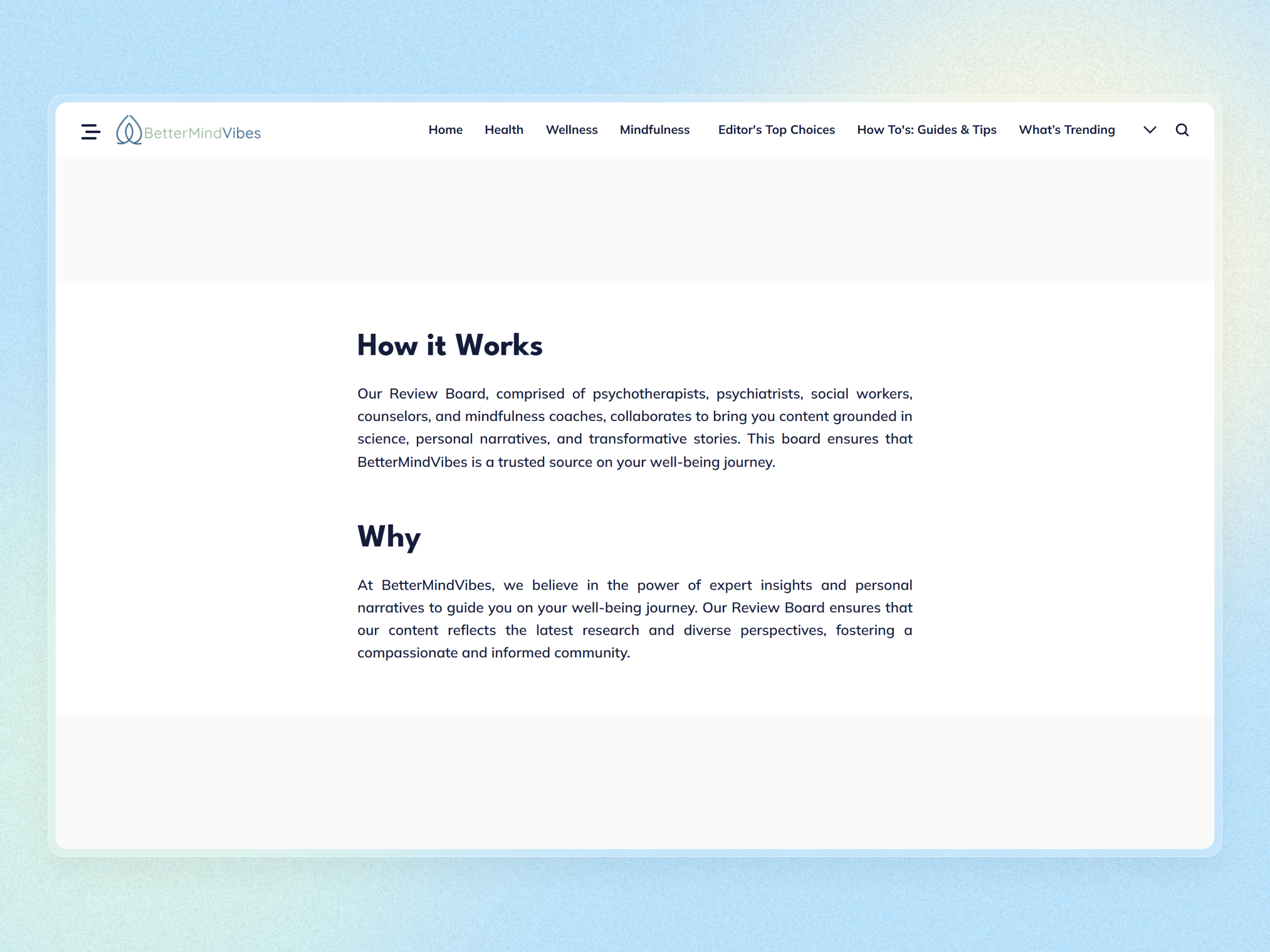
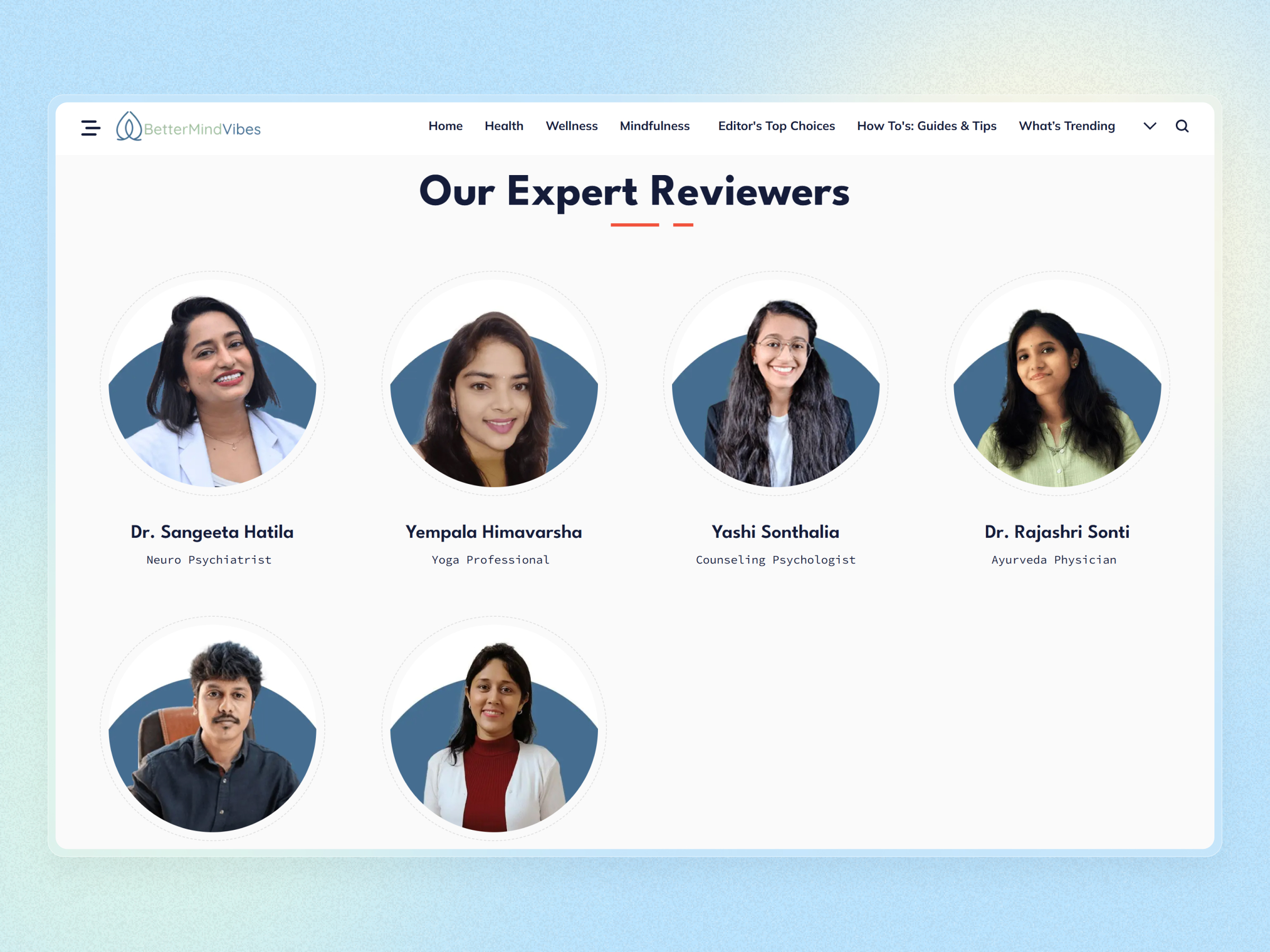
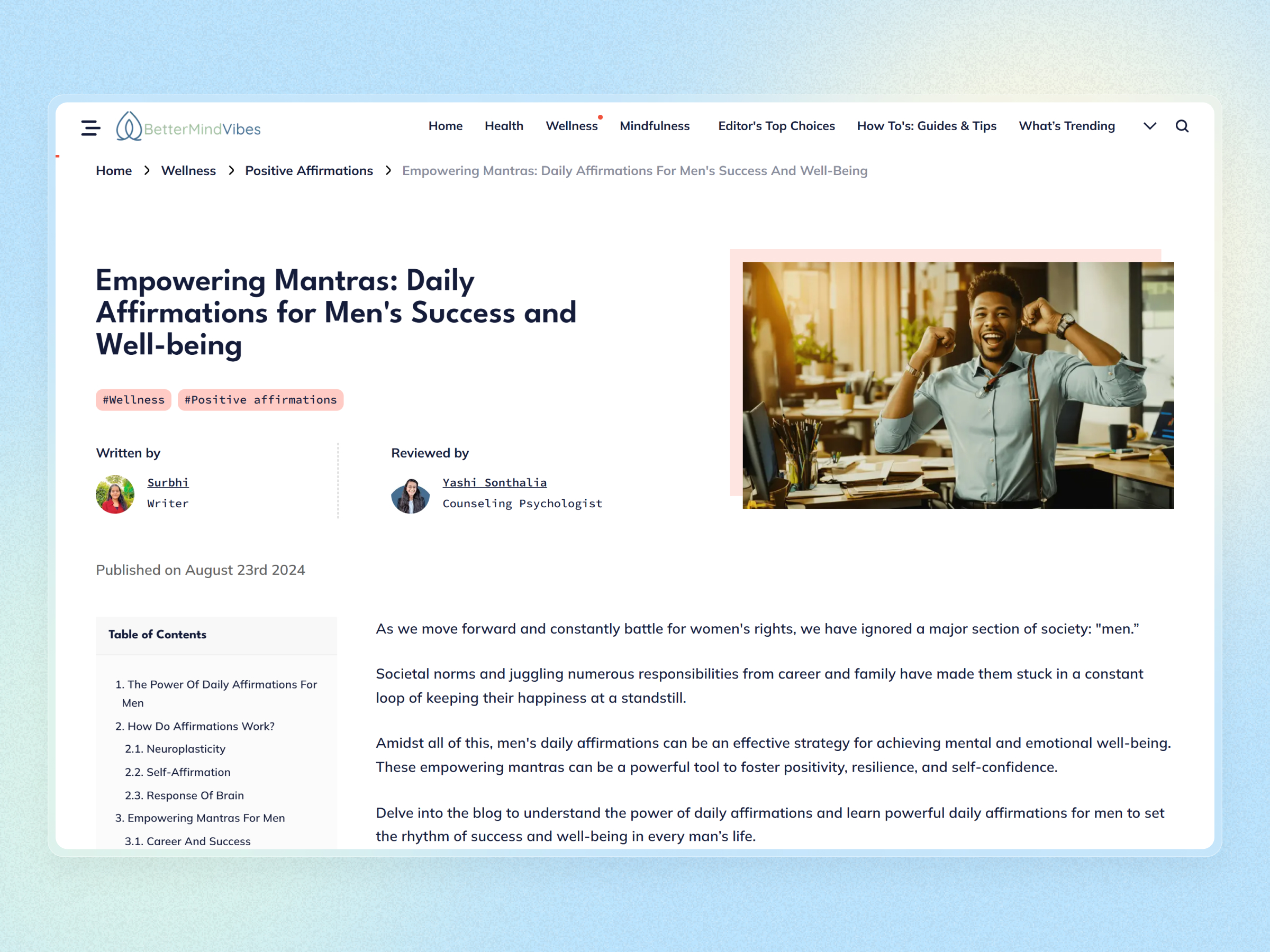
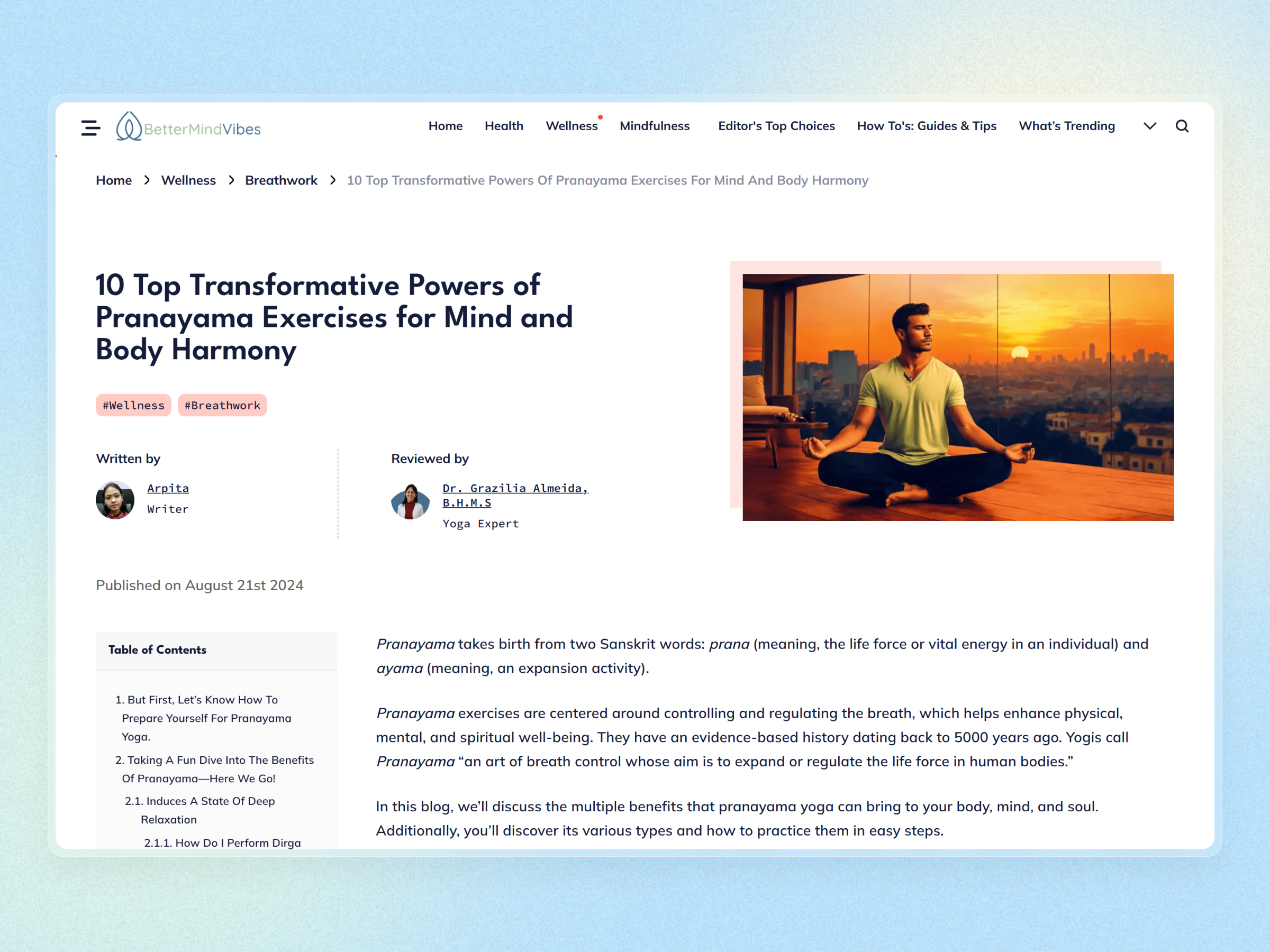
Better Mind Vibes is a health and wellness blog covering mindfulness, mental well-being, and spiritual growth. Every article on the product is verified by professionals — the client’s requirement was that the content feel credible, not just readable.
We planned, designed, and built the complete website in 2 months for ₹1.4 lakhs for a Hyderabad-based client. Custom Next.js frontend, Strapi as the headless CMS, designed to make publishing and managing content straightforward for a non-technical team.
What the project needed to do
The client publishes regularly and needed to be able to add, edit, and manage articles without touching code. At the same time, the website had to perform well on search engines — a wellness blog lives or dies on organic traffic, and slow pages or poor structure will kill rankings before the content even gets a chance.
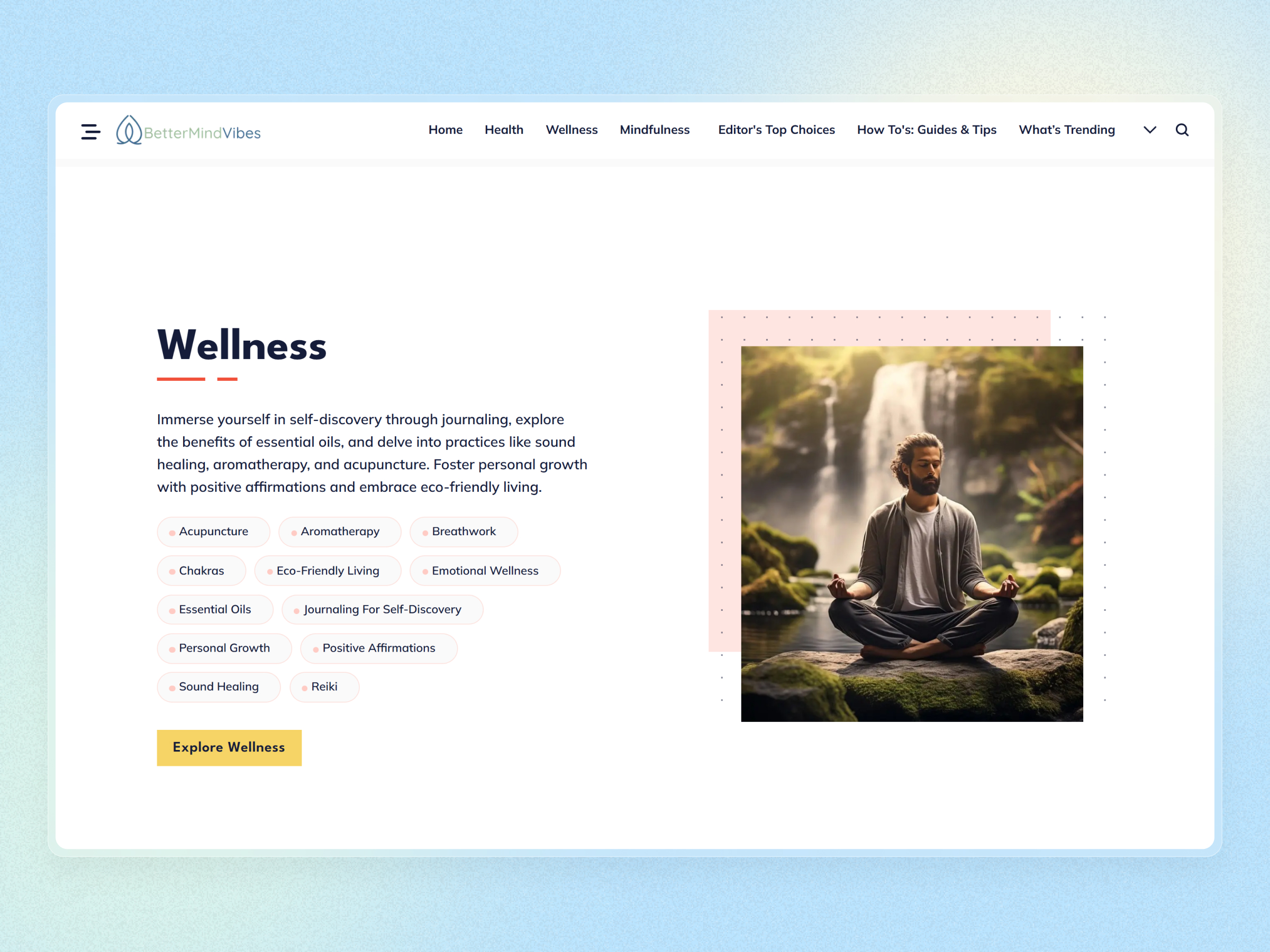
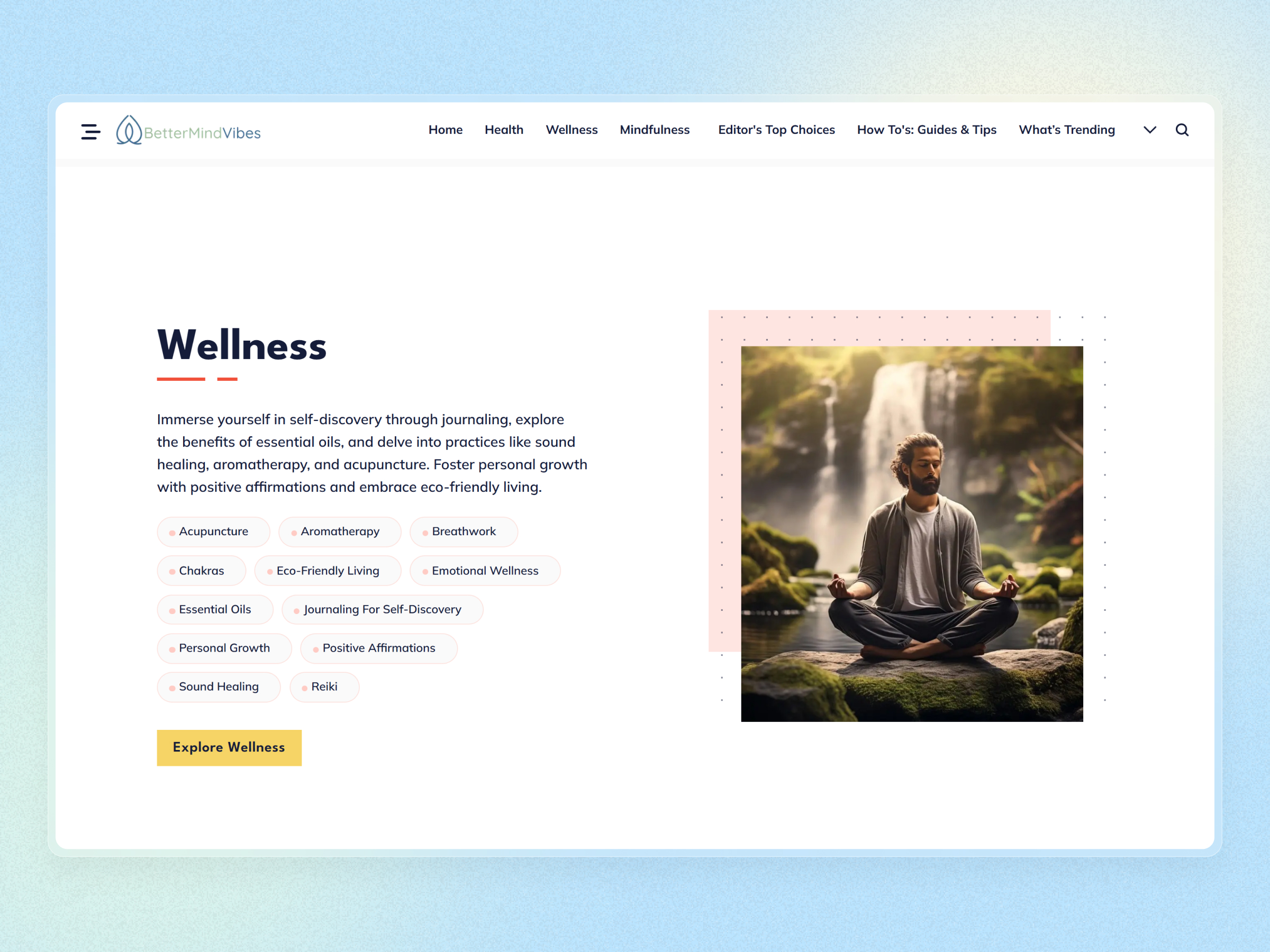
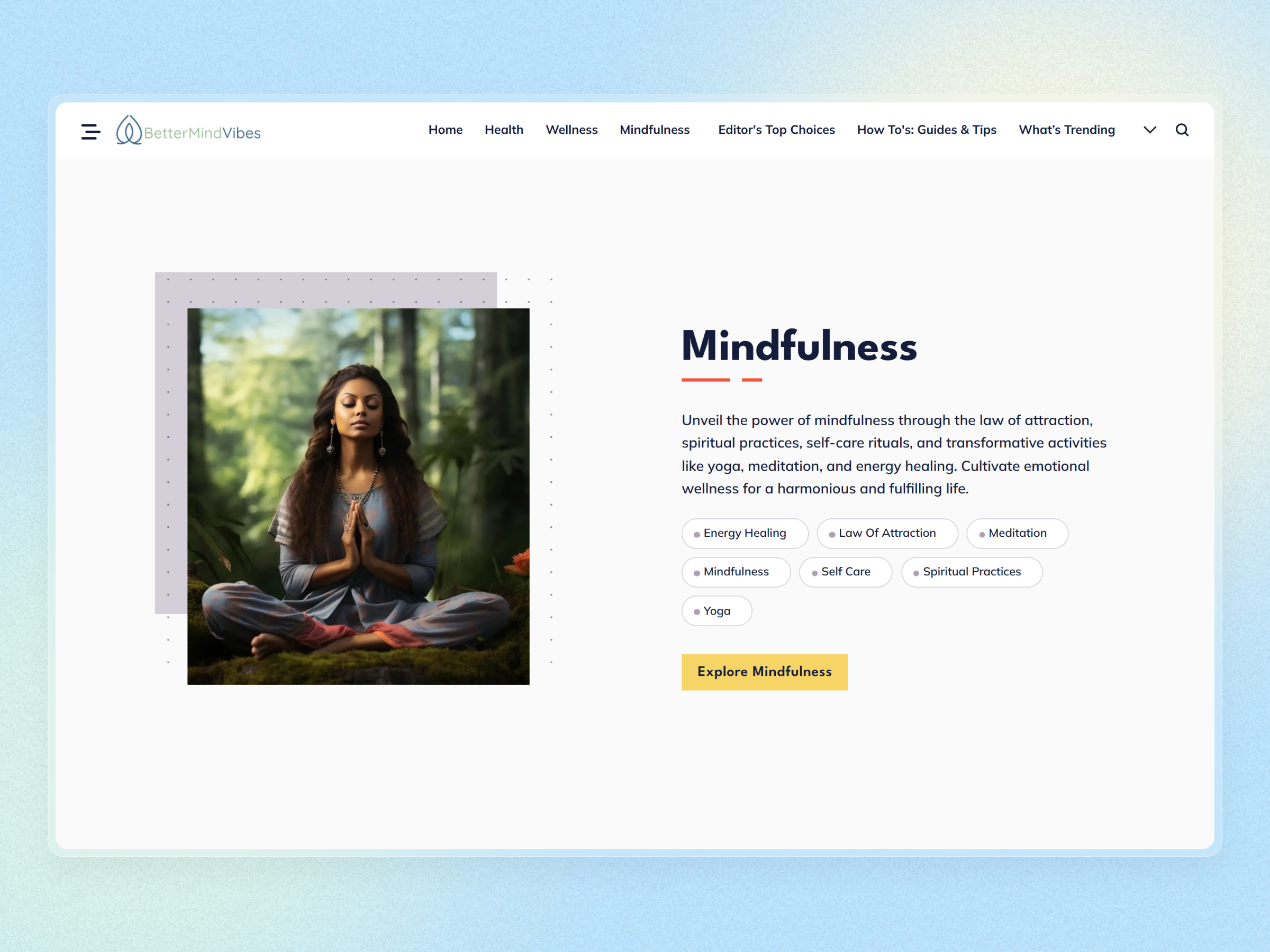
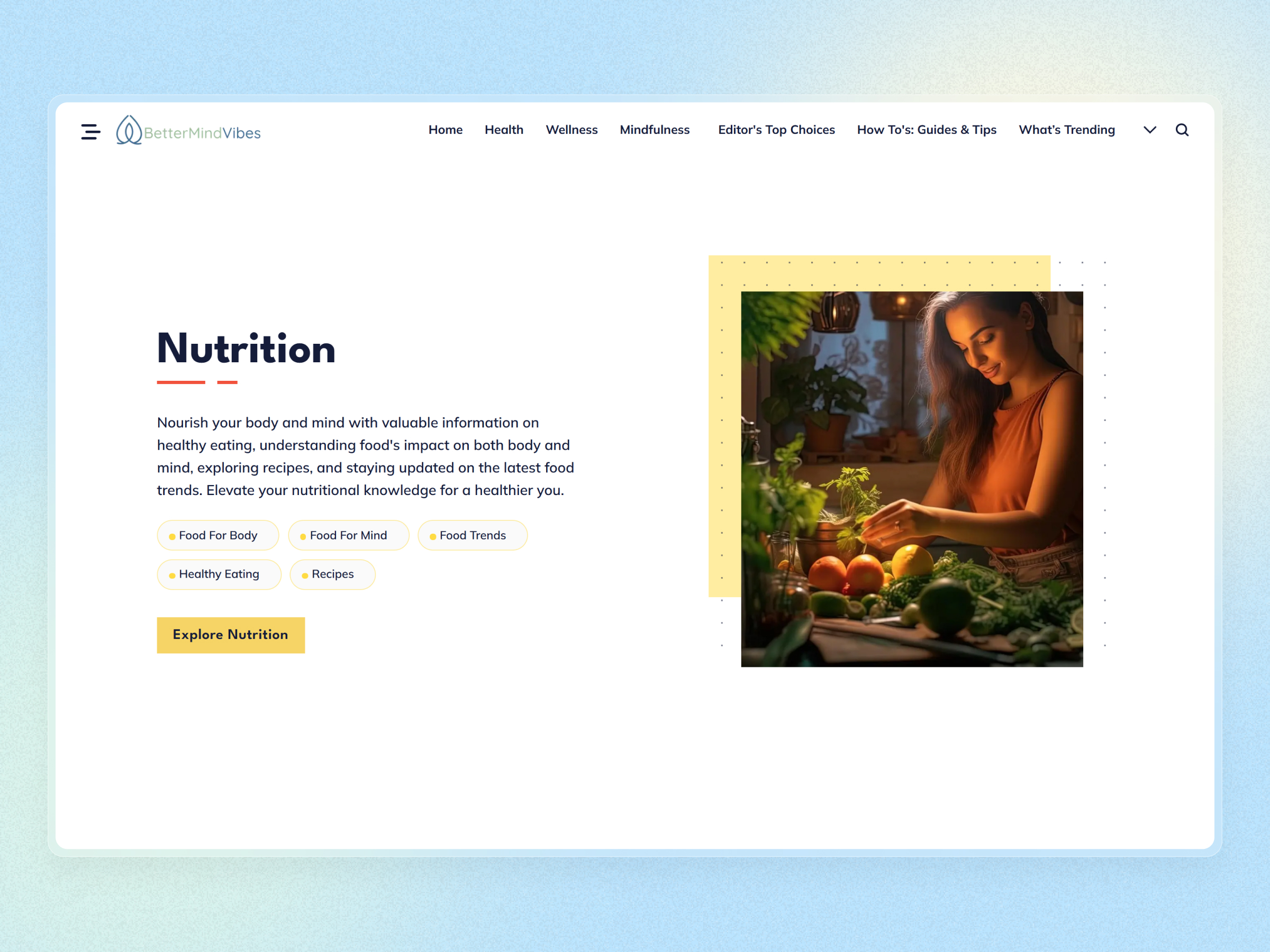
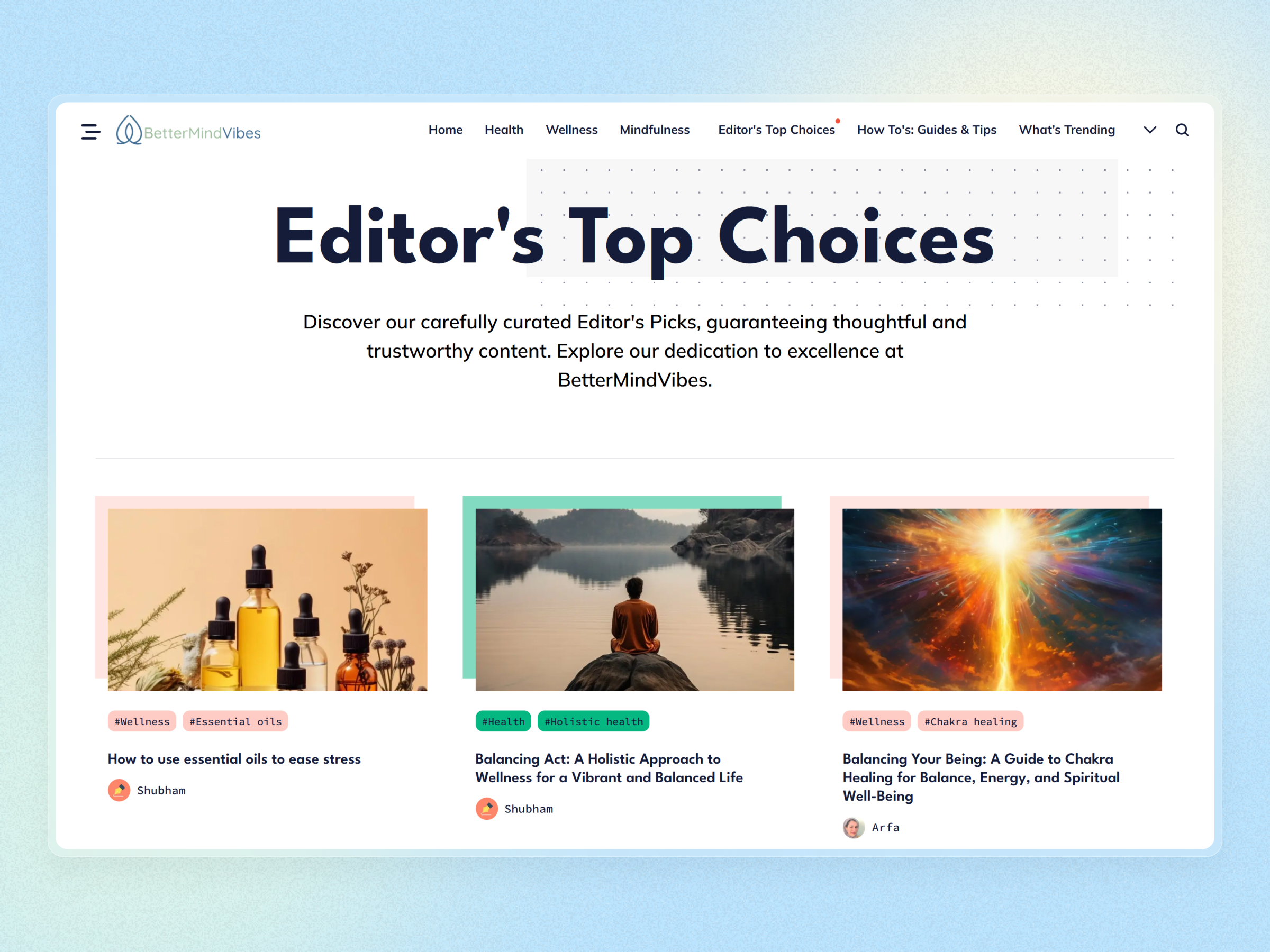
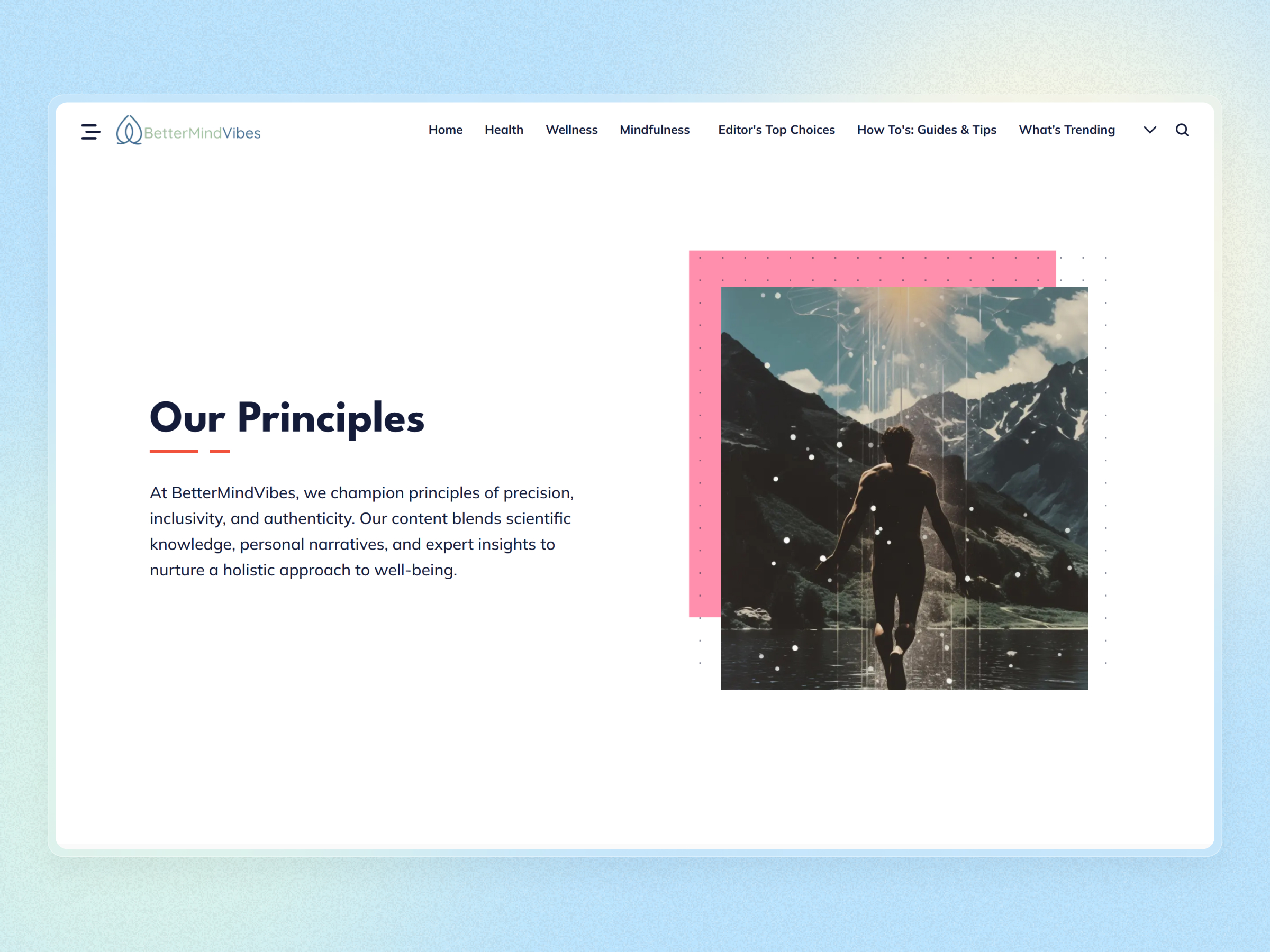
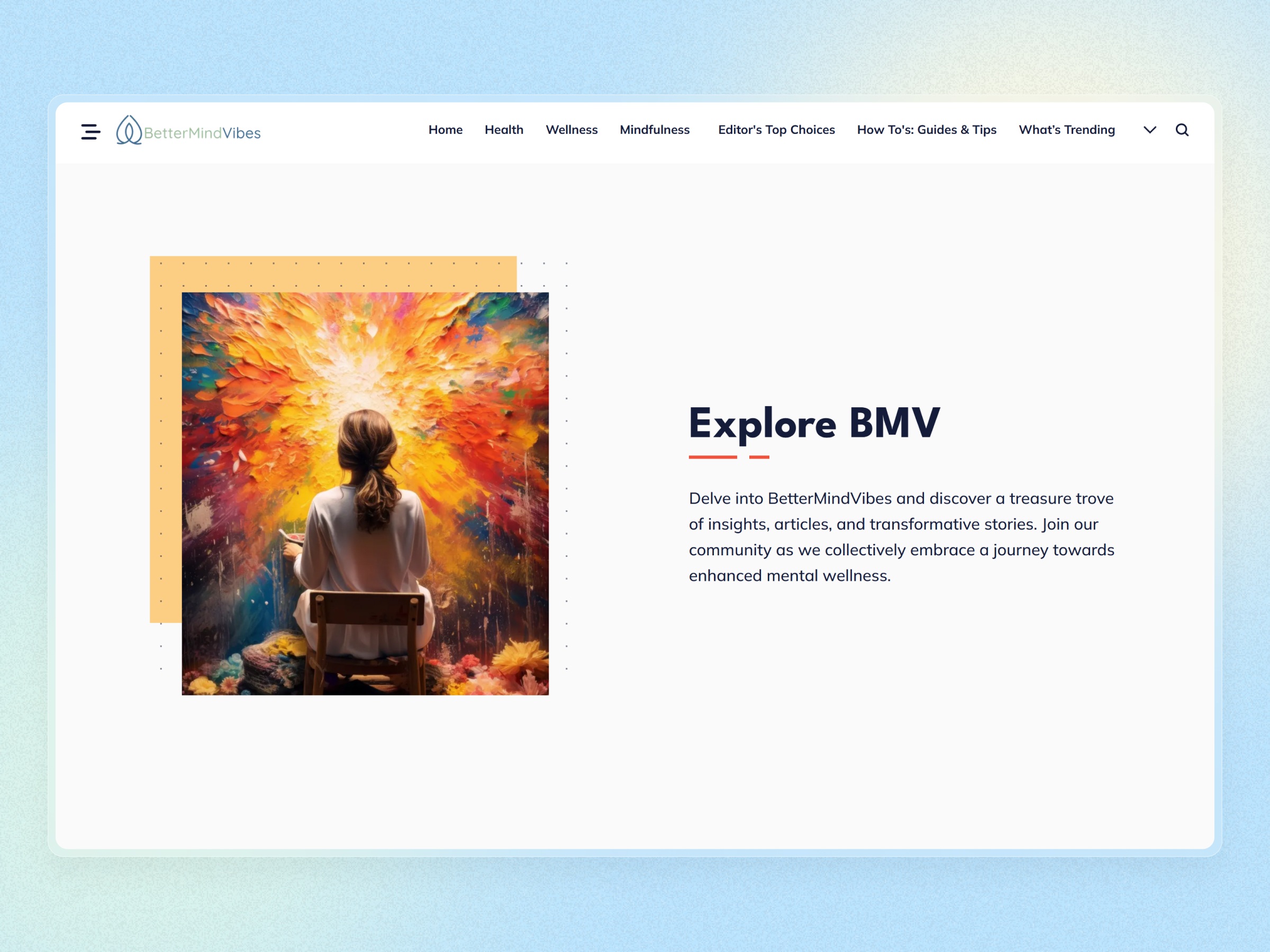
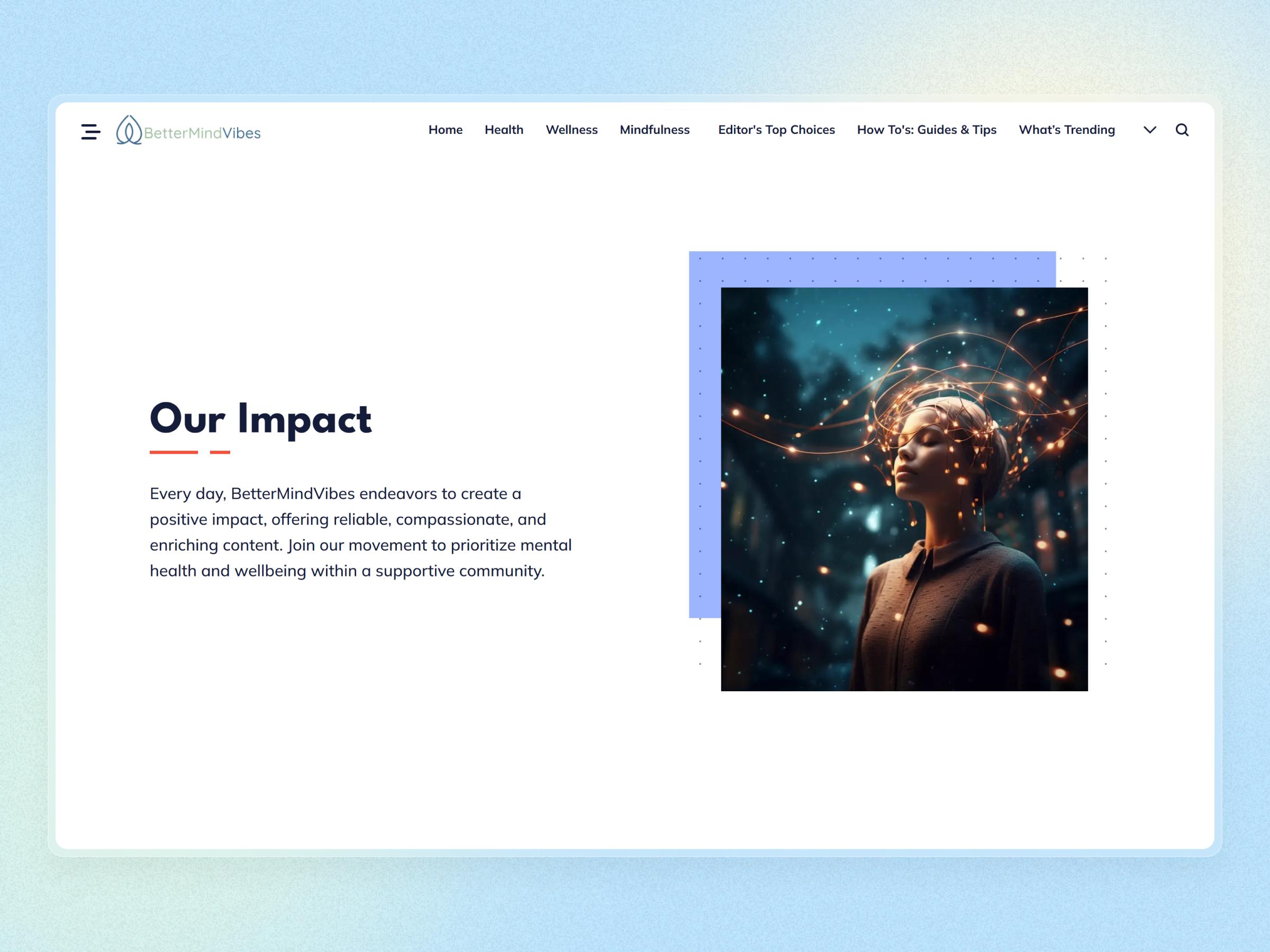
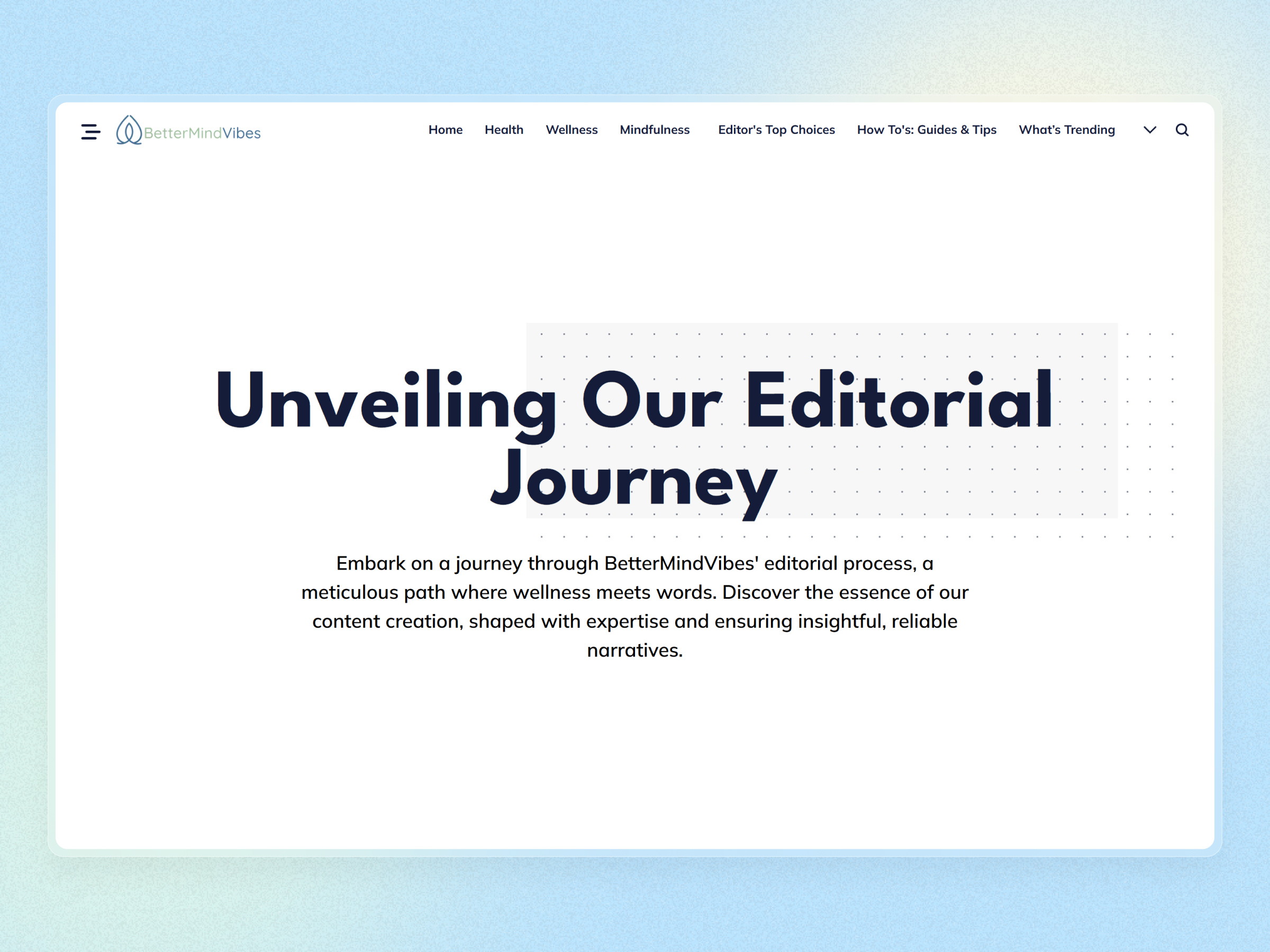
The design also needed to feel calm and considered. Health and wellness content asks readers to slow down. A cluttered, templated layout would work against the content itself.
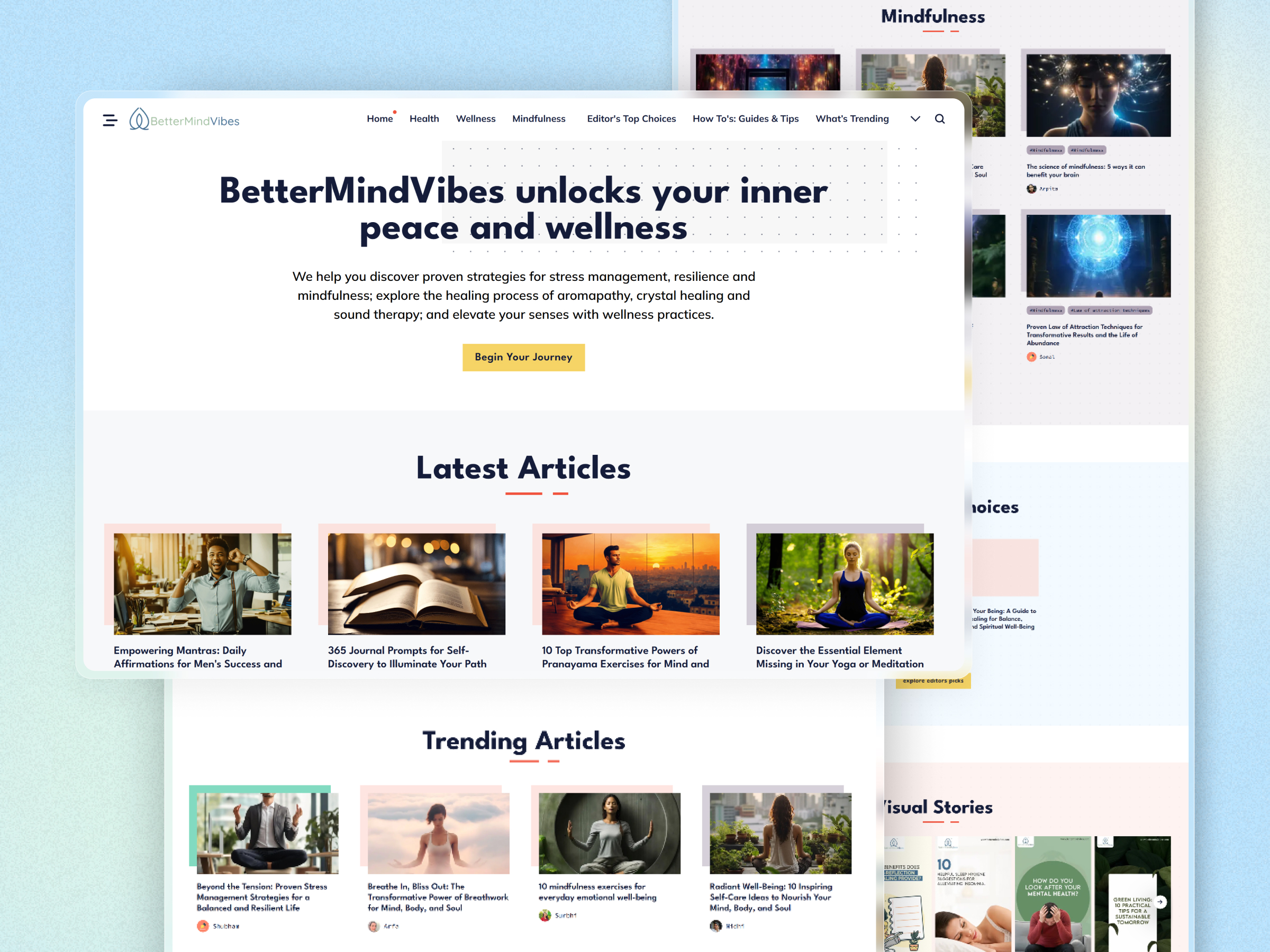
How we approached it
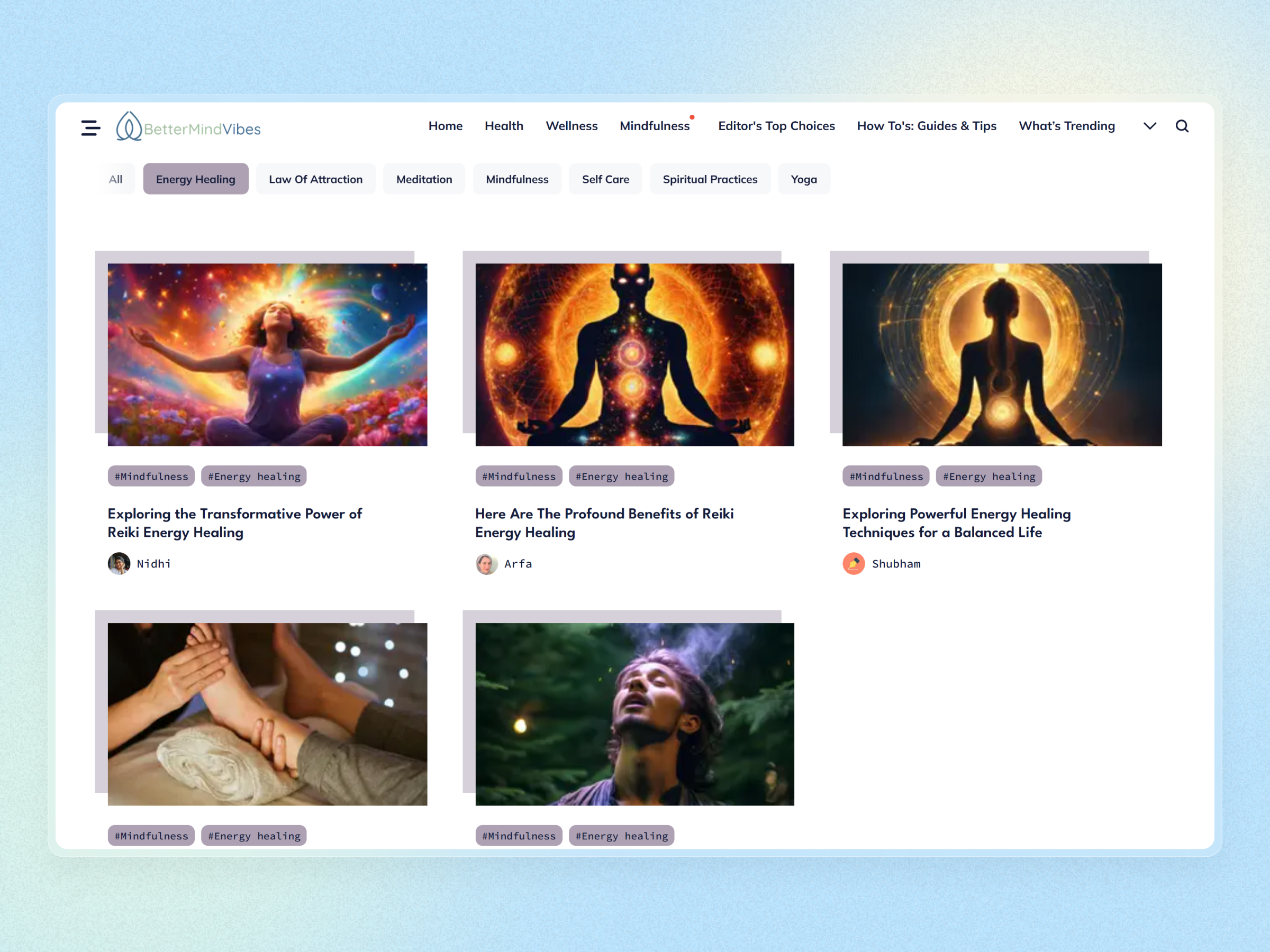
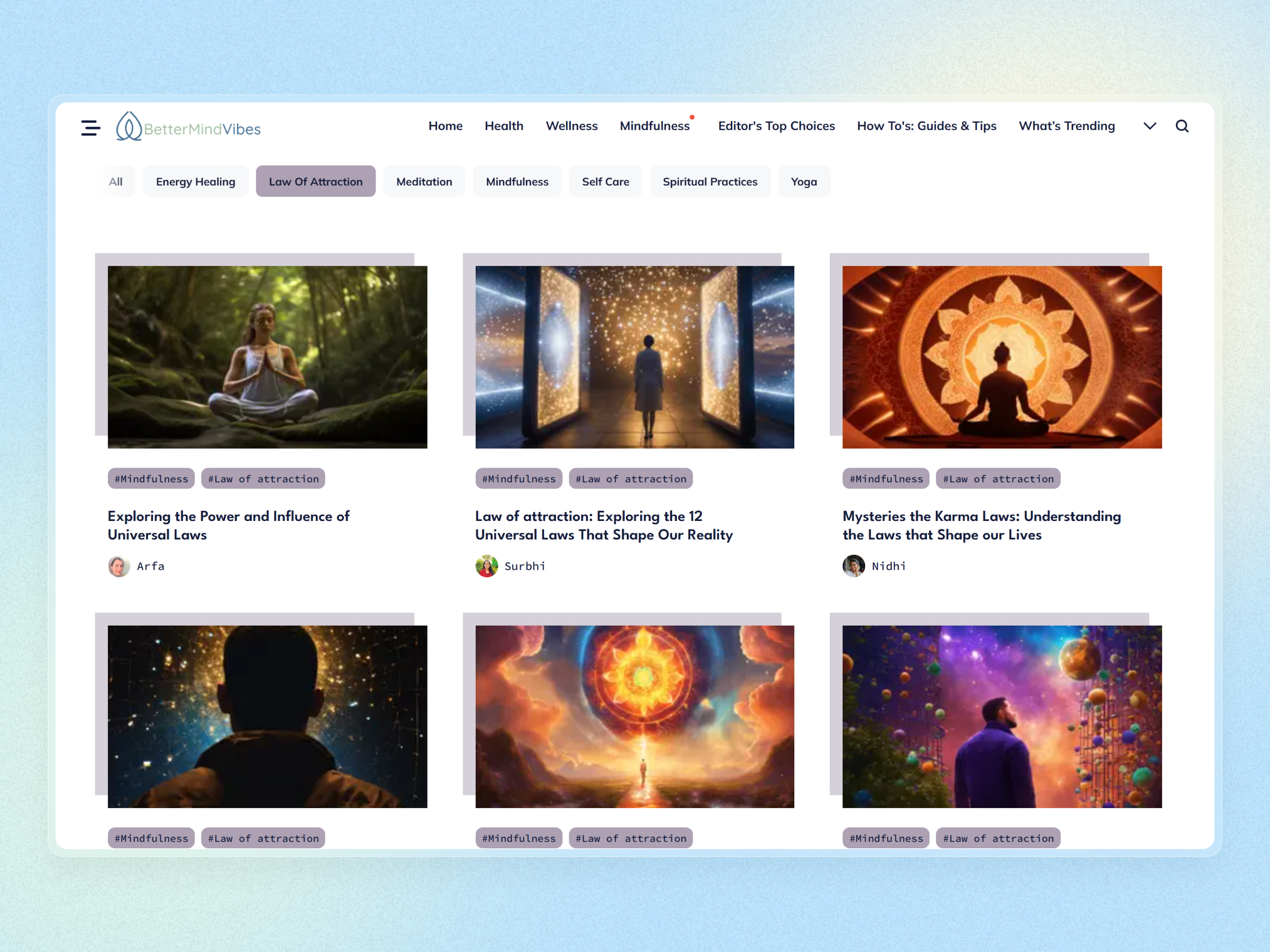
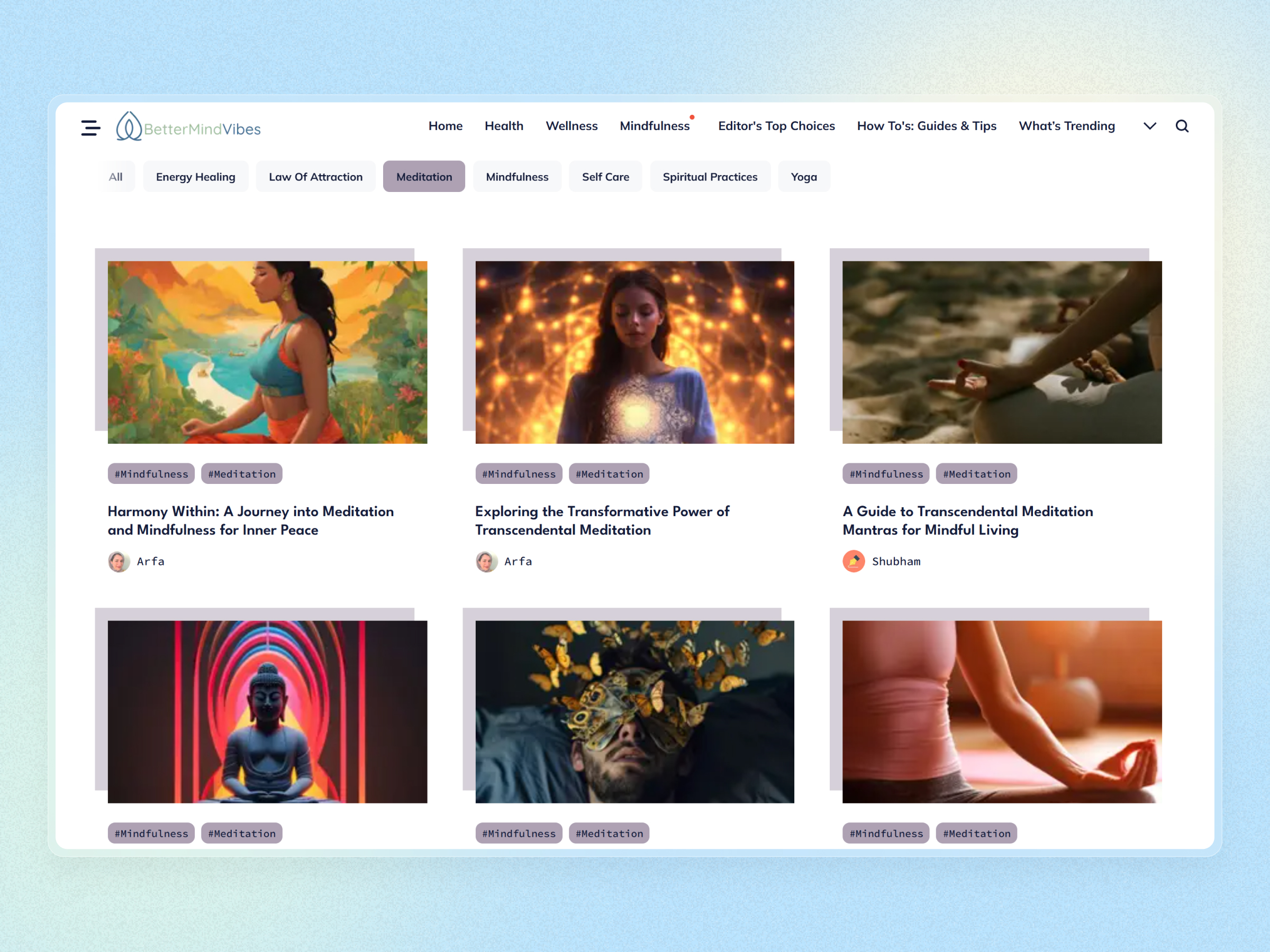
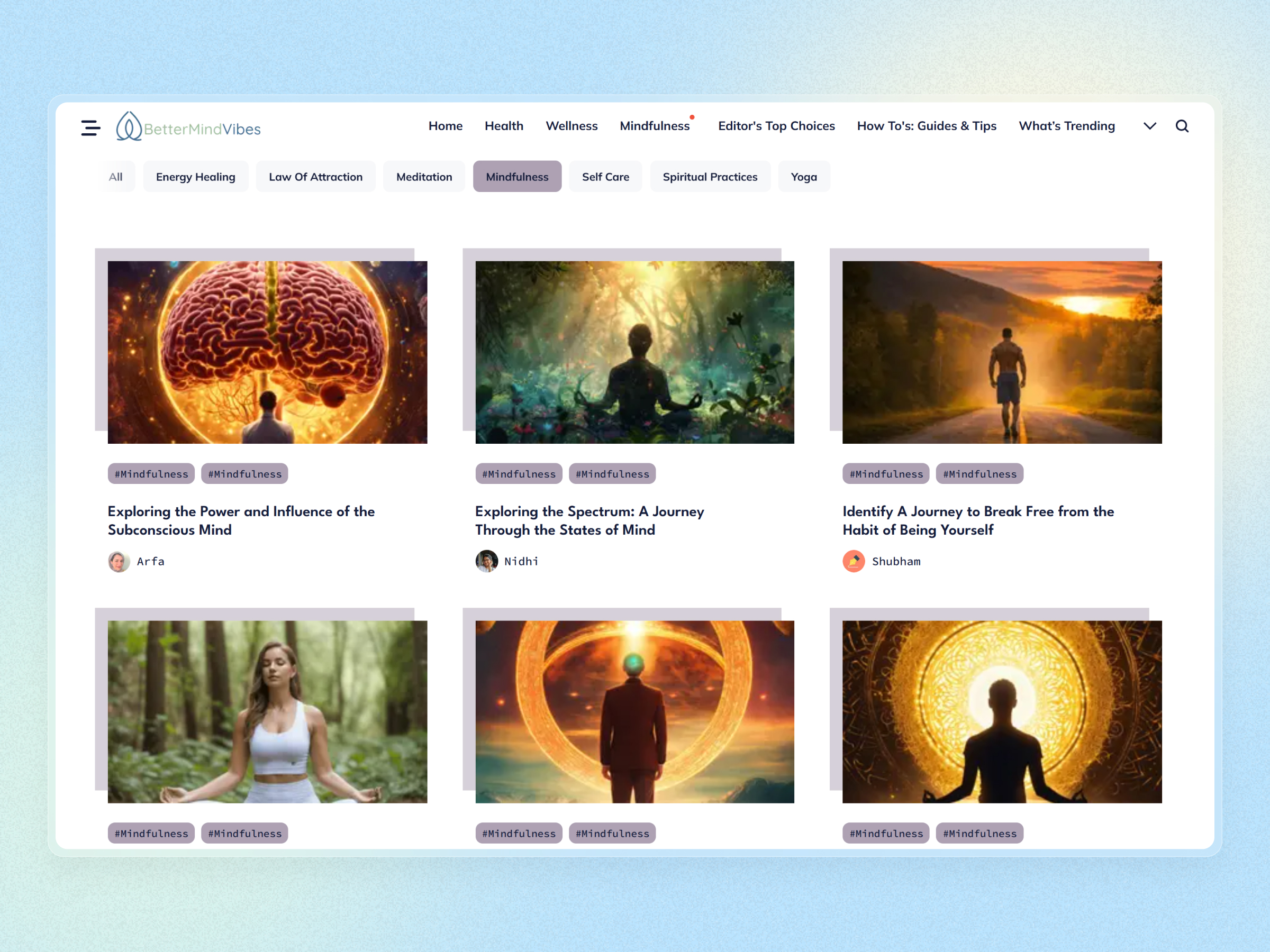
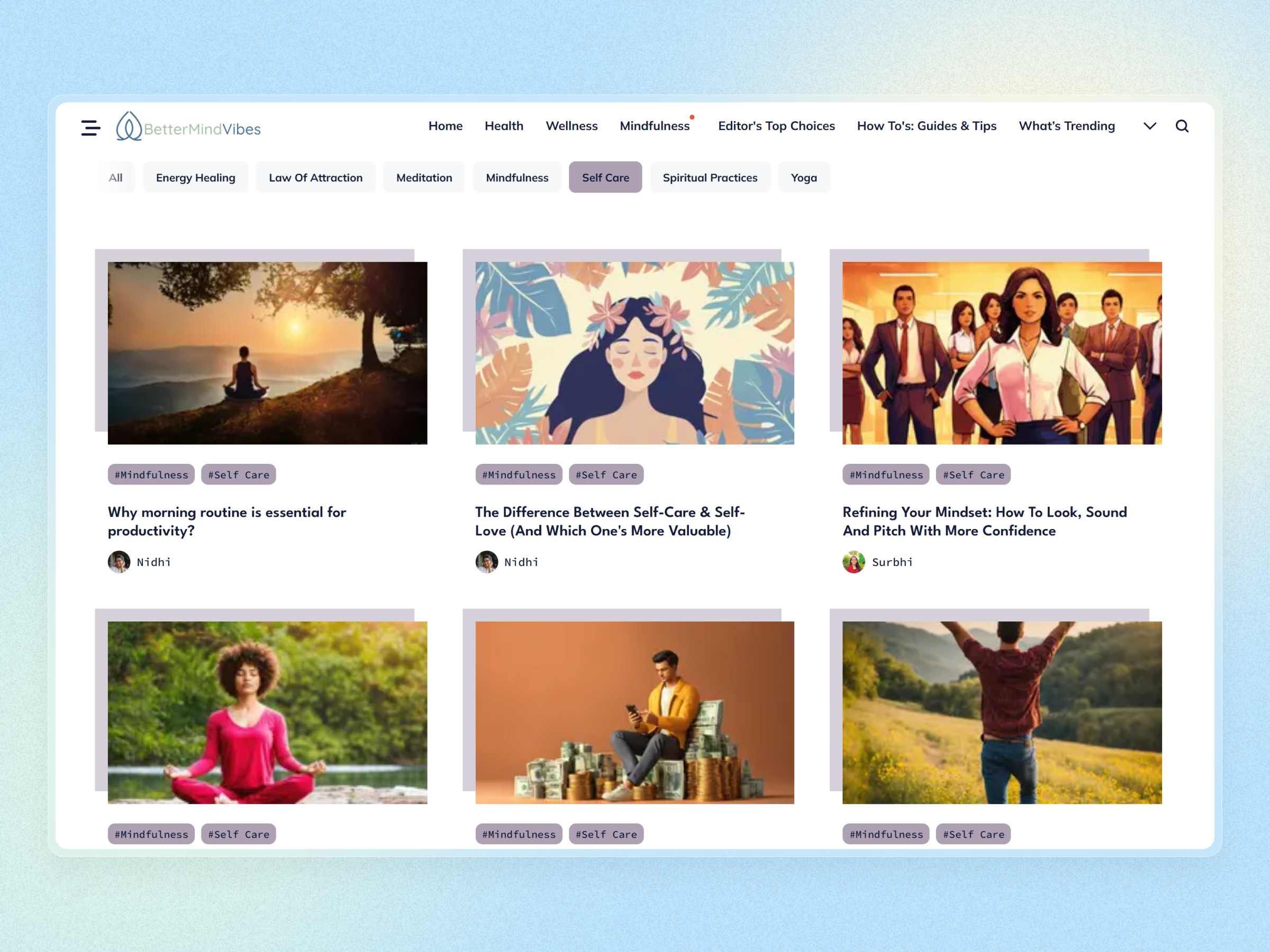
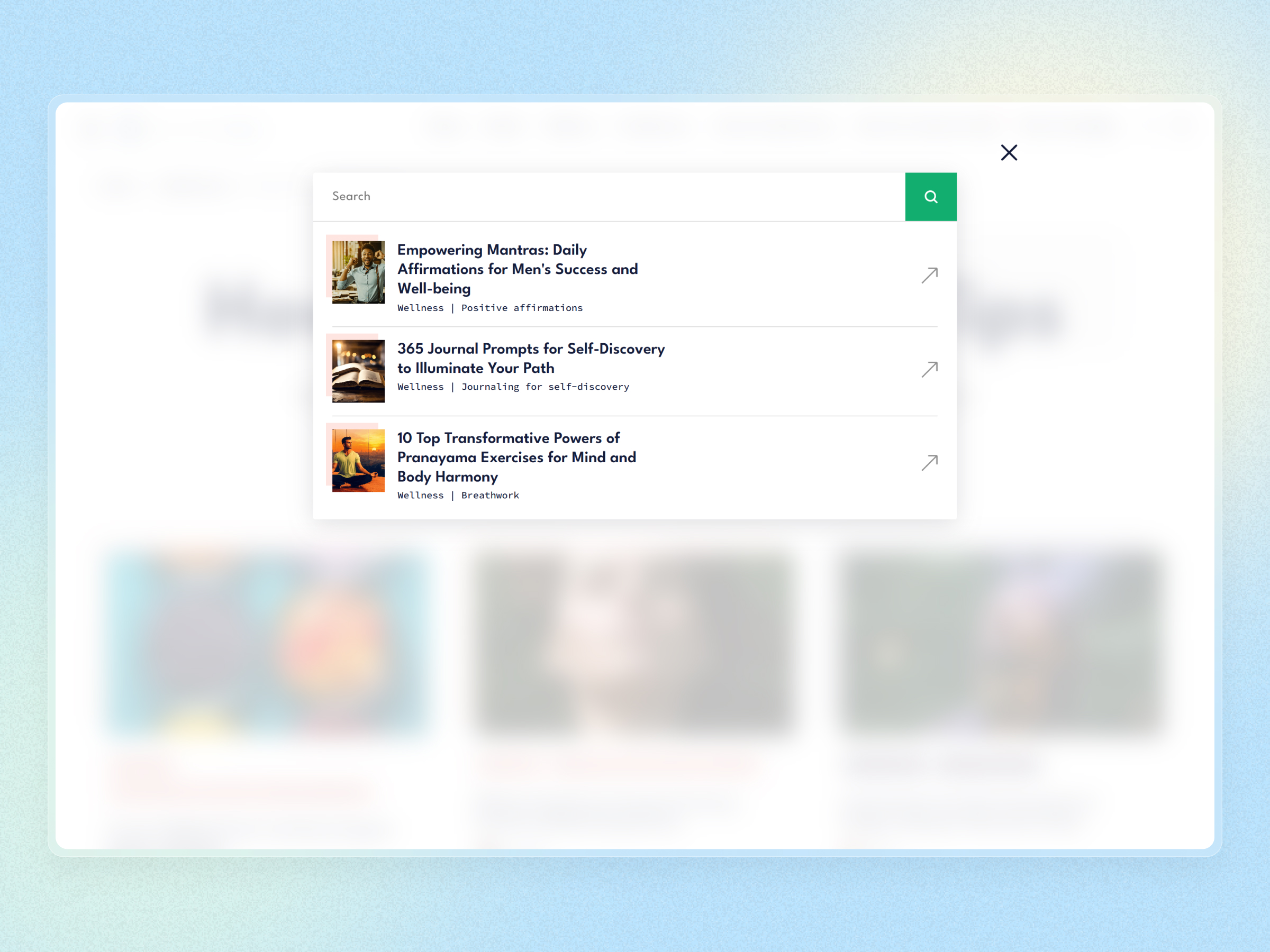
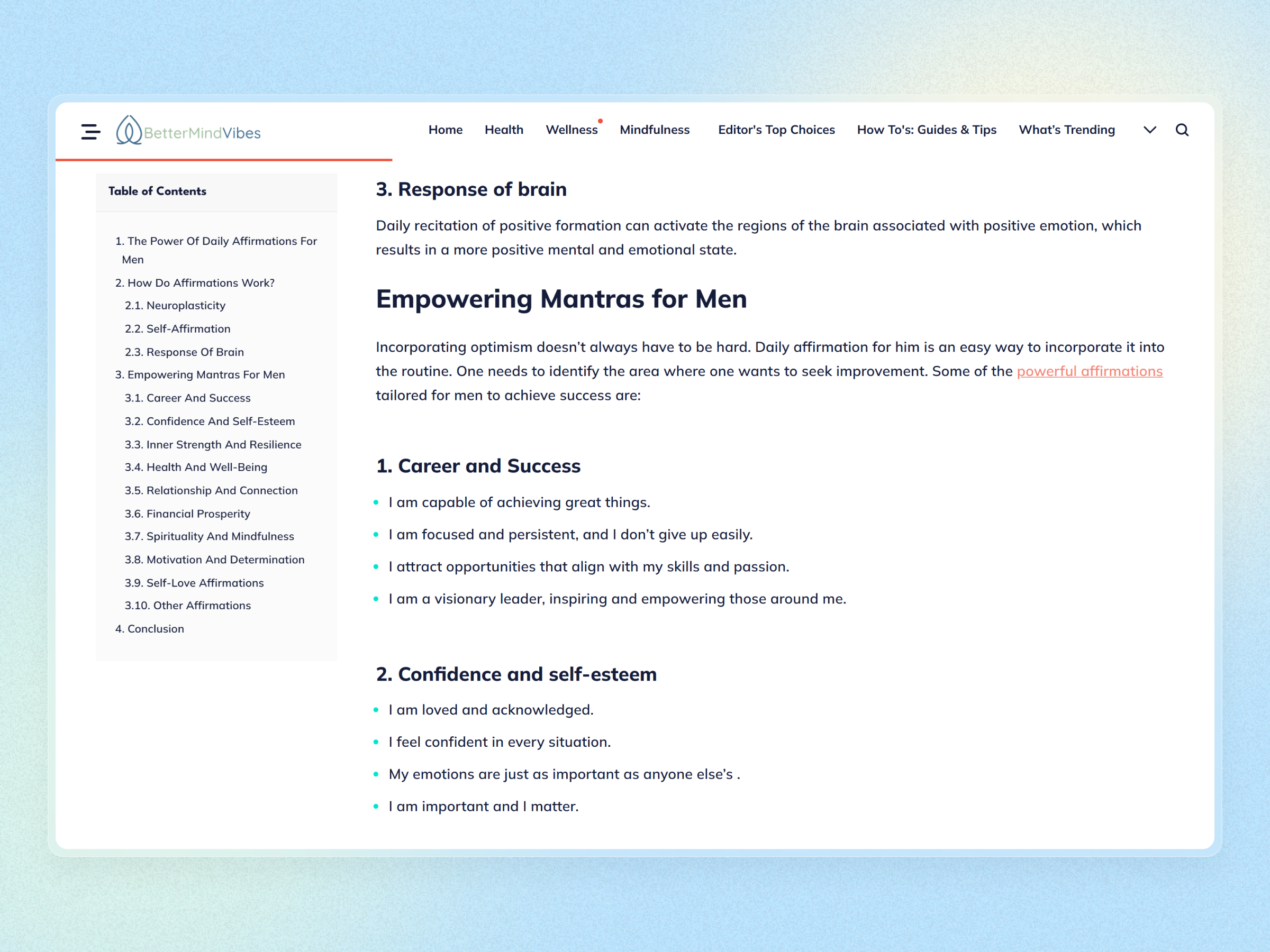
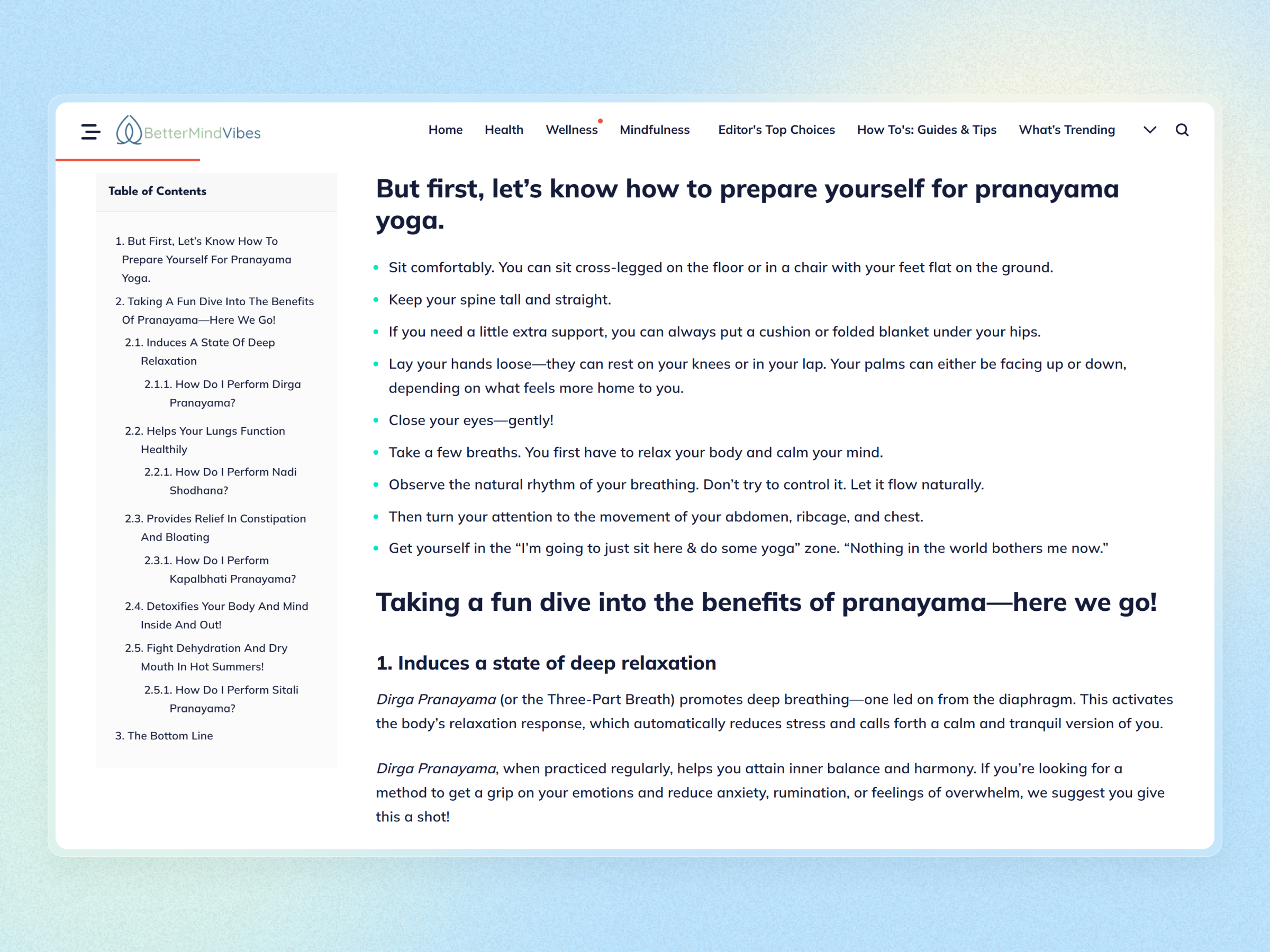
We used Next.js for the frontend and Strapi as the headless CMS. Next.js handles static generation for blog pages, which means fast load times and pages that are easy for search engines to crawl. Strapi gives the editorial team a clean admin interface to write, edit, categorise, and publish articles without any developer involvement.
Headless CMS with Strapi — Editorial Independence
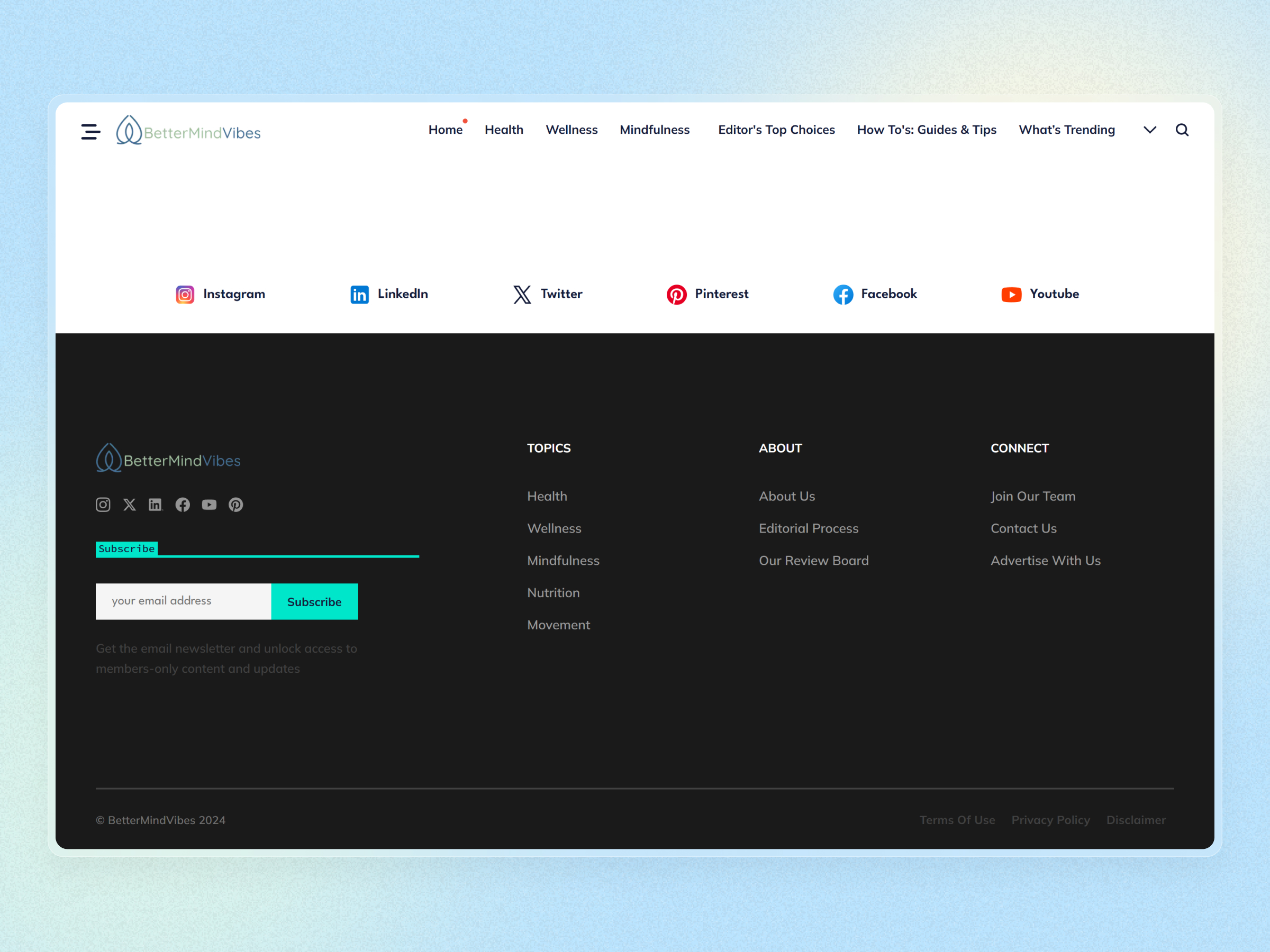
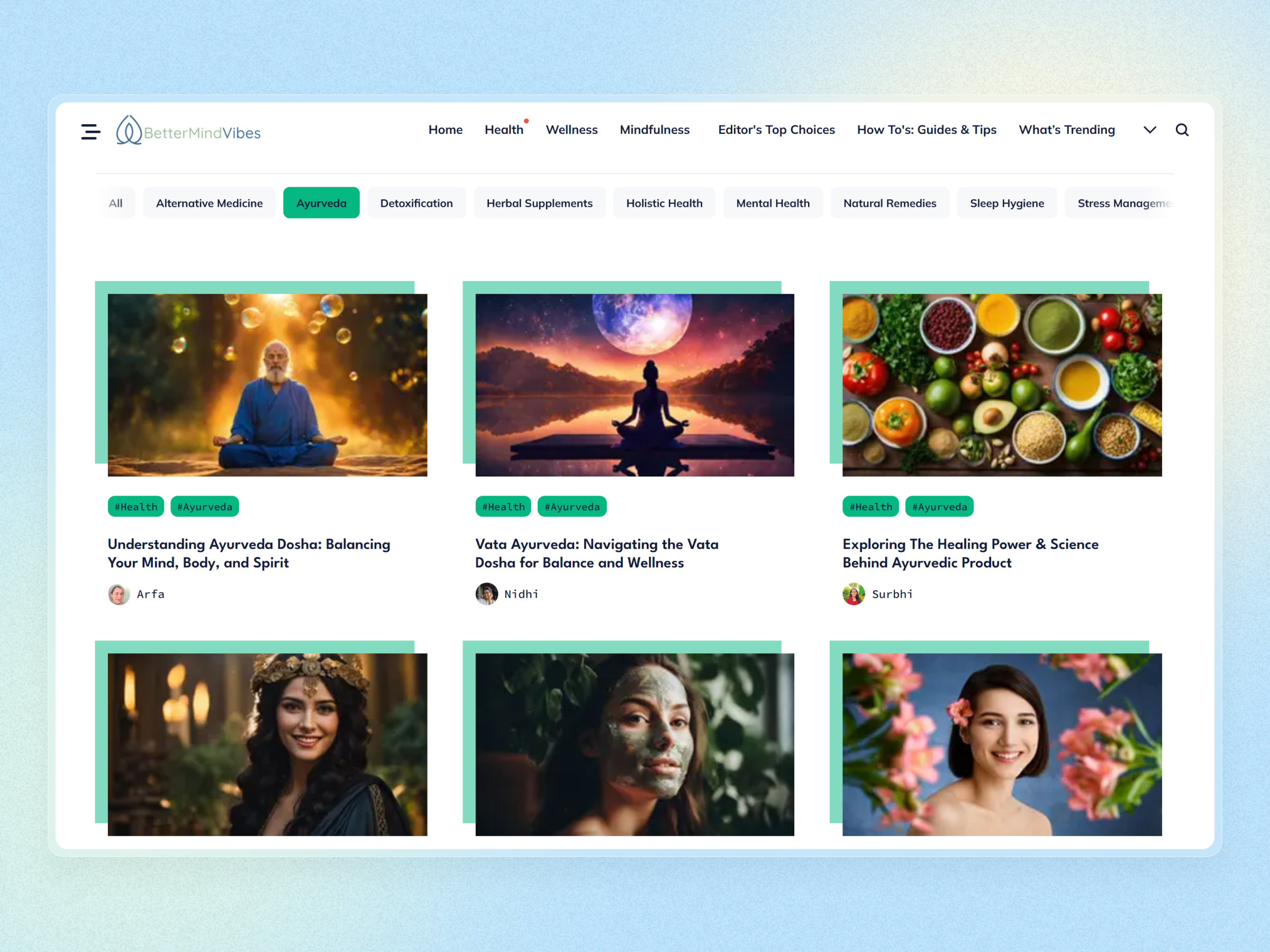
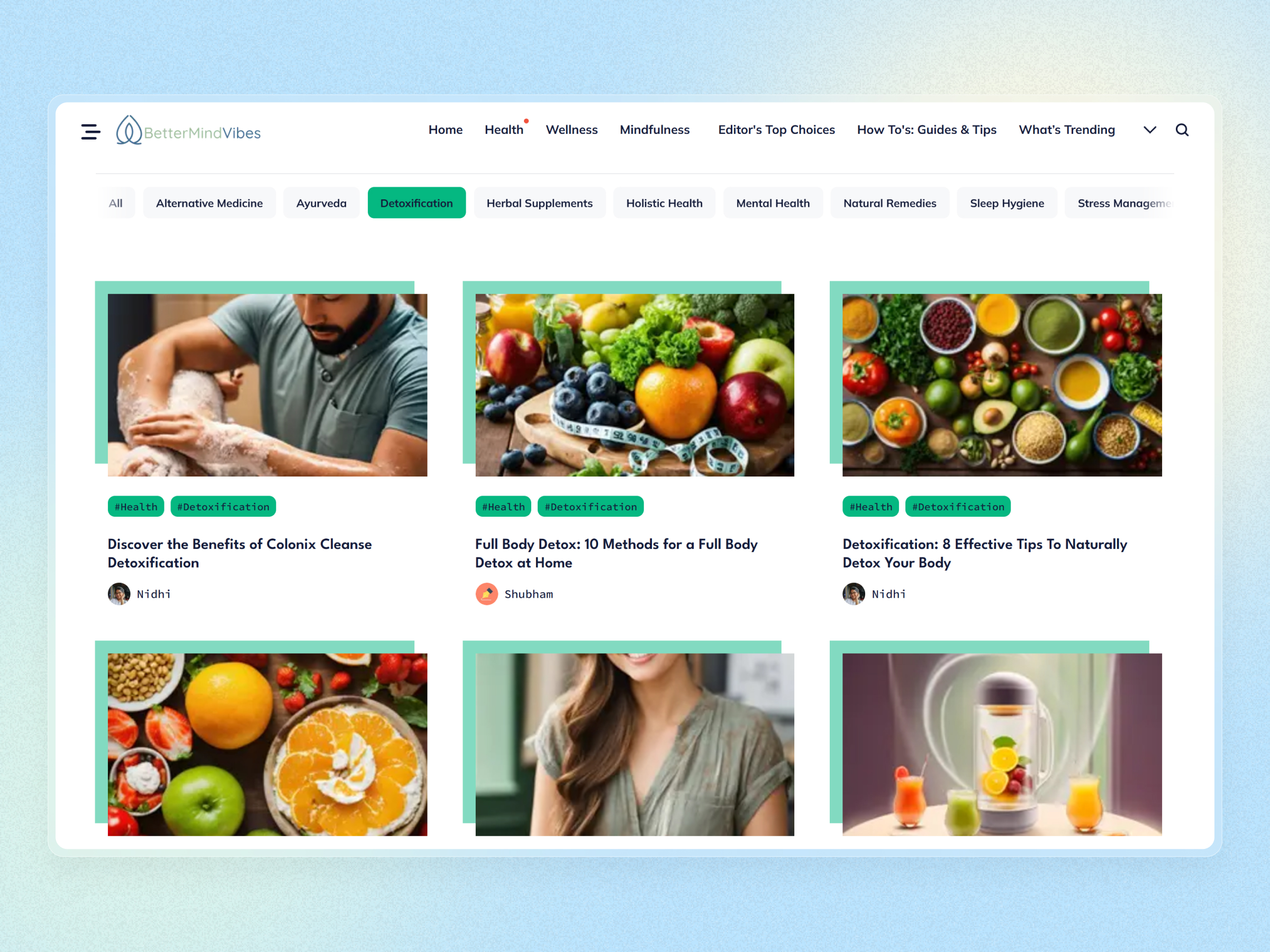
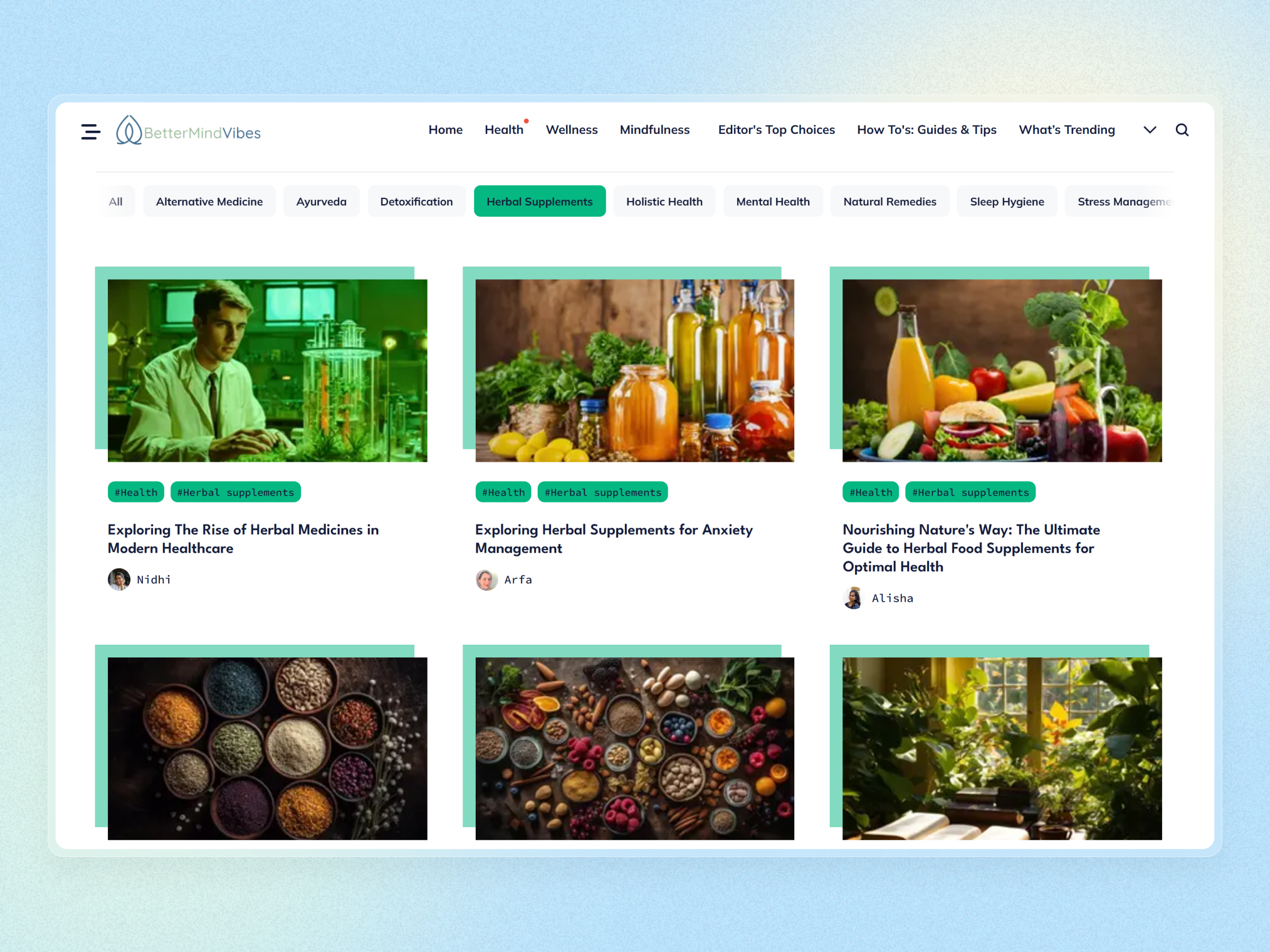
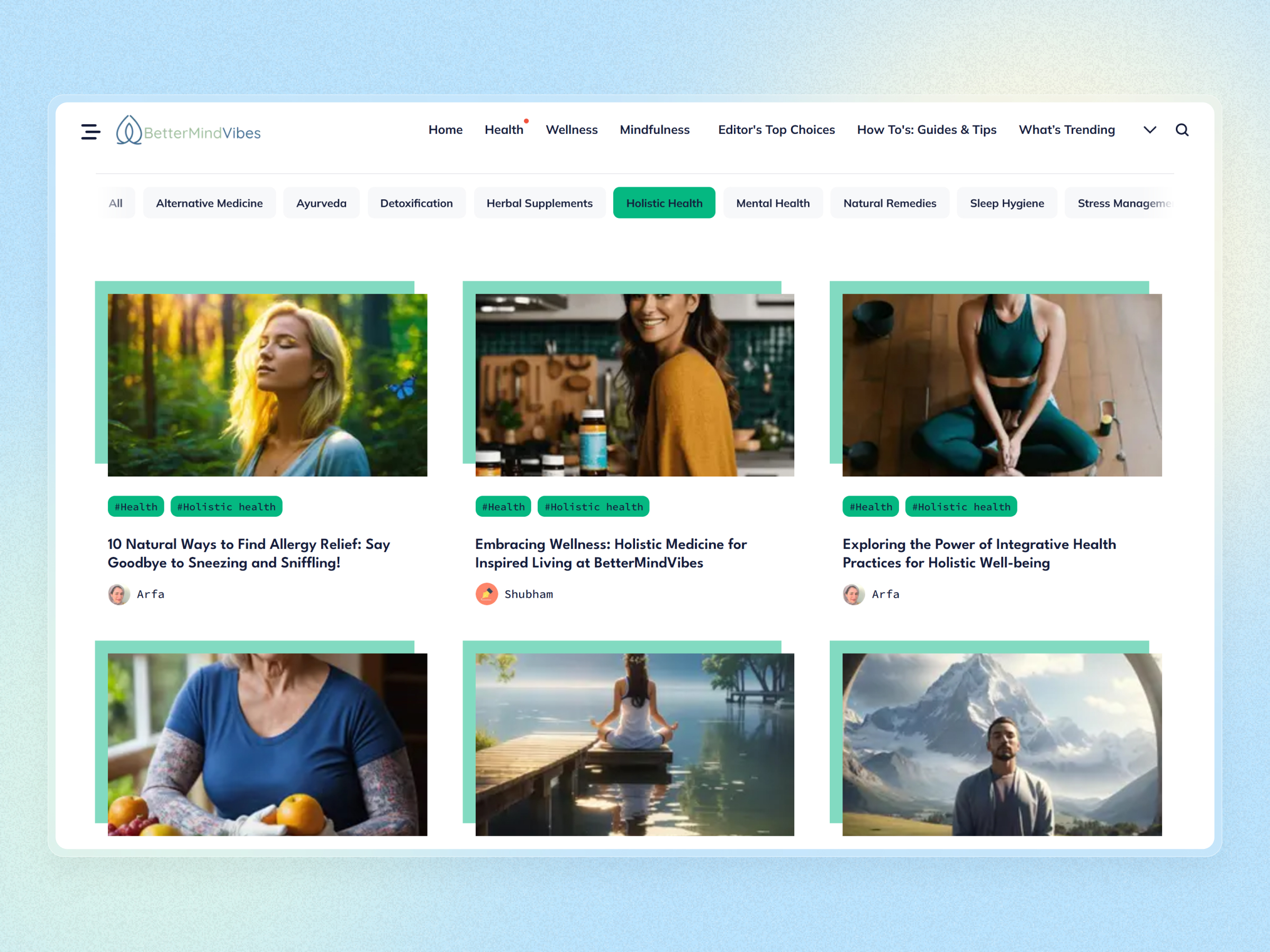
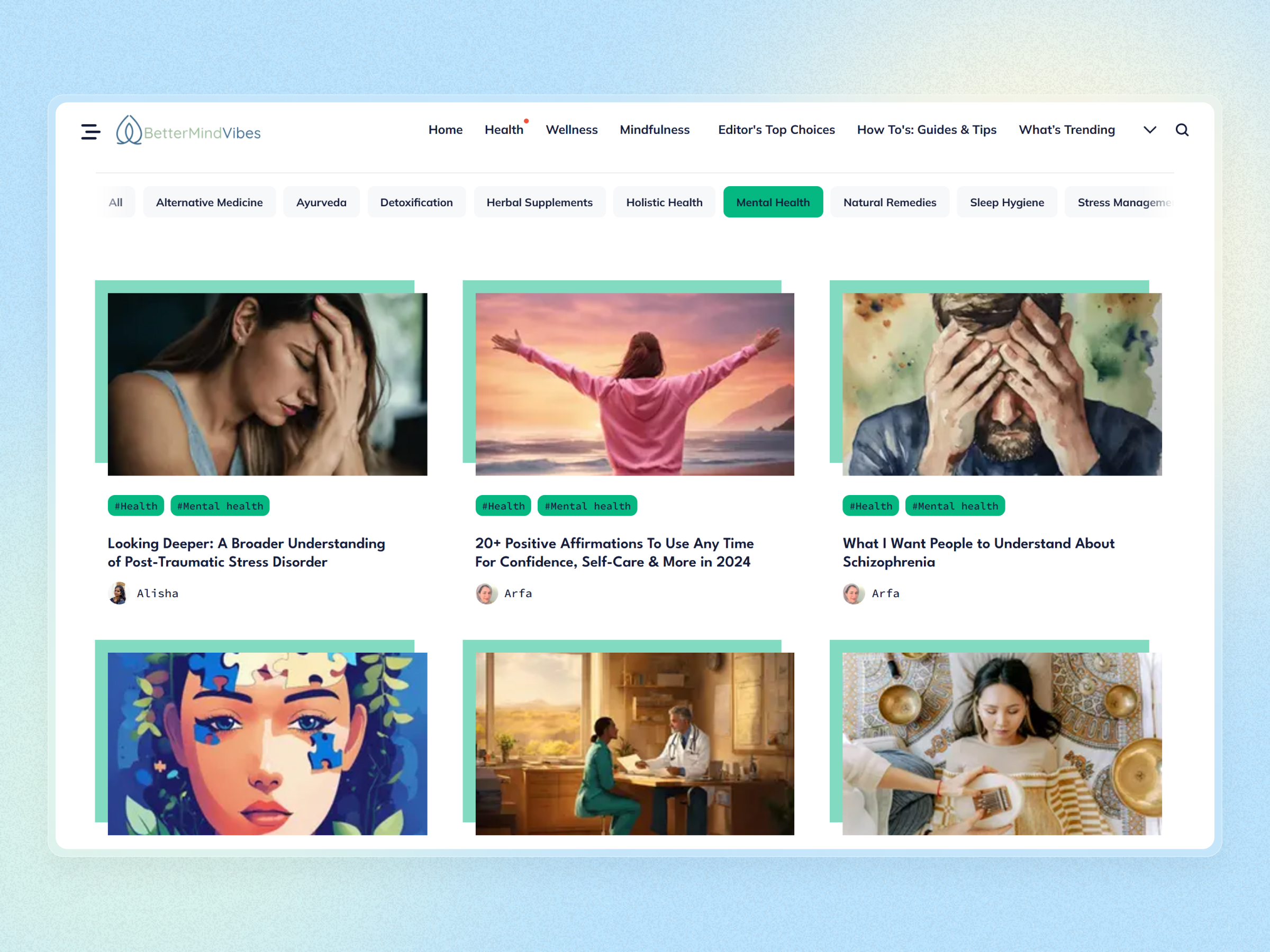
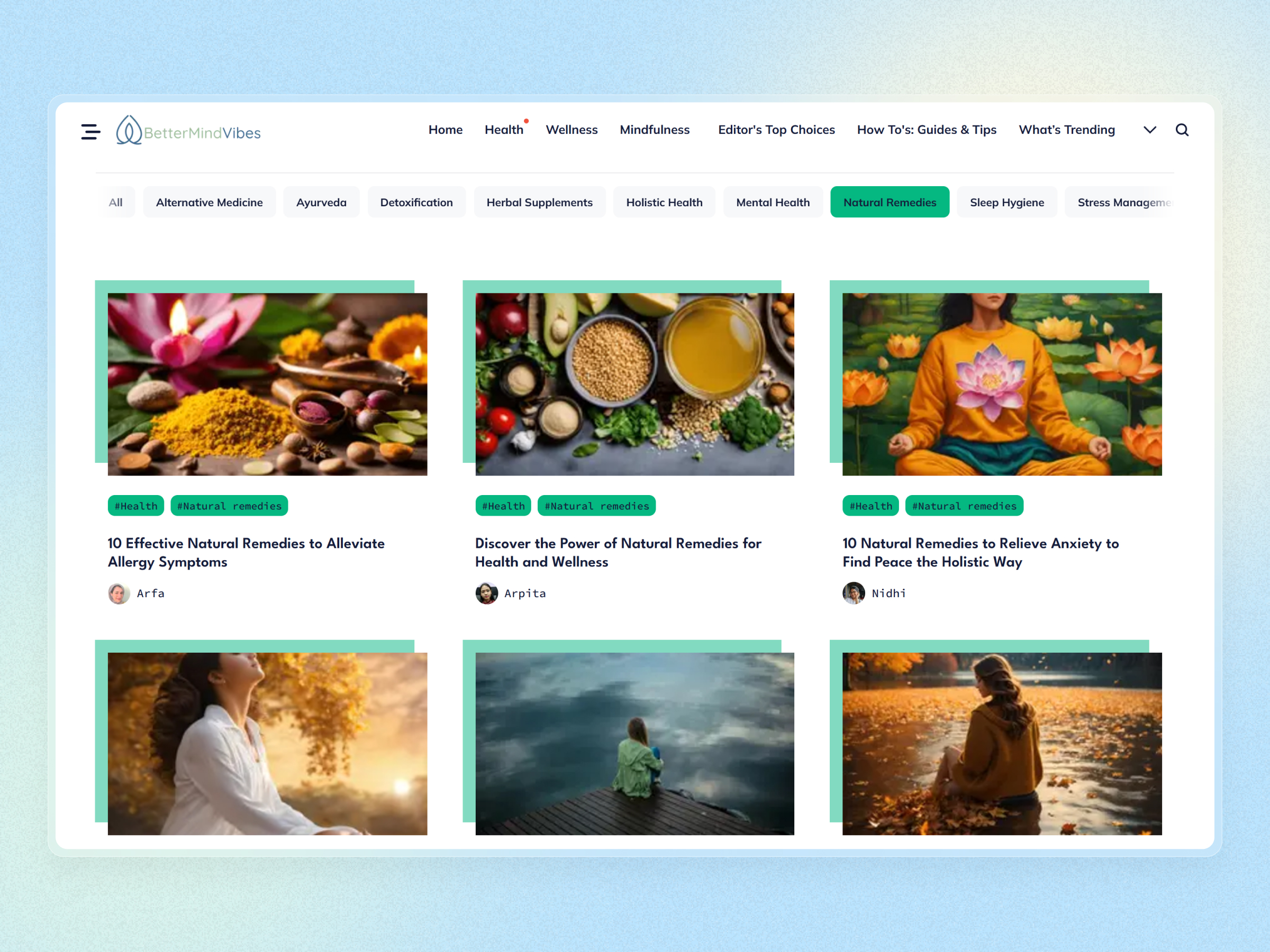
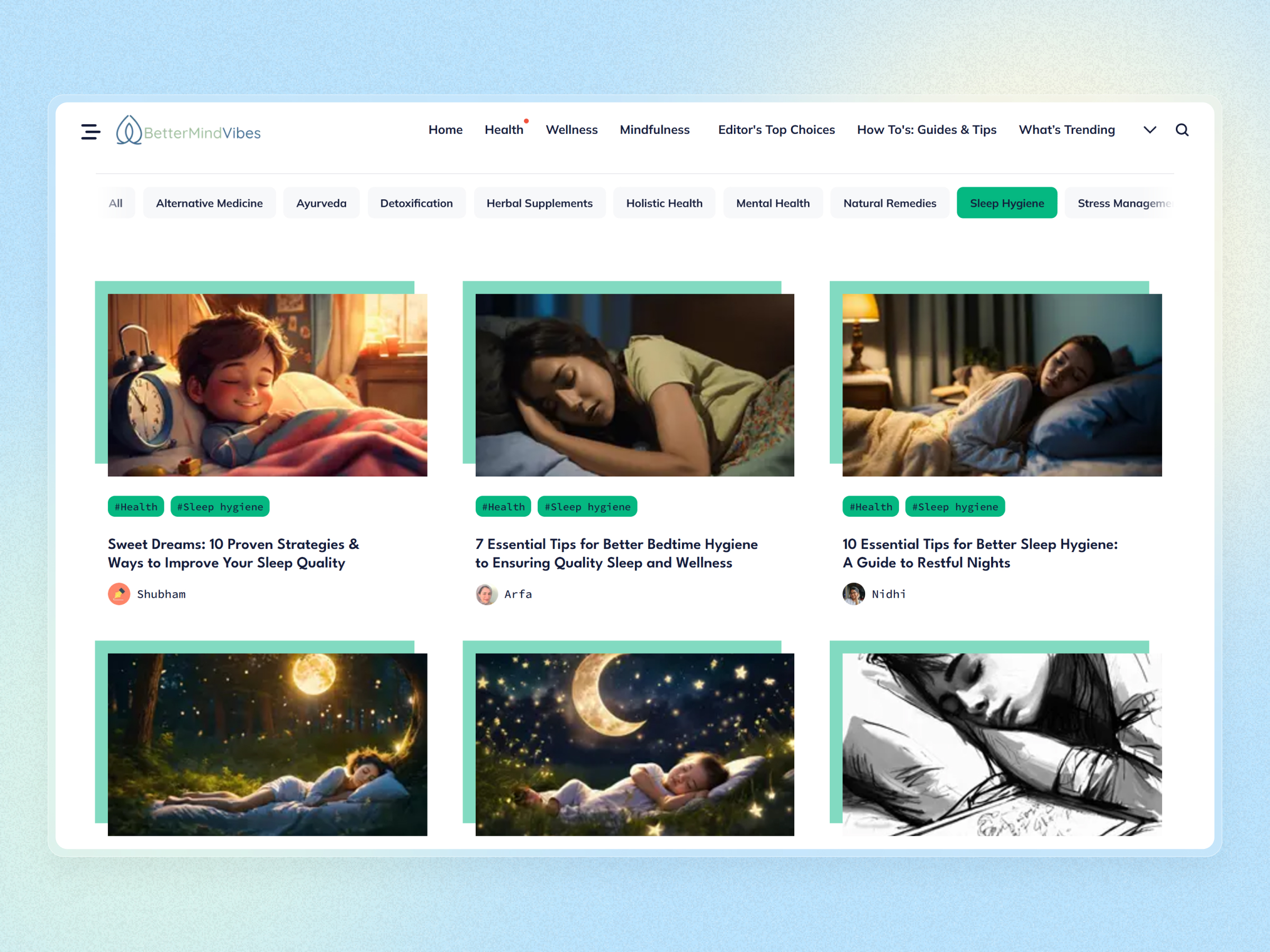
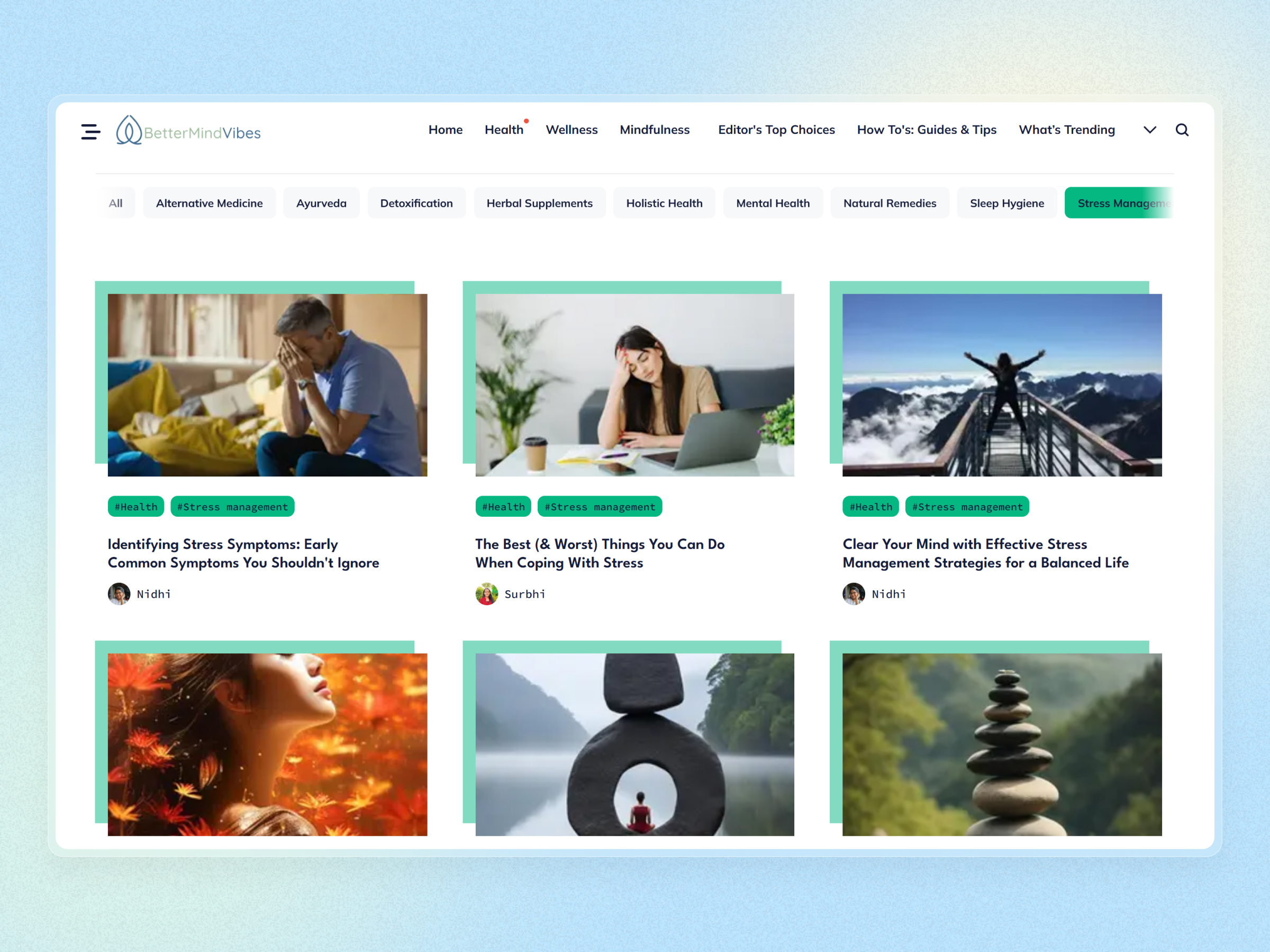
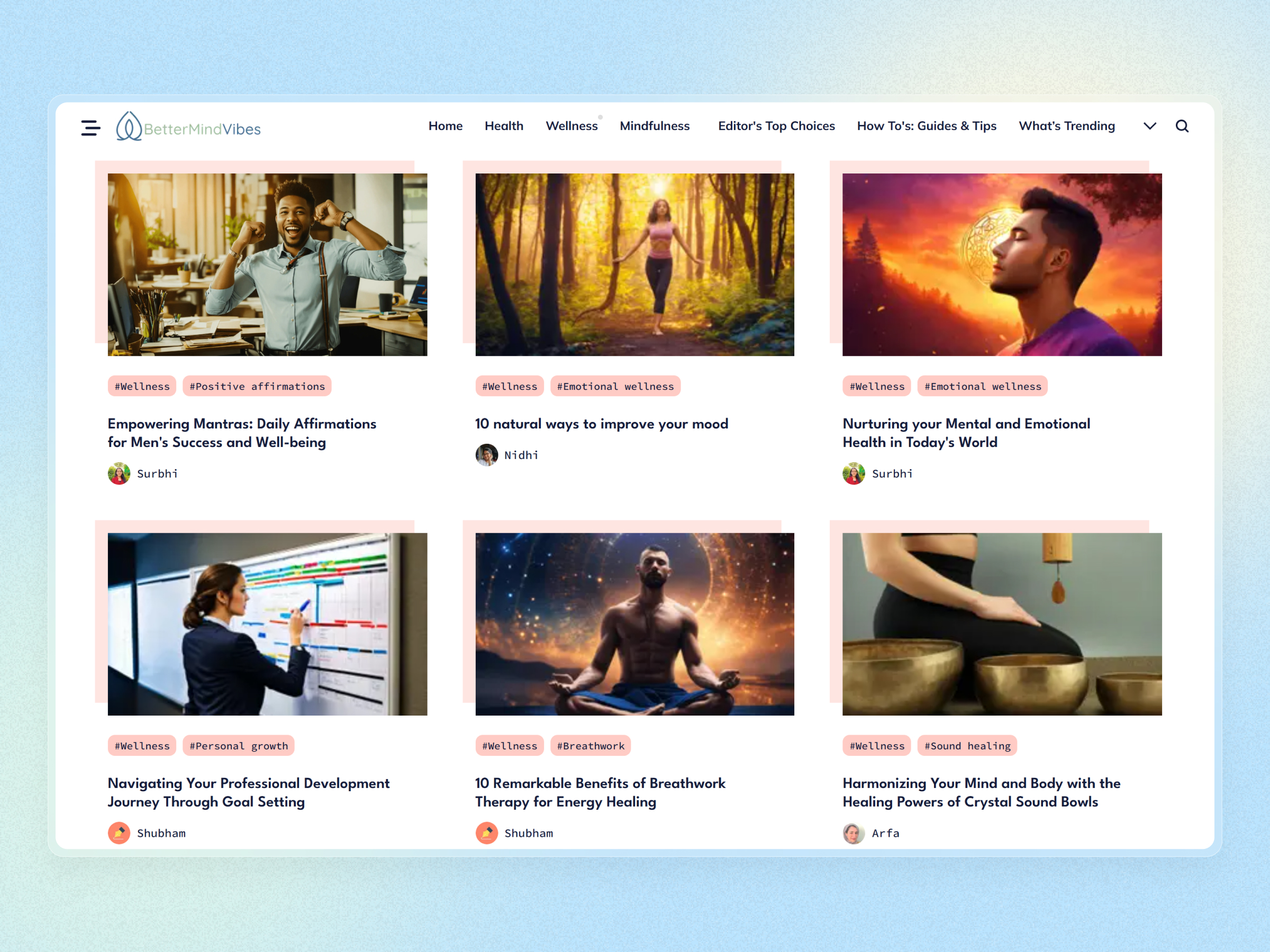
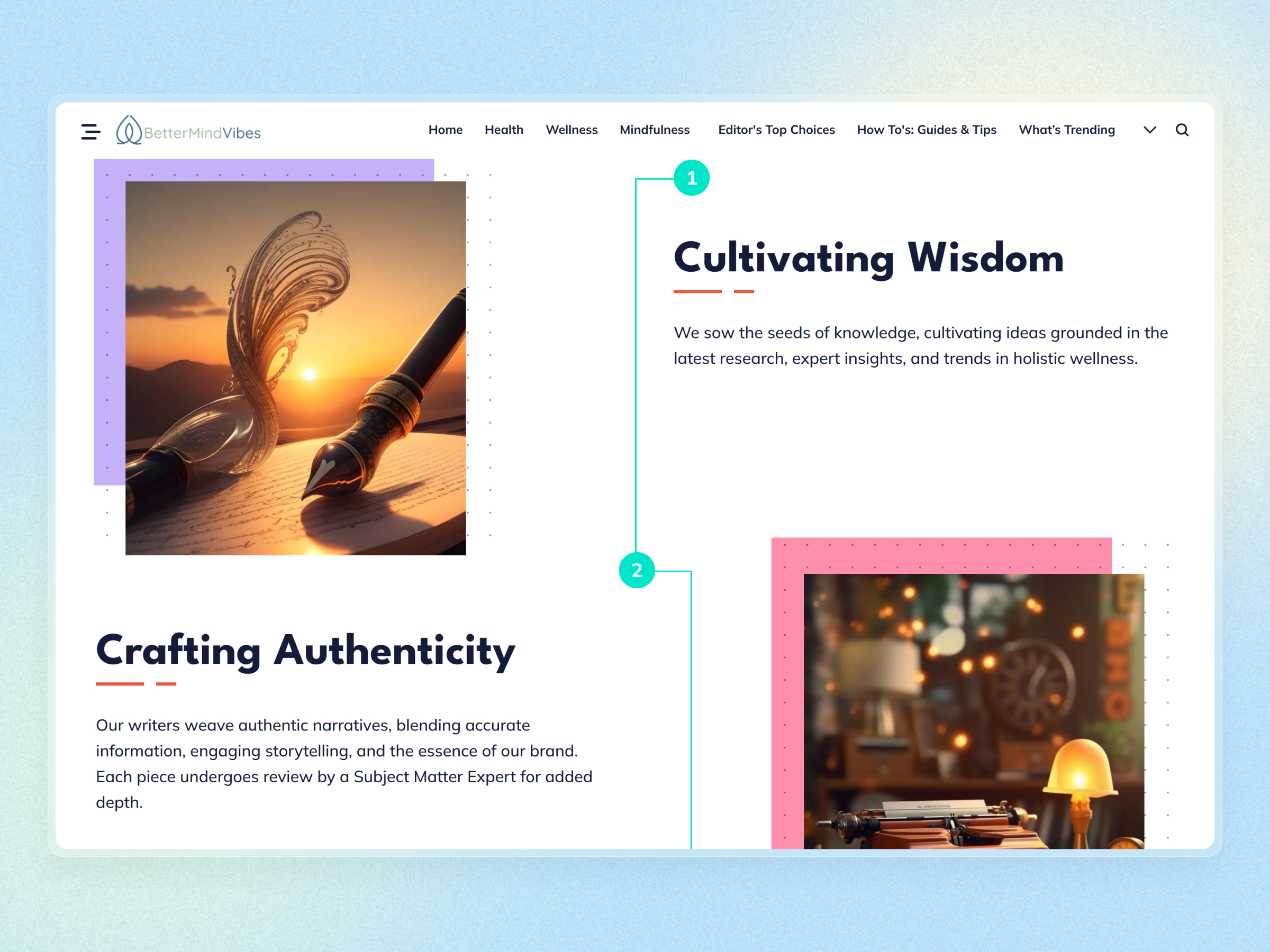
The client’s team can log into Strapi, write a new article, assign it to a category, add a featured image, and publish it. It’s all handled through a simple interface without touching the frontend. Content and code are fully decoupled — the team owns the content, we own the codebase, and neither gets in the other’s way.
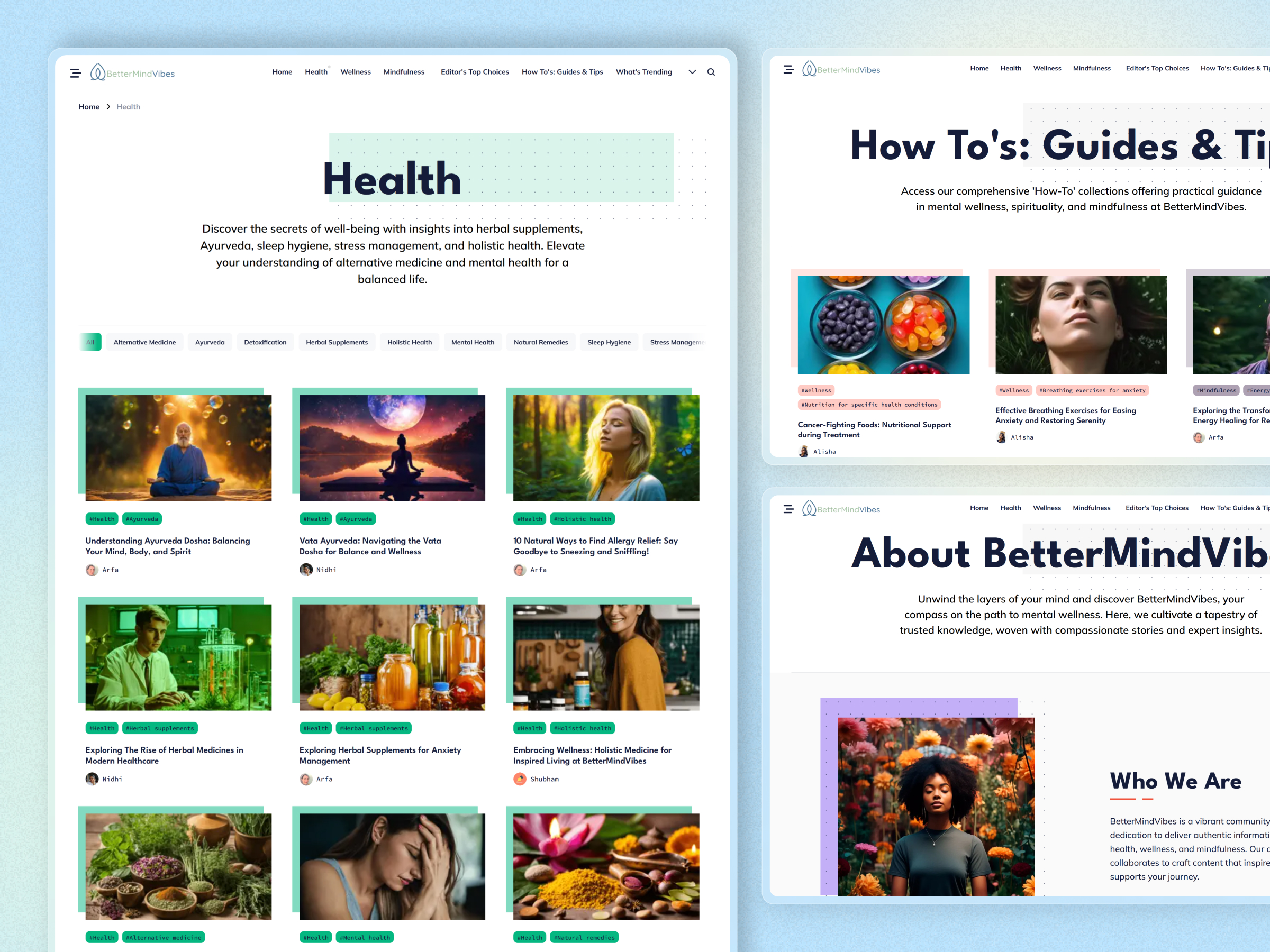
SEO-Optimised Blog Architecture
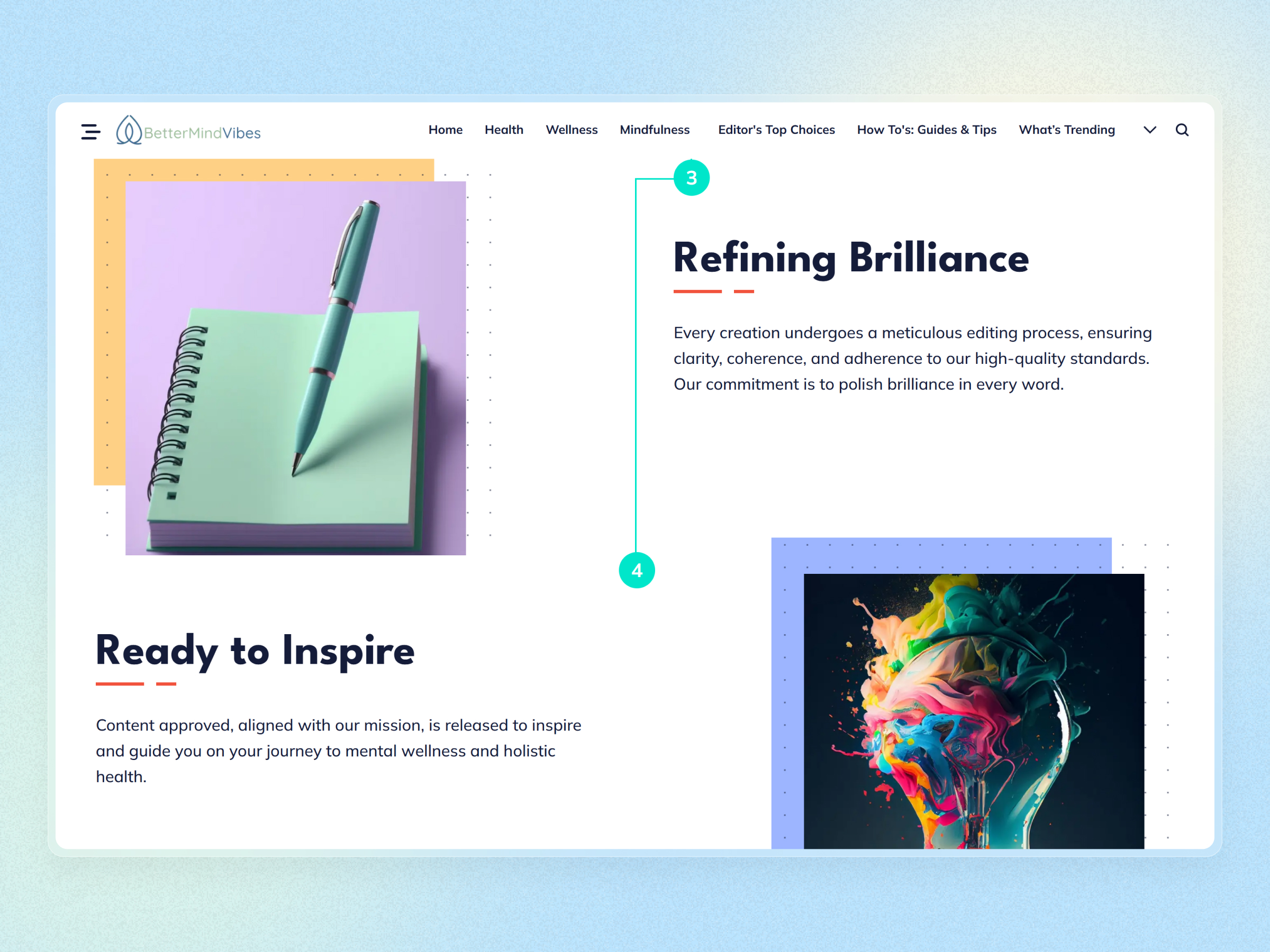
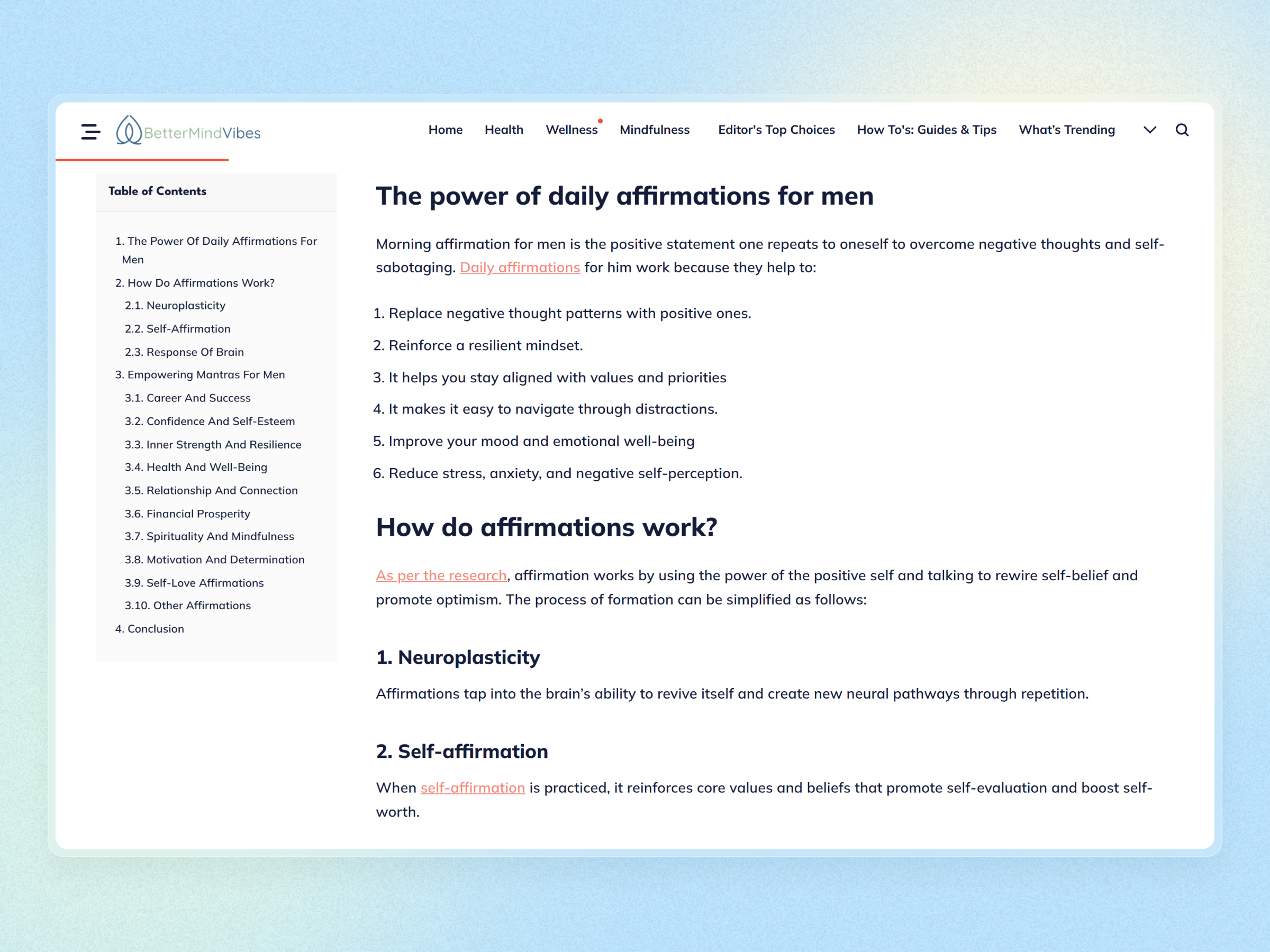
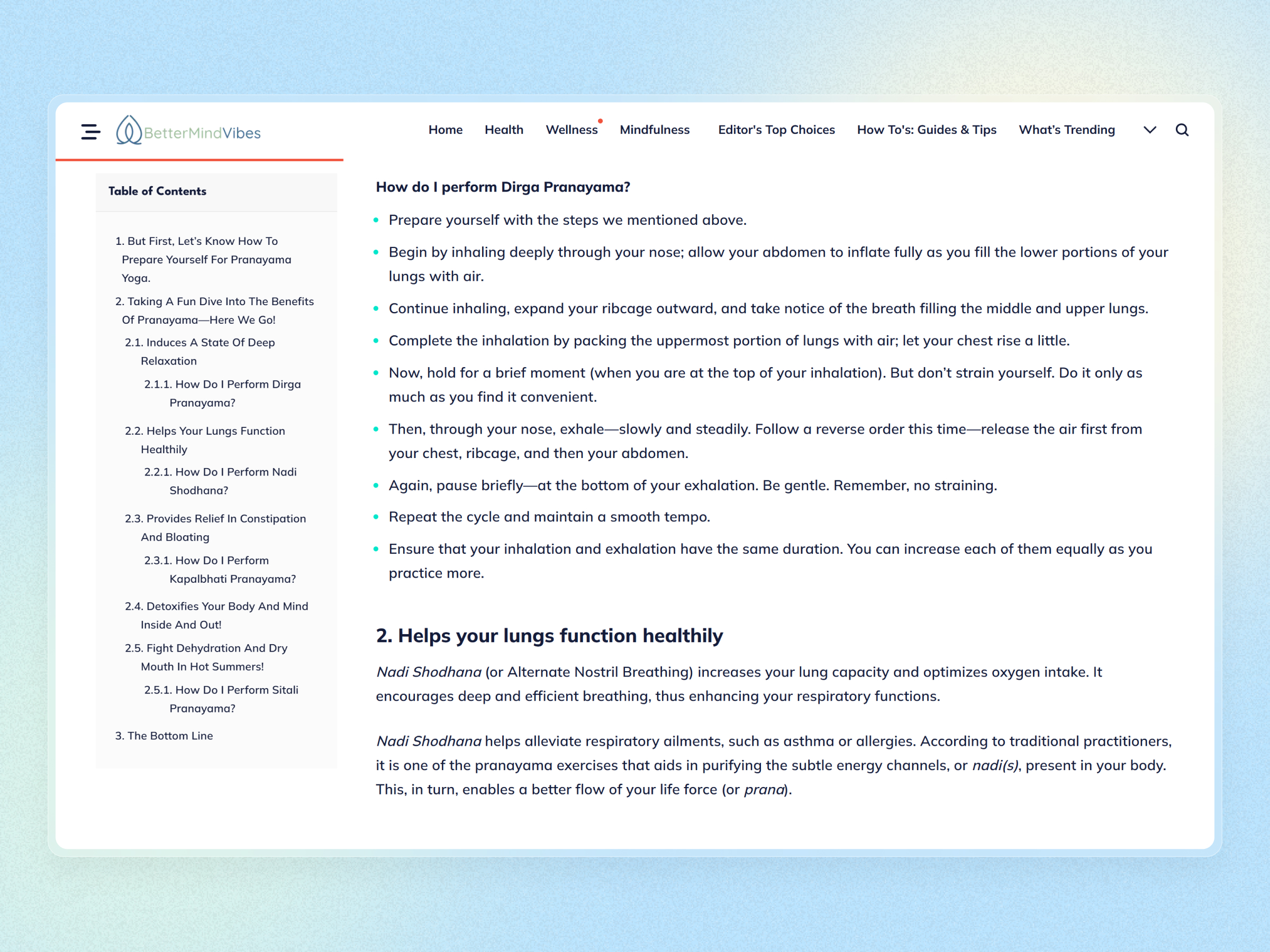
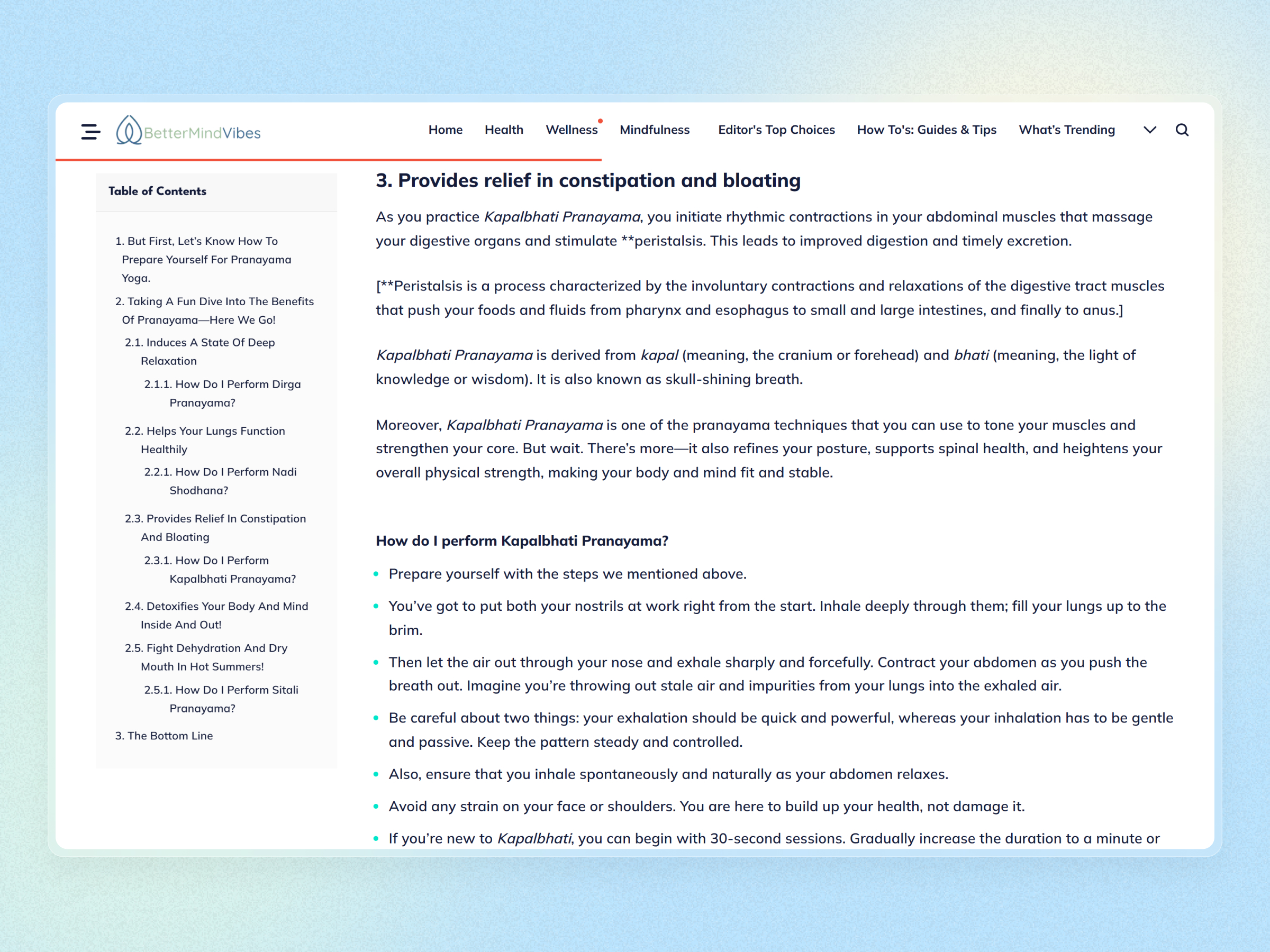
Blog pages are statically generated by Next.js at build time — they load fast, serve clean HTML, and are easy for Google to index. We implemented structured data for articles, clean URL patterns, auto-generated sitemaps, and proper meta handling for each post. For a content-first platform, getting this right from the start matters more than retrofitting it later.
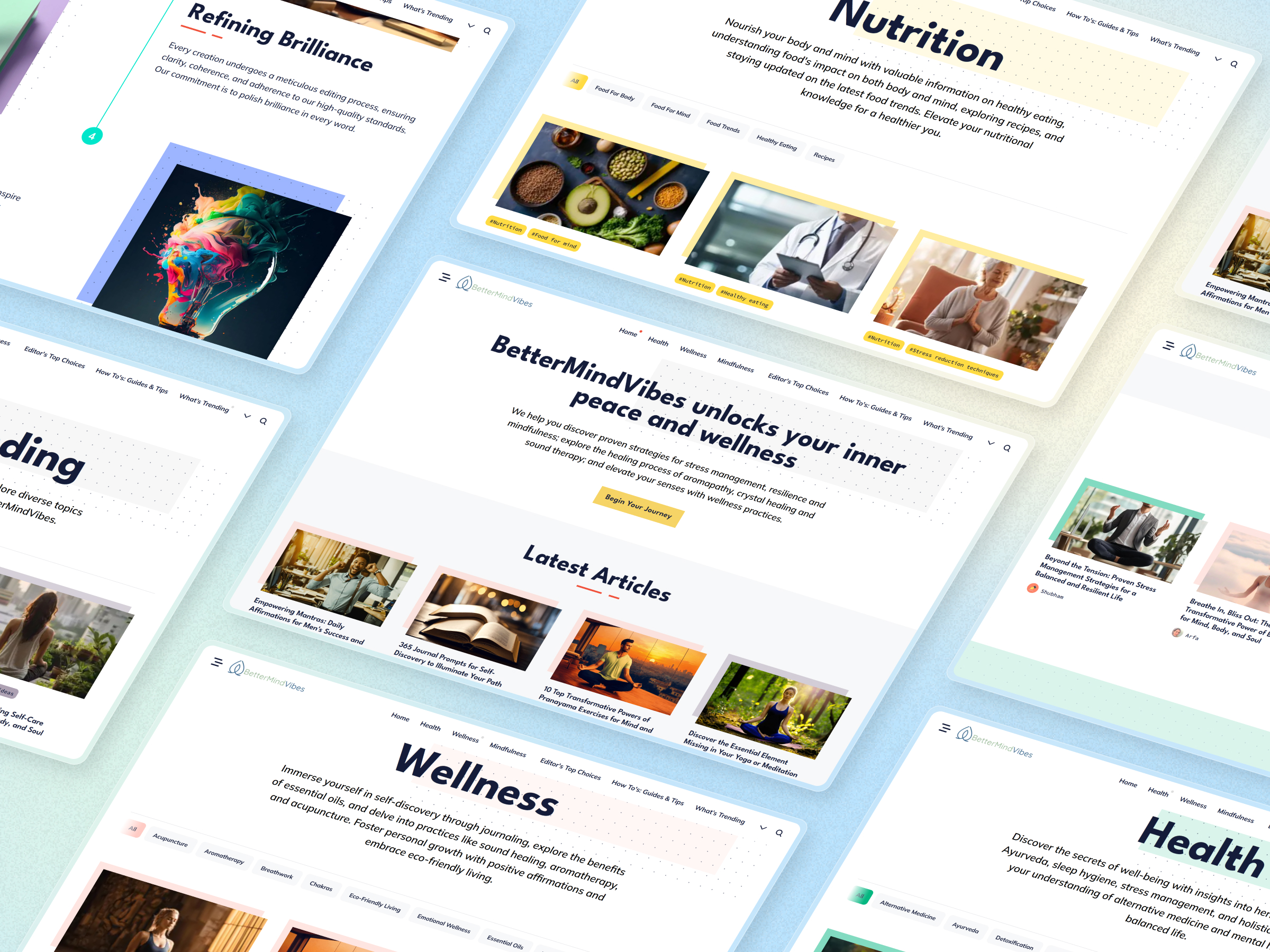
Design Built for Reading
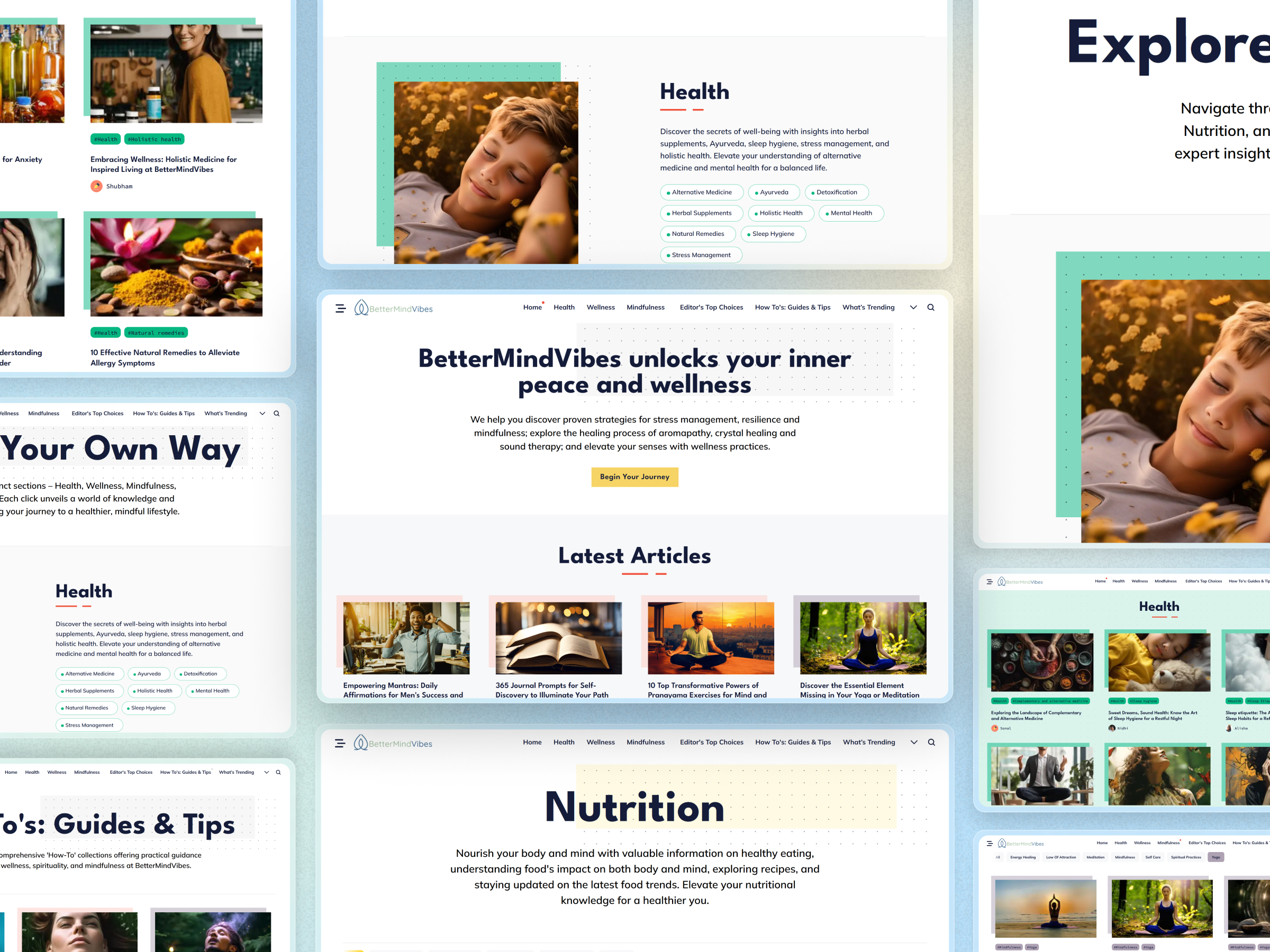
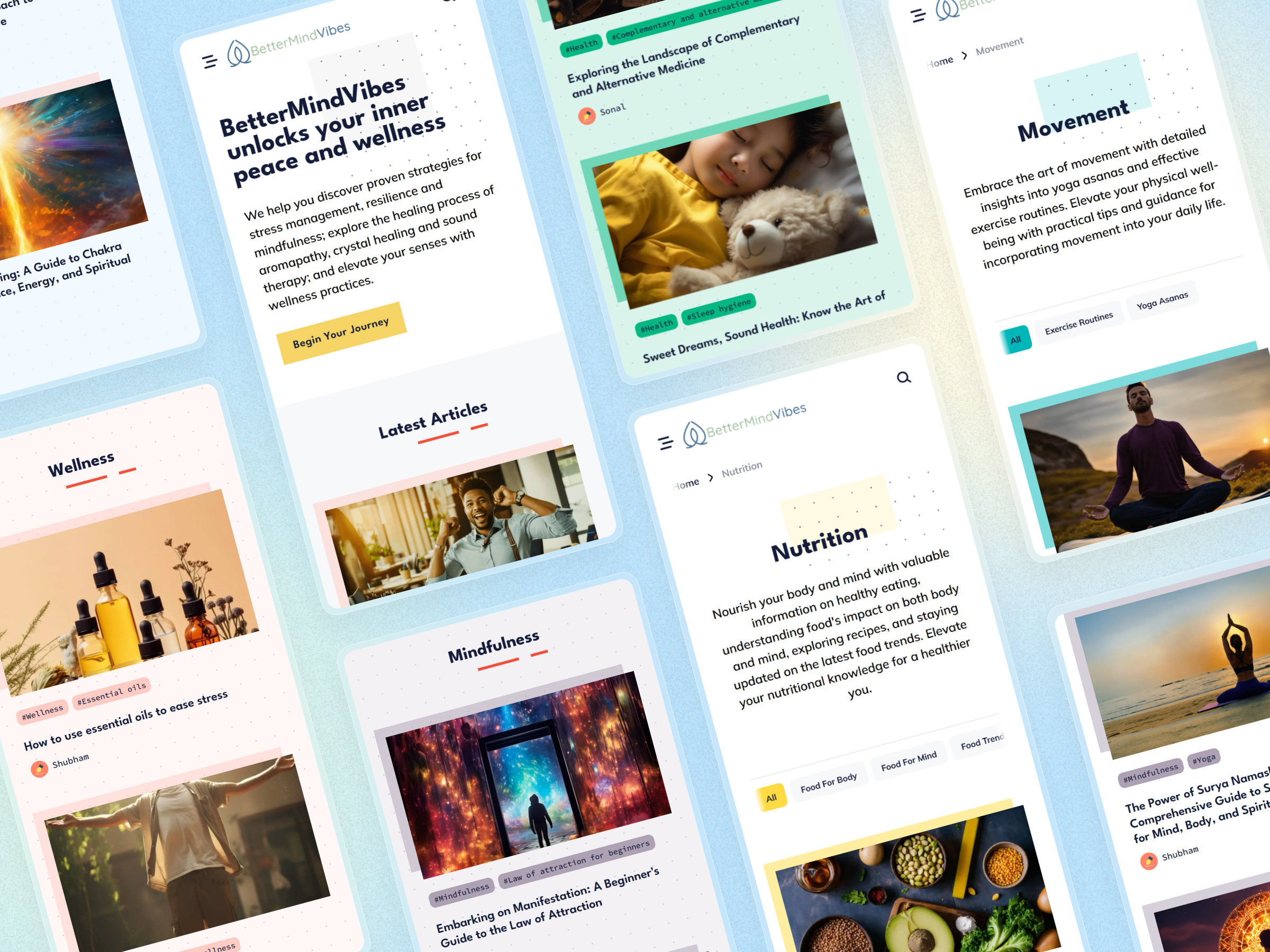
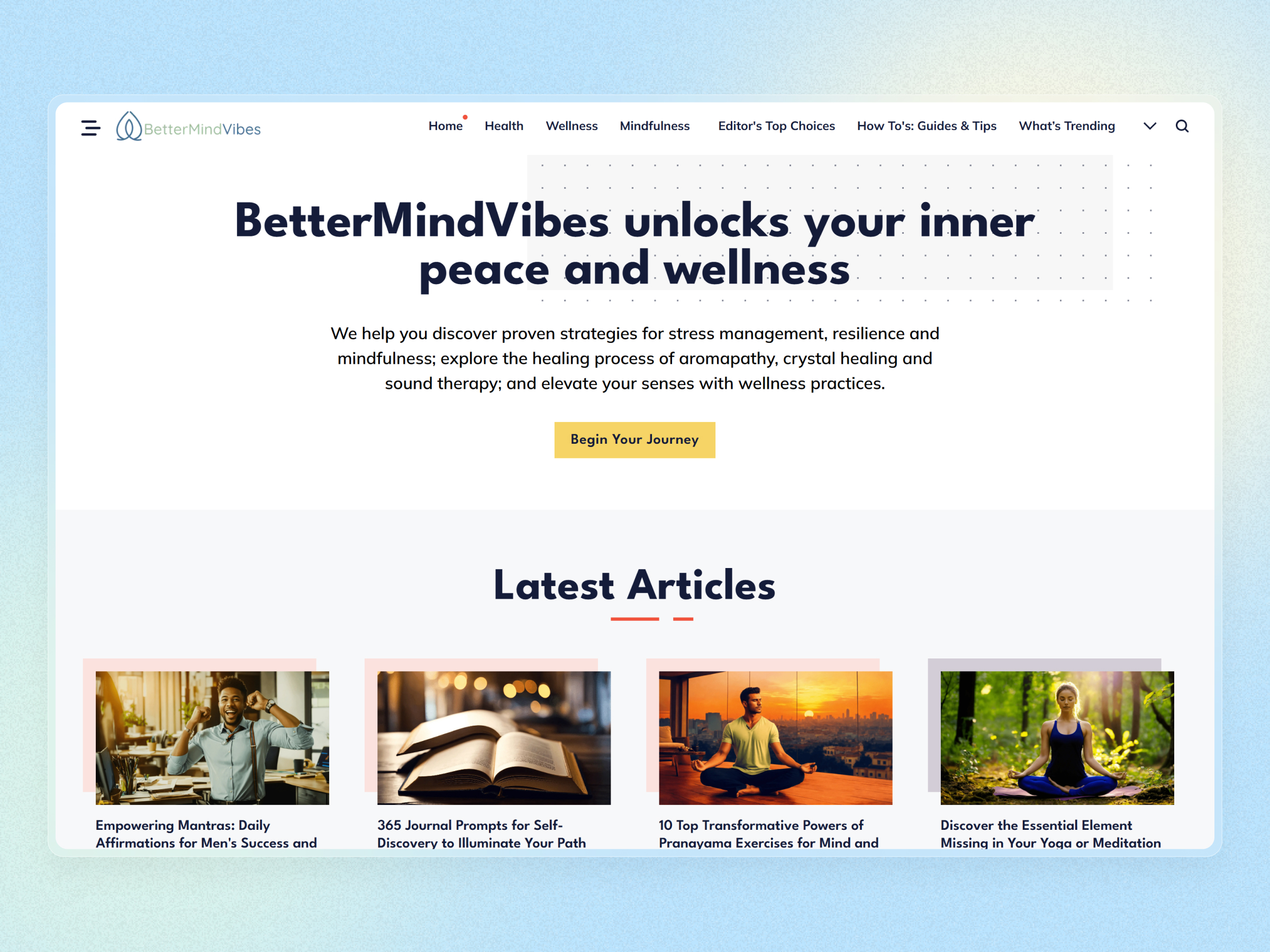
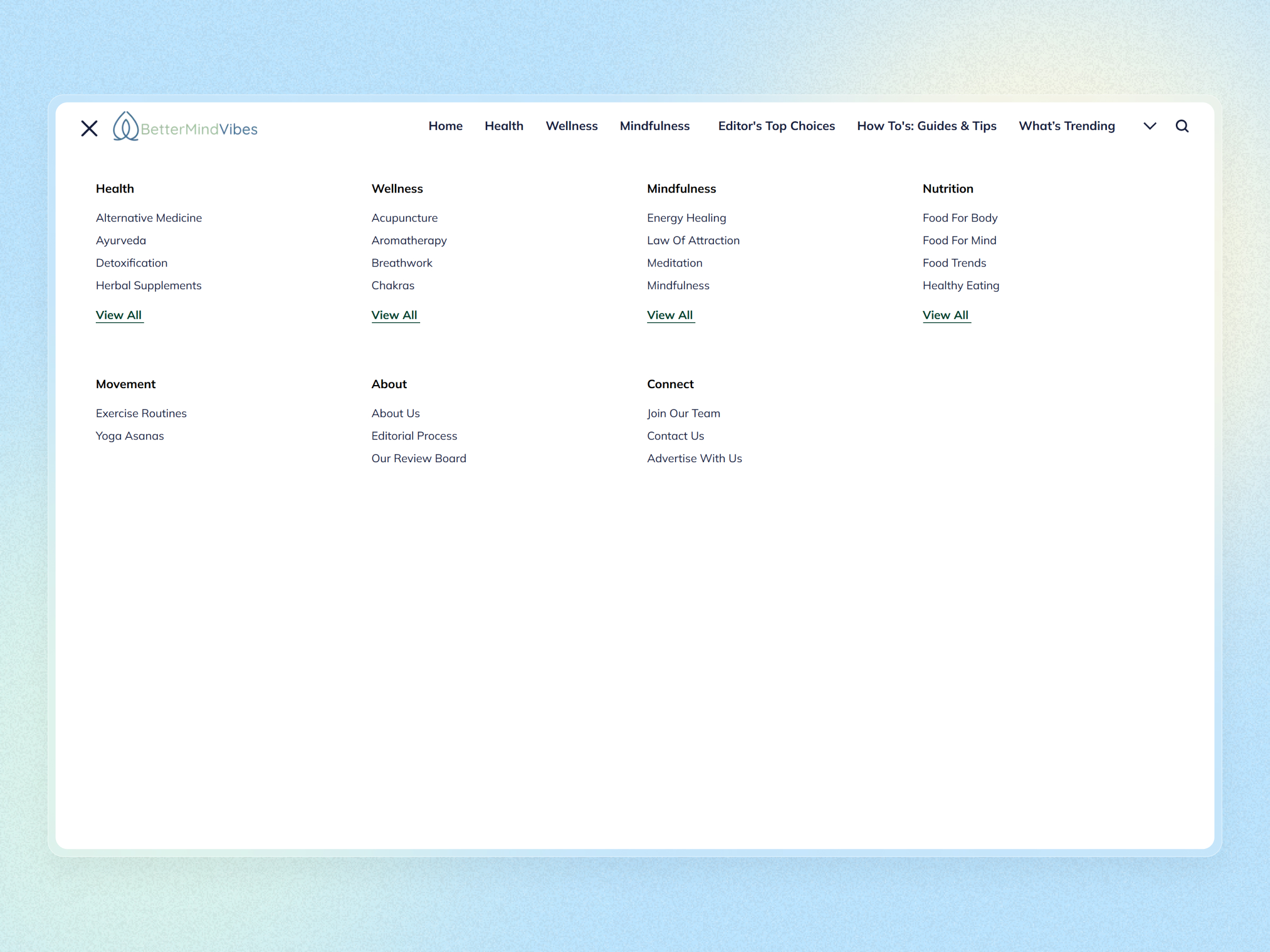
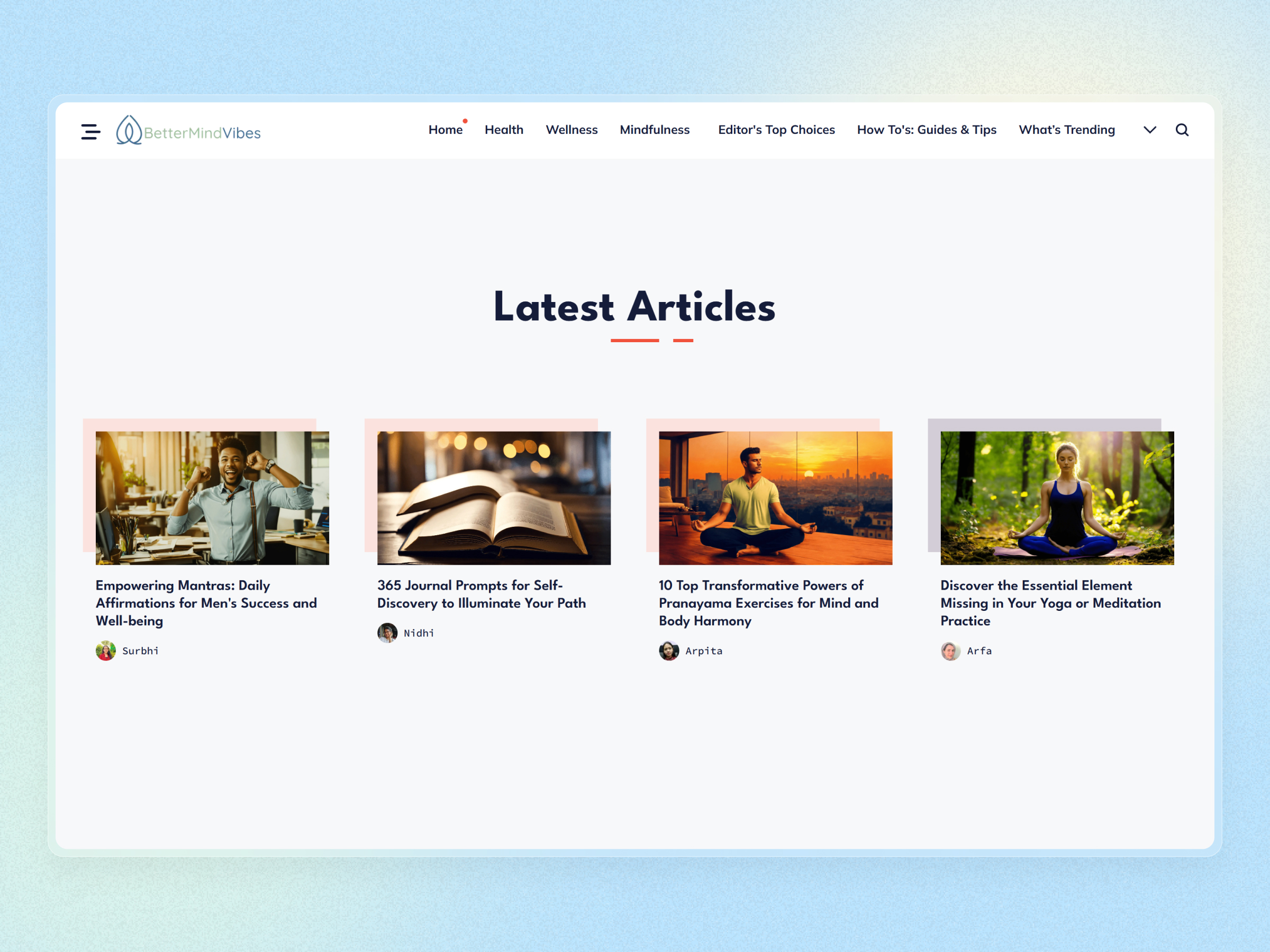
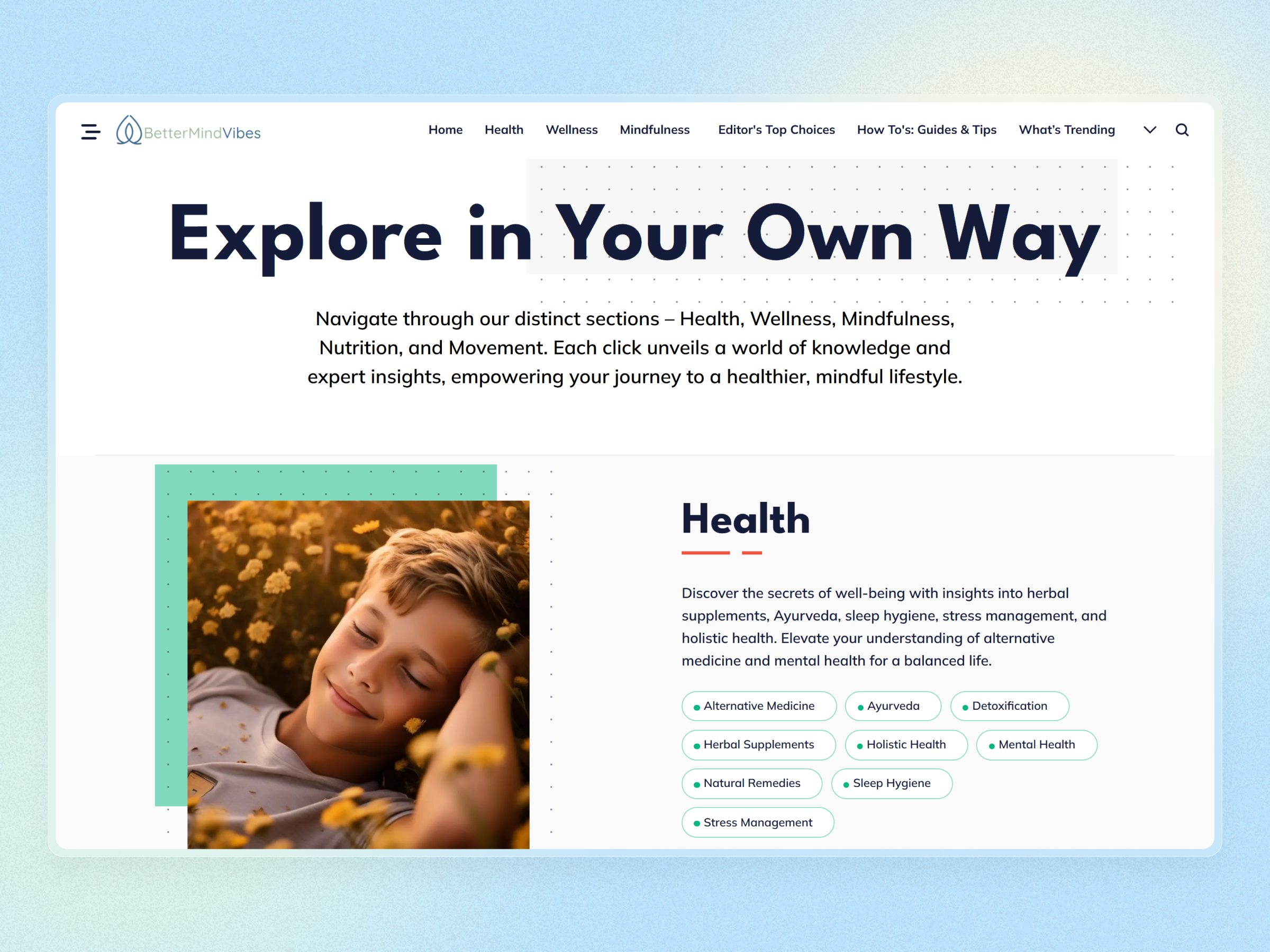
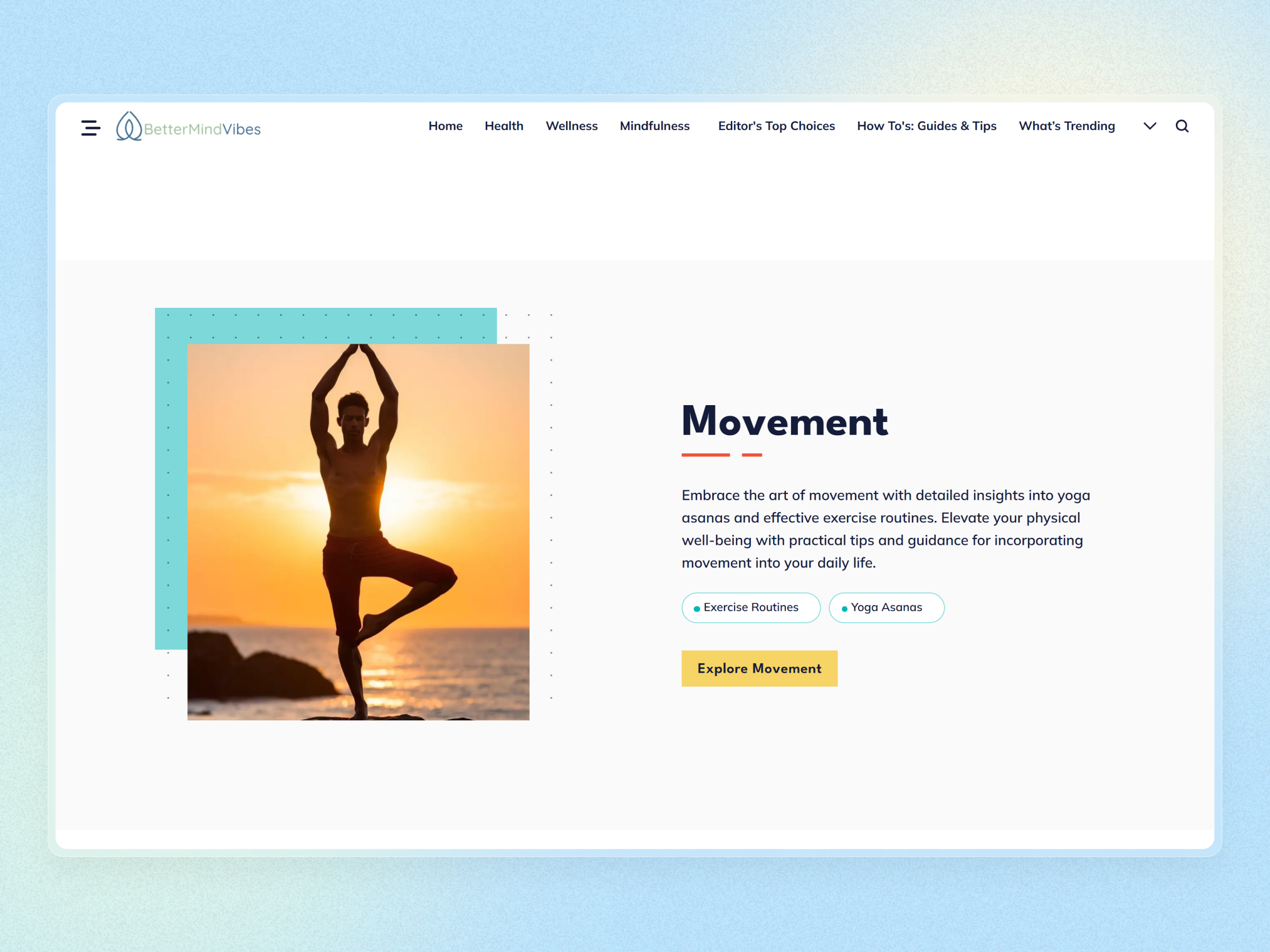
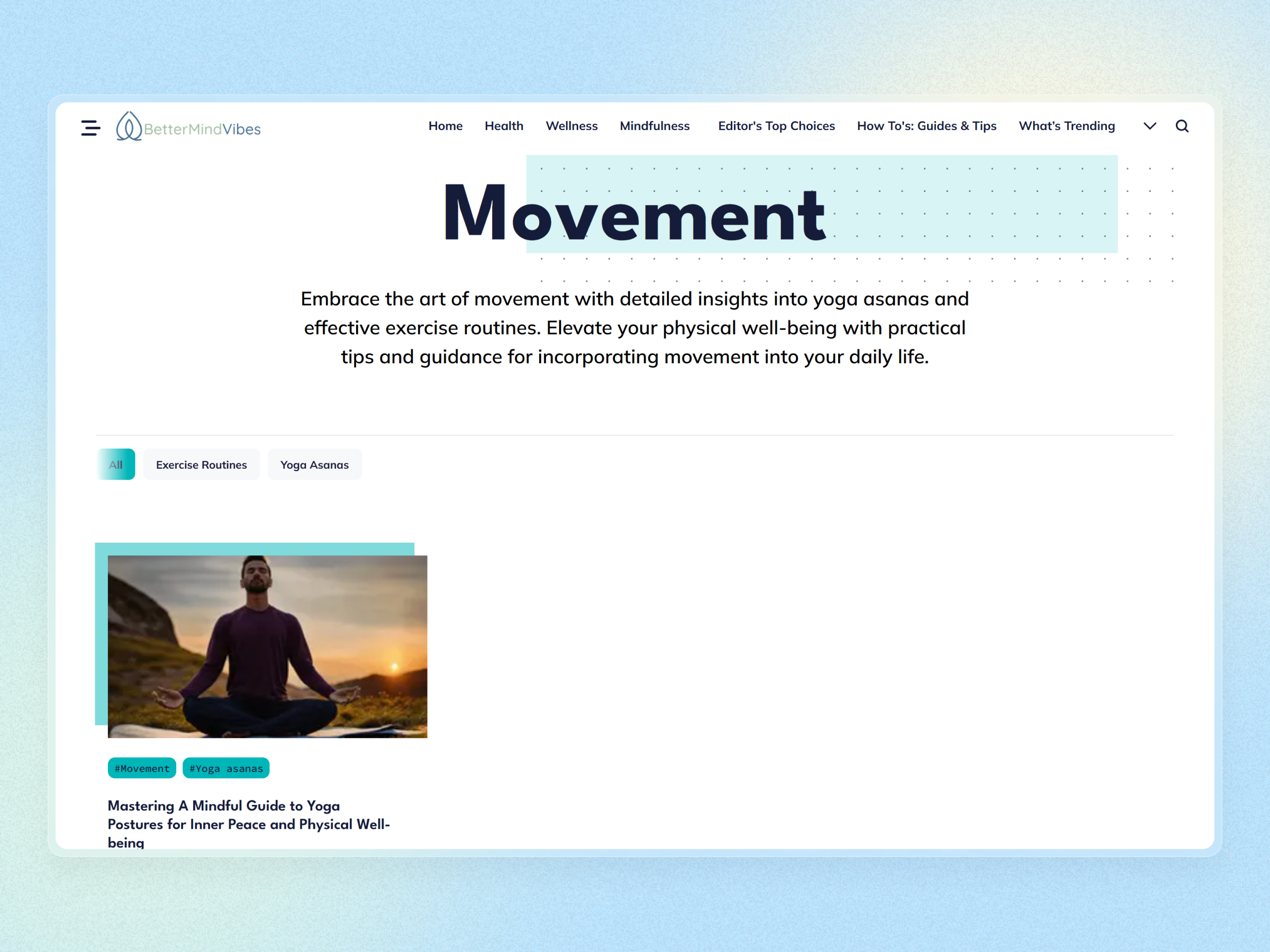
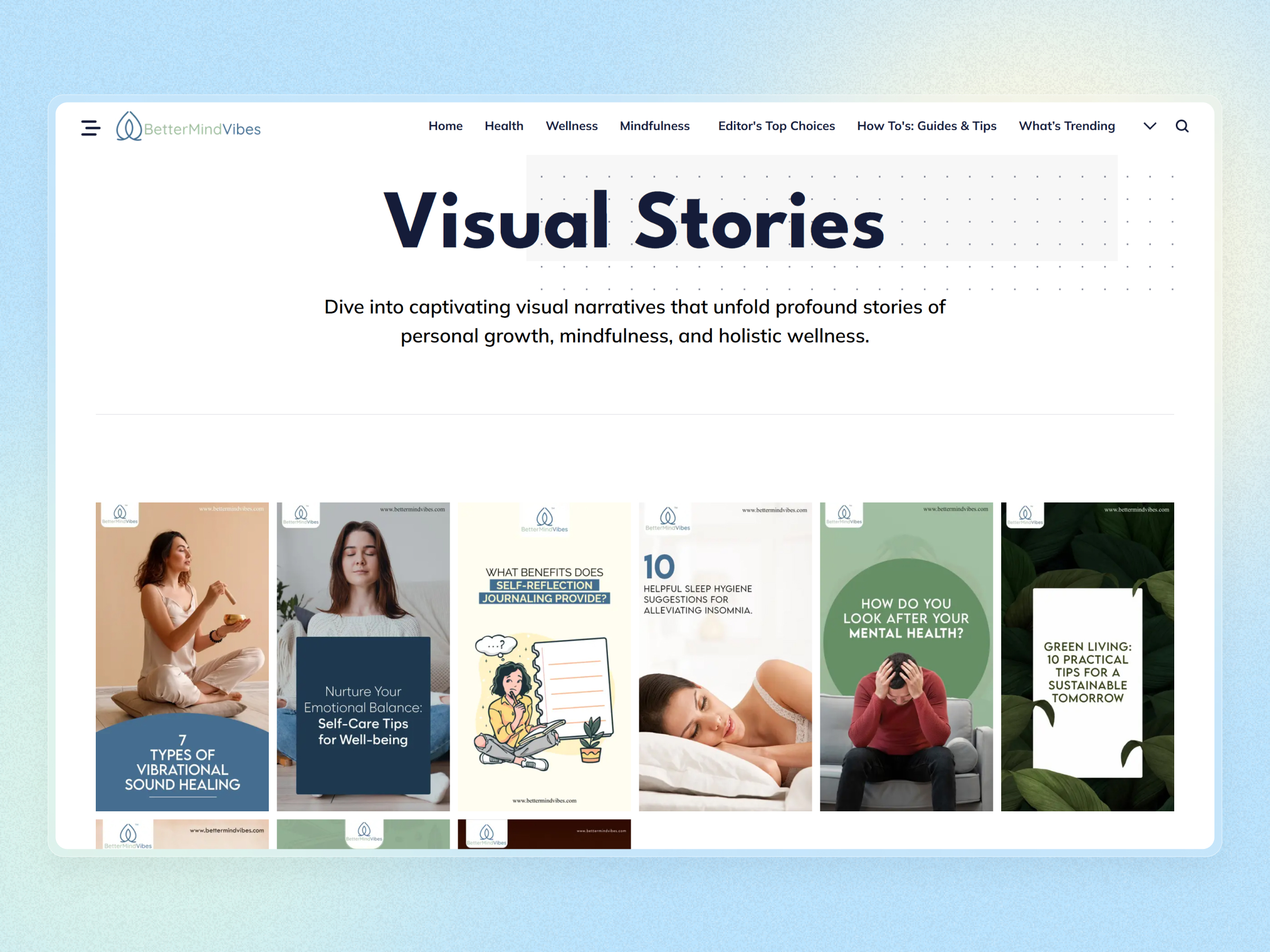
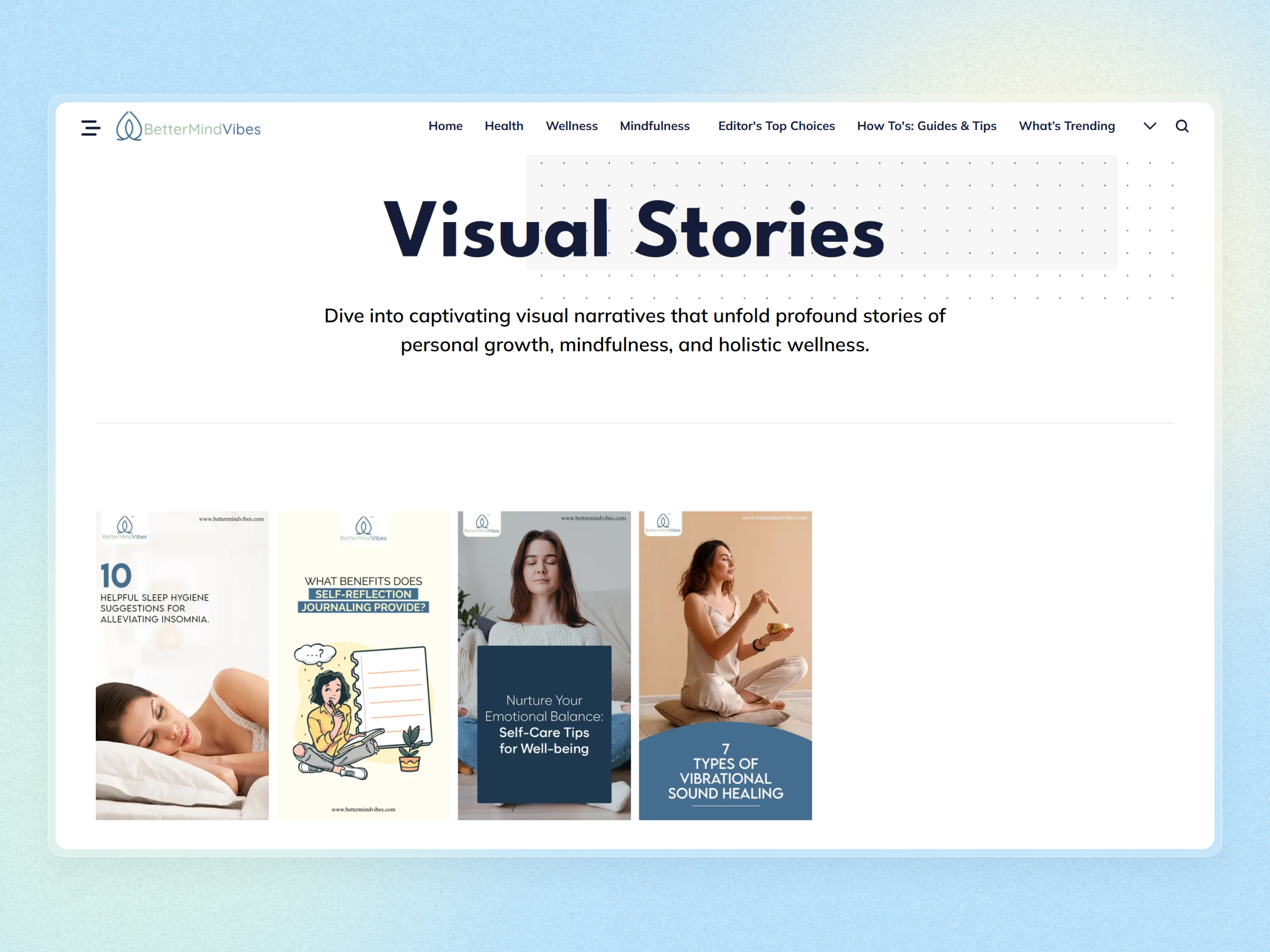
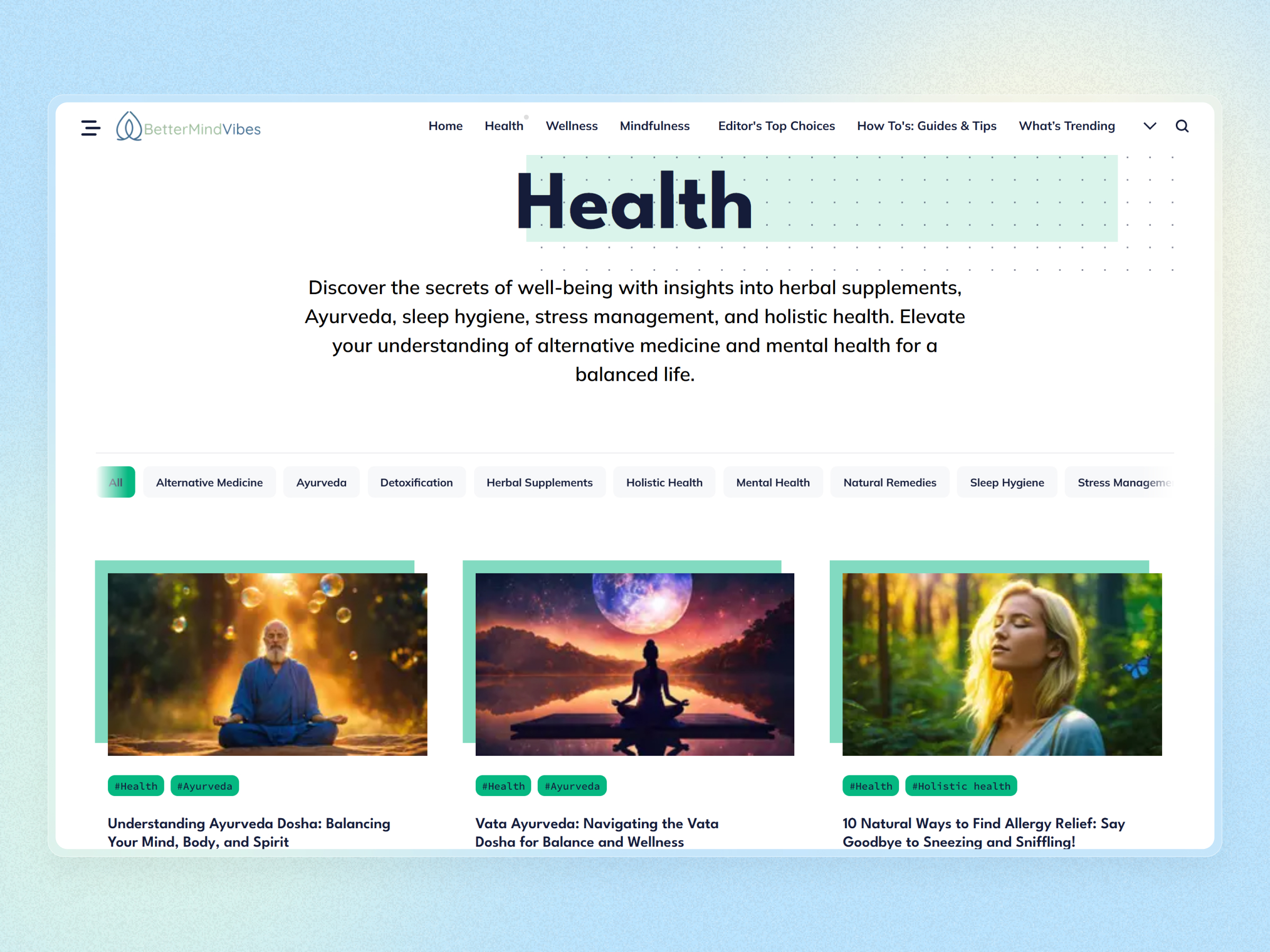
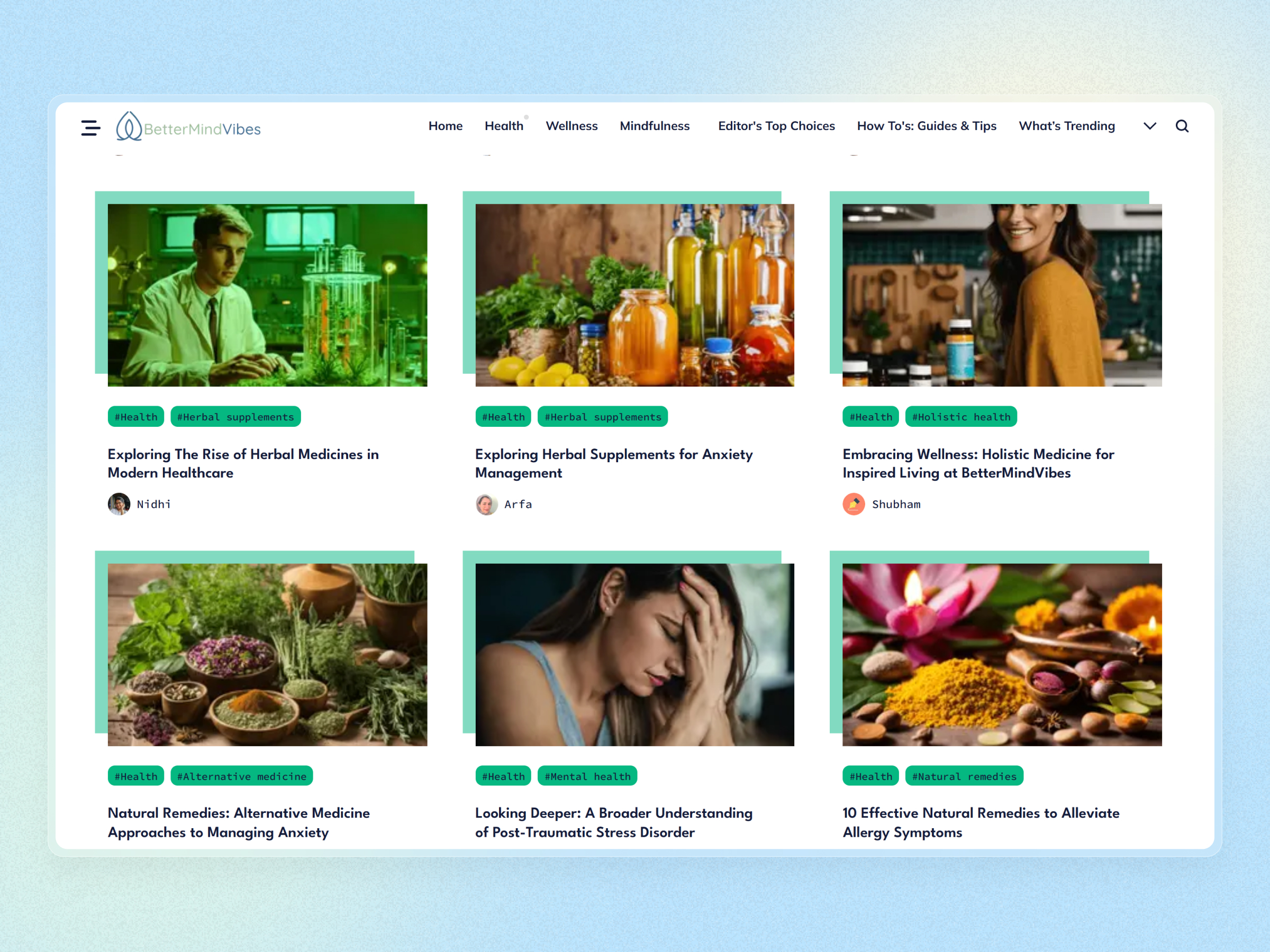
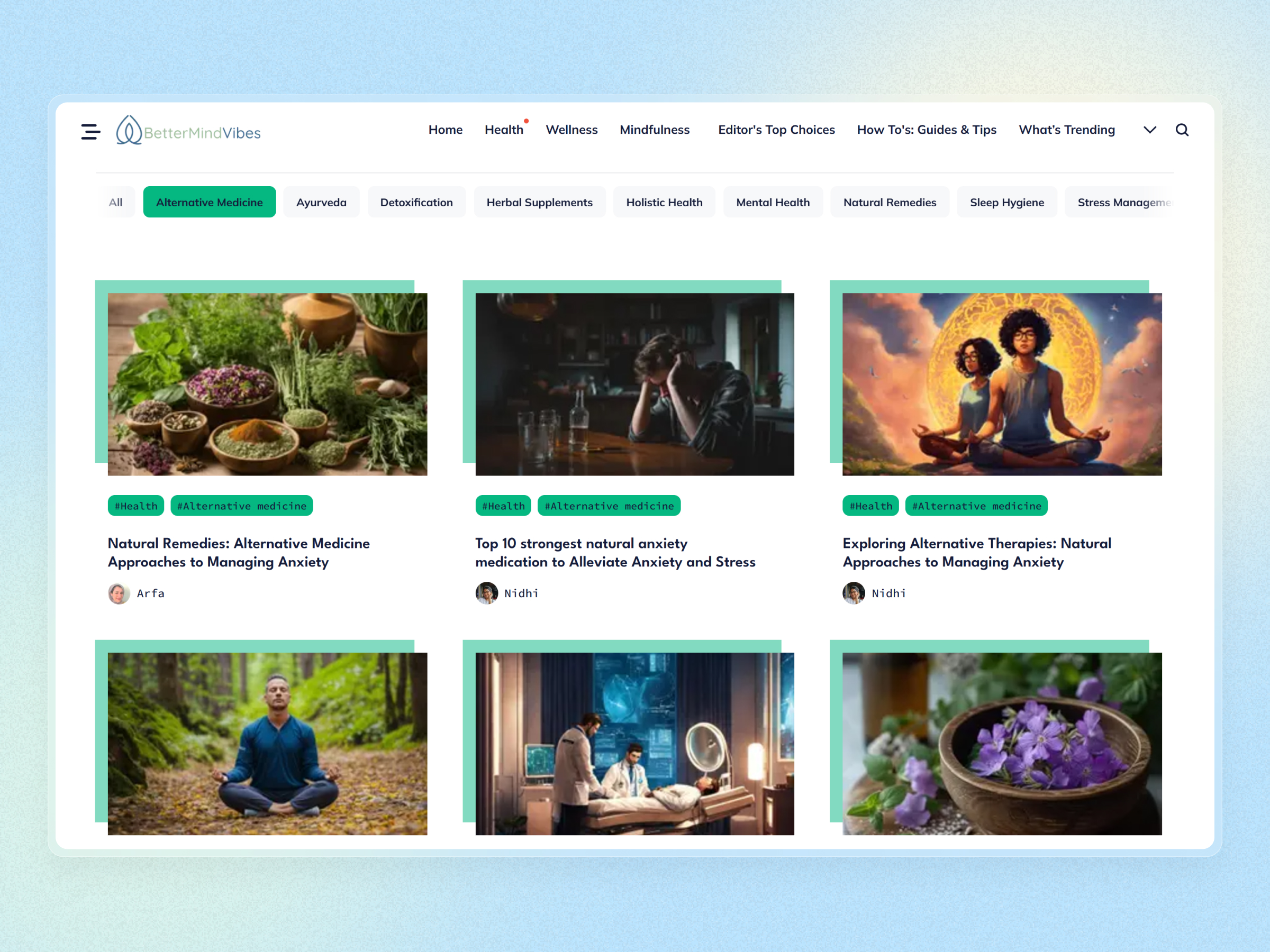
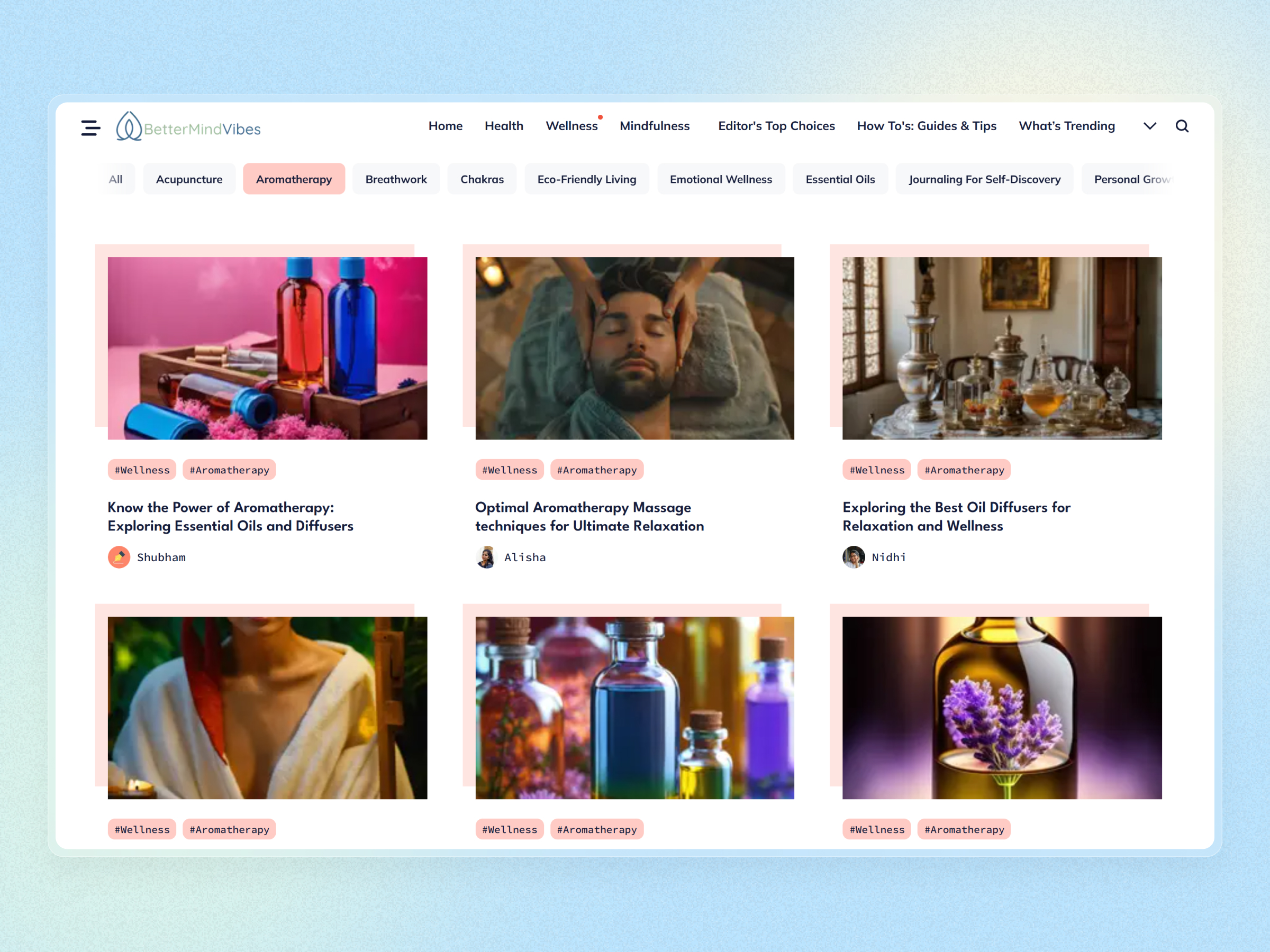
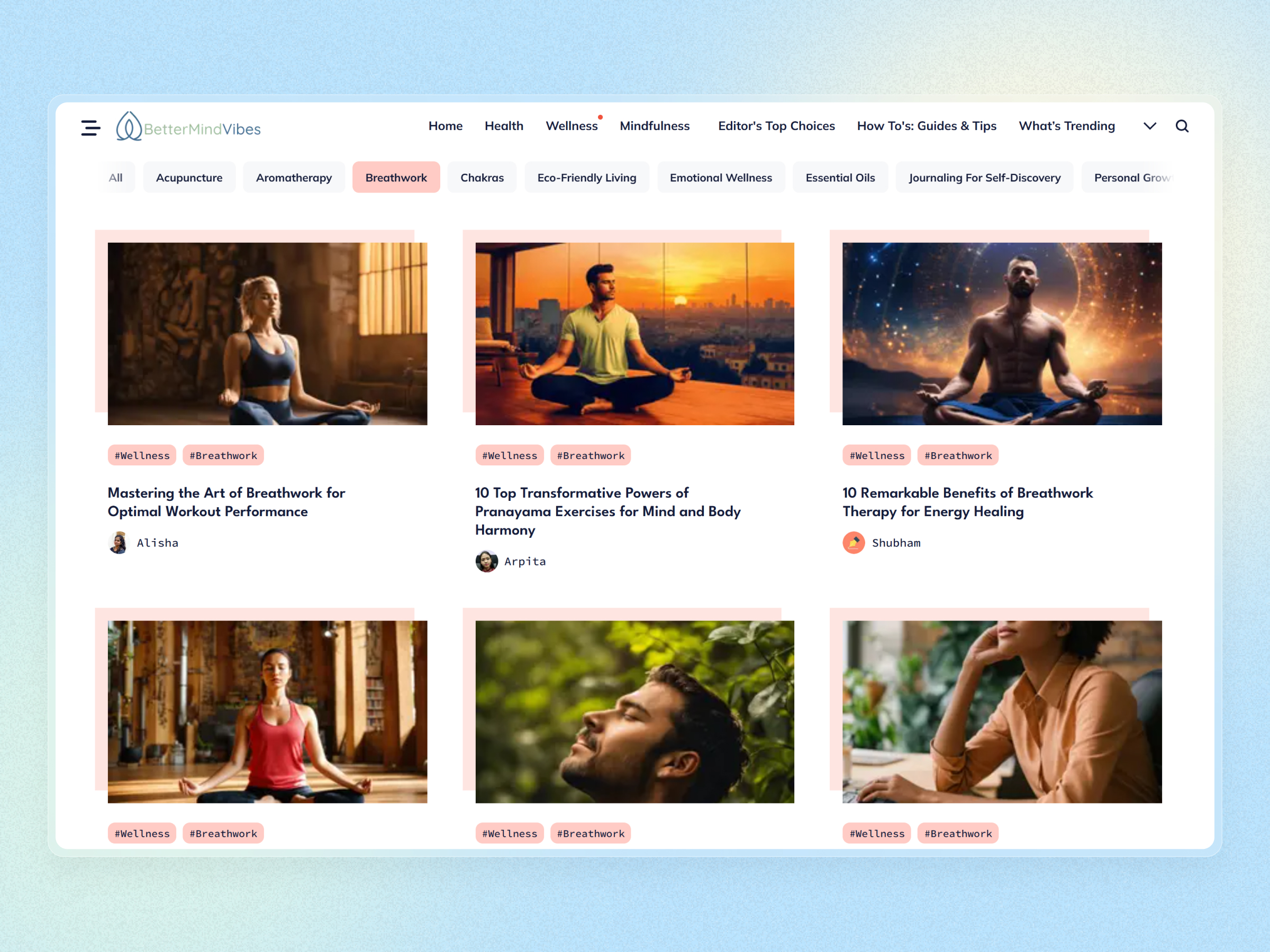
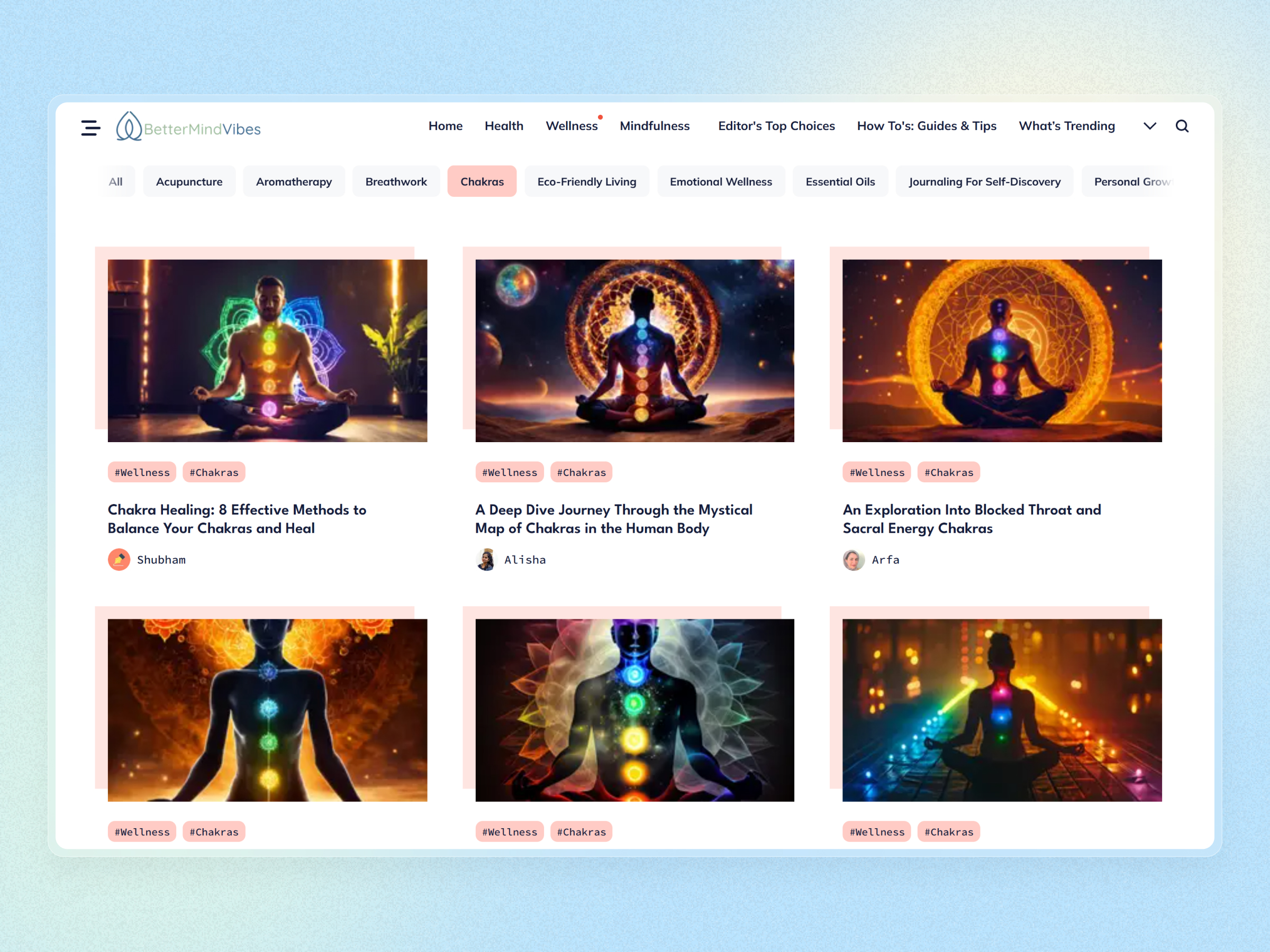
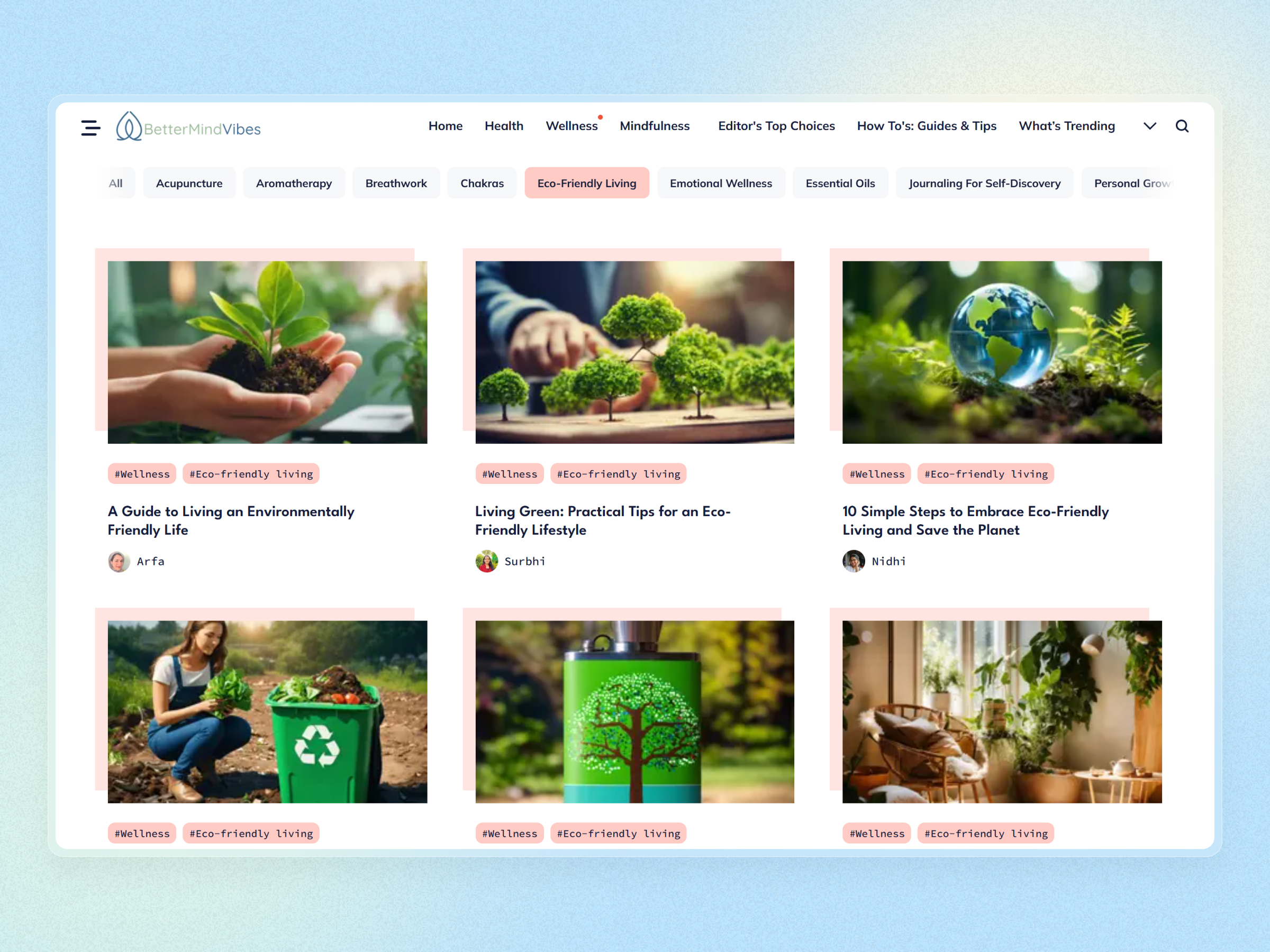
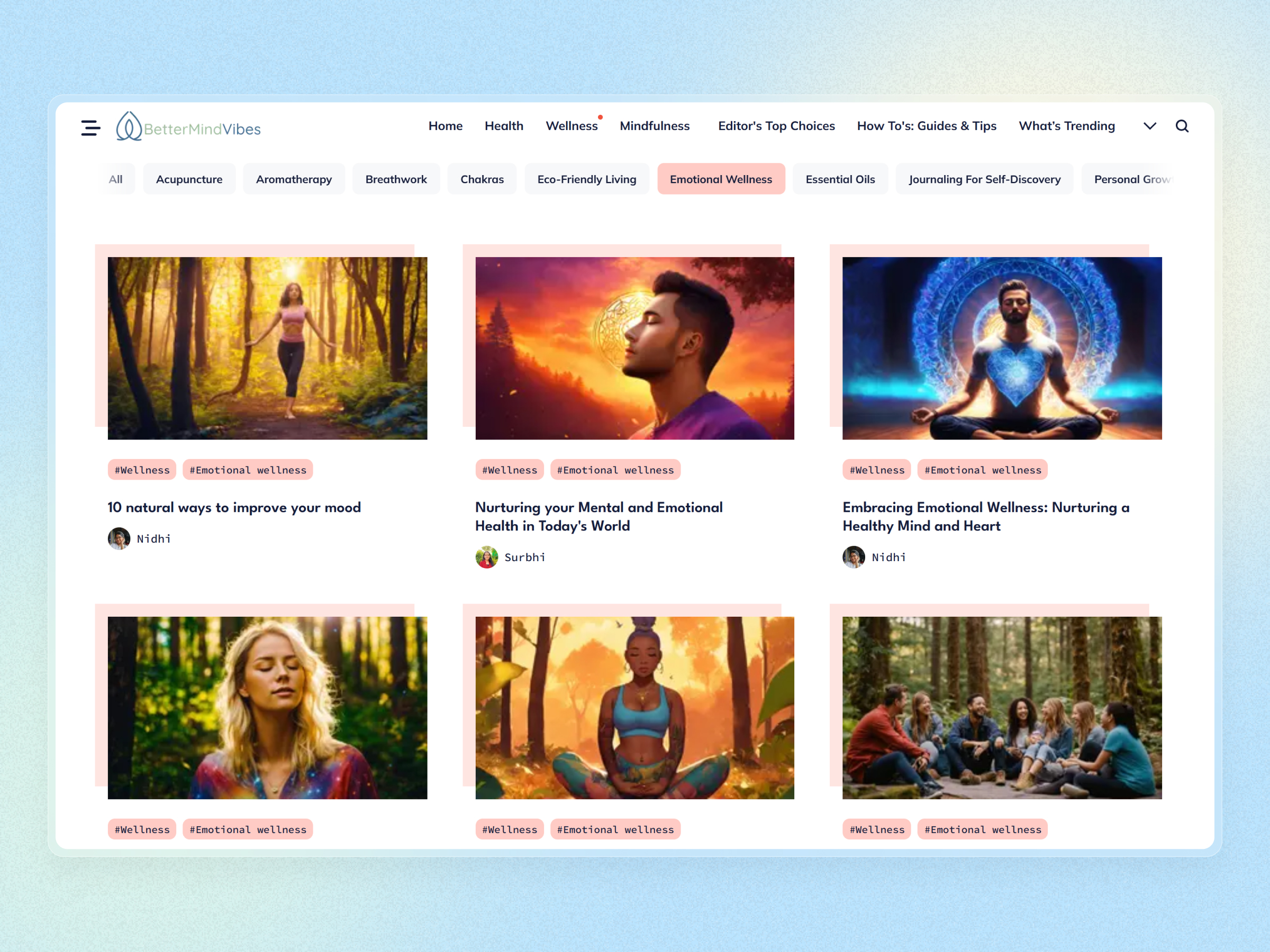
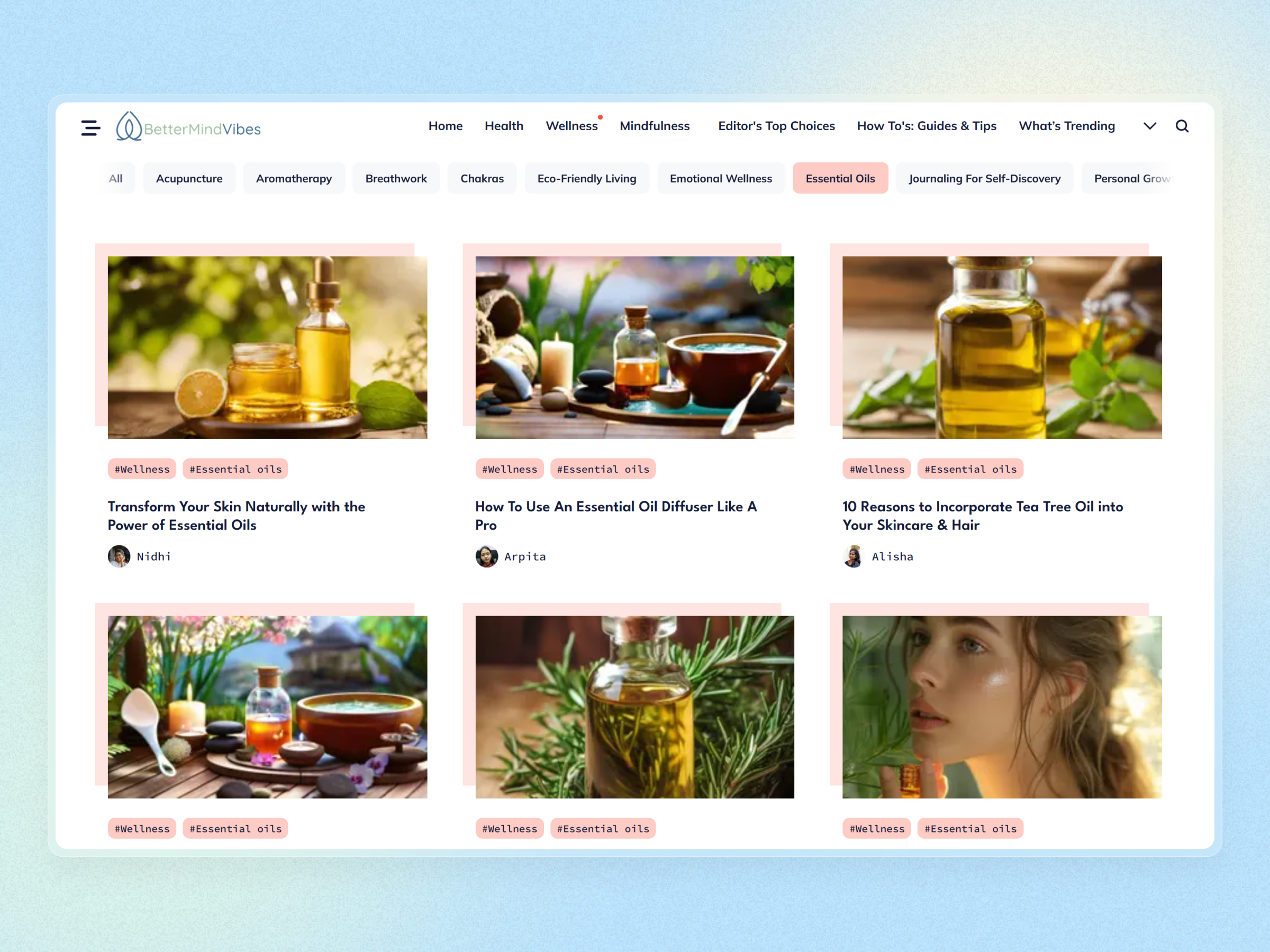
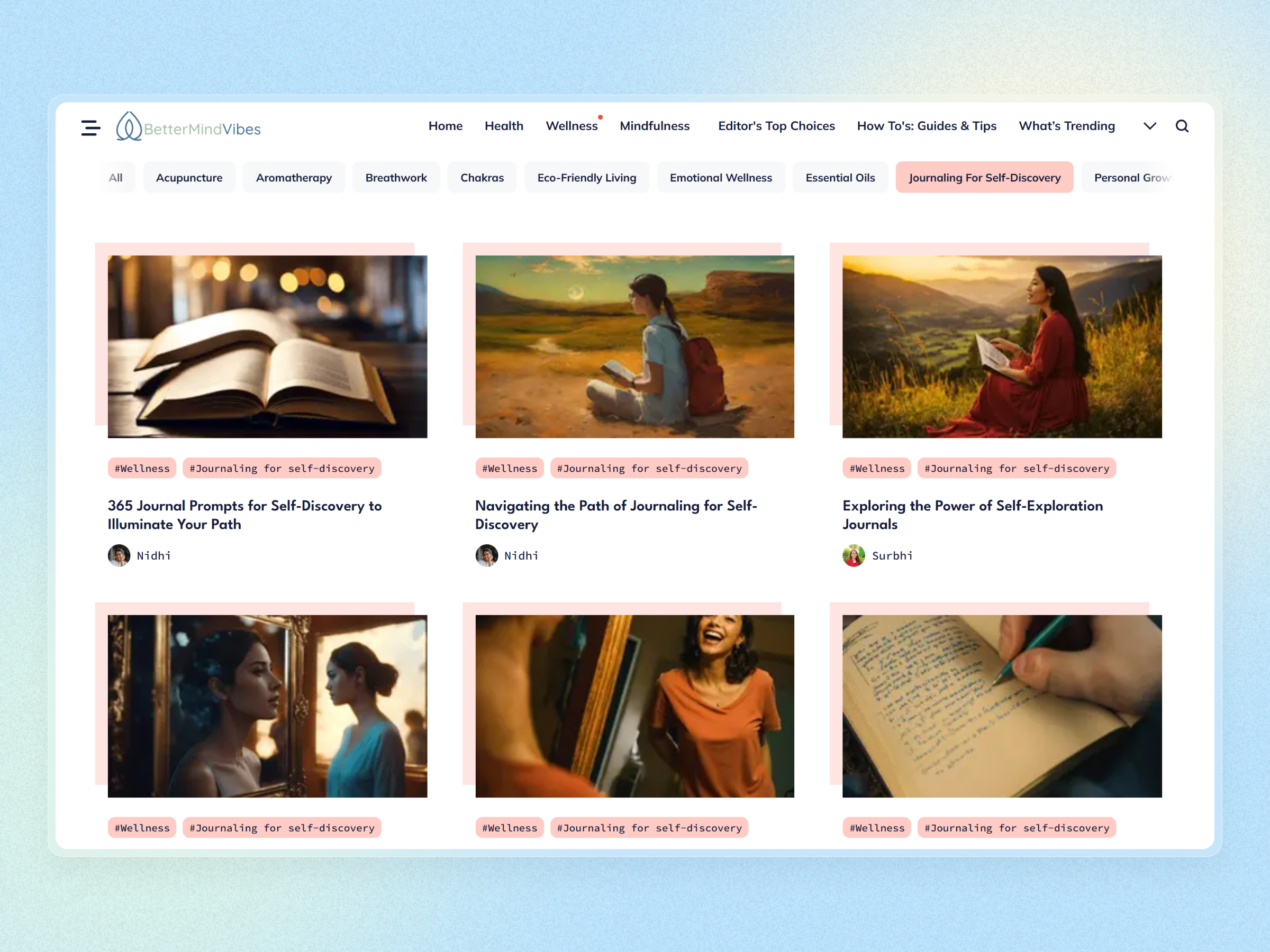
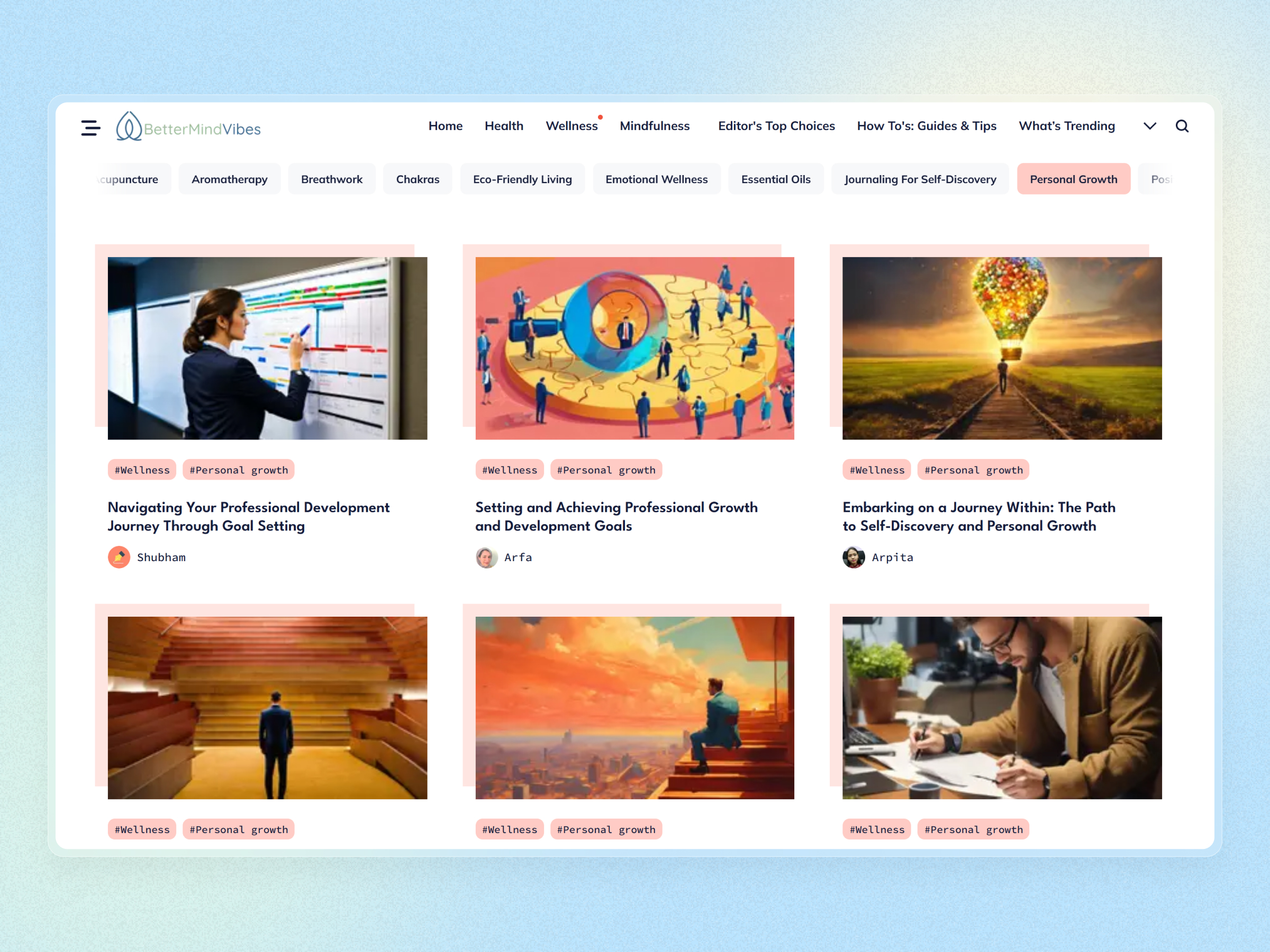
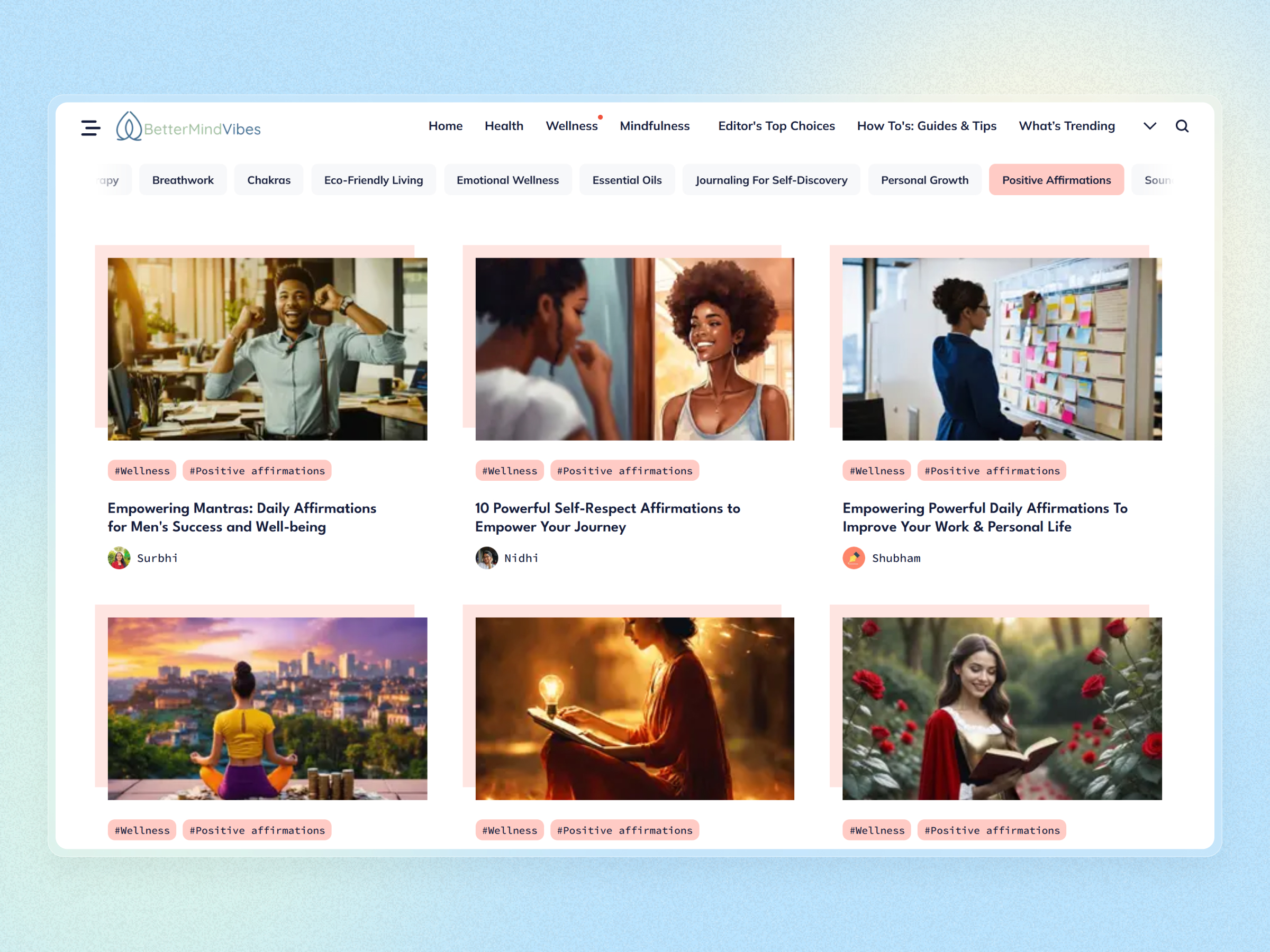
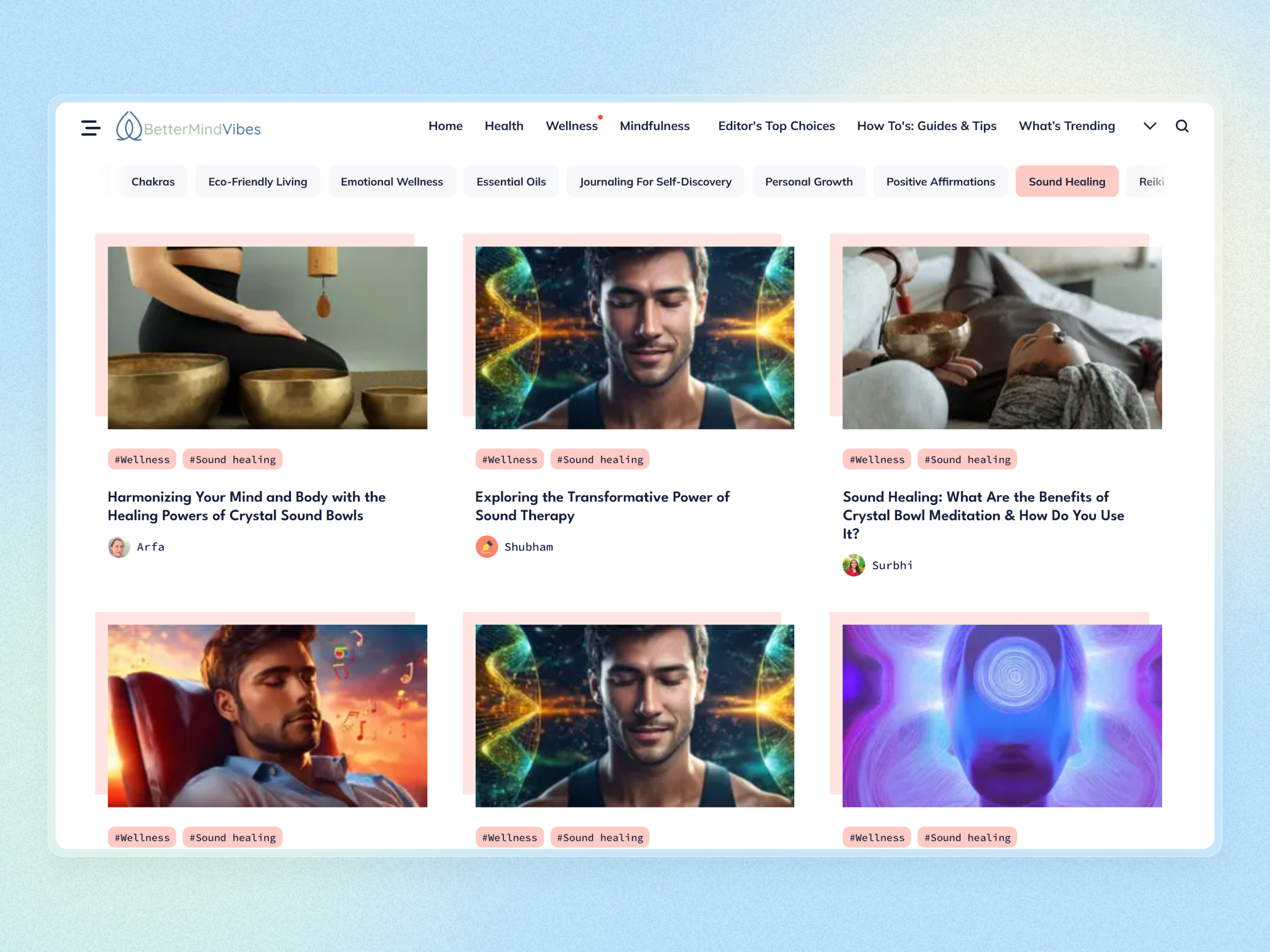
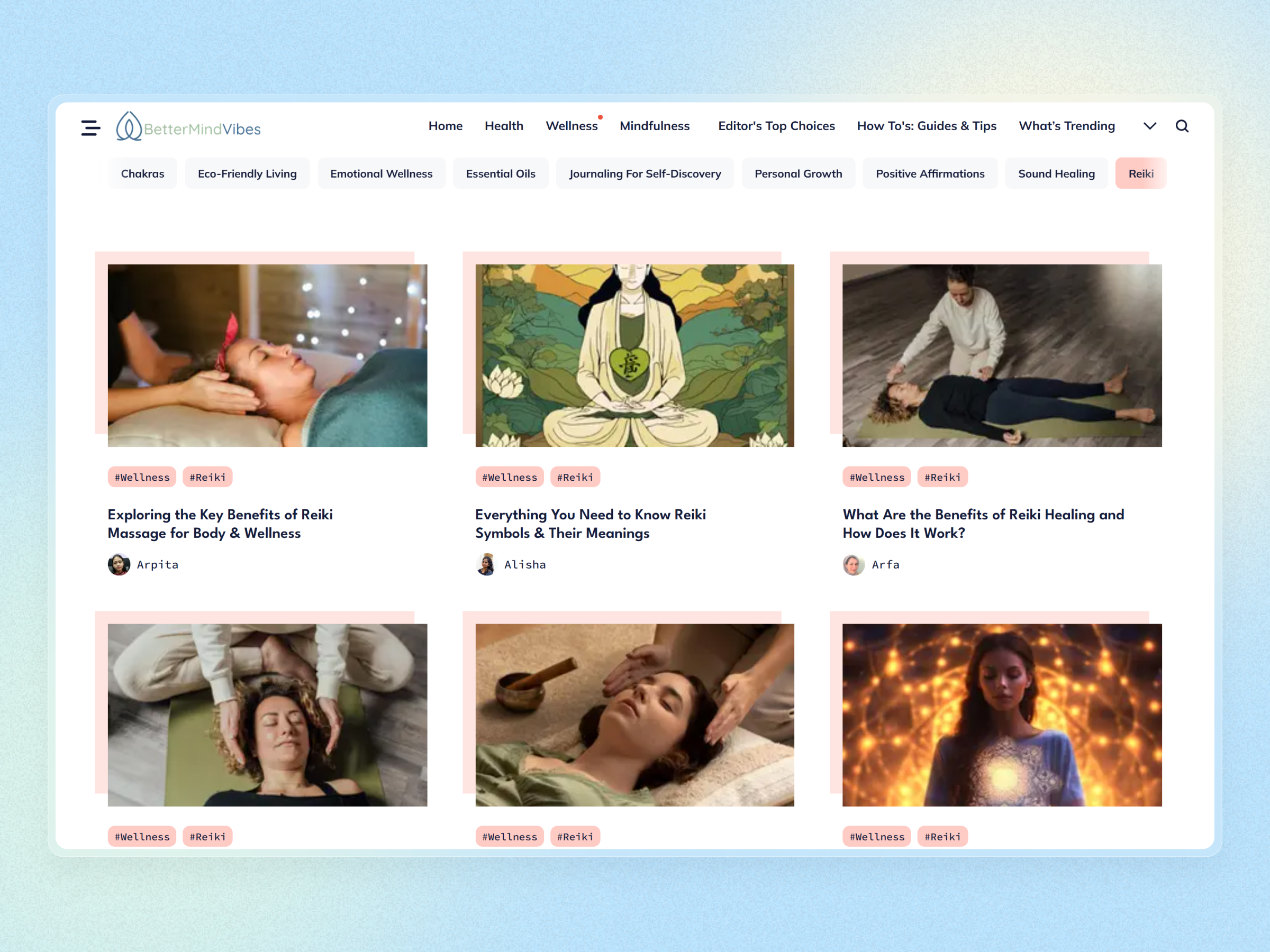
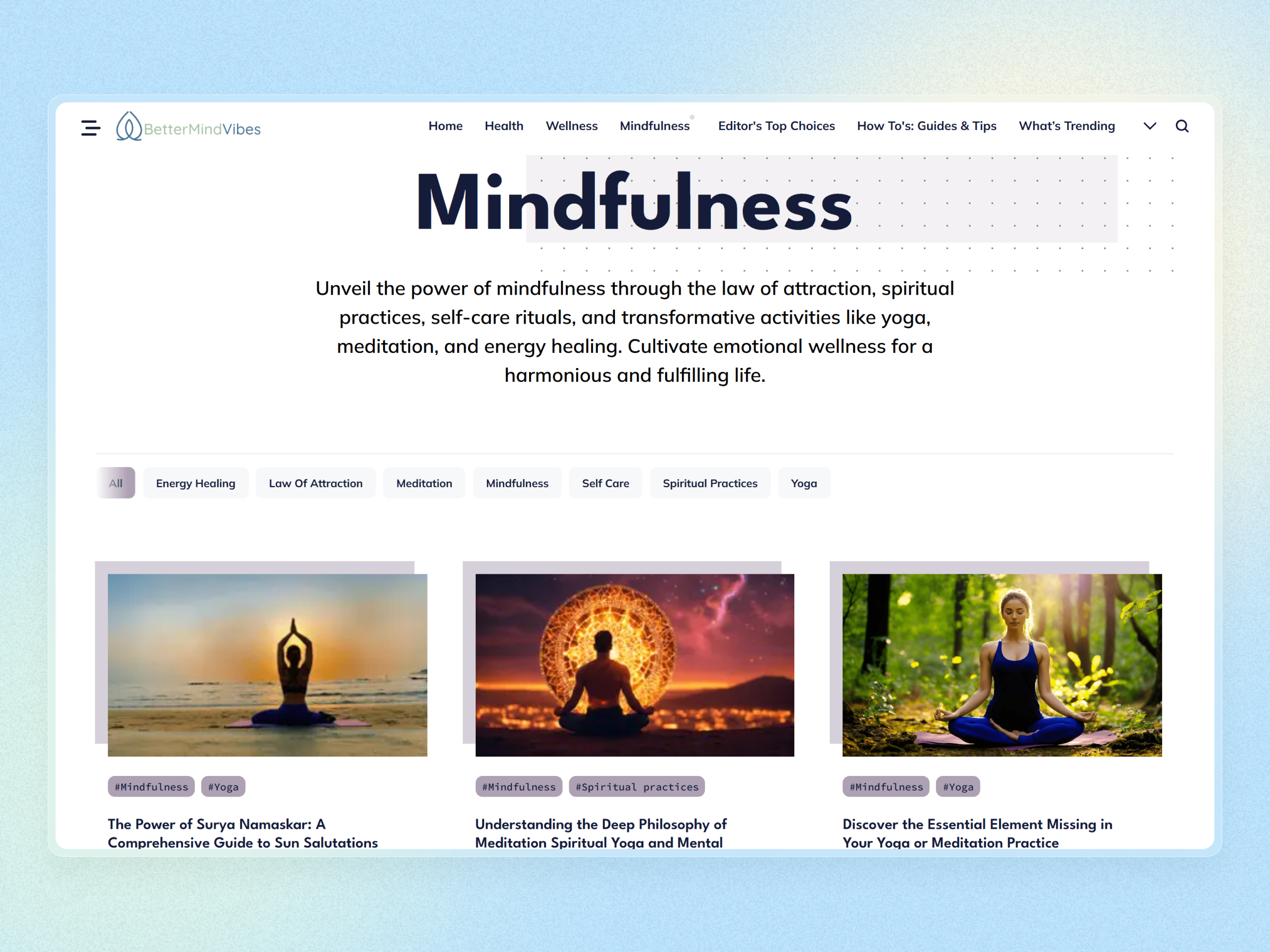
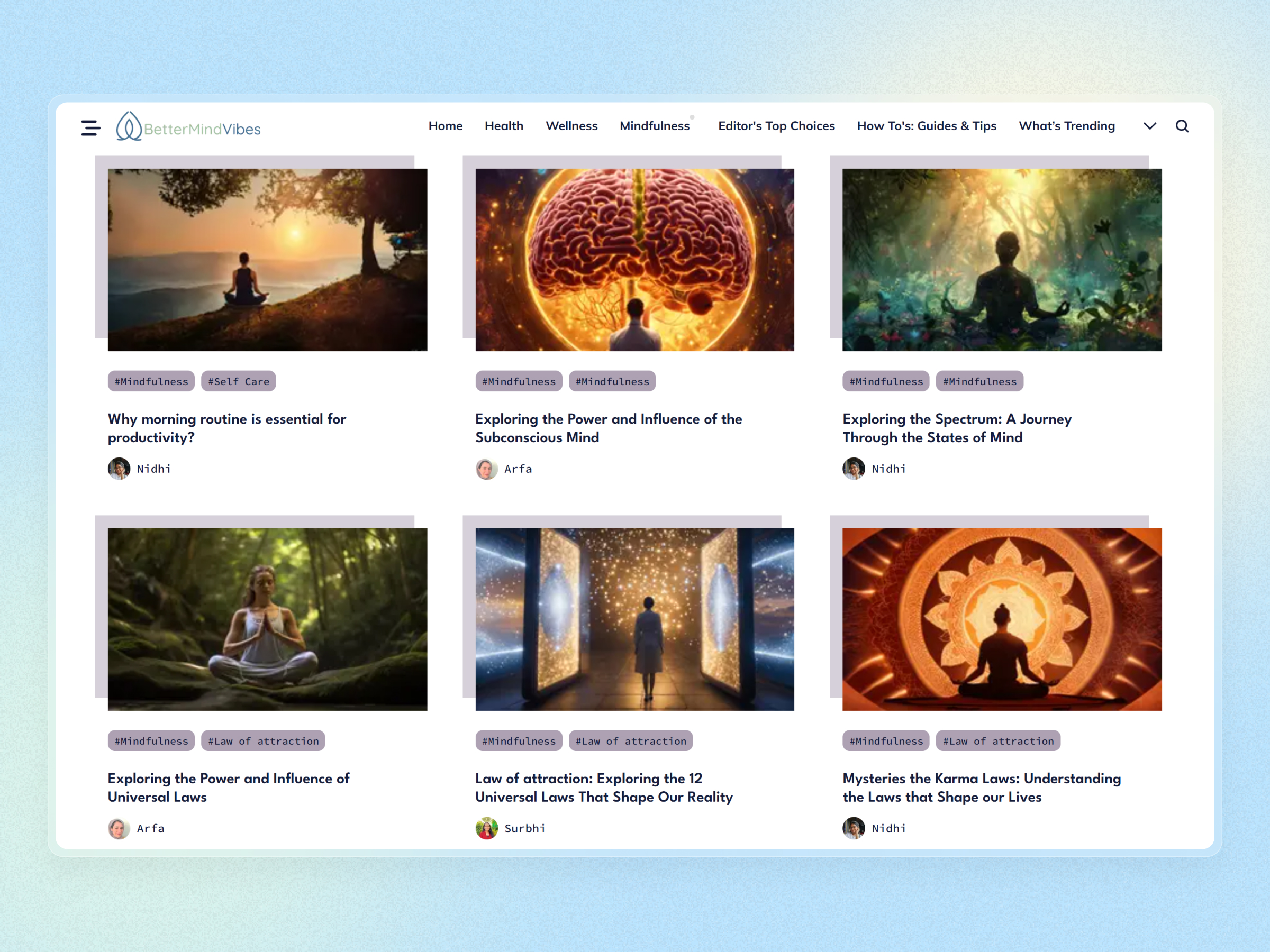
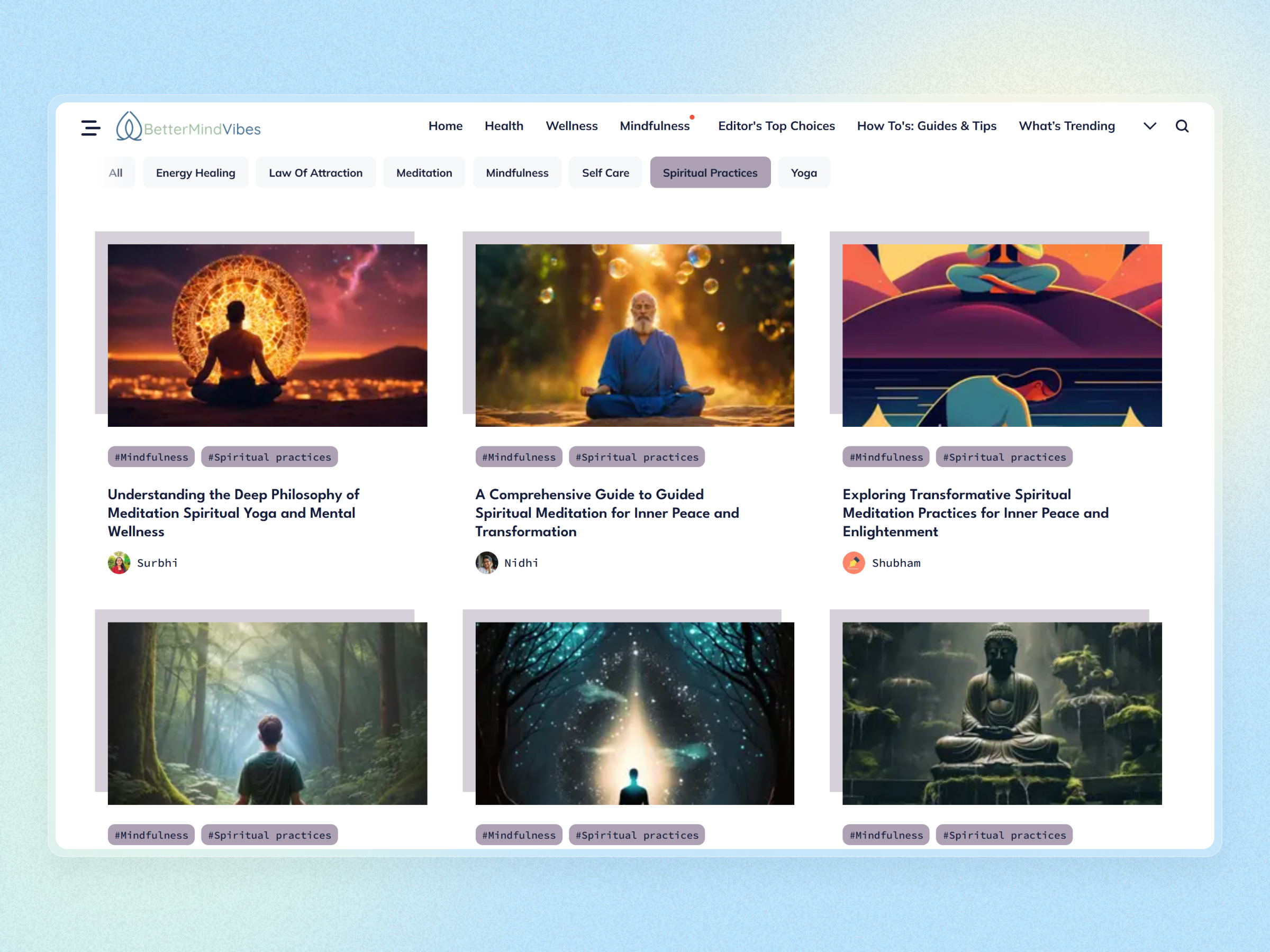
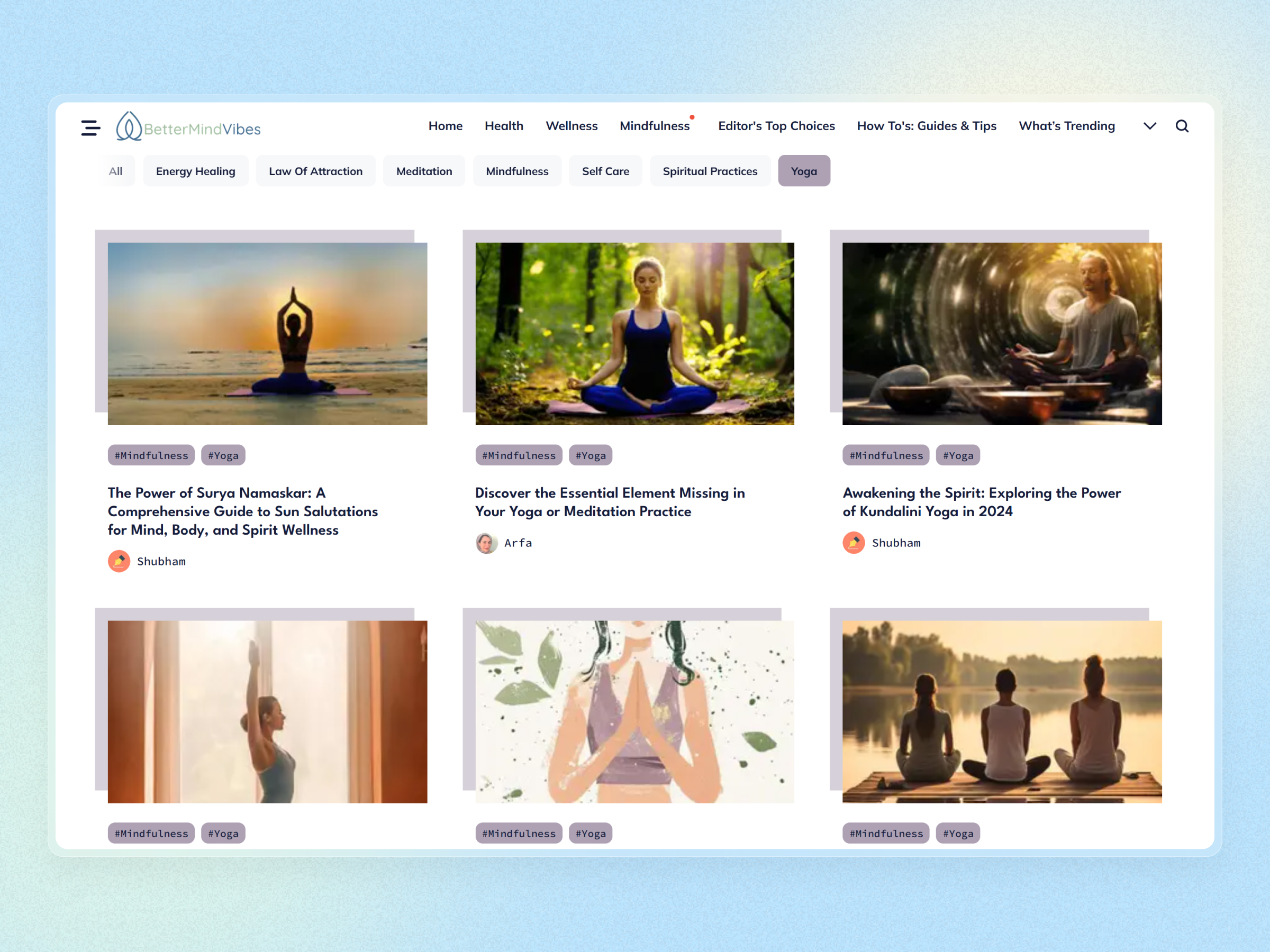
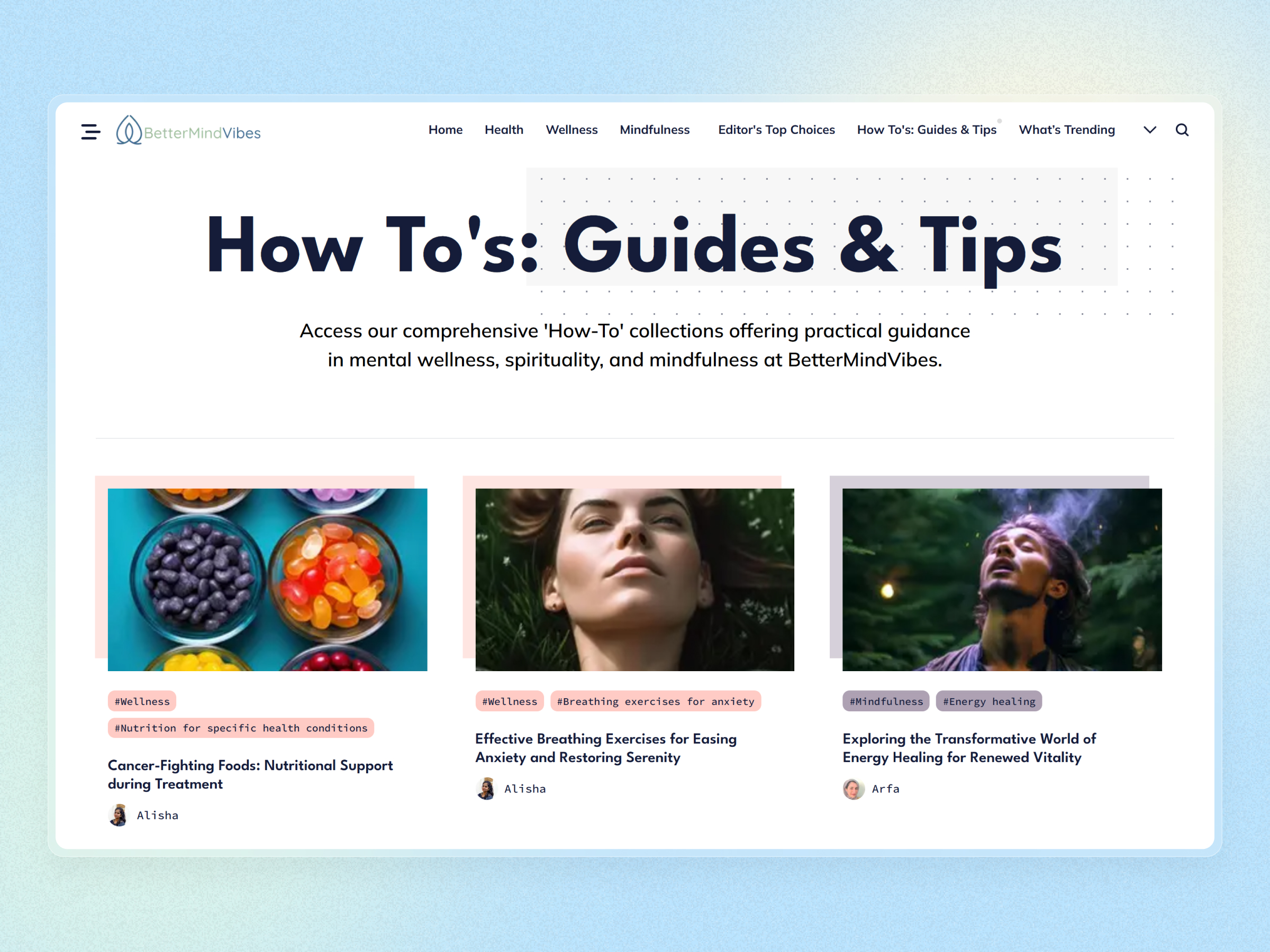
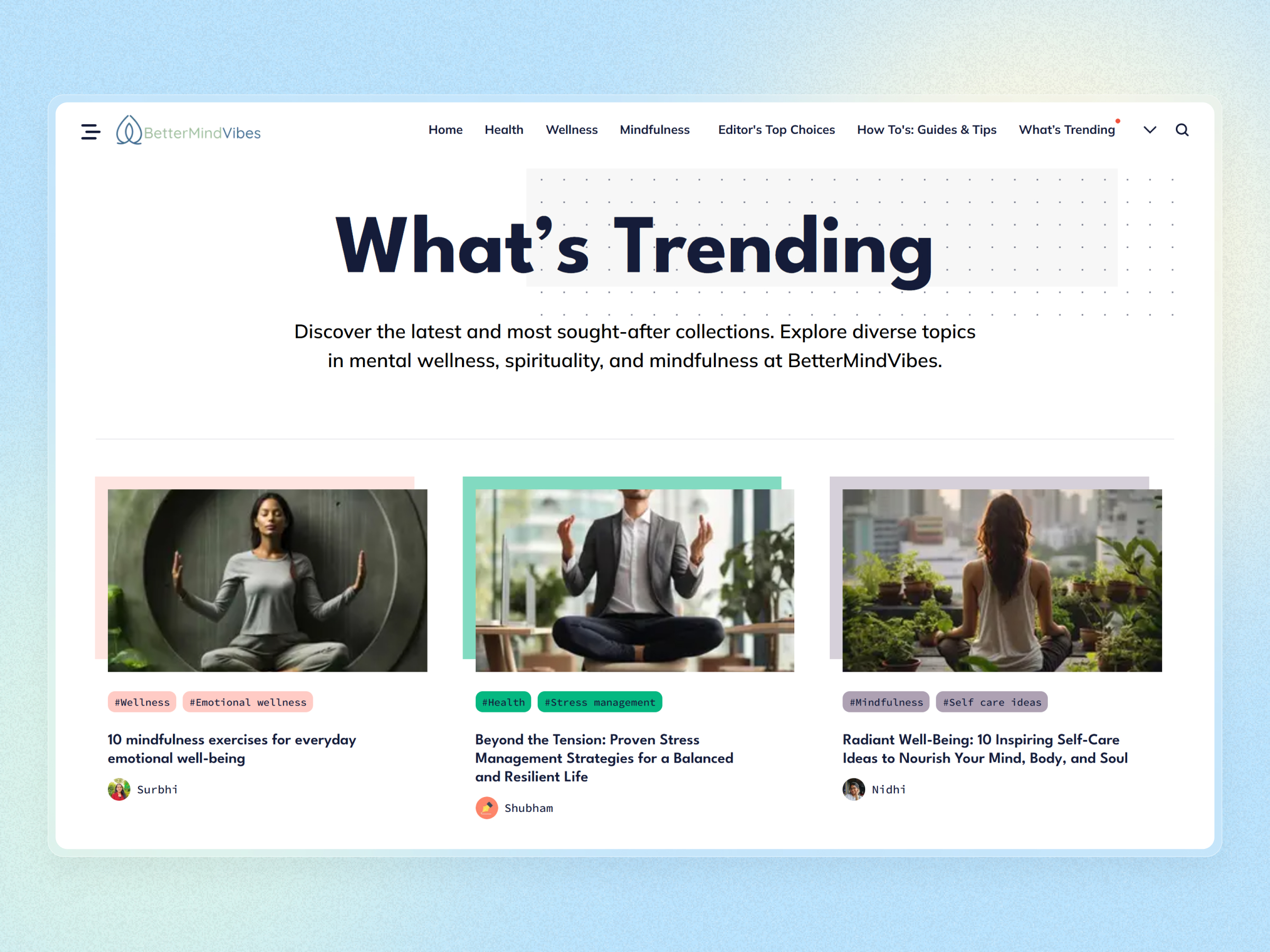
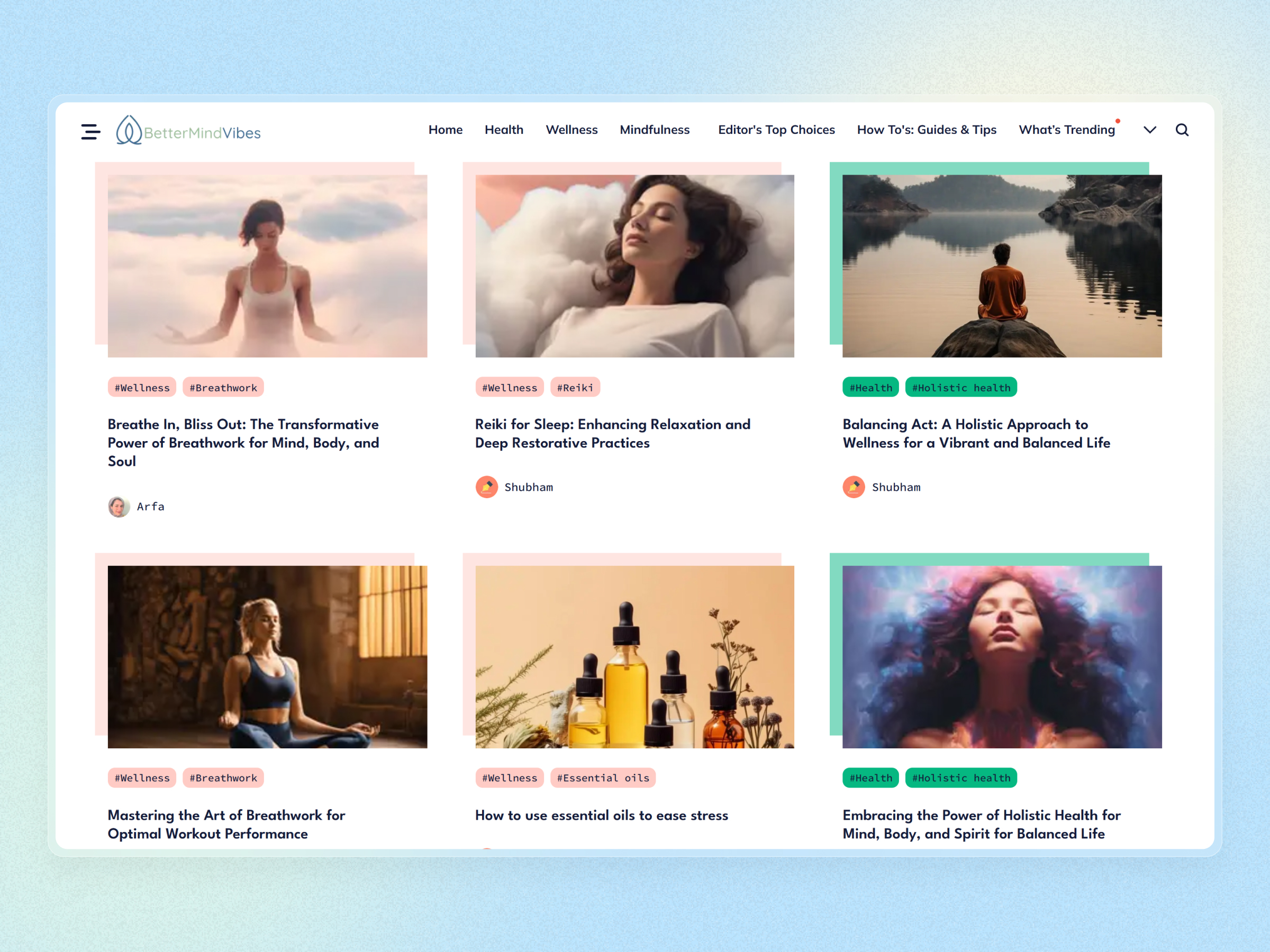
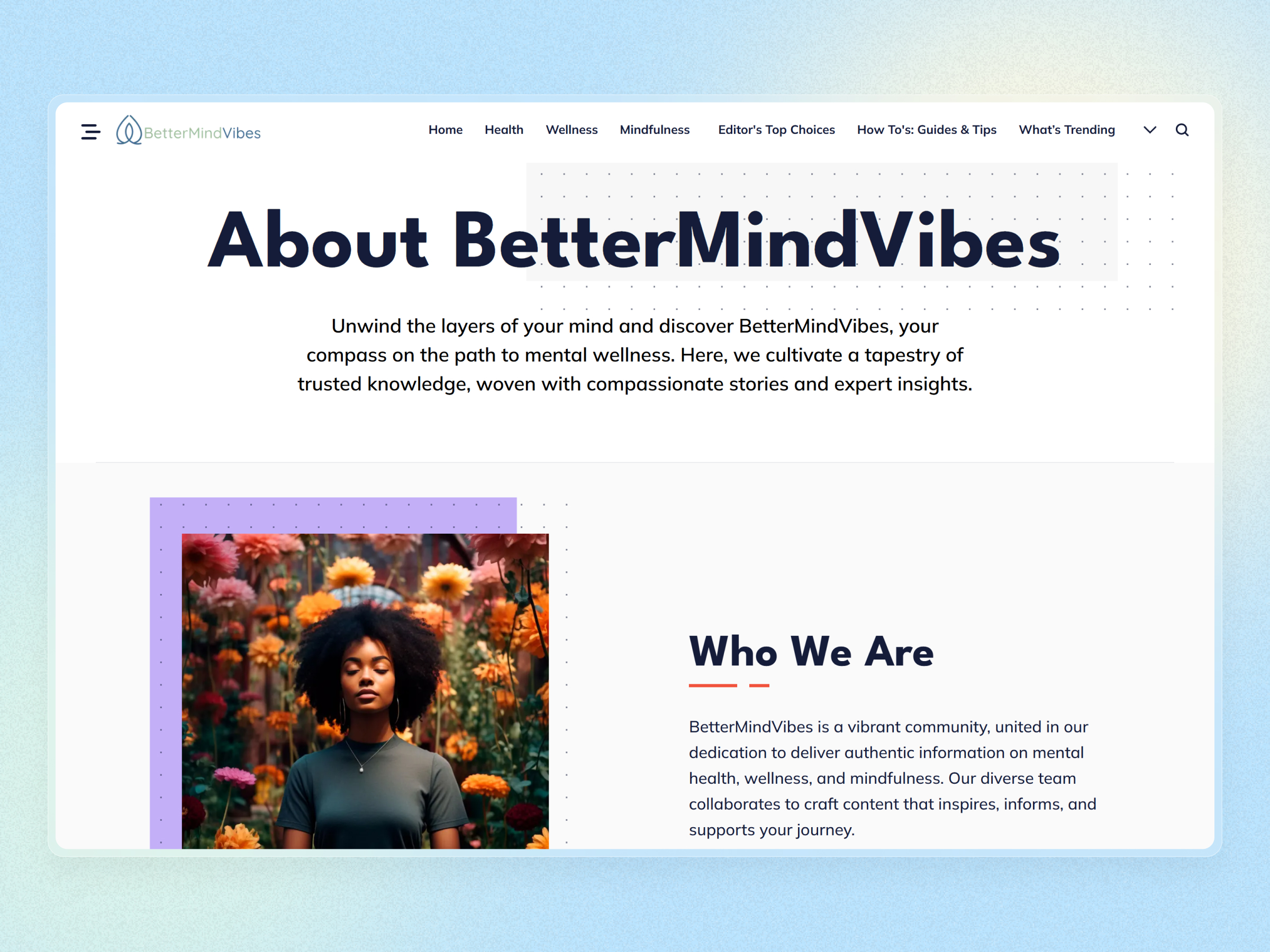
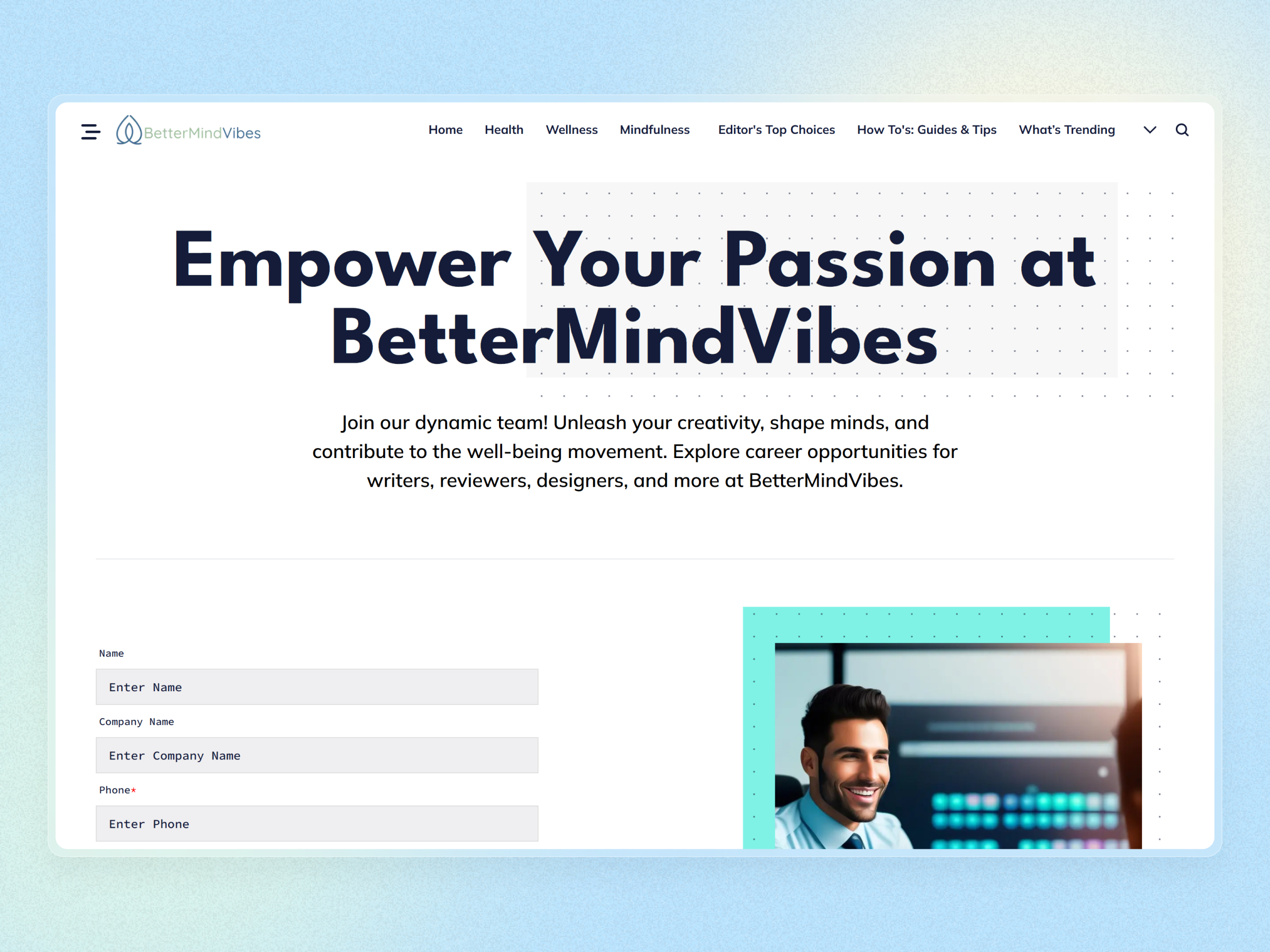
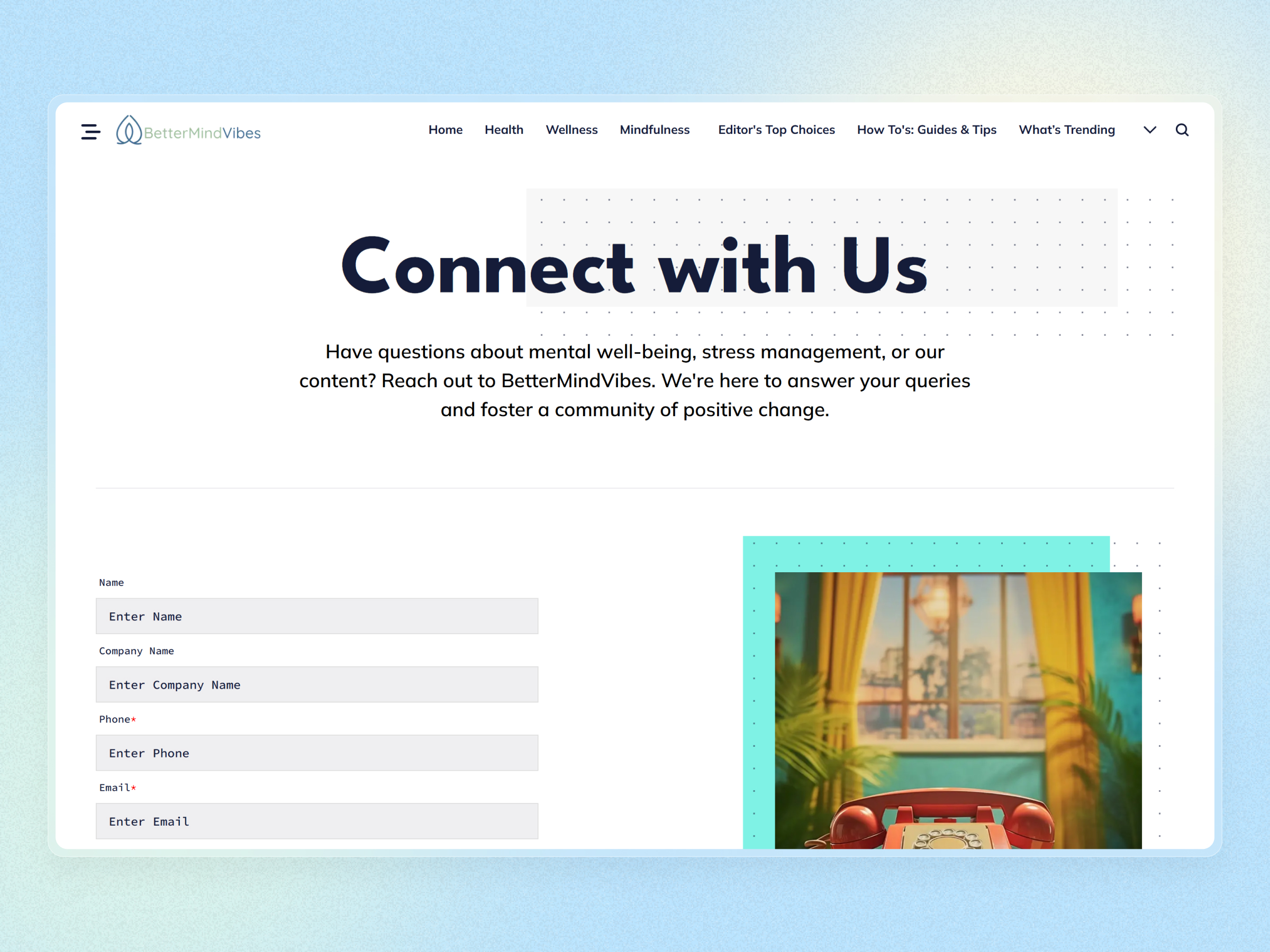
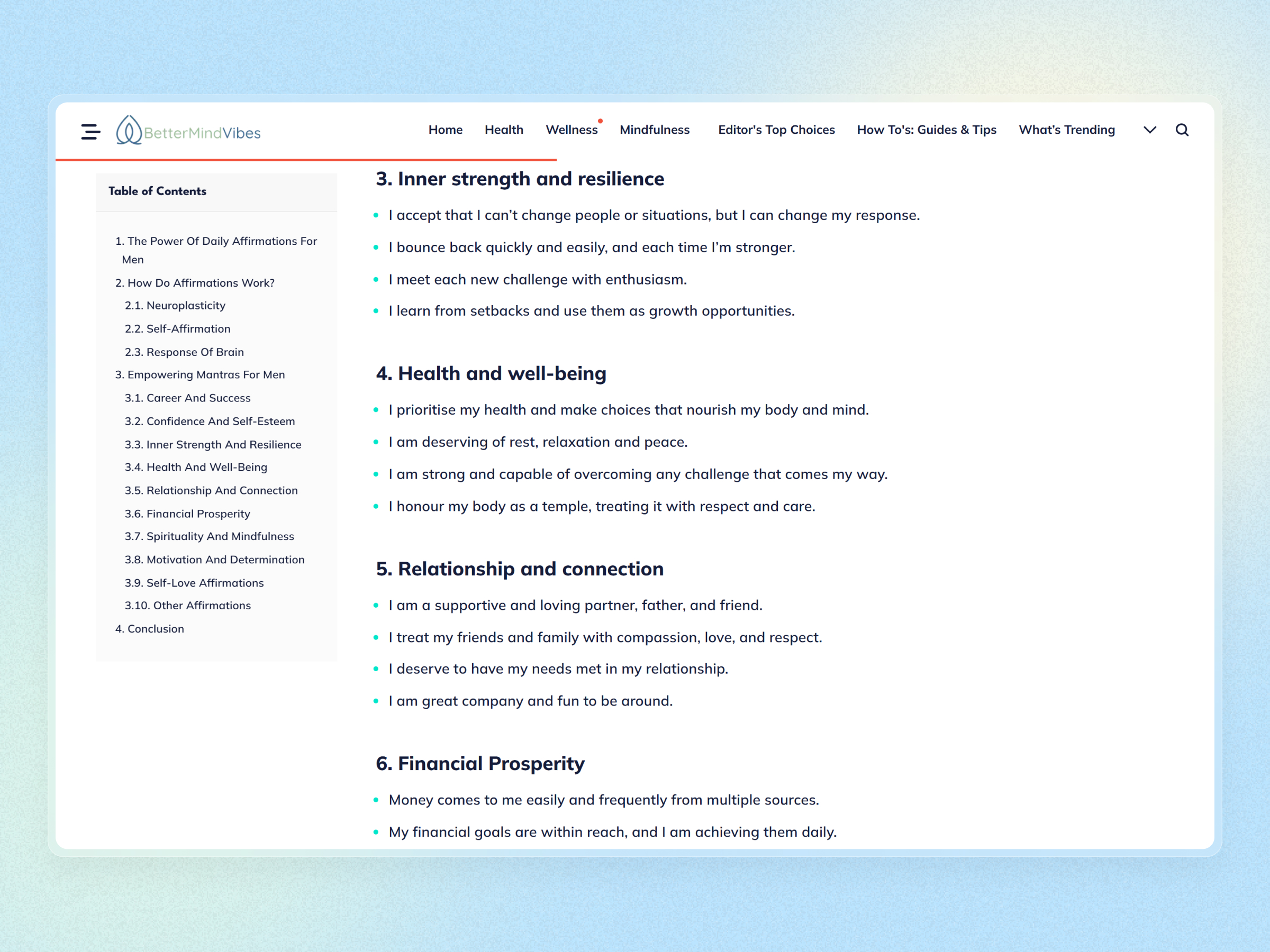
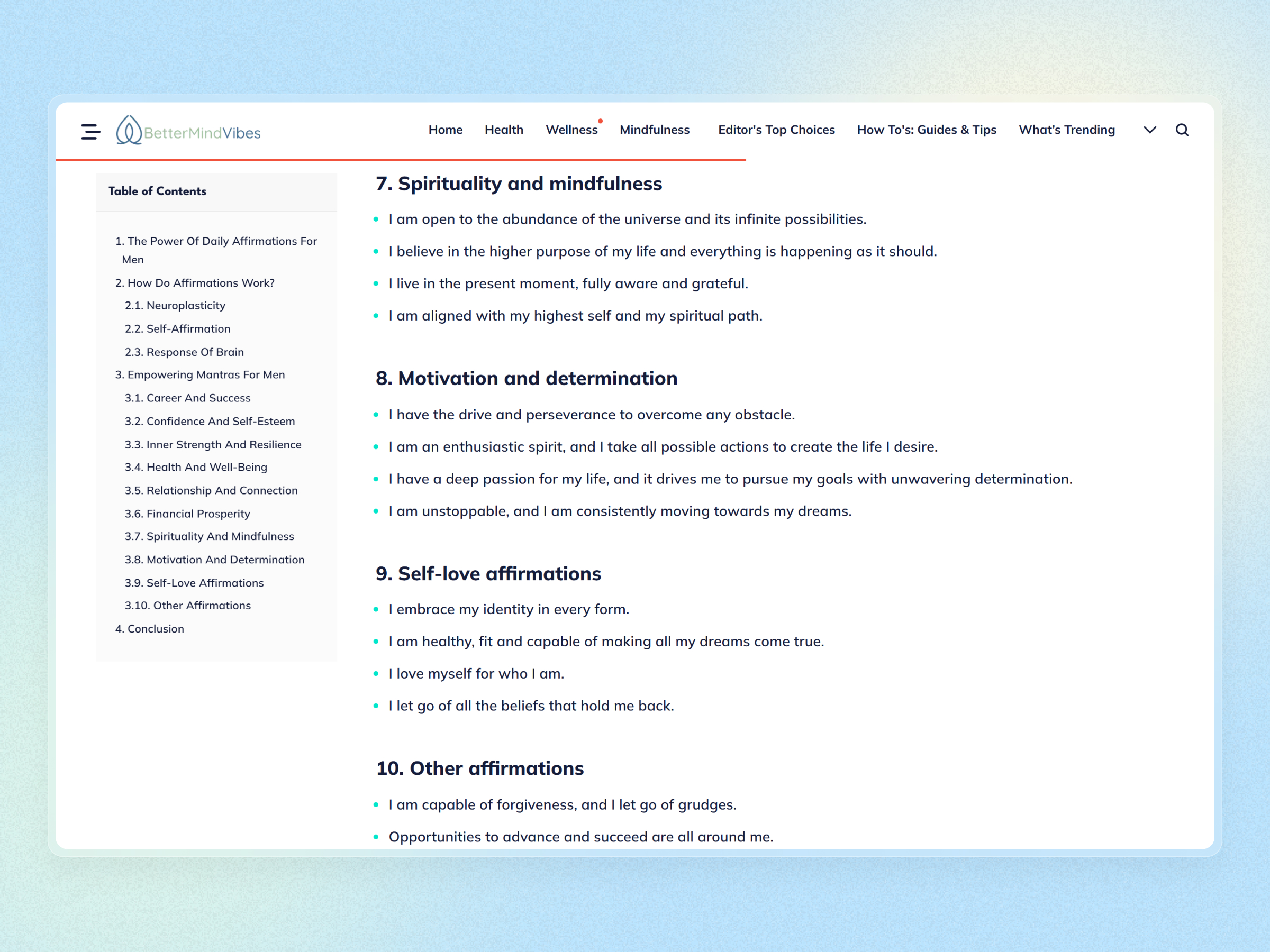
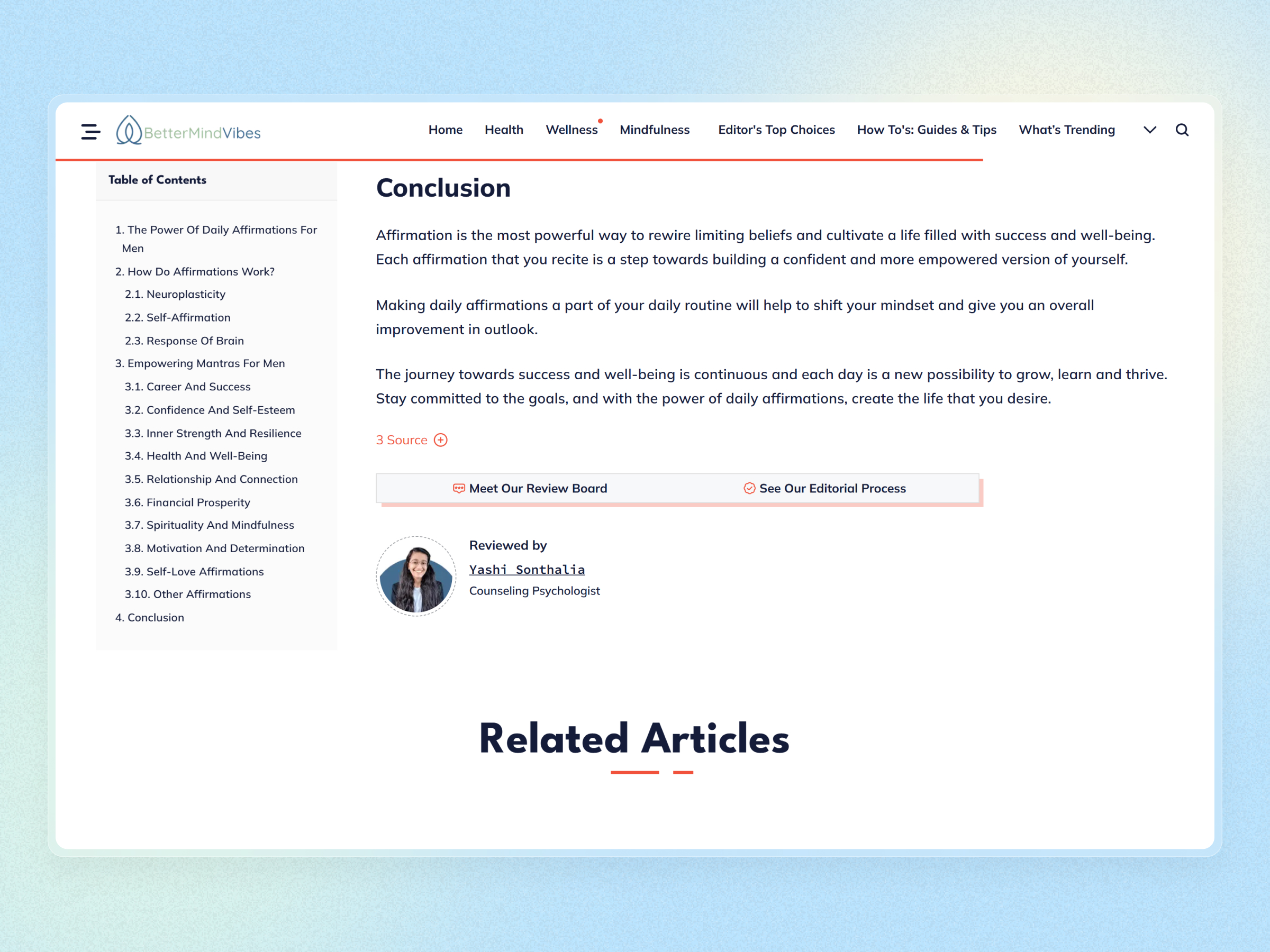
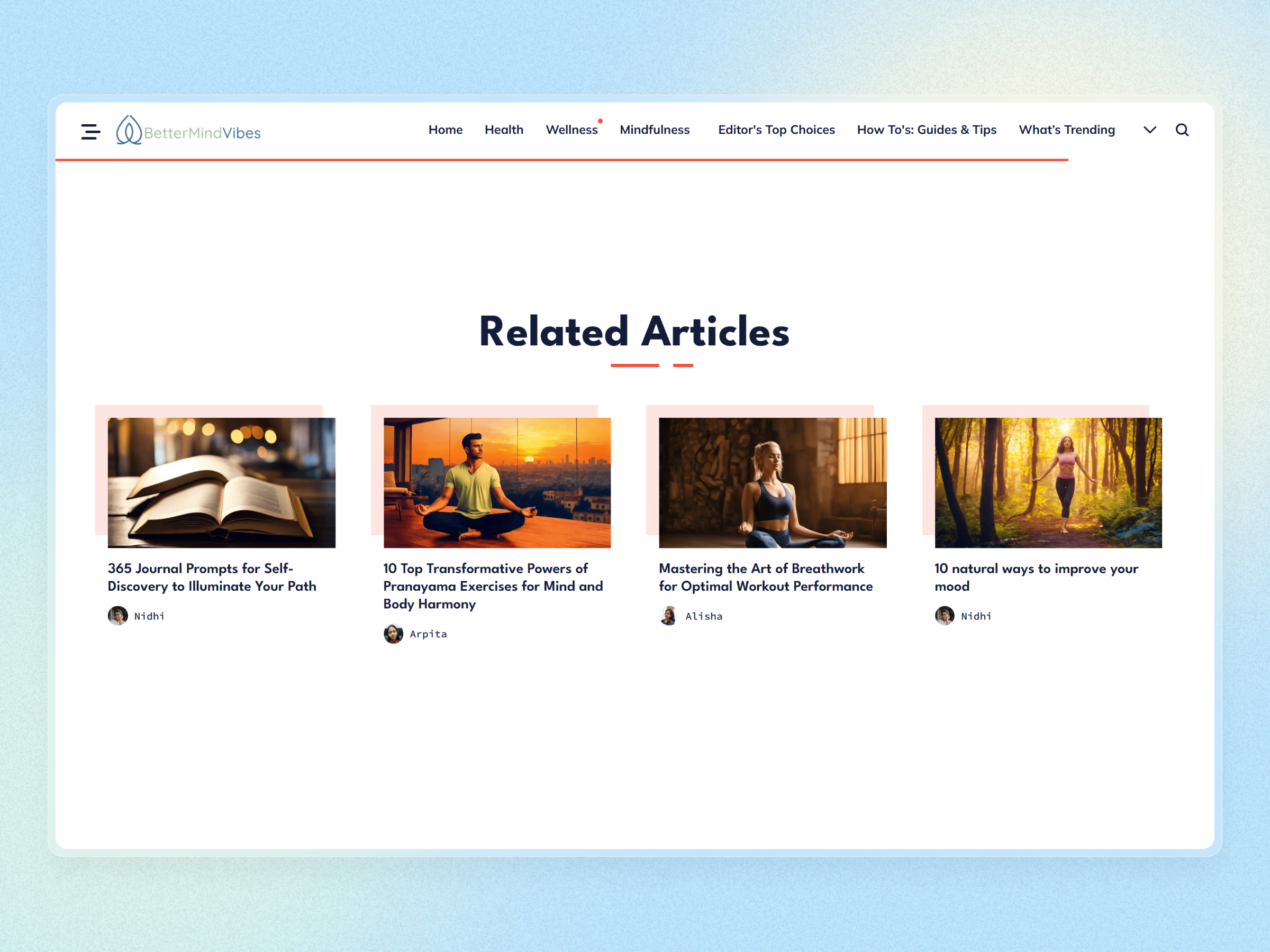
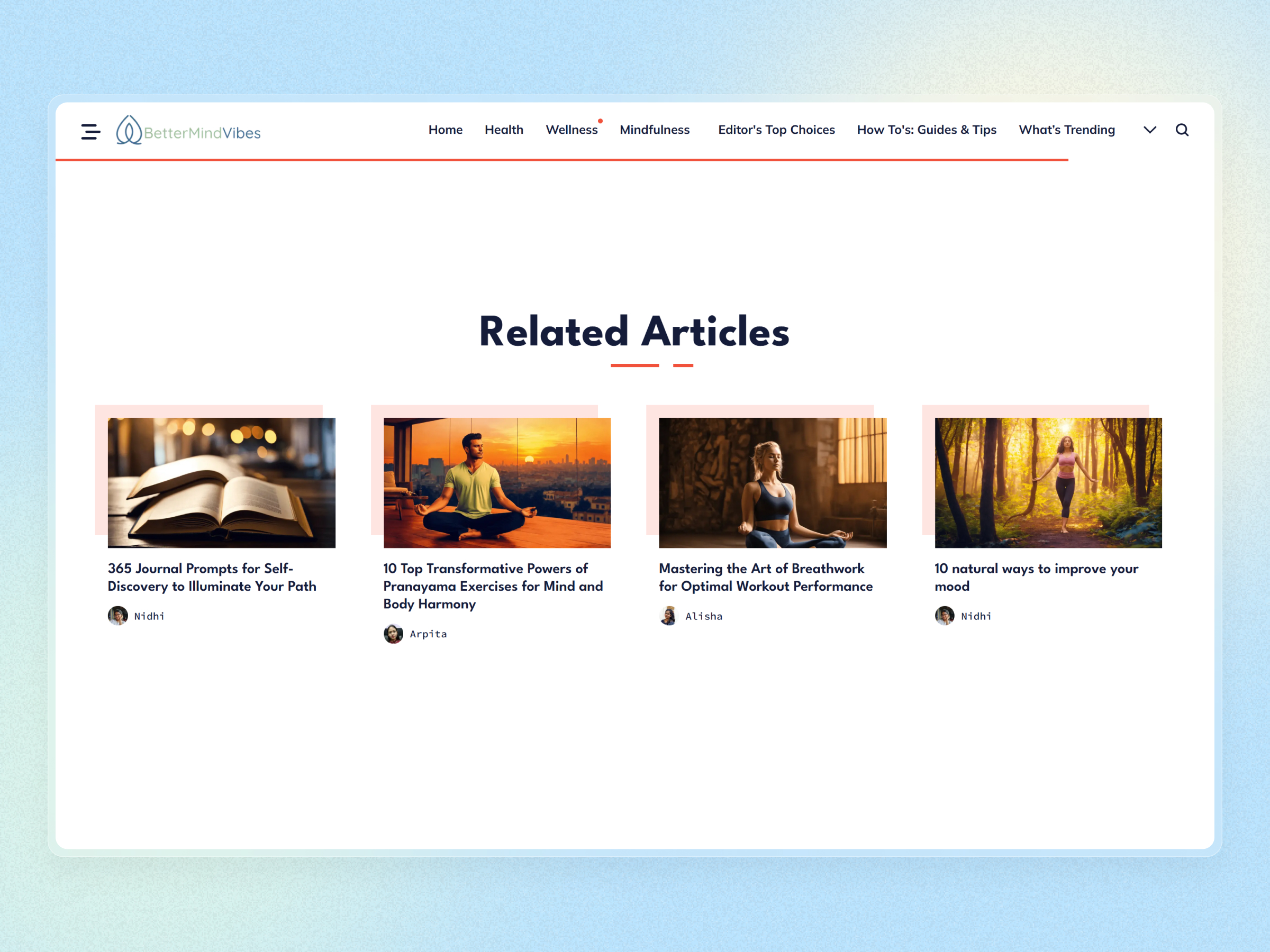
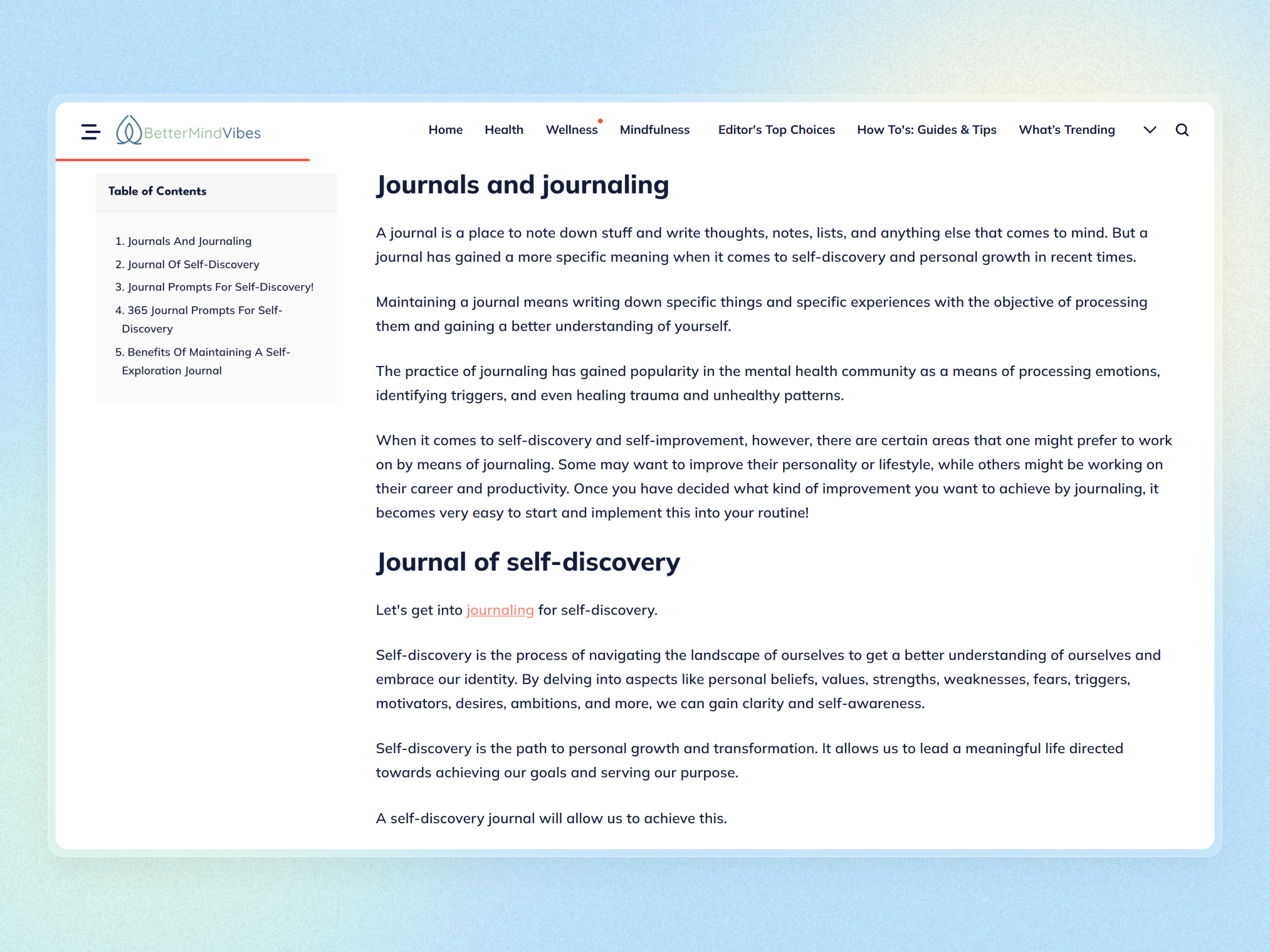
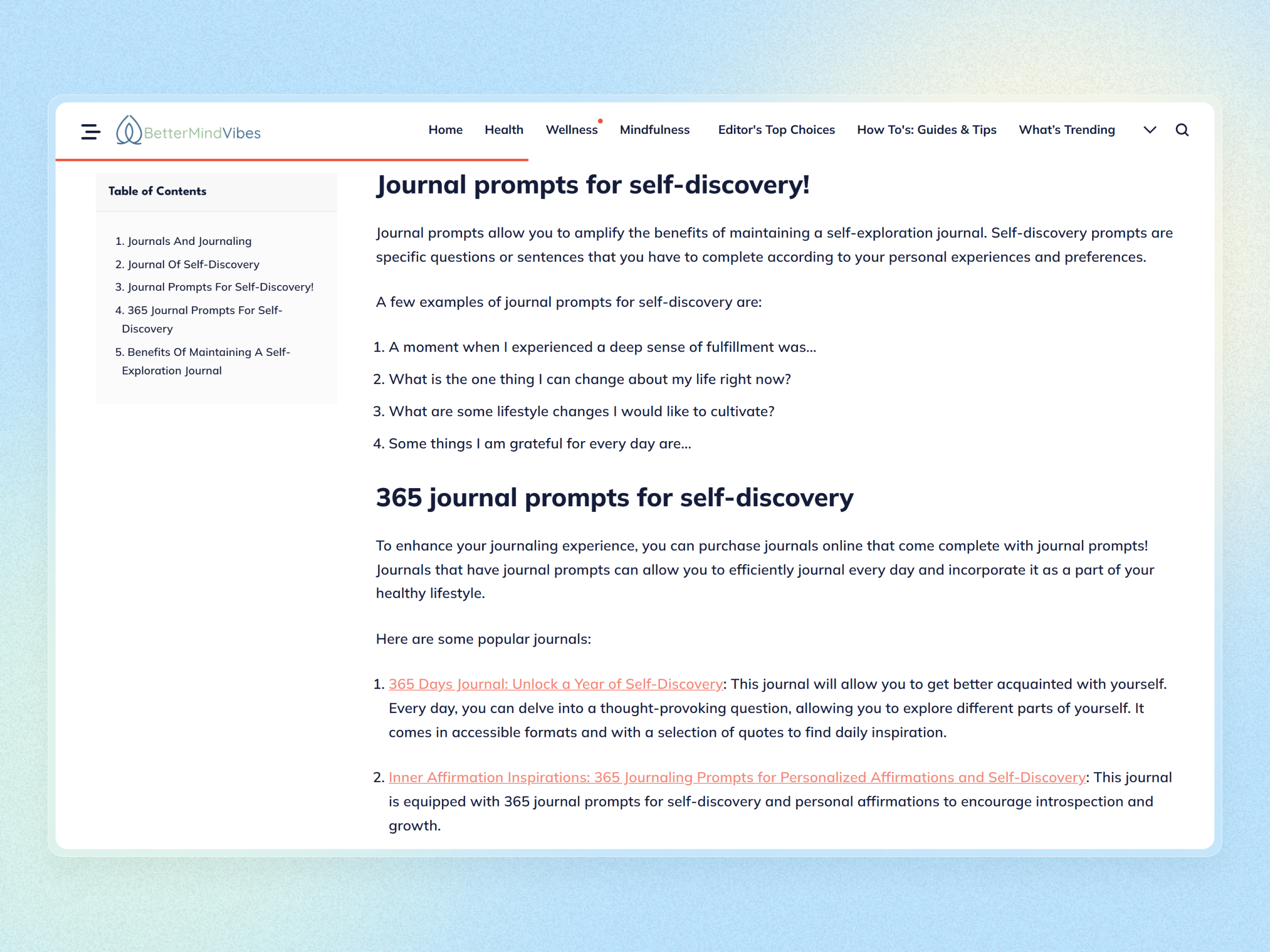
Wellness content needs a reading experience that doesn’t get in the way. We chose typography, spacing, and a colour palette that makes long-form articles easy to read without fatigue. Category navigation, related articles, and clear content hierarchy help readers find more of what they’re looking for without the page feeling cluttered.
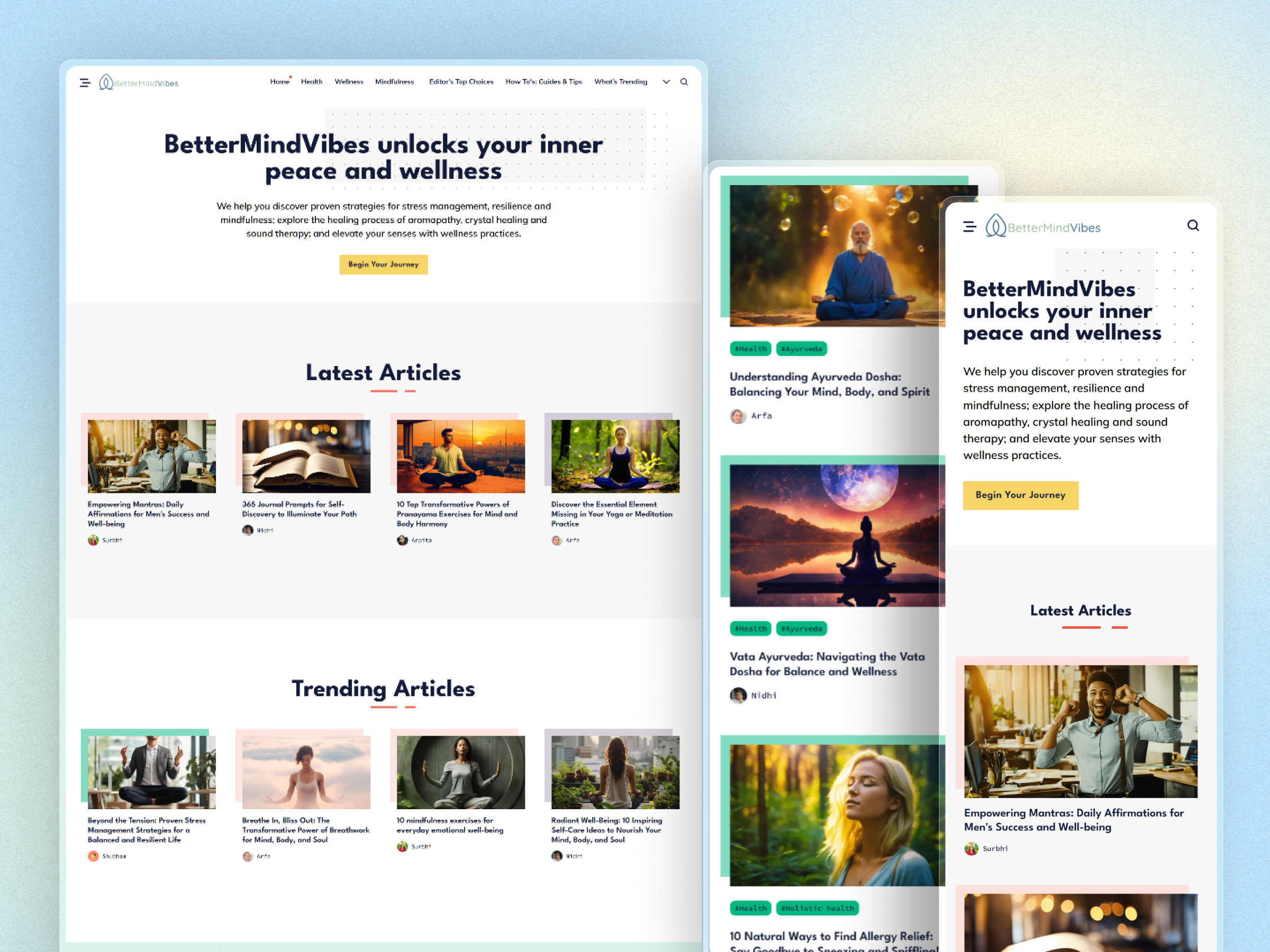
What shipped
Delivered in 2 months for ₹1.4 lakhs. The client has a fast, well-structured blog platform they can manage entirely on their own. The headless CMS setup means the frontend can be updated independently without disrupting the editorial workflow, and the SEO foundations are in place to support long-term organic growth.
Frequently Asked Questions
Questions about wellness blogs,
answered clearly.
Questions about the work, scope, delivery context, and next steps.
Better Mind Vibes — a custom Next.js wellness blog with Strapi as the headless CMS, complete SEO architecture, and a designed reading experience — was delivered in 2 months for ₹1.4 lakhs for a Hyderabad-based client. Cost depends on how many content types you need, whether you want a custom design or an adapted template, and how much editorial functionality the CMS needs to support. A well-scoped wellness blog with a headless CMS can realistically ship in this range.
Related Work
Similar case studies,
selected for context.
Continue exploring related work, with comparable product and delivery challenges.