Mobile ApplicationsMVP Development
Korgee Website
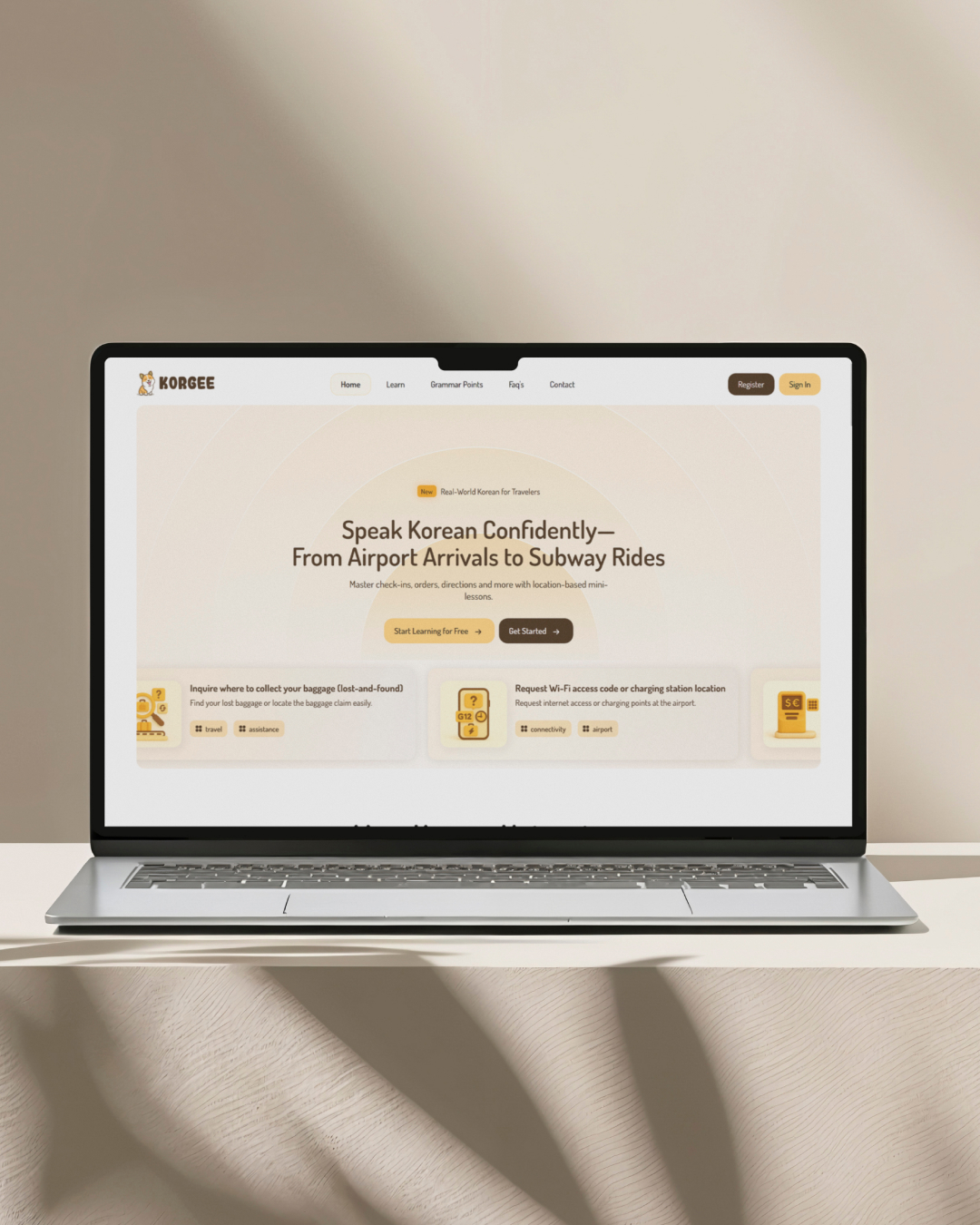
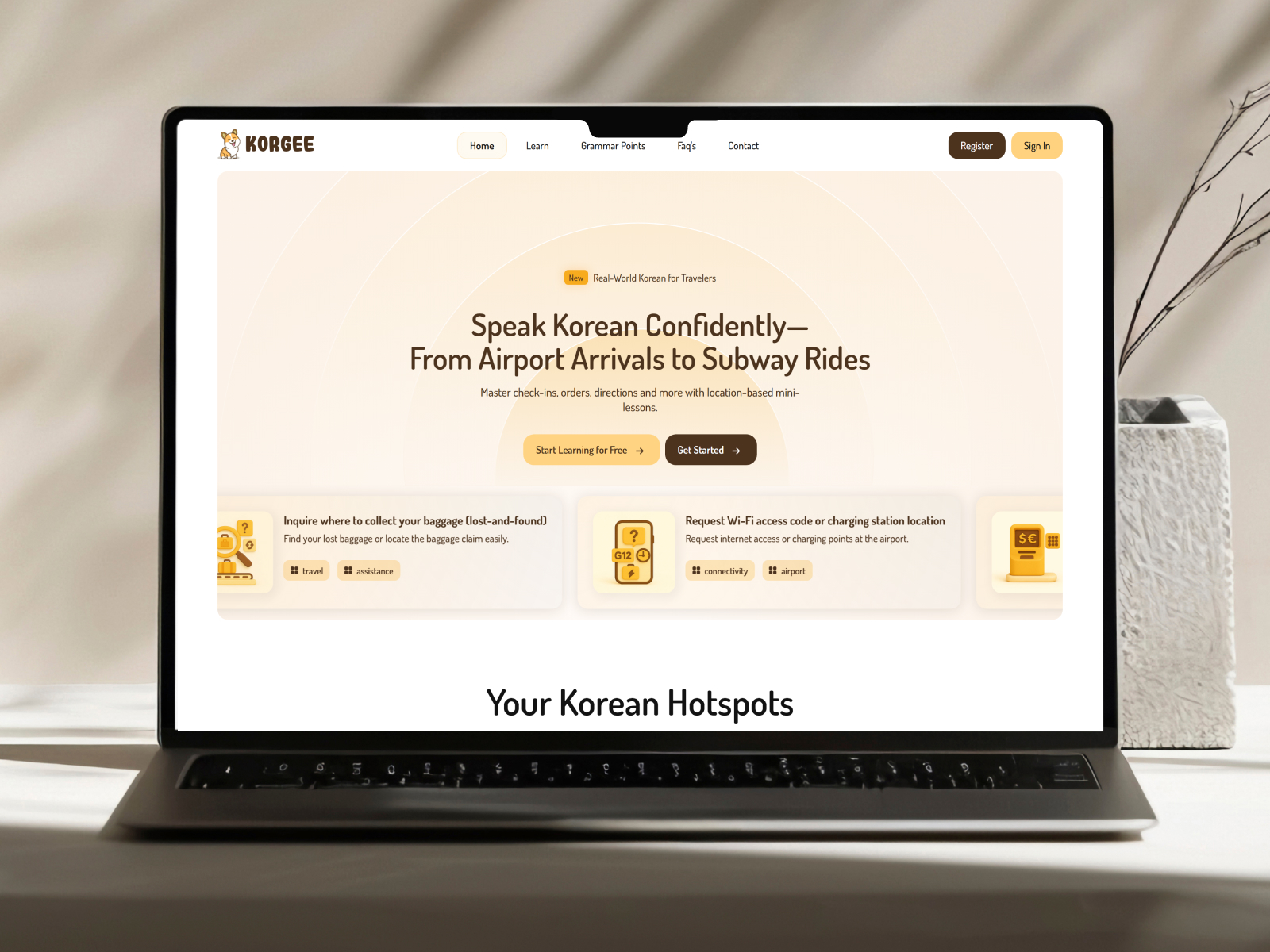
Korgee is a Korean language learning app built around real-life conversation scenarios, helping learners practice useful phrases in situations that matter.
A language app built around real conversation
Korgee is a Korean language learning app built around one idea: the fastest way to learn Korean is to use it in situations that actually matter. Instead of grammar drills and flashcard decks, Korgee puts learners inside real-world scenarios — ordering food at a Korean restaurant, navigating an airport, checking into a hotel, picking up a coffee at a café — and walks them through the conversation from start to finish.
The product was built for a client based in Korea over three months with a budget of USD 2,400. It targets a market growing from USD 7.2 billion in 2024 to a projected USD 67 billion by 2034, driven largely by the Korean Wave — K-pop, K-dramas, and K-culture — which has produced a 900 percent increase in global Korean learners over the past decade.
The brief
The Korean language learning app market is crowded at the extremes. Duolingo has 17.4 million Korean learners but teaches vocabulary and gamification, not real conversation. Drops is the highest-rated vocabulary app but covers no grammar or dialogue. Talk to Me in Korean (TTMIK) is the gold standard for grammar but requires learners to do their own conversation practice elsewhere. Nobody owned the situational conversation space — the gap between knowing words and being able to actually speak in a real Korean setting.
Korgee needed to fill that gap. The product also runs on a subscription model, which meant free content had to feel useful enough to convert — not watered-down, but genuinely worth coming back for.
The build
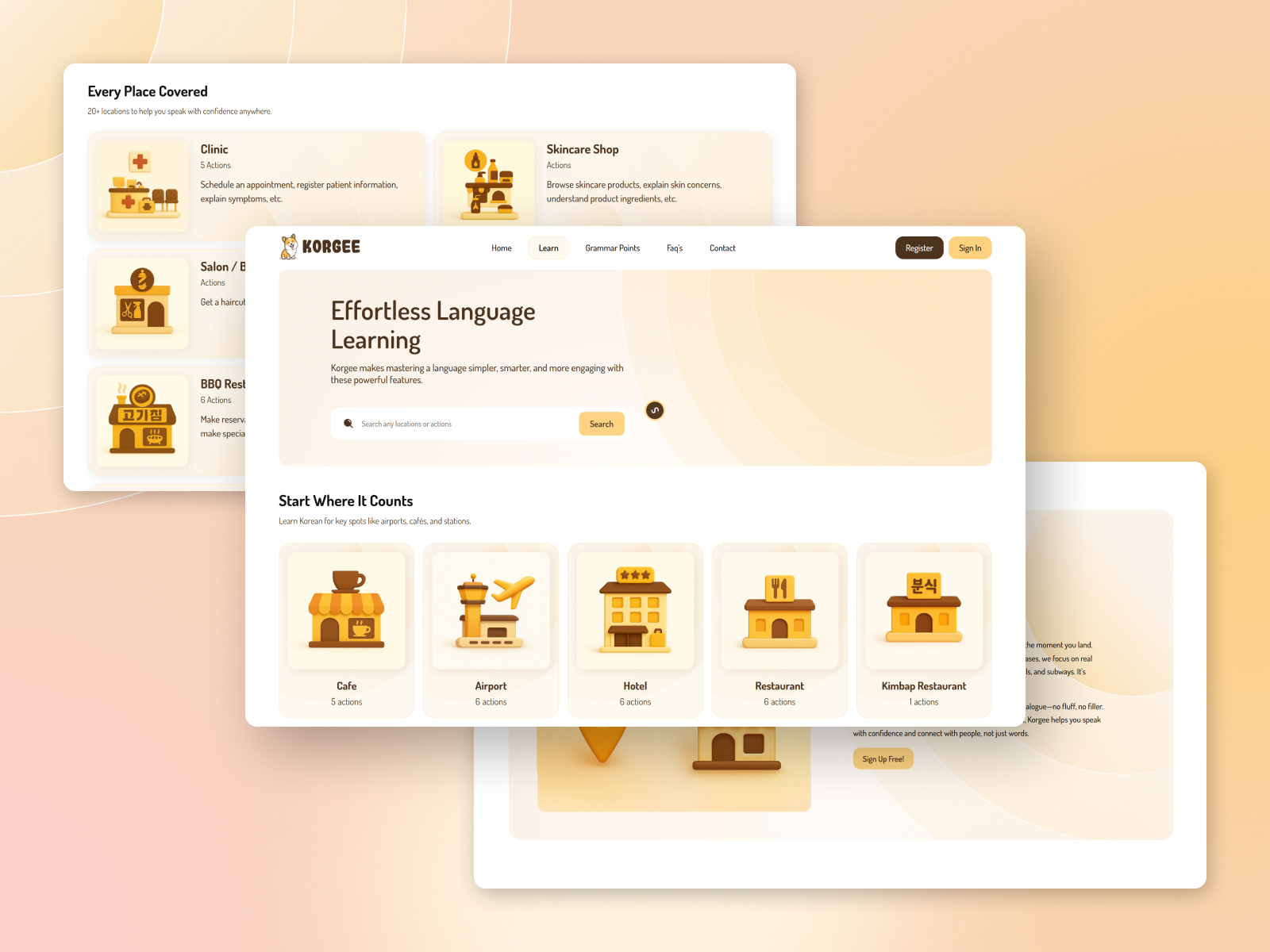
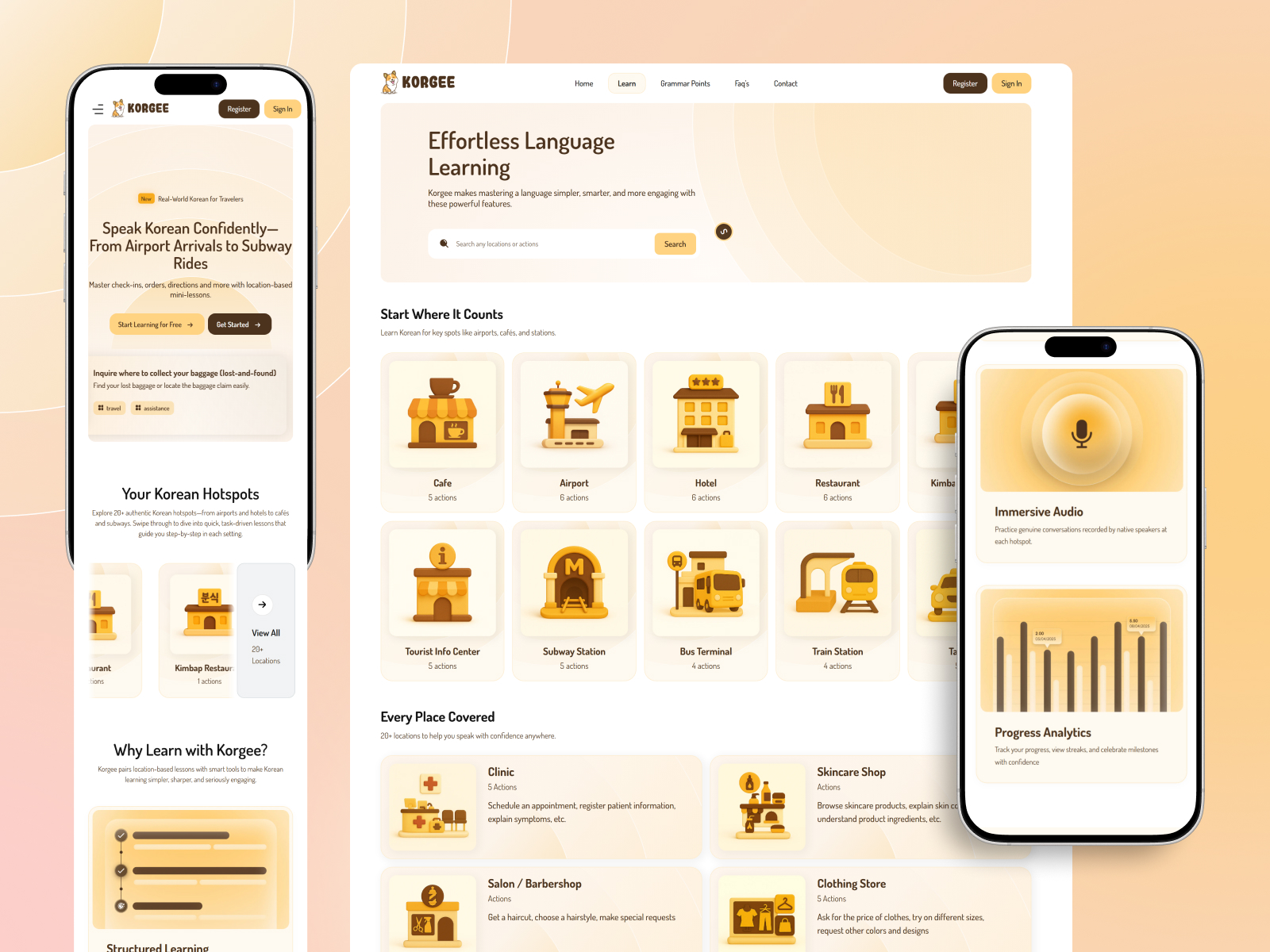
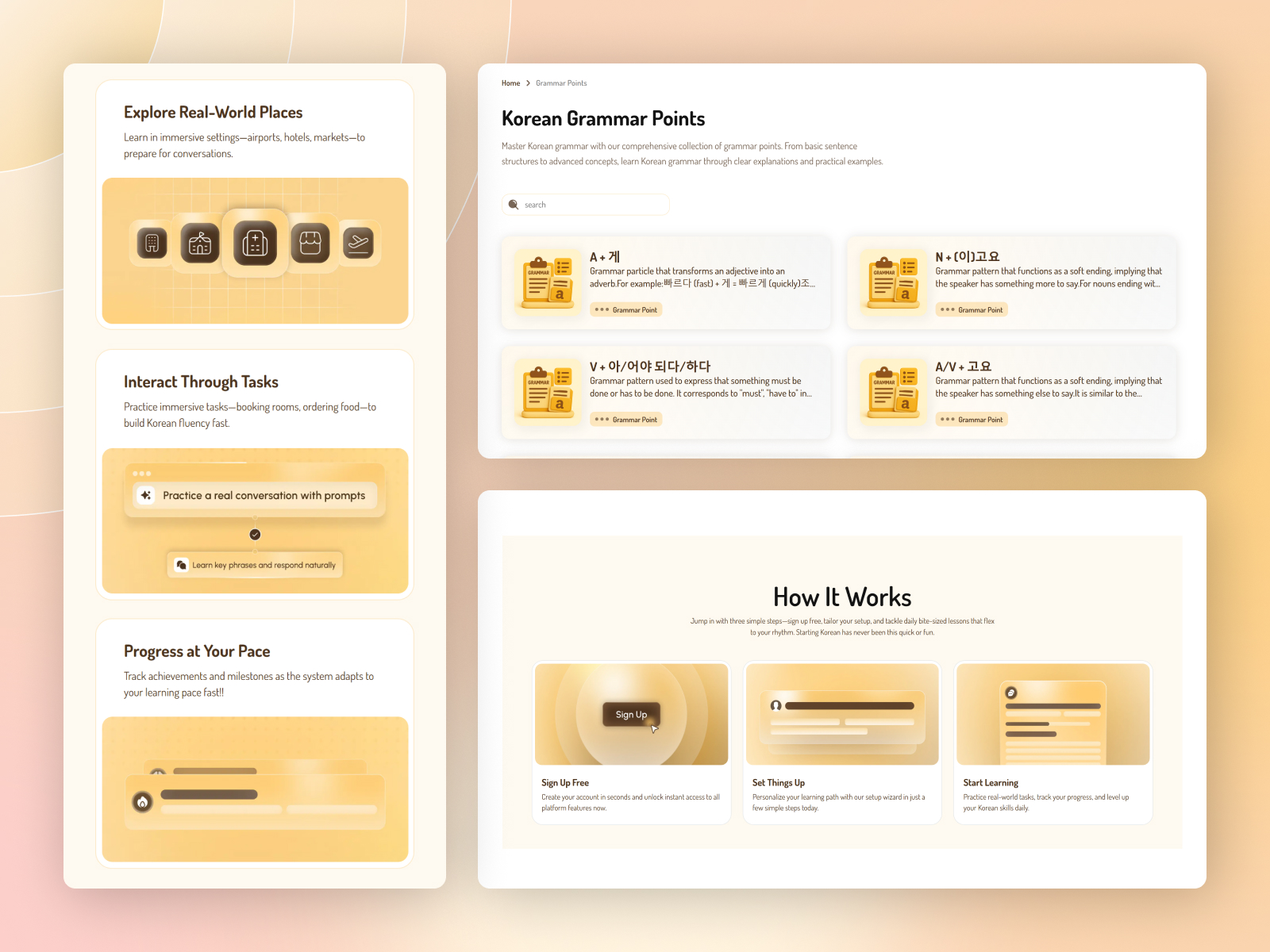
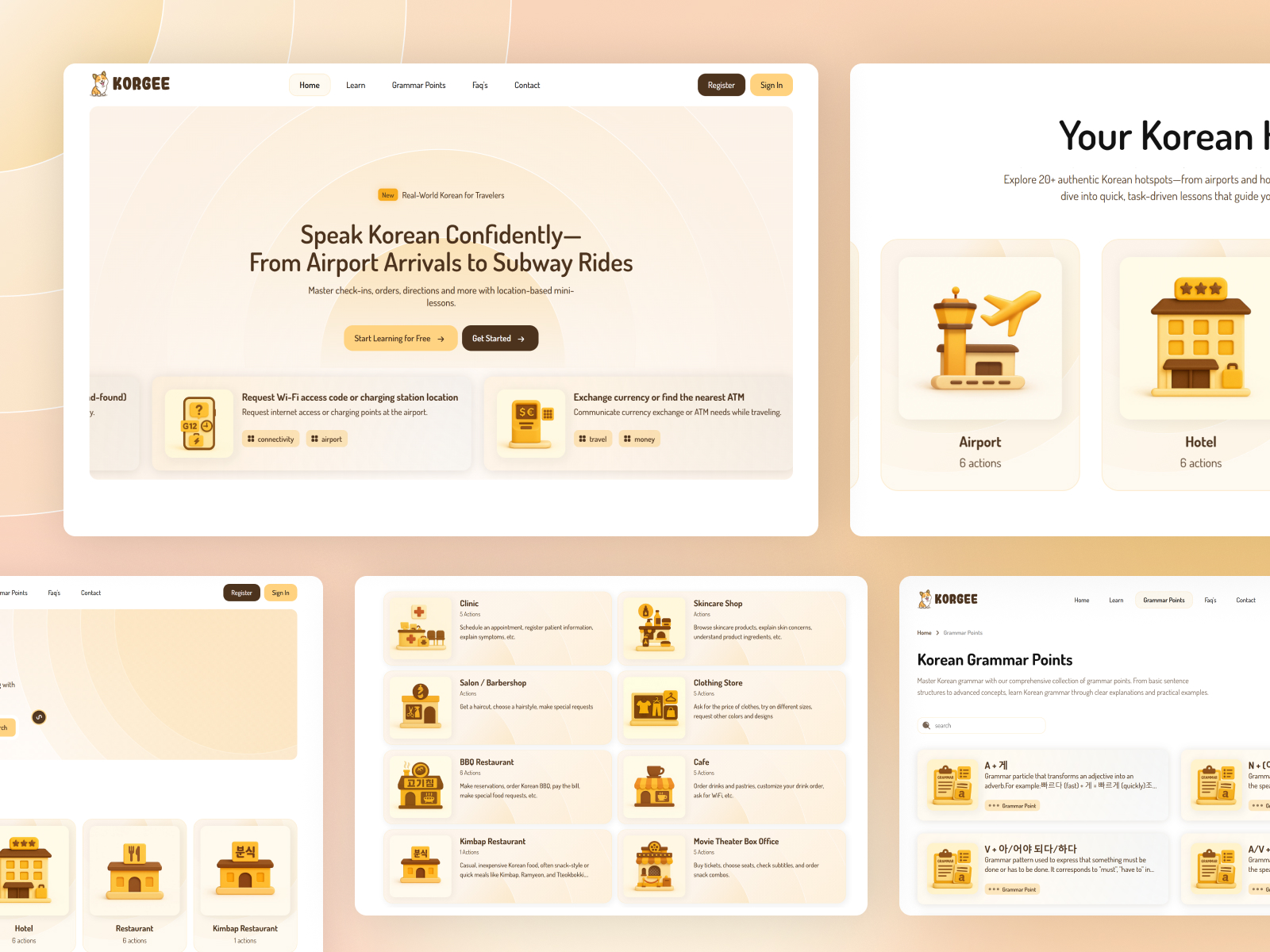
We planned, designed, and built a mobile app with situation-first learning at its core. Every part of the experience is built around real-world locations and the conversations that happen inside them.
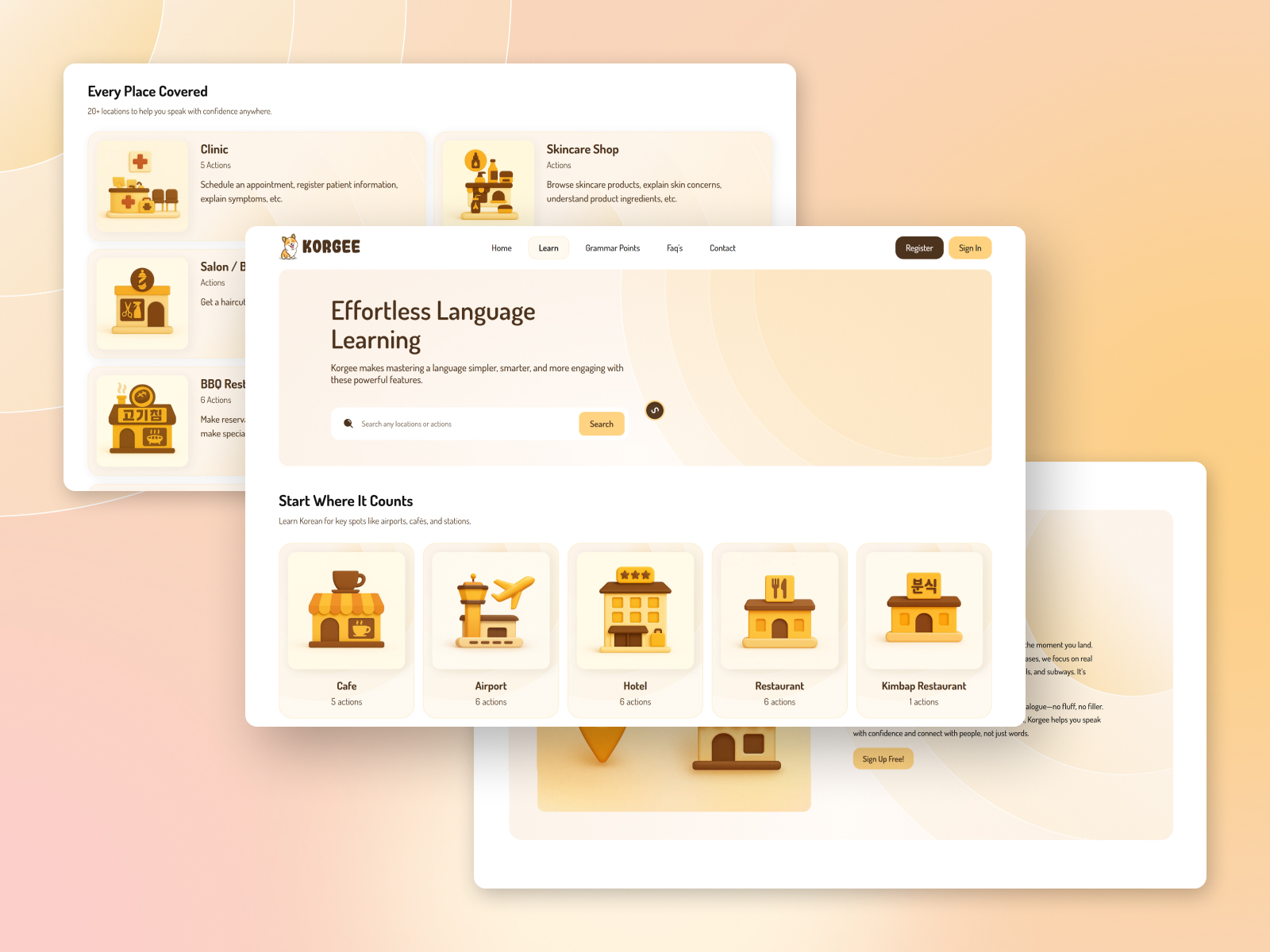
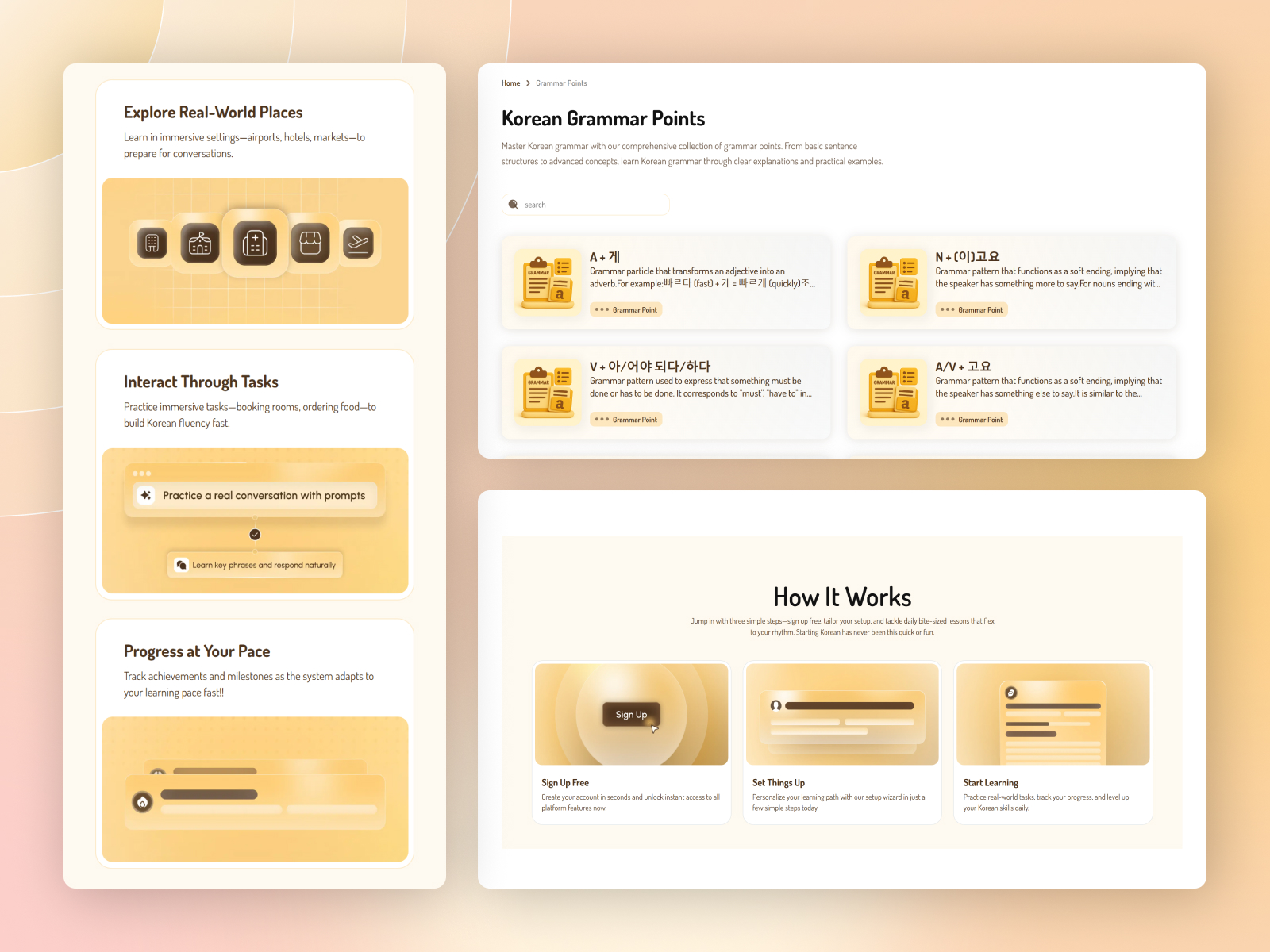
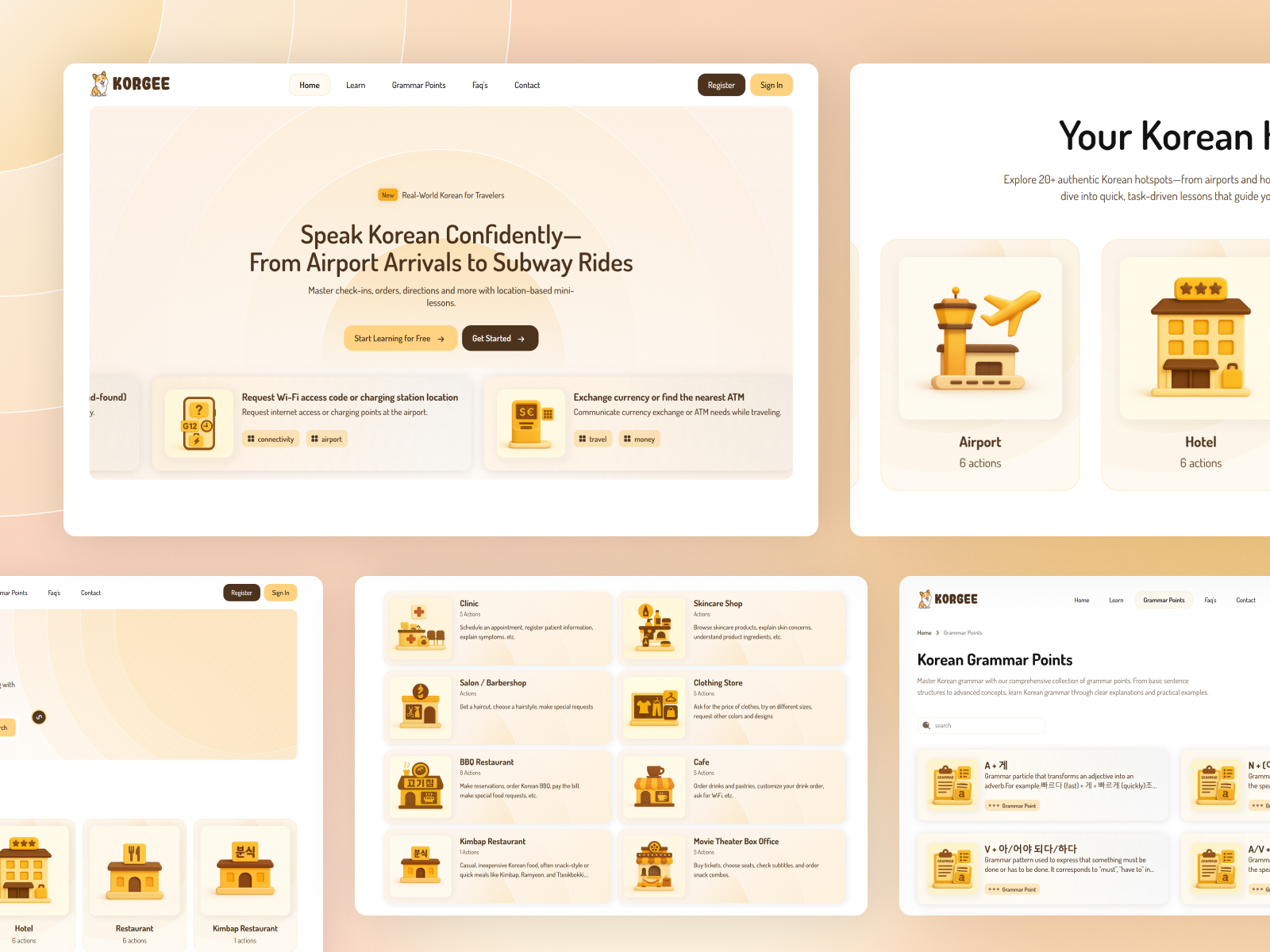
- Location-Based Scenarios: Learners select a real-world setting — a Korean restaurant, café, airport, convenience store, or hotel — and step into a complete simulated conversation. Each scenario is self-contained, practical, and immediately useful for travelers or K-culture fans engaging with Korean media.
- Simulated Conversations: The product delivers complete back-and-forth dialogue for each scenario, training language production — not just recognition. Many learners using Duolingo or vocabulary apps can recognize Korean phrases but freeze when a real conversation demands a response. Korgee trains retrieval and reply under realistic conditions, closing that gap clearly.
- Vocabulary and Grammar in Context: Key vocabulary and grammar points are surfaced inside each conversation exchange, tied to the moment where they appear. Nothing is taught in a vacuum.
- Subscription-Gated Content: Free learners access a core set of scenarios to experience the product depth. Premium scenarios, extended conversation sets, and additional locations unlock through subscription. The paywall sits after enough free content to show learners what they are paying for.
What shipped
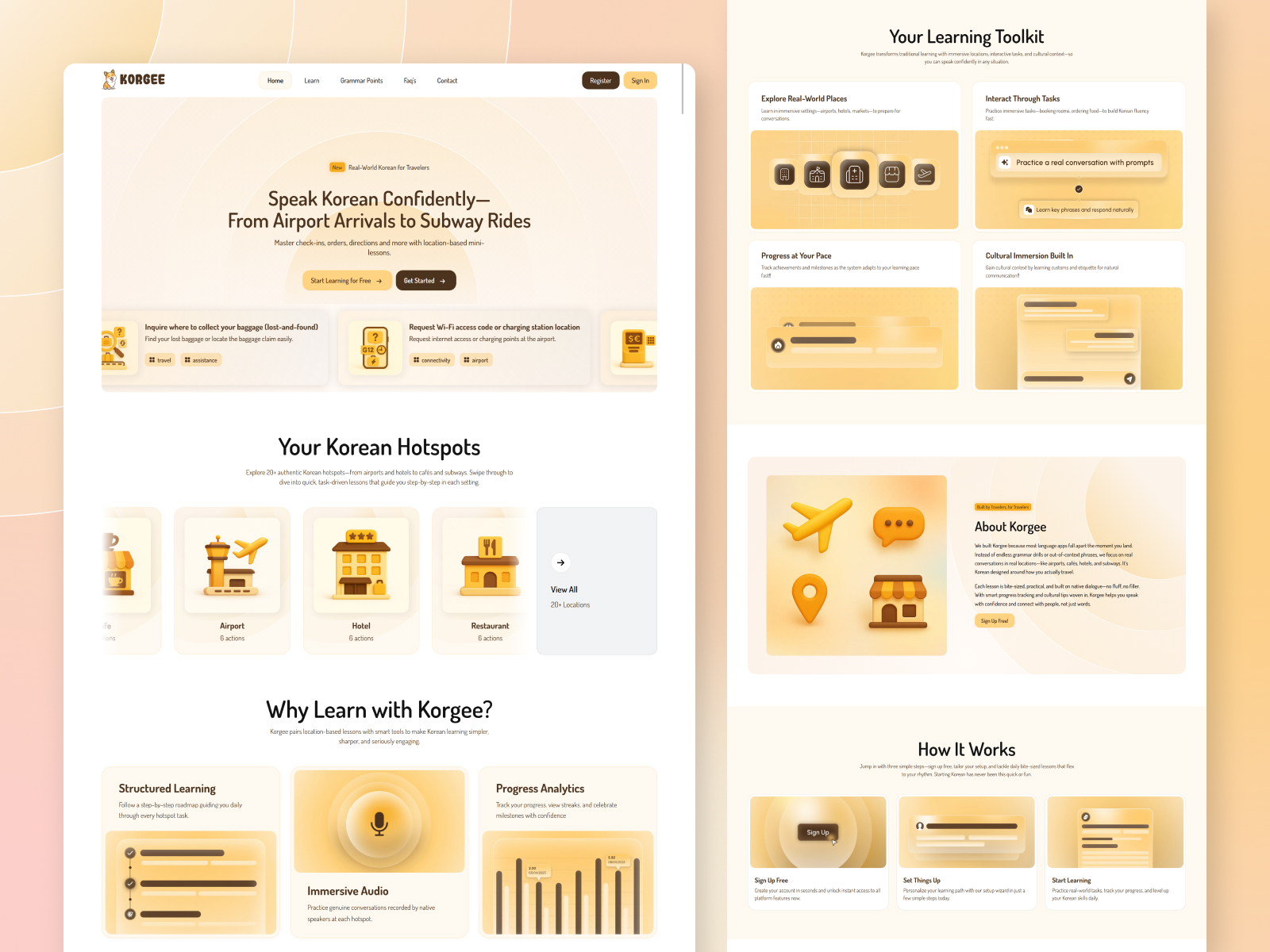
Korgee delivered a complete, subscription-ready Korean language learning app within the three-month timeline and USD 2,400 budget. The product launched with a content library across multiple real-world locations, a smooth onboarding flow, and a subscription system designed to convert free users to paid.
The scenario-based architecture makes content expansion straightforward — new locations, seasonal scenarios, and additional conversation types can be added to the same framework without rebuilding the product. This gives the client a sustainable growth path as the Korean learning market continues its rapid upward trajectory.
Final note
Korgee demonstrates what a focused MVP can accomplish when the product concept is clear. By targeting the specific gap in the Korean learning market — real-world conversation practice that Duolingo, Drops, and TTMIK do not own — the product delivers immediate practical value to travelers, K-culture fans, and anyone who wants to hold an actual conversation in Korean rather than pass a vocabulary test.
Frequently Asked Questions
Questions about Korgee,
answered clearly.
Questions about the work, scope, delivery context, and next steps.
For conversational basics — ordering food, greetings, travel phrases — most learners reach functional communication in 2 to 3 months with consistent daily practice of around 30 minutes. Korgee's situational approach accelerates this by teaching real-world scenarios clearly, rather than grammar theory first. Research shows scenario-based learning cuts time to conversational readiness by approximately 30 to 40 percent compared to traditional vocabulary-drill or grammar-first methods.
Related Work
Similar case studies,
selected for context.
Continue exploring related work, with comparable product and delivery challenges.