SaaS ApplicationsWeb ApplicationsAI Solutions
Korgee Admin Panel
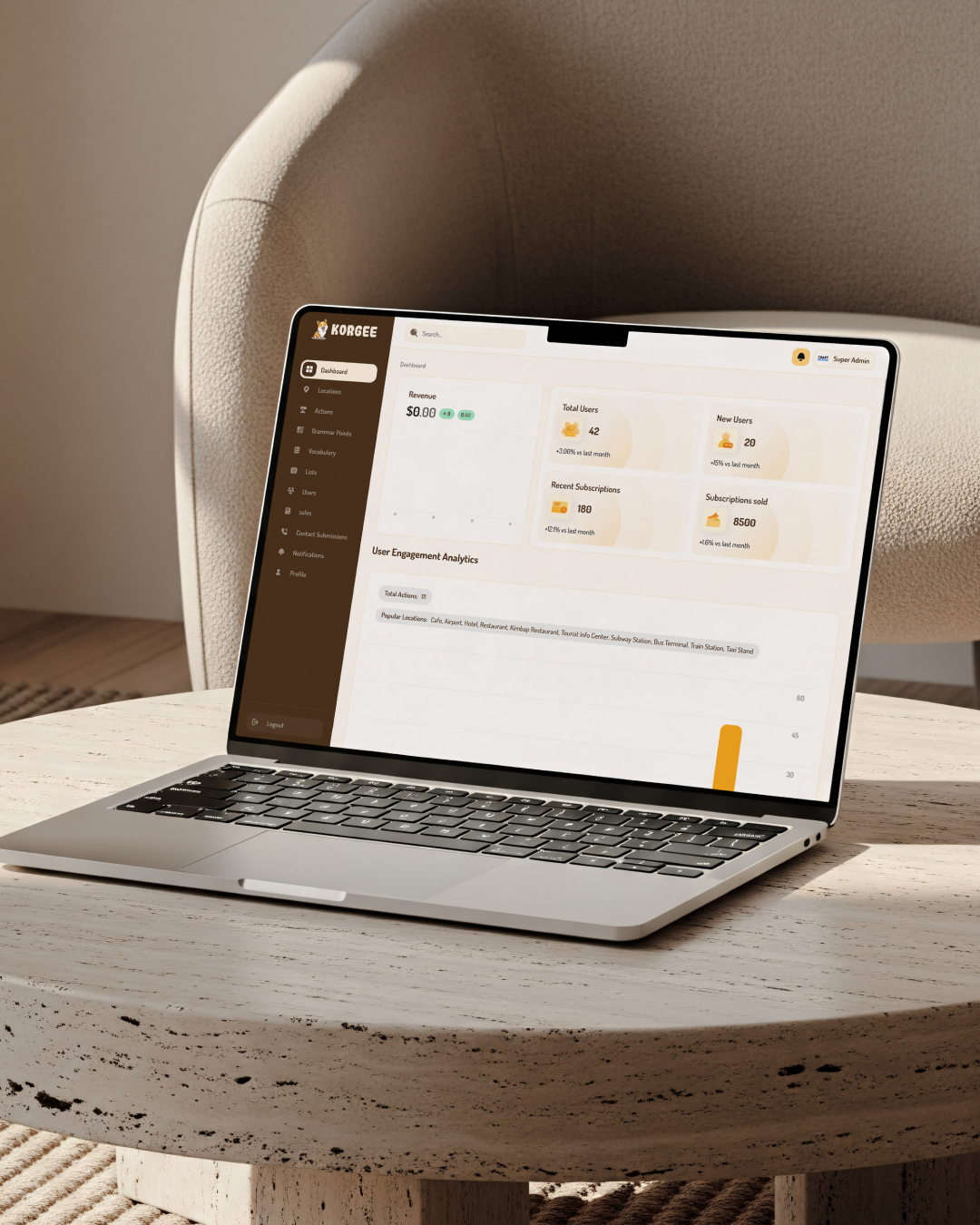
The Korgee Admin Panel gives the team control over locations, scenarios, subscriptions, and content so the learning app can scale without developer help.
The operations layer behind Korgee
The Korgee Admin Panel is the content and operations backbone behind the Korgee Korean language learning app. While the product handles the learner experience, the admin panel gives the team complete control over what content exists, how it is structured, and who can access it.
Built as part of the same three-month, USD 2,400 engagement for a Korean client, the admin panel was designed with one priority: make it easy to manage a growing library of conversation scenarios without requiring a developer for every update. As the Korean learning market scales toward USD 67 billion by 2034, a product like Korgee needs to be able to grow its content independently — and the admin panel is what makes that possible.
The brief
A situational language learning app runs on content depth. Every location — restaurant, airport, café, hotel — needs conversations, vocabulary sets, and grammar notes. Without an admin tool, every content update means a developer touching the database. For a growing product in a fast-moving market, that is not viable.
The real task was building an admin panel that gave the client complete operational control without adding unnecessary complexity. Non-technical team members needed to be able to update content, manage scenarios, and monitor subscriptions without engineering support.
The build
We planned, designed, and built a web-based admin panel that mirrors the content architecture of the Korgee app and puts the team in direct control of every layer.
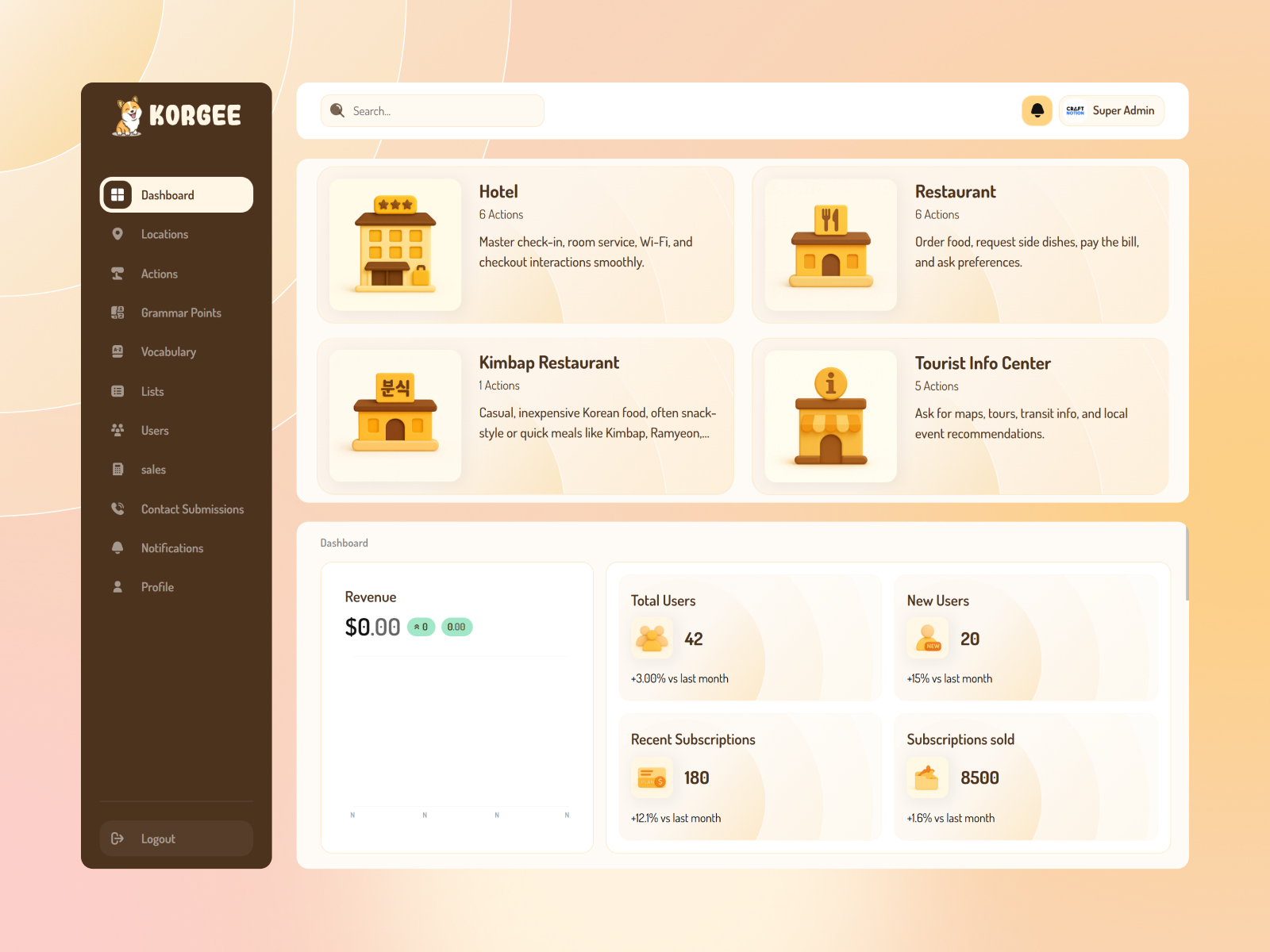
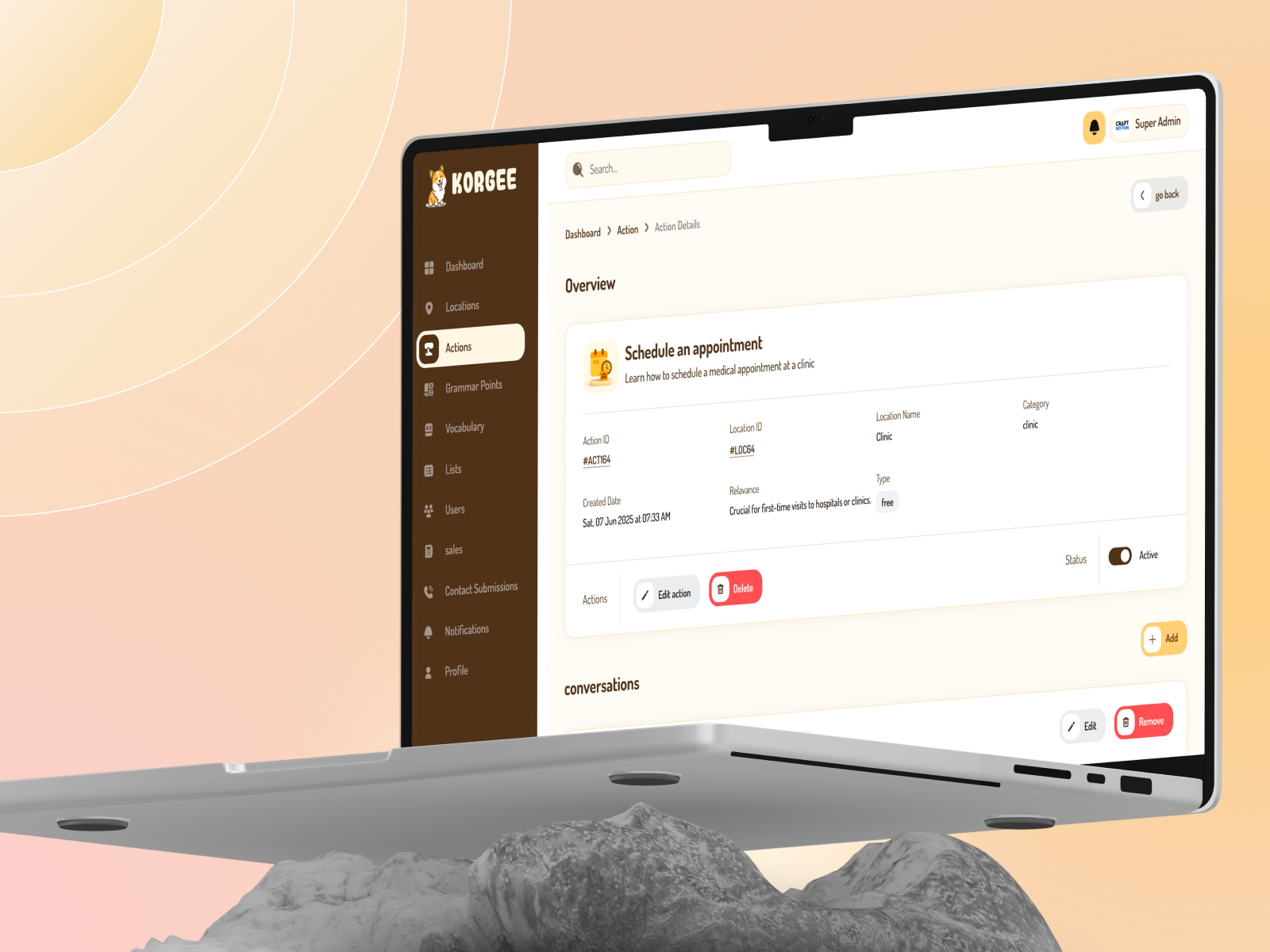
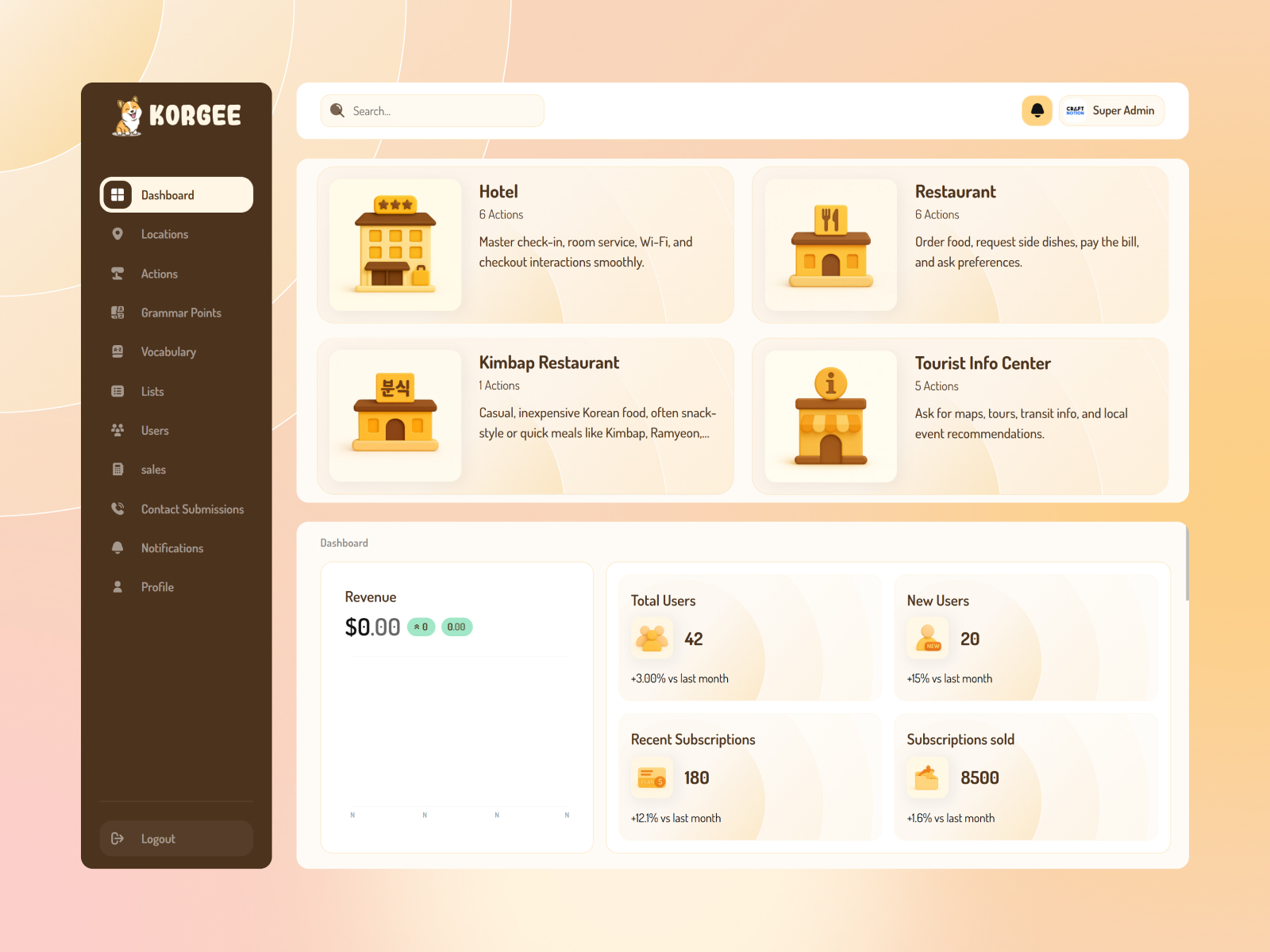
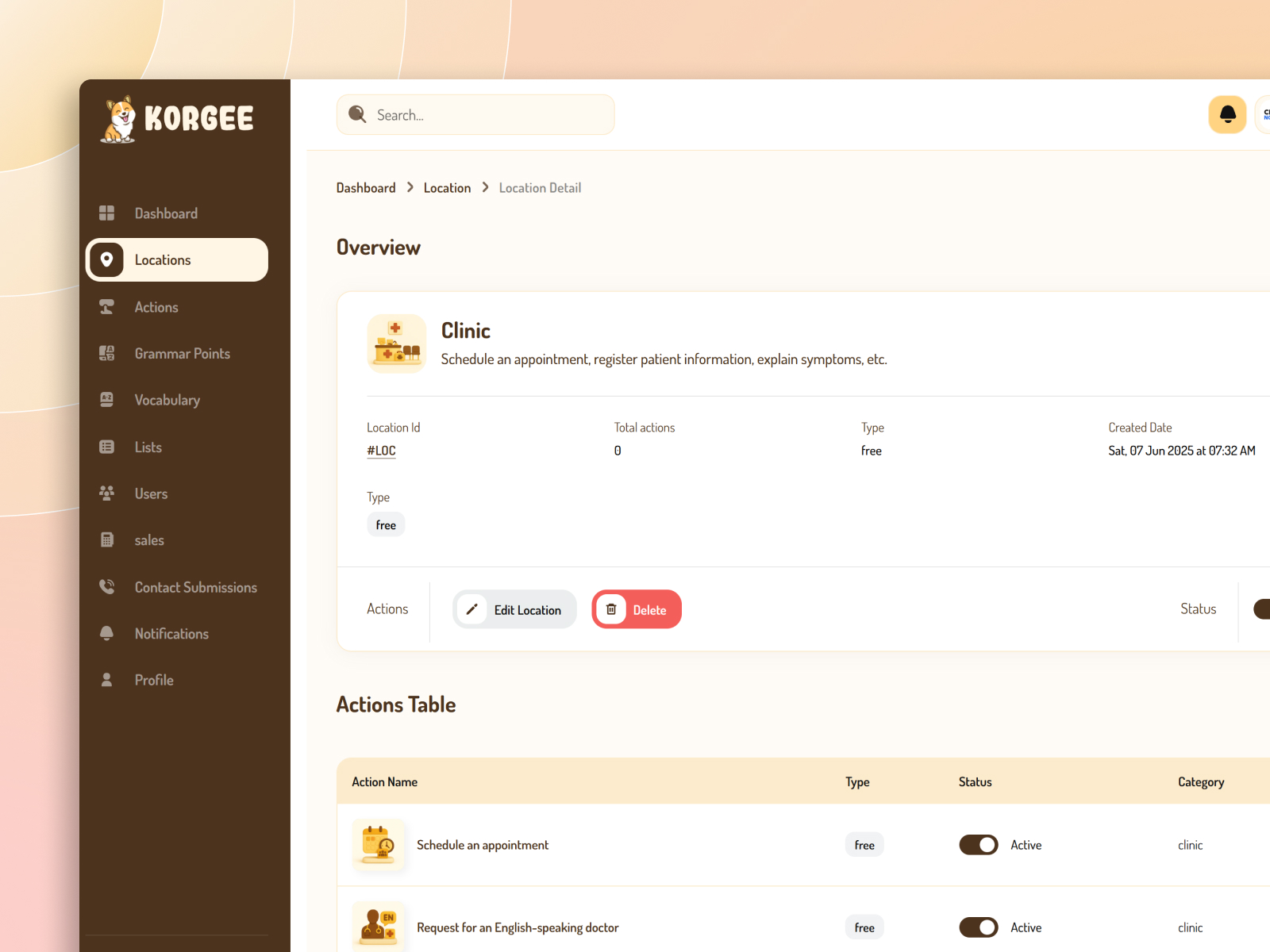
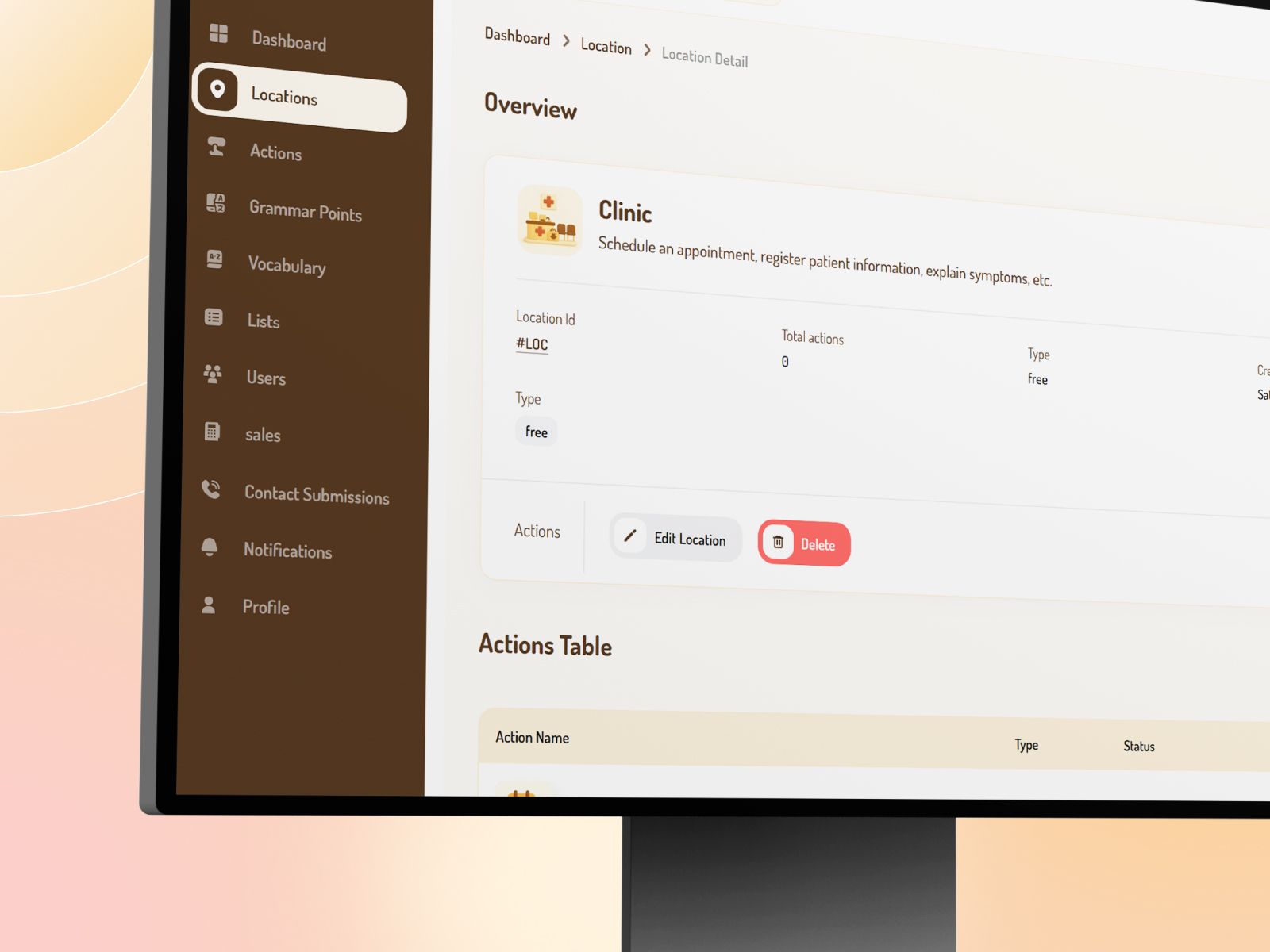
- Location Management: Admins can create and manage the real-world settings that structure the product — restaurants, cafés, airports, convenience stores, hotels, and more. Each location acts as a container for the conversations that happen within it.
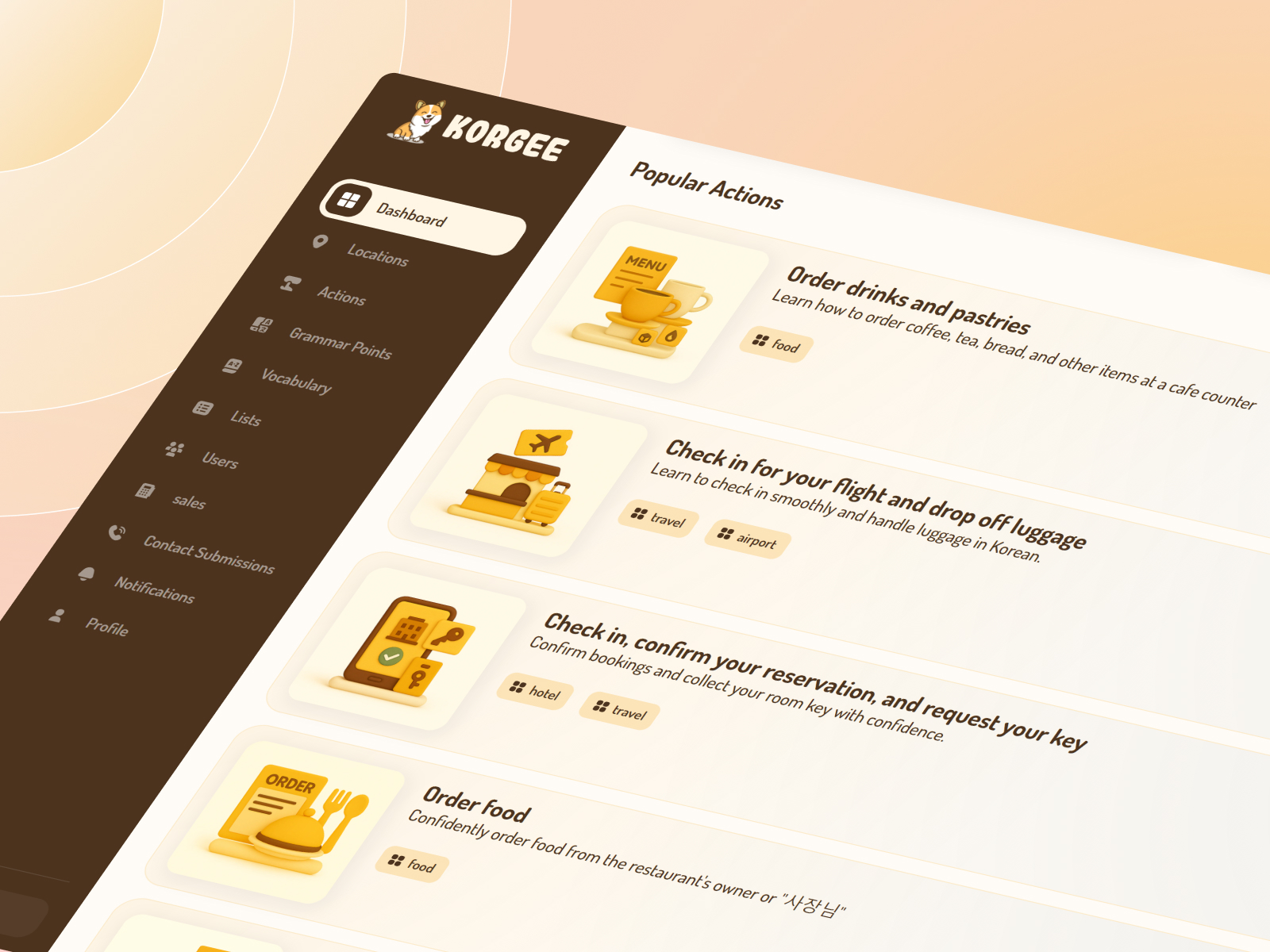
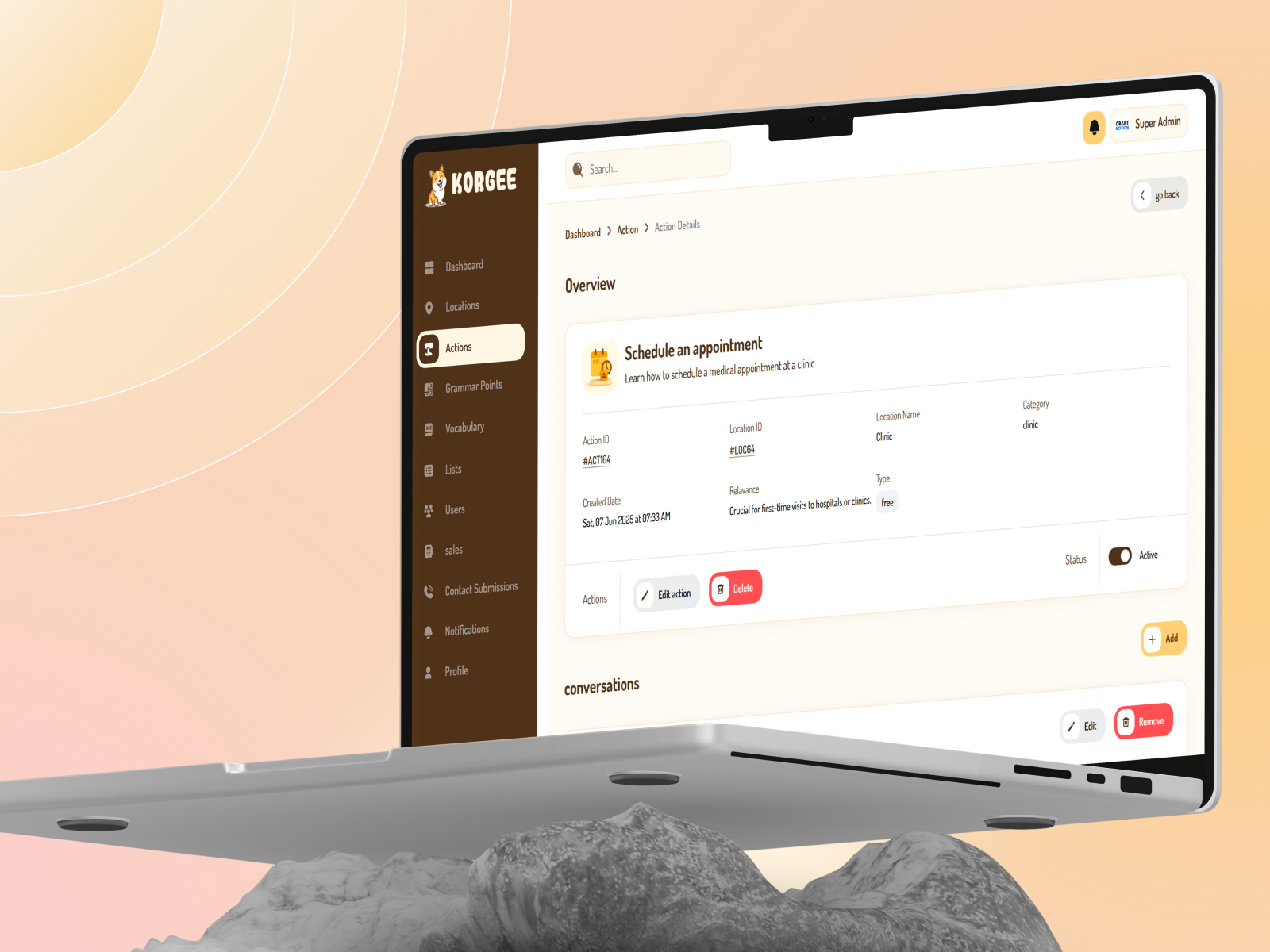
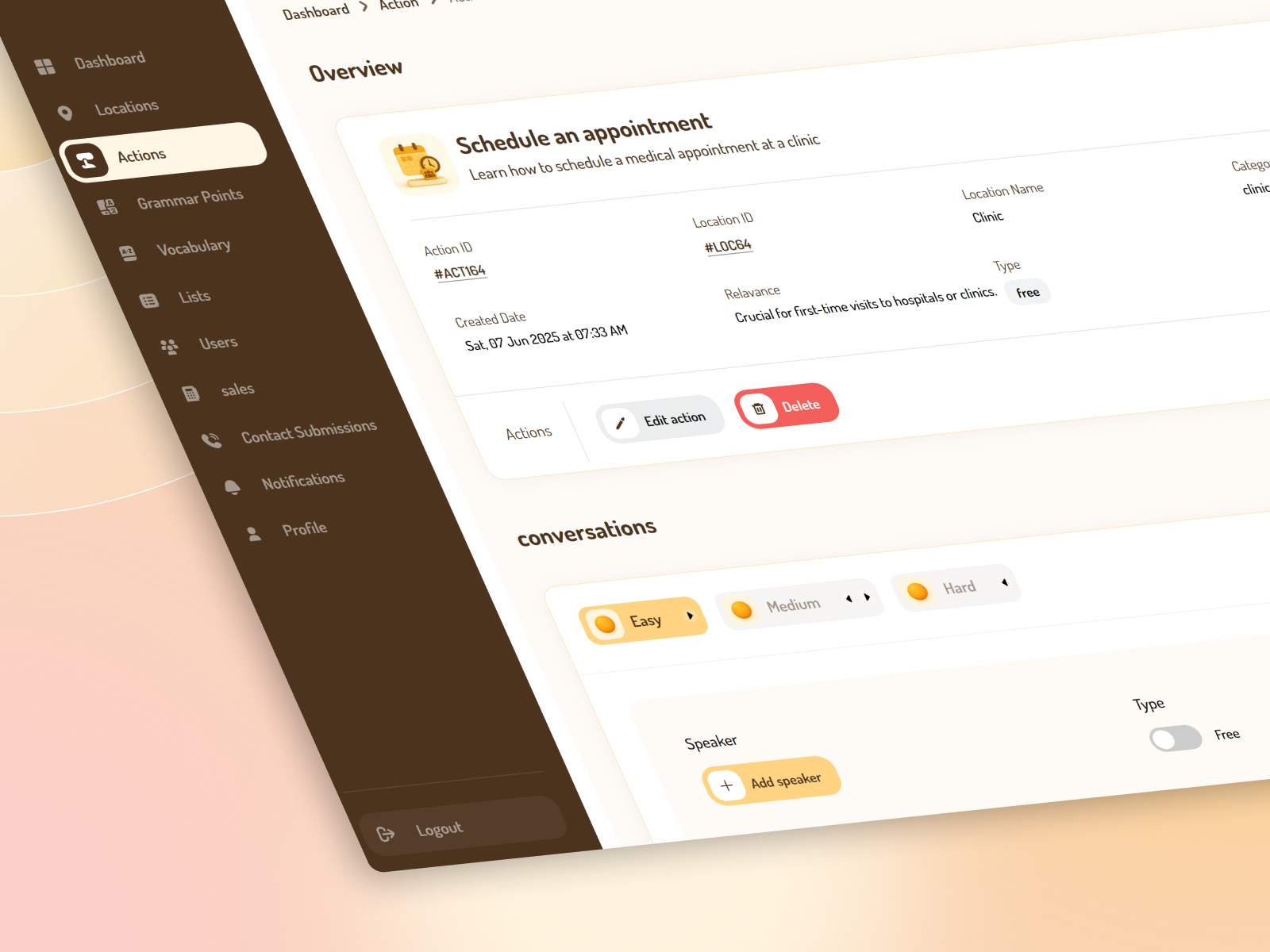
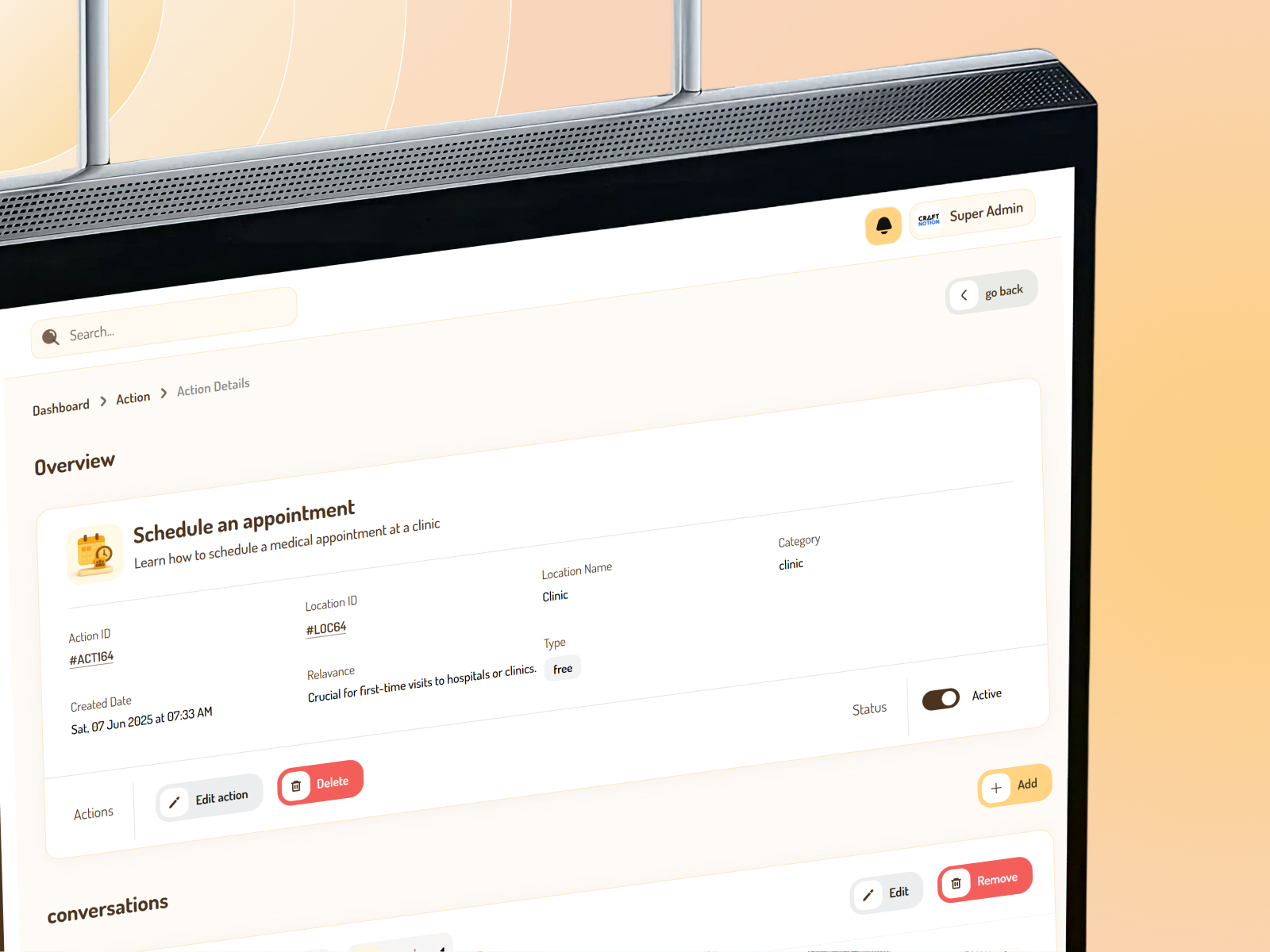
- Action and Scenario Control: Within each location, admins define actions such as ordering food, asking for a recommendation, or handling a complaint. These map clearly to the conversation flows learners encounter in the product, and can be added, edited, or restructured without code changes.
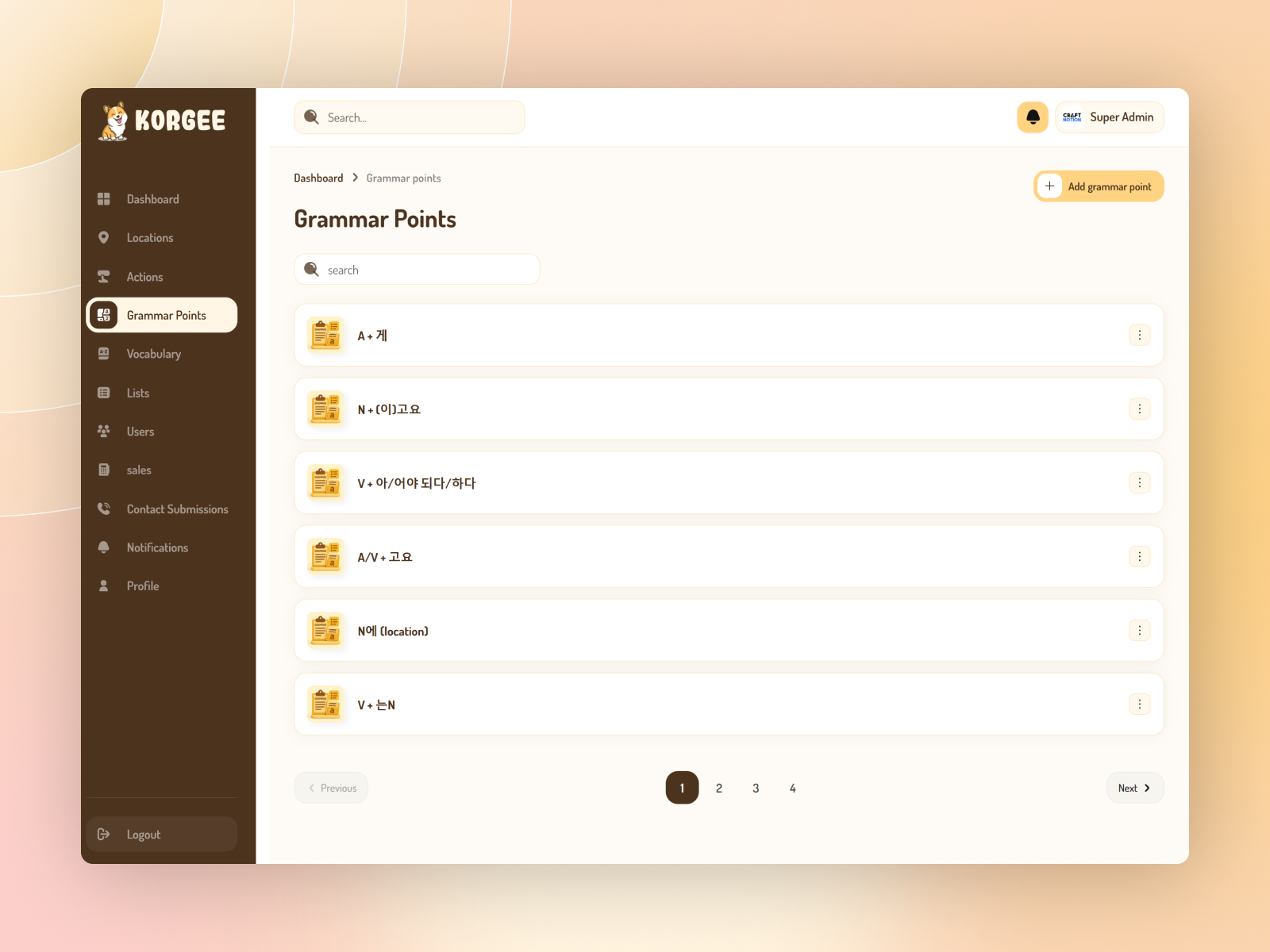
- Vocabulary and Grammar Points: Each scenario includes associated vocabulary and grammar notes. The admin panel lets these be added and linked to specific steps in a conversation, keeping the learning content connected to context rather than separated from it.
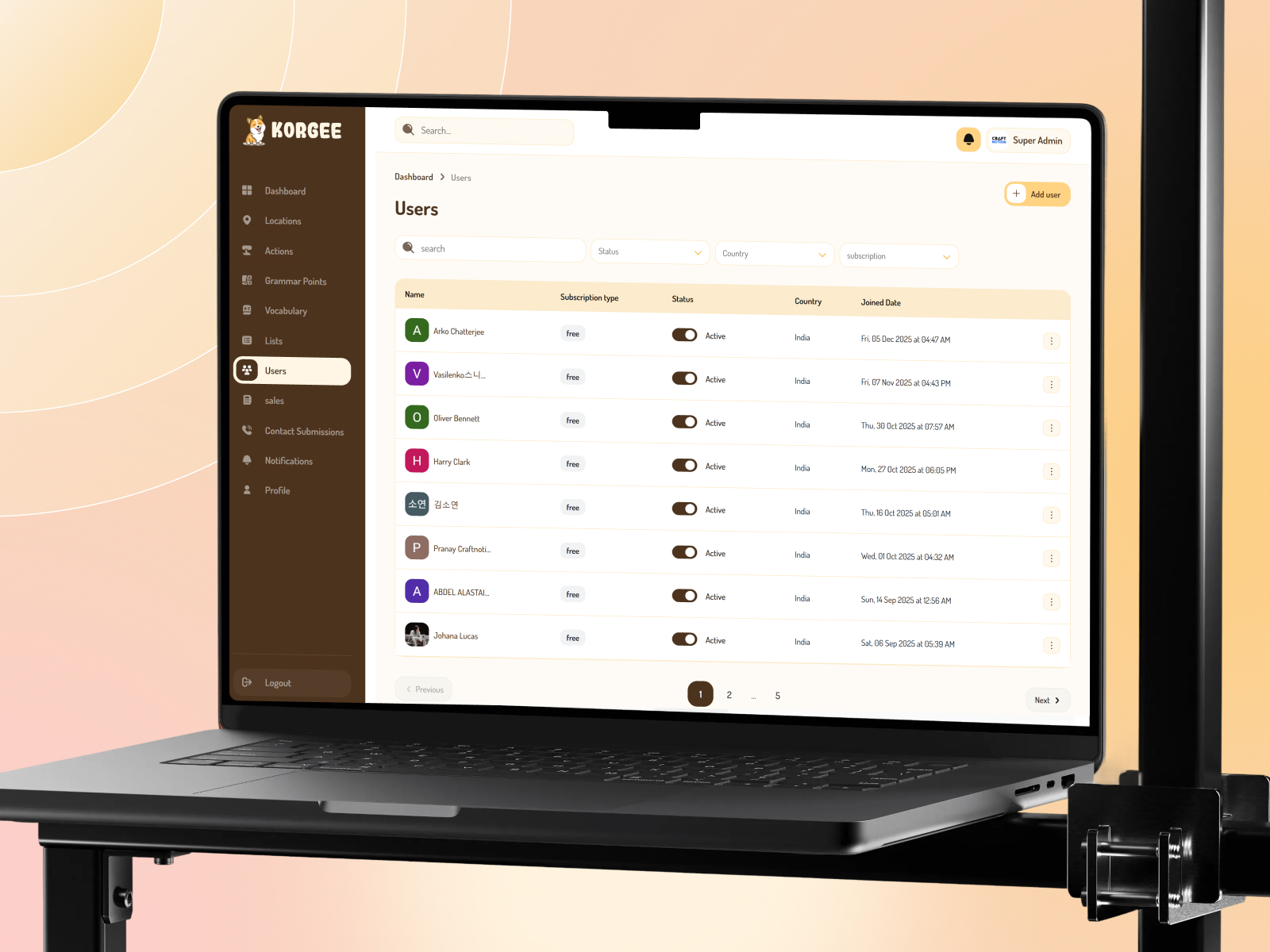
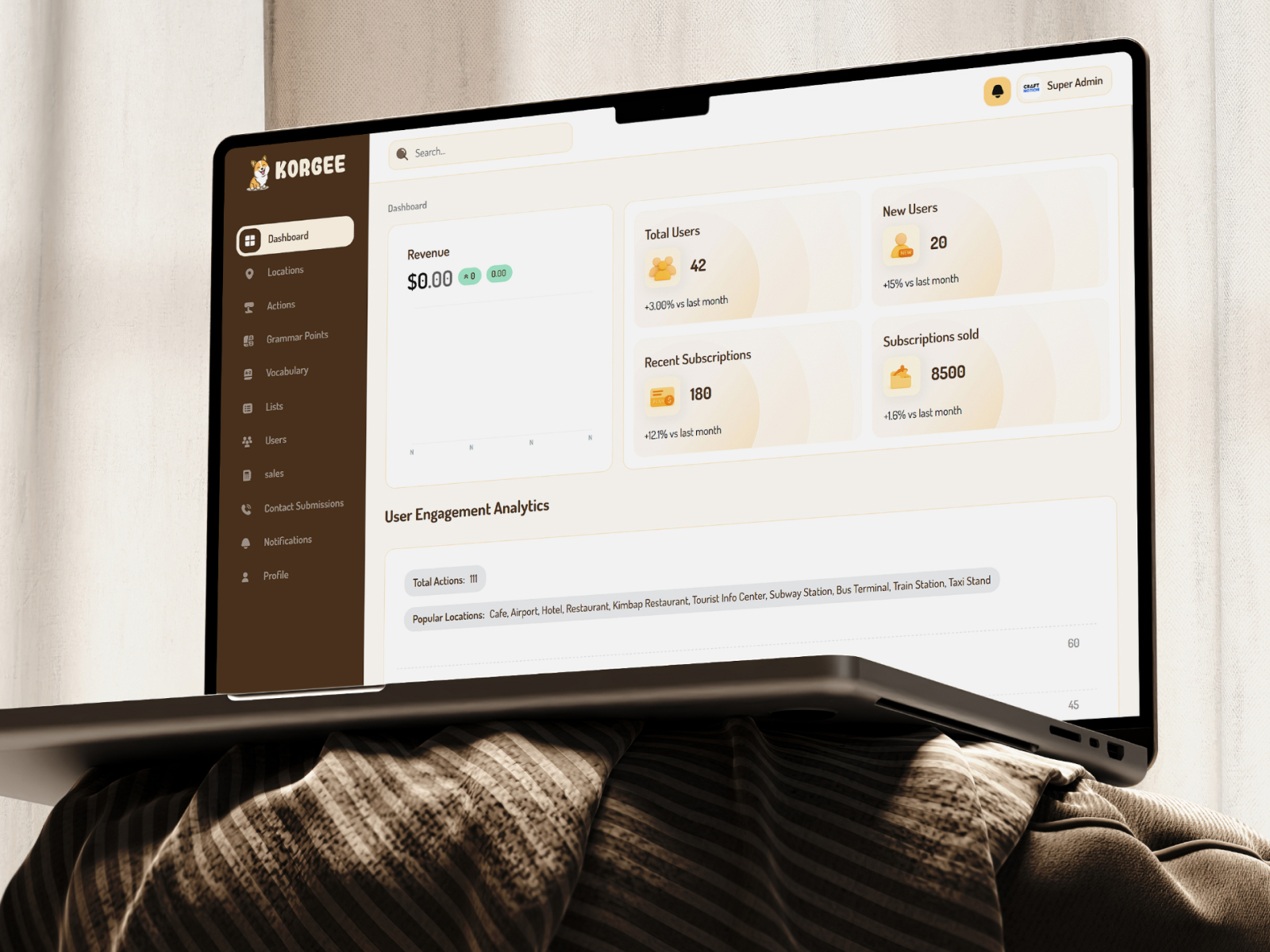
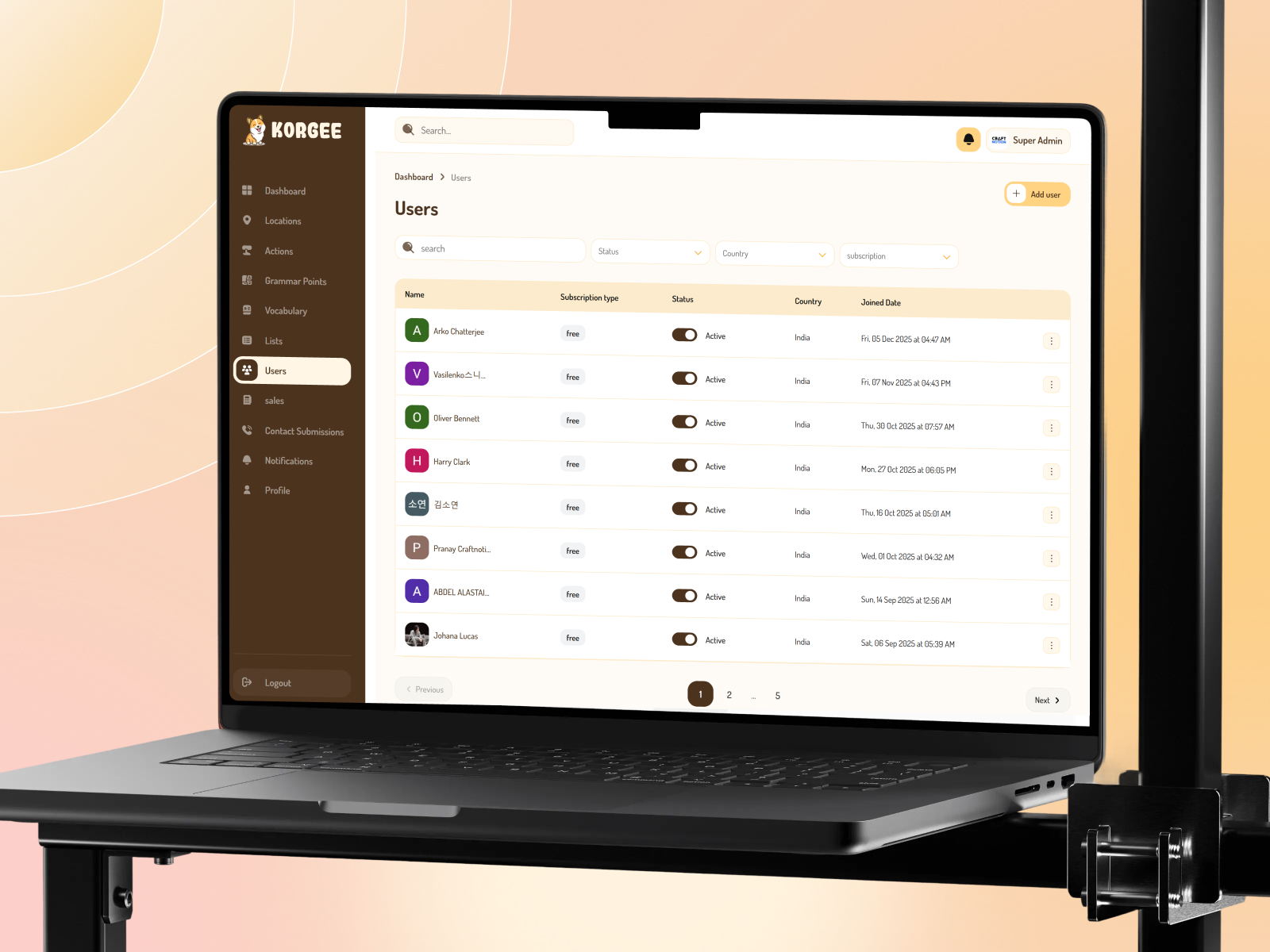
- Subscription Management: The panel includes a complete subscription tracking view where admins can monitor active users, review subscription status by user, and manage access tiers — giving the client operational visibility over the revenue side of the product from a single interface.
What shipped
The Korgee Admin Panel gave the client complete operational independence from day one. Content can be added and updated without developer involvement. Subscription activity is visible and manageable from a single interface. The location-action architecture makes scaling the content library straightforward as the product grows.
Delivering both the mobile app and the admin panel within the same three-month, USD 2,400 engagement required tight scoping and disciplined execution. What shipped is a complete, production-ready system on both sides.
Final note
The Korgee Admin Panel demonstrates how a well-designed operations layer can make or break a content-driven product. By giving the client direct control over locations, scenarios, vocabulary, grammar, and subscriptions, the panel turns a developer-dependent system into one the team can manage and grow independently — which matters materially for a product in a market growing at 25 percent annually.
Frequently Asked Questions
Questions about the Korgee admin panel,
answered clearly.
Questions about the work, scope, delivery context, and next steps.
The panel manages the complete content architecture of the learning app. This includes locations (real-world settings like restaurants, airports, and cafés), actions within those locations (ordering food, asking for directions, making a reservation), vocabulary and grammar points linked to each scenario, and the subscription system that controls user access to premium content. Everything the product displays to learners is manageable from the admin panel.
Related Work
Similar case studies,
selected for context.
Continue exploring related work, with comparable product and delivery challenges.