SaaS ApplicationsWeb ApplicationsMVP DevelopmentInterface Designs
Moxey
Moxey is an invoice discounting platform that helps a Dubai-headquartered fintech company present financing options with more clarity and trust.
An invoice discounting platform built for fintech clarity
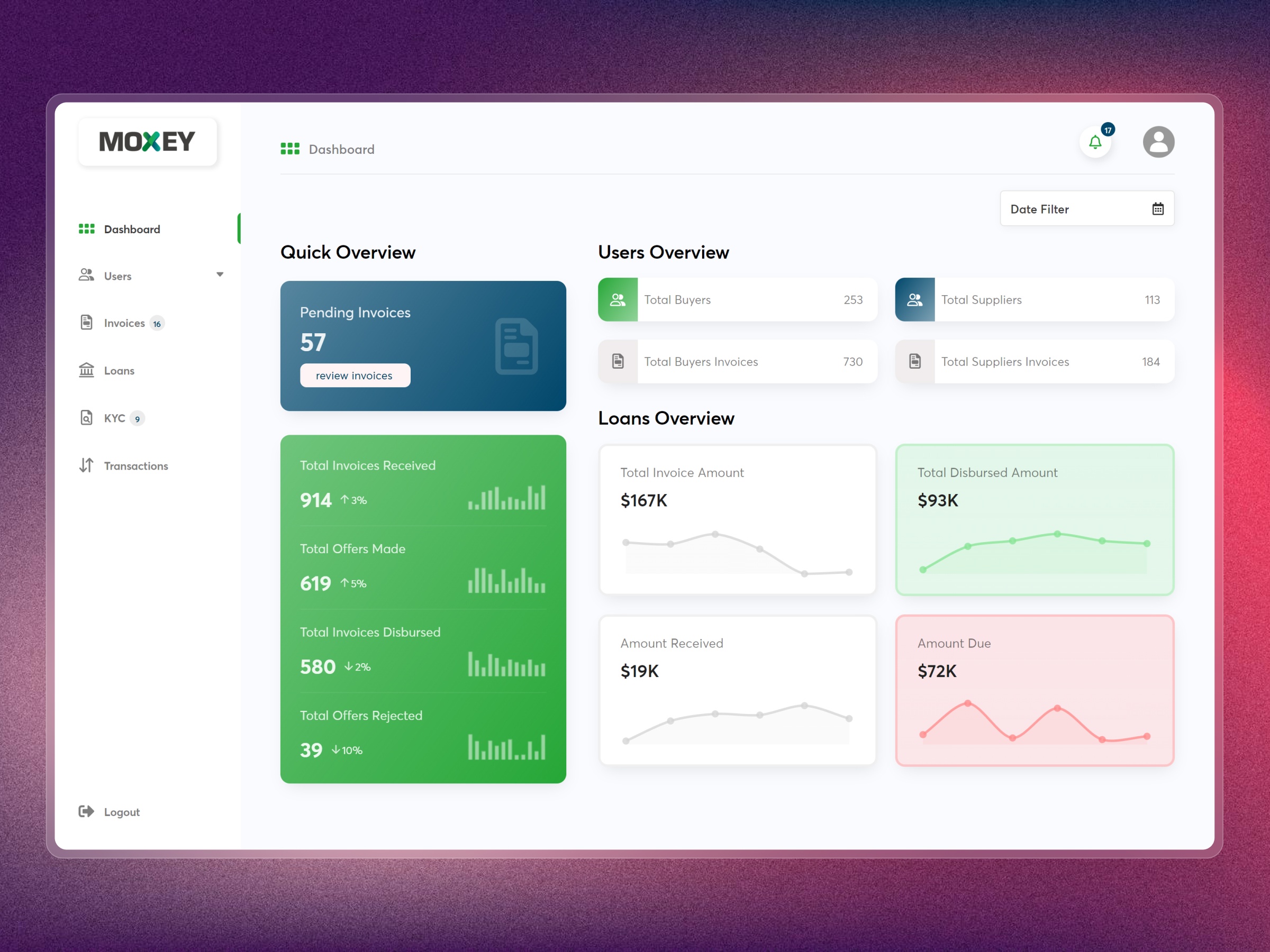
Moxey is an invoice discounting platform we planned, designed, and built for a Dubai-headquartered fintech company. Moxey is a child firm of Truckker — a logistics and supply chain company operating out of Bangalore and Dubai. The problem they wanted to solve: businesses waiting 45–90 days to get paid on invoices while their cash flow suffers.
We planned, designed, and built a complete-stack fintech SaaS platform where suppliers can upload invoices, buyers can approve them, and financial institutions can fund them — all in one place, with real-time tracking at every step.
What the project needed to do
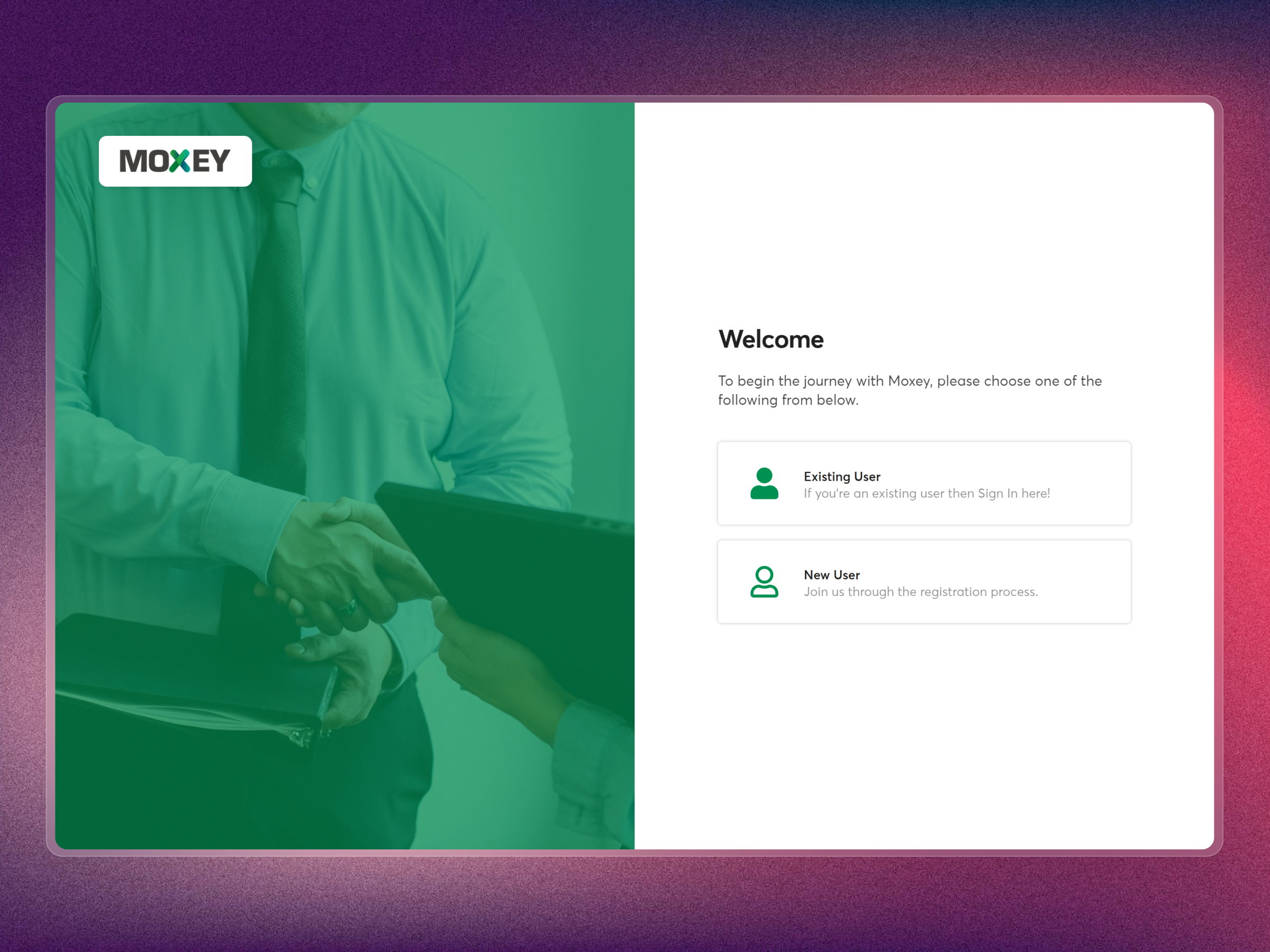
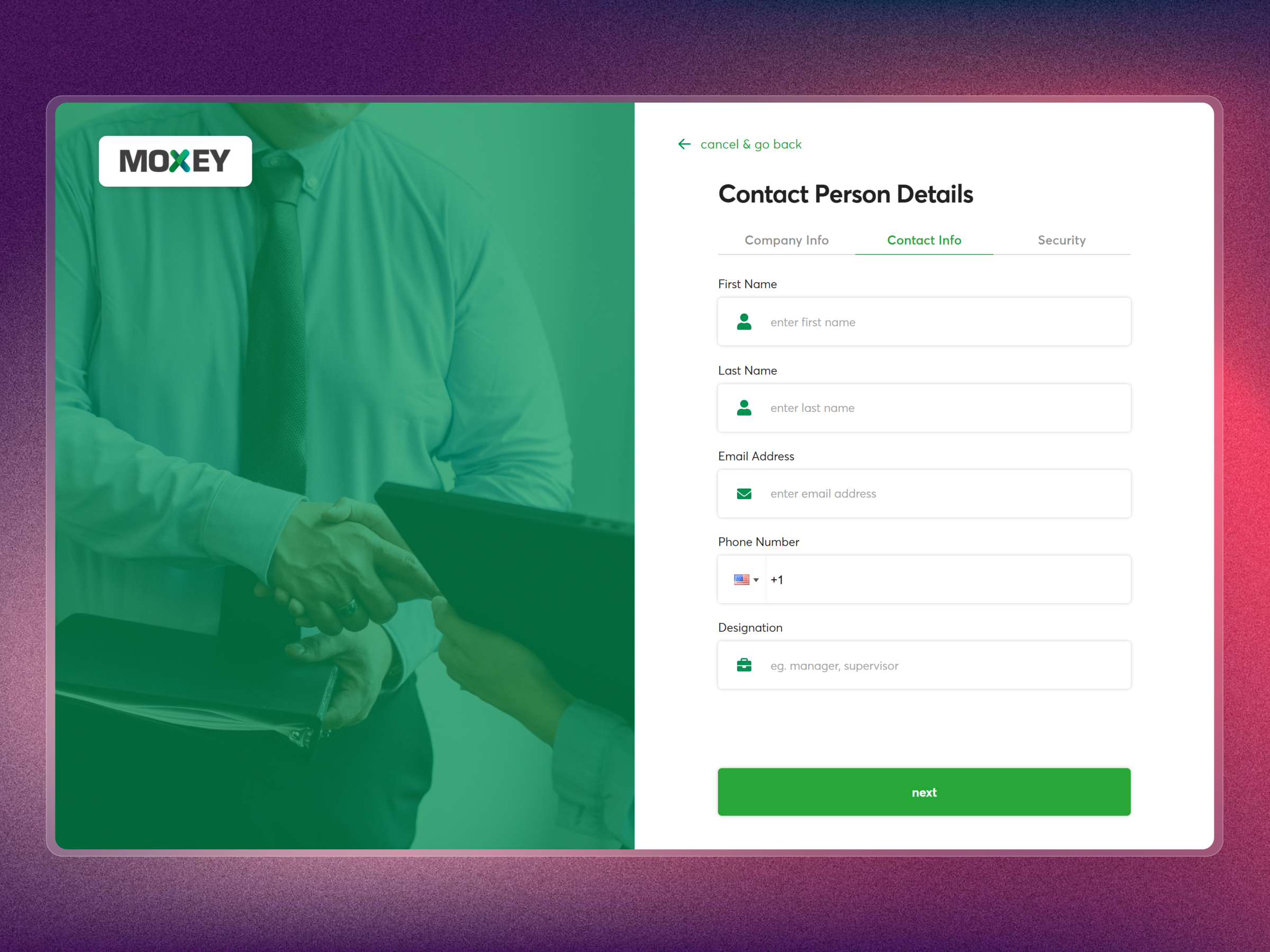
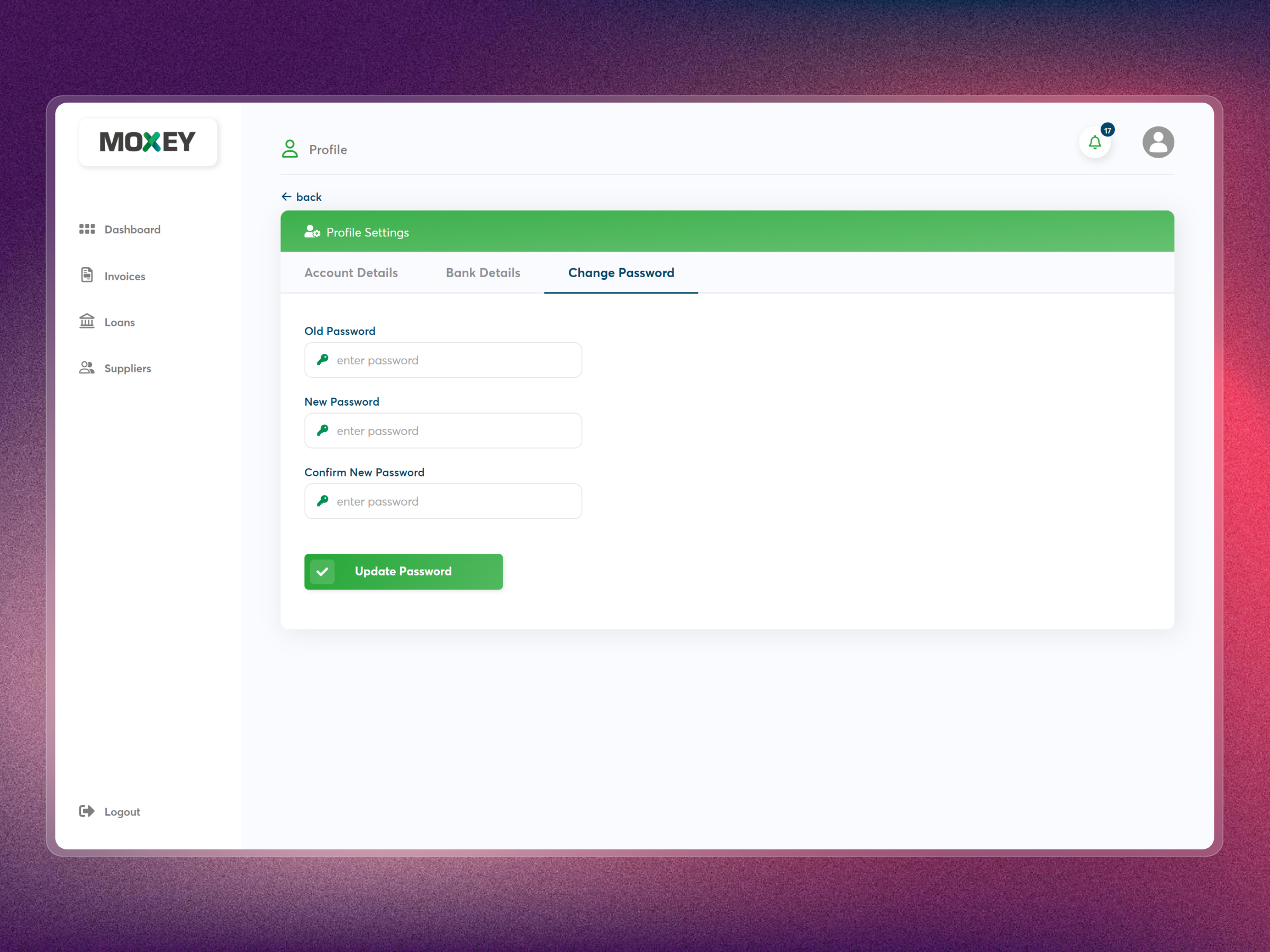
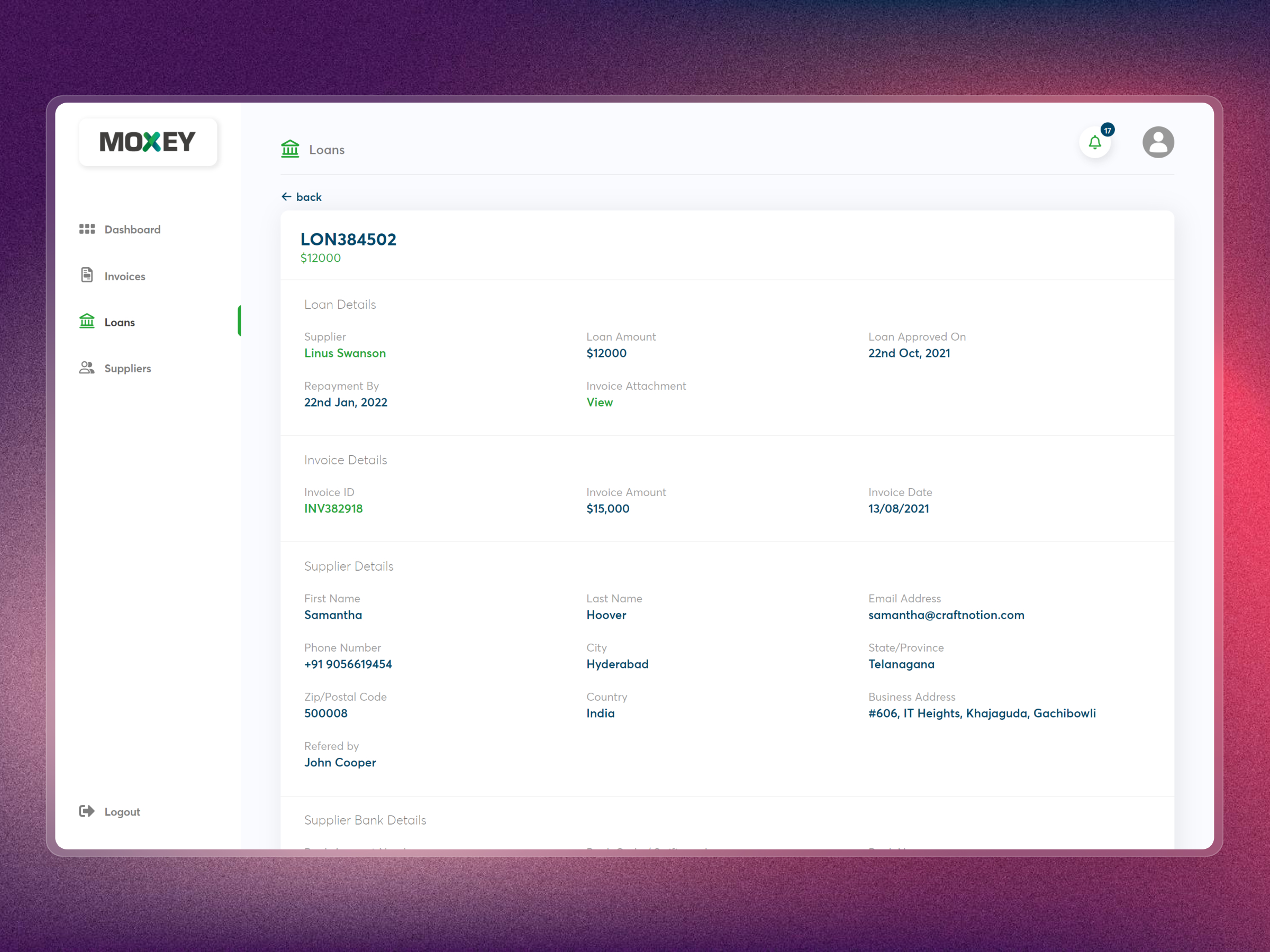
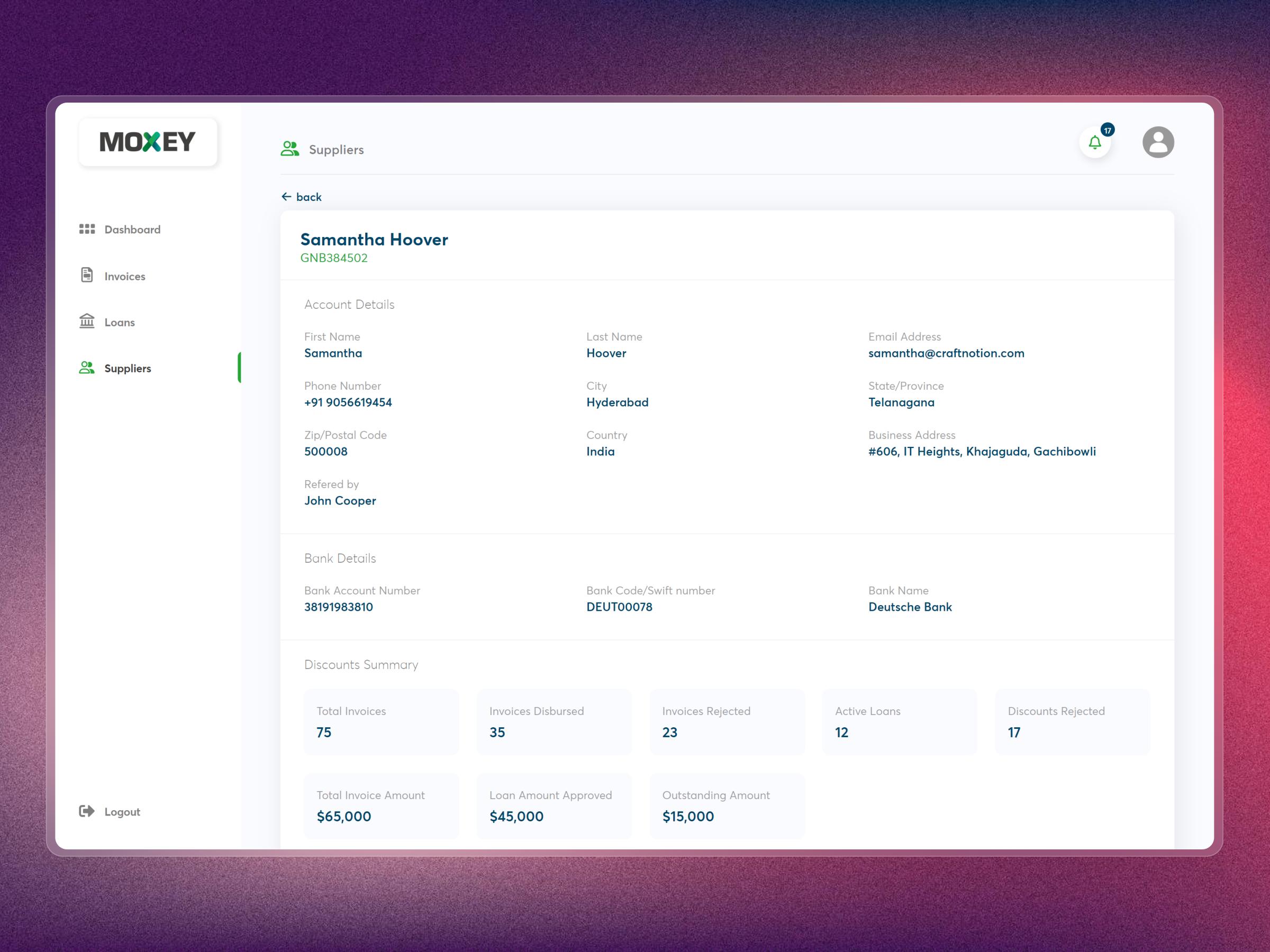
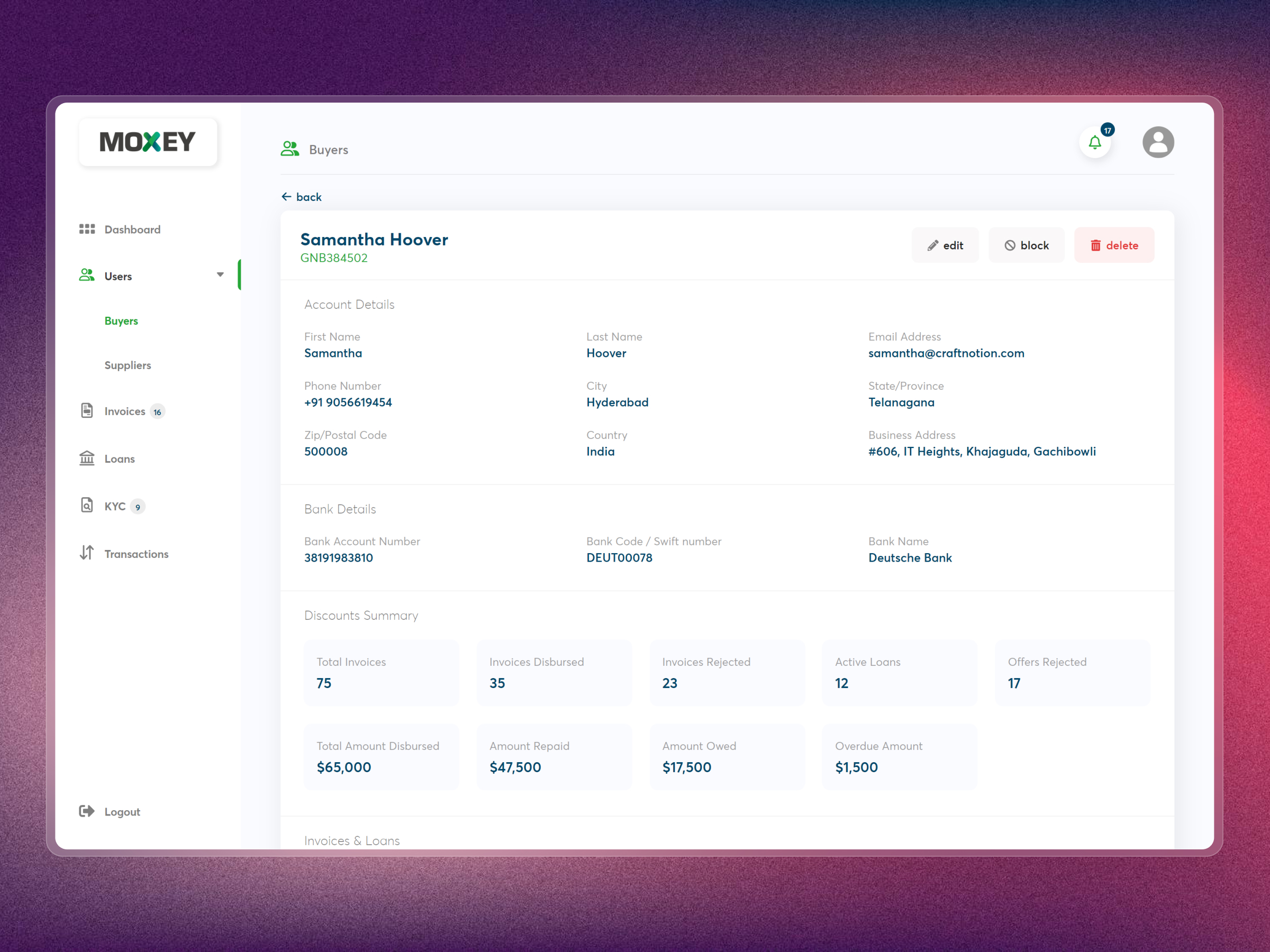
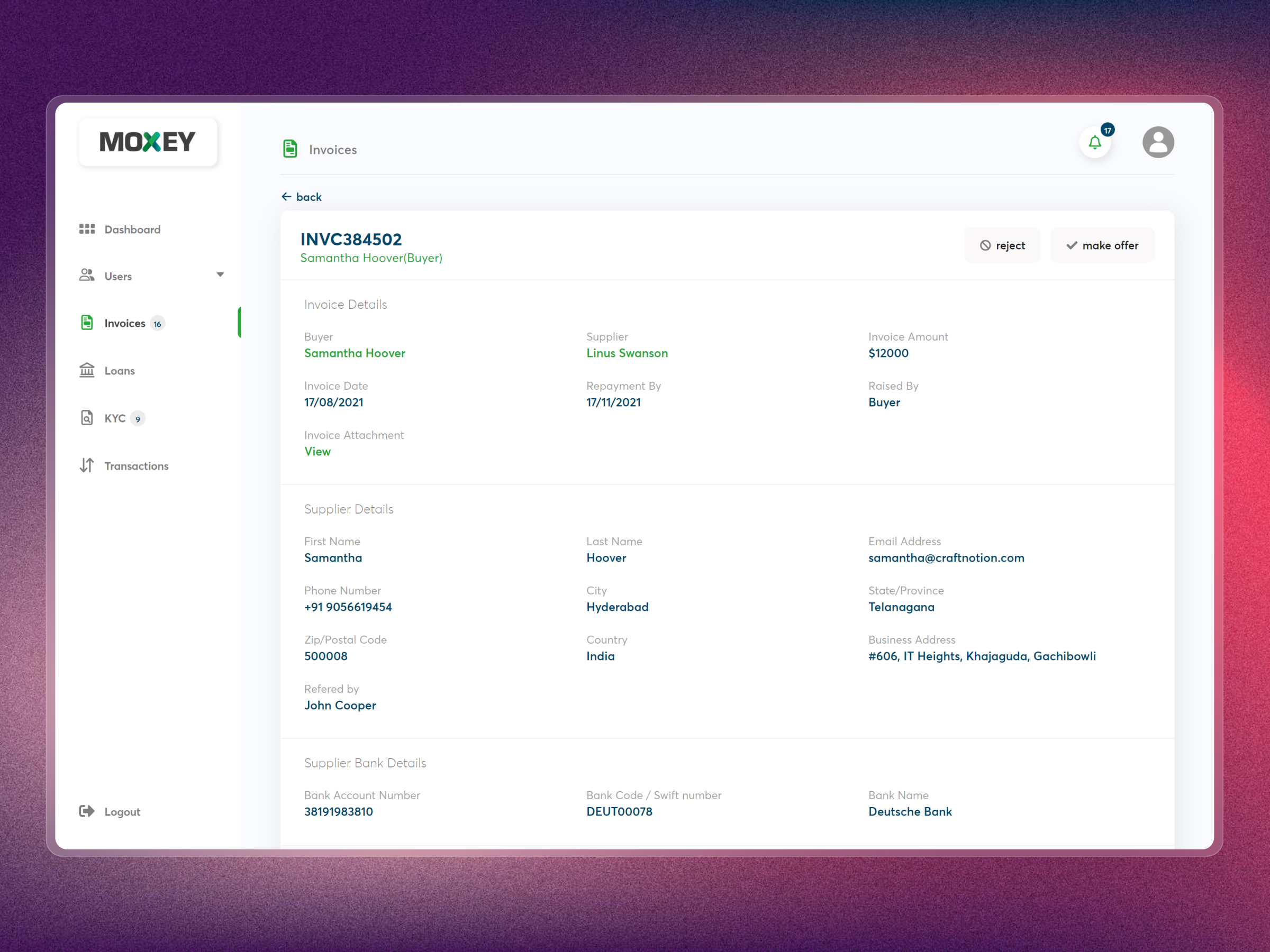
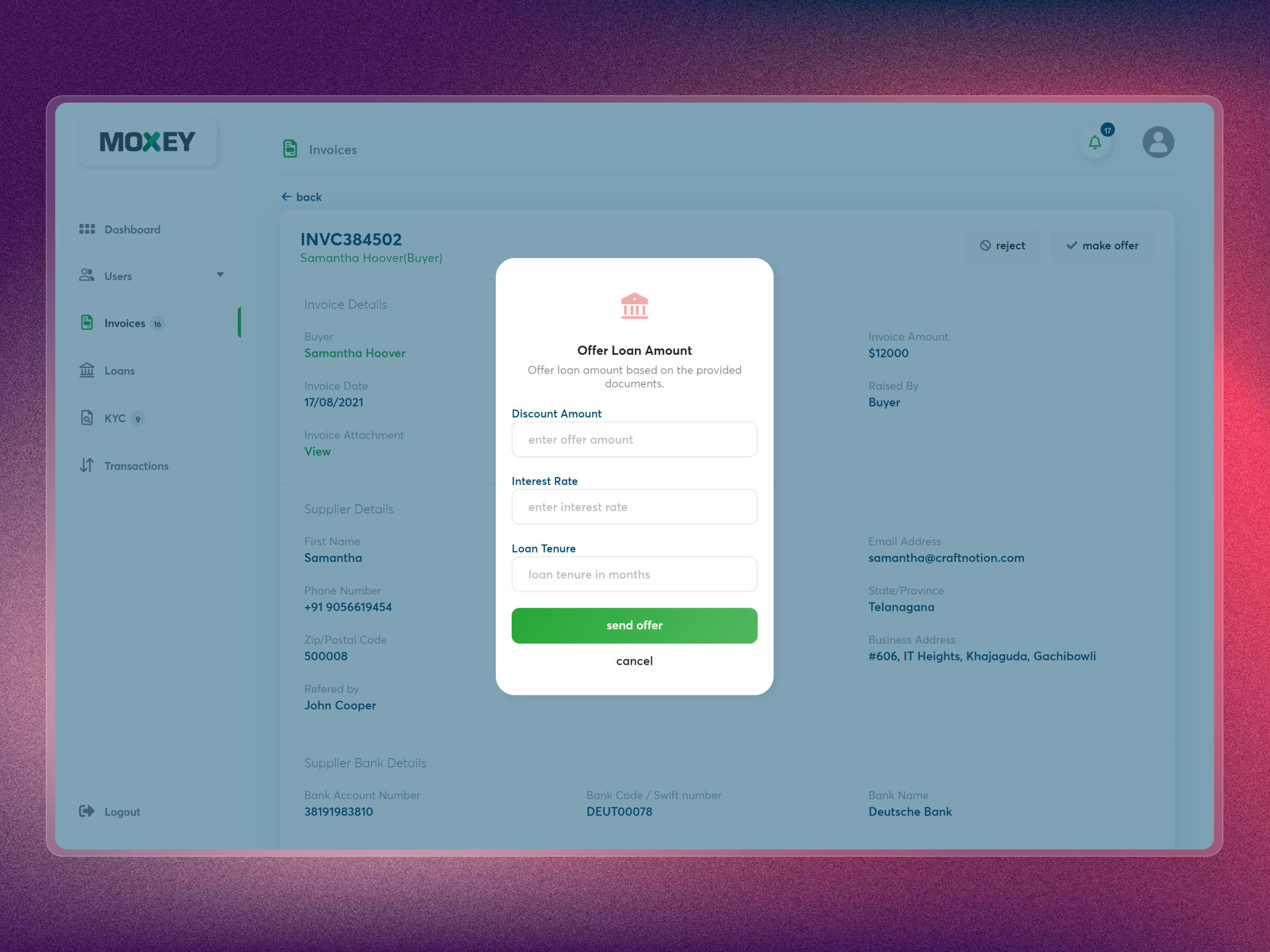
The brief required a secure invoice financing platform that connects three types of users: suppliers who need early payment on outstanding invoices, buyers who approve those invoices, and banks/NBFCs who provide the funding. Each stakeholder needed their own dashboard with role-specific workflows.
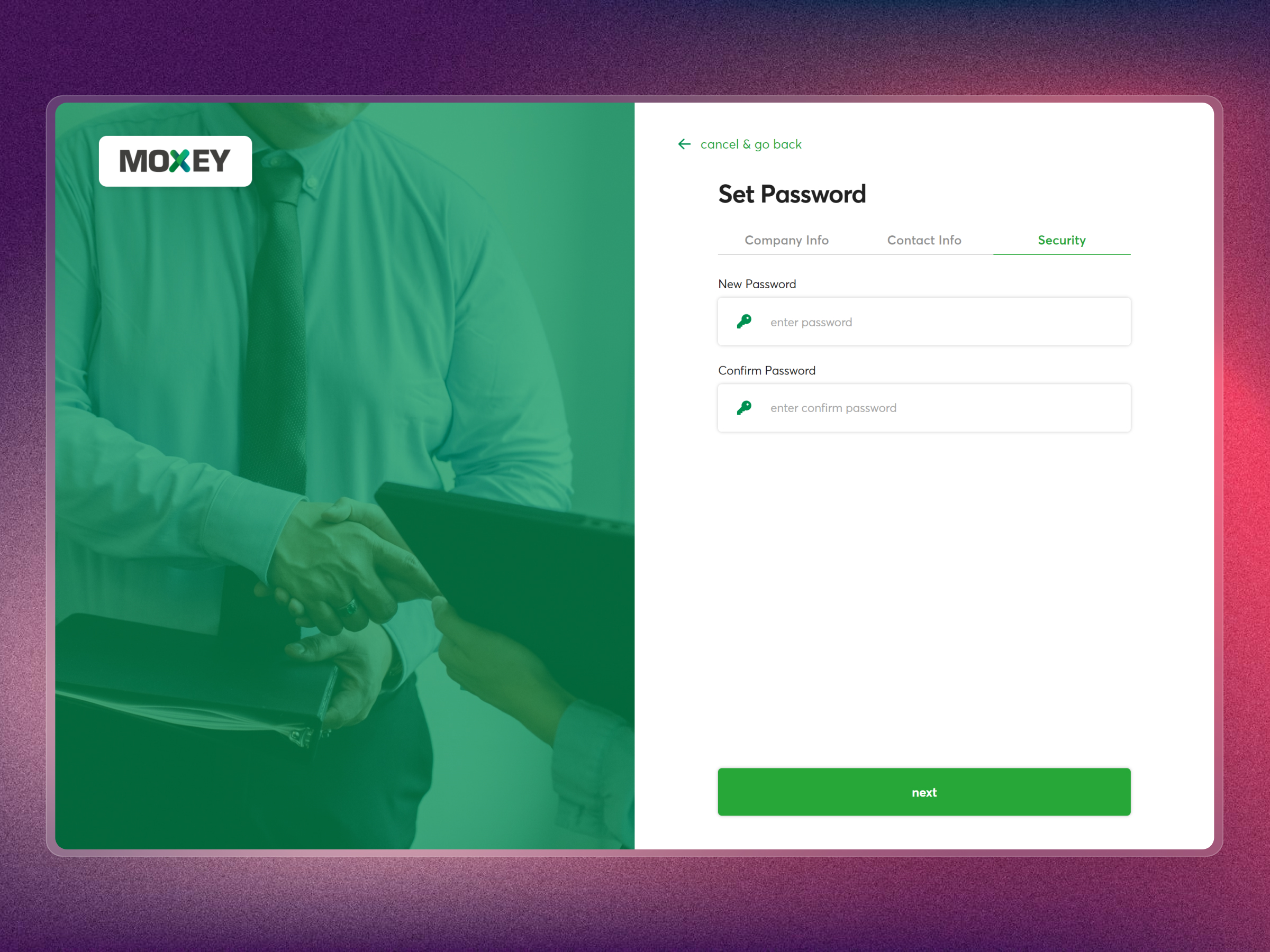
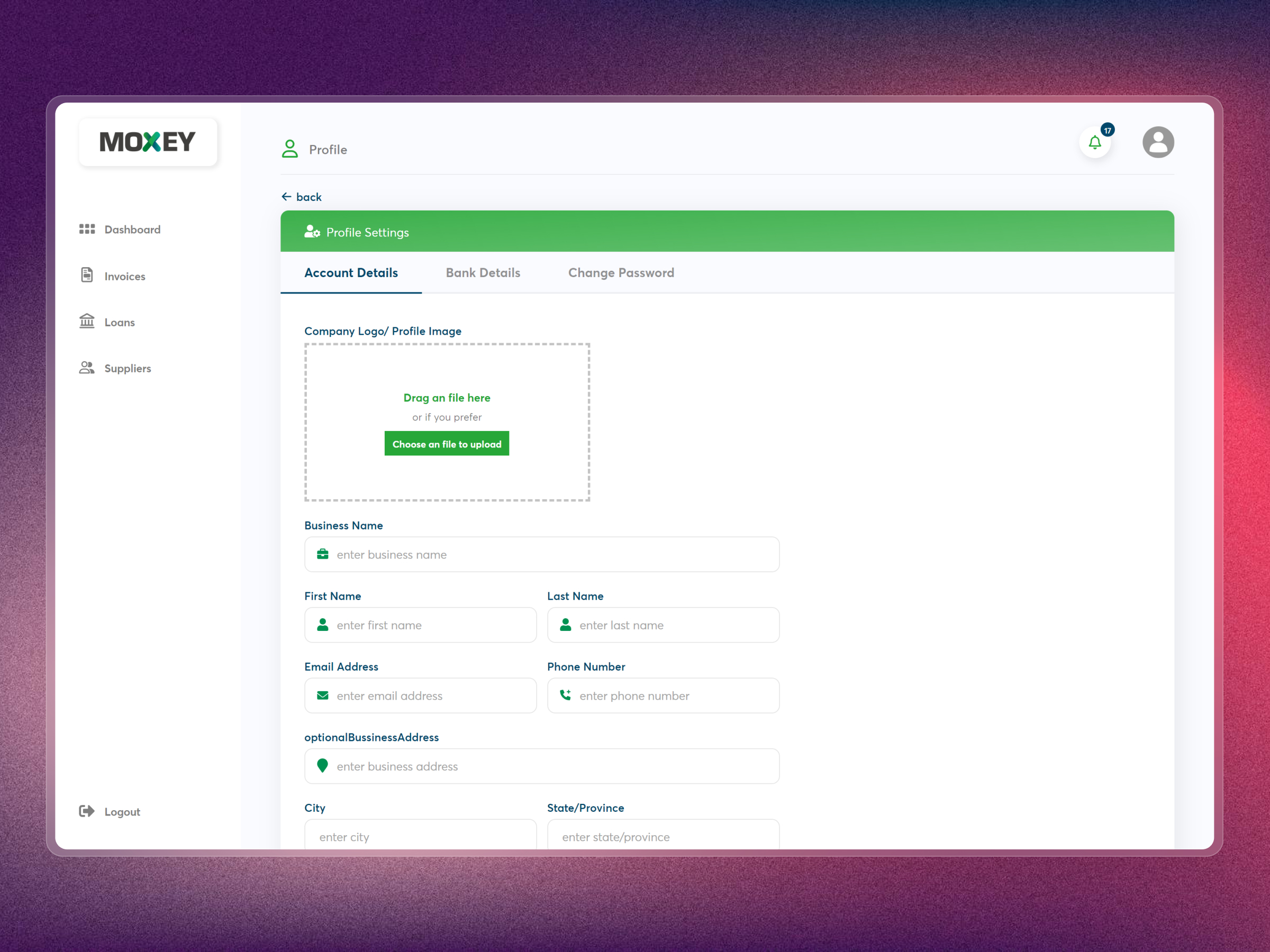
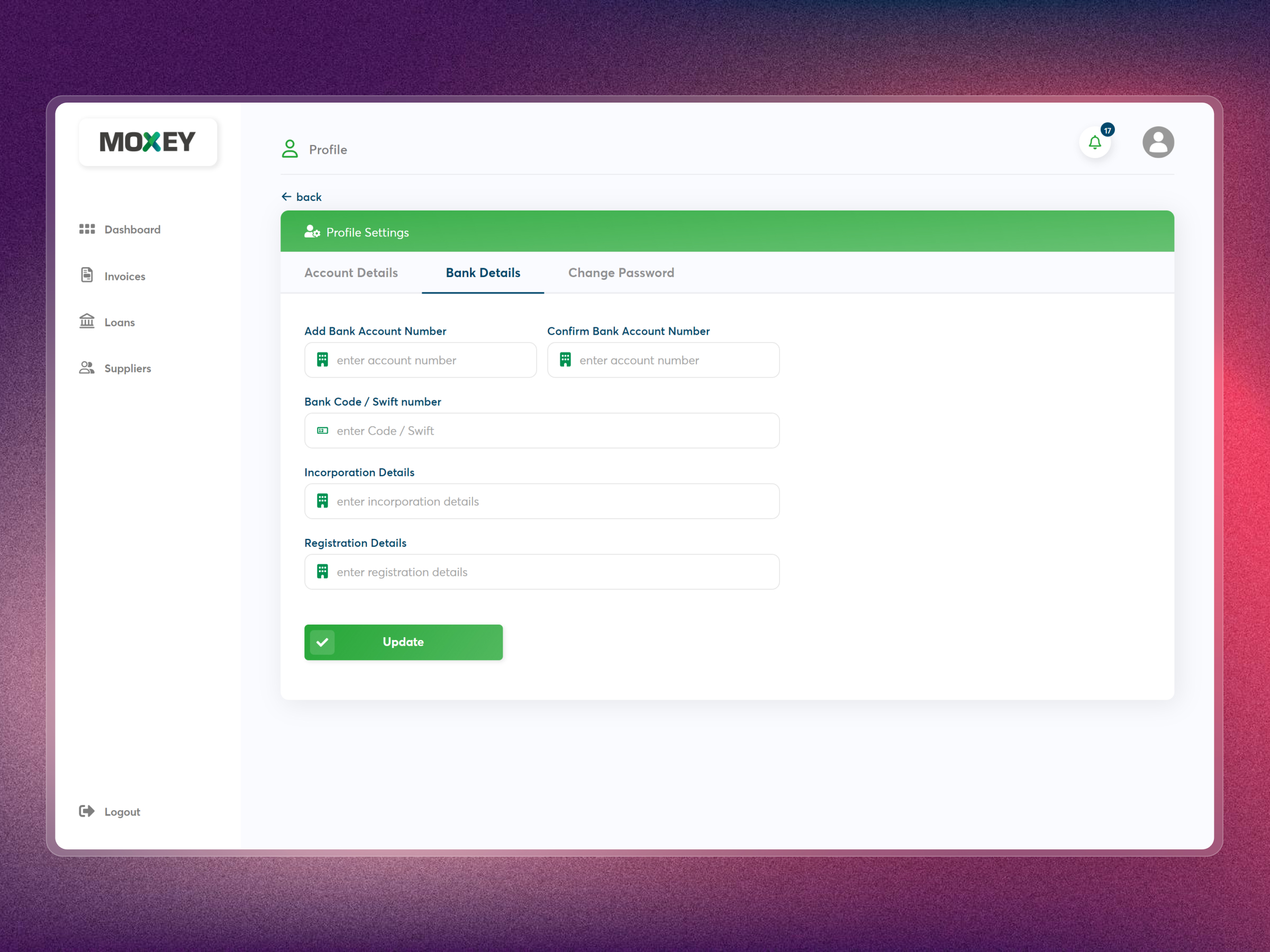
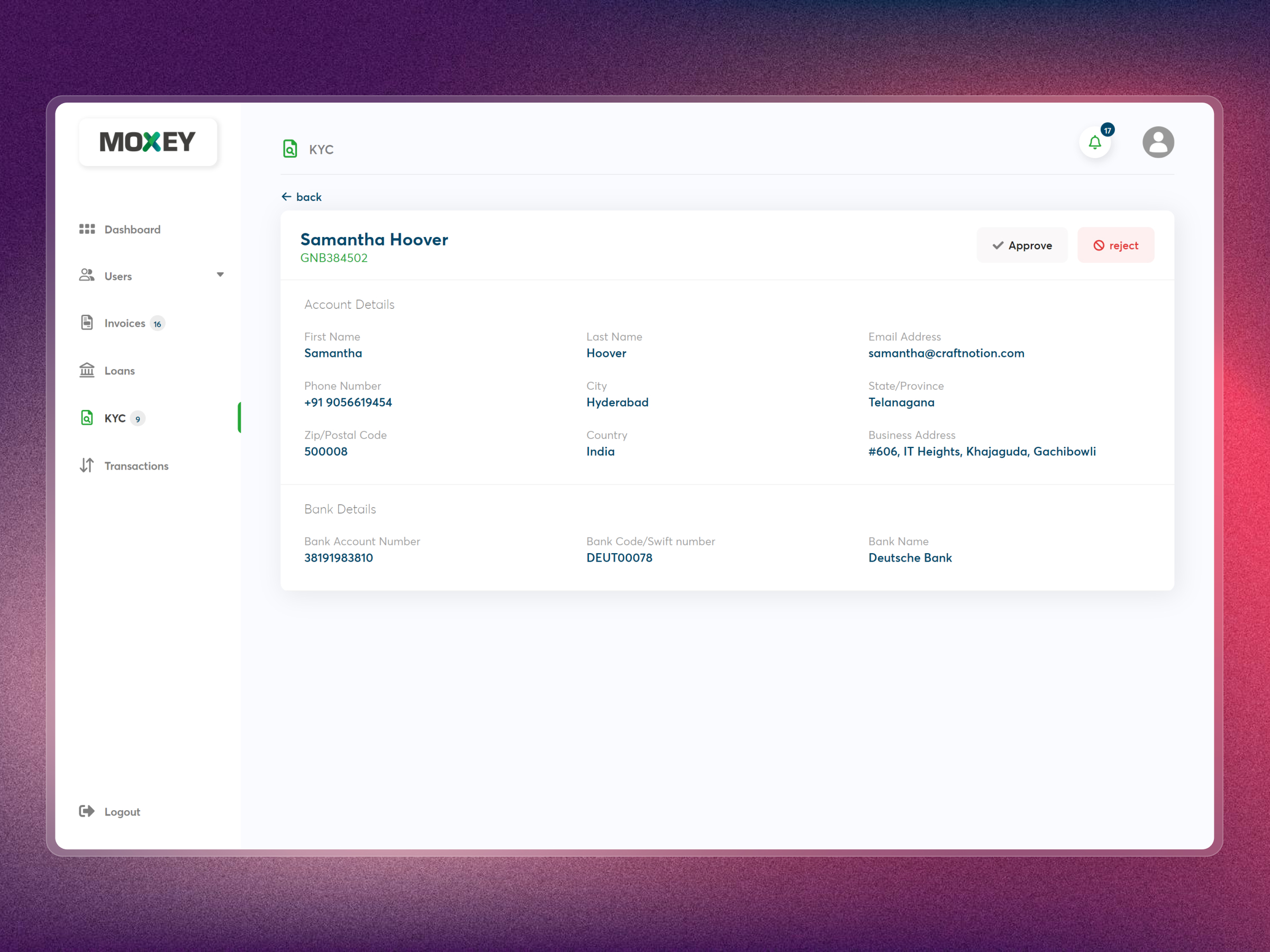
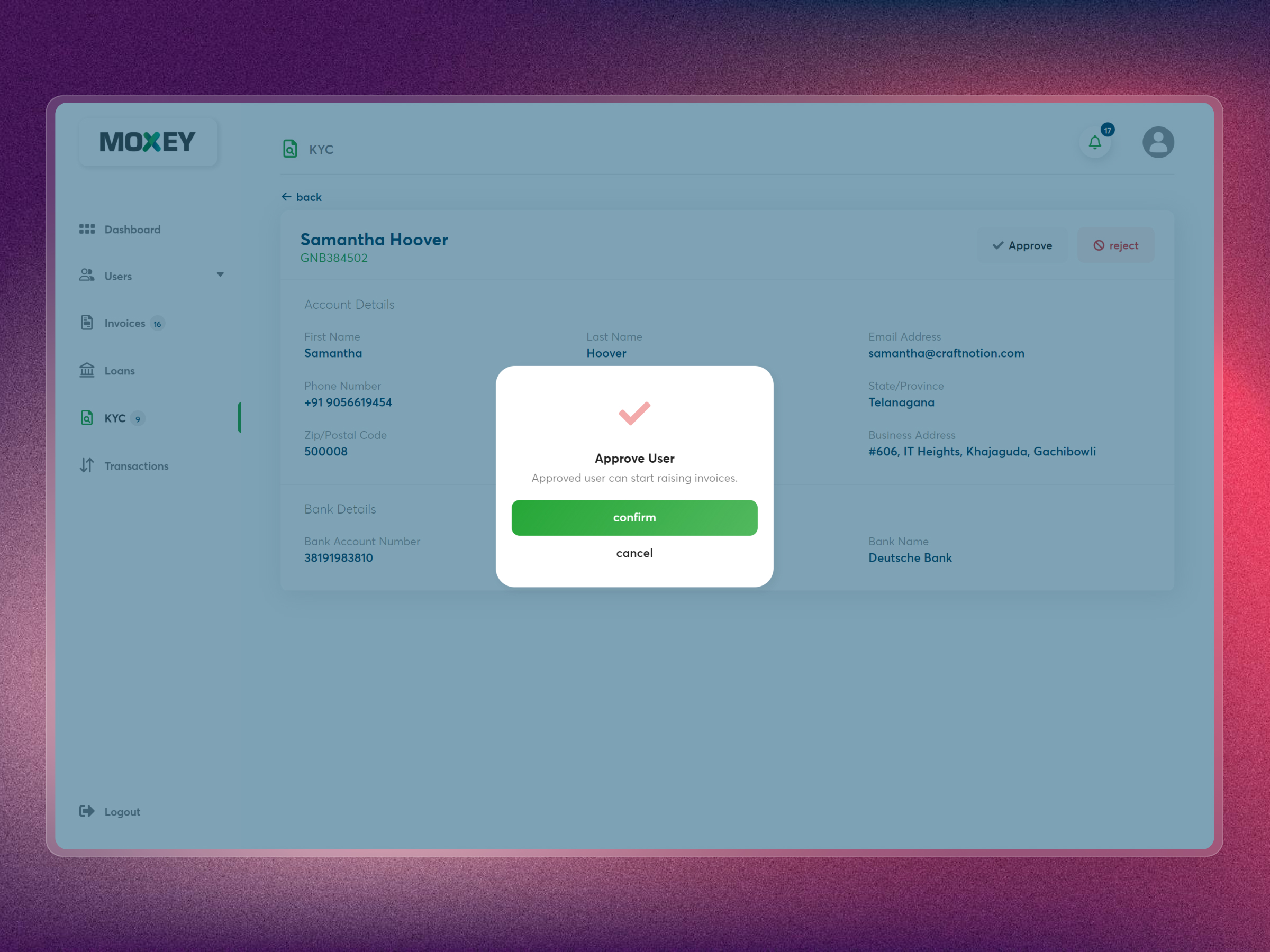
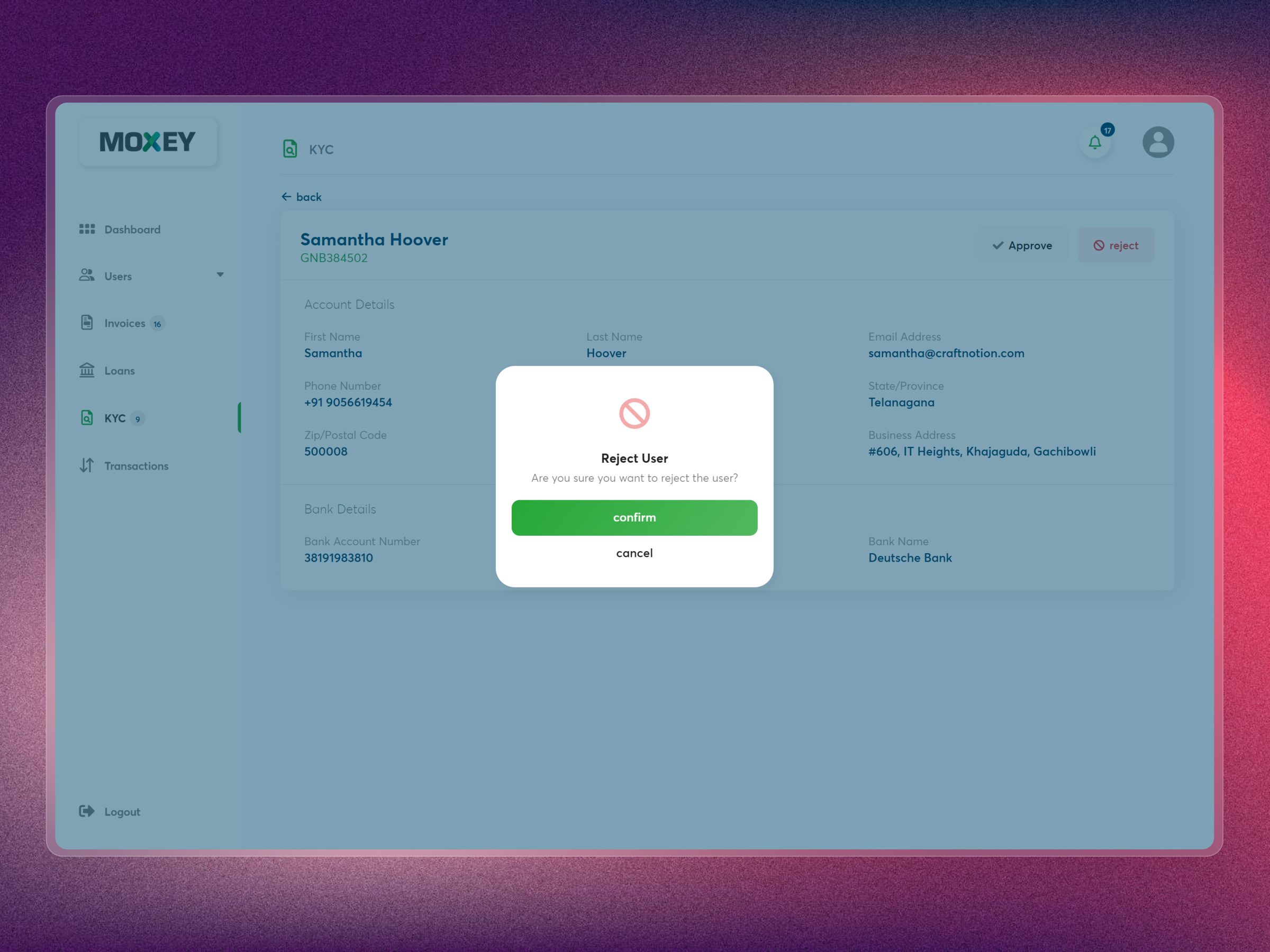
The product also had to handle regulatory compliance — KYC verification, transaction audit trails, and encrypted financial data. This isn't a basic web app; it's a fintech product that deals with real money and real banking integrations.
How we approached it
Multi-Role Dashboards
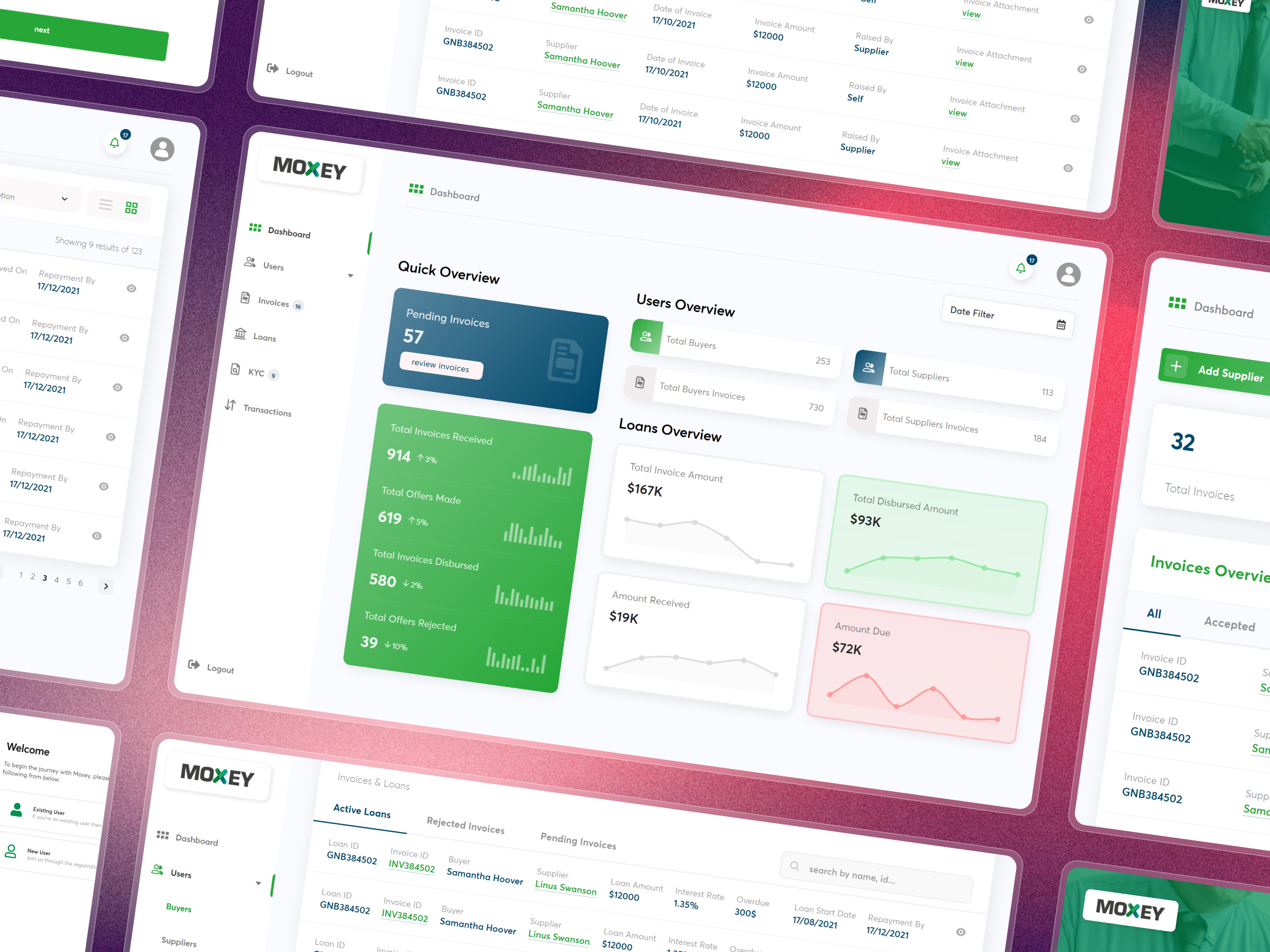
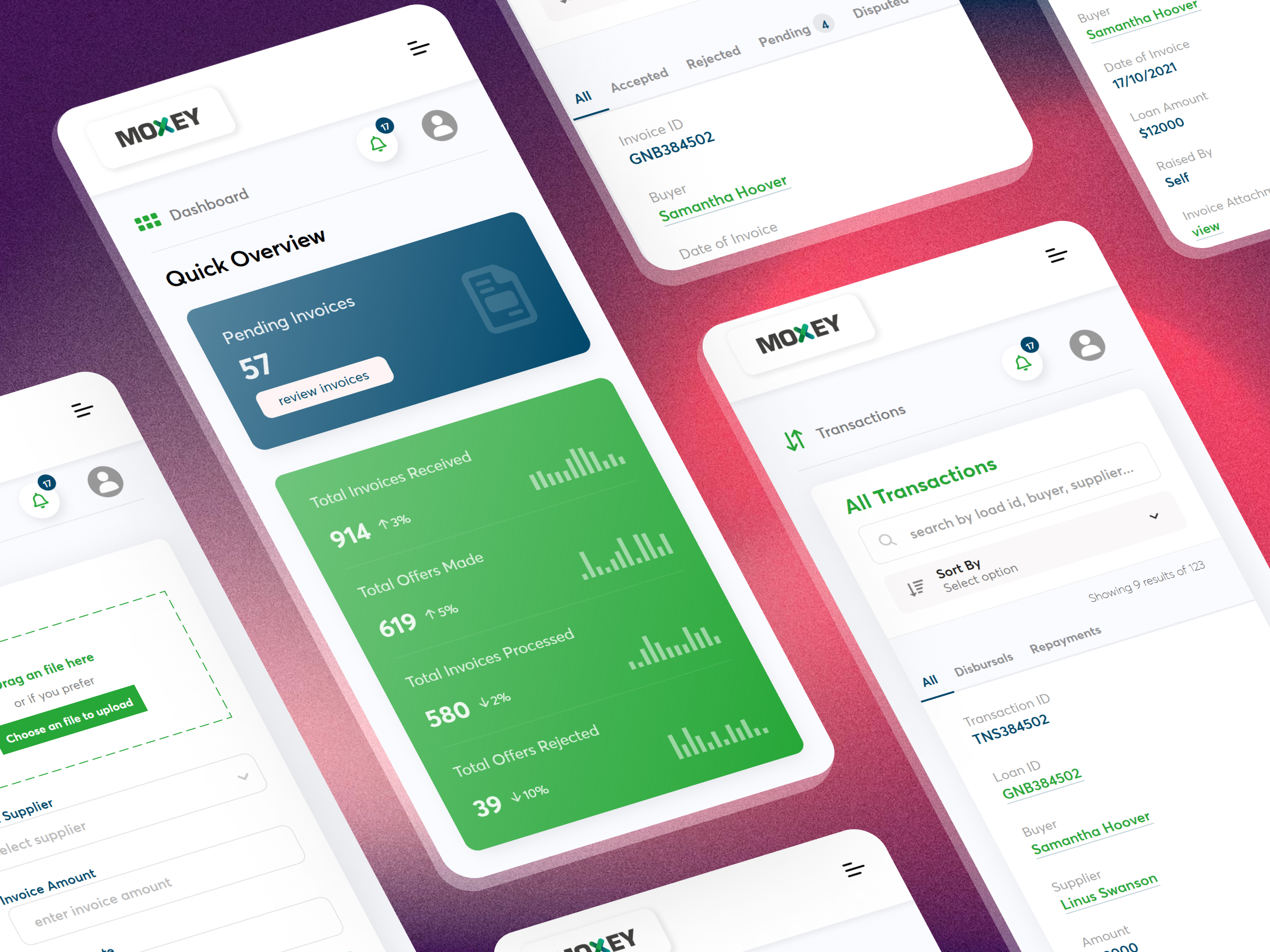
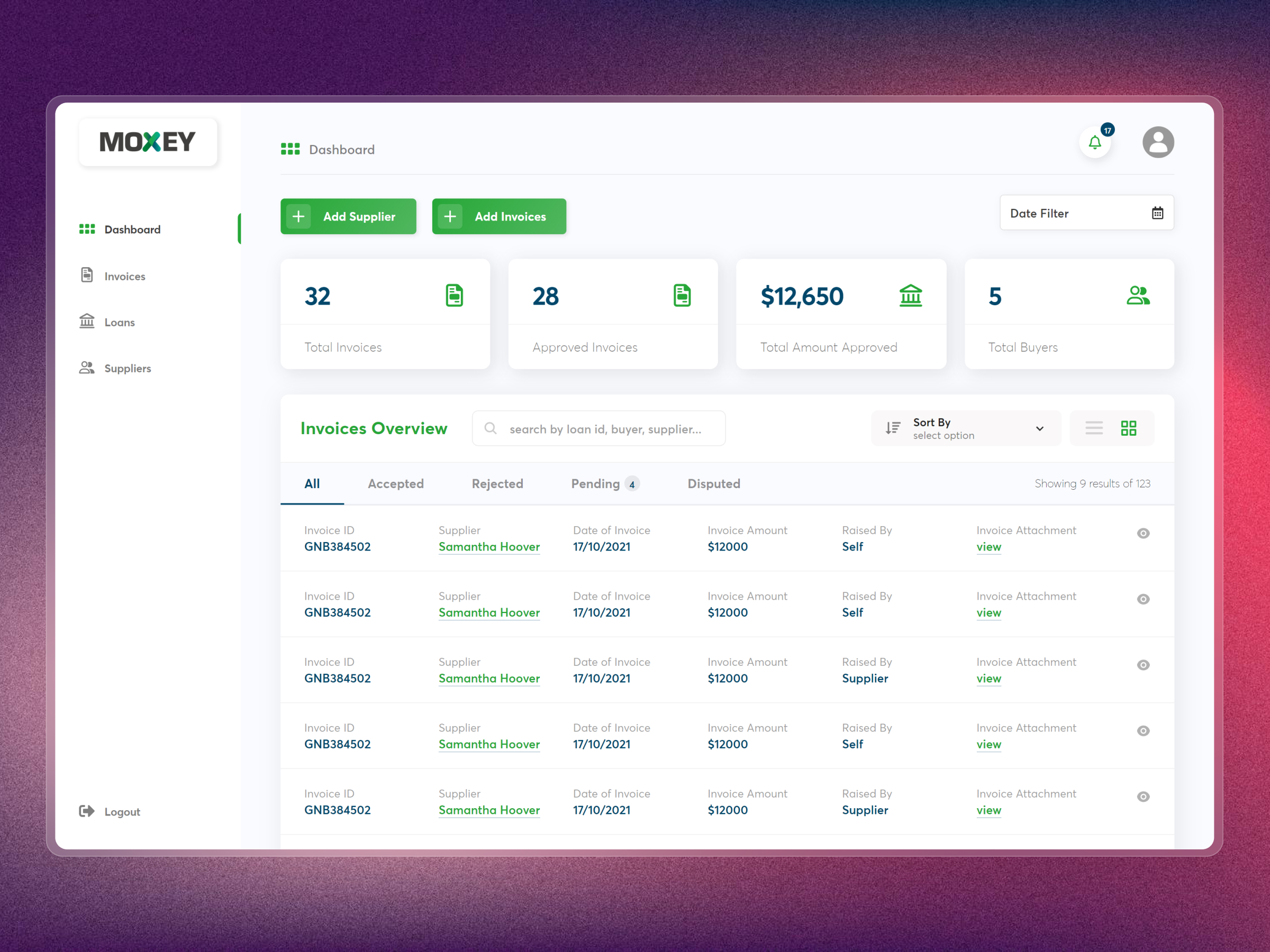
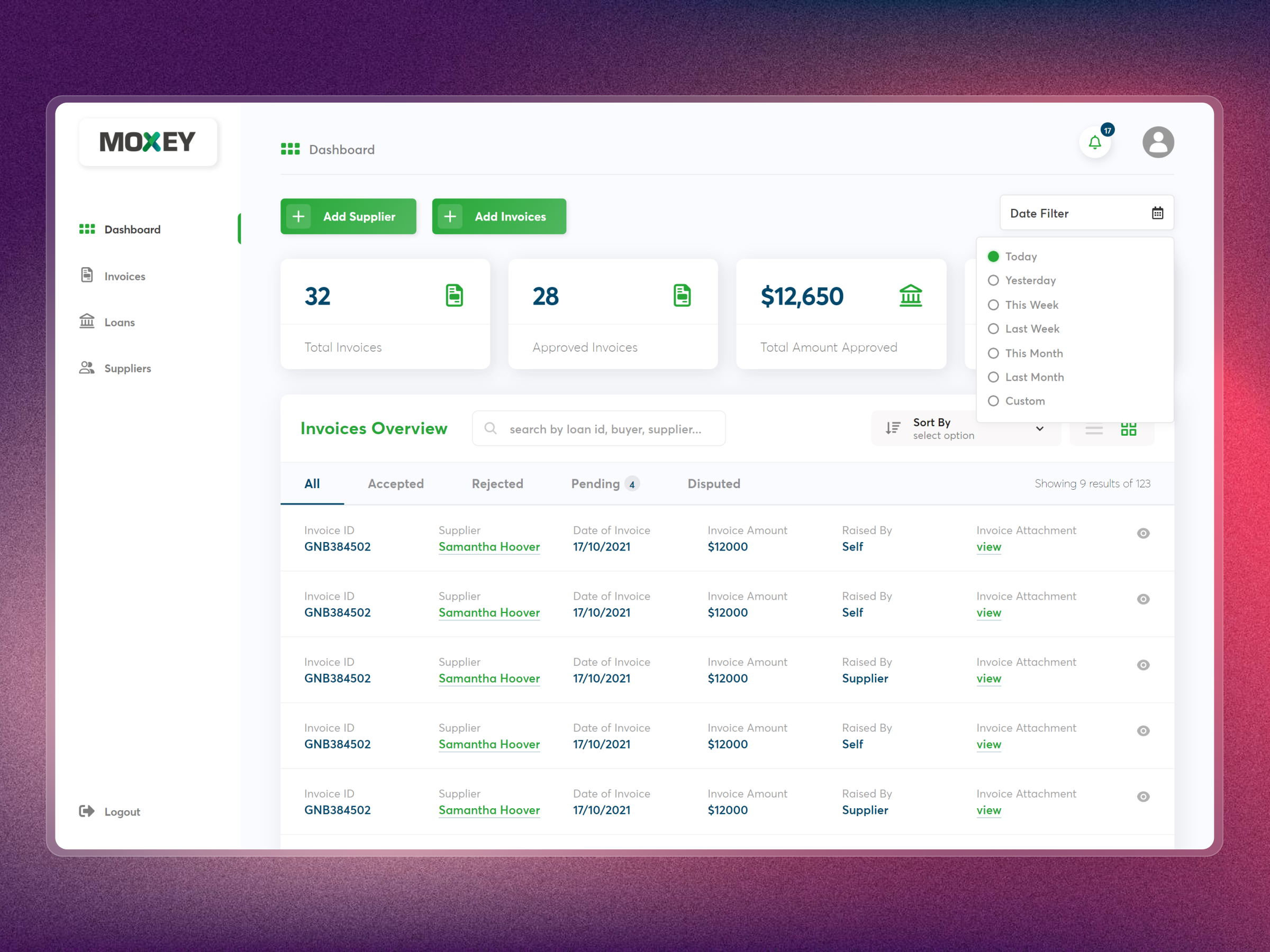
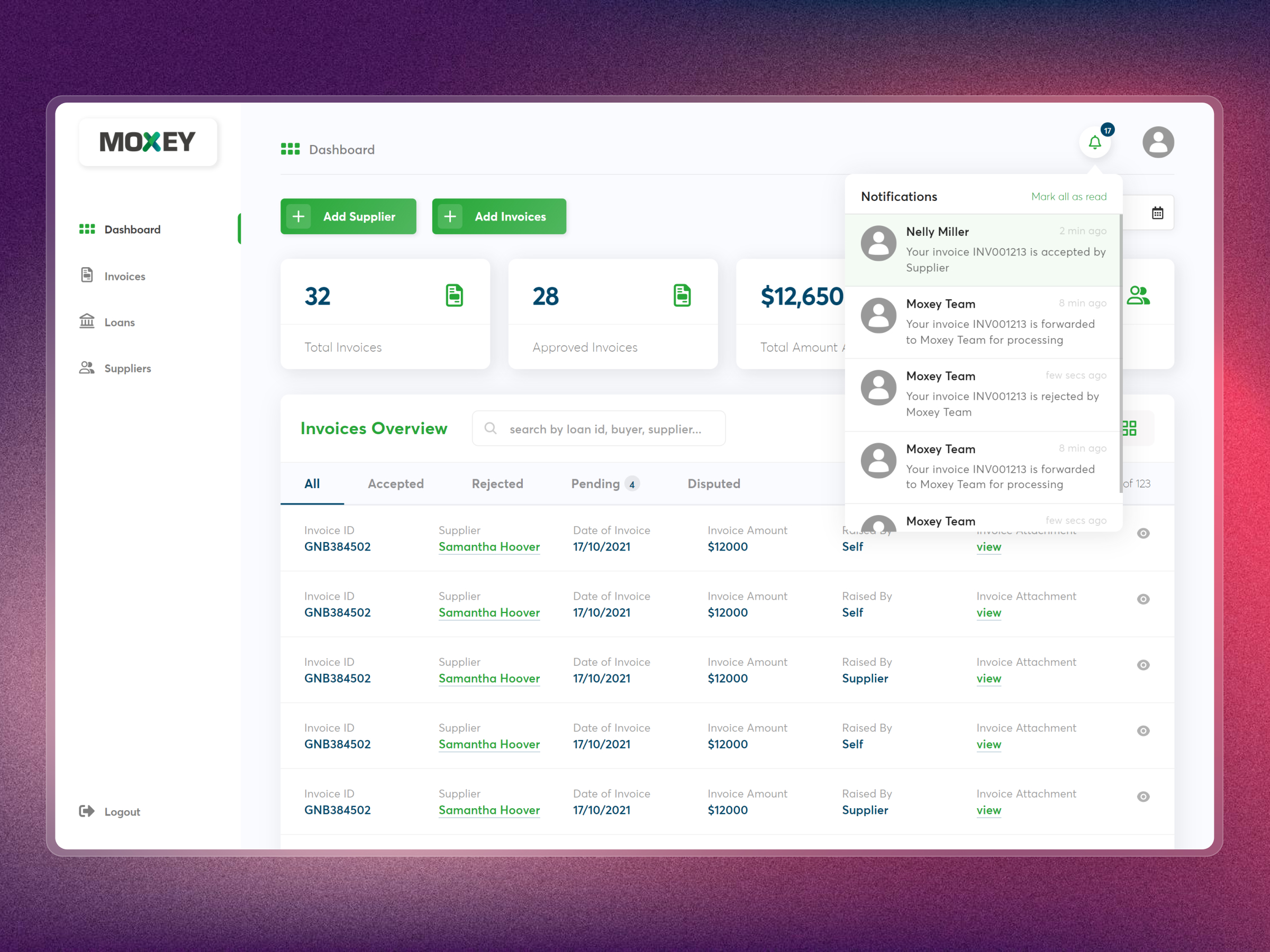
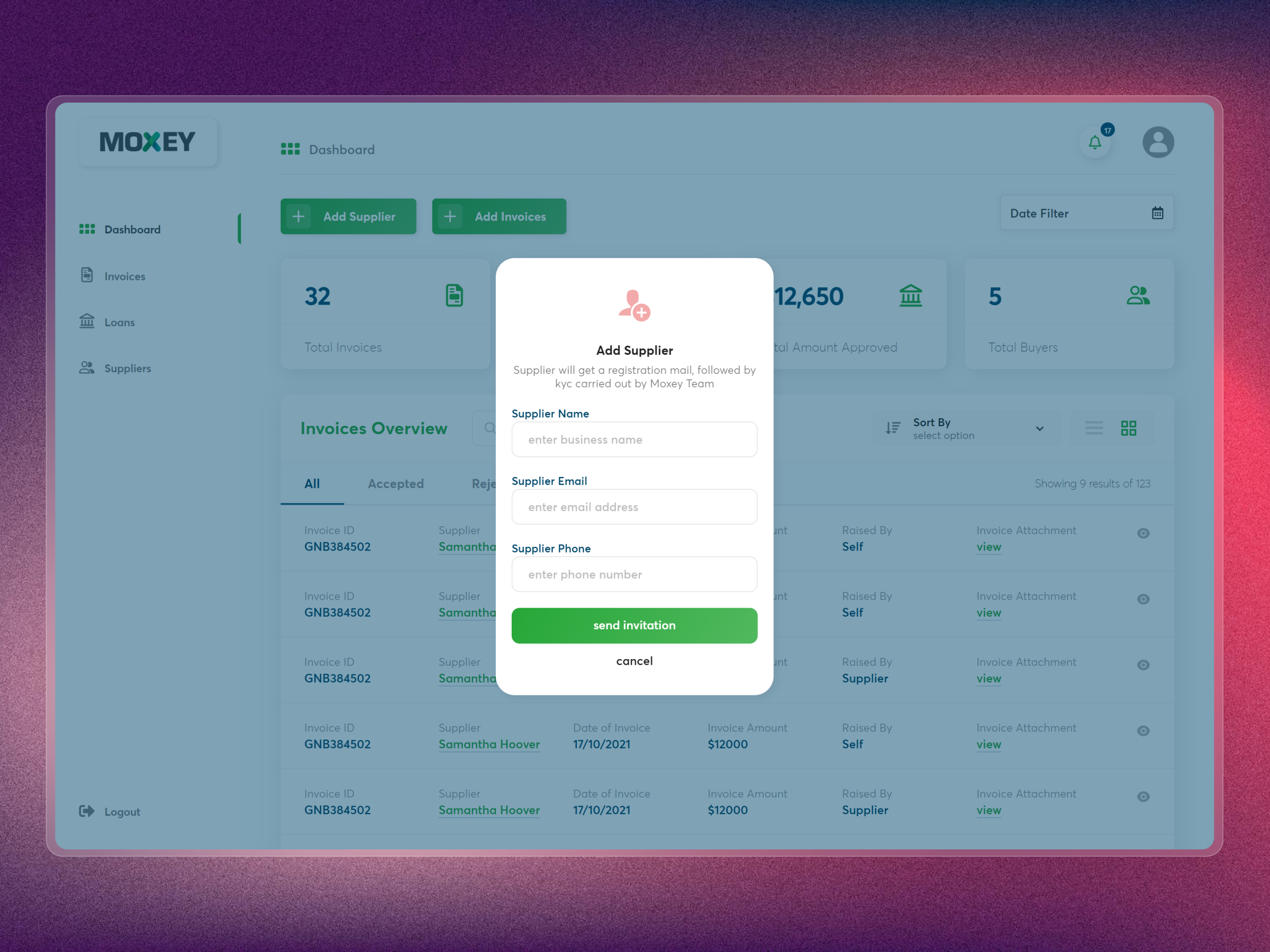
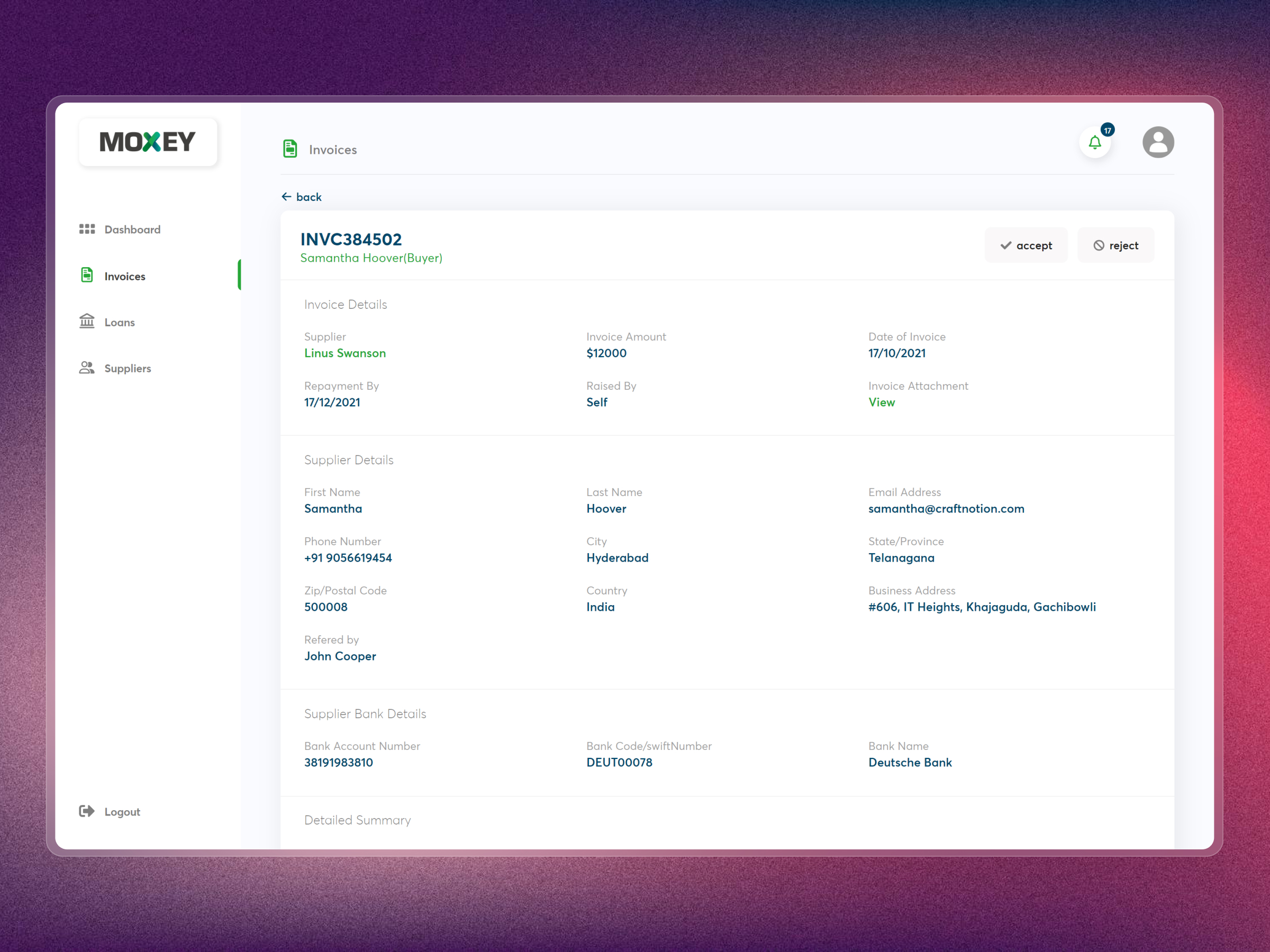
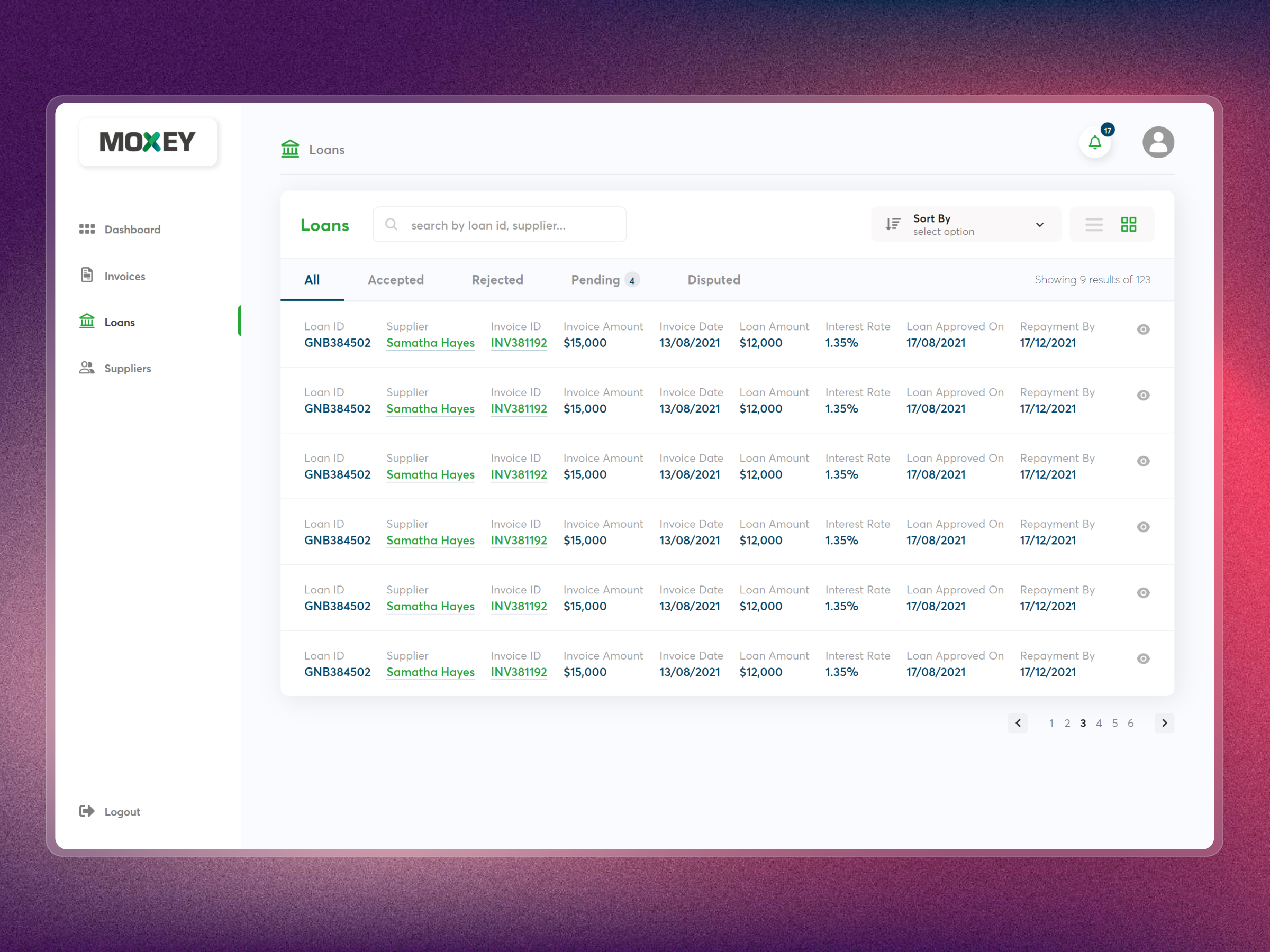
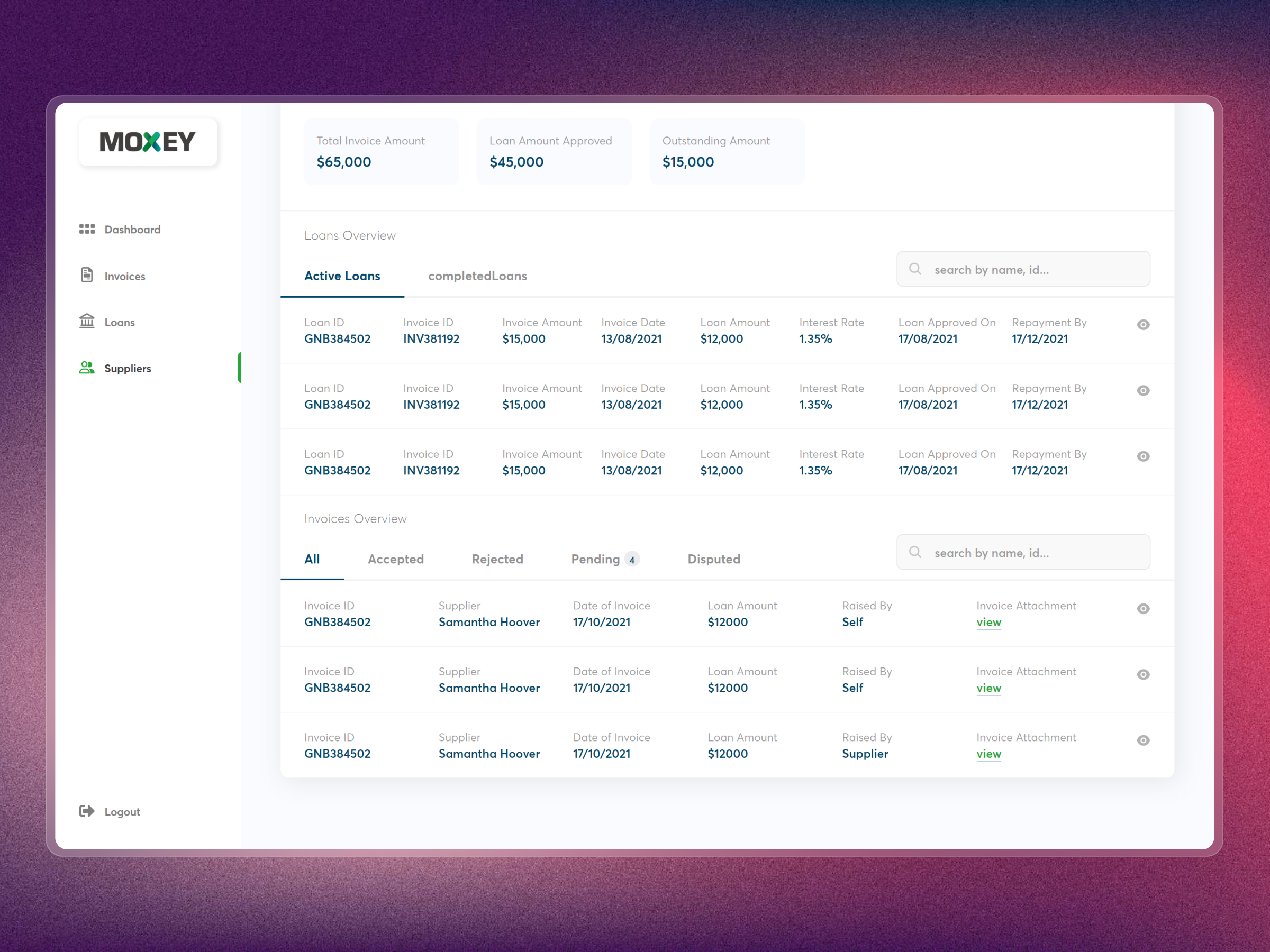
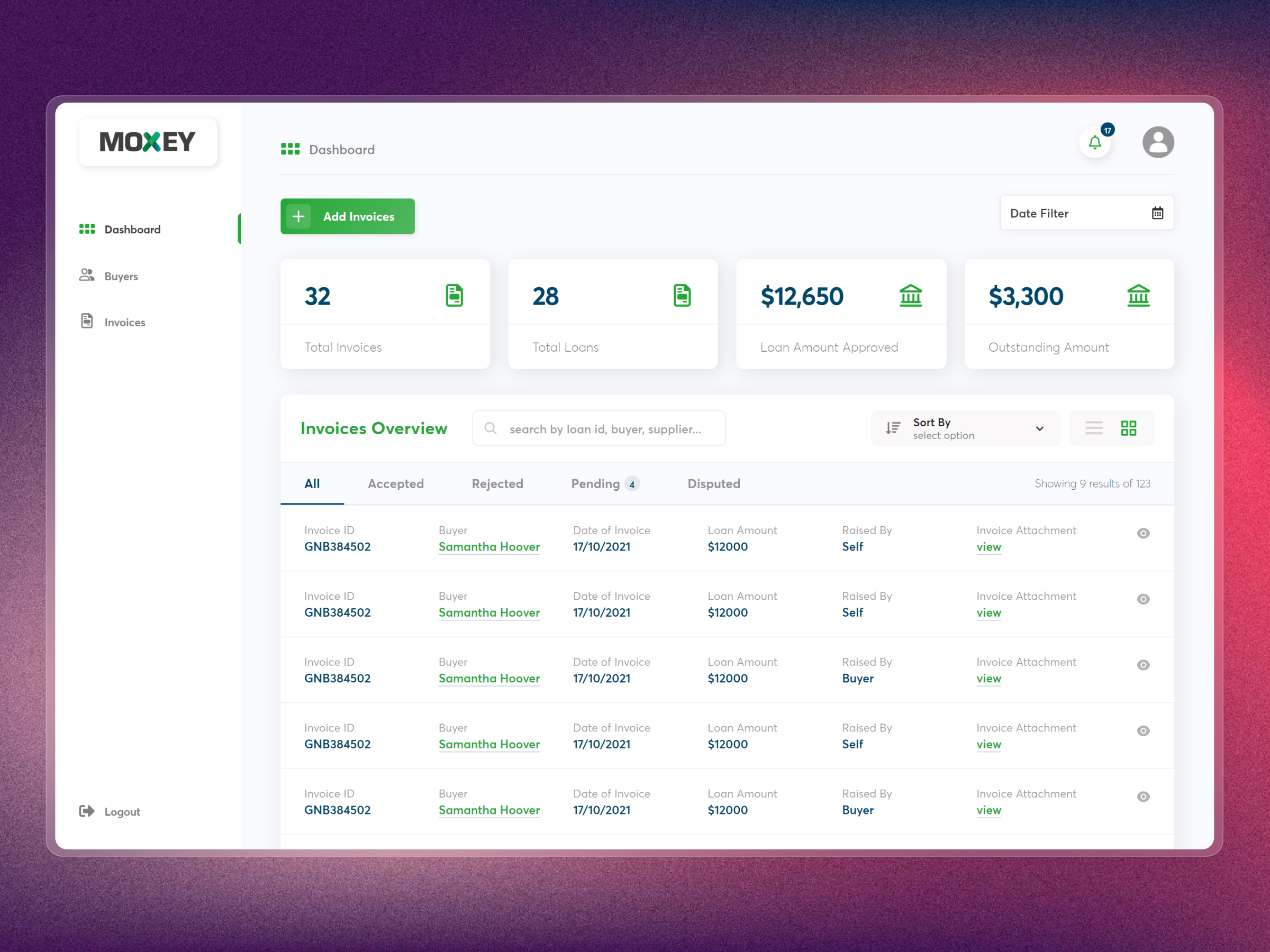
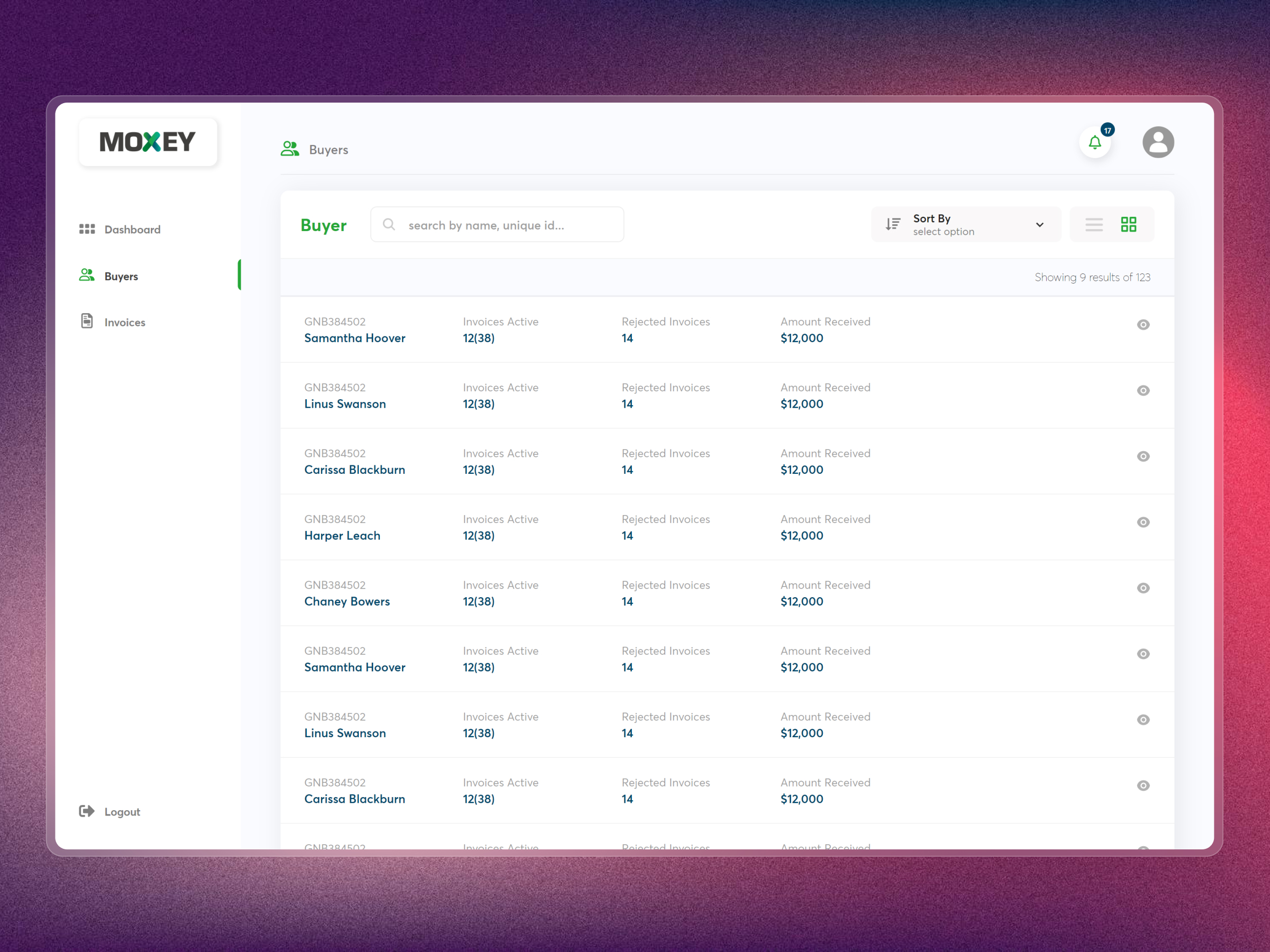
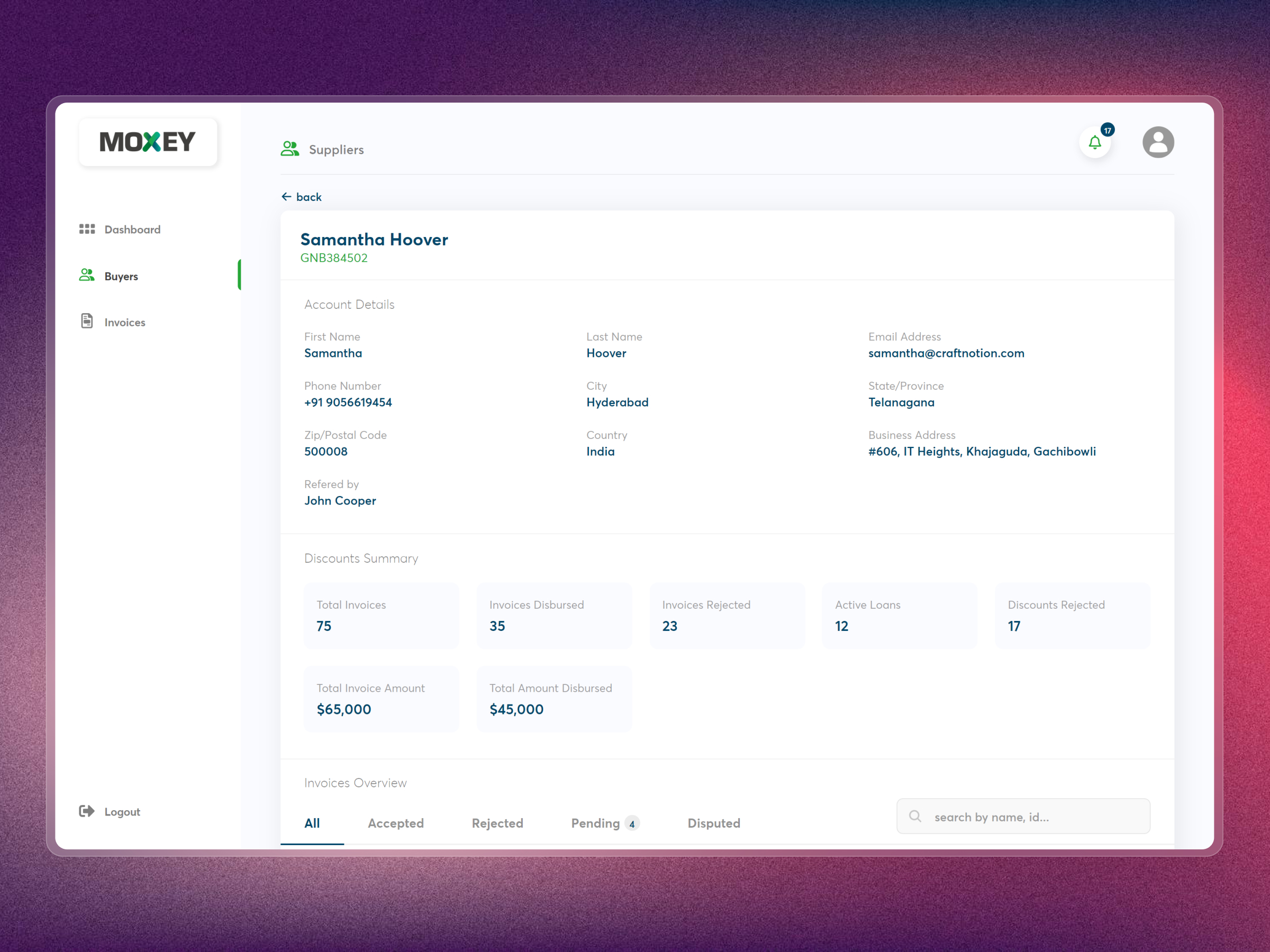
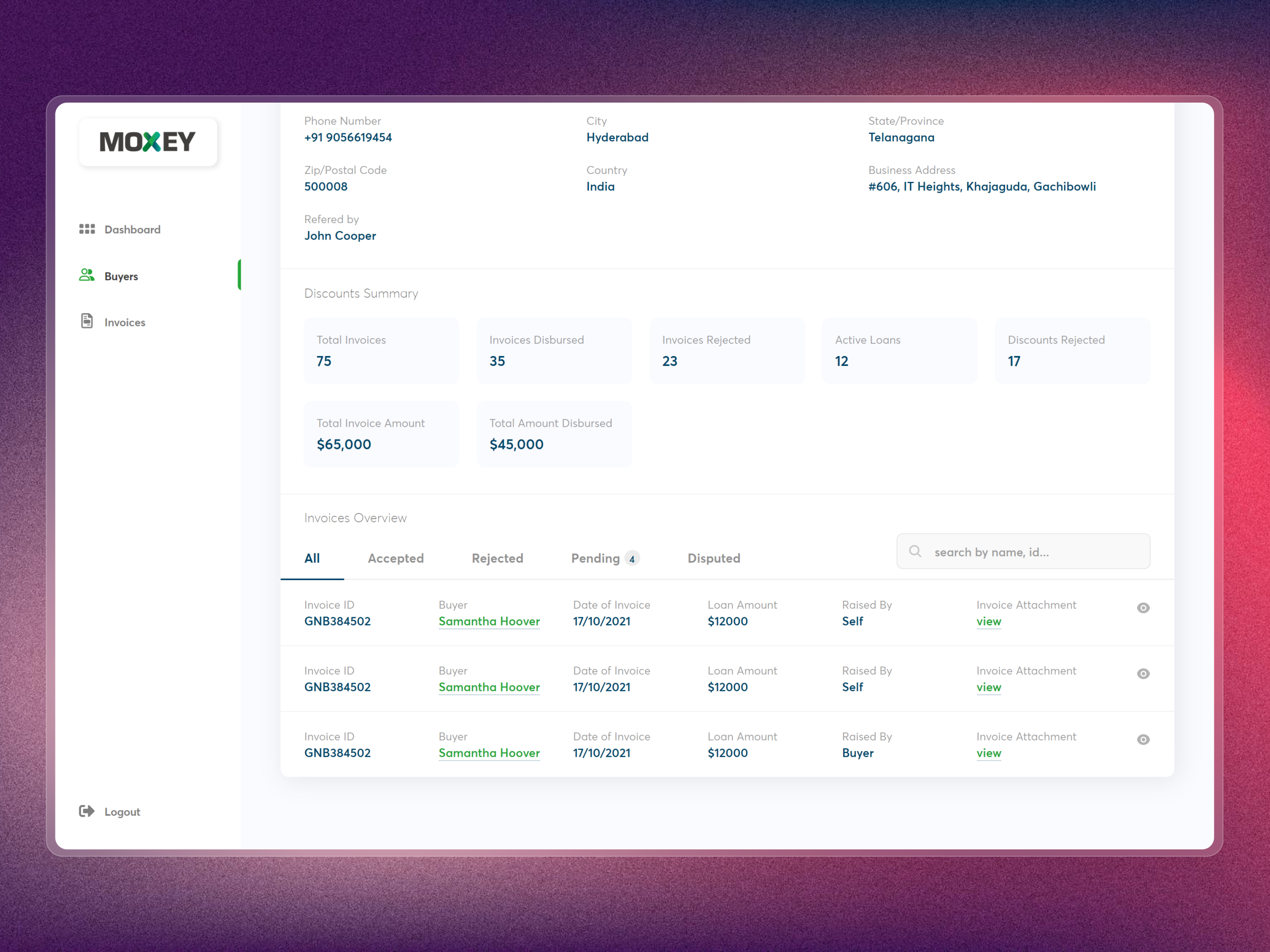
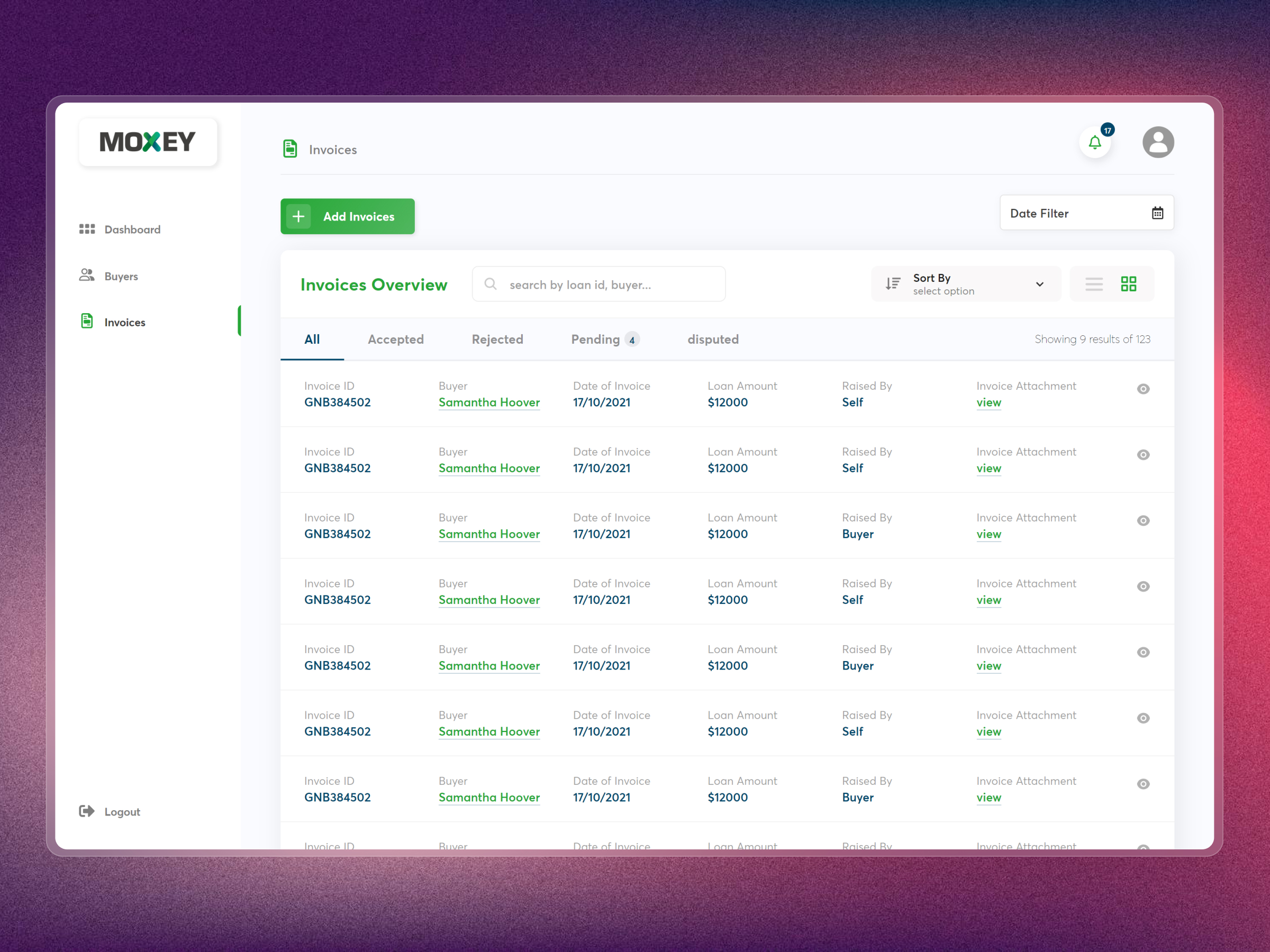
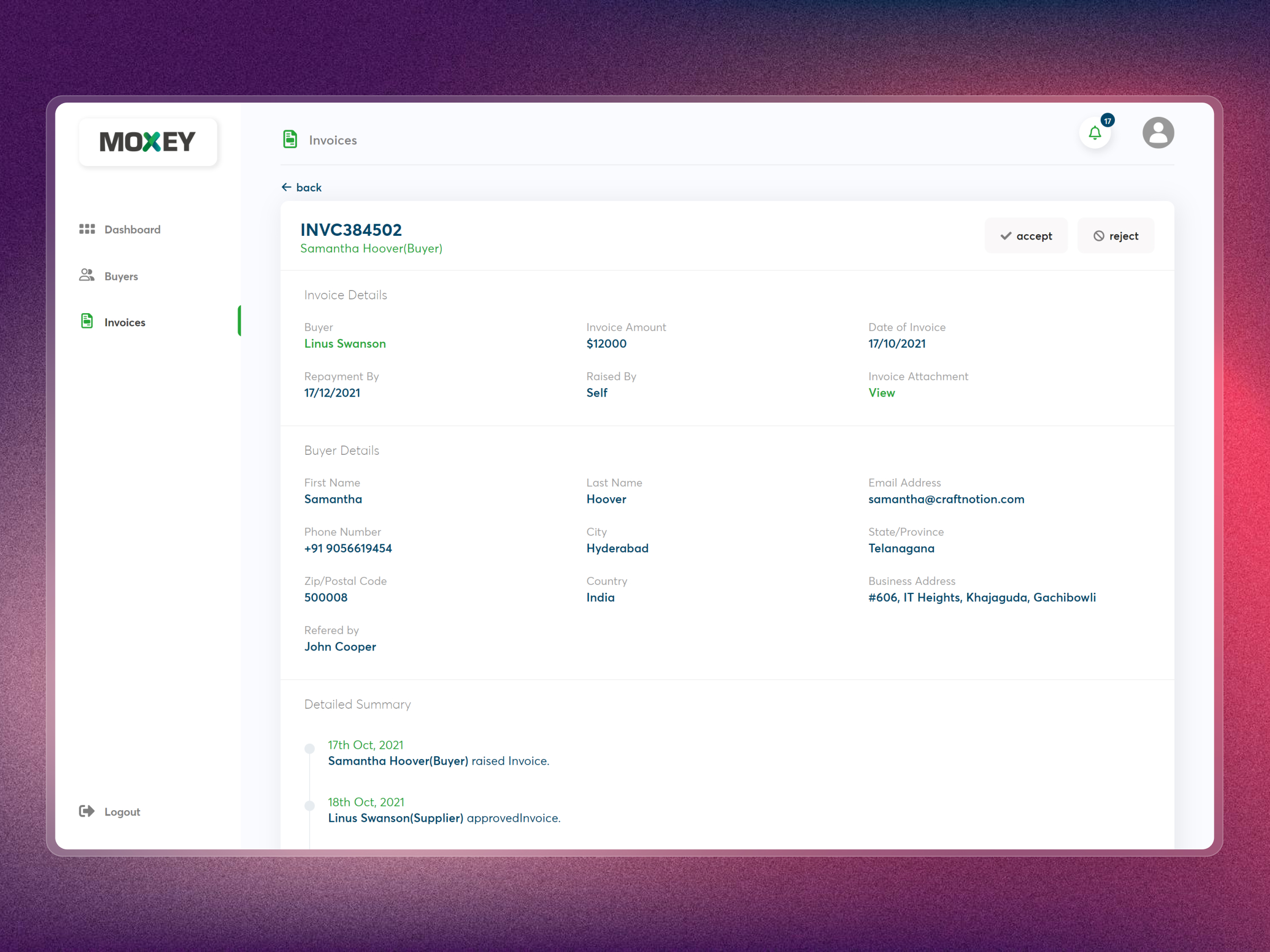
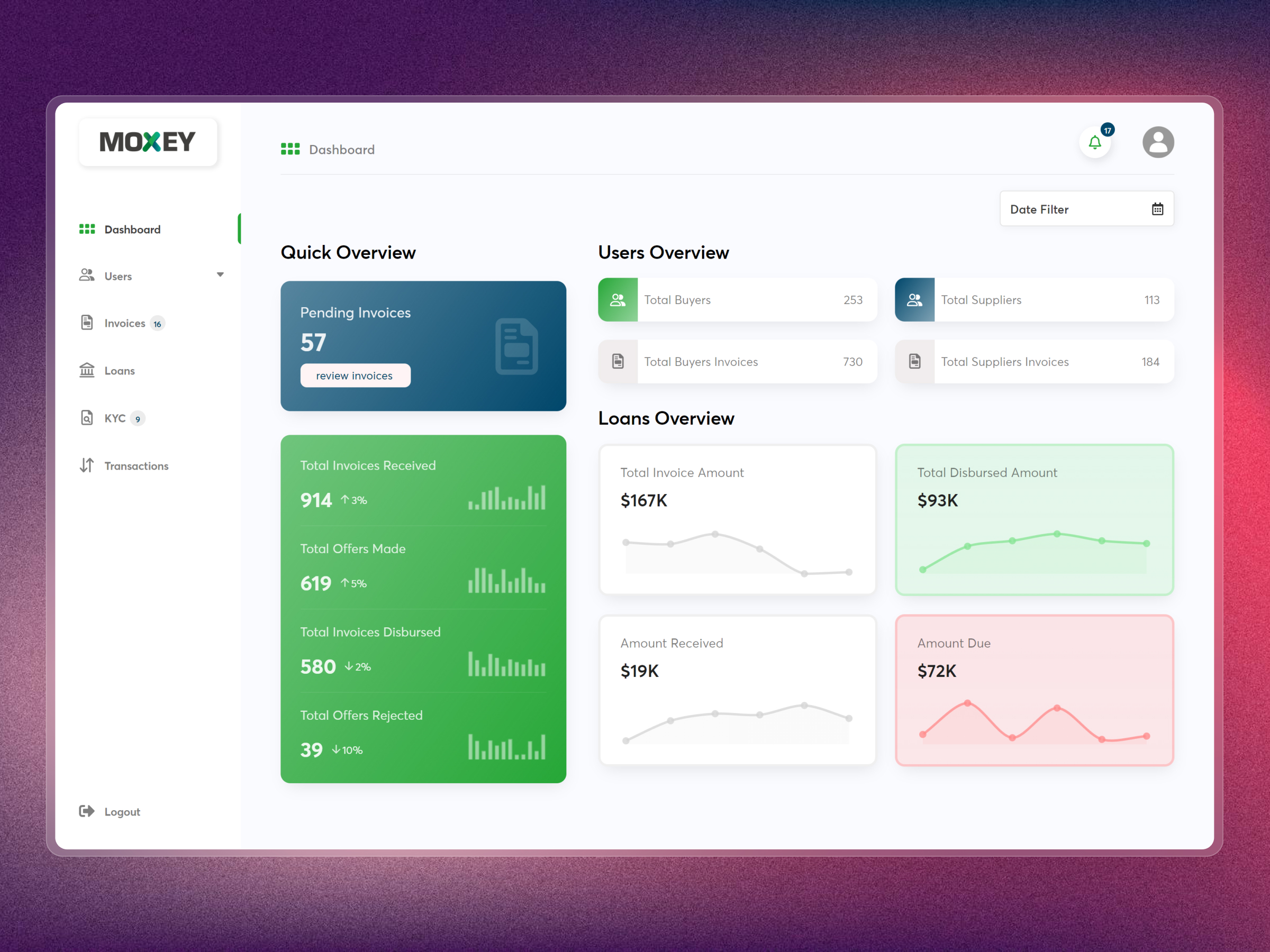
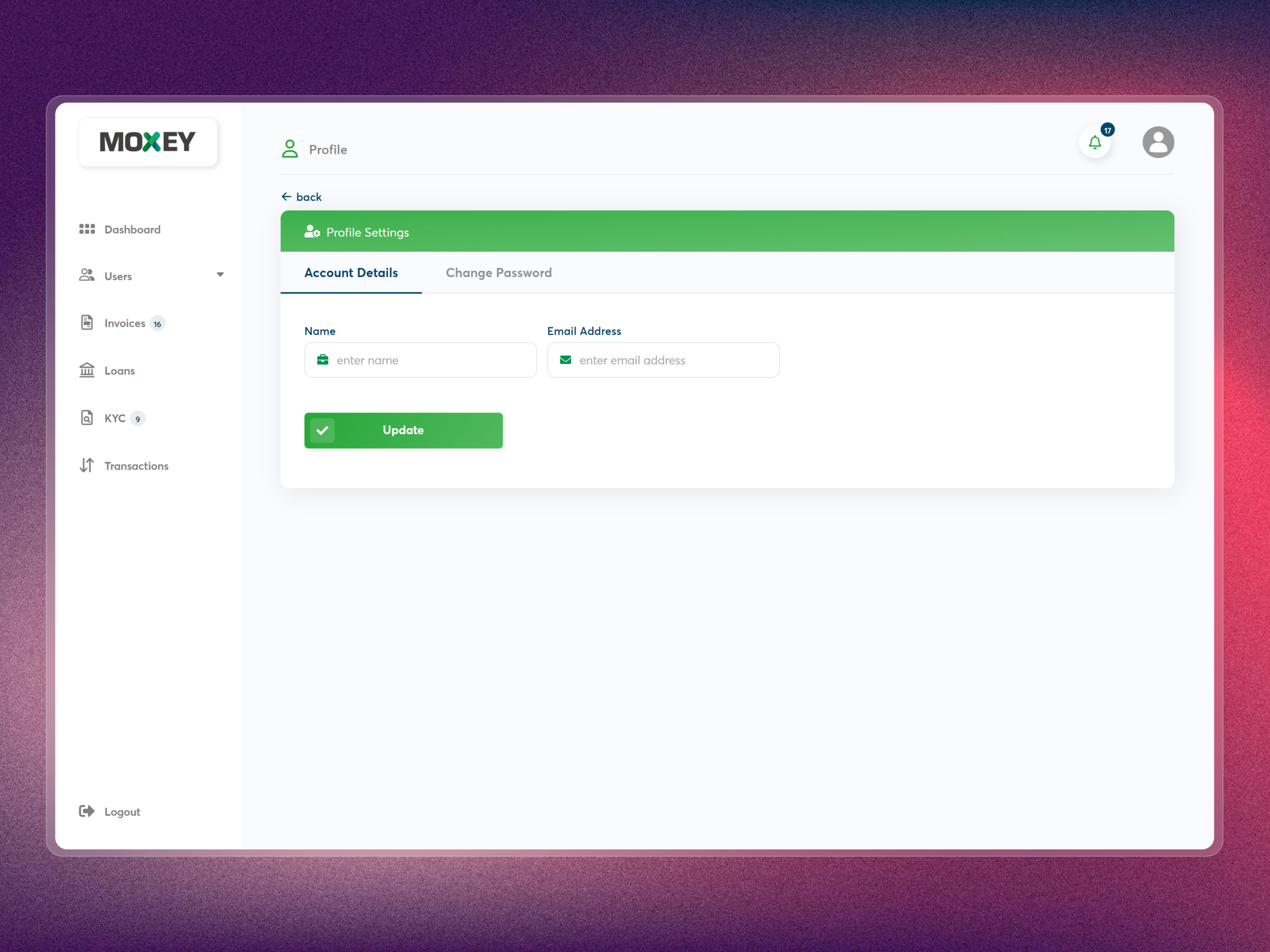
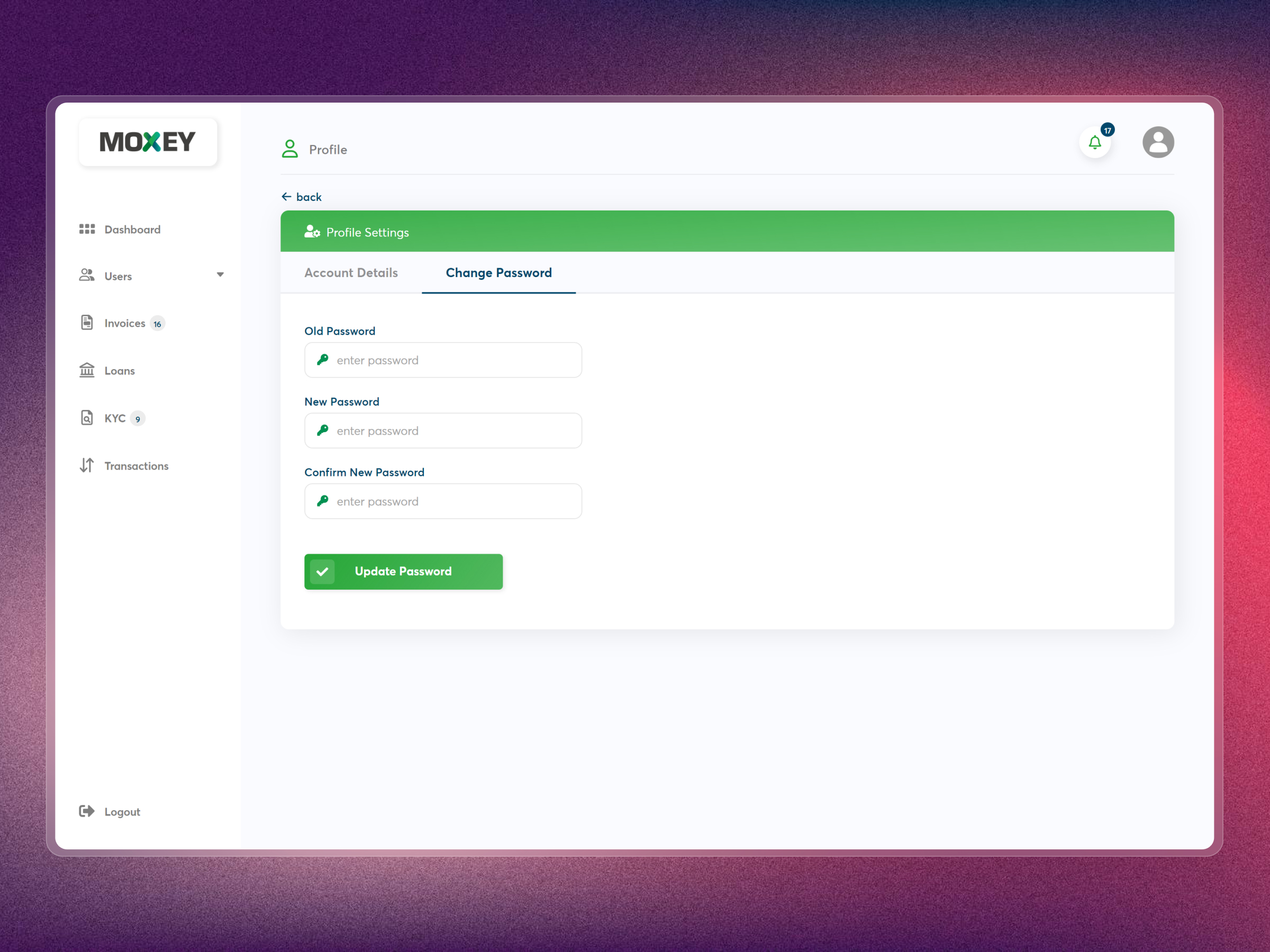
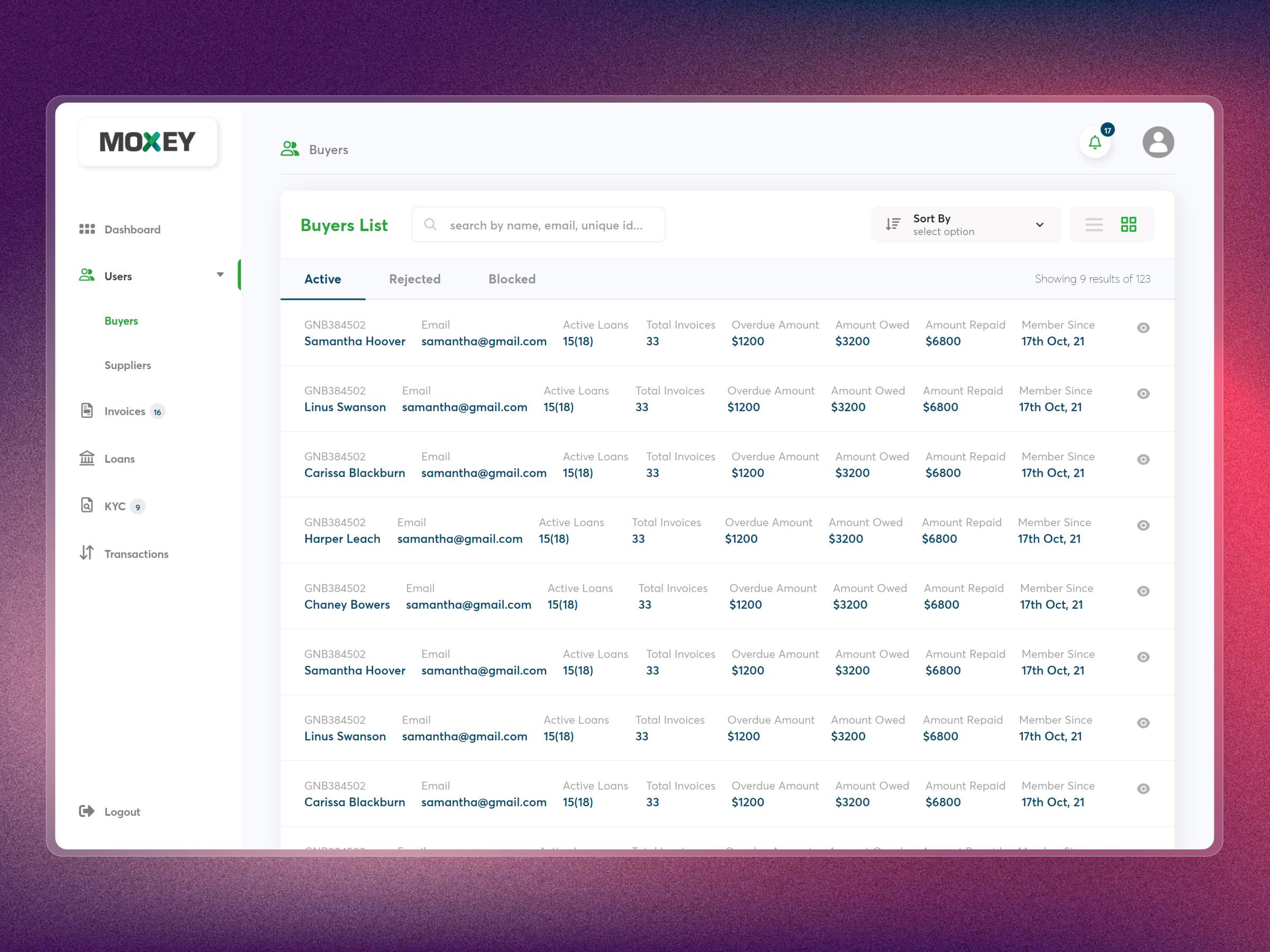
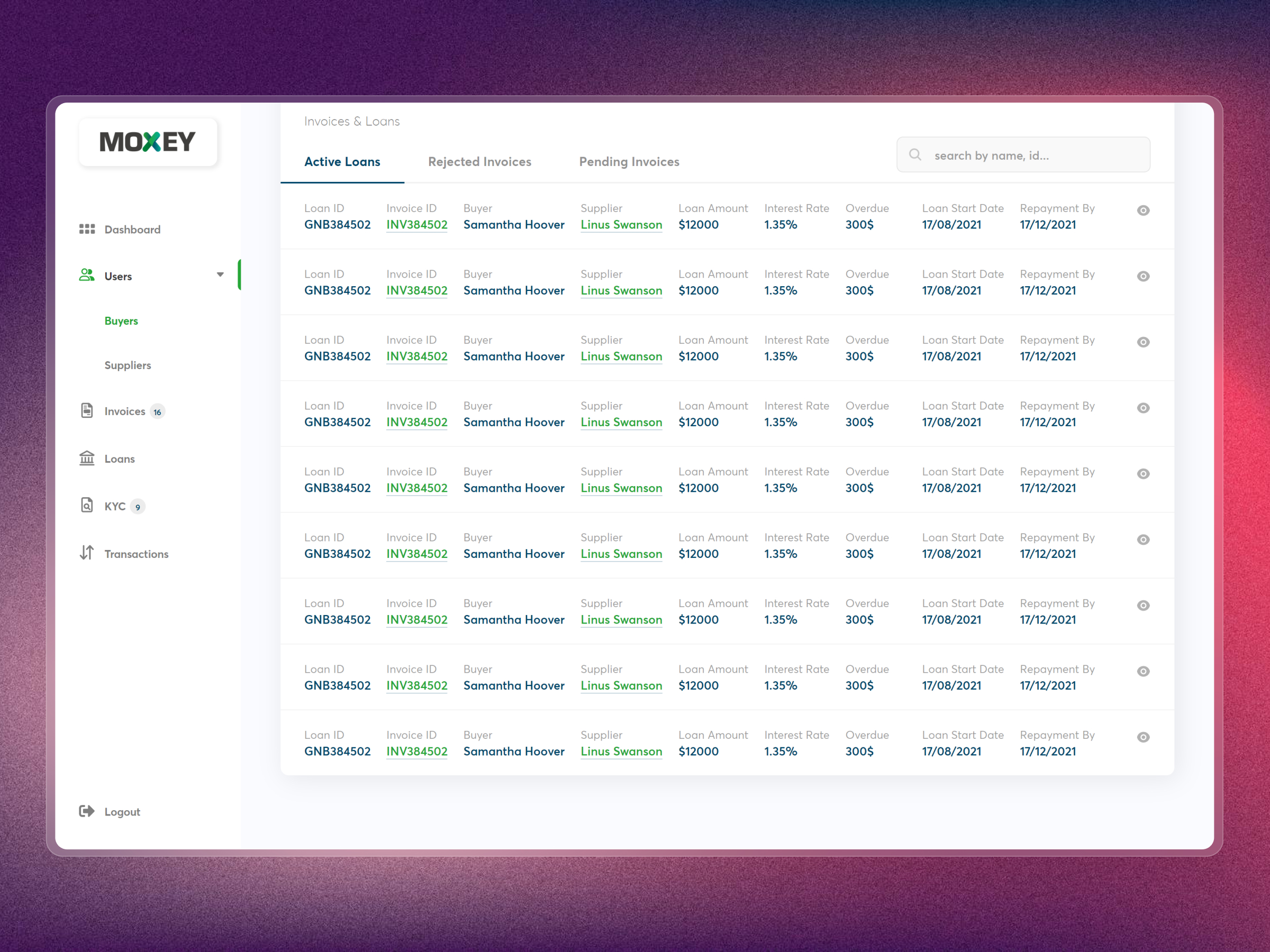
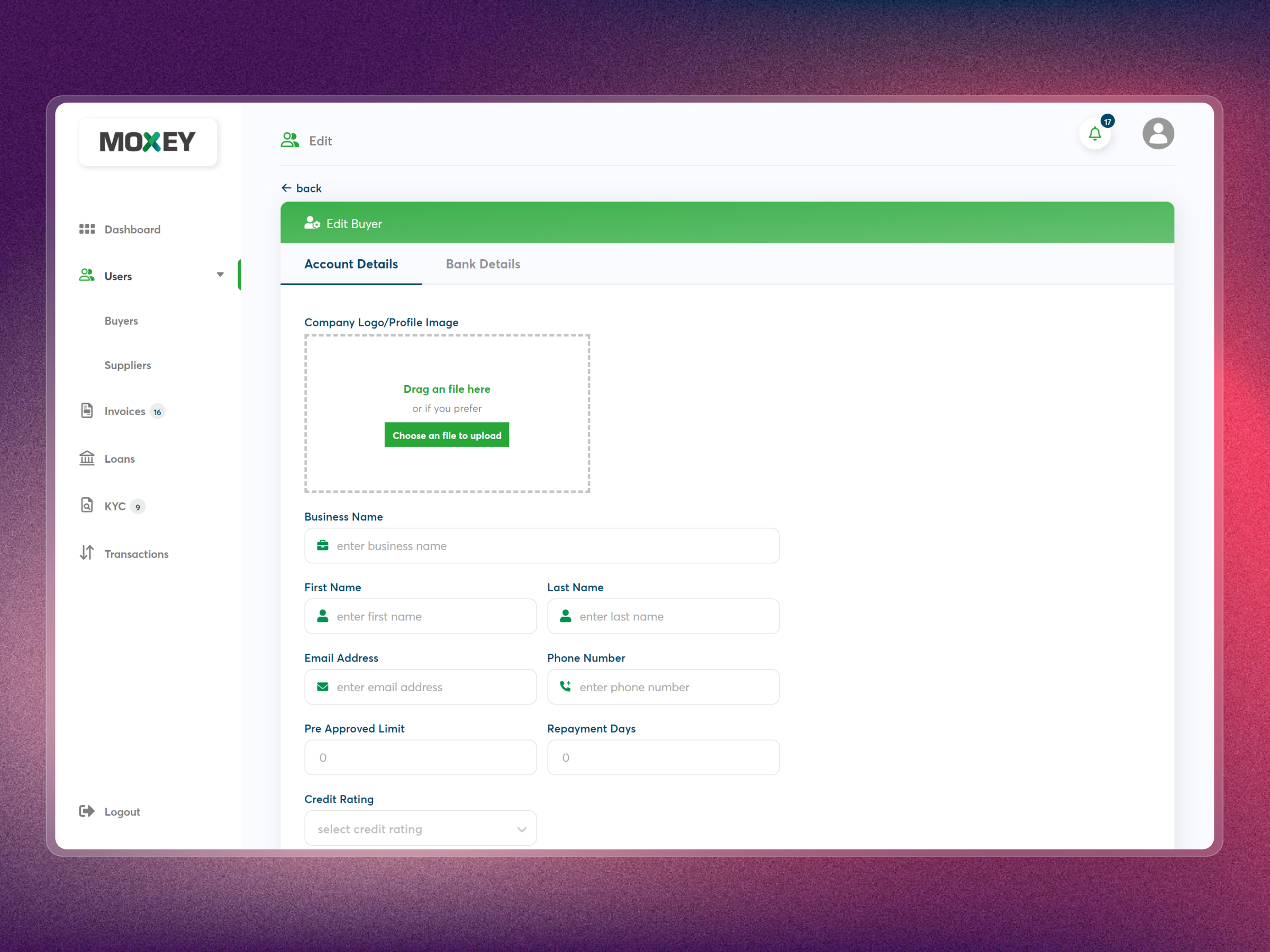
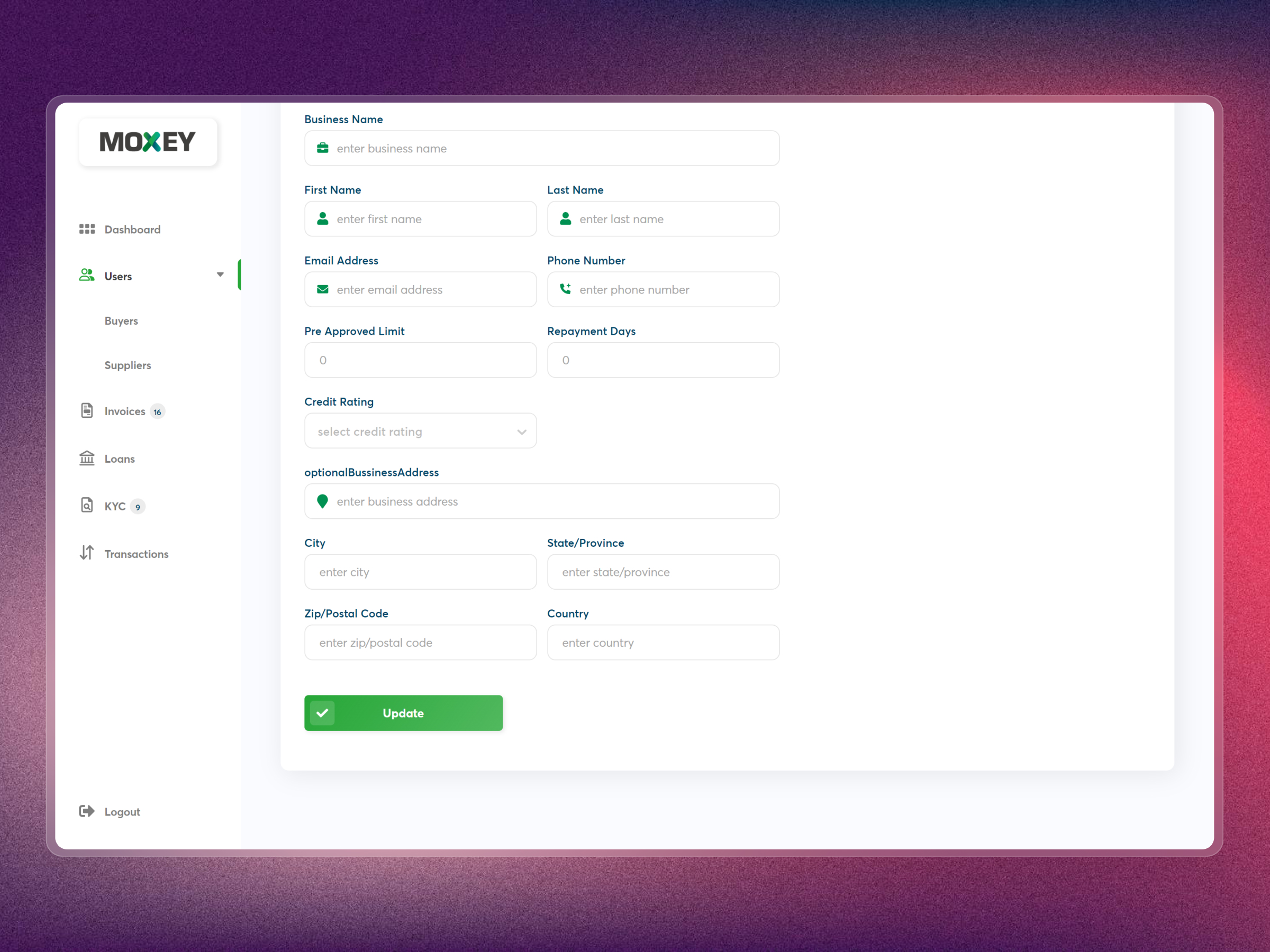
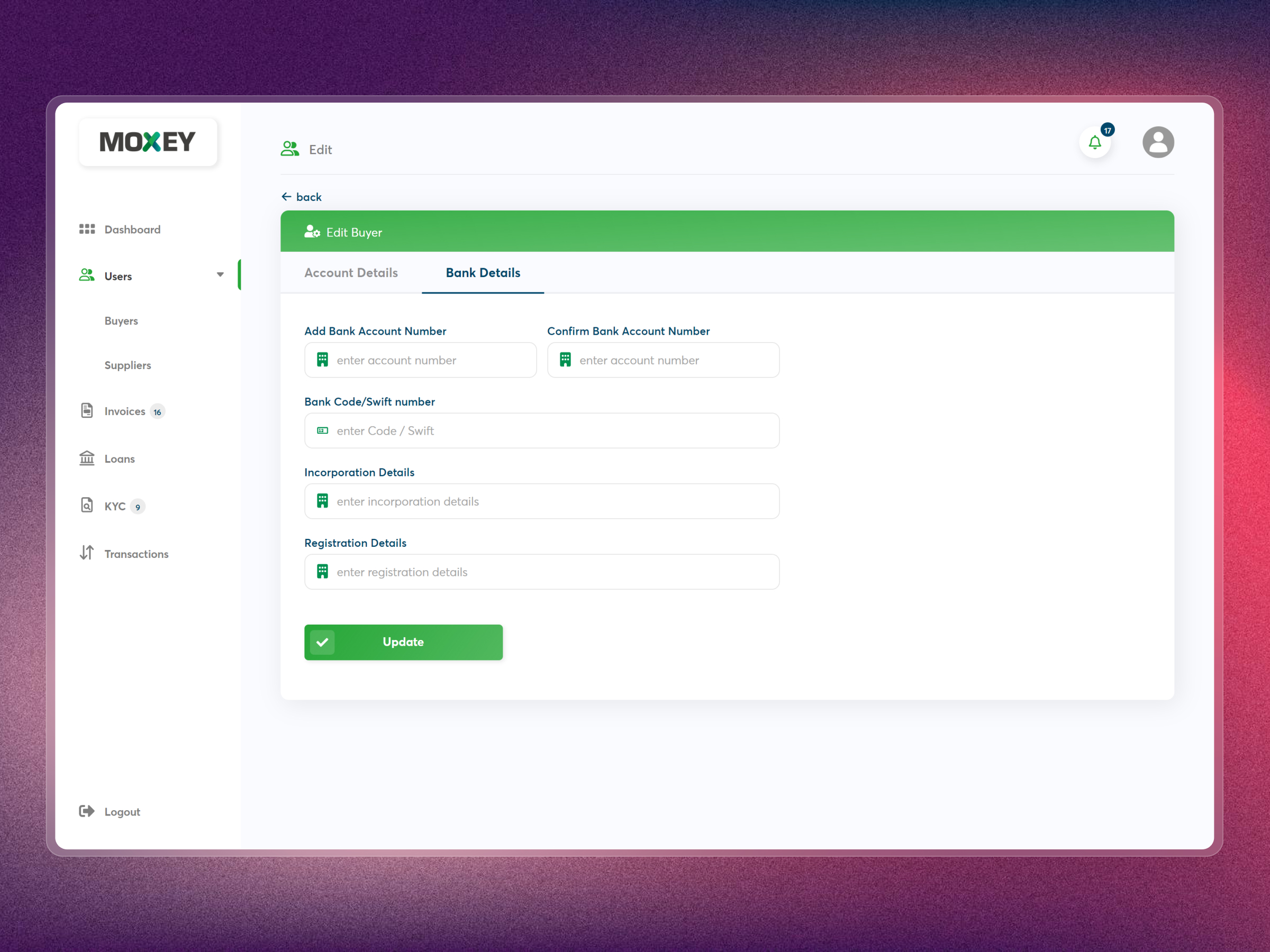
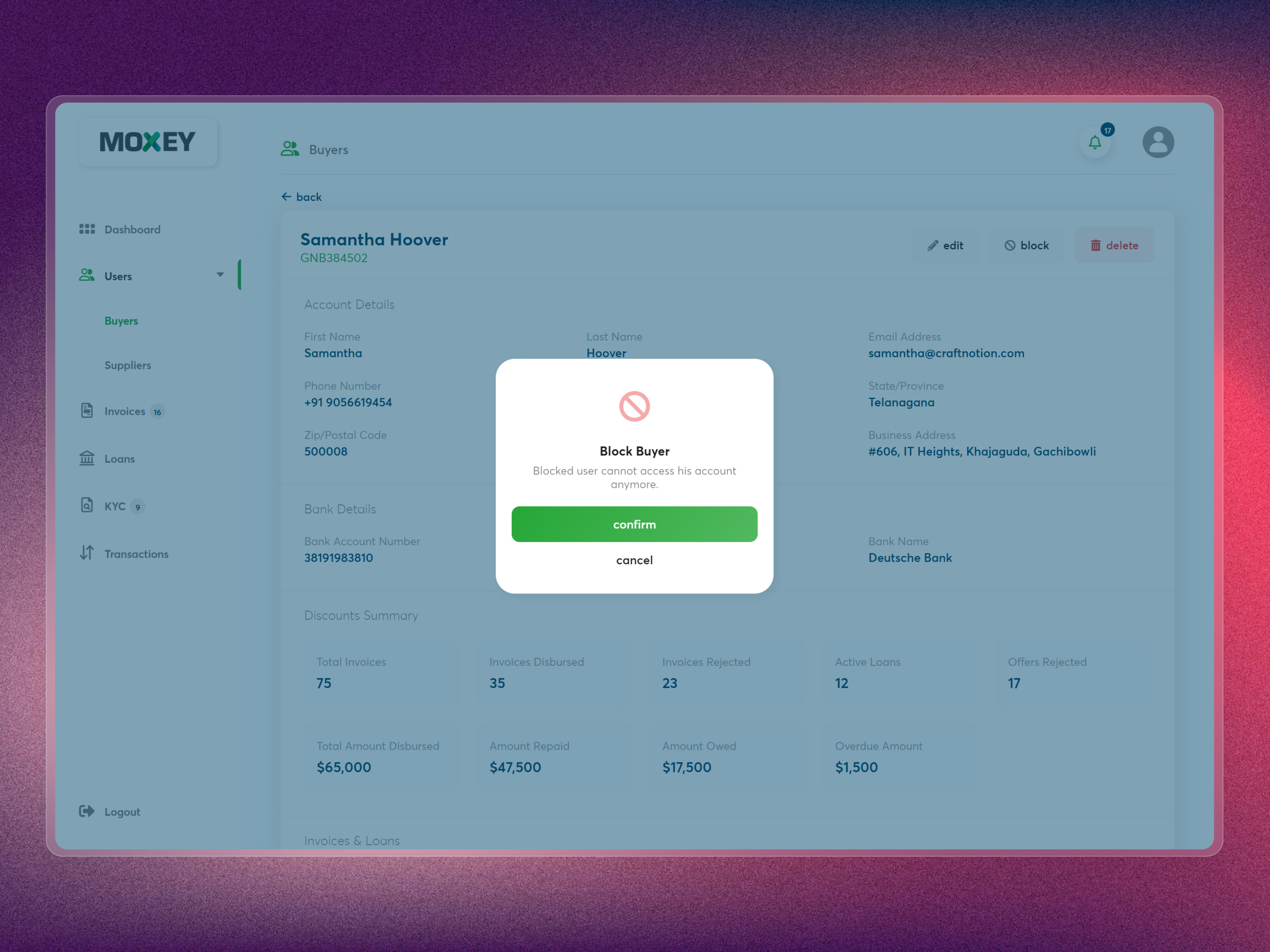
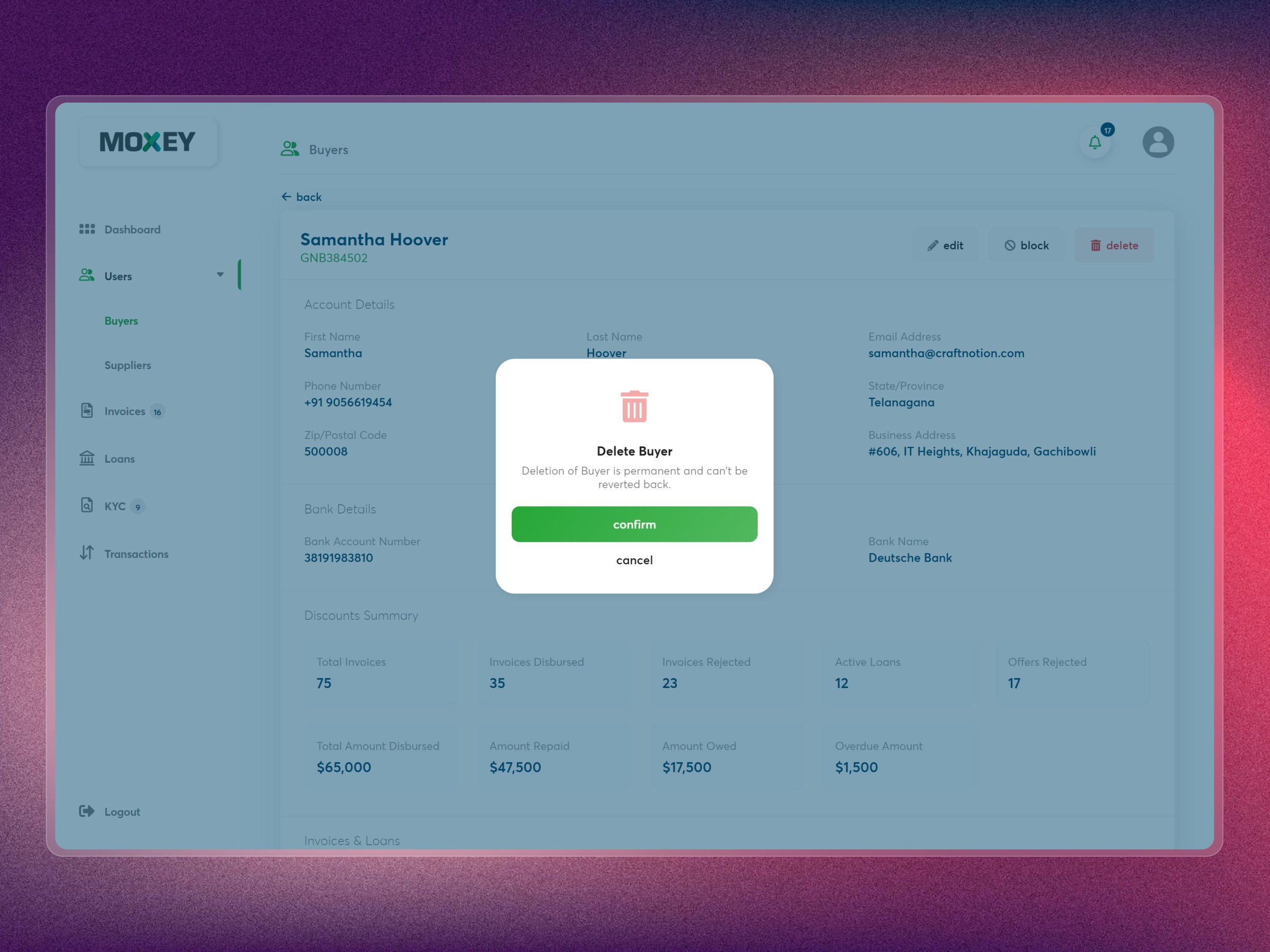
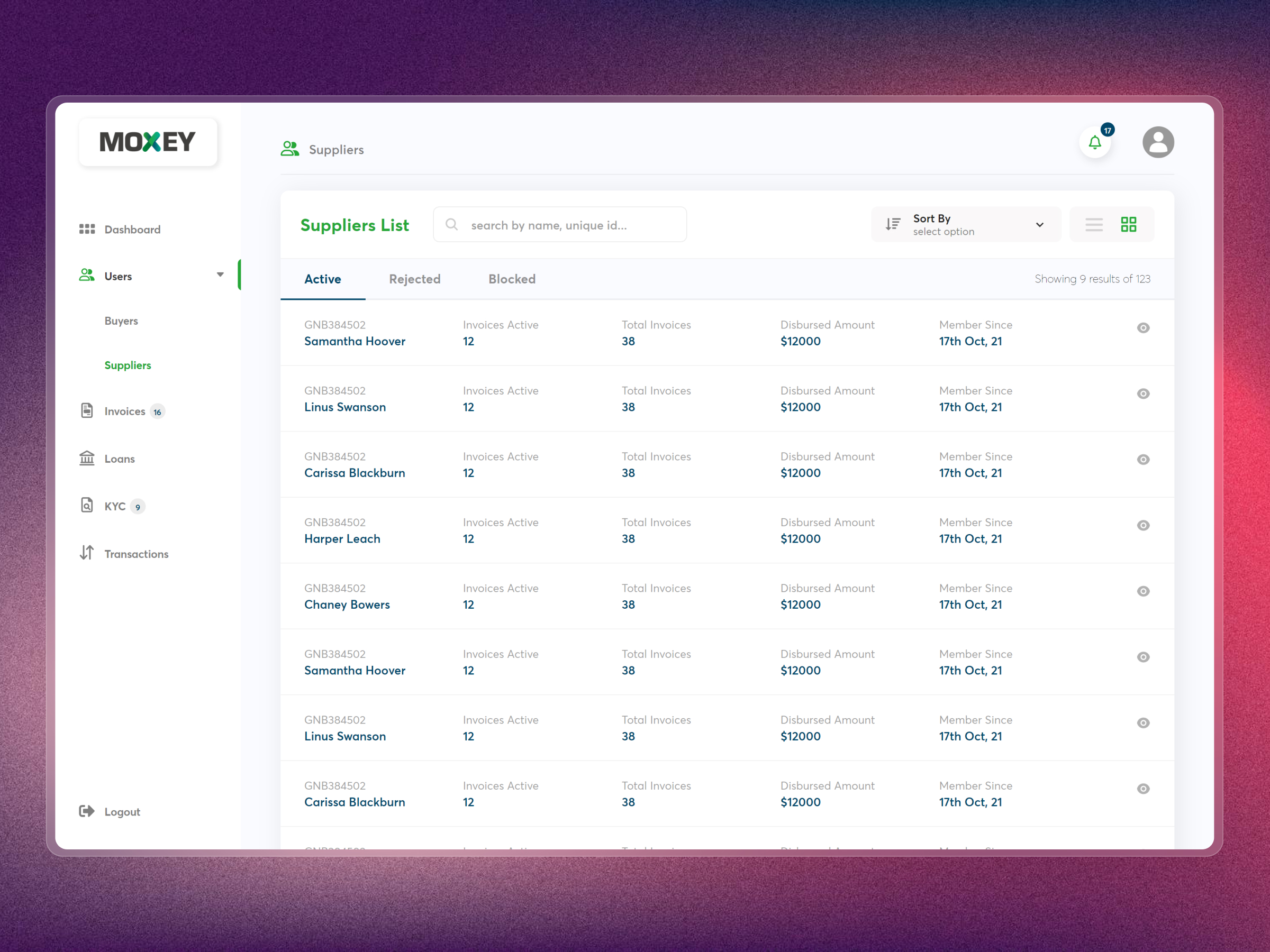
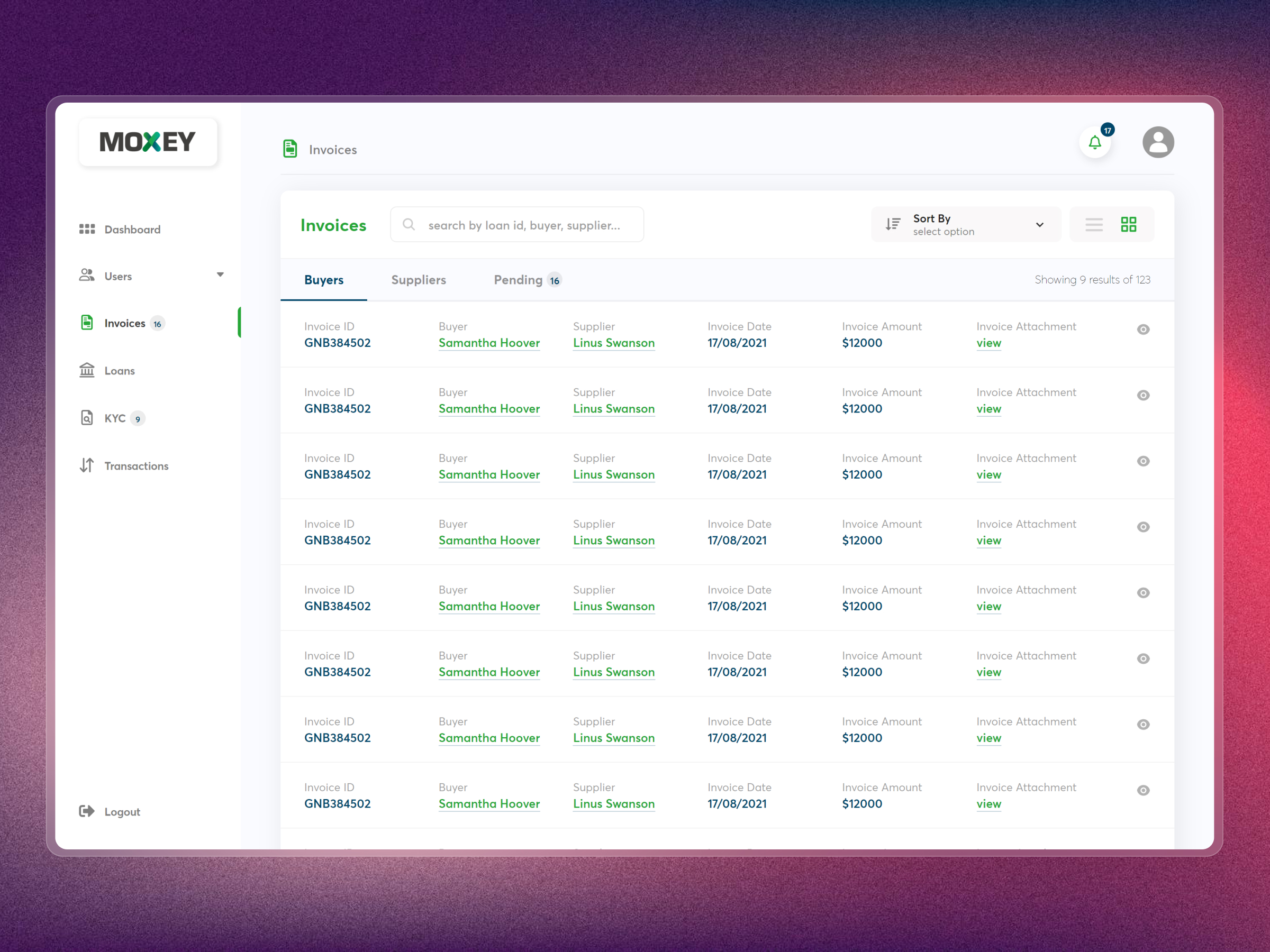
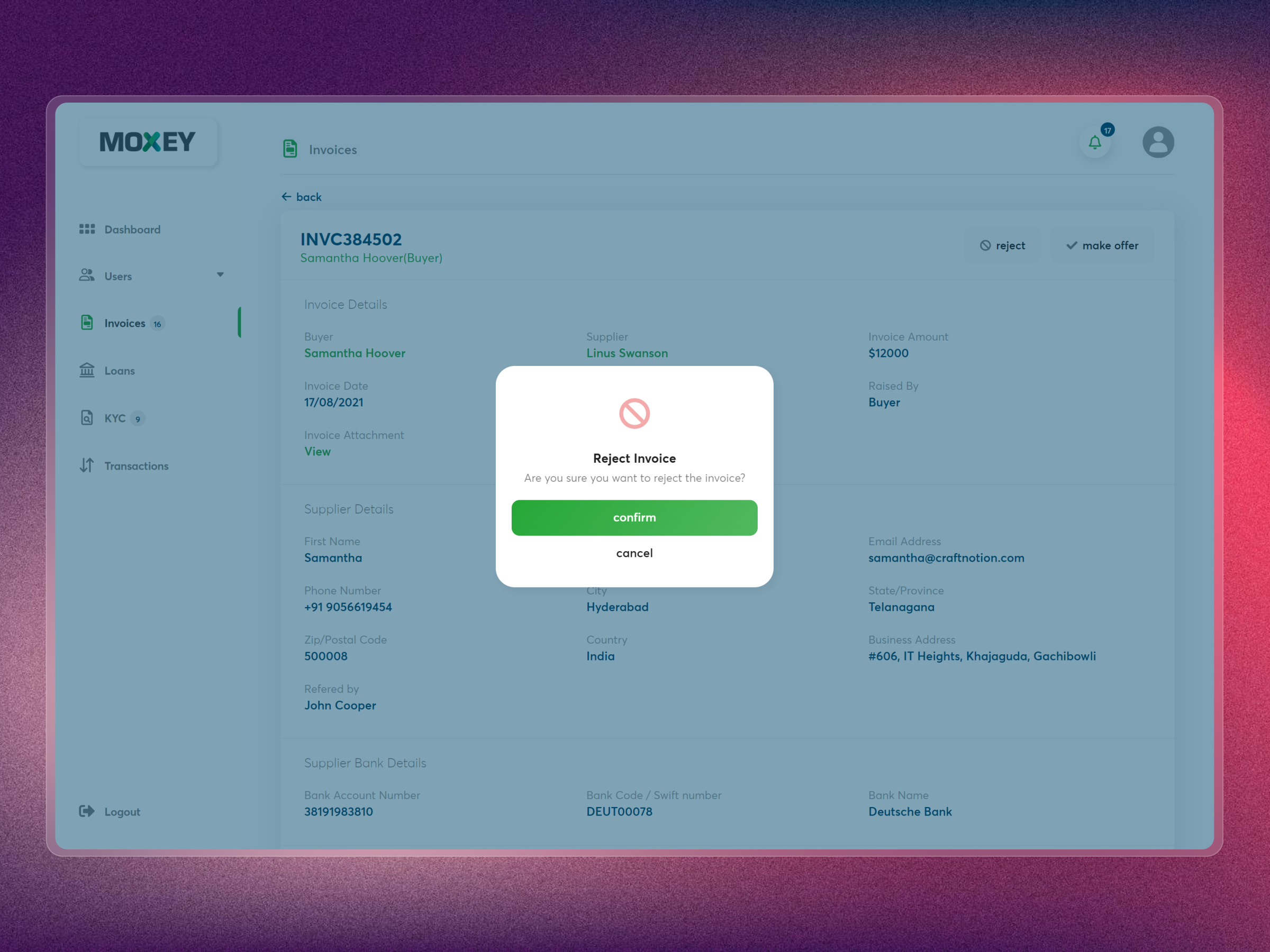
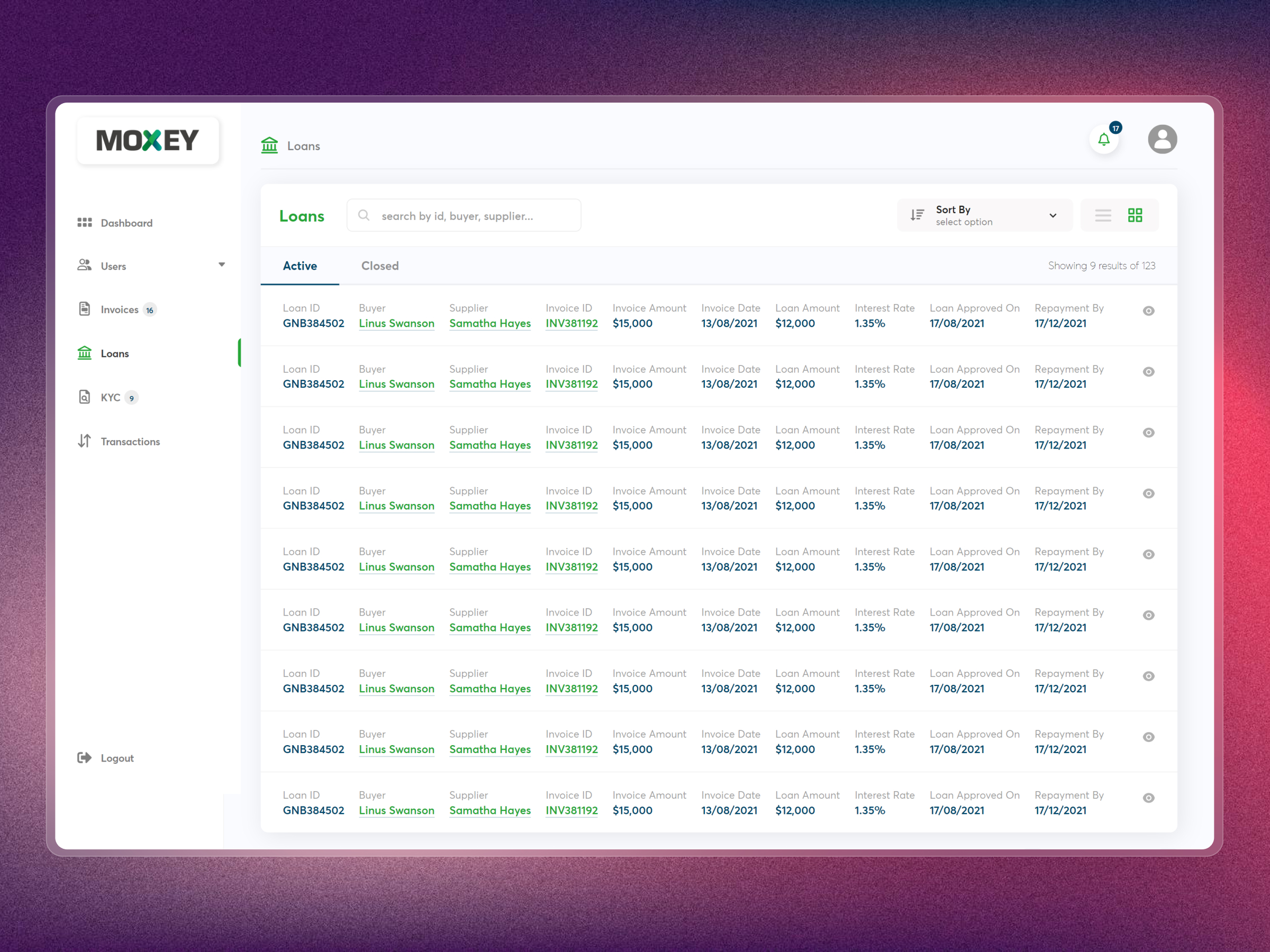
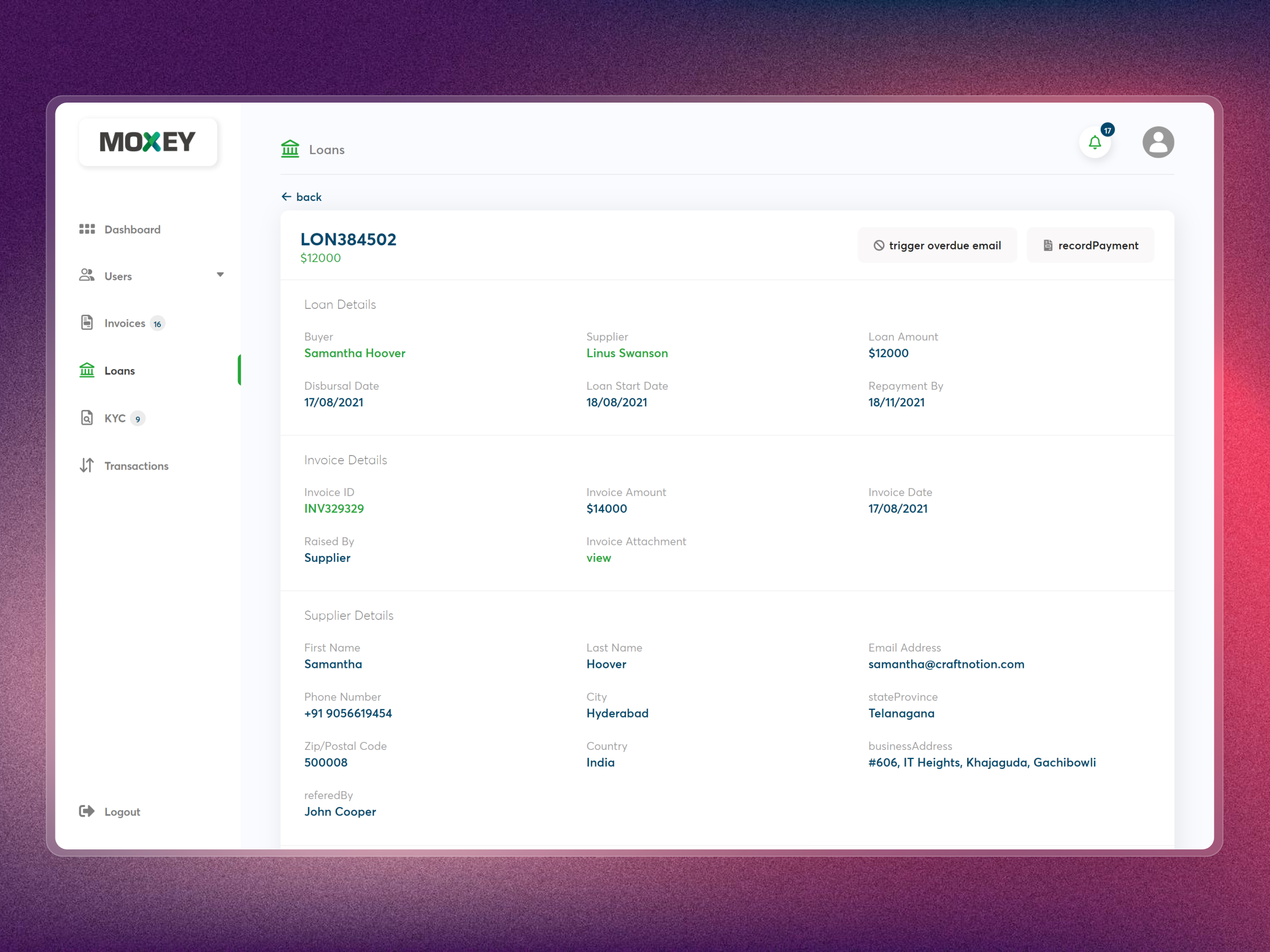
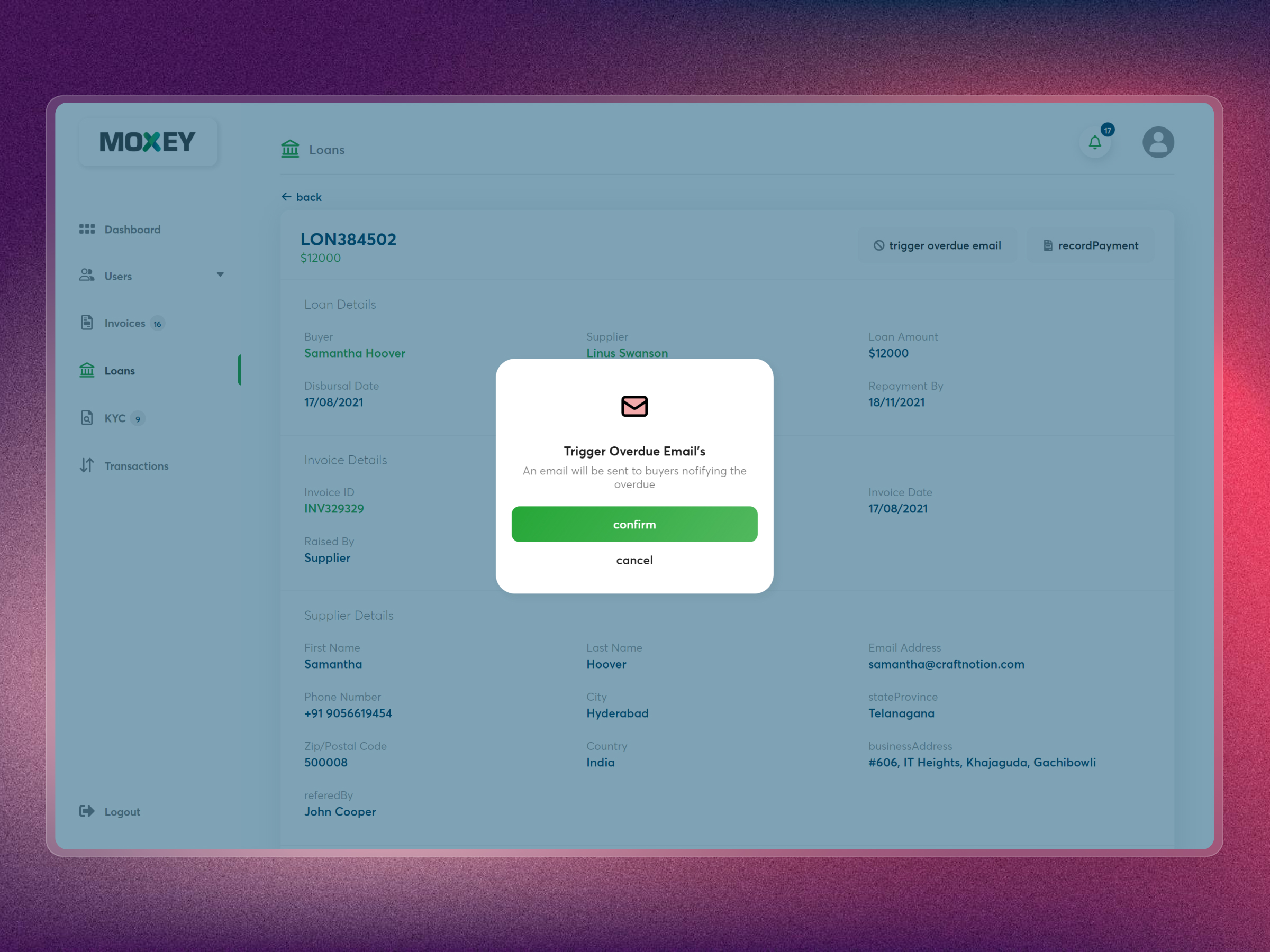
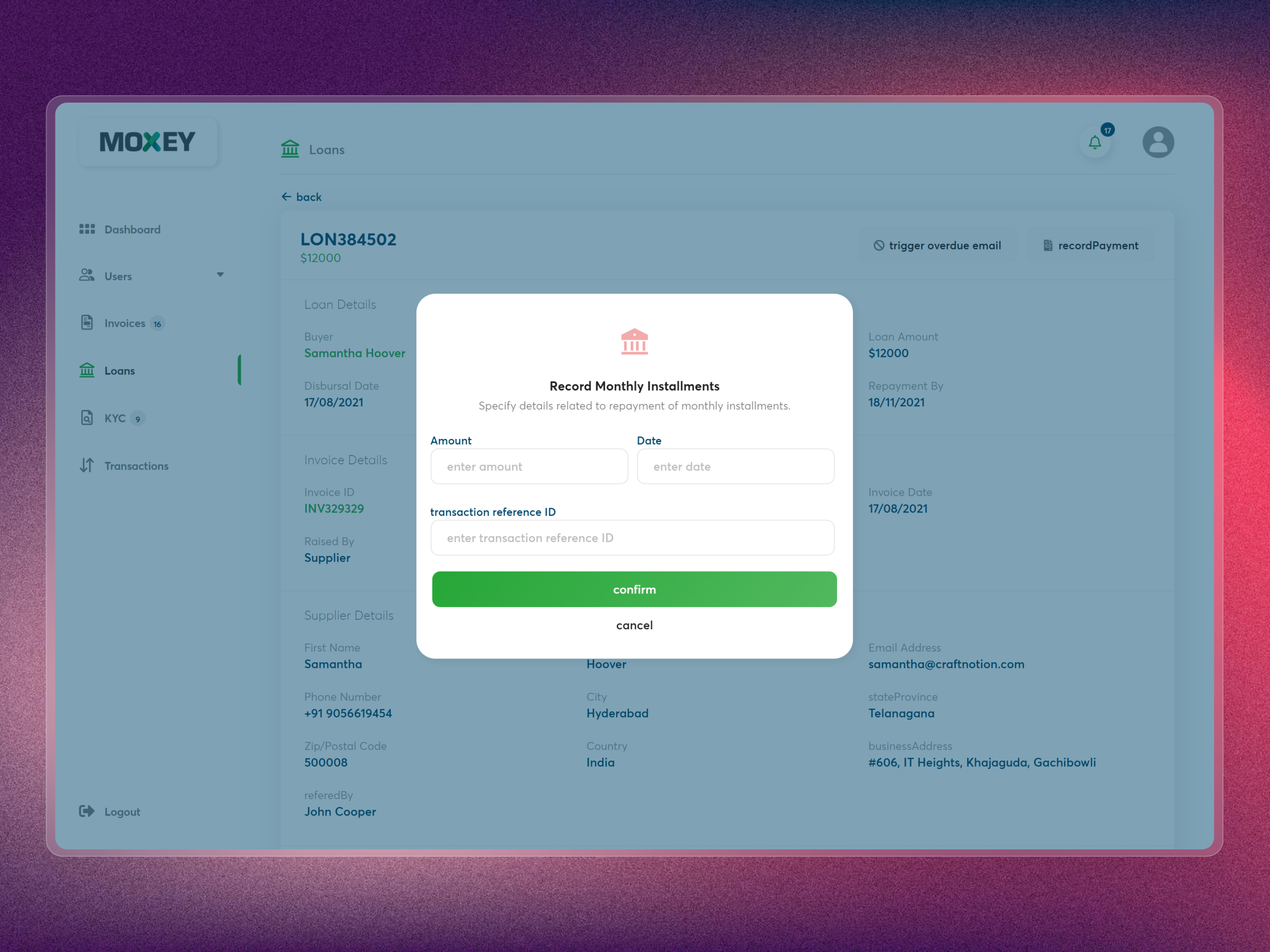
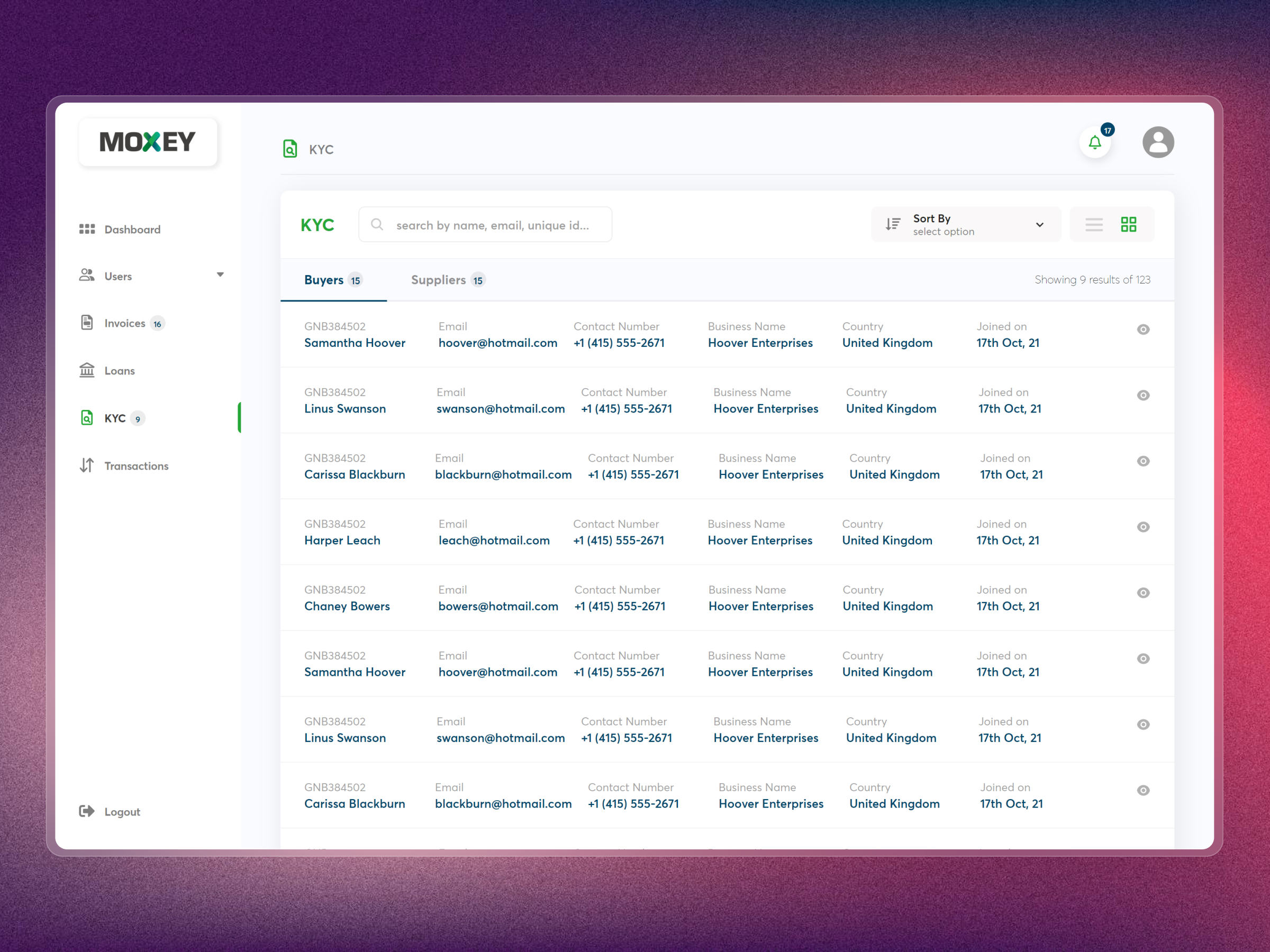
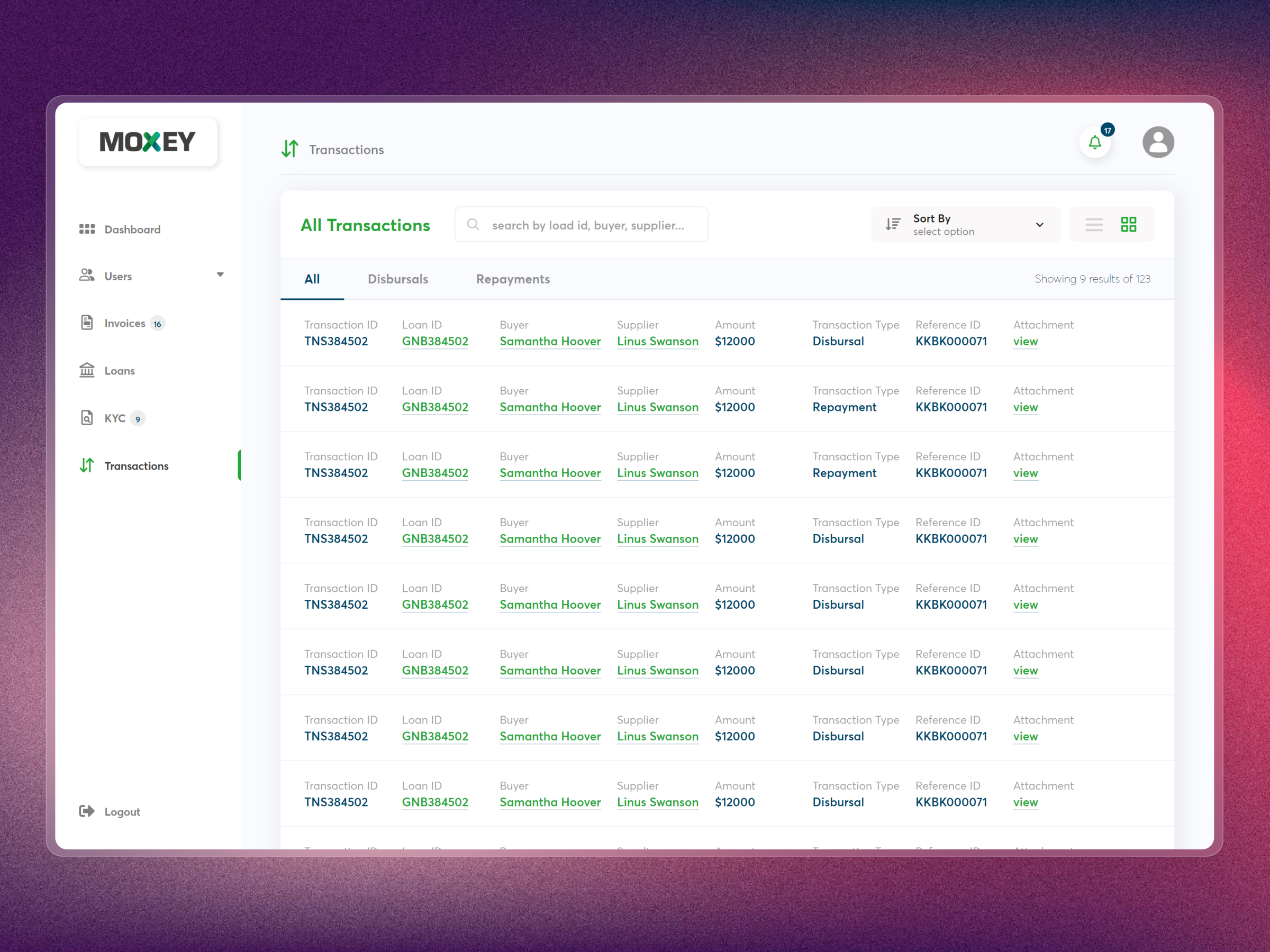
We planned, designed, and built four separate dashboards — admin, supplier, buyer, and bank — each with workflows tailored to that role. Suppliers upload invoices and track funding status. Buyers review and approve invoices. Banks see eligible invoices and fund them. Admins oversee everything. Each dashboard shows only what that user needs, keeping things clean and reducing operational complexity.
Real-Time Invoice Management
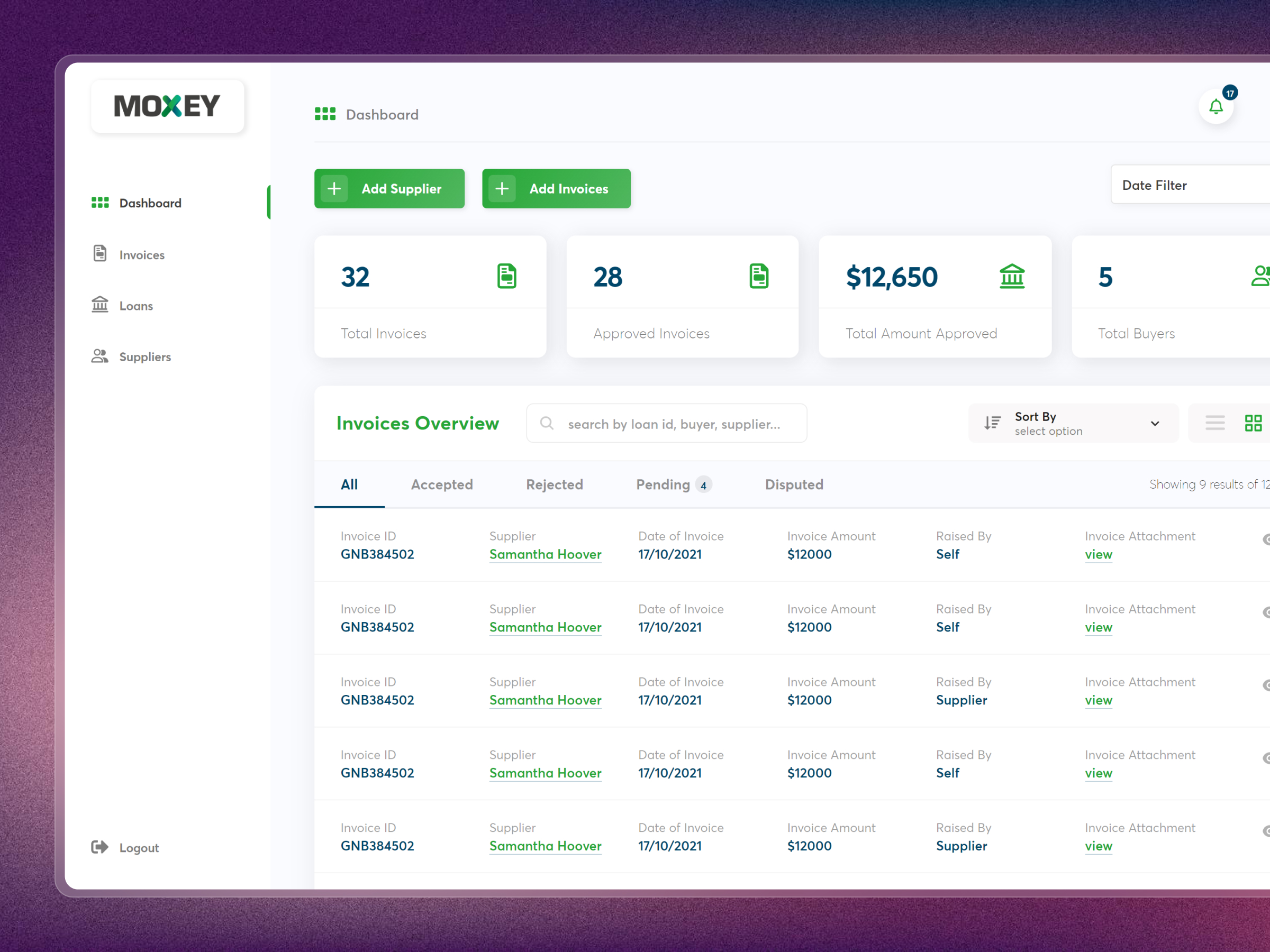
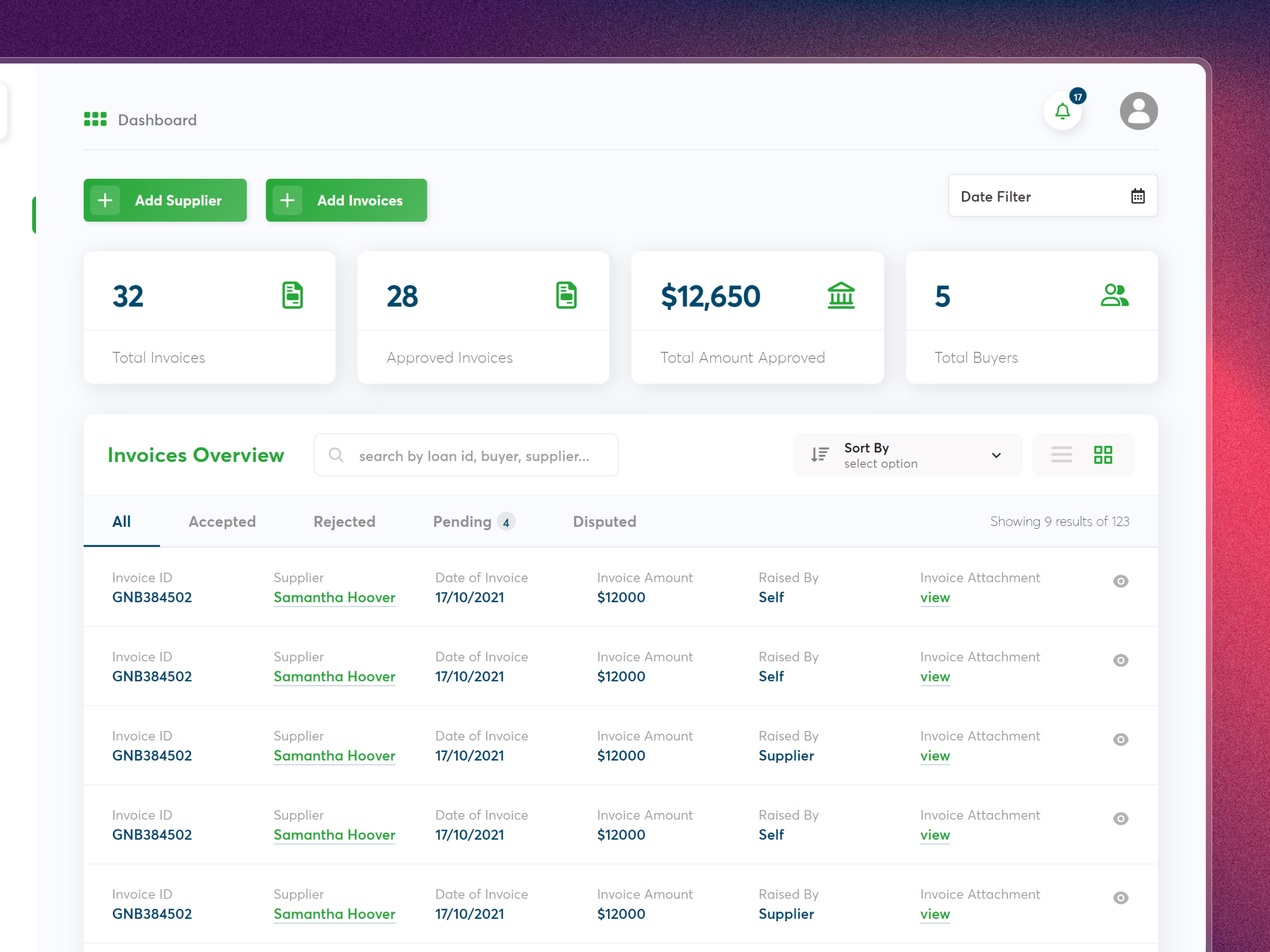
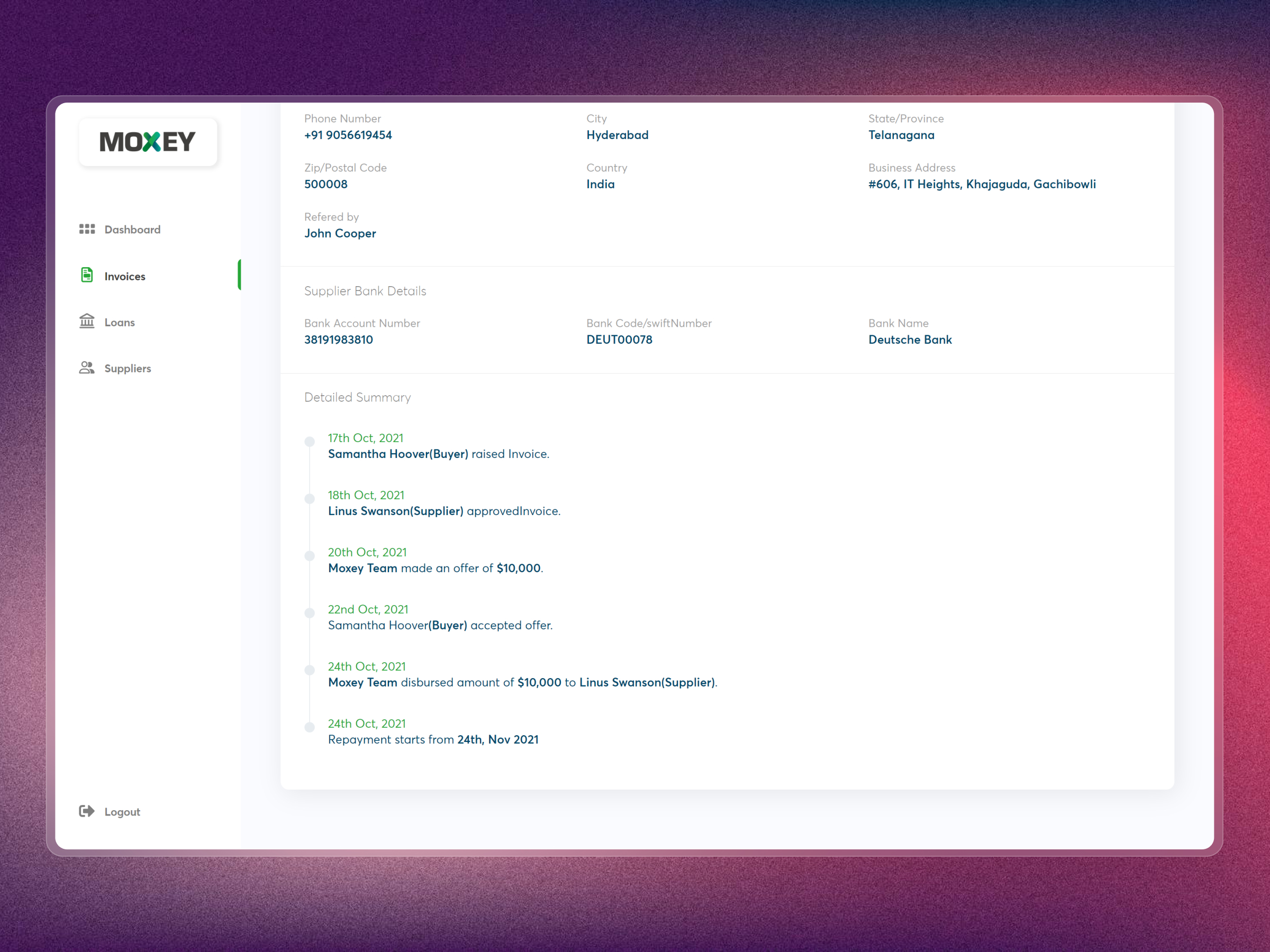
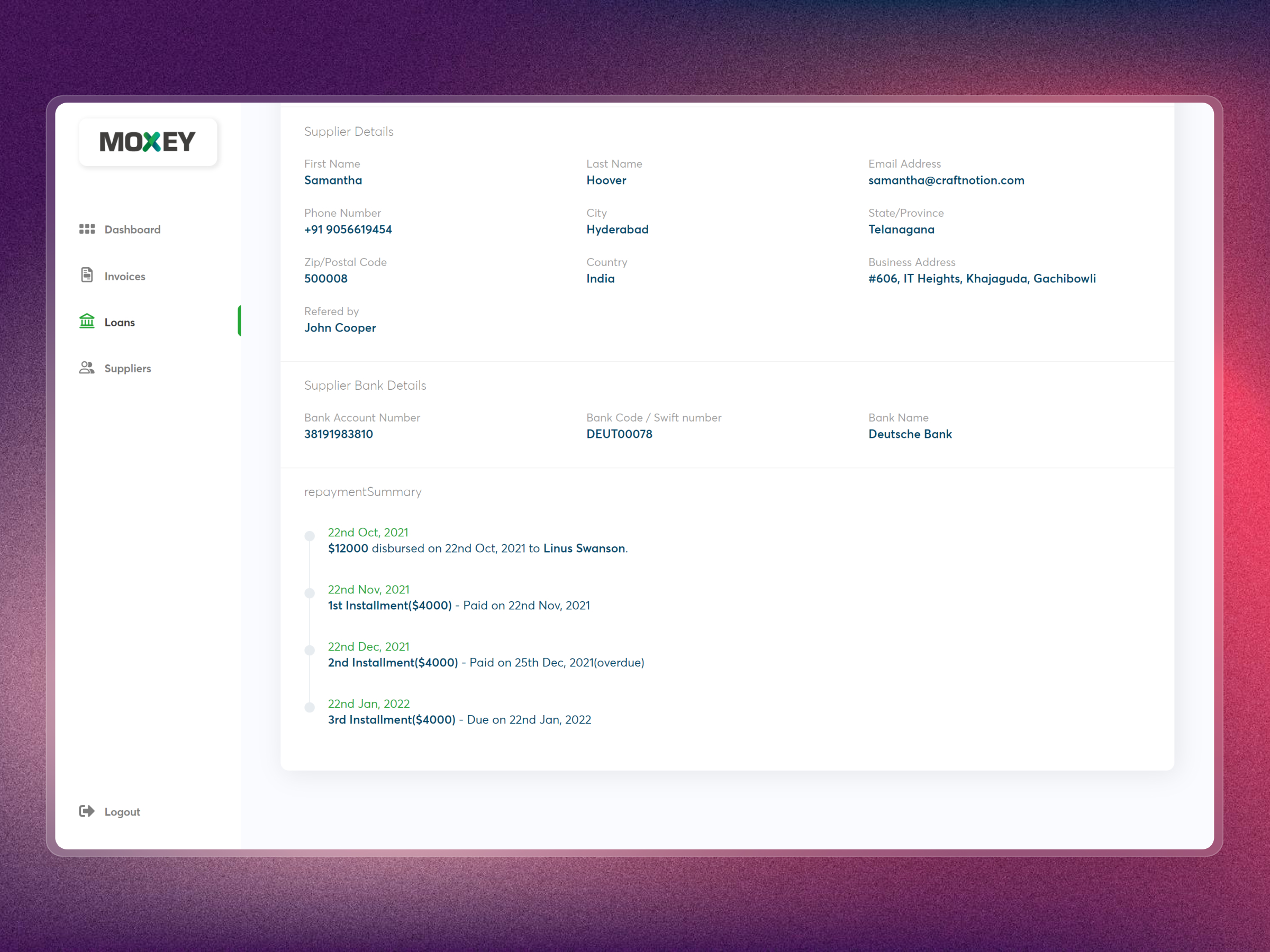
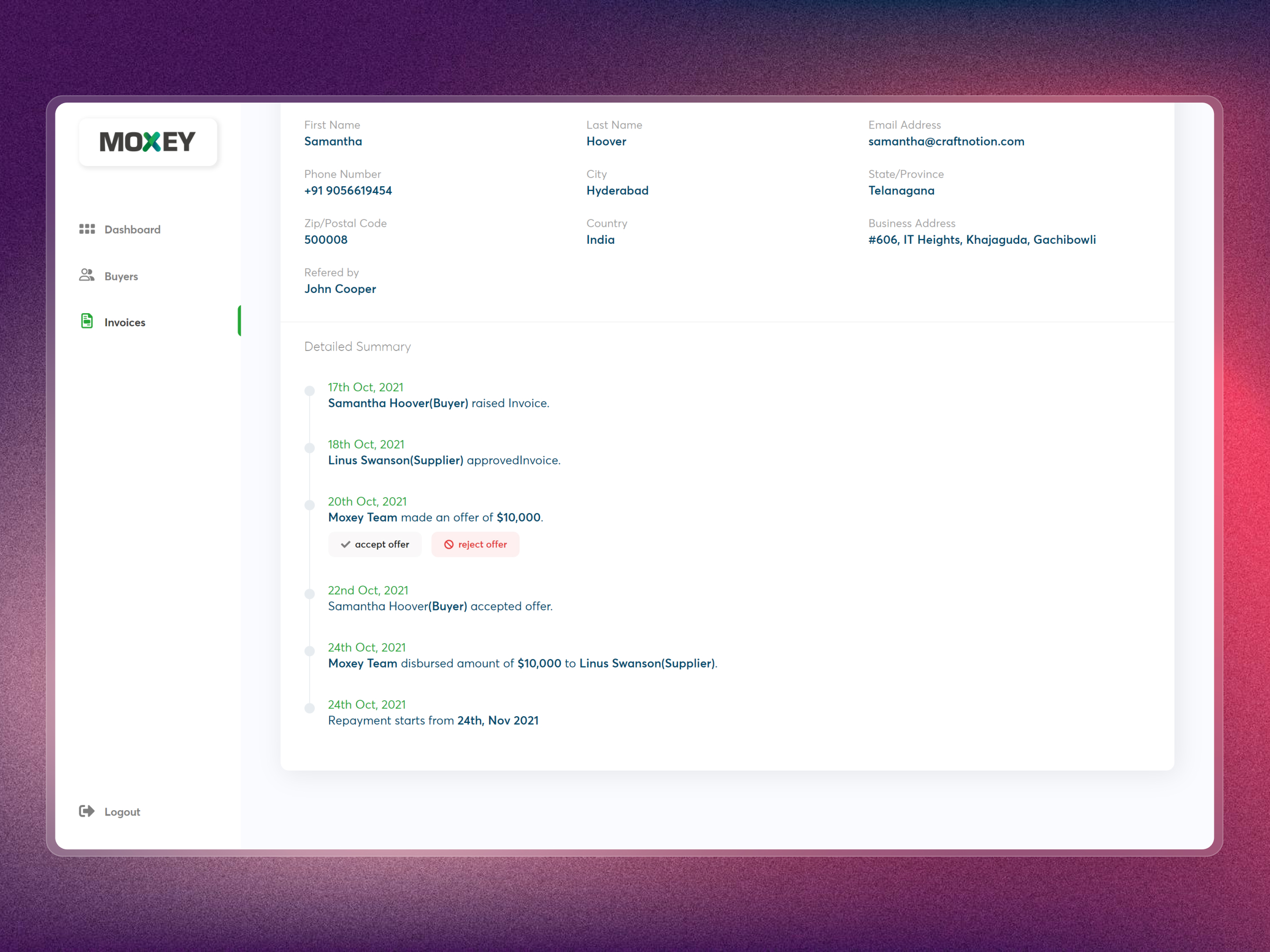
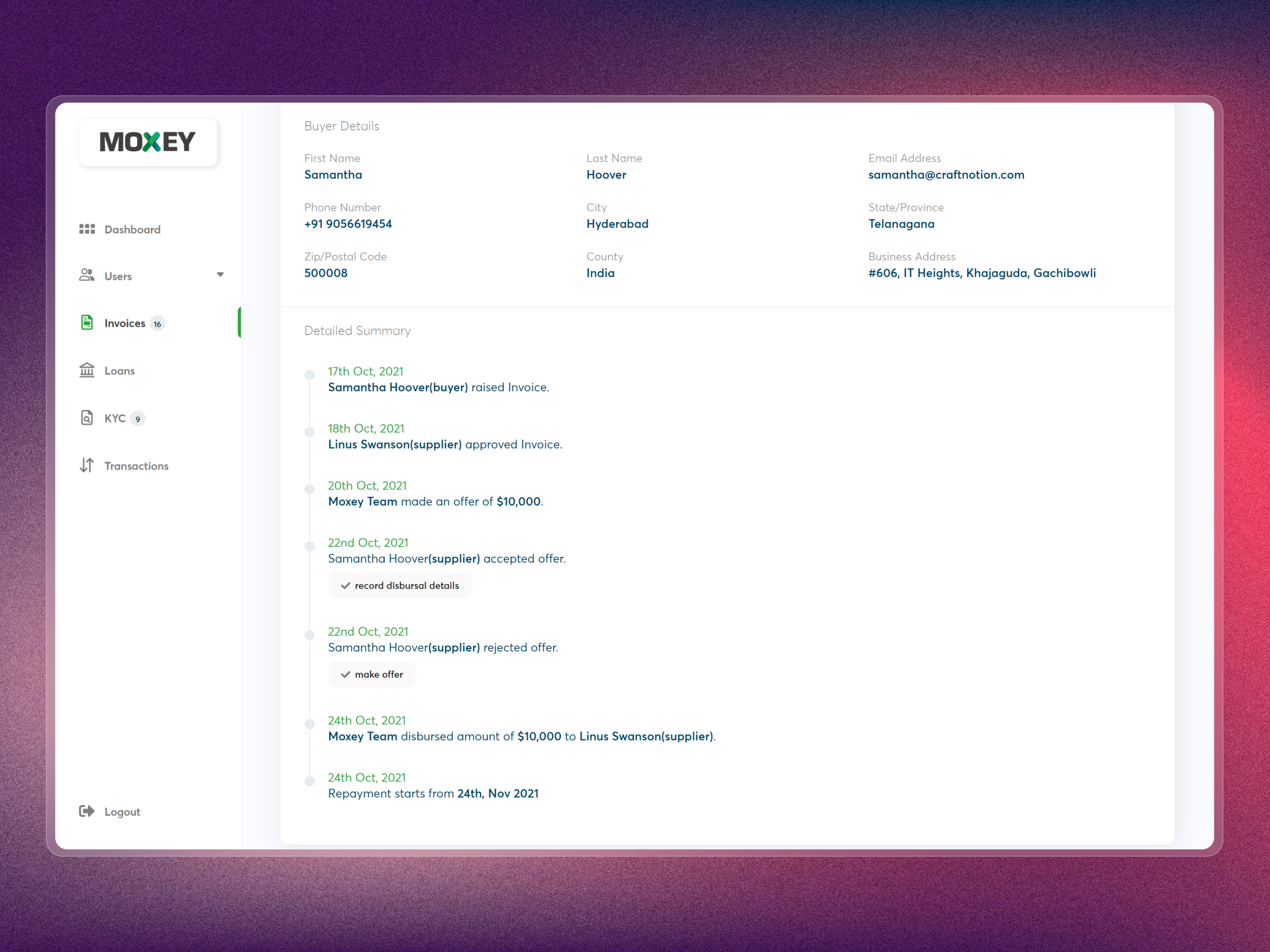
Every invoice moves through a clear pipeline: submission → verification → buyer approval → funding → settlement. Users can track where each invoice is in real time. No more chasing emails or spreadsheets to figure out payment status.
Secure Financial Transactions
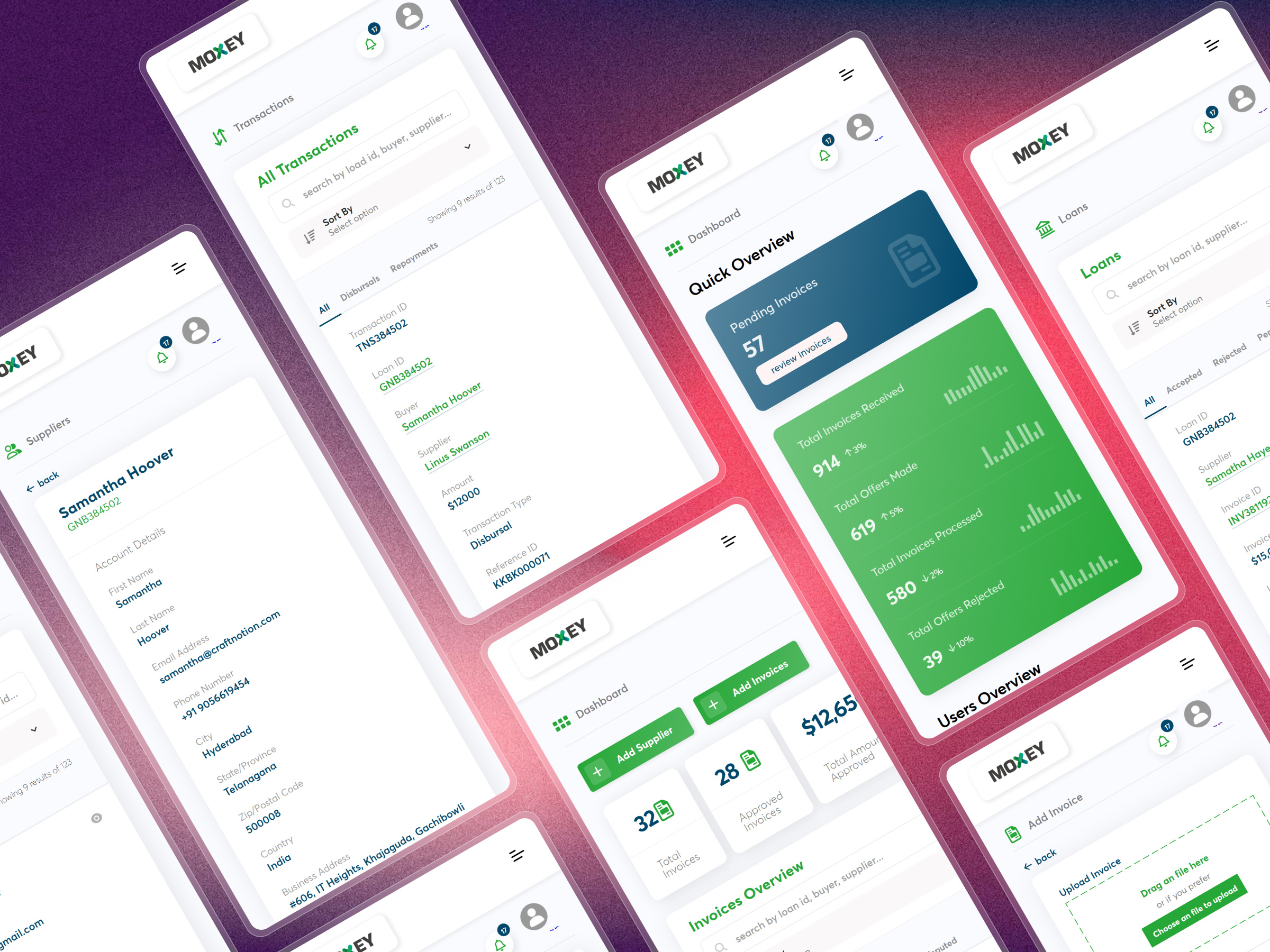
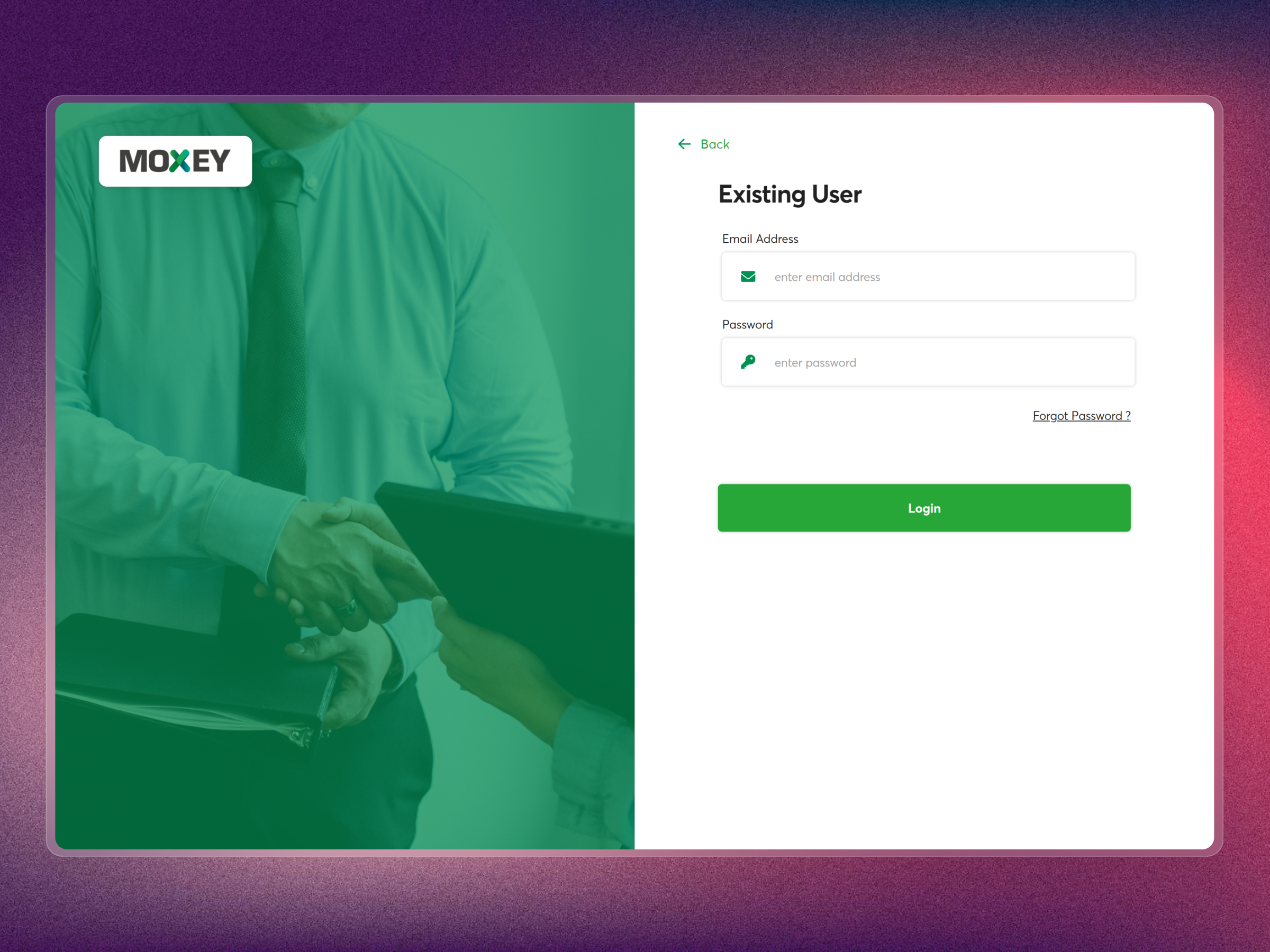
We implemented end-to-end encryption for all financial data, role-based access controls, and complete audit trails for every transaction. The product handles sensitive financial information — invoice amounts, bank details, payment records — so security wasn't optional, it was a core requirement.
Scalable Architecture
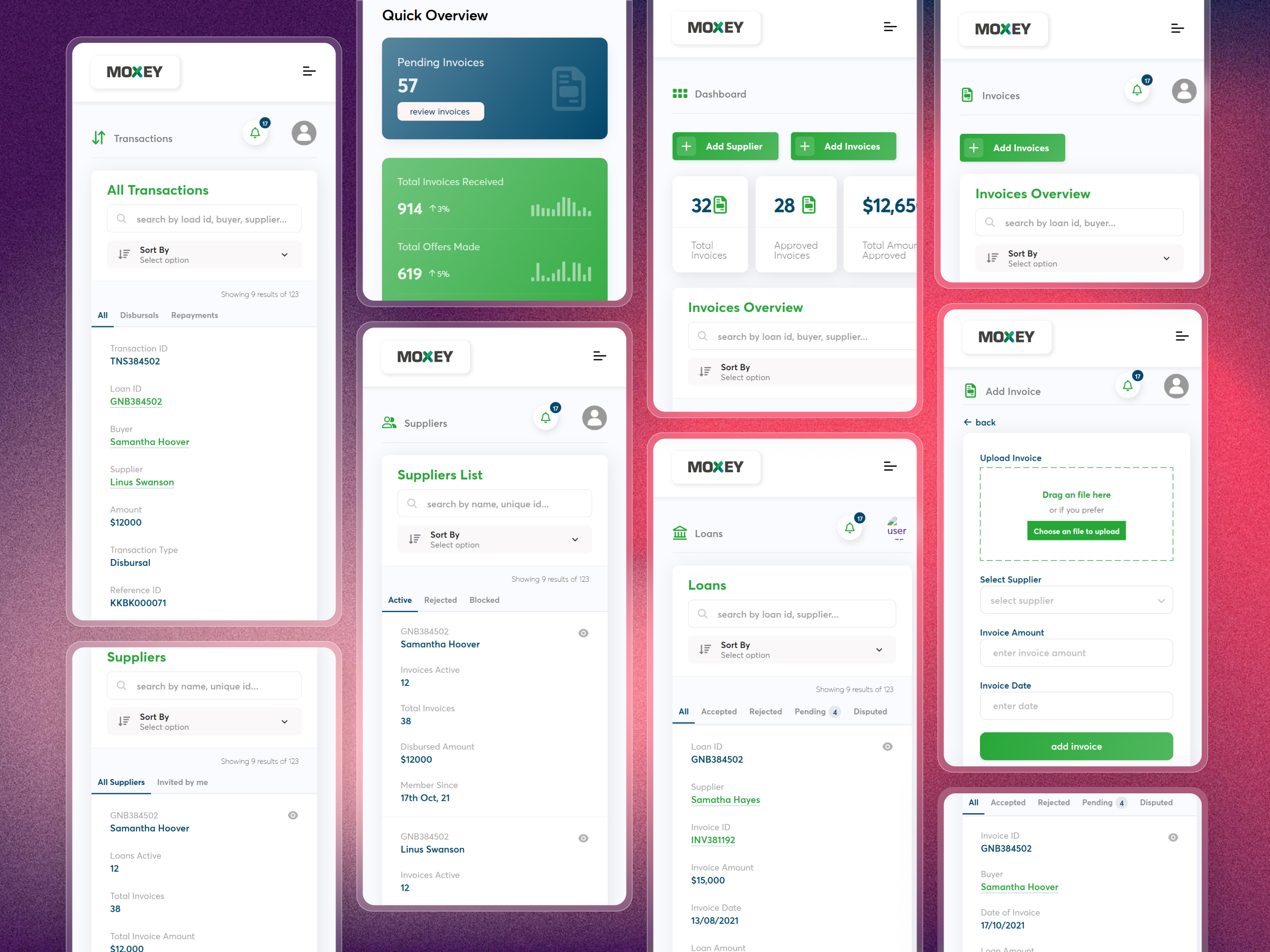
We planned, designed, and built Moxey with Next.js on the frontend and Node.js with PostgreSQL on the backend. PostgreSQL handles the relational complexity — invoices linked to buyers, linked to funding offers from banks, linked to settlement records. The architecture is designed so adding new banks, onboarding more suppliers, or processing higher transaction volumes doesn't require re-engineering anything.
What shipped
We delivered the MVP that supported Moxey validate their business model with real suppliers, buyers, and financial institutions. The product streamlined a process that previously involved manual paperwork, phone calls, and weeks of waiting. Suppliers could get funded faster, buyers had a transparent approval process, and banks had a clean pipeline of verified invoices to fund.
The MVP gave the client a solid foundation to raise further investment and scale the product across Dubai and Bangalore. We also built a related trade finance platform — Tredzy, an LC discounting platform — for another fintech client, applying many of the same patterns and learnings.
Frequently Asked Questions
Questions about invoice discounting platforms,
answered clearly.
Questions about the work, scope, delivery context, and next steps.
It's a fintech platform where businesses sell their unpaid invoices to financial institutions at a discount, getting cash upfront instead of waiting 45–90 days for payment. Moxey connects suppliers, buyers, and banks in one system to make this process digital, transparent, and fast.
Related Work
Similar case studies,
selected for context.
Continue exploring related work, with comparable product and delivery challenges.