SaaS ApplicationsMVP DevelopmentWeb Applications
HackMCQ
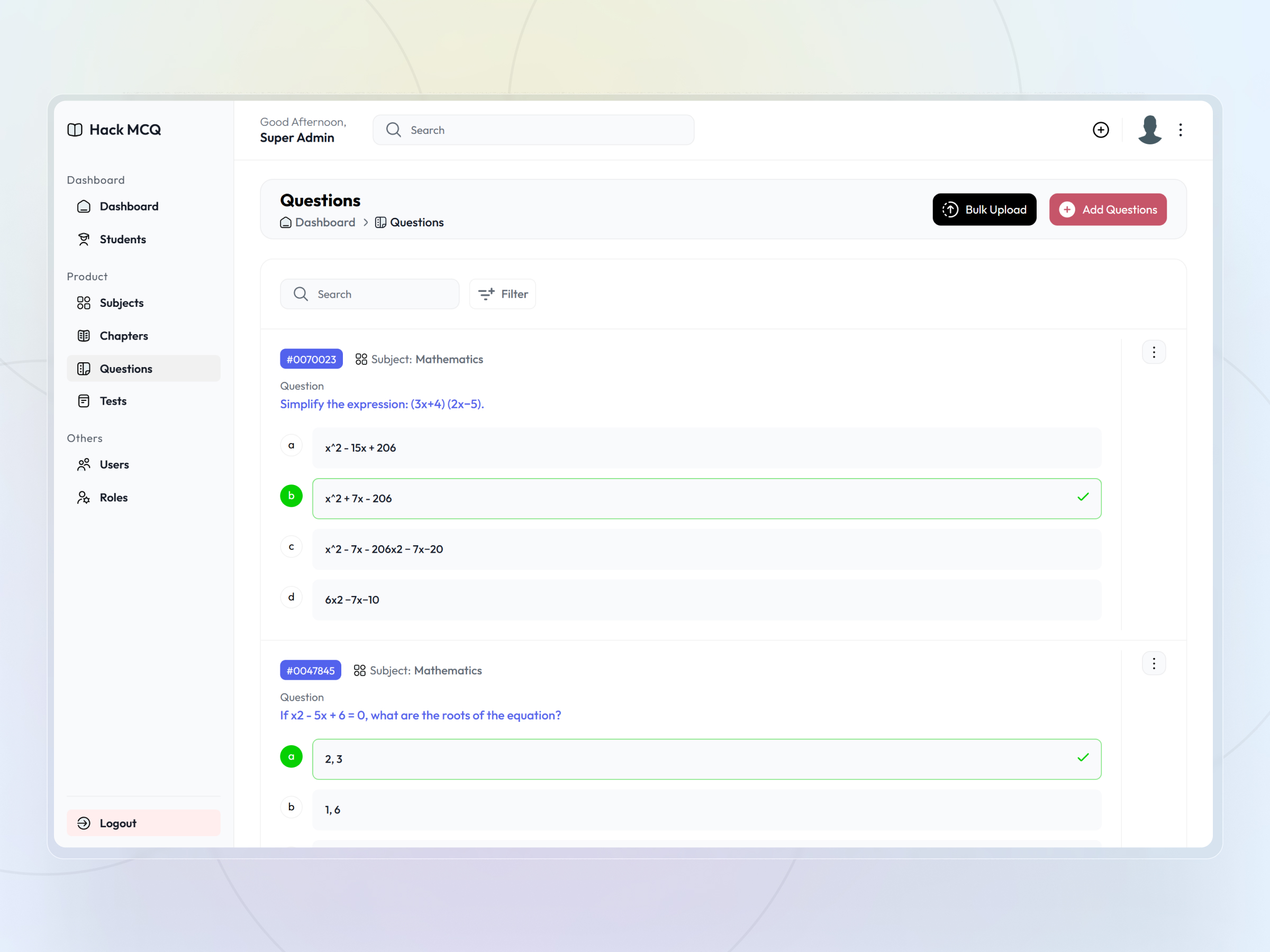
HackMCQ is an adaptive exam-prep platform built for a Kolkata education startup, helping students practice smarter with structured subjects, chapters, and tests.
An exam prep platform built for speed and scale
HackMCQ is an adaptive online exam preparation platform we planned, designed, and built for a Kolkata-based education startup. The founder had previously tried getting it built through a local vendor, but after months of delays and a product that didn't work, they came to Craftnotion to start fresh and get it done right.
We delivered the first working MVP in just 50 days for ₹2 lakhs. The client launched it, validated the idea with real students, and came back to us for the complete version — which we planned, designed, and built over 4 months. The idea was straightforward: build an MCQ exam app where students preparing for competitive exams could practice, track their progress, and actually improve — not just scroll through static question banks.

What the project needed to do
The brief called for an MVP — a working product they could put in front of real students quickly. They had a clear list of requirements: adaptive questions that get harder or easier based on how a student is performing, a reward system to keep students motivated, and an admin panel to manage everything without calling a developer every time.
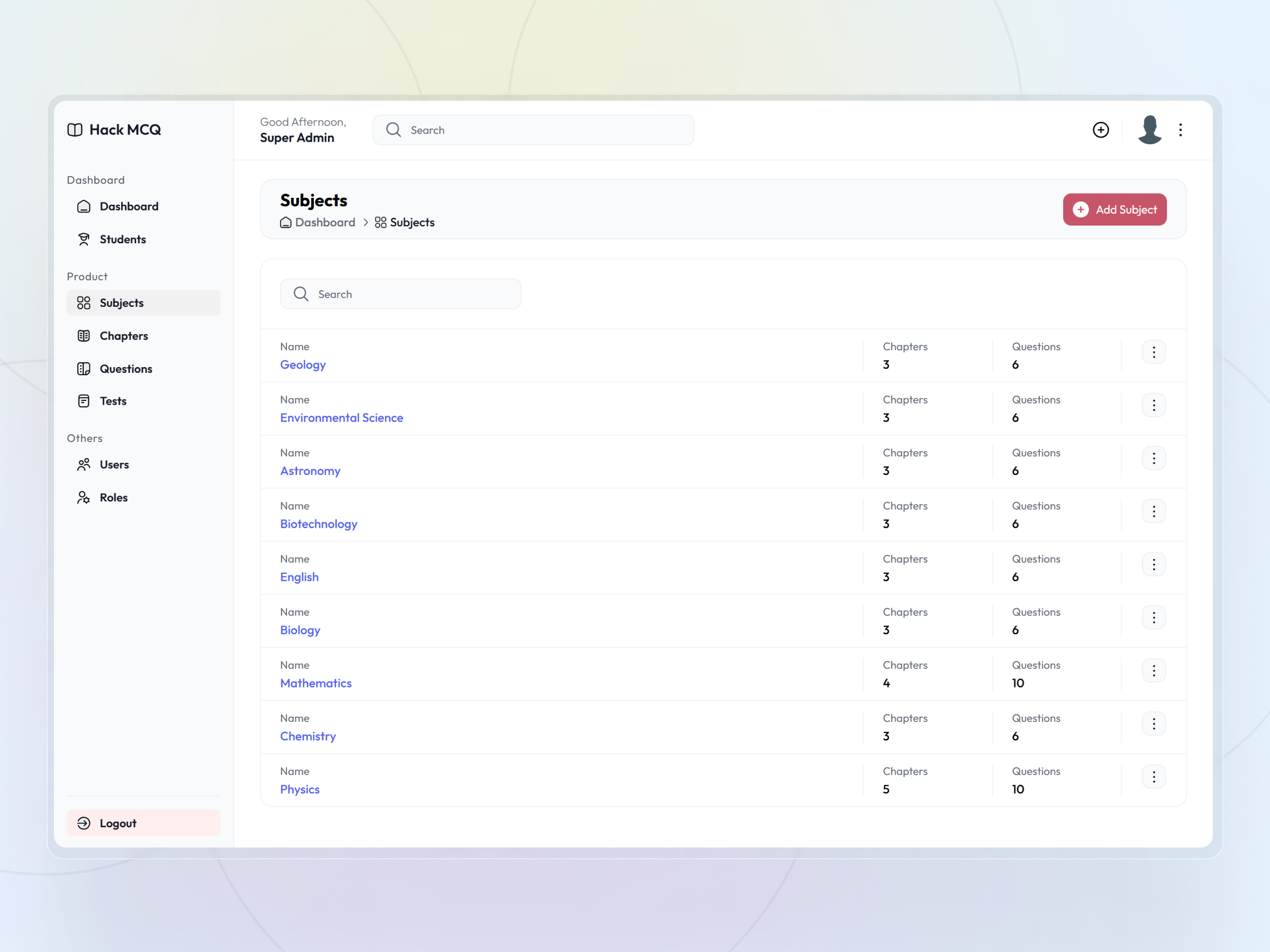
They also needed the product to handle multiple exam categories — think UPSC, SSC, banking exams — each with their own syllabus, question patterns, and scoring rules.

How we approached it
We used Next.js on the frontend for fast page loads and SEO-friendly rendering — important when you want your exam platform to show up in Google searches. The backend runs on Nest.js with PostgreSQL, which gives us the structure to handle complex question logic, user sessions, and real-time scoring without things falling apart under load.

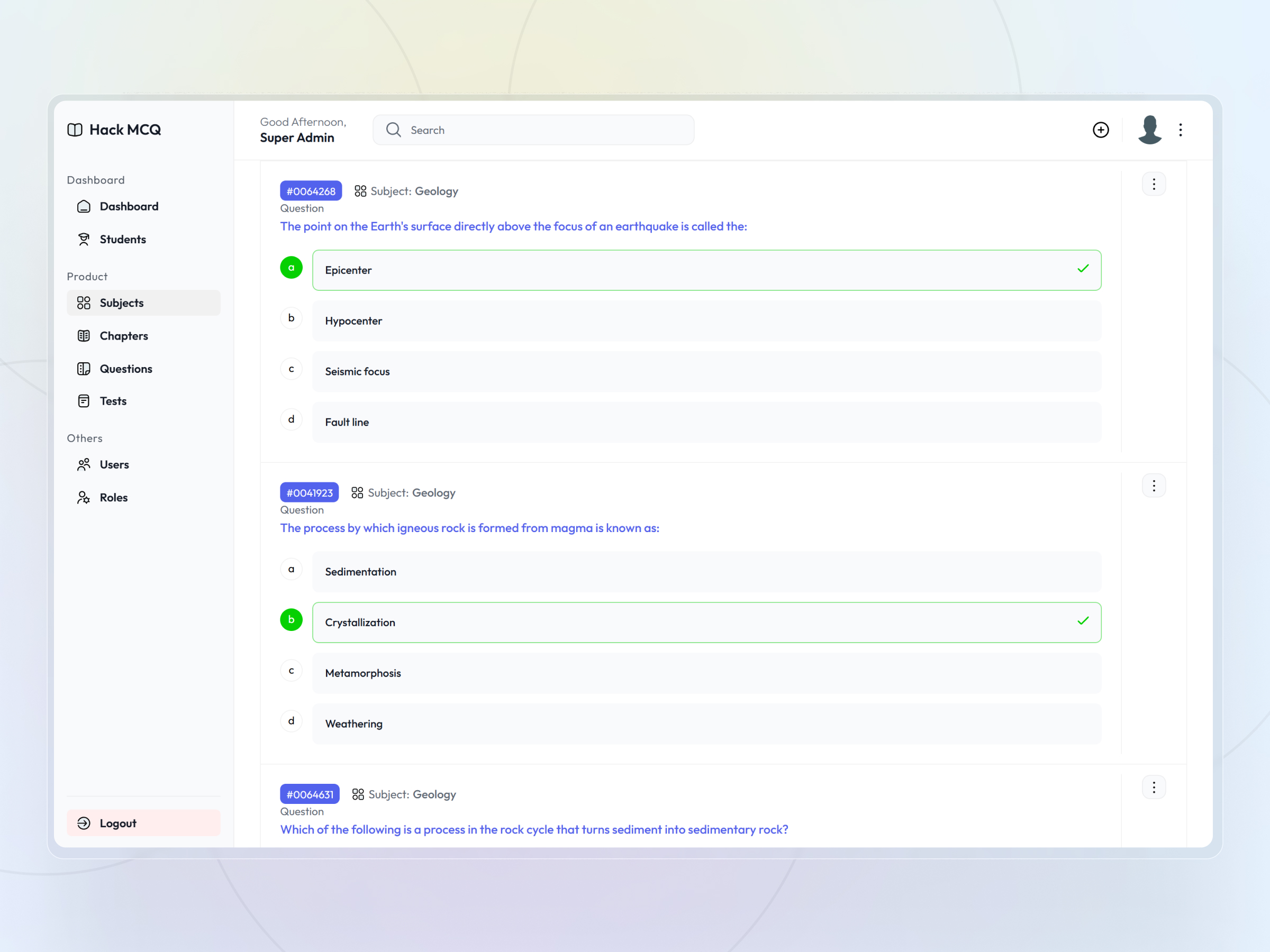
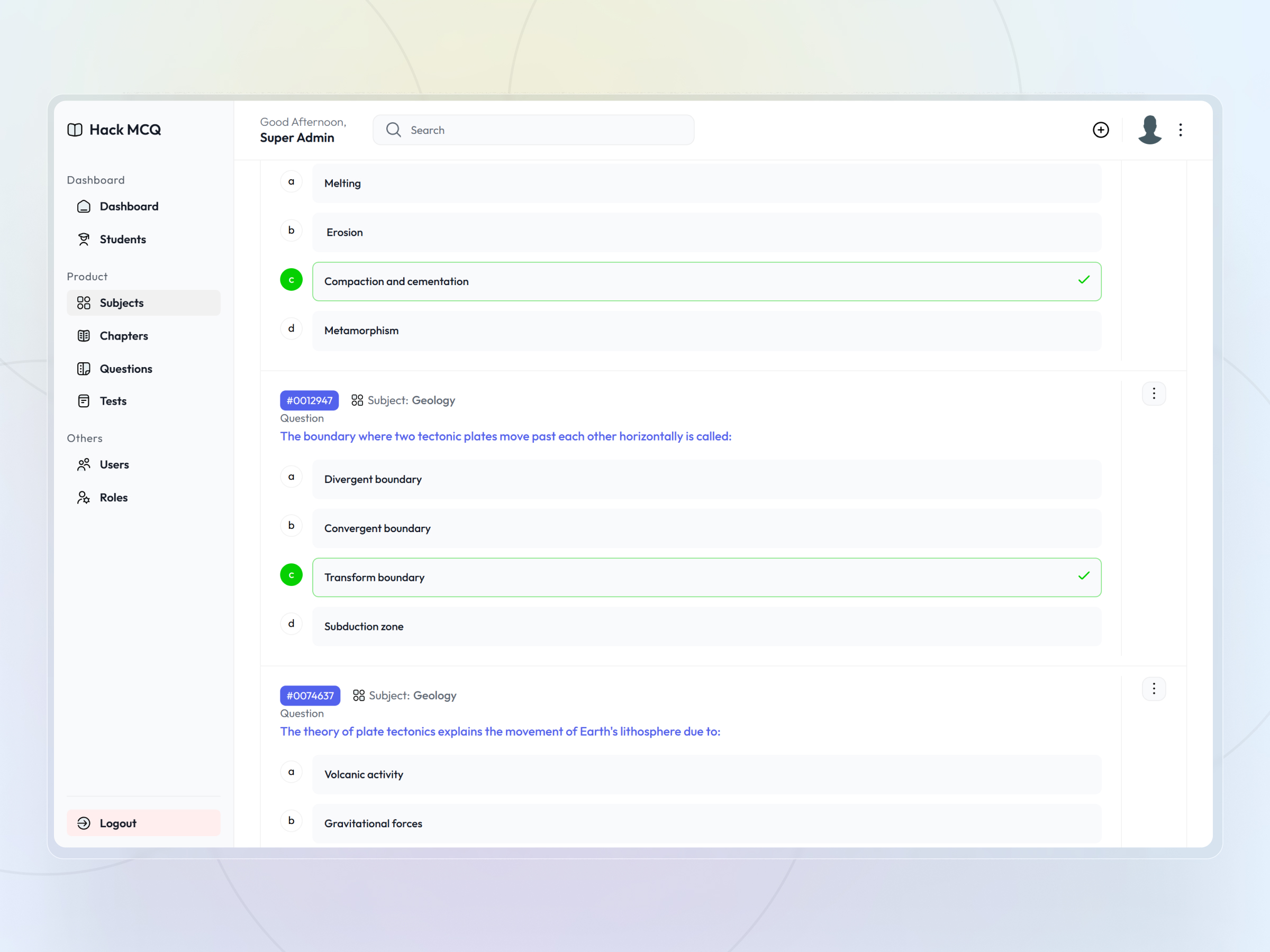
Adaptive Question Engine
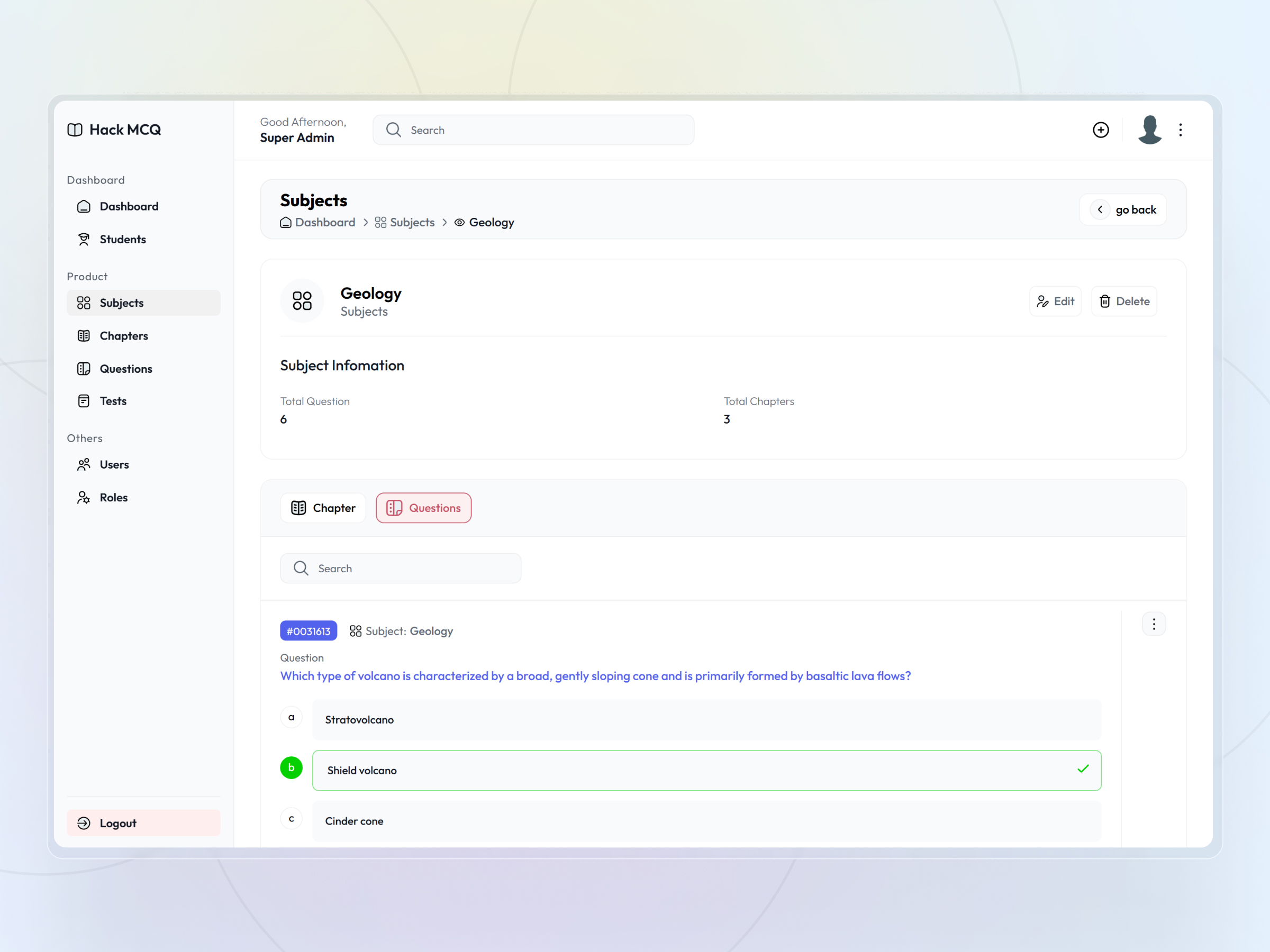
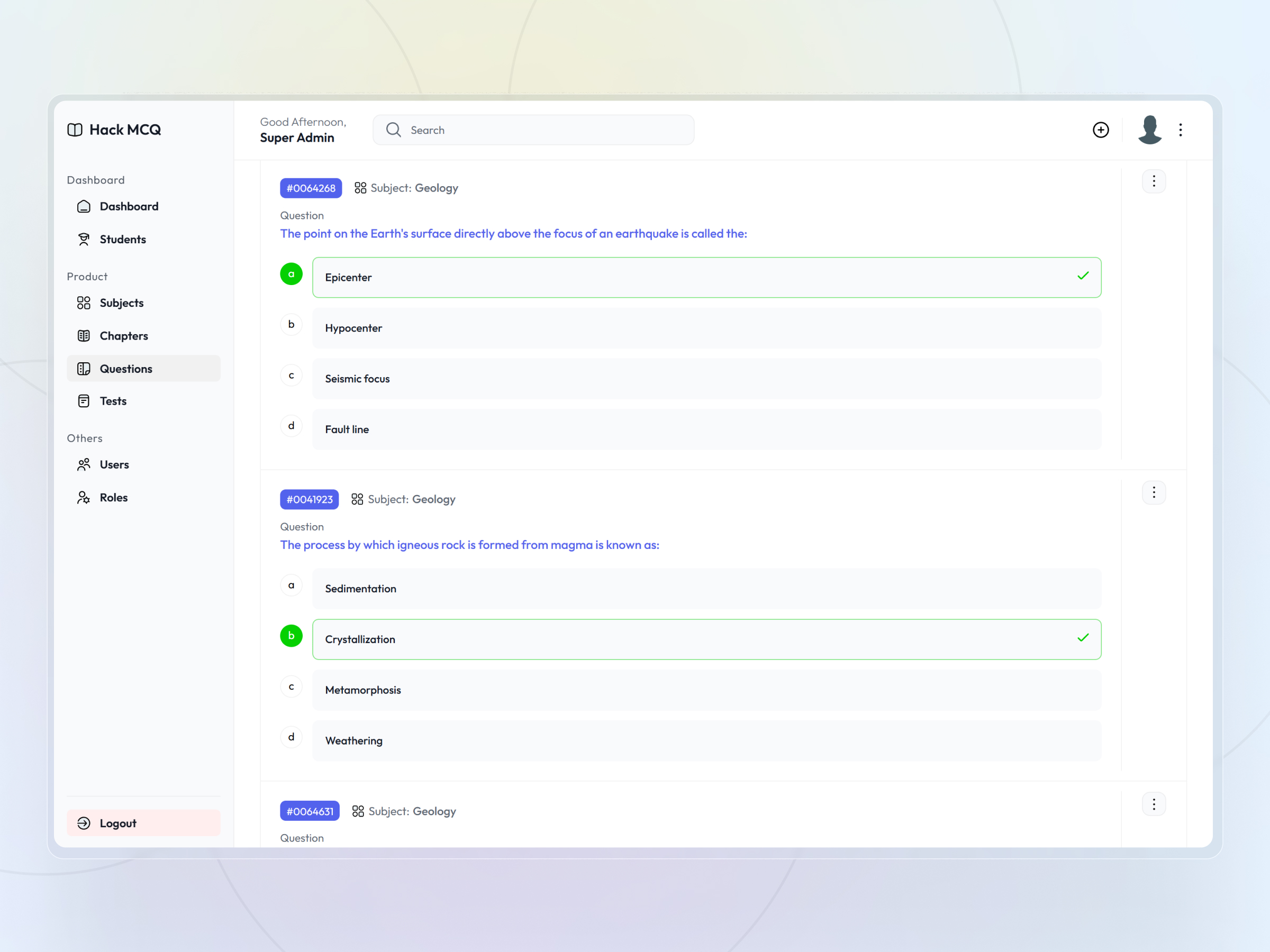
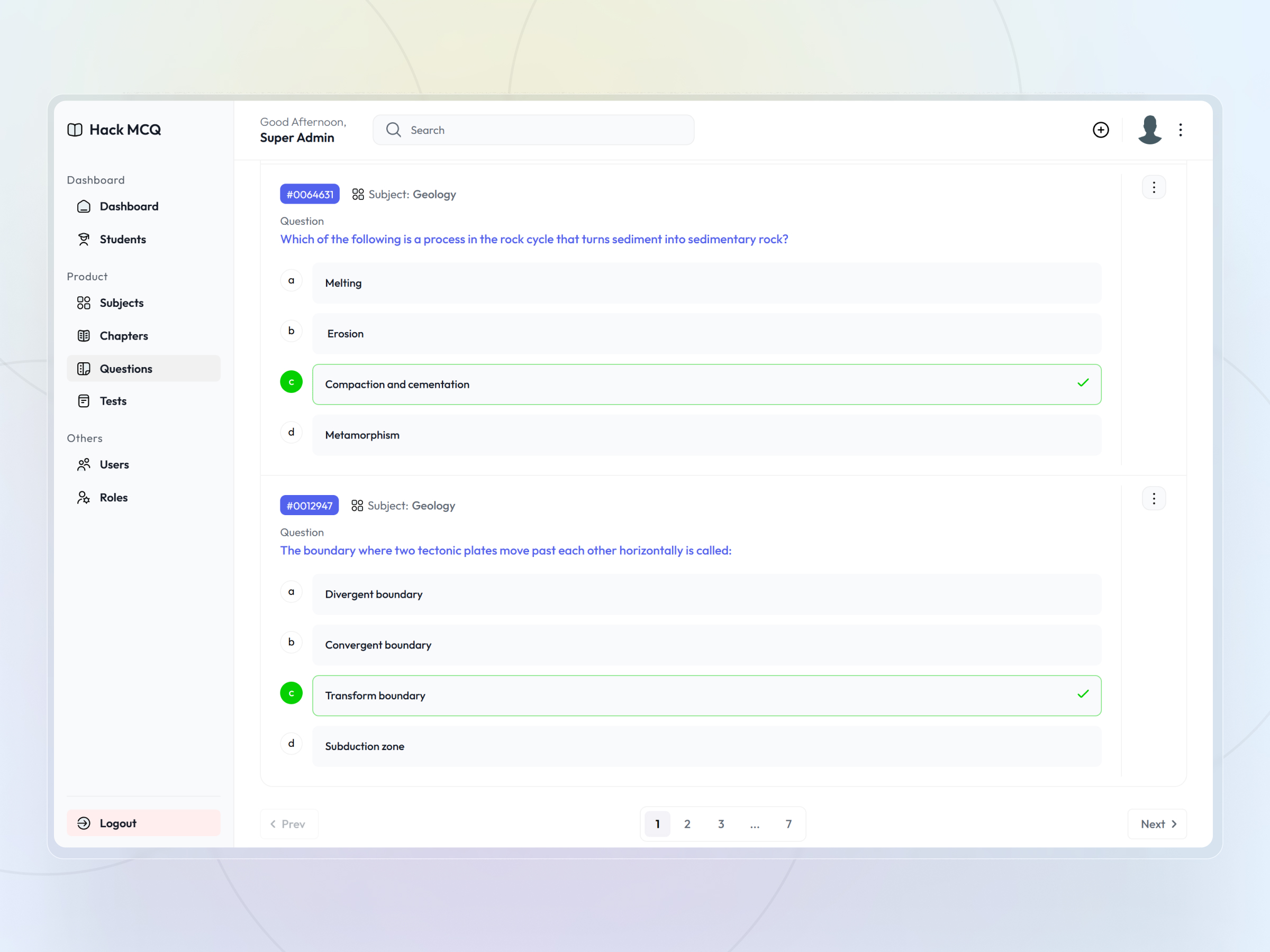
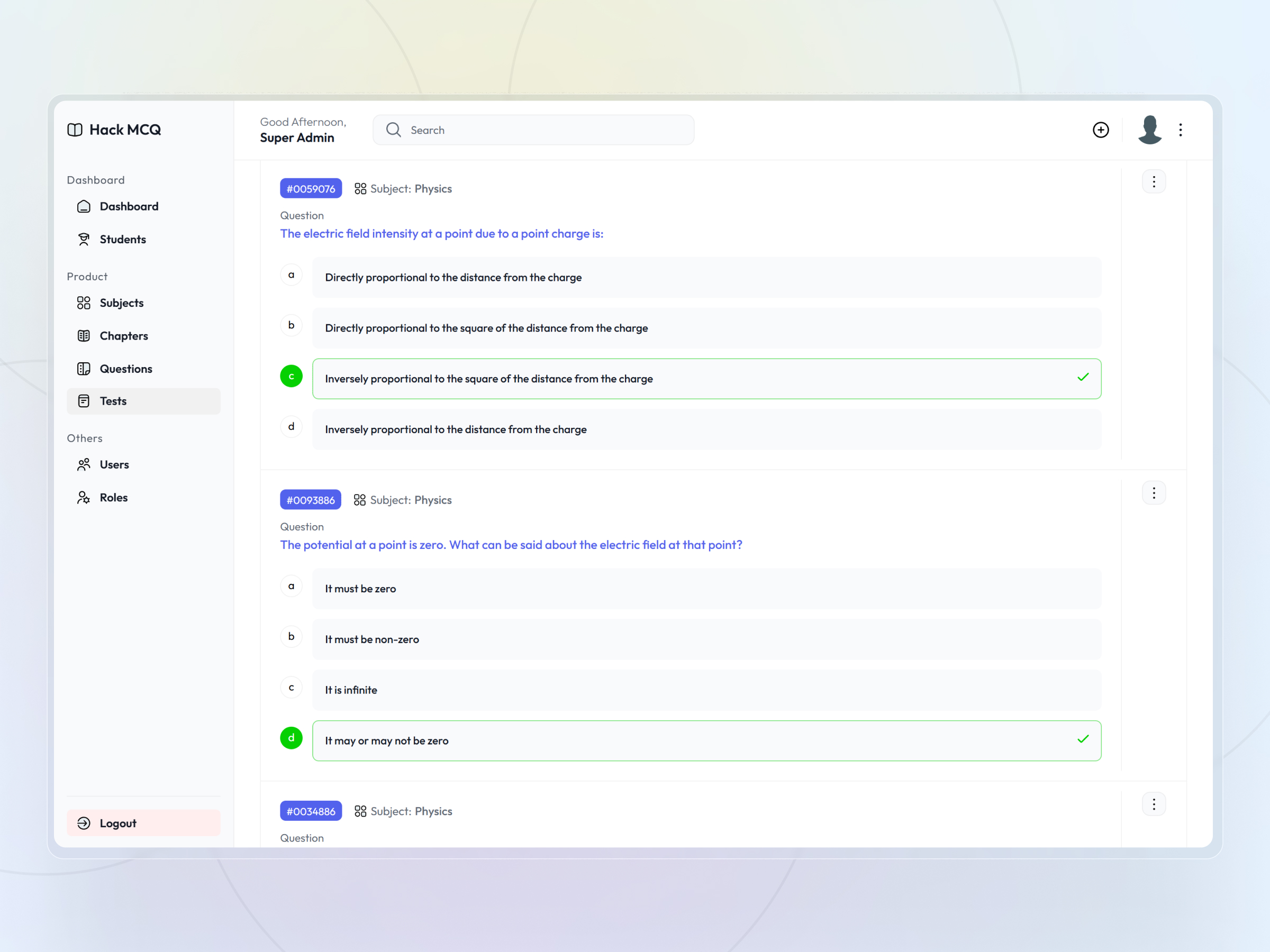
The core of HackMCQ is its adaptive question engine. Instead of serving the same set of questions to every student, the product adjusts difficulty in real time. If a student keeps getting answers right, the questions get harder. If they struggle, the system backs off and reinforces fundamentals. This is how modern exam preparation apps work — and it's what separates a useful platform from a glorified PDF.

Reward-Based Practice System
To keep students coming back, we planned, designed, and built a reward system where top performers can earn refunds on their subscription fees. It's a simple idea that works: students who consistently score well get real money back. This turned practice sessions from a chore into something students actually wanted to do.
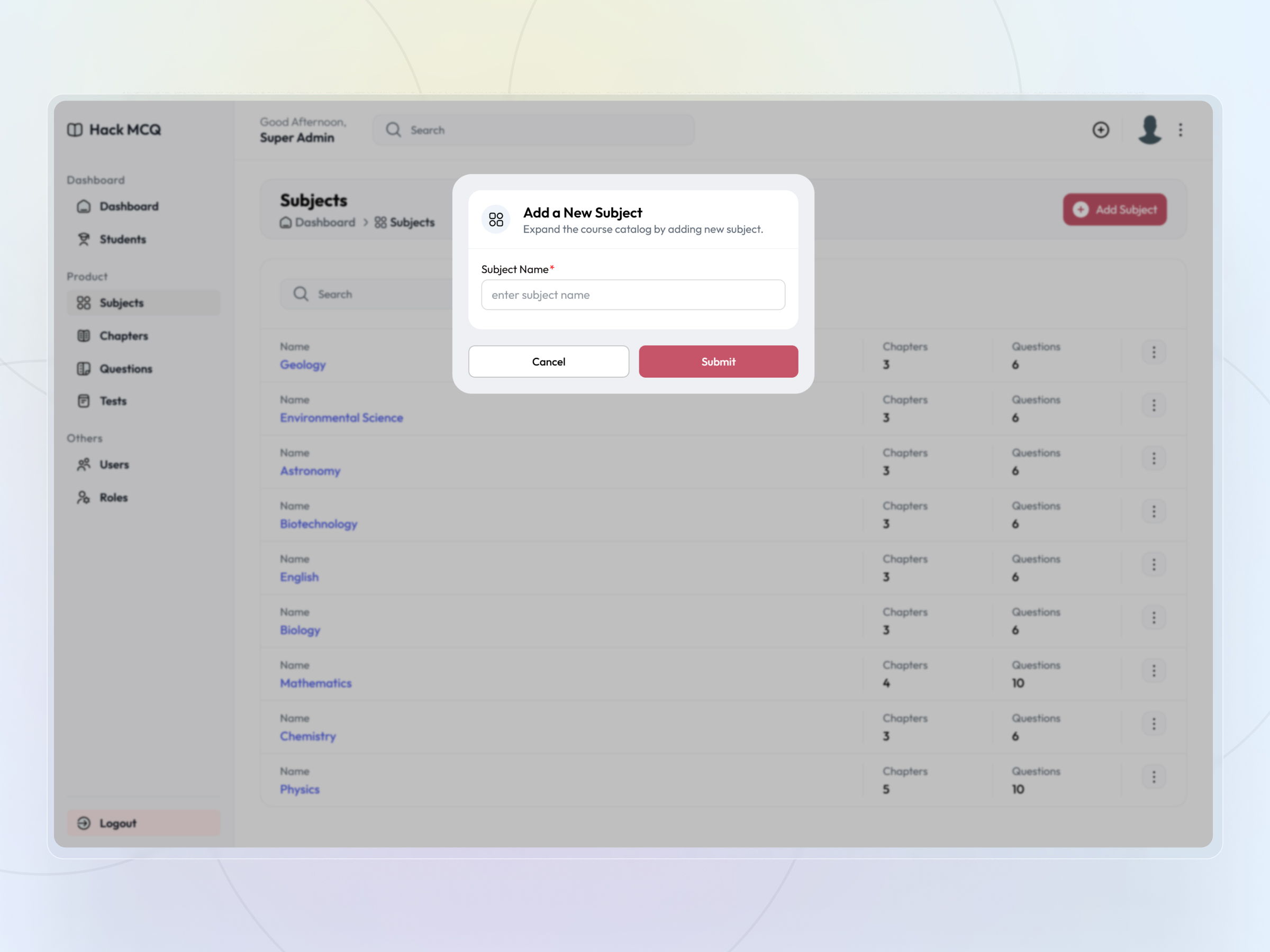
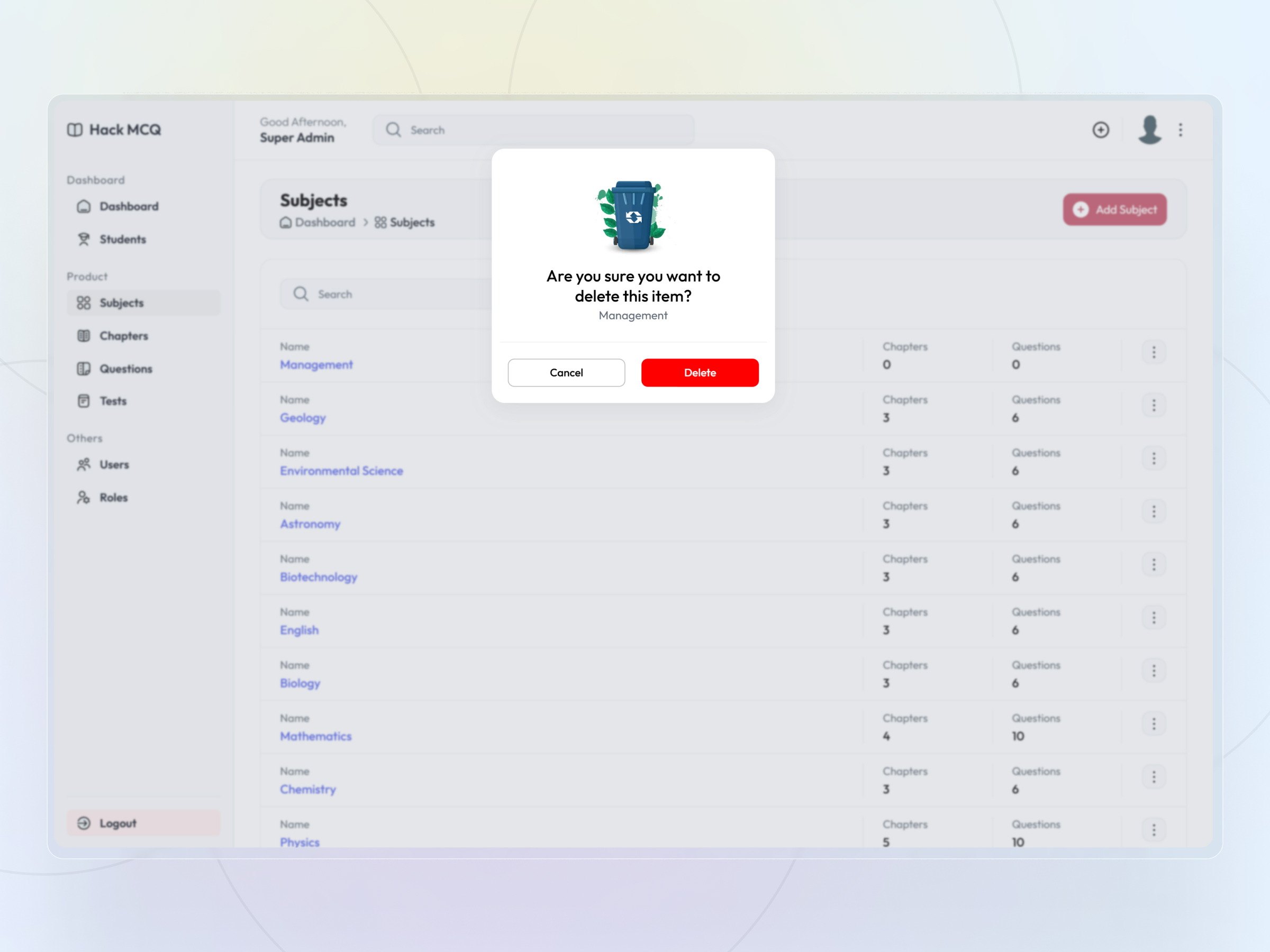
Admin Dashboard for Exam Management
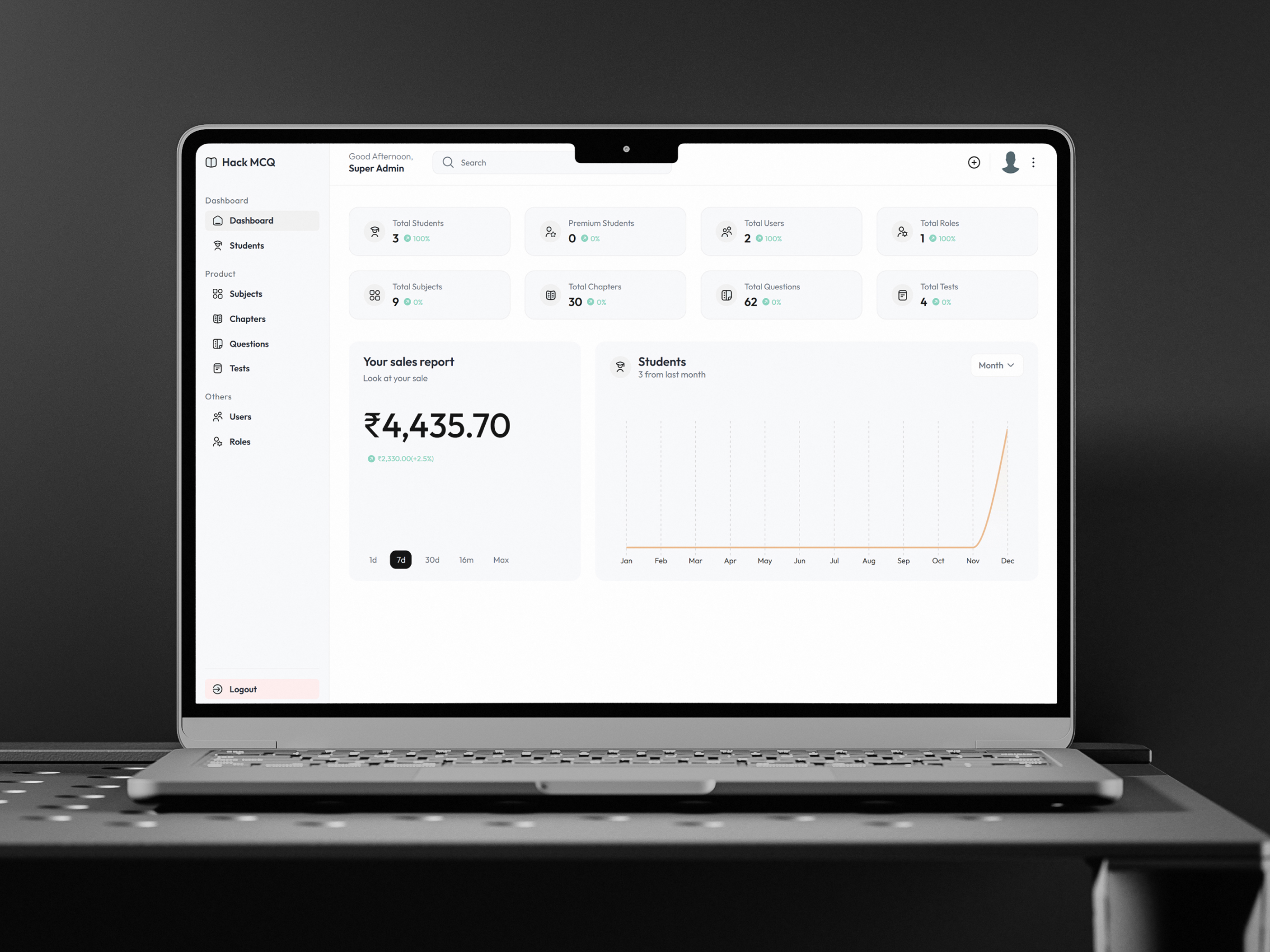
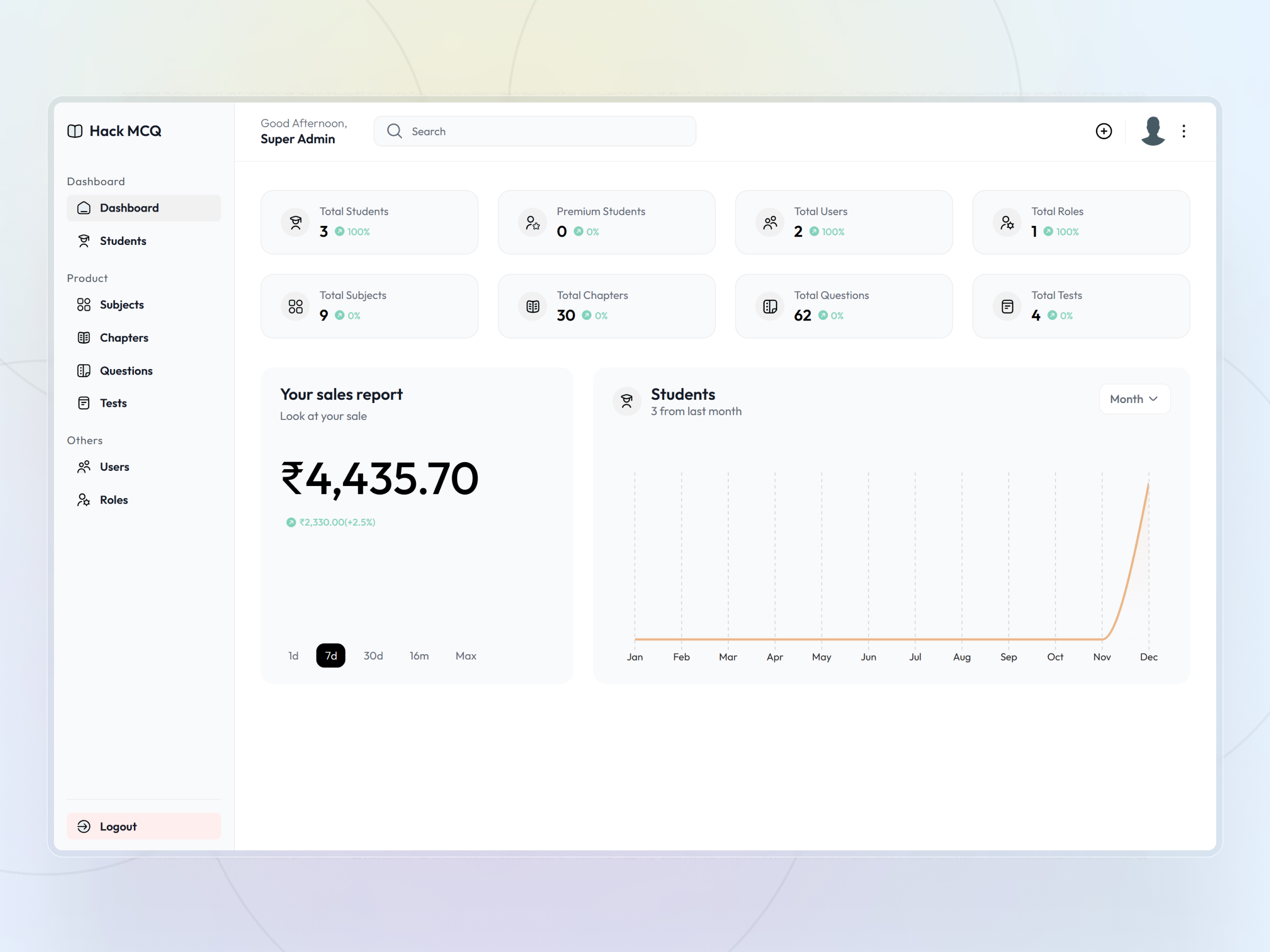
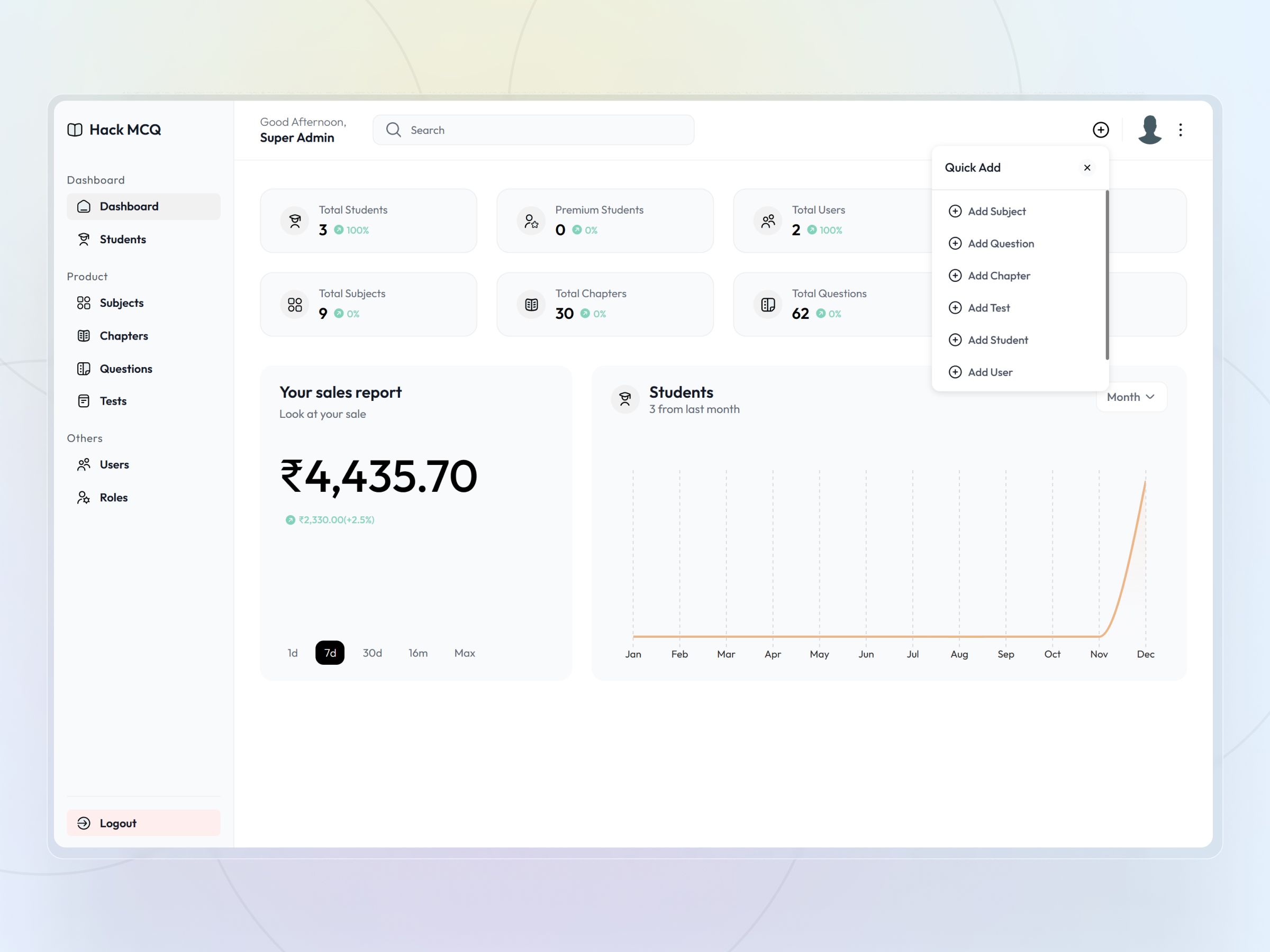
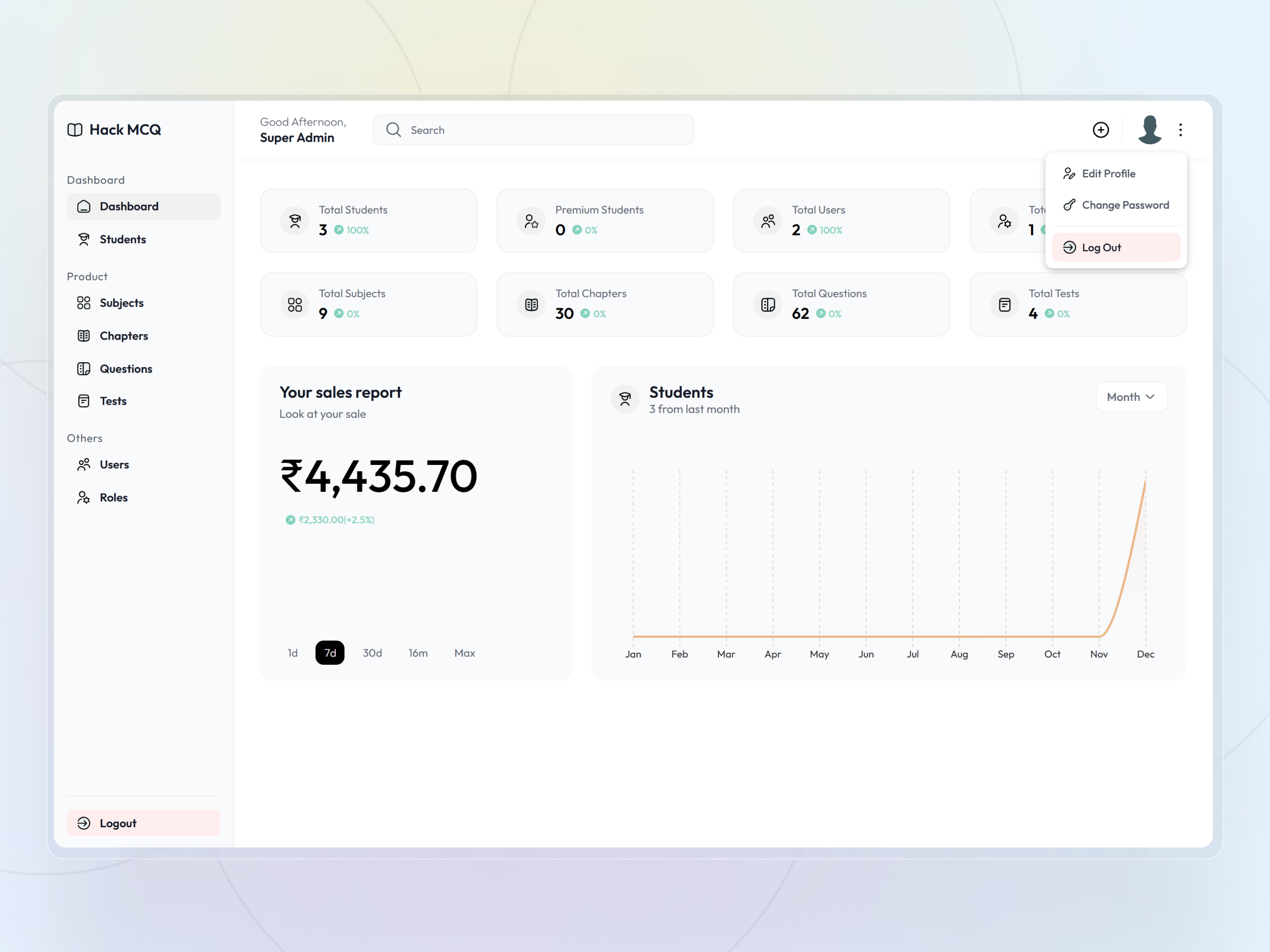
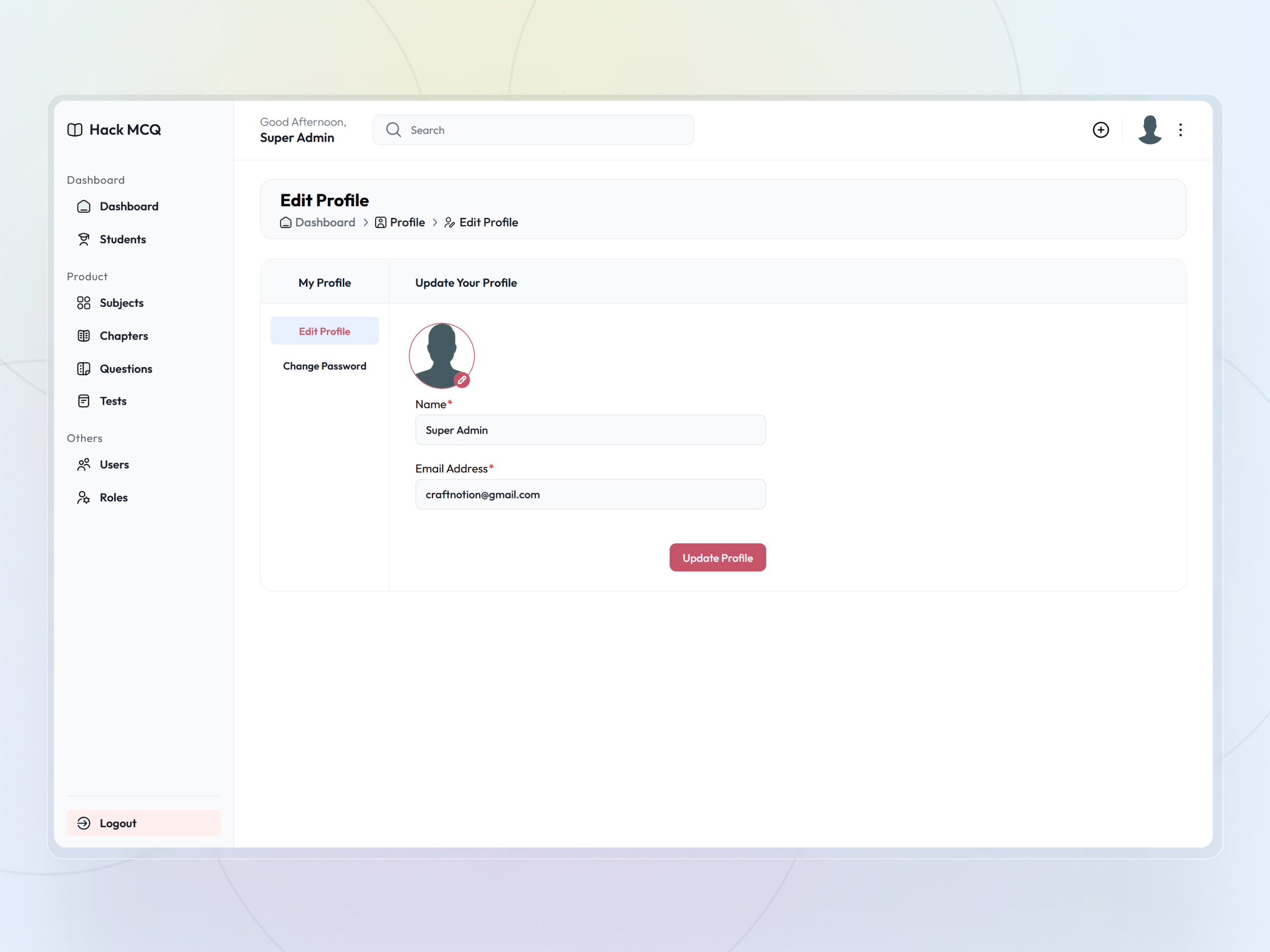
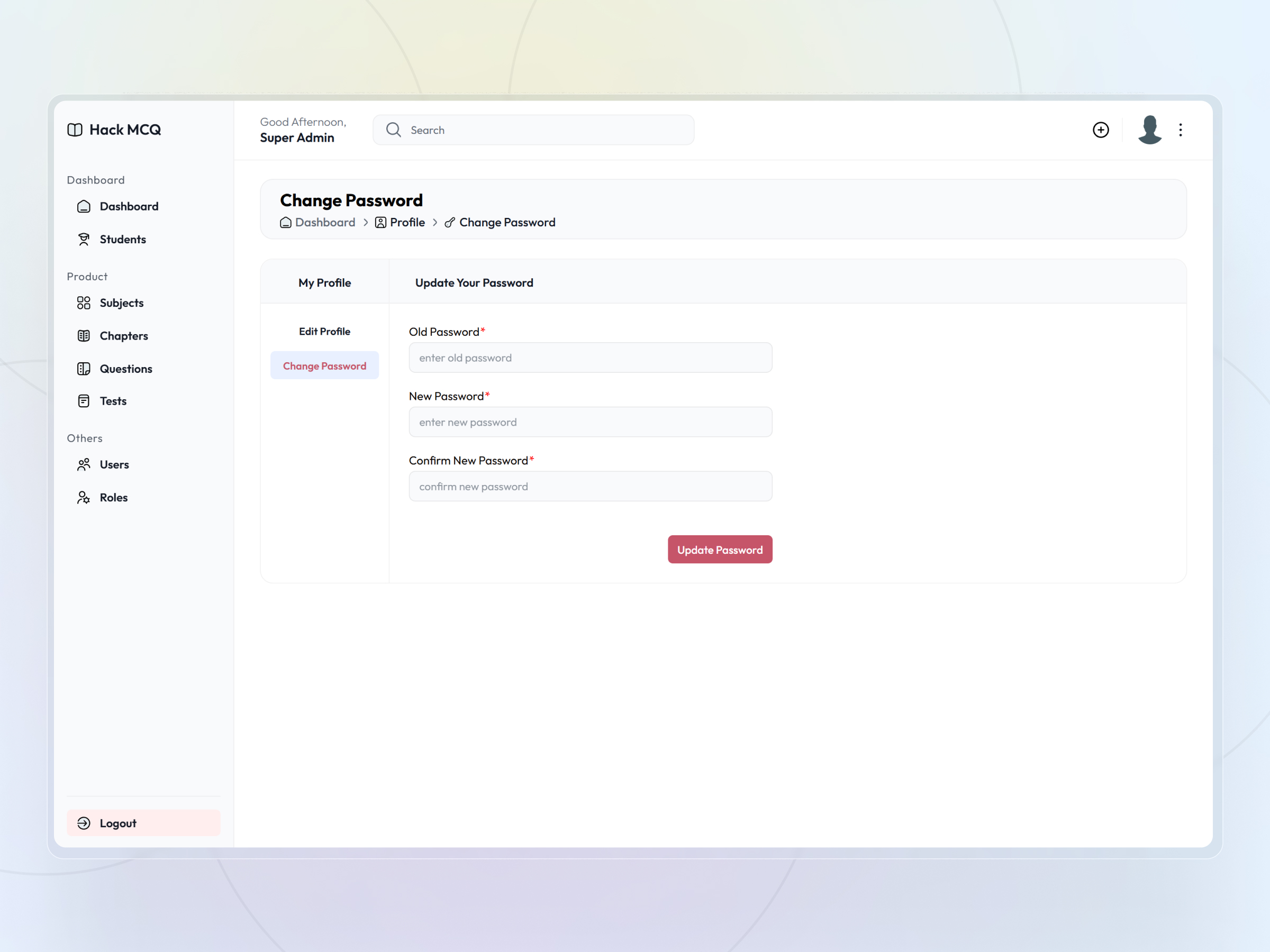
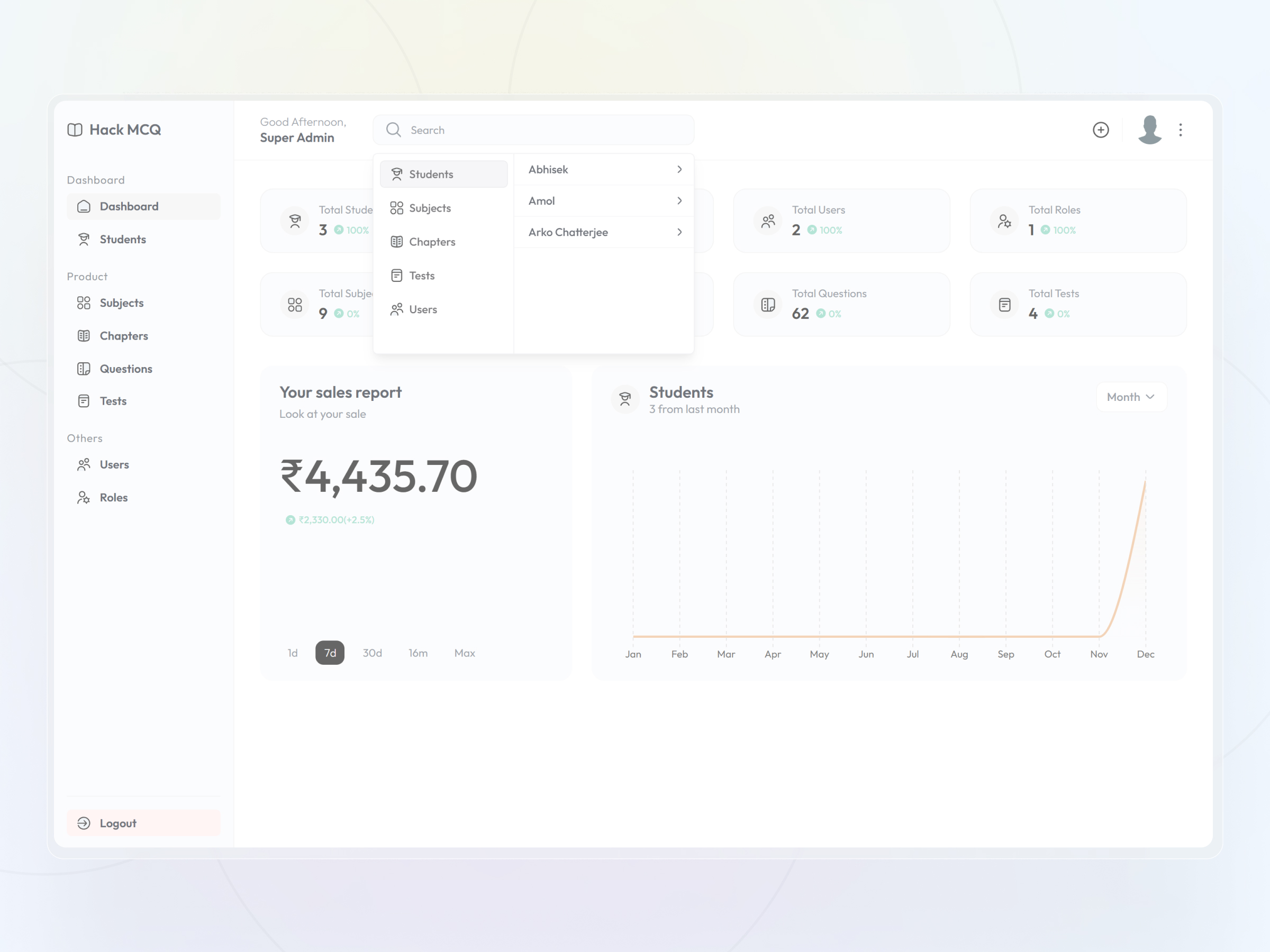
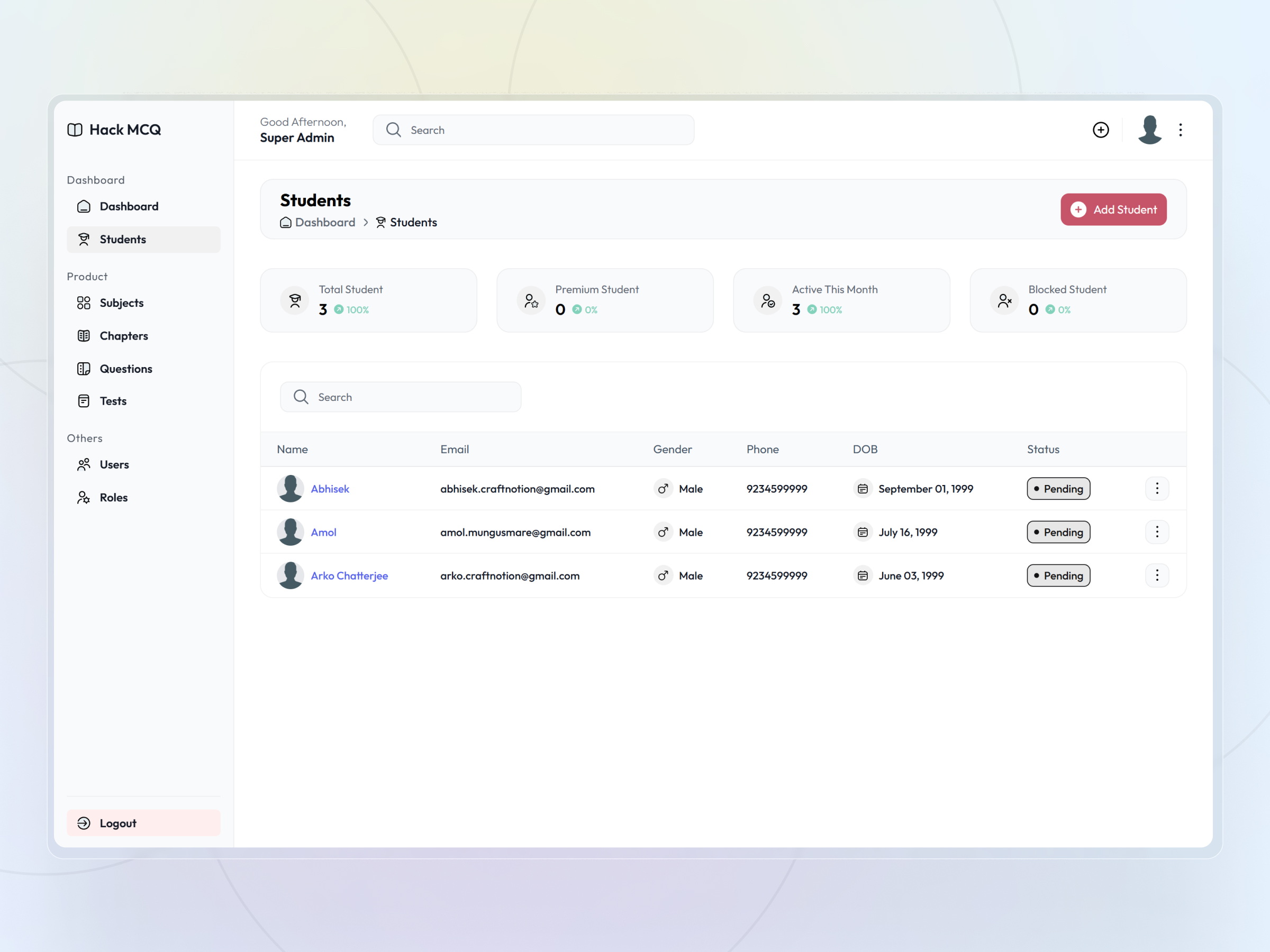
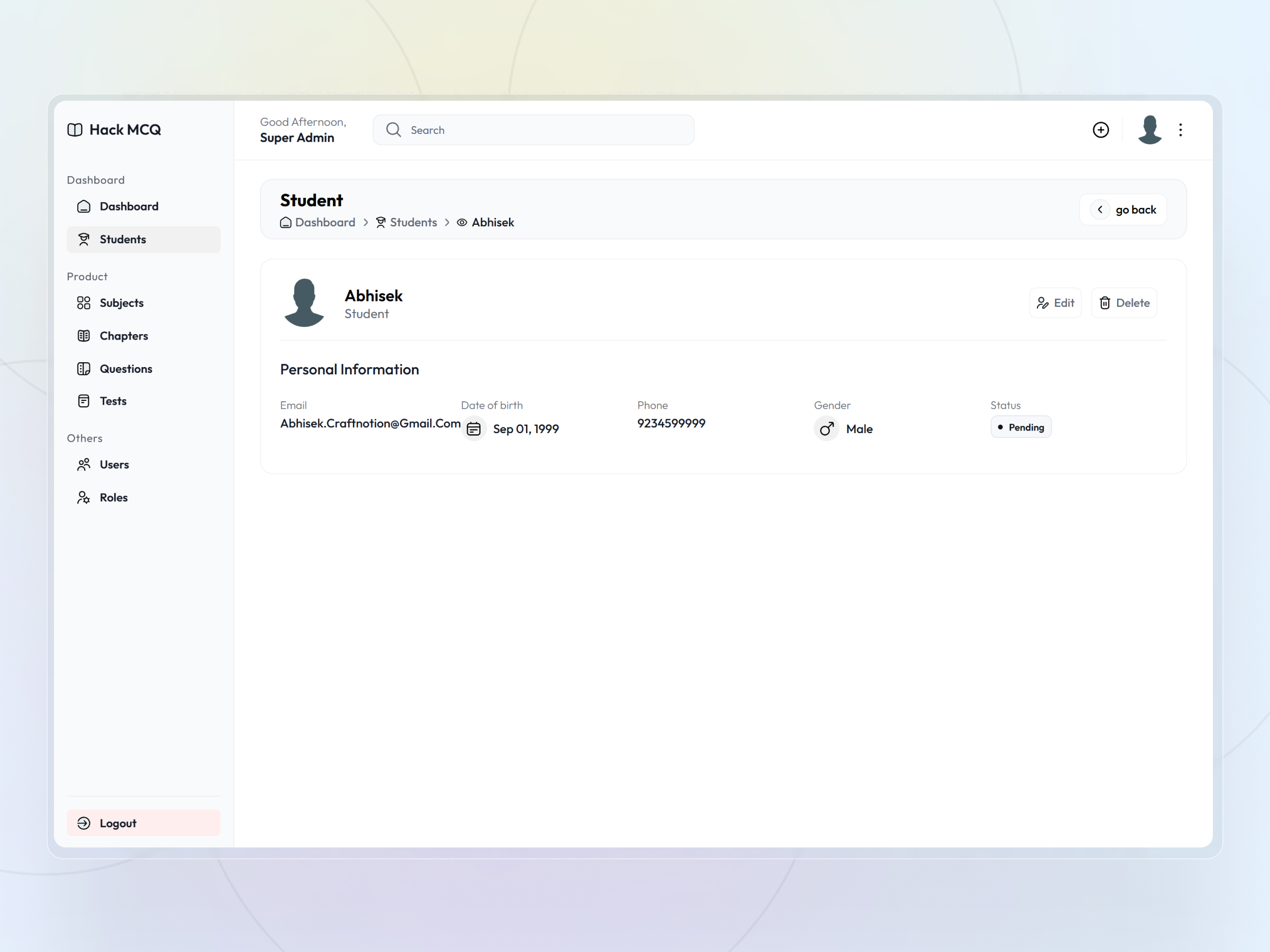
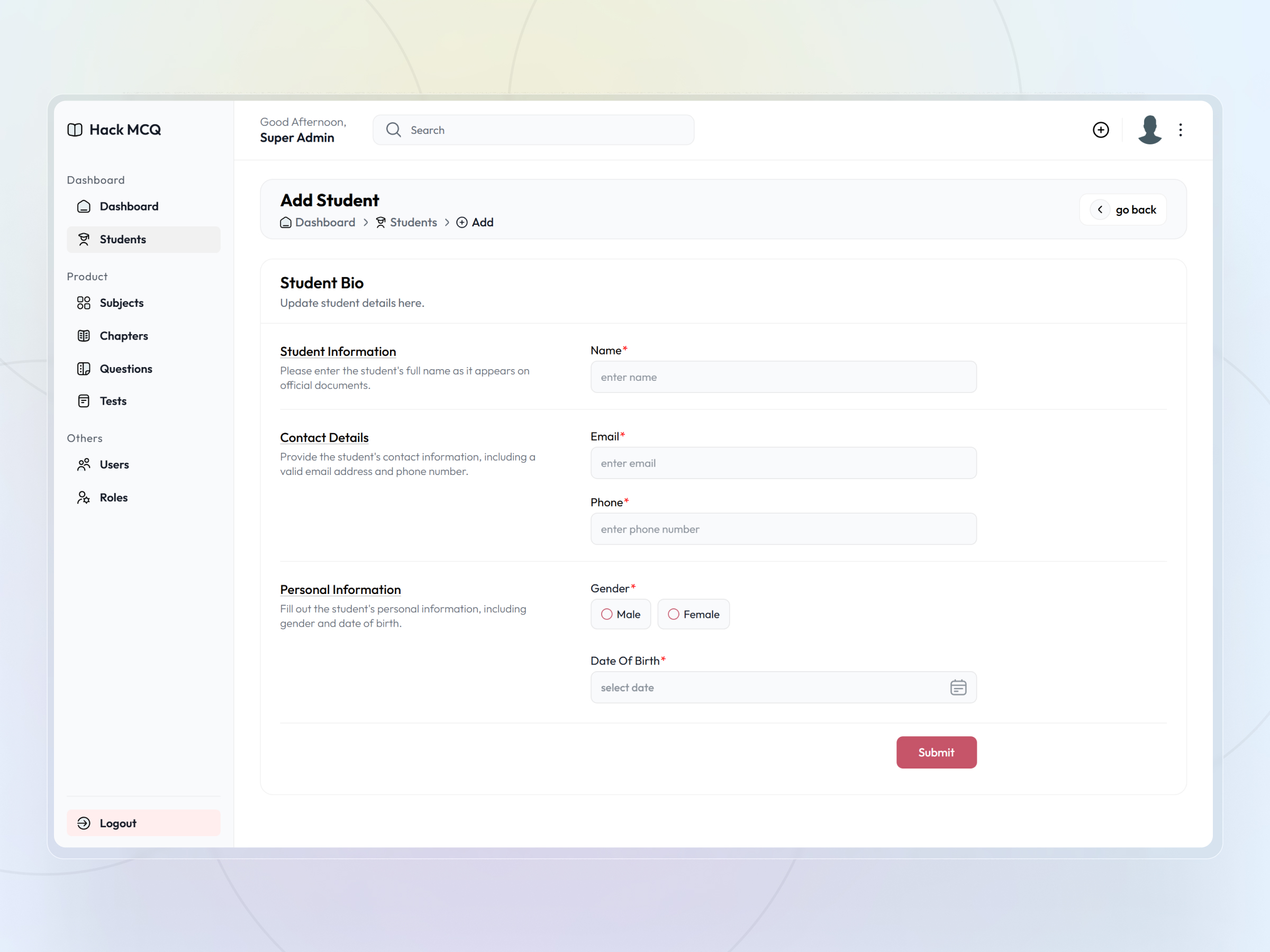
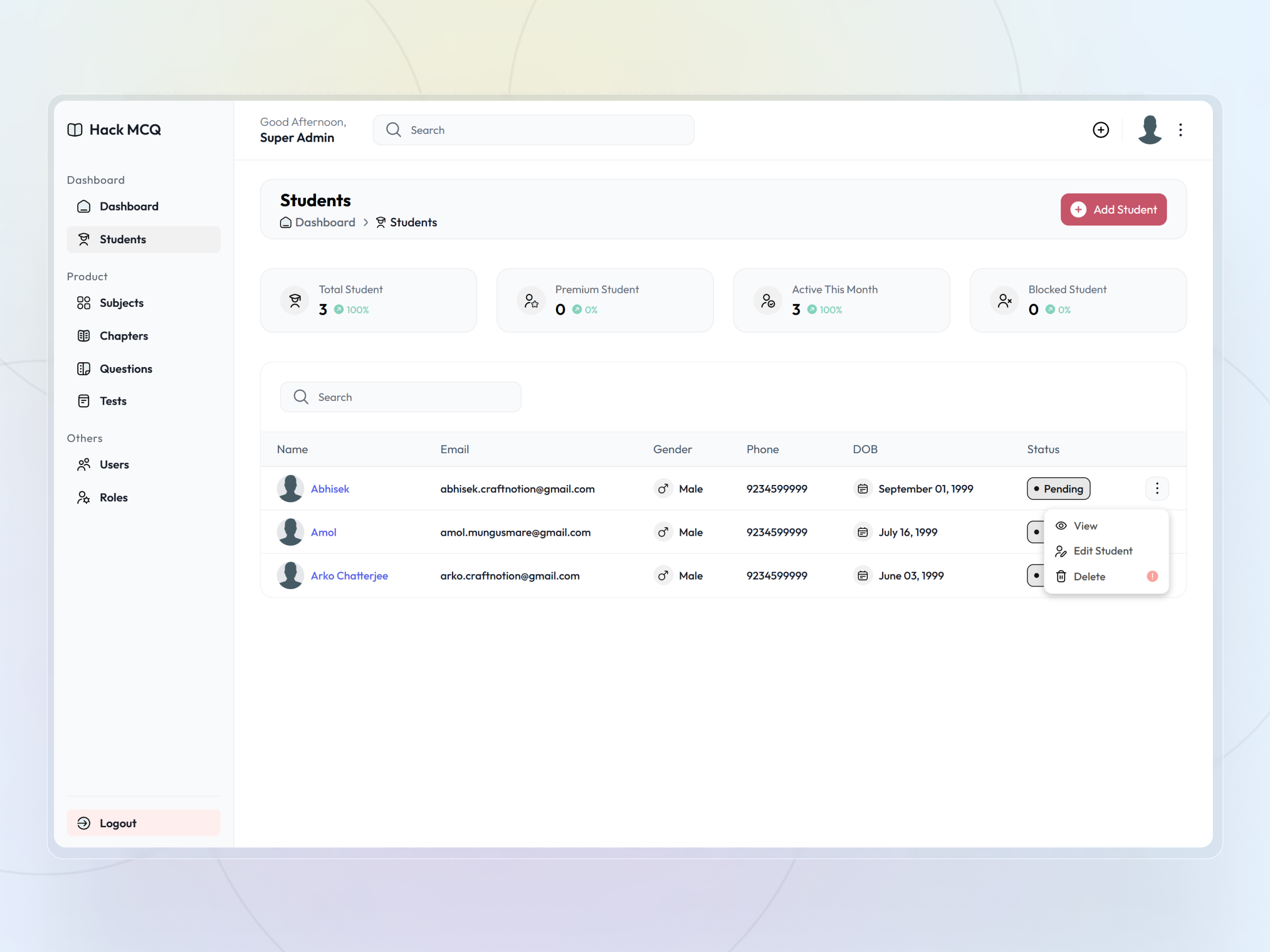
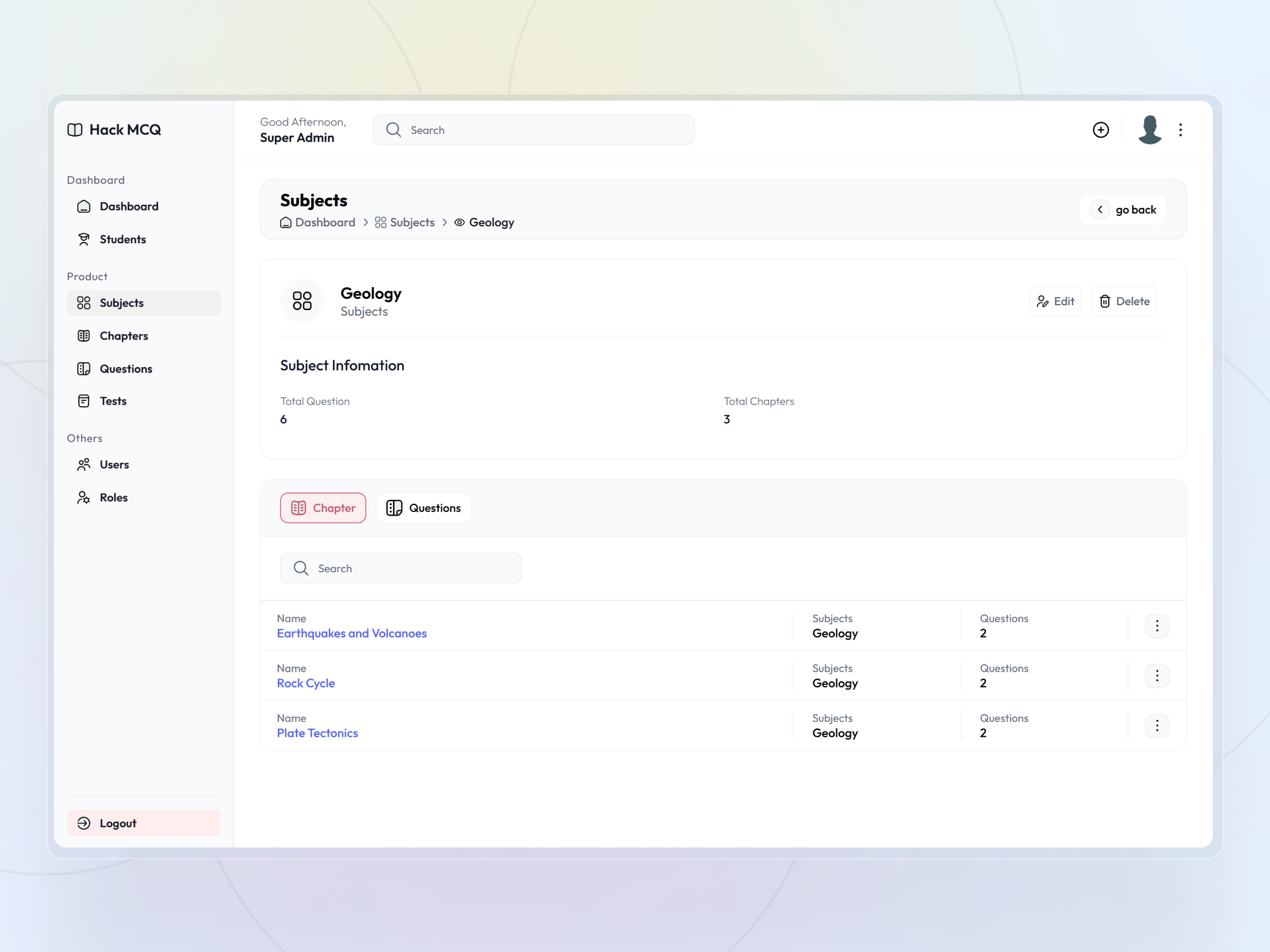
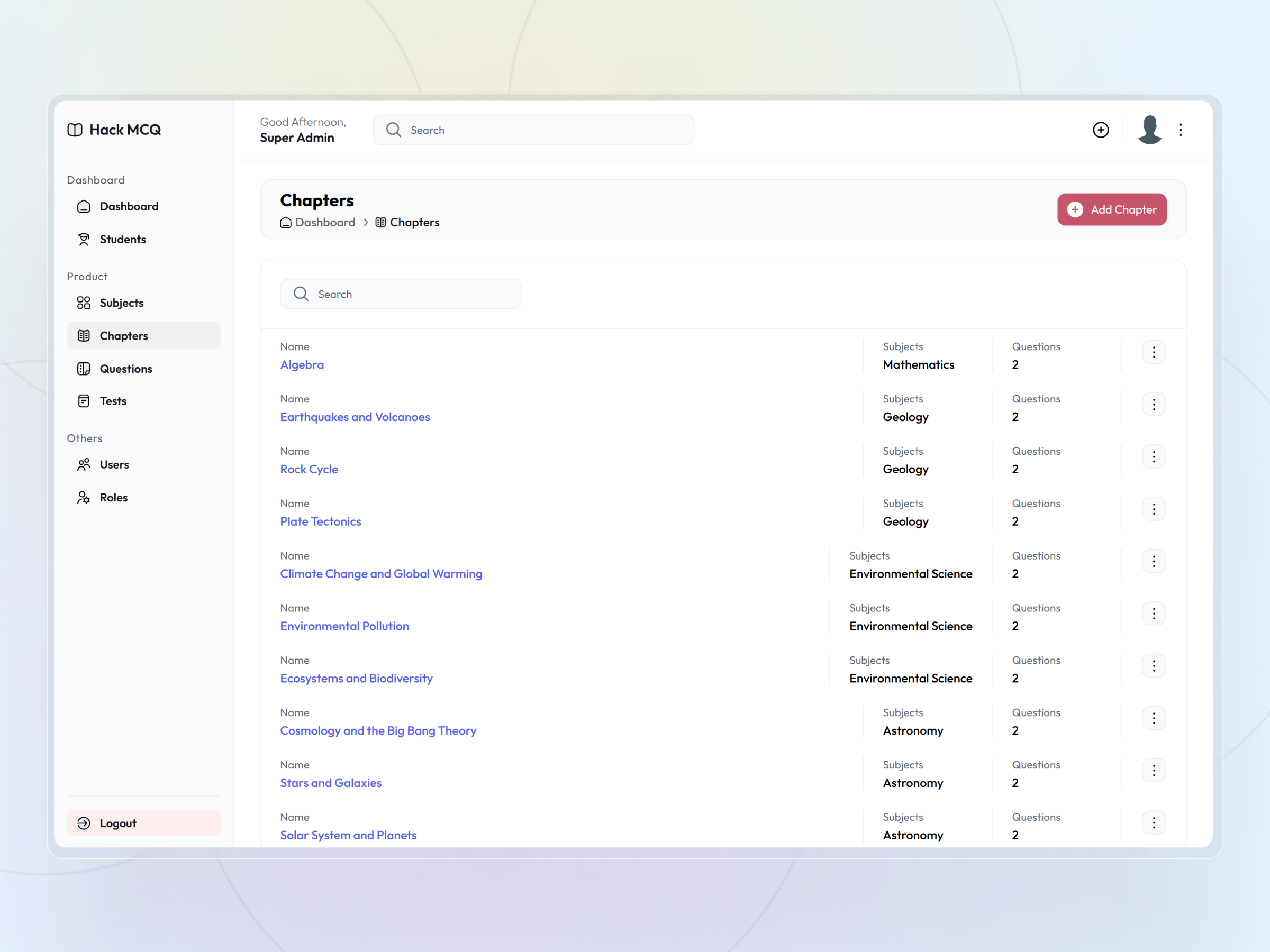
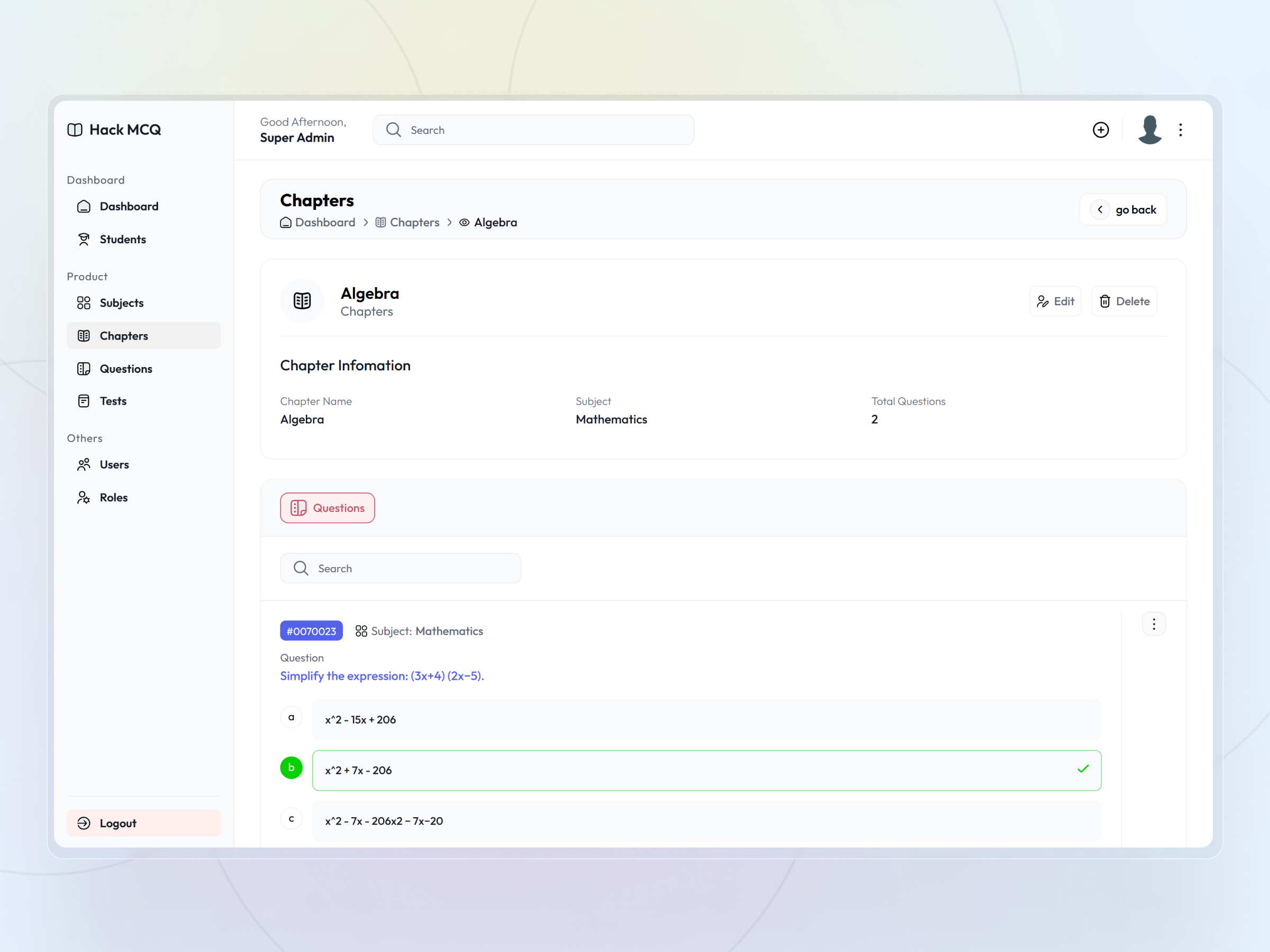
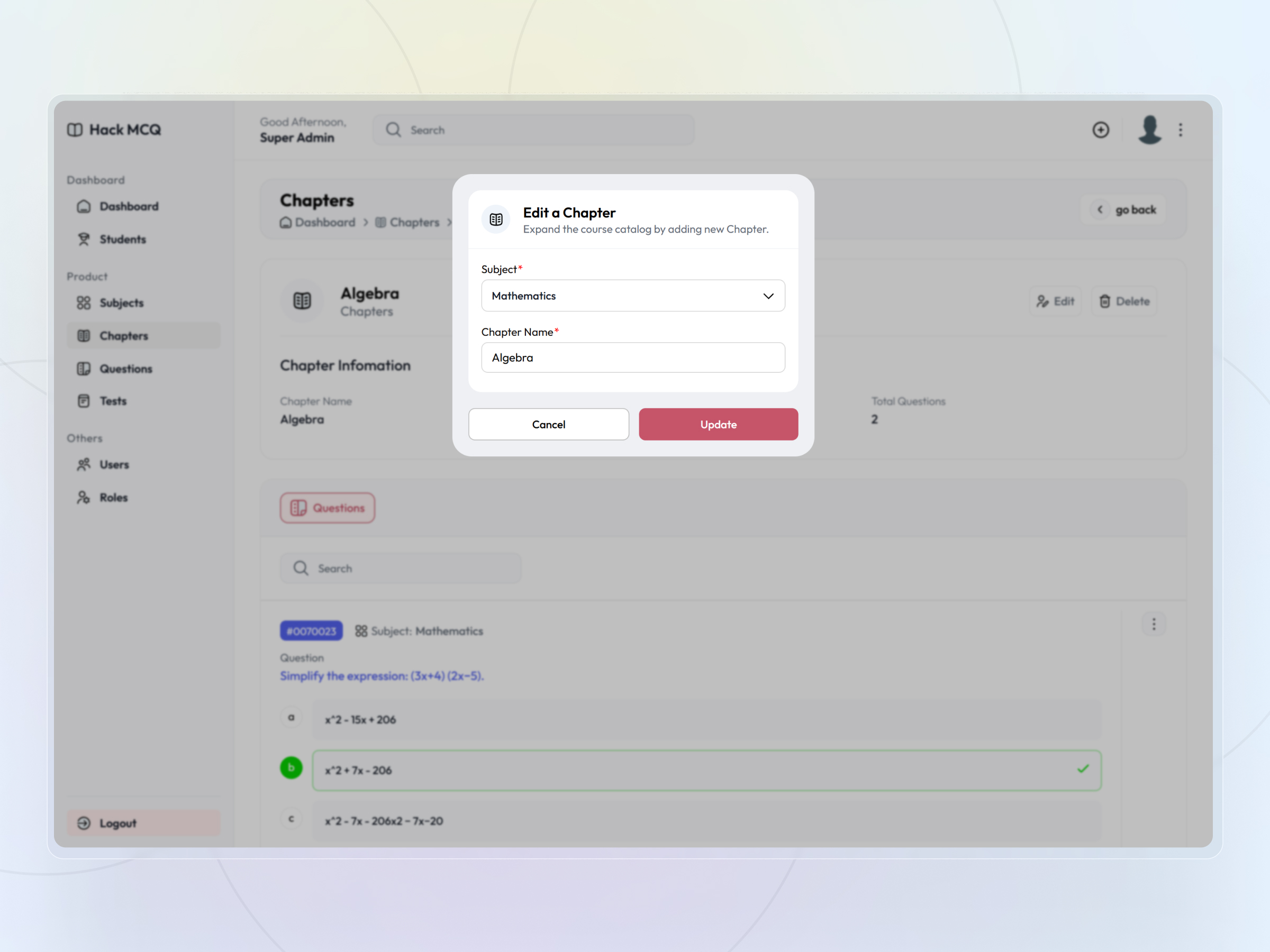
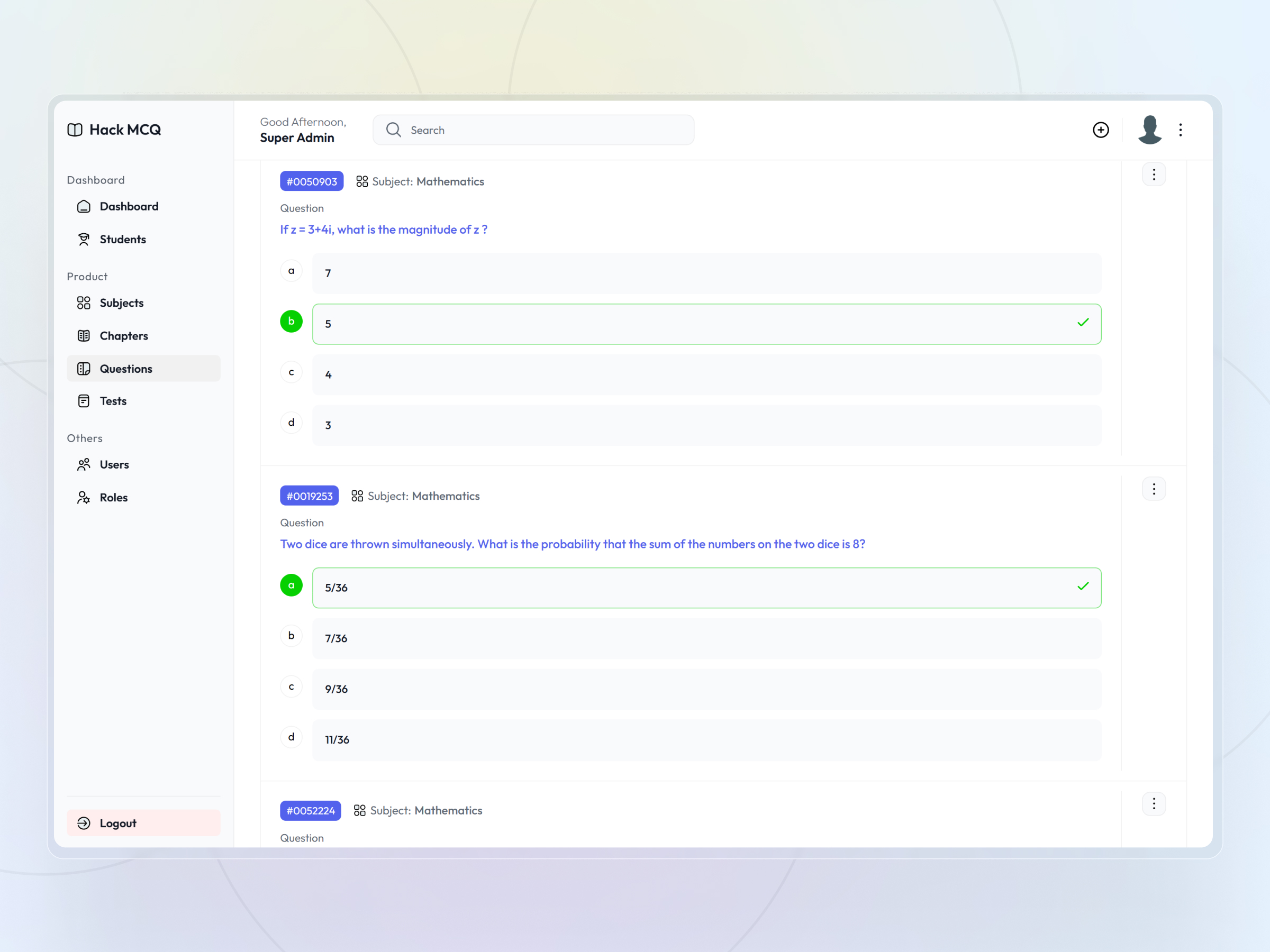
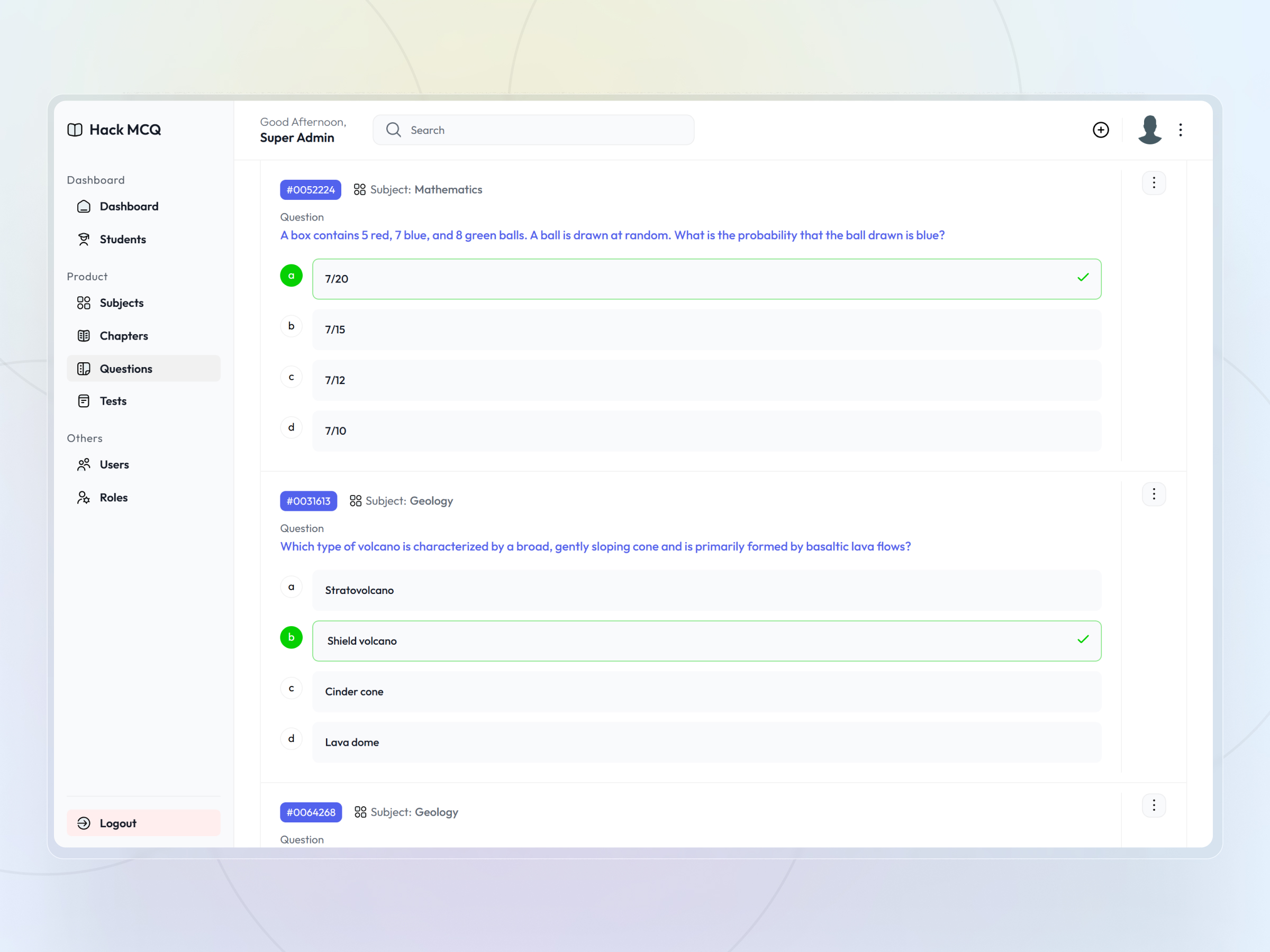
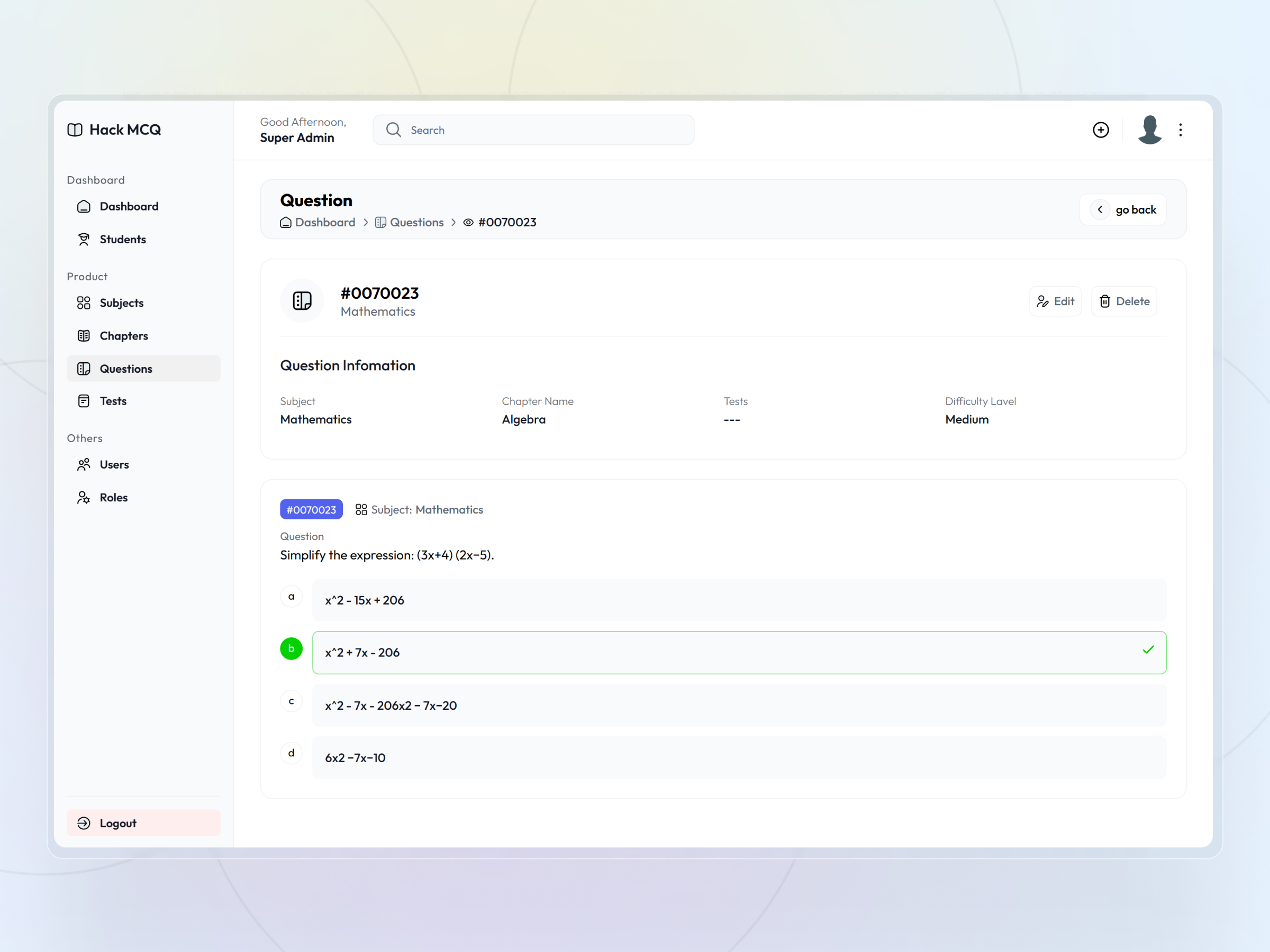
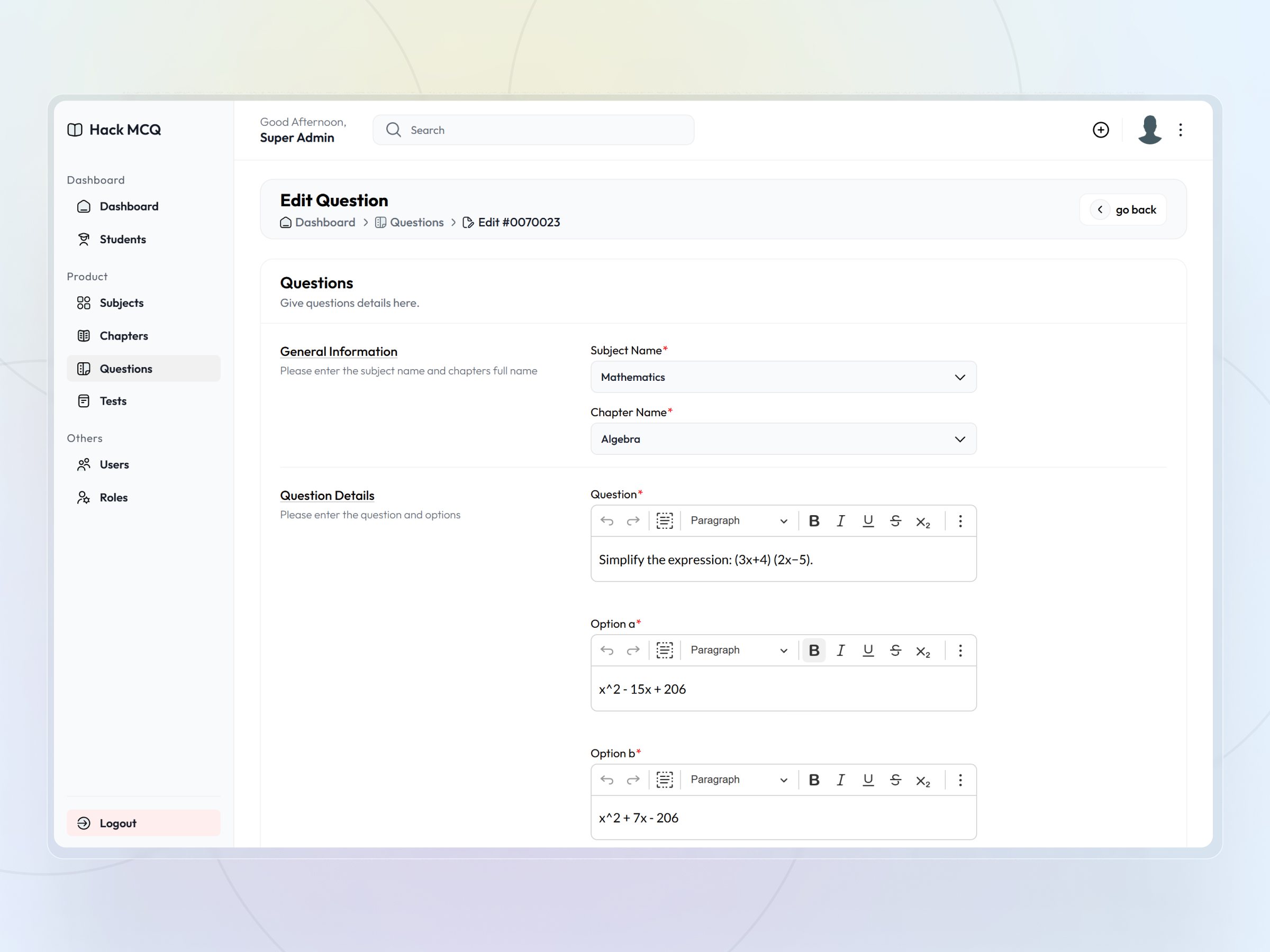
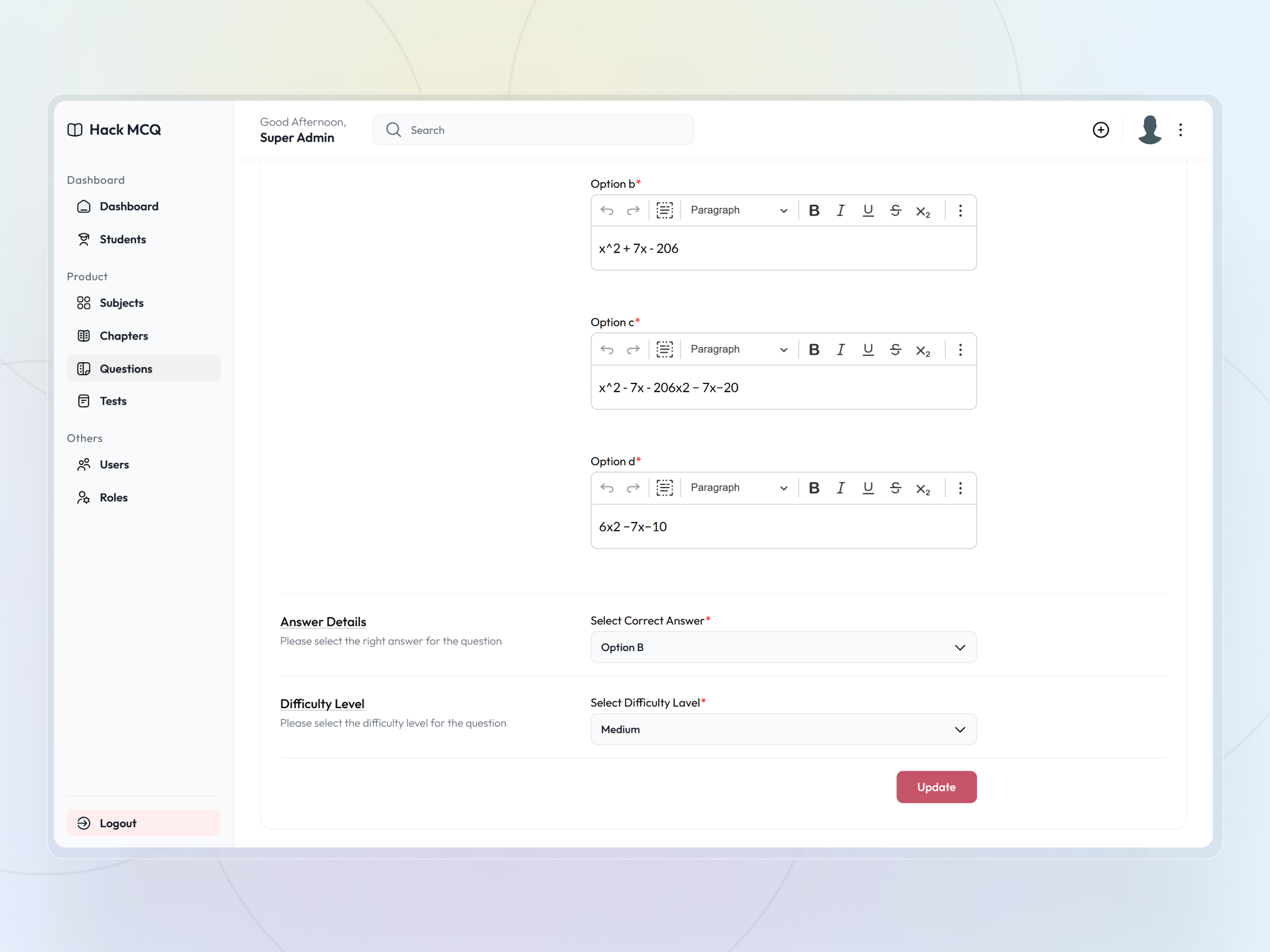
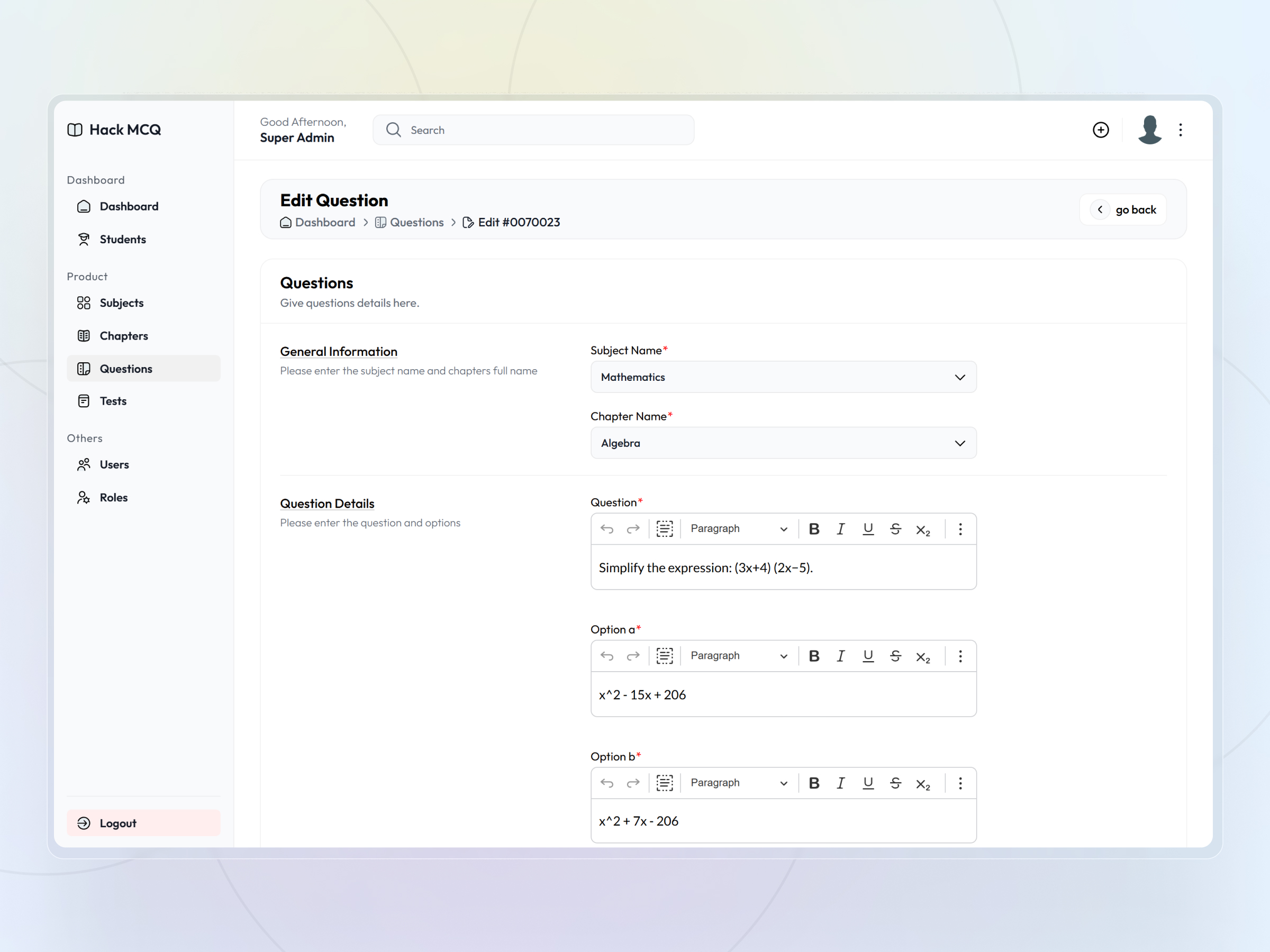
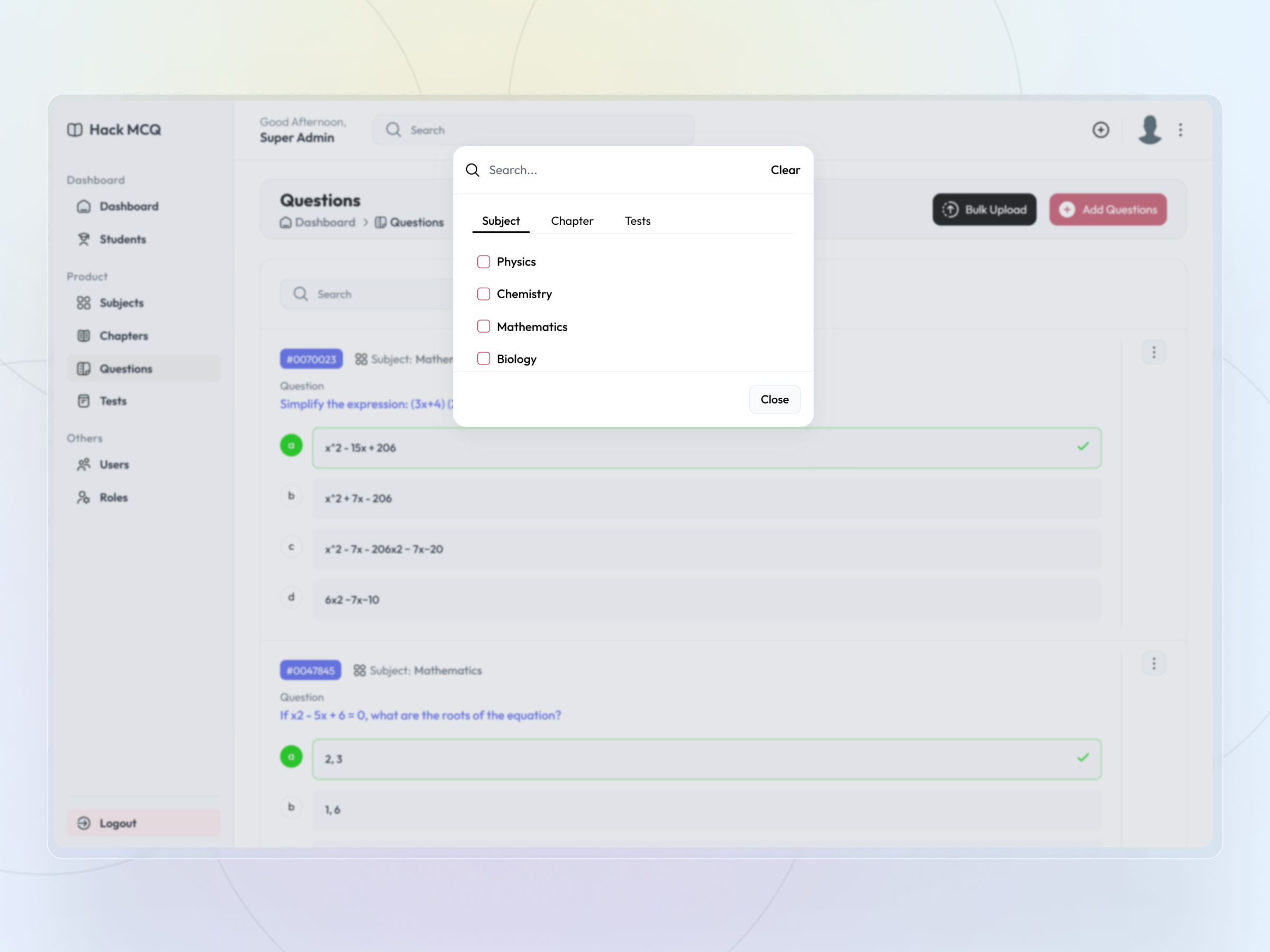
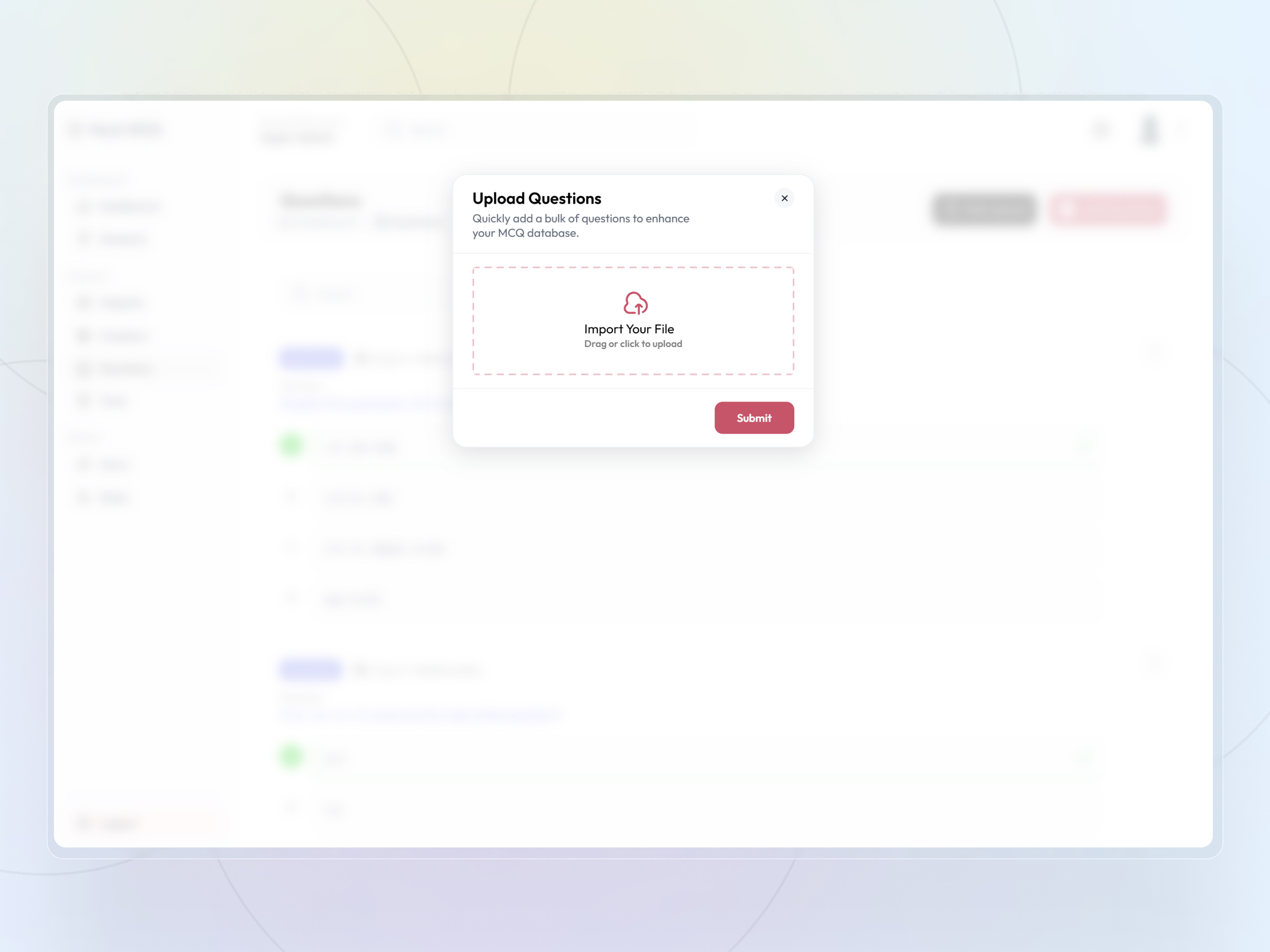
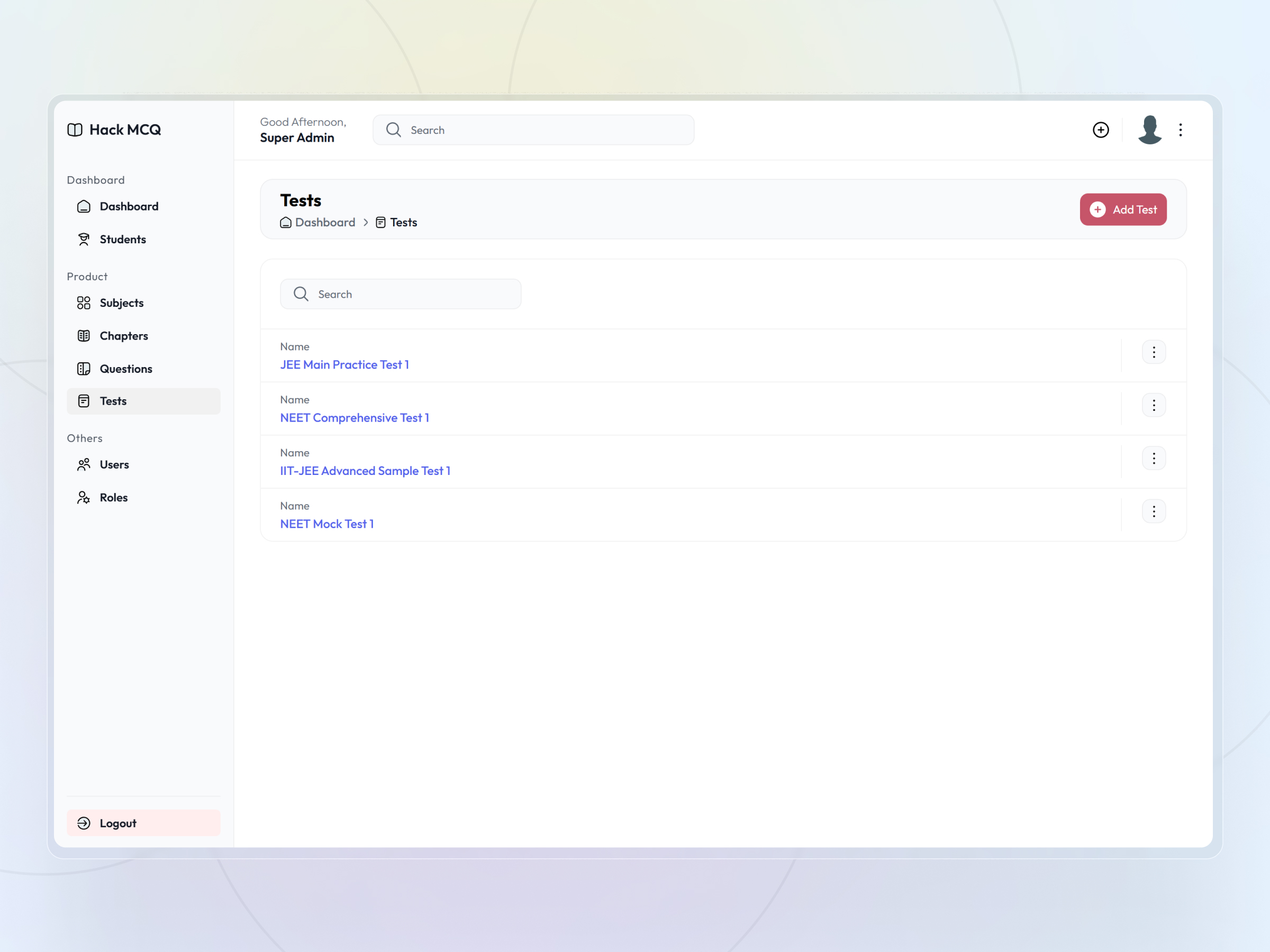
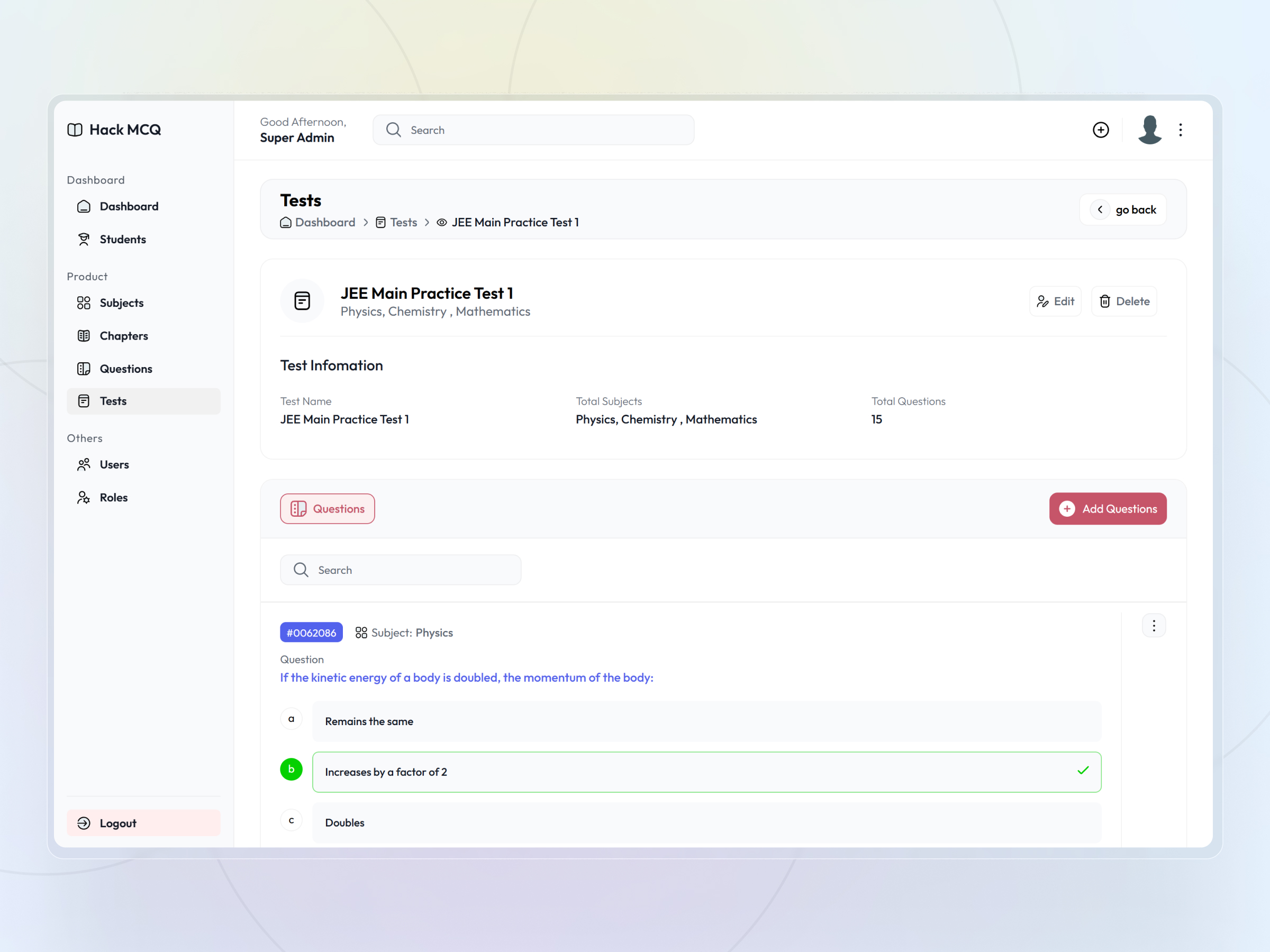
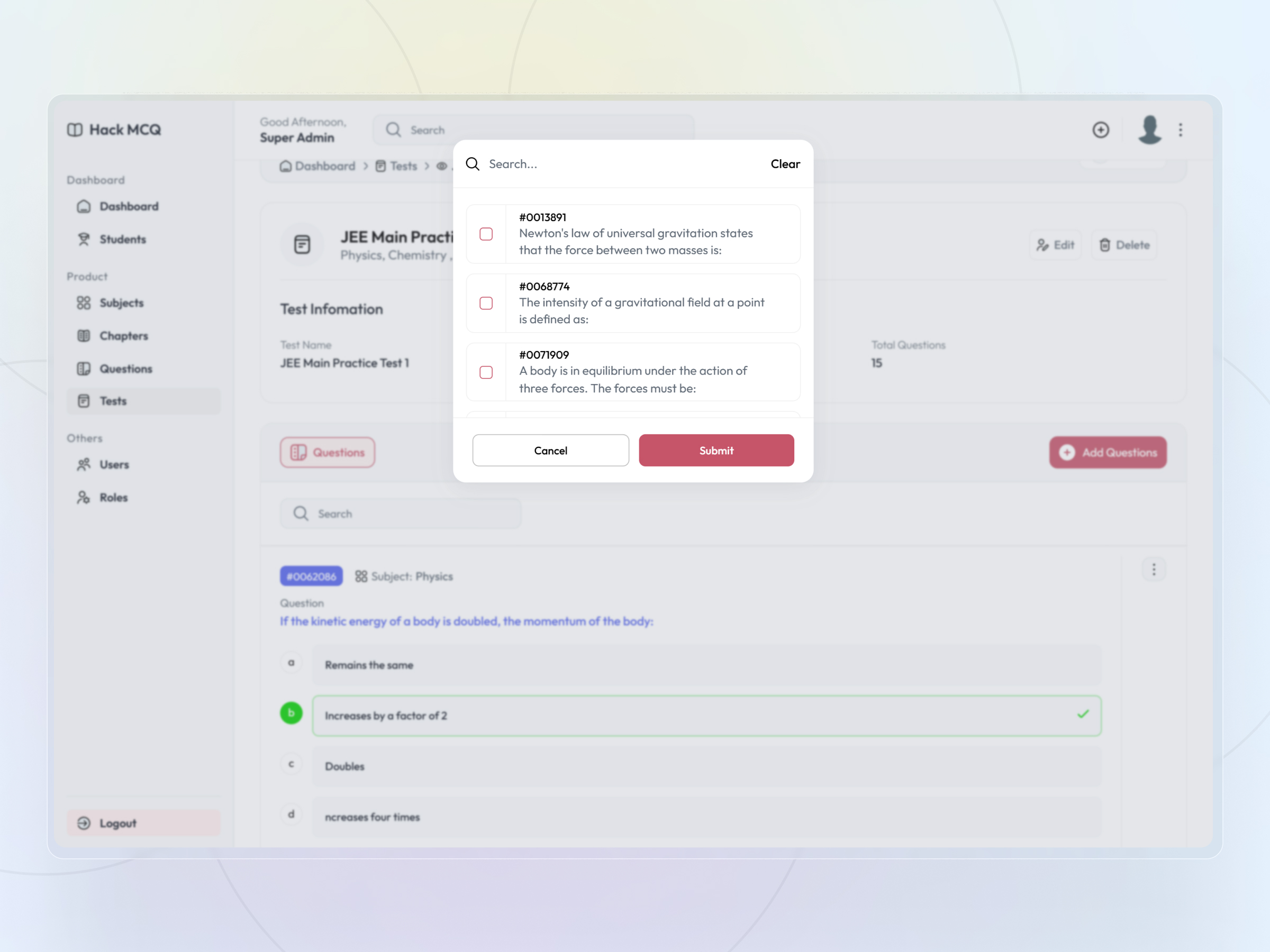
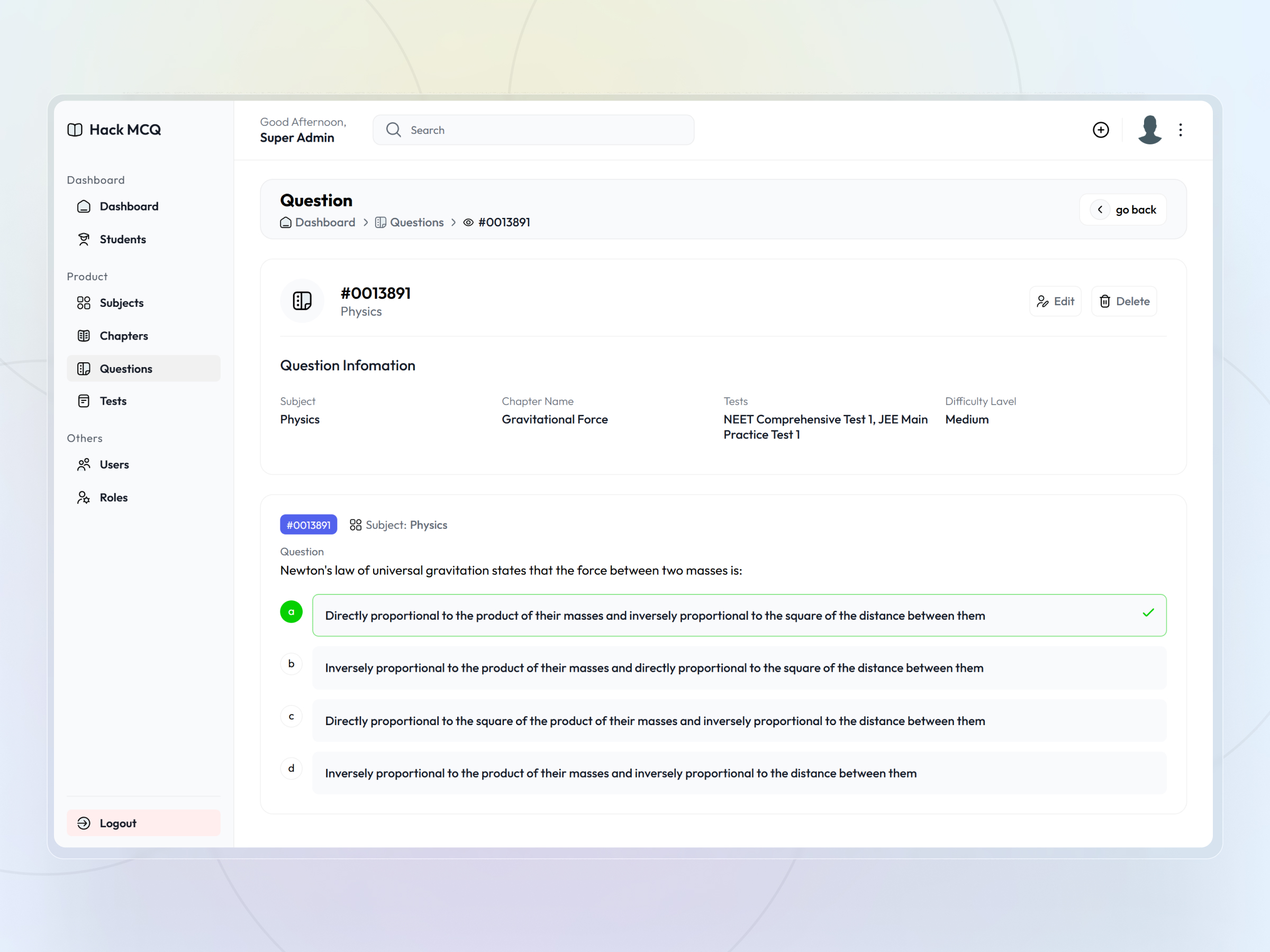
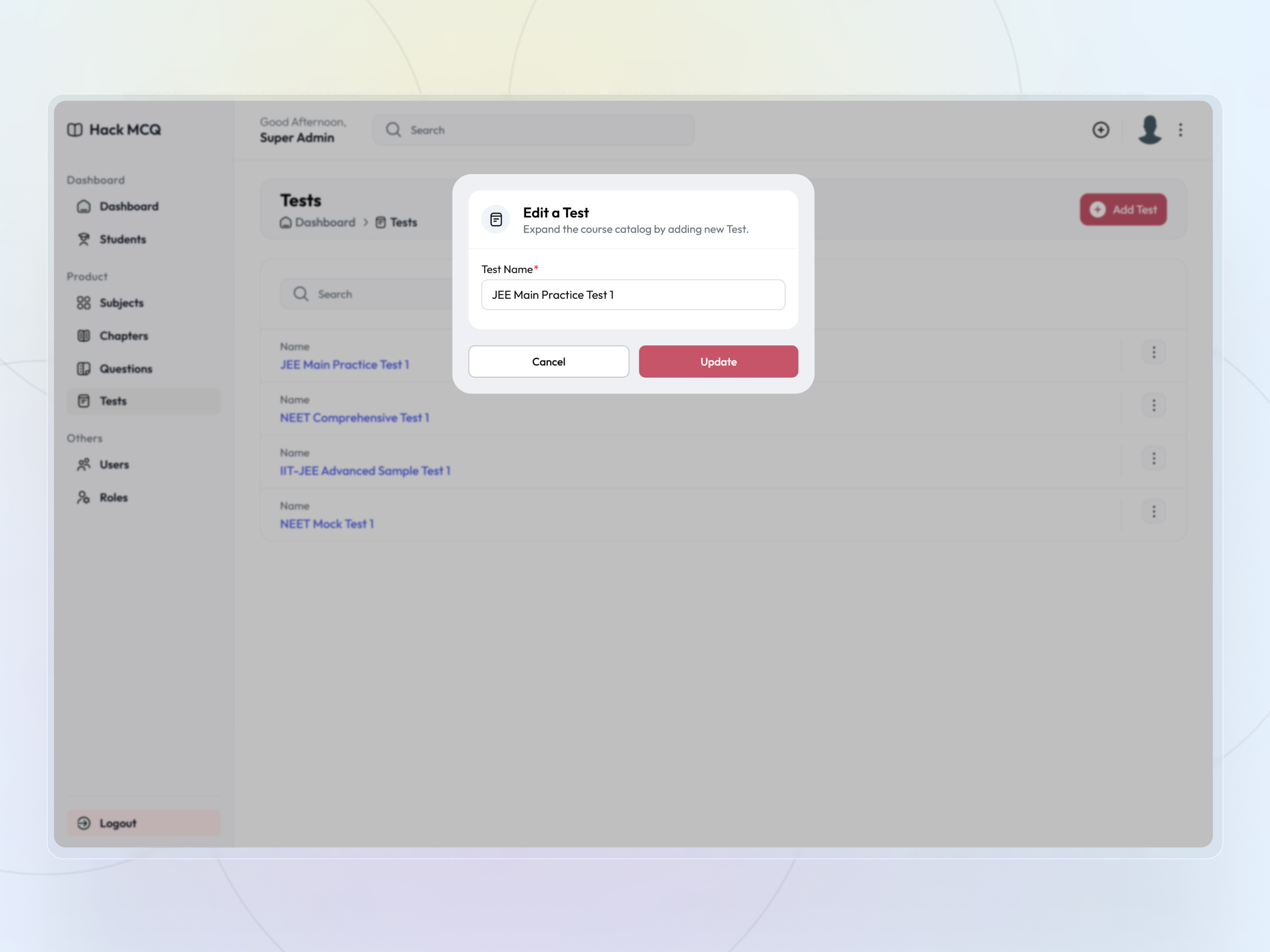
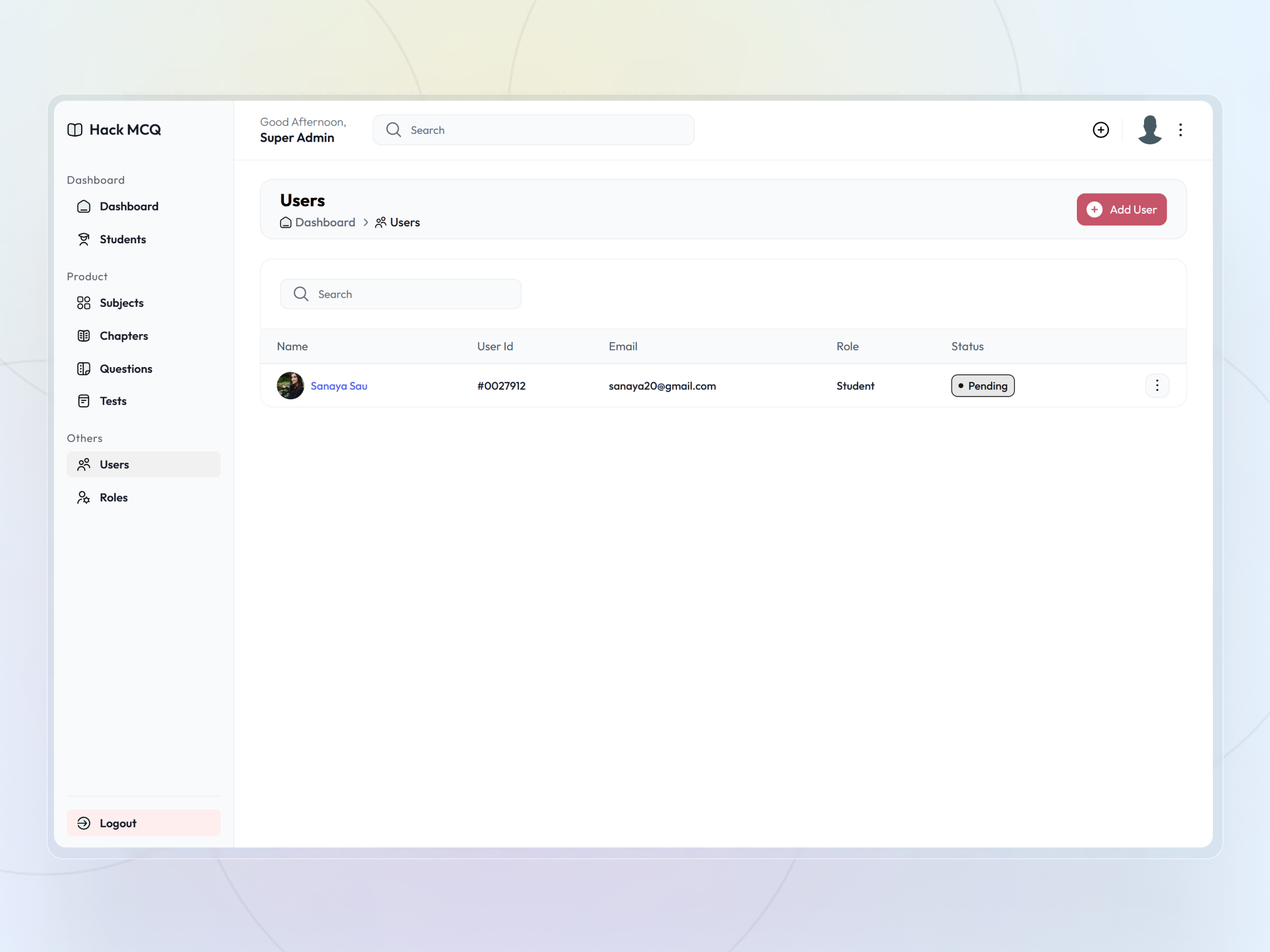
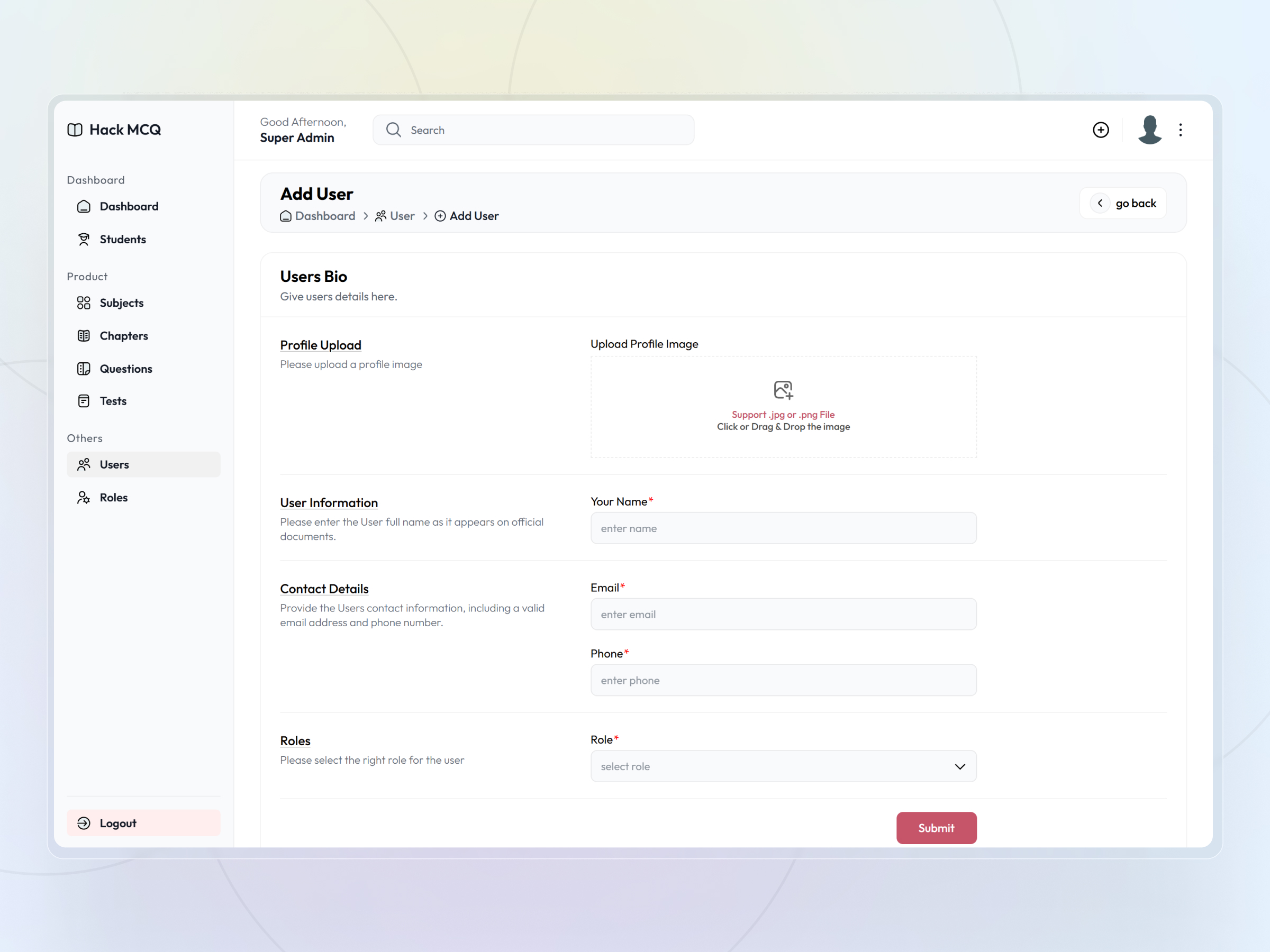
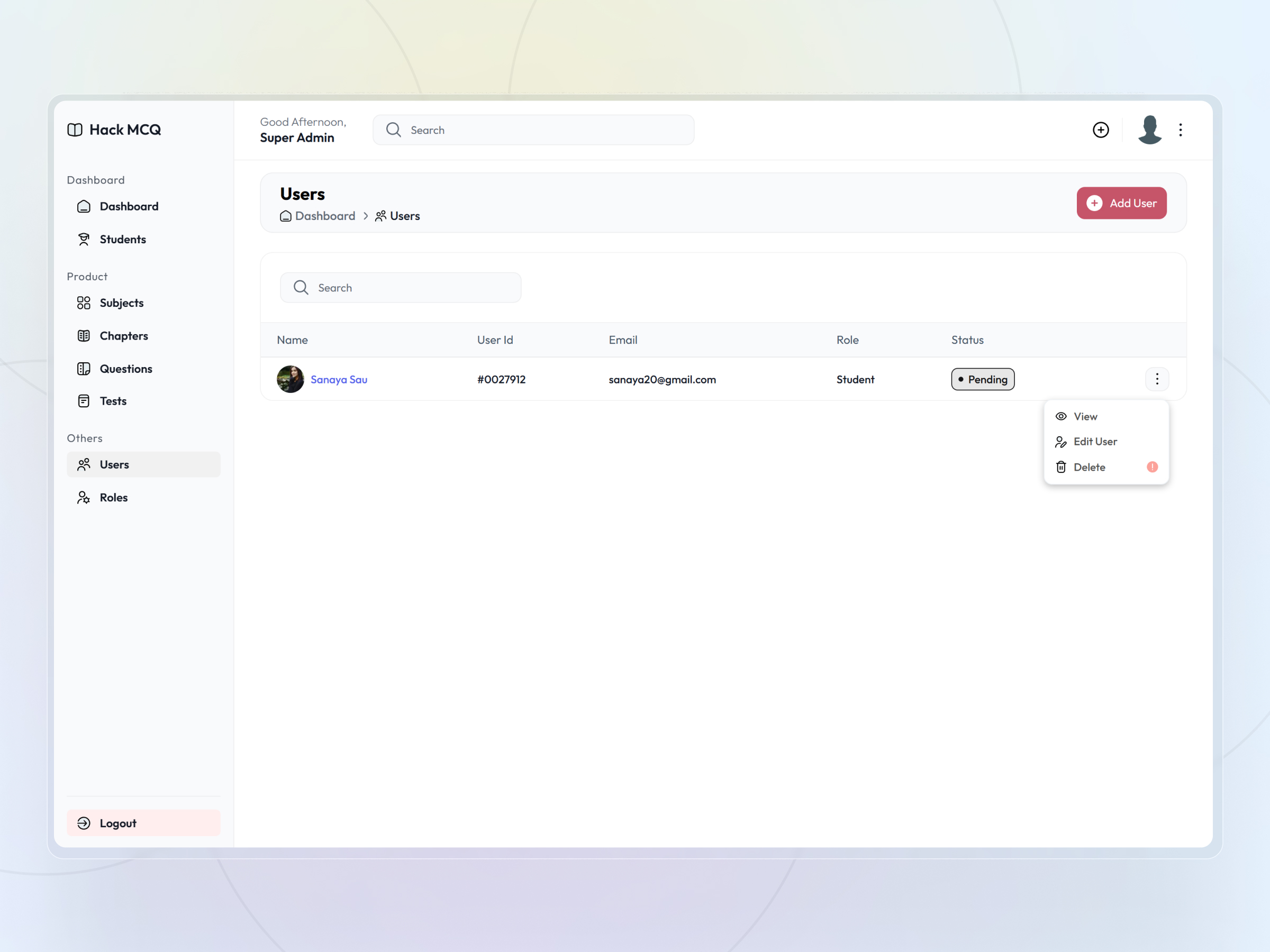
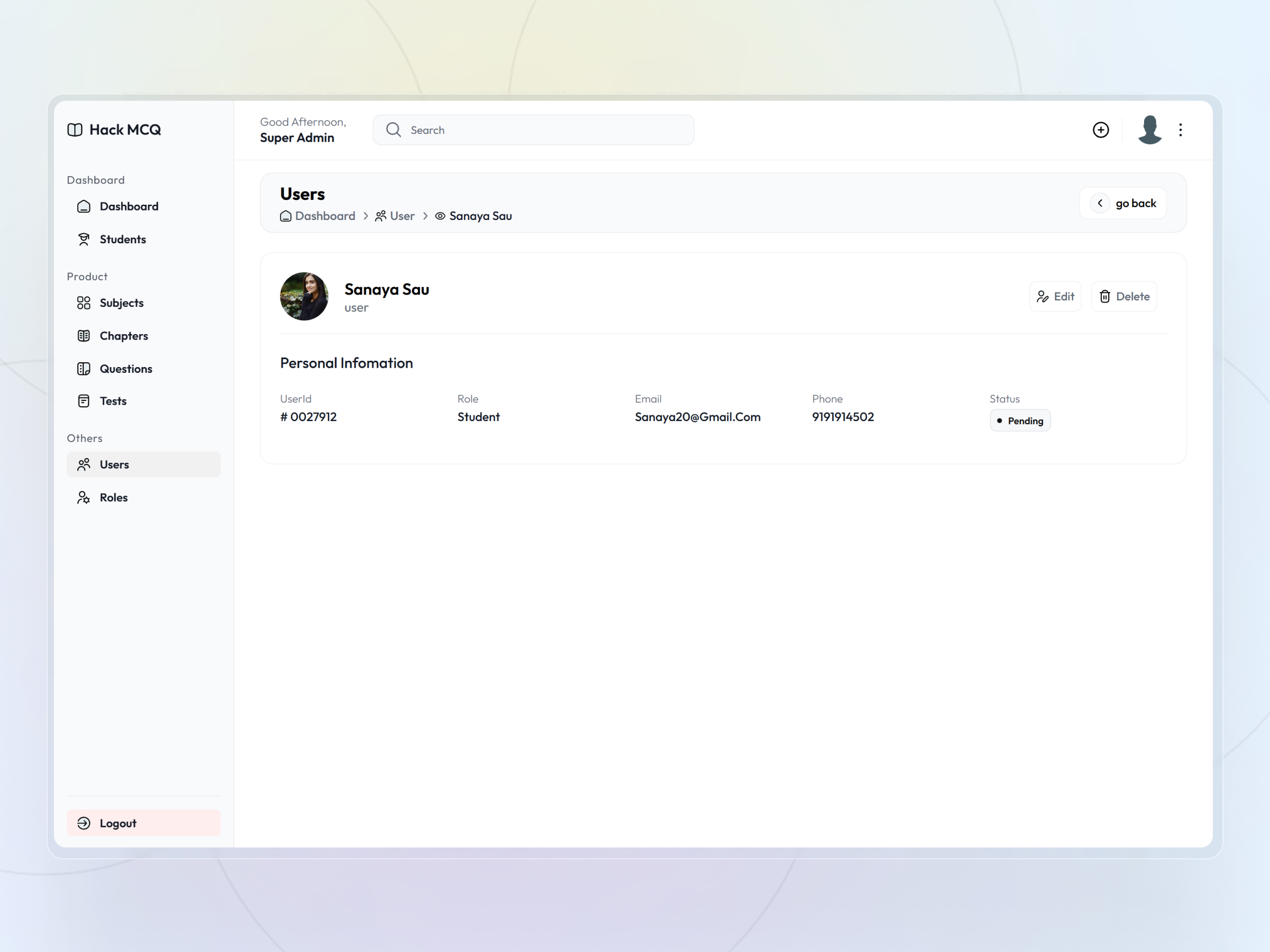
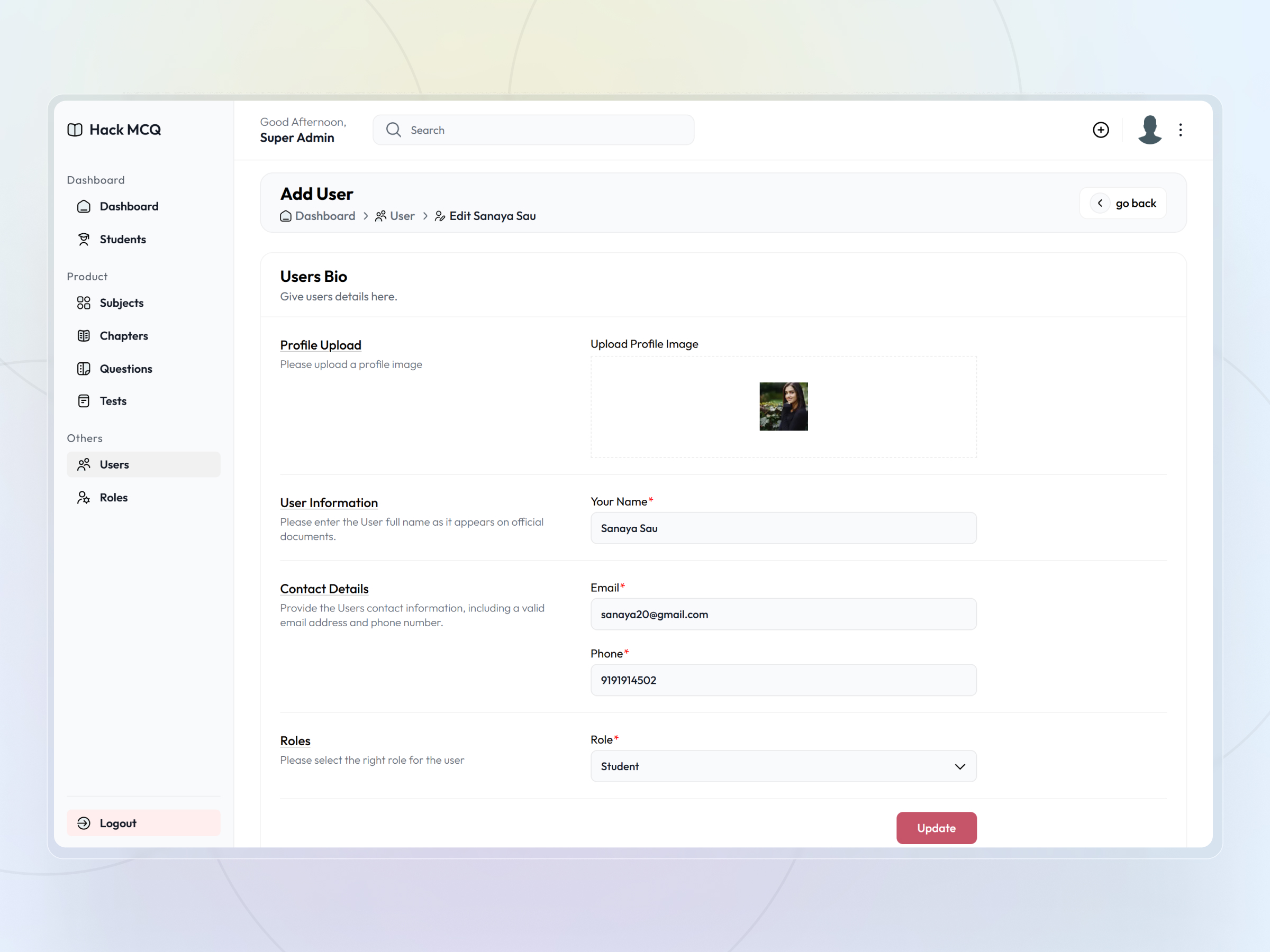
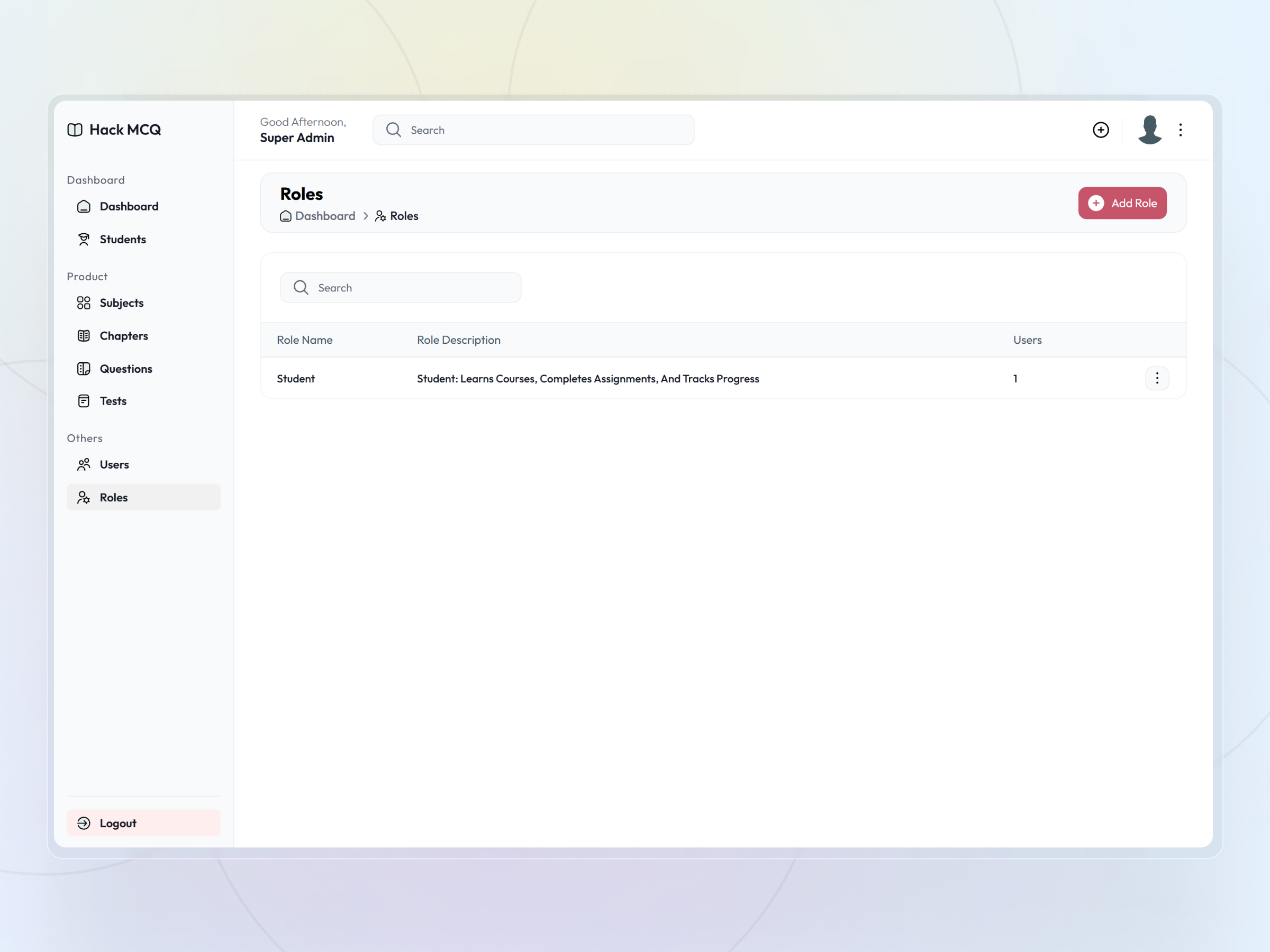
The admin panel lets the client manage everything — users, question banks, exam schedules, payments, and performance analytics. They can create new exams, upload questions in bulk, set time limits and scoring rules, and track how students are performing across different subjects. No developer needed for day-to-day operations.

Stack and implementation
We chose Next.js and Nest.js because they're fast, maintainable, and scale well. PostgreSQL handles the relational data — questions linked to categories, users linked to attempts, scores linked to reward calculations. The whole system is designed so adding a new exam category or scaling to more users doesn't require rewriting anything.

What shipped
We delivered the basic MVP in 50 days at a cost of ₹2 lakhs. The client launched it with a batch of students preparing for banking exams, and the early feedback was strong — students liked the adaptive difficulty, the reward system drove consistent daily usage, and the admin panel meant the client could operate independently from day one.
The client came back for a complete second version with expanded features, which we delivered over 4 months for ₹8 lakhs. For them, the biggest win was going from a failed project with another vendor to two successful product launches with us.

Frequently Asked Questions
Questions about exam prep platforms,
answered clearly.
Questions about the work, scope, delivery context, and next steps.
It depends on the scope. We planned, designed, and built HackMCQ's first MVP for ₹2 lakhs in 50 days — enough to validate the idea with real students. When the client came back for the complete version with expanded features, that cost ₹8 lakhs over 4 months. Starting with a focused MVP keeps costs low while you test the market.
Related Work
Similar case studies,
selected for context.
Continue exploring related work, with comparable product and delivery challenges.