MarketingInterface DesignsWeb ApplicationsMVP Development
Finclick
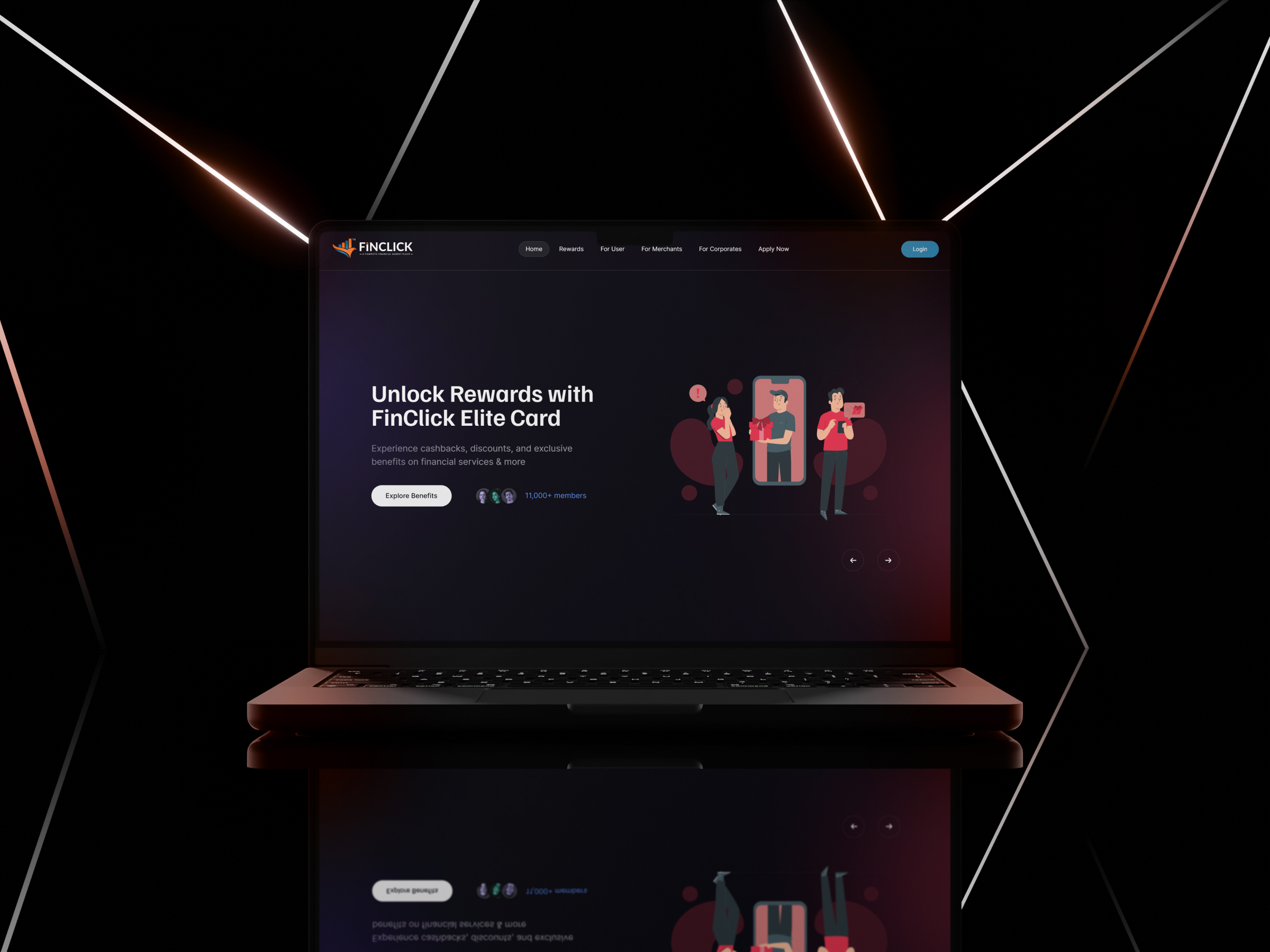
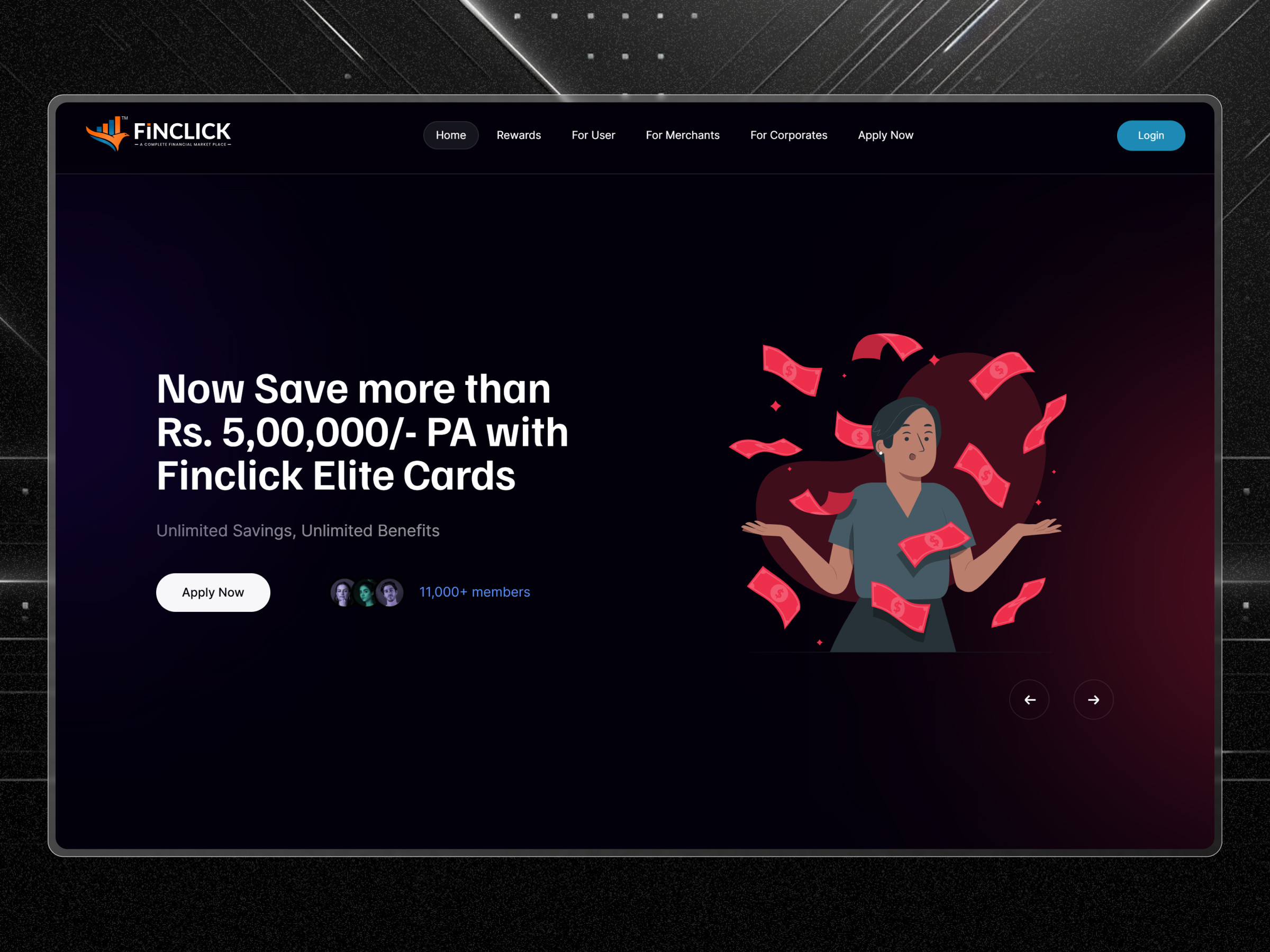
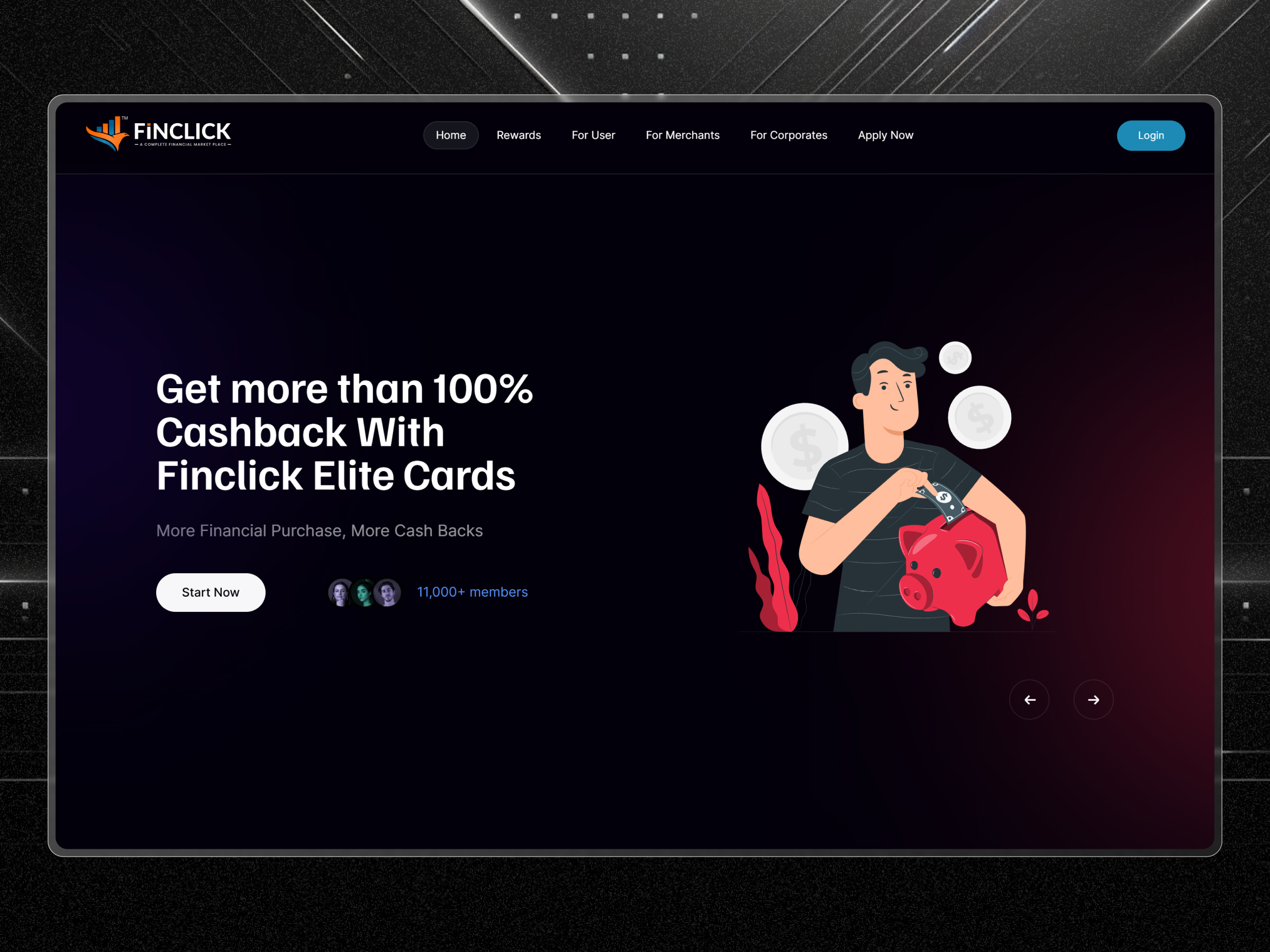
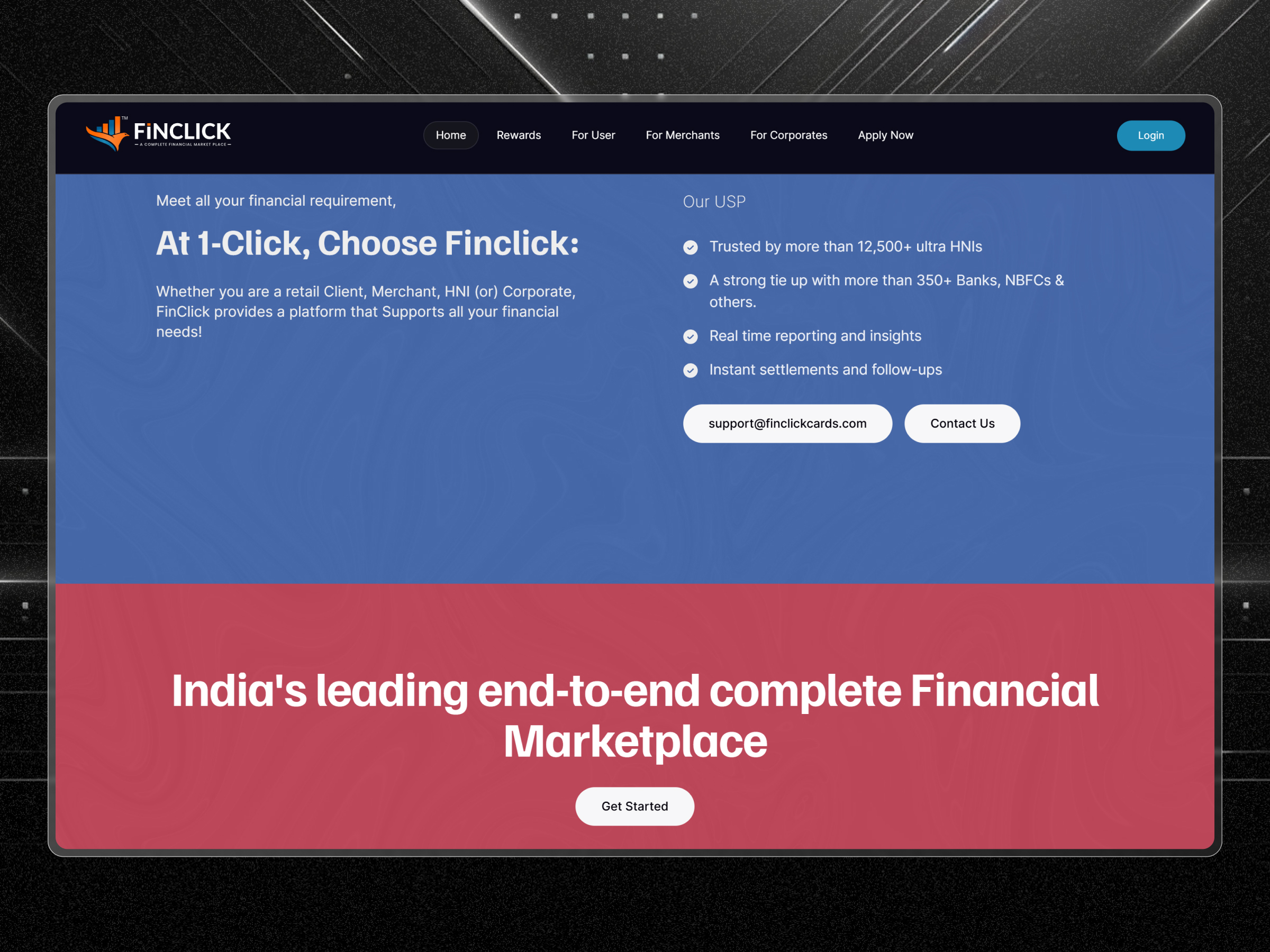
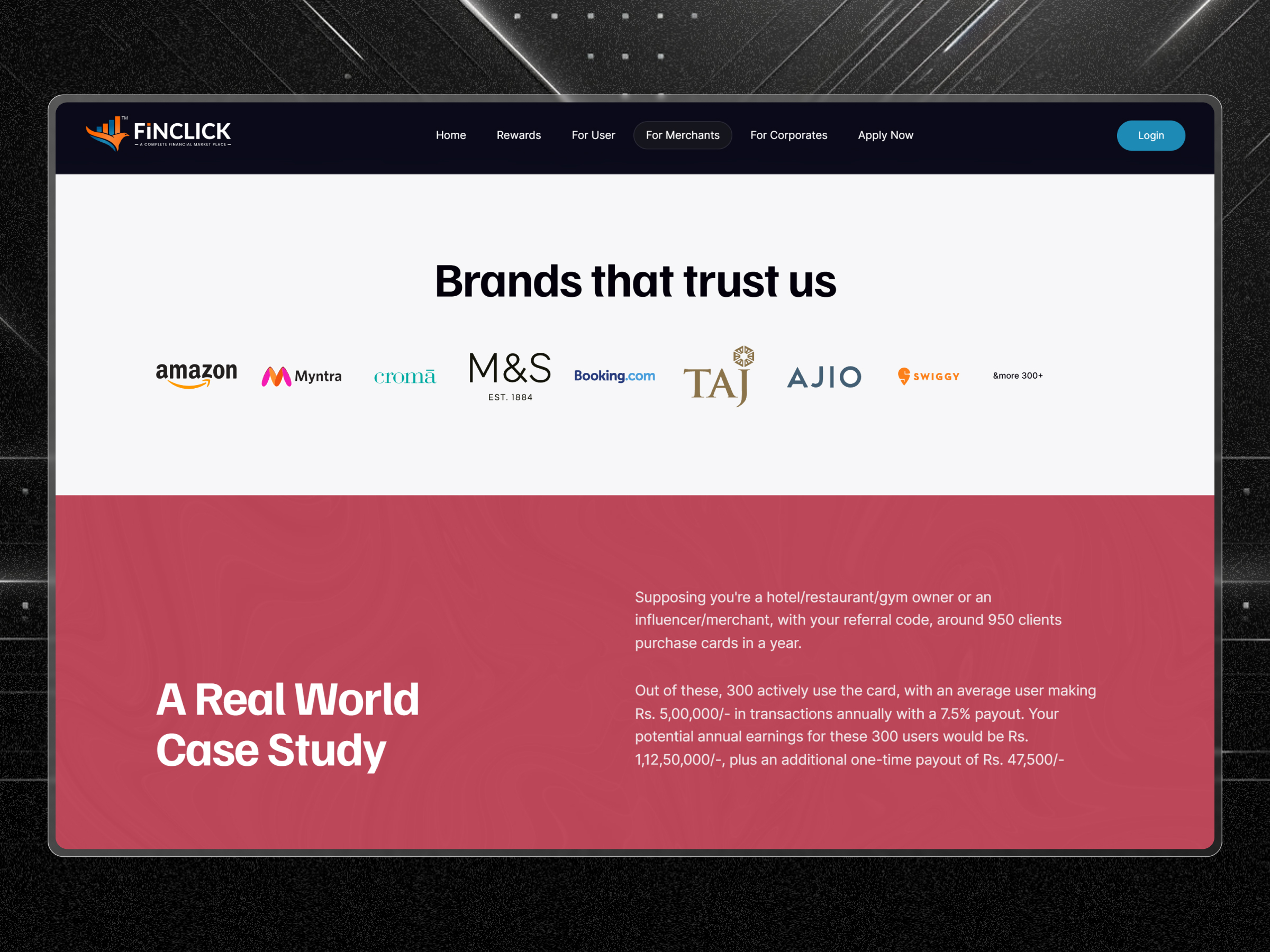
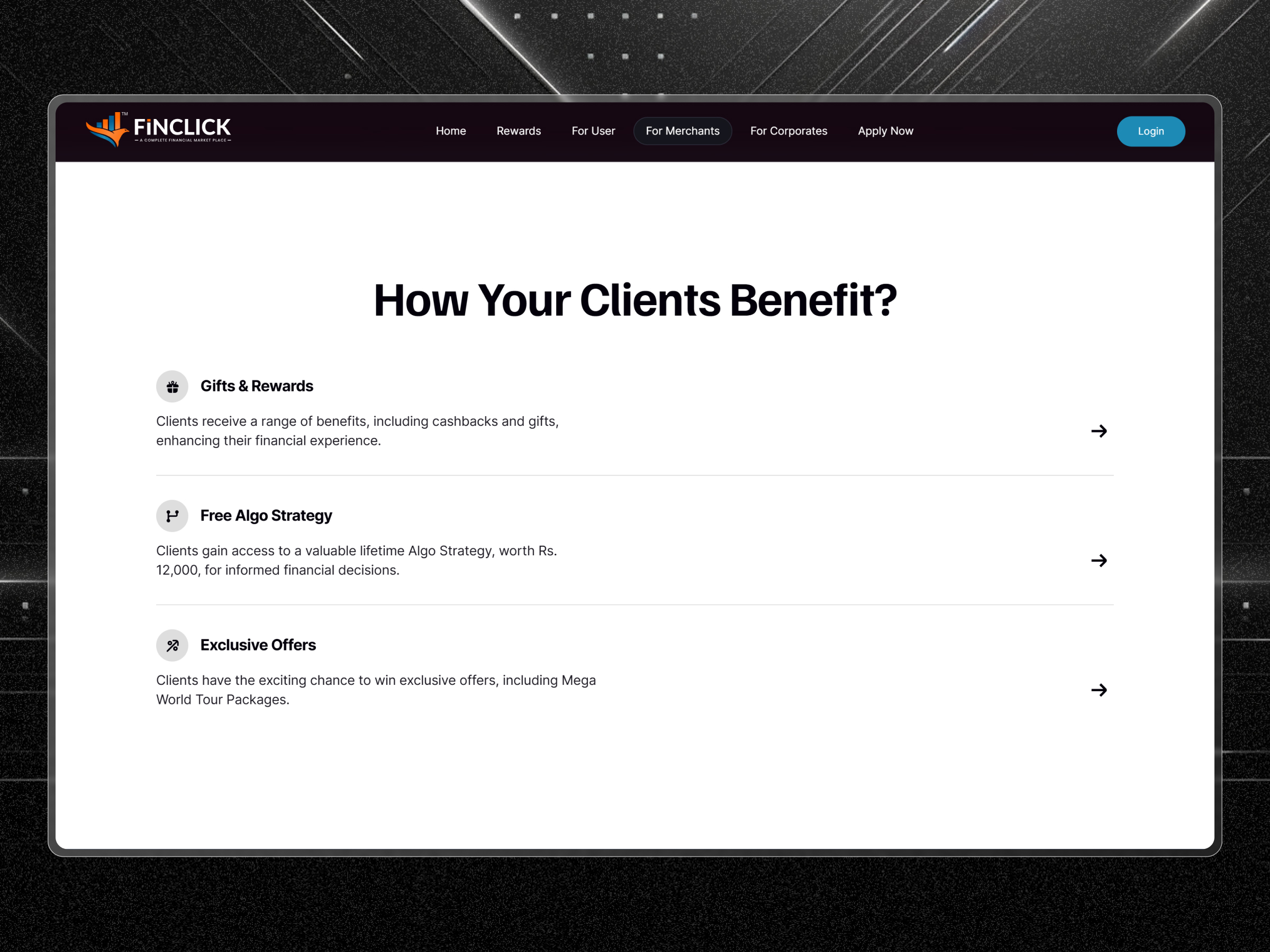
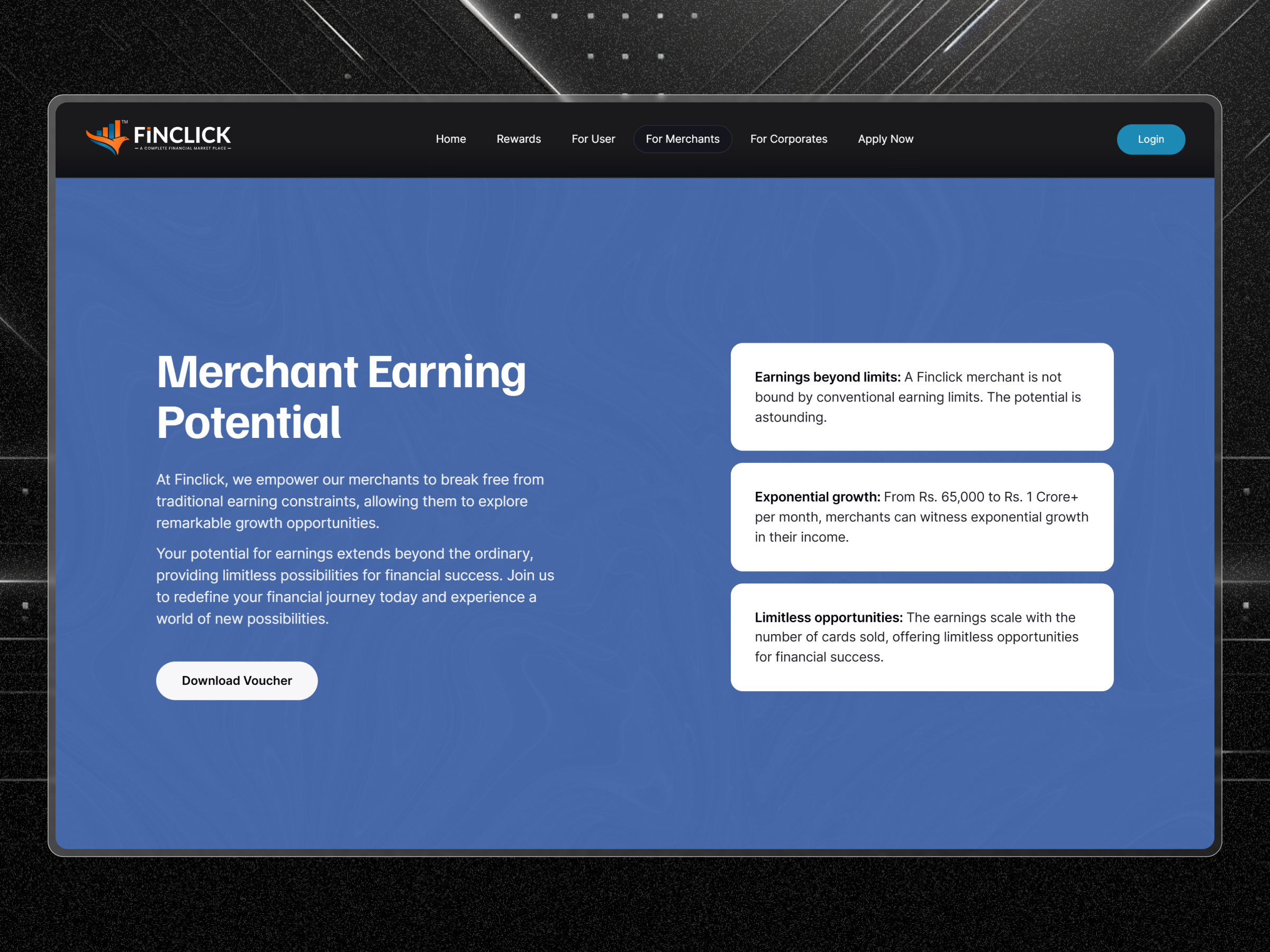
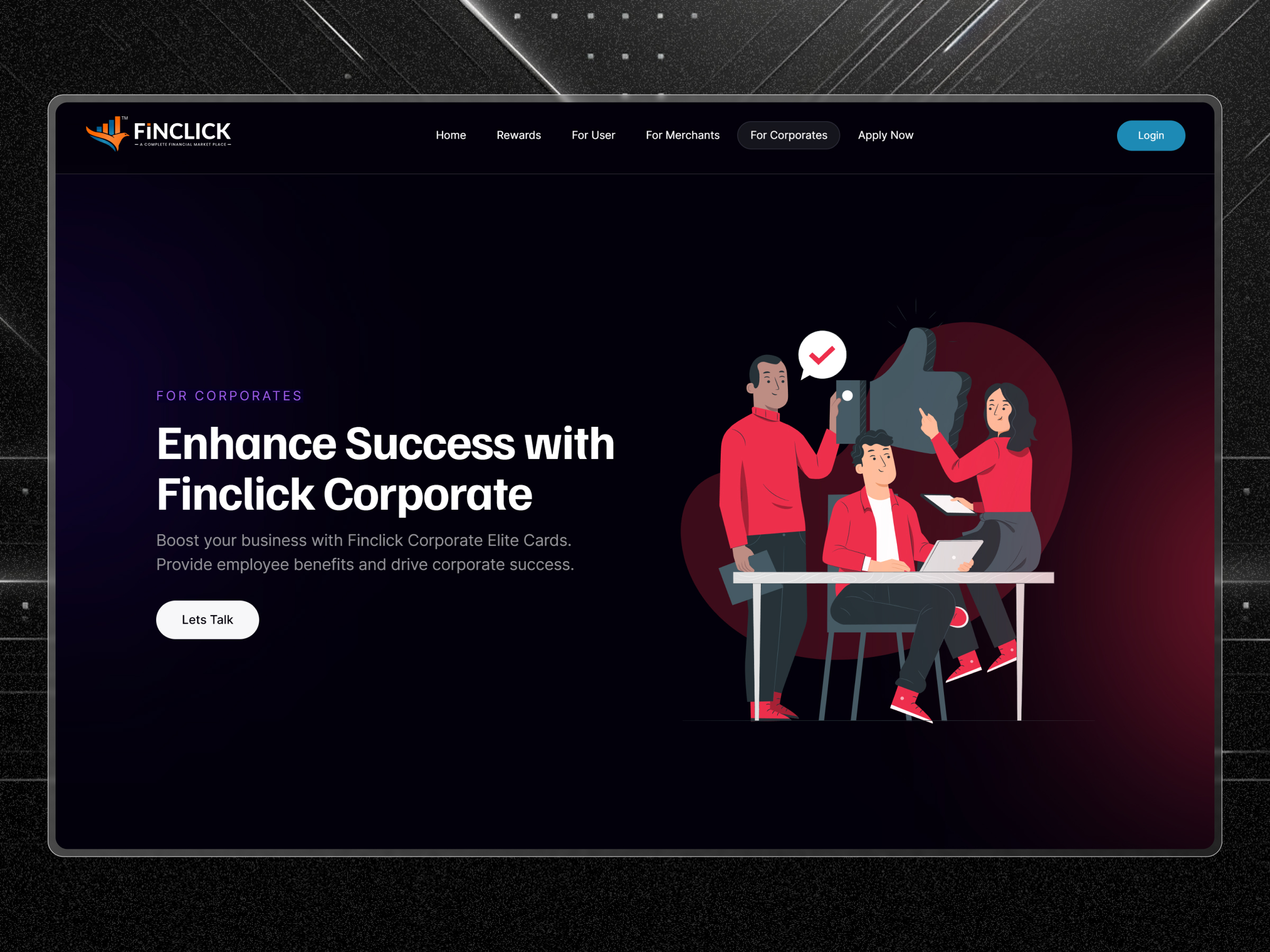
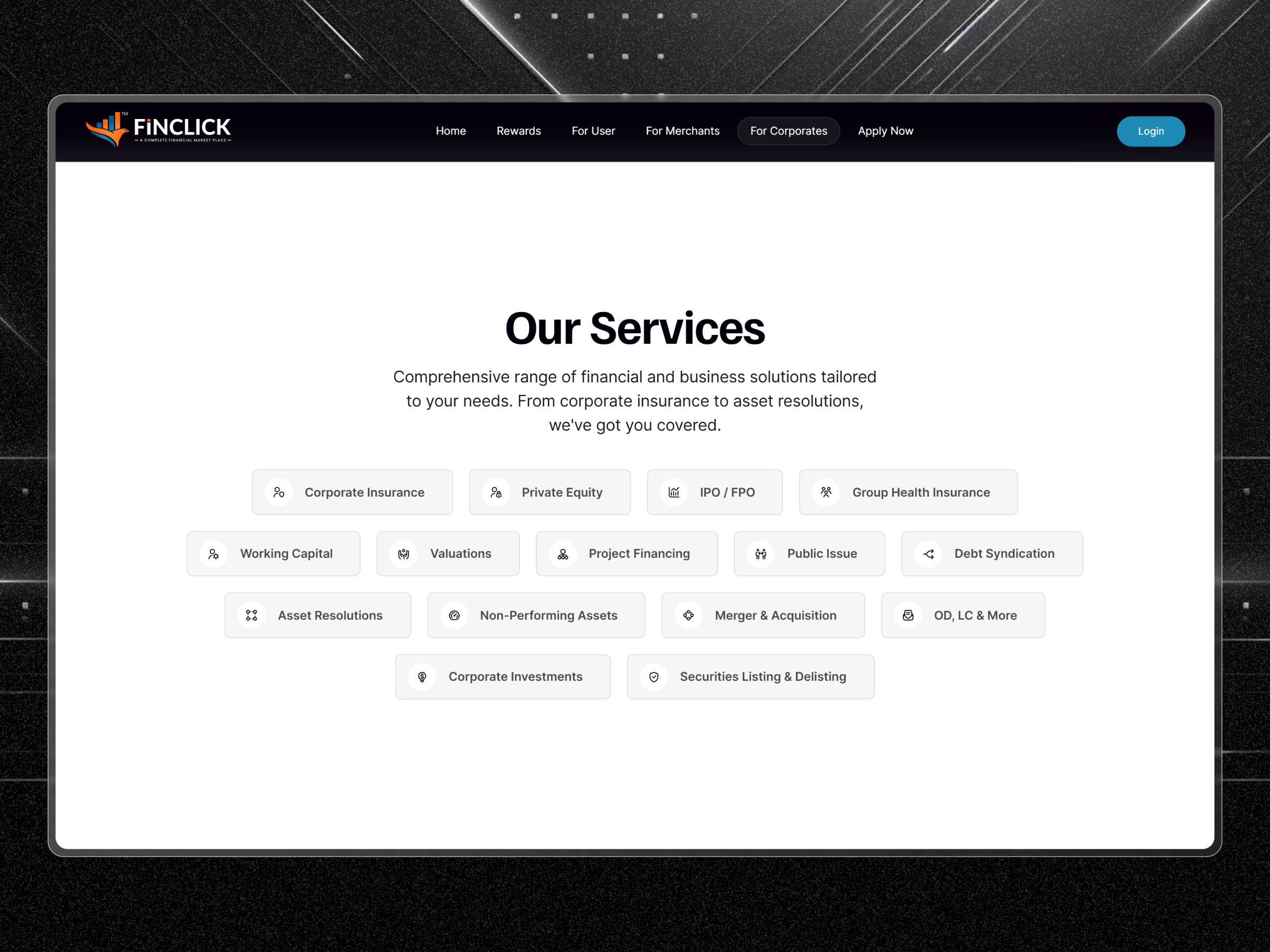
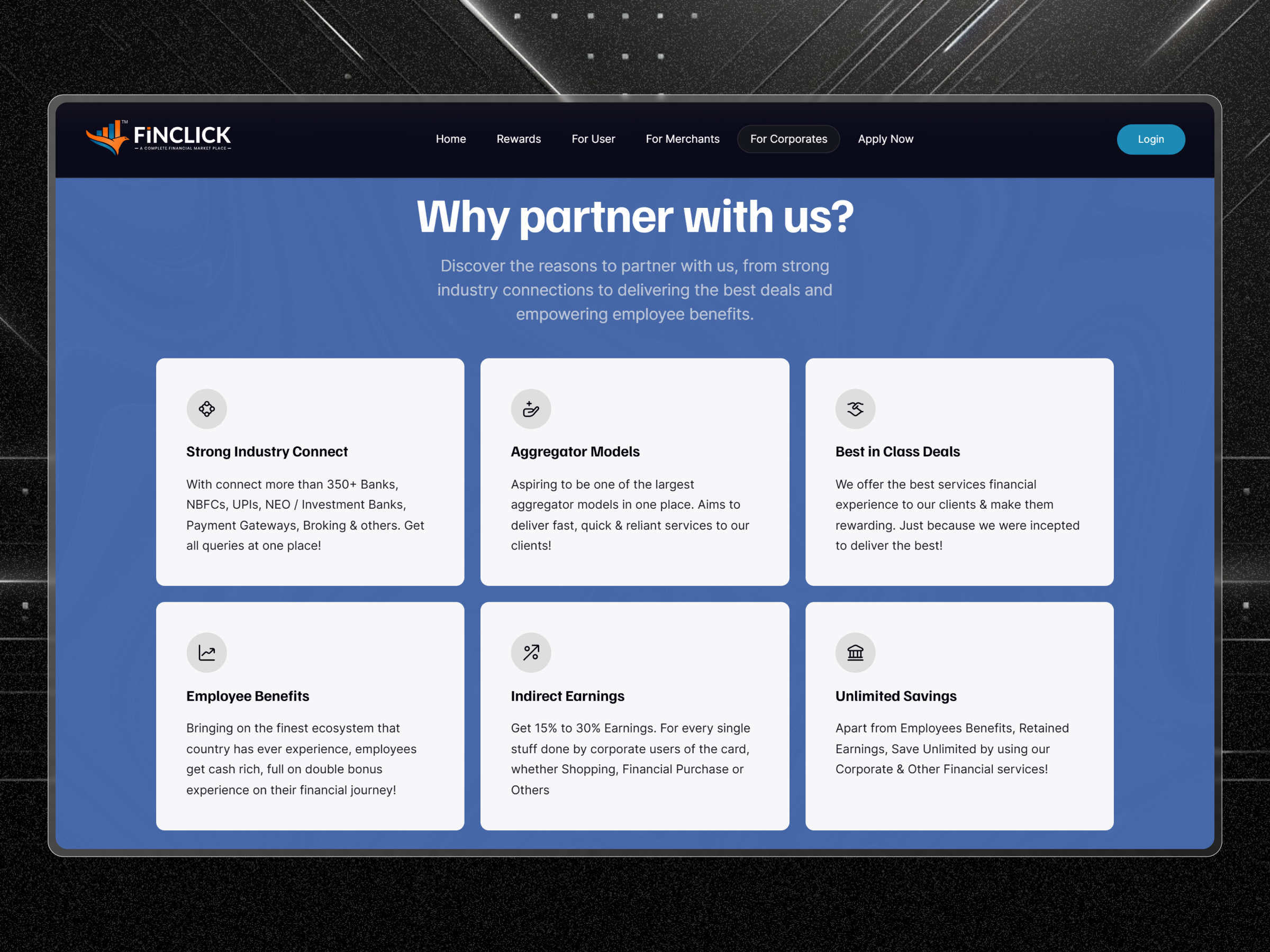
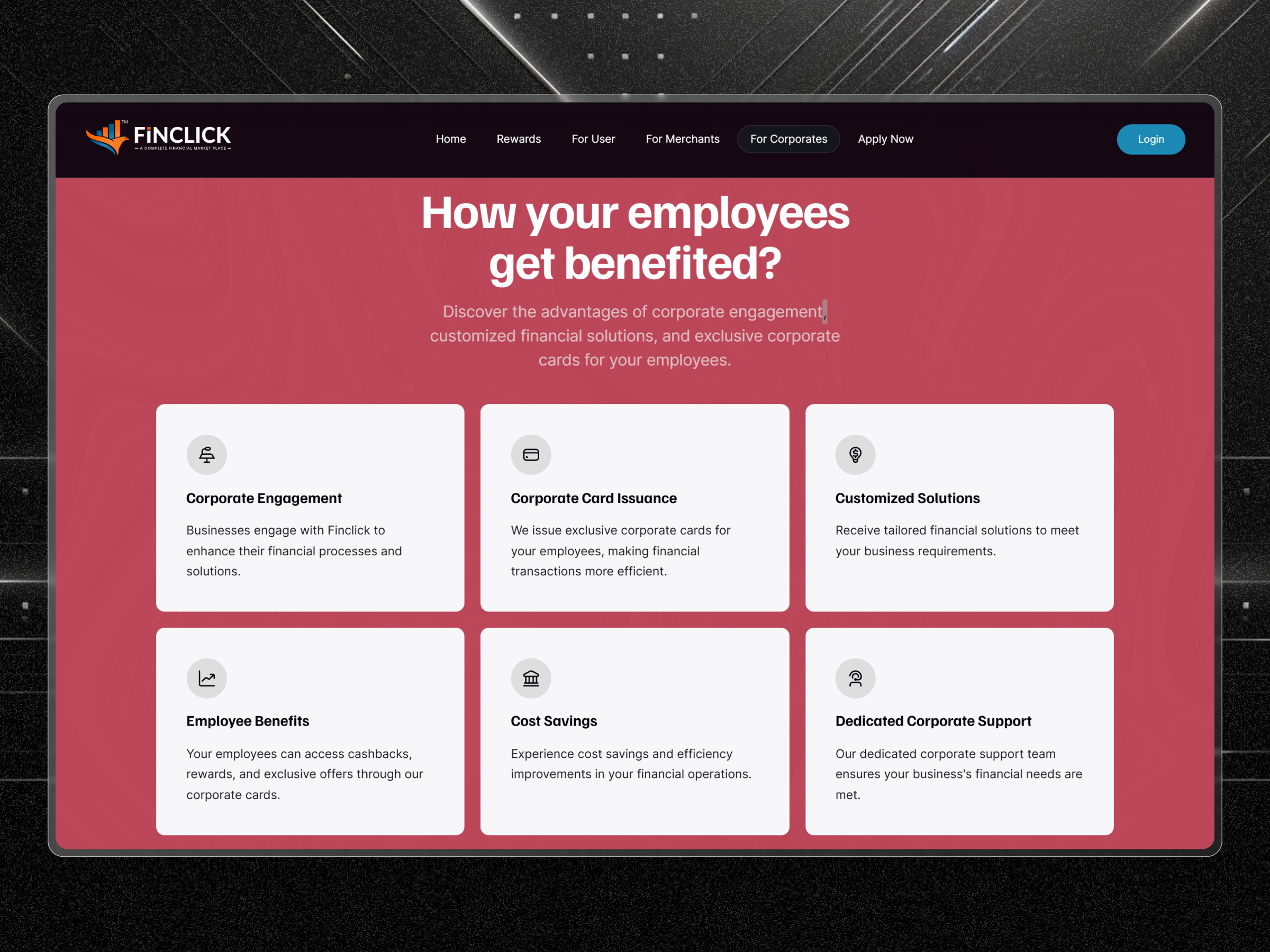
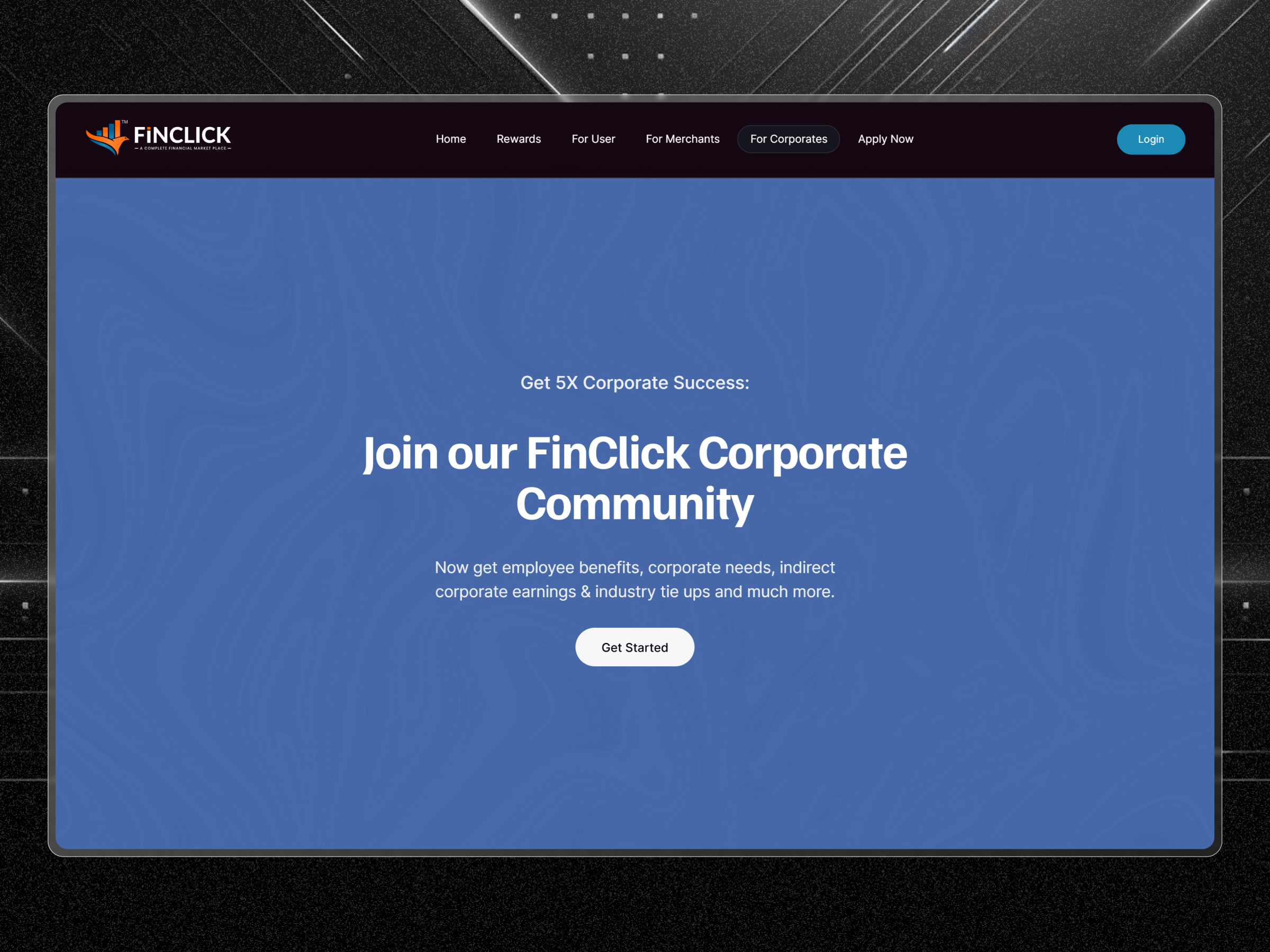
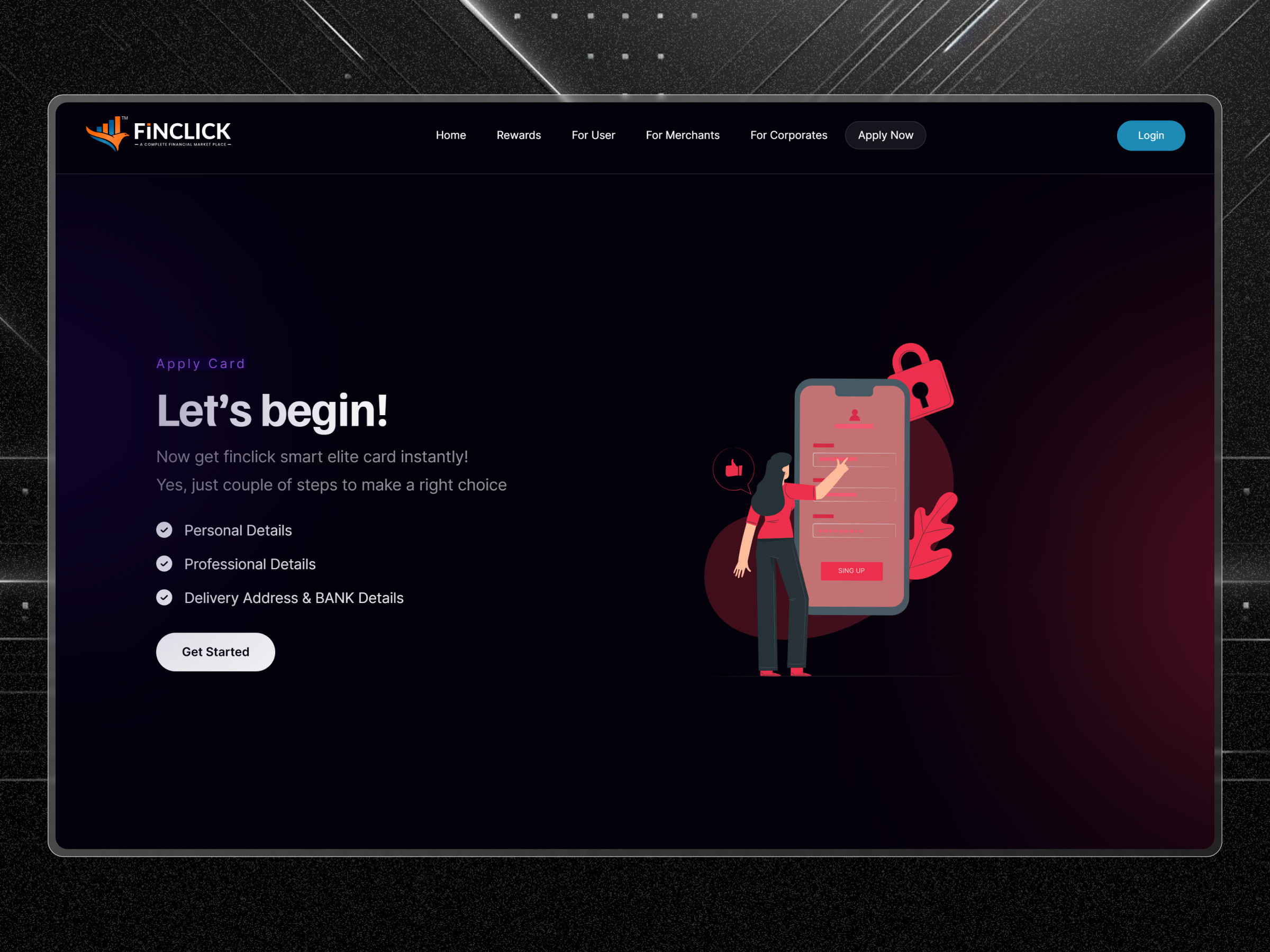
Finclick is a fintech rewards platform that lets users apply for a cashback card and understand the value of the product without noise or friction.
A fintech MVP built to present a new card clearly
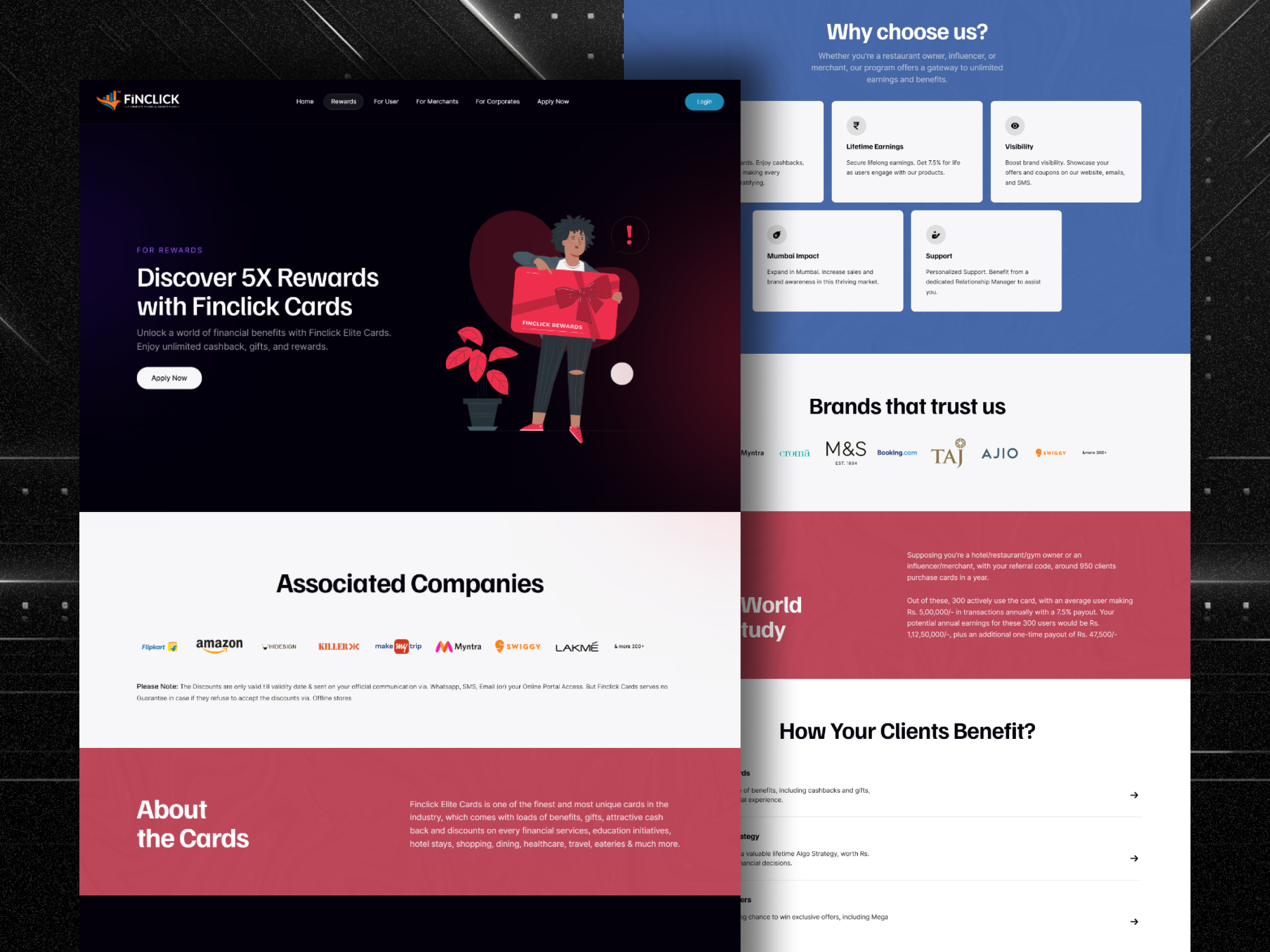
Finclick is a fintech platform where users can apply for a cashback card that rewards spending across different categories. The Mumbai-based startup had a clear product idea — a card that gives users cashback depending on where they spend — and needed a platform to take applications and an admin panel to manage them.
We planned, designed, and built the complete platform in 1 month for ₹60,000. Public-facing website for card applications and a backend admin panel for the team to review and manage those applications.
What the project needed to do
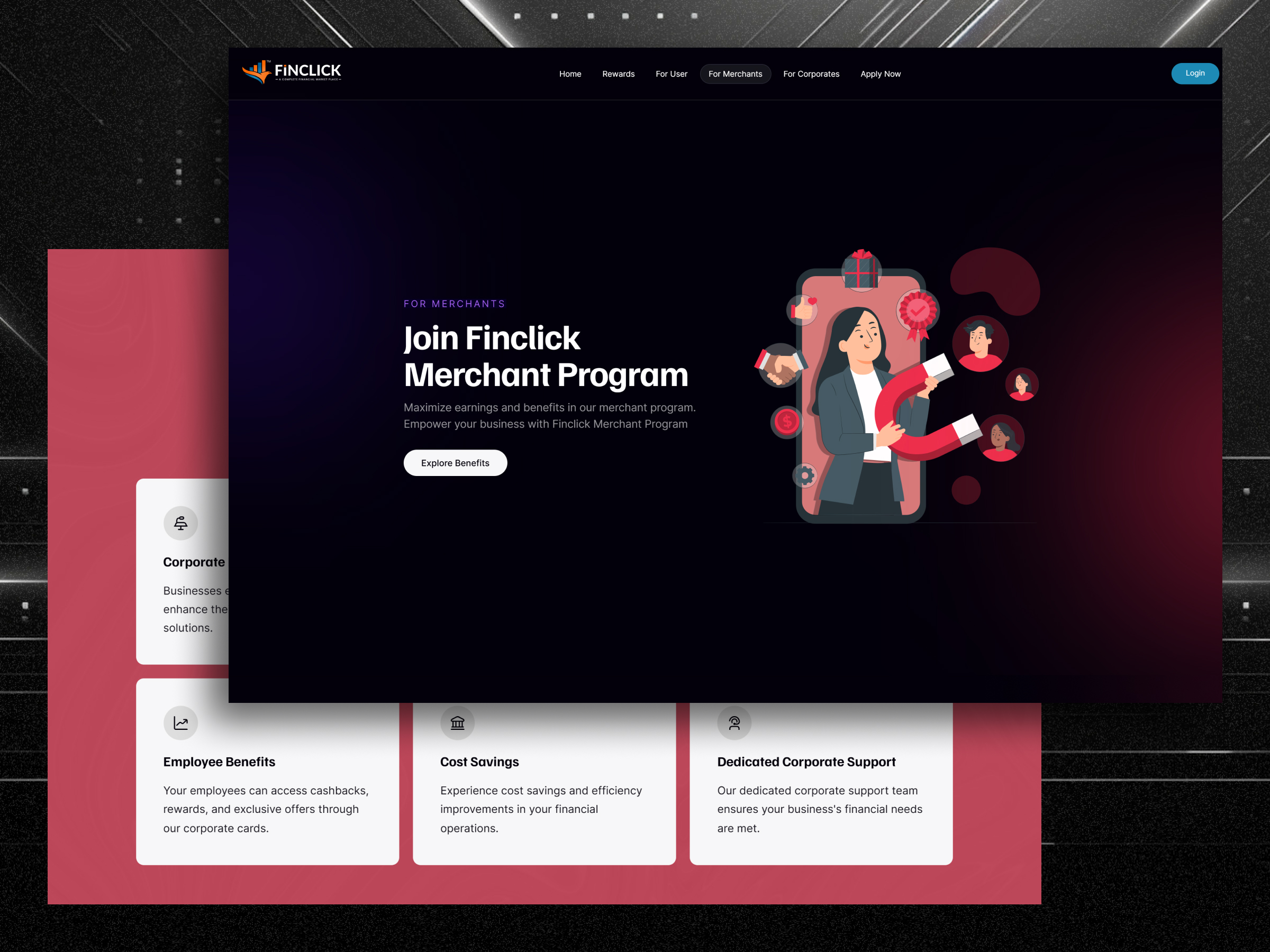
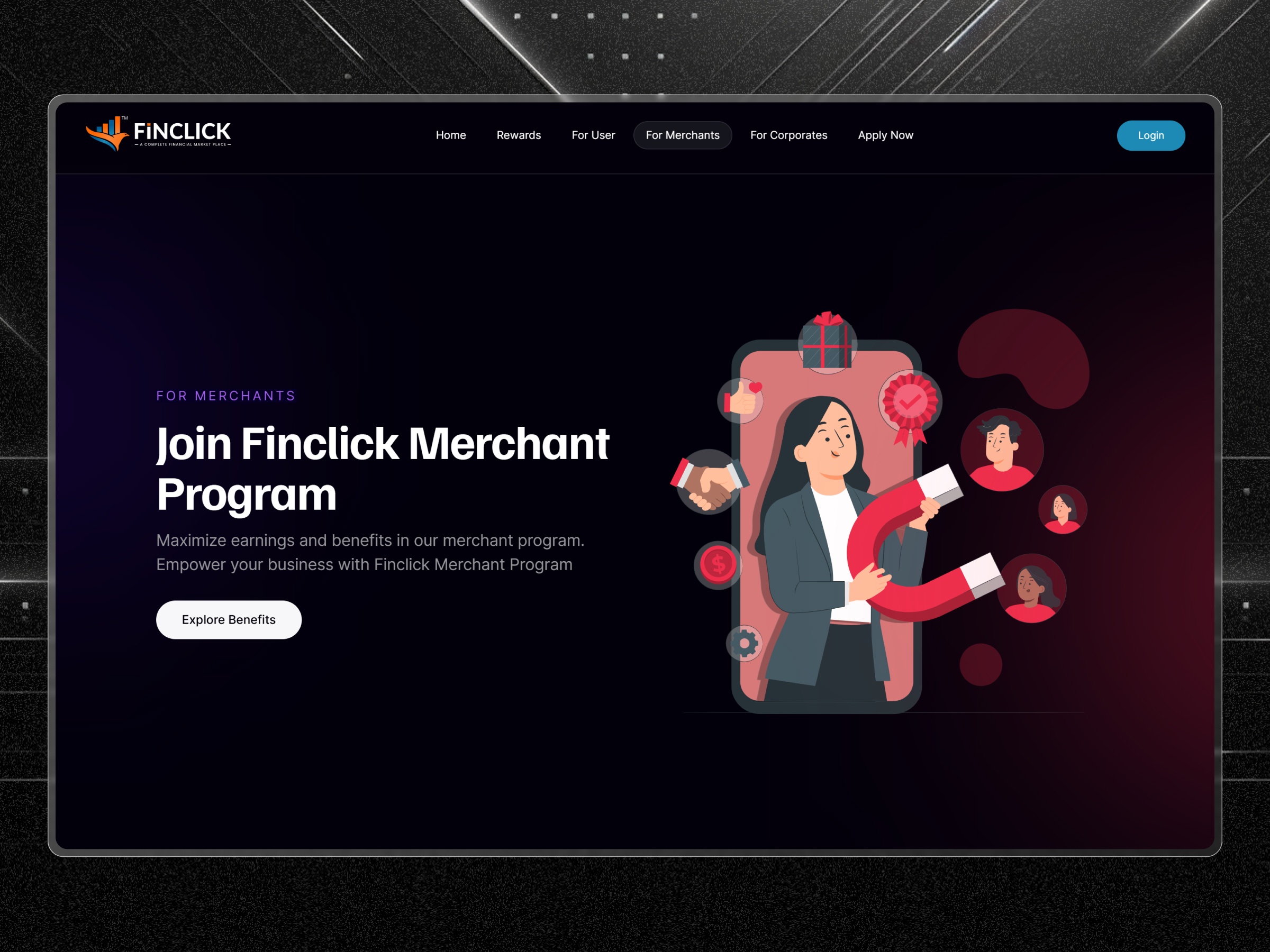
The startup needed two things working together: a website where users could learn about the card's cashback benefits and submit an application, and an admin panel where the Finclick team could see incoming applications, review details, and manage the pipeline.
The design needed to feel trustworthy — fintech products ask users to hand over personal and financial details. A sloppy interface kills that trust before a user even starts filling out the form.
How we approached it
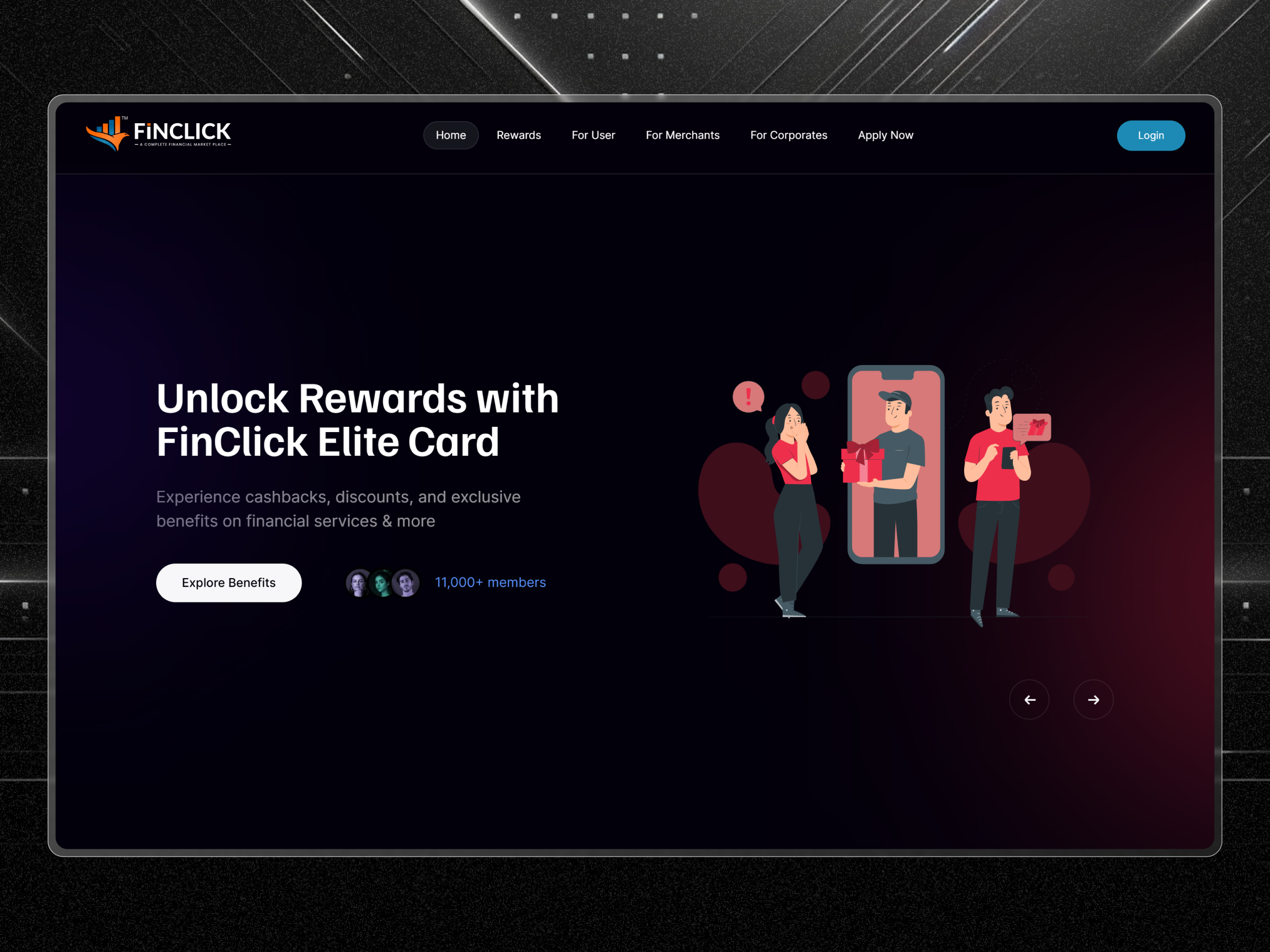
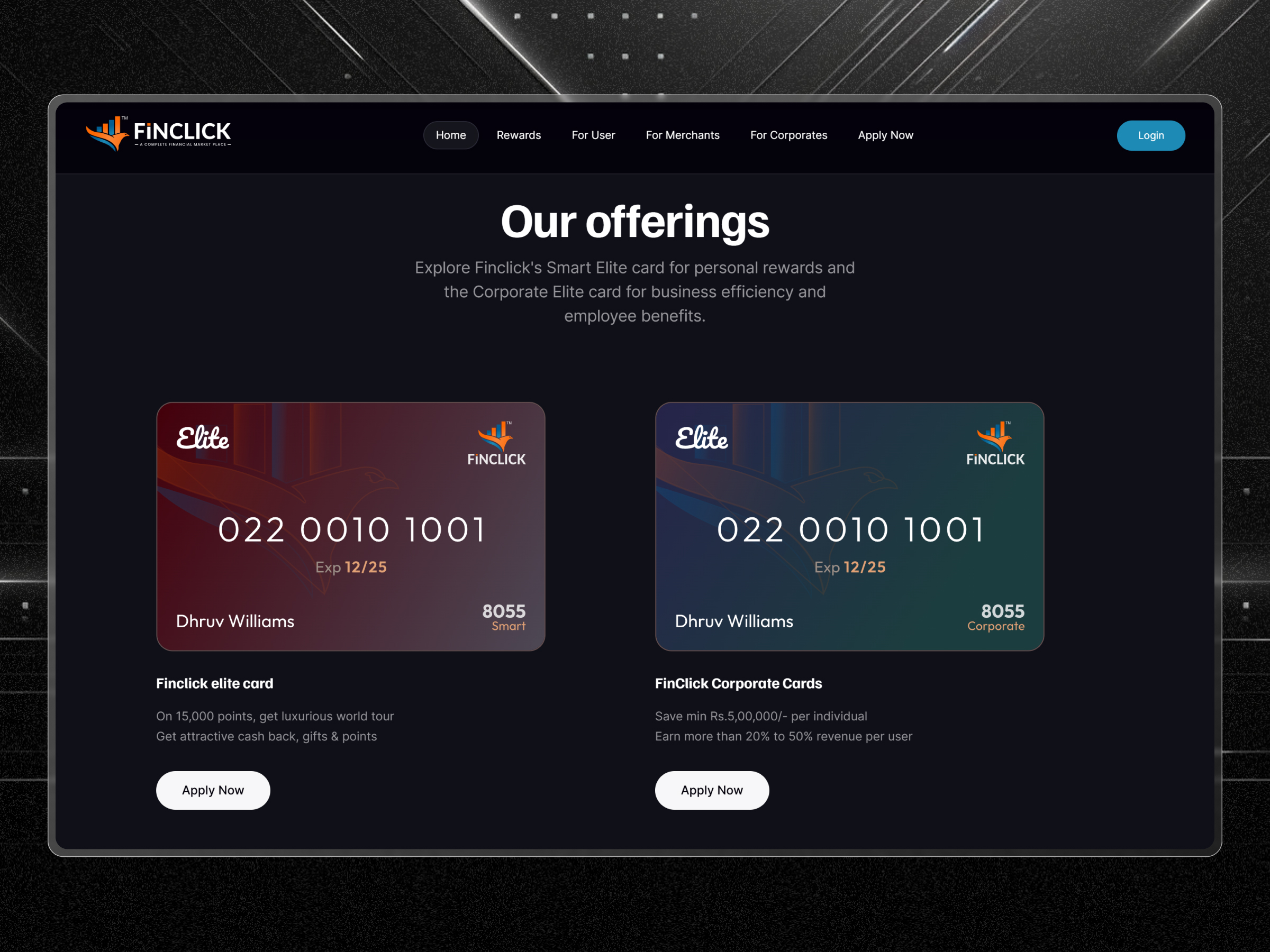
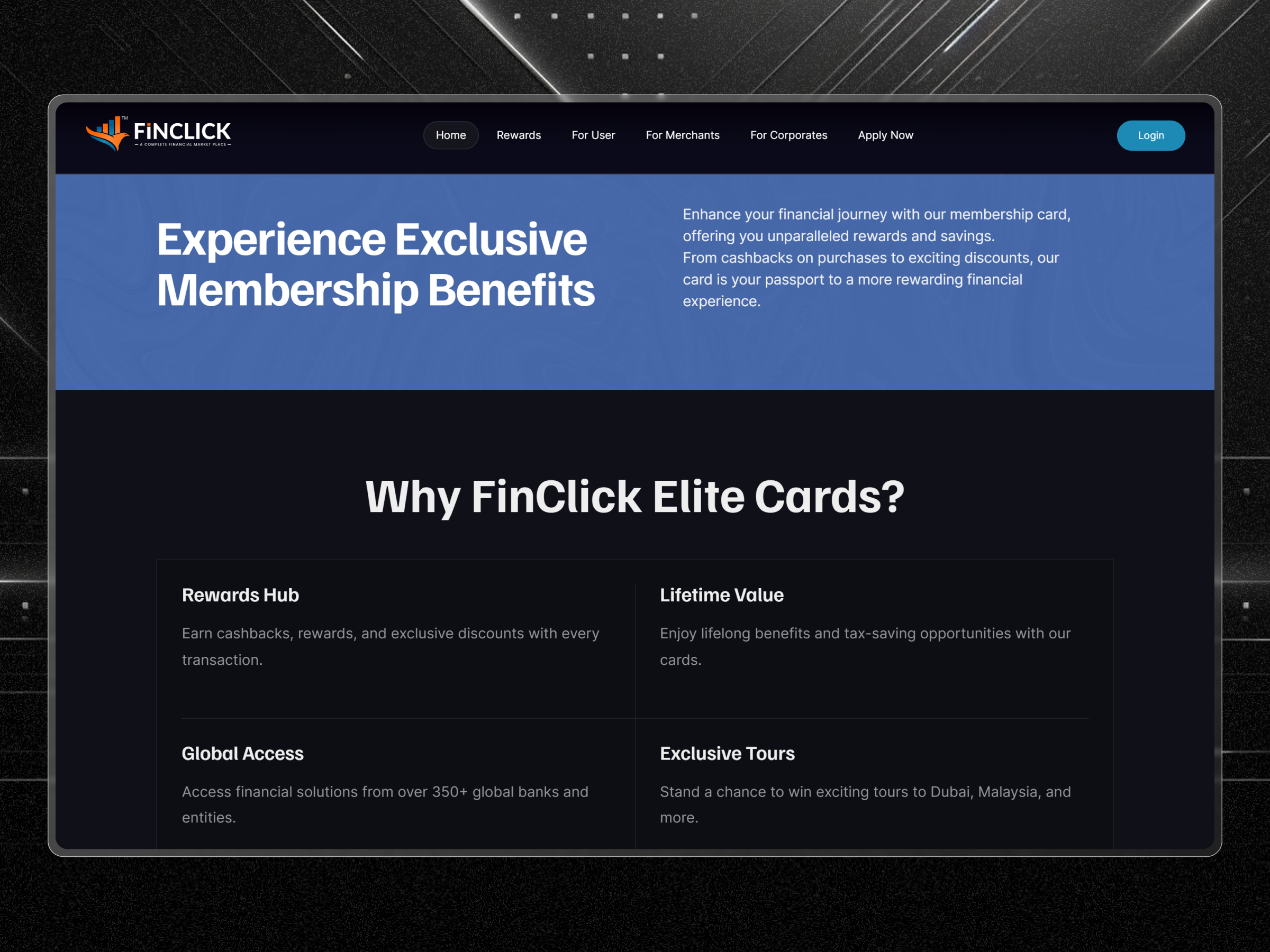
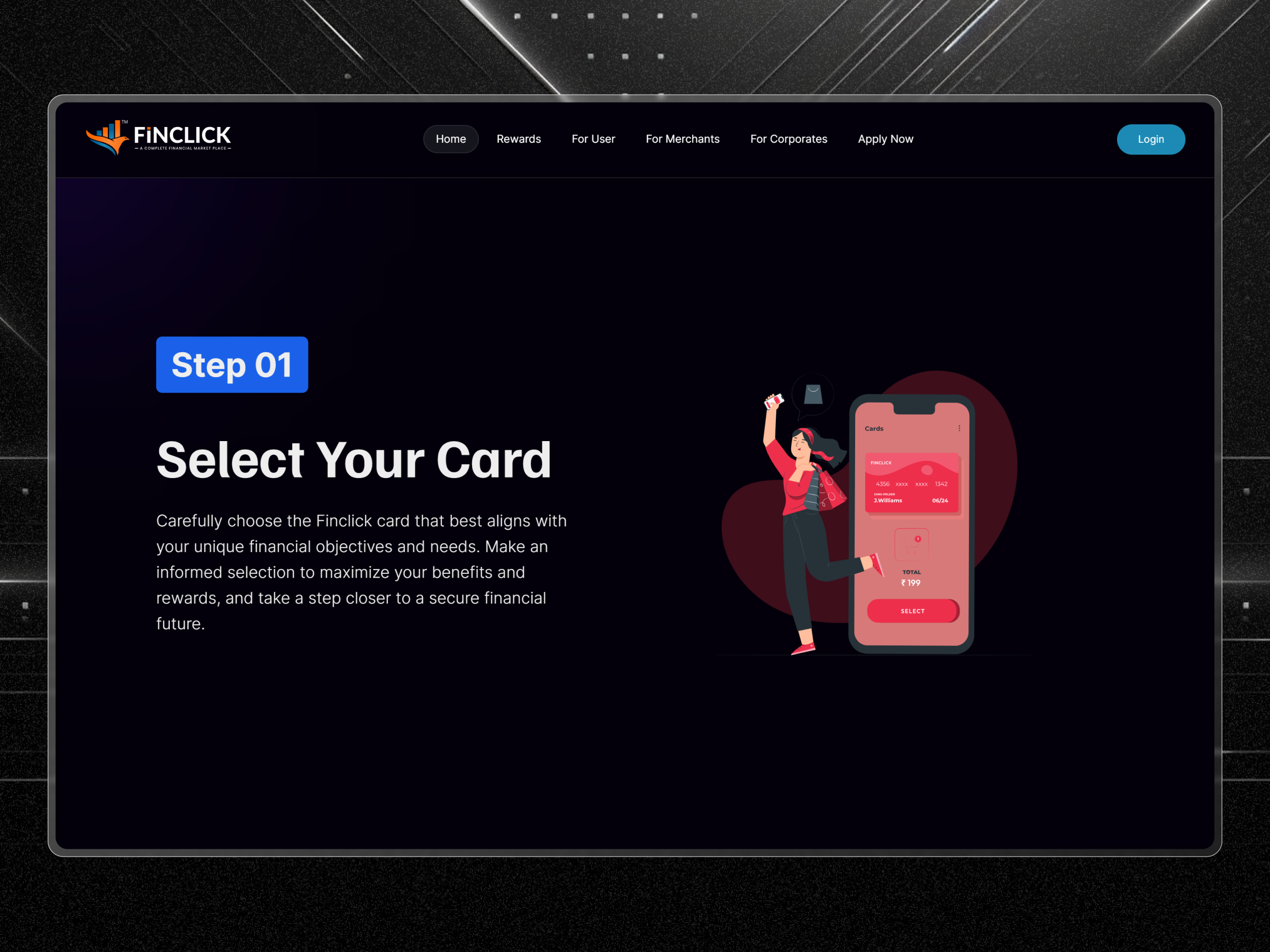
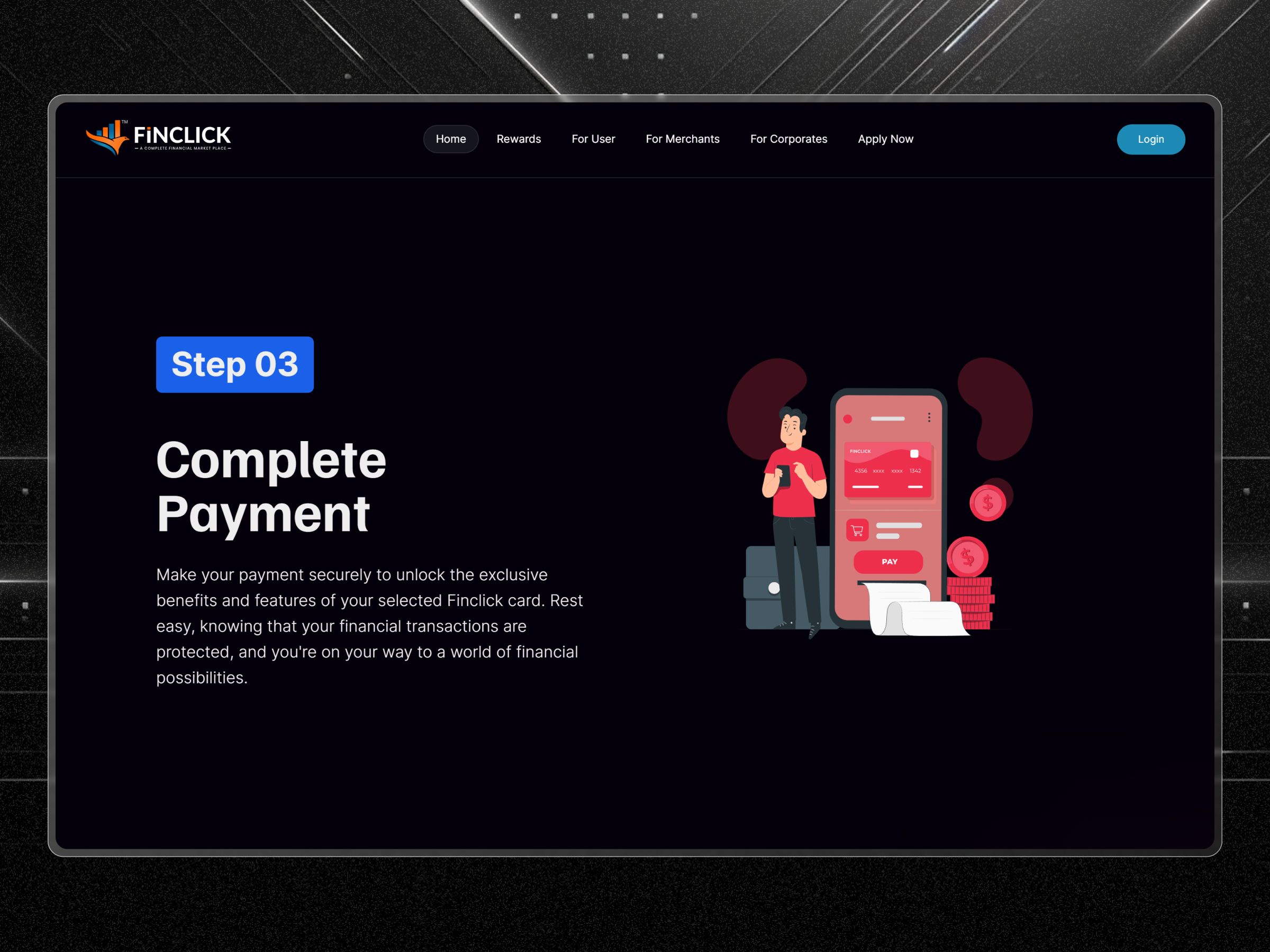
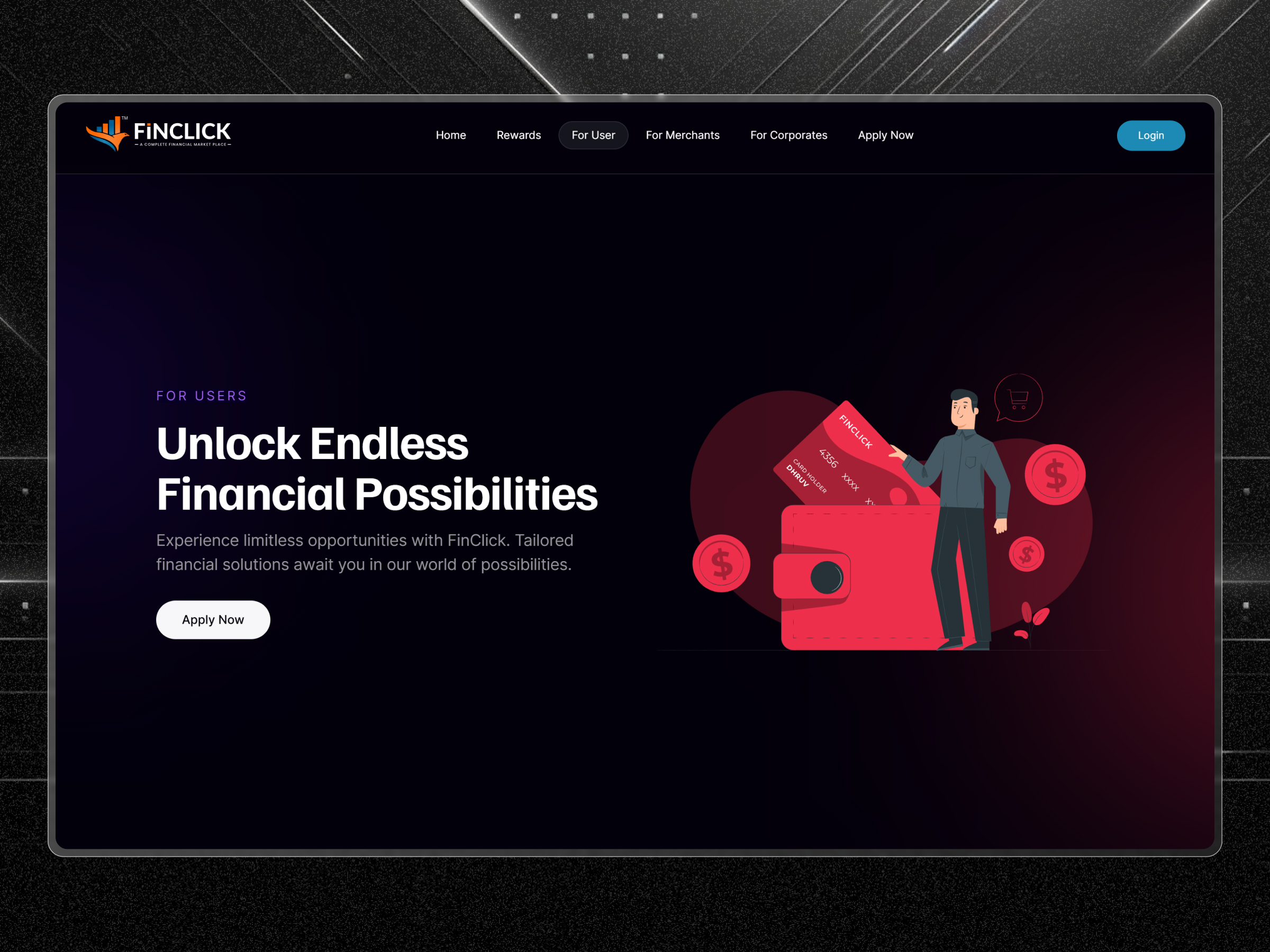
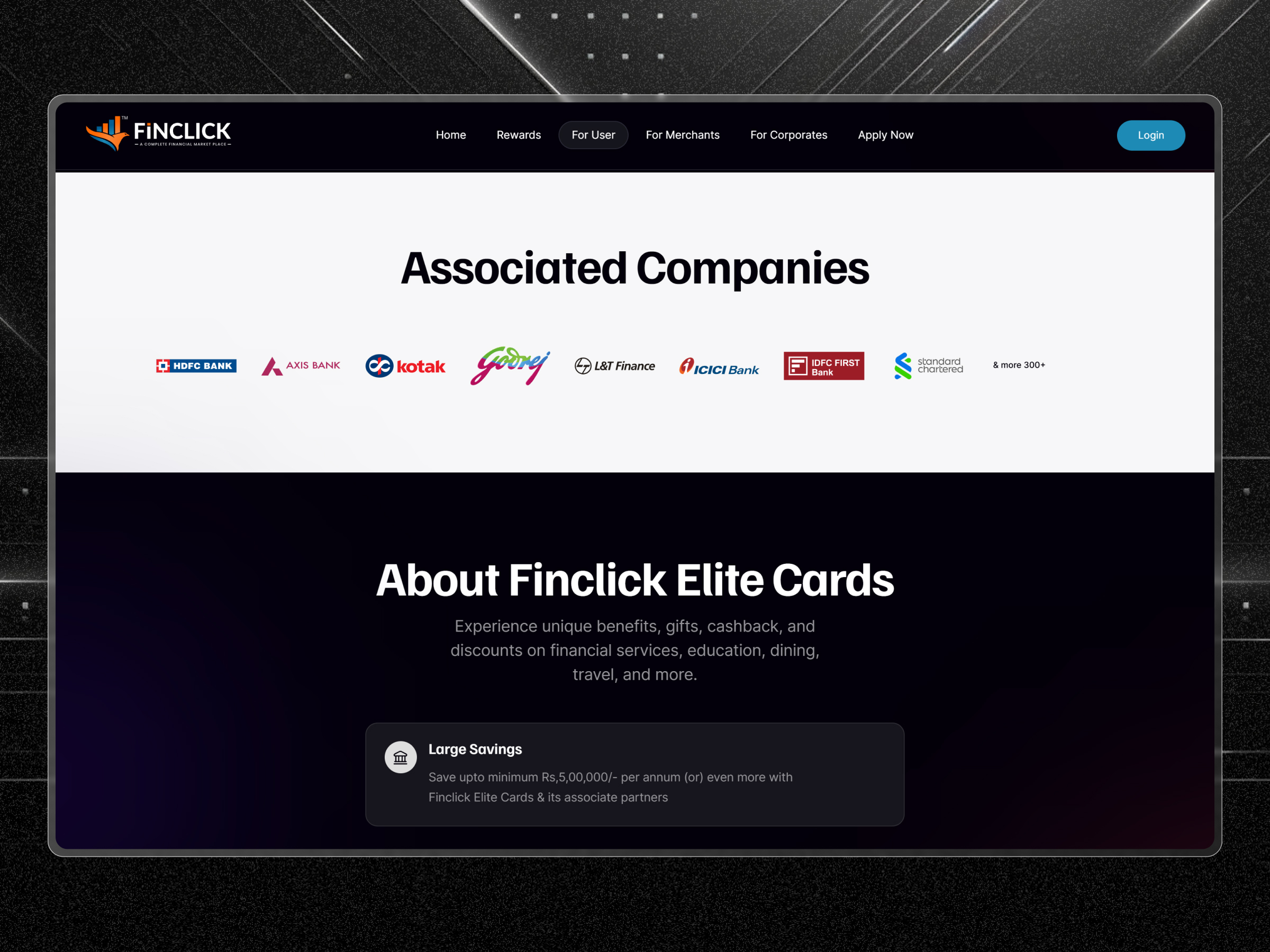
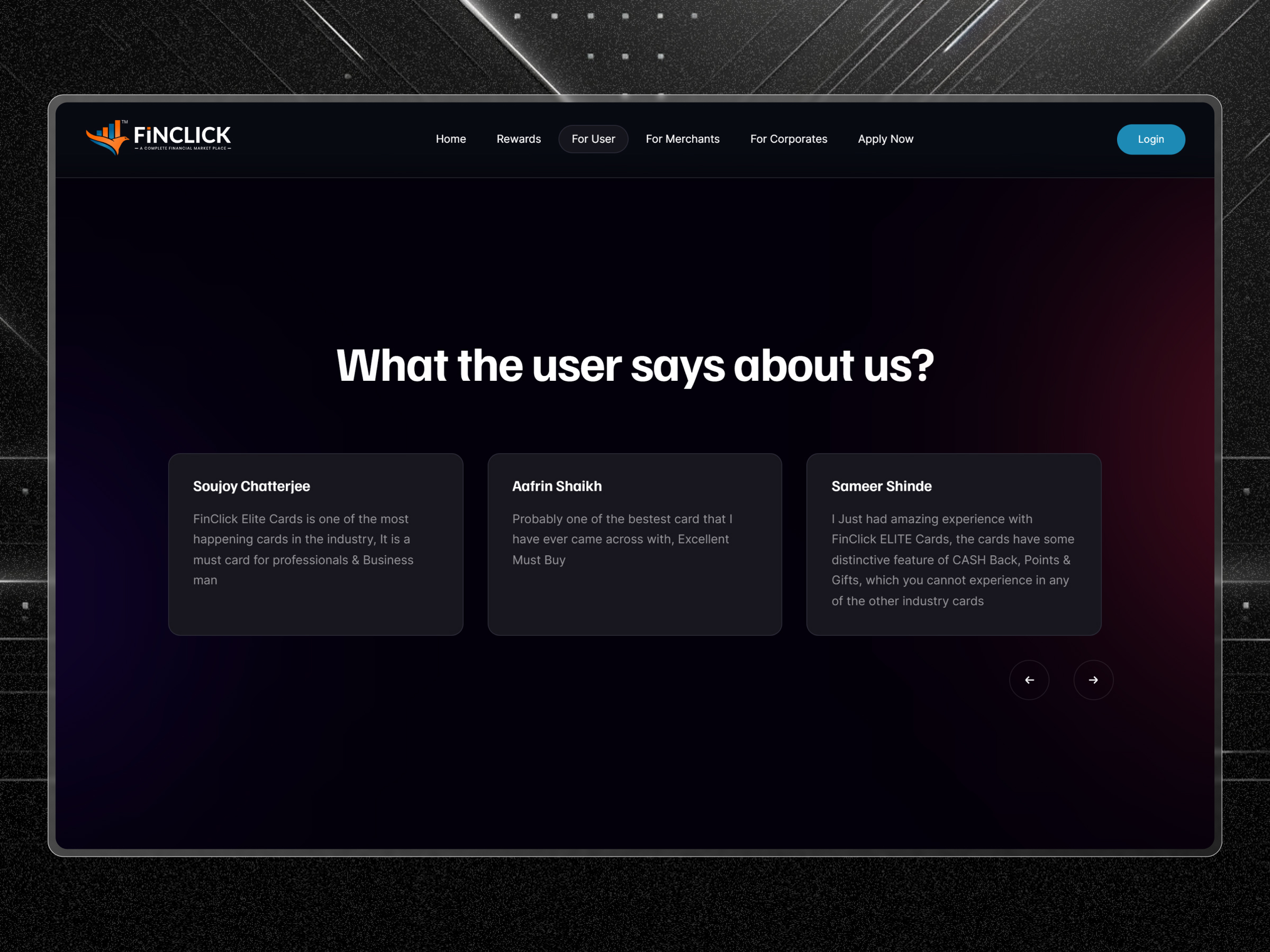
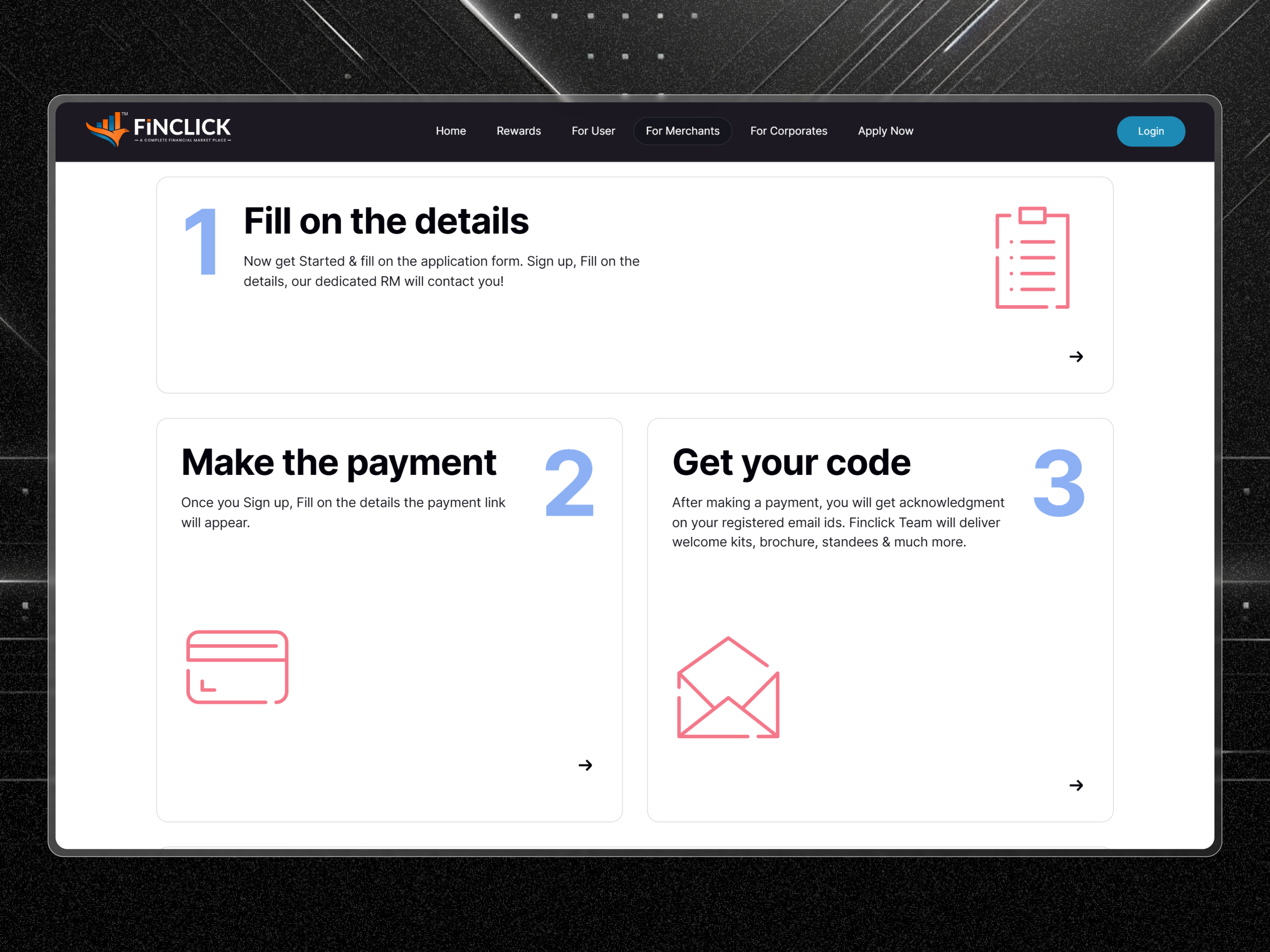
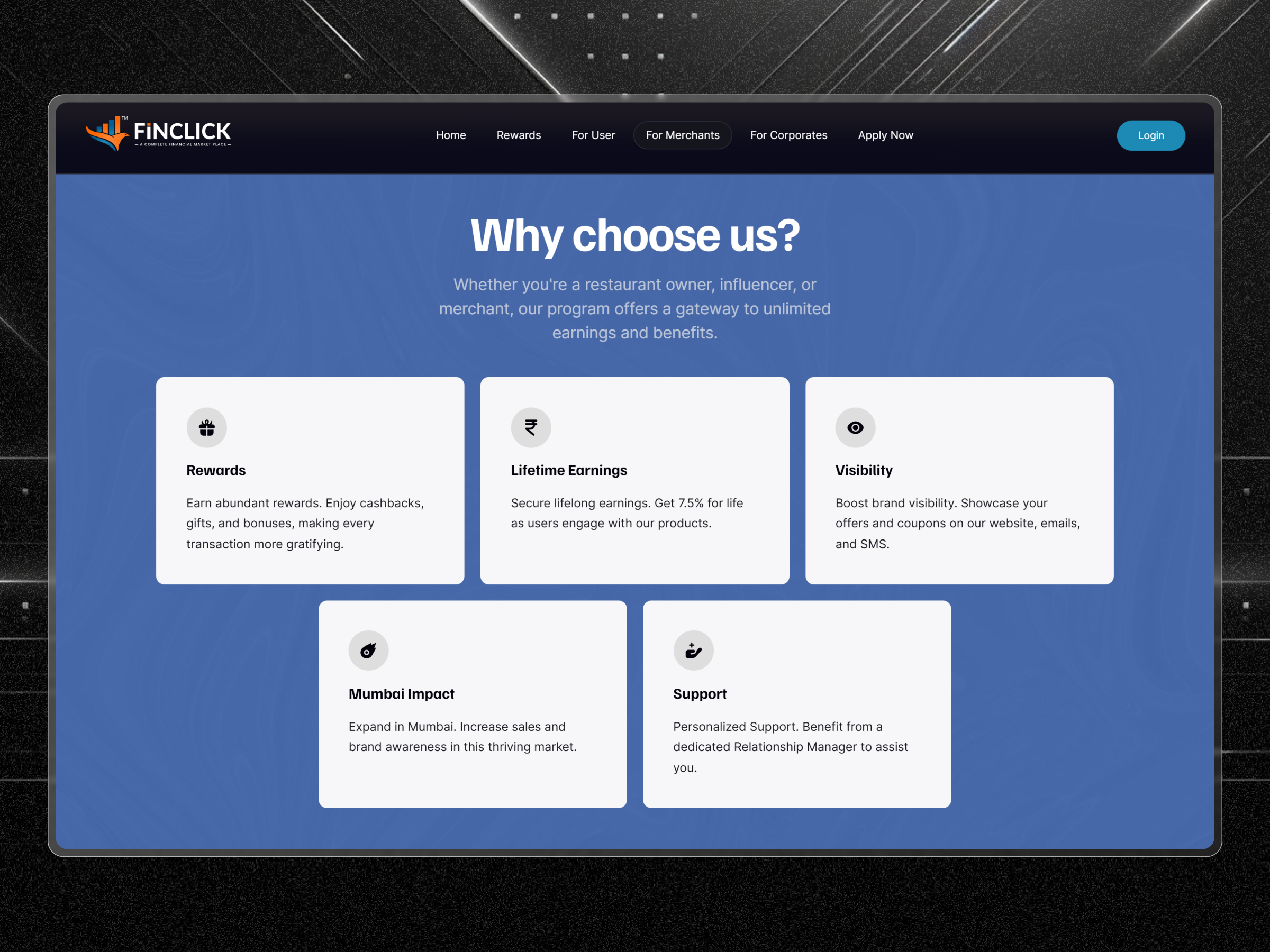
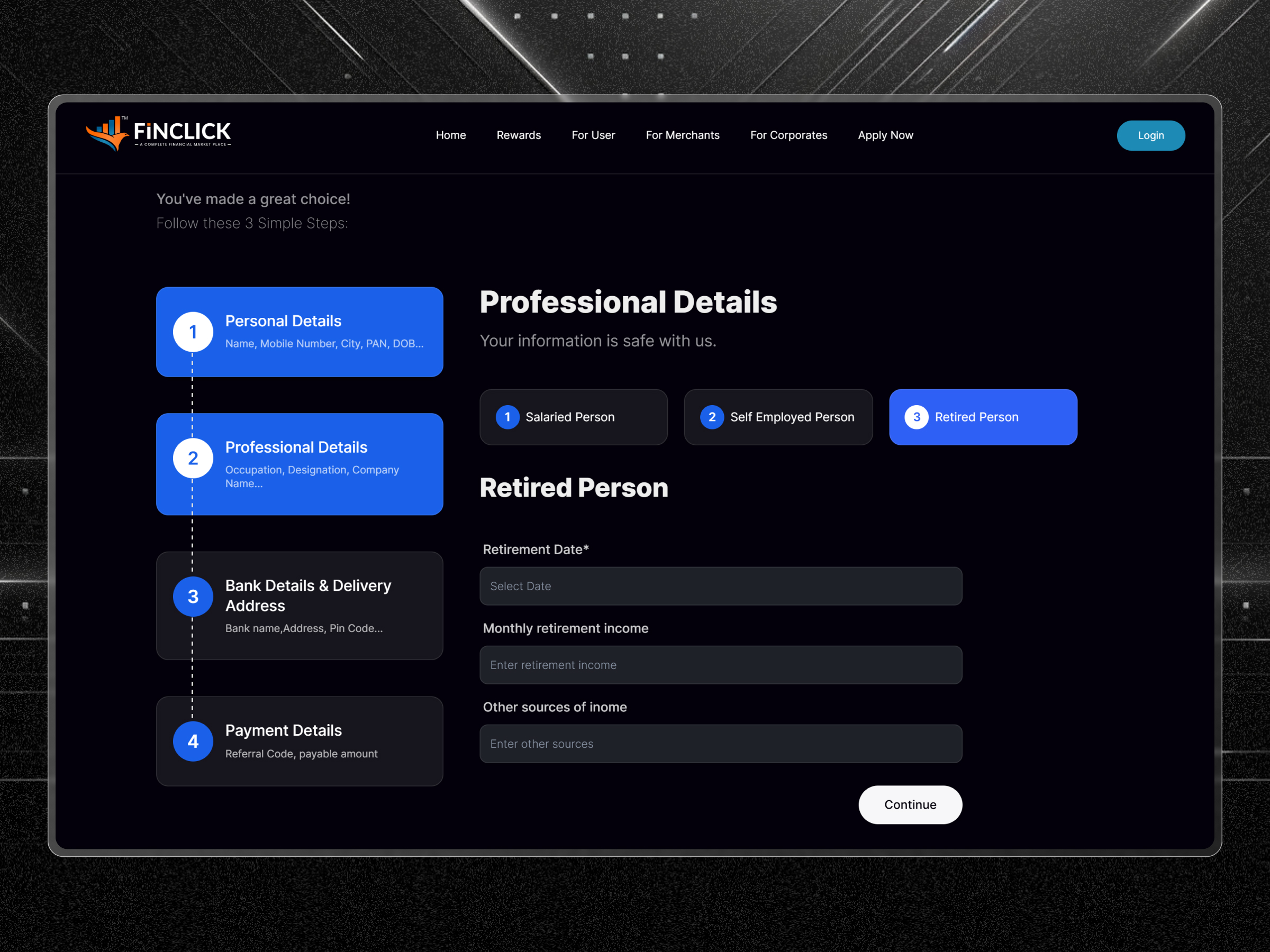
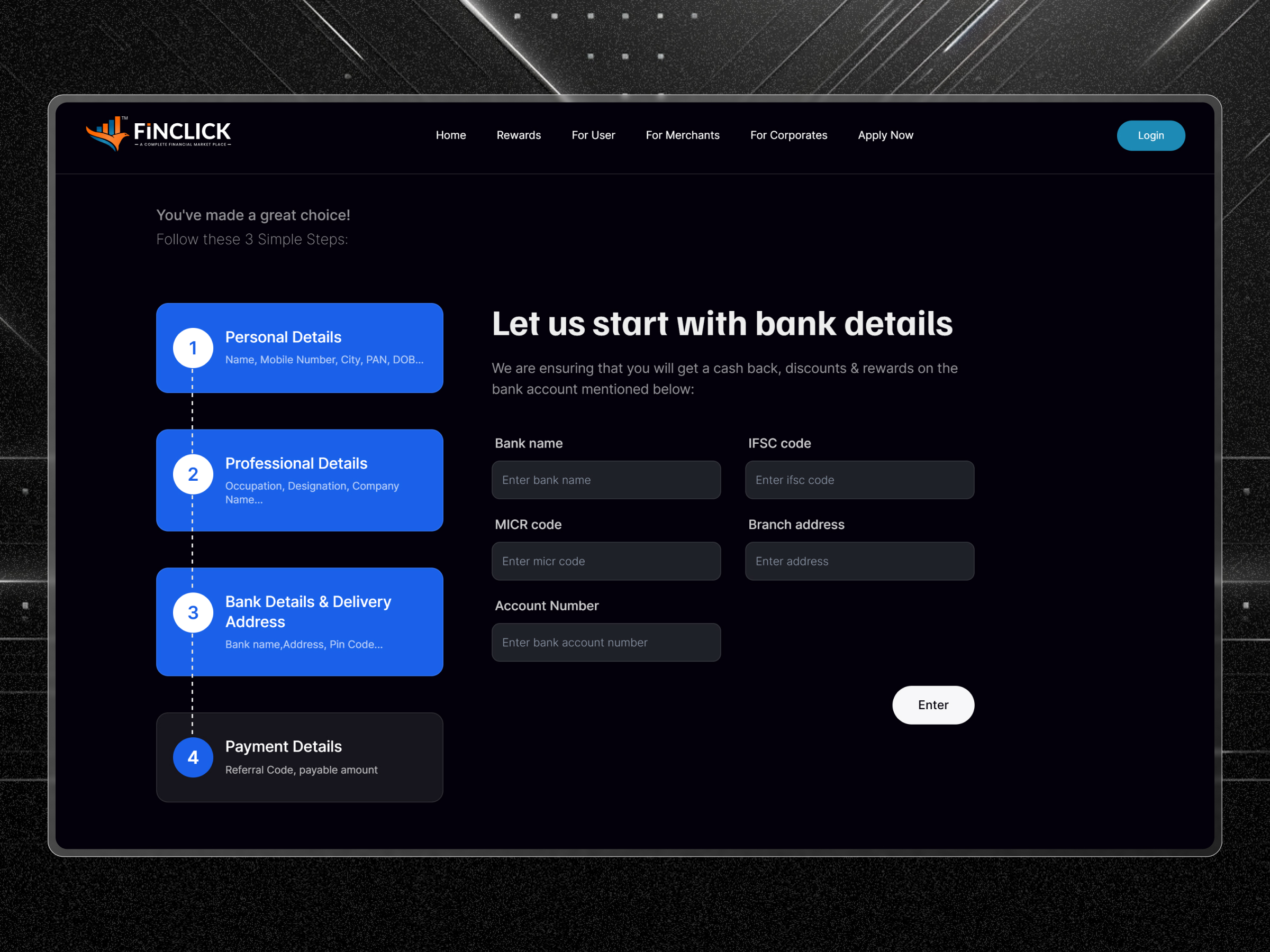
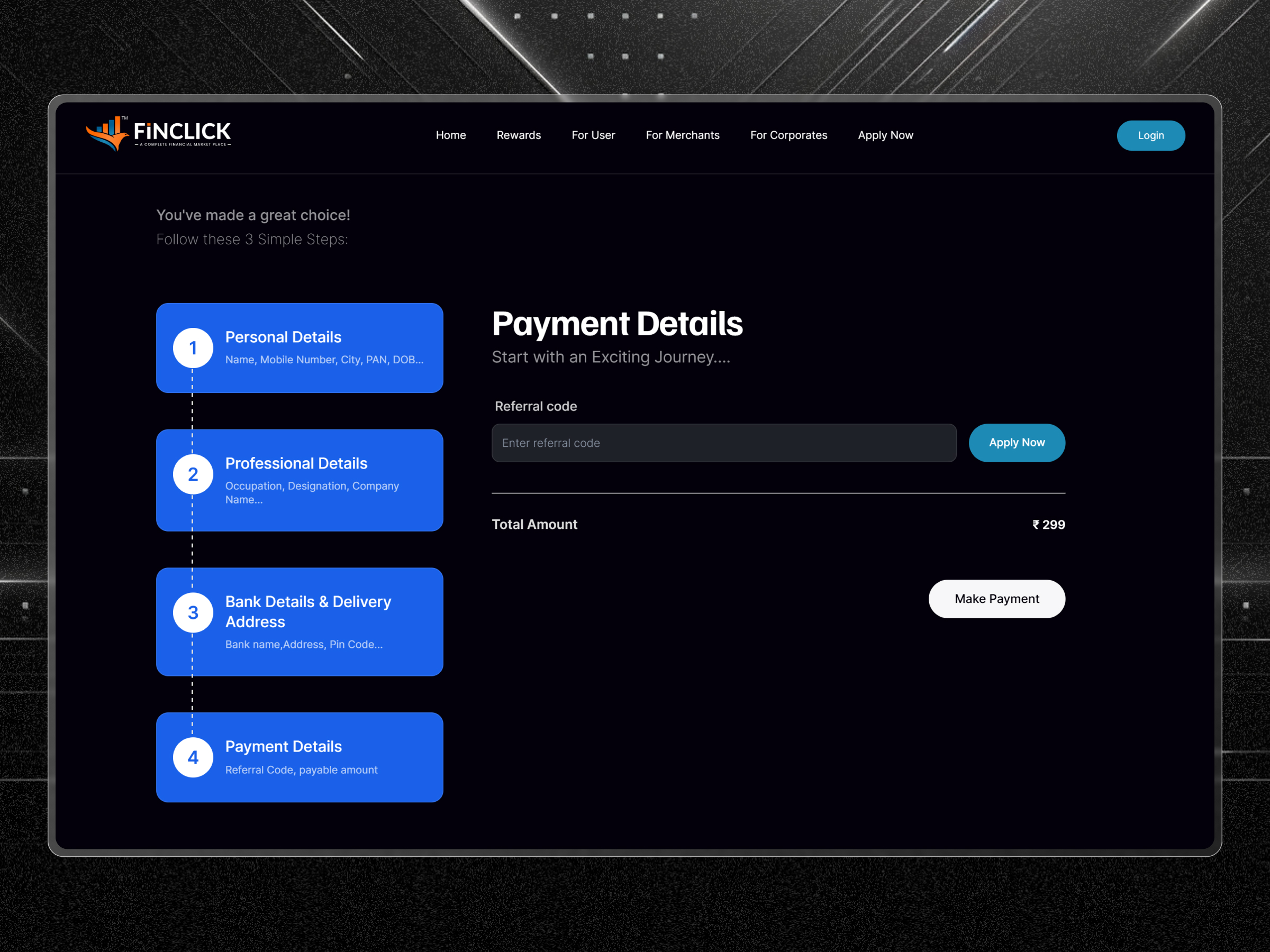
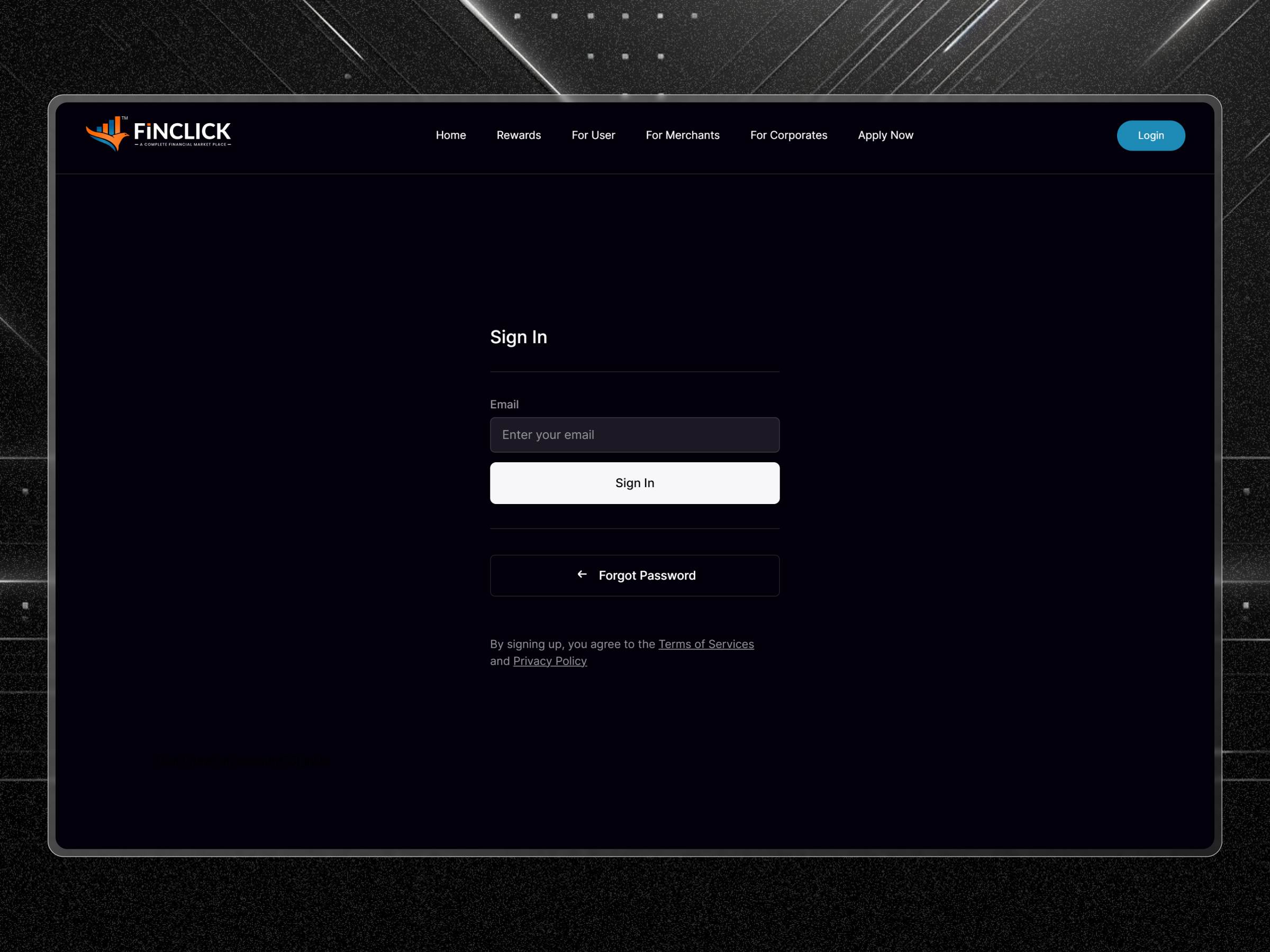
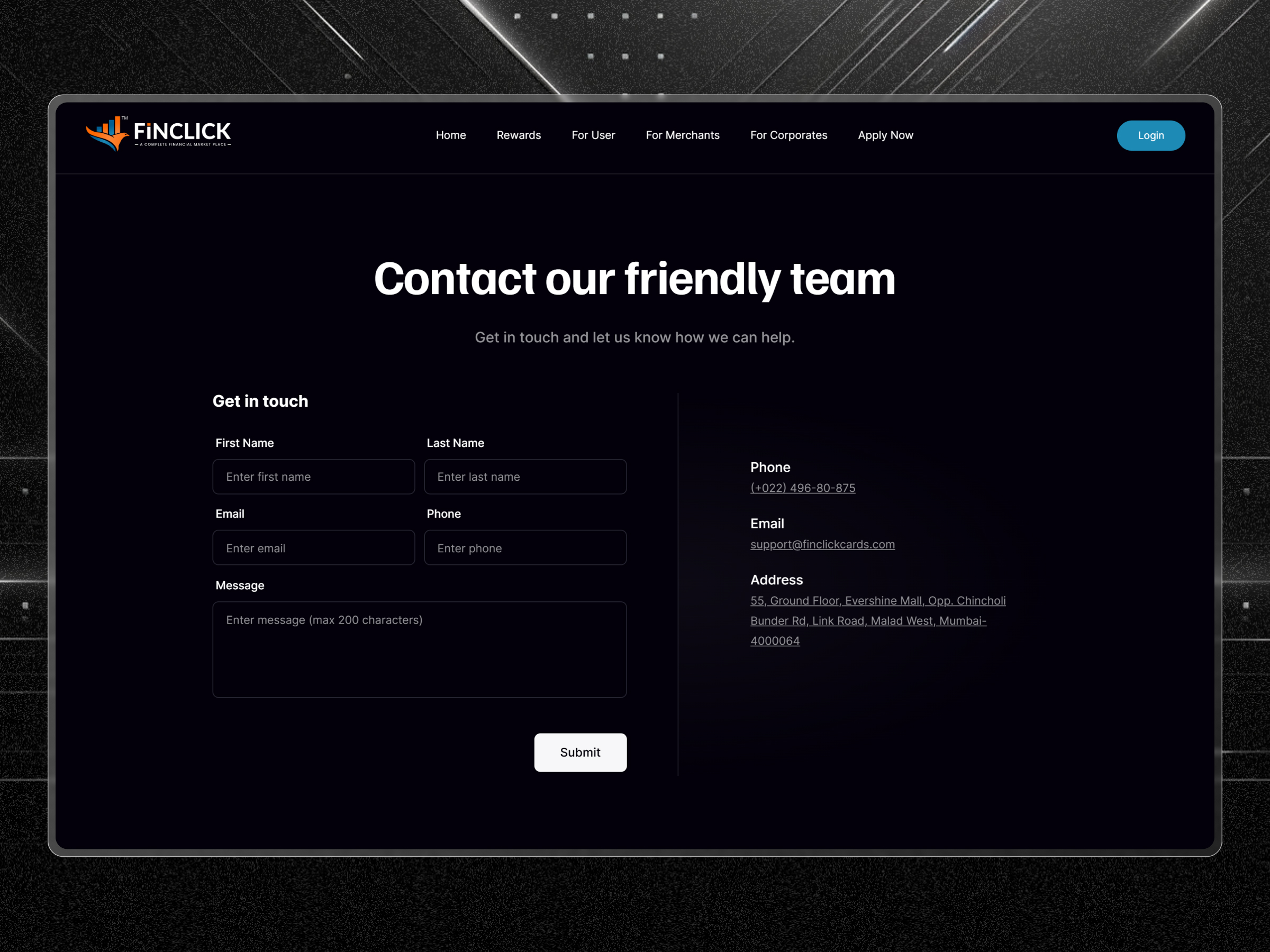
We used Next.js for the frontend and Adonis.js for the backend. The public website explains the cashback categories, what the card offers, and walks the user through the application flow. The application captures the details the client needed to process each request.
Cashback Category Showcase
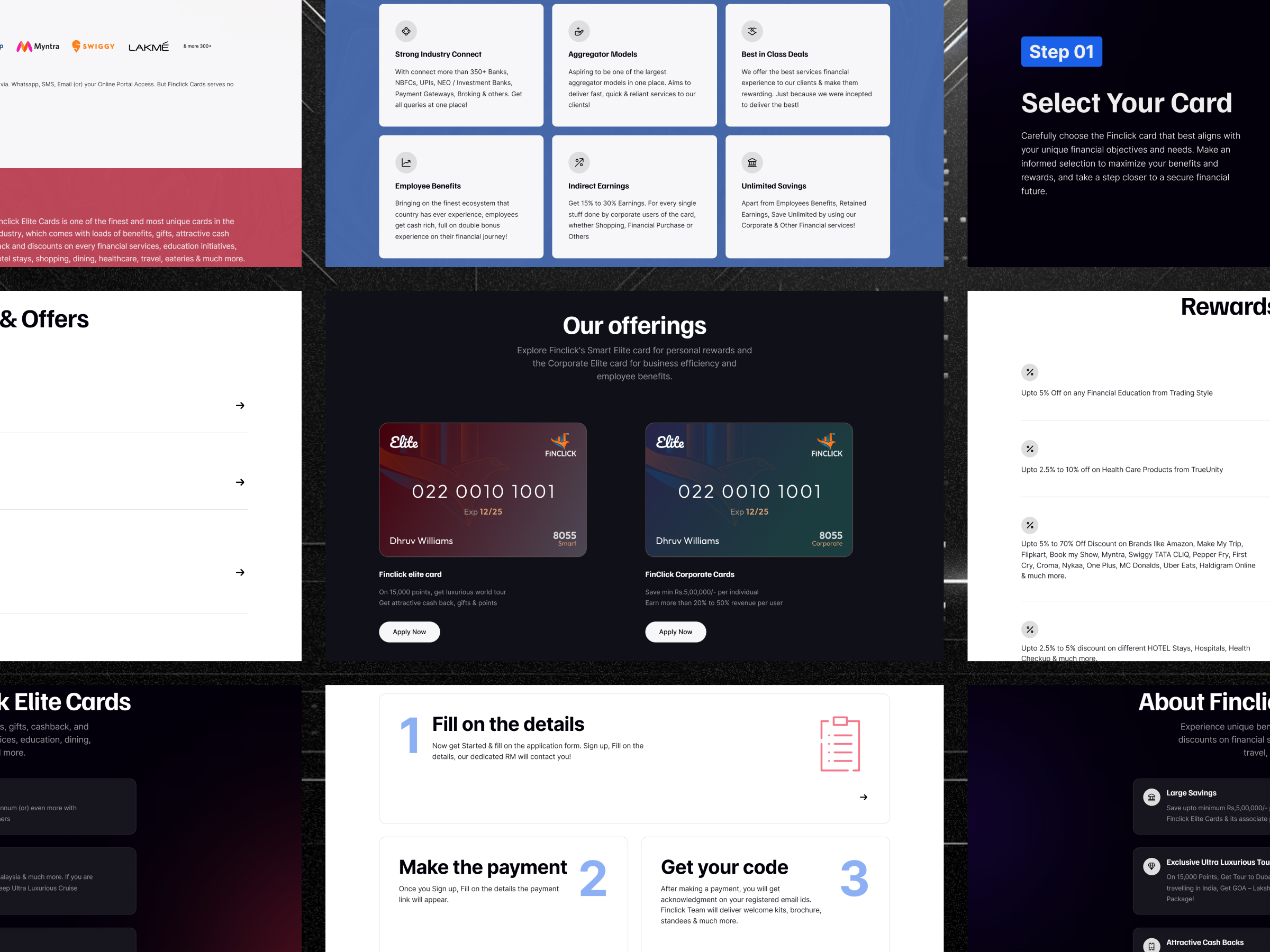
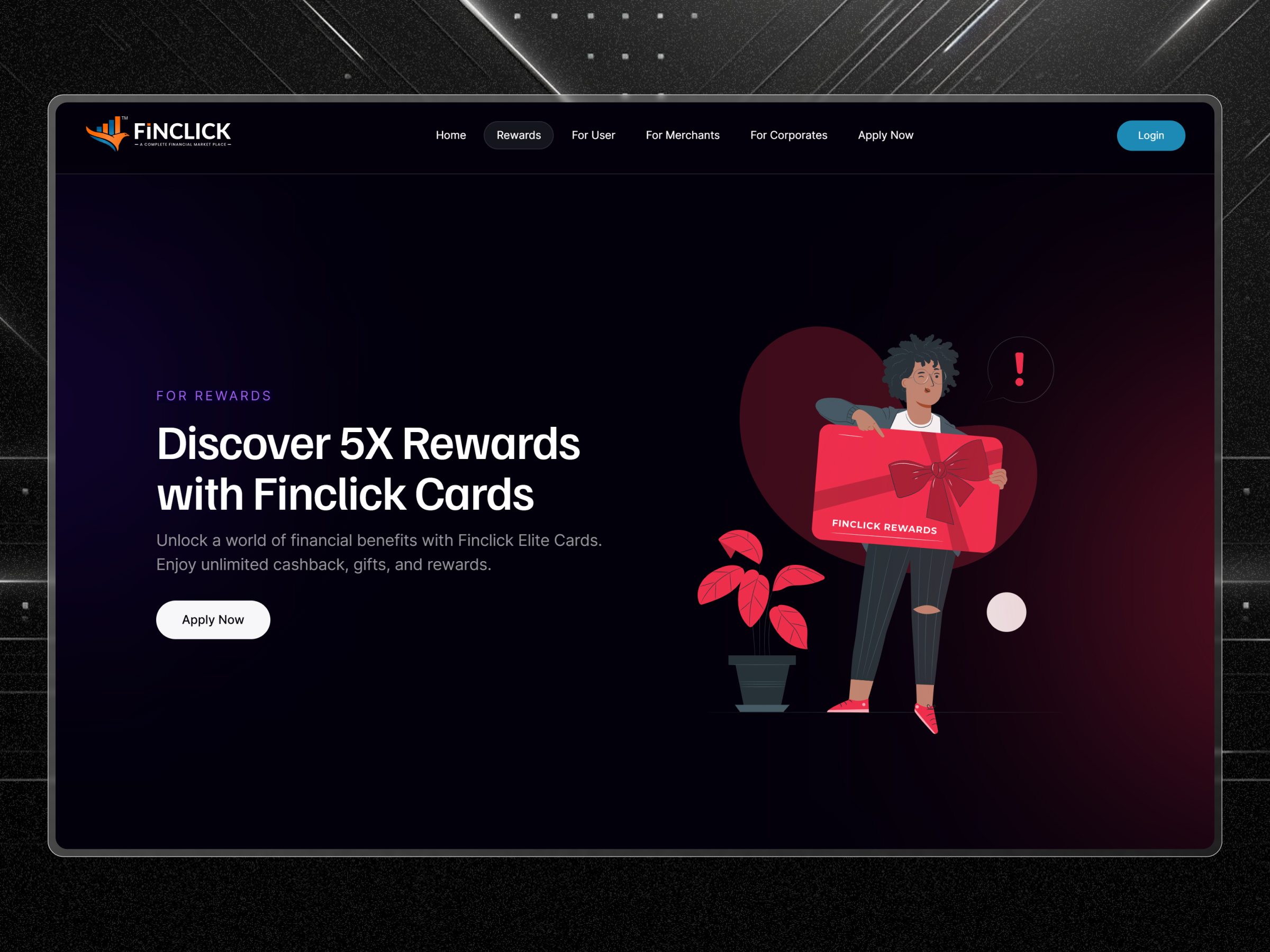
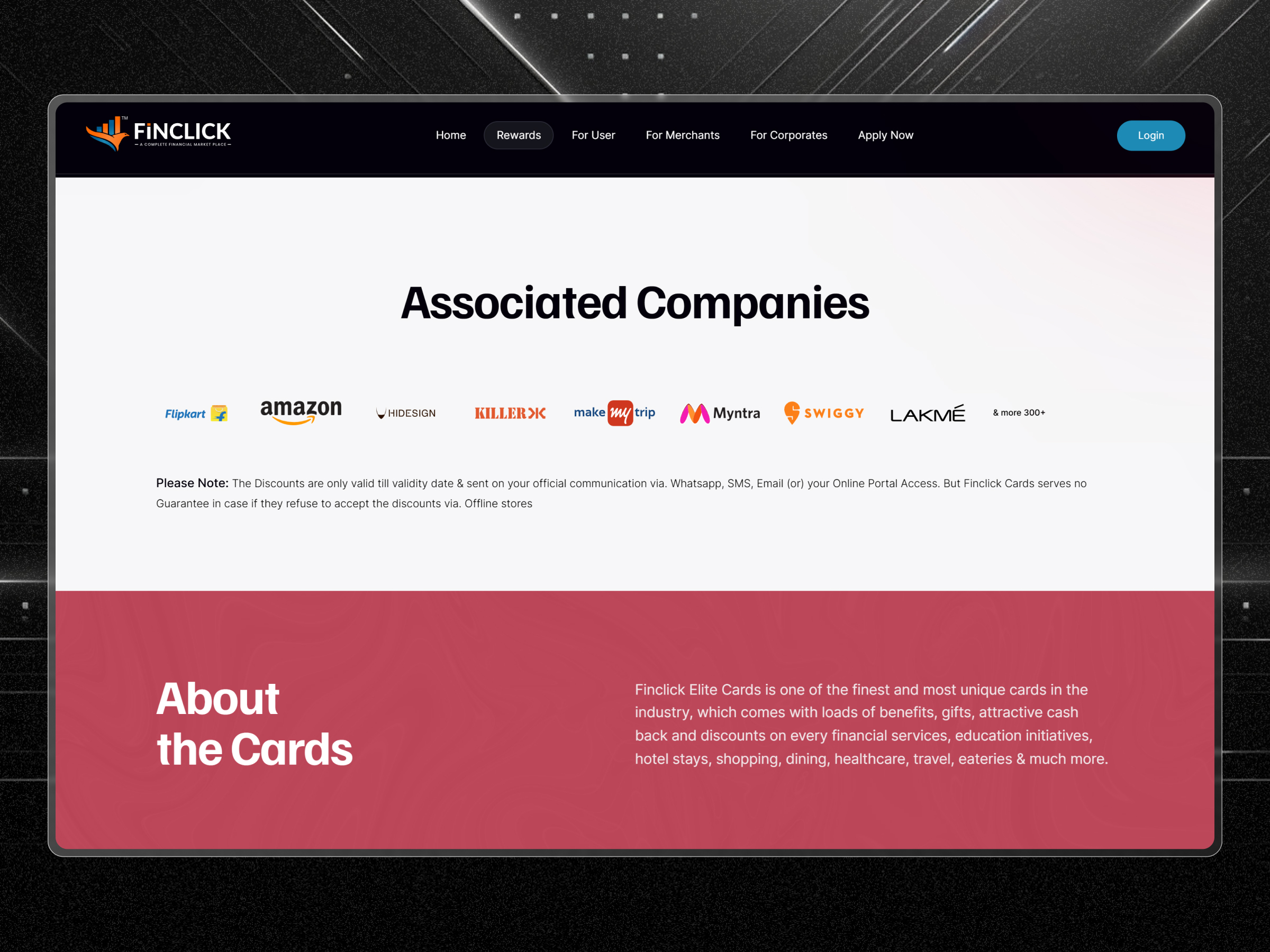
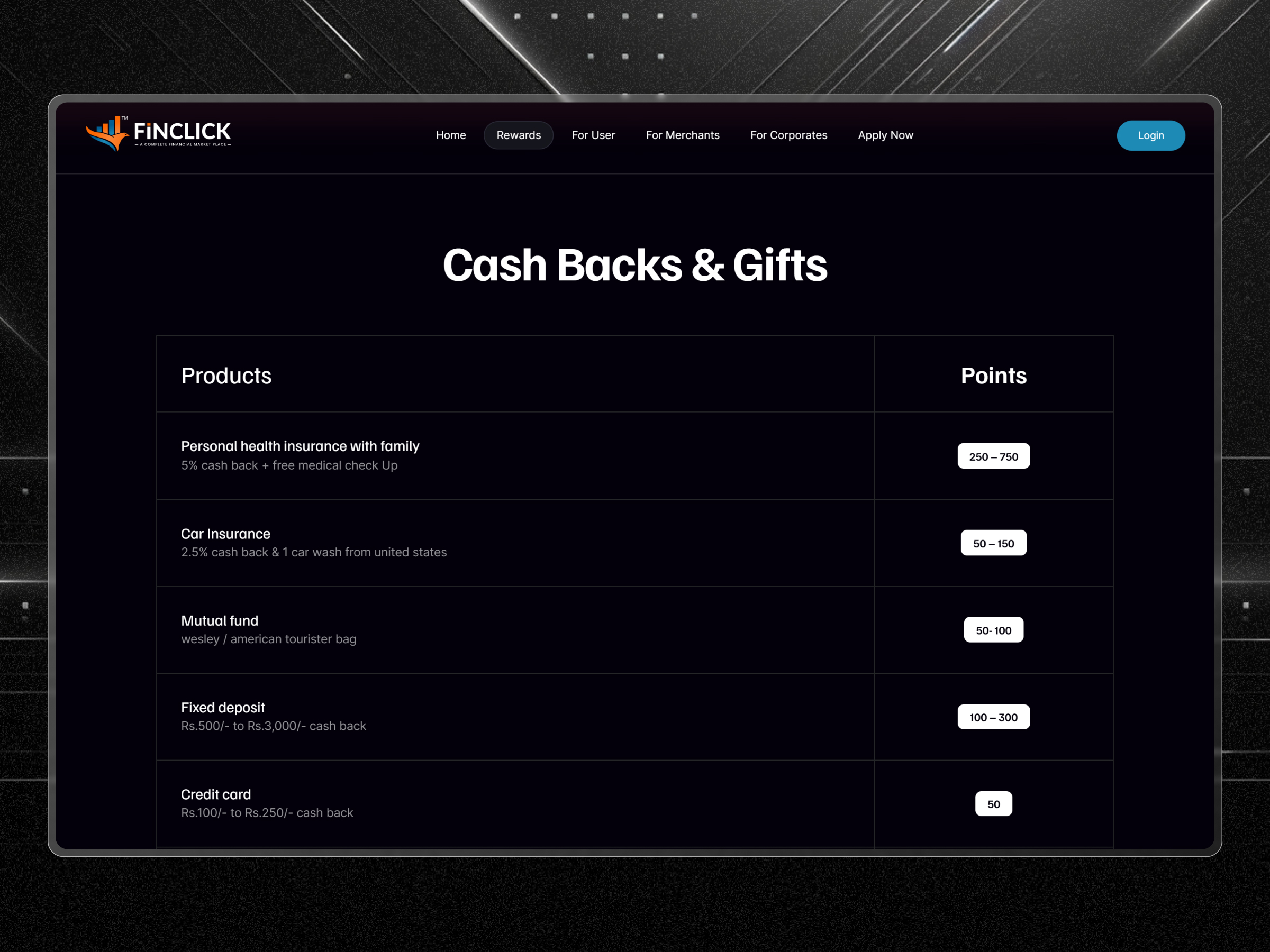
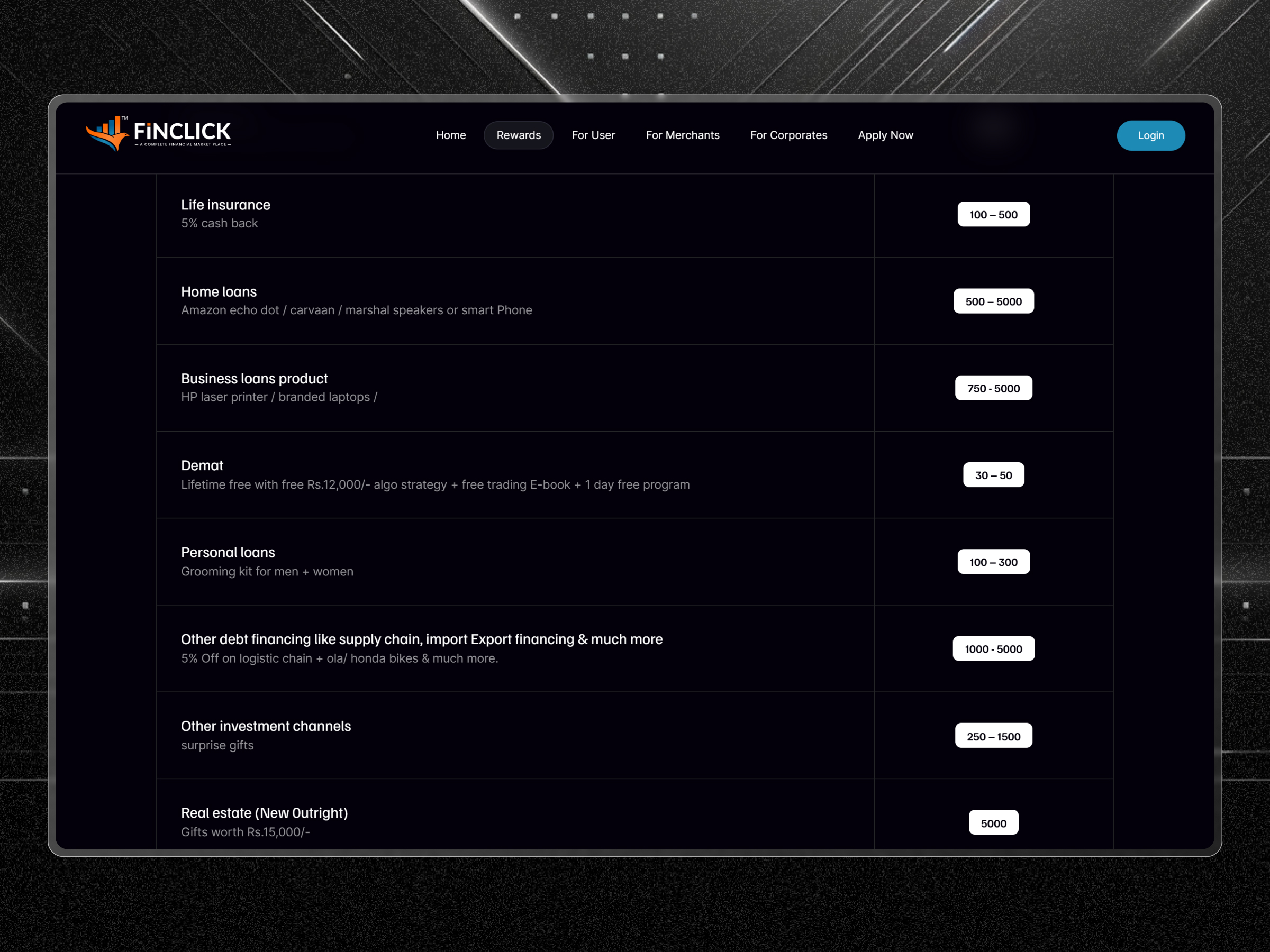
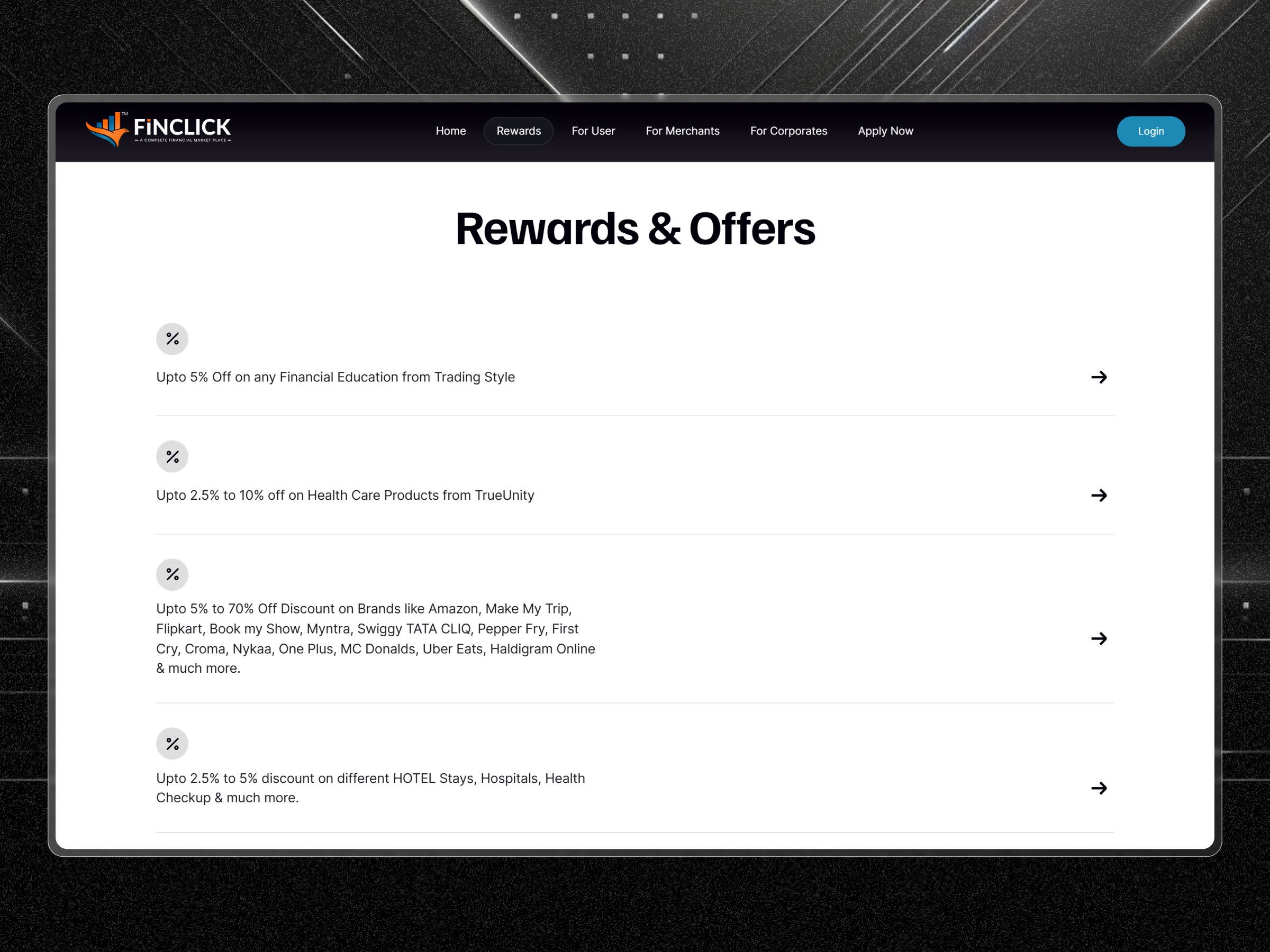
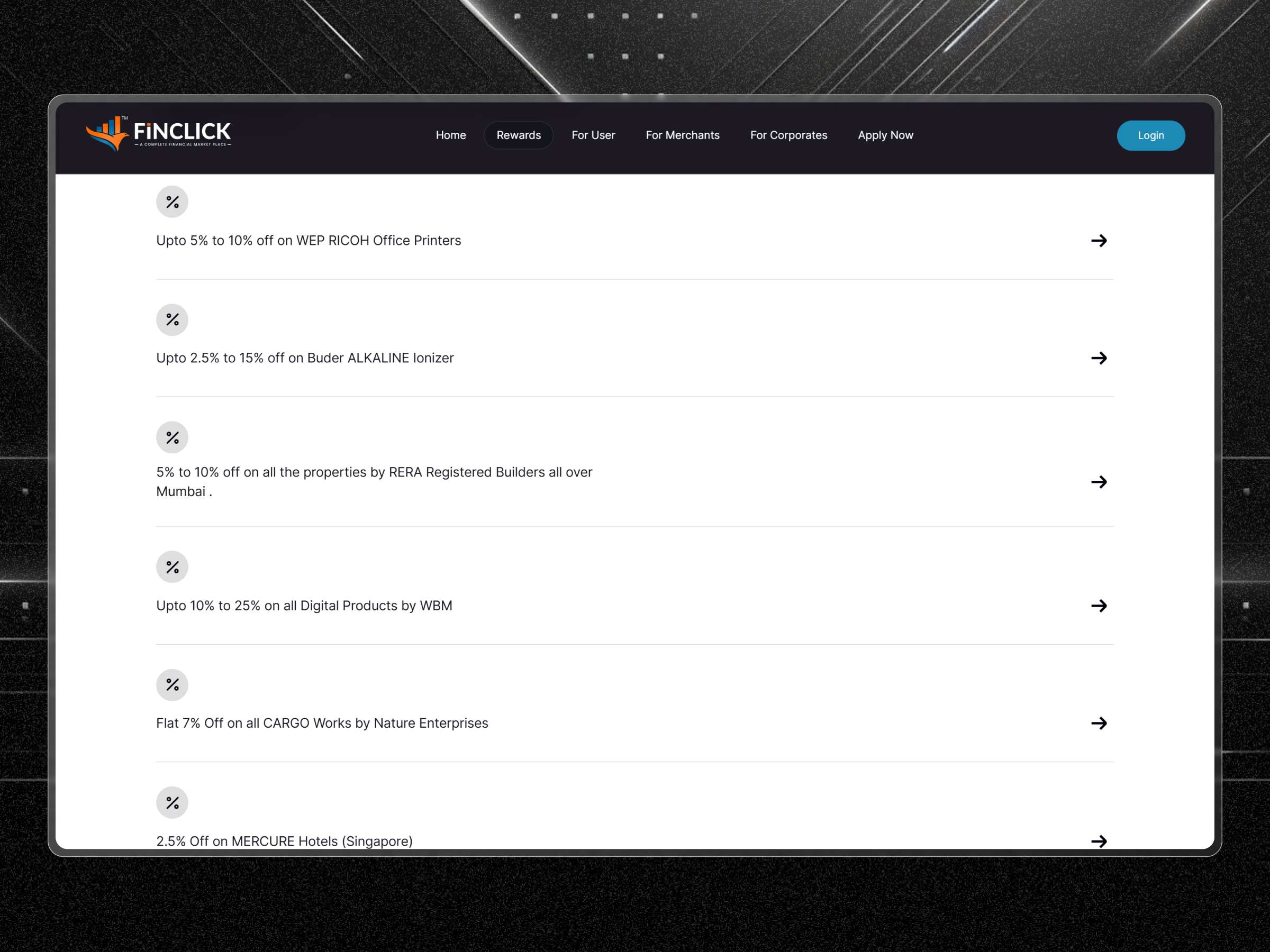
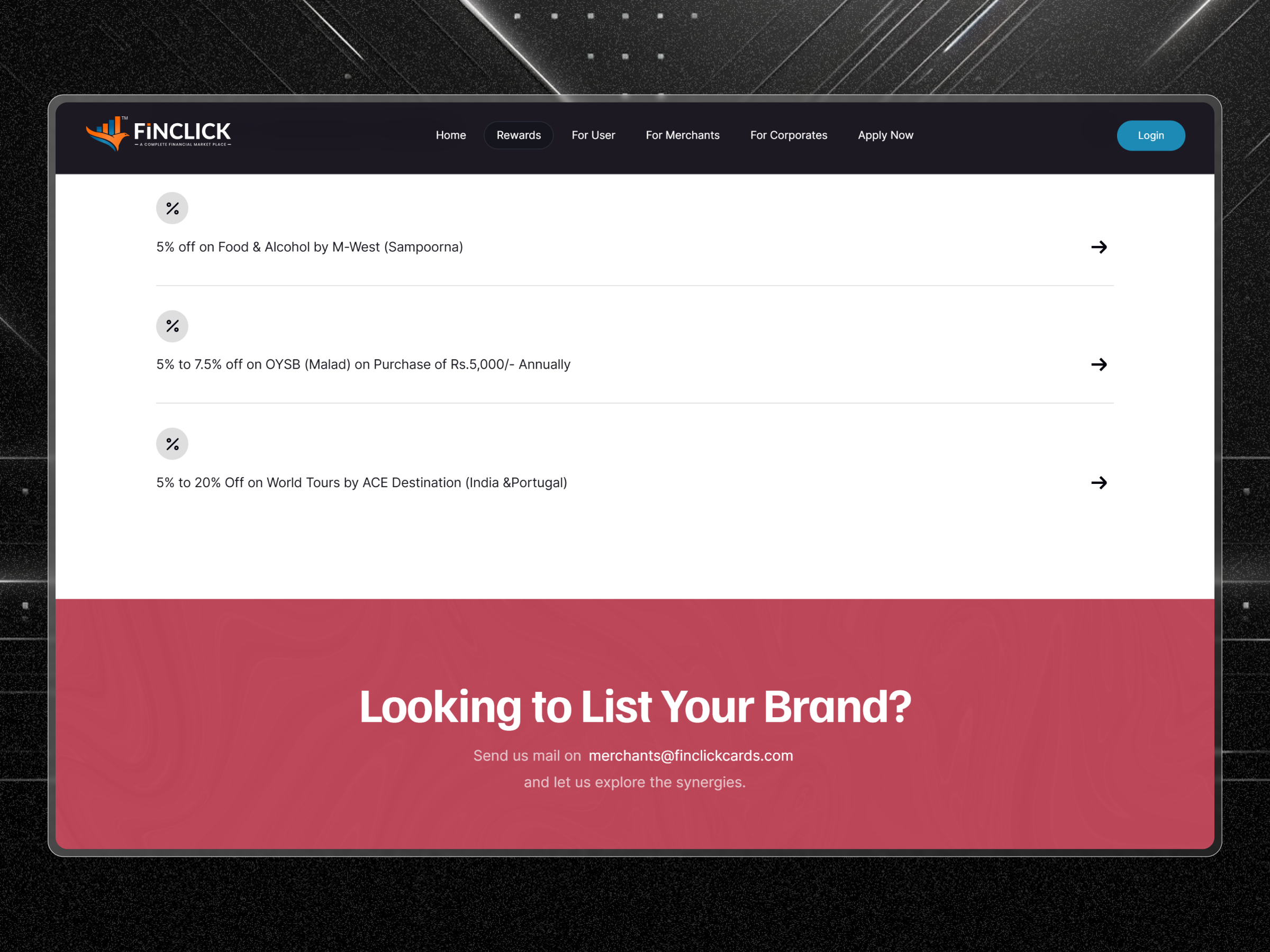
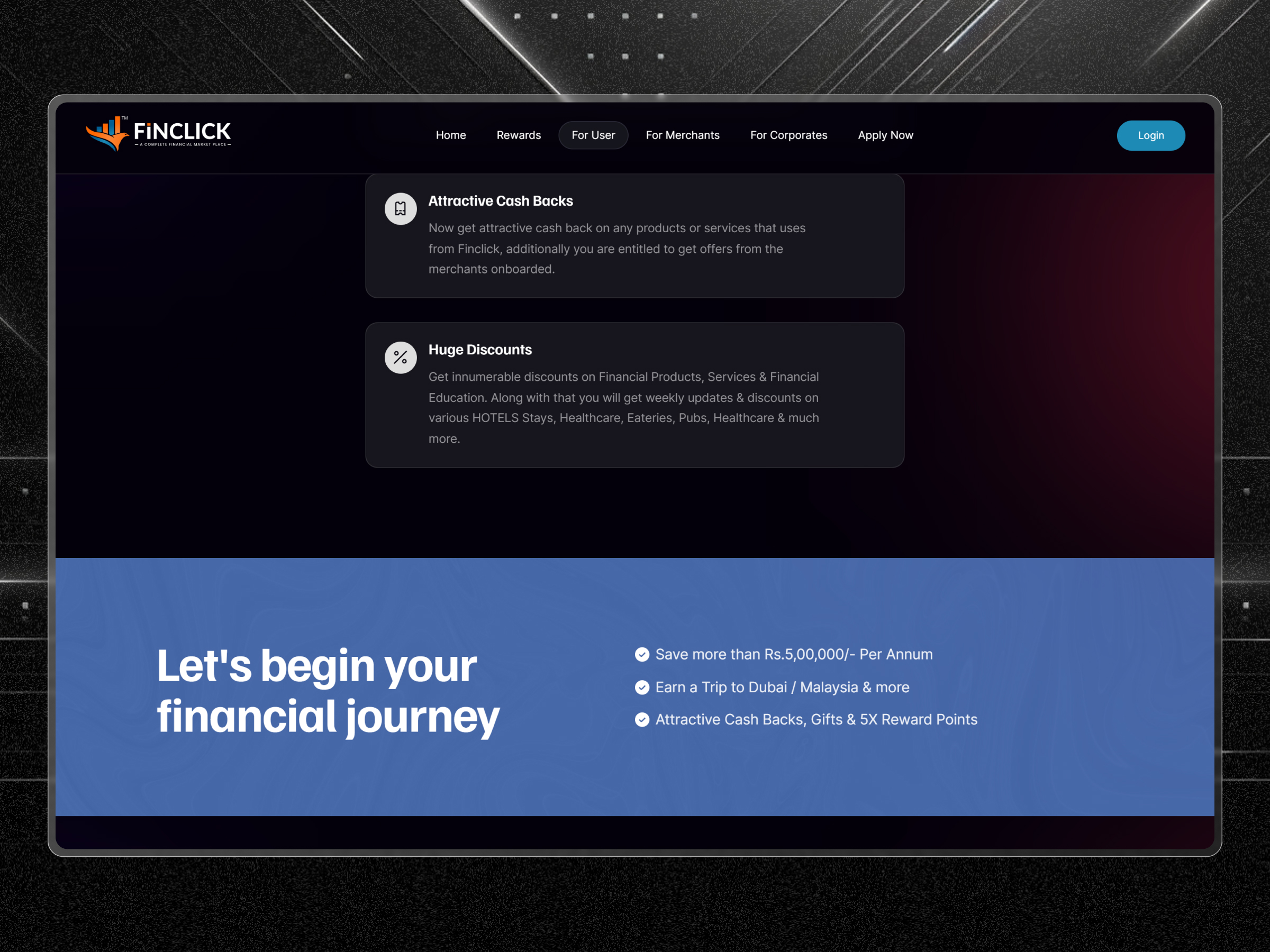
The card offers different cashback rates across spend categories — dining, travel, shopping, fuel, and so on. The website clearly lays out what each category offers so users understand the value before applying. Getting this communication right was important: the cashback structure is the product's core appeal, and it had to be immediately legible.
Card Application Flow
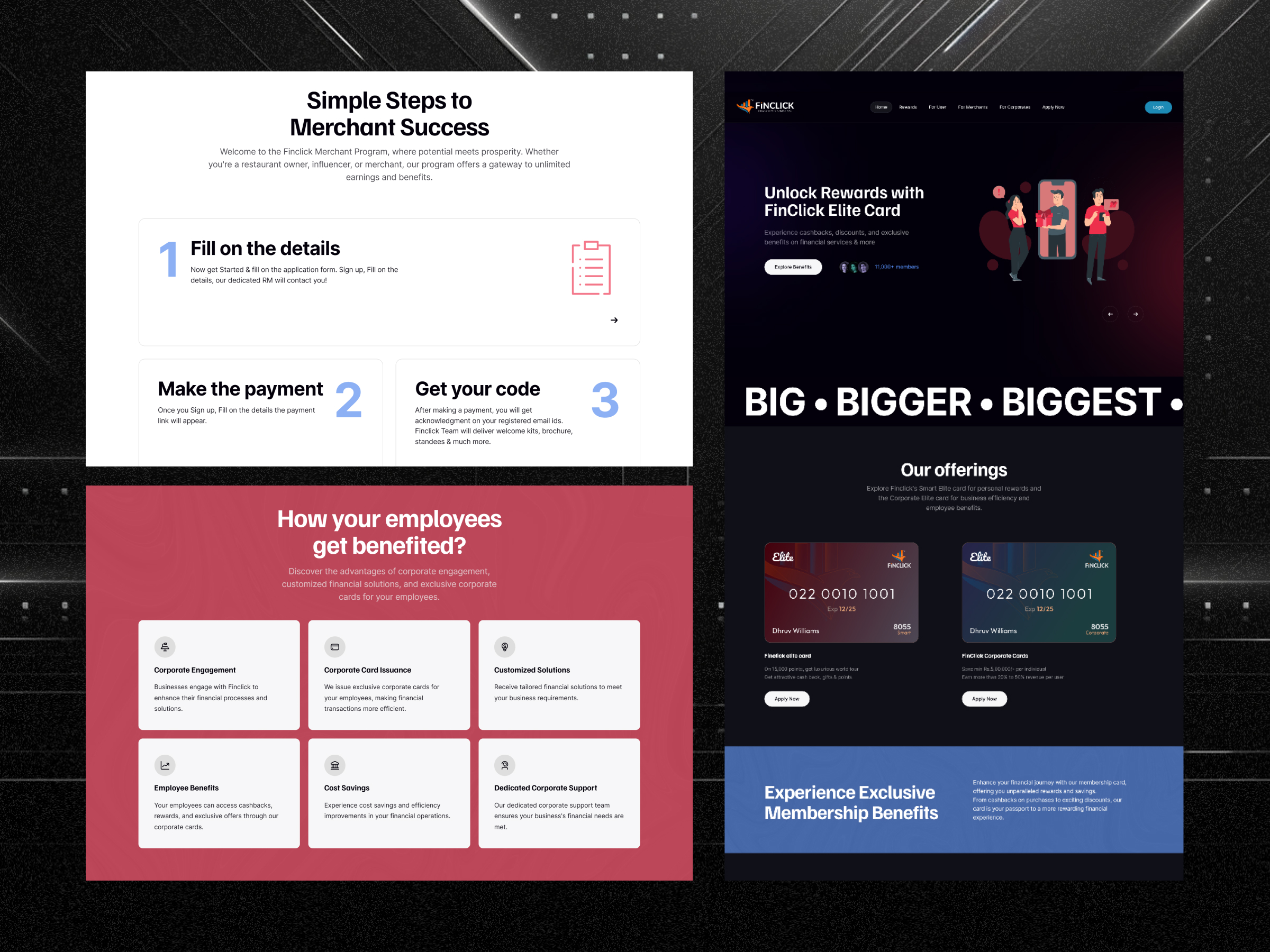
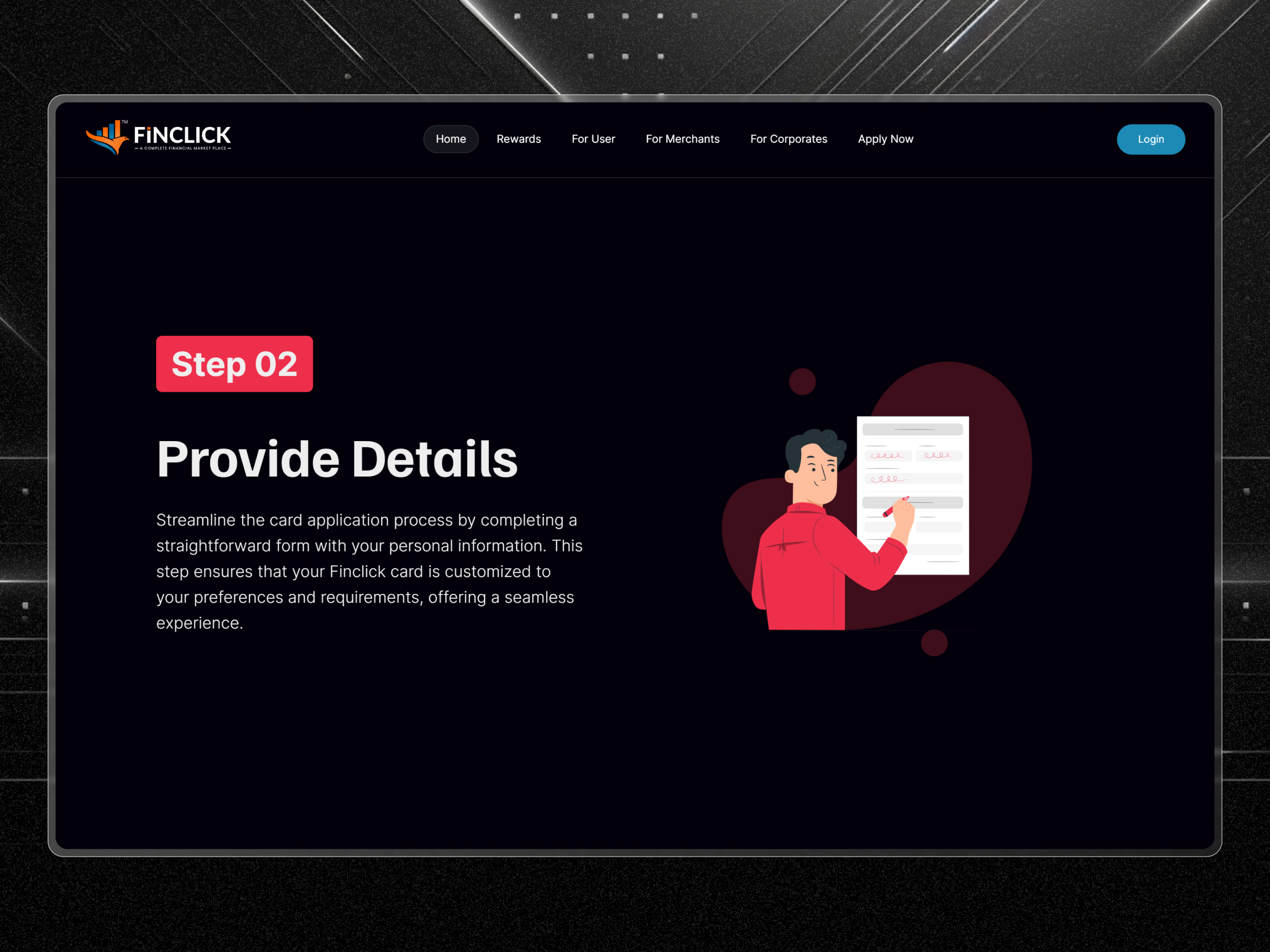
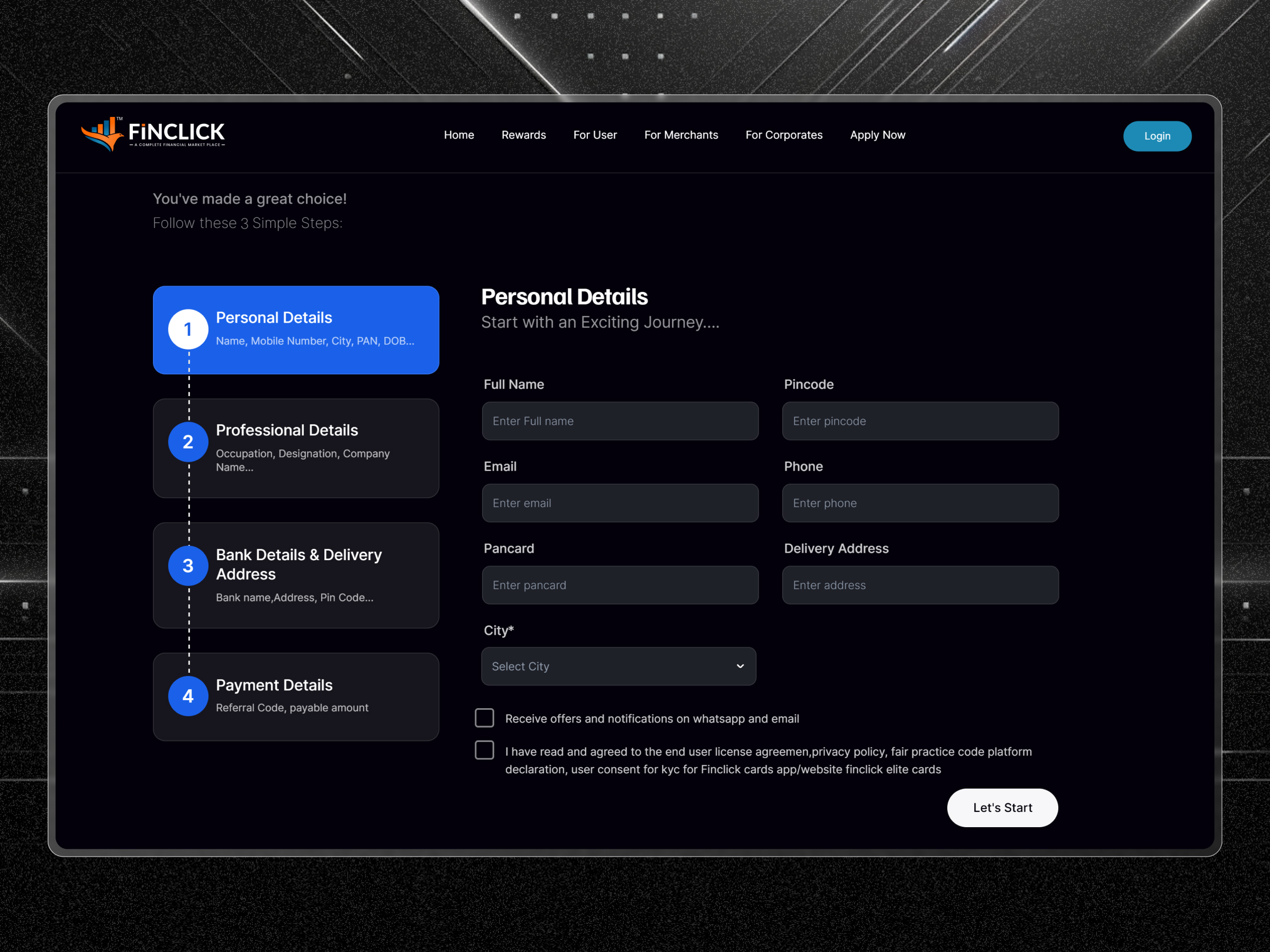
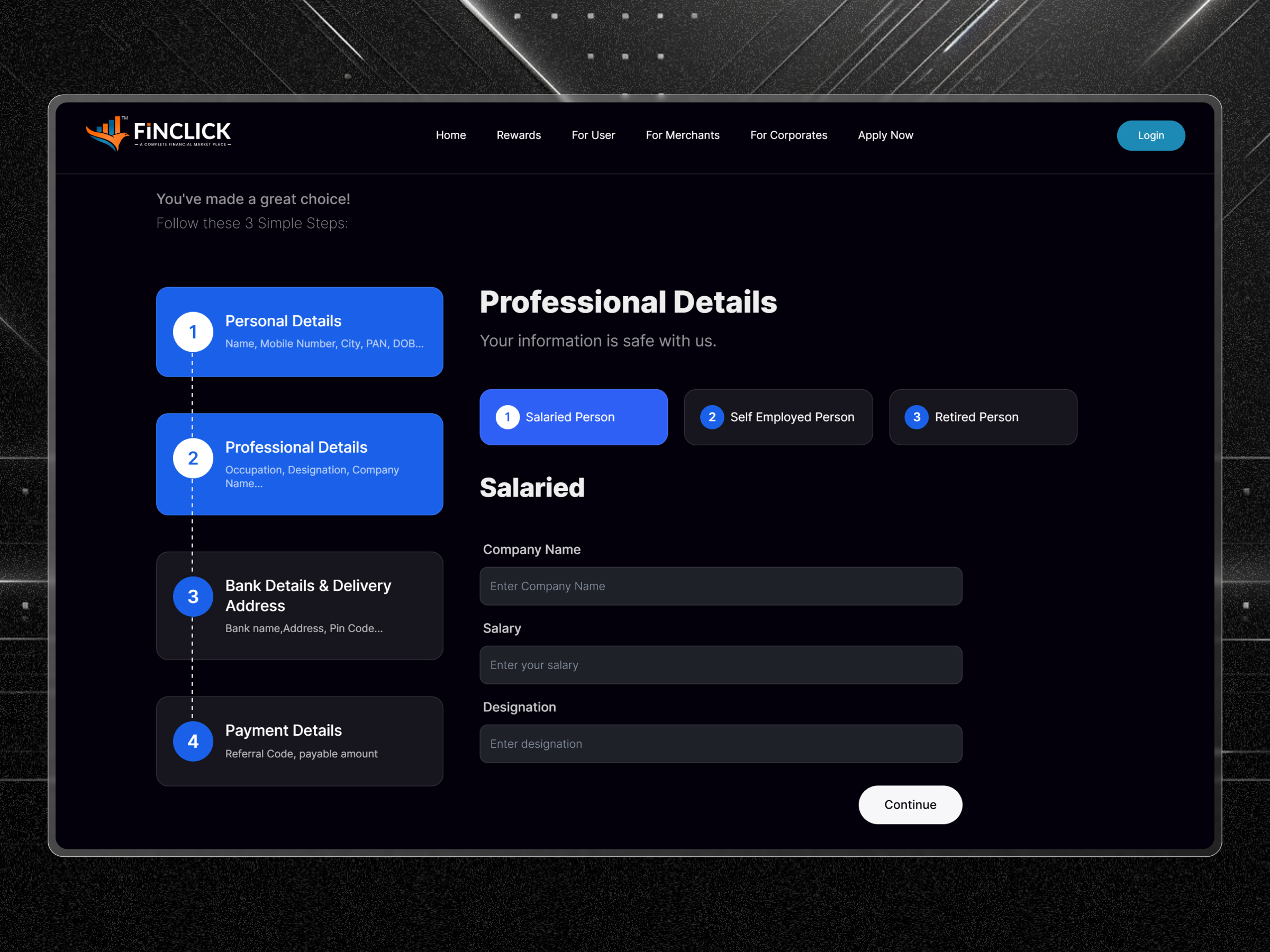
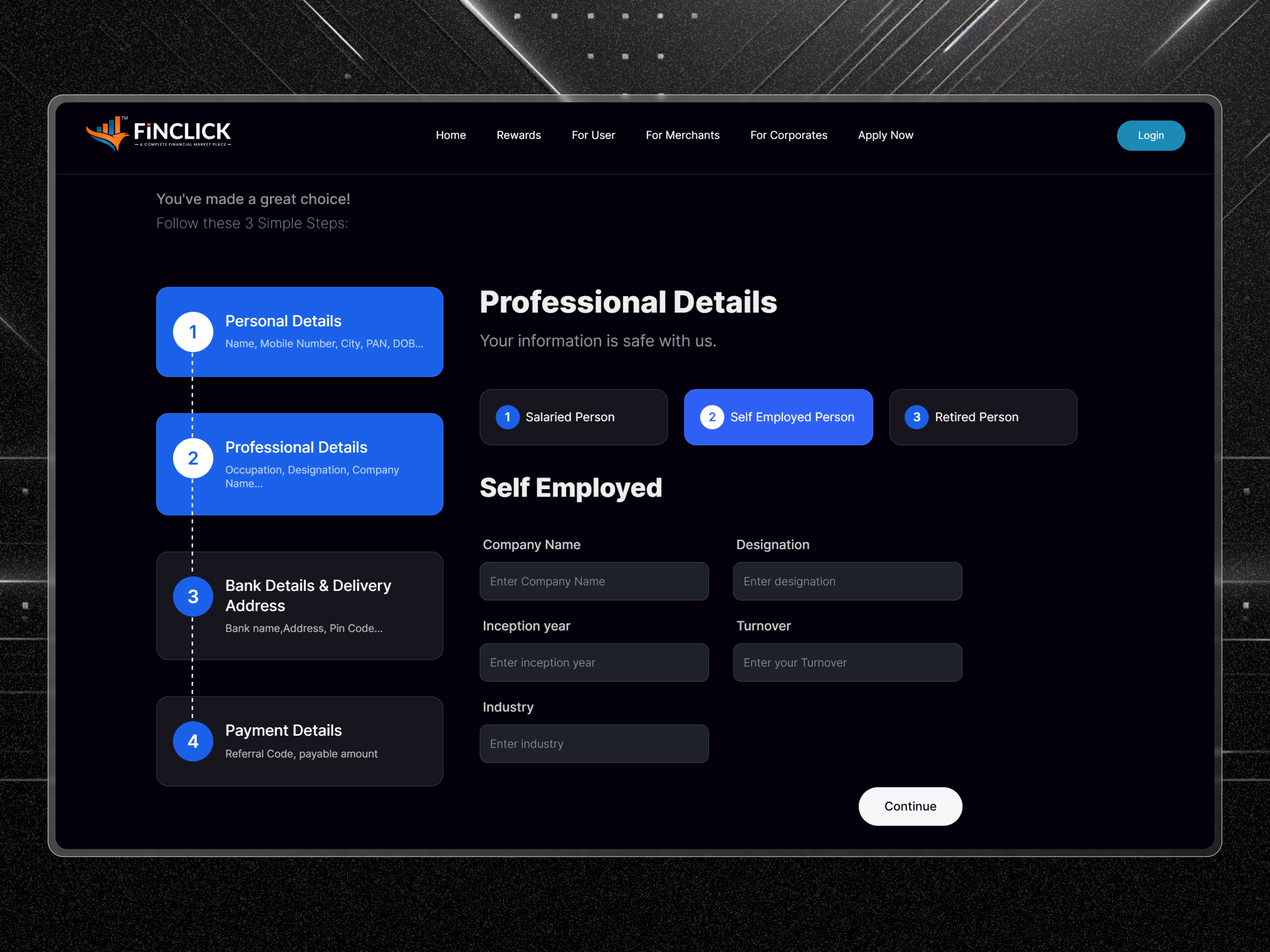
The application form collects the information needed to process a card request — personal details, contact information, and spending preferences. We kept the flow short and clear. Every extra step in a fintech form is a drop-off point, so we stripped it down to what was actually necessary.
Admin Panel for Application Management
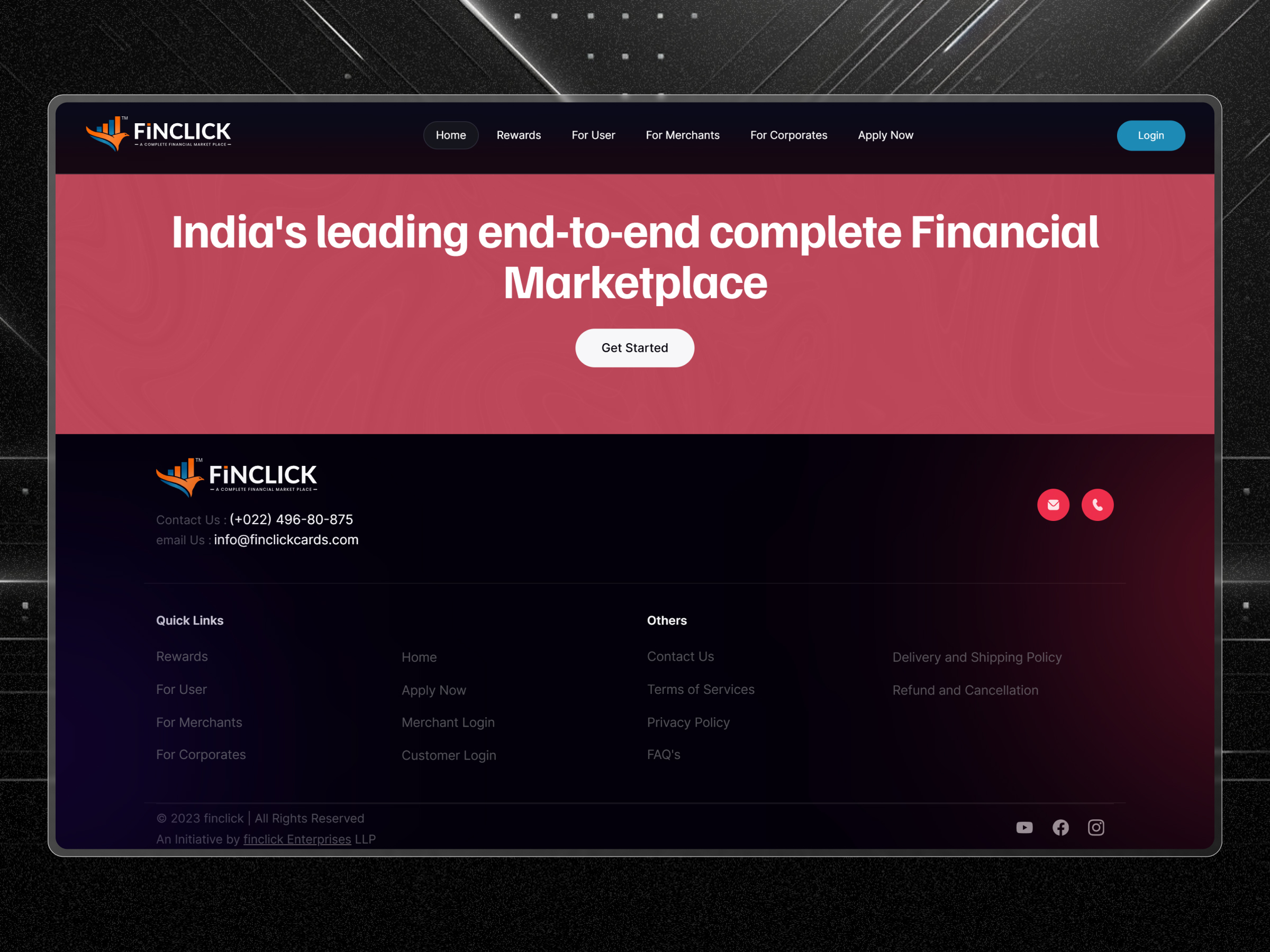
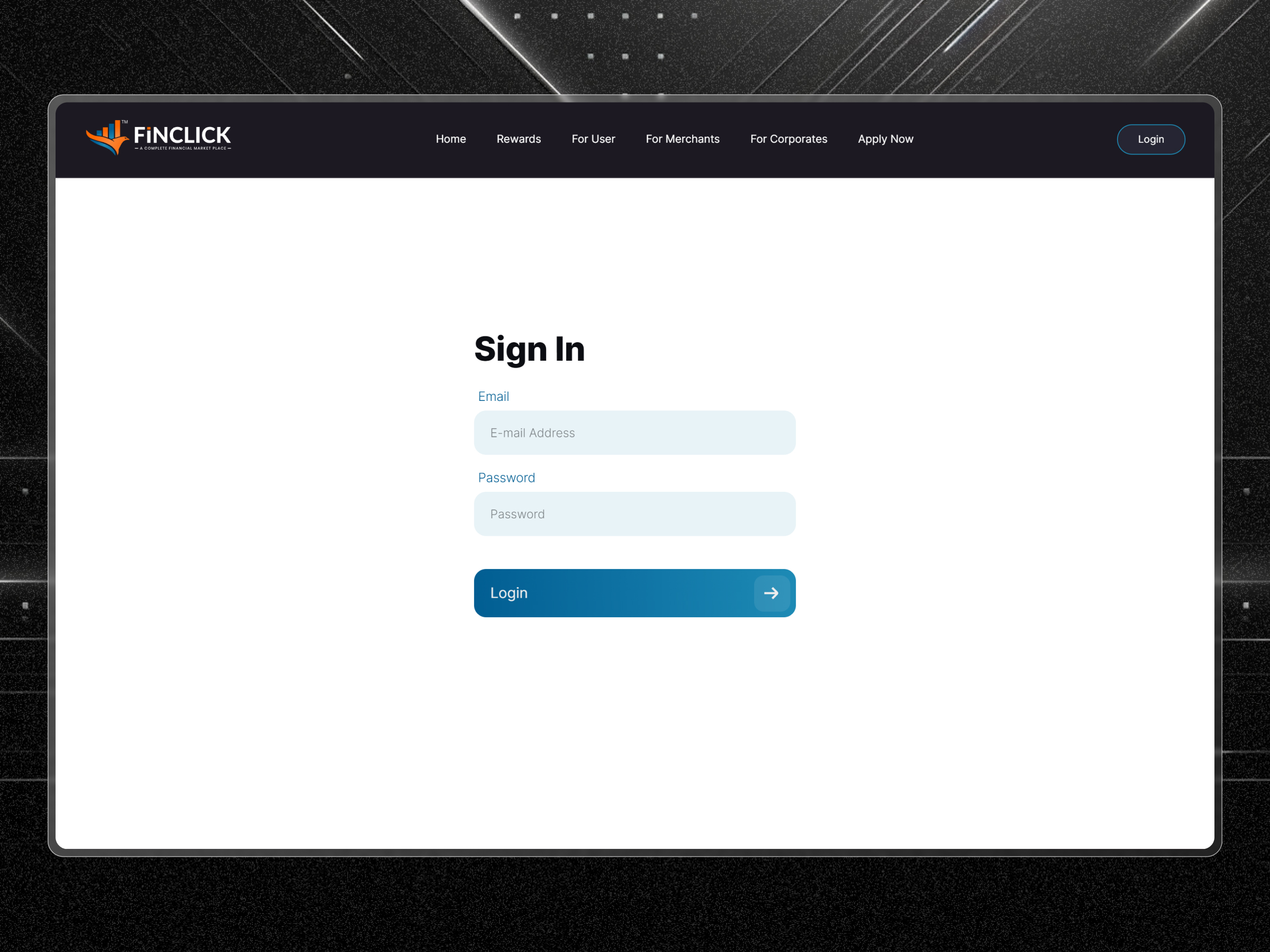
The Finclick team gets a clean admin dashboard where they can see all incoming applications, view individual applicant details, and manage the pipeline. No spreadsheets, no manual email tracking — everything submitted through the website lands clearly in the admin panel.
What shipped
Delivered in 1 month for ₹60,000. The startup went from idea to a working product — a public-facing card application platform and a fully functional admin panel — within a tight budget and timeline. The MVP gave them everything needed to start acquiring users and validating demand for the cashback card product.
Frequently Asked Questions
Questions about fintech MVPs,
answered clearly.
Questions about the work, scope, delivery context, and next steps.
Finclick — a cashback card application platform with a public-facing website and admin panel — was delivered in 1 month for ₹60,000 for a Mumbai-based fintech startup. Published estimates for cashback app development range from $15,000 to $200,000 — that's for complete consumer apps with payment gateway integrations, real-time rewards engines, and KYC pipelines. A well-scoped MVP that focuses on the application flow and admin management can ship at a fraction of that cost, especially if you're validating demand before committing to complete infrastructure.
Related Work
Similar case studies,
selected for context.
Continue exploring related work, with comparable product and delivery challenges.