SaaS ApplicationsWeb ApplicationsMVP DevelopmentInterface Designs
Tredzy
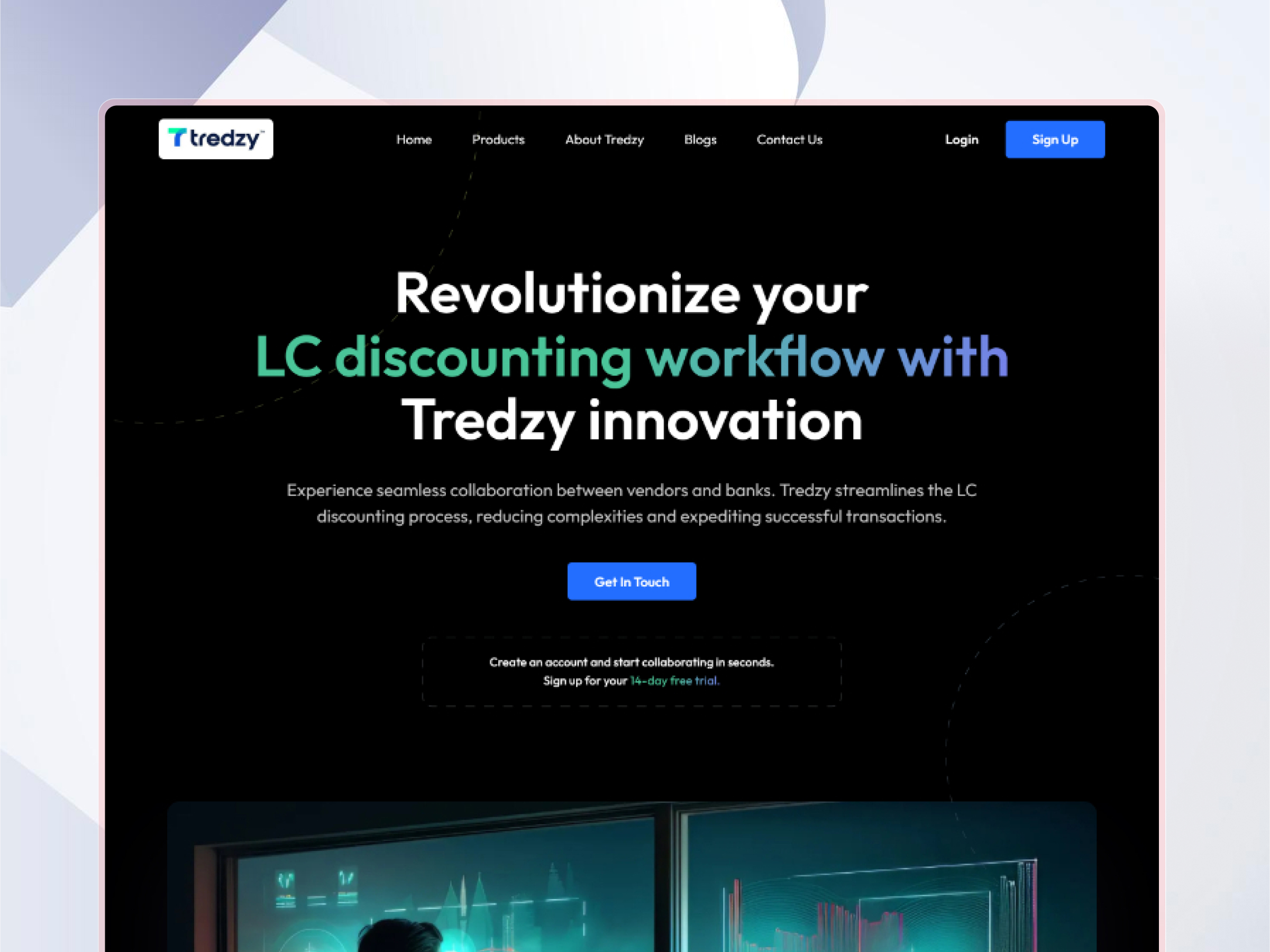
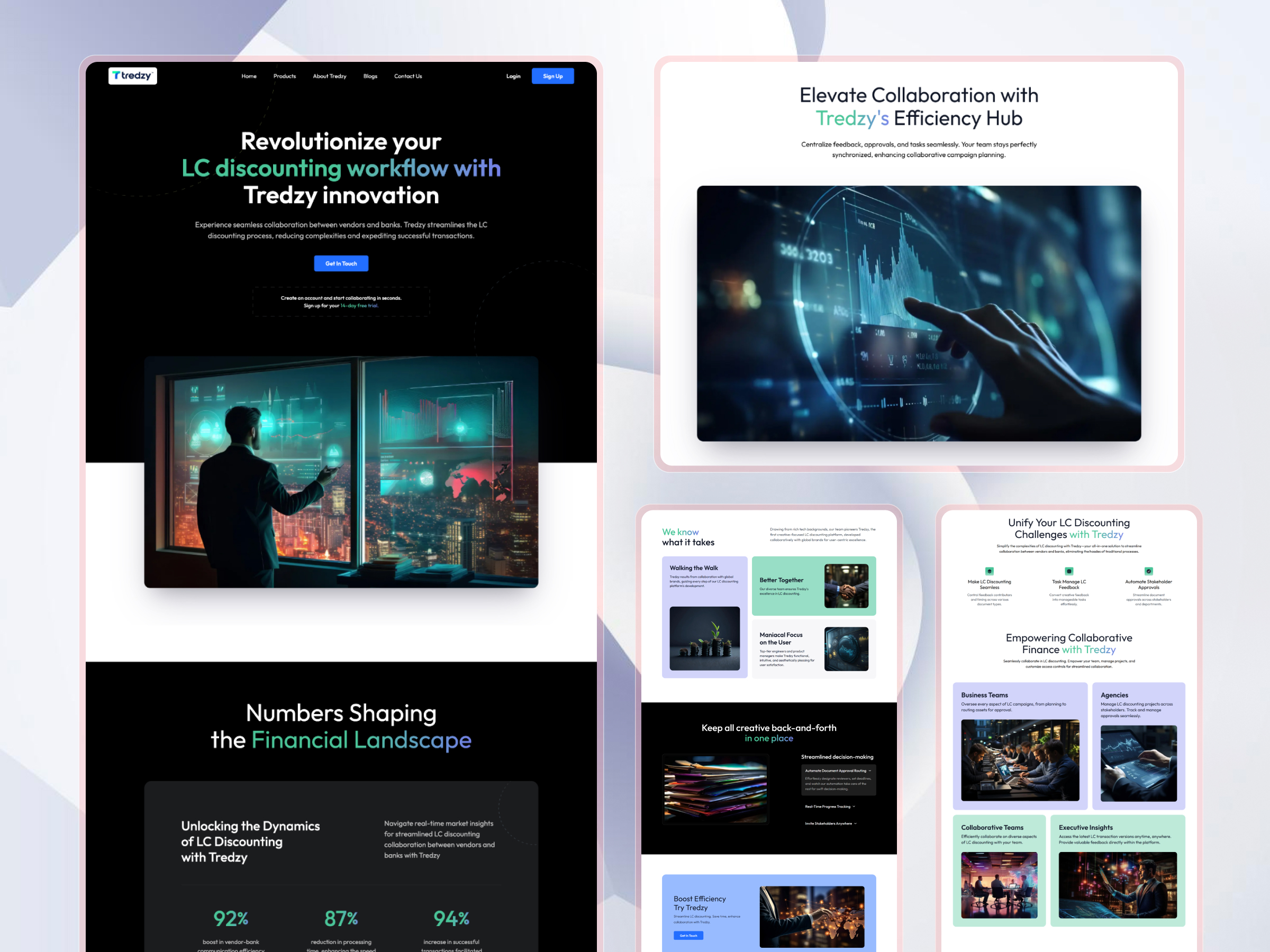
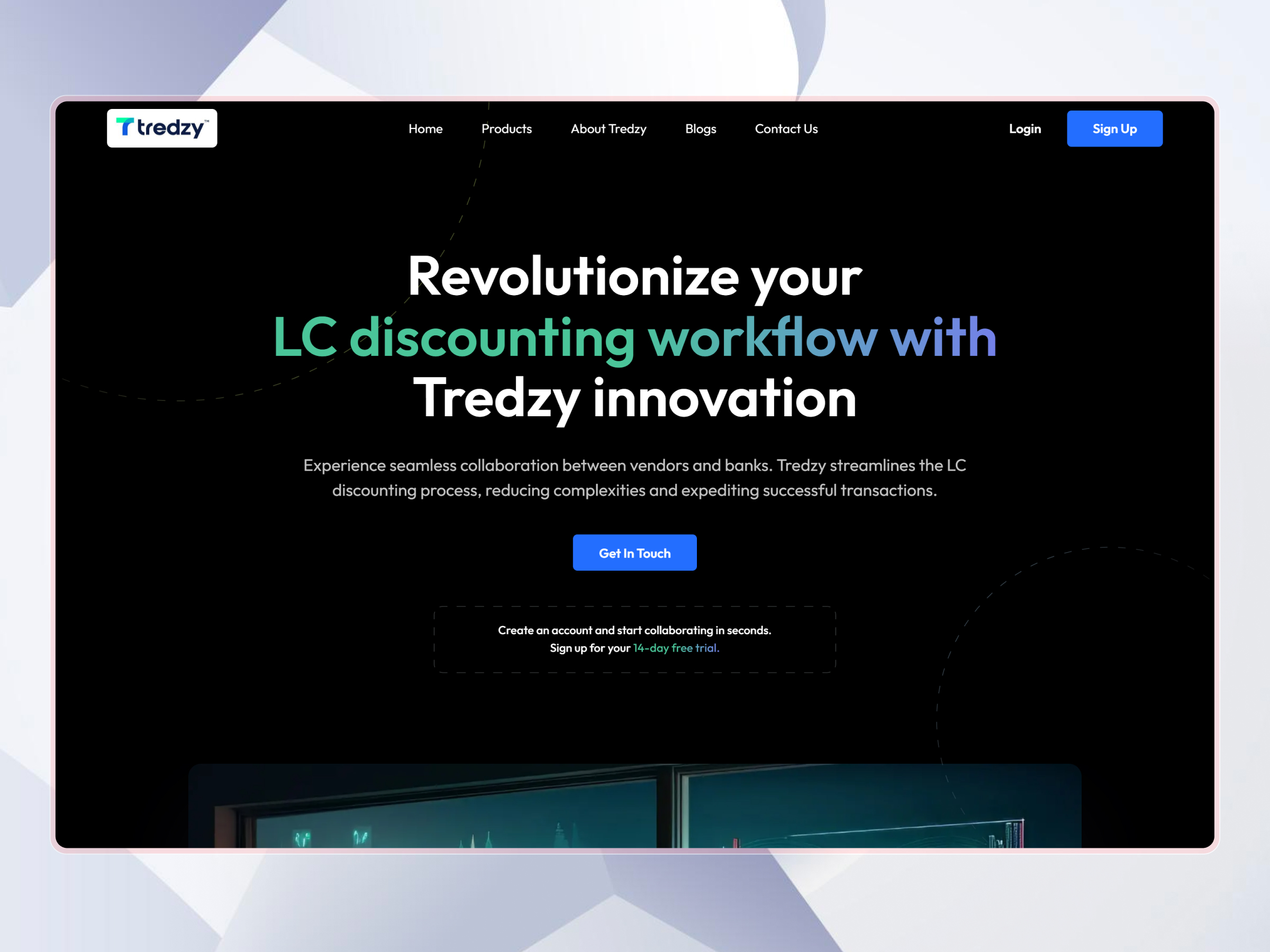
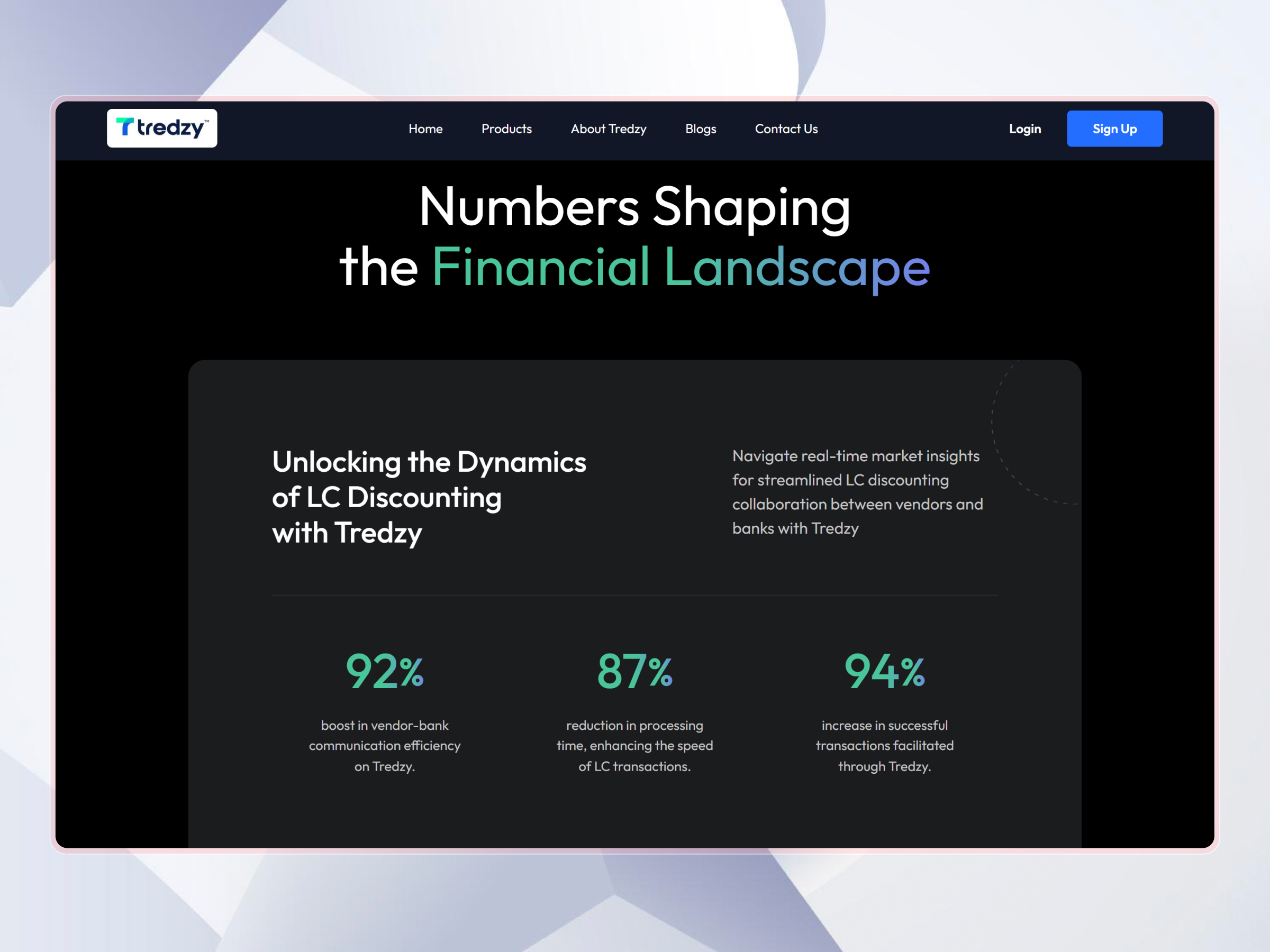
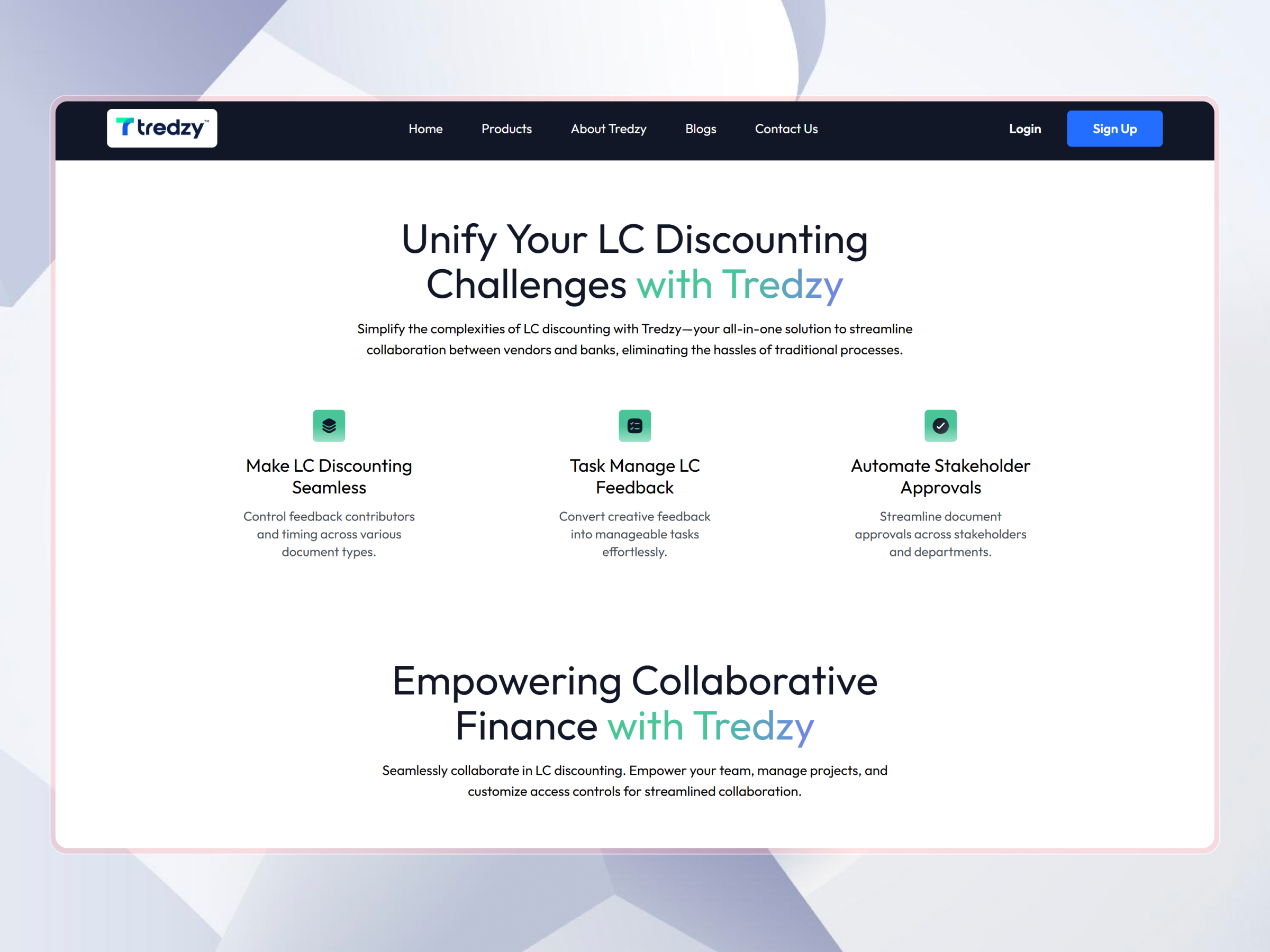
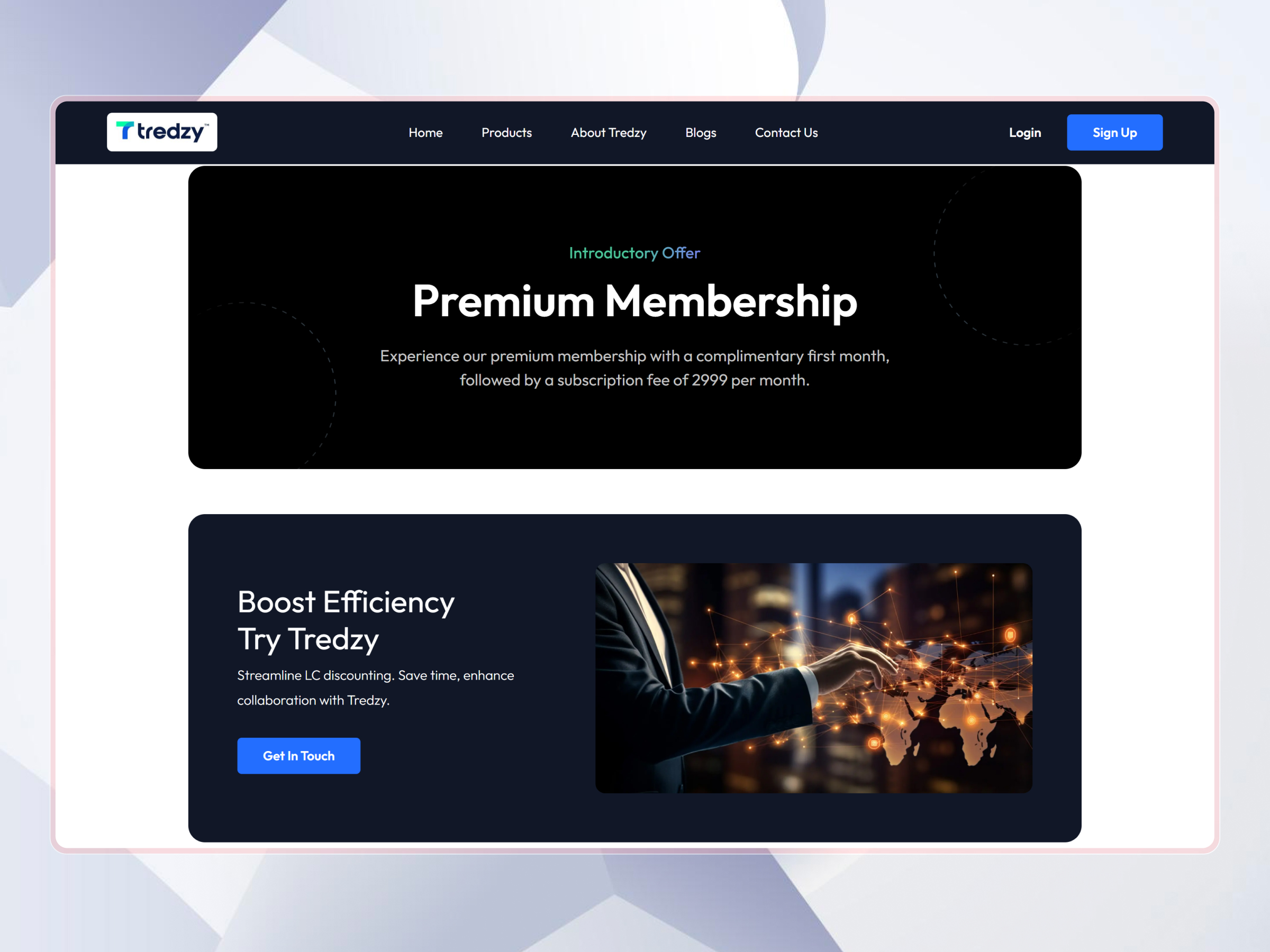
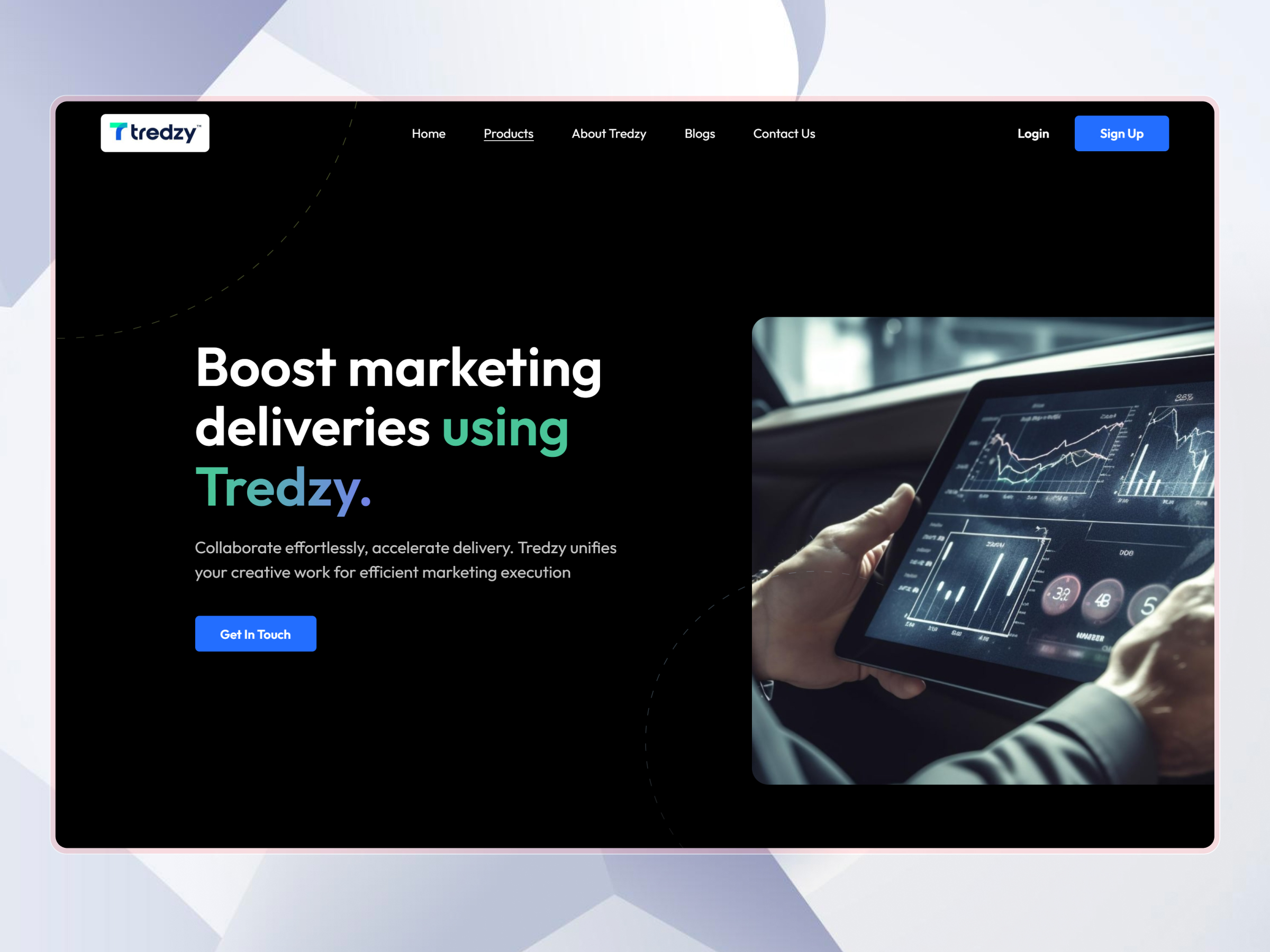
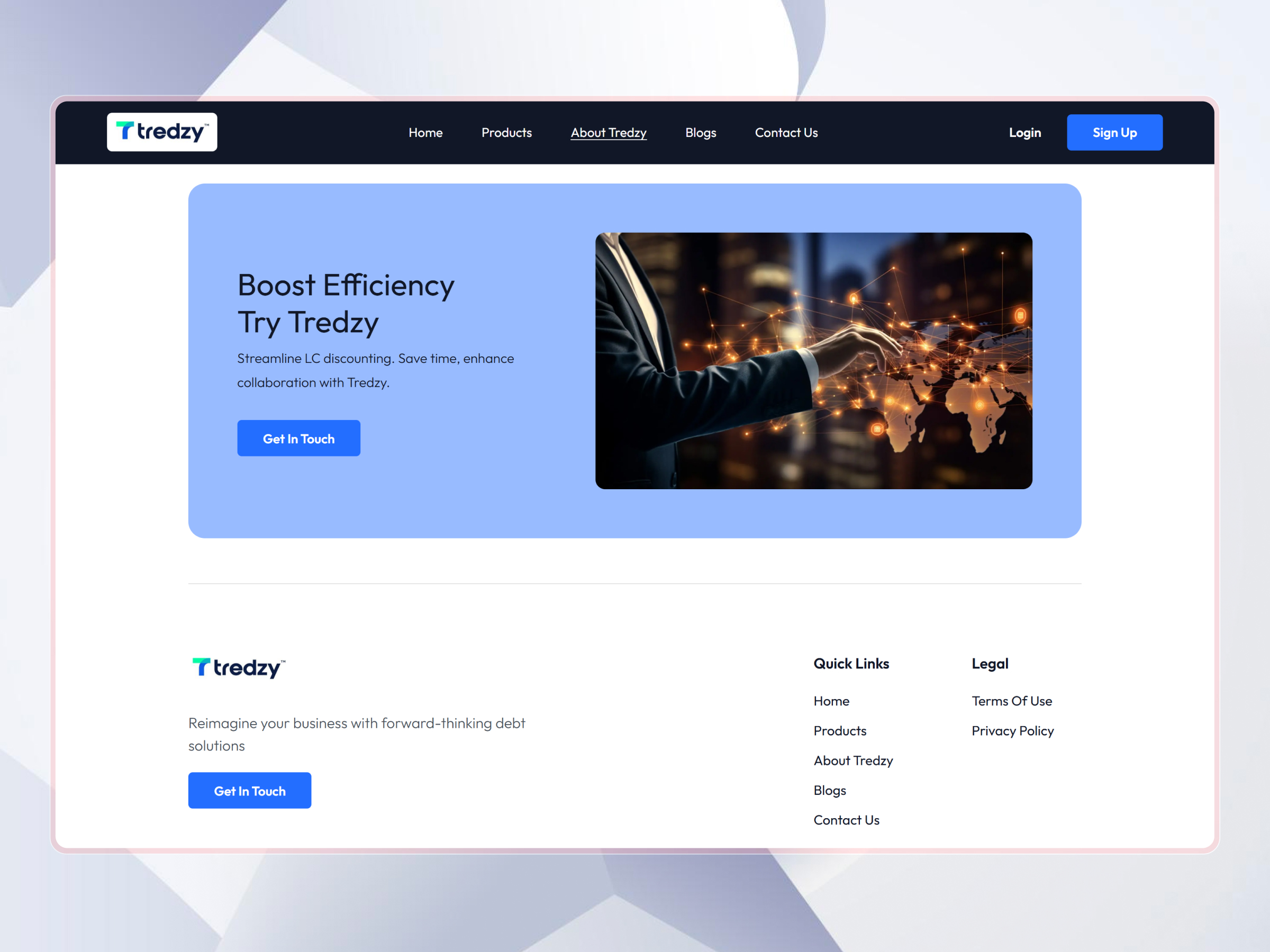
Tredzy is an LC discounting platform built for a Bhopal fintech client, designed to explain trade finance clearly and support faster decision-making.
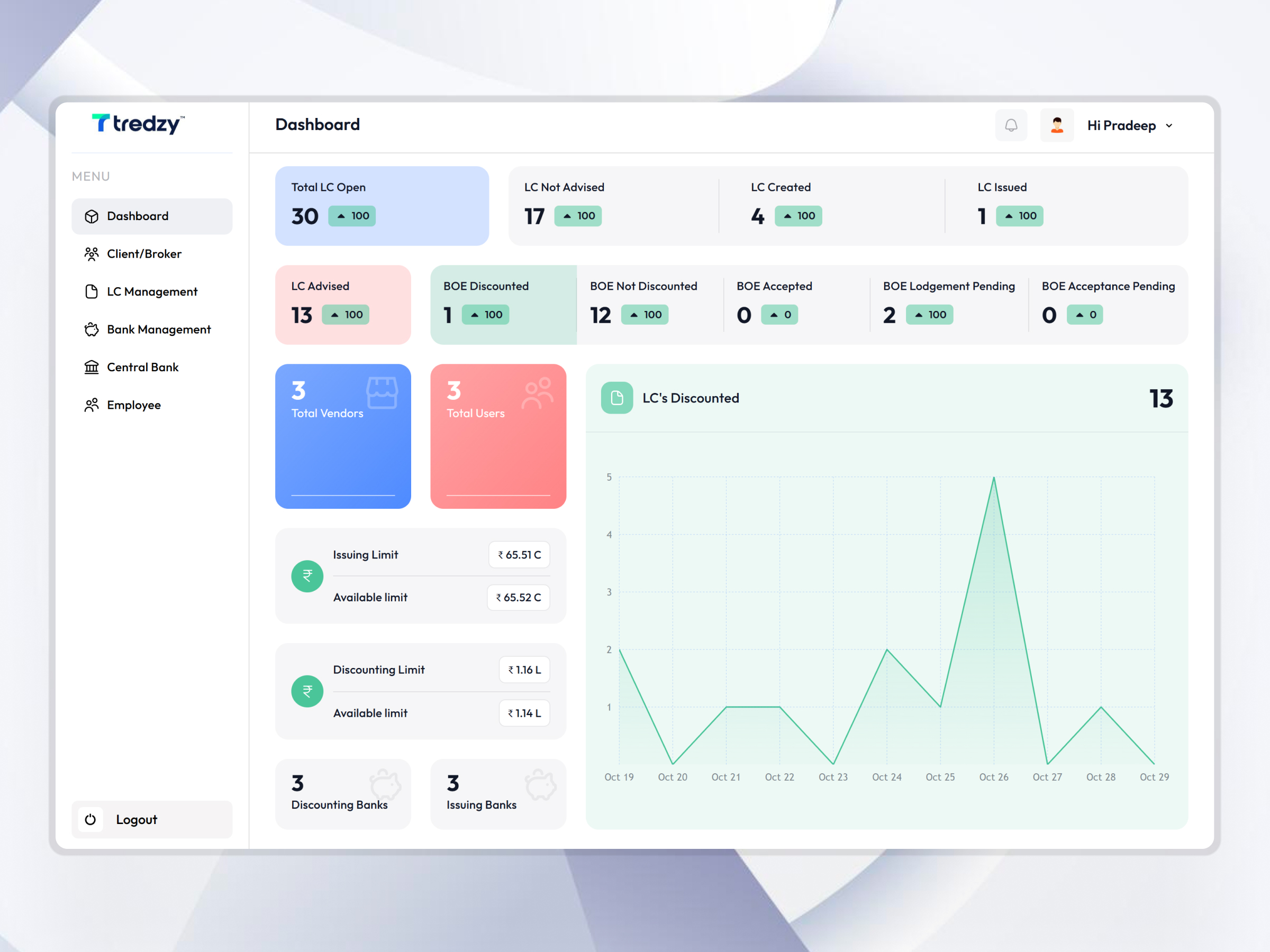
A trade finance platform built to simplify LC discounting
Tredzy is a Letter of Credit (LC) discounting platform we planned, designed, and built for a Bhopal-based fintech client. The problem is common in international trade: exporters ship goods, present documents against a Letter of Credit, and then wait weeks or months for payment at maturity. Tredzy lets them get paid upfront by discounting the LC with financial institutions — turning future receivables into immediate cash.
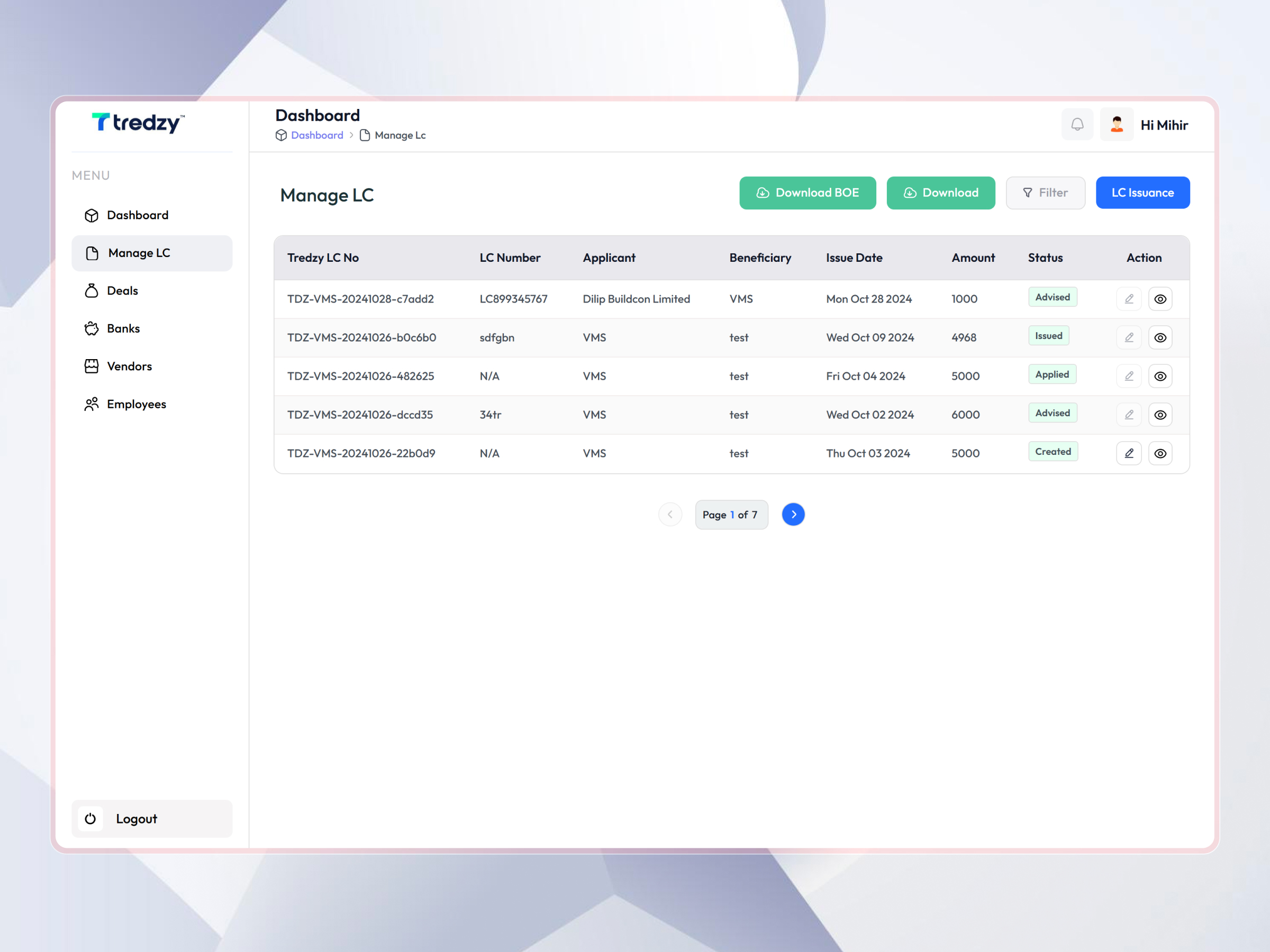
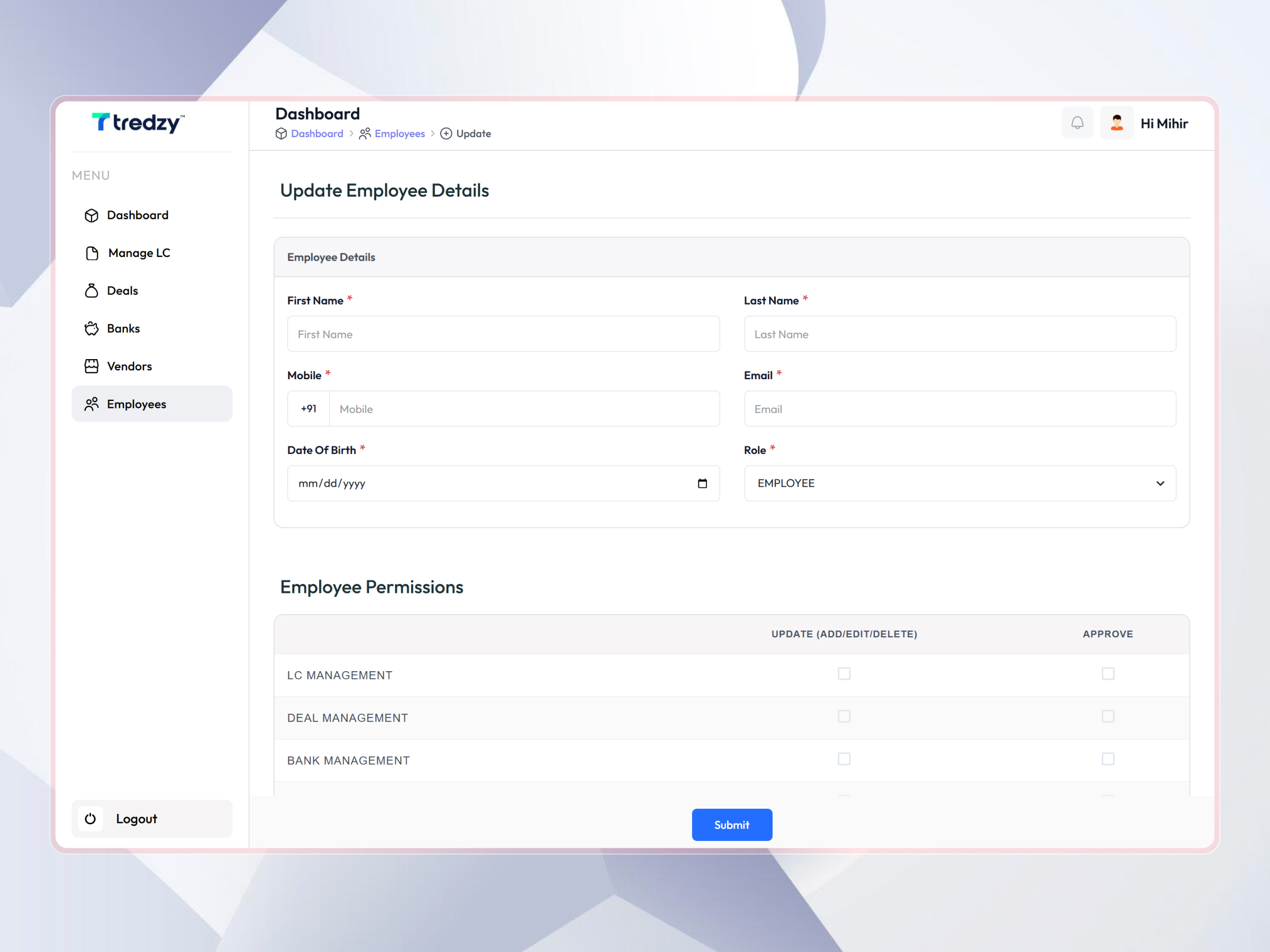
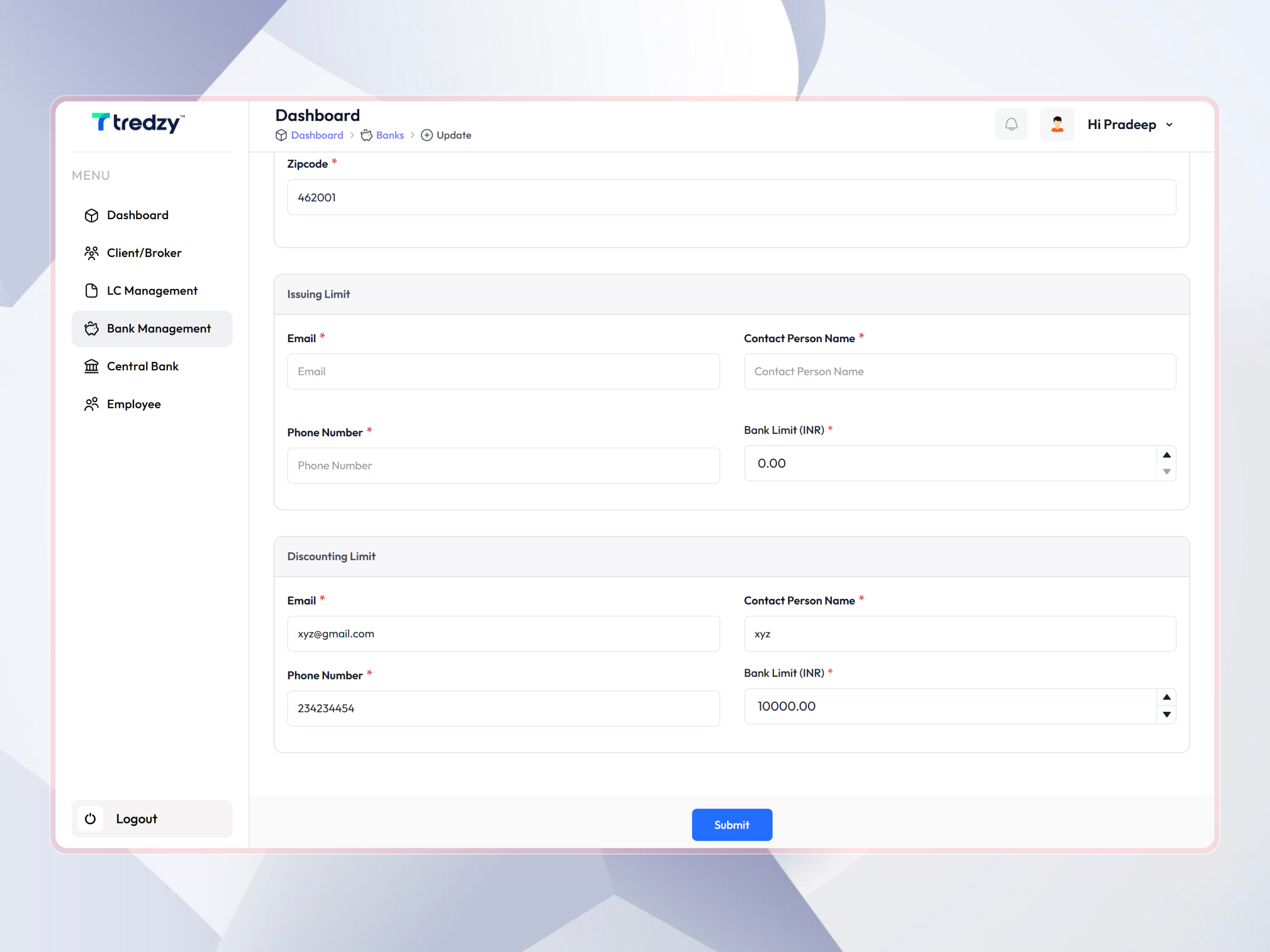
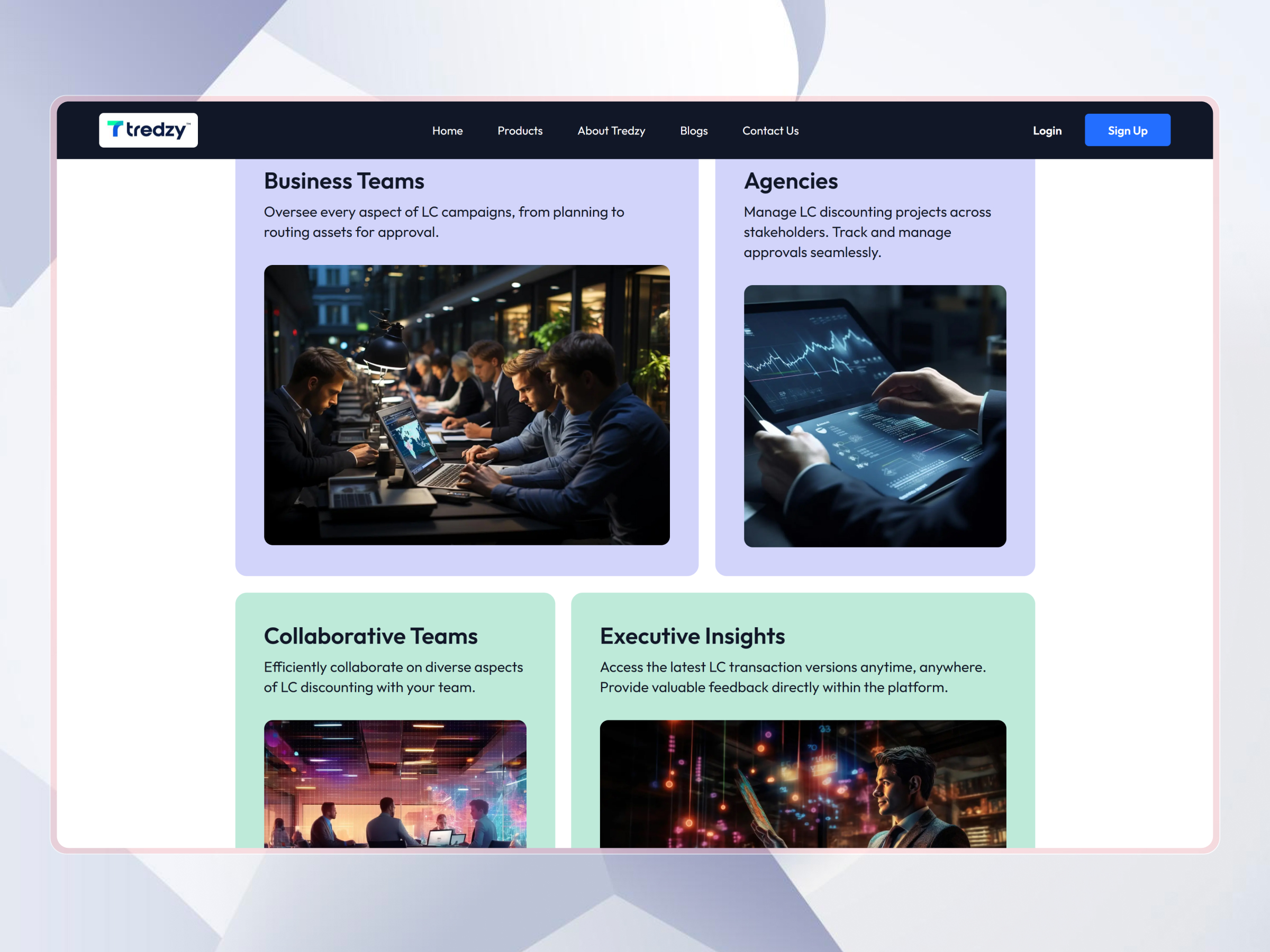
We planned, designed, and built it as a subscription-based SaaS platform where businesses can submit LC discounting requests, track their status in real time, and manage the entire trade finance workflow from a single dashboard.
What the project needed to do
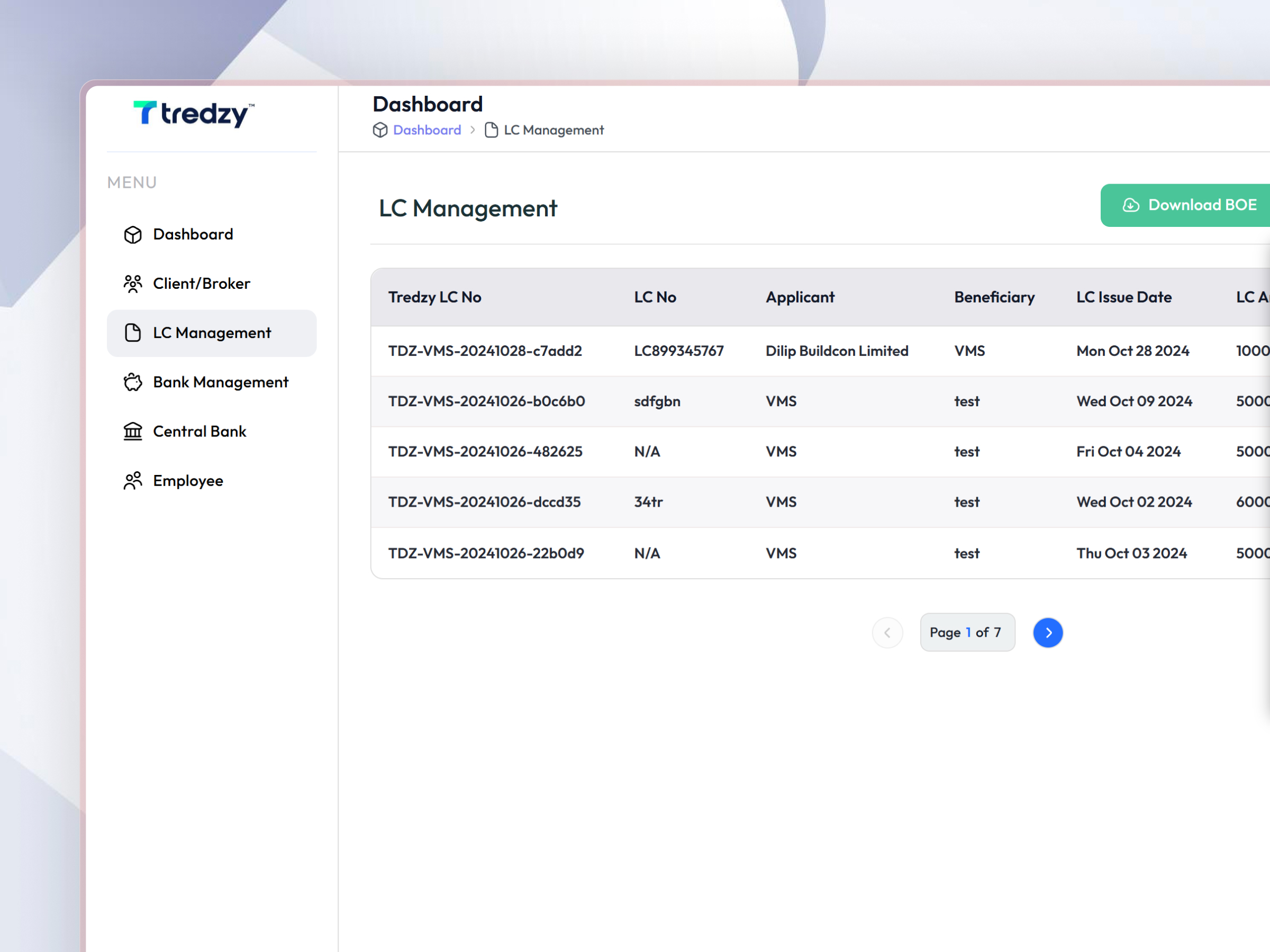
The brief called for a digital LC discounting platform that replaces the manual, paper-heavy process most businesses still use. Traditionally, LC discounting involves physical document submissions, multiple bank visits, and days of back-and-forth. Tredzy needed to digitize this entire workflow — from LC submission and document verification to funding and settlement tracking.
It also needed to be built as an MVP first — something the client could launch quickly, validate with real users, and iterate on based on feedback before investing in a complete-scale build.
How we approached it
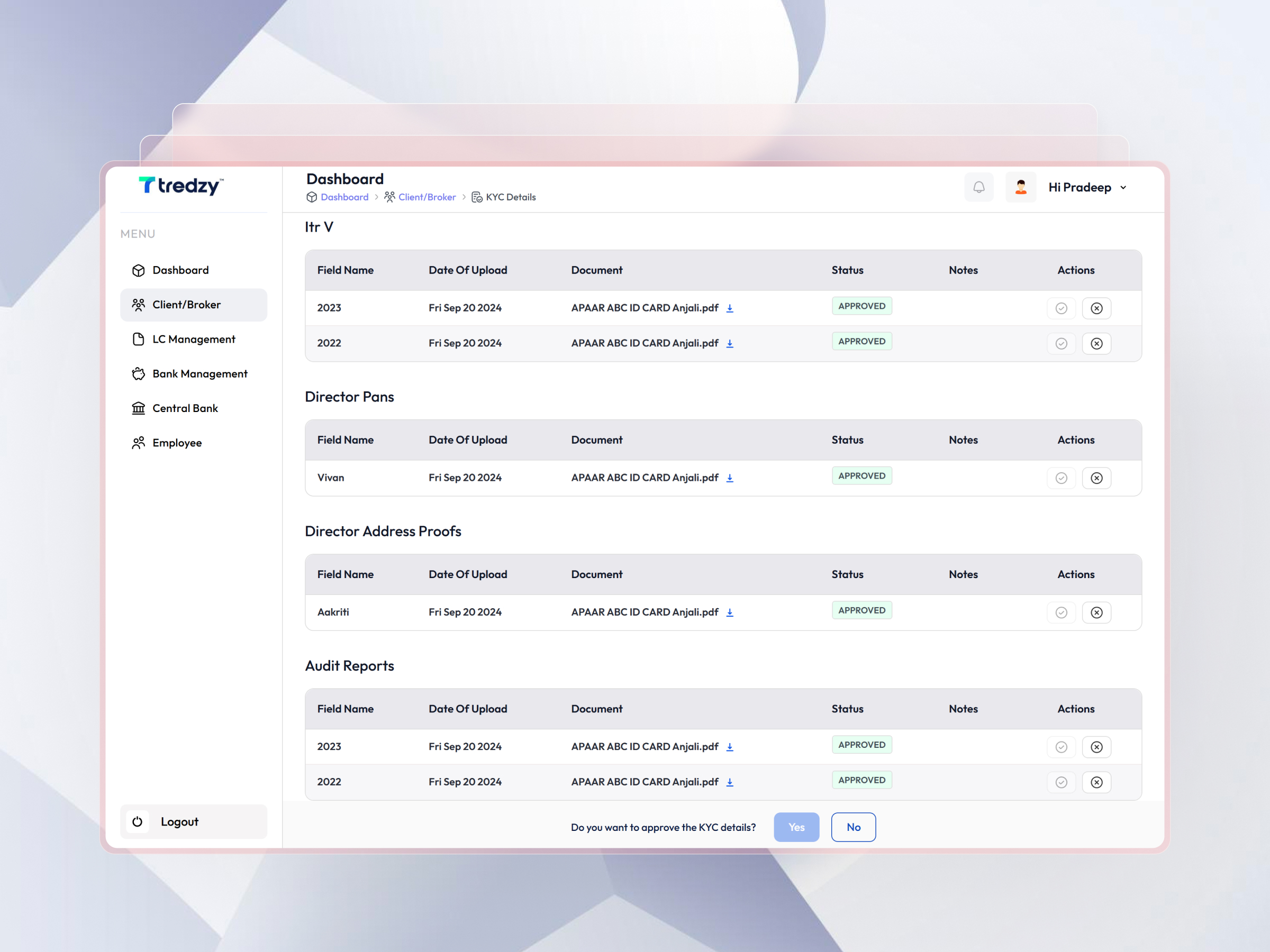
LC Discounting Workflow
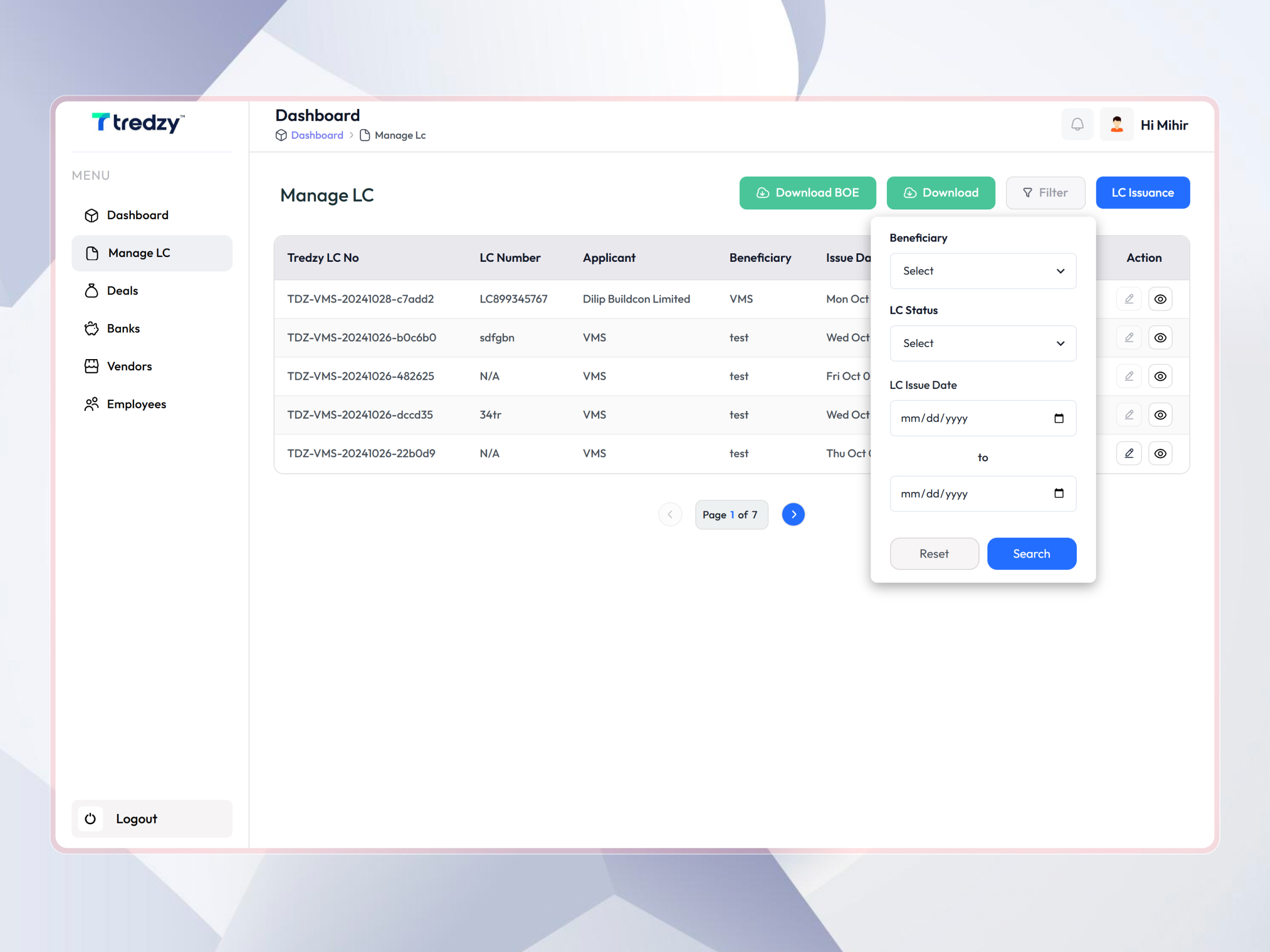
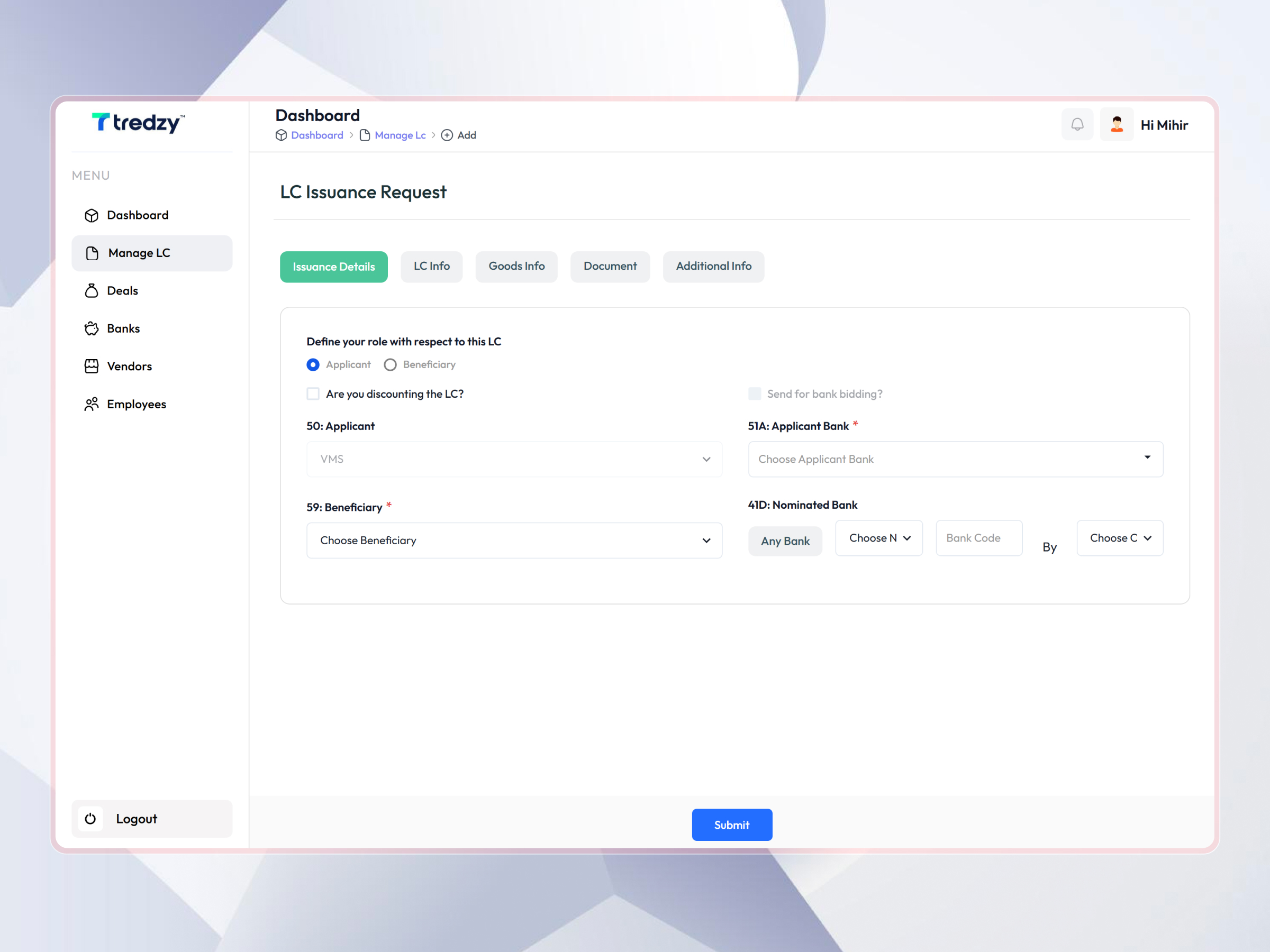
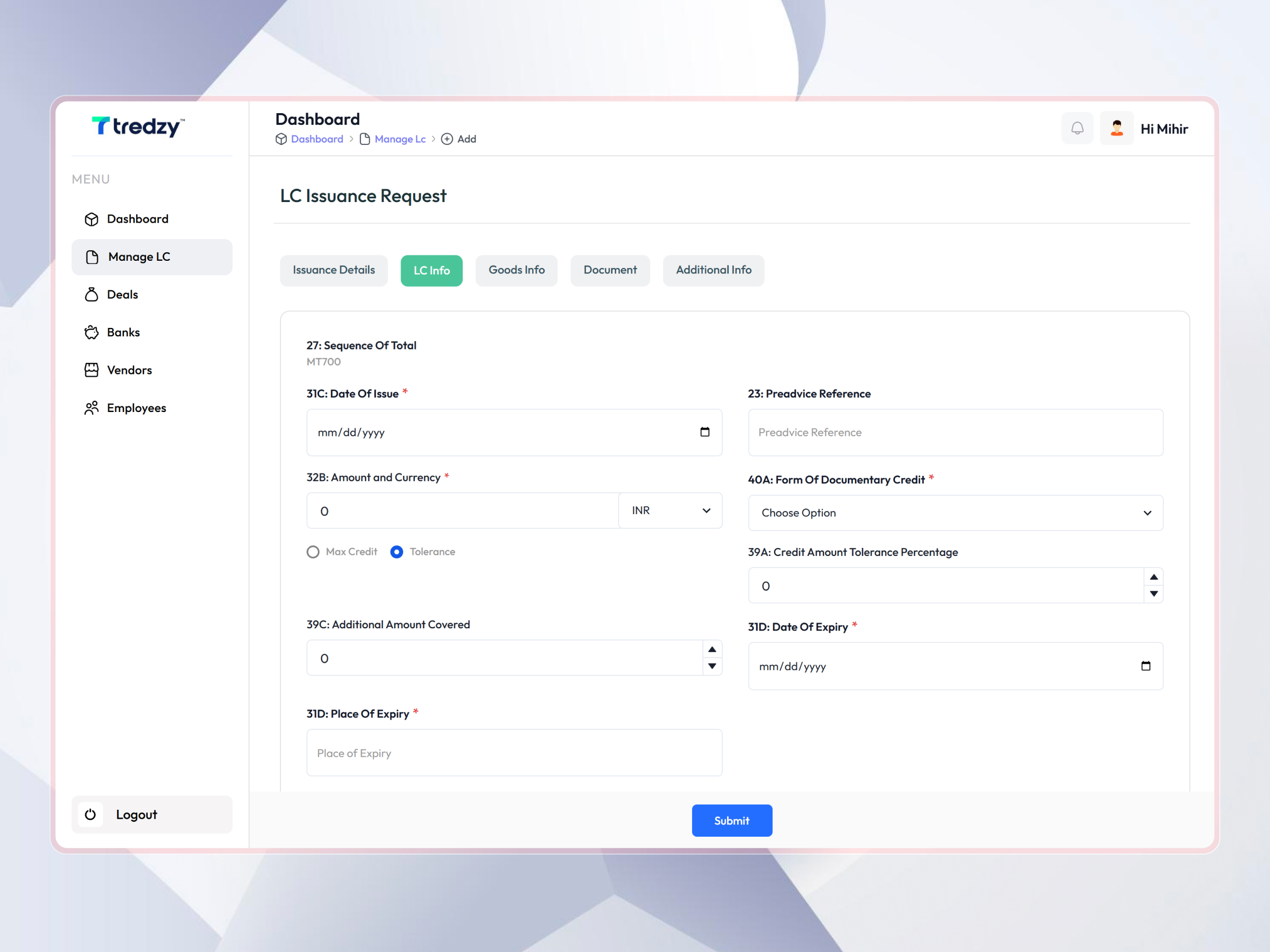
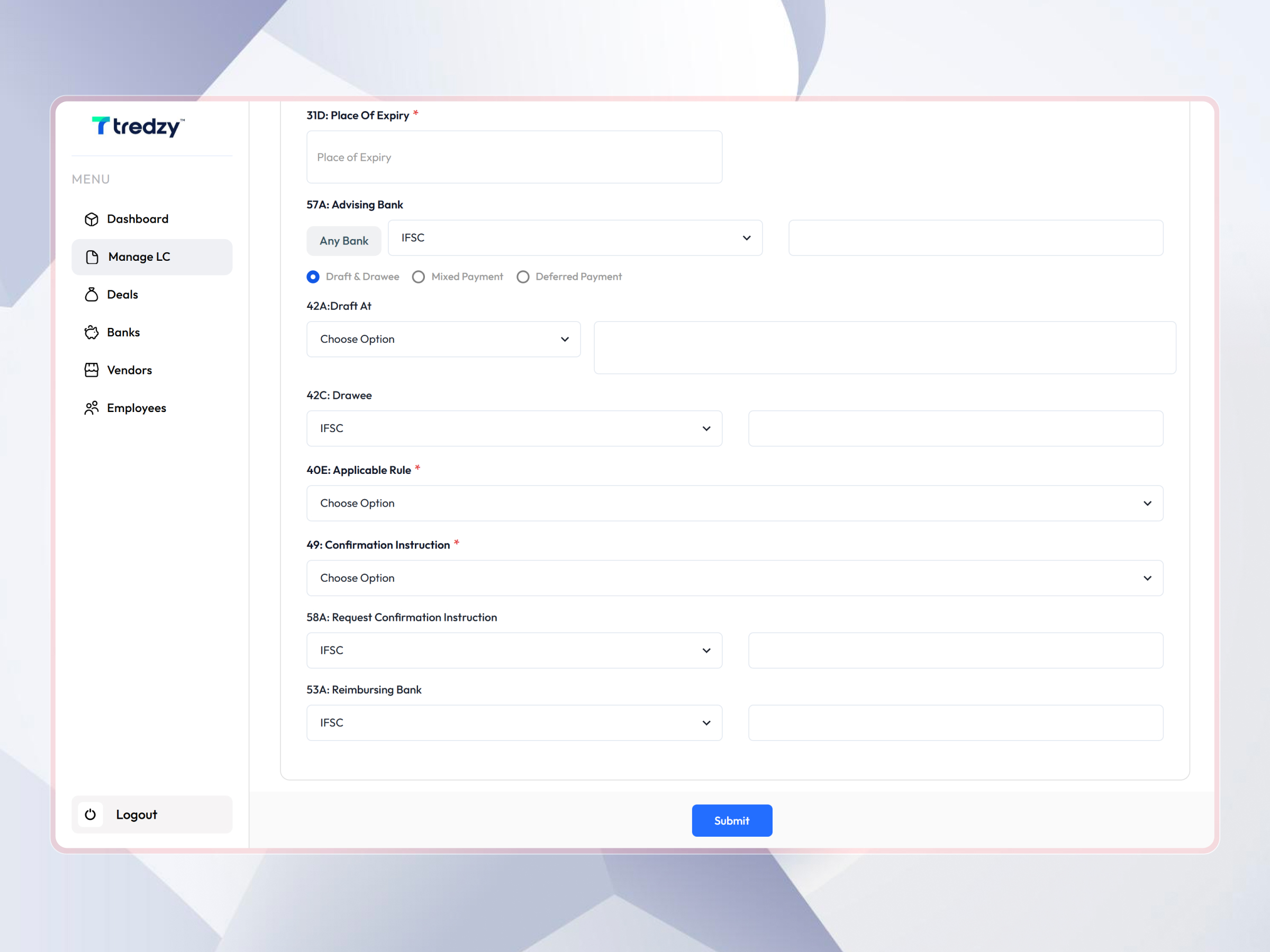
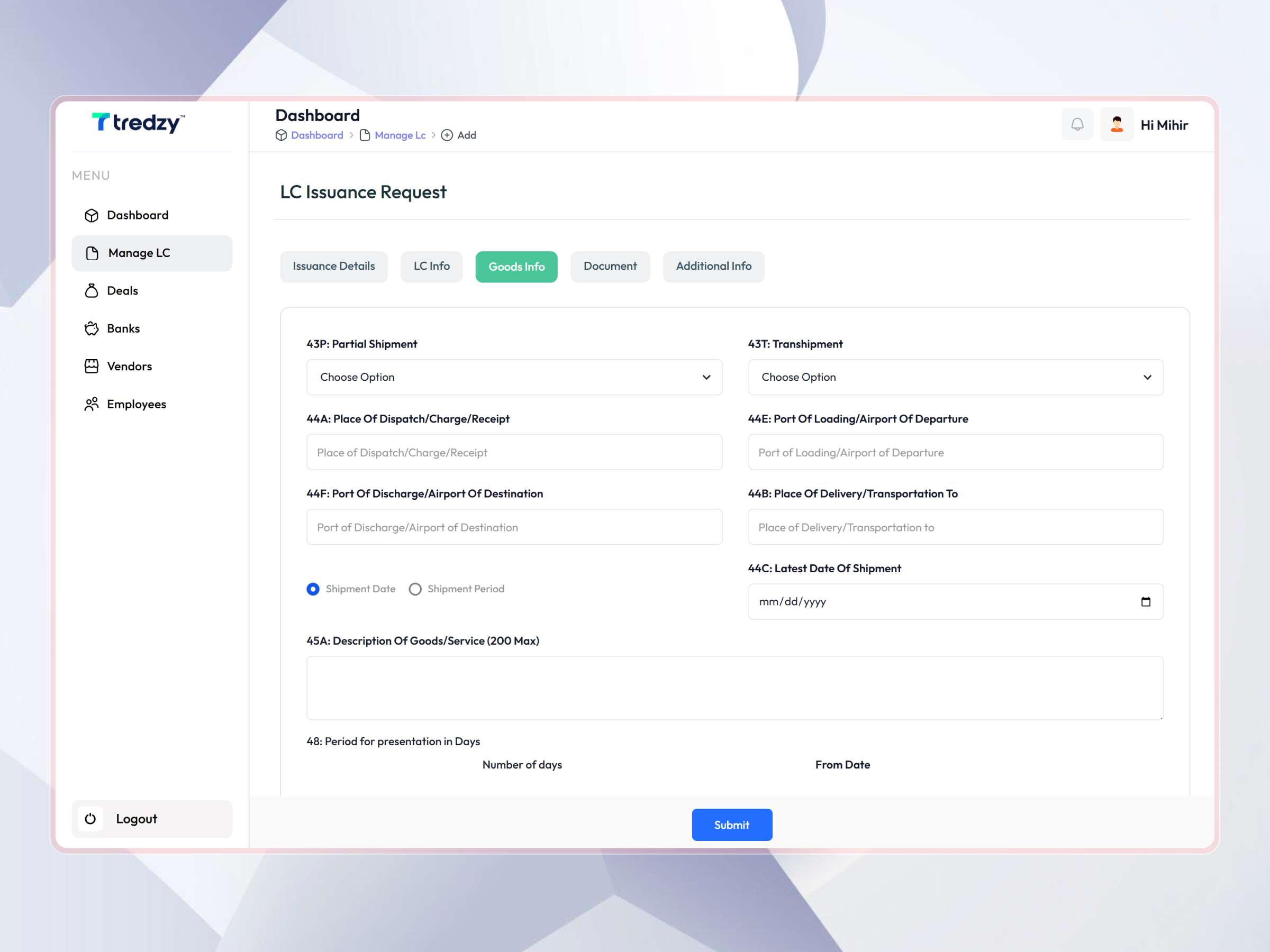
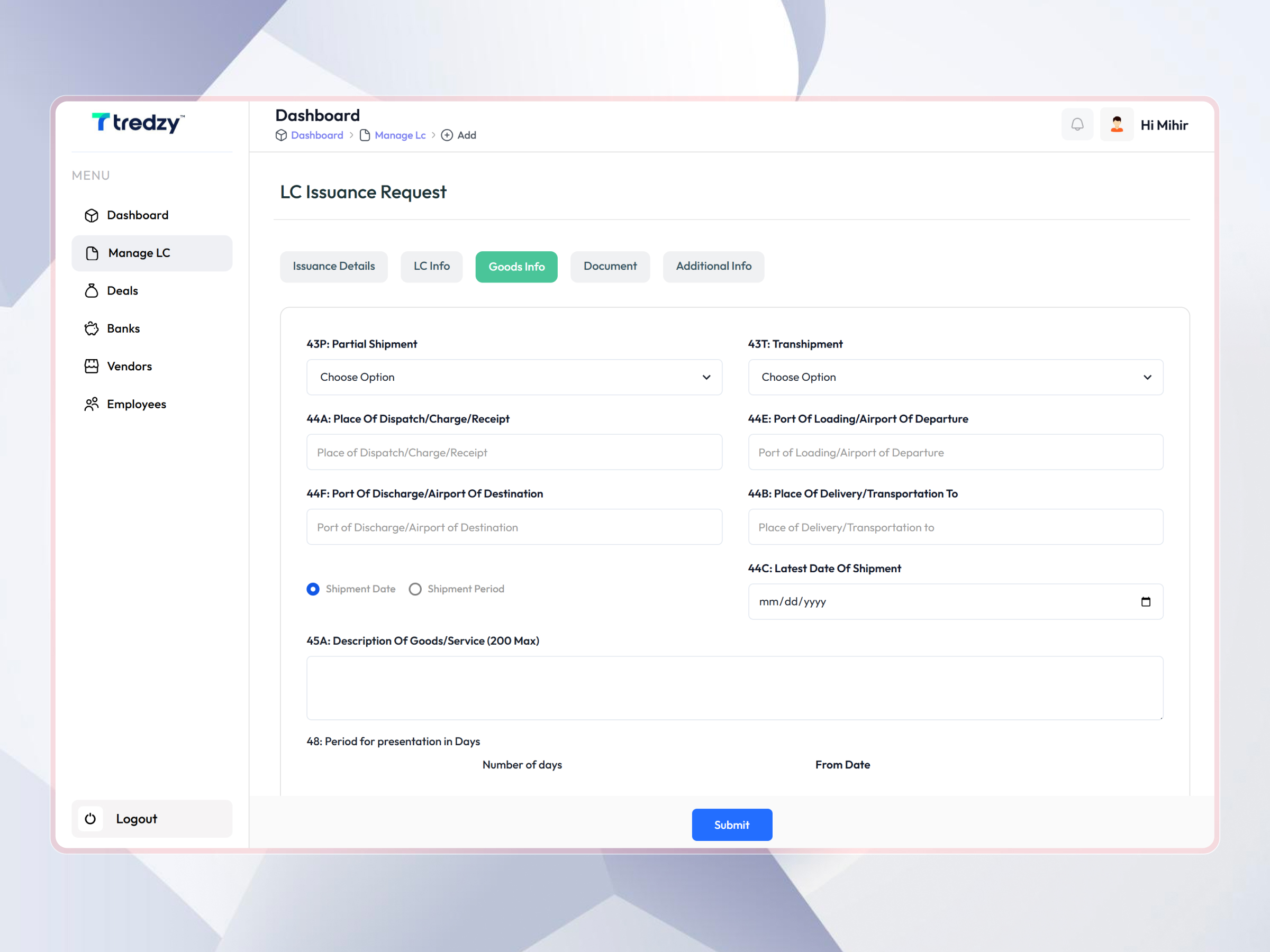
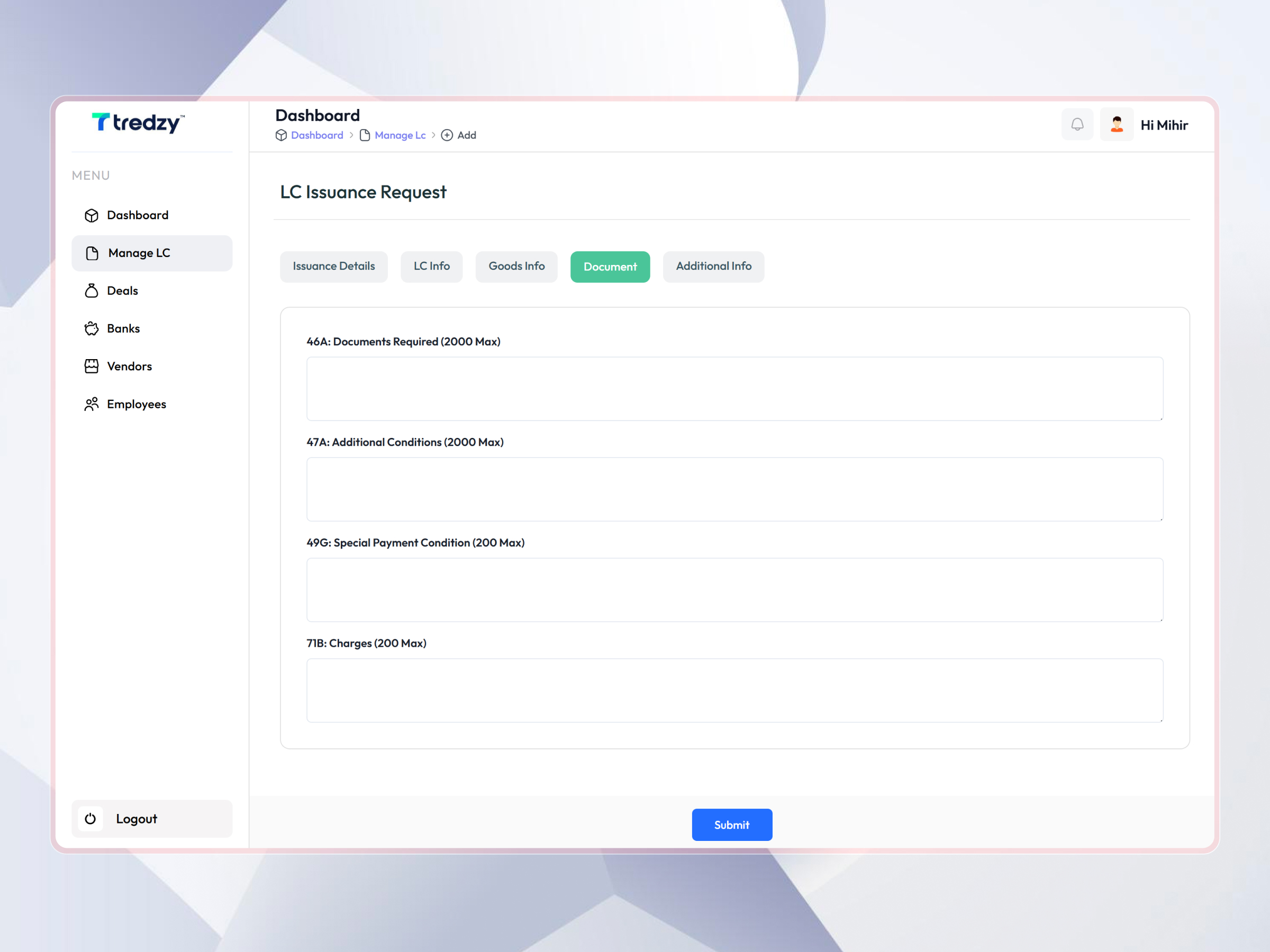
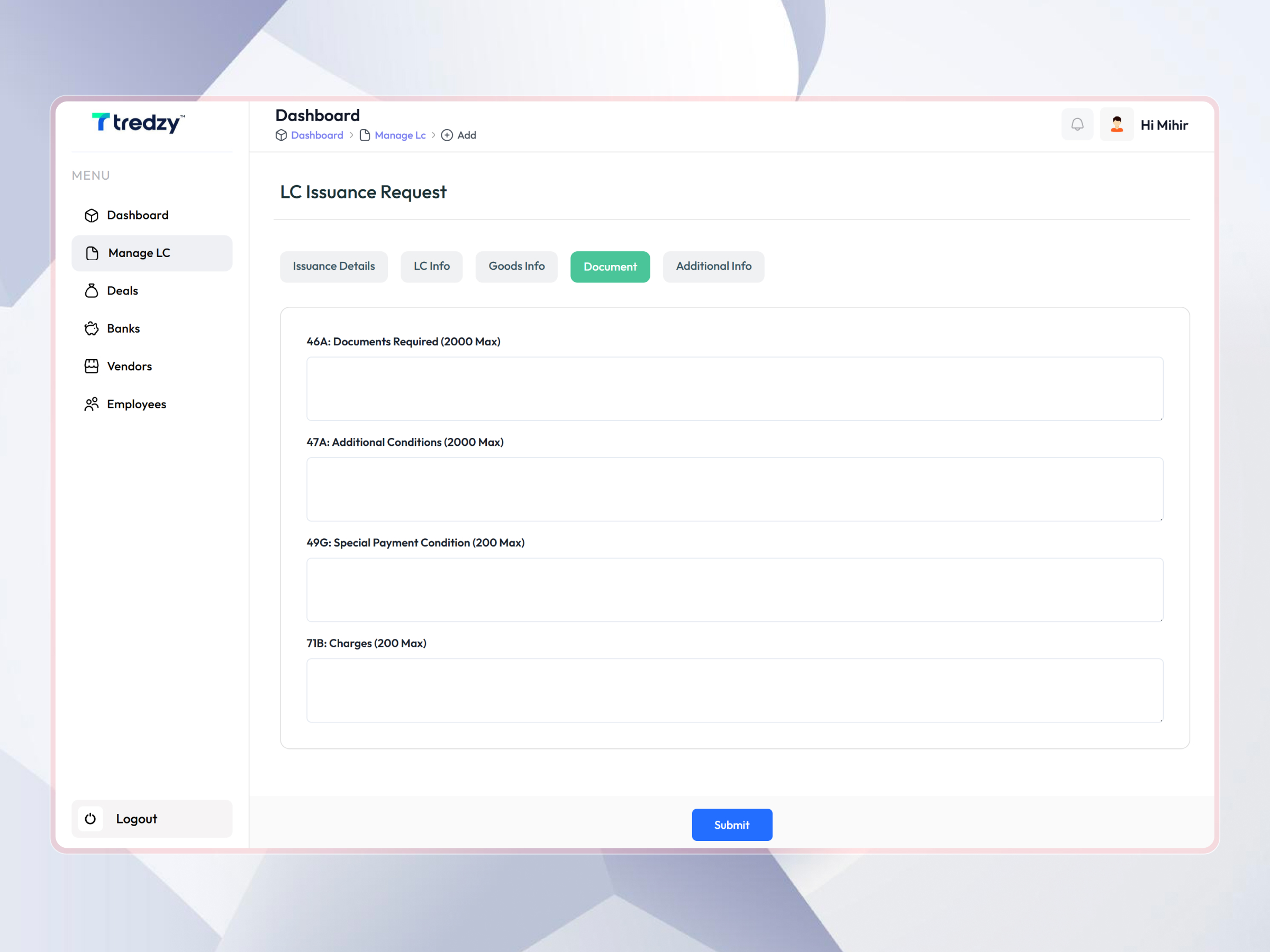
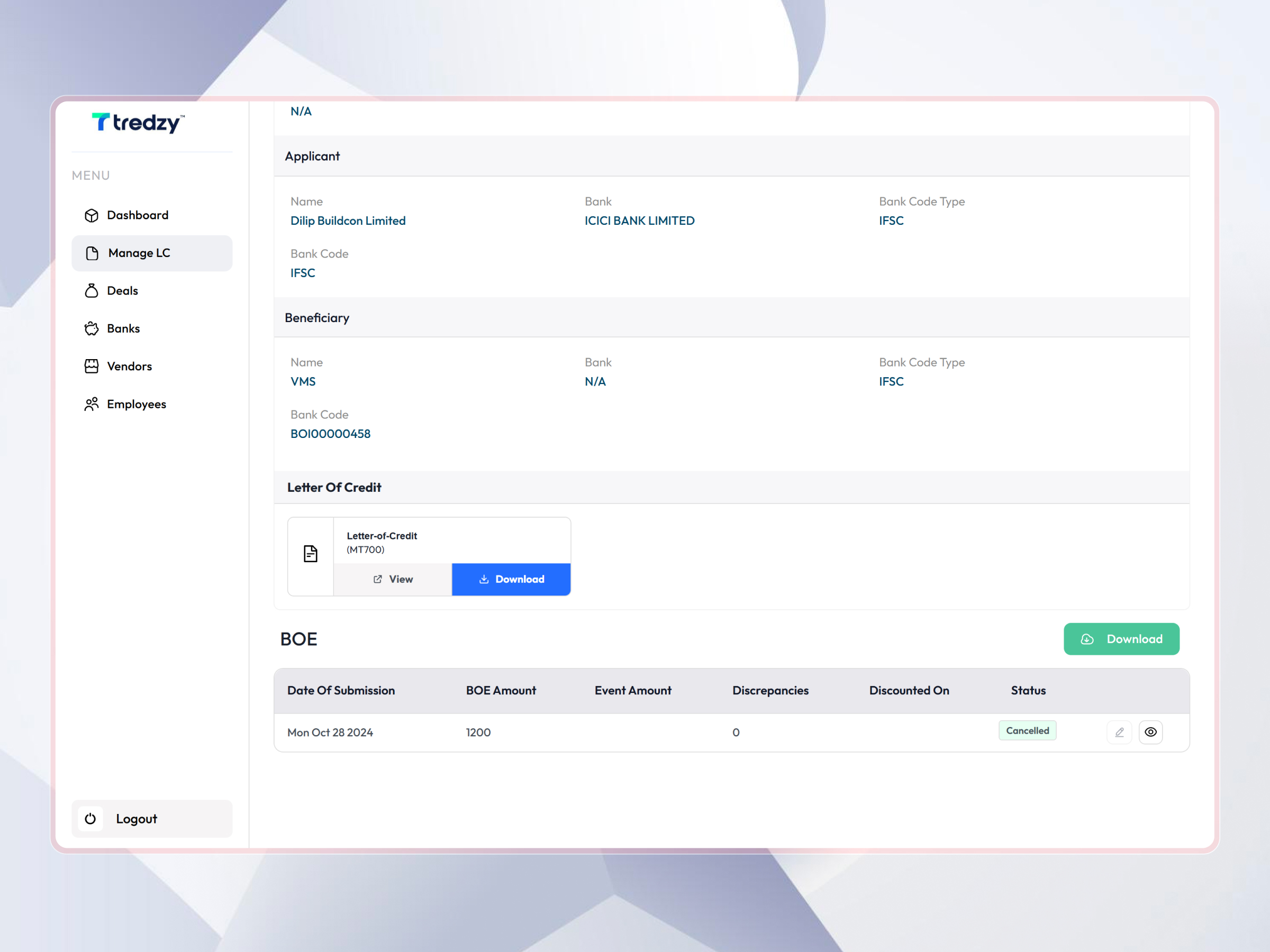
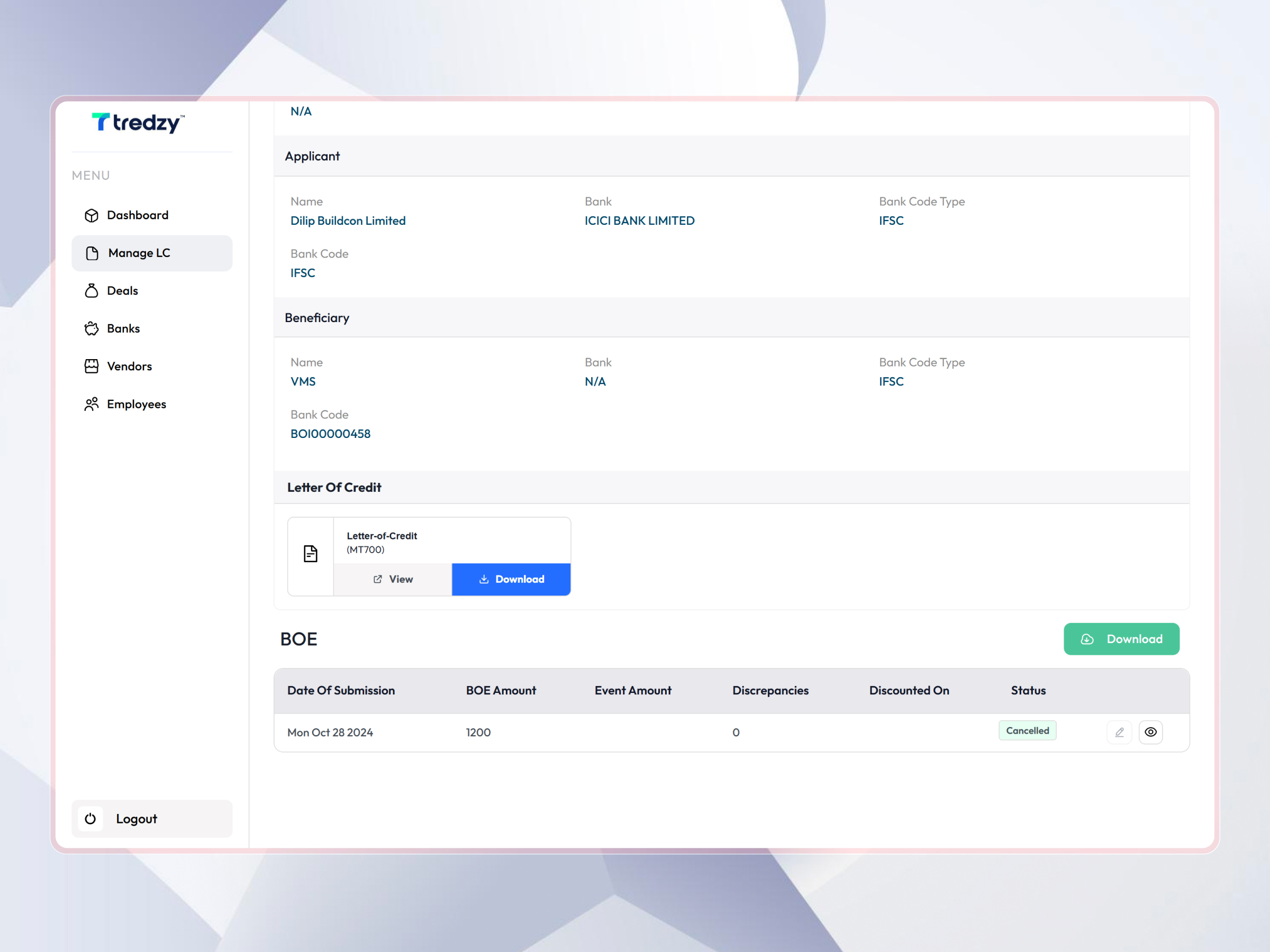
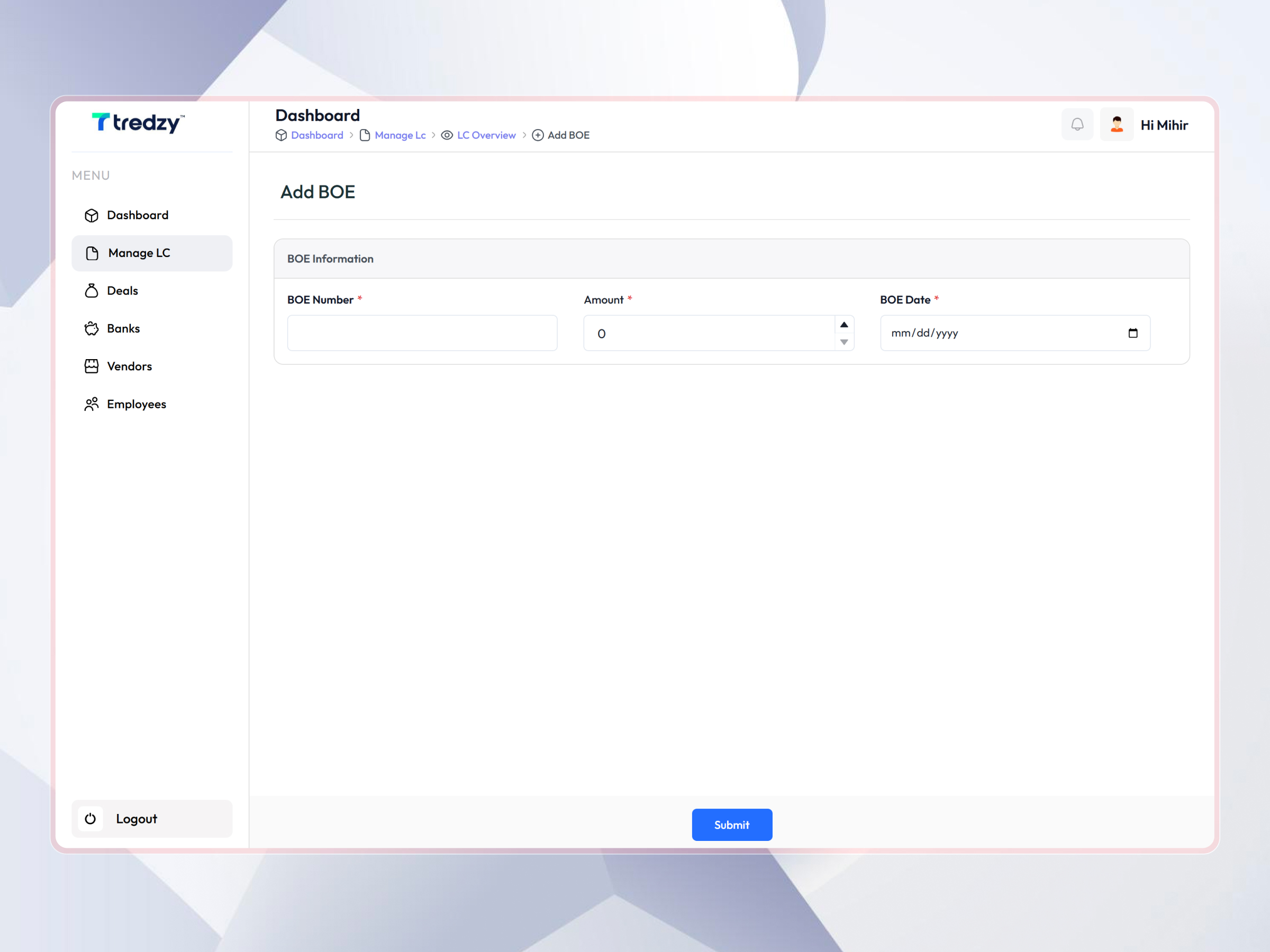
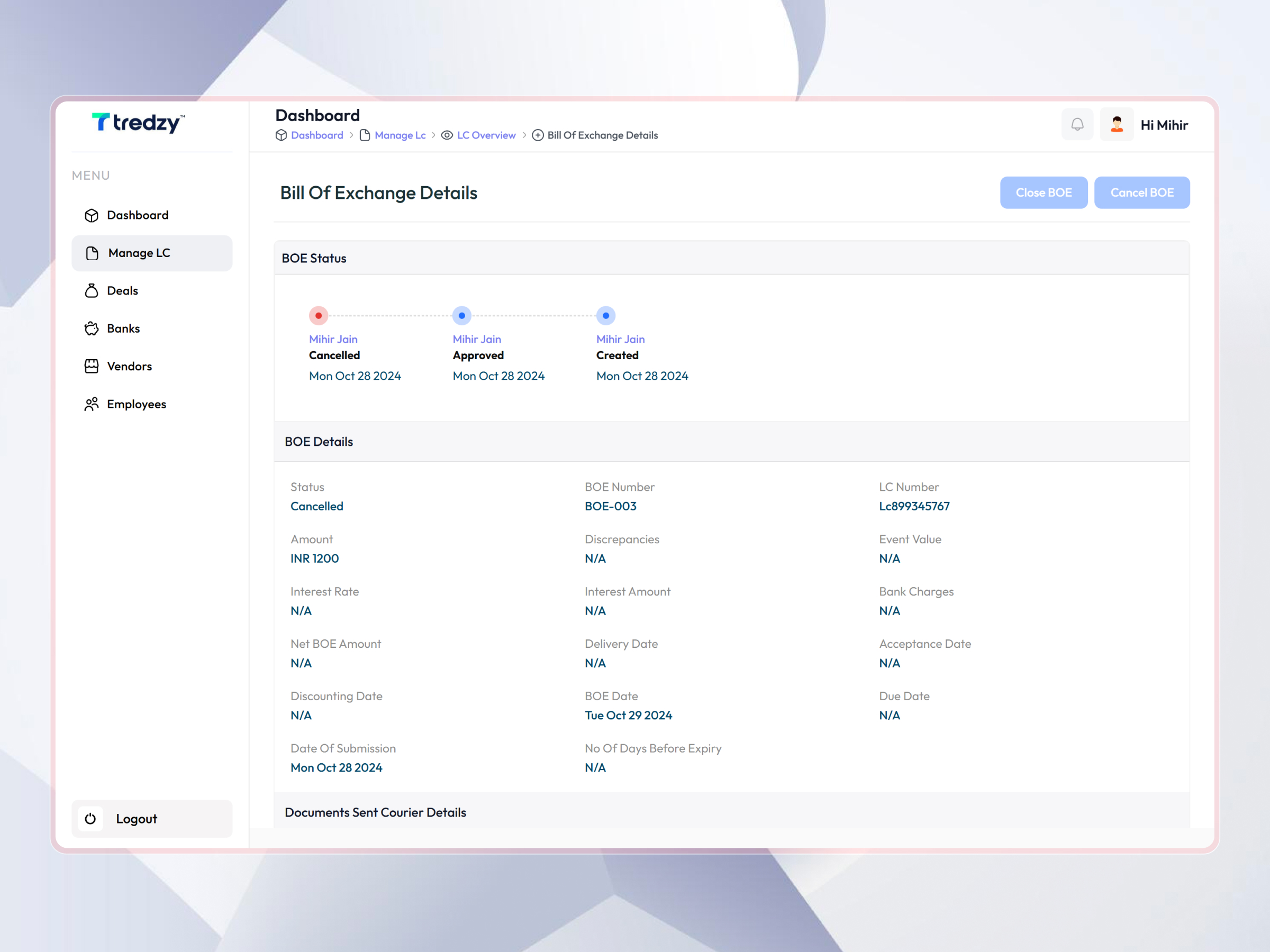
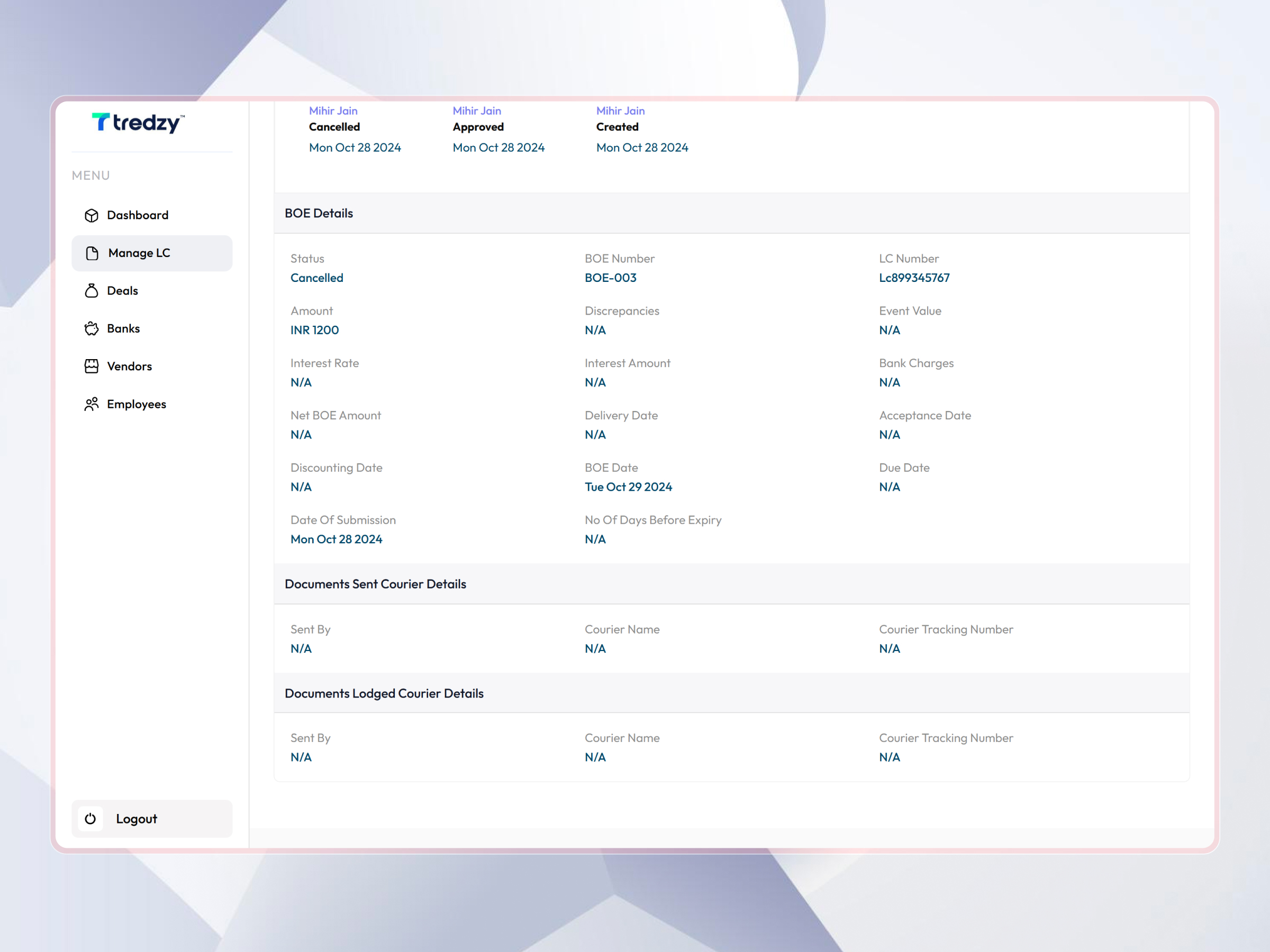
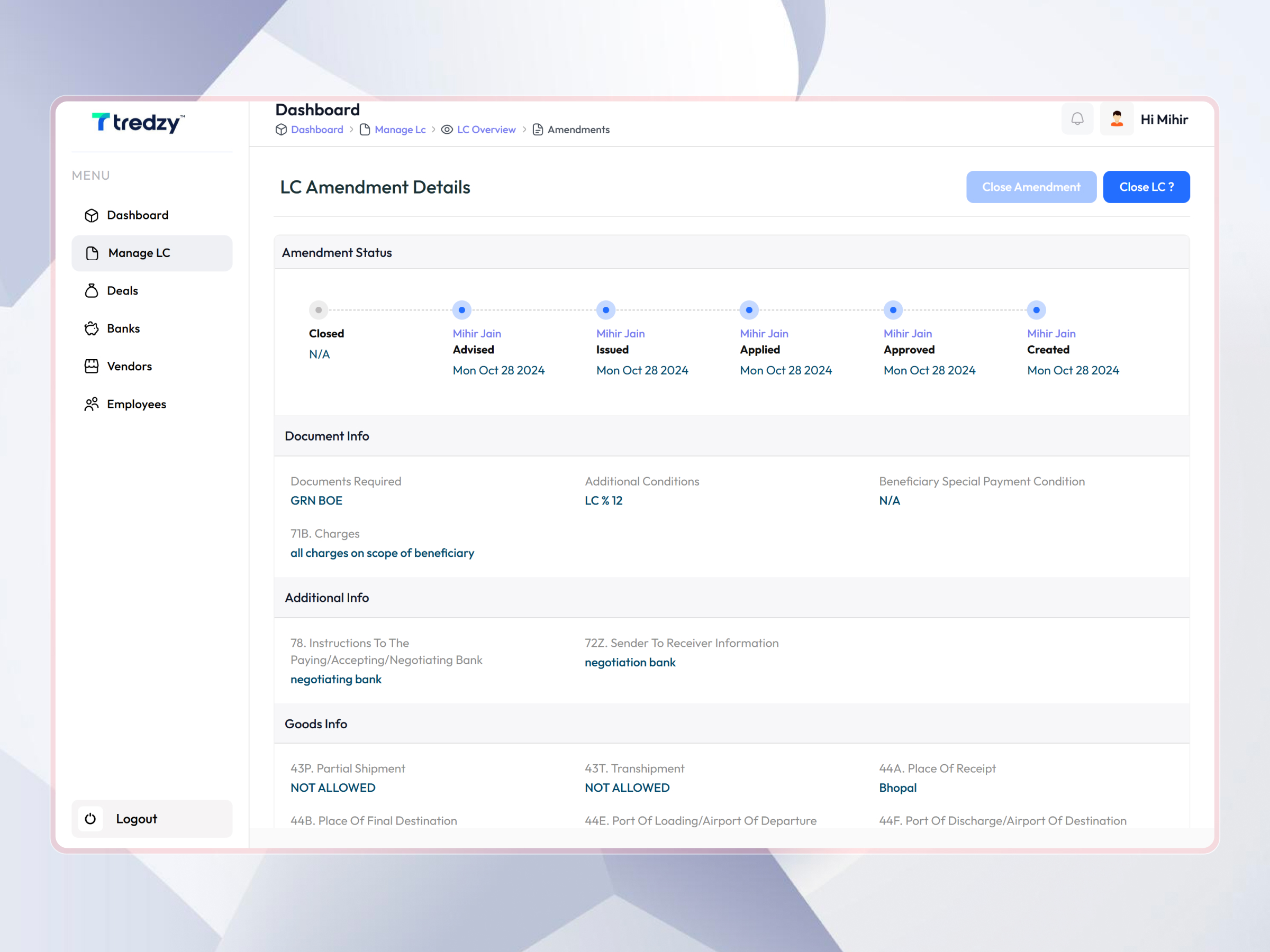
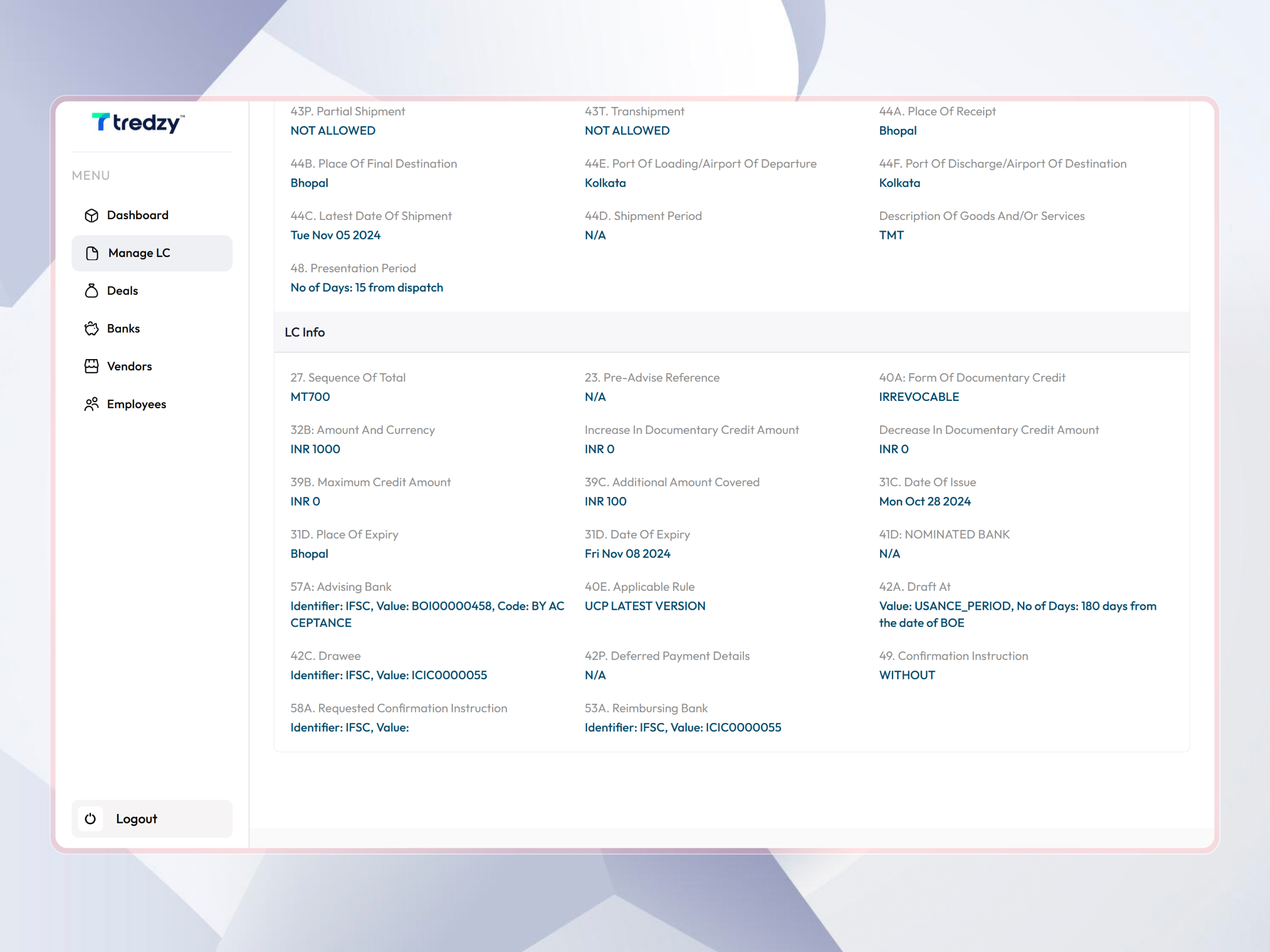
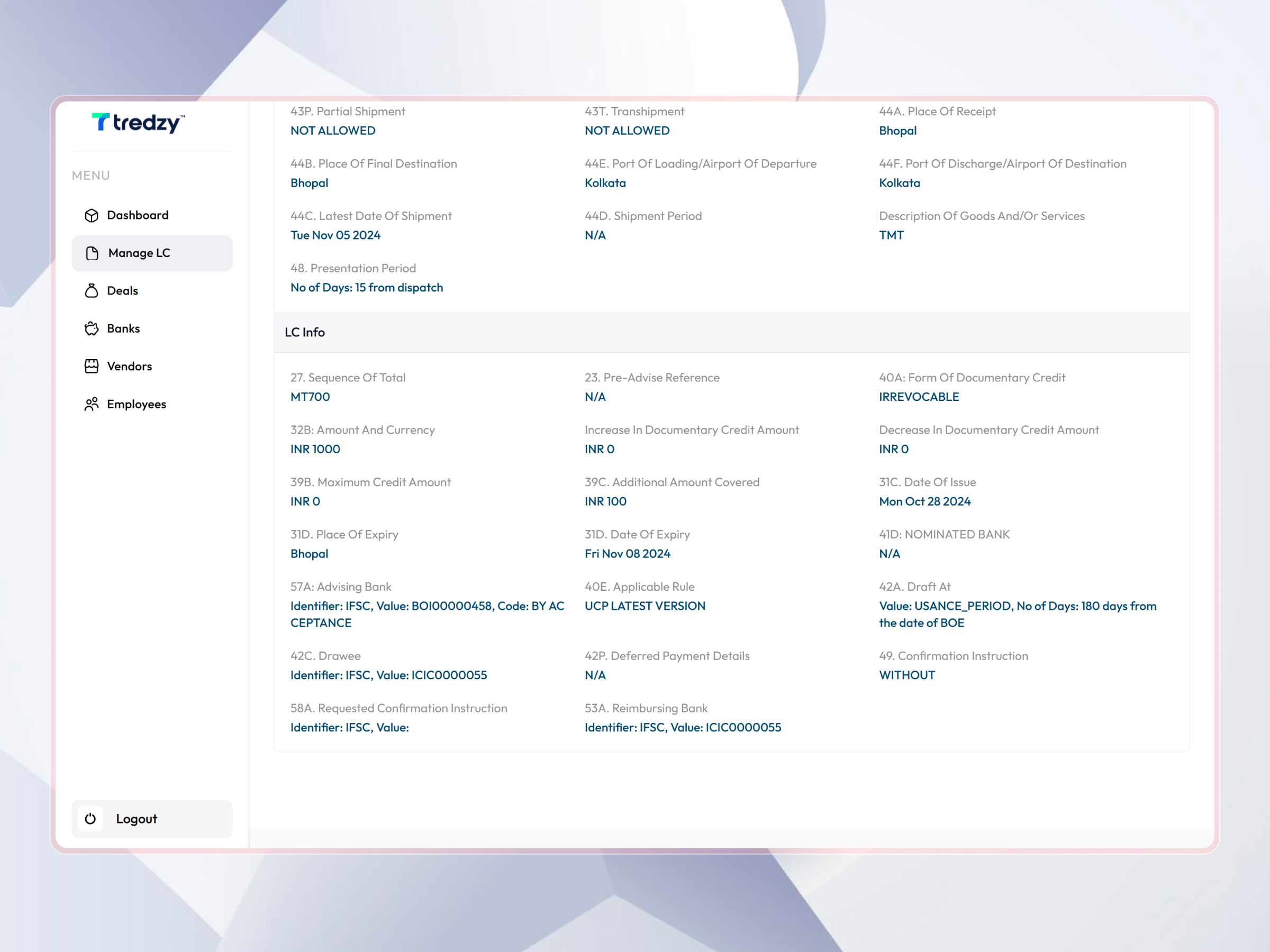
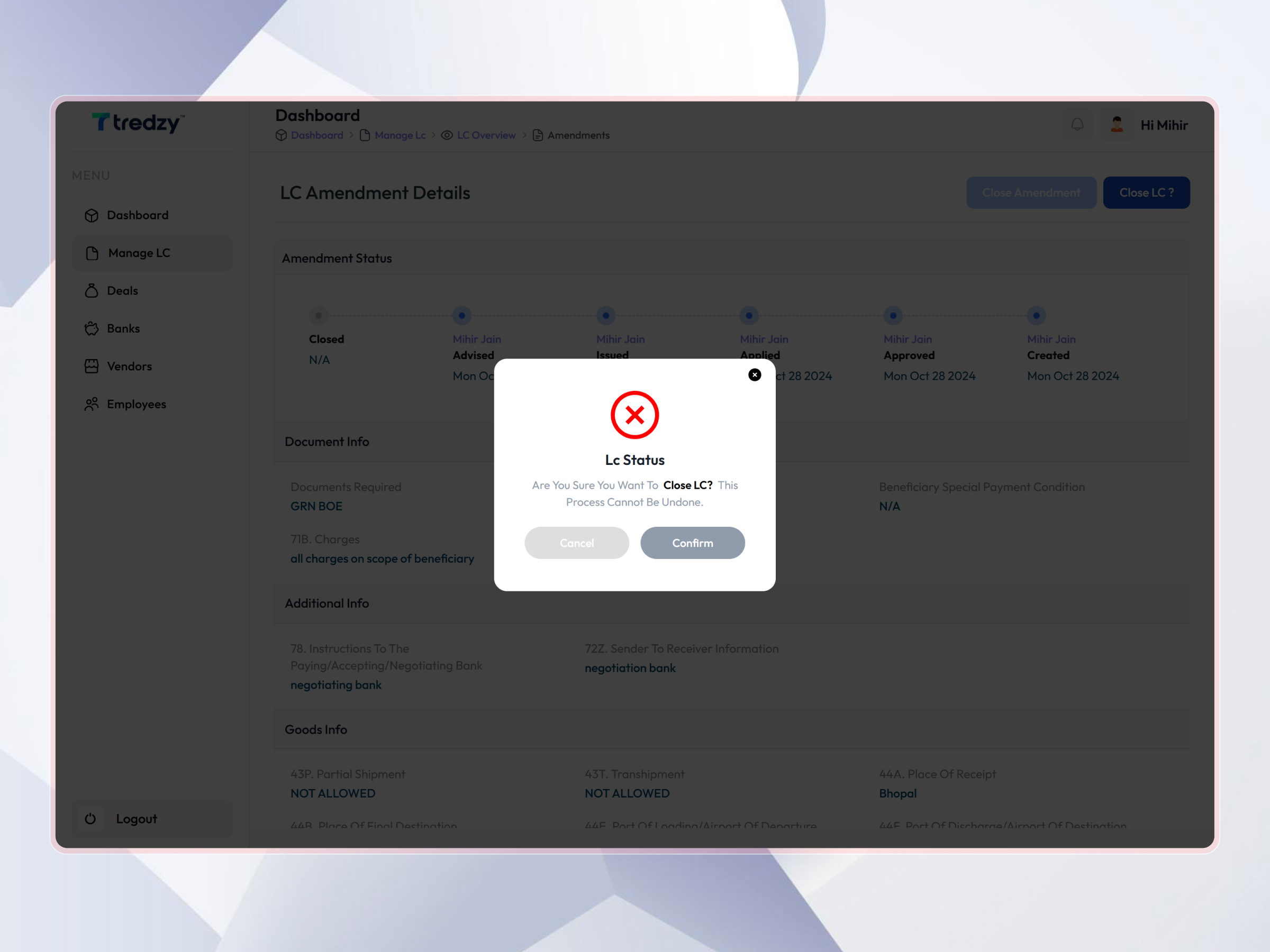
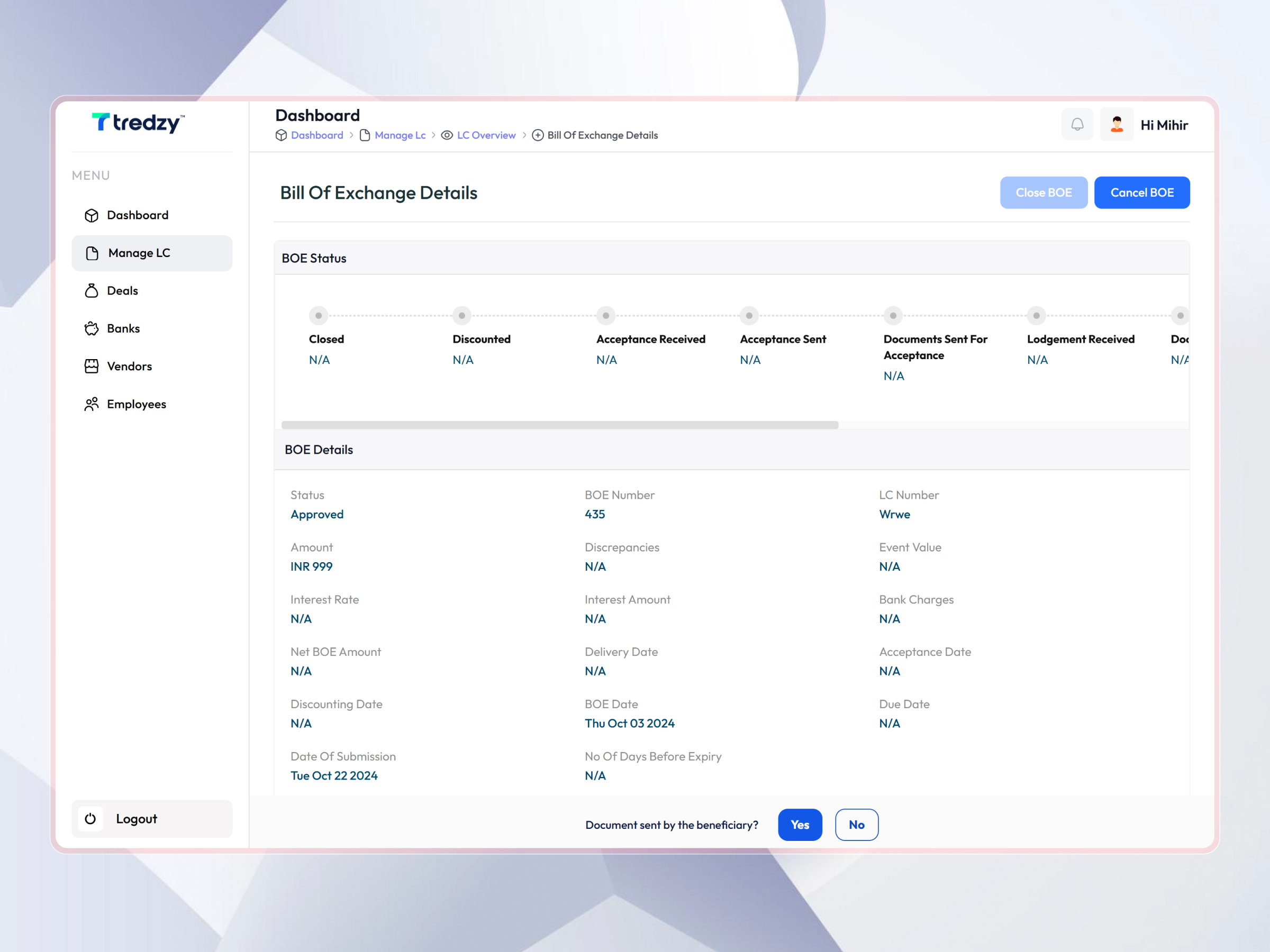
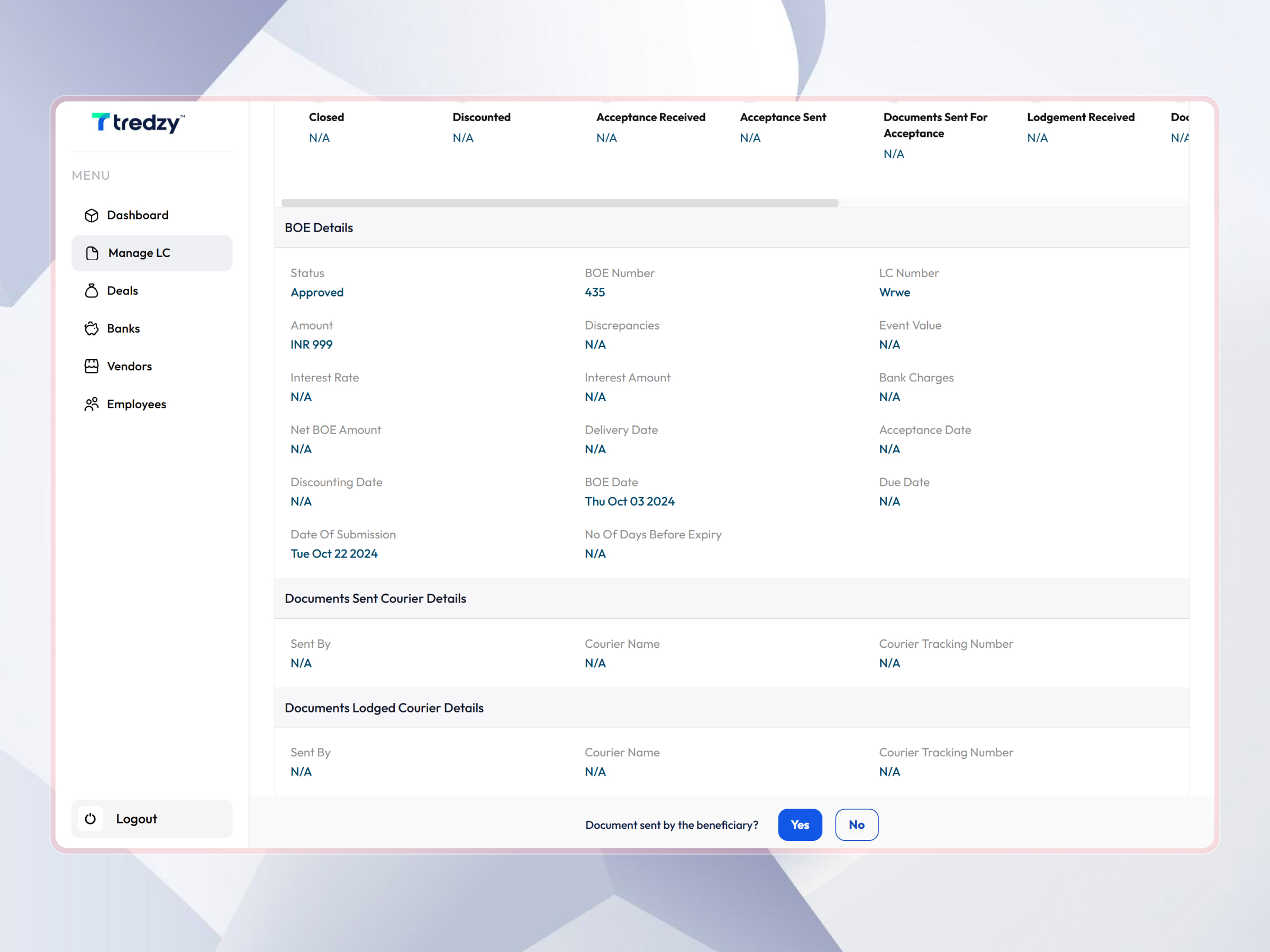
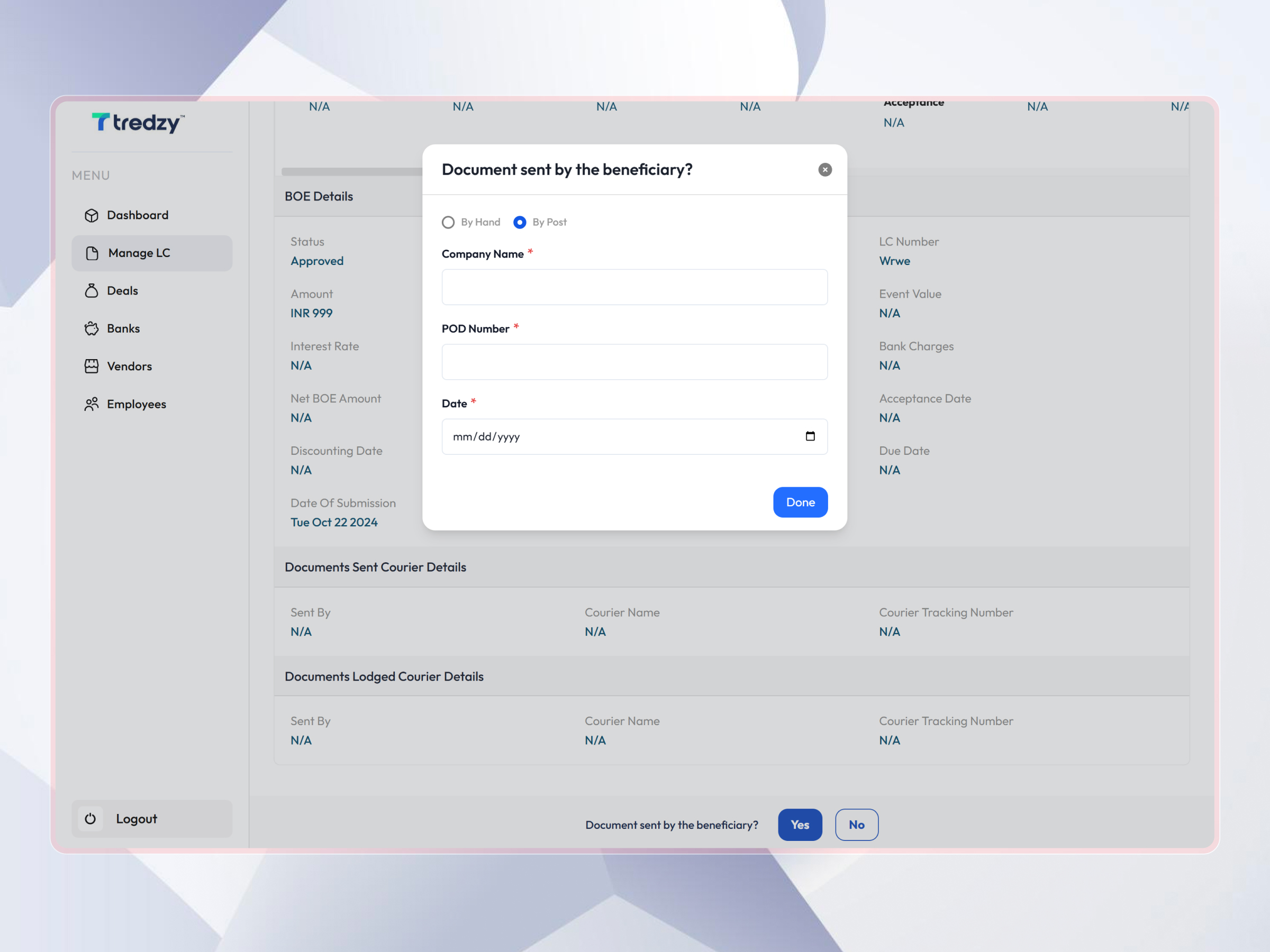
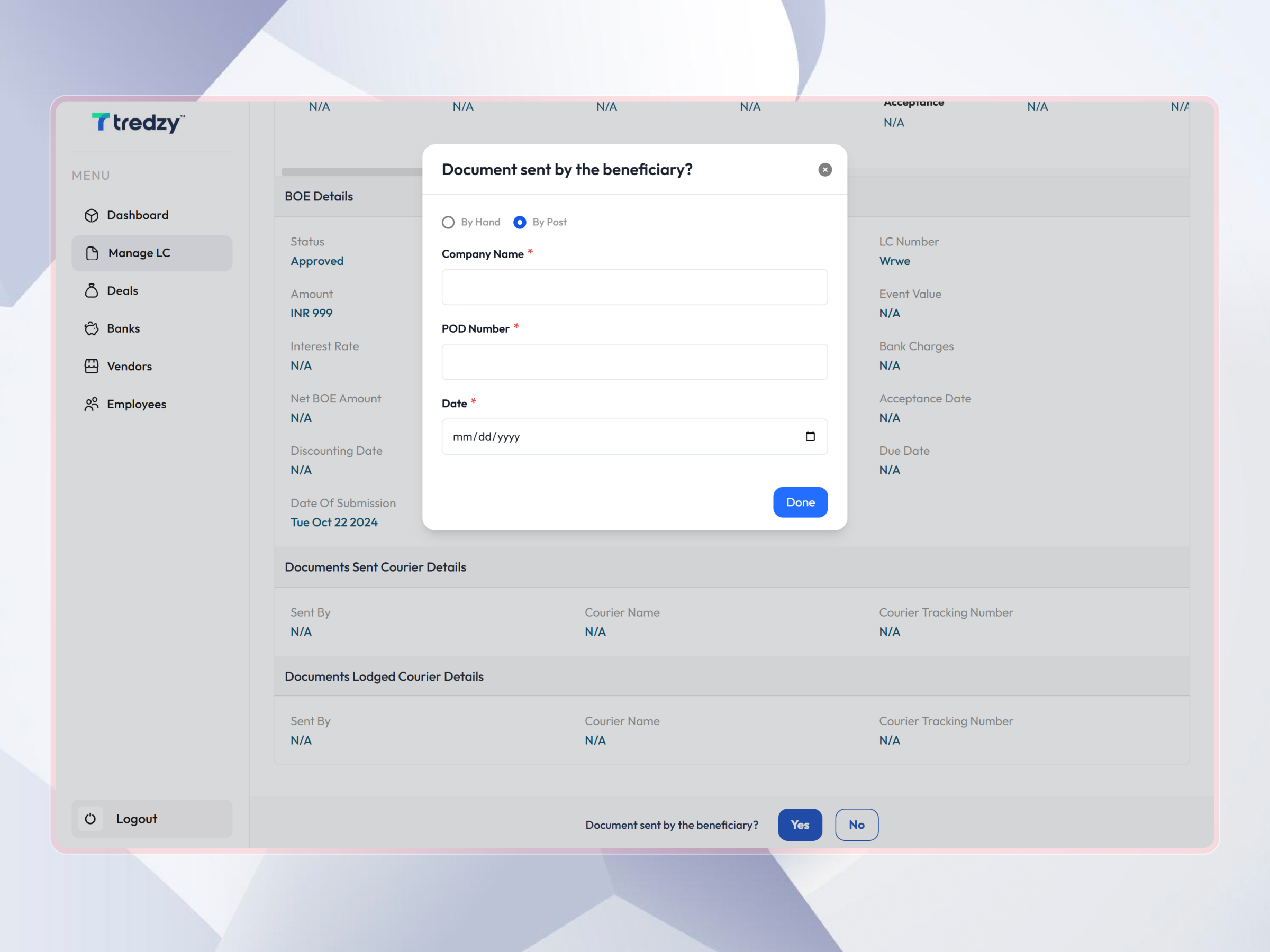
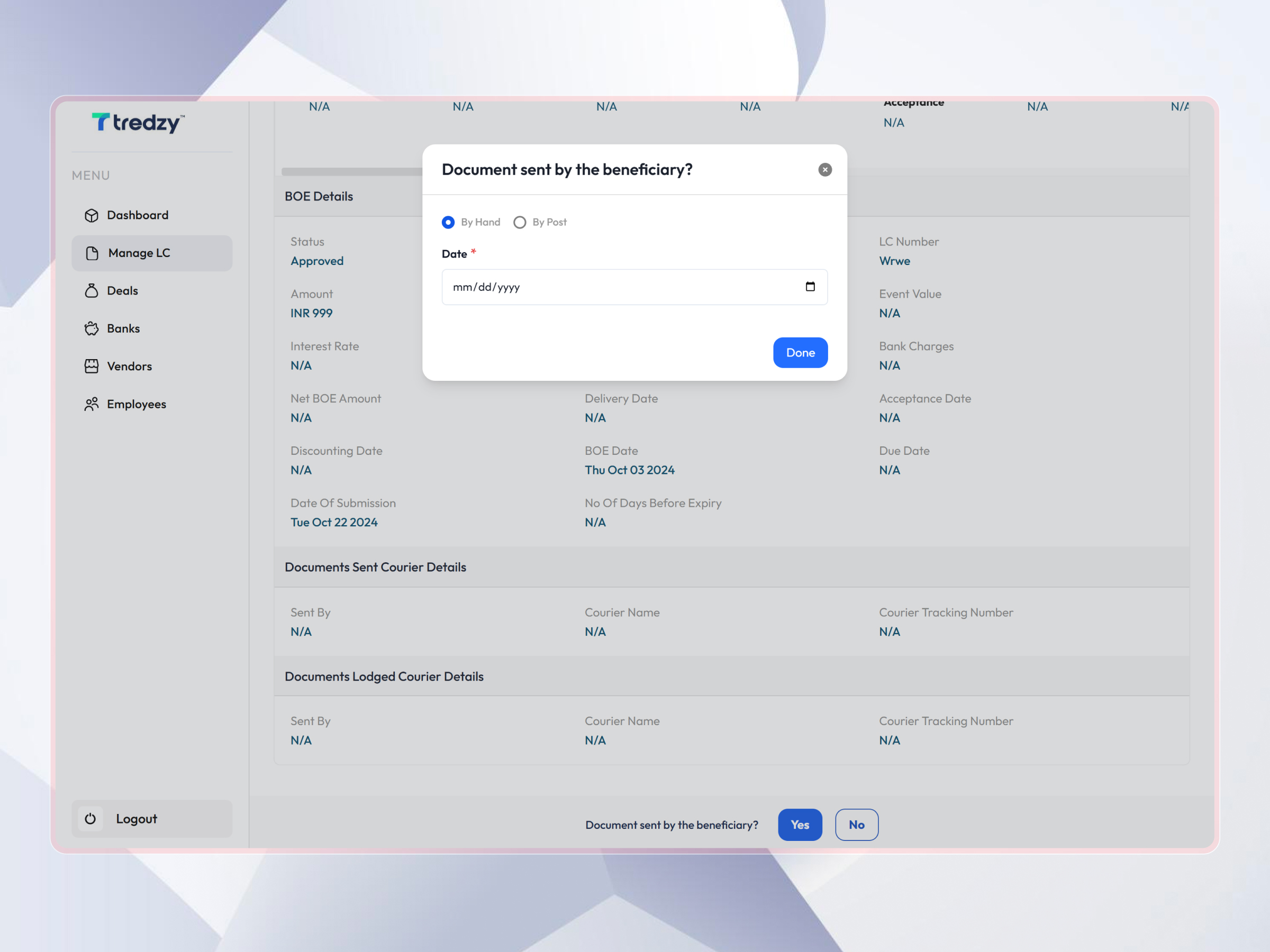
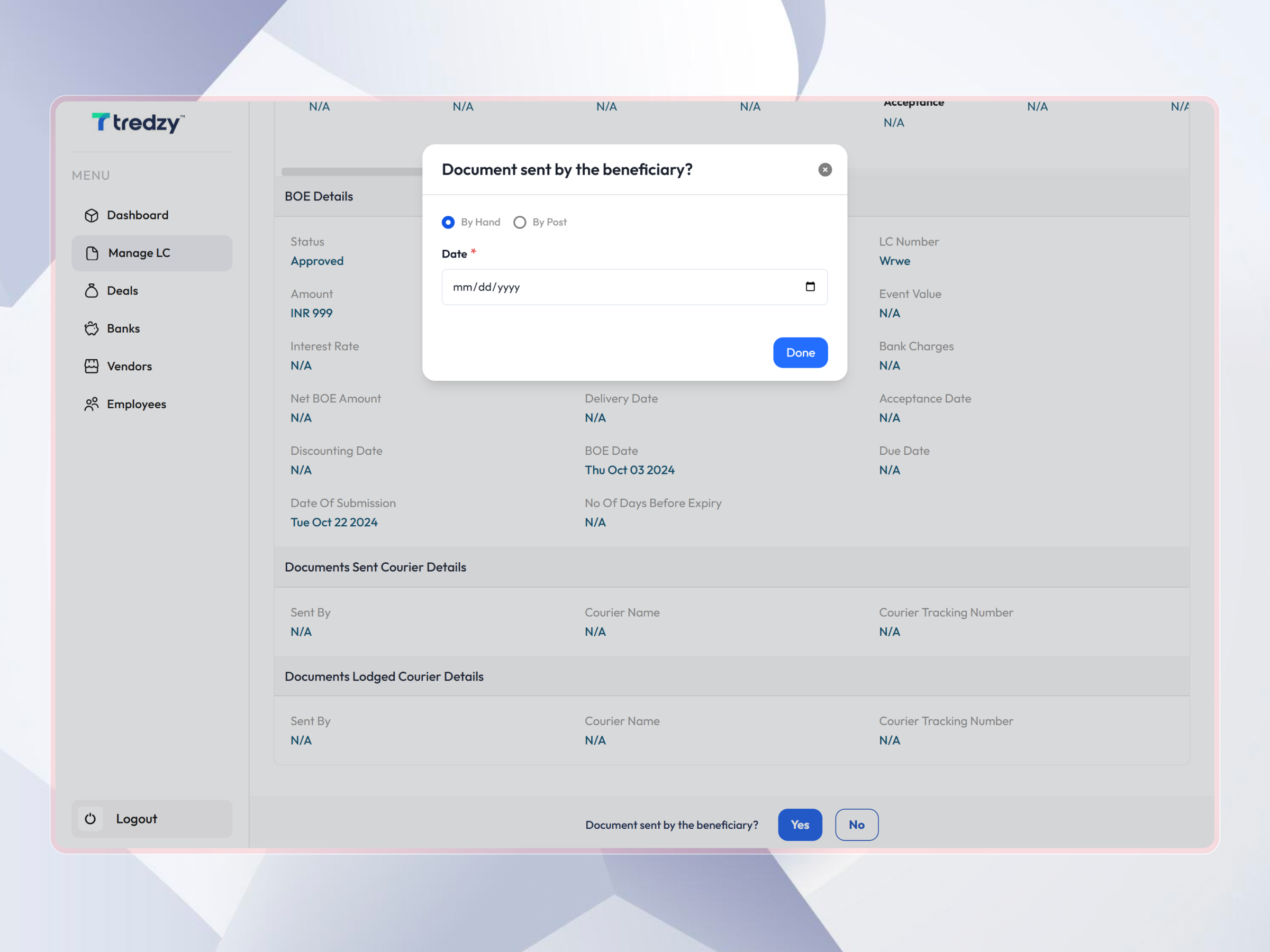
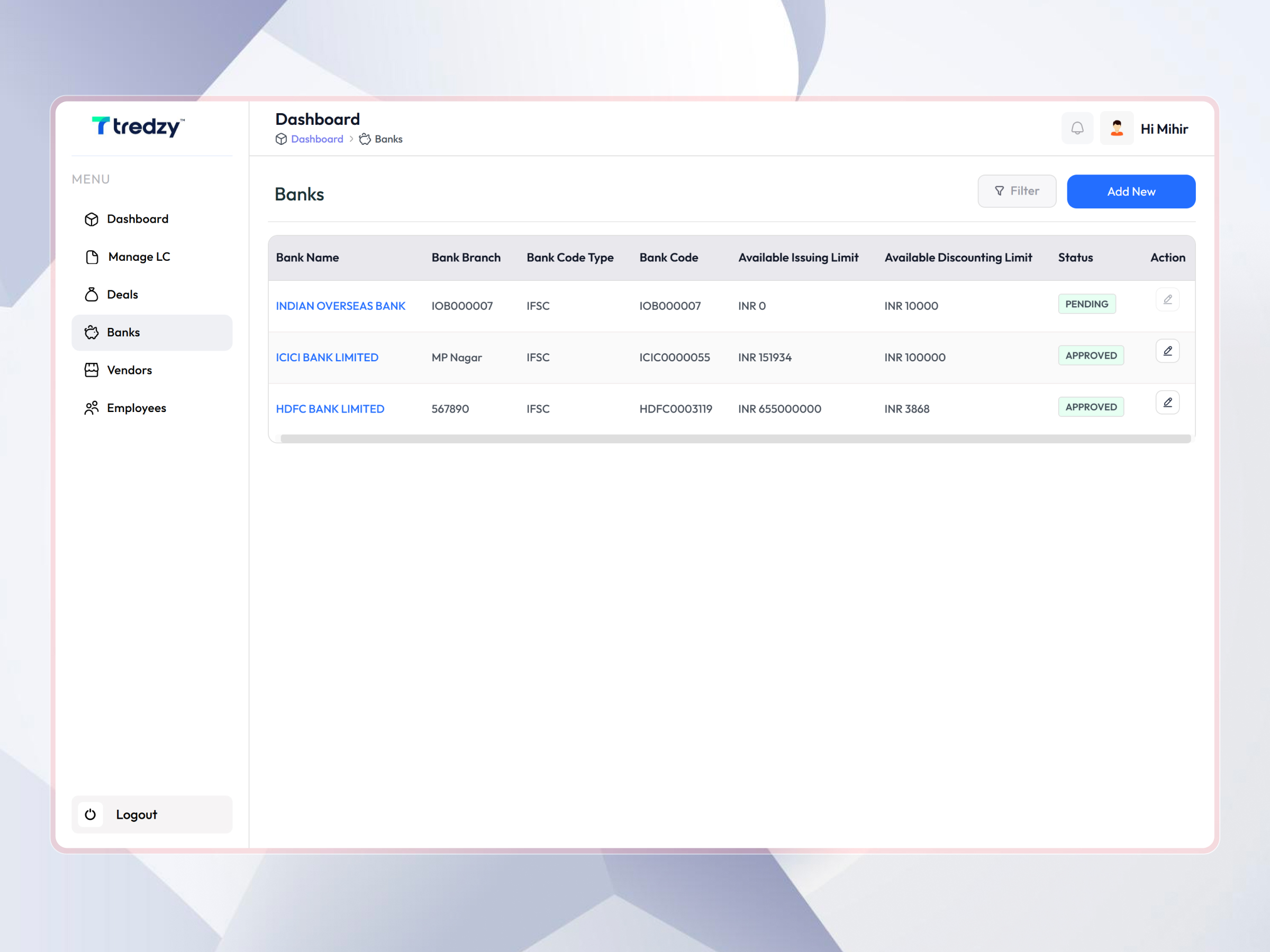
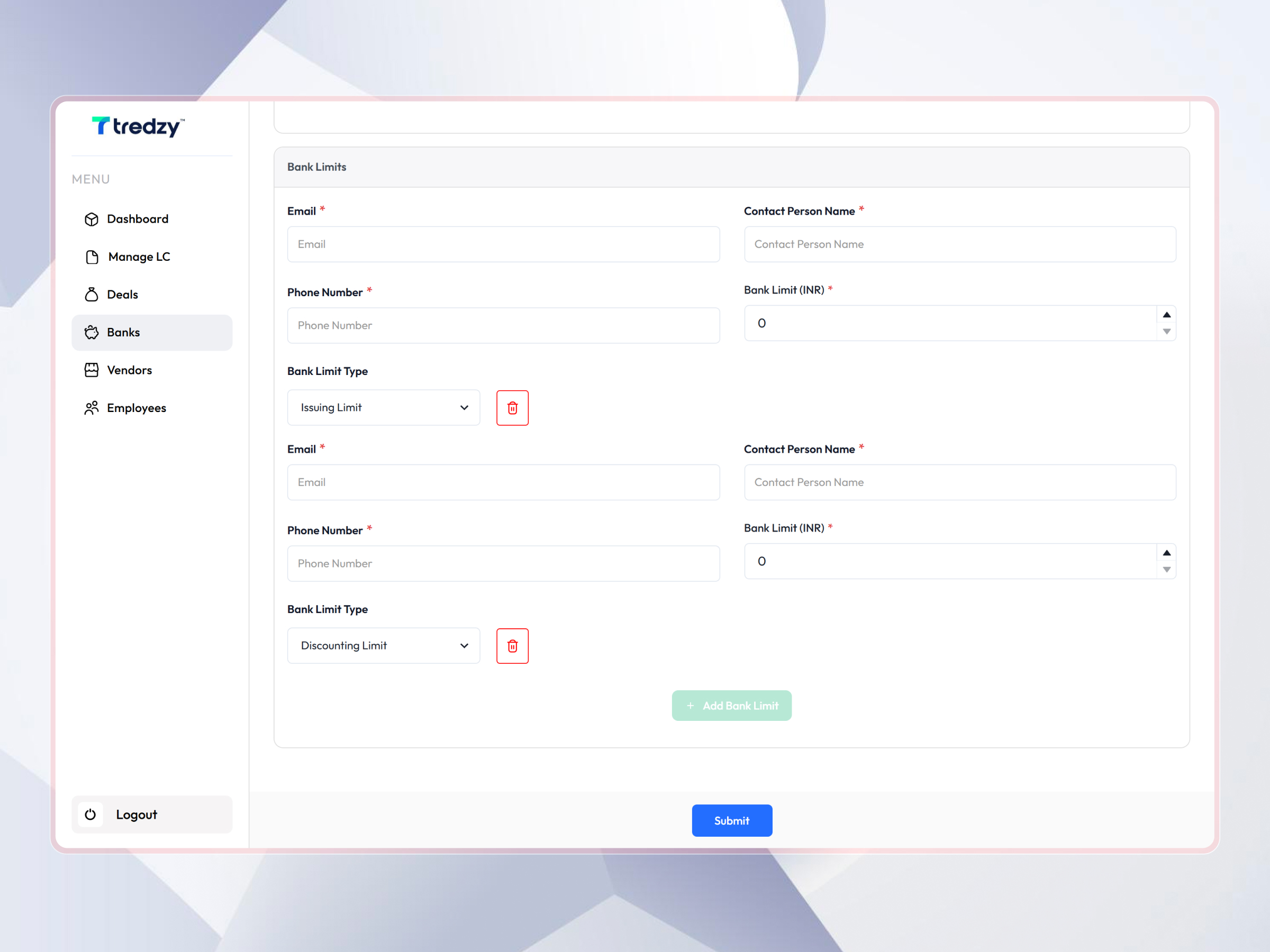
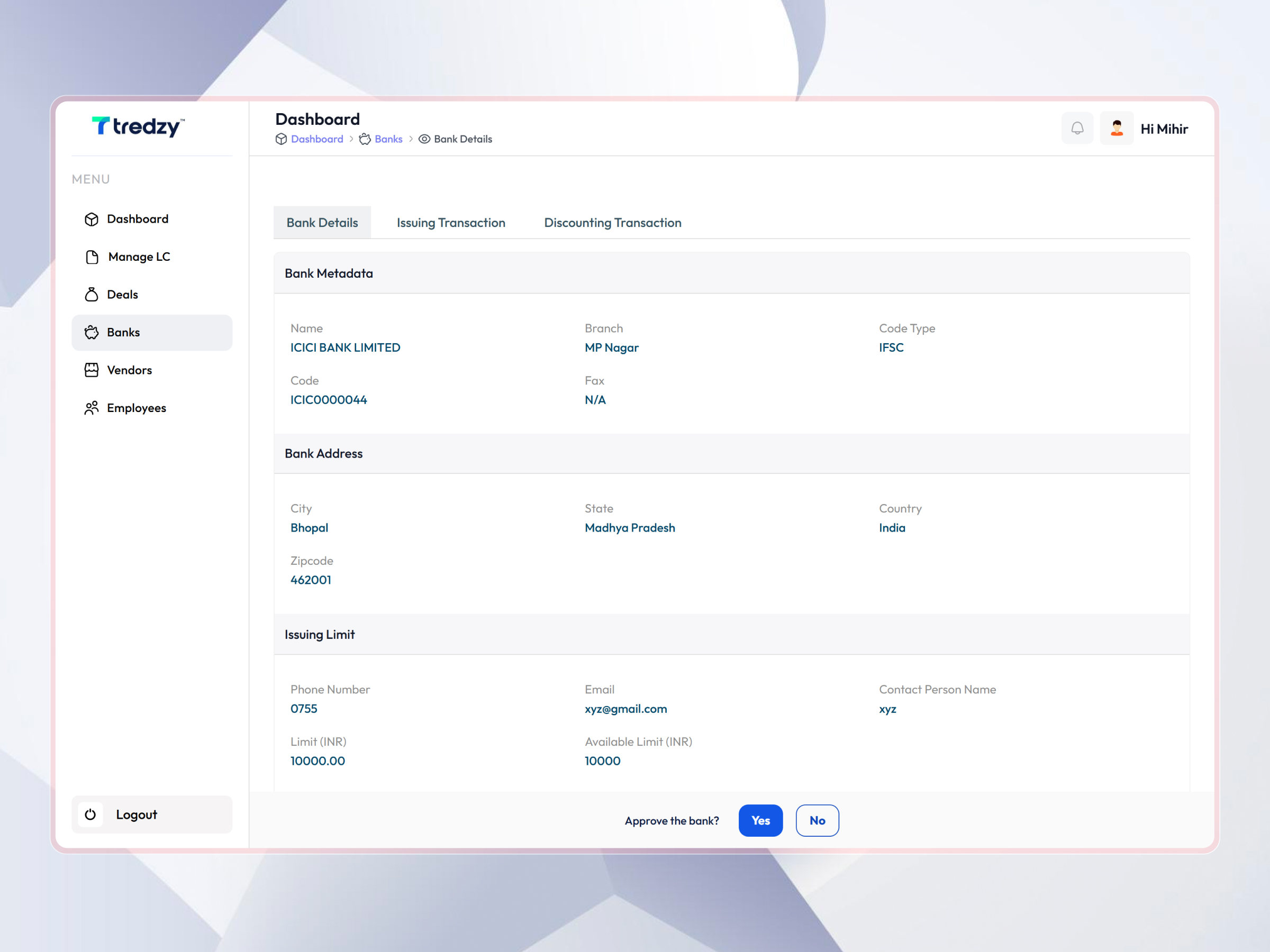
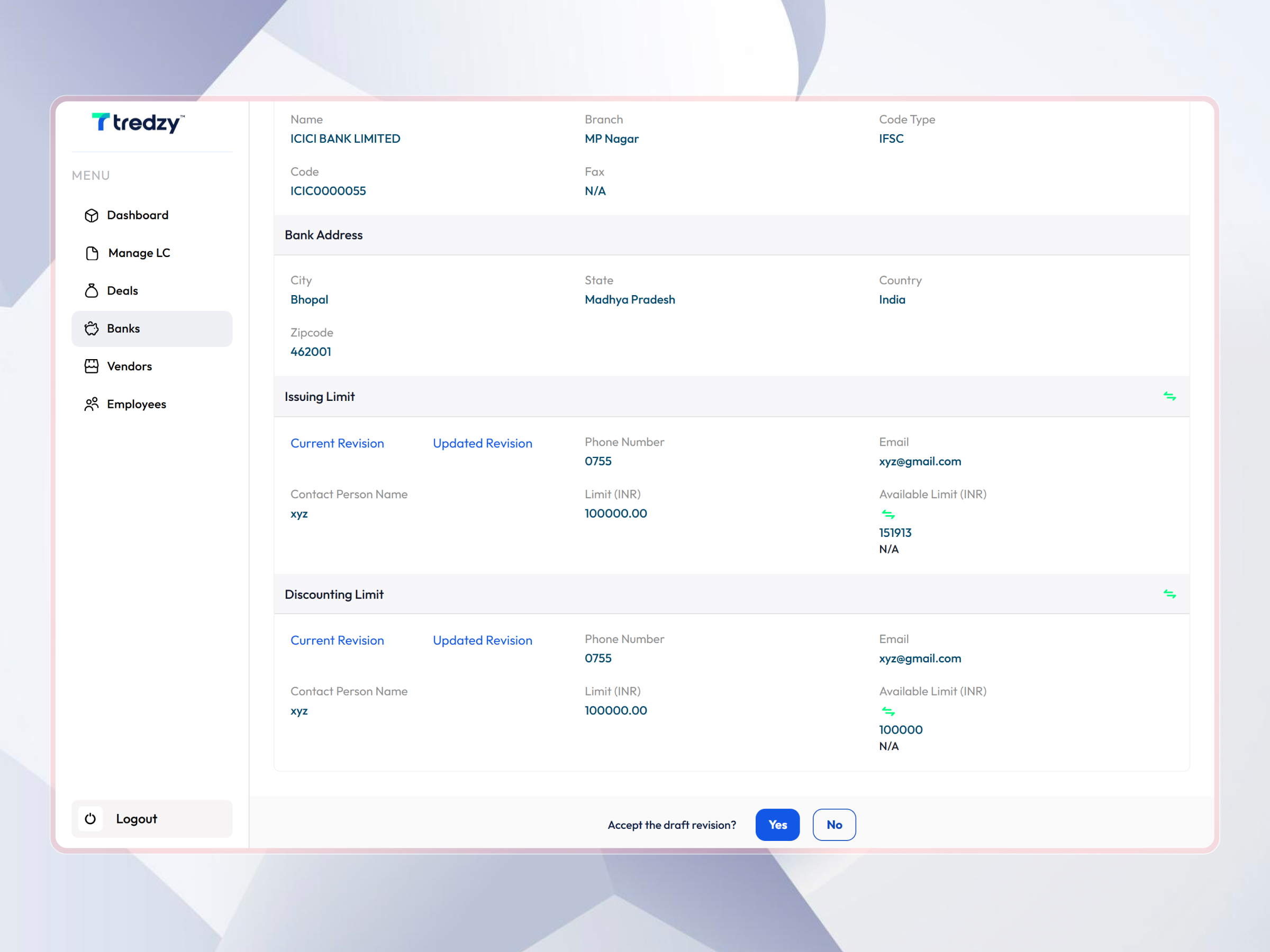
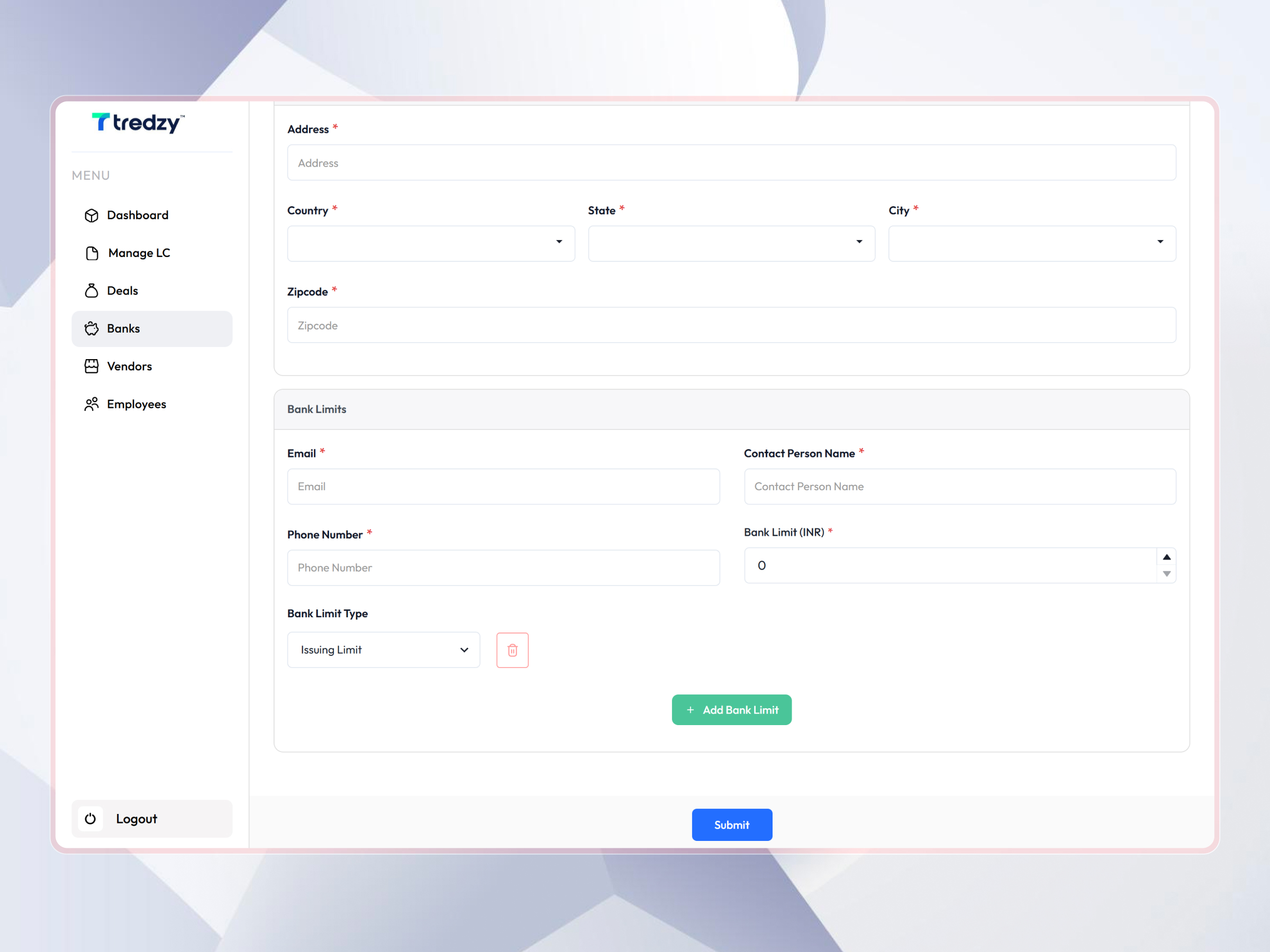
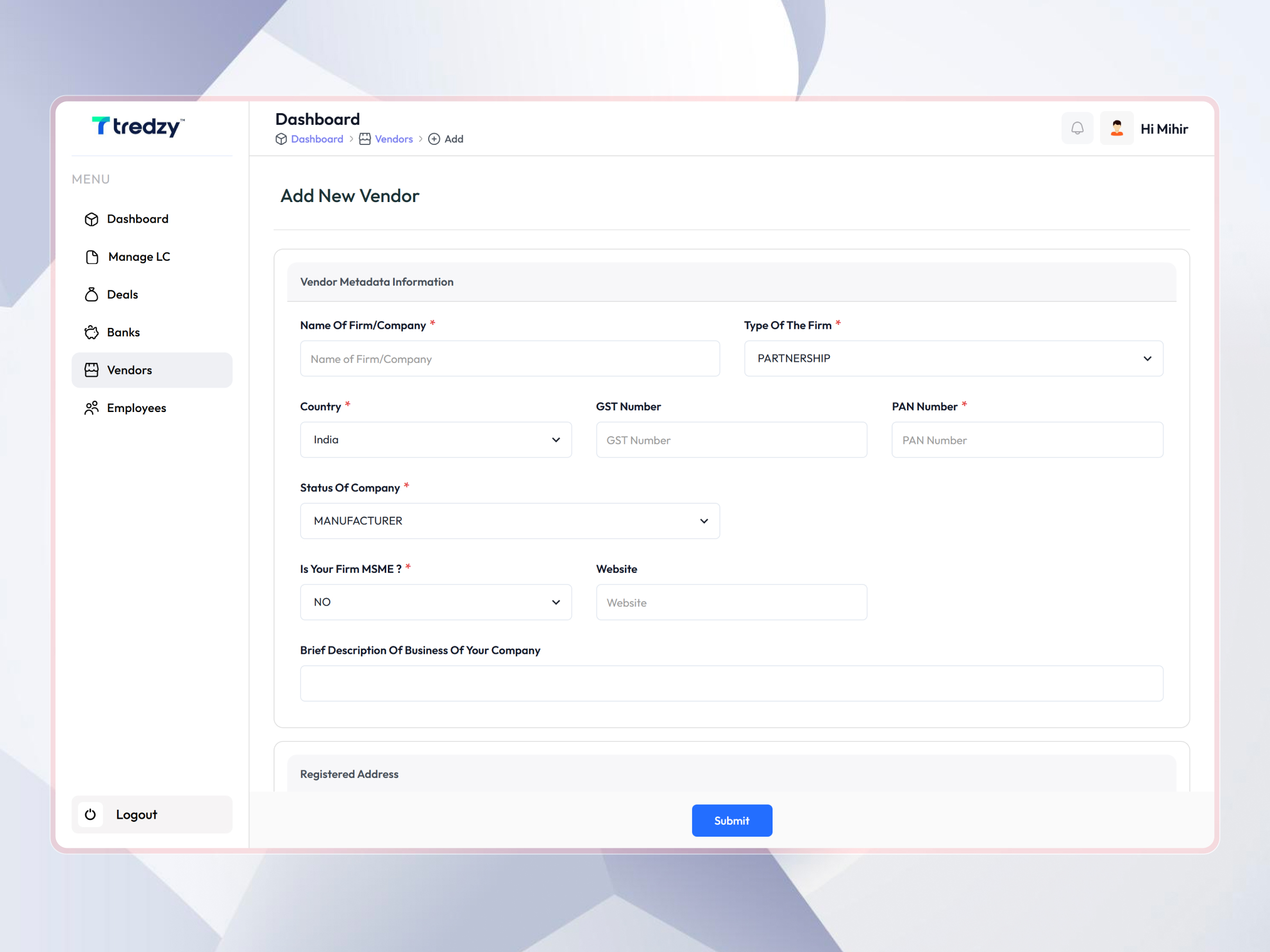
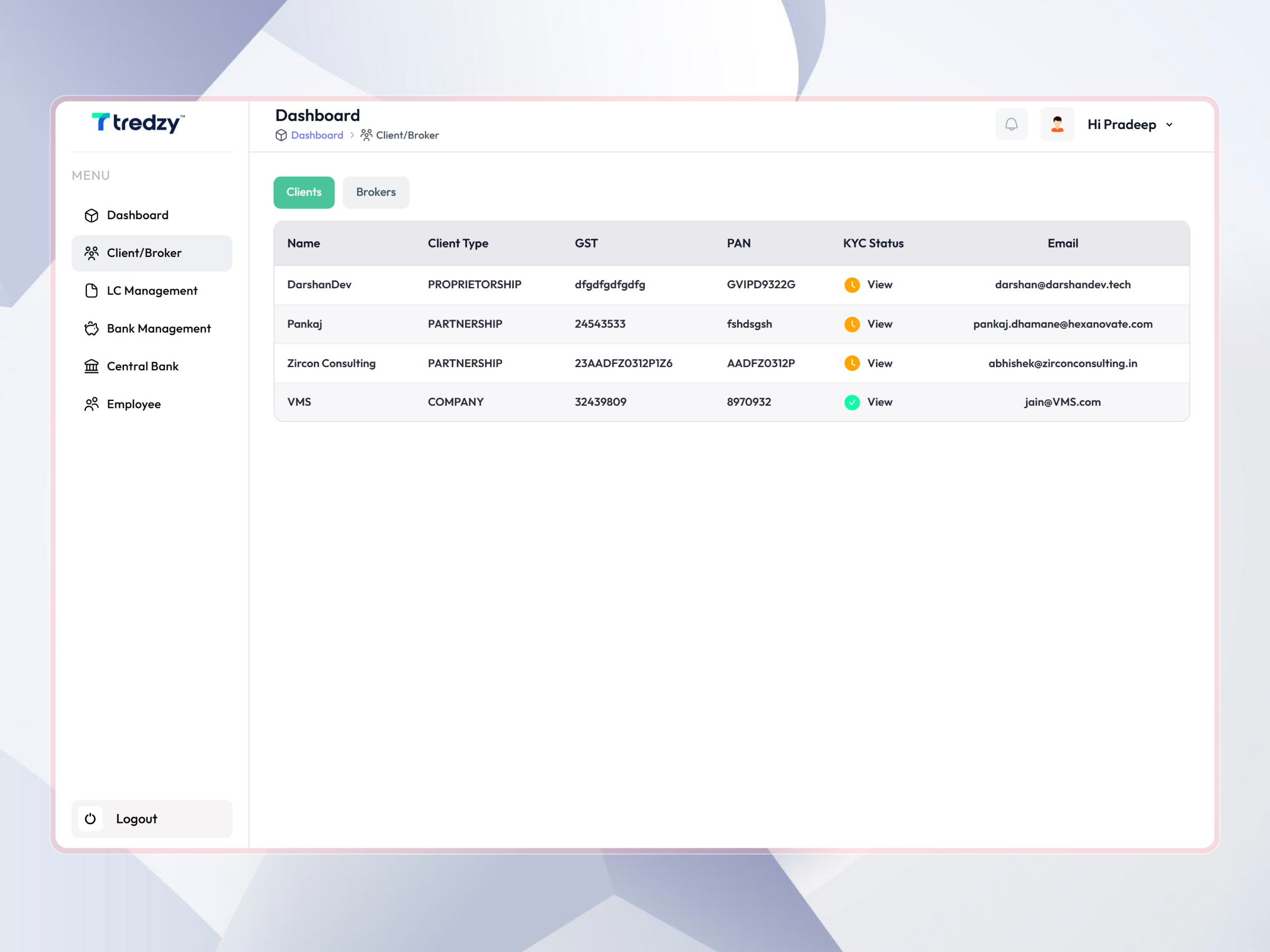
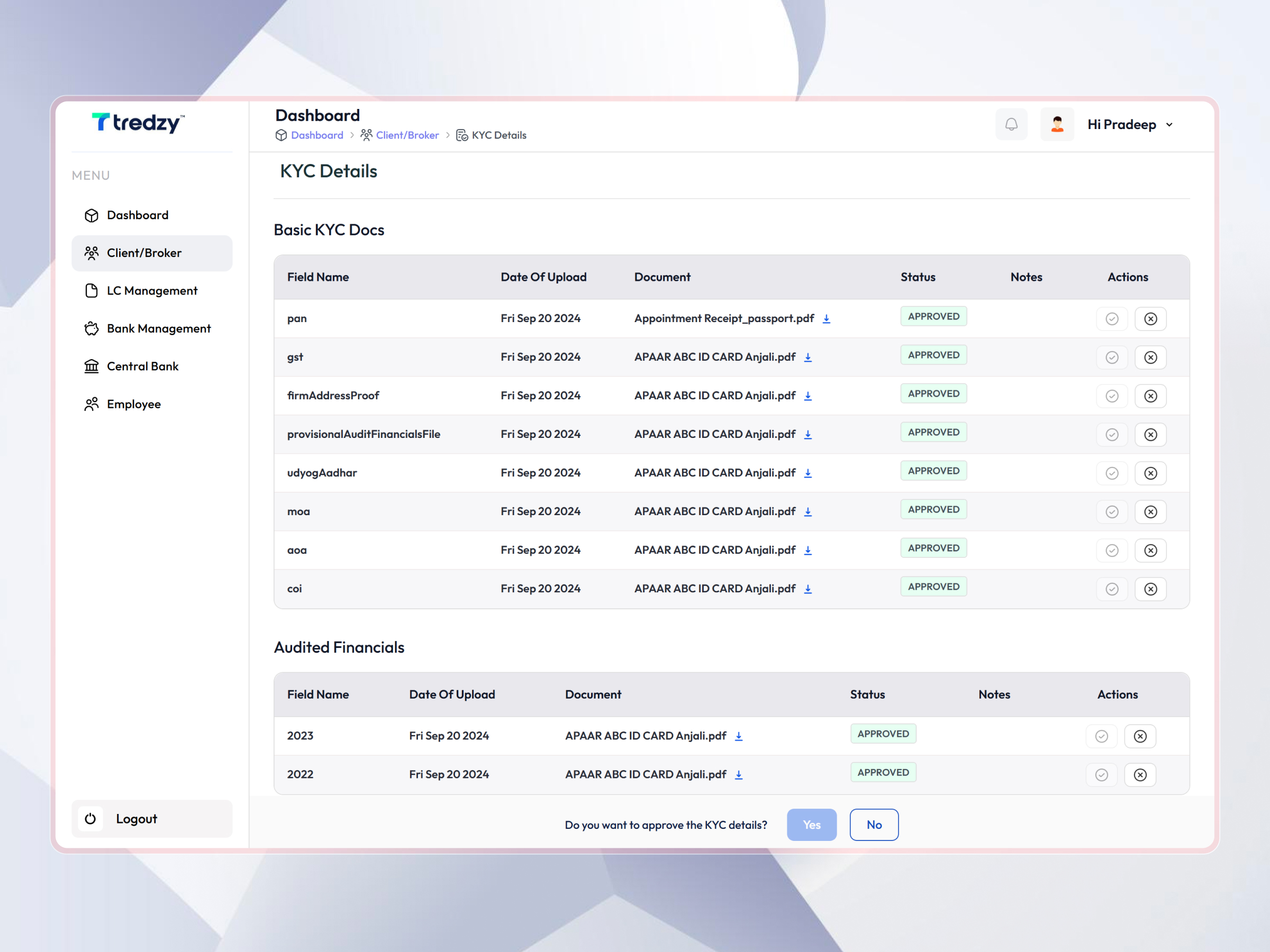
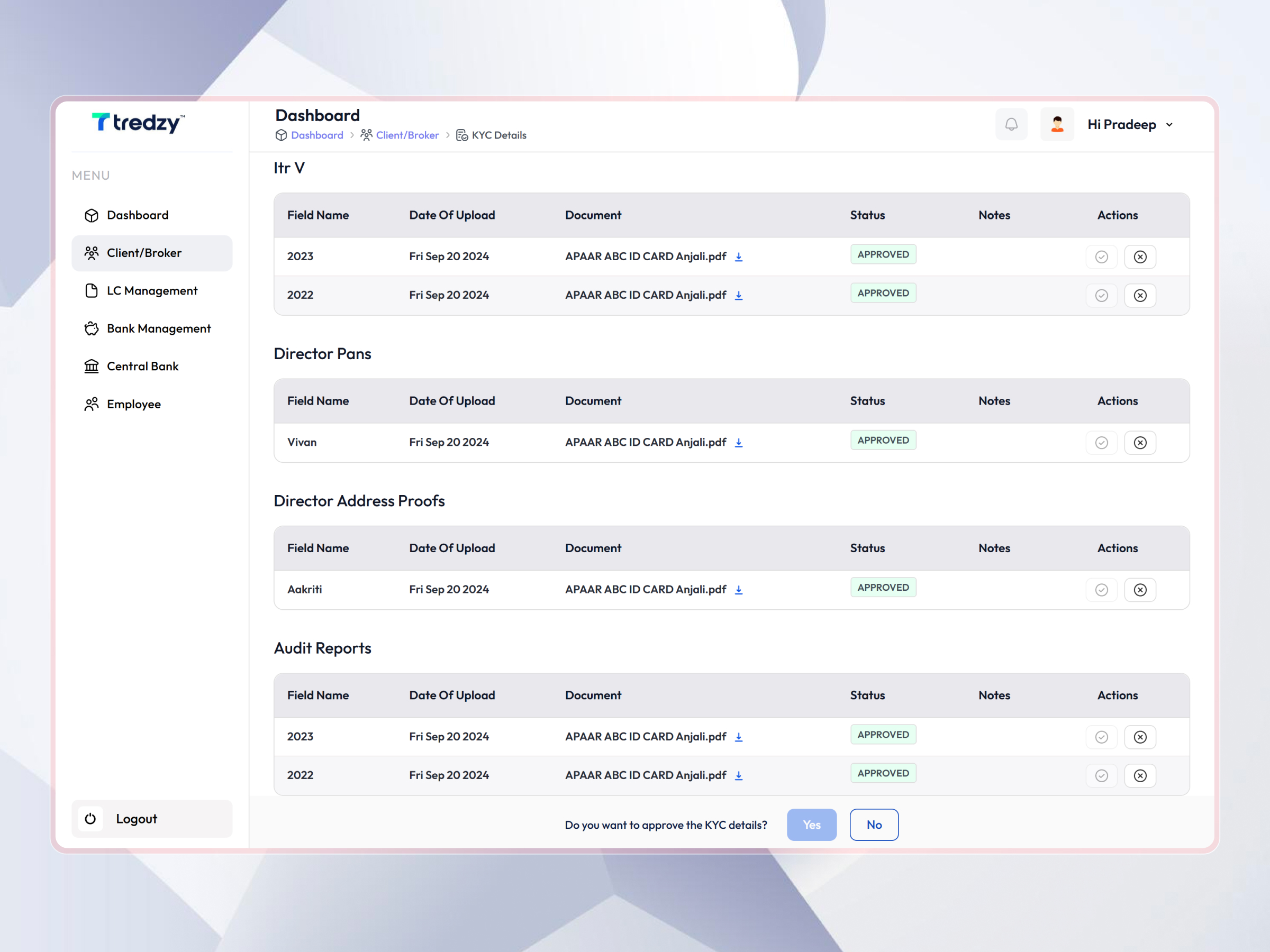
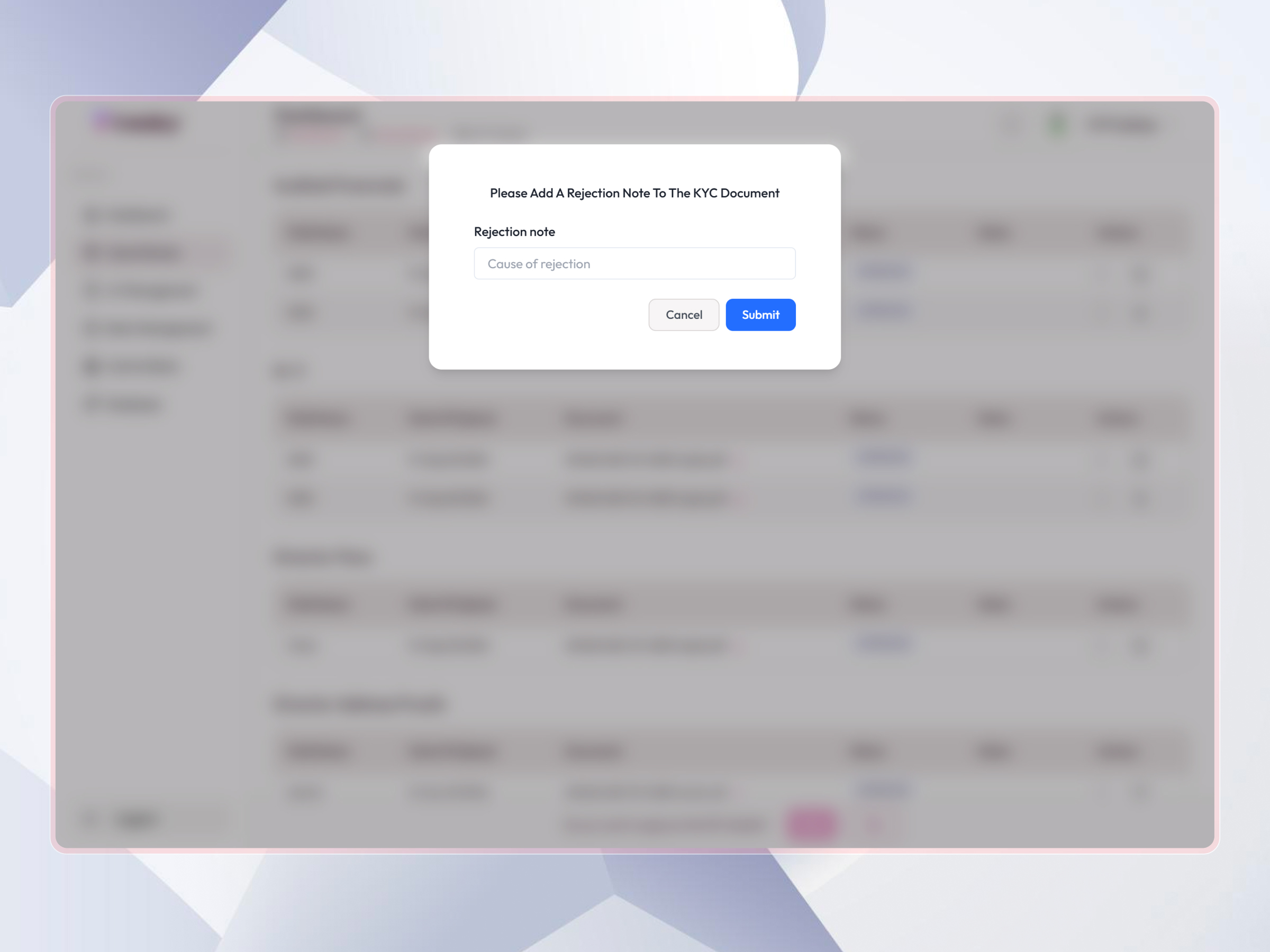
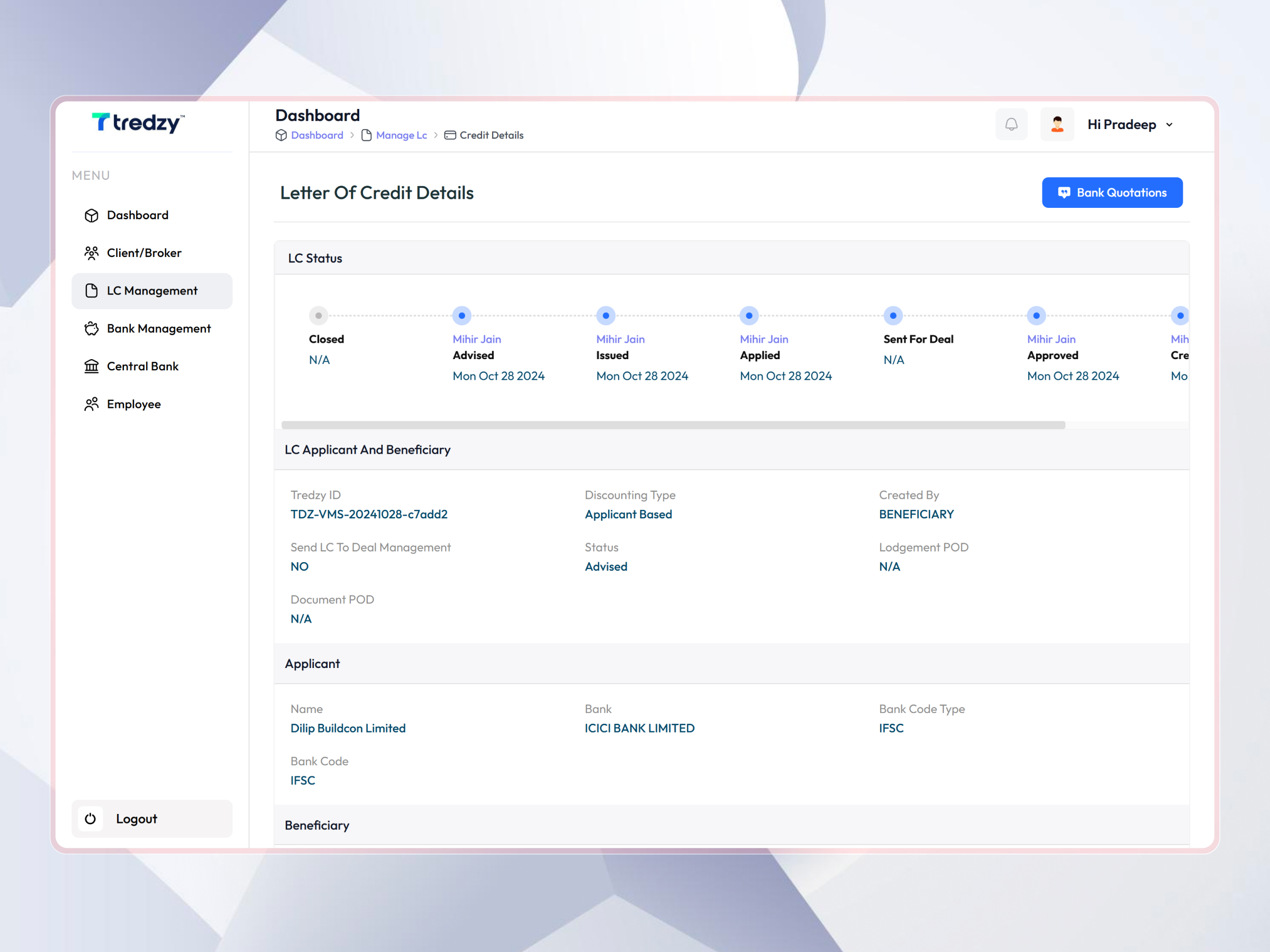
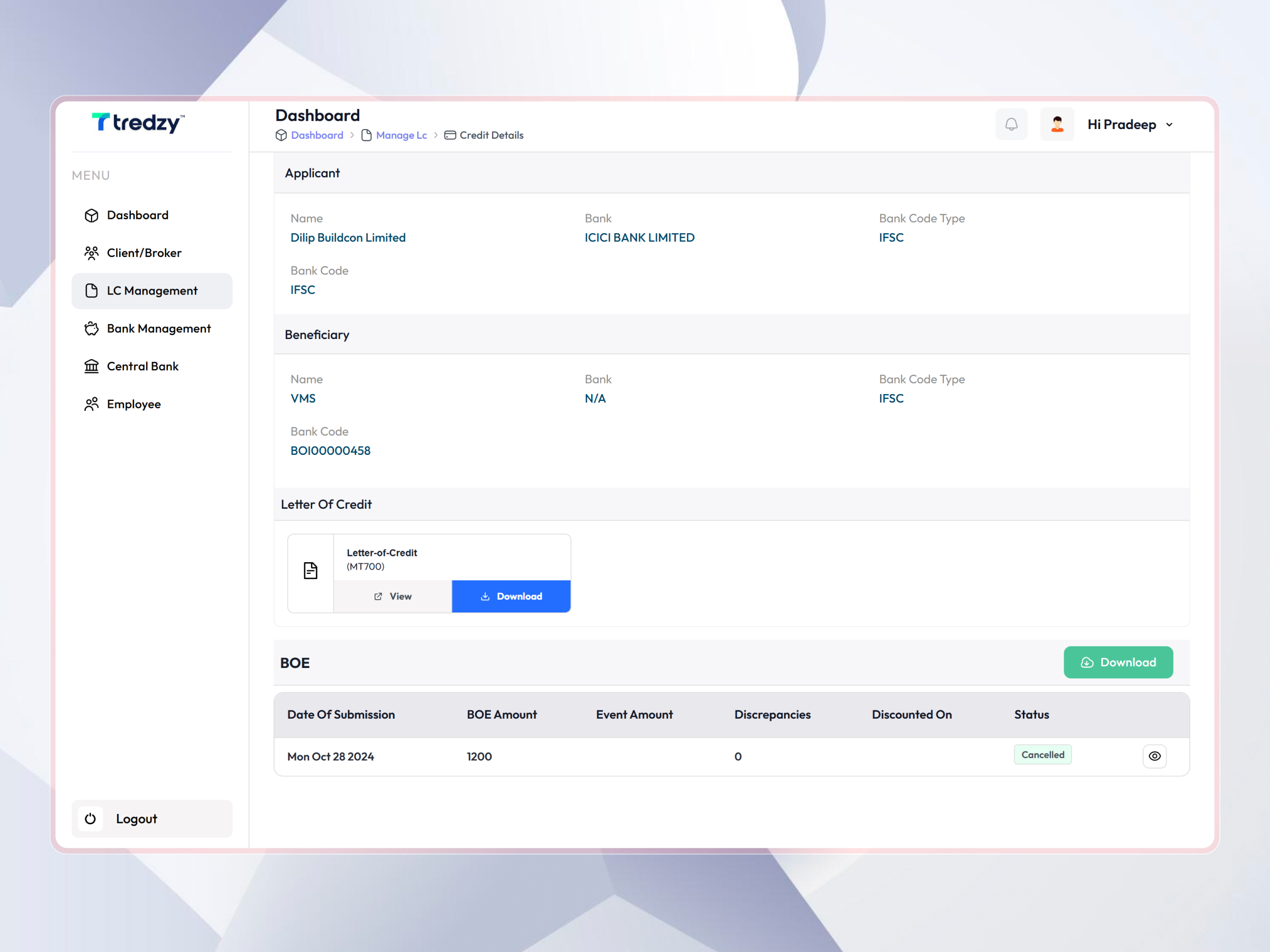
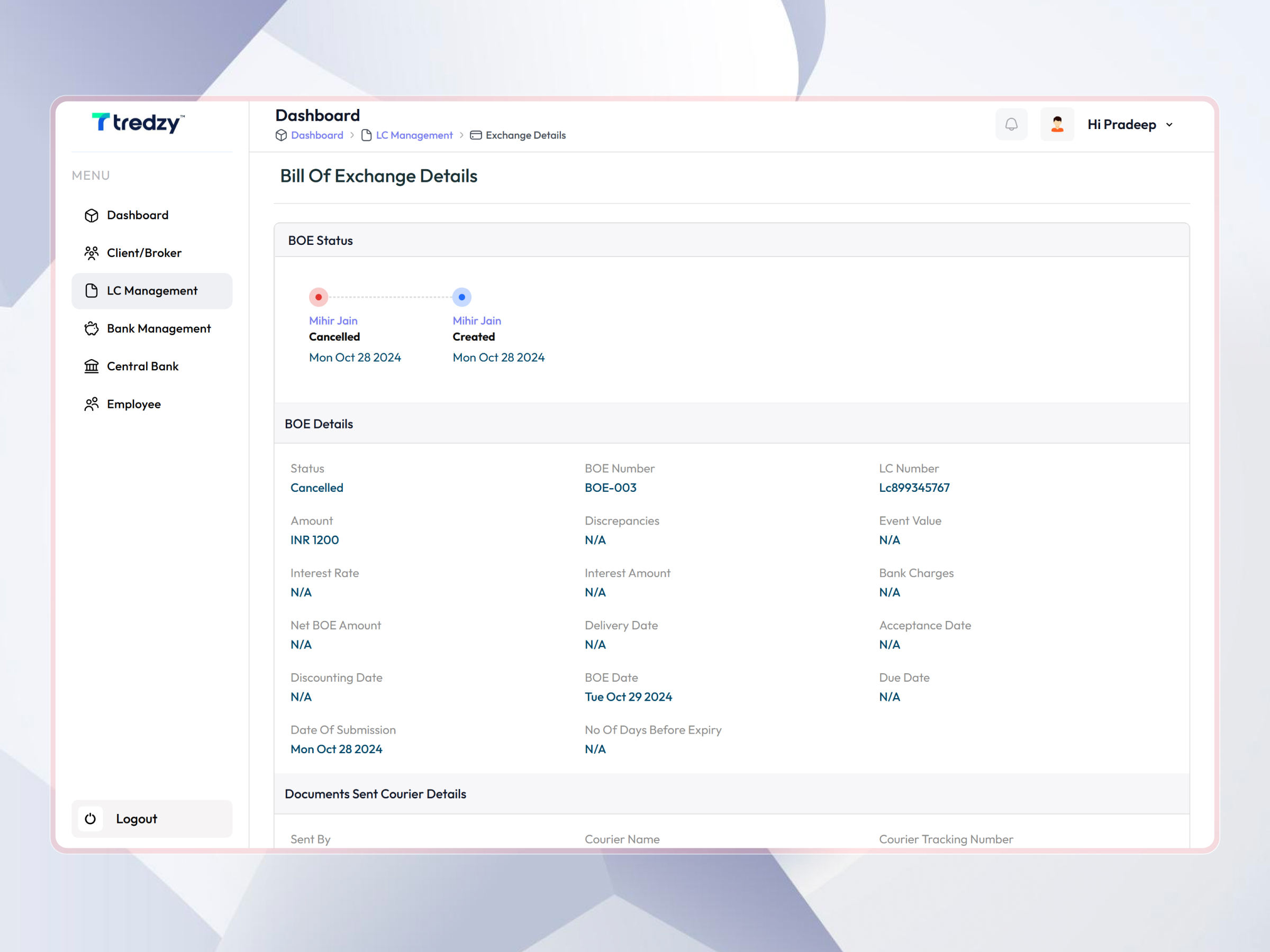
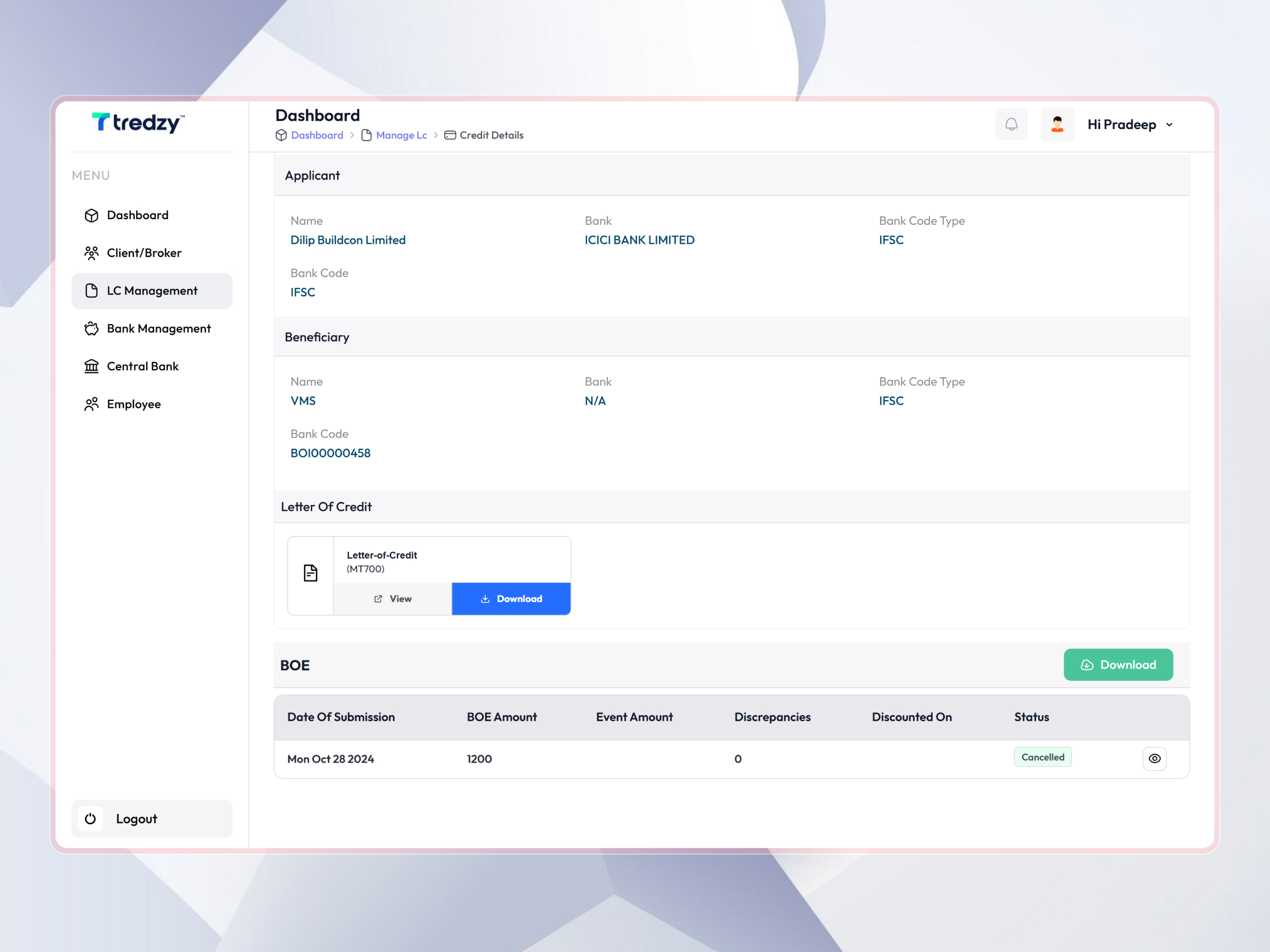
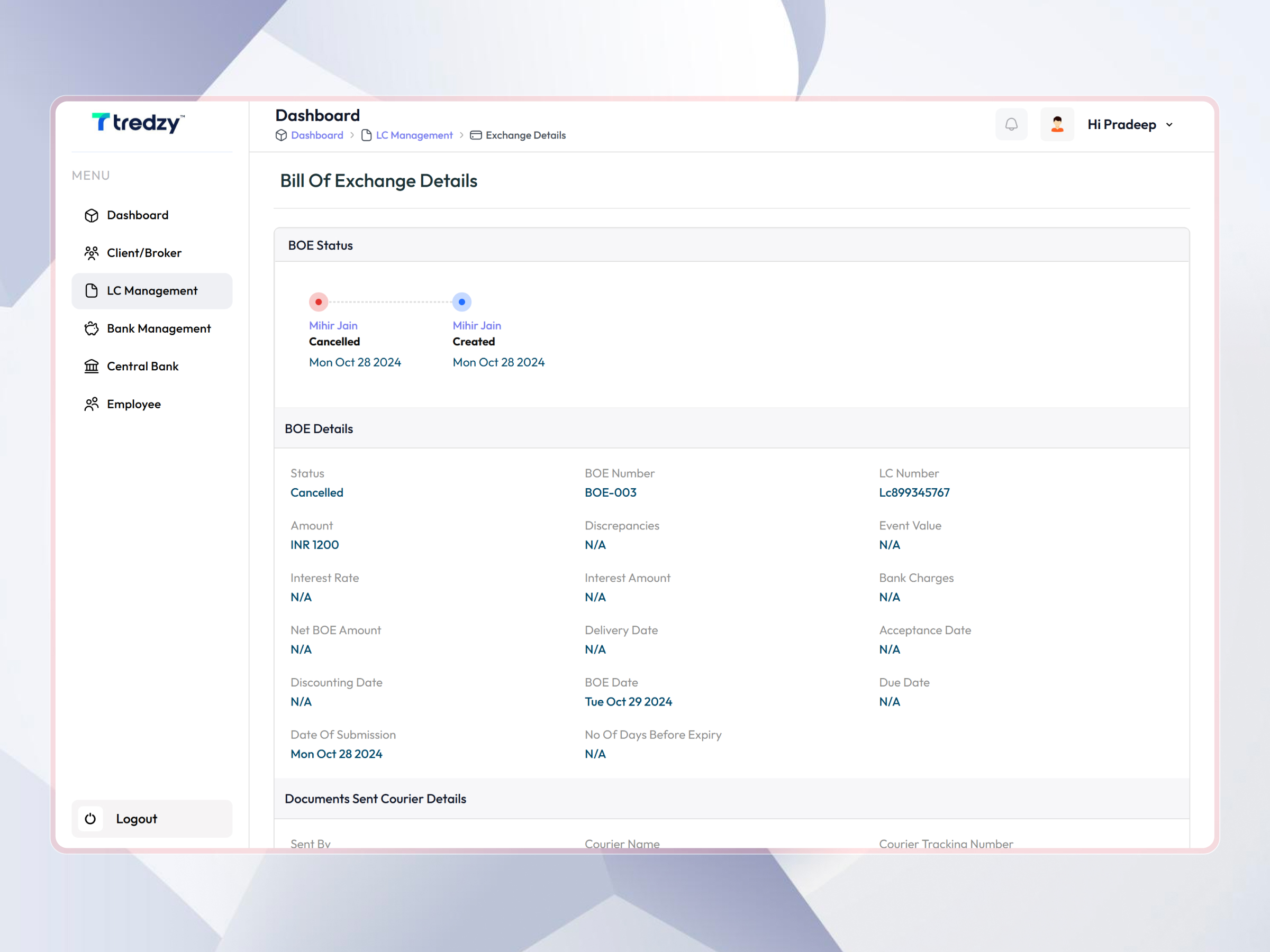
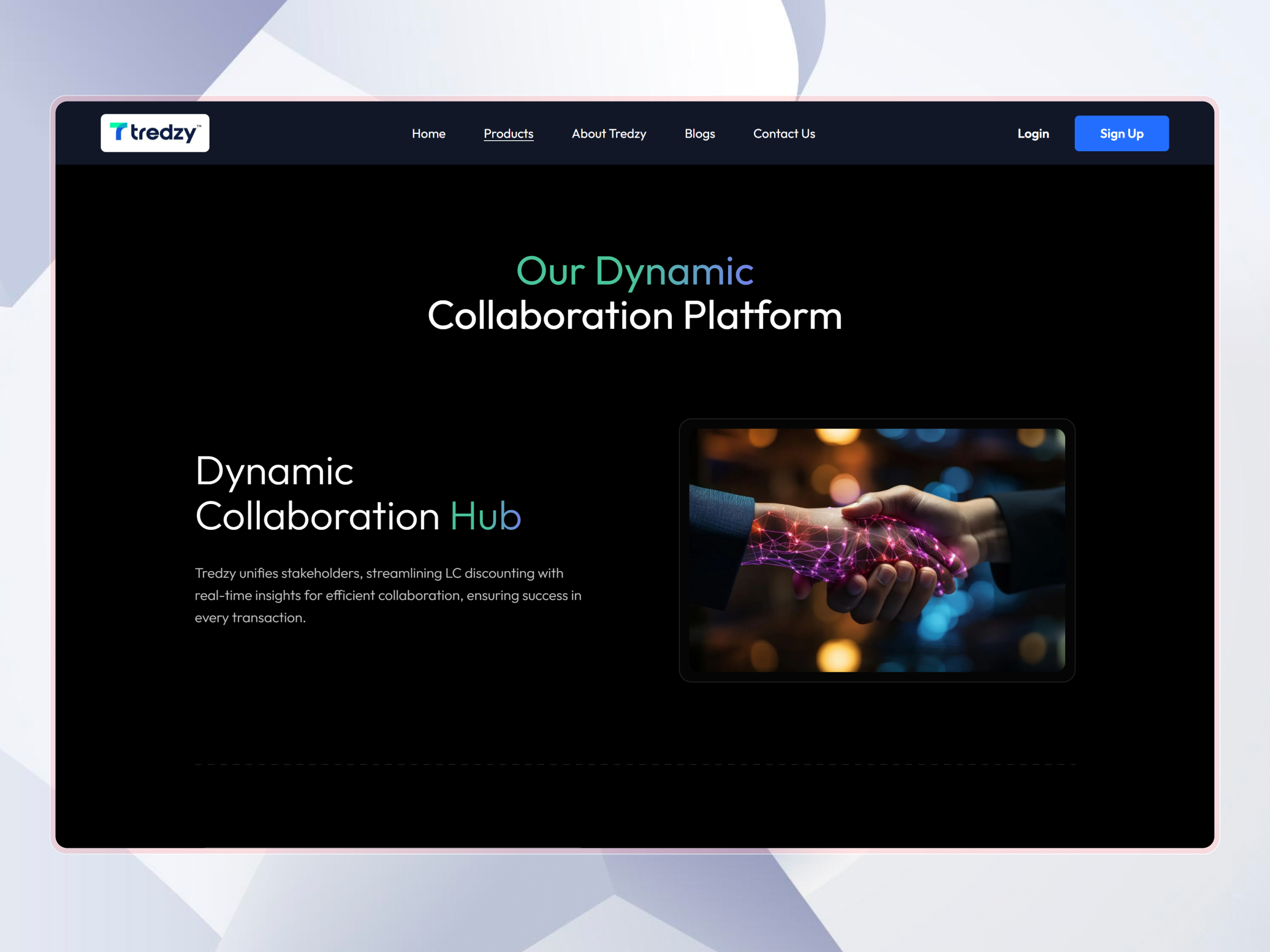
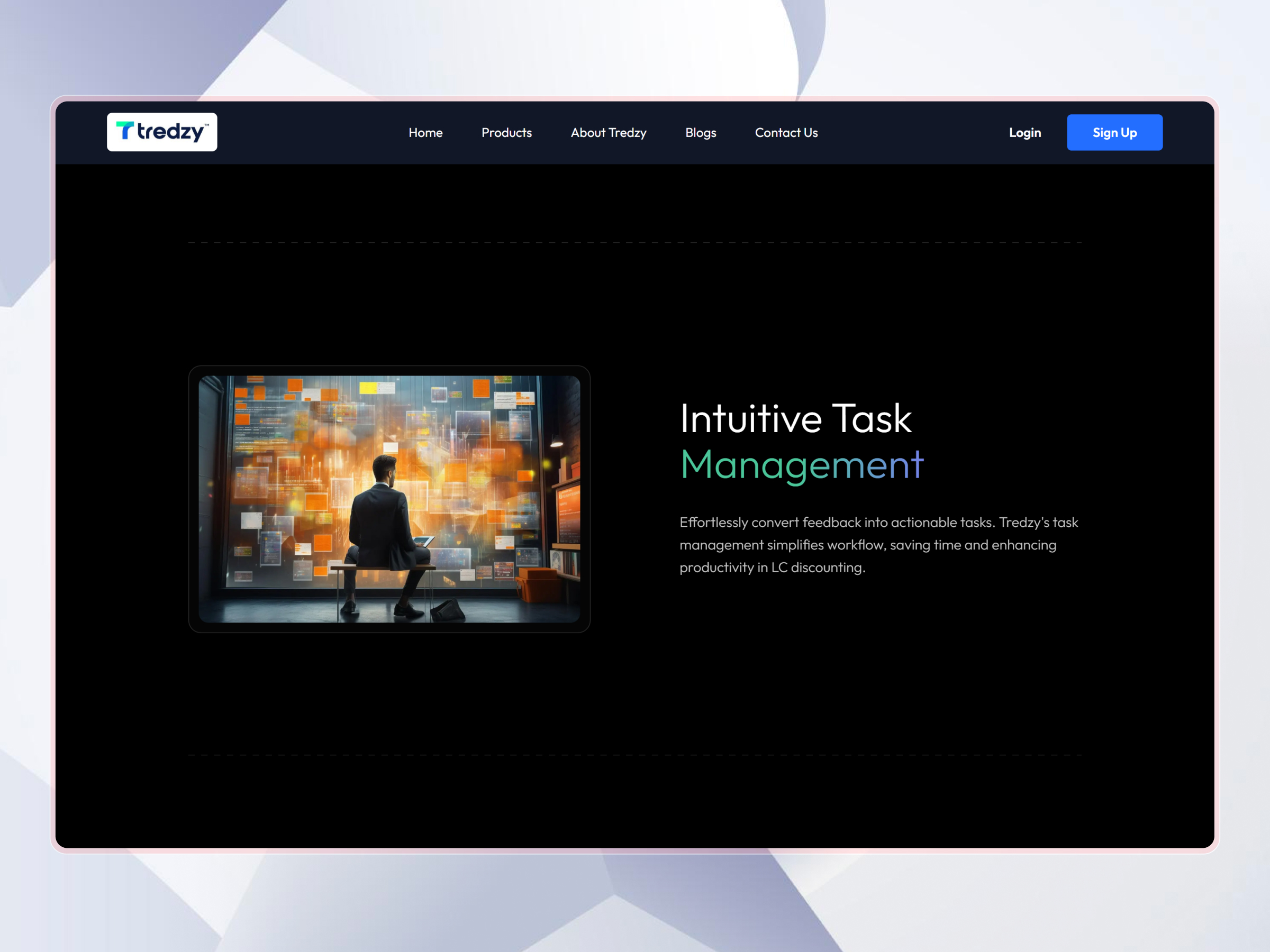
The product walks businesses through a step-by-step process: submit an LC, upload supporting trade documents (invoices, bills of lading, shipping docs), get verified, and receive funding. Each step has clear status indicators so users always know where their request stands. The workflow is designed to mirror how LC discounting actually works in banking — but without the paperwork and delays.
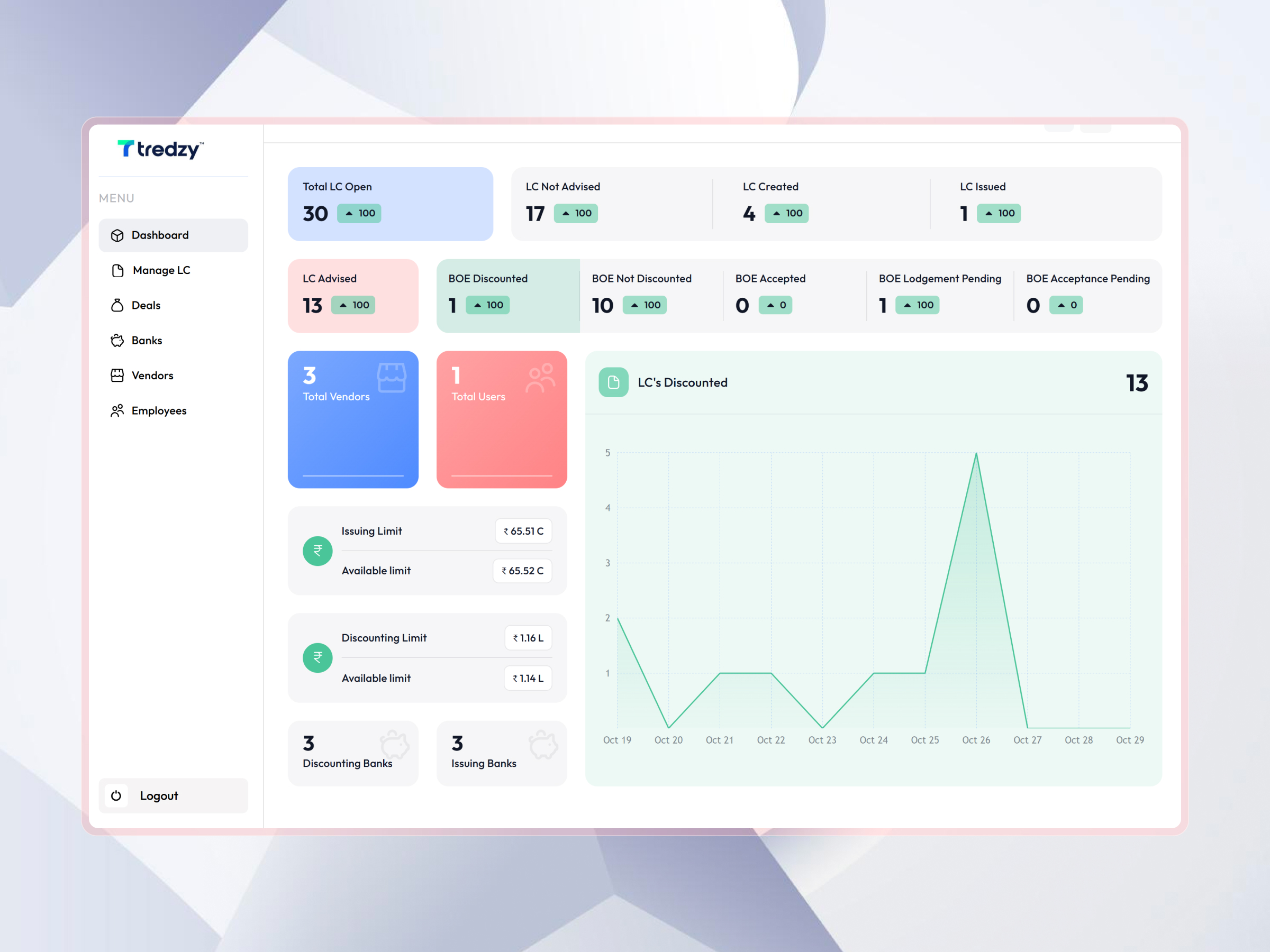
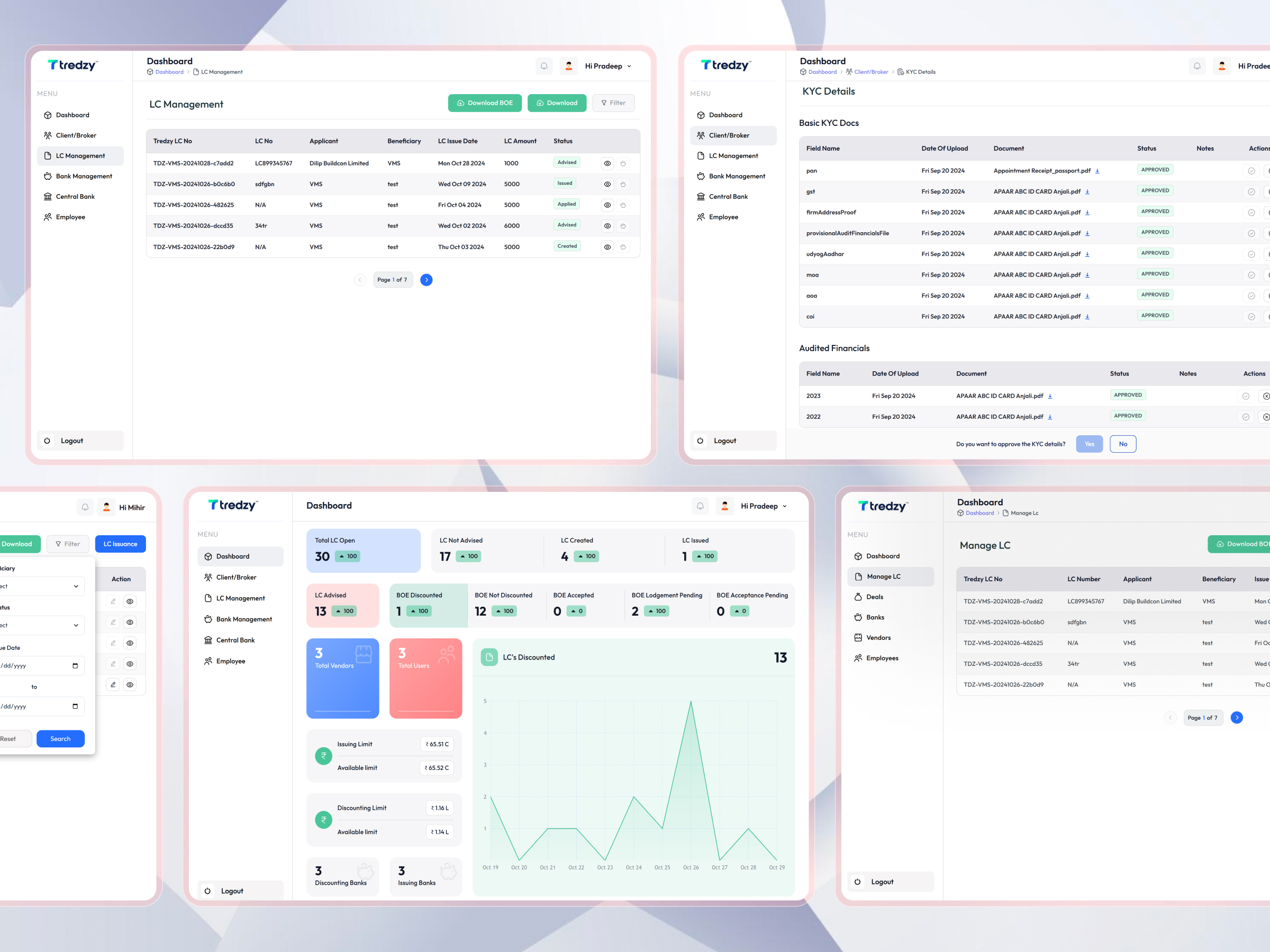
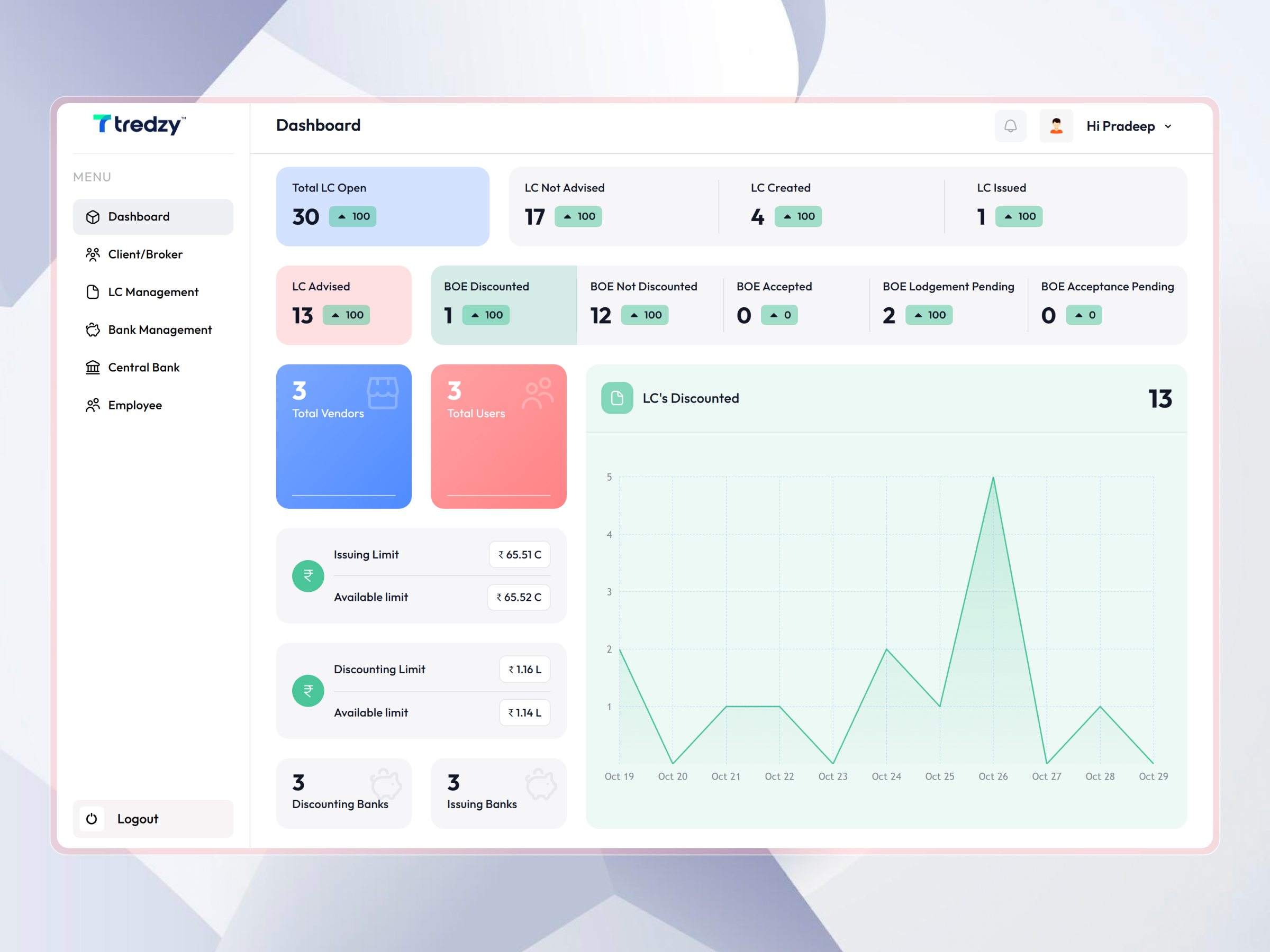
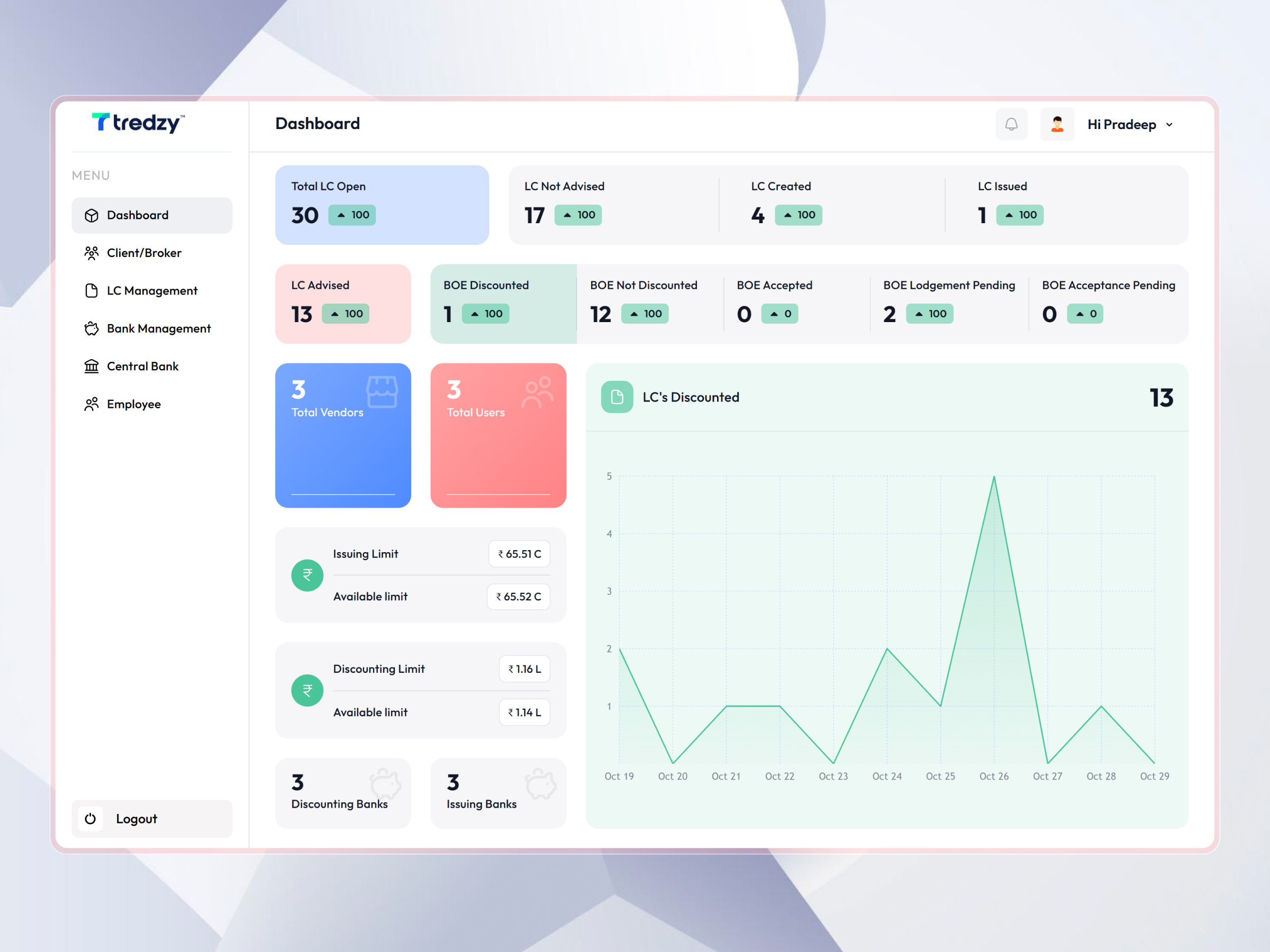
Real-Time Dashboard
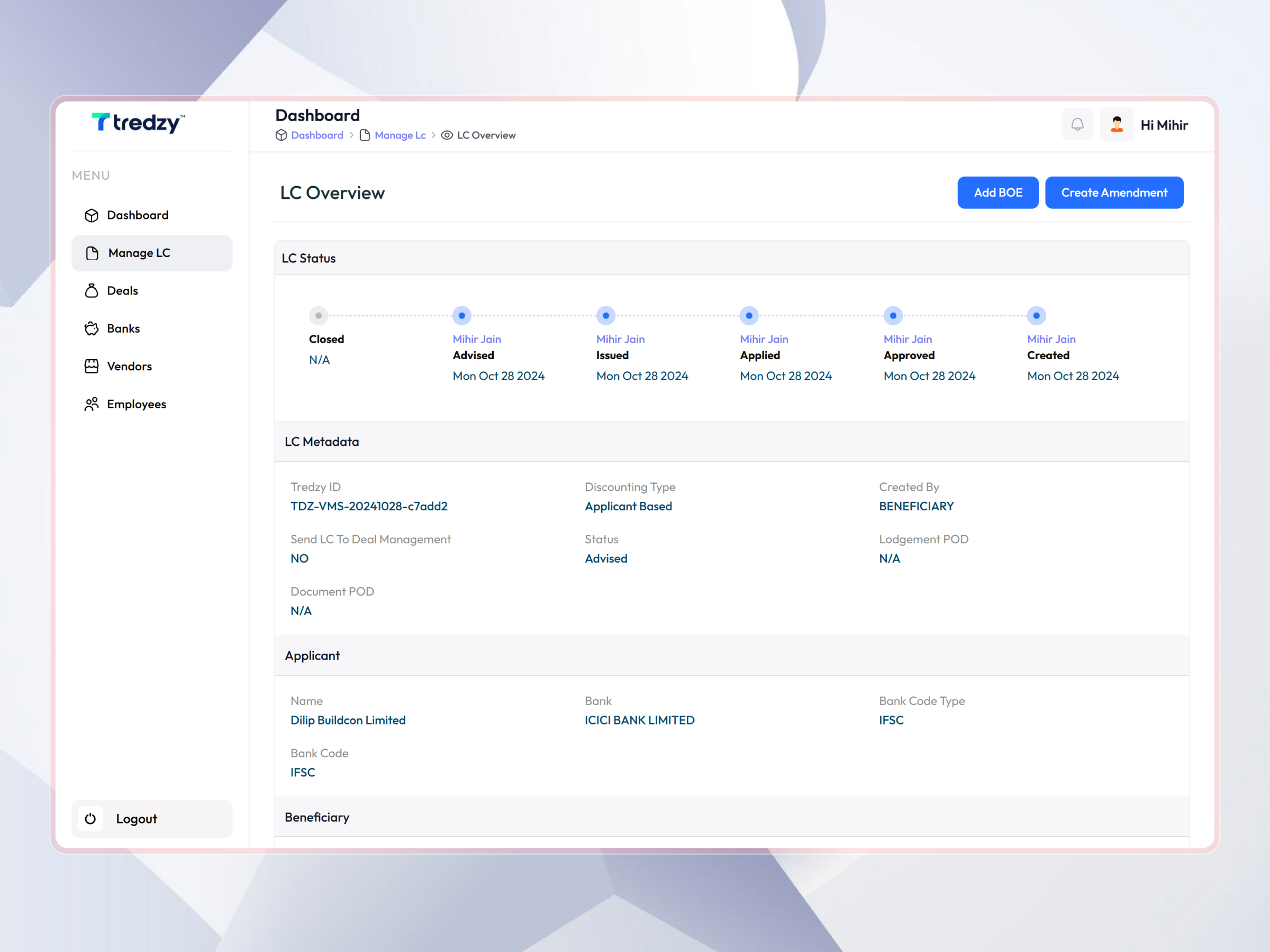
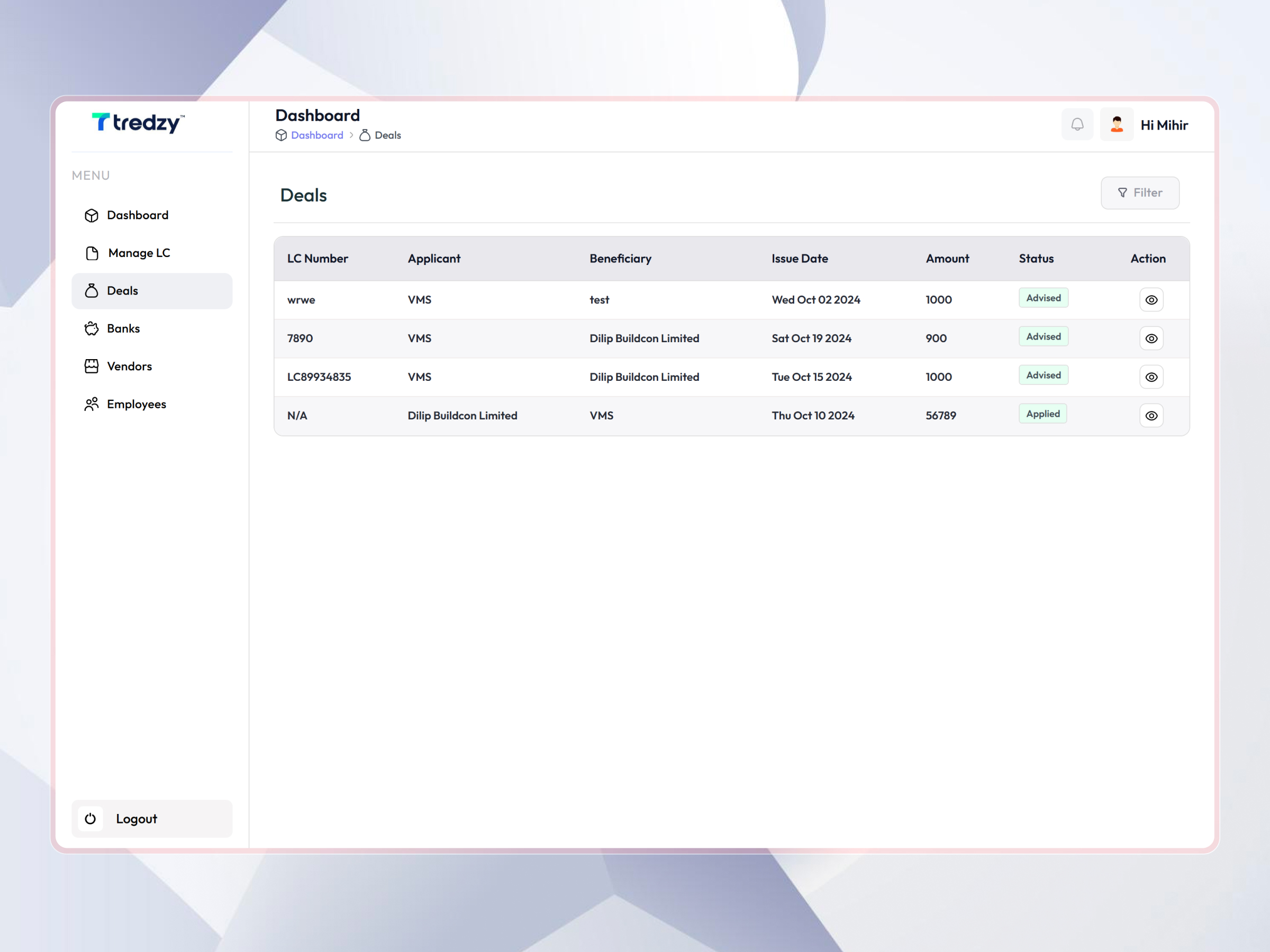
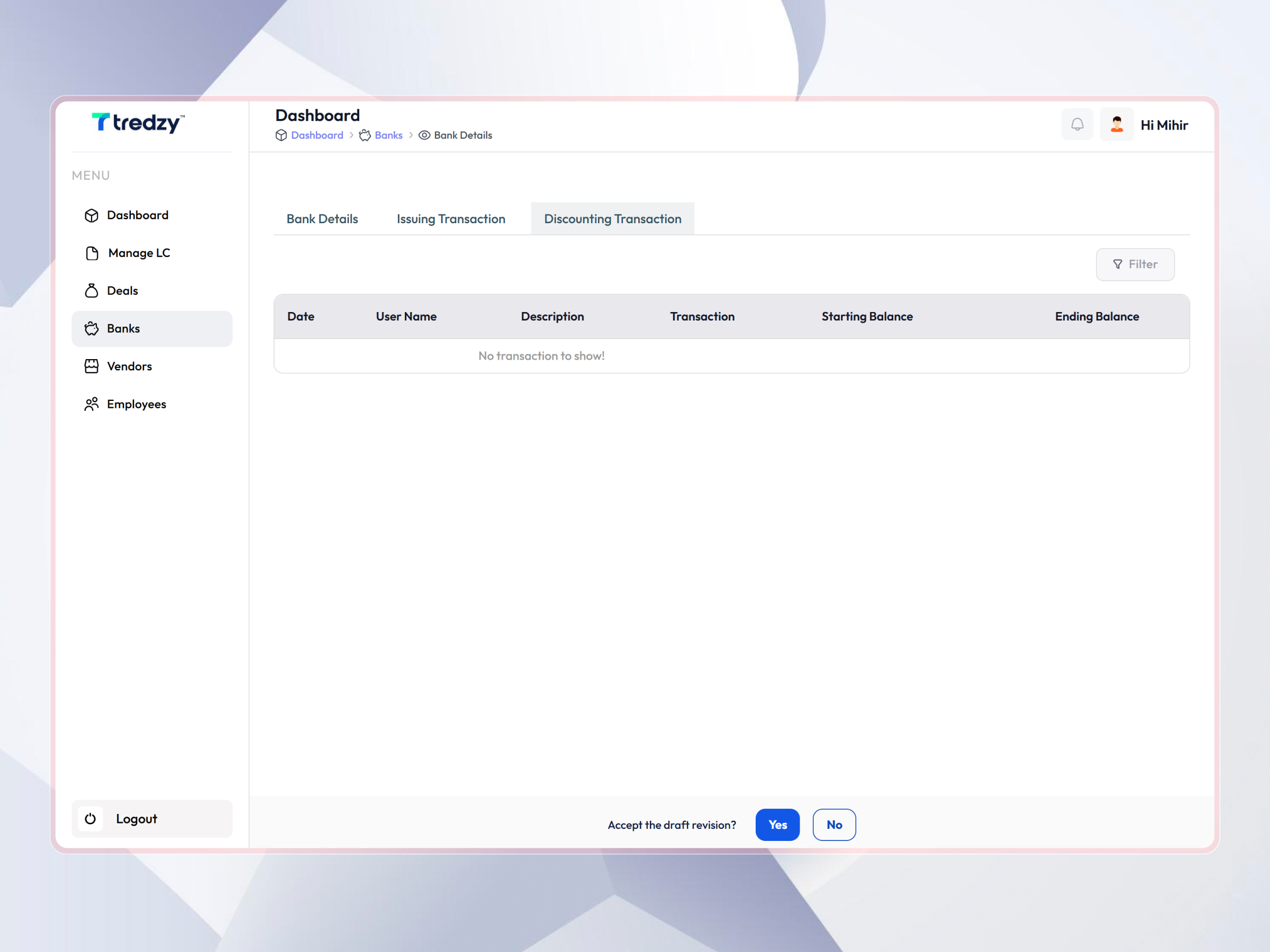
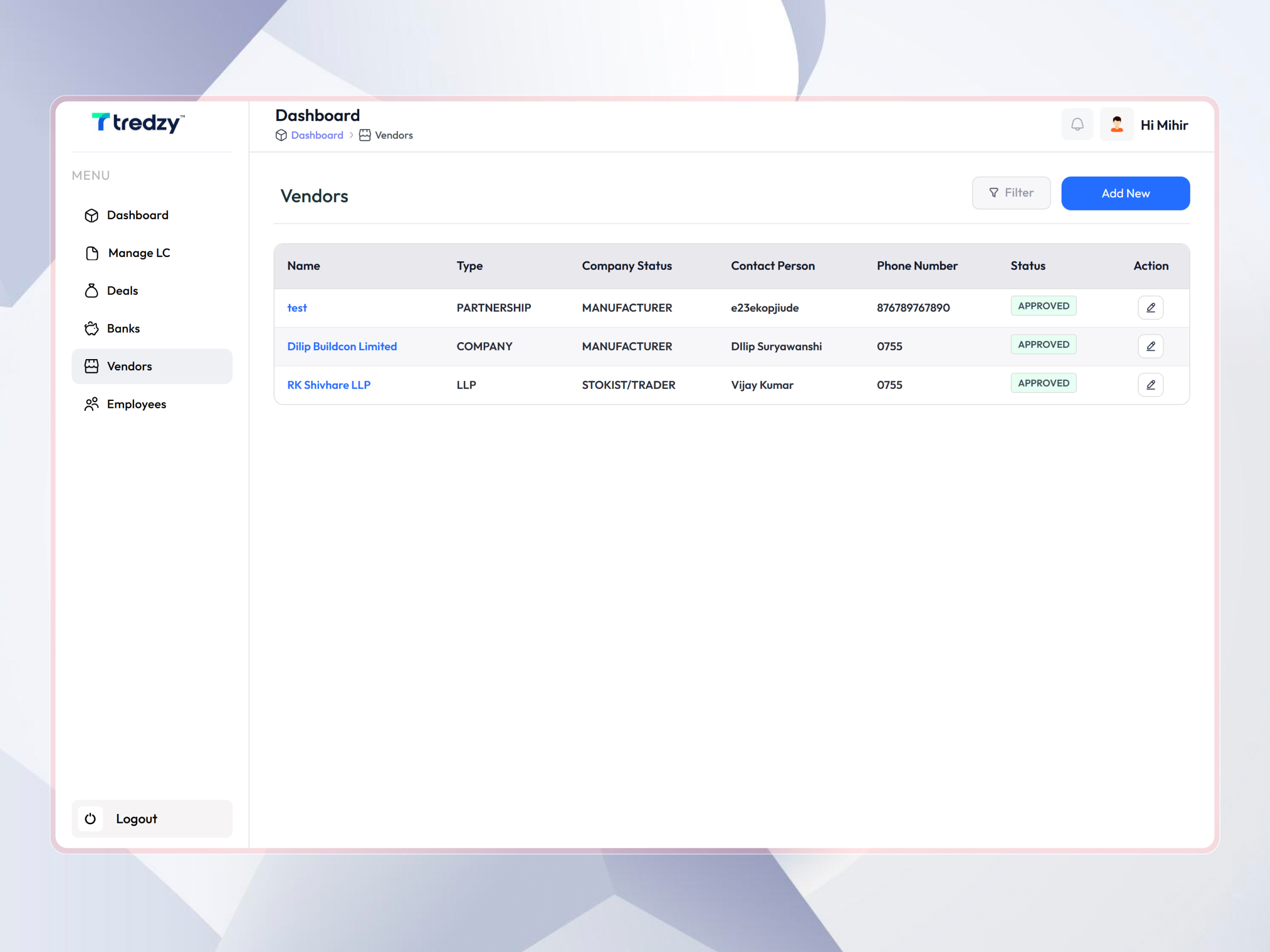
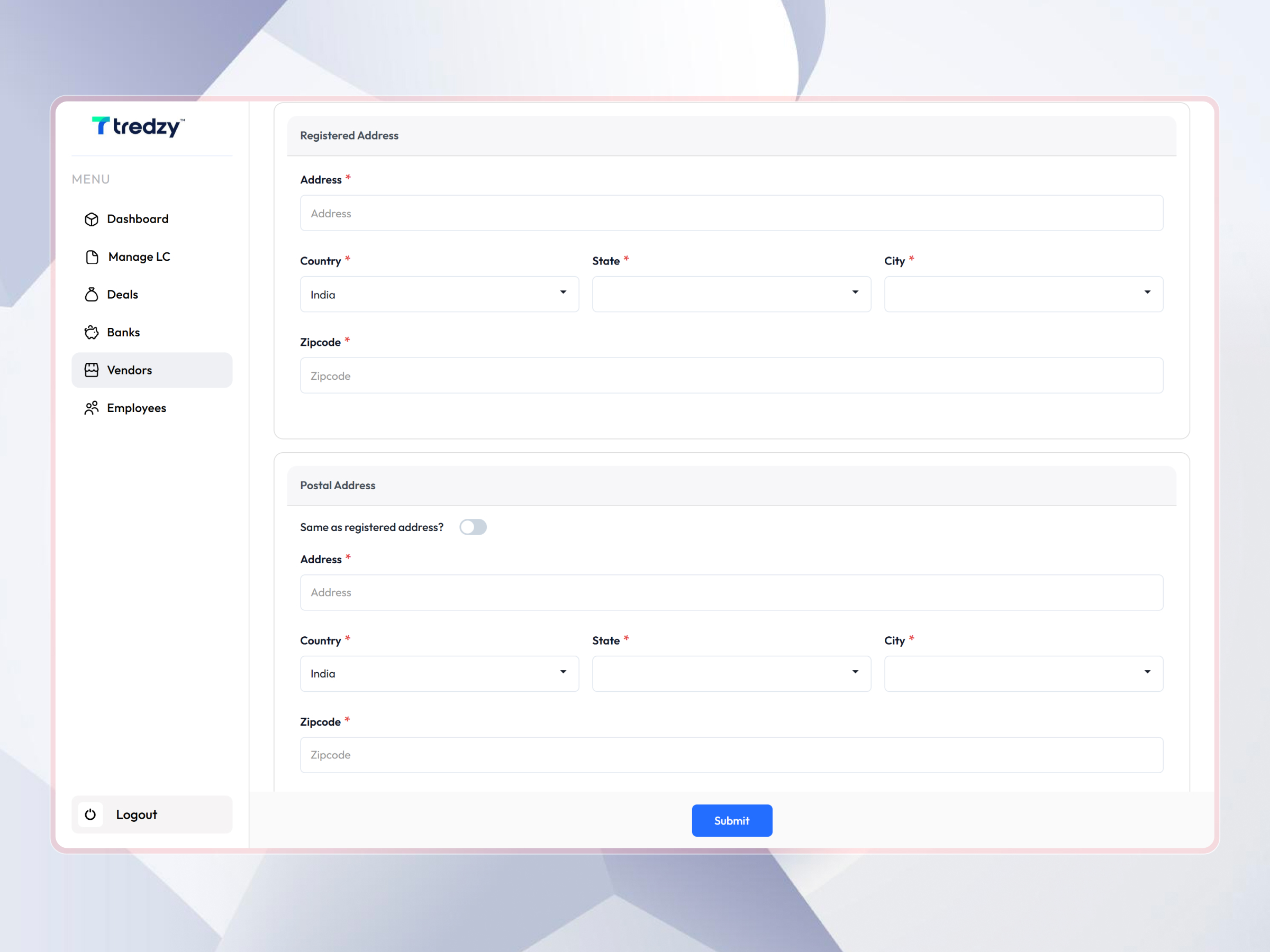
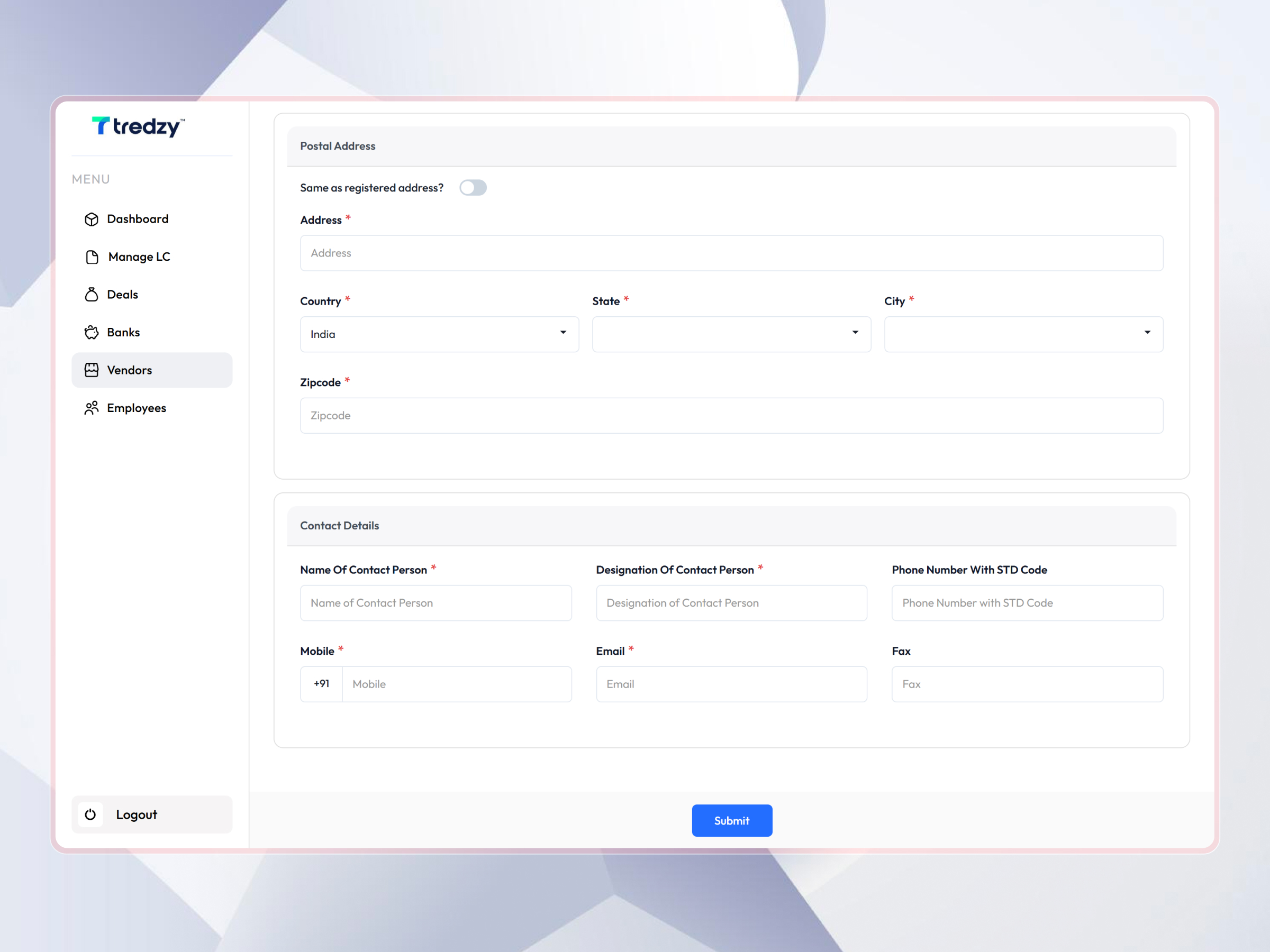
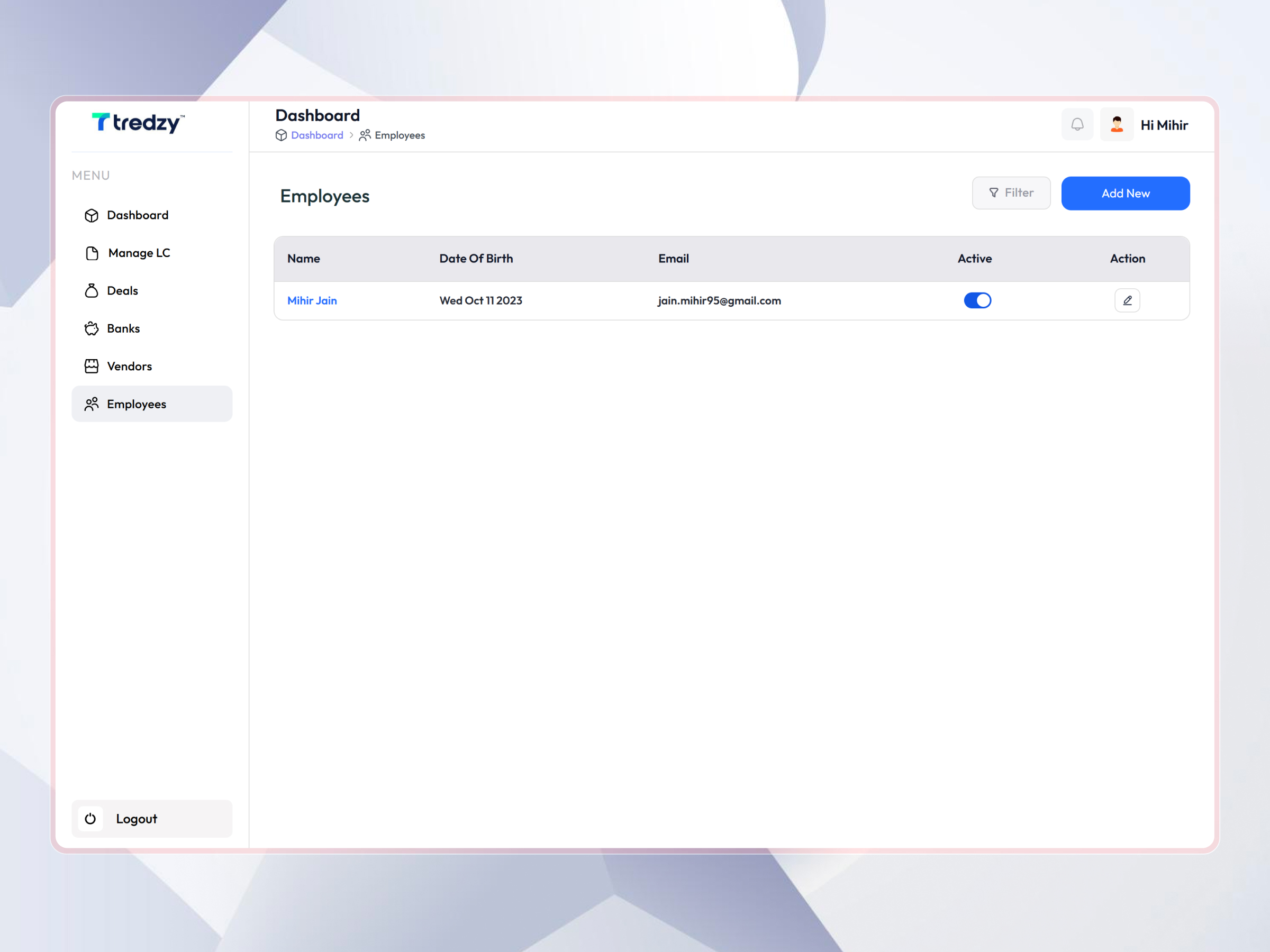
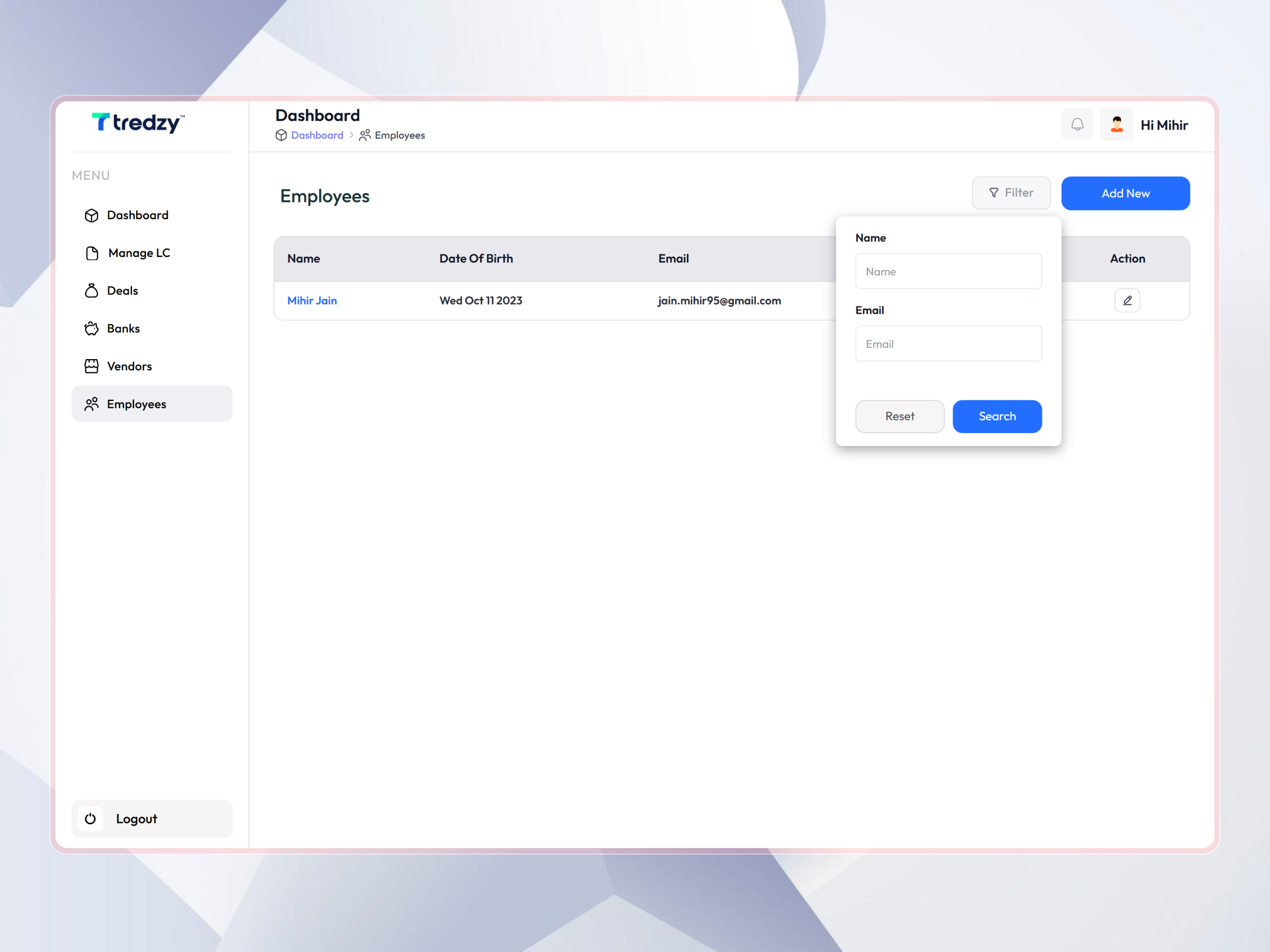
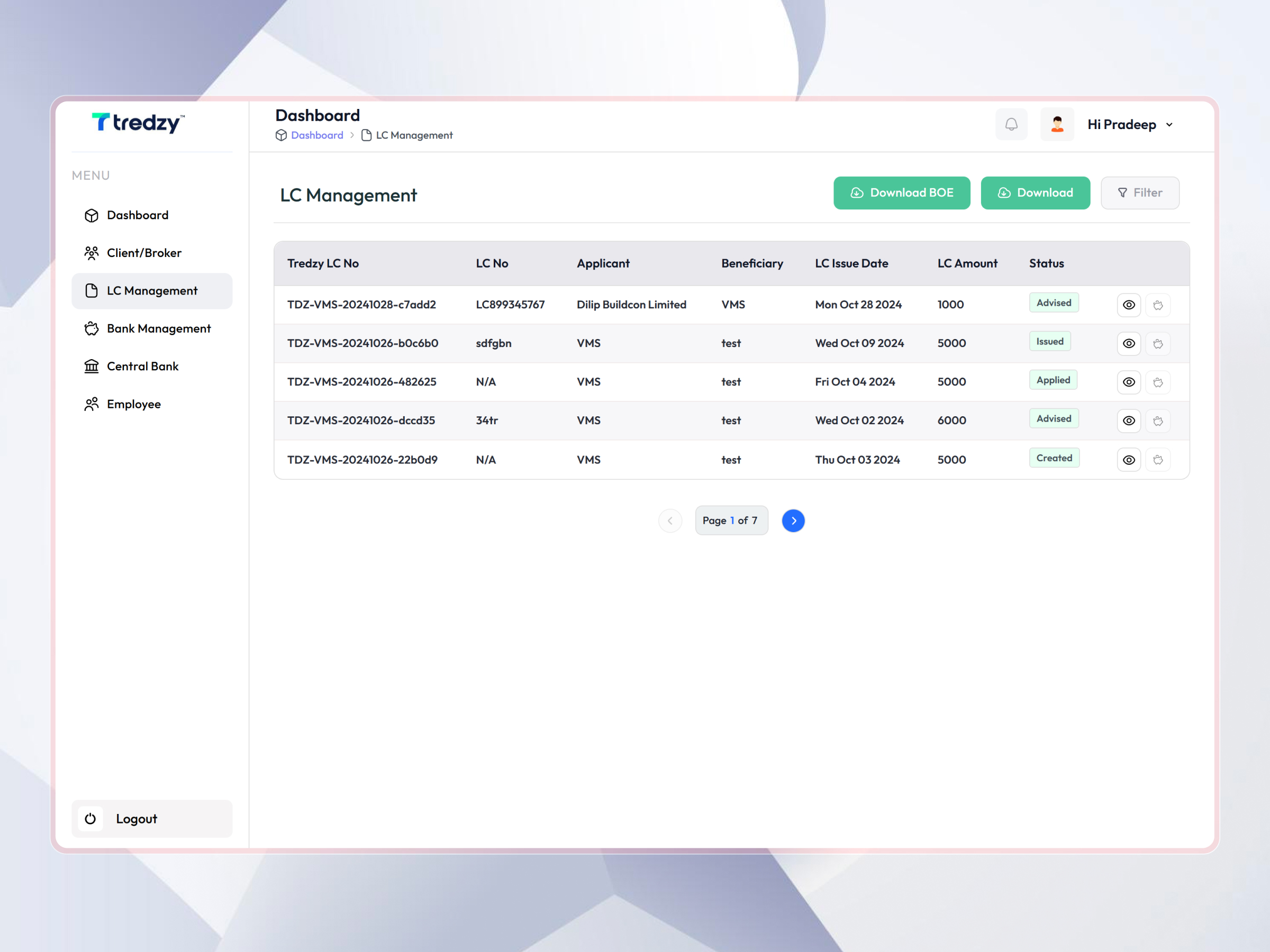
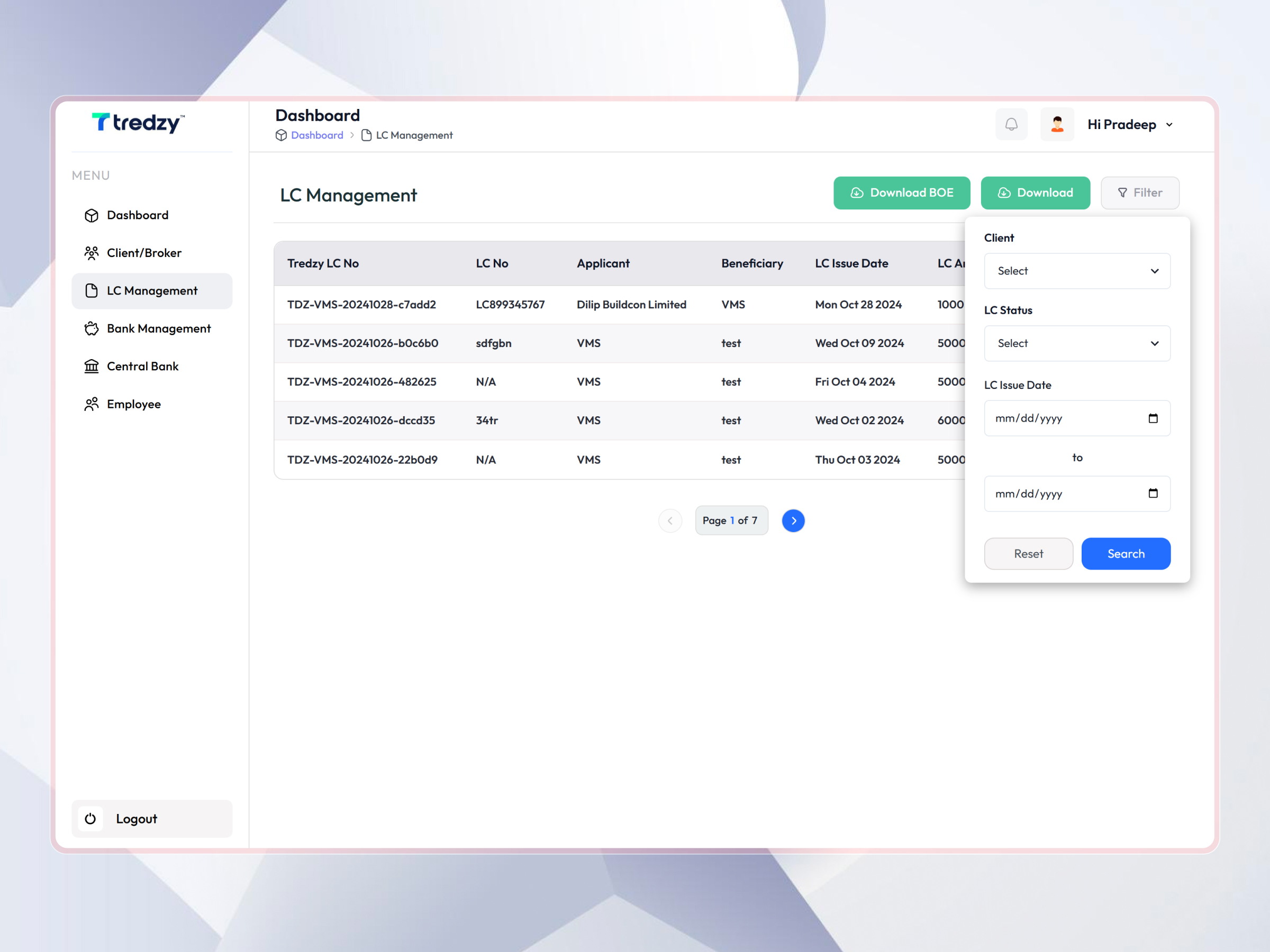
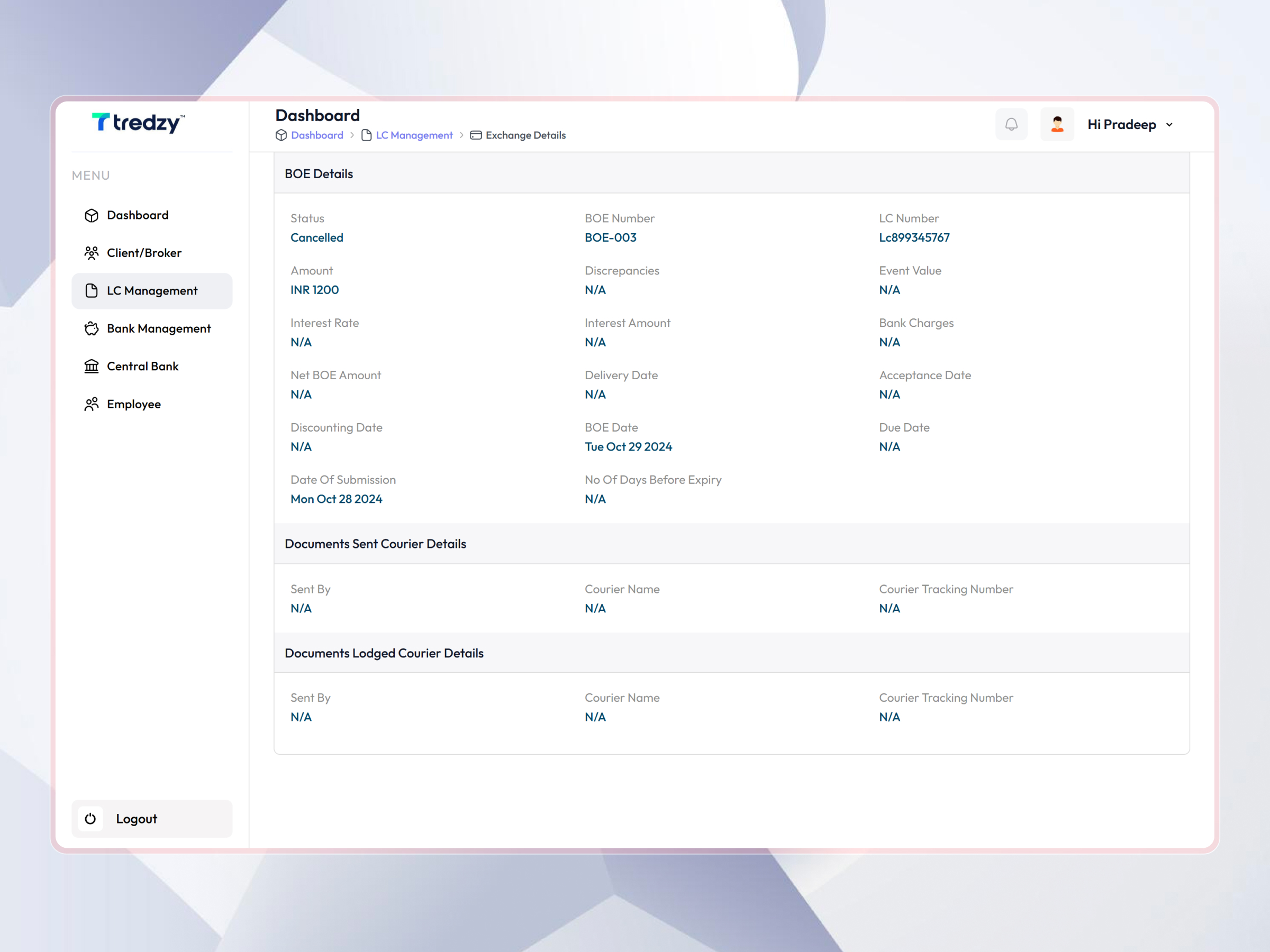
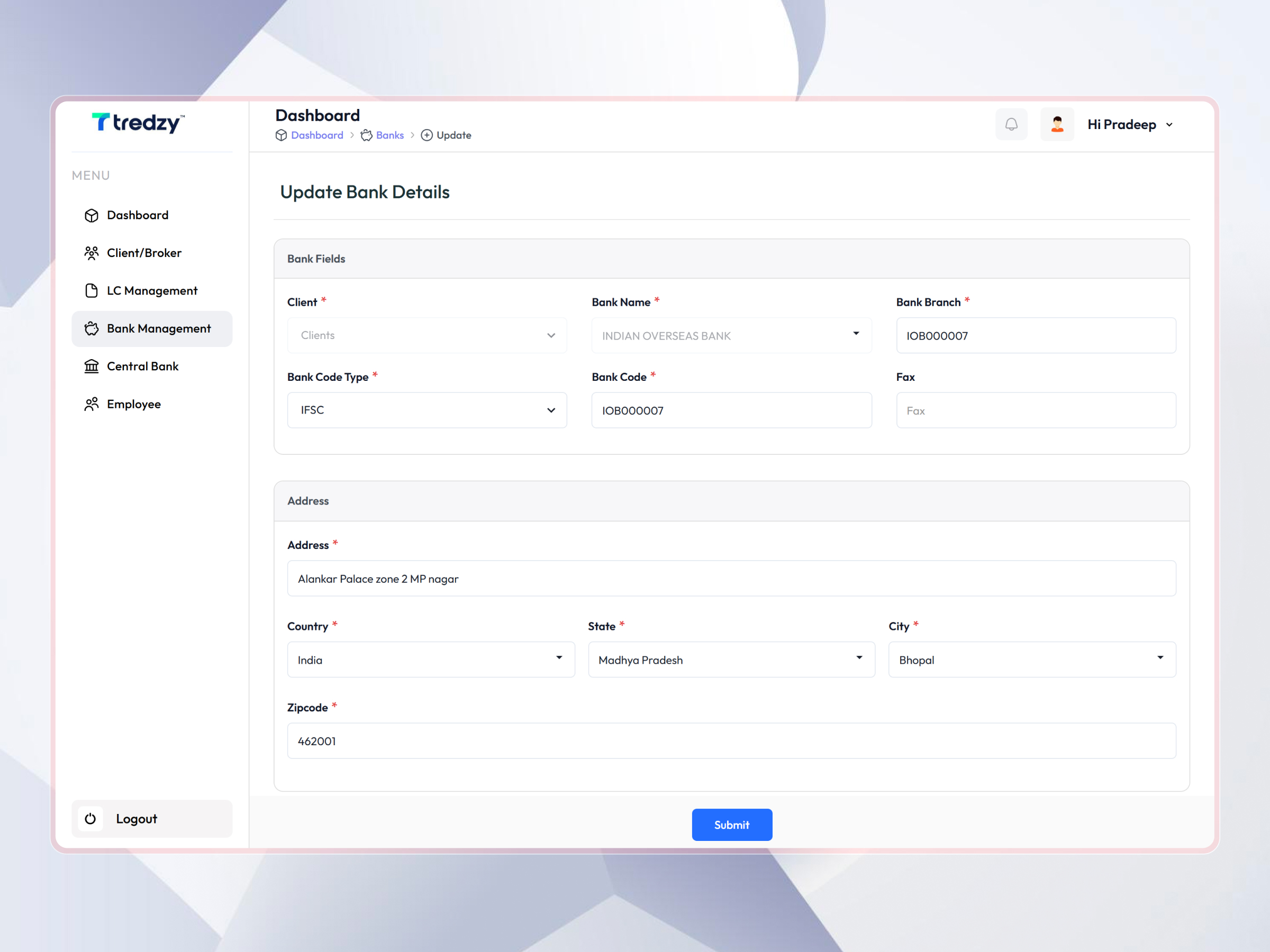
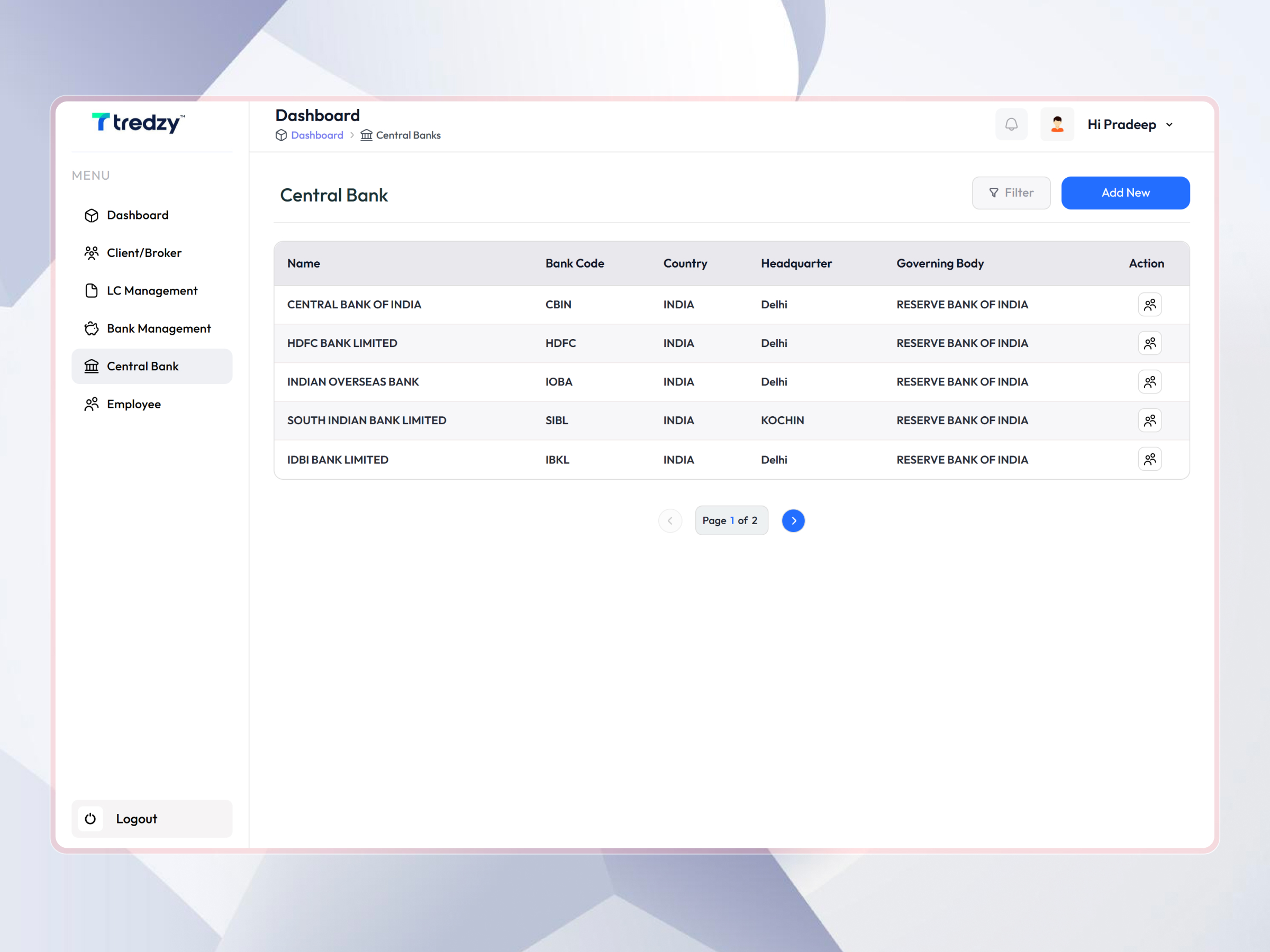
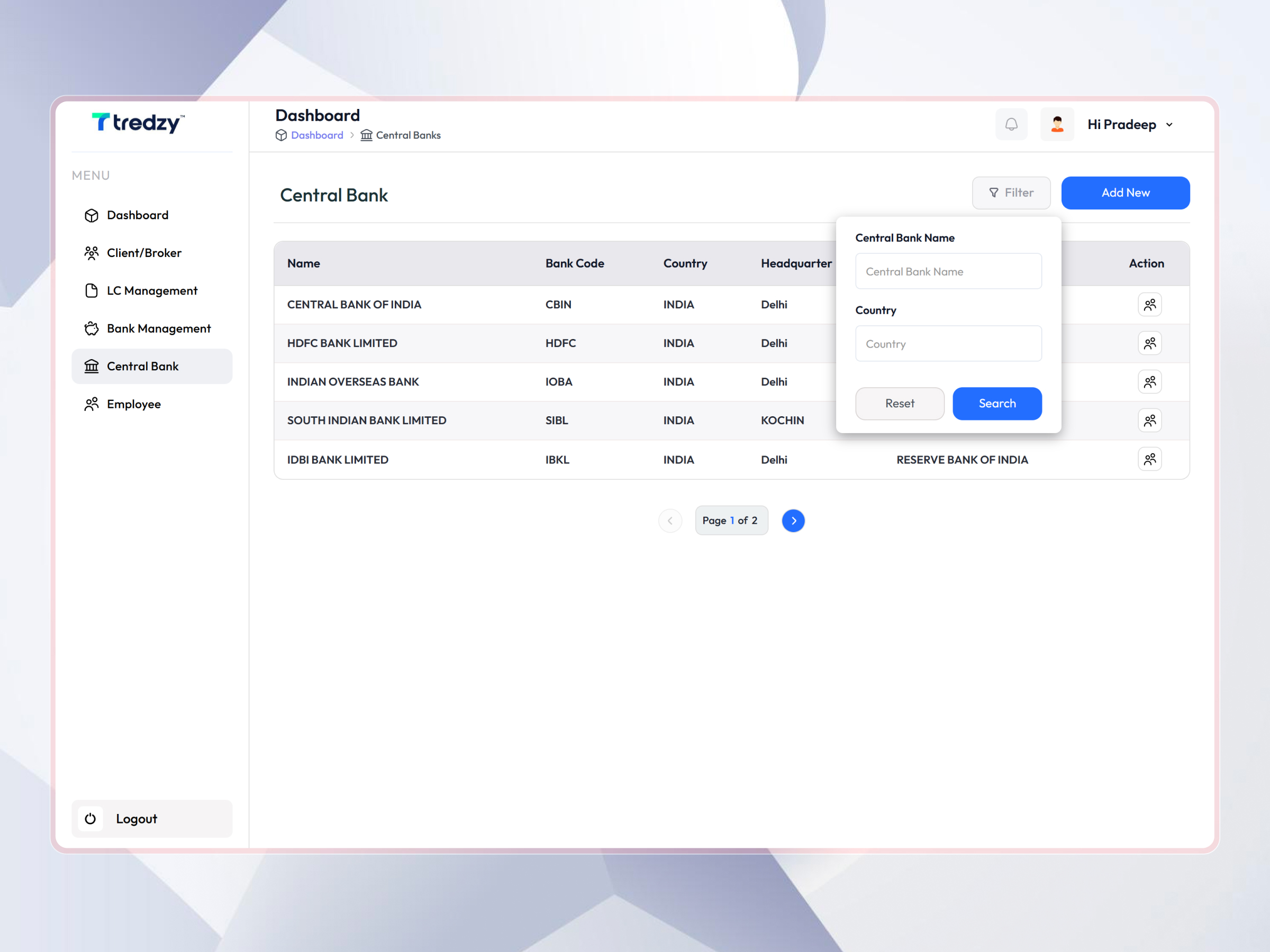
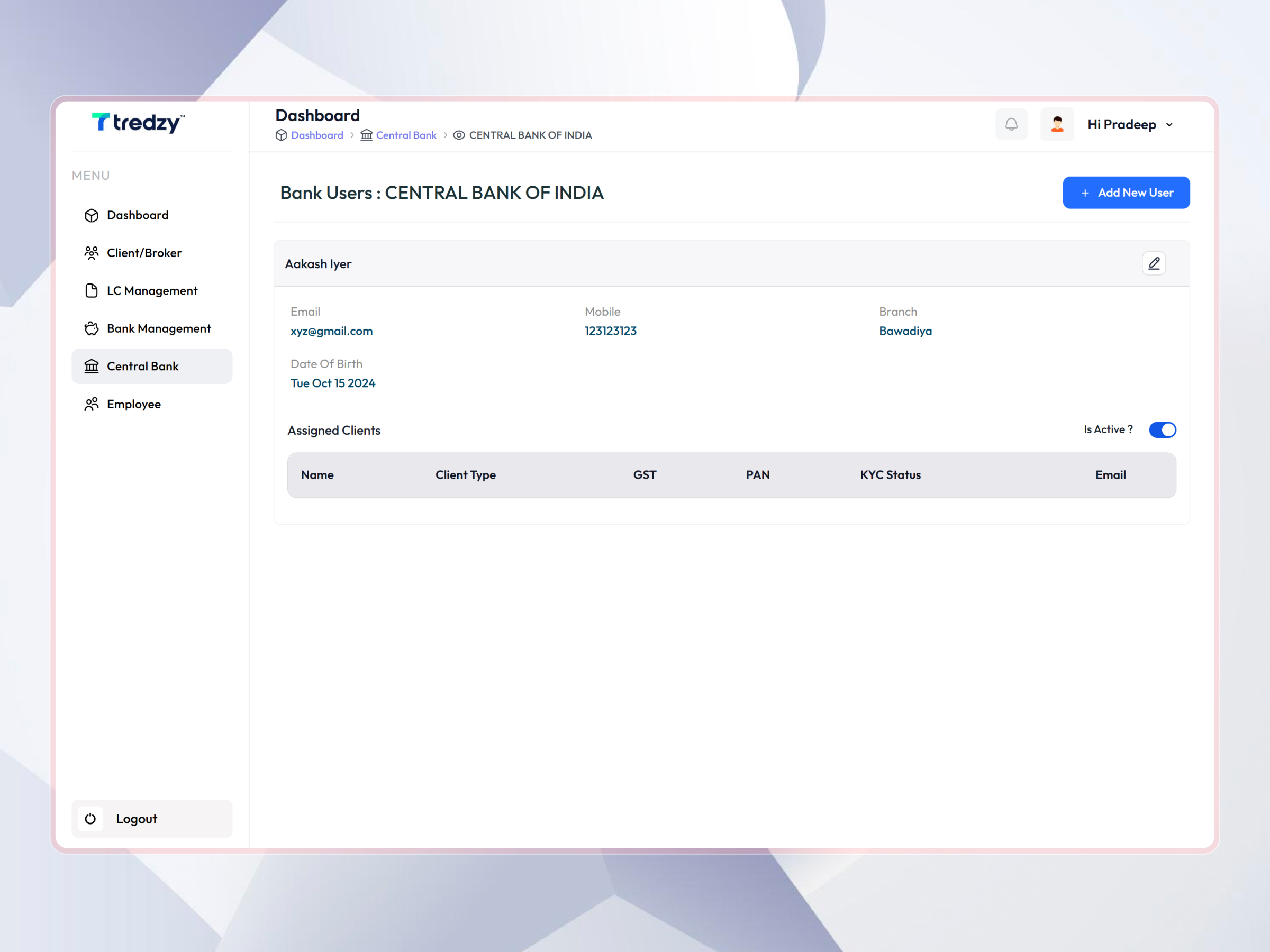
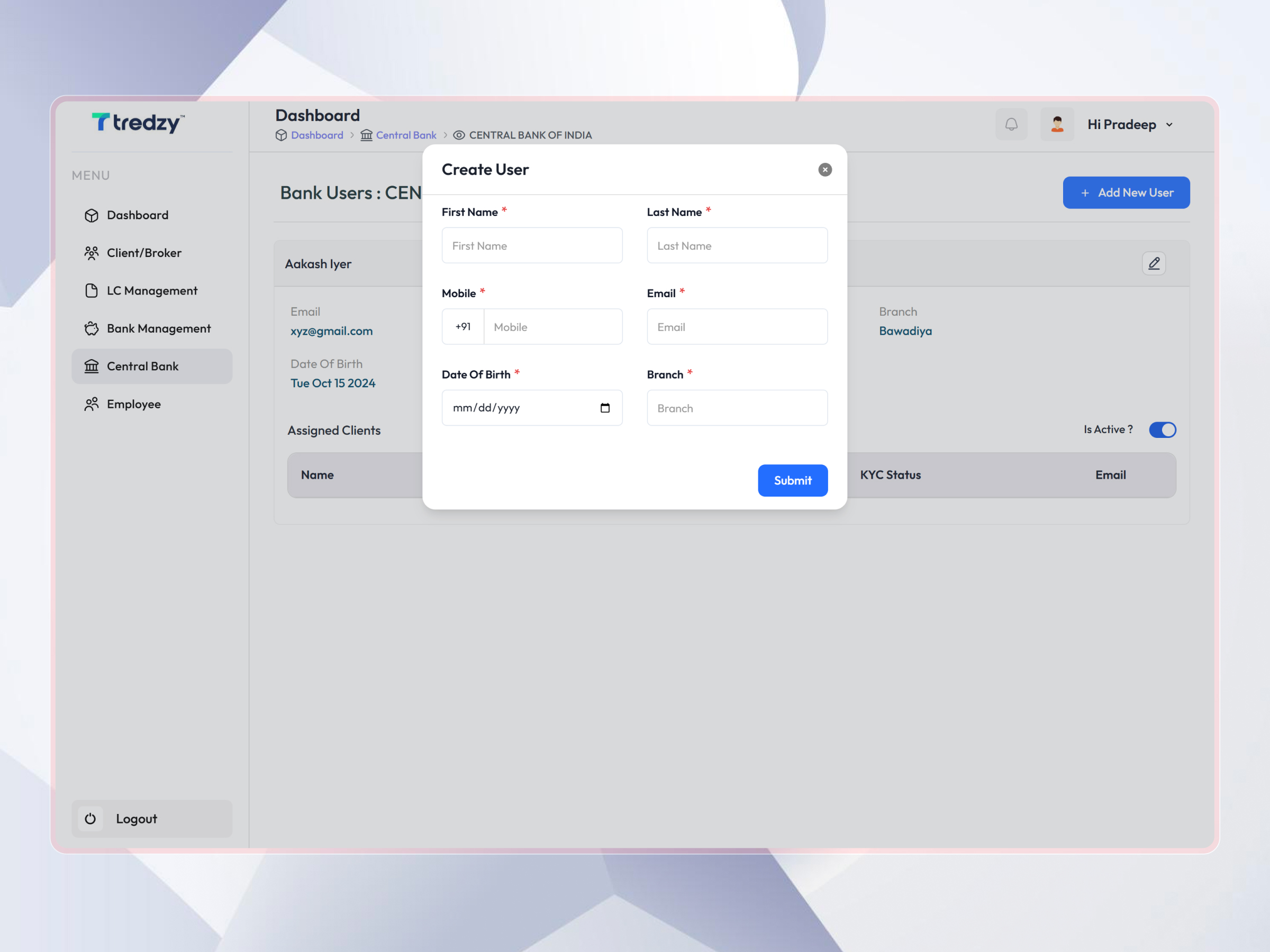
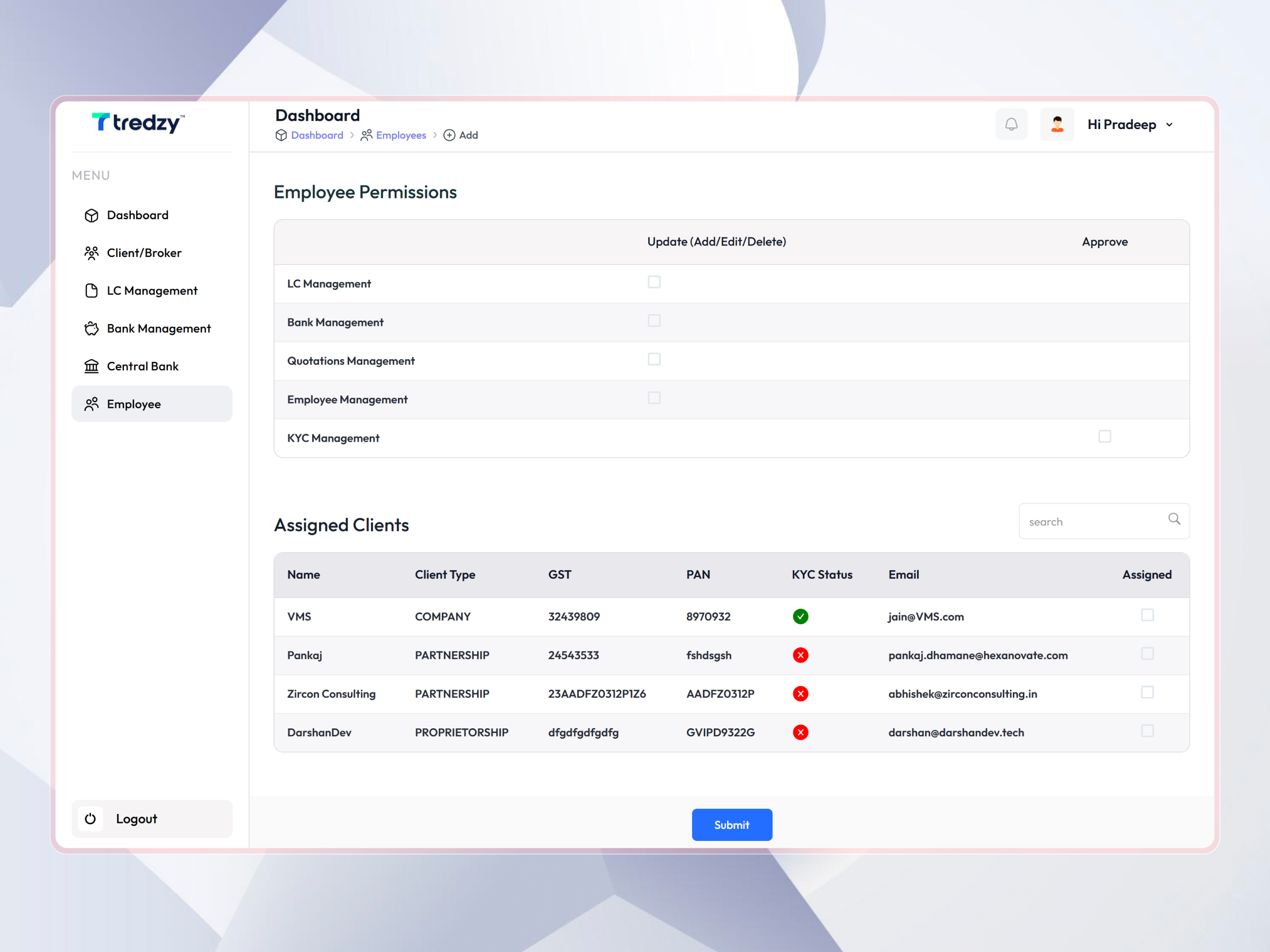
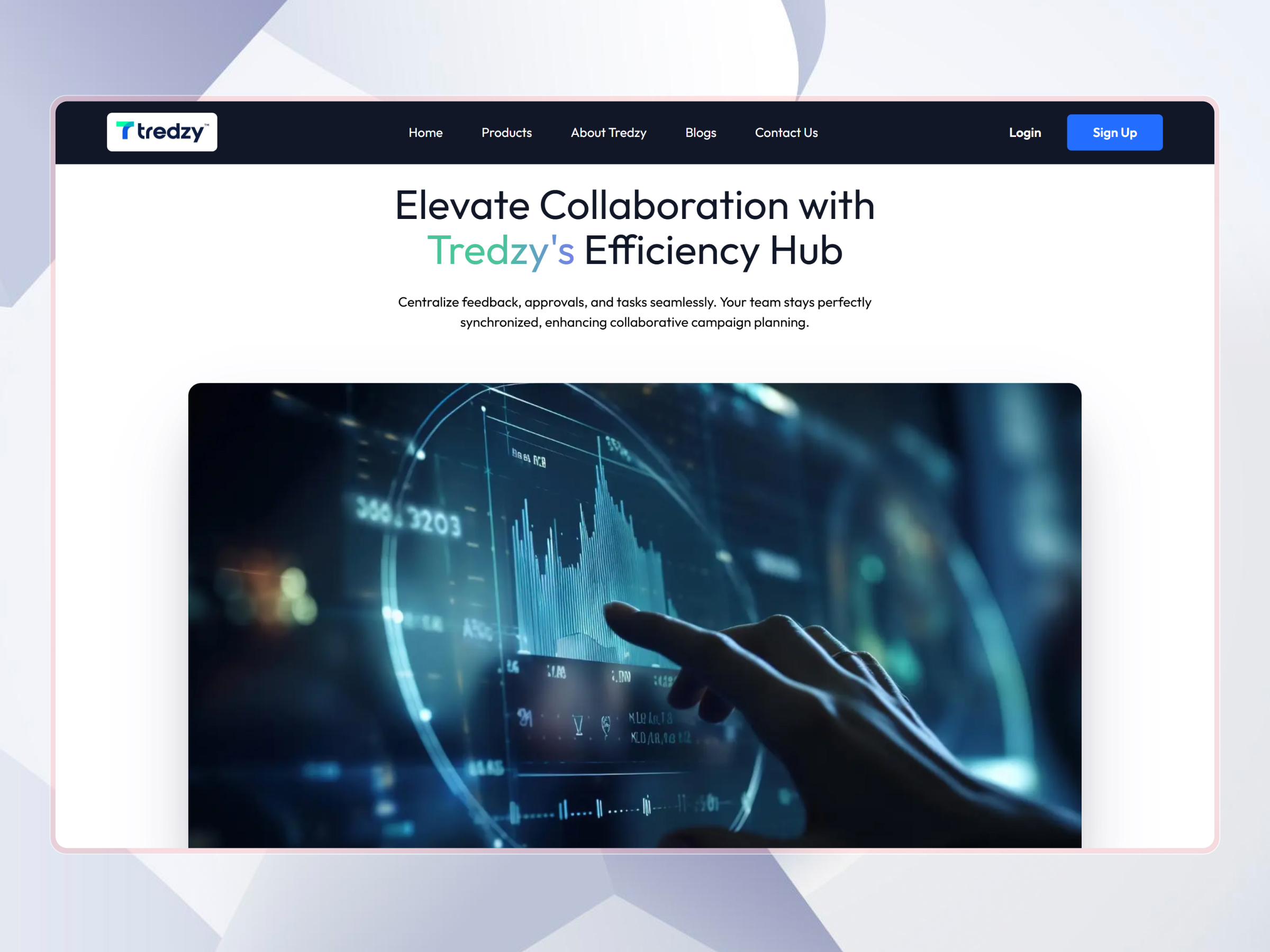
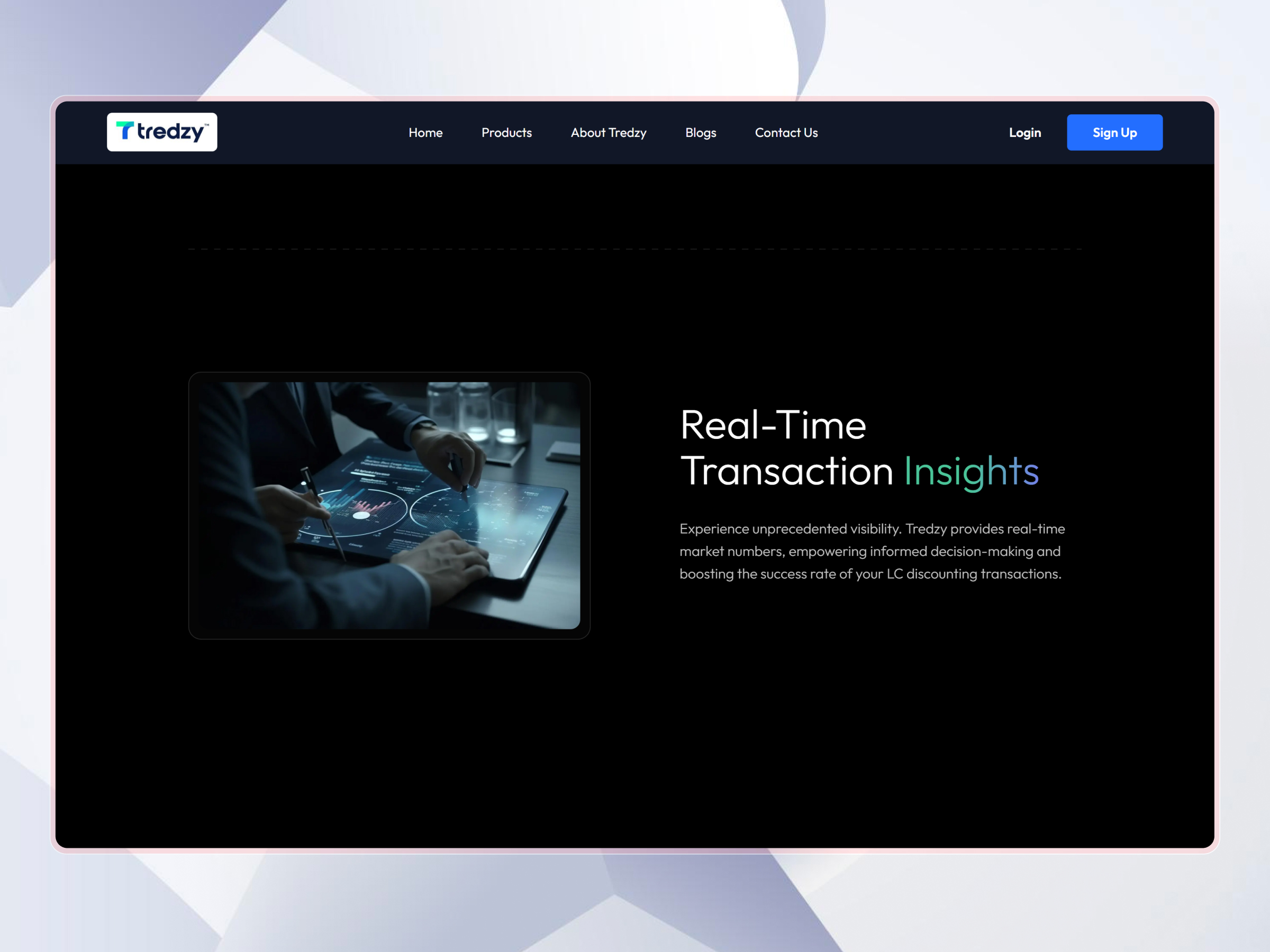
Users get a comprehensive dashboard showing their active LCs, discounting requests in progress, payment schedules, transaction history, and financing status — all updated in real time. This replaces the spreadsheets and email chains that most businesses use to track their trade finance operations.
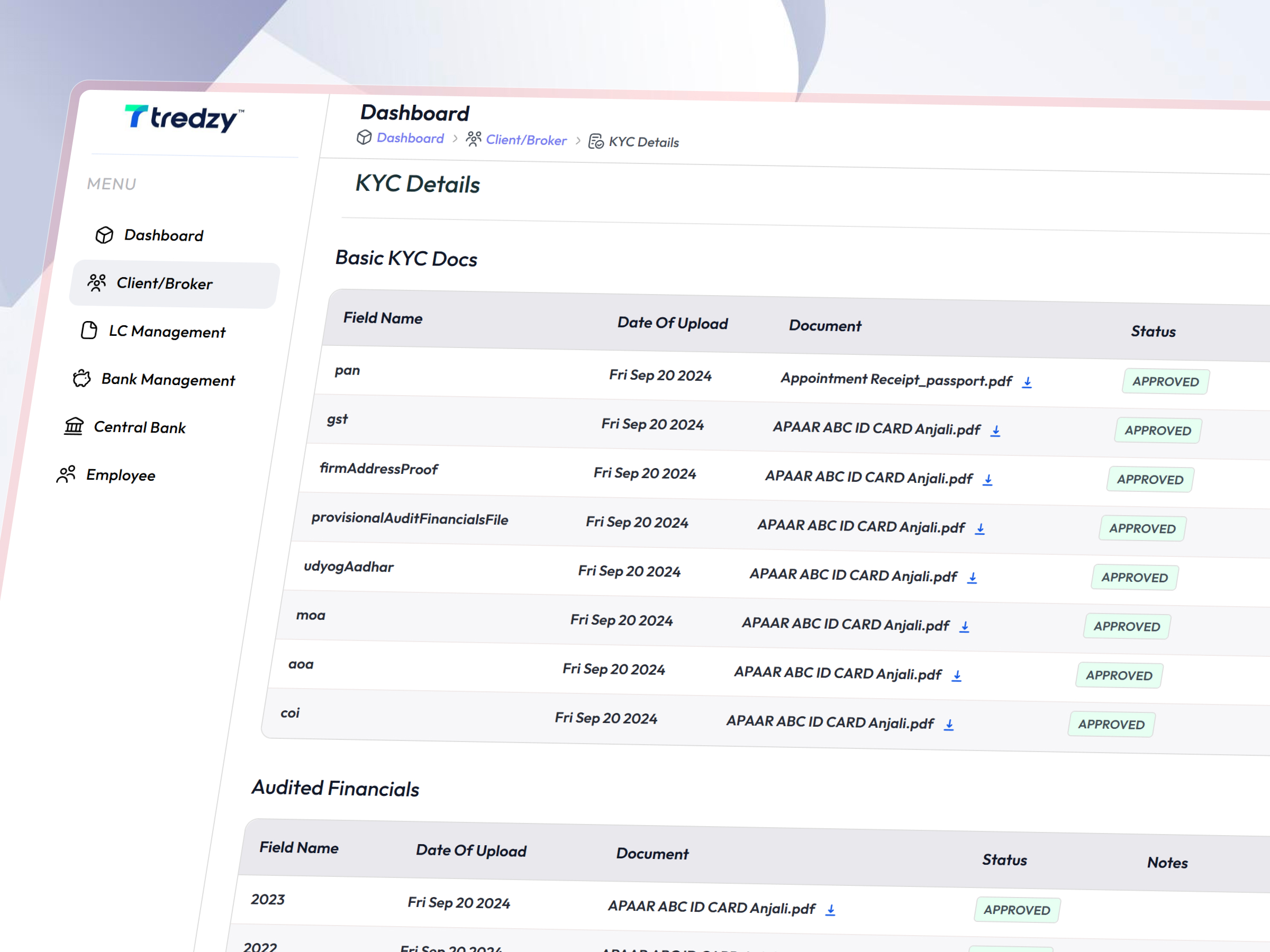
Security and Compliance
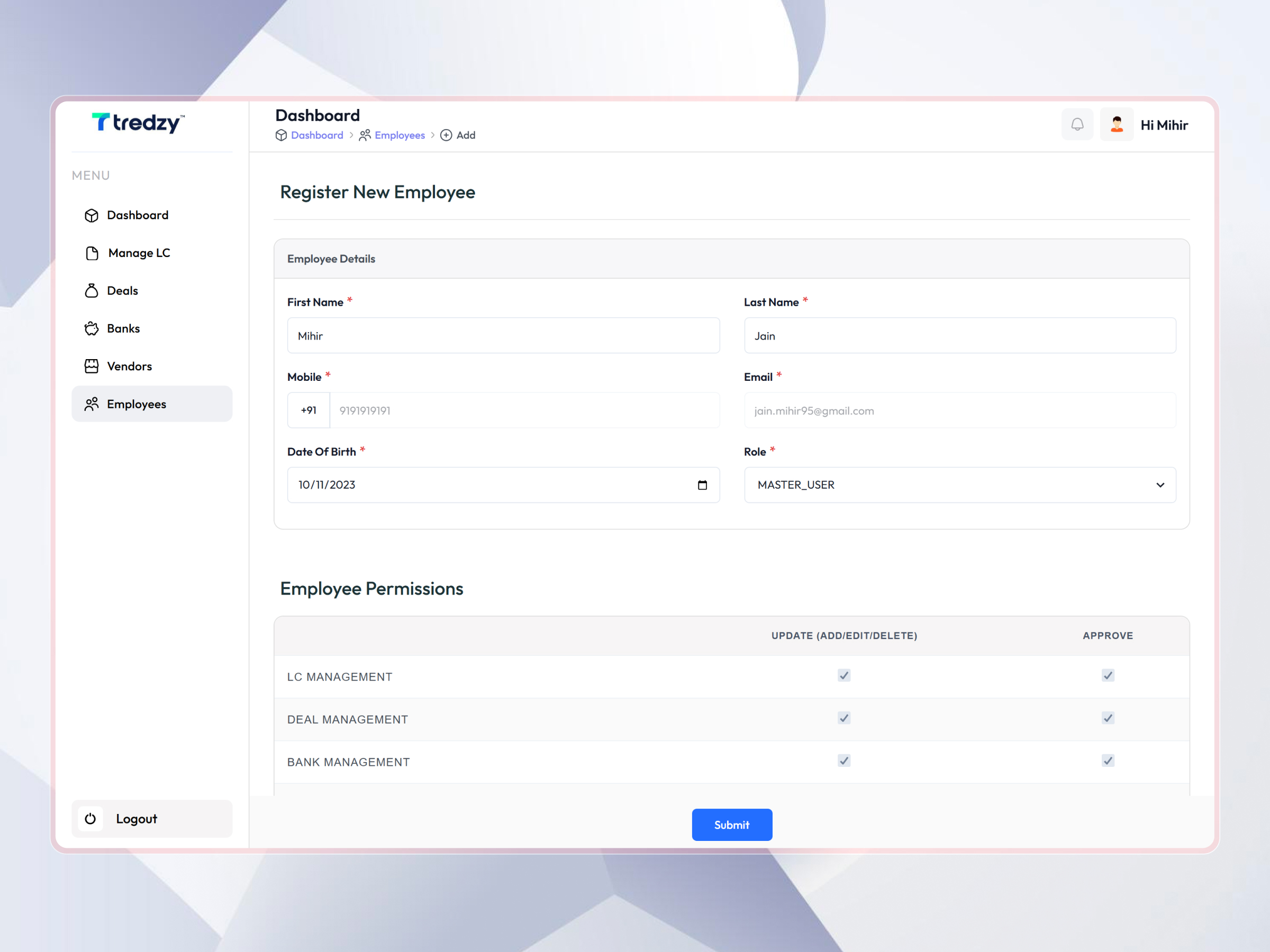
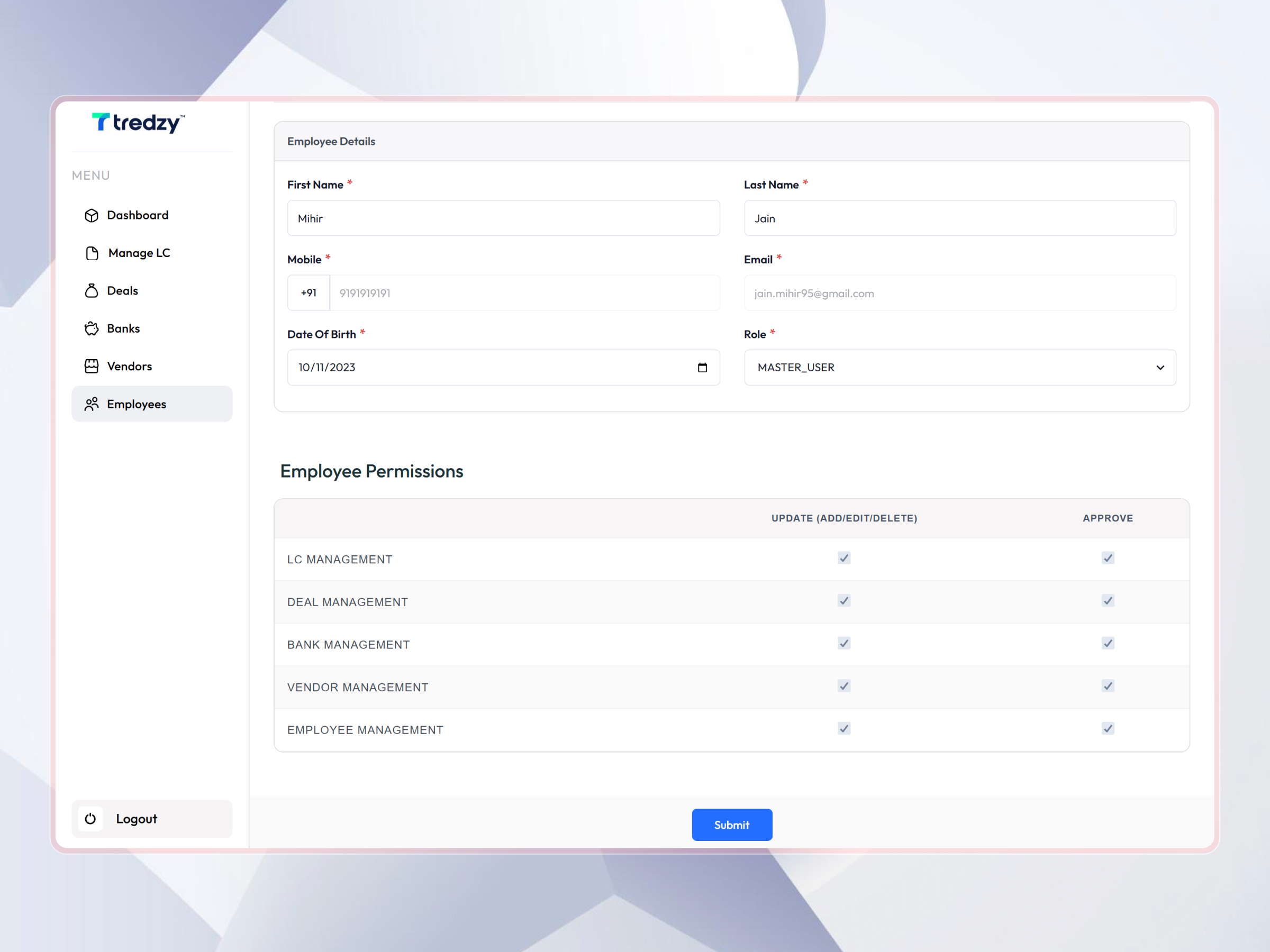
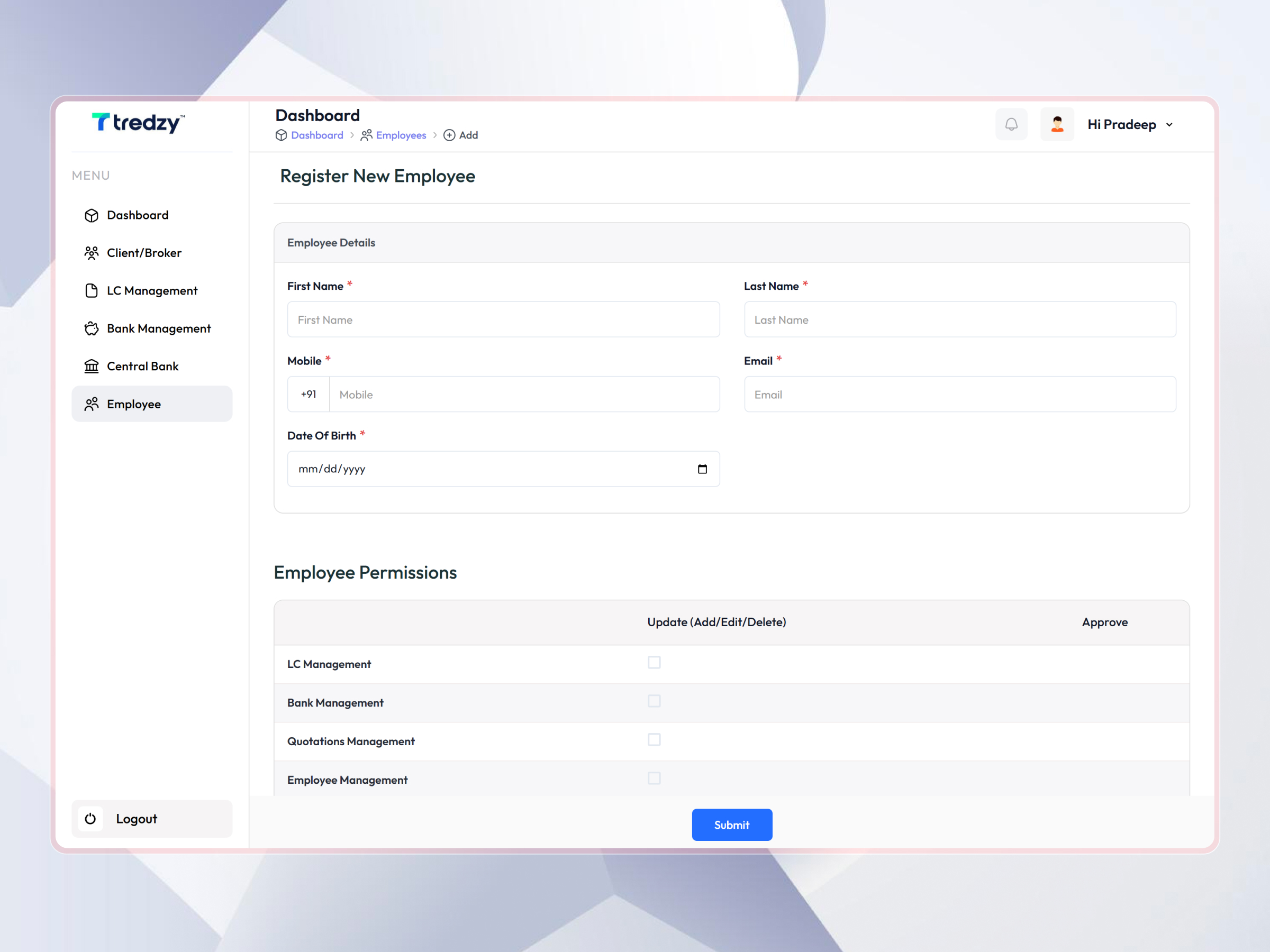
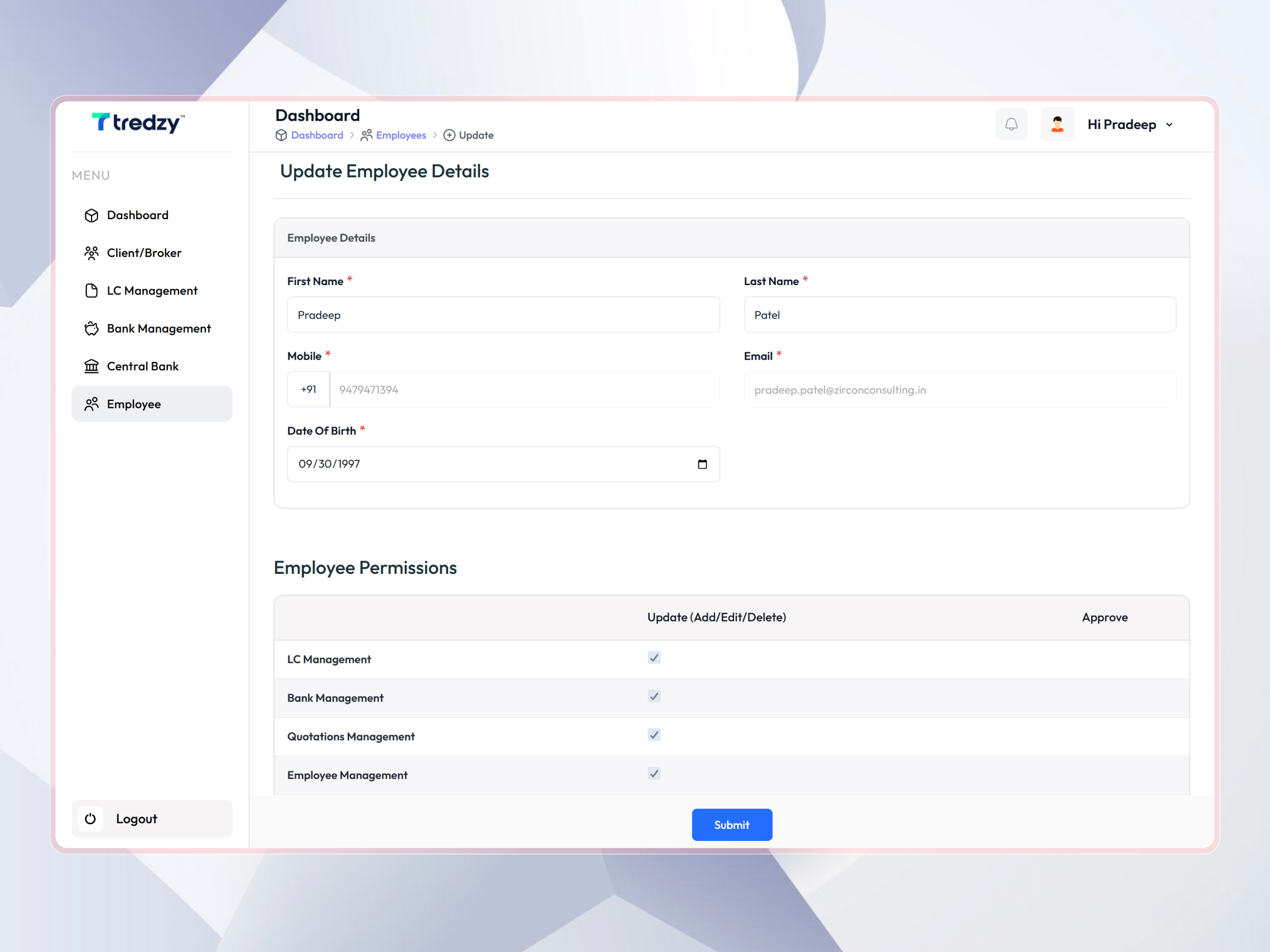
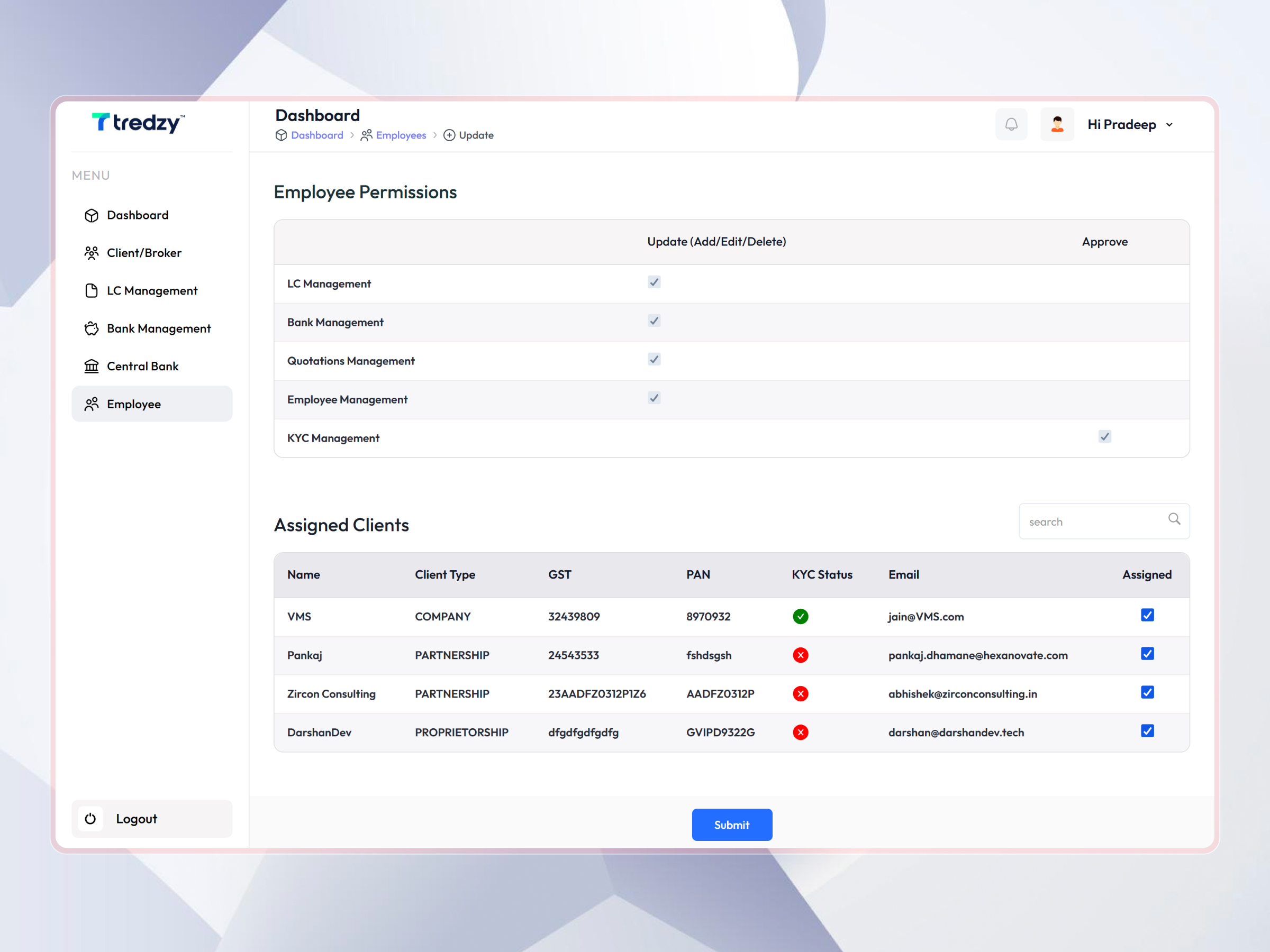
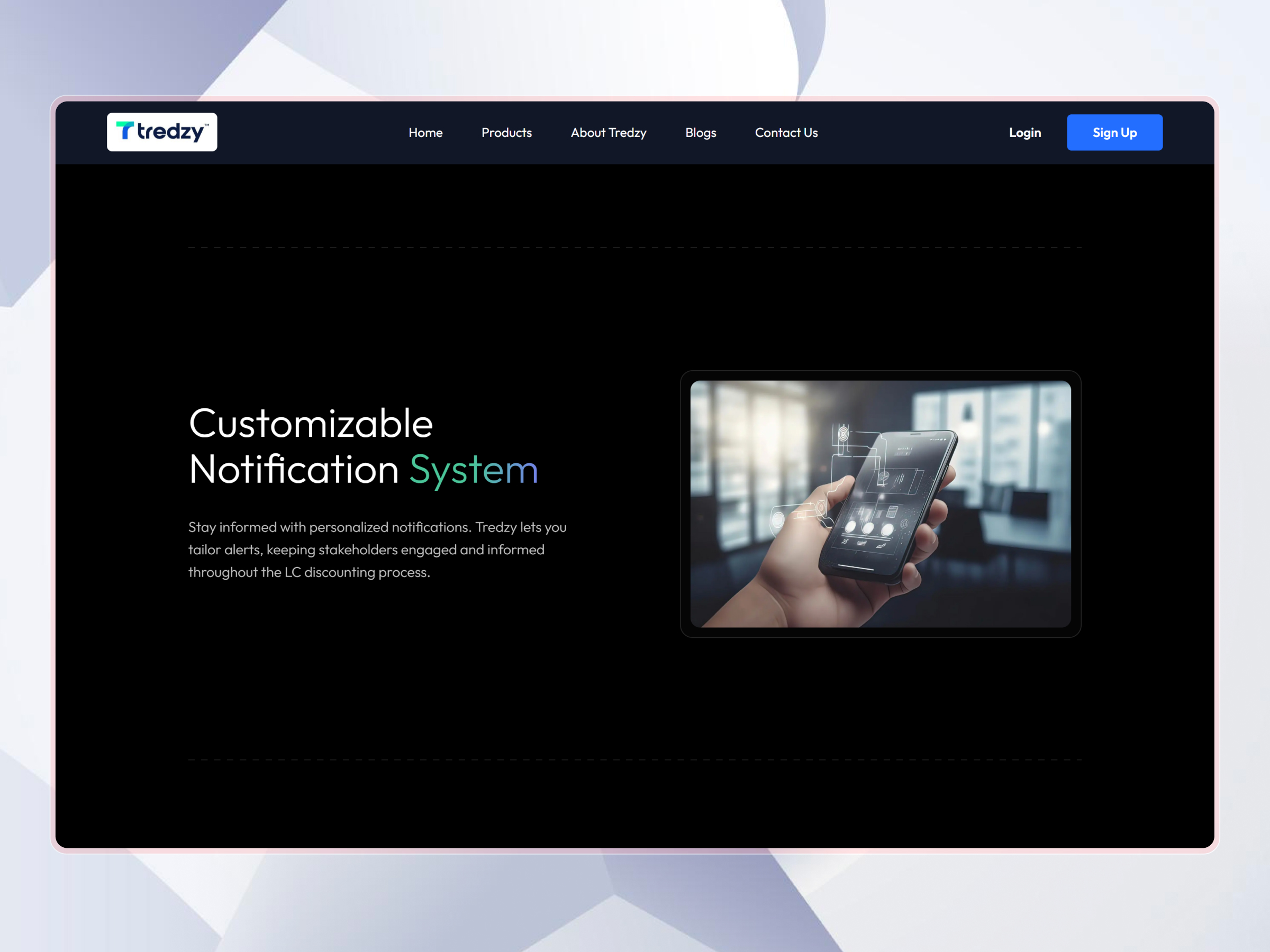
Trade finance deals with large sums and sensitive banking data. We implemented end-to-end encryption, role-based access controls, complete audit trails, and compliance with financial regulations. Every transaction is logged, every document is encrypted, and access is restricted based on user roles.
Subscription-Based SaaS Model
Tredzy runs on a tiered subscription model — businesses choose a plan based on their LC volume and feature needs. This gives the client a recurring revenue stream and makes the product accessible to businesses of different sizes, from SMEs doing a handful of LCs per month to larger traders with high volumes.
Stack and implementation
We planned, designed, and built Tredzy with Next.js and React on the frontend for a fast, responsive interface. Node.js powers the backend API, and PostgreSQL handles the relational data — LCs linked to documents, linked to discounting requests, linked to payment records. The stack is chosen for reliability and maintainability, which matters when you're dealing with financial transactions.
What shipped
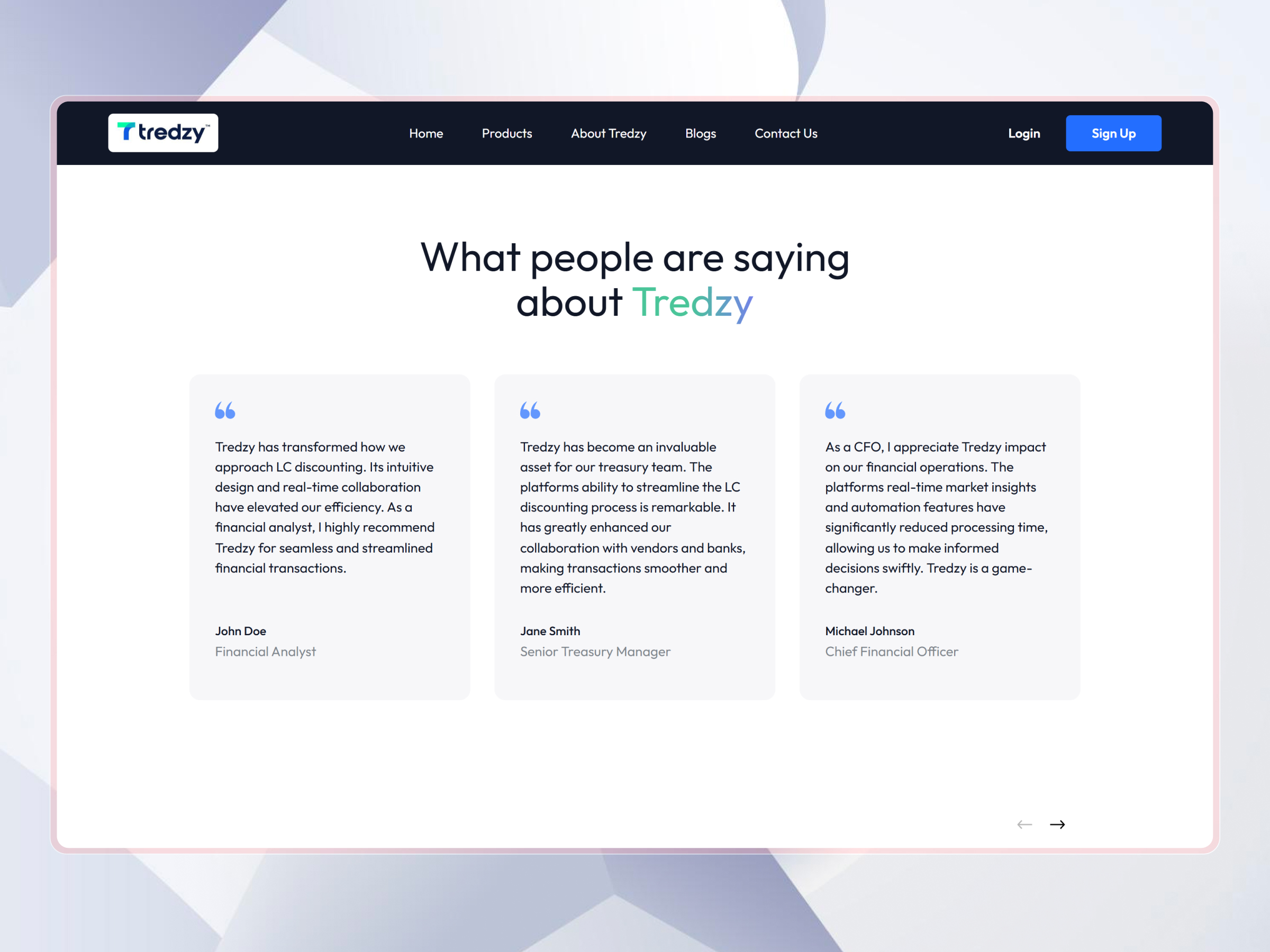
We delivered the MVP that supported the client validate the LC discounting business model with real users. Early adopters found the product materially faster and more transparent than traditional LC discounting through banks. The MVP gave the client a working product to demonstrate to potential investors and banking partners, and a solid foundation to build the next version on.
We've also built Moxey, an invoice discounting platform for a Dubai-based fintech — a related but distinct trade finance product. Our experience across both domains means we understand the nuances of building fintech platforms for different financing instruments.
Frequently Asked Questions
Questions about trade finance platforms,
answered clearly.
Questions about the work, scope, delivery context, and next steps.
LC discounting is when a business sells a Letter of Credit to a bank or financial institution at a discount before its maturity date, getting immediate cash instead of waiting weeks or months. The bank pays the business upfront (minus a discount fee), then collects the complete amount from the issuing bank at maturity. Tredzy digitizes this entire process.
Related Work
Similar case studies,
selected for context.
Continue exploring related work, with comparable product and delivery challenges.