SaaS ApplicationsMVP DevelopmentWeb ApplicationsInterface DesignsAI Solutions
TradersEdge
TradersEdge is an AI trade analysis platform built for a Hyderabad client, helping users read market data and make faster, more informed decisions.
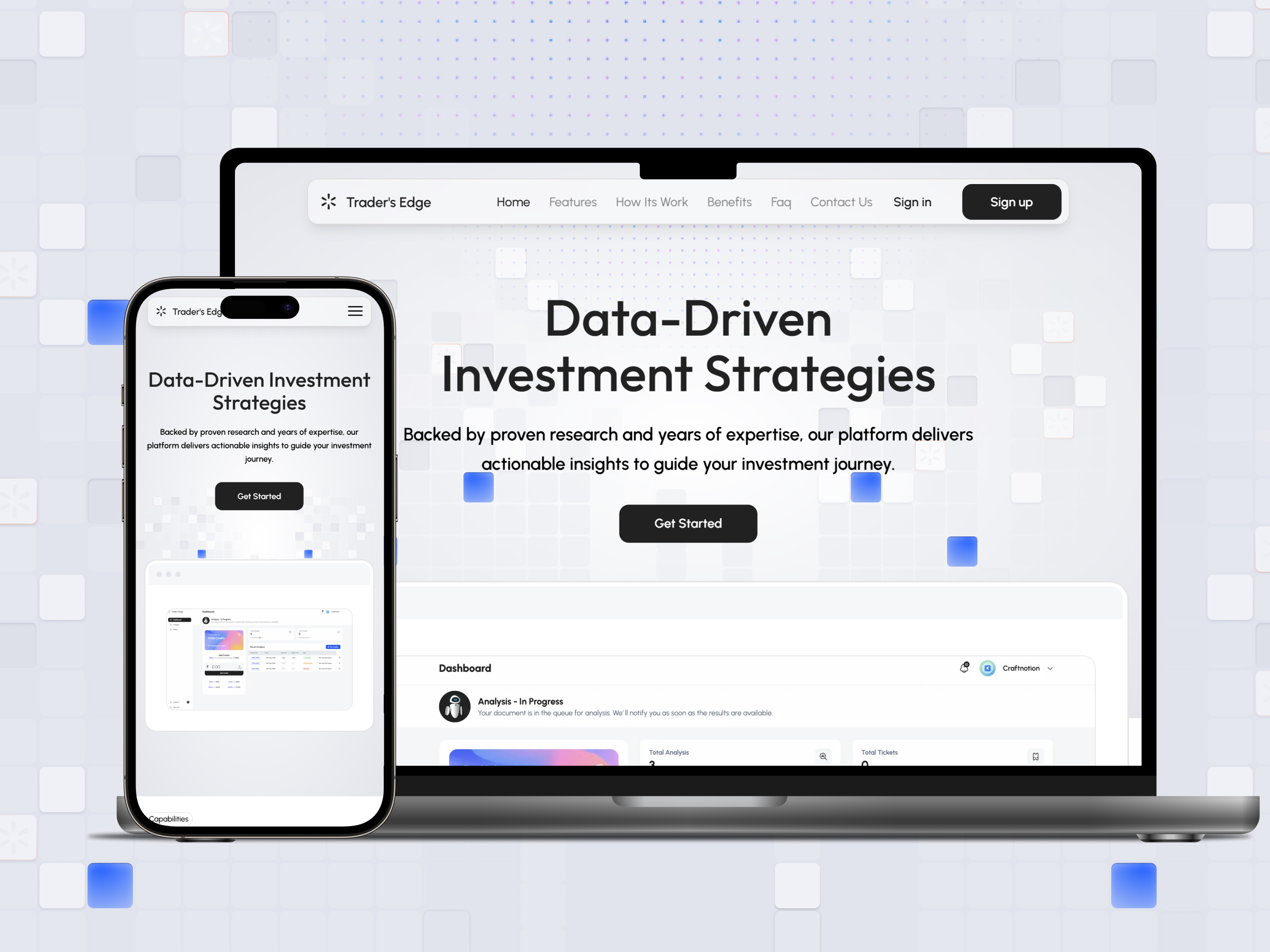
An AI stock analysis platform built for serious investors
TradersEdge is an AI trade analysis platform we planned, designed, and built for a Hyderabad-based client. The product uses proprietary machine learning algorithms to analyze stock portfolios, forecast performance, and suggest alternative investment strategies — giving traders and investors AI-driven insights that would normally require an expensive financial advisor or quant team.
We planned, designed, and built it as a SaaS product with a credits-based monetization model, where users purchase credits to access premium AI analysis features like portfolio forecasting and investment recommendations.
What the project needed to do
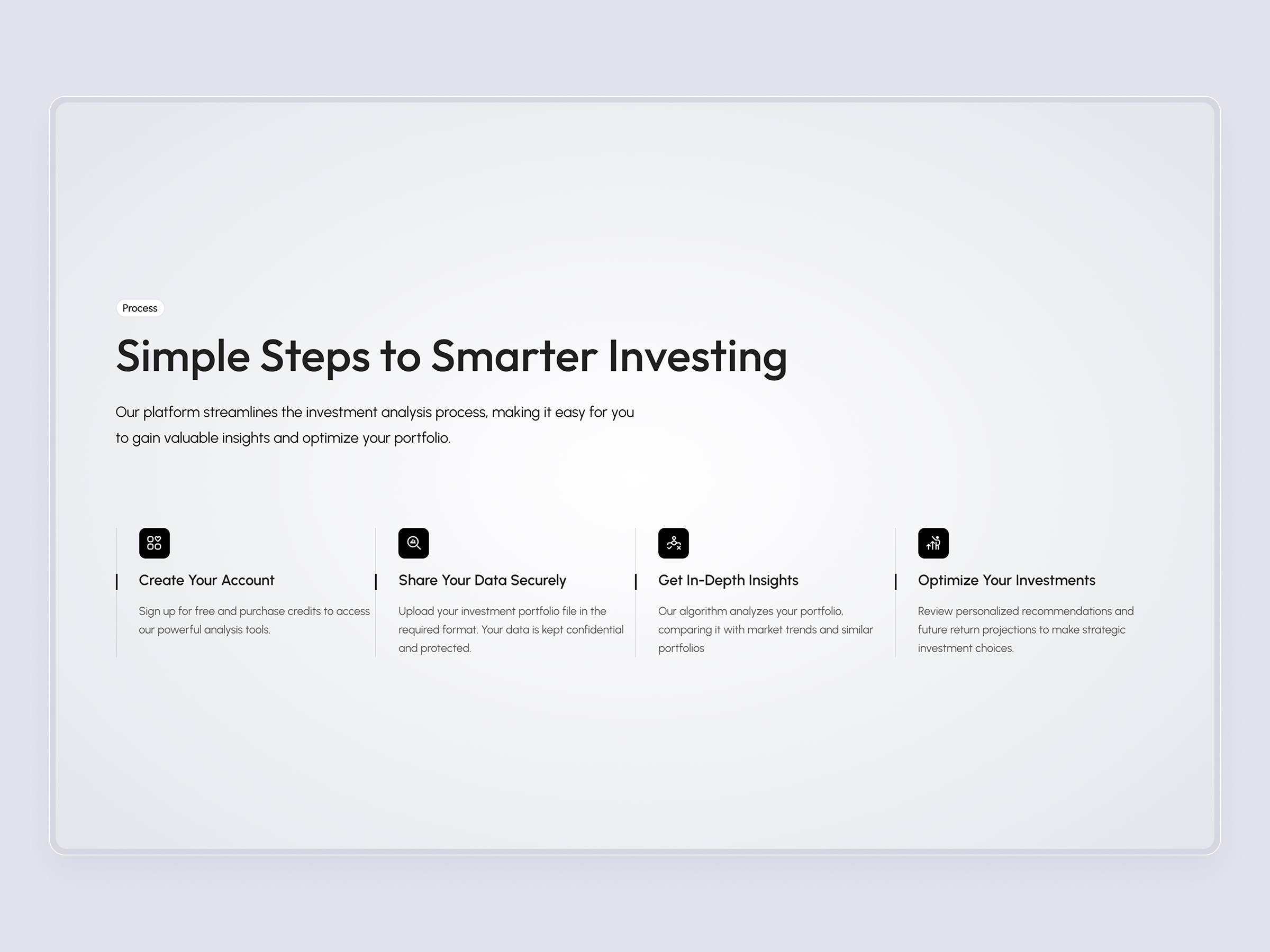
The client had proprietary AI models built in Python that could analyze stock portfolios and predict performance. What he needed was a web platform where users could input their portfolios, run AI analysis, get forecasts and alternative suggestions — and pay for it through a credits system. The AI engine already existed; we needed to build everything around it.
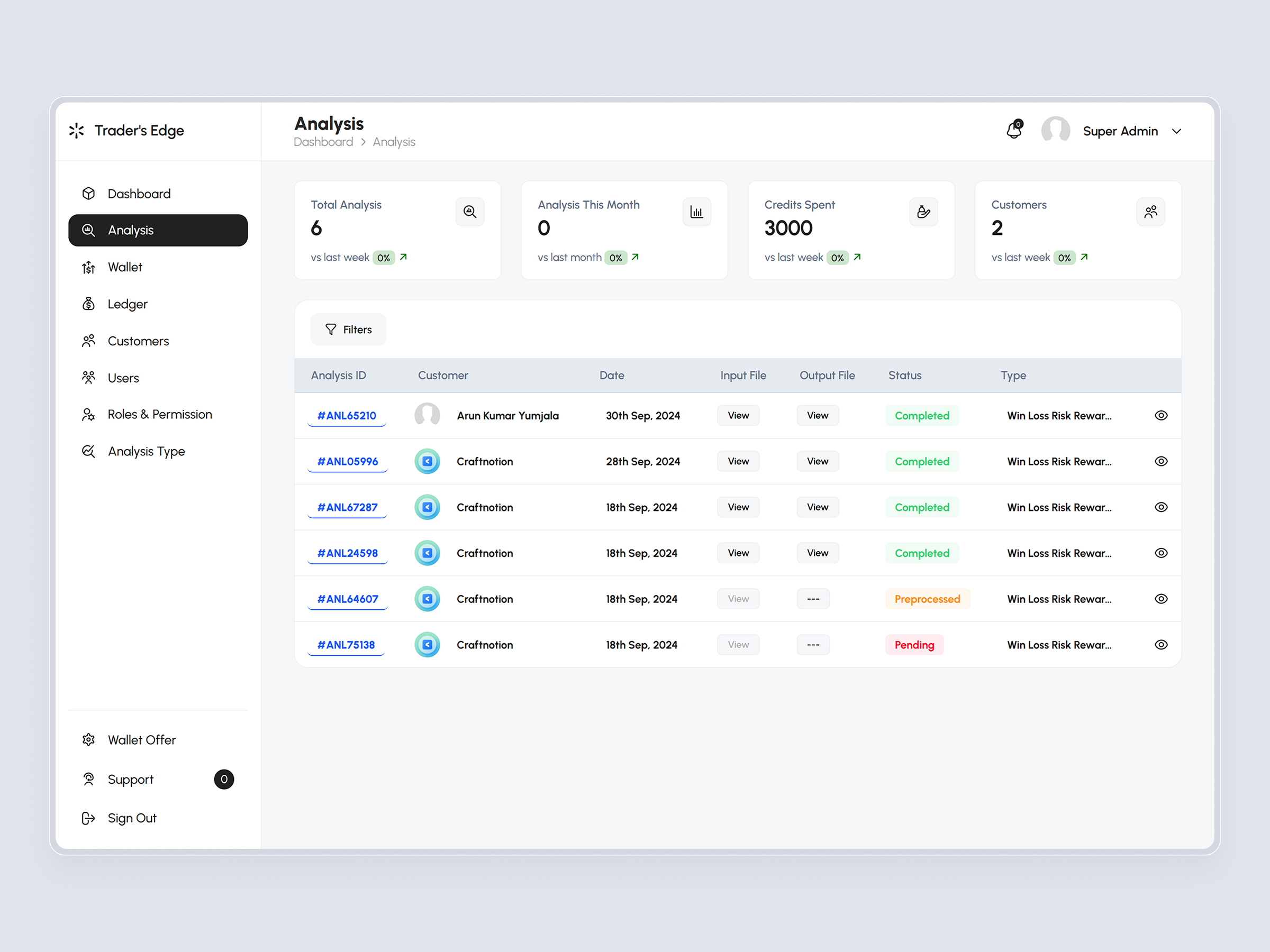
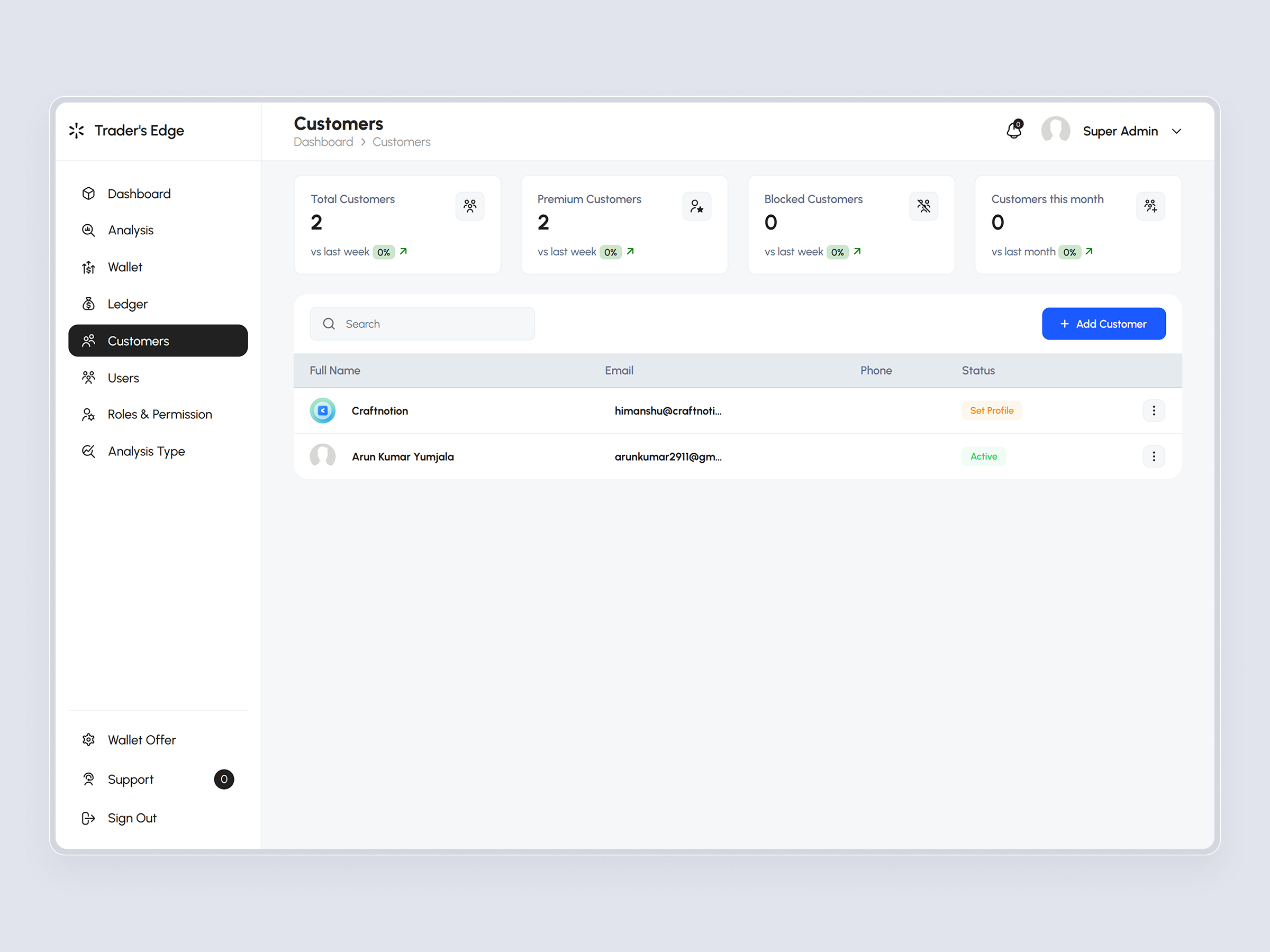
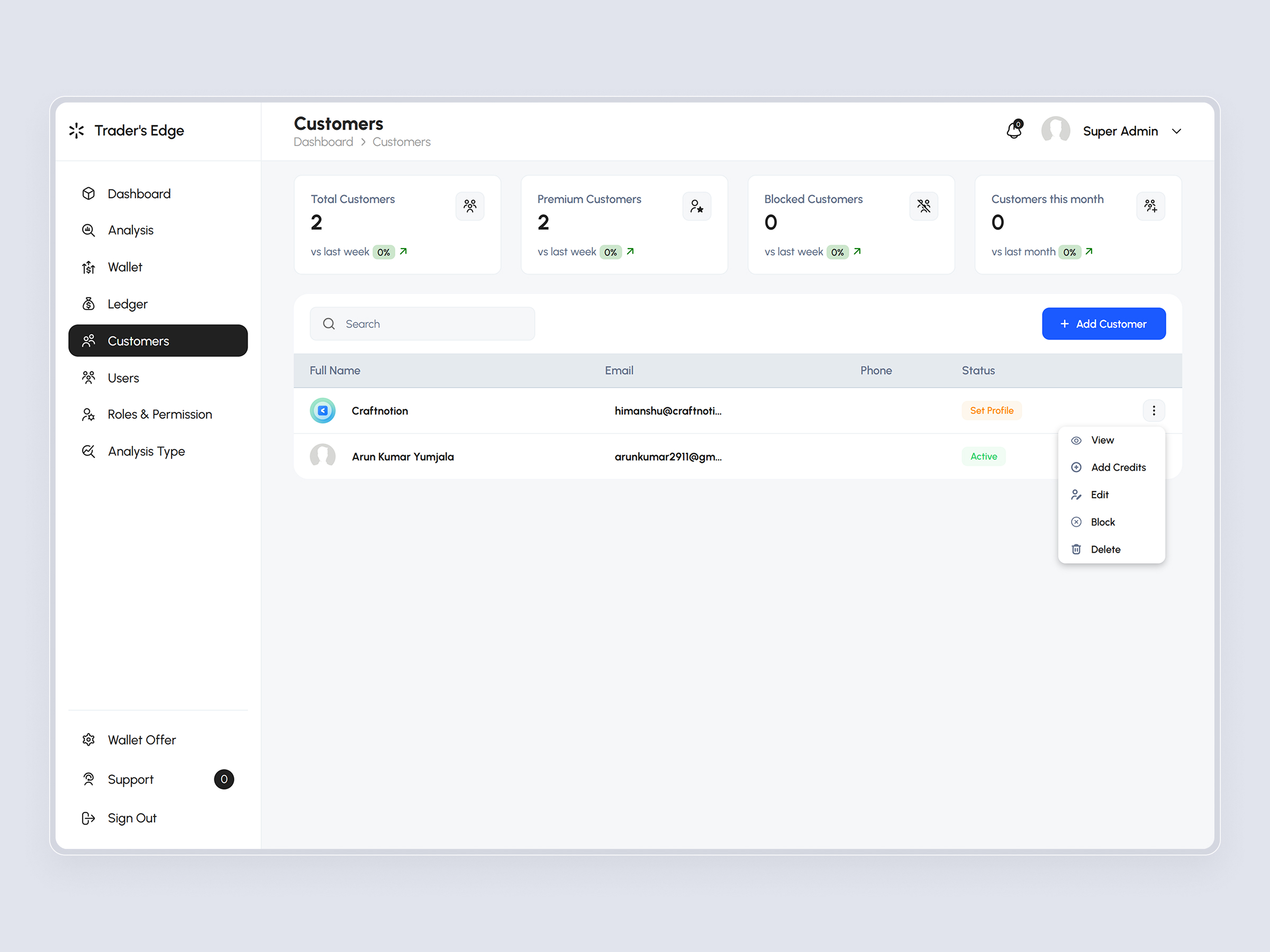
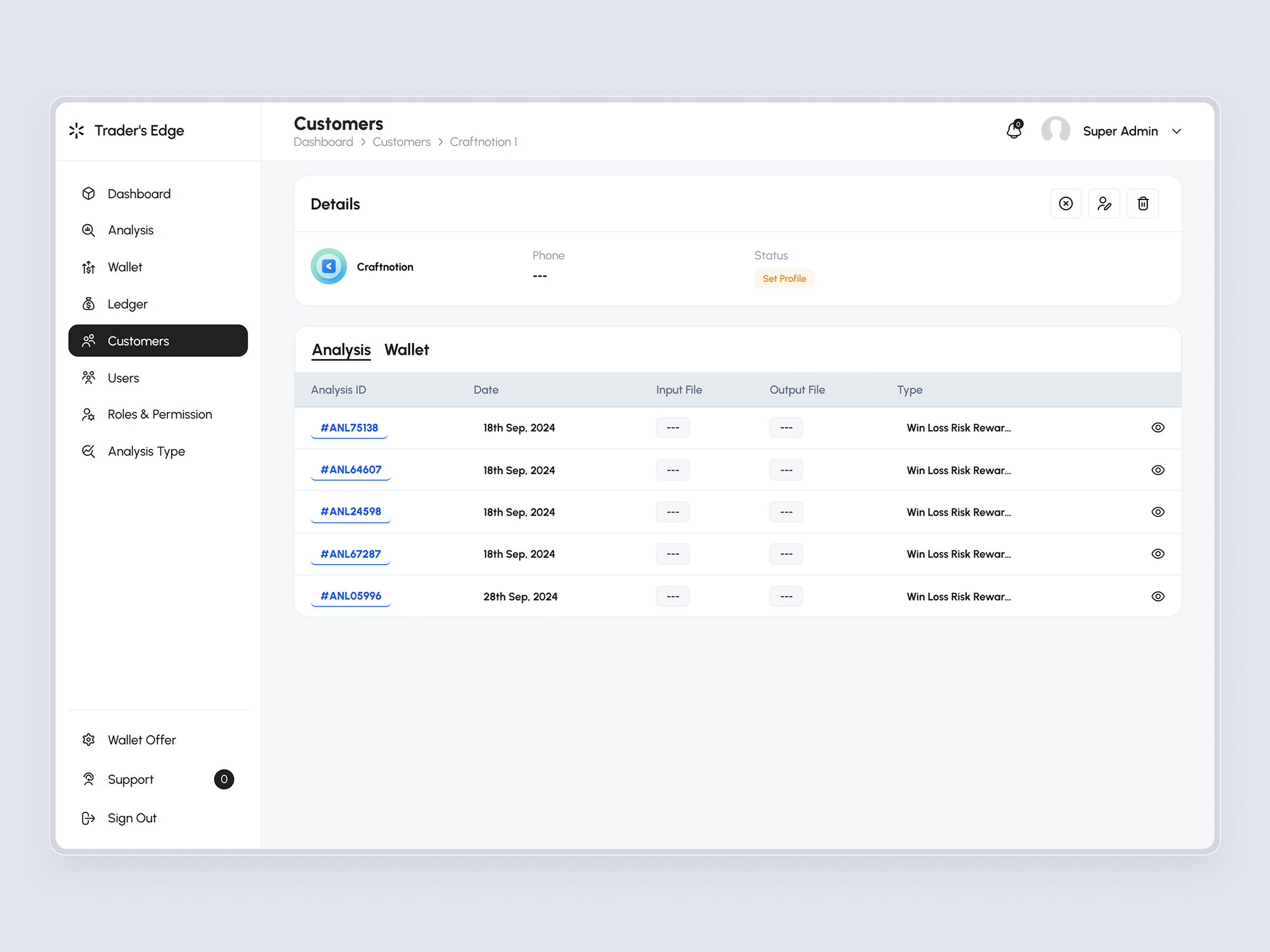
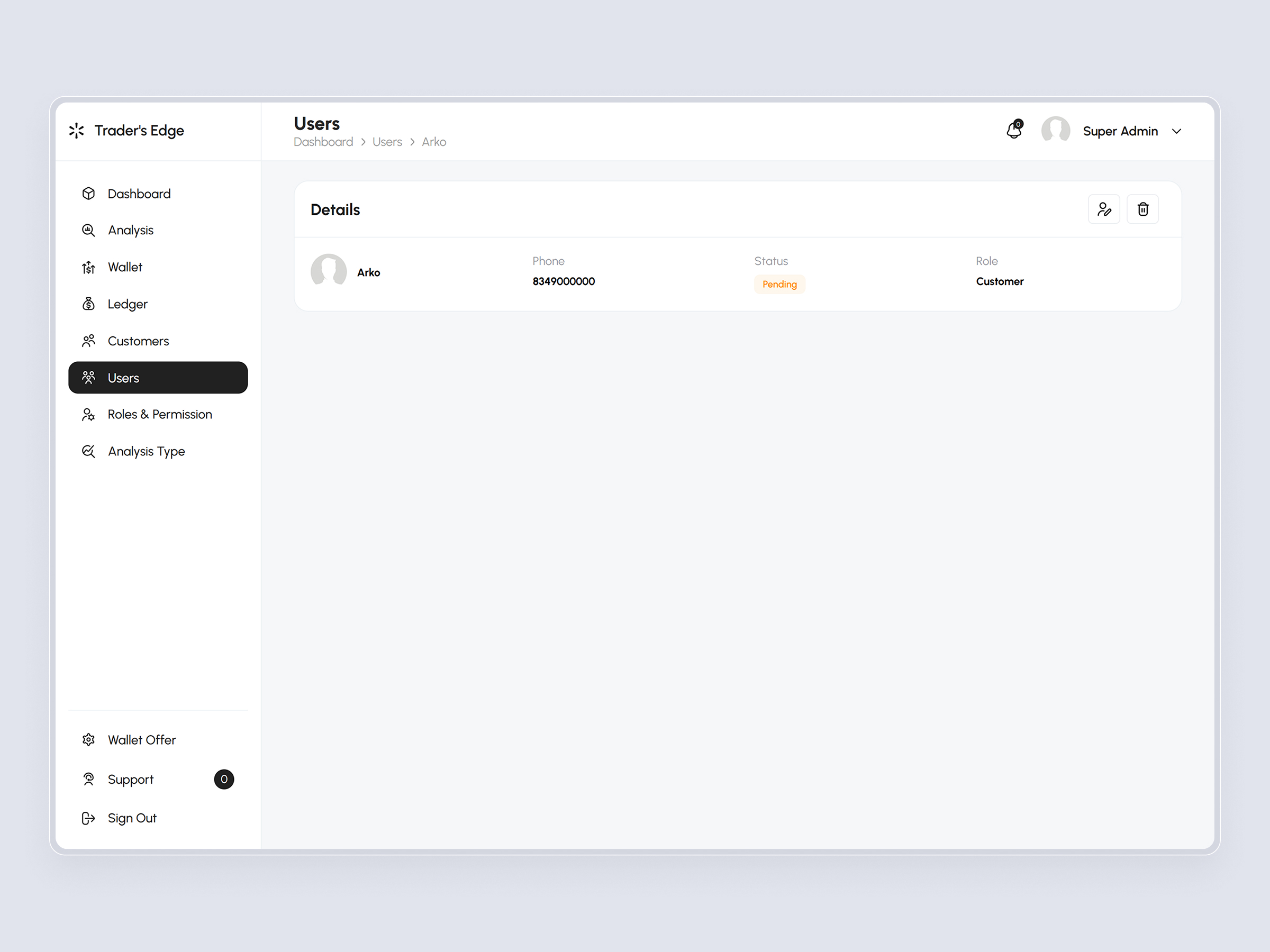
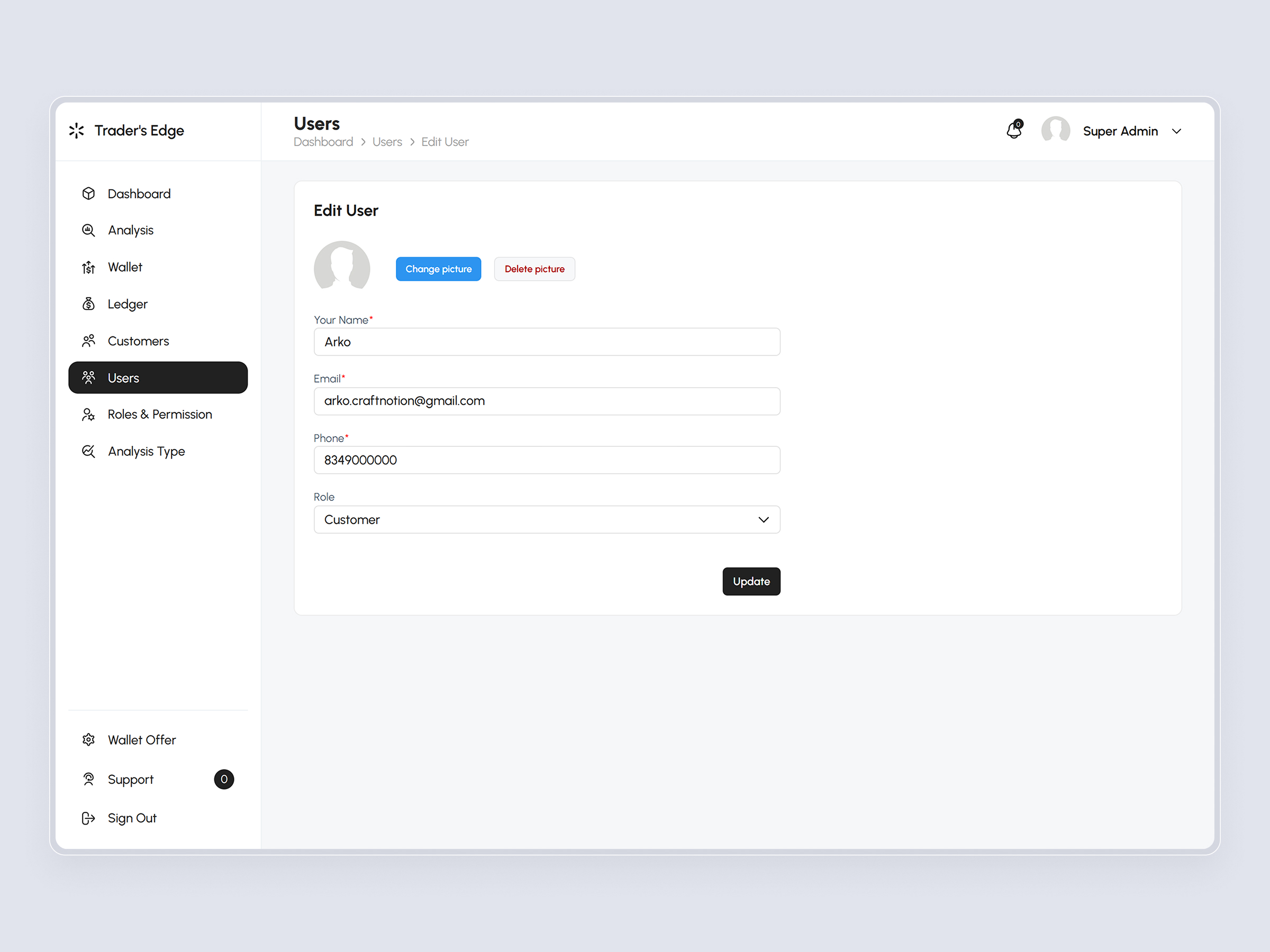
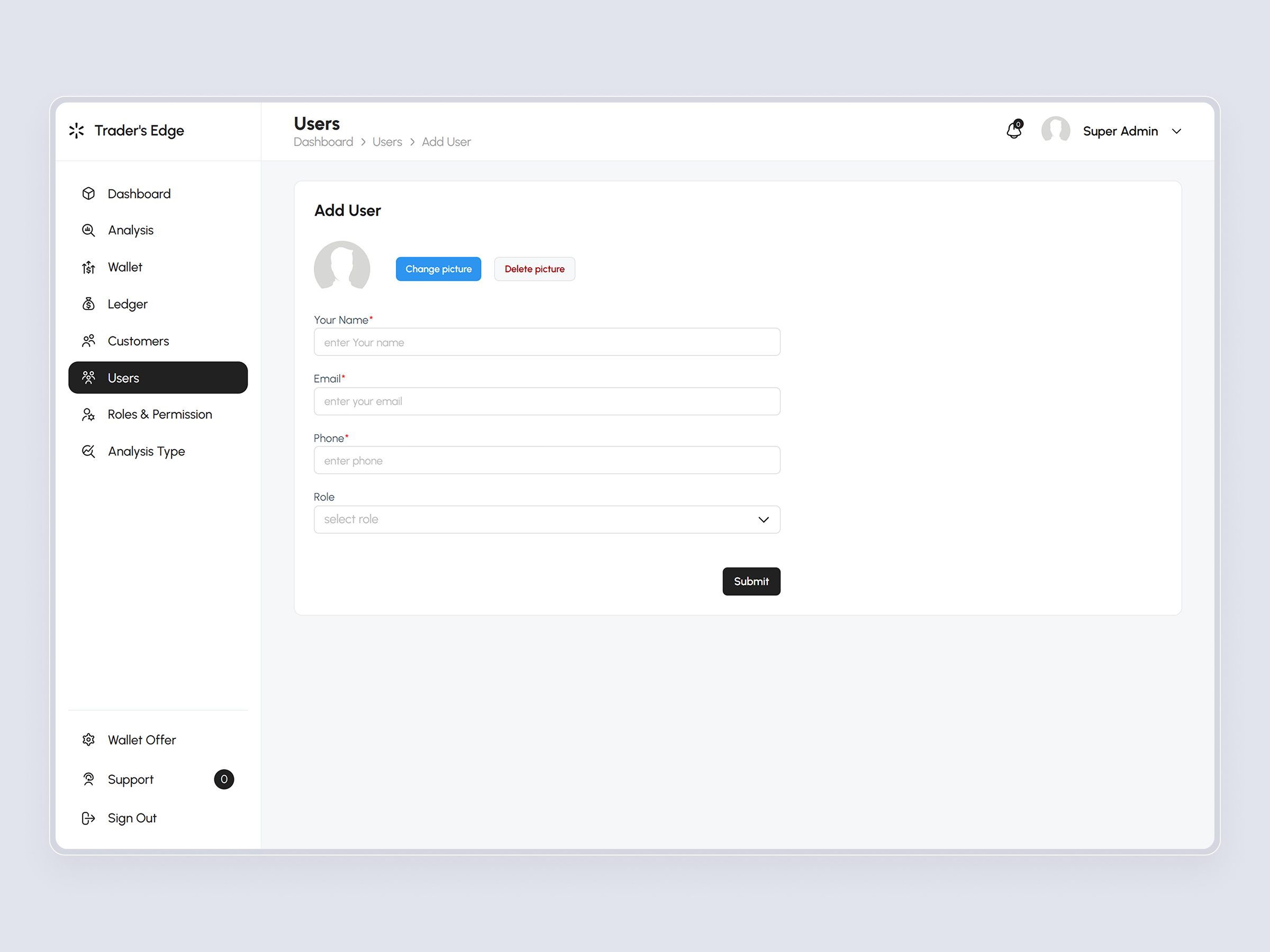
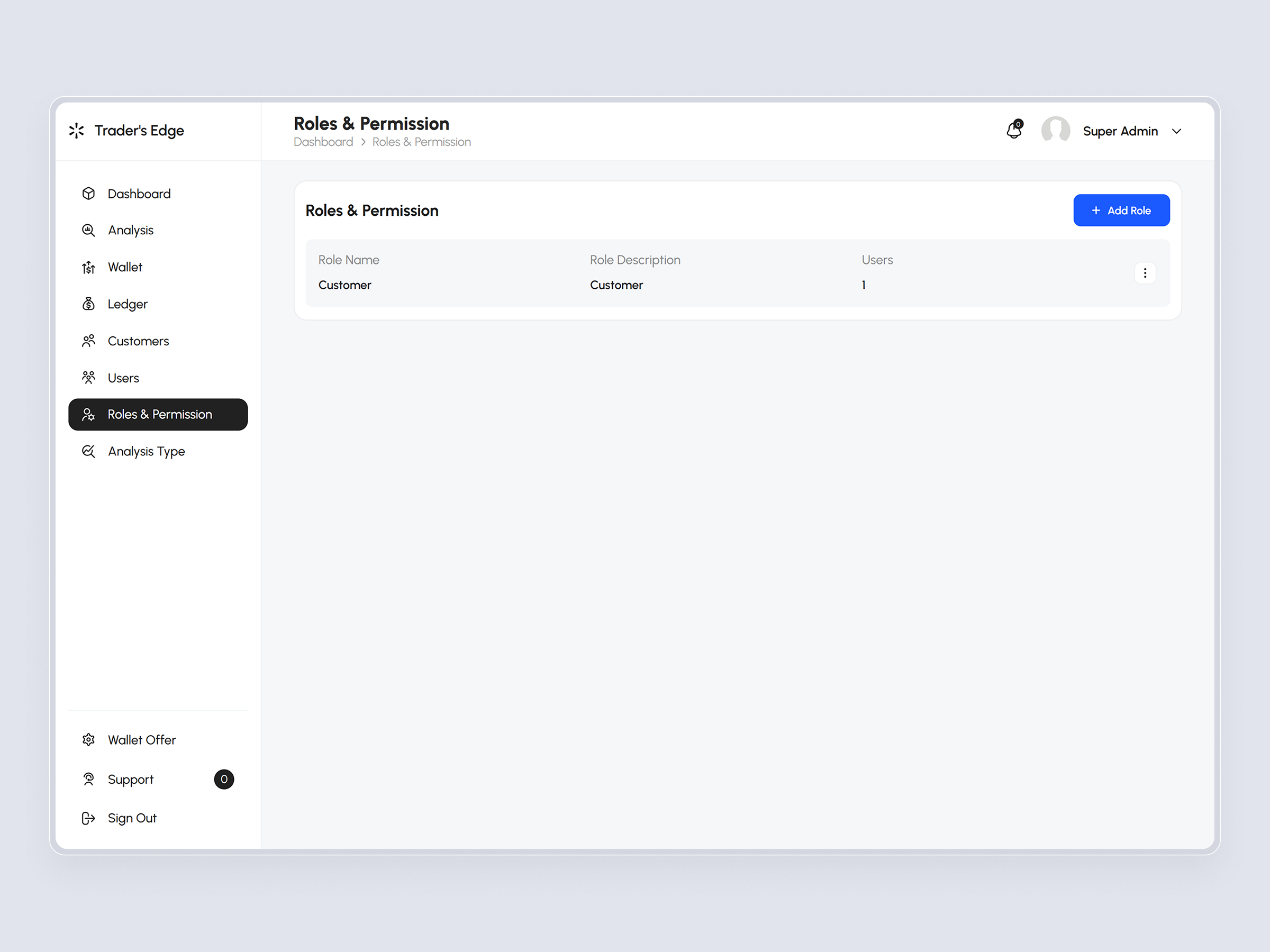
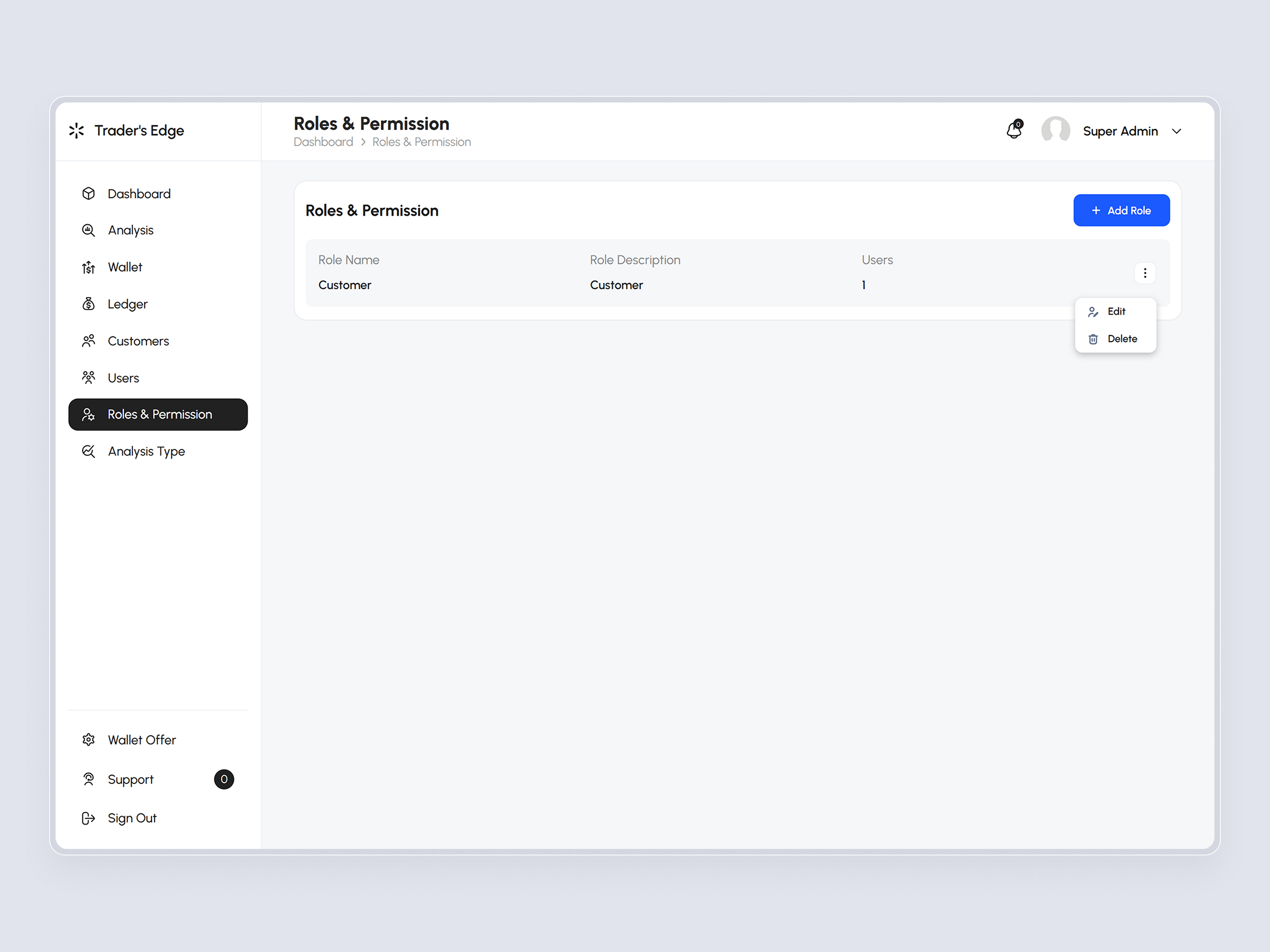
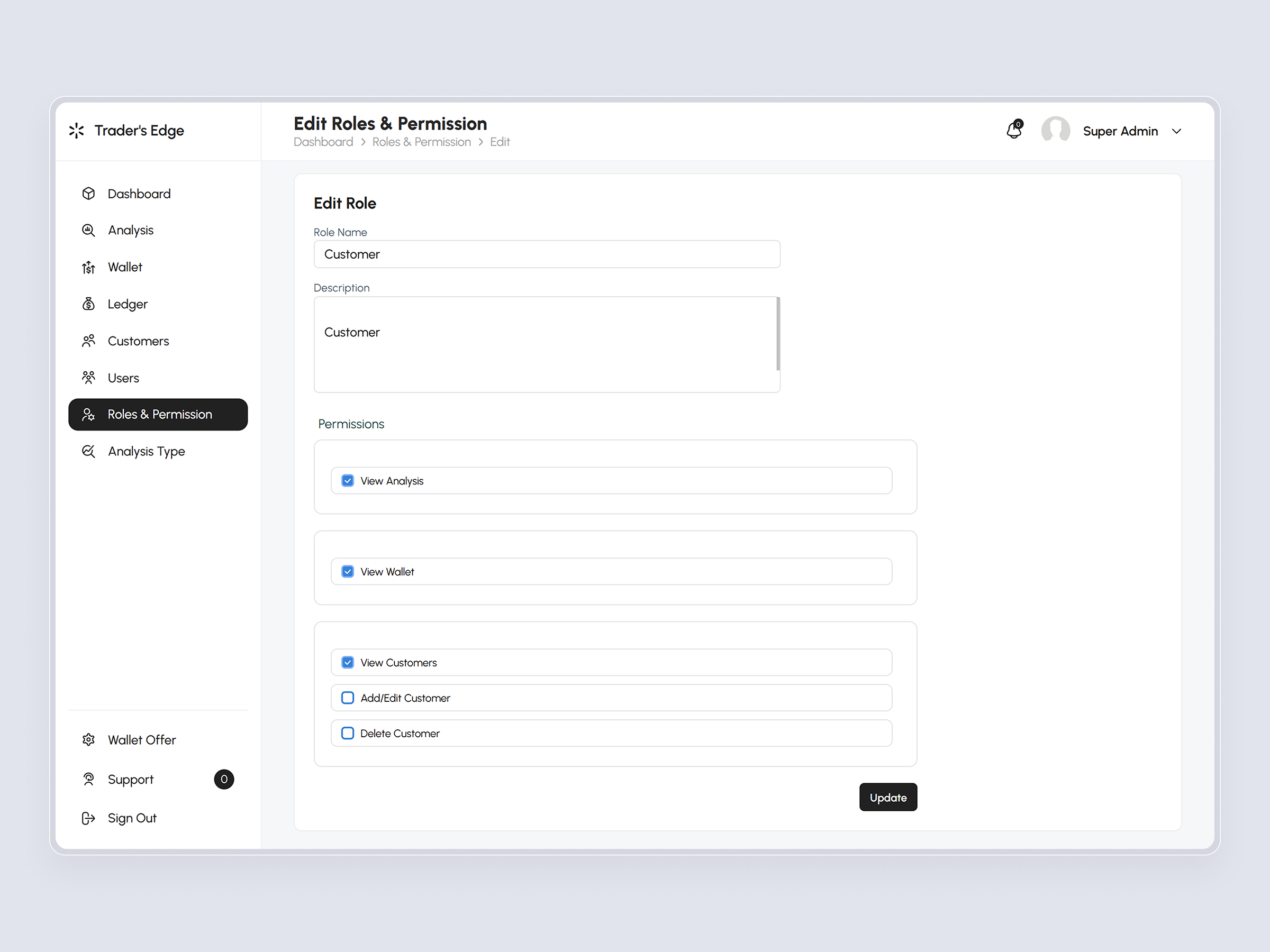
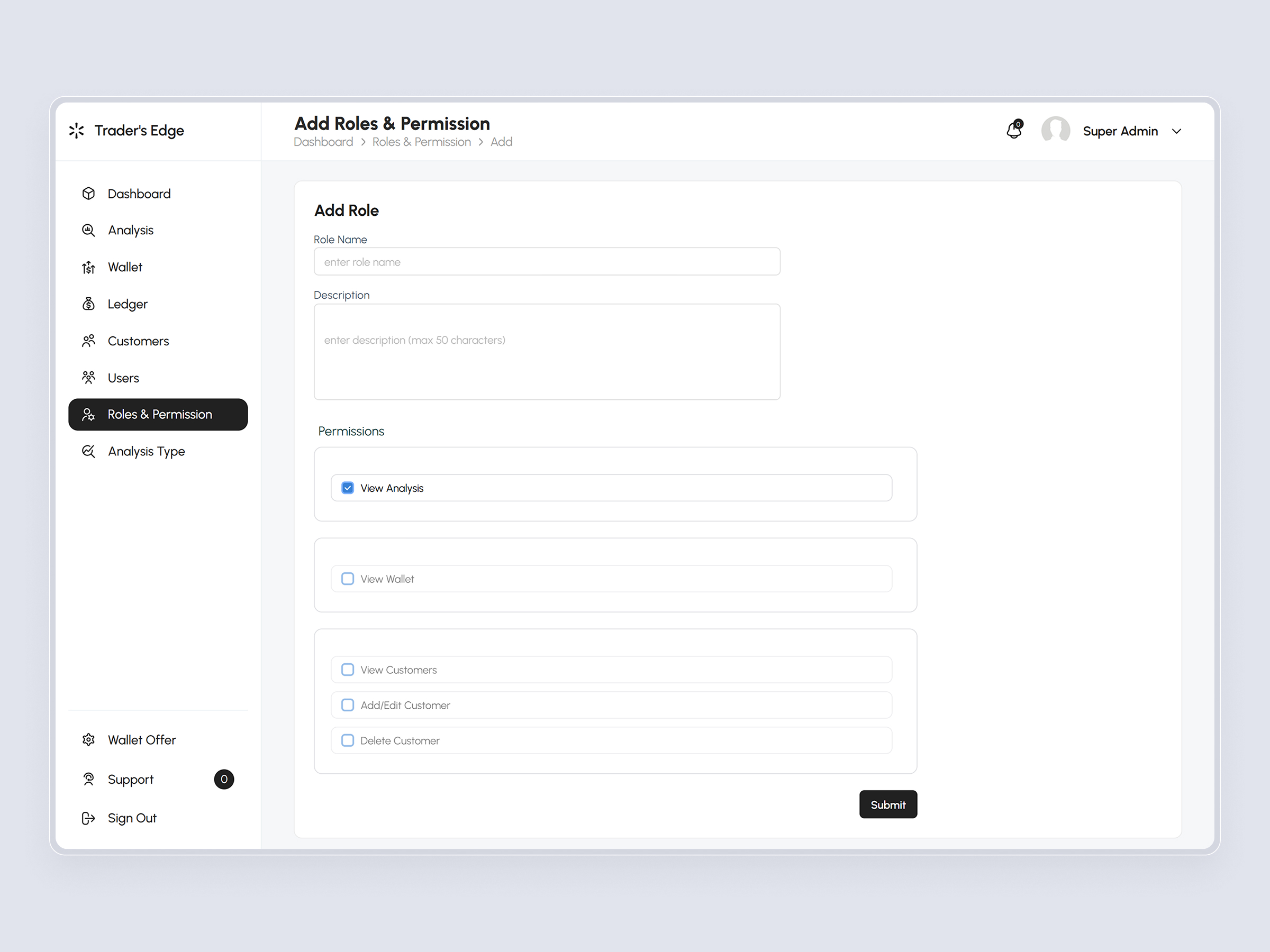
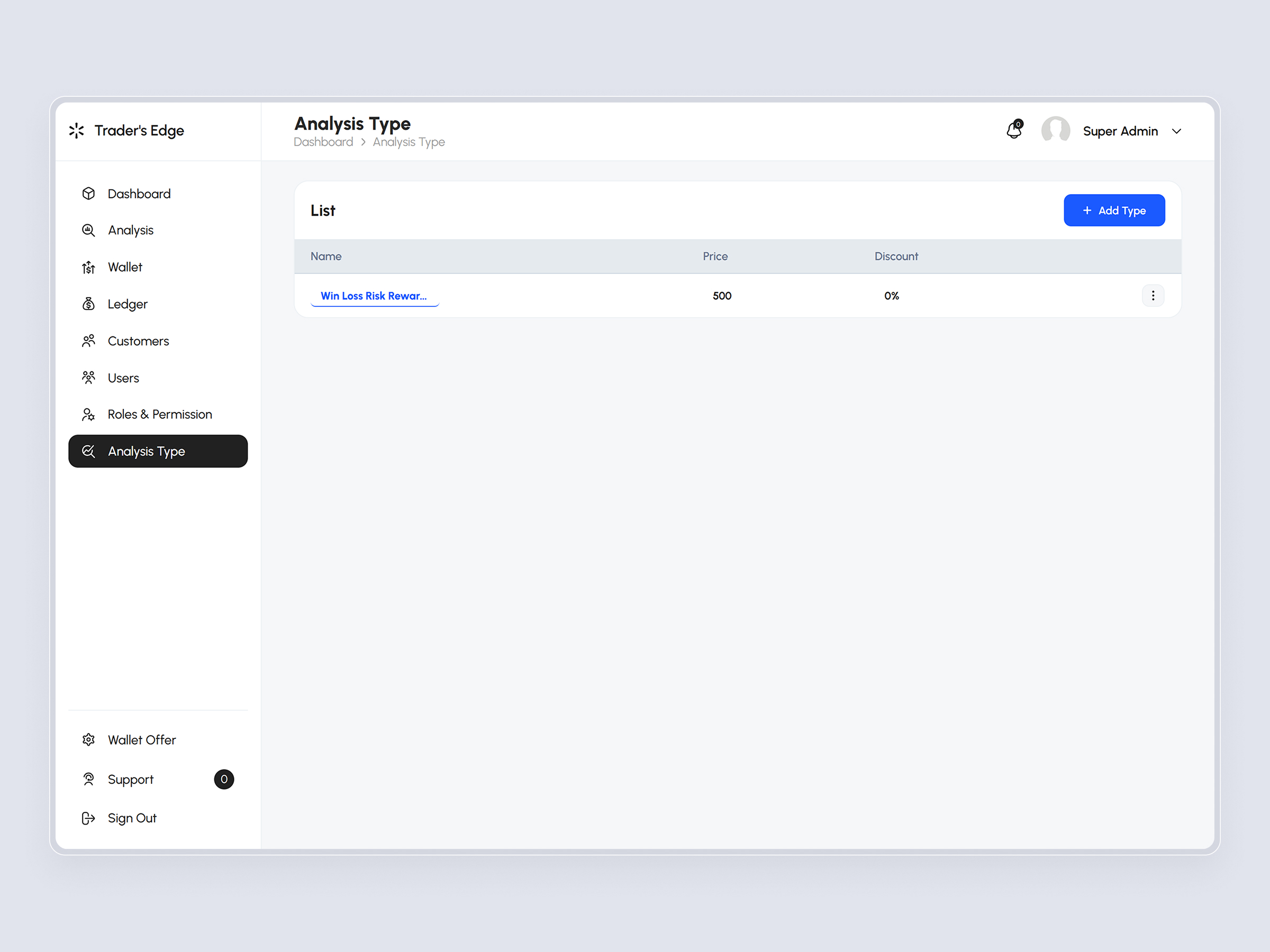
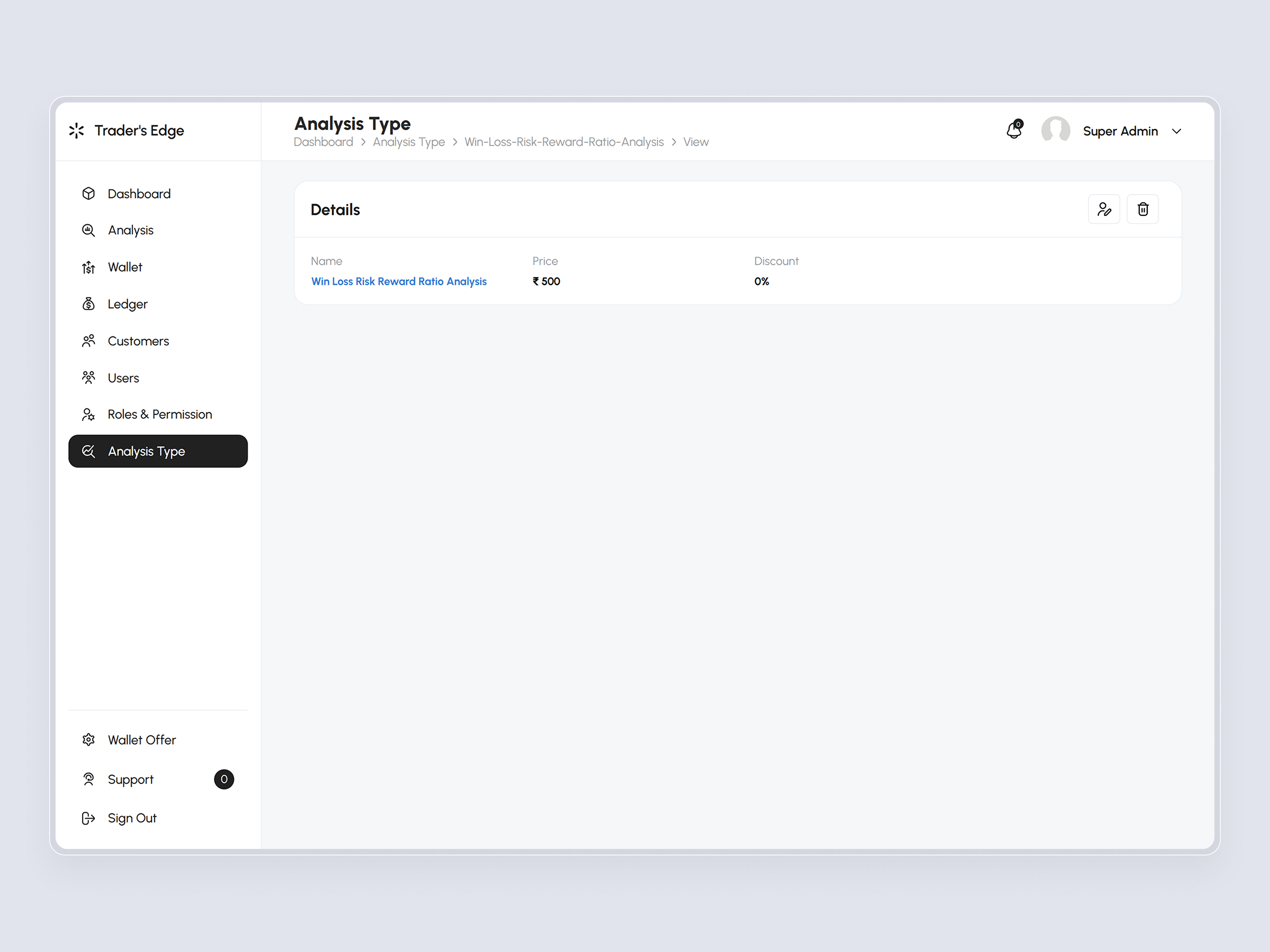
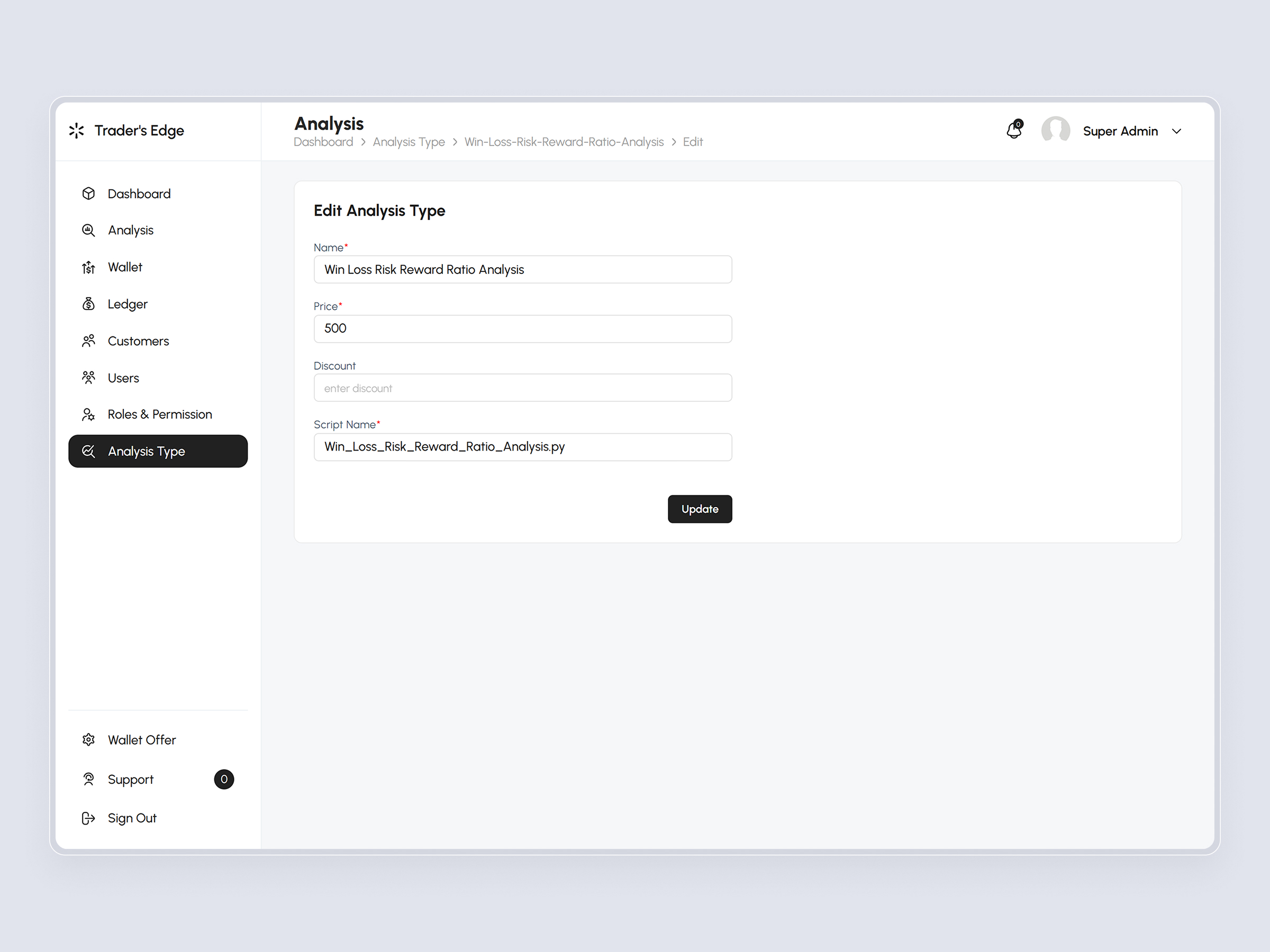
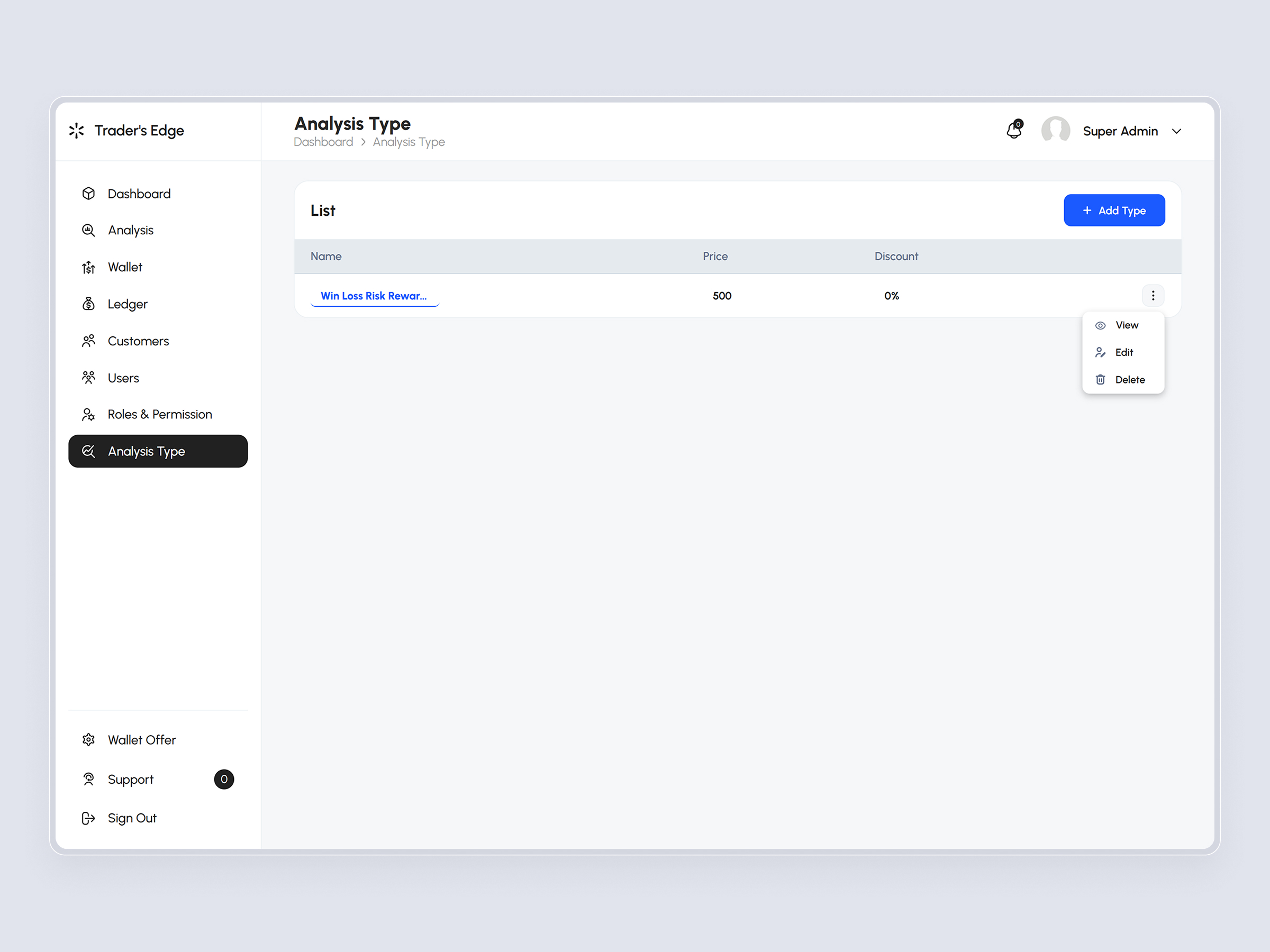
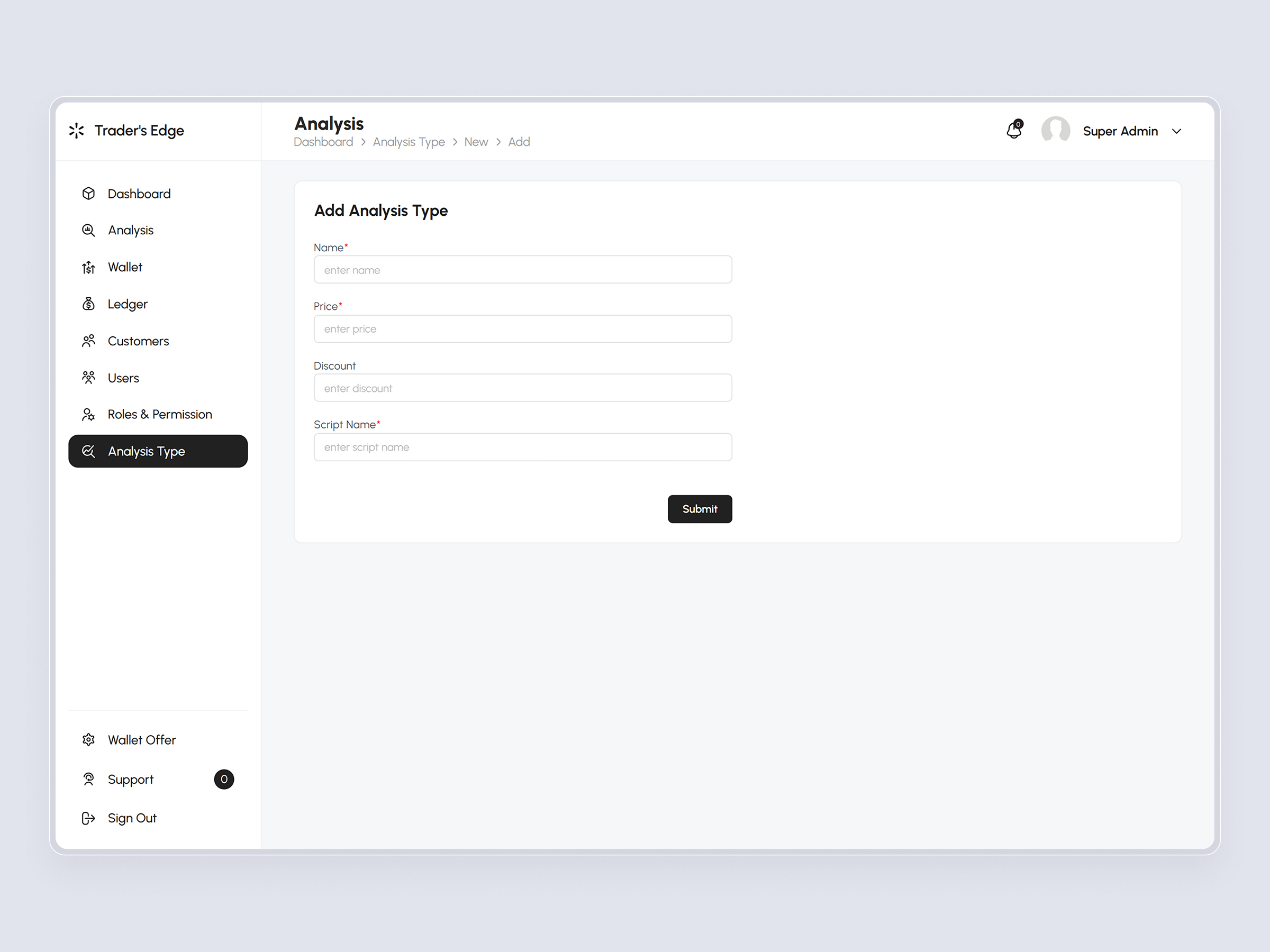
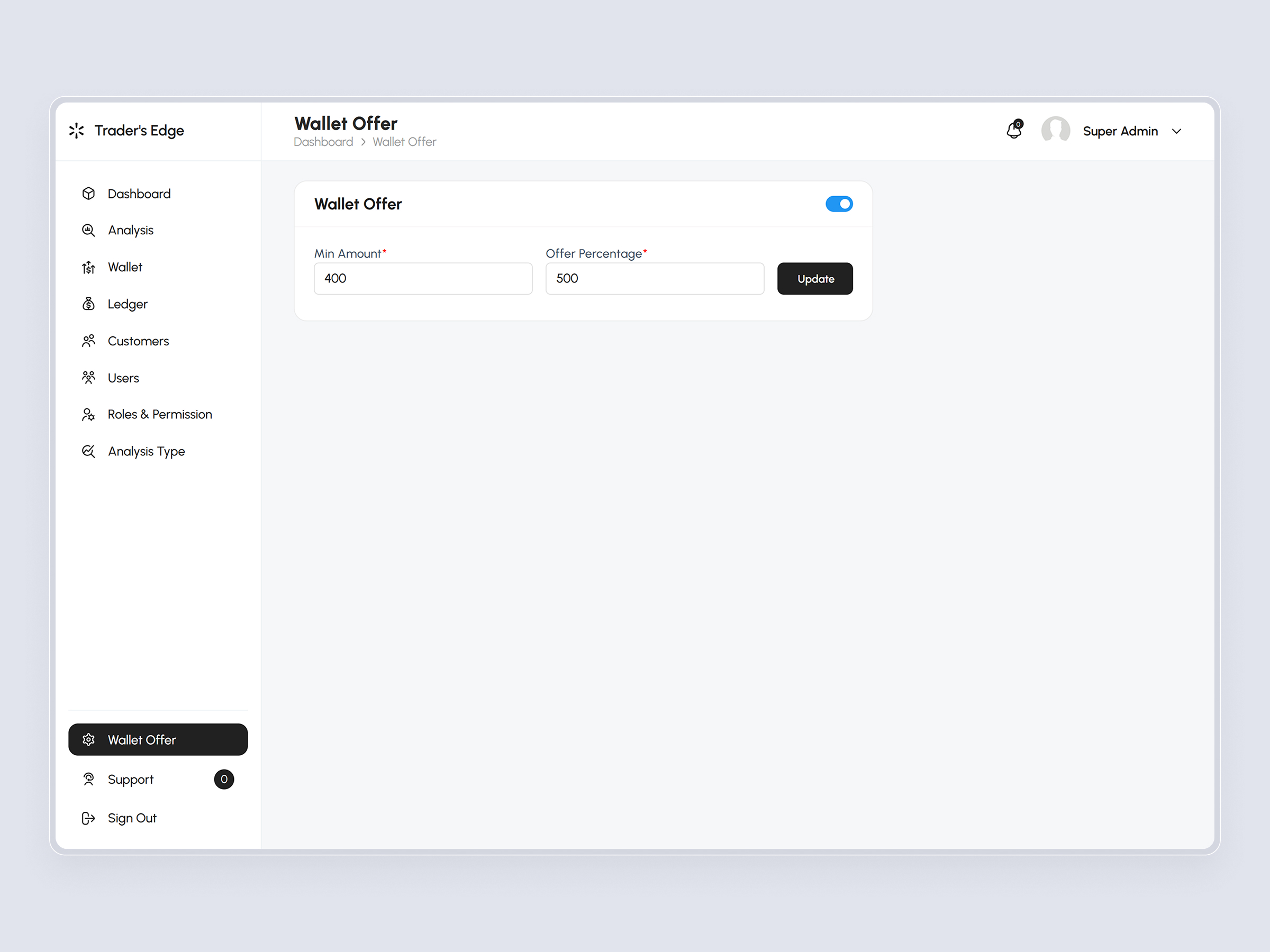
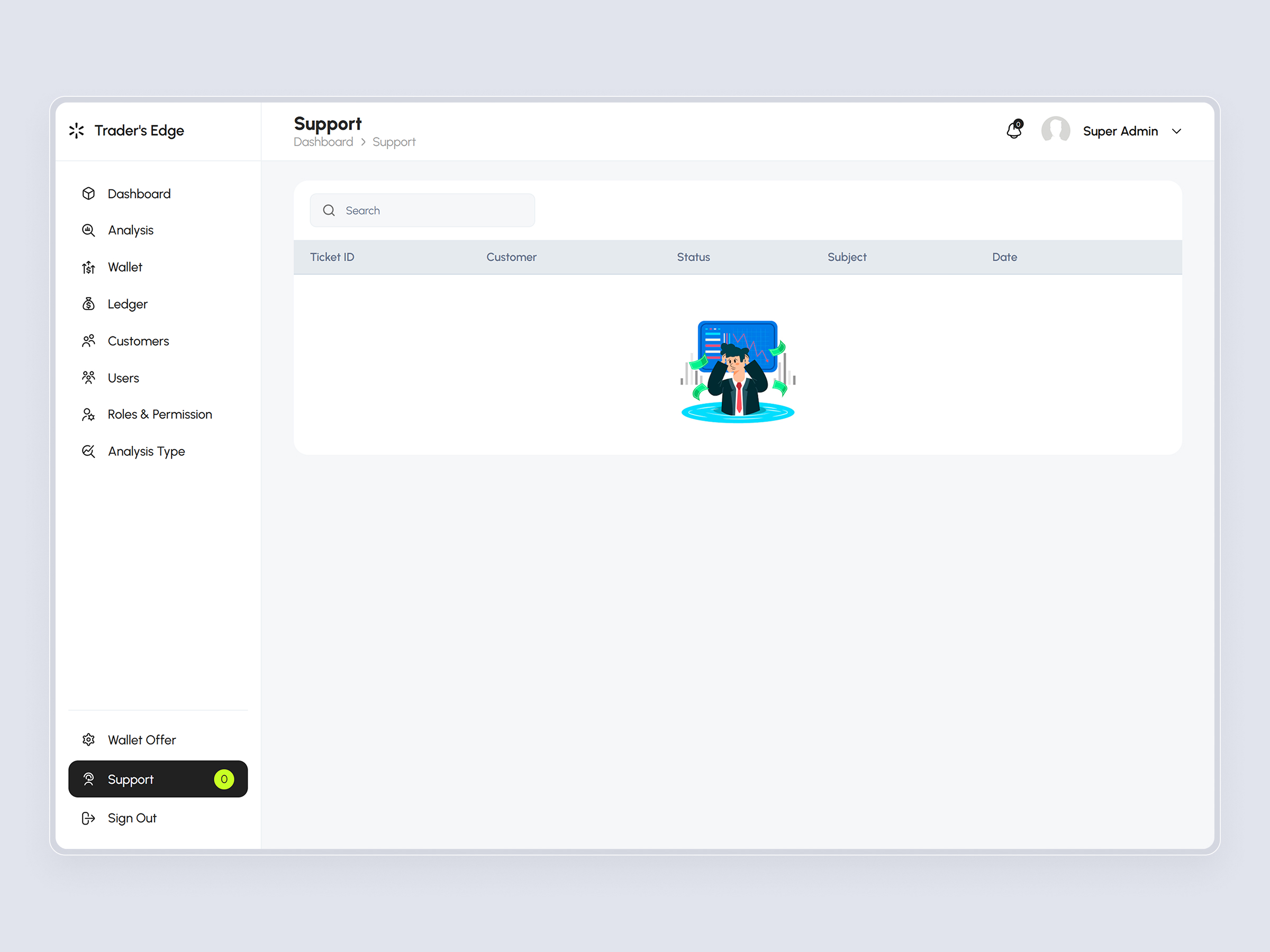
The product also needed an admin panel for the client to monitor users, track credit purchases, manage AI model configurations, and view analytics on platform usage.
How we approached it
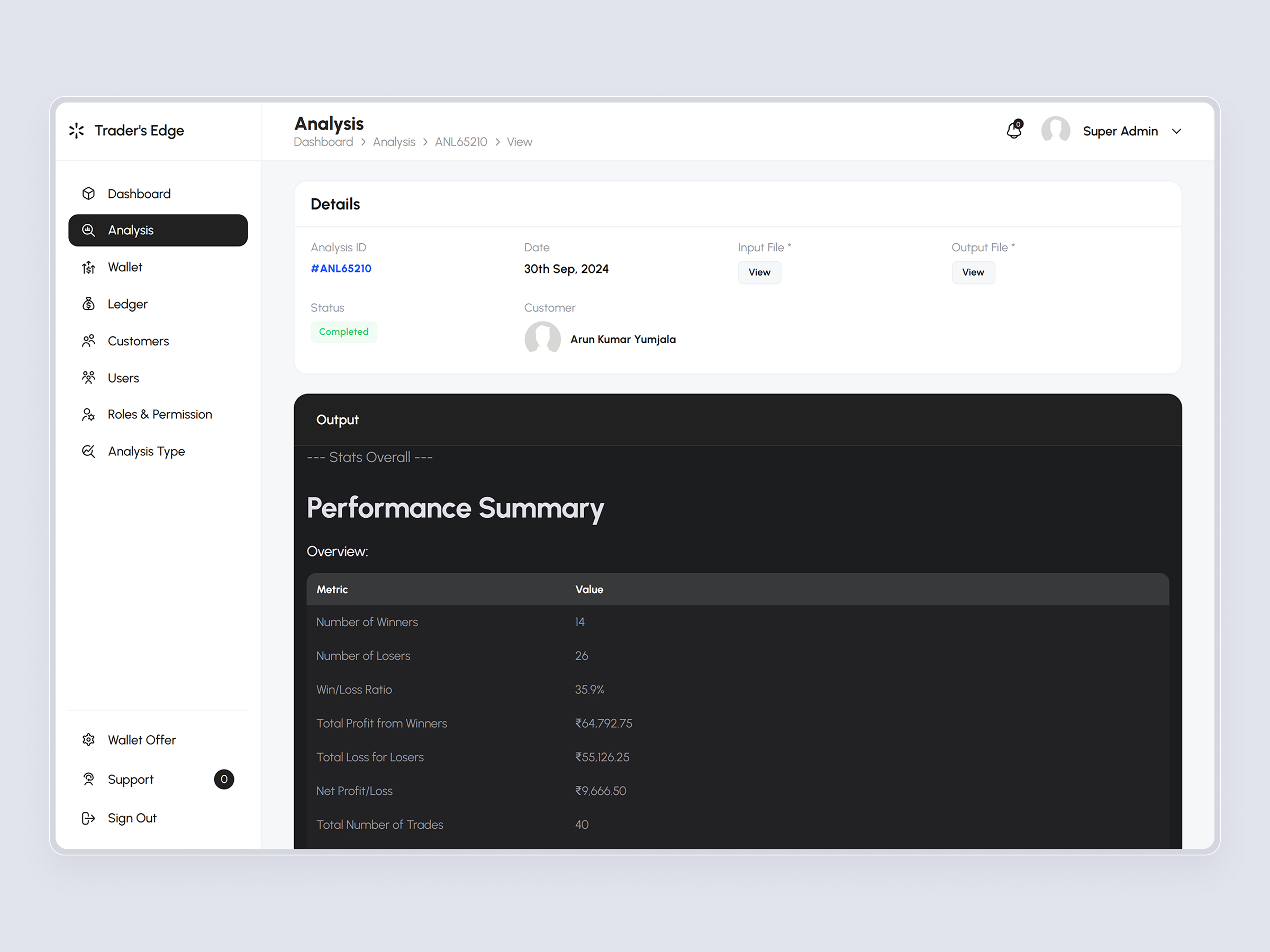
AI Portfolio Forecasting
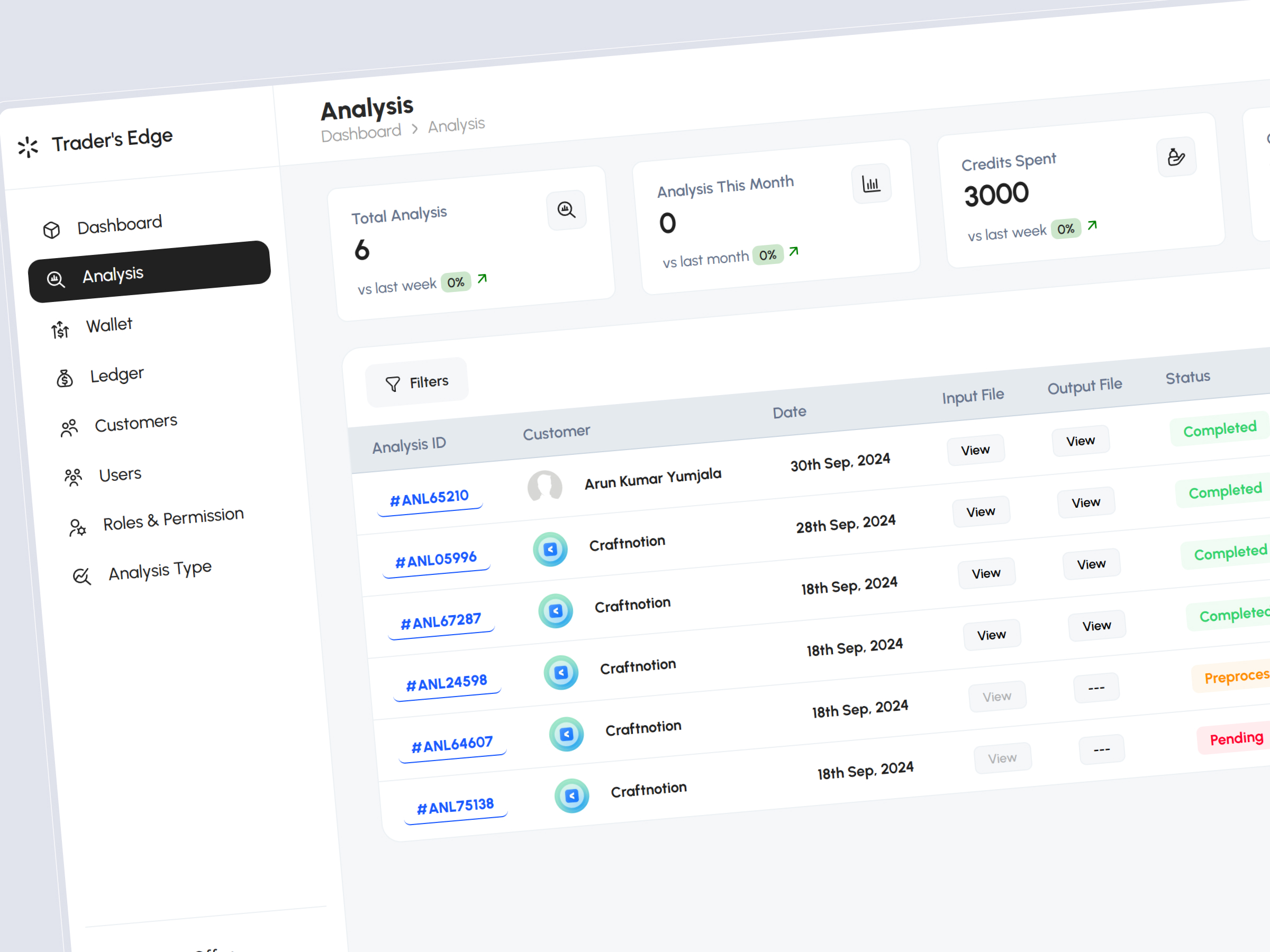
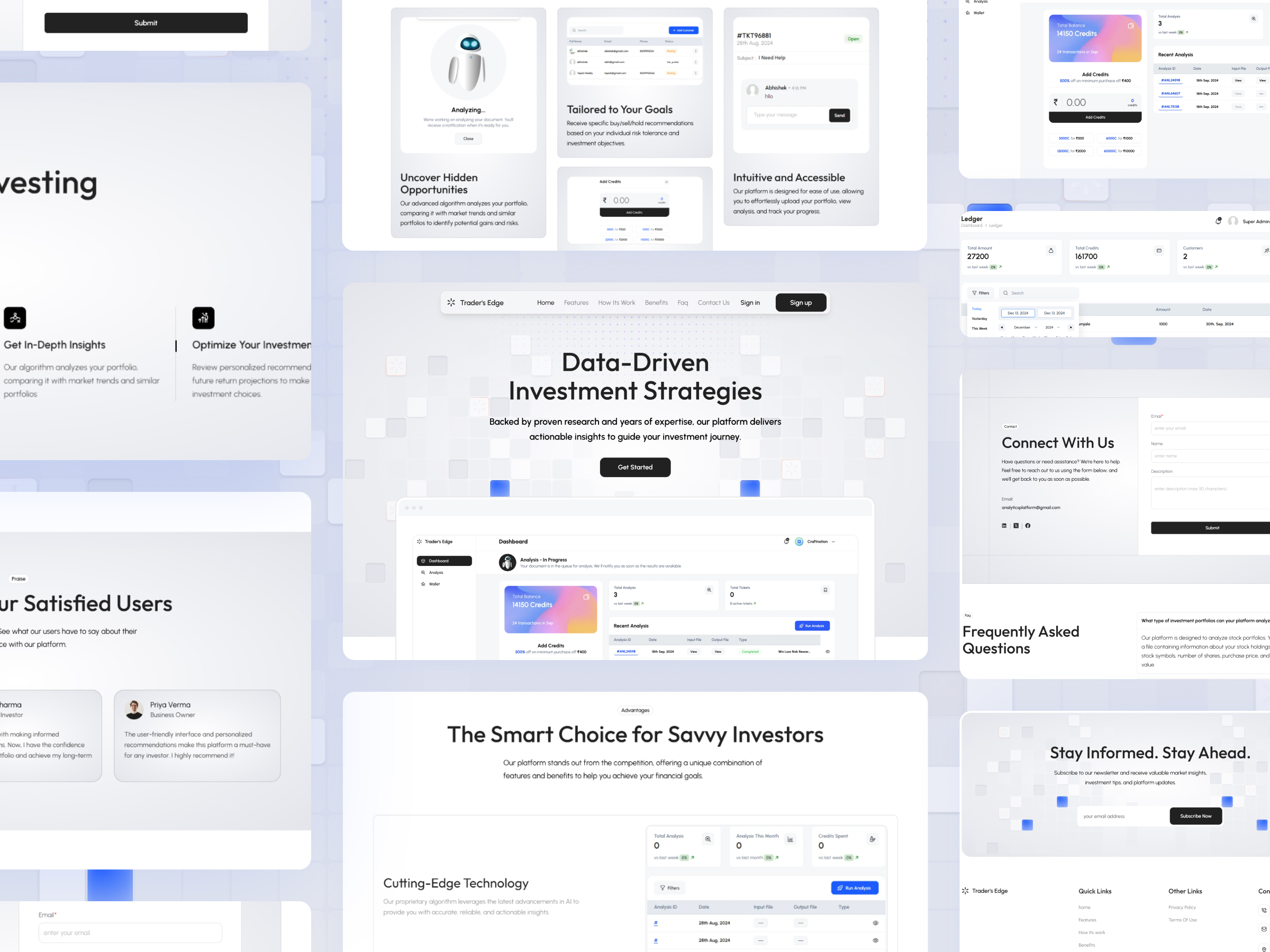
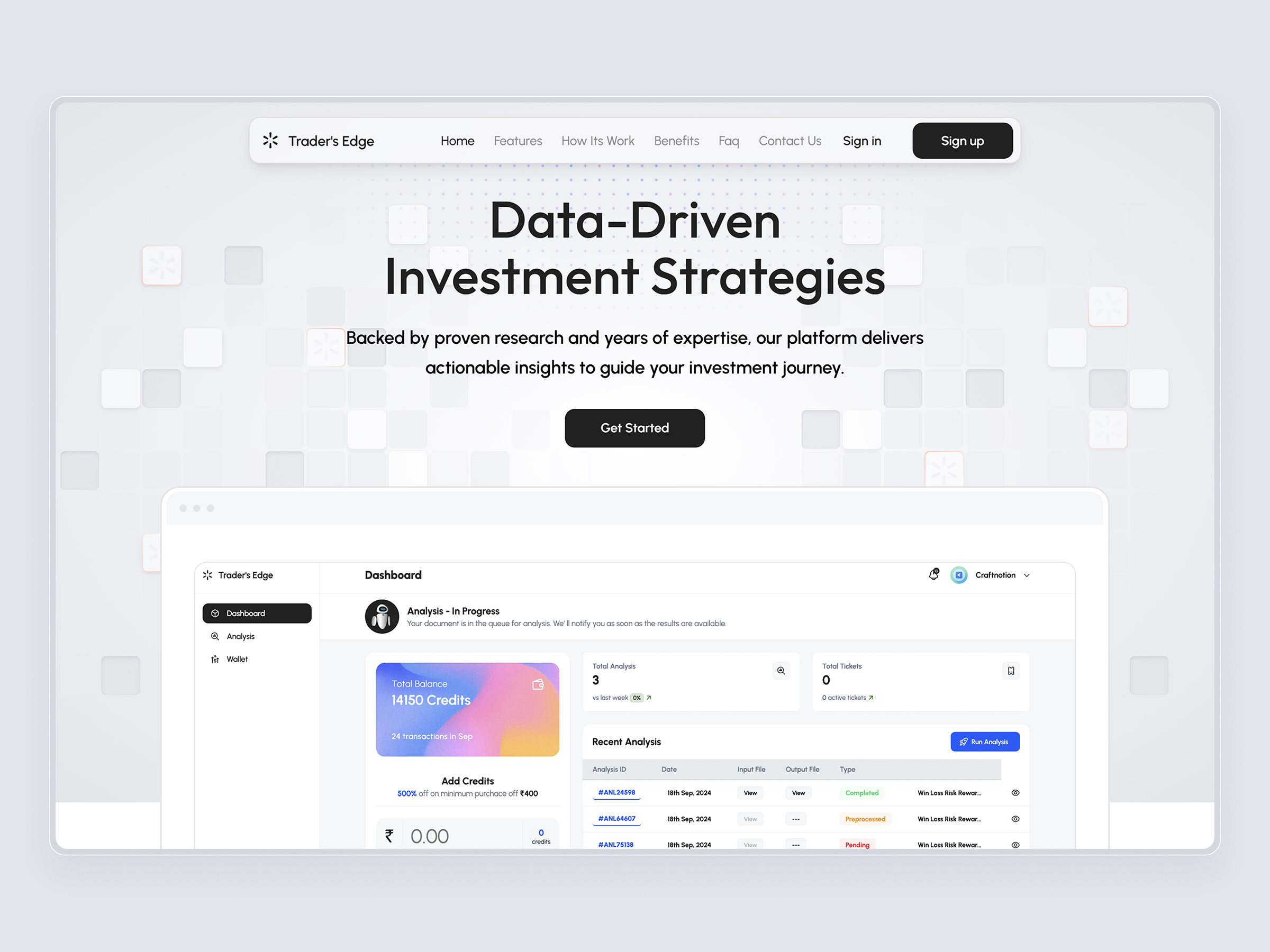
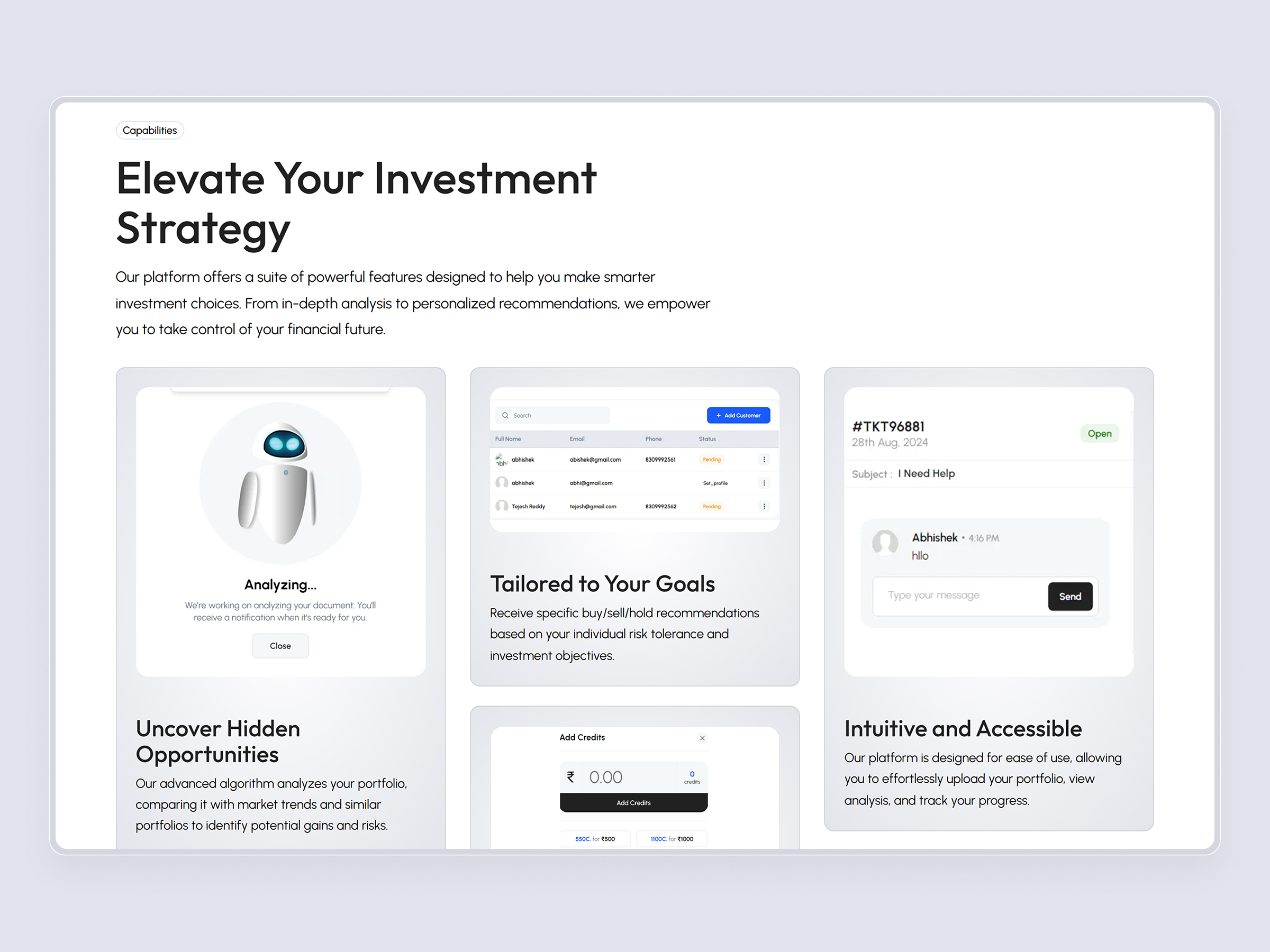
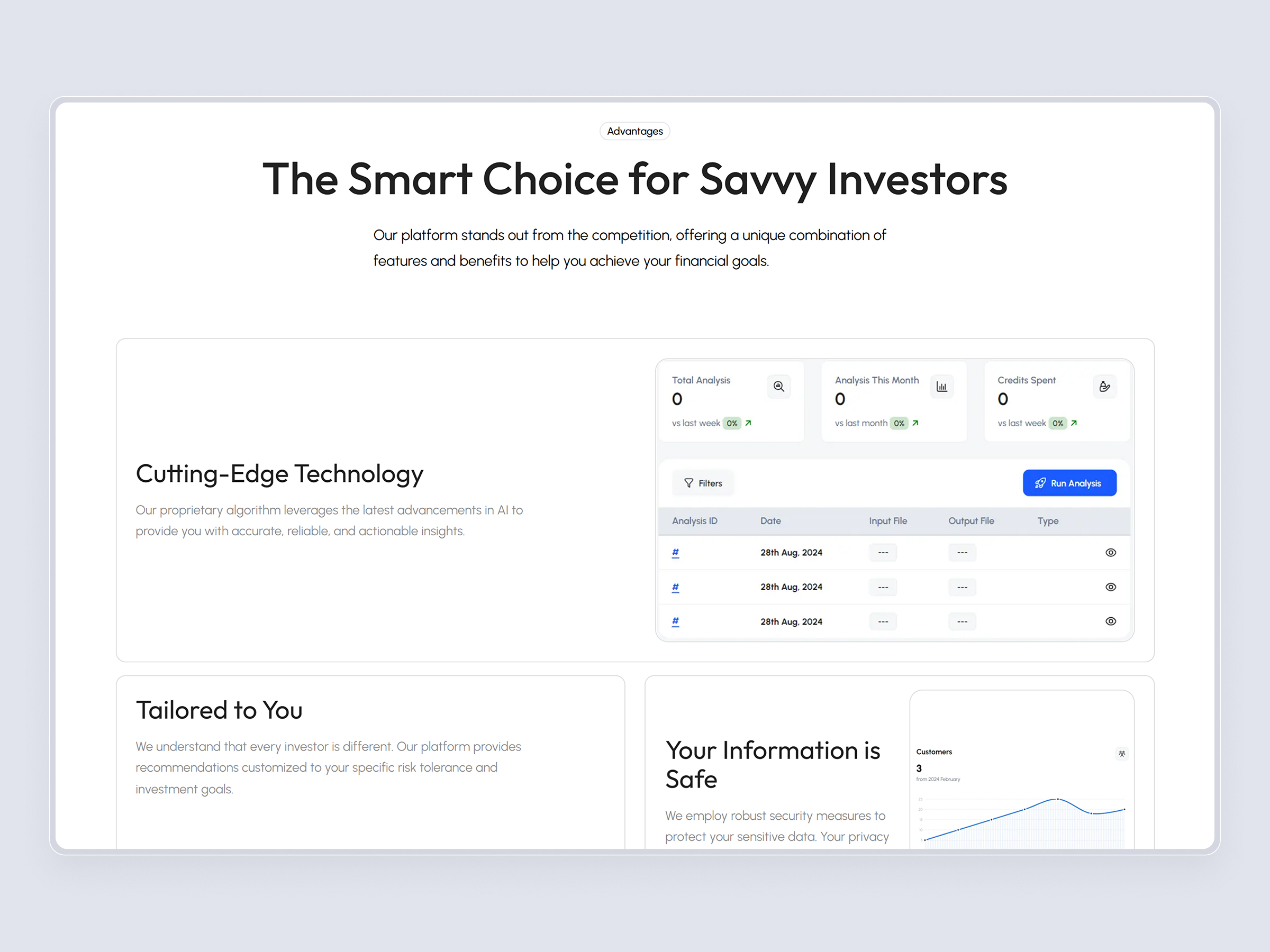
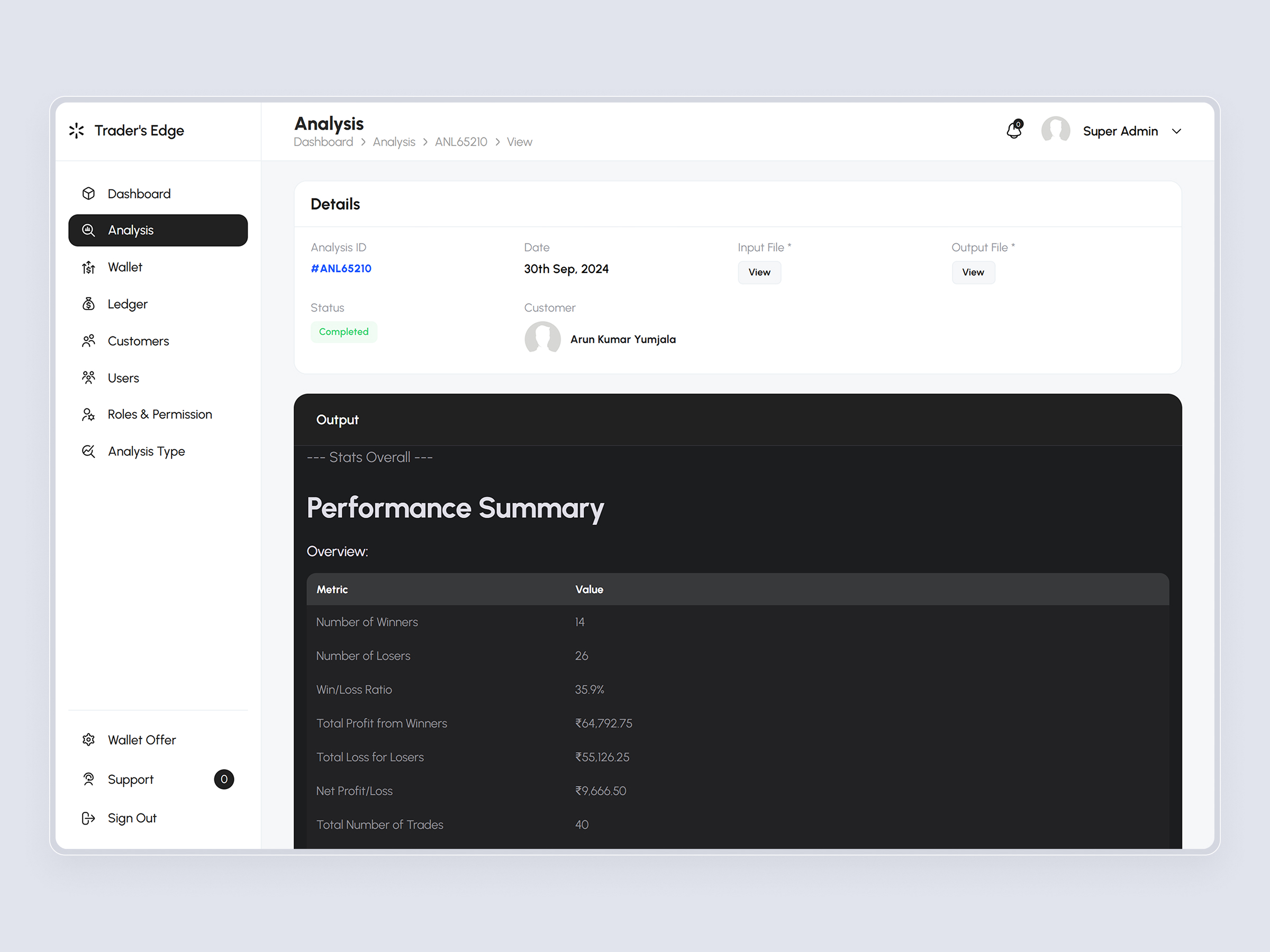
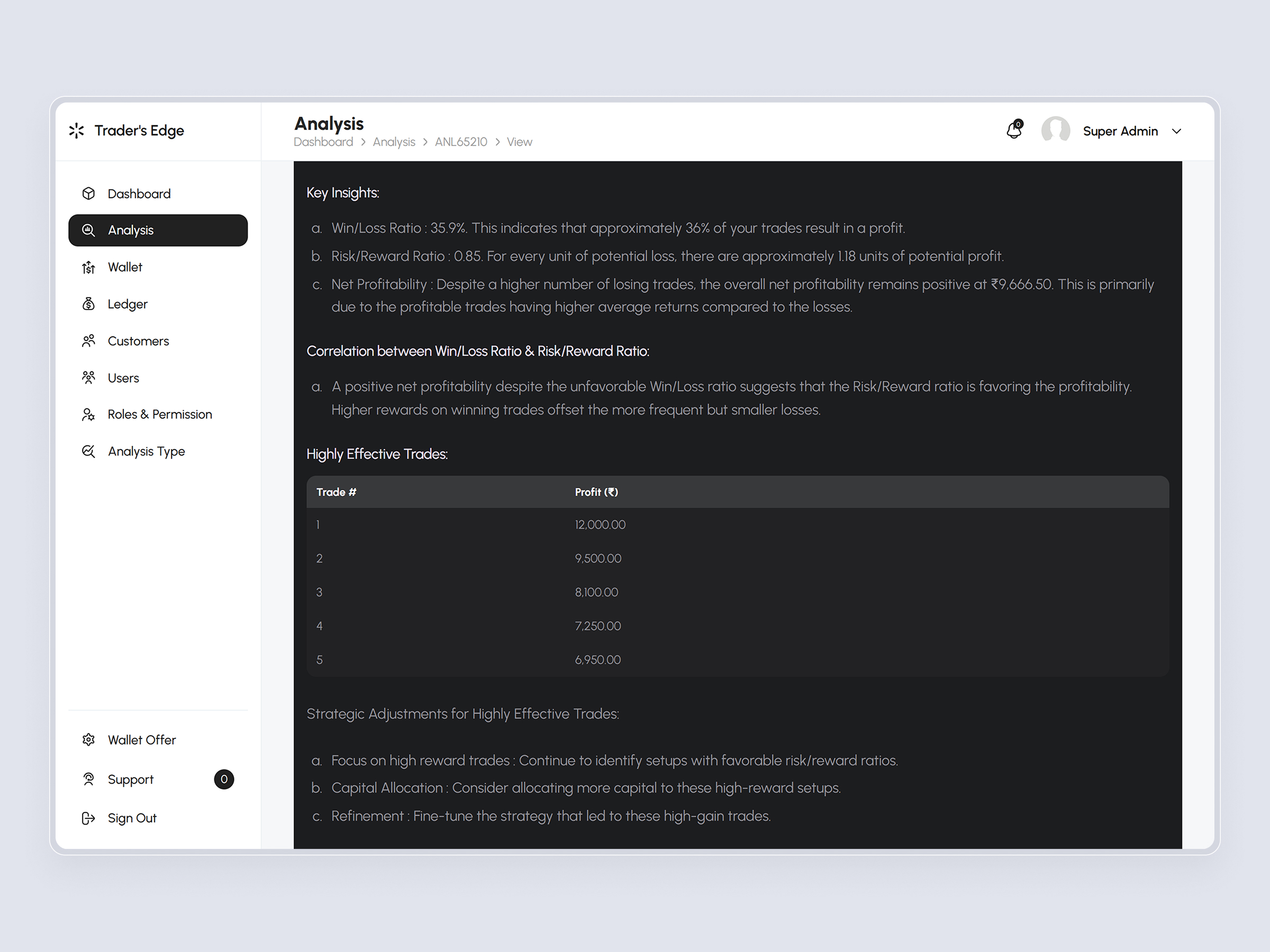
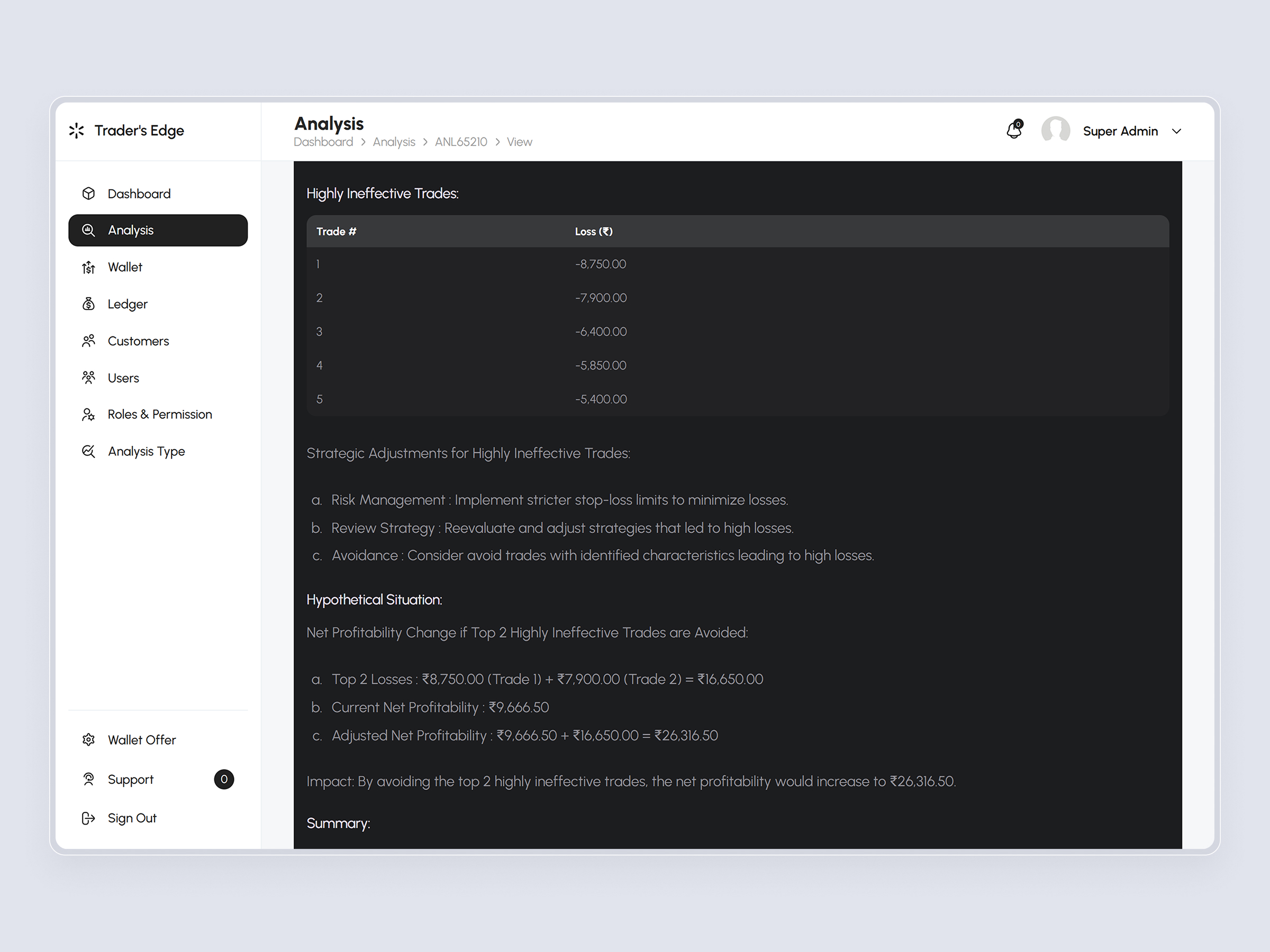
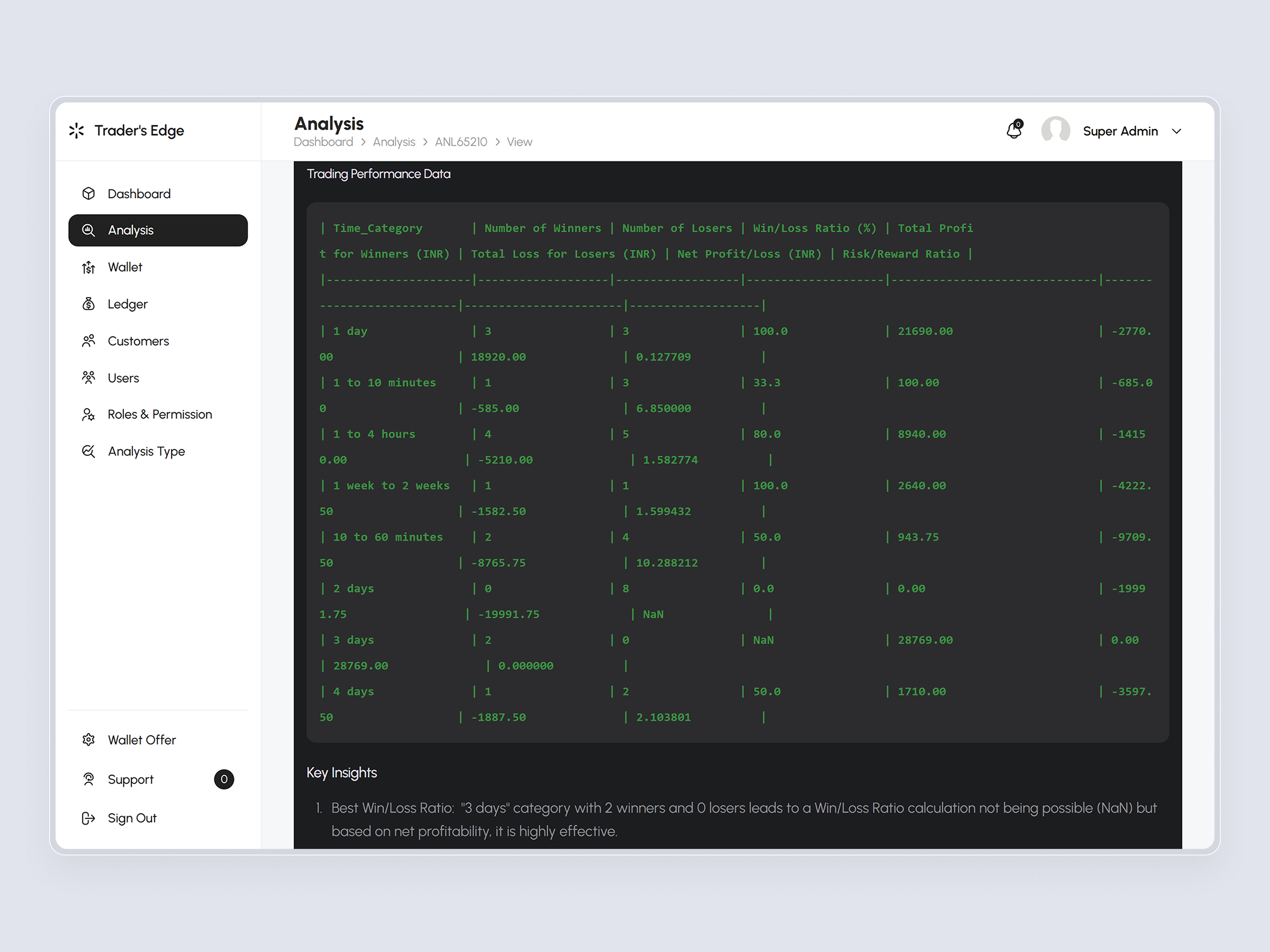
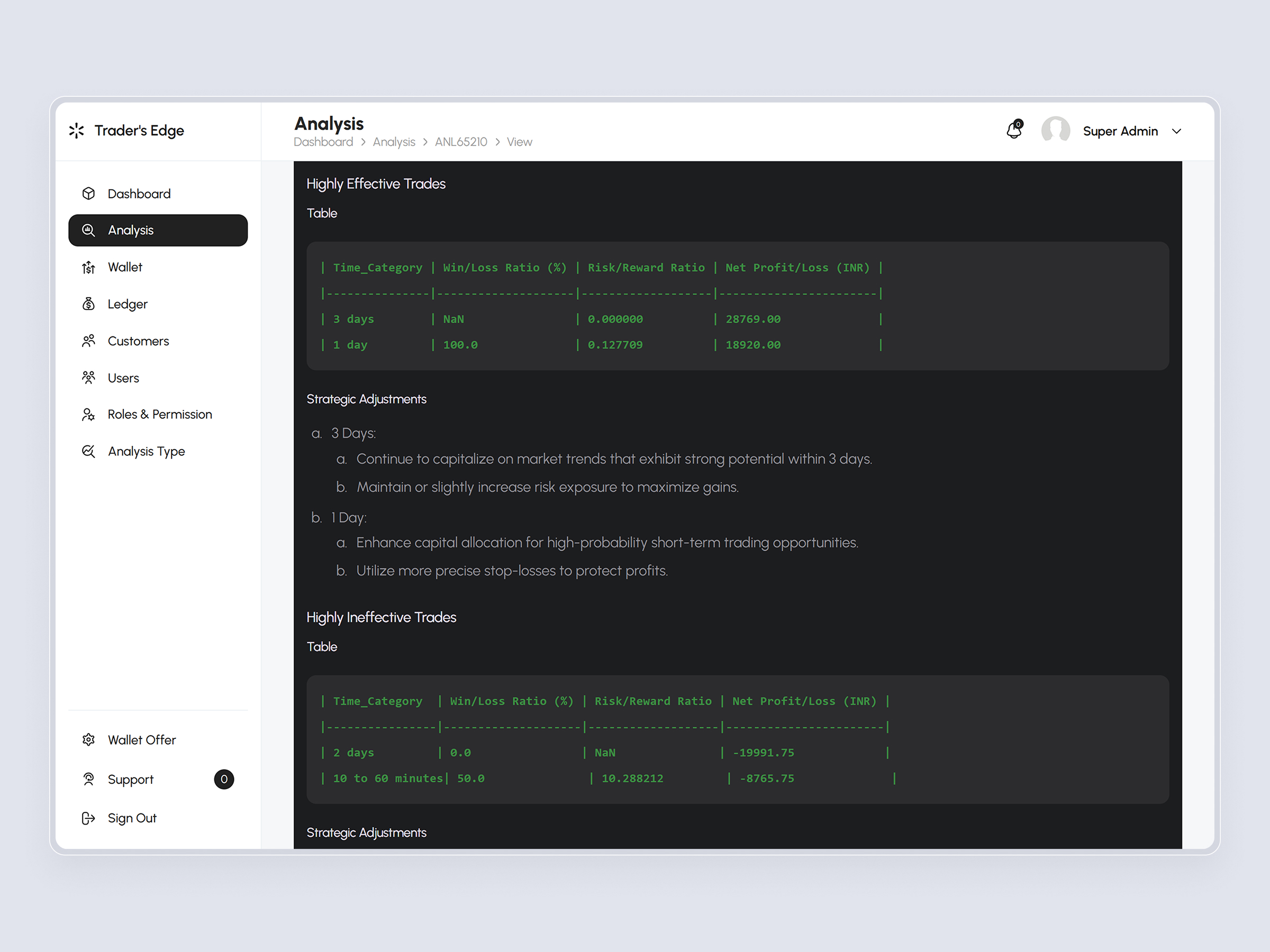
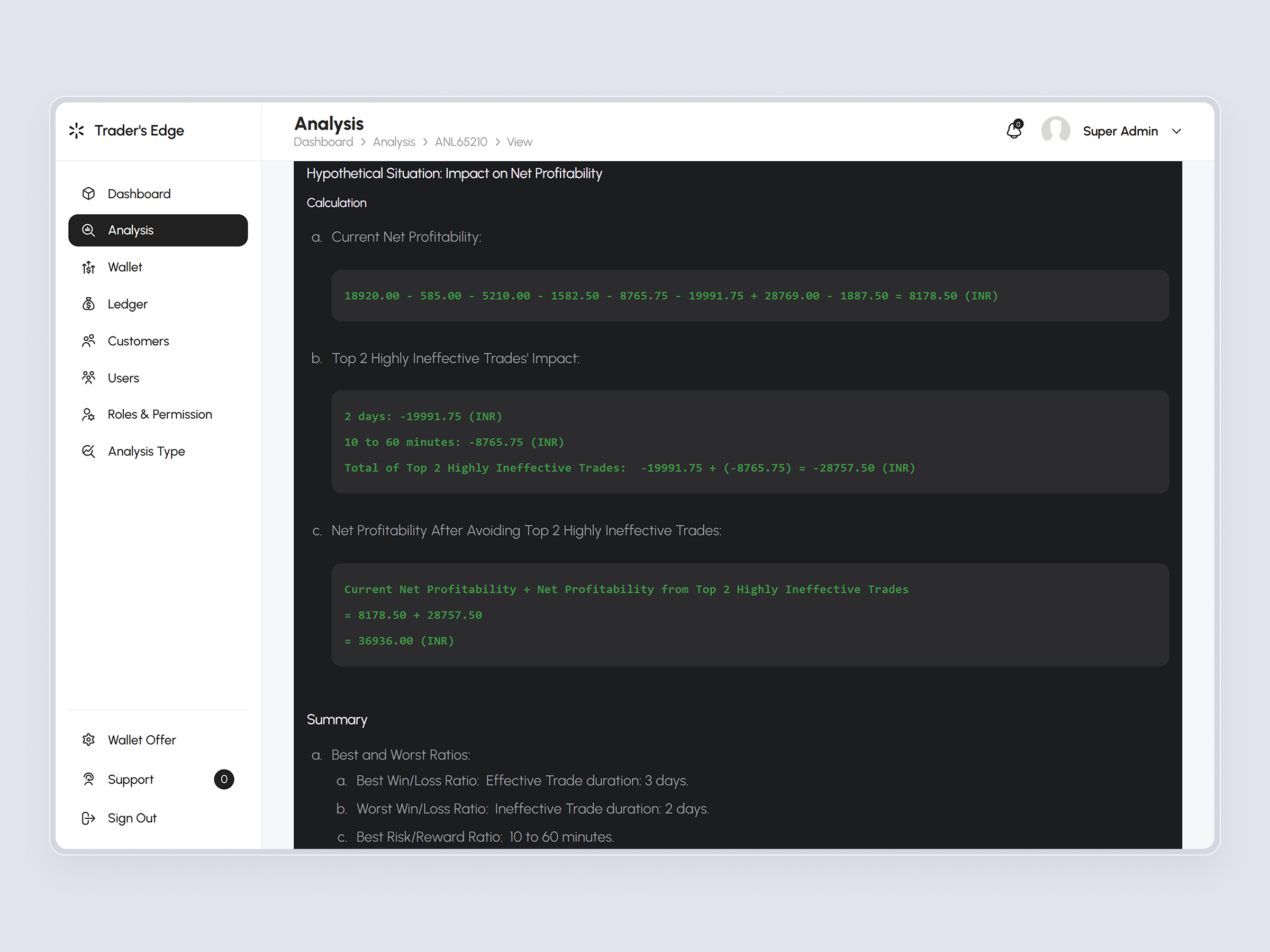
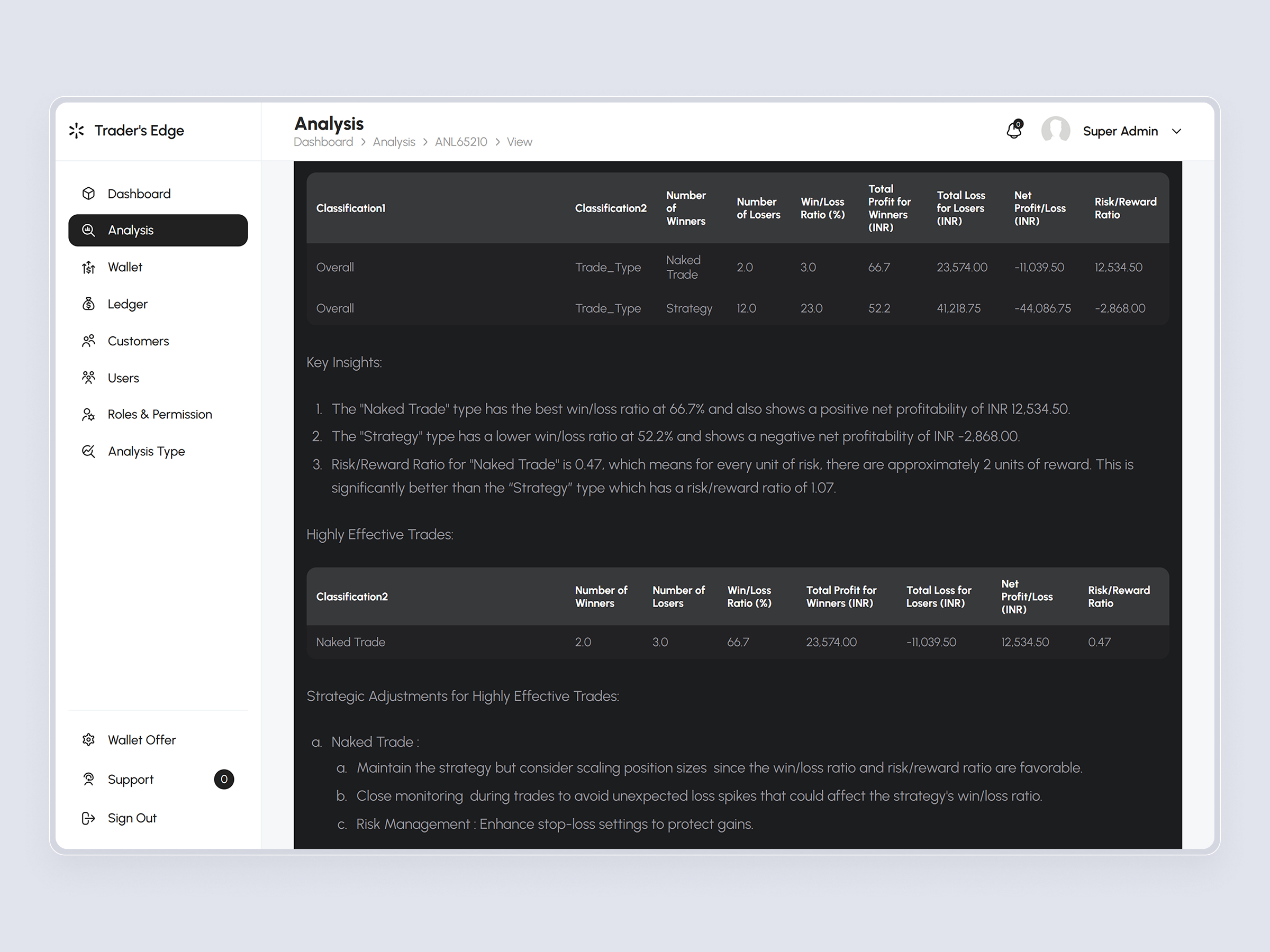
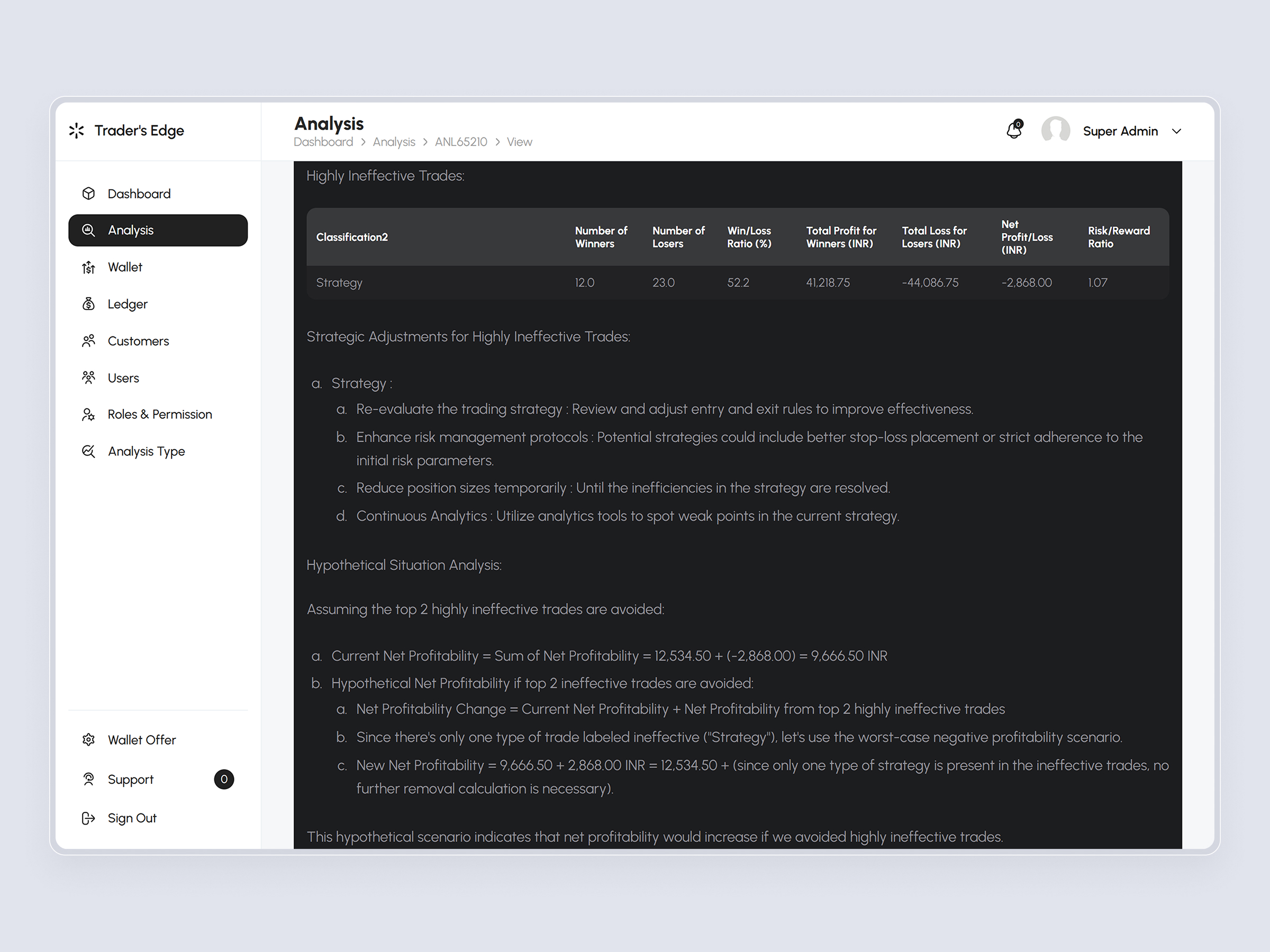
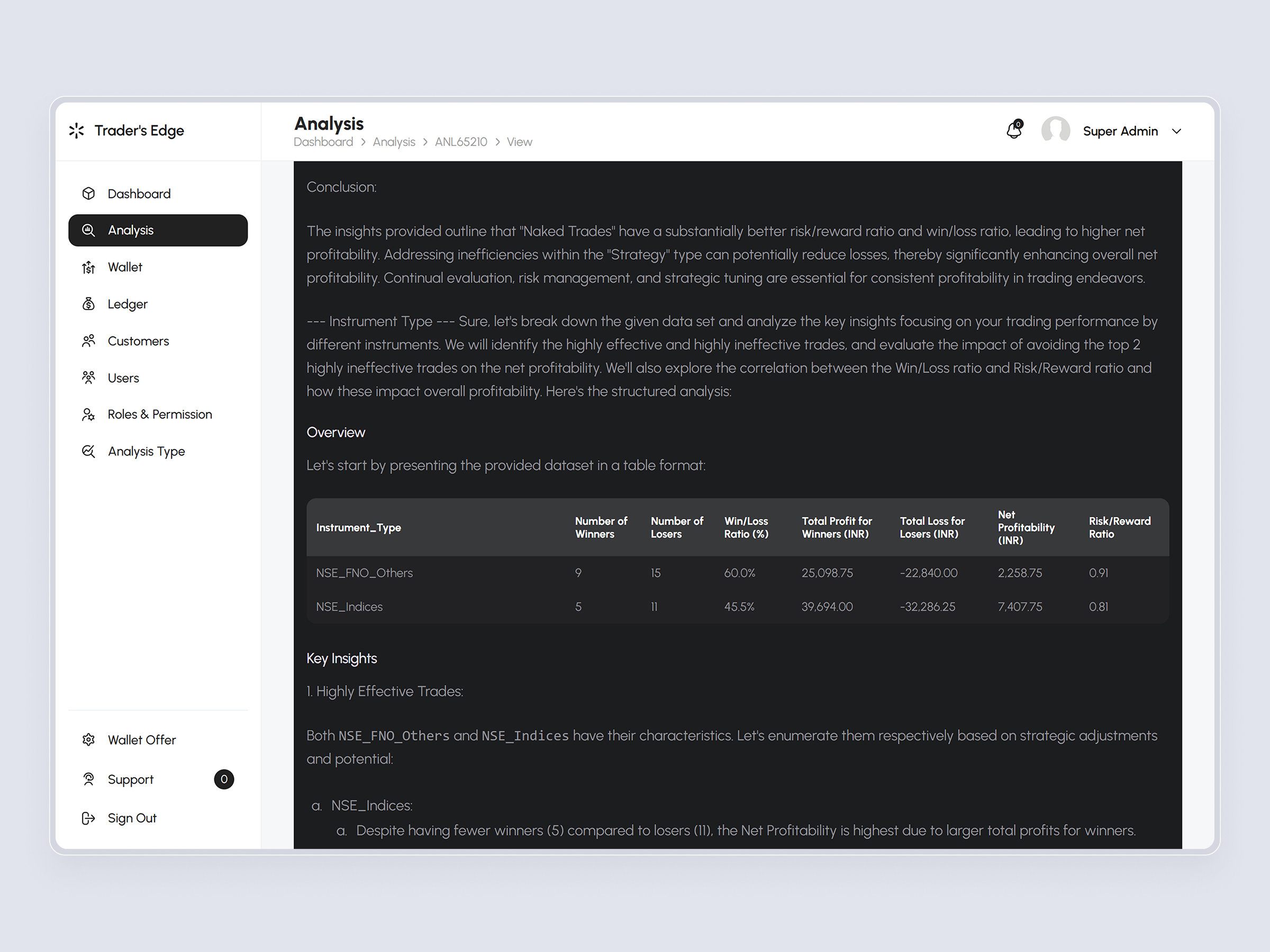
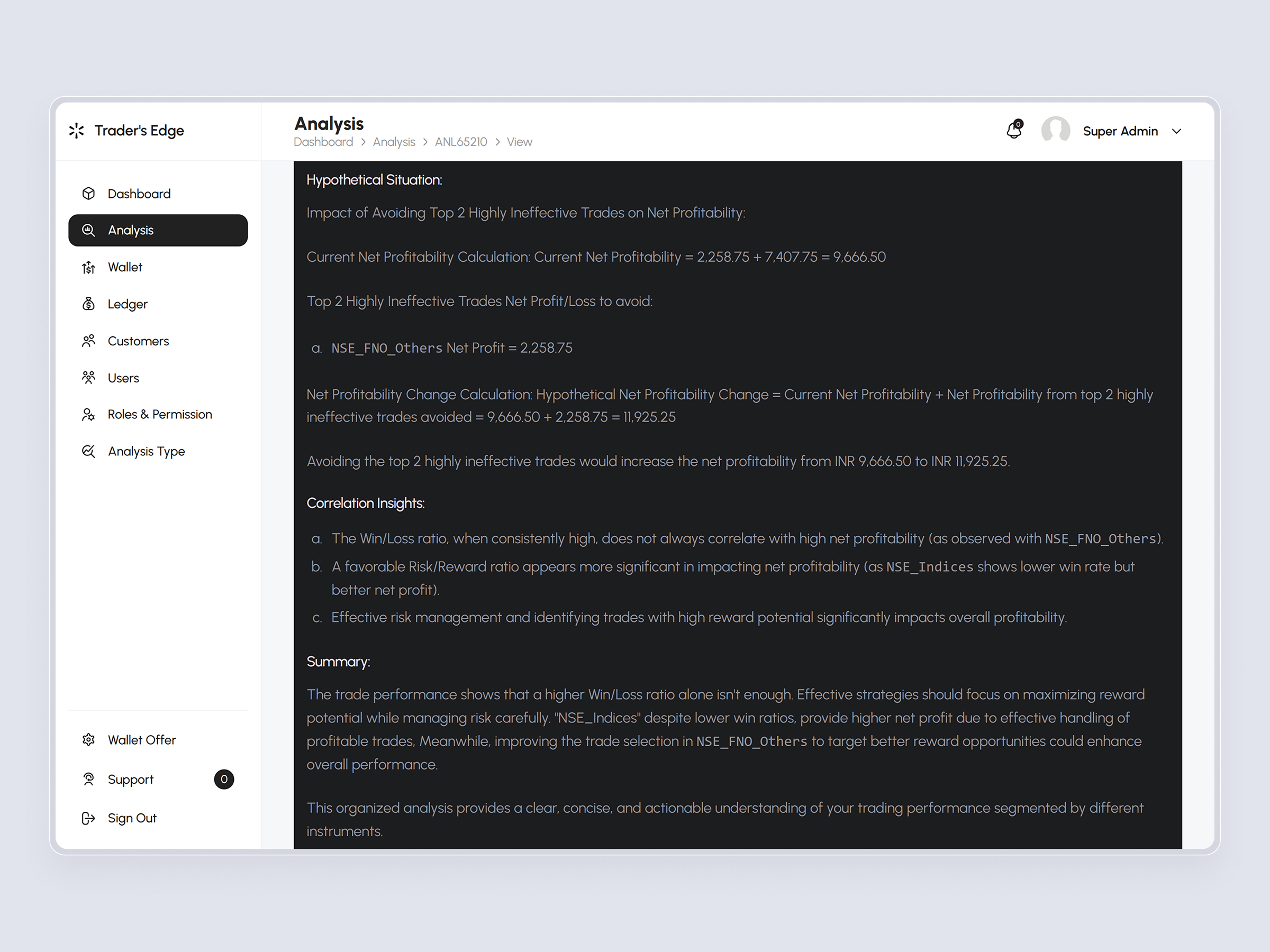
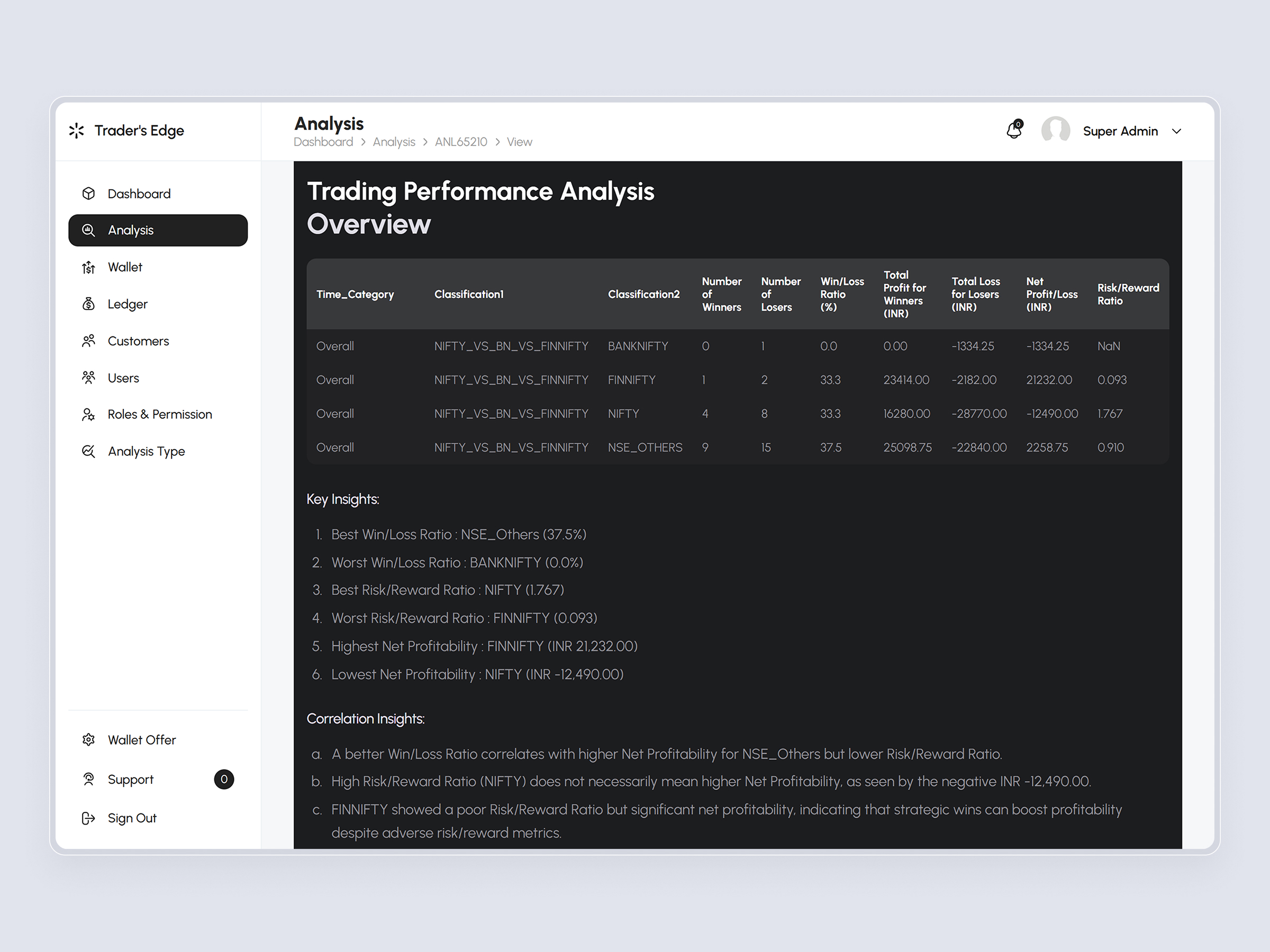
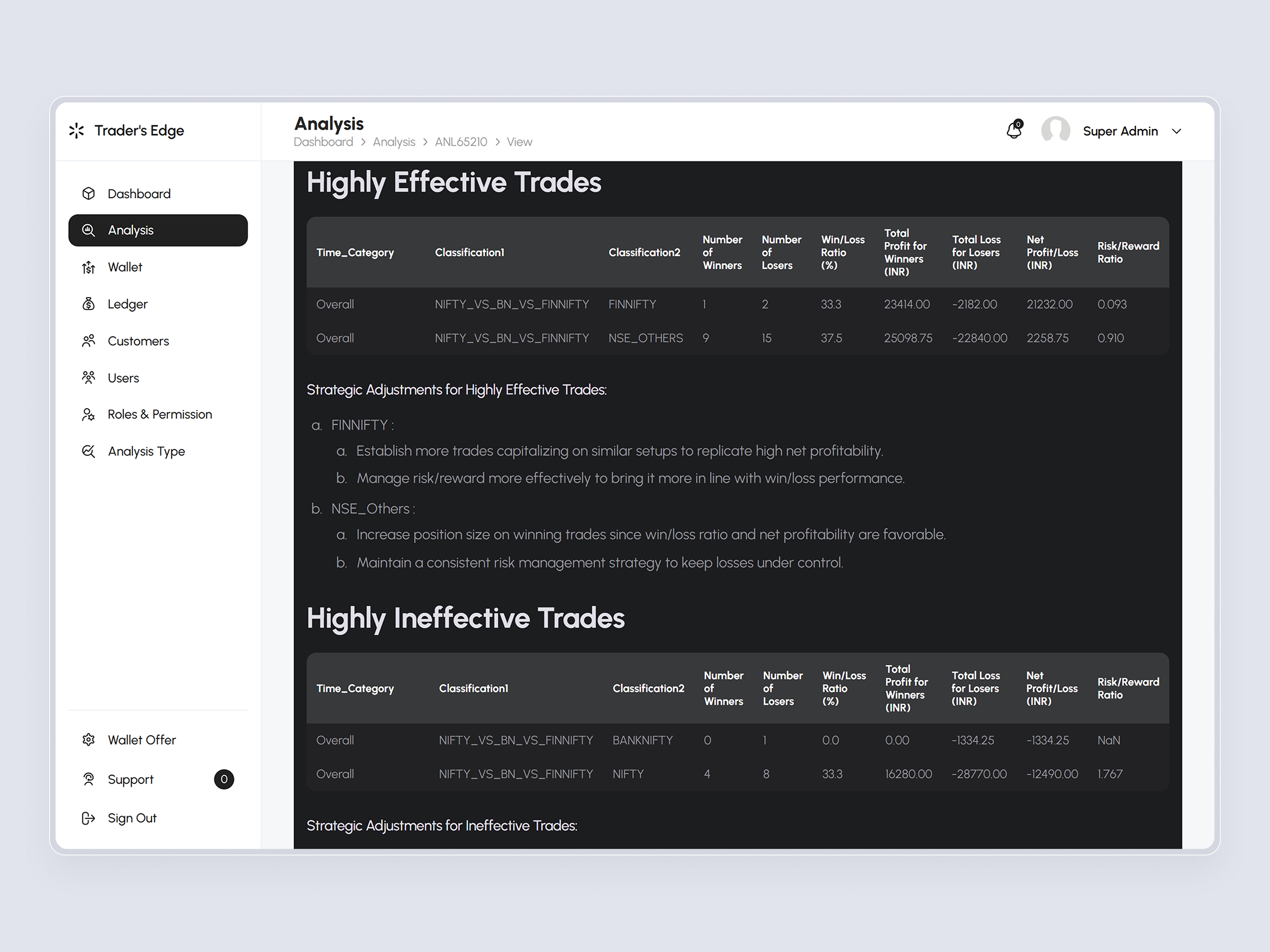
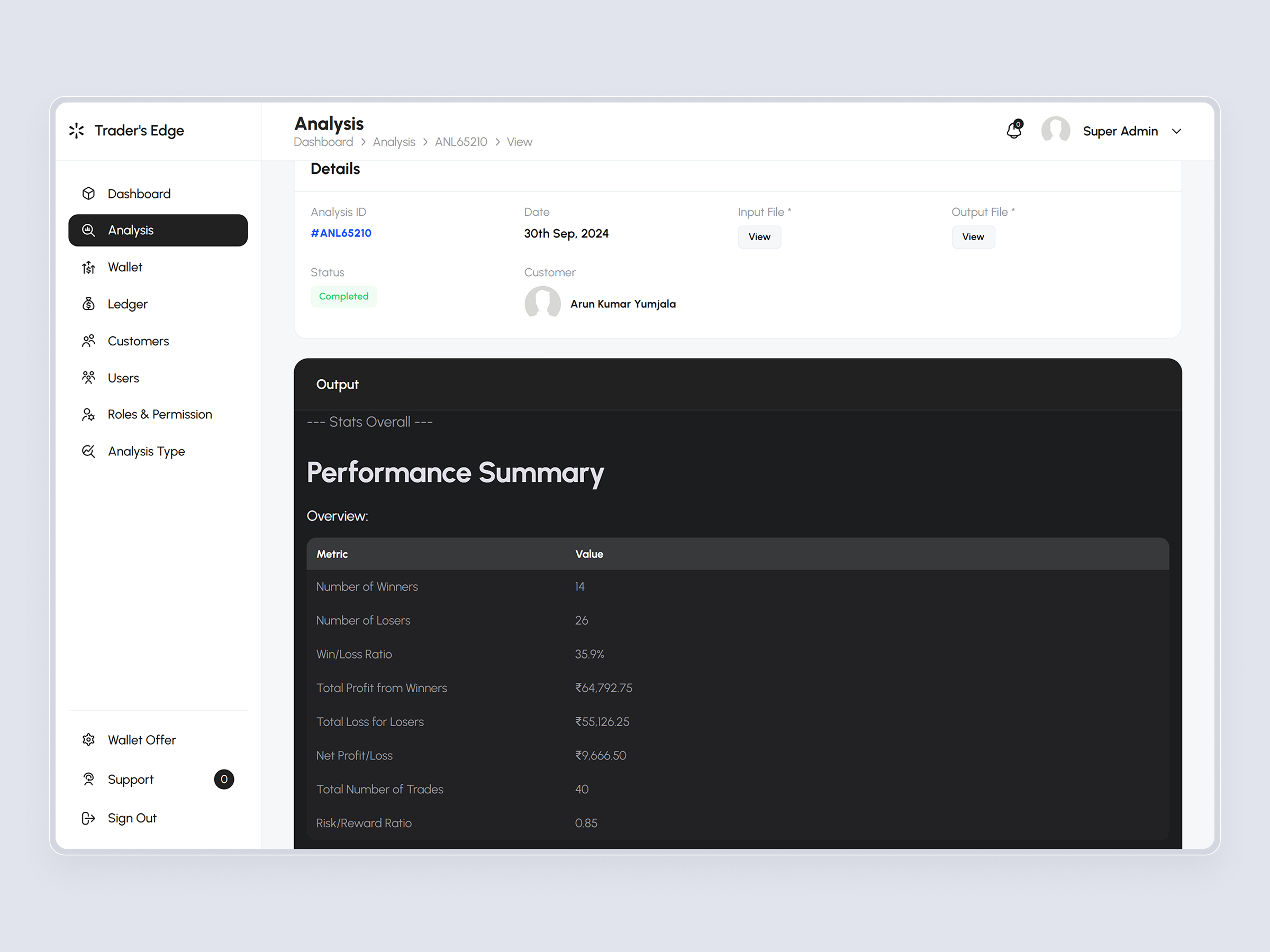
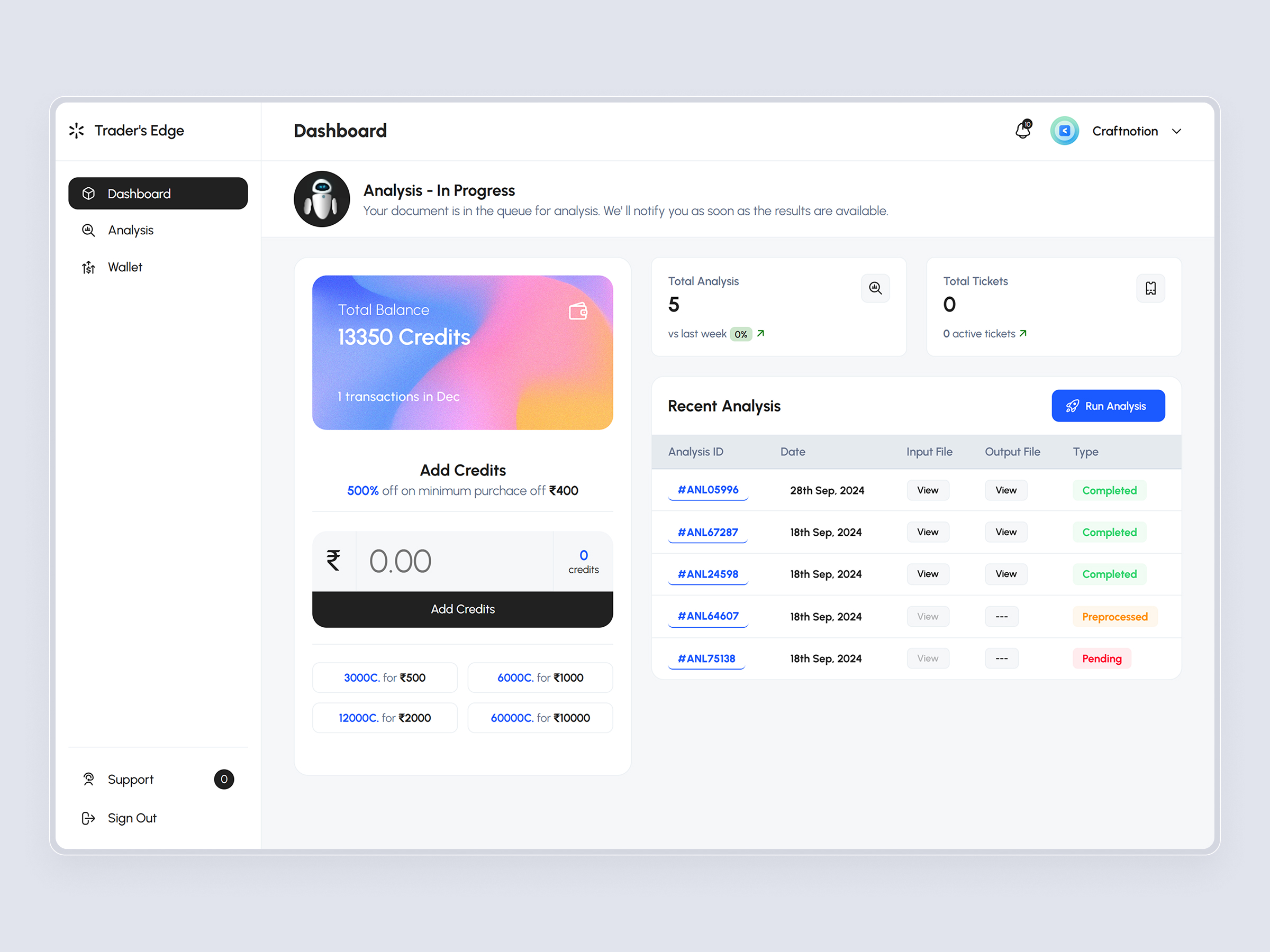
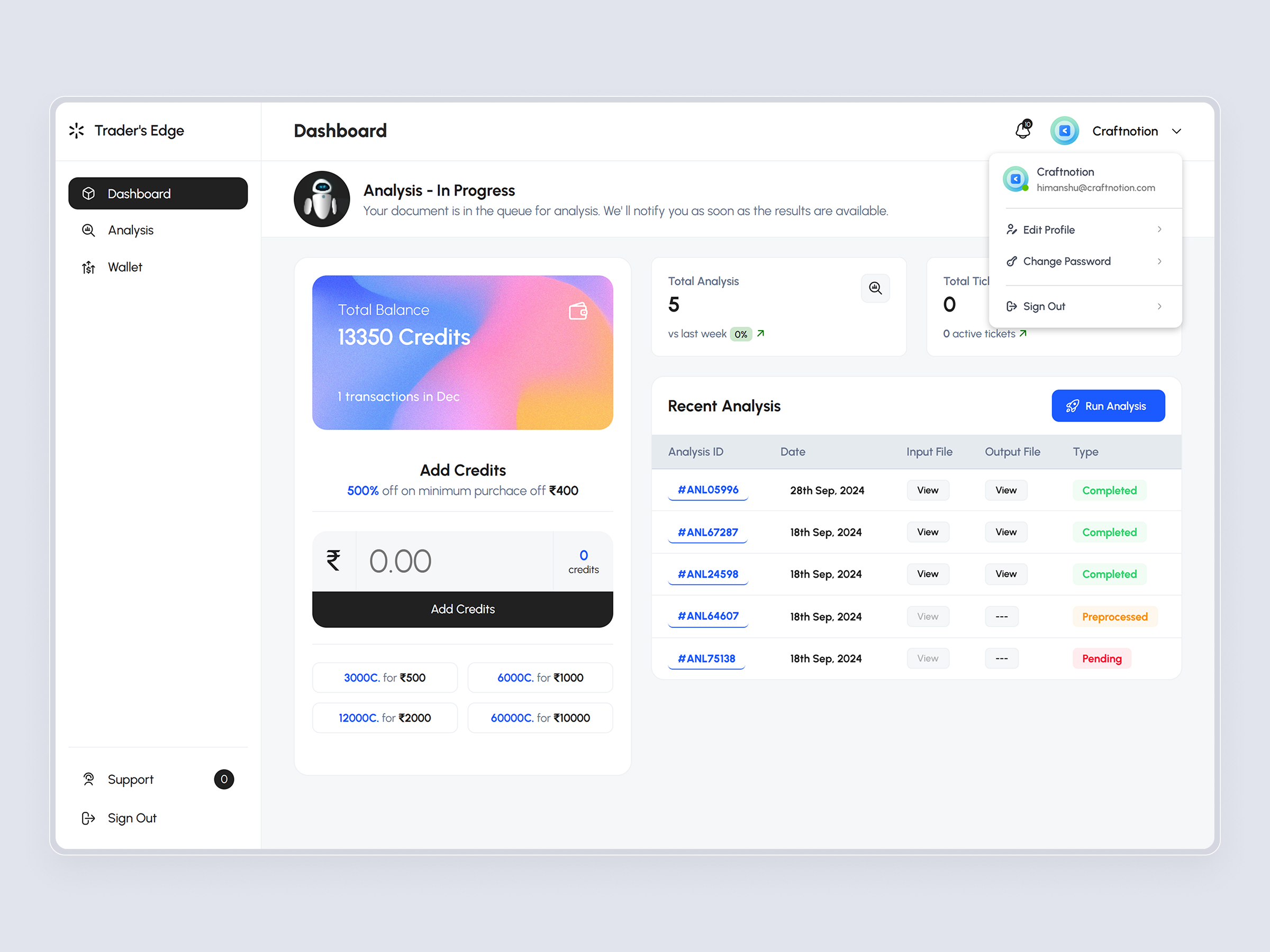
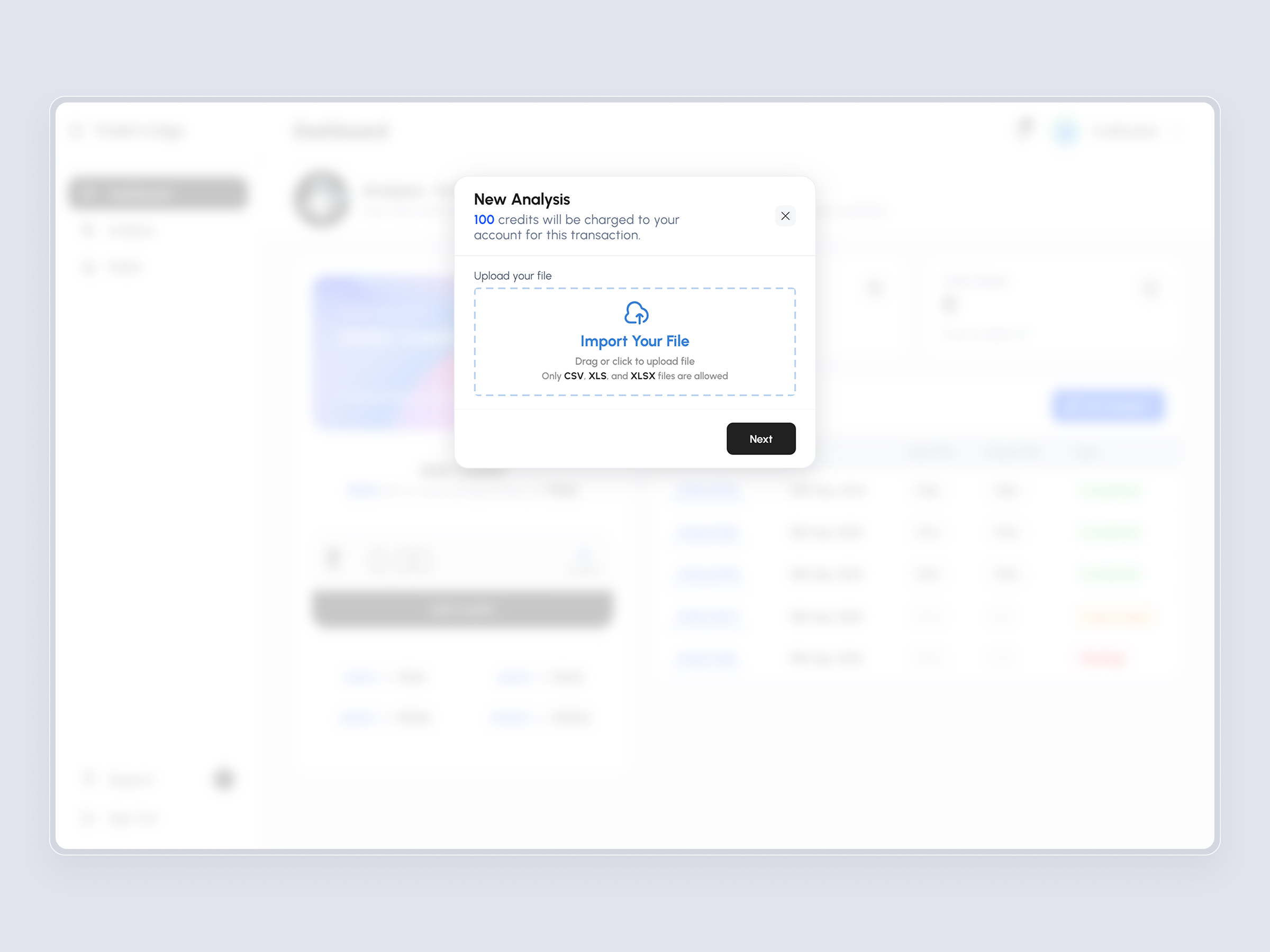
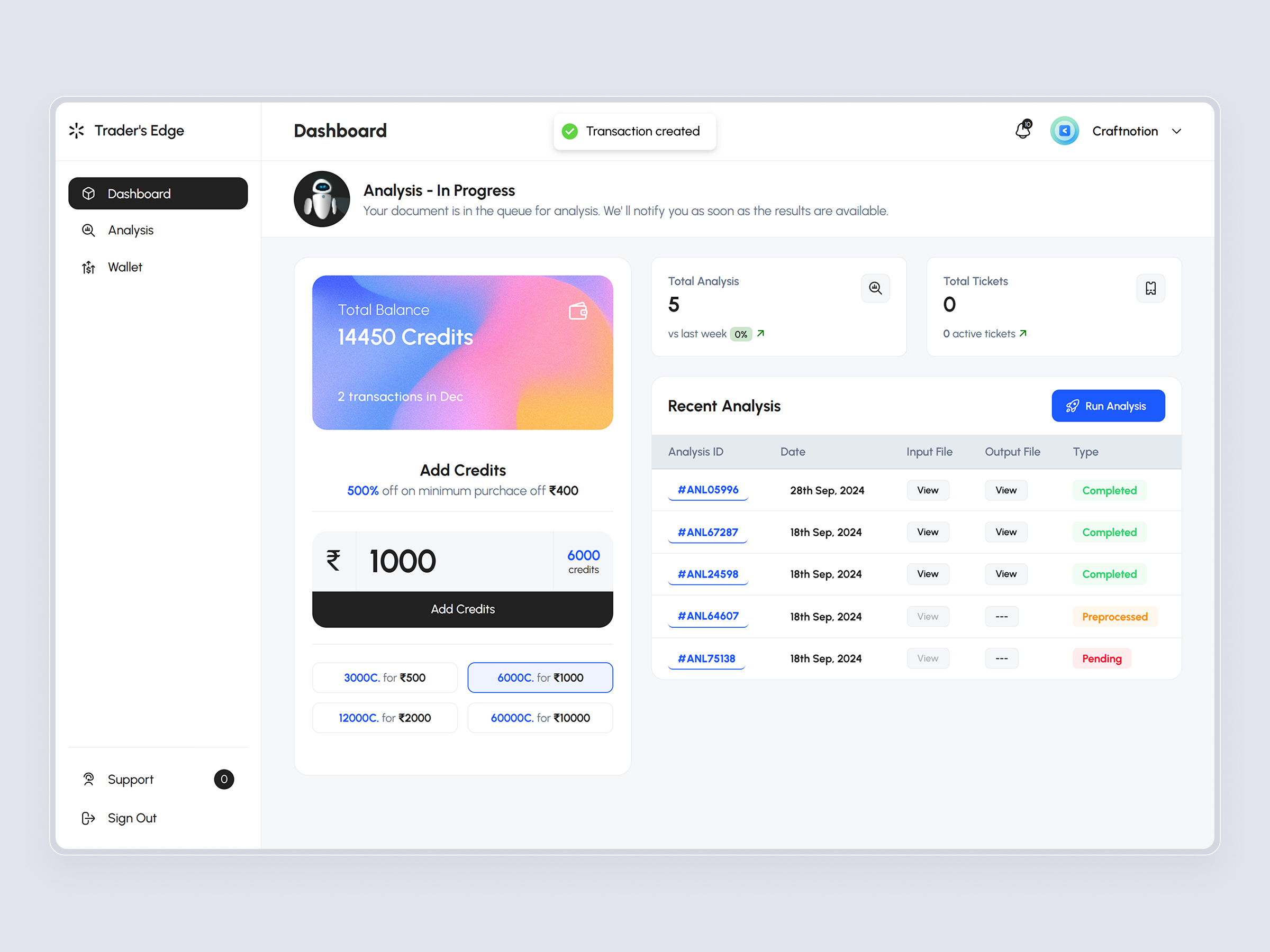
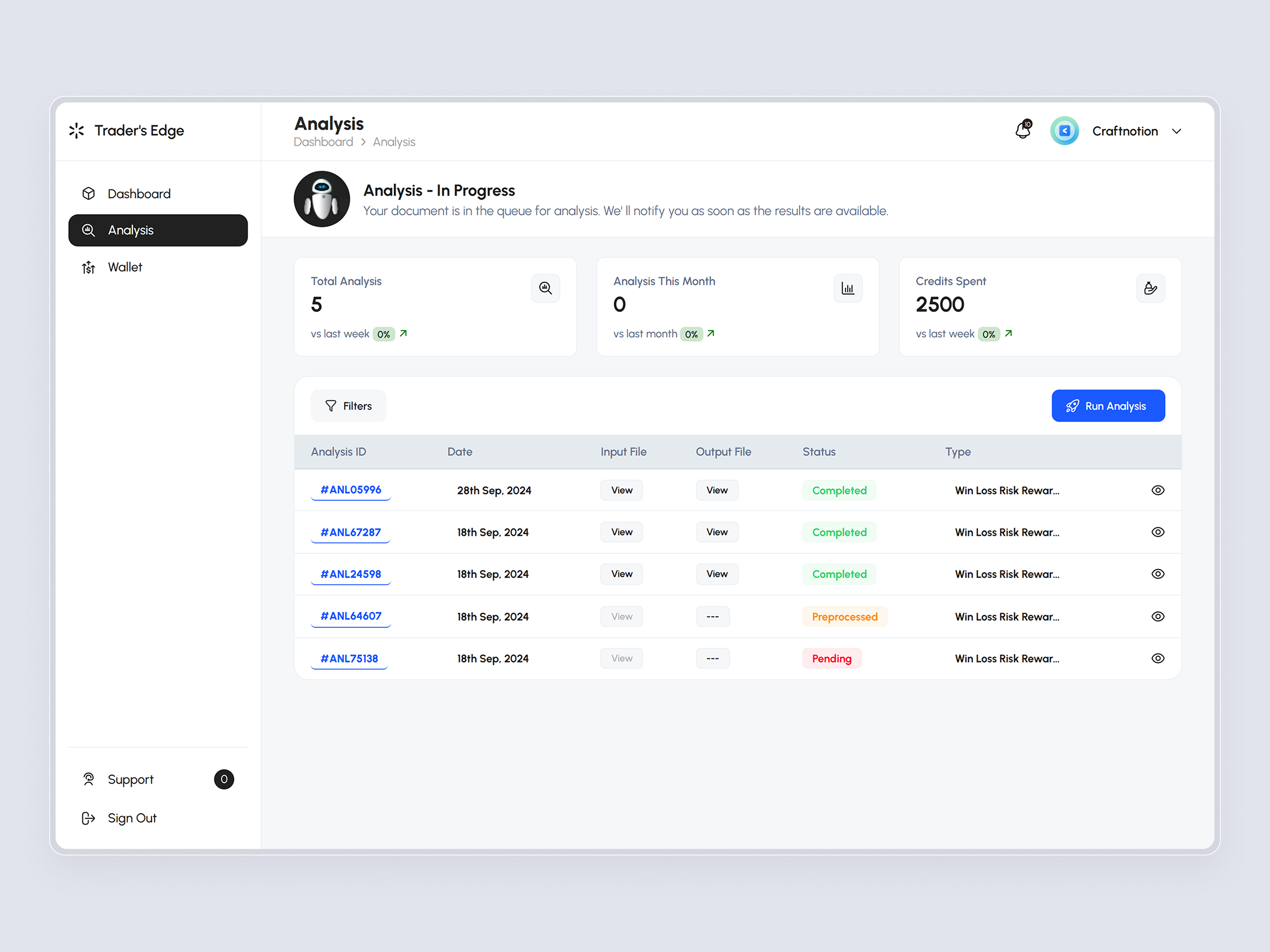
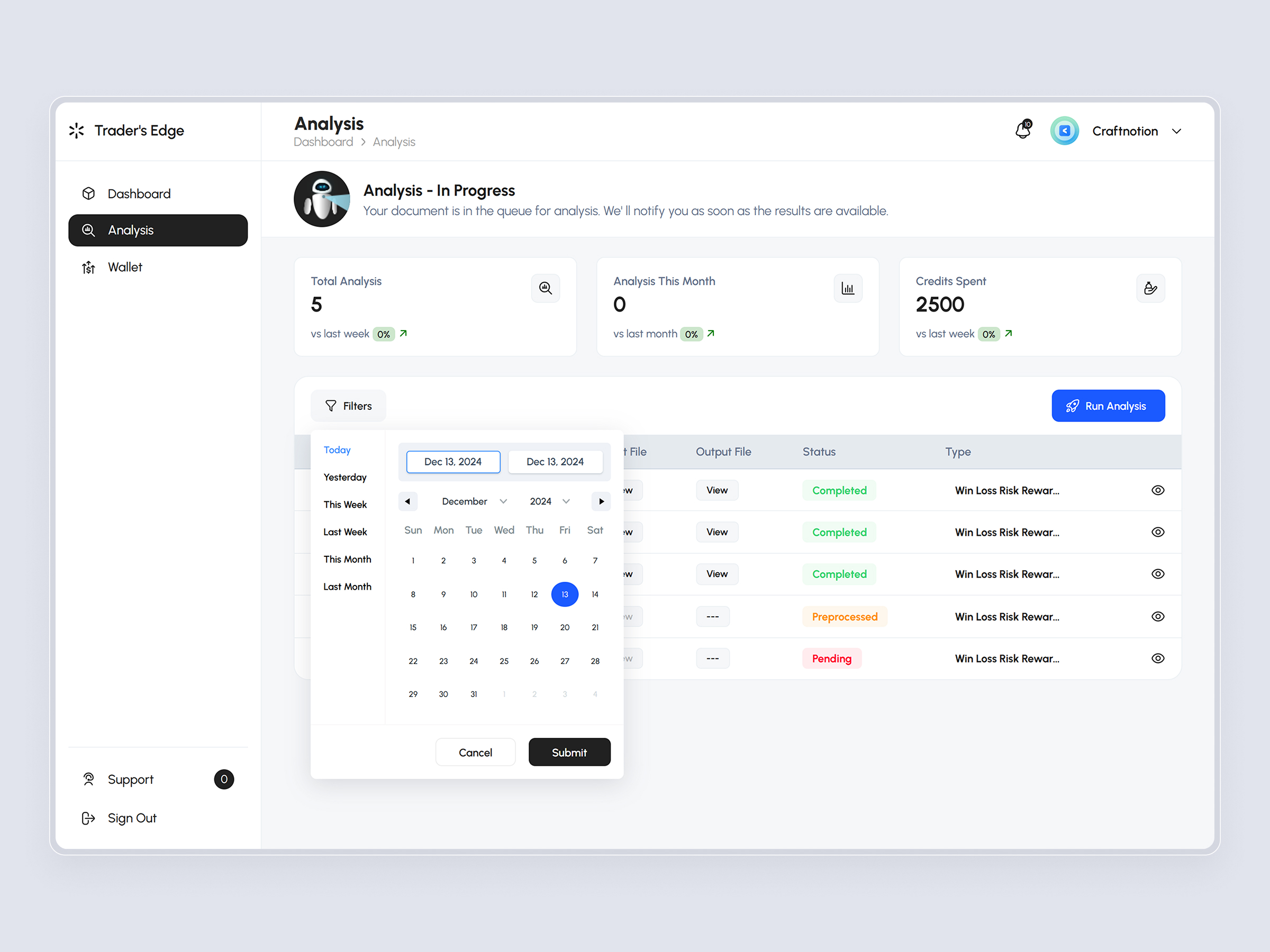
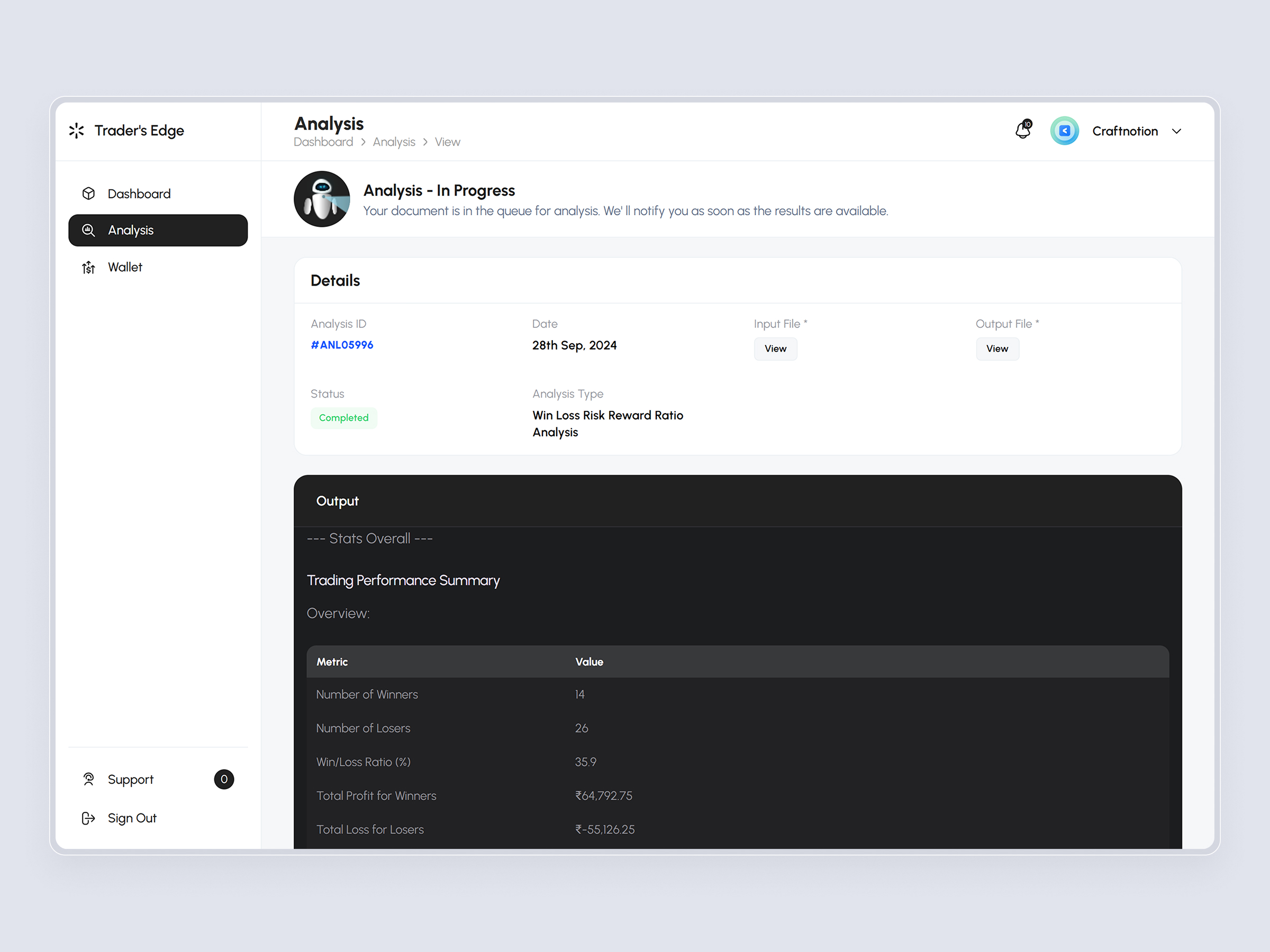
Users input their stock portfolios and the product runs them through the client's Python-based AI models. The system analyzes historical market data, technical indicators, and portfolio composition to generate performance forecasts. What shipped are presented in clear, visual dashboards — not raw data dumps — so both experienced traders and retail investors can understand what the AI is telling them.
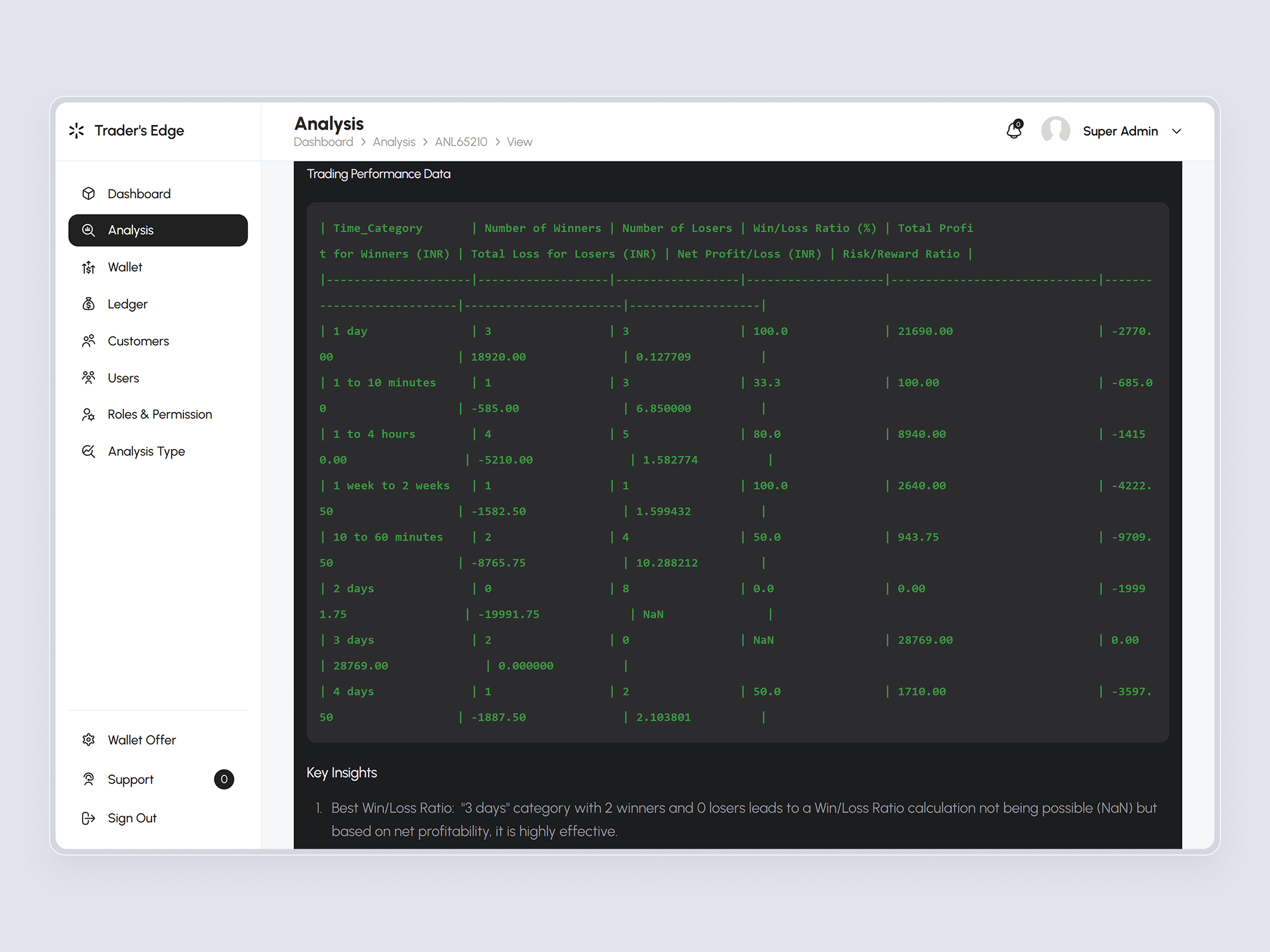
Alternative Investment Suggestions
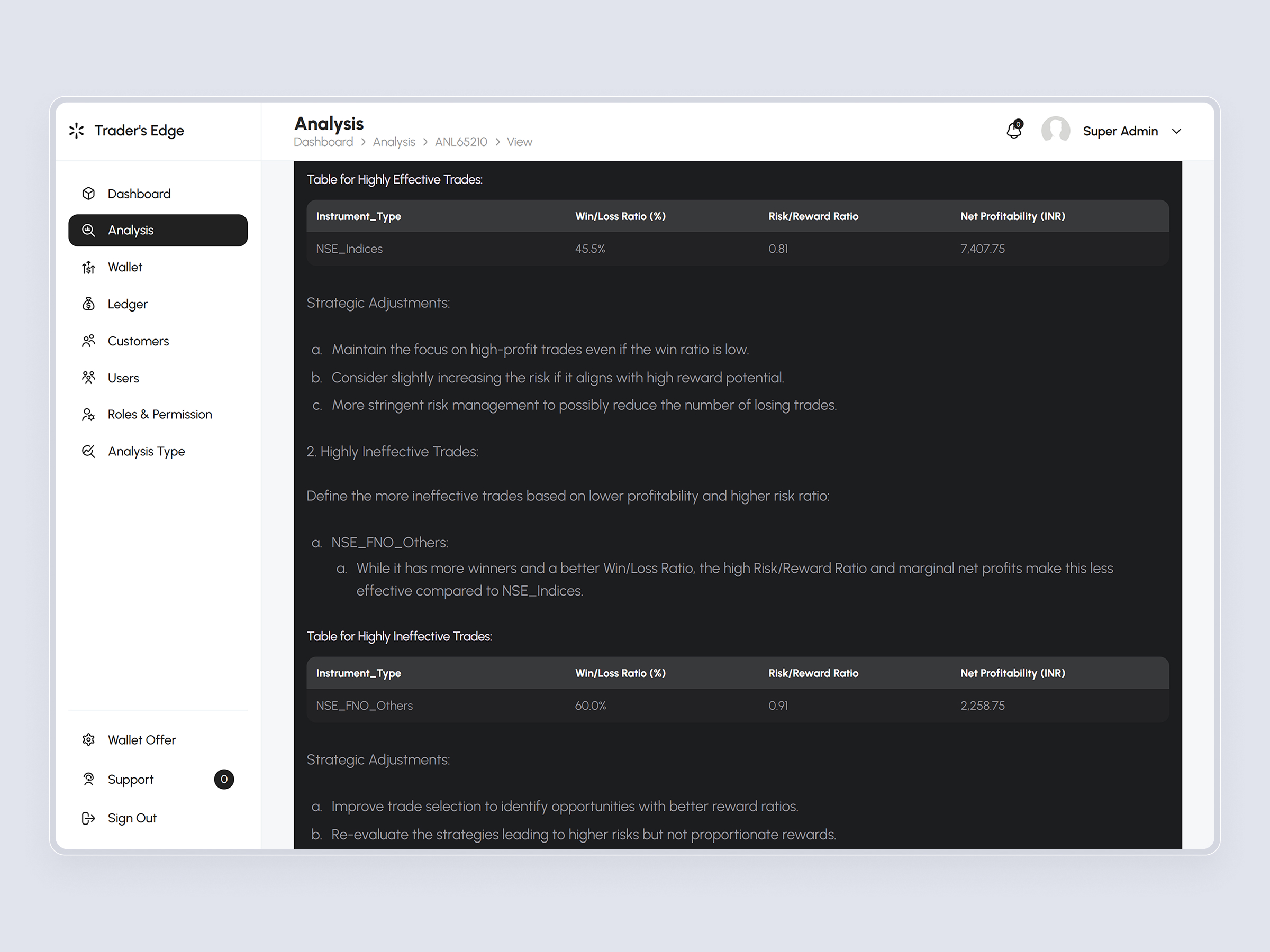
Beyond forecasting, the product suggests optimized portfolio alternatives based on the user's risk tolerance and investment goals. If the AI detects that a portfolio is overexposed to a sector or underperforming relative to benchmarks, it suggests specific rebalancing strategies. This is the kind of analysis that hedge funds pay quant teams for — made accessible to individual investors through a SaaS platform.
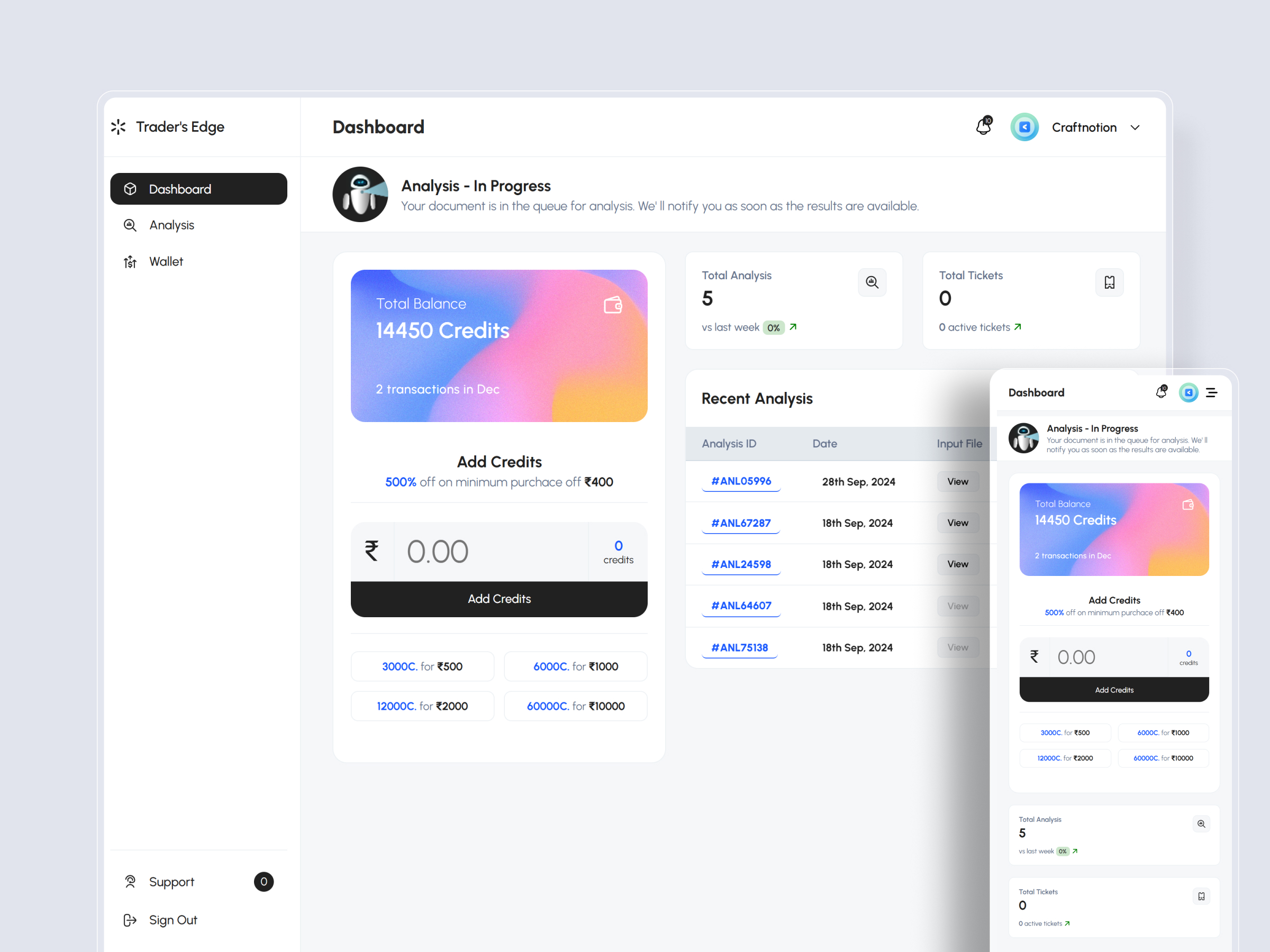
Credits-Based Monetization
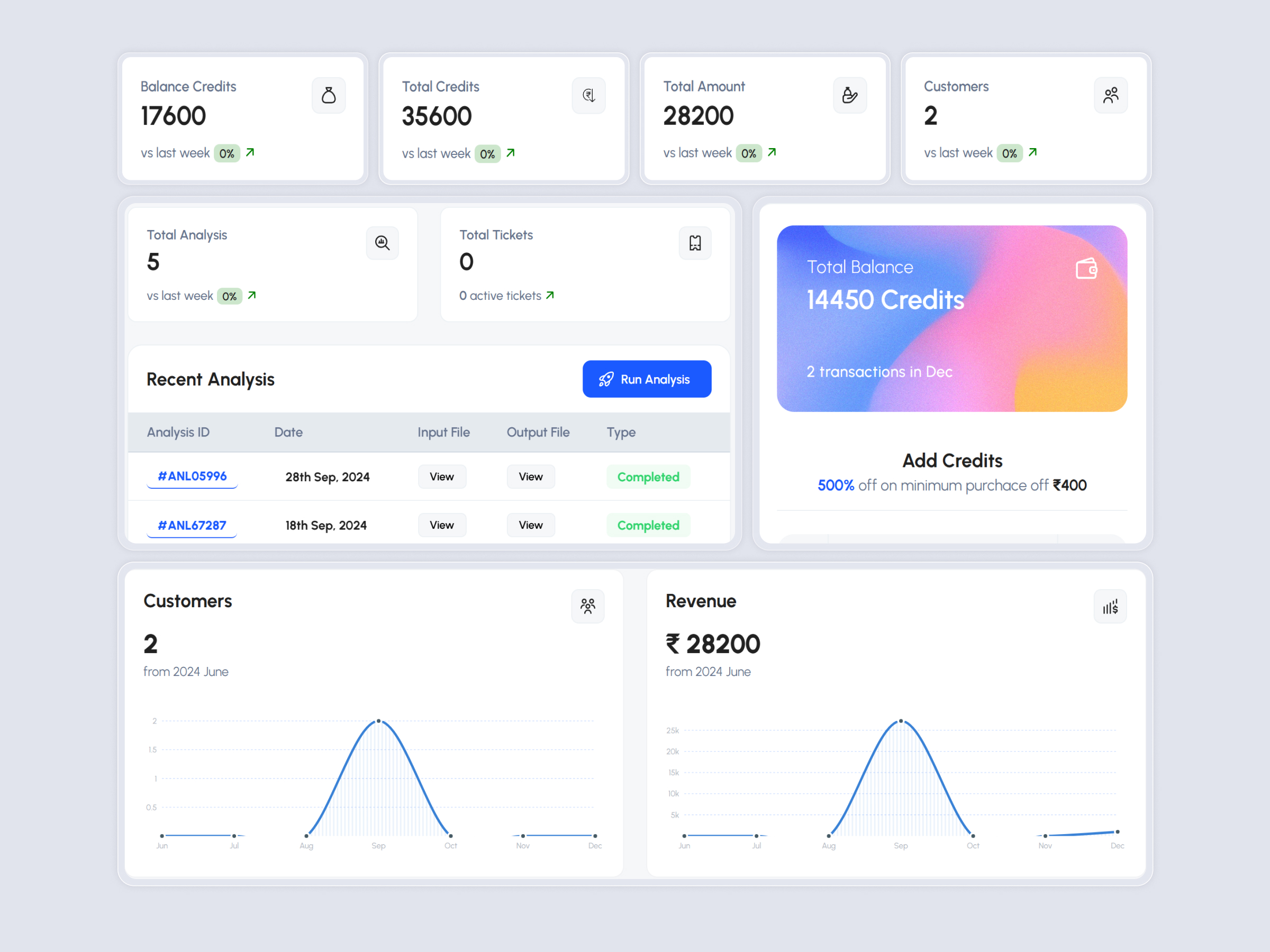
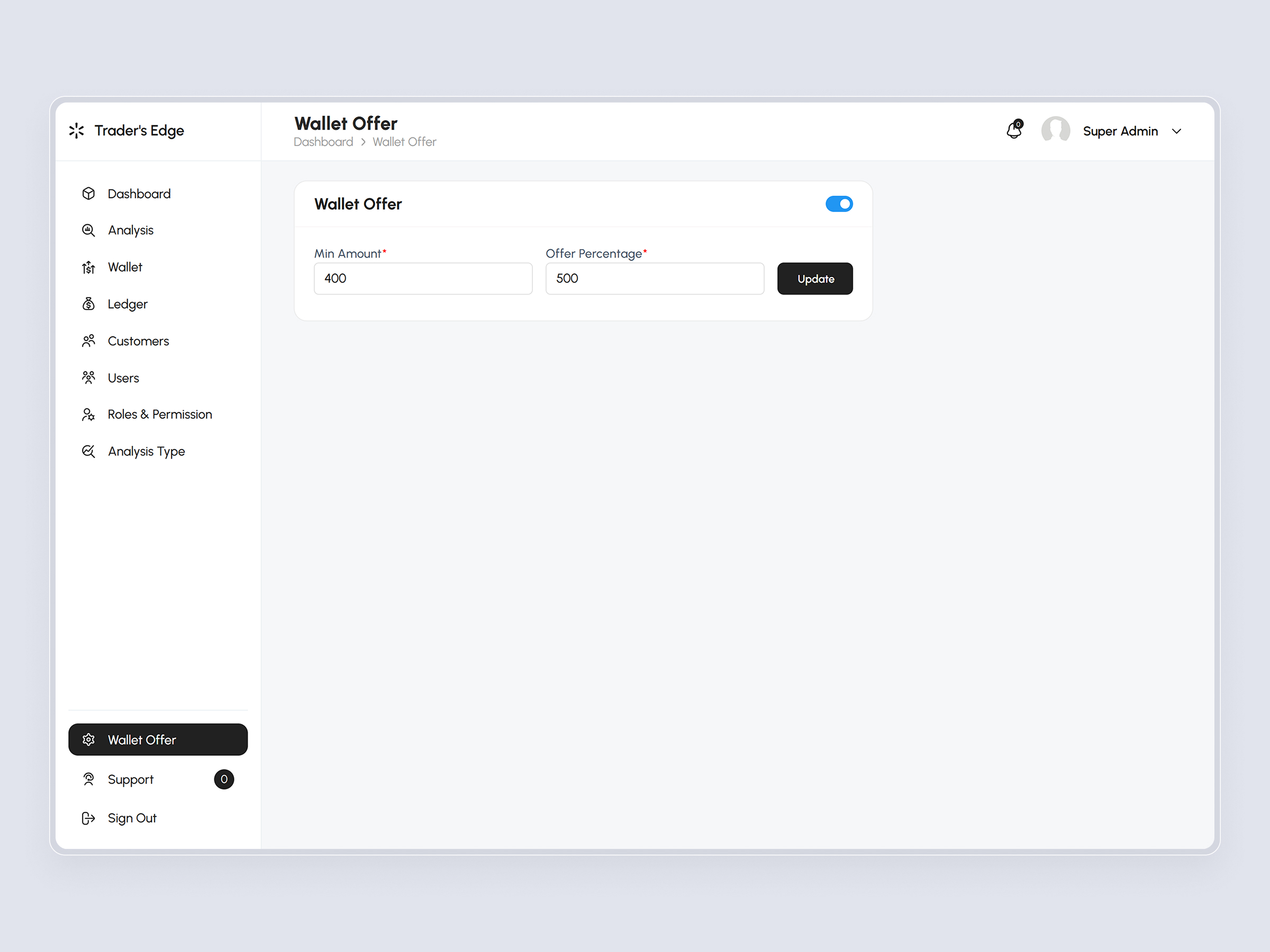
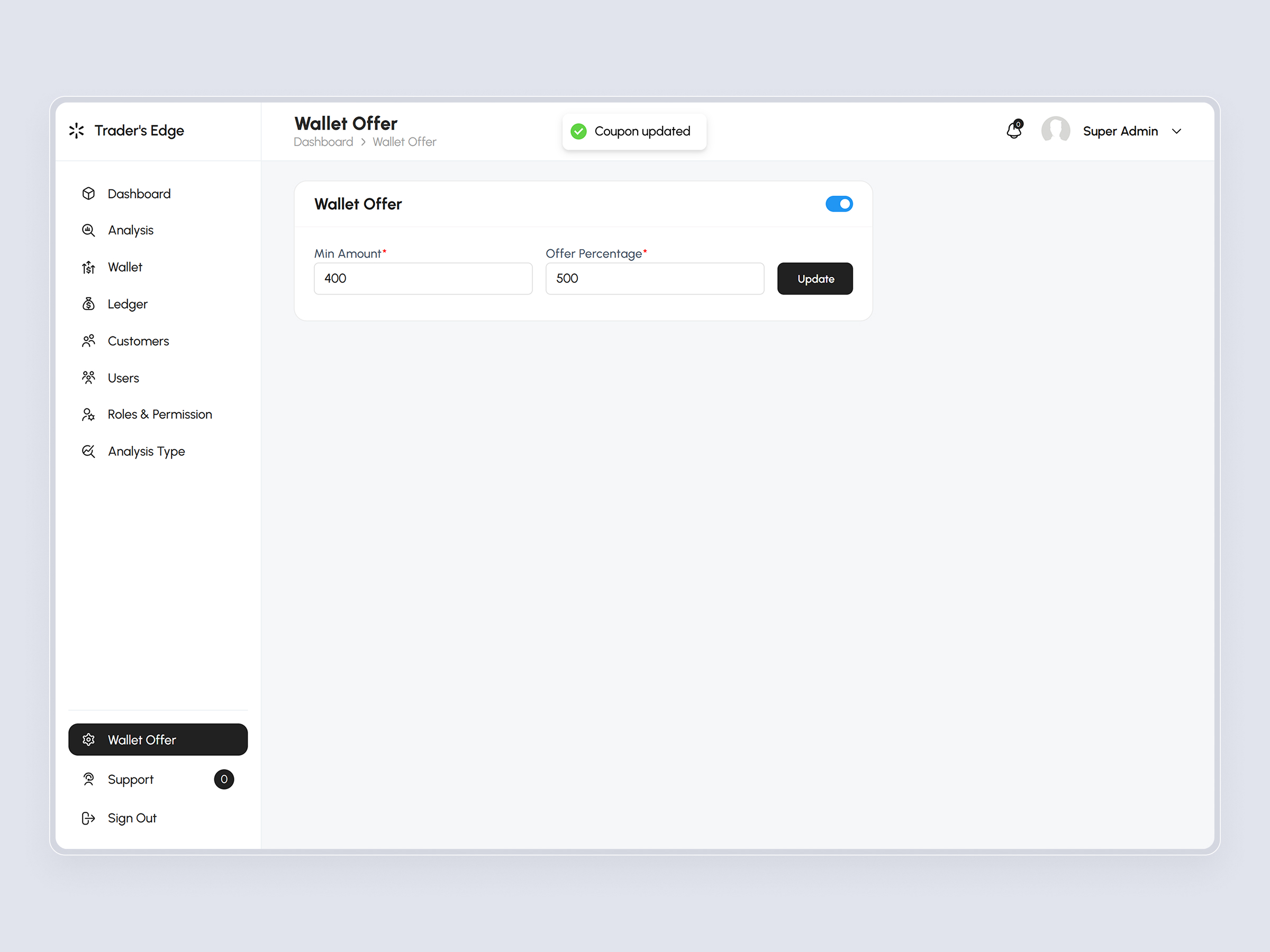
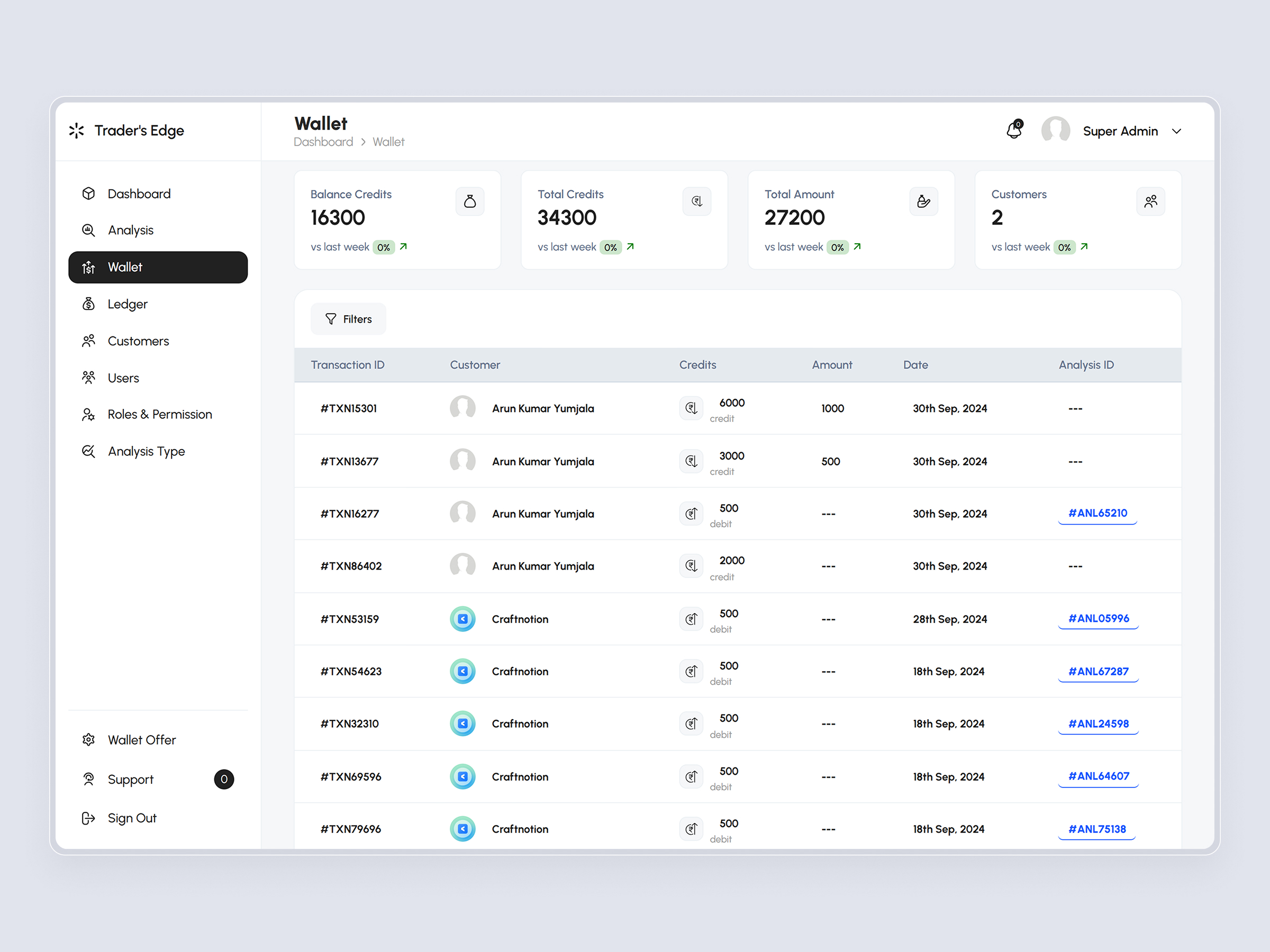
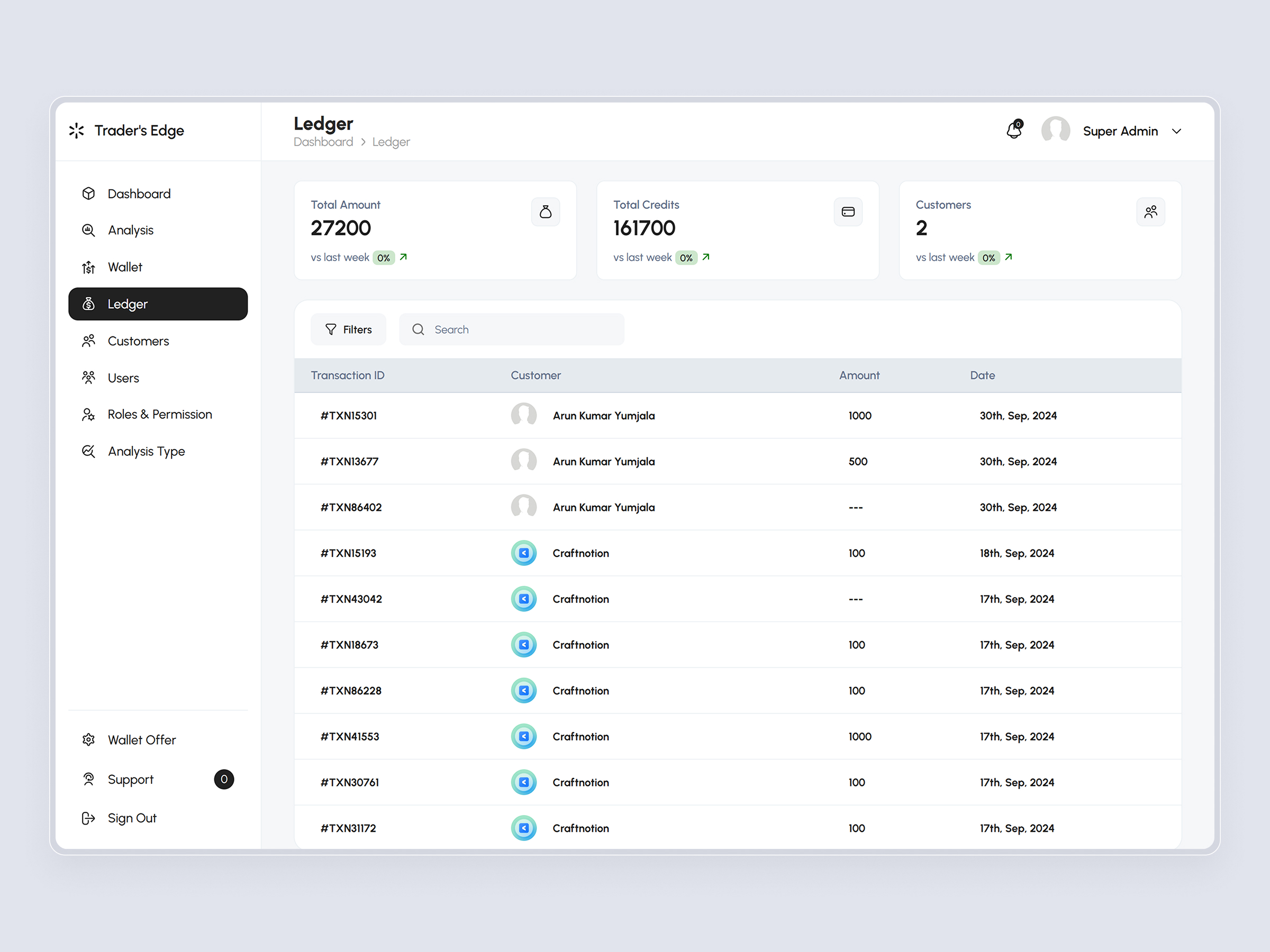
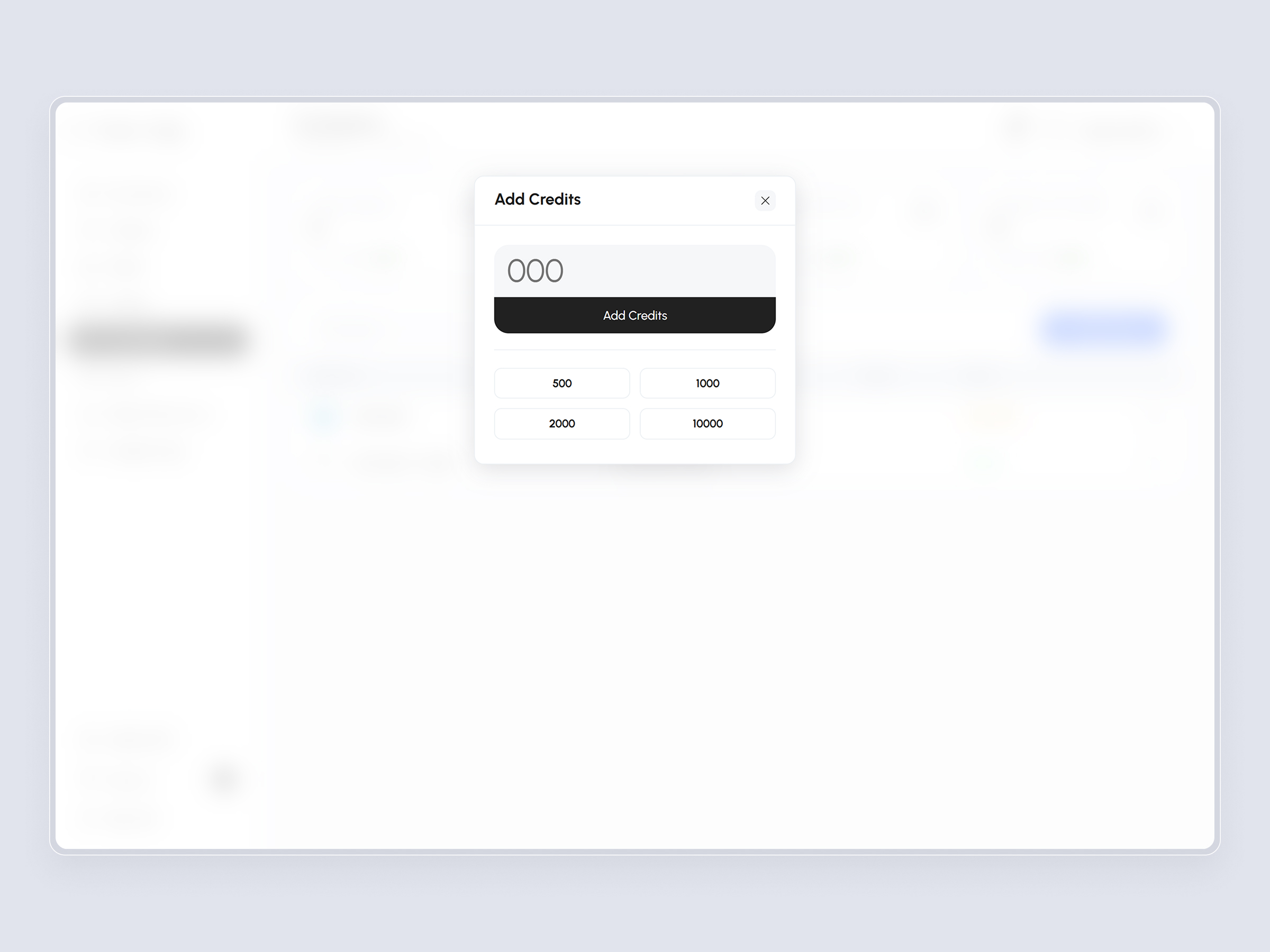
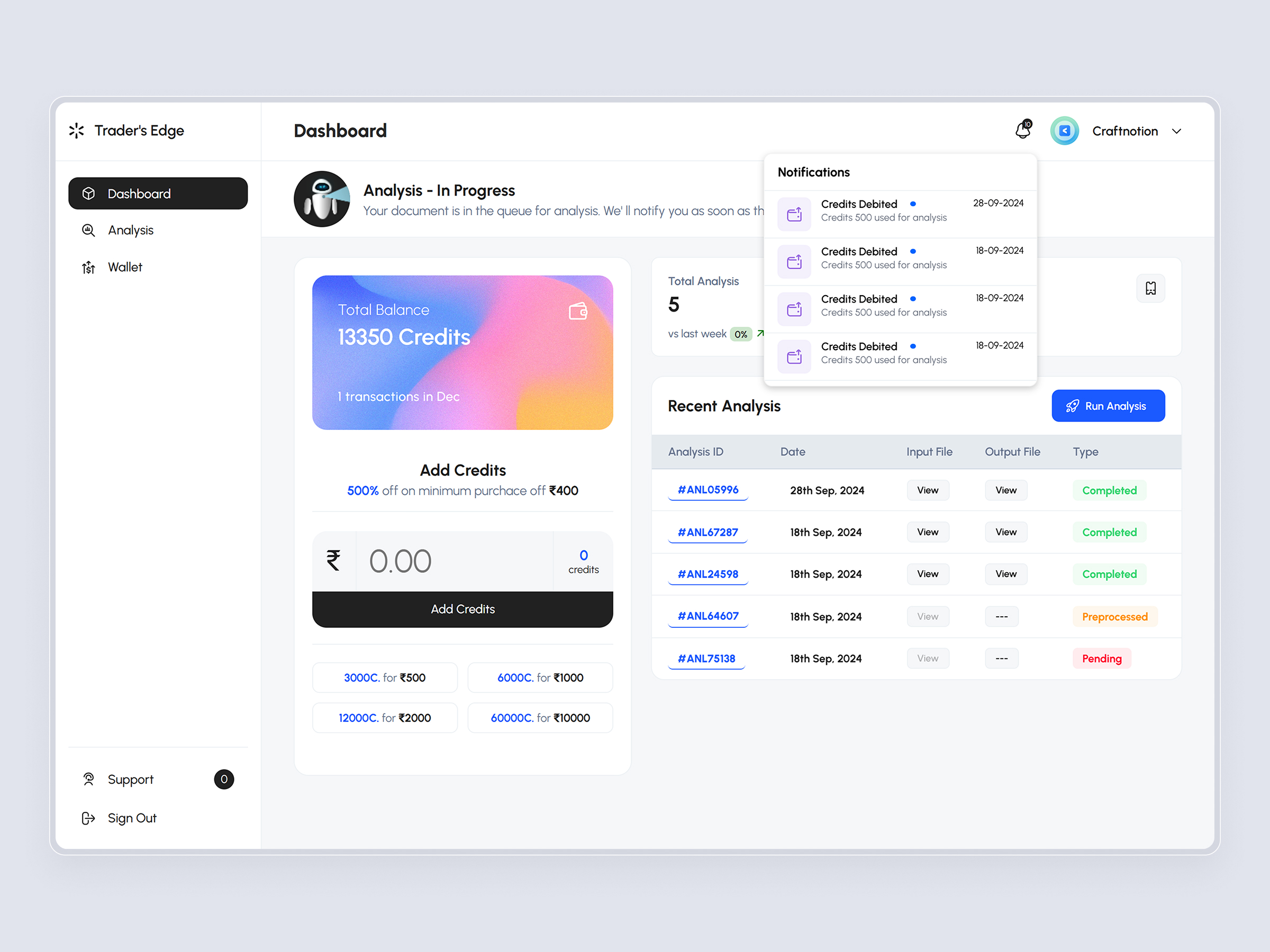
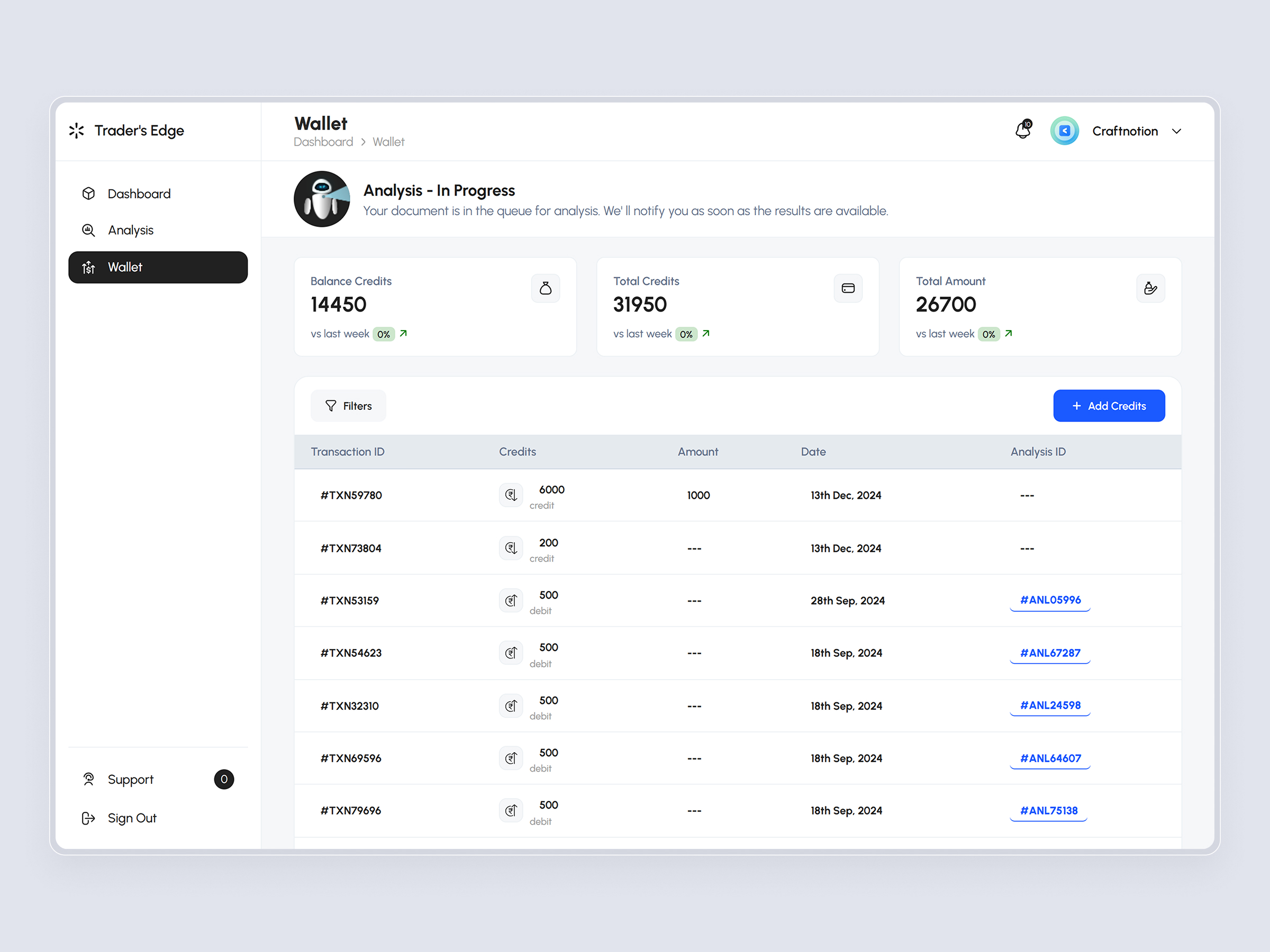
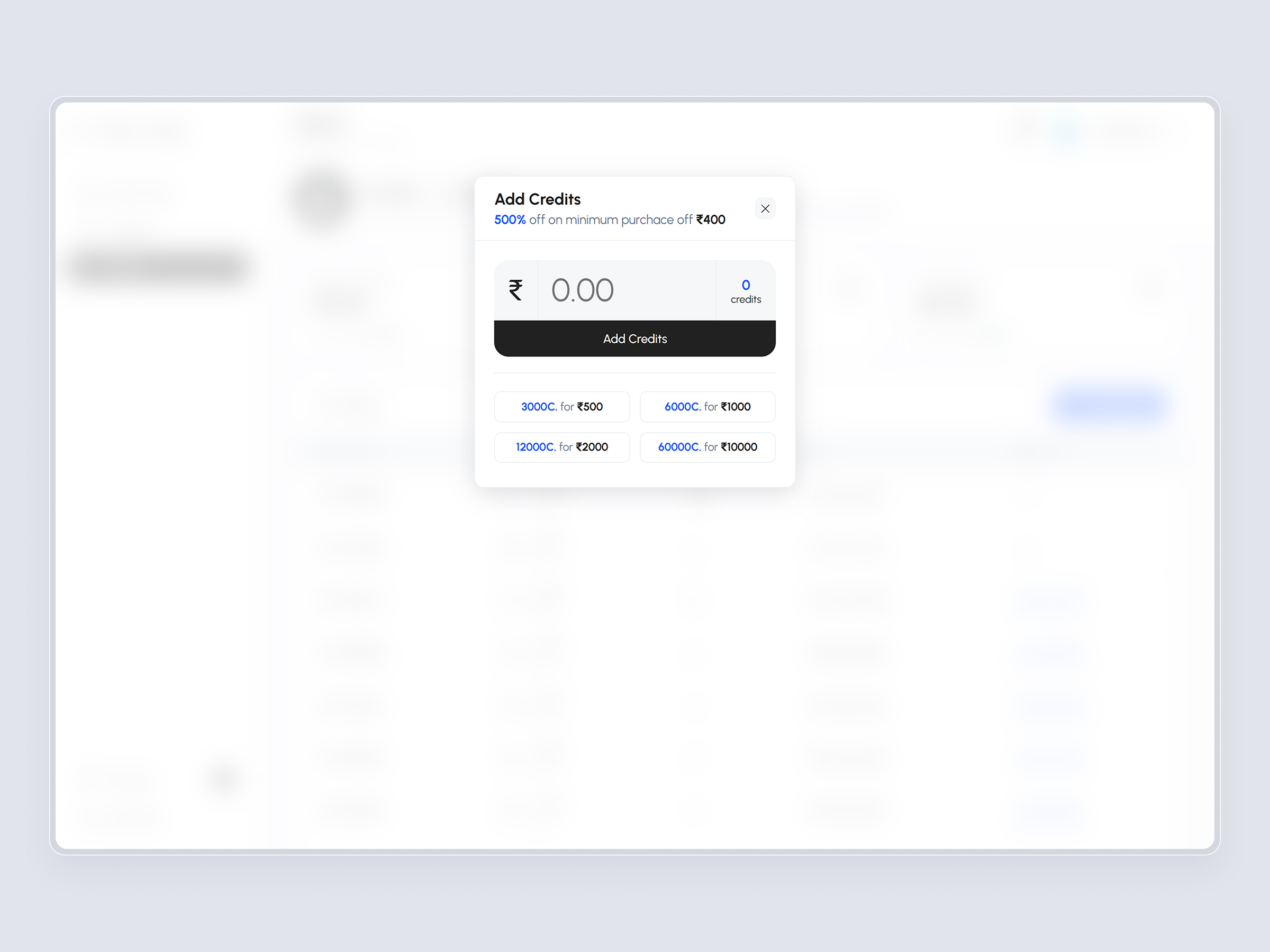
We planned, designed, and built a wallet and credits system where users purchase credits to access premium AI features. Each type of analysis (portfolio forecast, alternative suggestions, deep dive report) costs a different number of credits. This pay-per-use model lets casual investors try the product affordably while heavy users can buy credit packs at volume discounts.
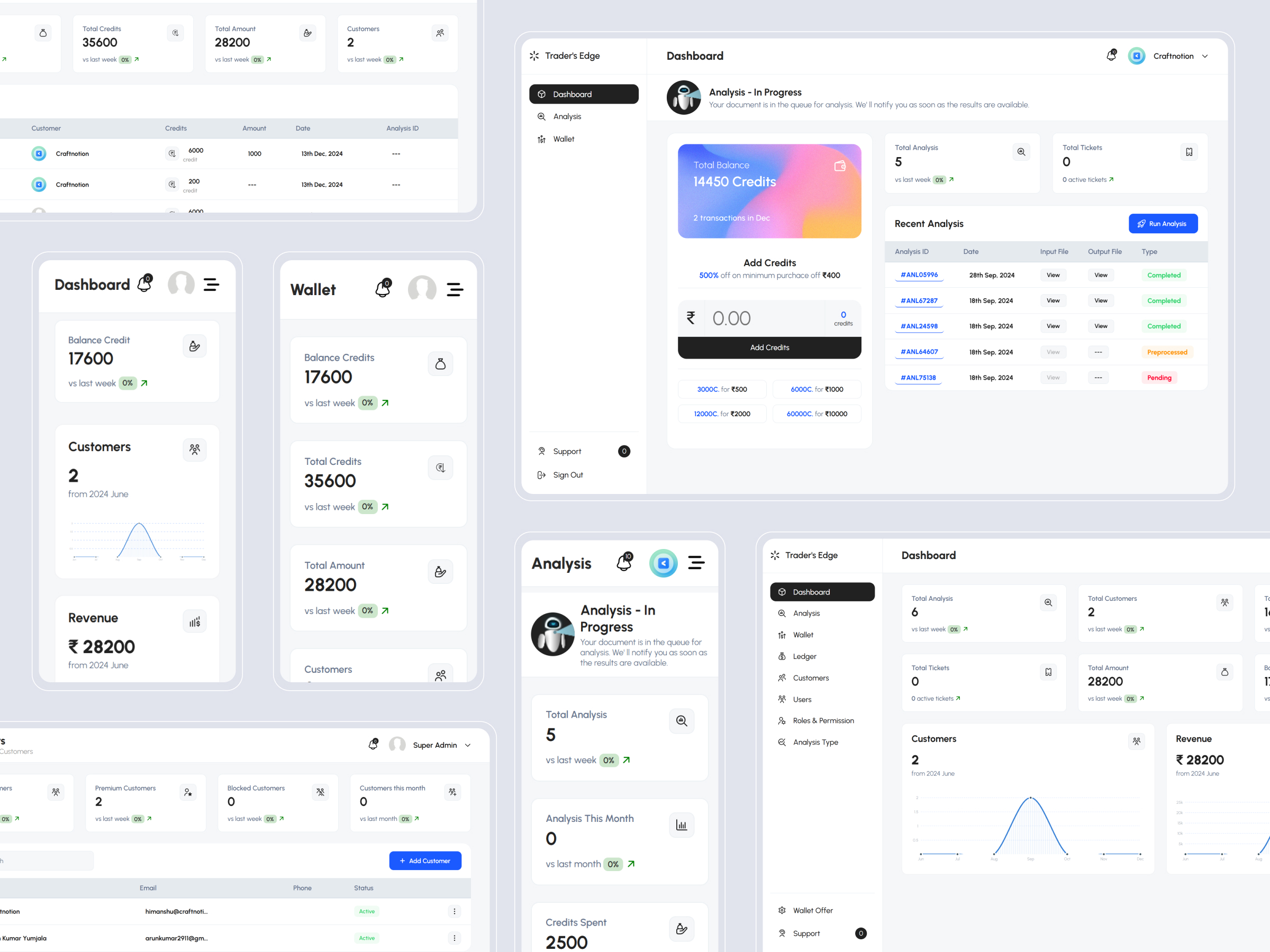
Admin Dashboard
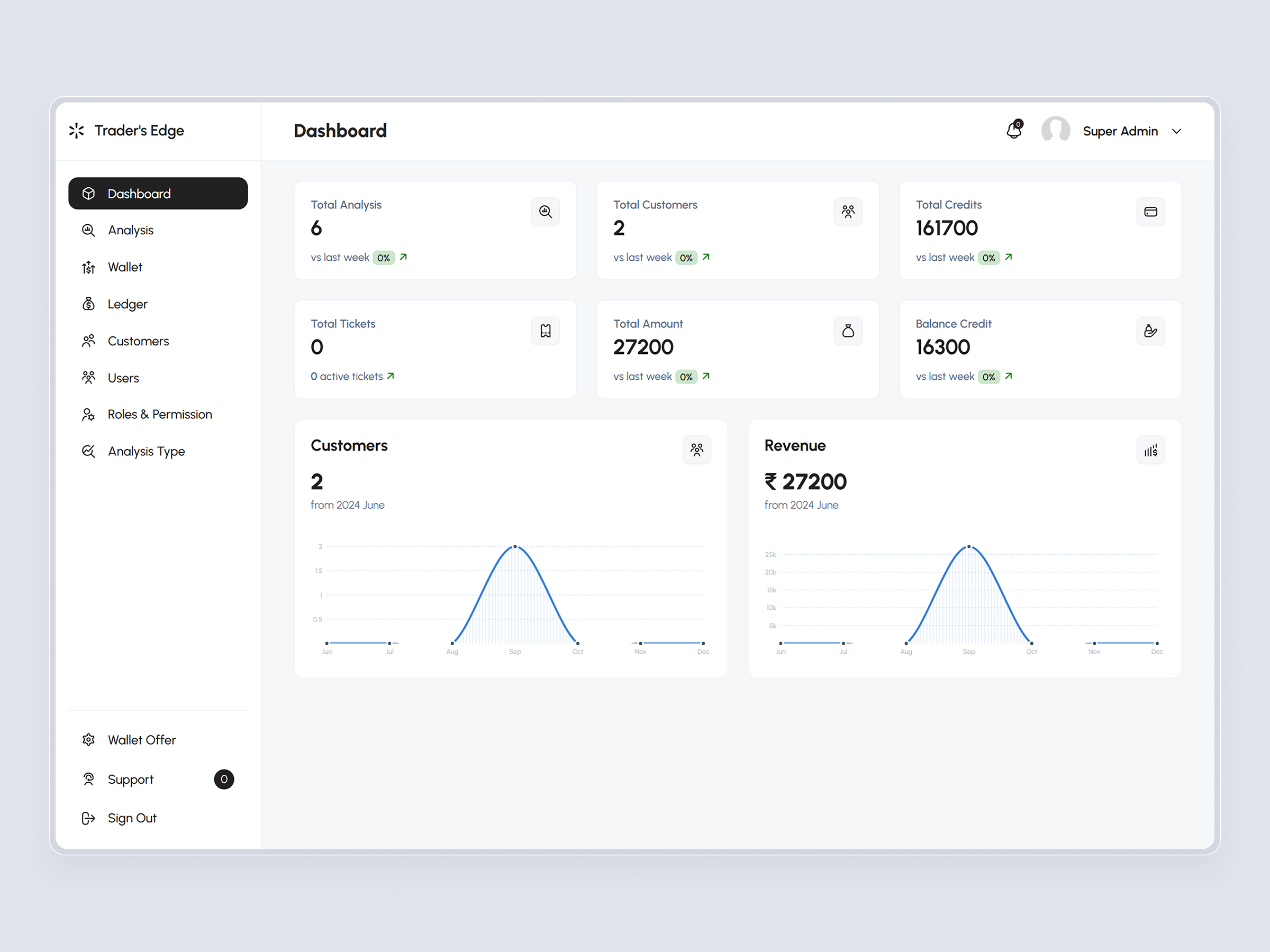
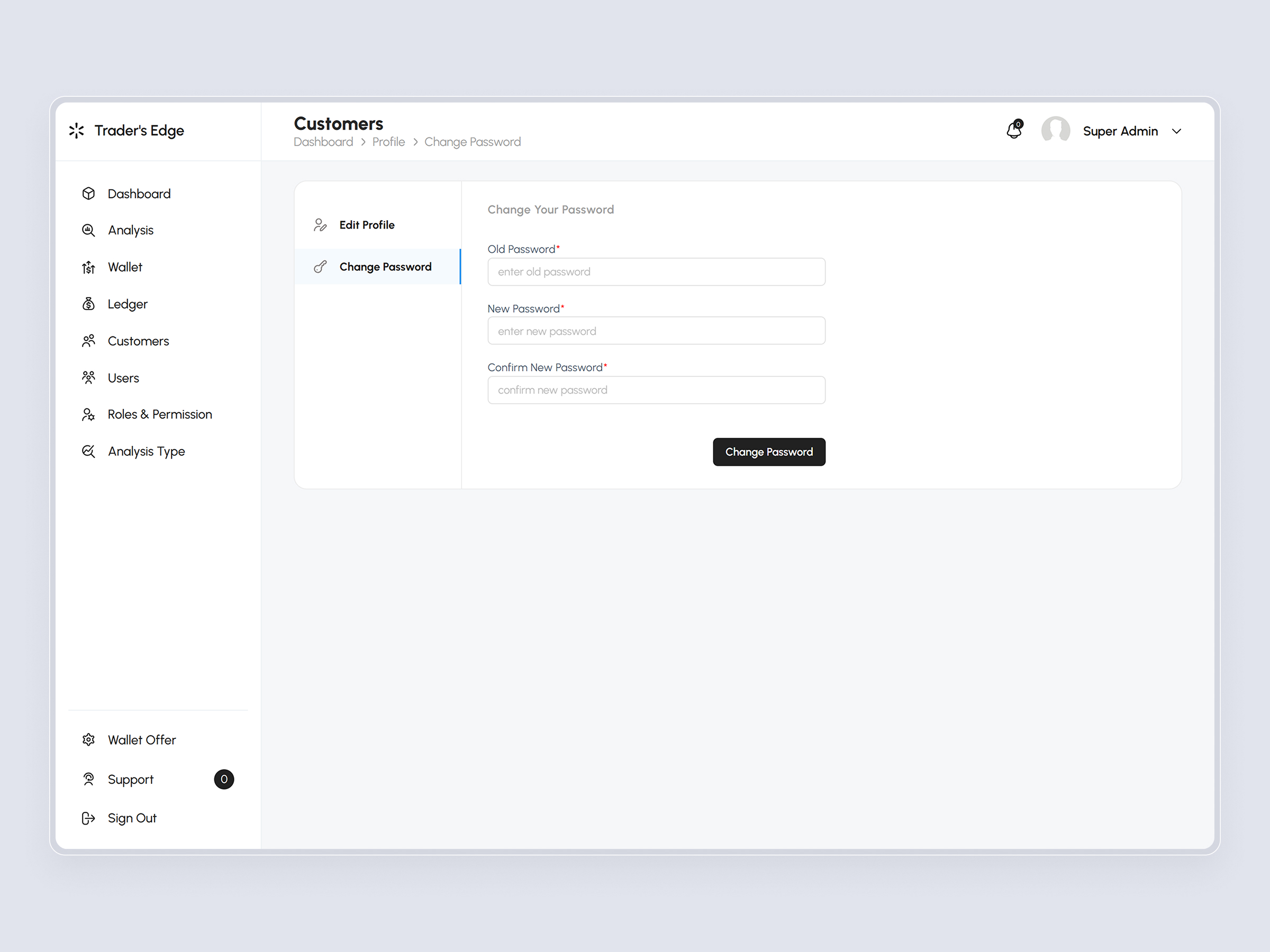
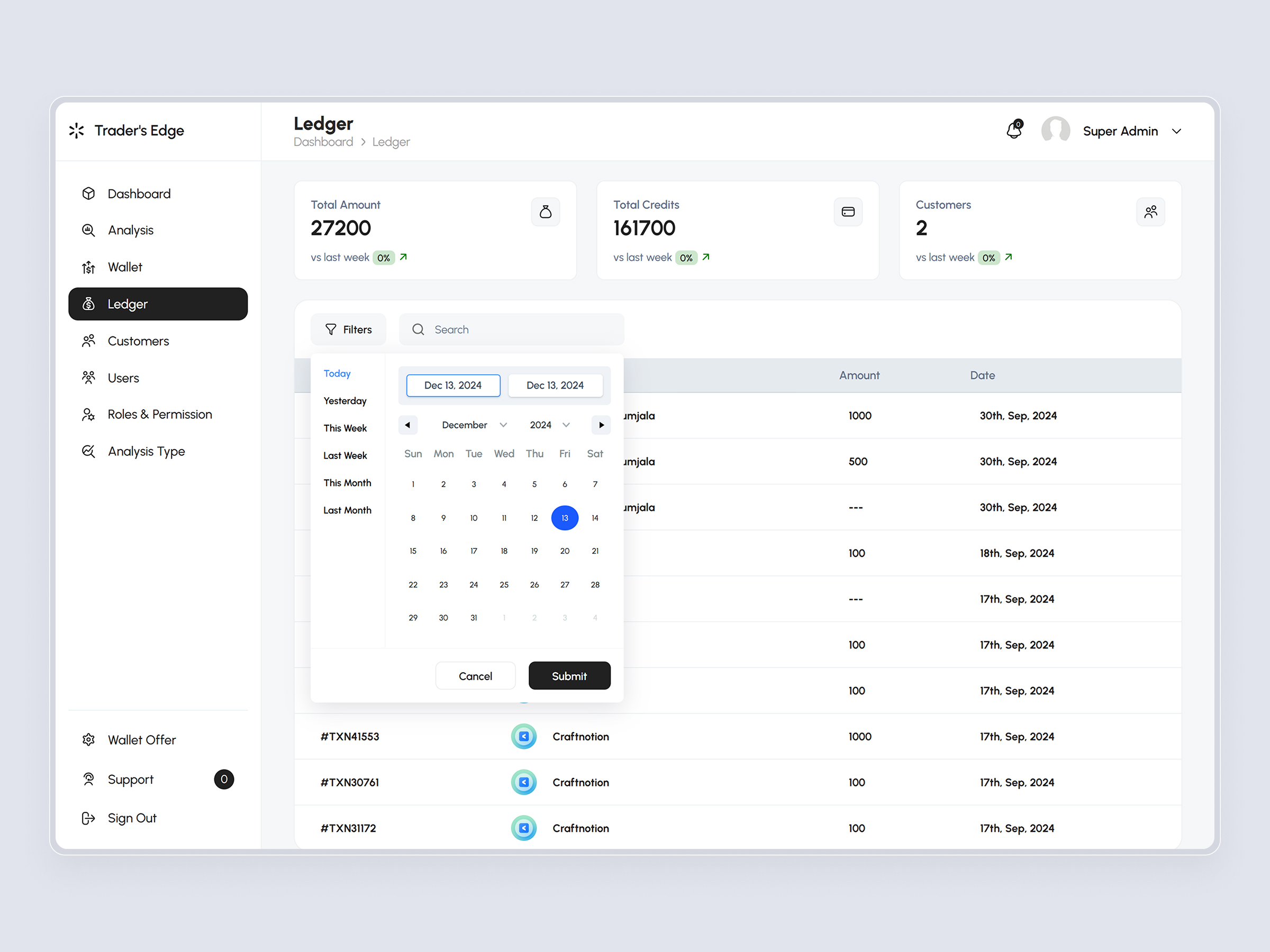
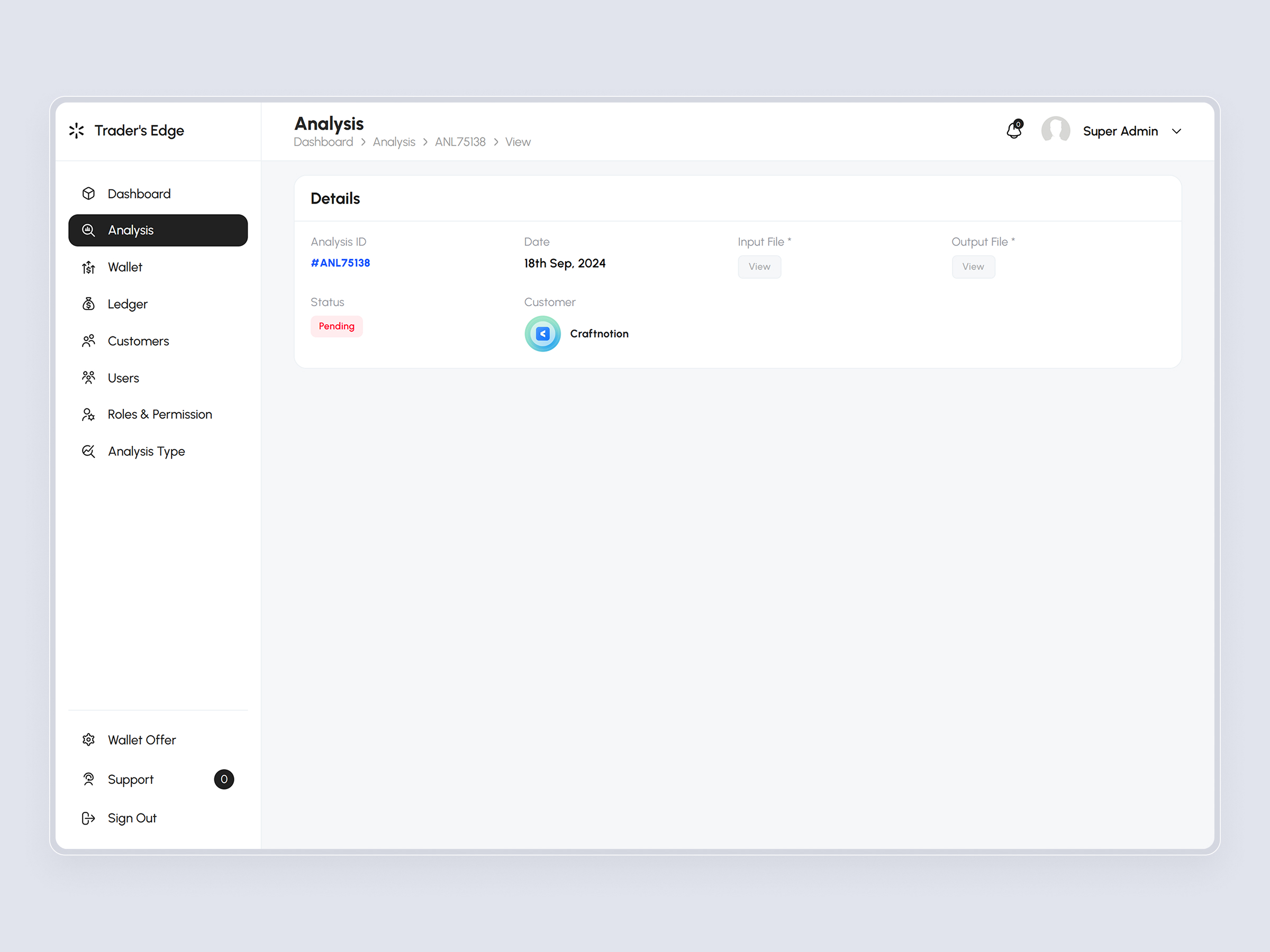
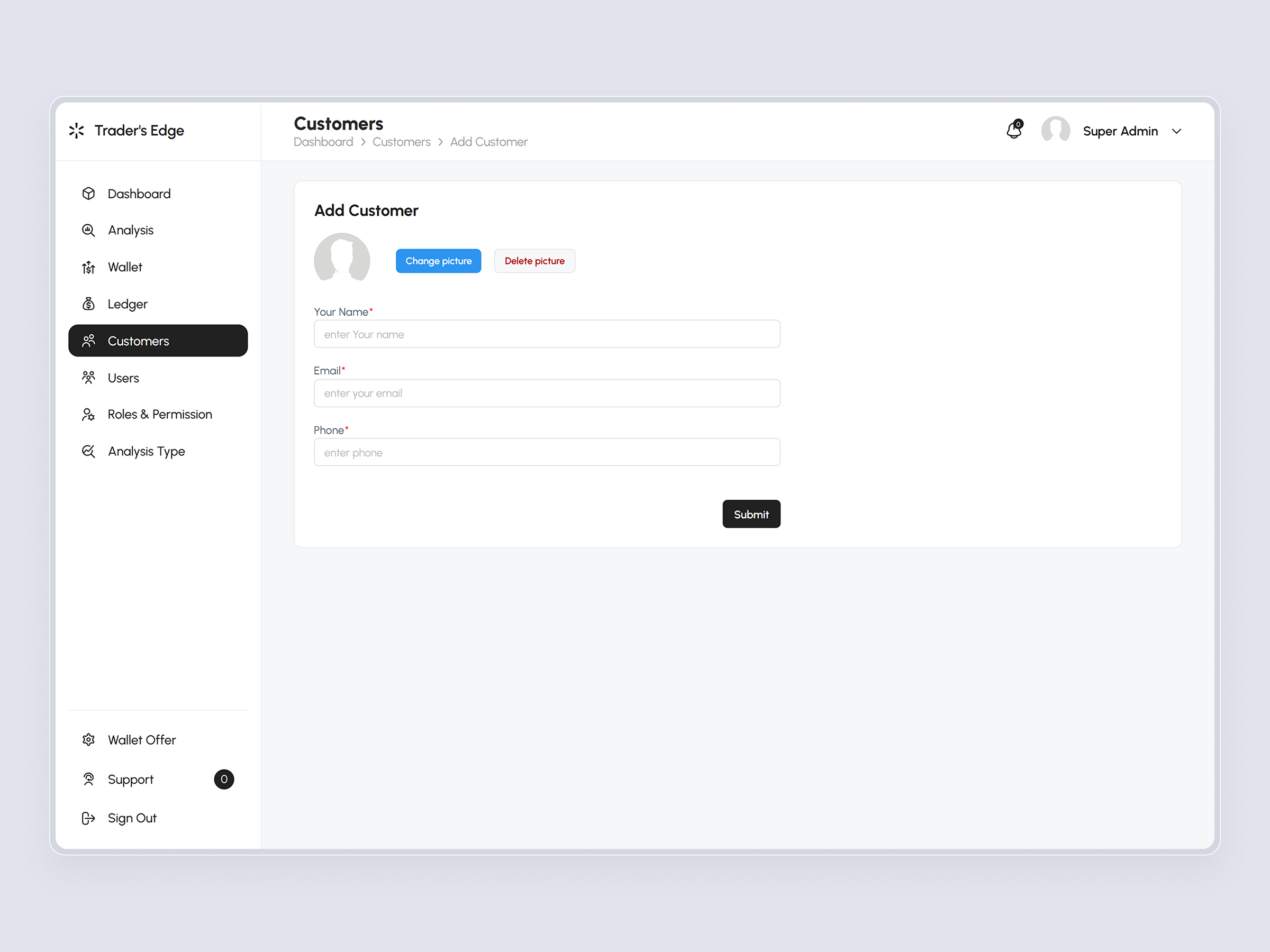
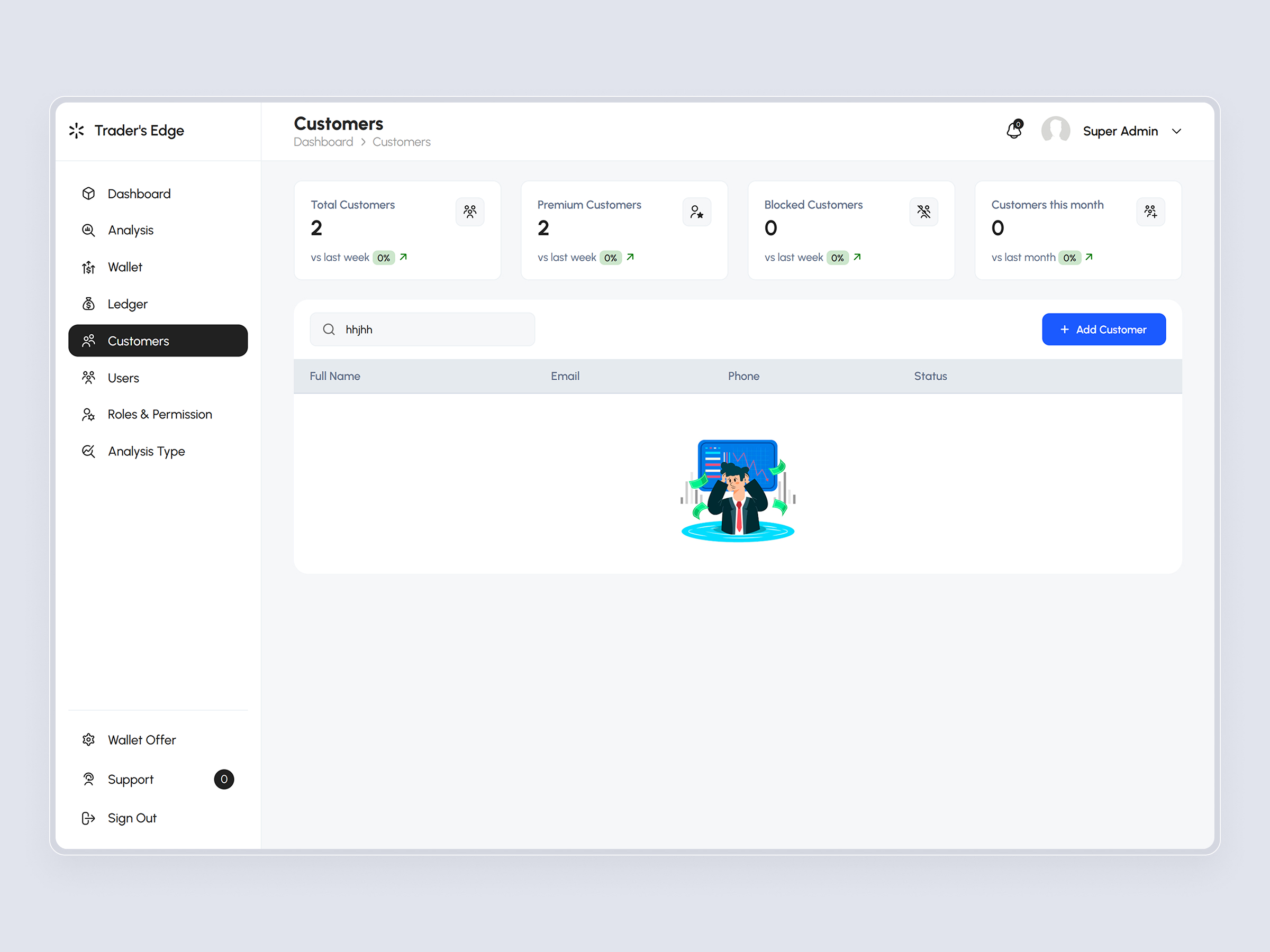
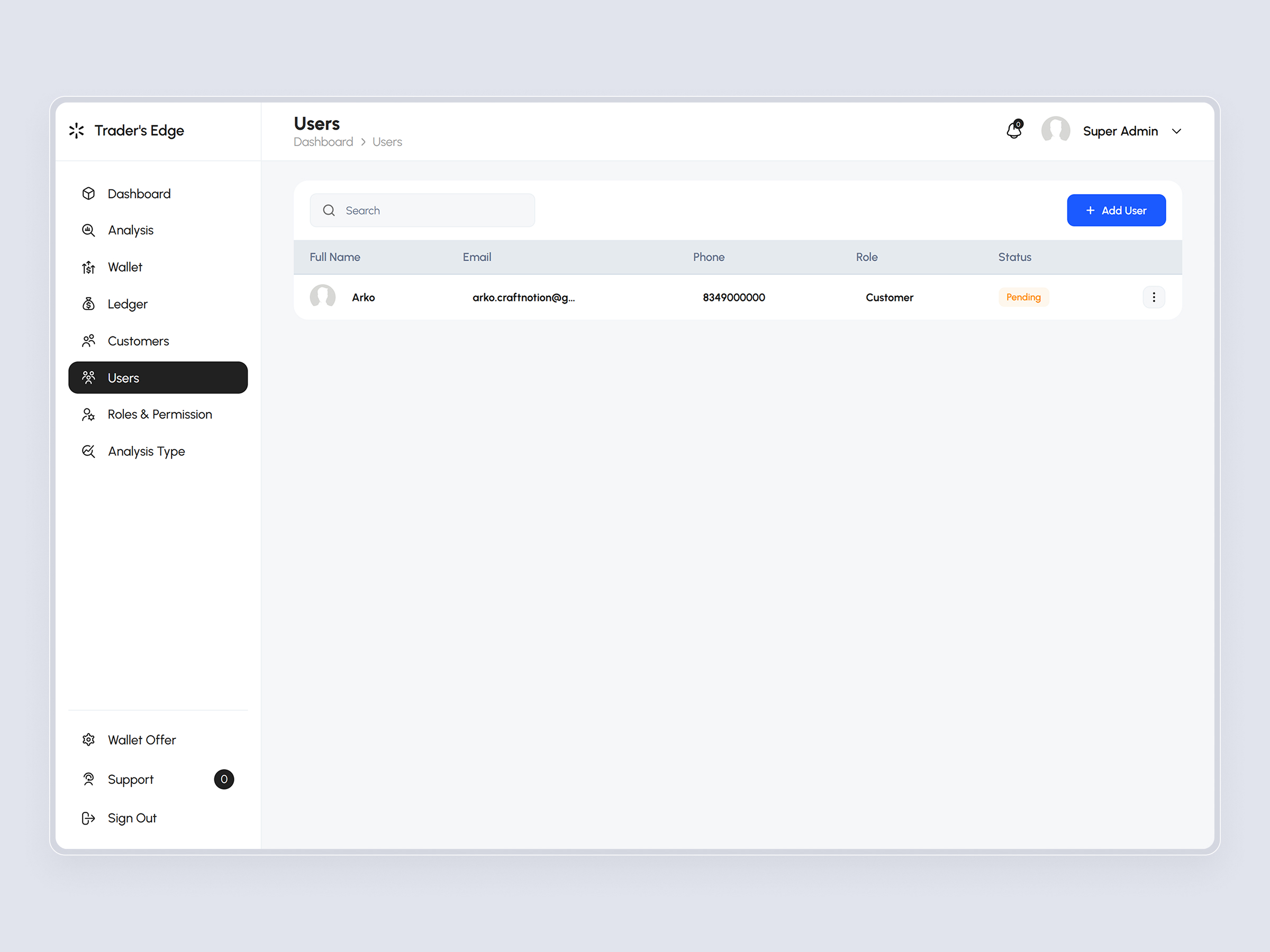
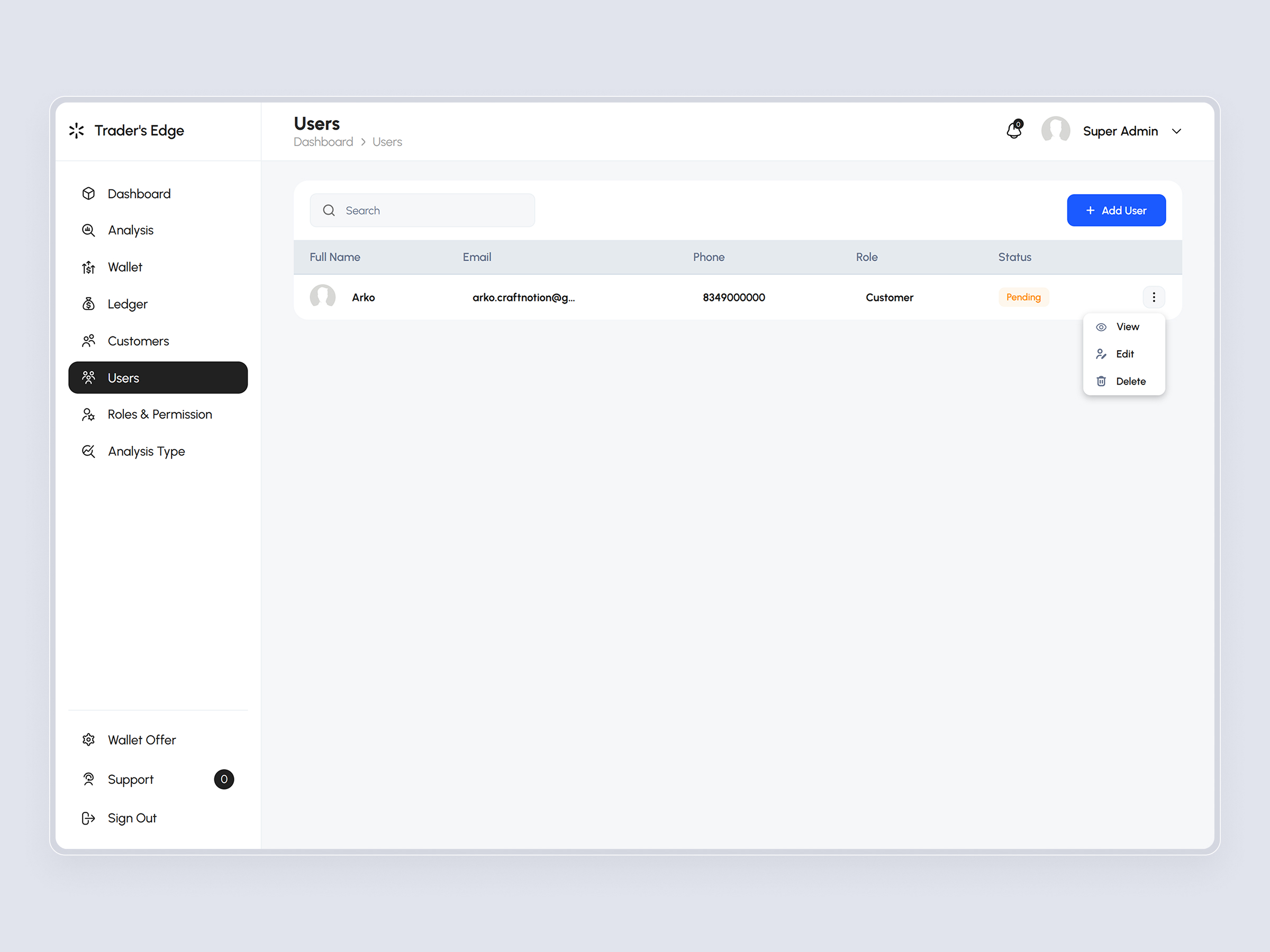
The admin panel gives the client complete visibility into platform operations — user activity, credit purchases, AI usage patterns, revenue analytics, and wallet transactions. It also lets the client manage AI model parameters and feature configurations without needing developer intervention.
Stack and implementation
The frontend is built with Next.js and React for a fast, responsive interface with server-side rendering. The backend uses Node.js for the API layer and user management. The AI models run in Python — we planned, designed, and built an integration layer that calls the client's Python-based ML models from the Node.js backend, processes the results, and serves them to the frontend. PostgreSQL handles user data, credit transactions, and analysis history.
What shipped
TradersEdge turned a set of Python AI models into a fully functional SaaS product with a clear monetization strategy. The product makes sophisticated stock market analysis — portfolio forecasting, risk assessment, and rebalancing suggestions — accessible to individual traders who wouldn't otherwise have access to AI-powered financial tools.

Frequently Asked Questions
Questions about AI stock analysis platforms,
answered clearly.
Questions about the work, scope, delivery context, and next steps.
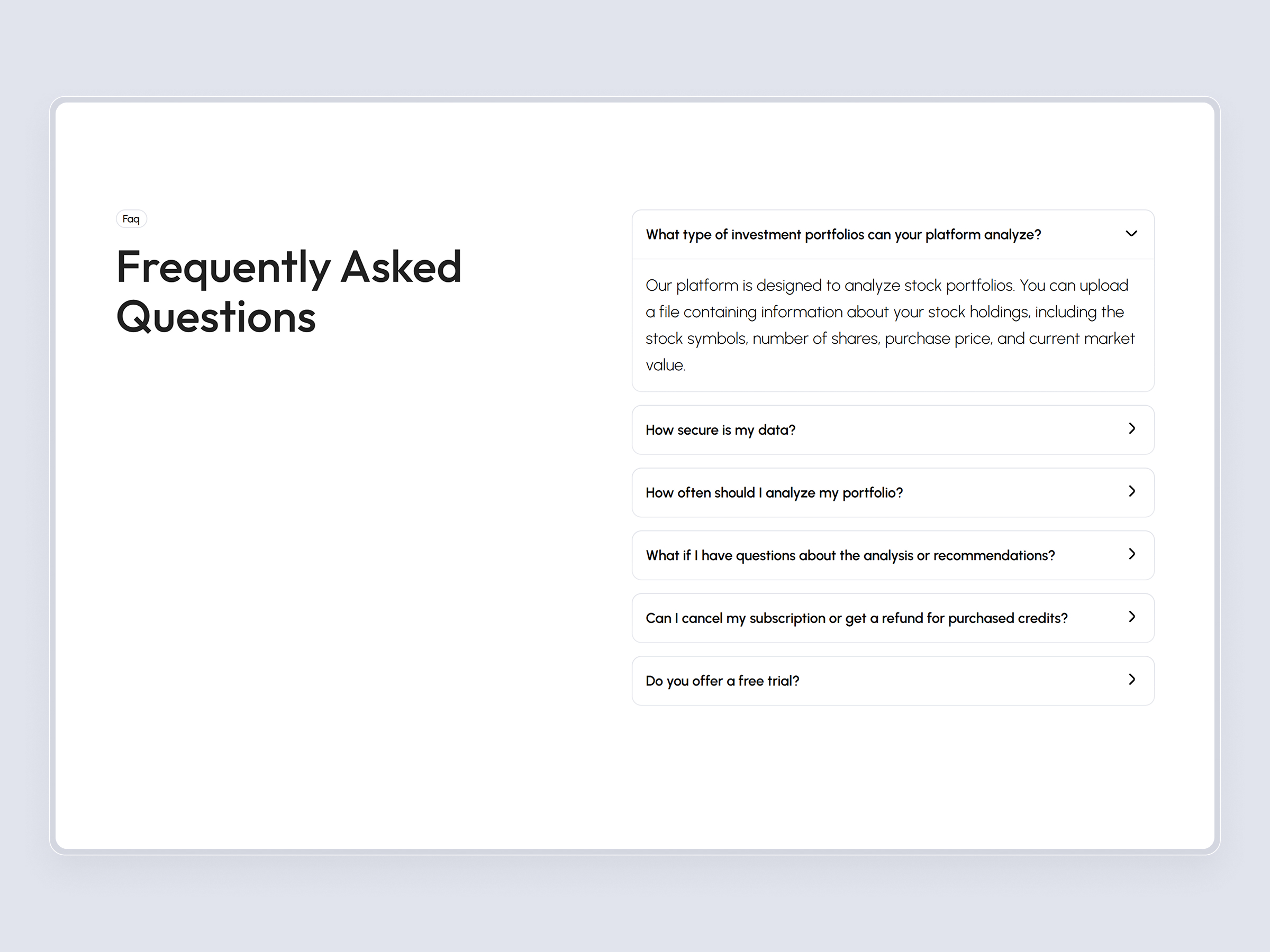
TradersEdge uses machine learning models trained on historical market data, technical indicators, and portfolio composition patterns. Users input their stock portfolios, and the AI analyzes them to generate performance forecasts, identify overexposure risks, and suggest rebalancing strategies. The models run in Python and are integrated into the web platform through a custom API layer.
Related Work
Similar case studies,
selected for context.
Continue exploring related work, with comparable product and delivery challenges.