SaaS ApplicationsWeb ApplicationsMVP DevelopmentInterface Designs
NNIIT LMS
NNIIT is an education platform reworked from a manual operation into a clearer, more scalable digital system for students, teachers, and admins.
An LMS foundation built for a serious EdTech product
NNIIT came to us with a problem: they were running an education platform manually. Exams were paper-based, student progress was tracked in spreadsheets, and there was no central system tying things together. They needed a Learning Management System — and they needed us to figure out what that should look like from the ground up.
We took the project from zero. The ideation was ours, the UI design was ours, the development was ours. No existing product to copy from, no template to fill in. We delivered the complete LMS in 3 months for ₹2.1 lakhs.
What the product needed to do
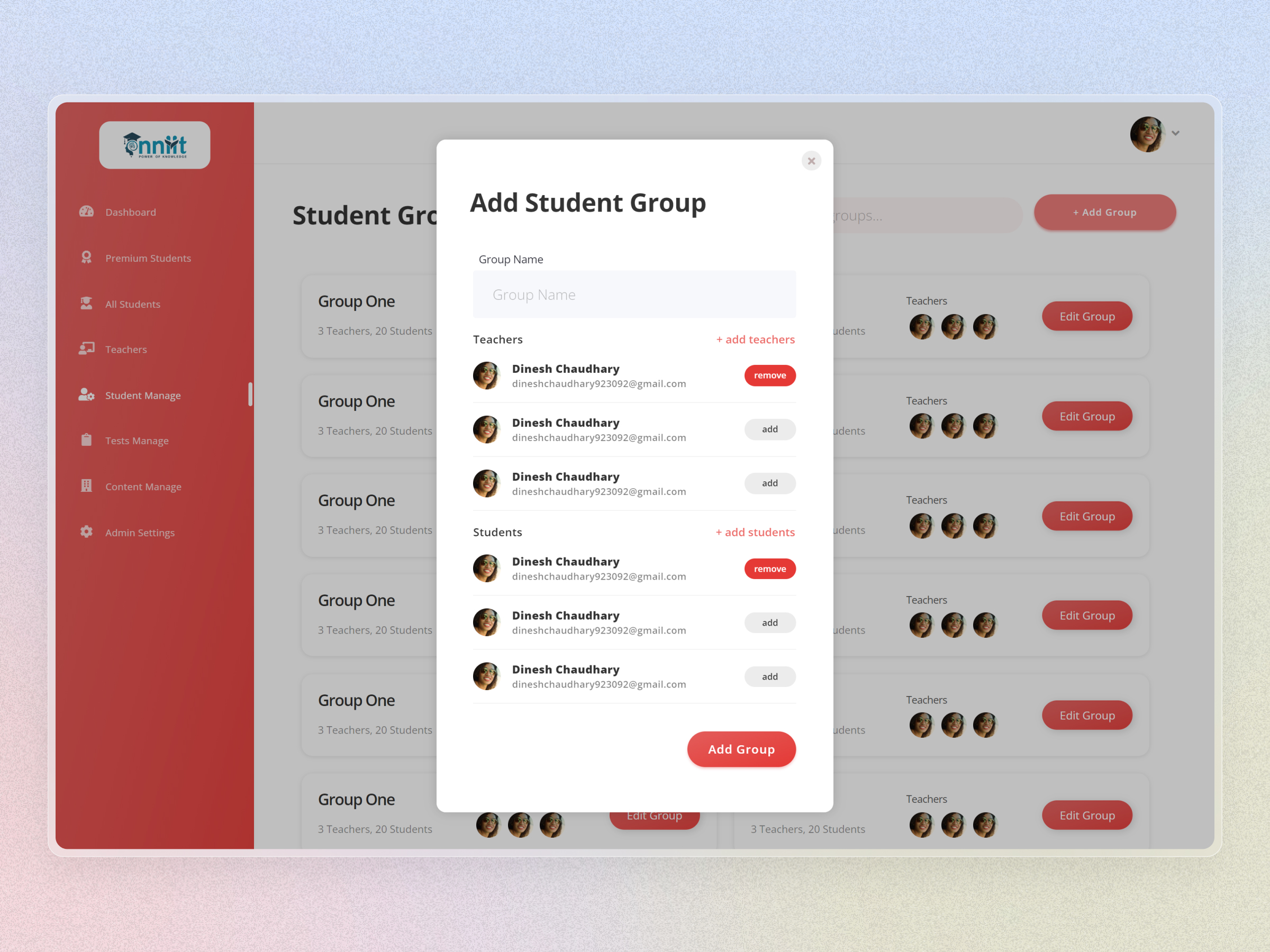
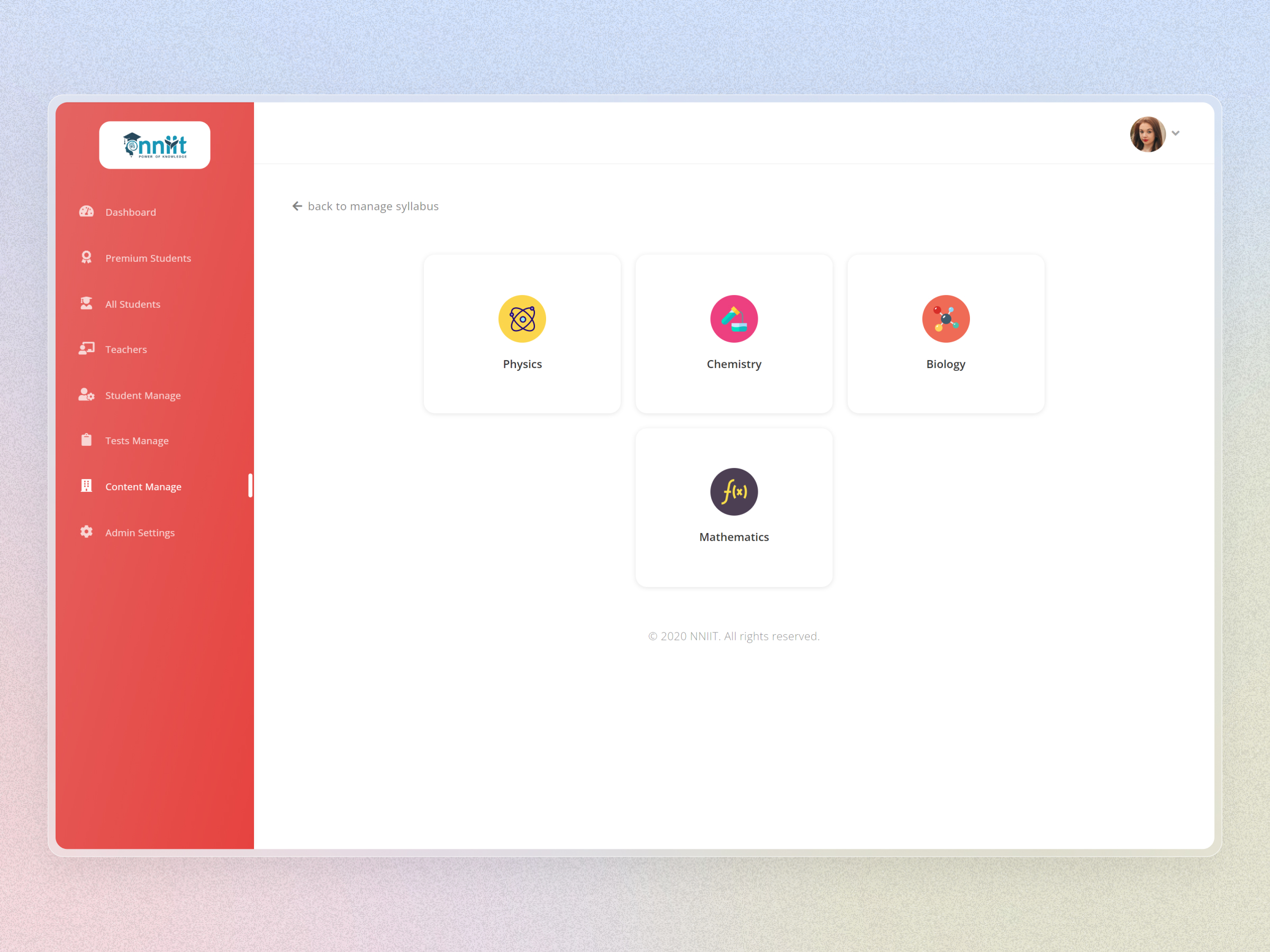
An LMS that actually works for an education institution means different things to different people. Students need to access materials and take exams. Teachers need to create content, set up assessments, and see how their students are doing. Admins need to manage everything without calling a developer every time something changes.
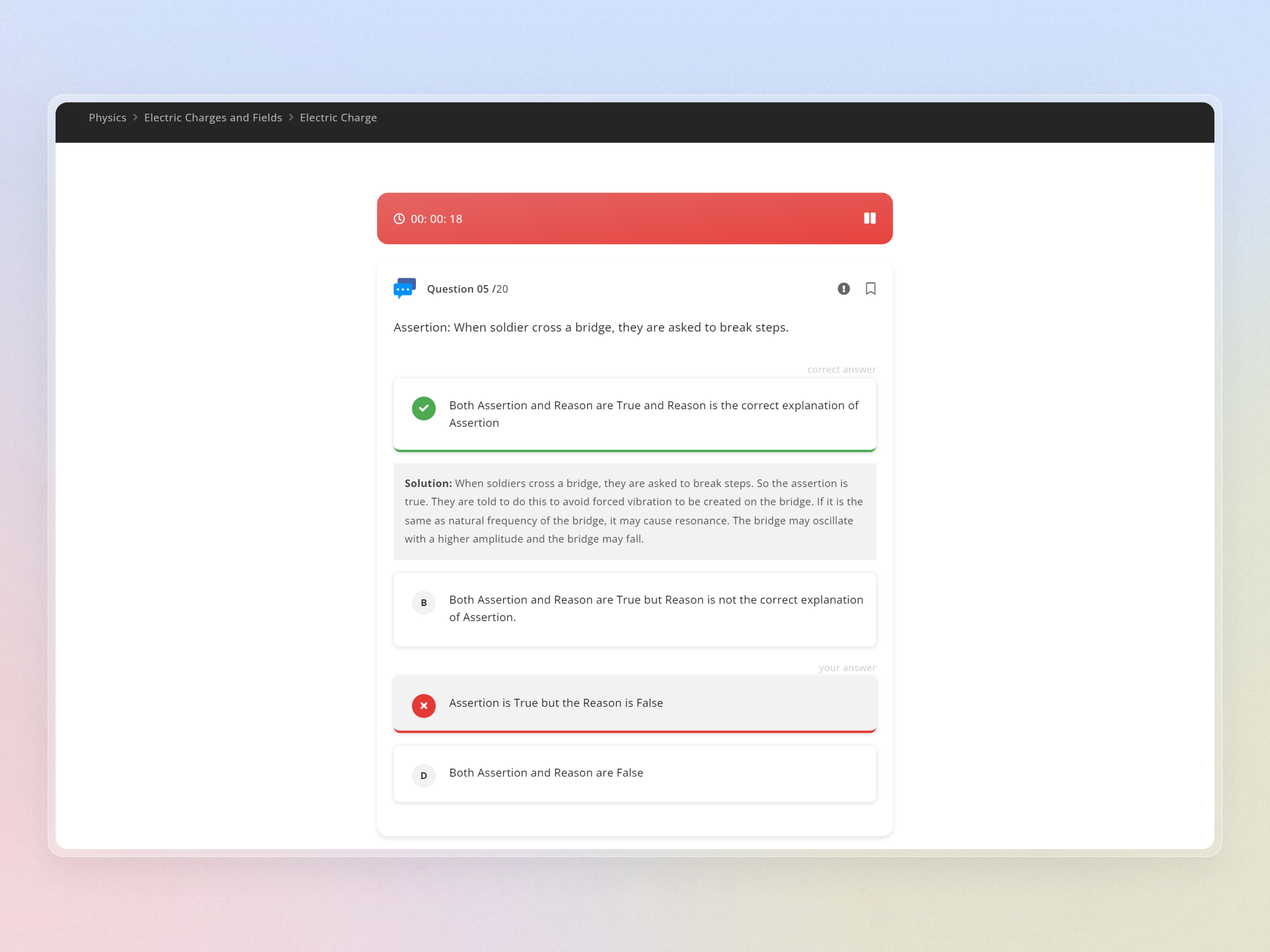
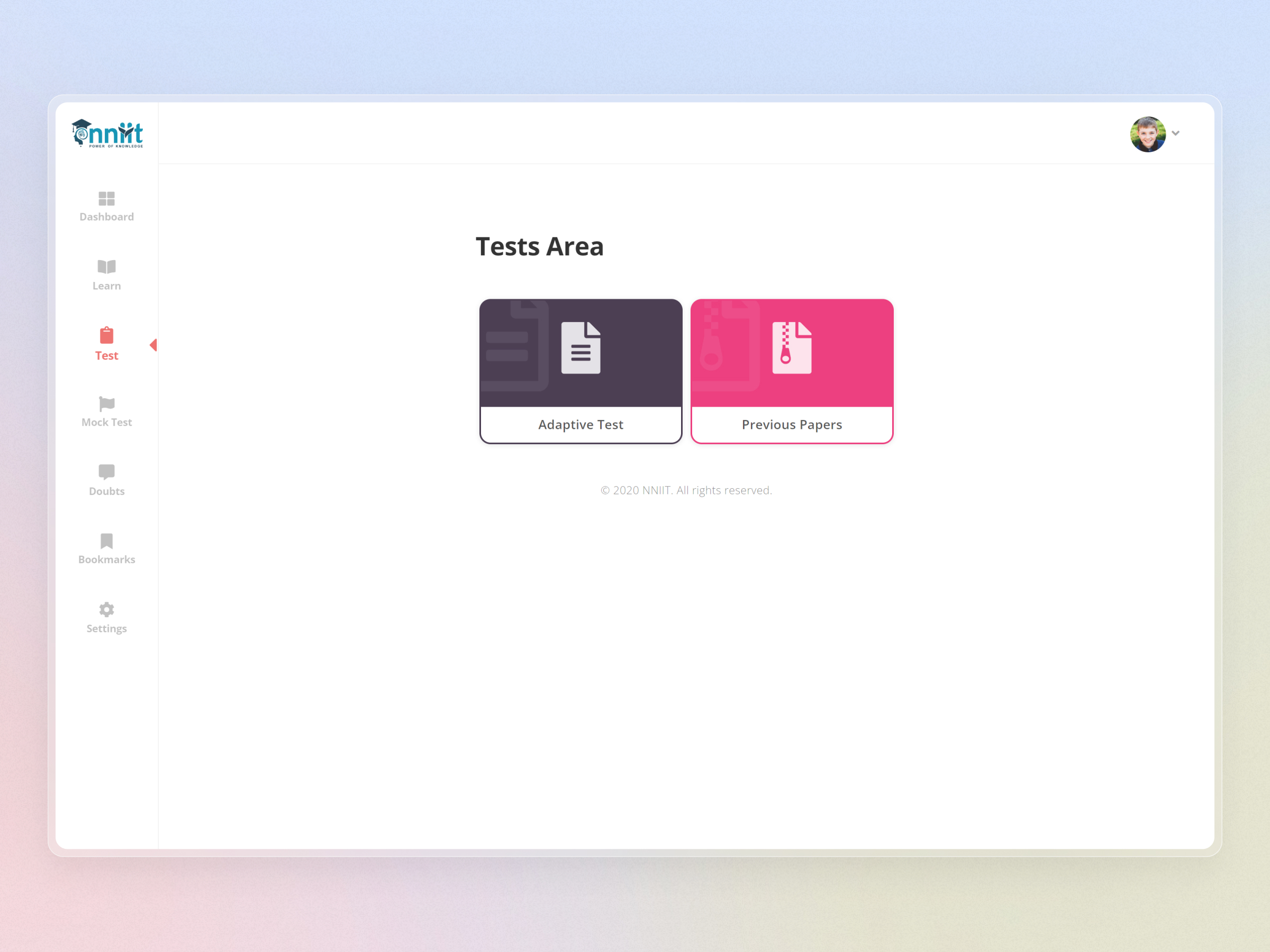
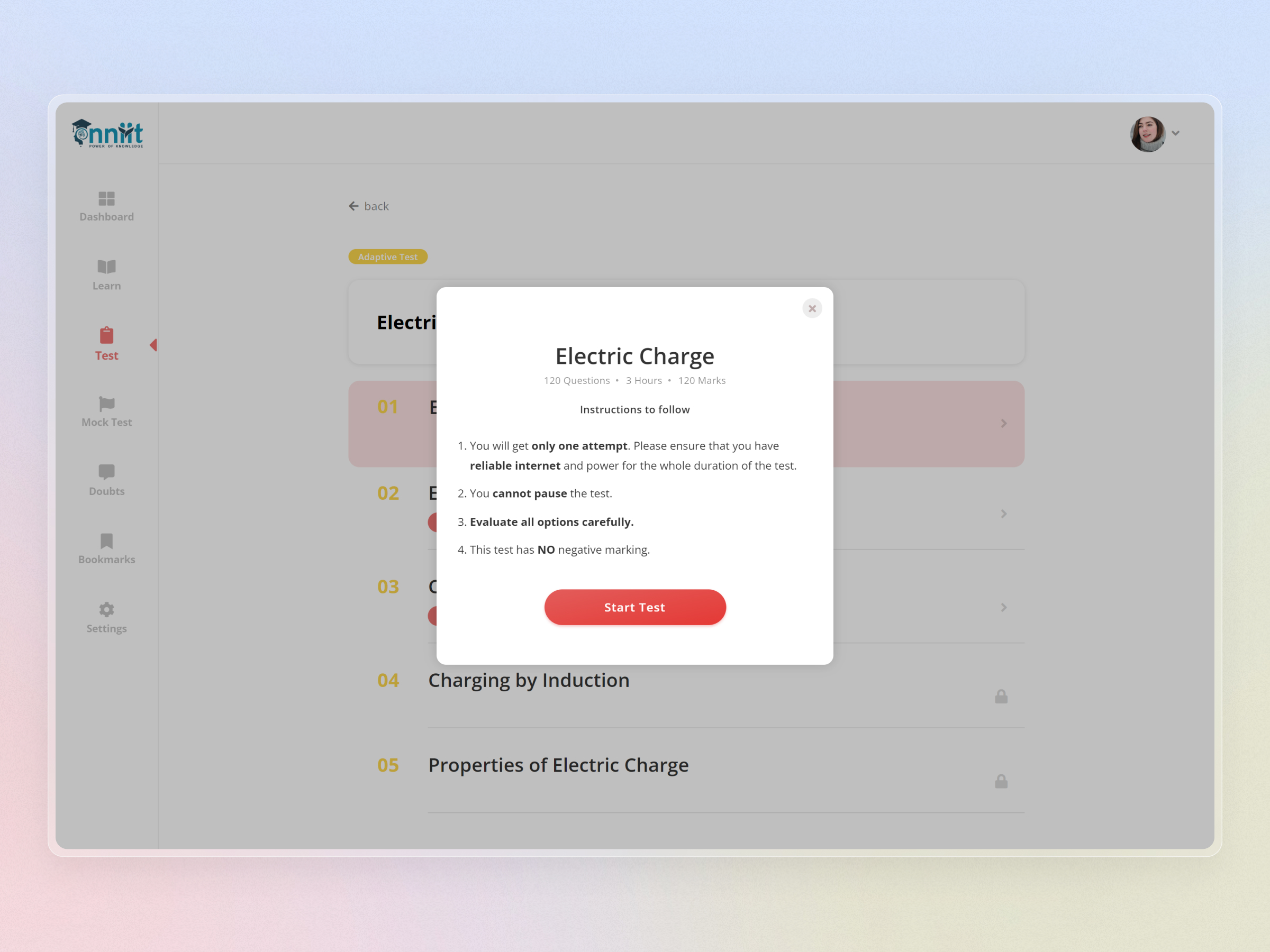
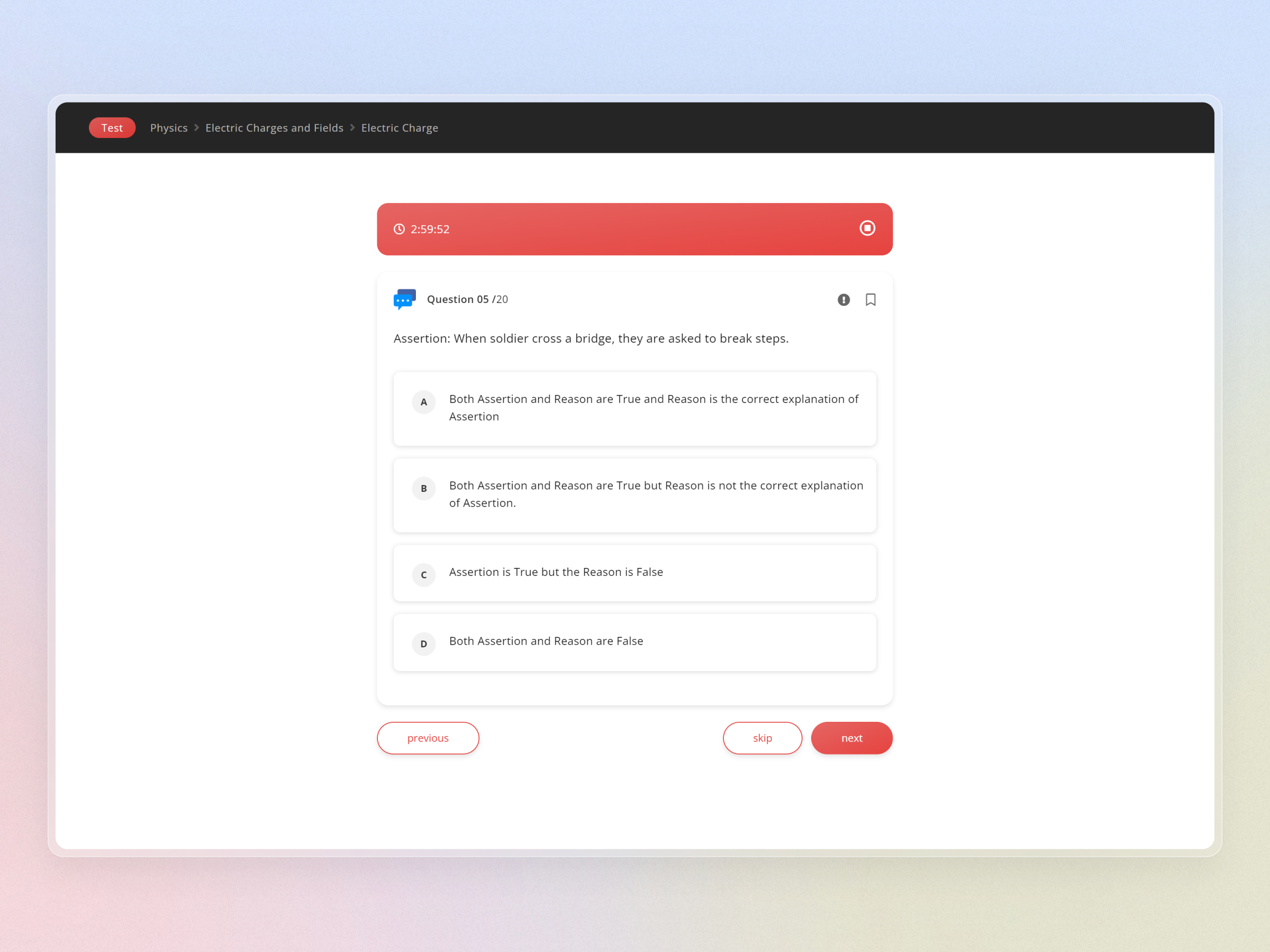
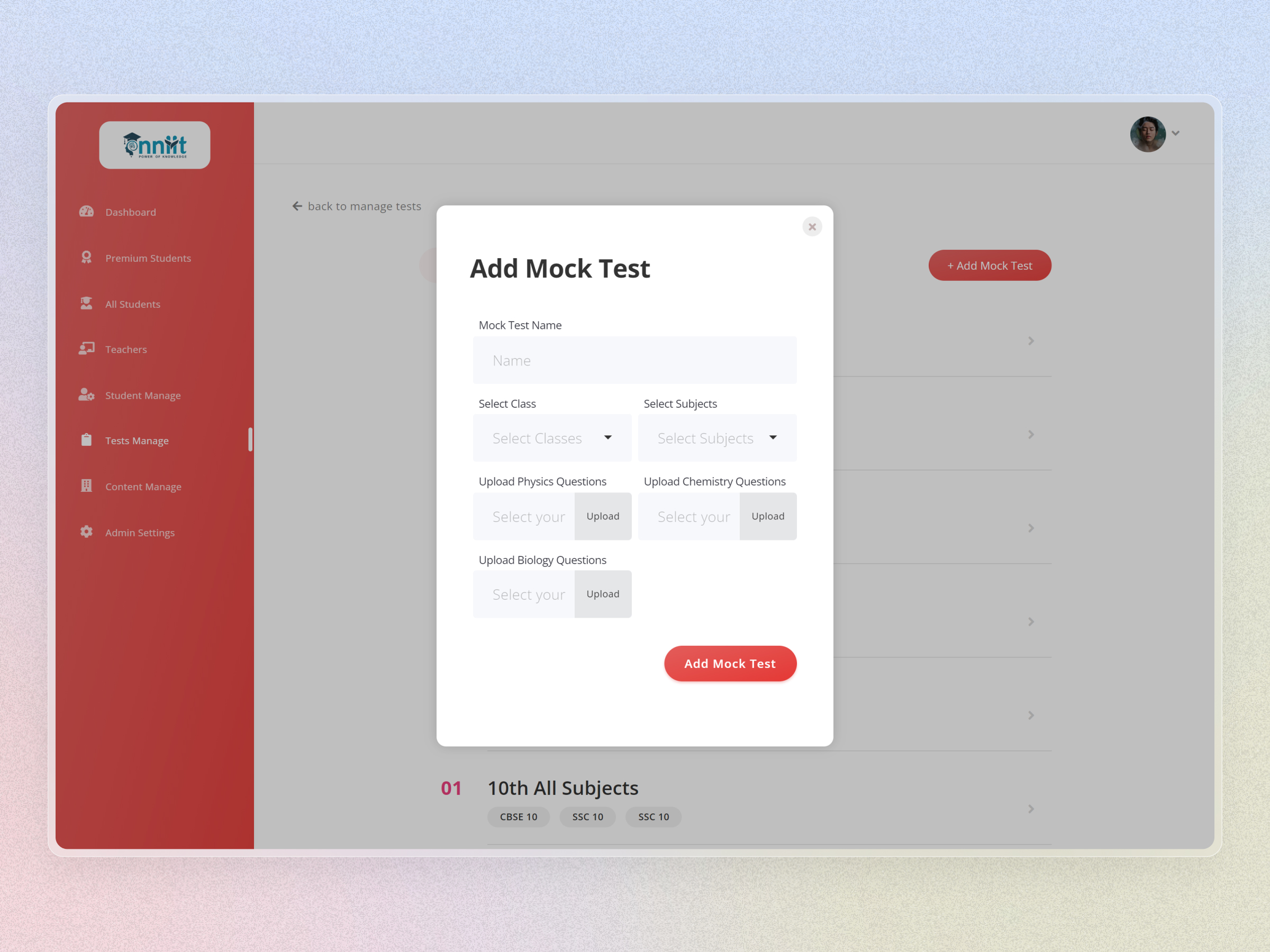
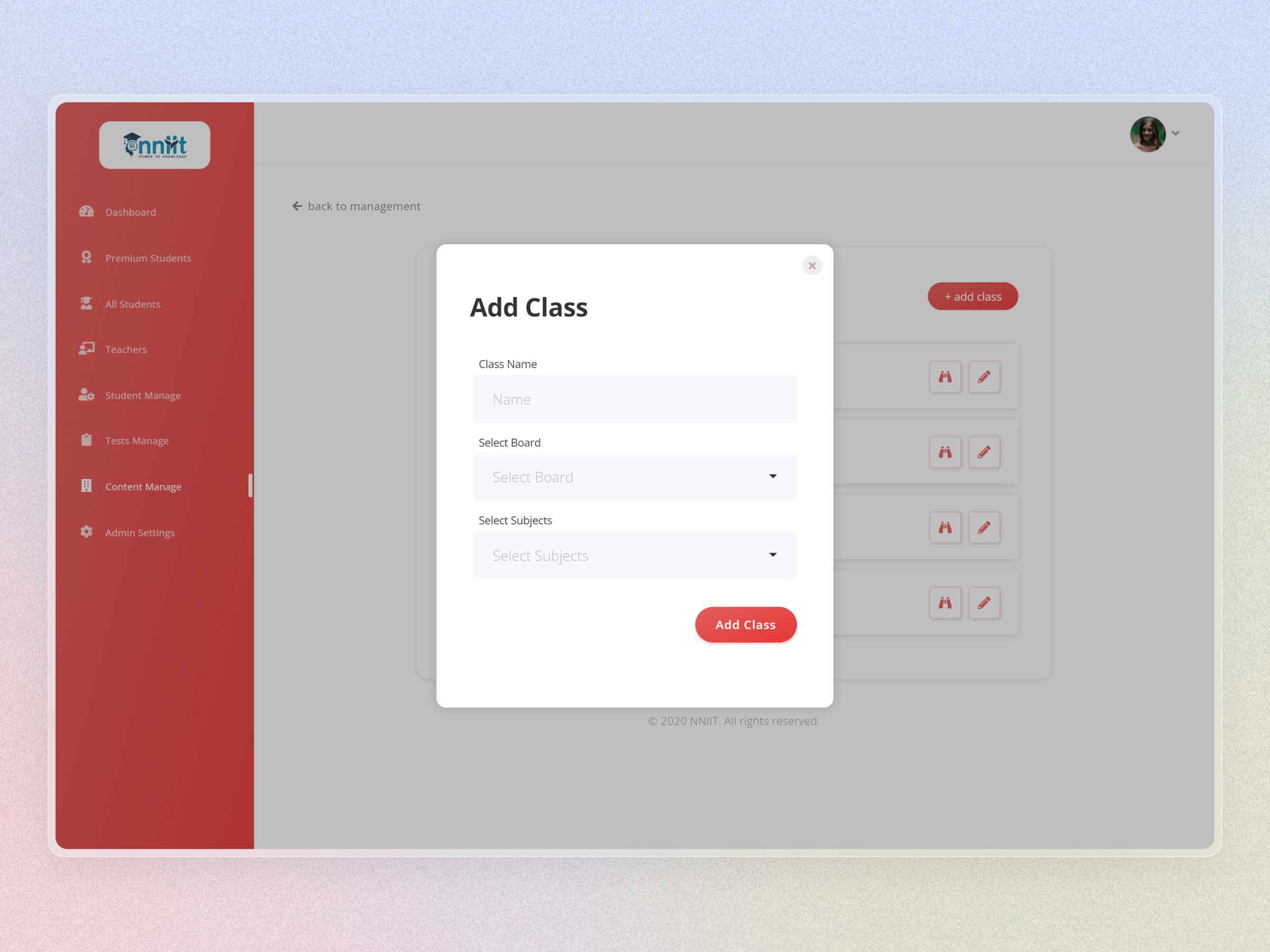
NNIIT also had a specific requirement that shaped a lot of the product design: they wanted online exams drawn from a central question bank, with adaptive practice that adjusts to each student’s performance level. This wasn’t off-the-shelf functionality — we had to build the logic for it.
How we approached it
We planned, designed, and built the product with Next.js on the frontend and Node.js with PostgreSQL on the backend. The data model had to handle a lot of relational complexity — students linked to courses, courses linked to question banks, exams linked to results, results feeding back into adaptive practice recommendations. PostgreSQL made that manageable.
Online Exams from a Question Bank
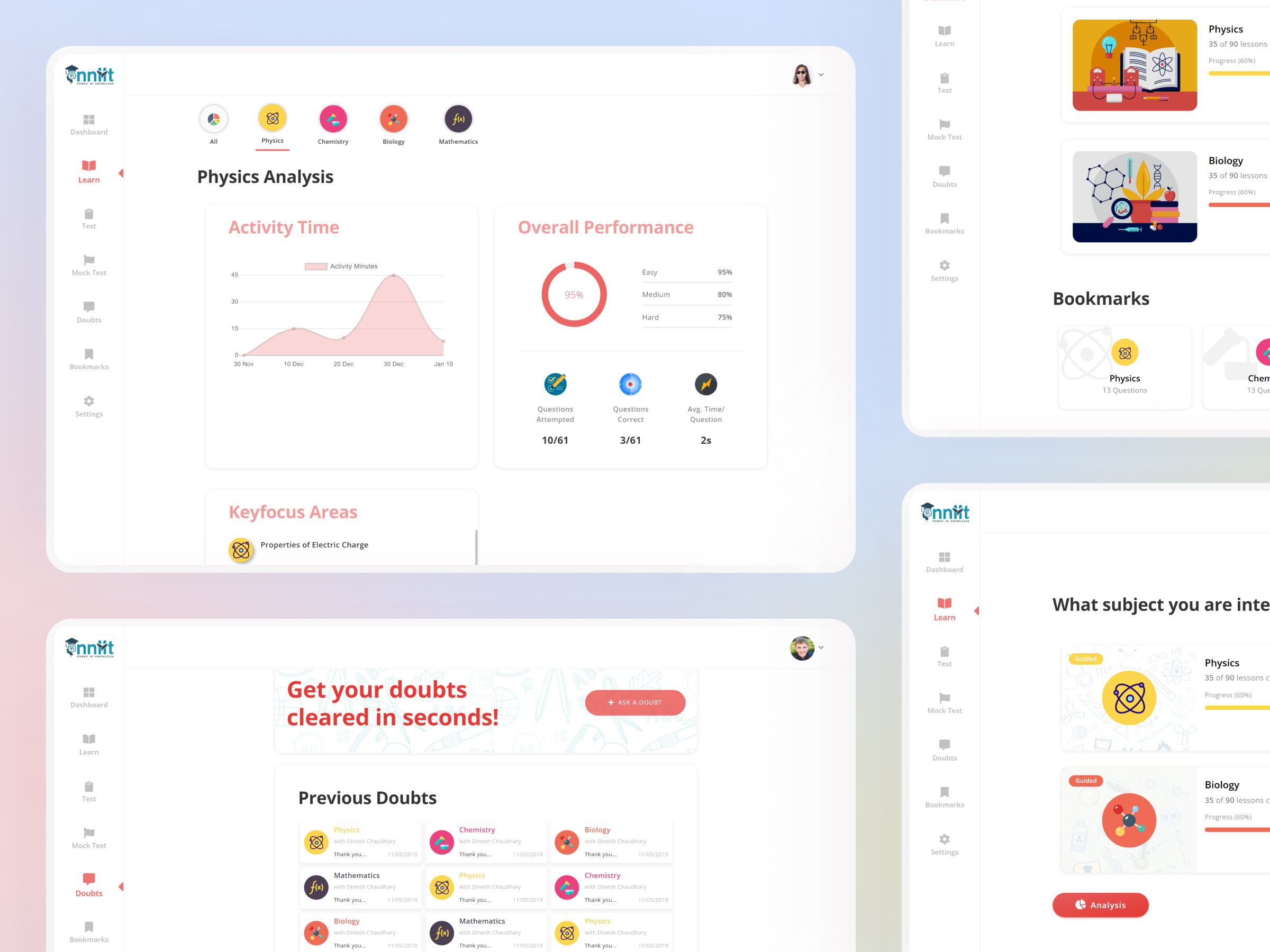
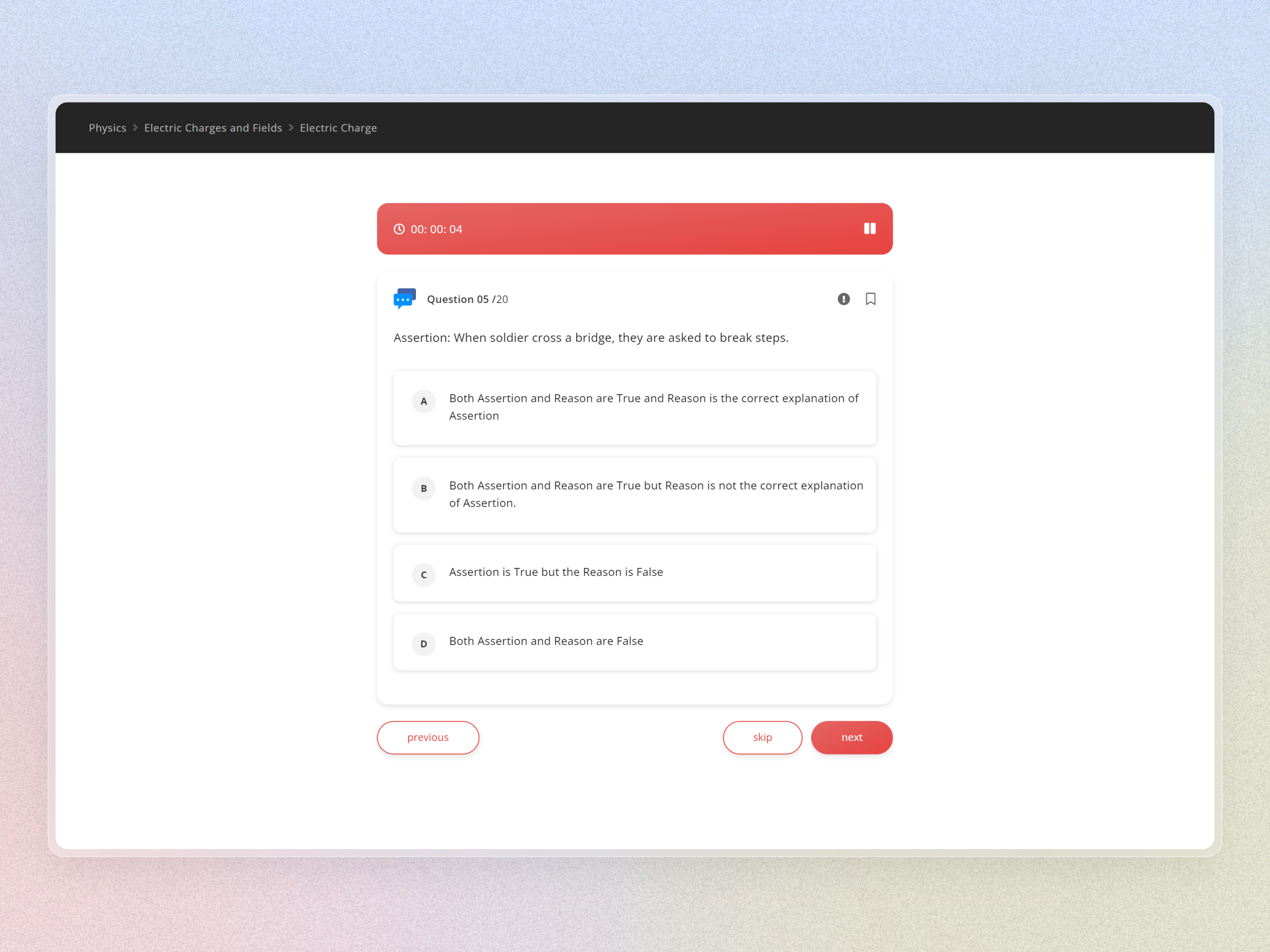
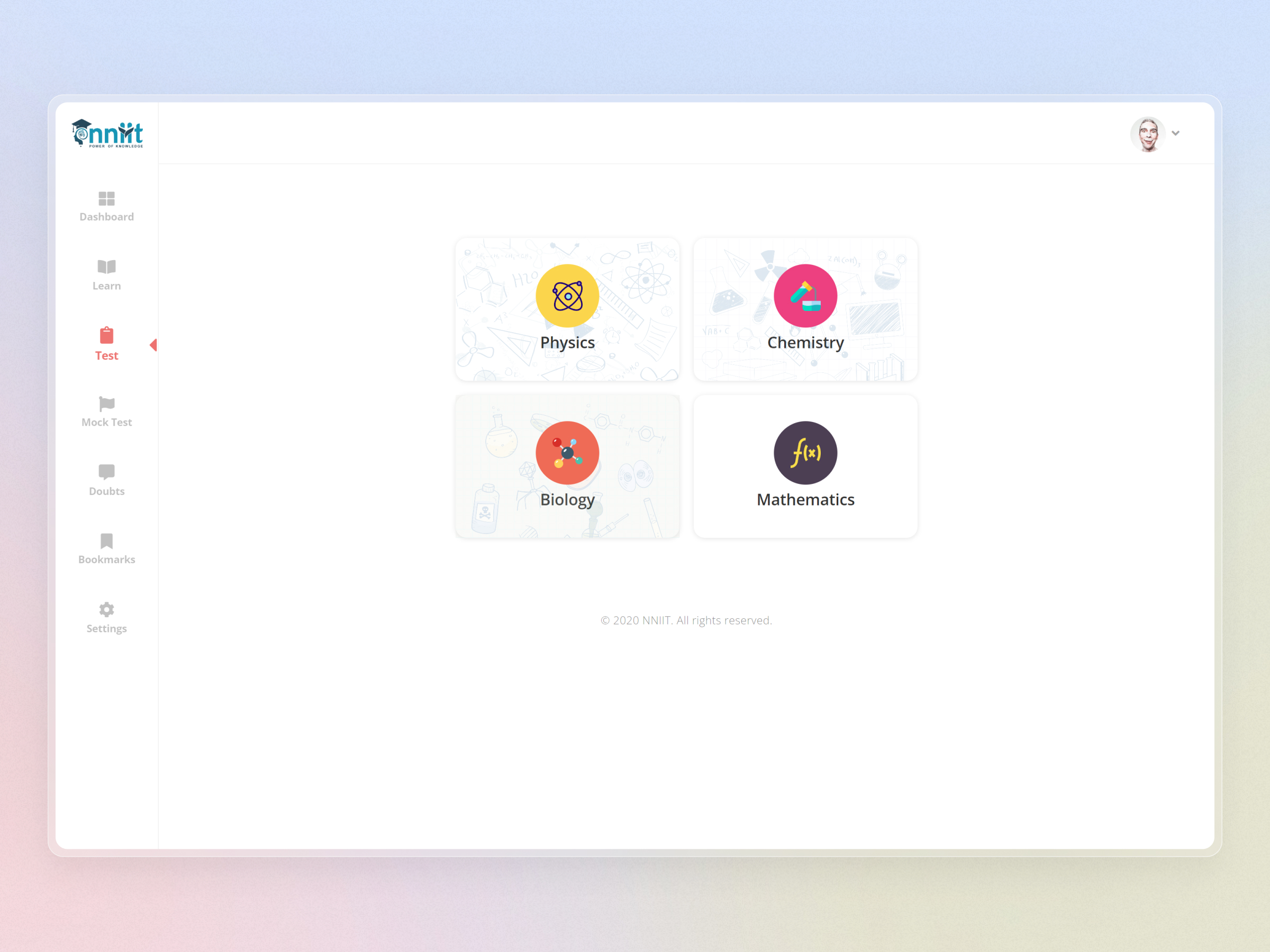
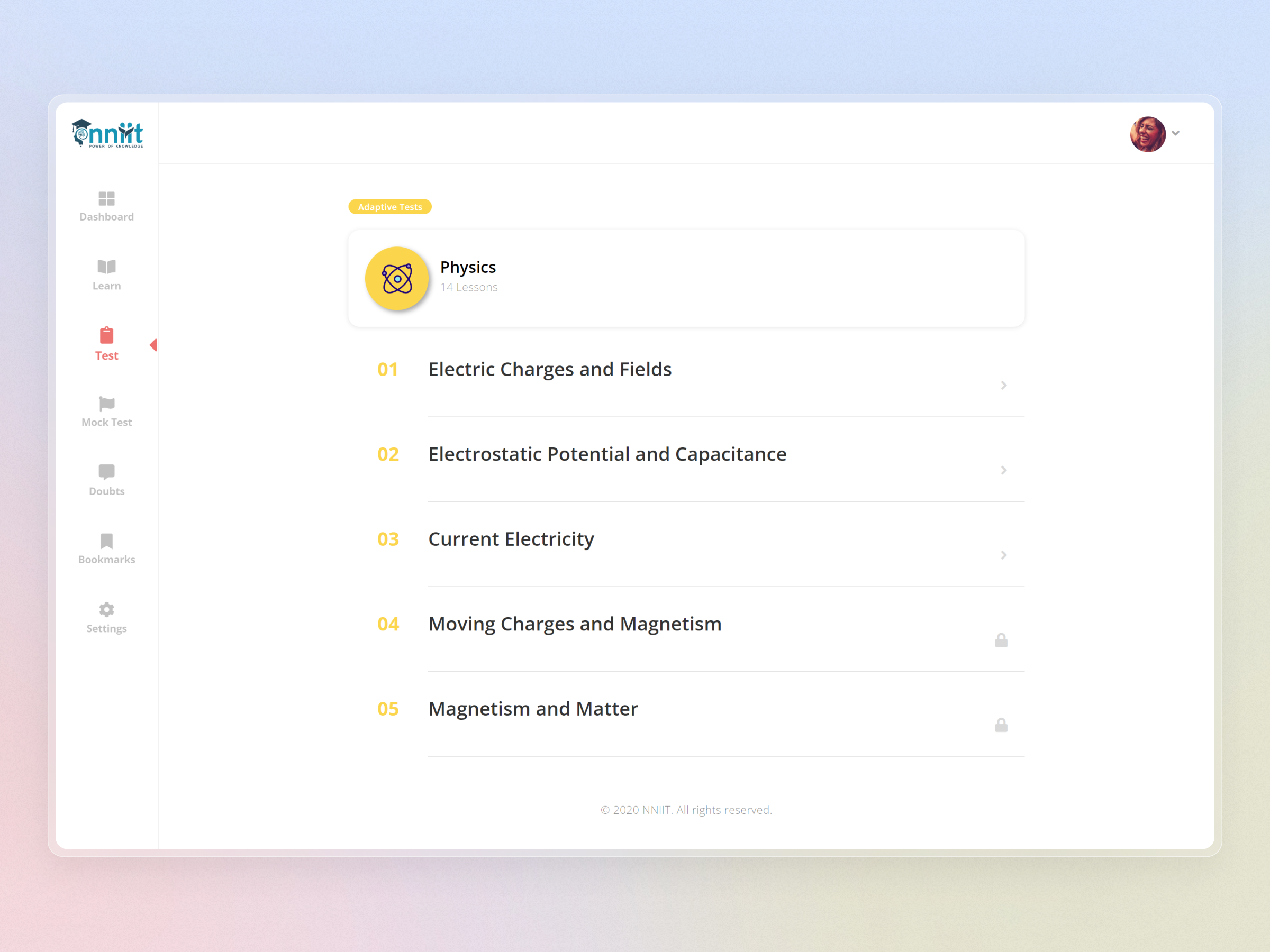
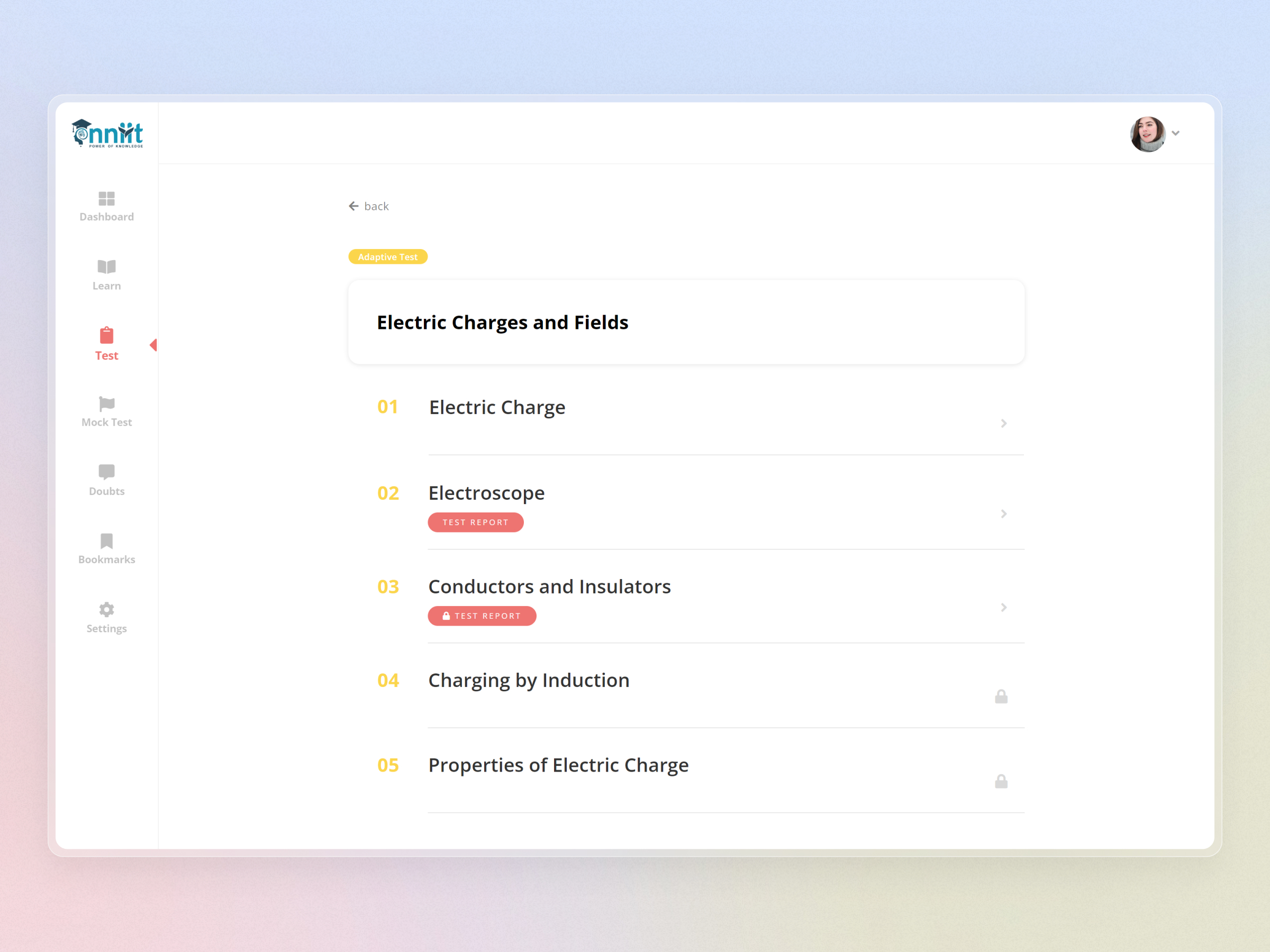
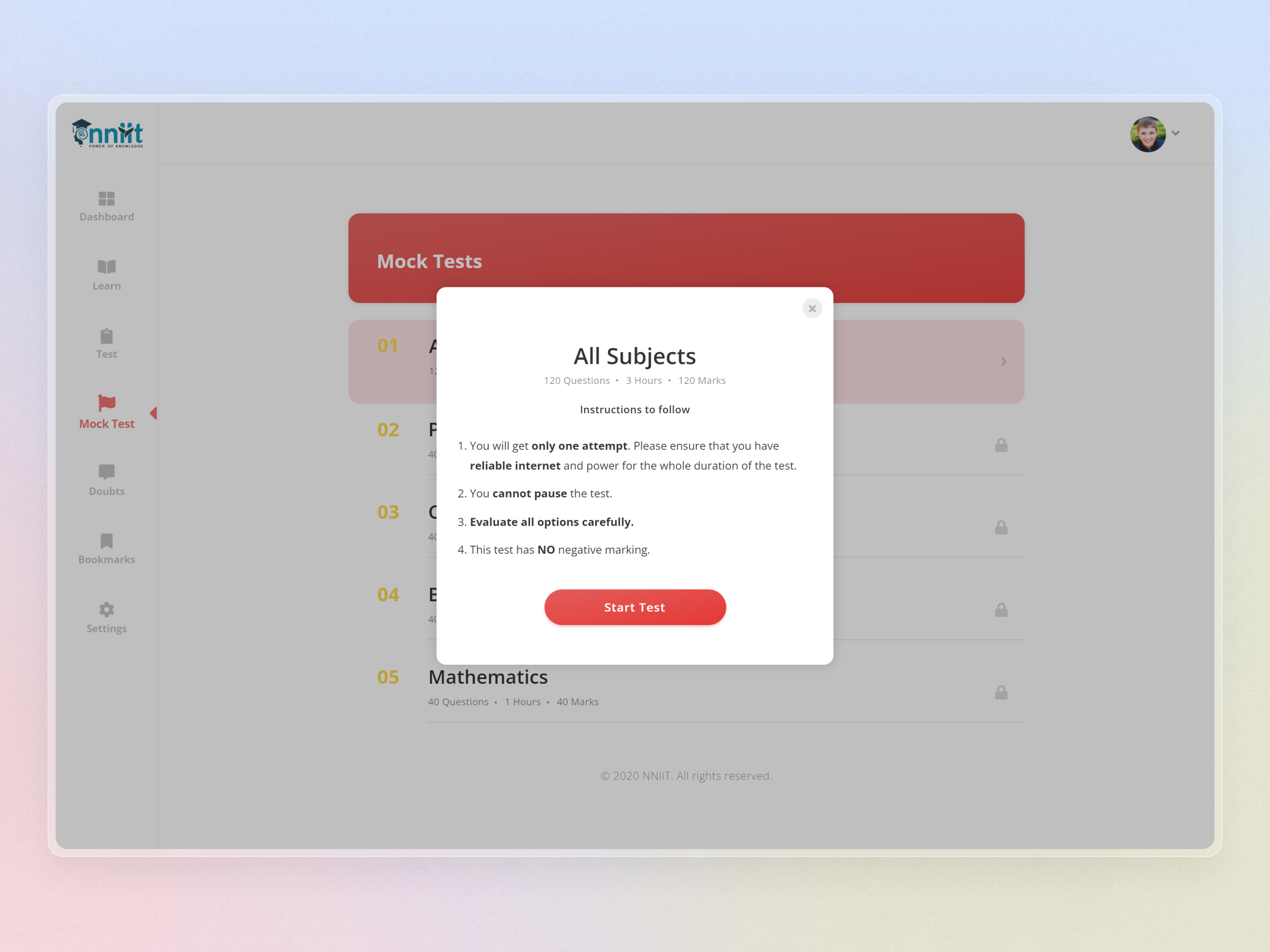
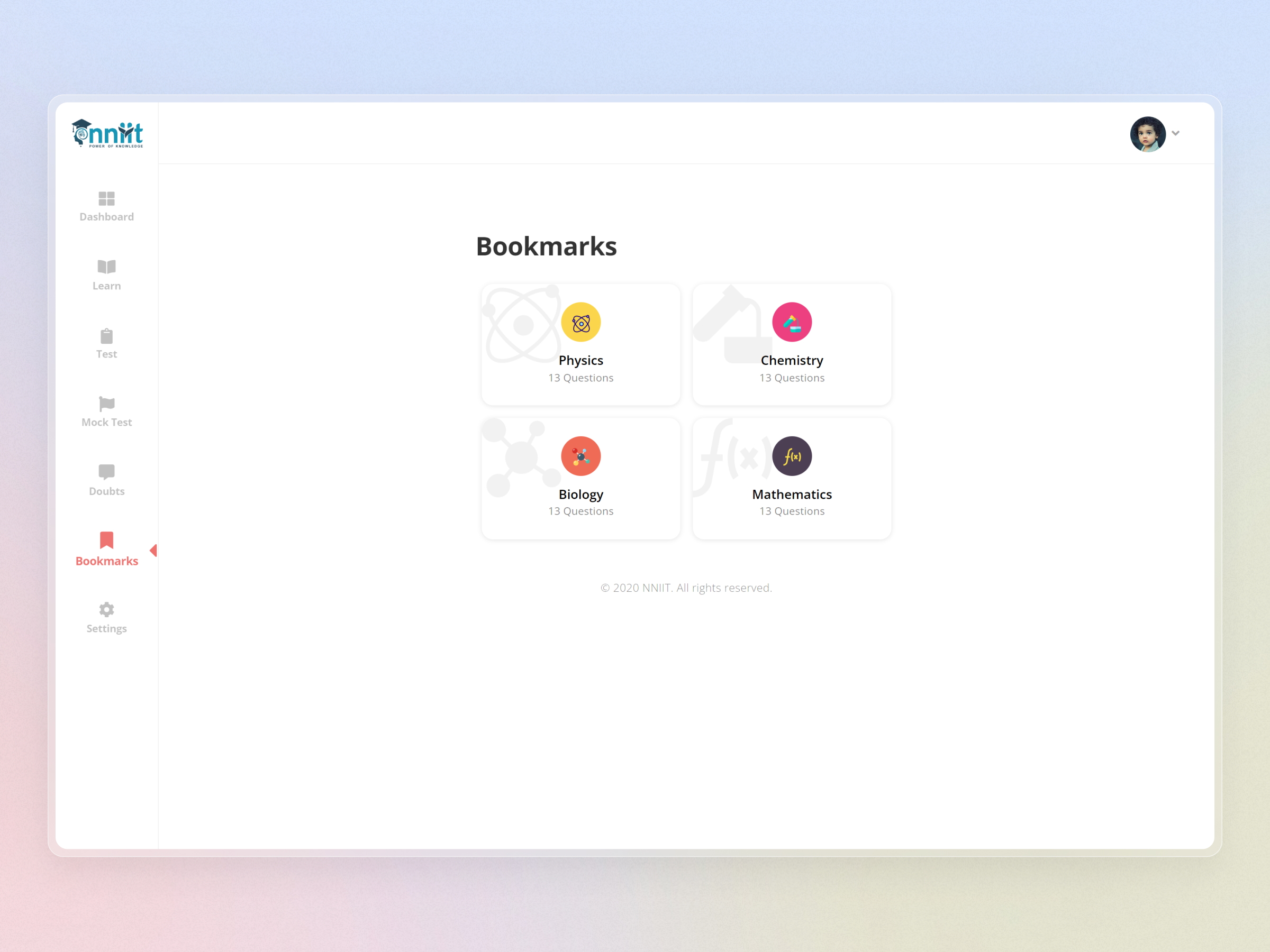
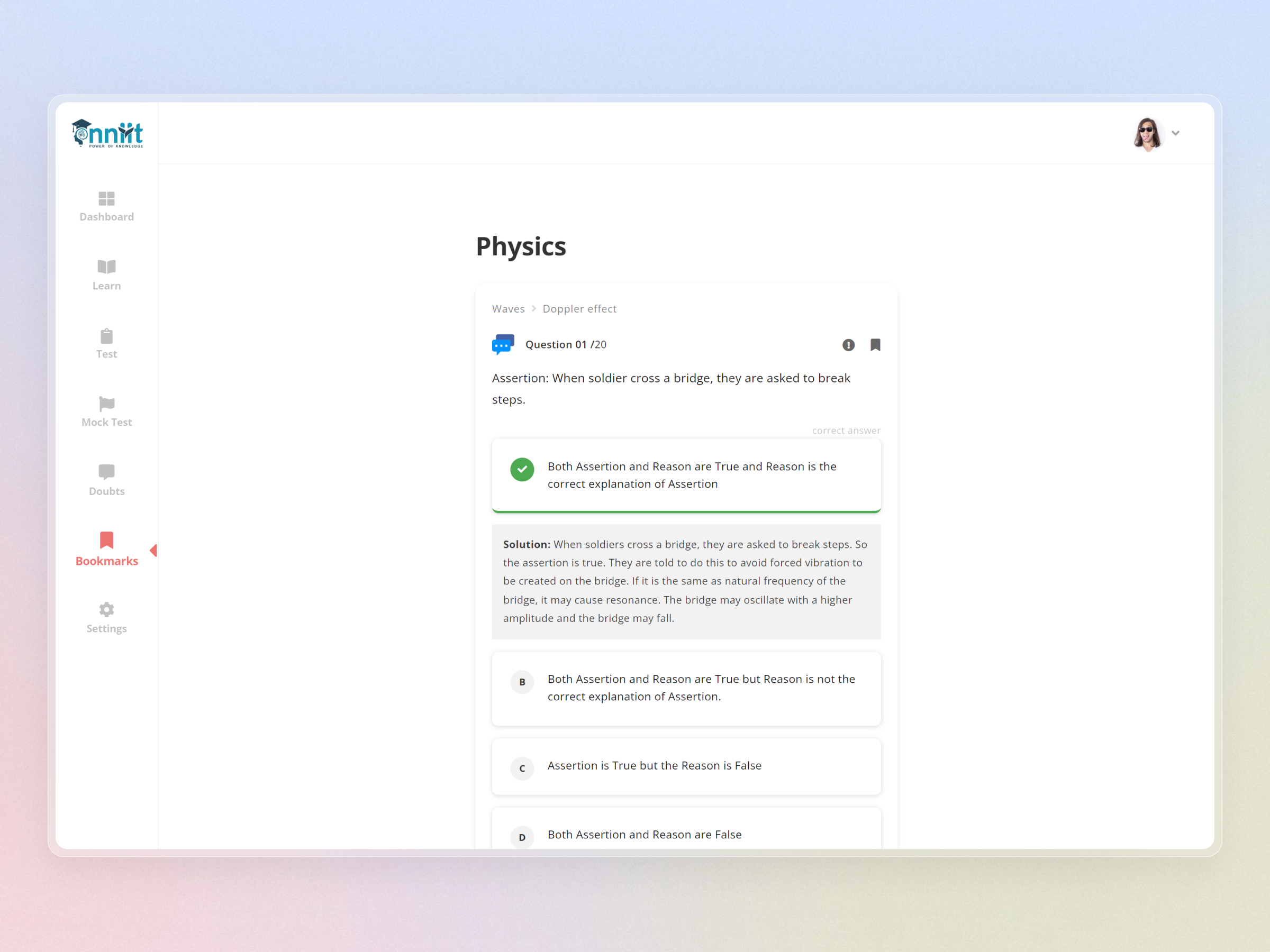
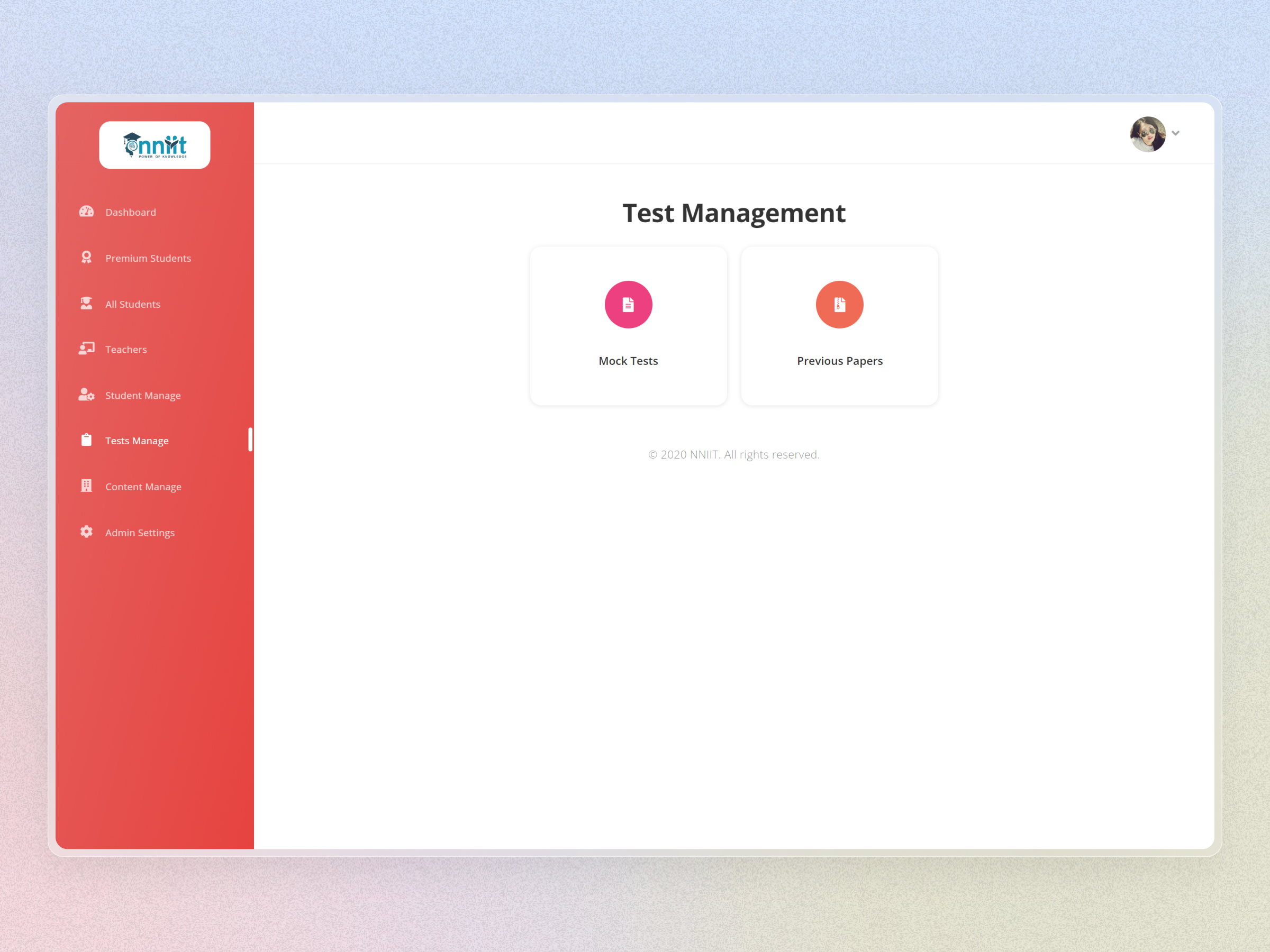
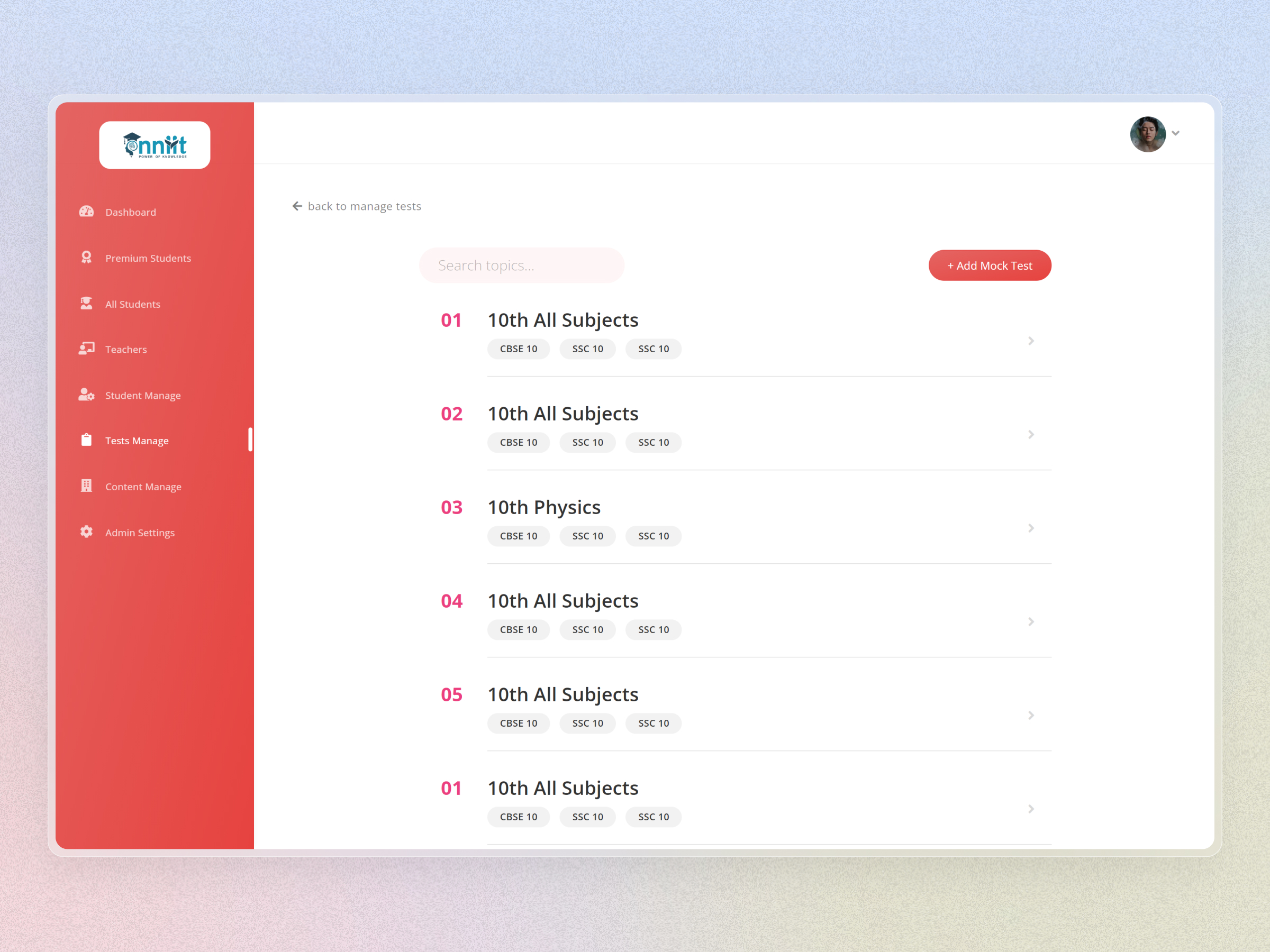
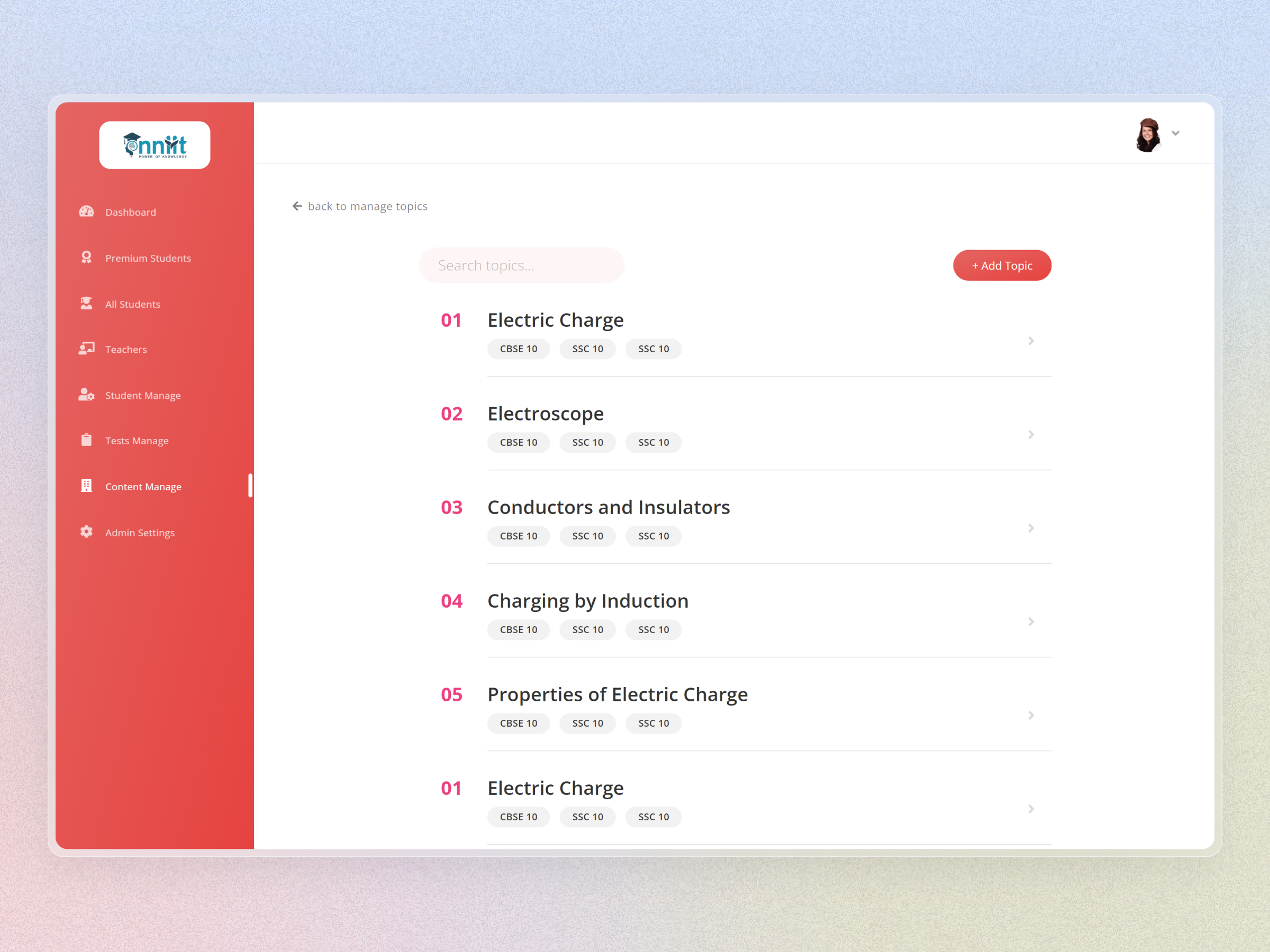
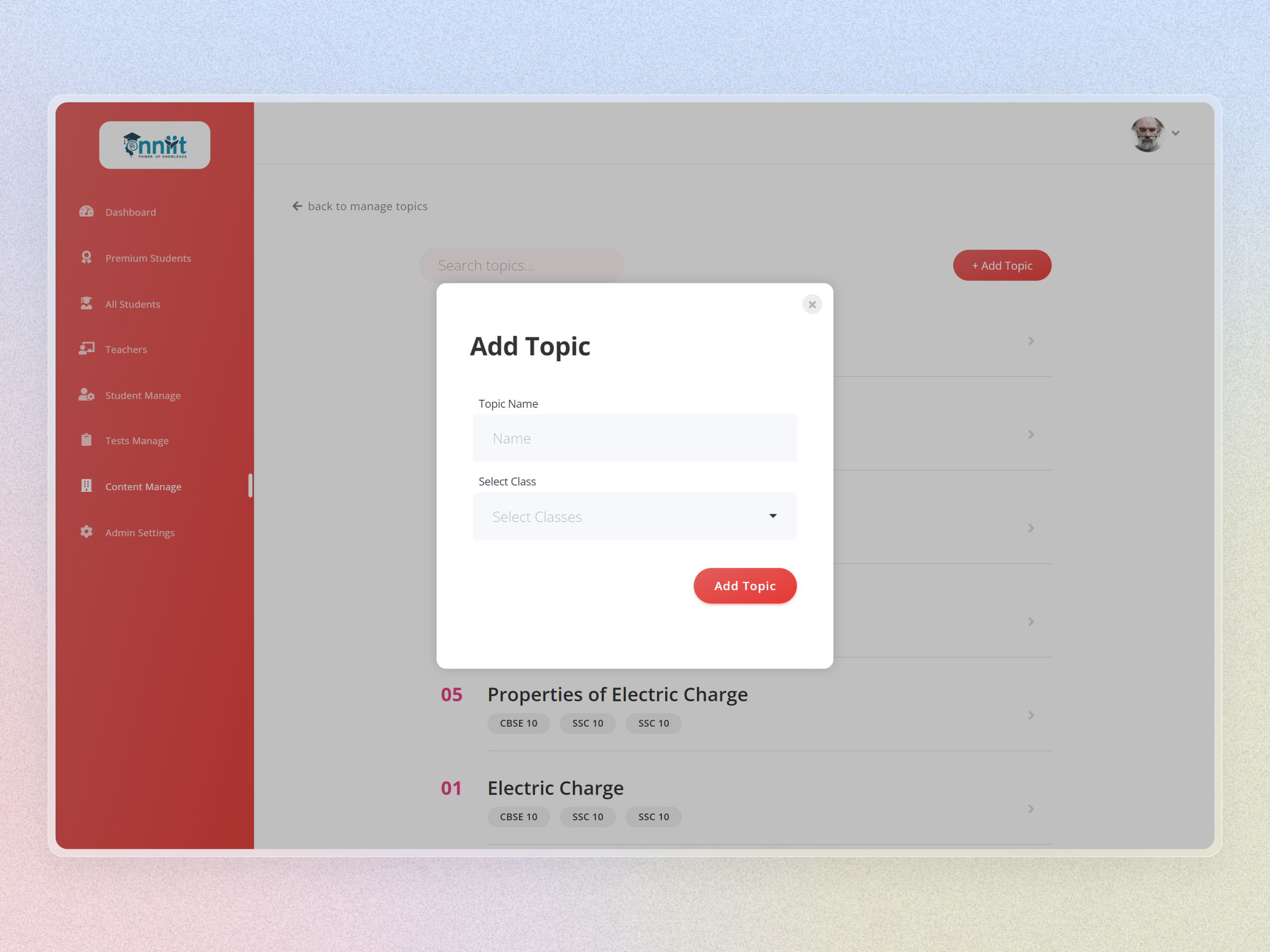
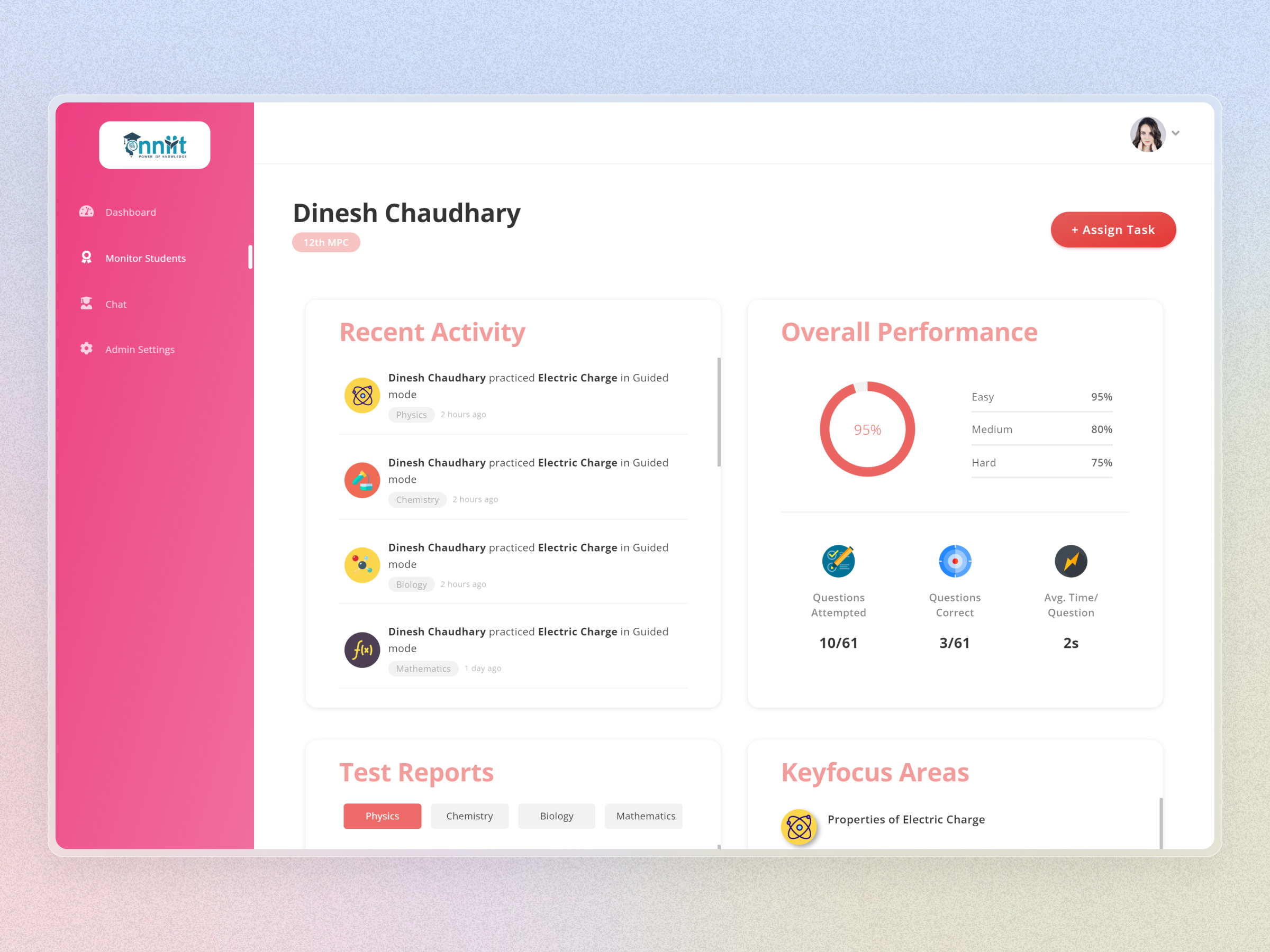
We planned, designed, and built a centralized question bank where teachers add questions, tag them by topic and difficulty level, and the system assembles exams from that pool. Students take exams clearly in the product — no paper, no manual grading. What shipped are instant and stored against each student’s profile.
Adaptive Practice
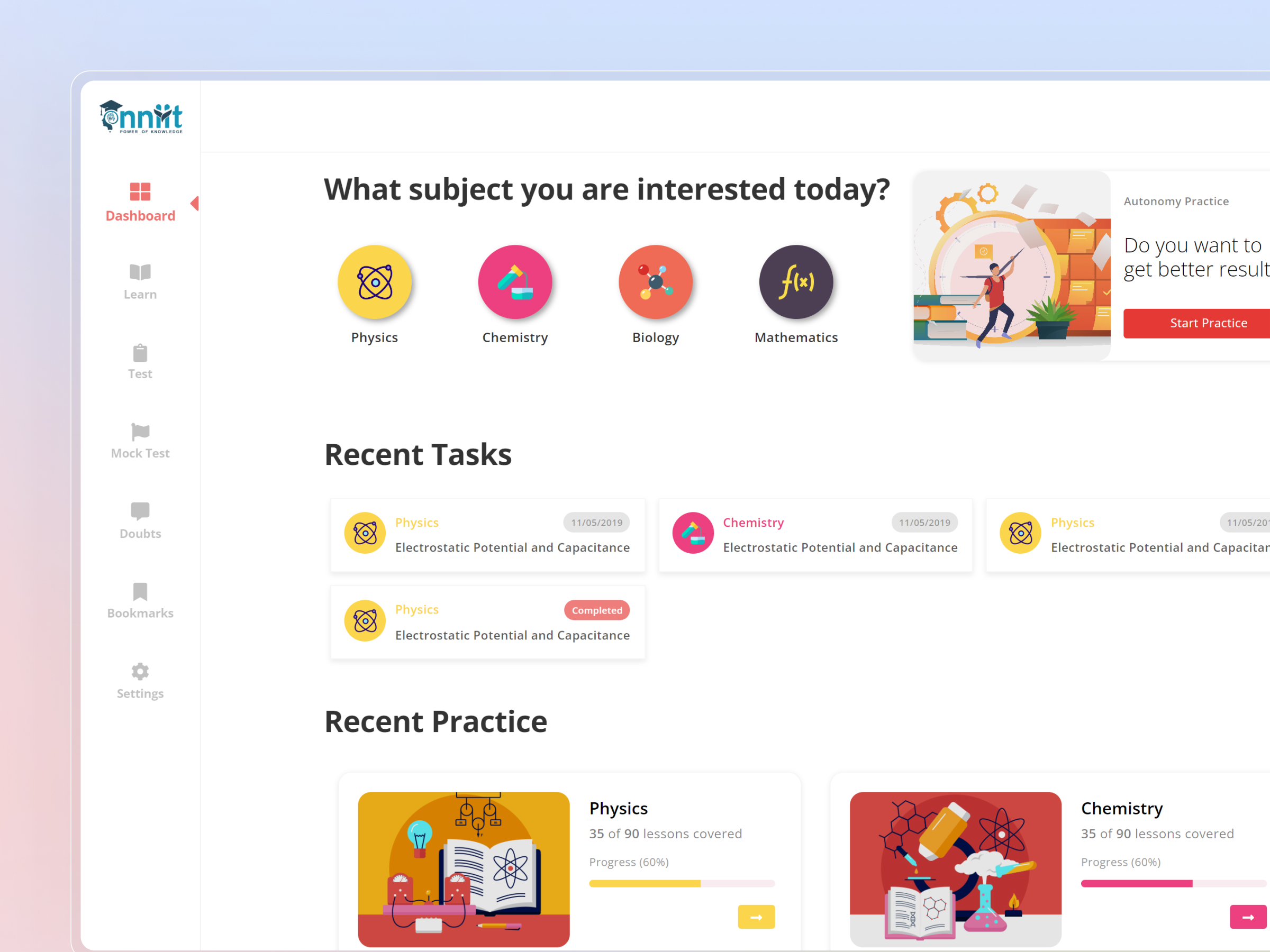
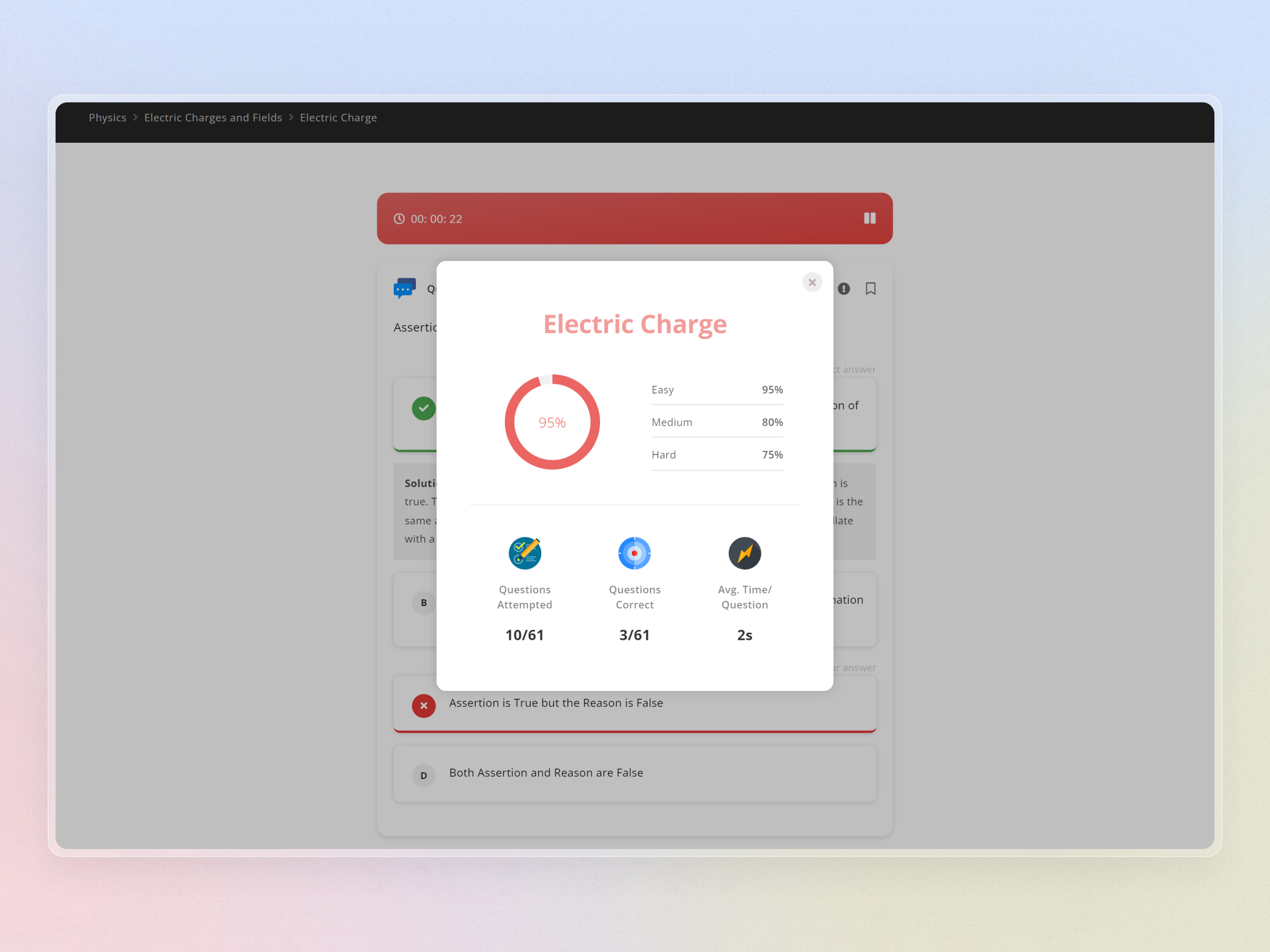
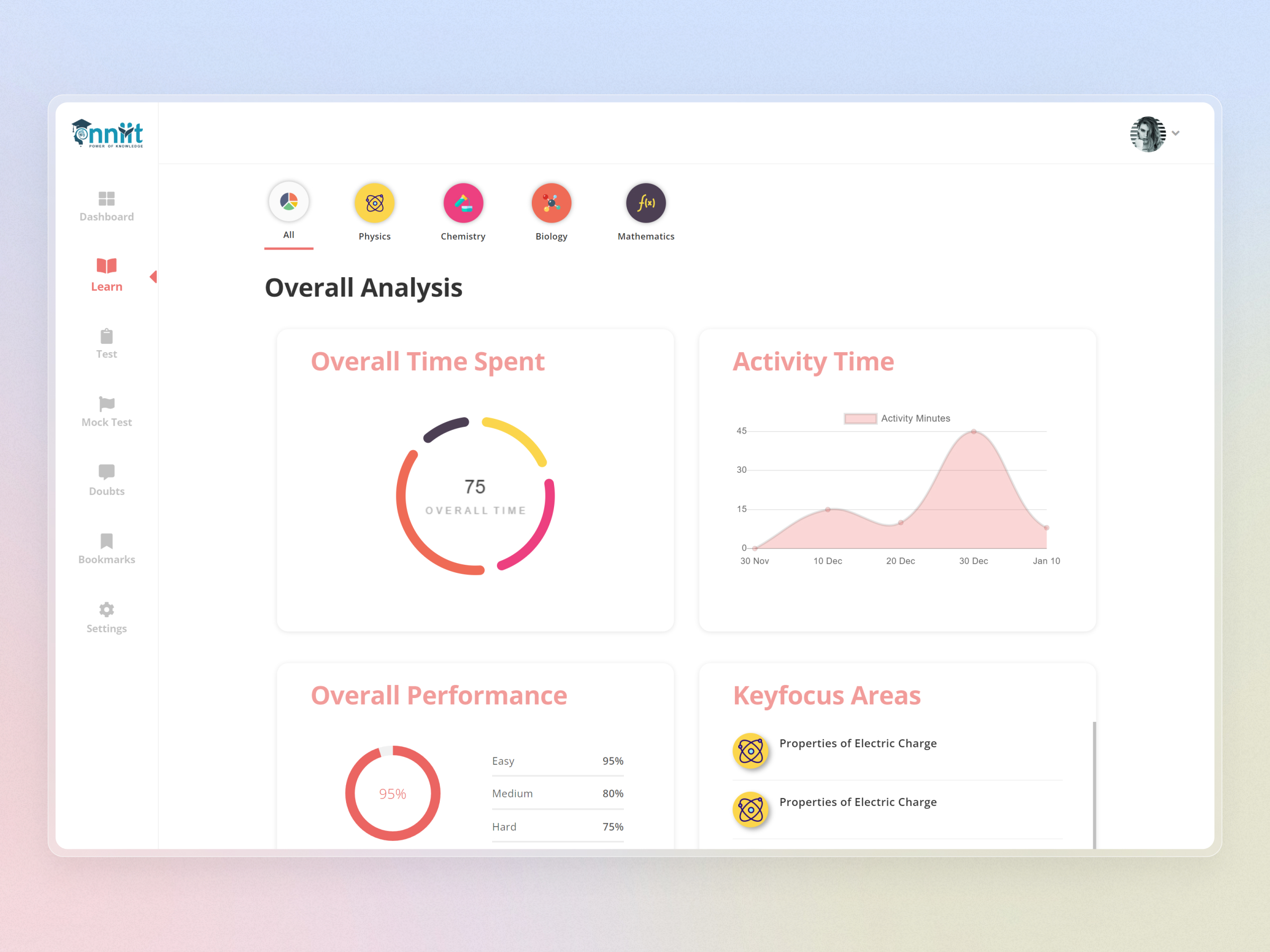
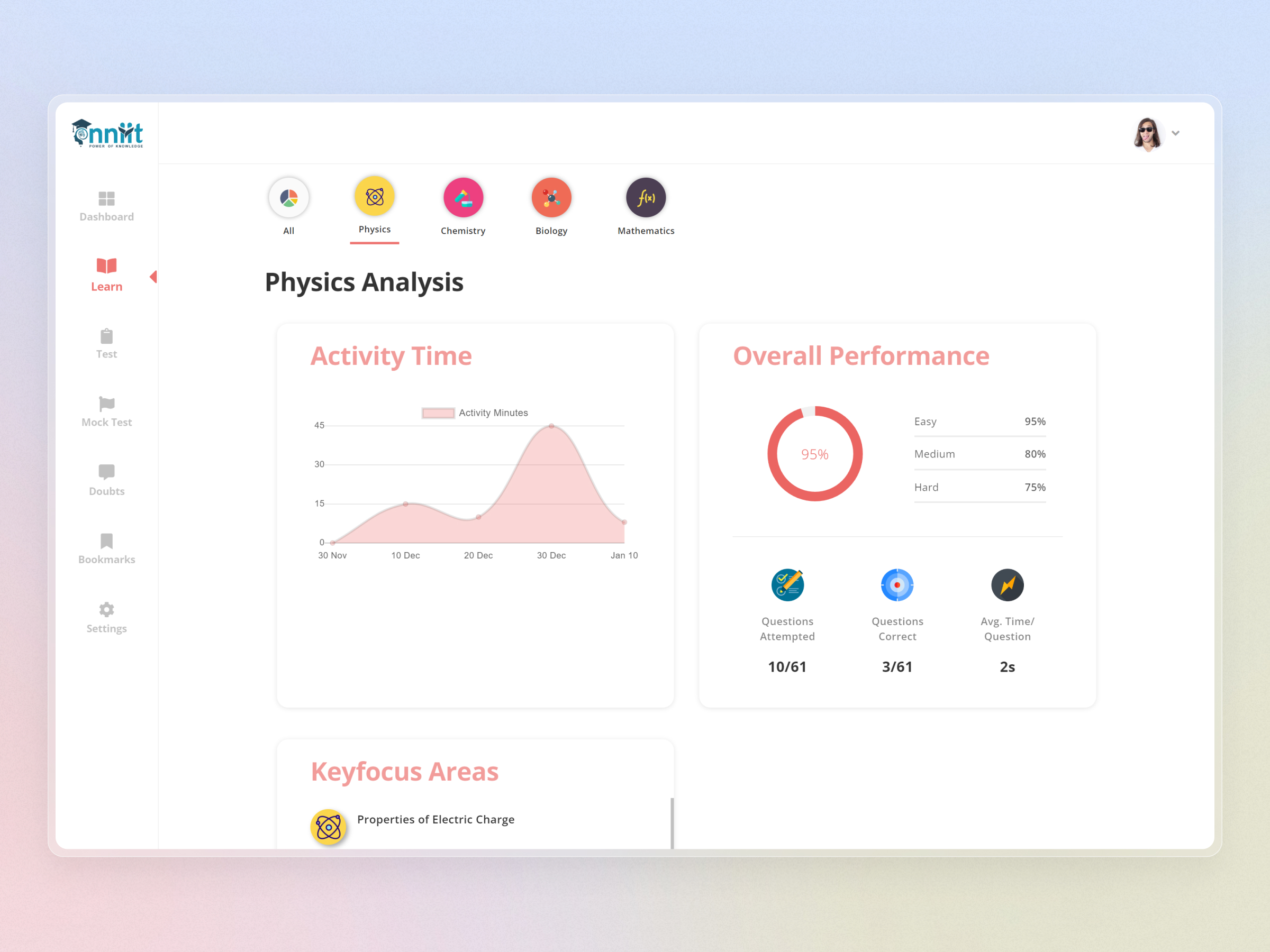
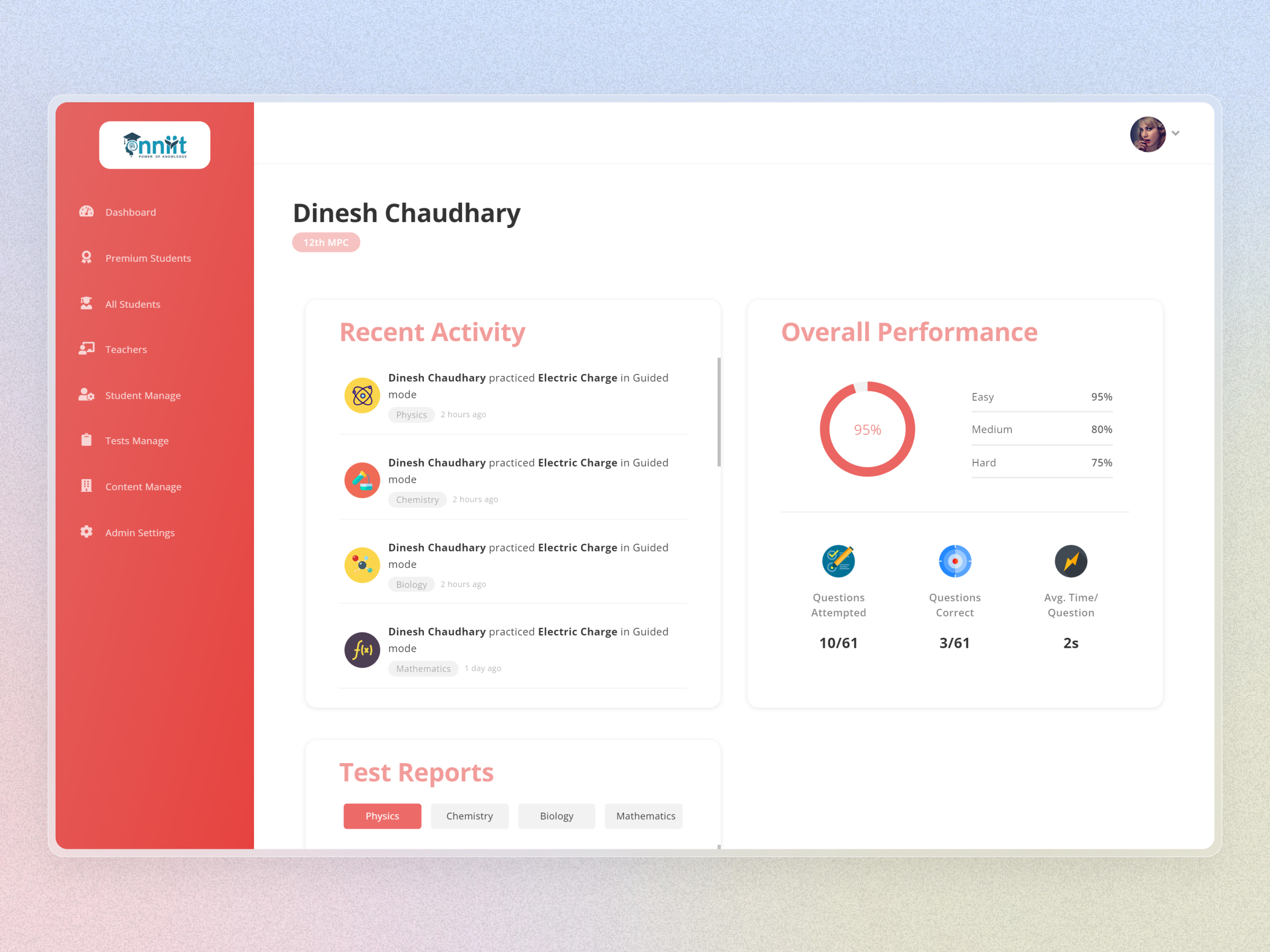
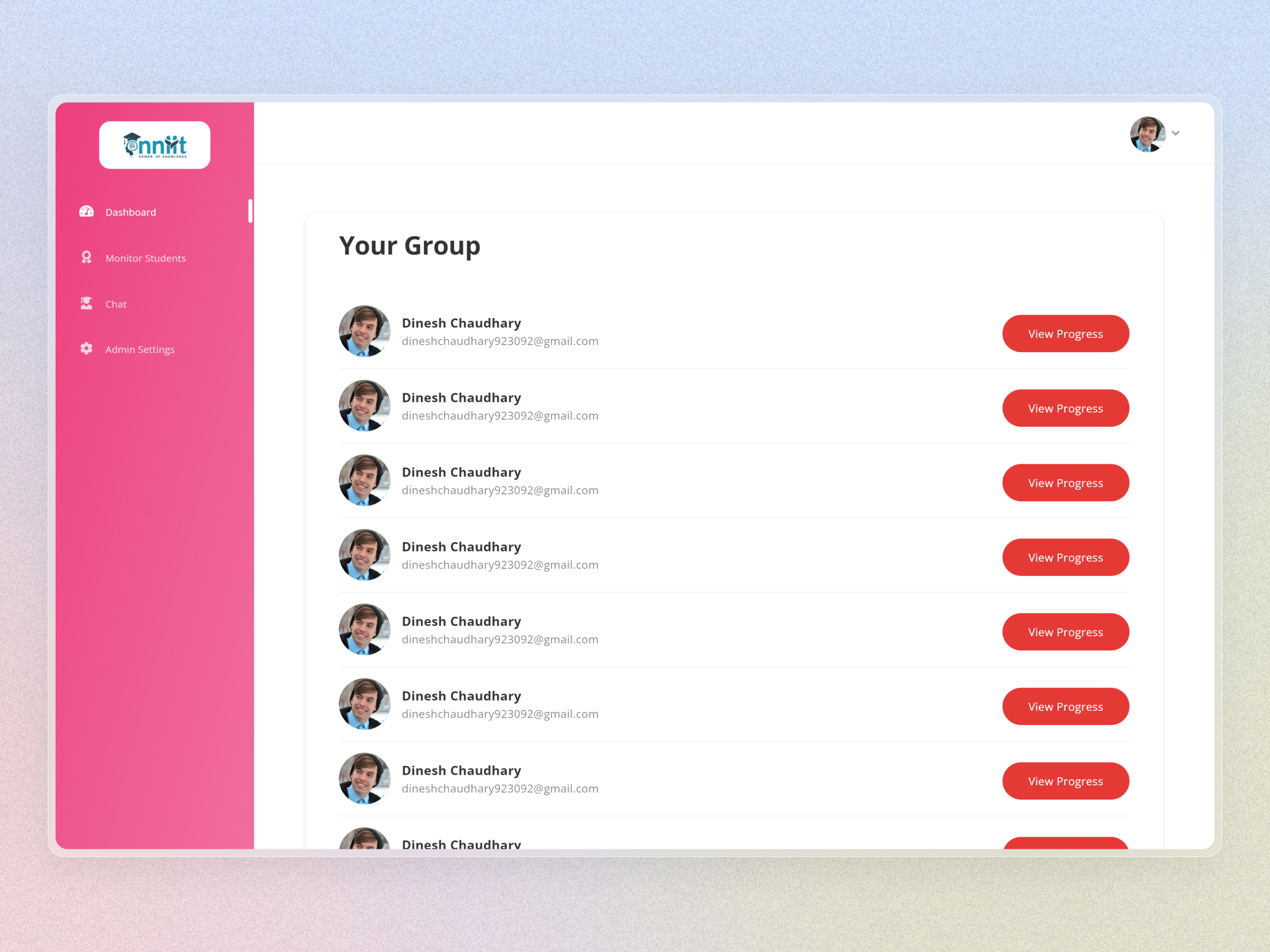
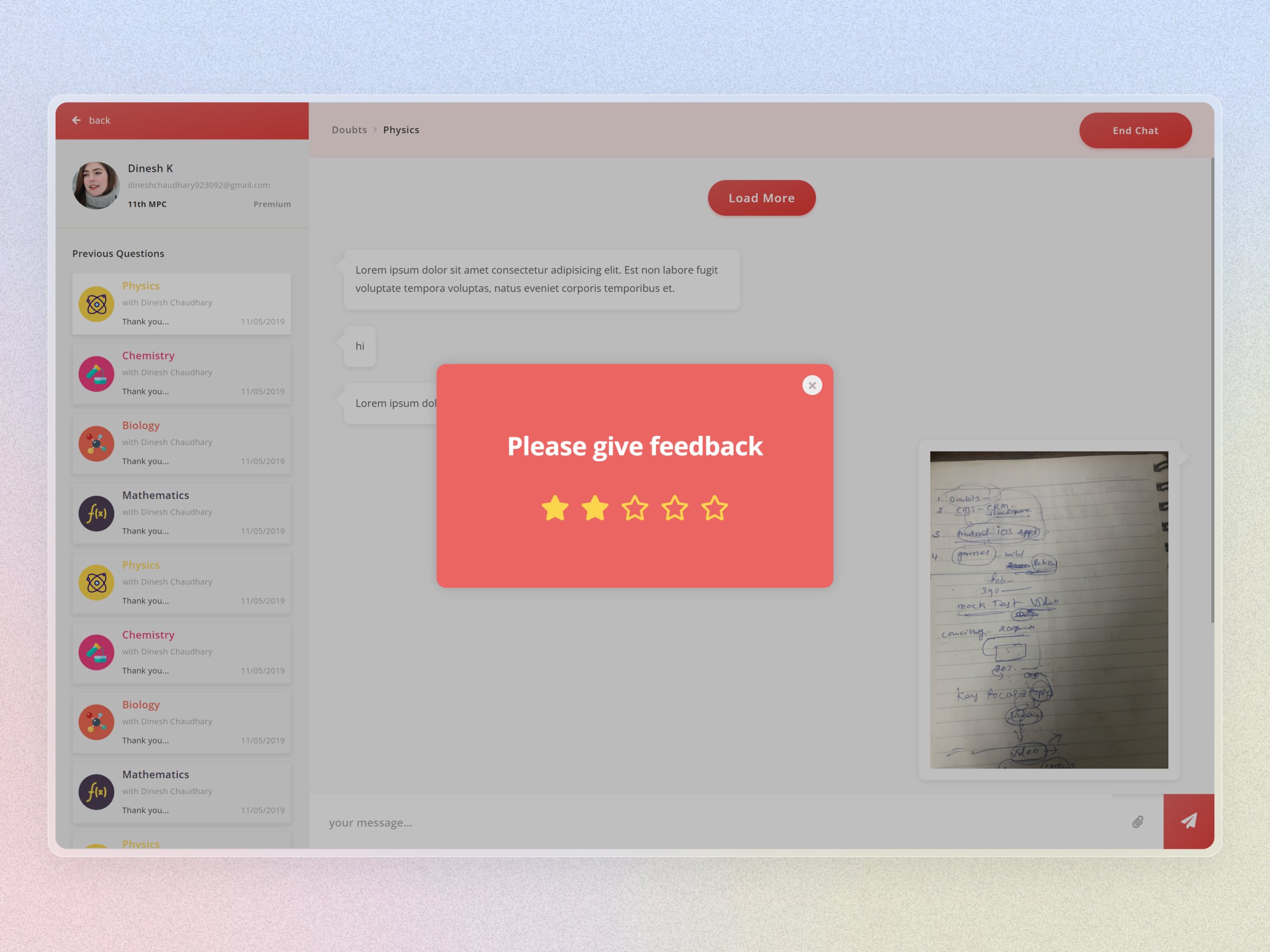
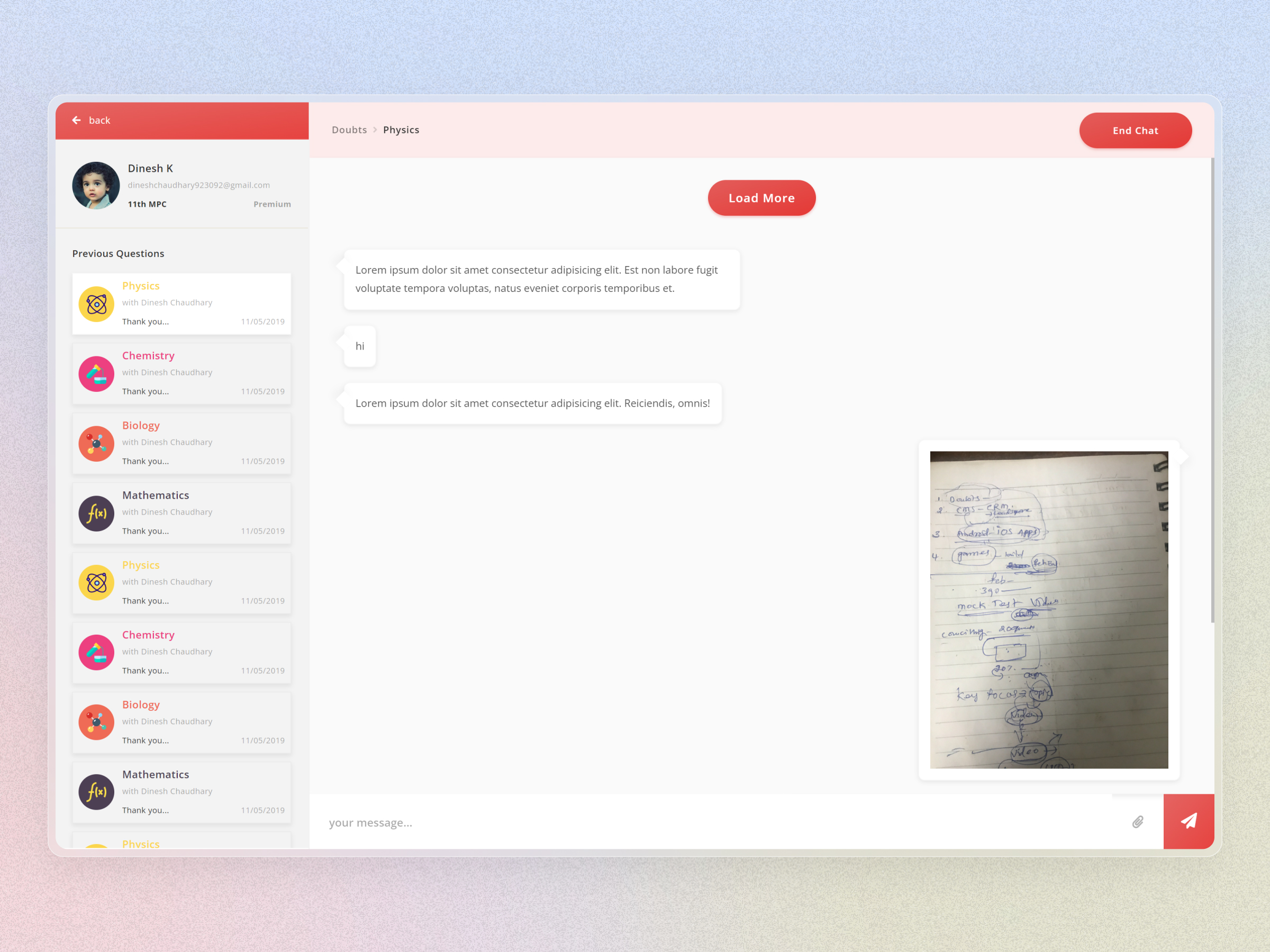
The product tracks what each student gets right and wrong and adjusts practice recommendations accordingly. A student struggling with a specific topic gets served more questions in that area. One who’s performing well gets pushed to harder material. This is the feature that makes the LMS genuinely useful for learning outcomes — not just a place to take tests, but a system that responds to where each student actually is.
Separate Portals for Students, Teachers, and Admins
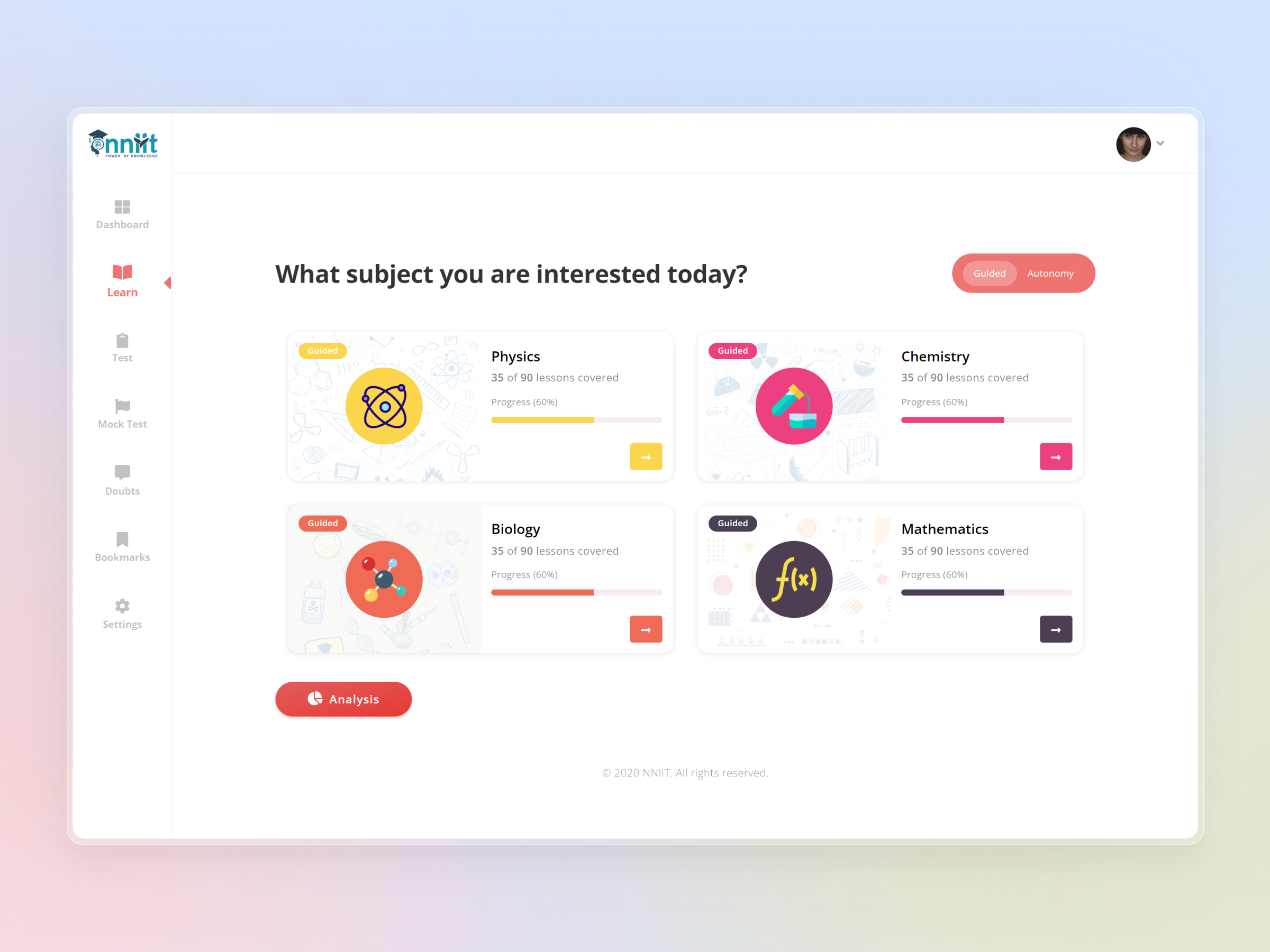
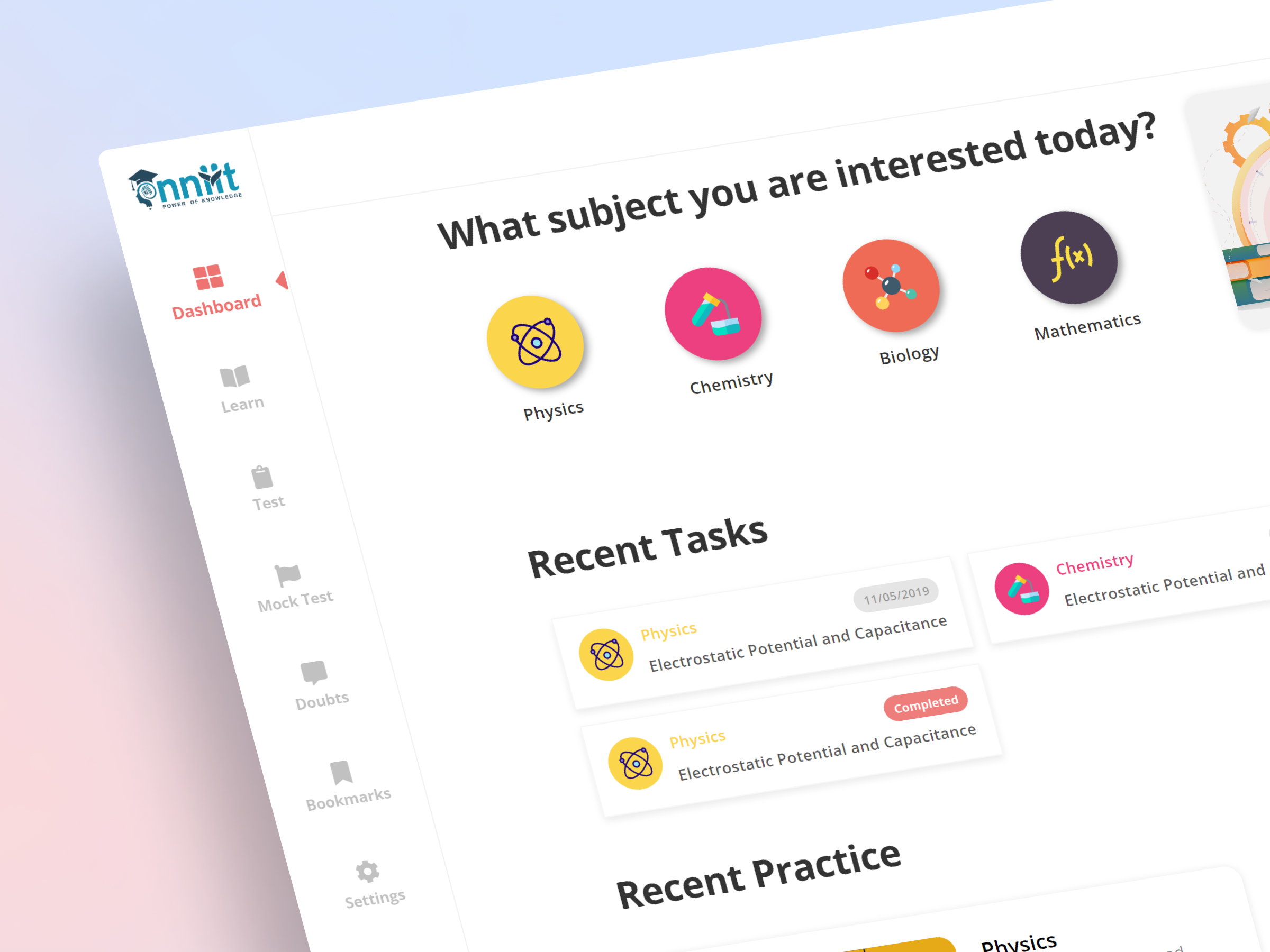
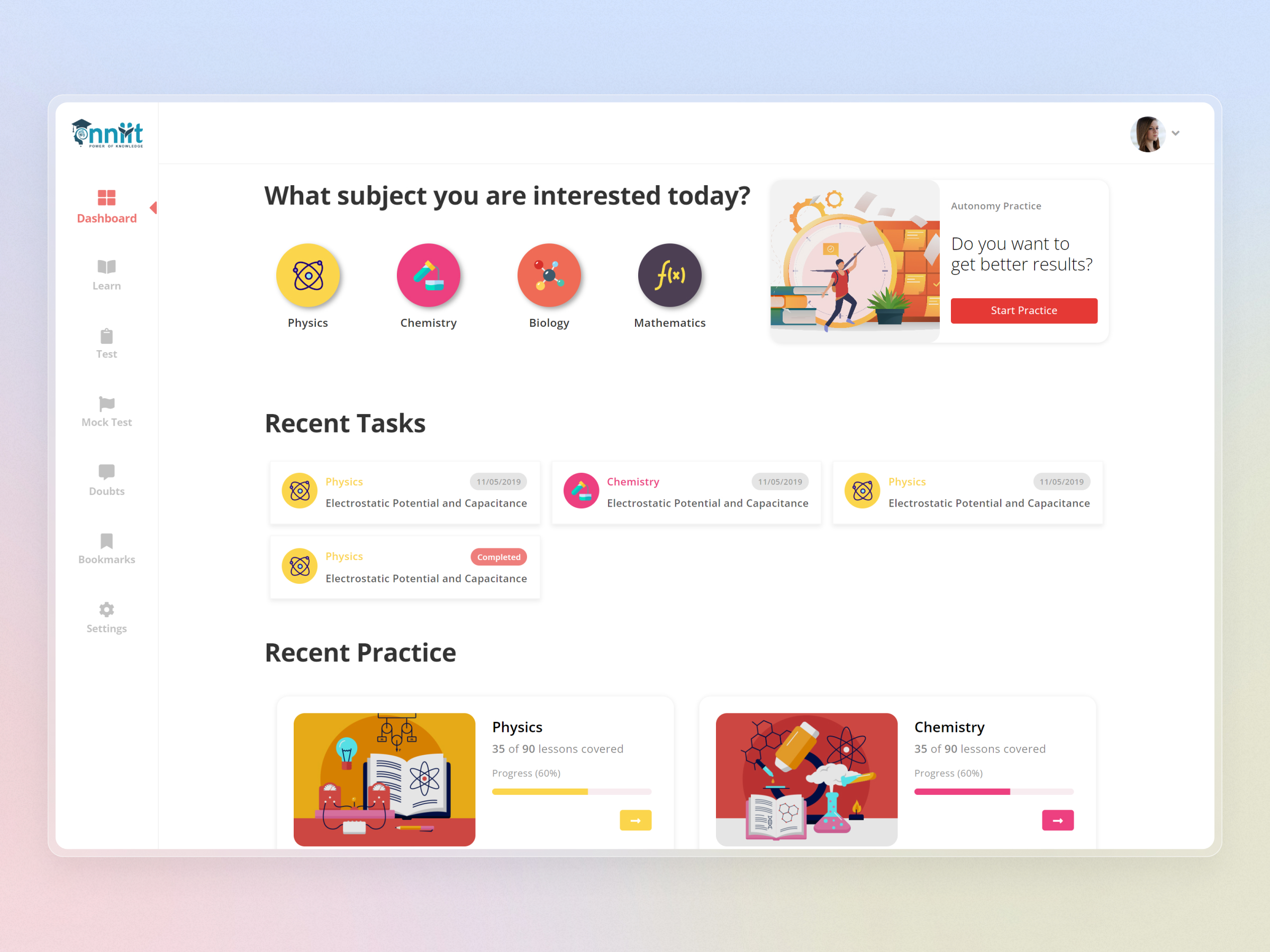
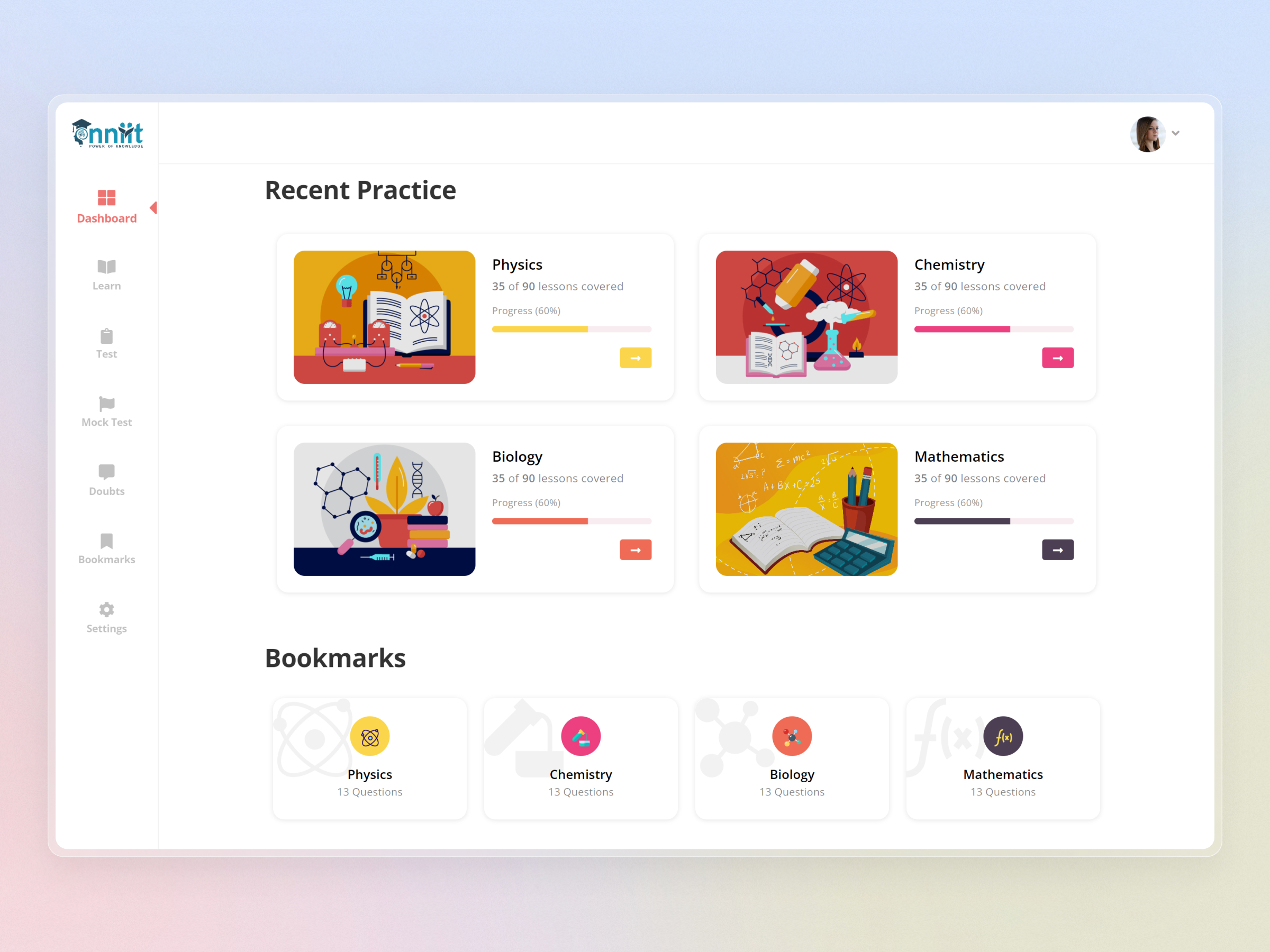
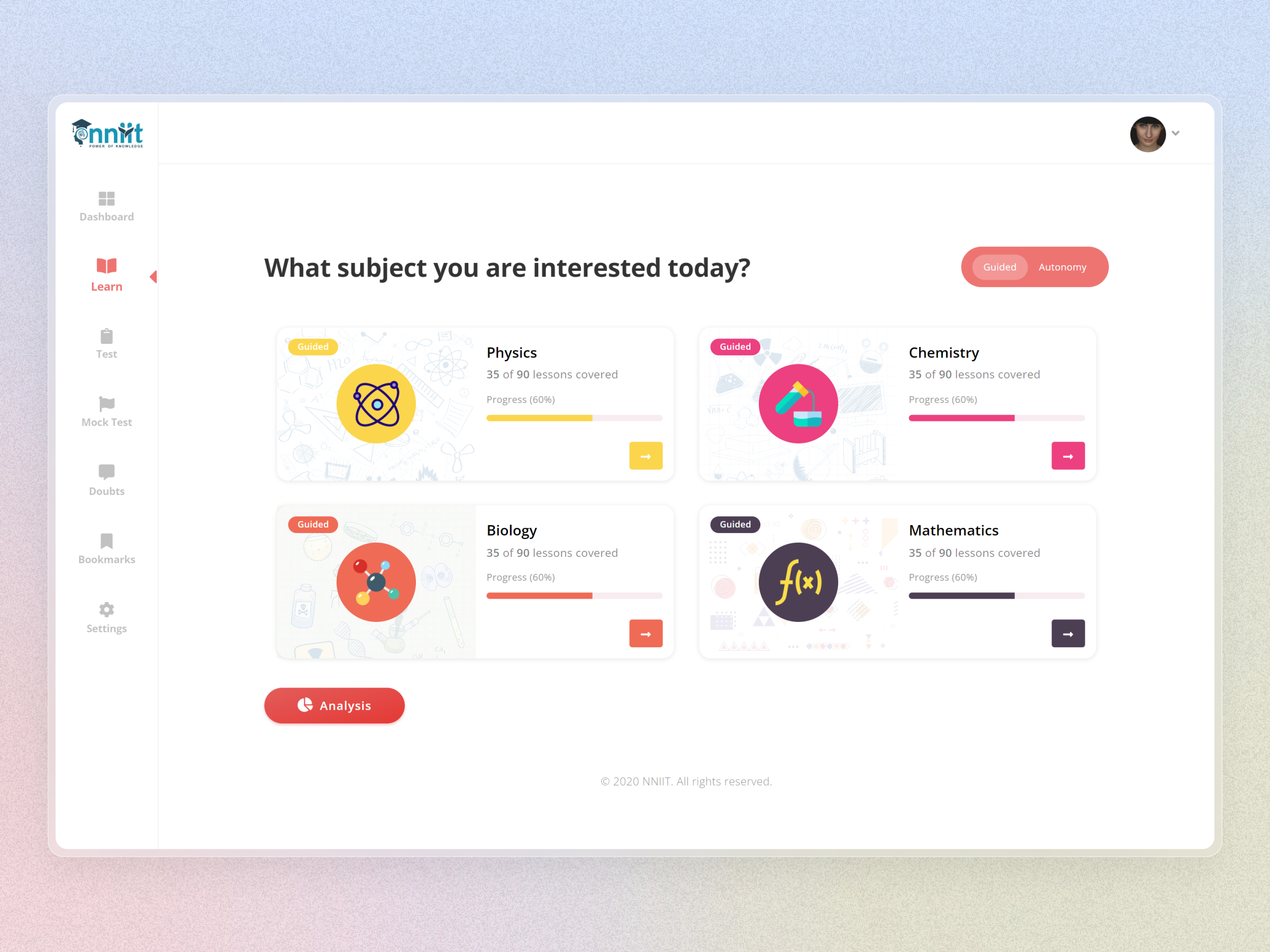
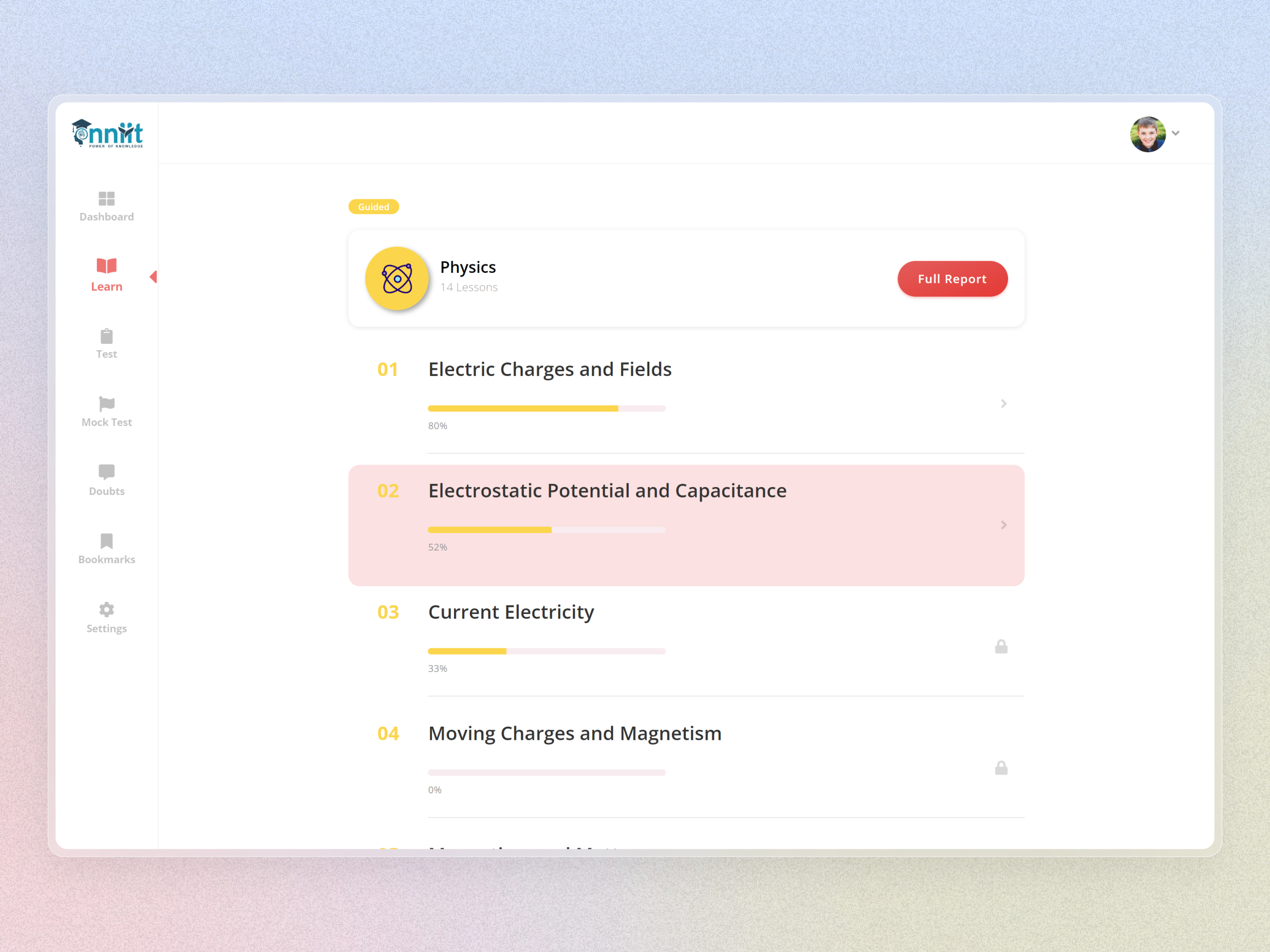
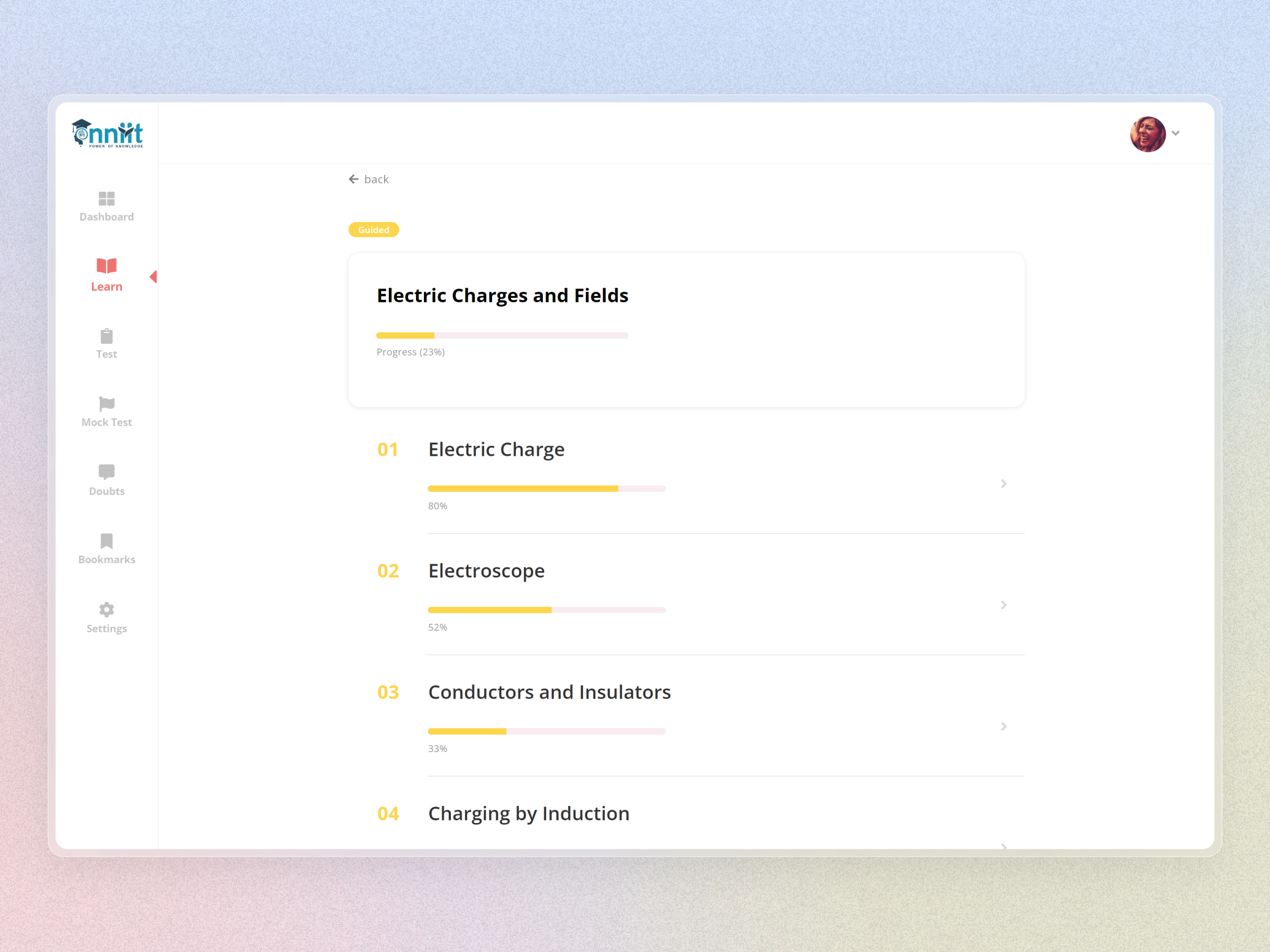
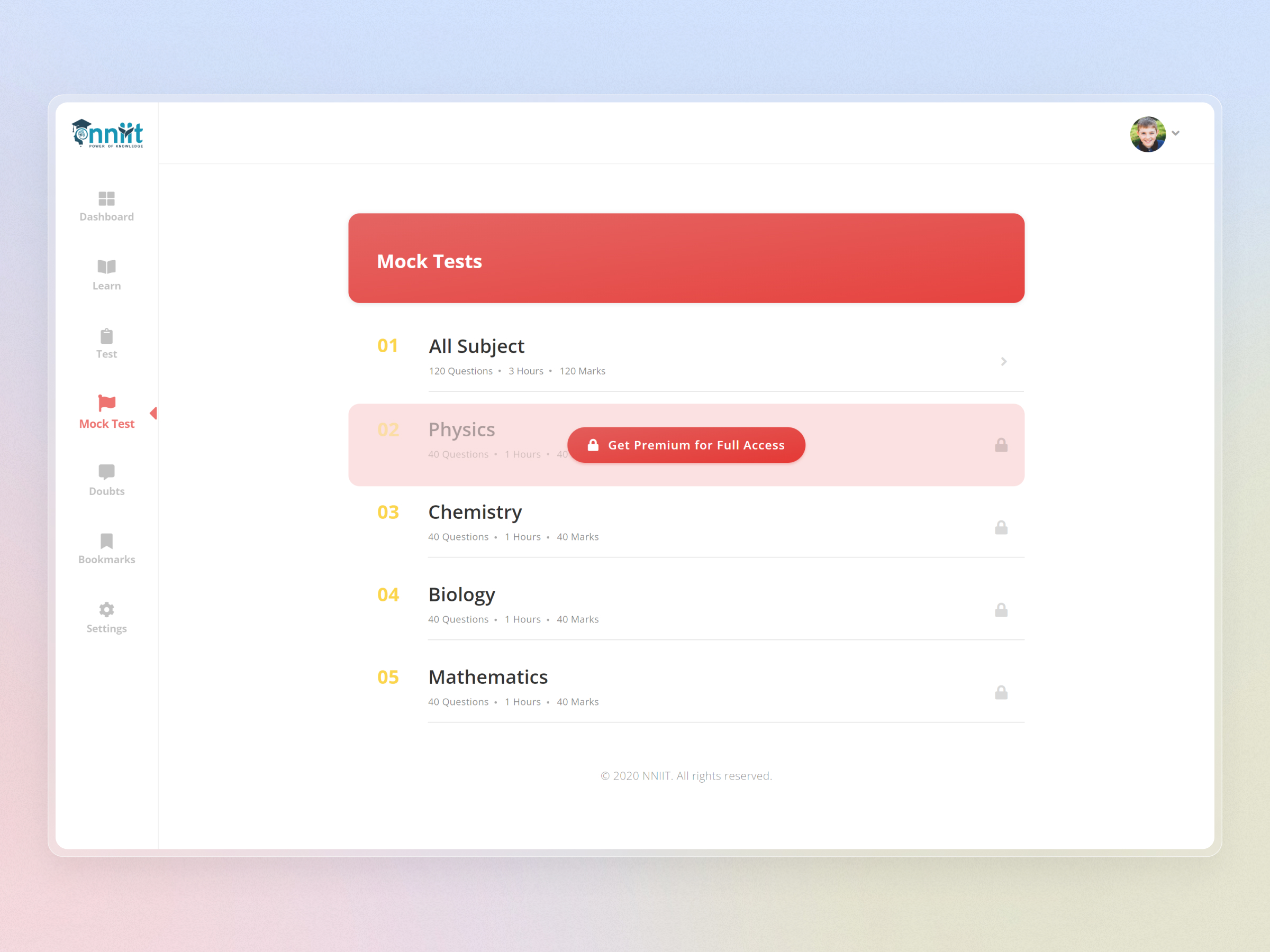
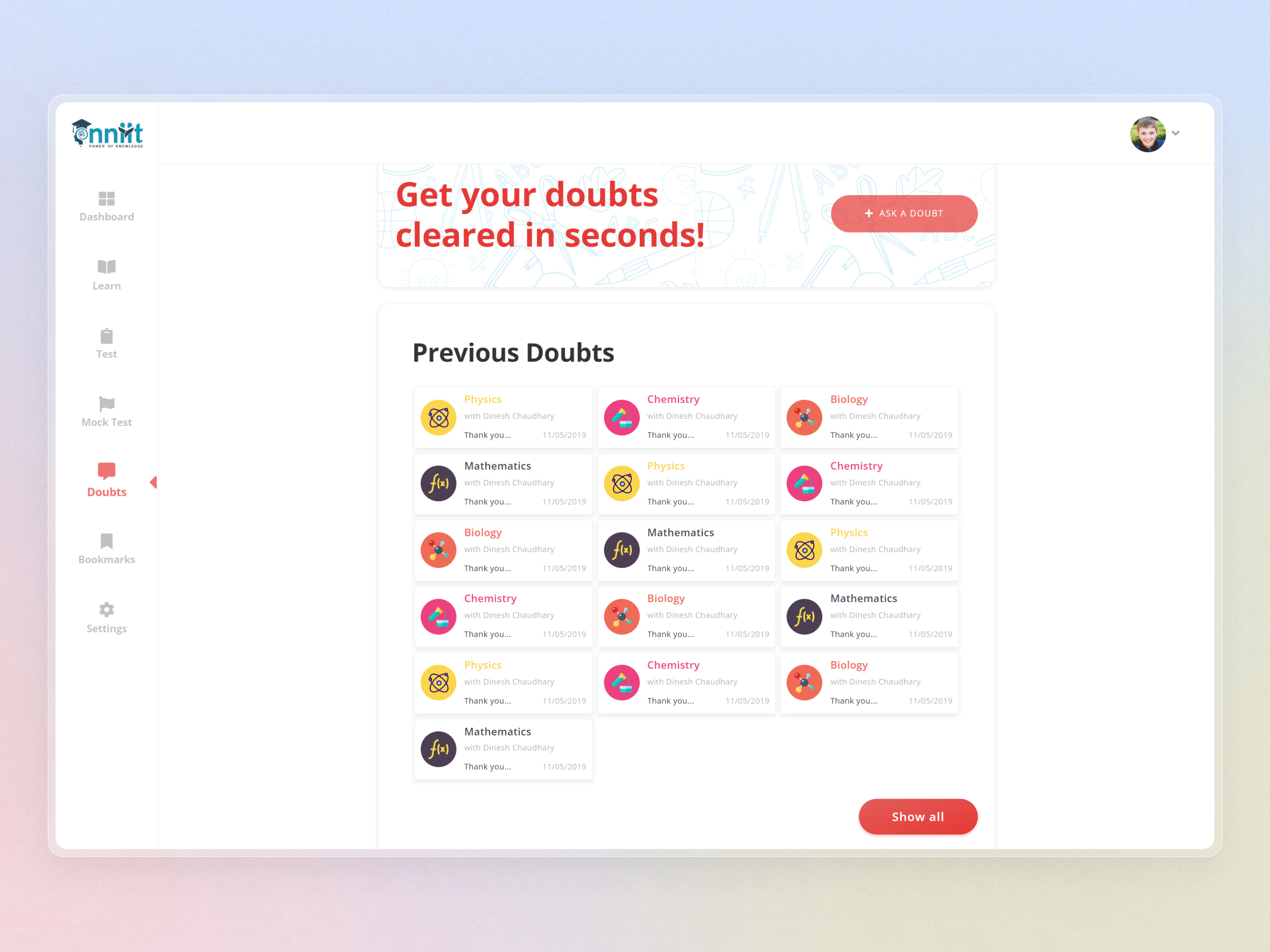
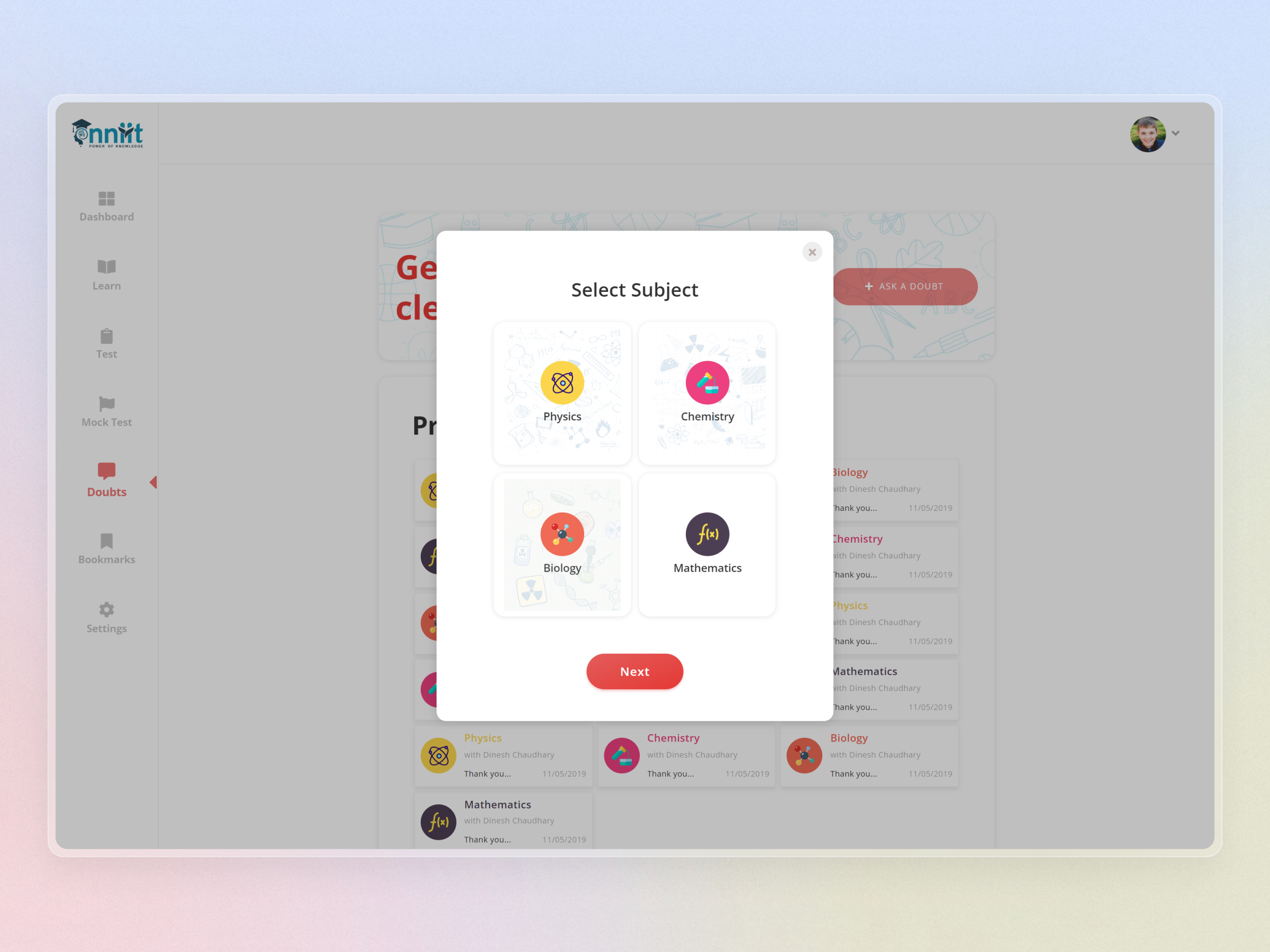
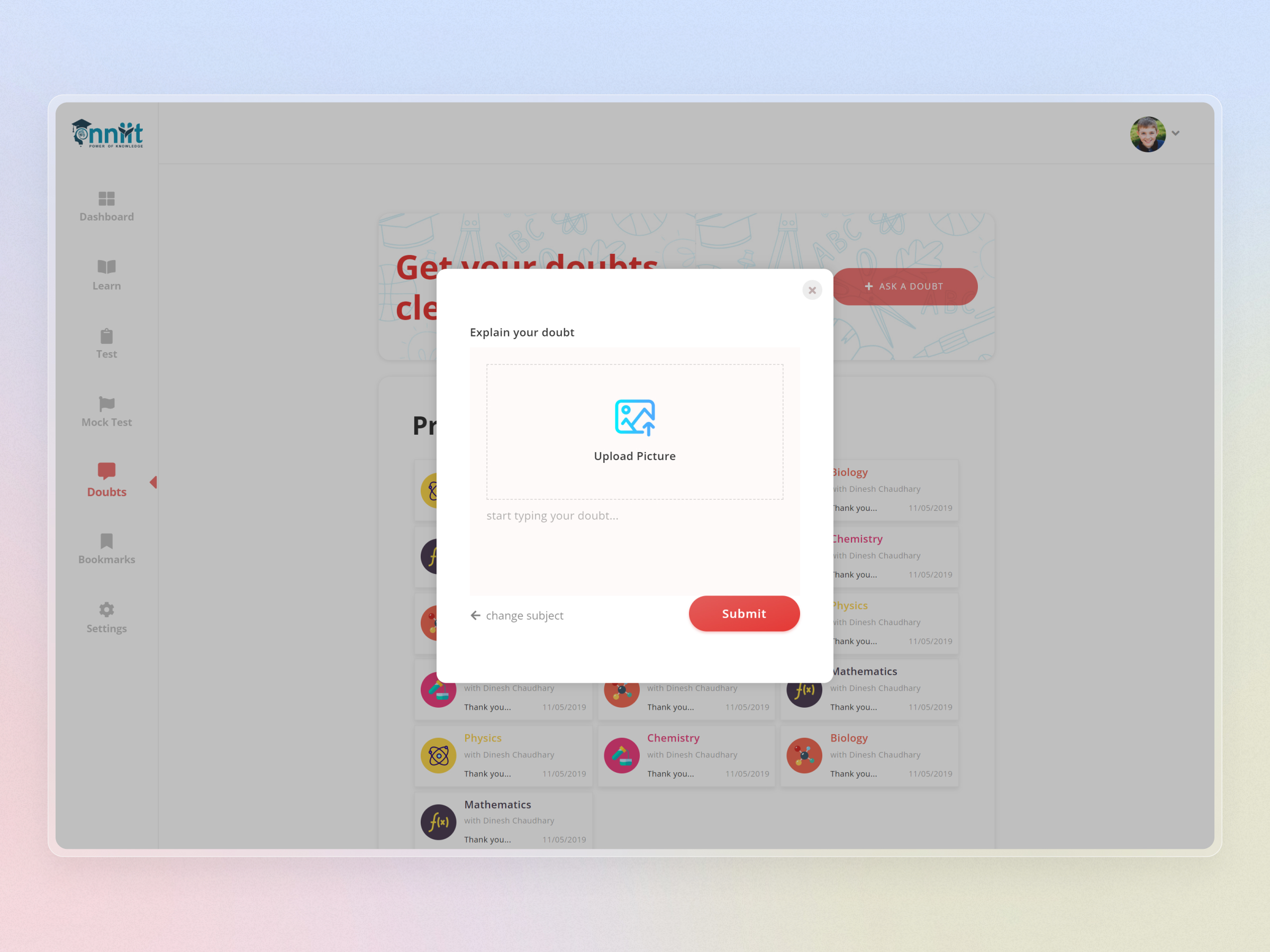
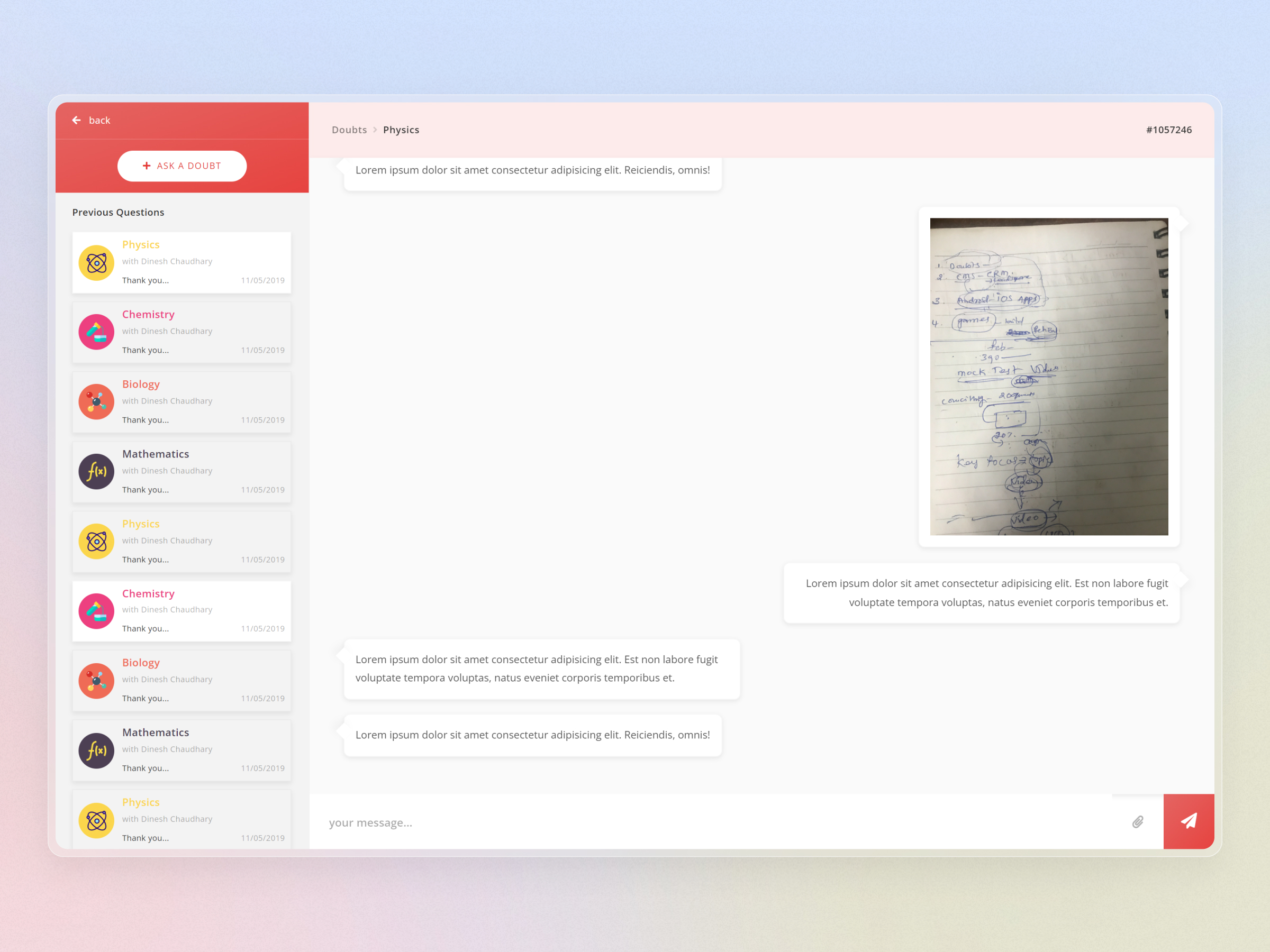
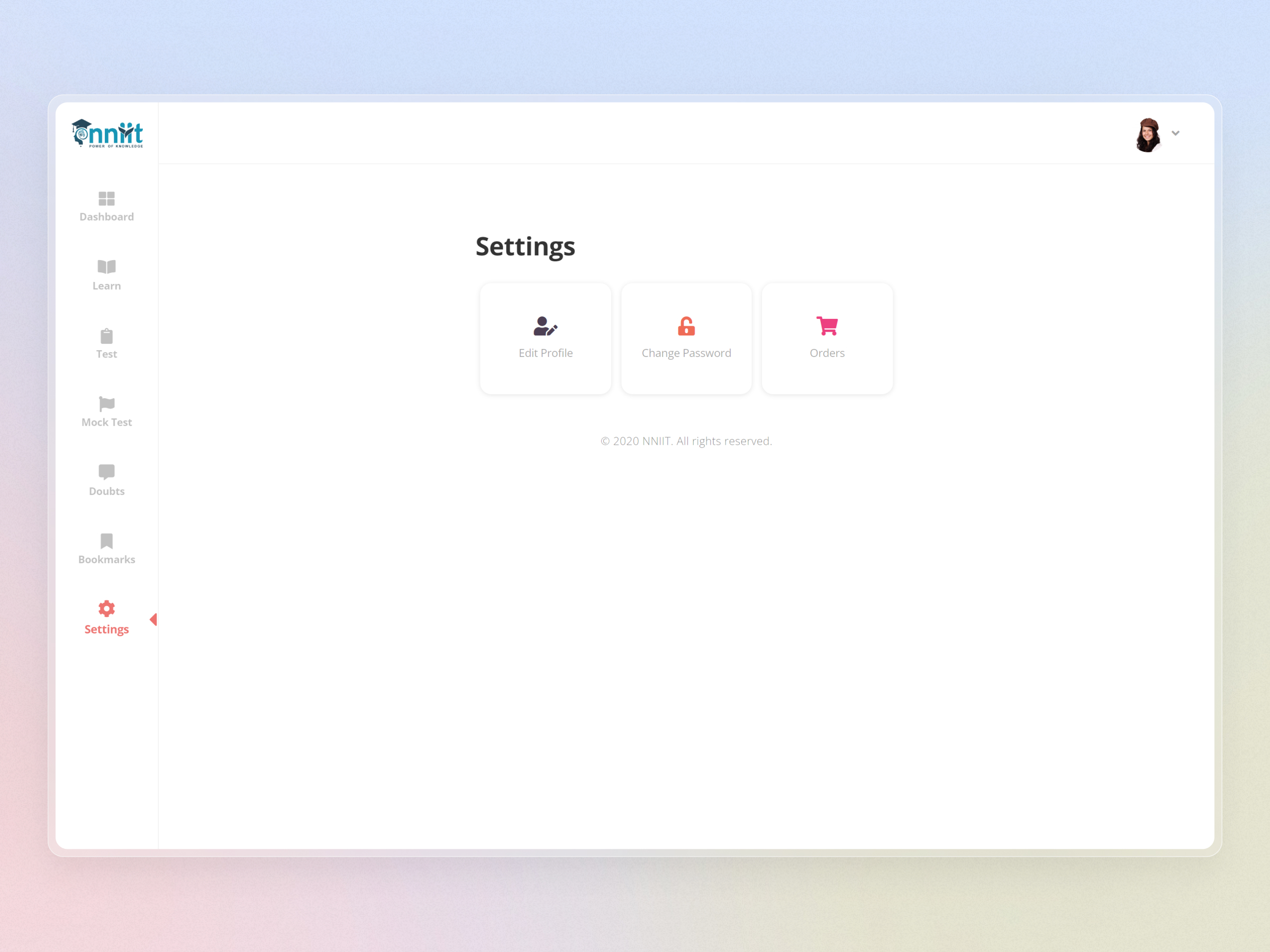
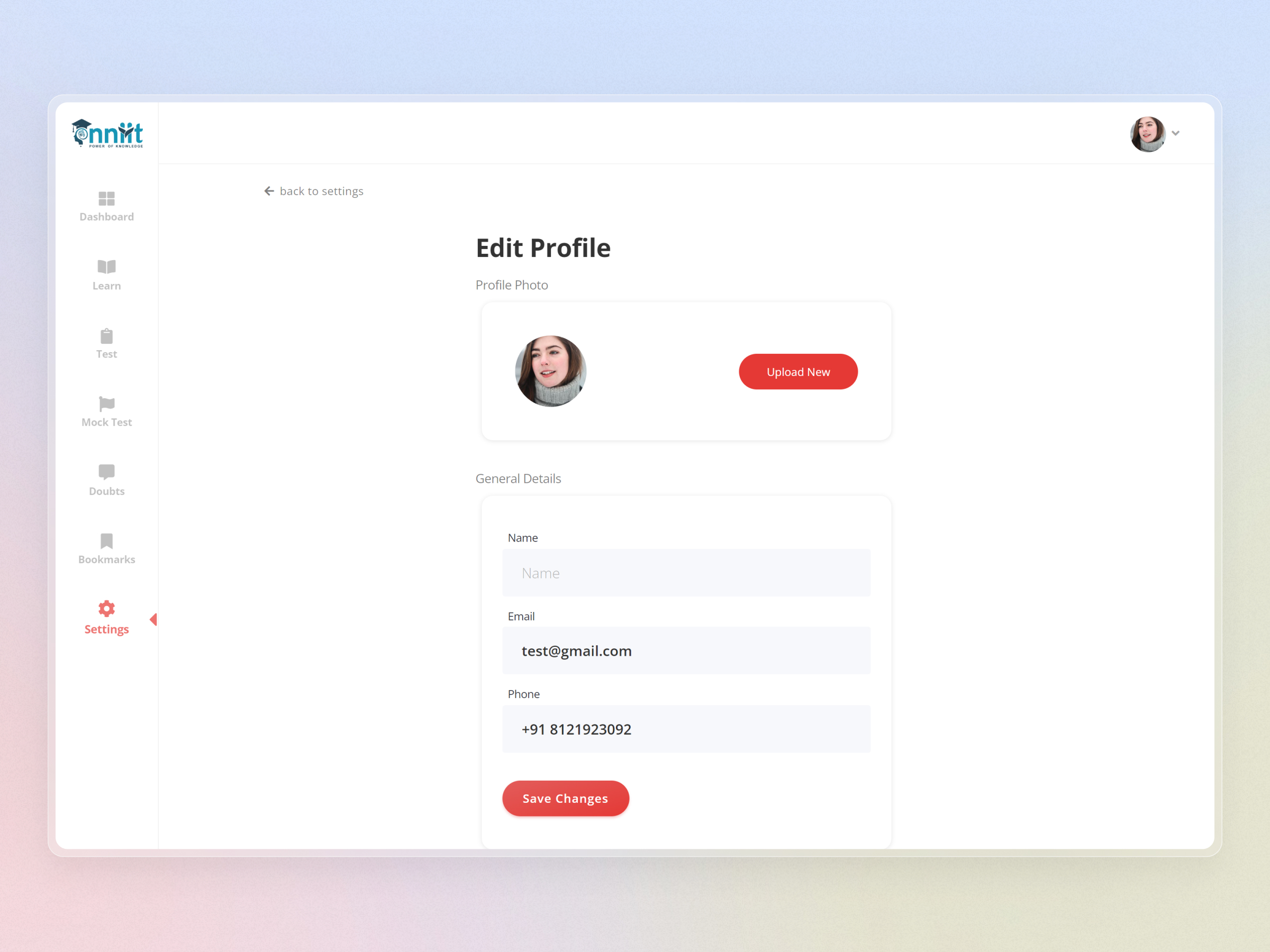
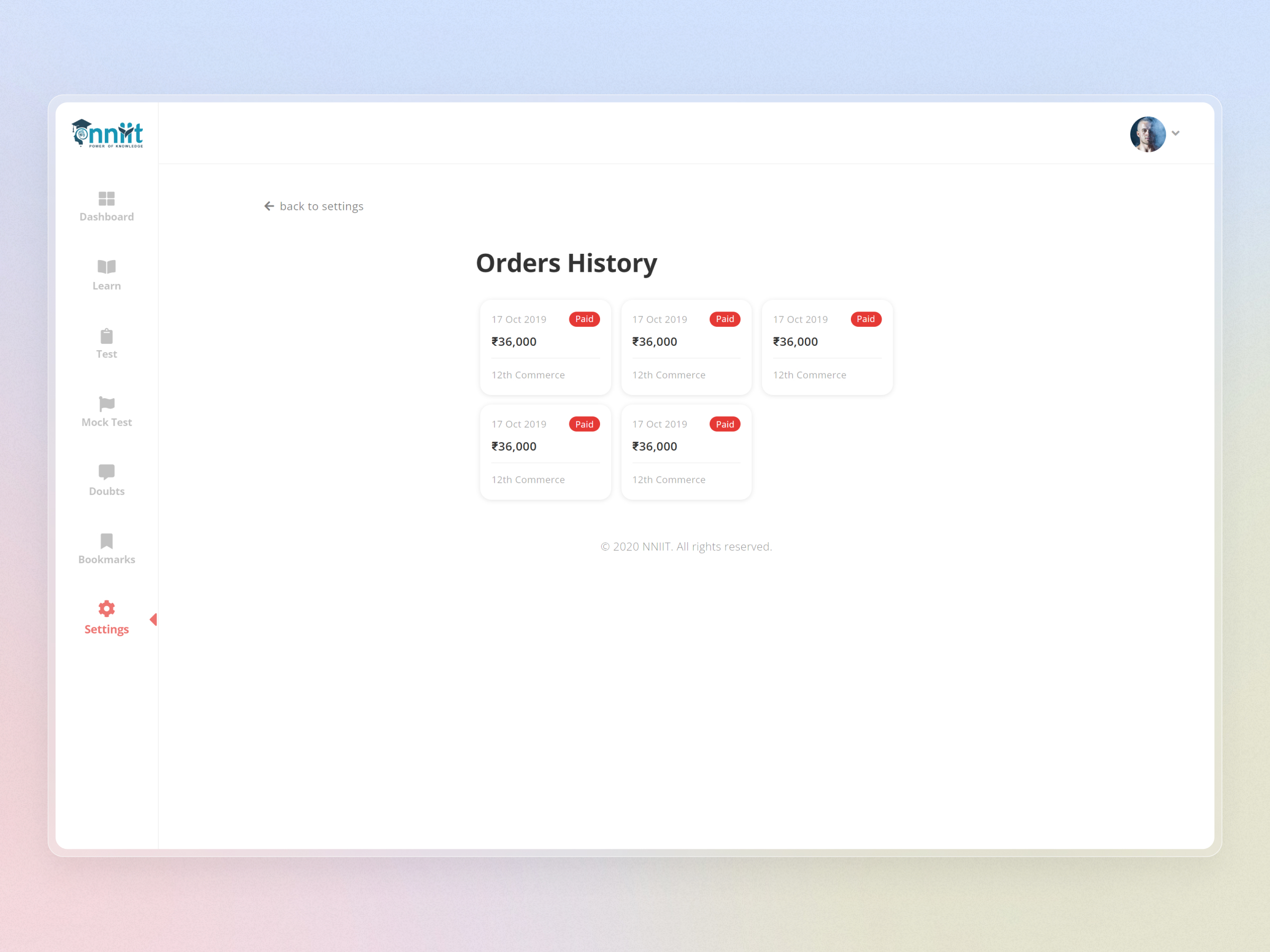
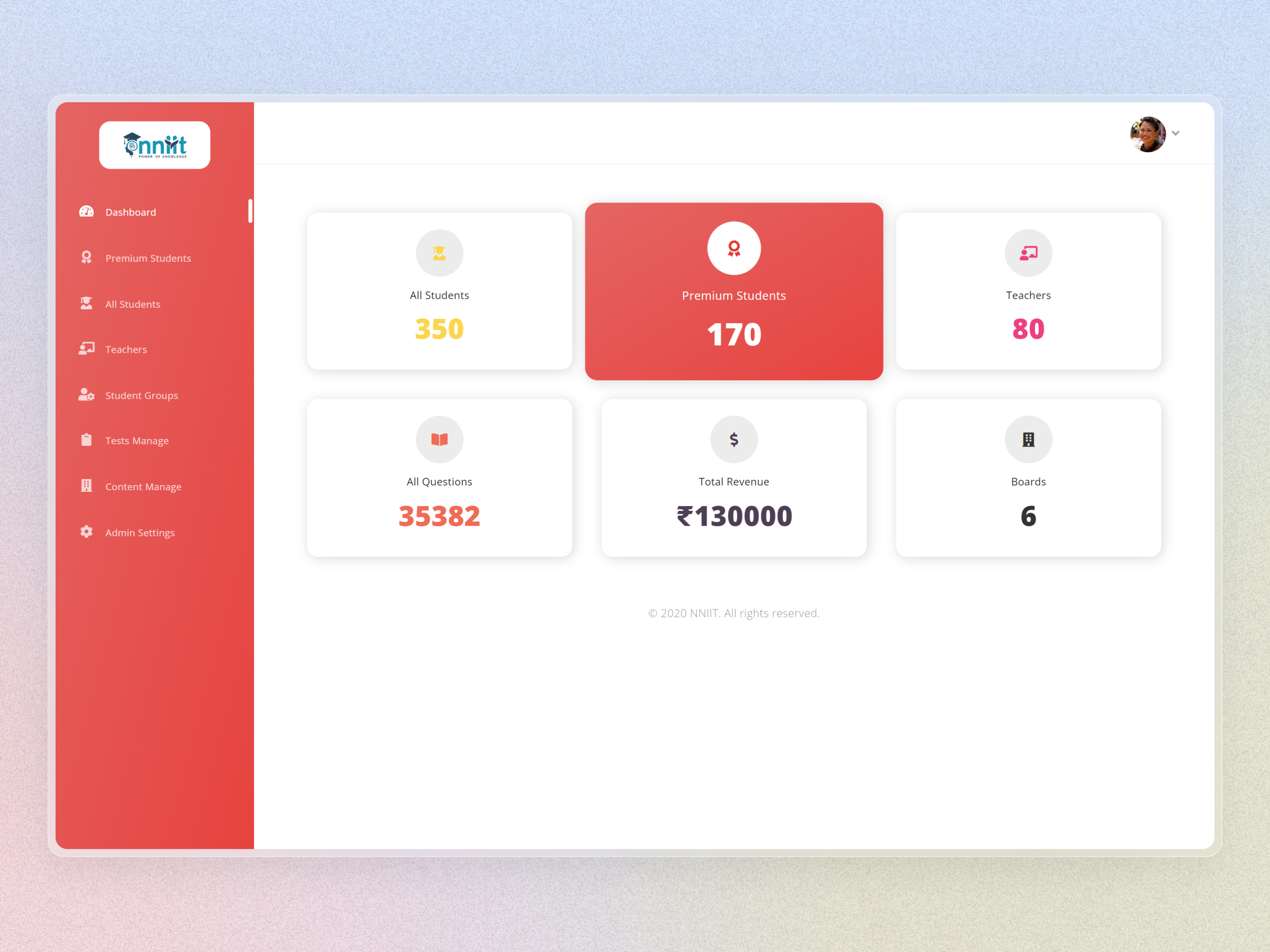
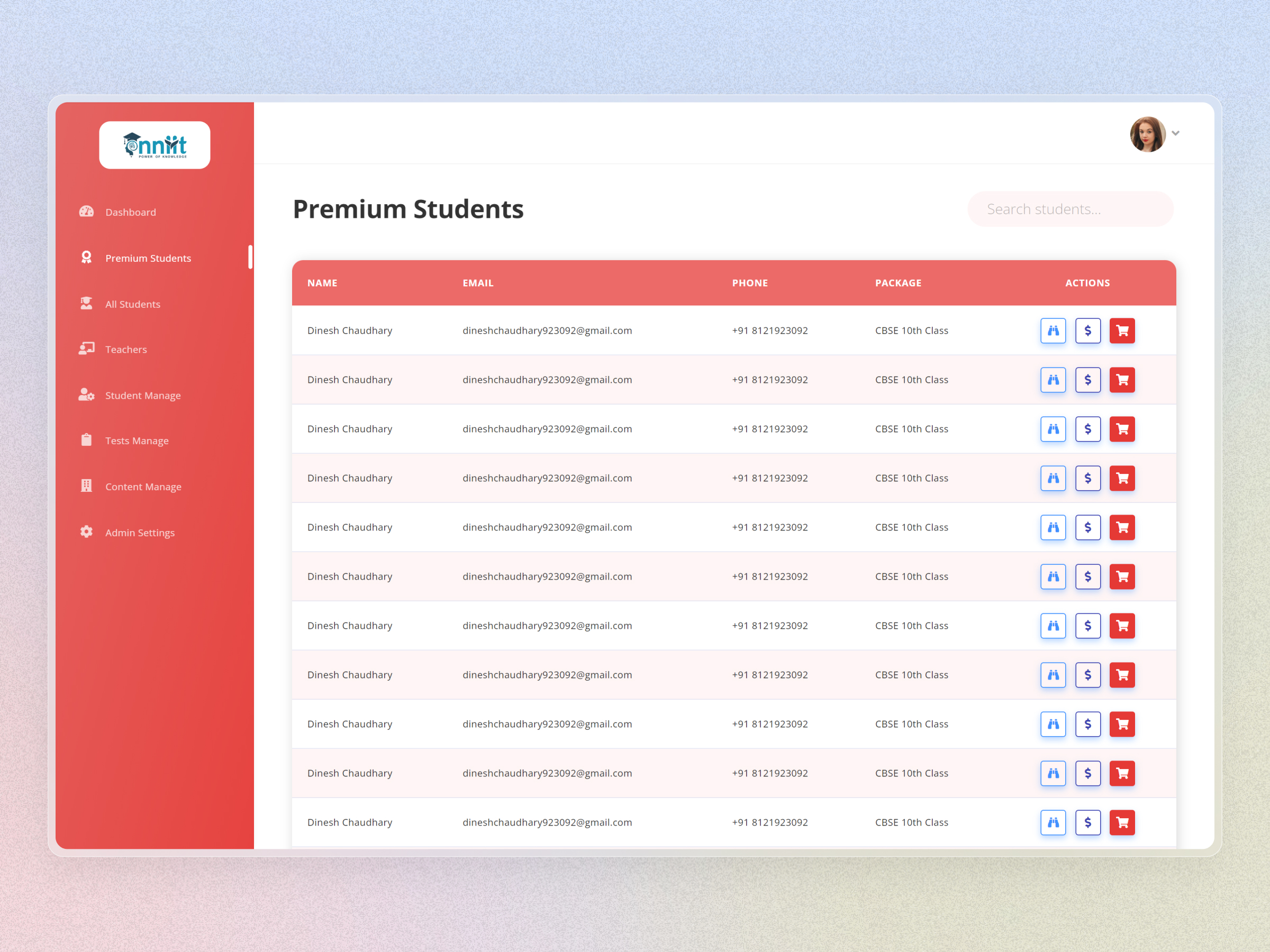
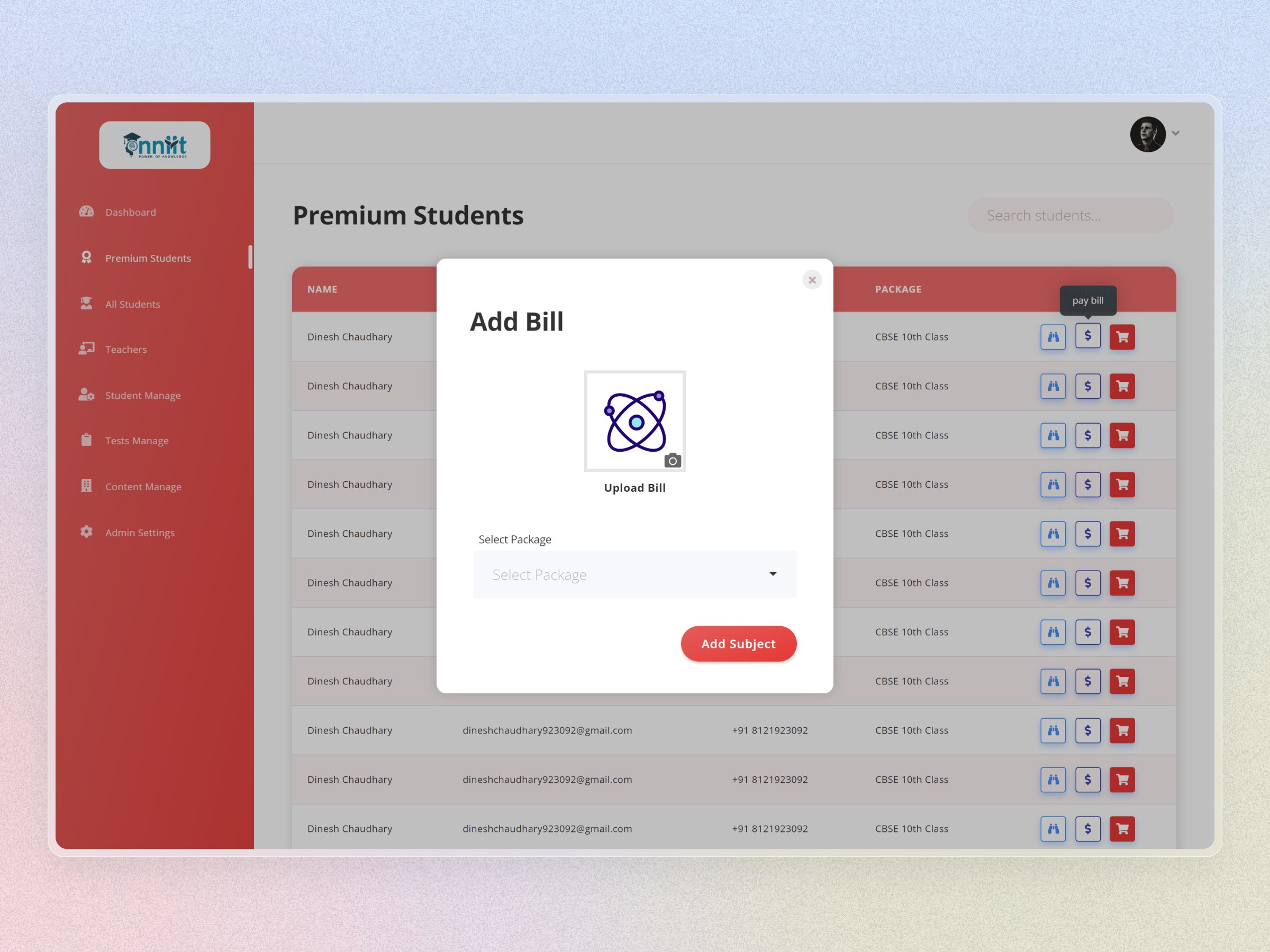
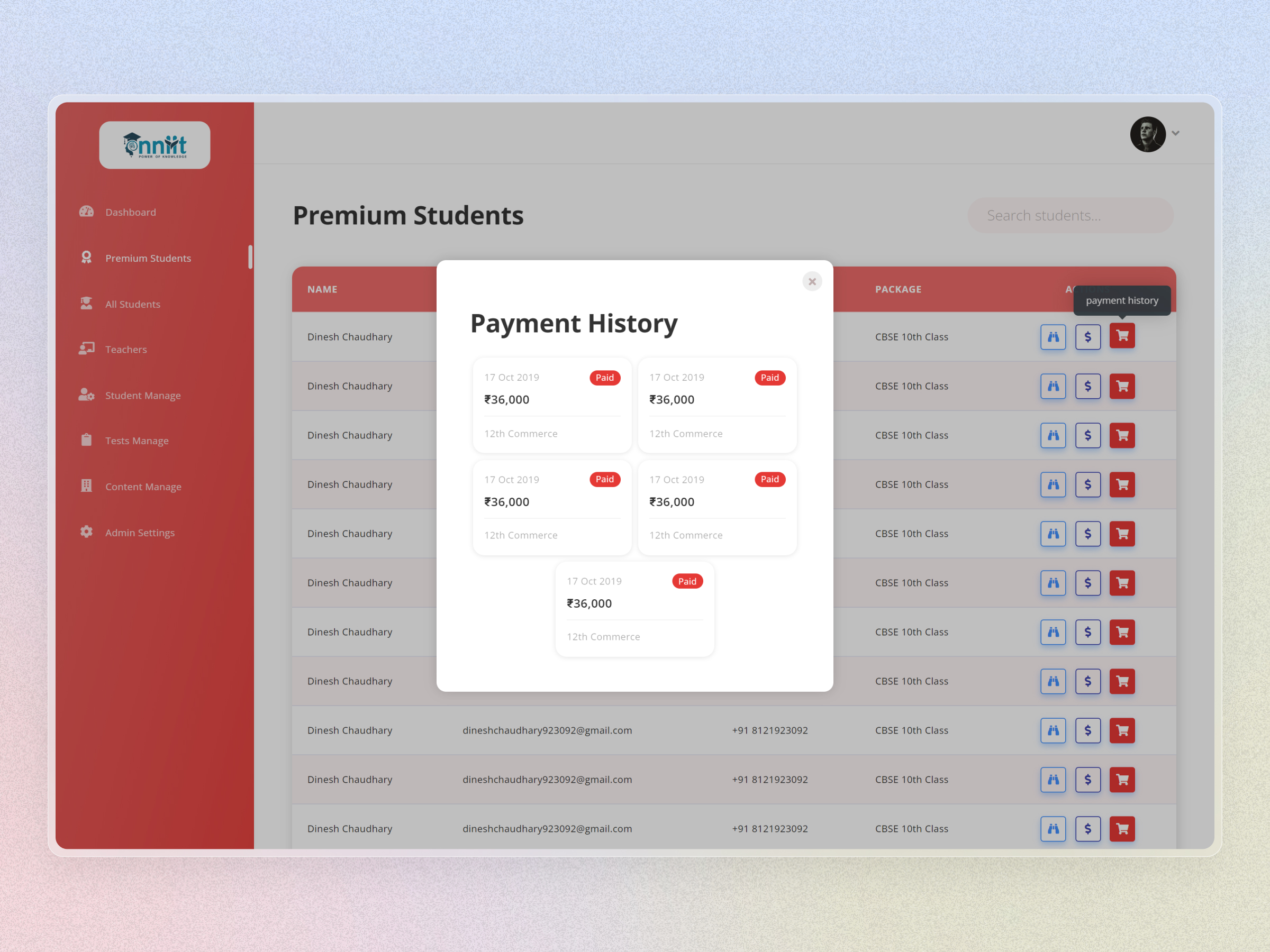
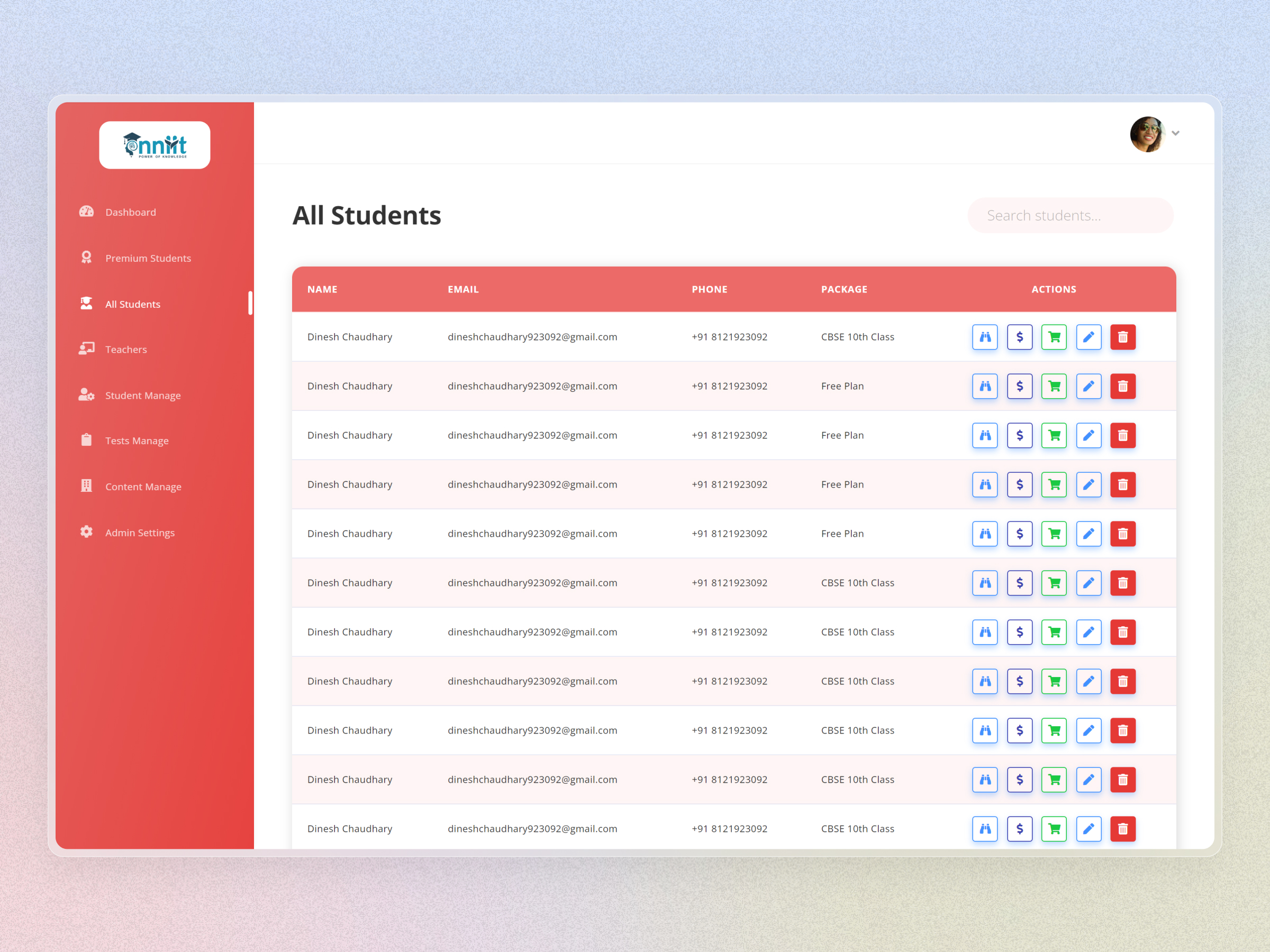
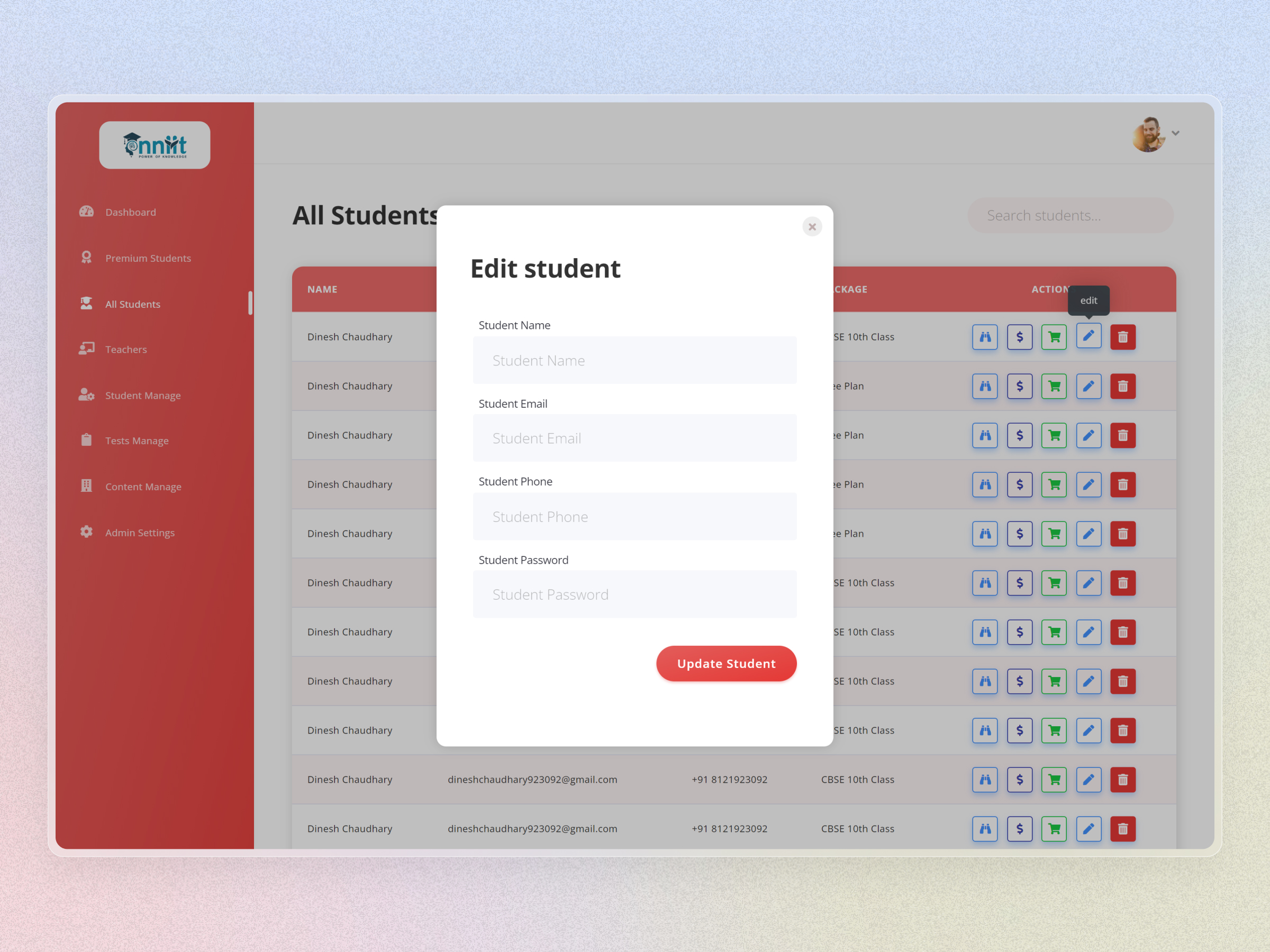
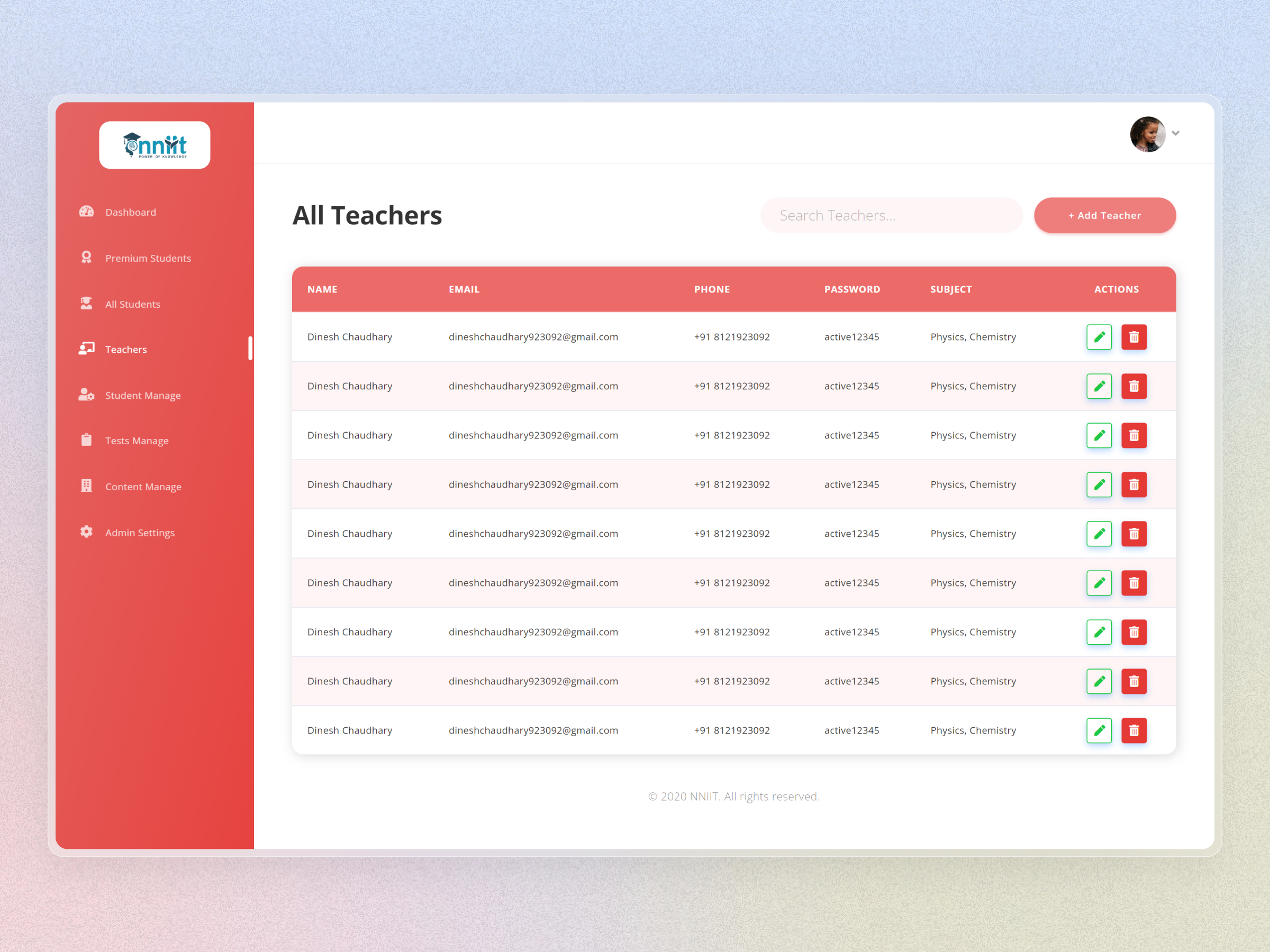
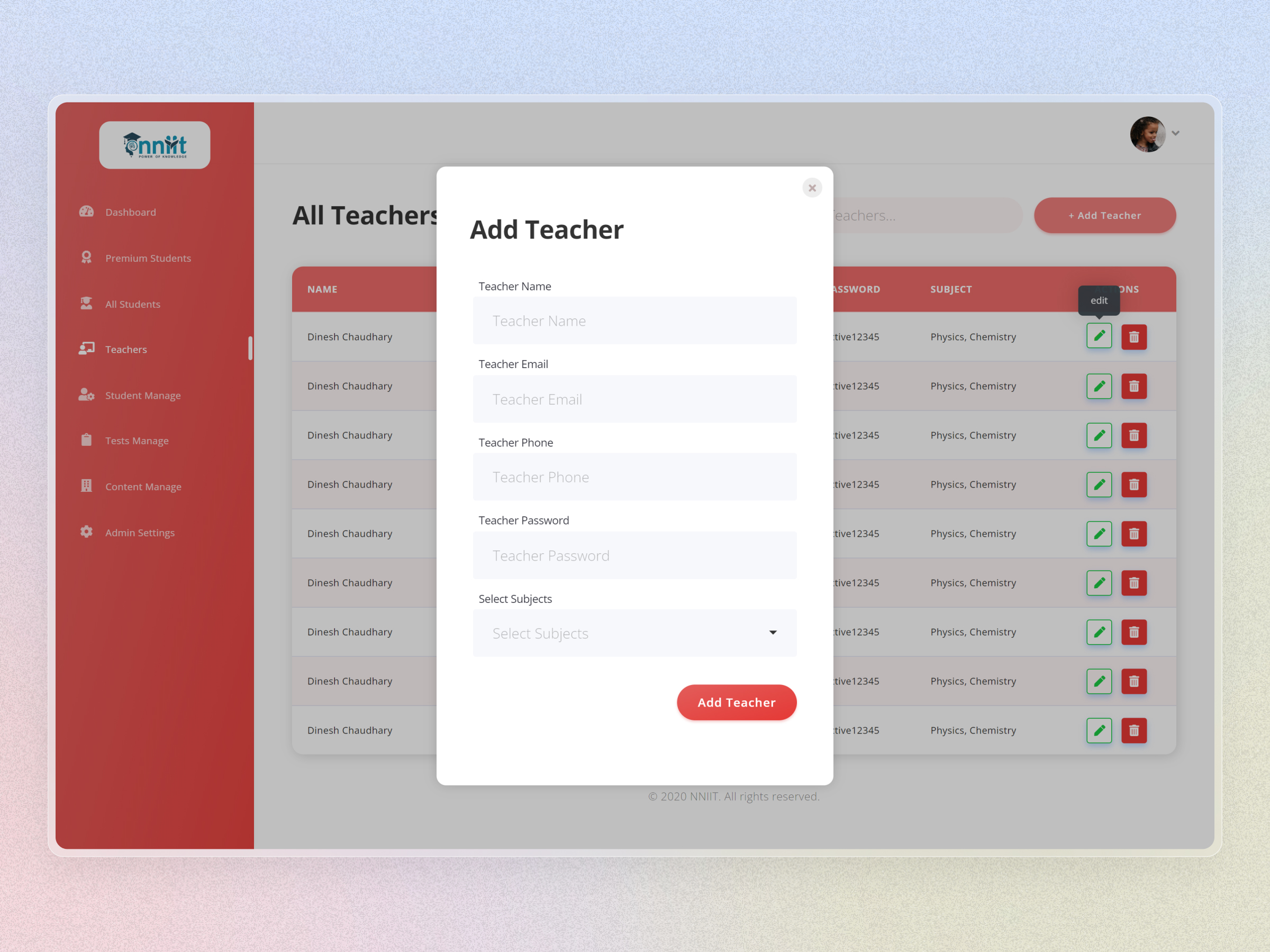
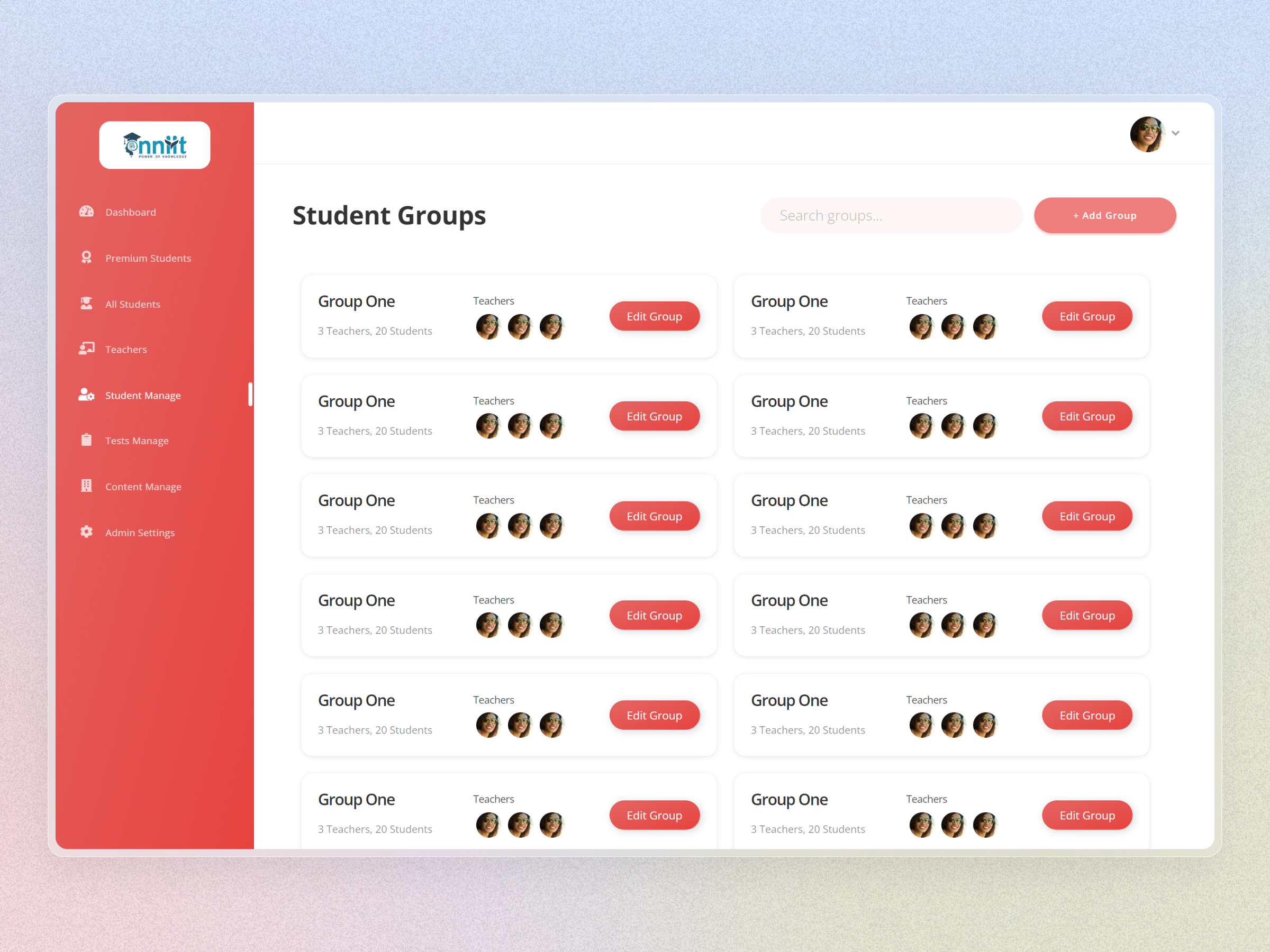
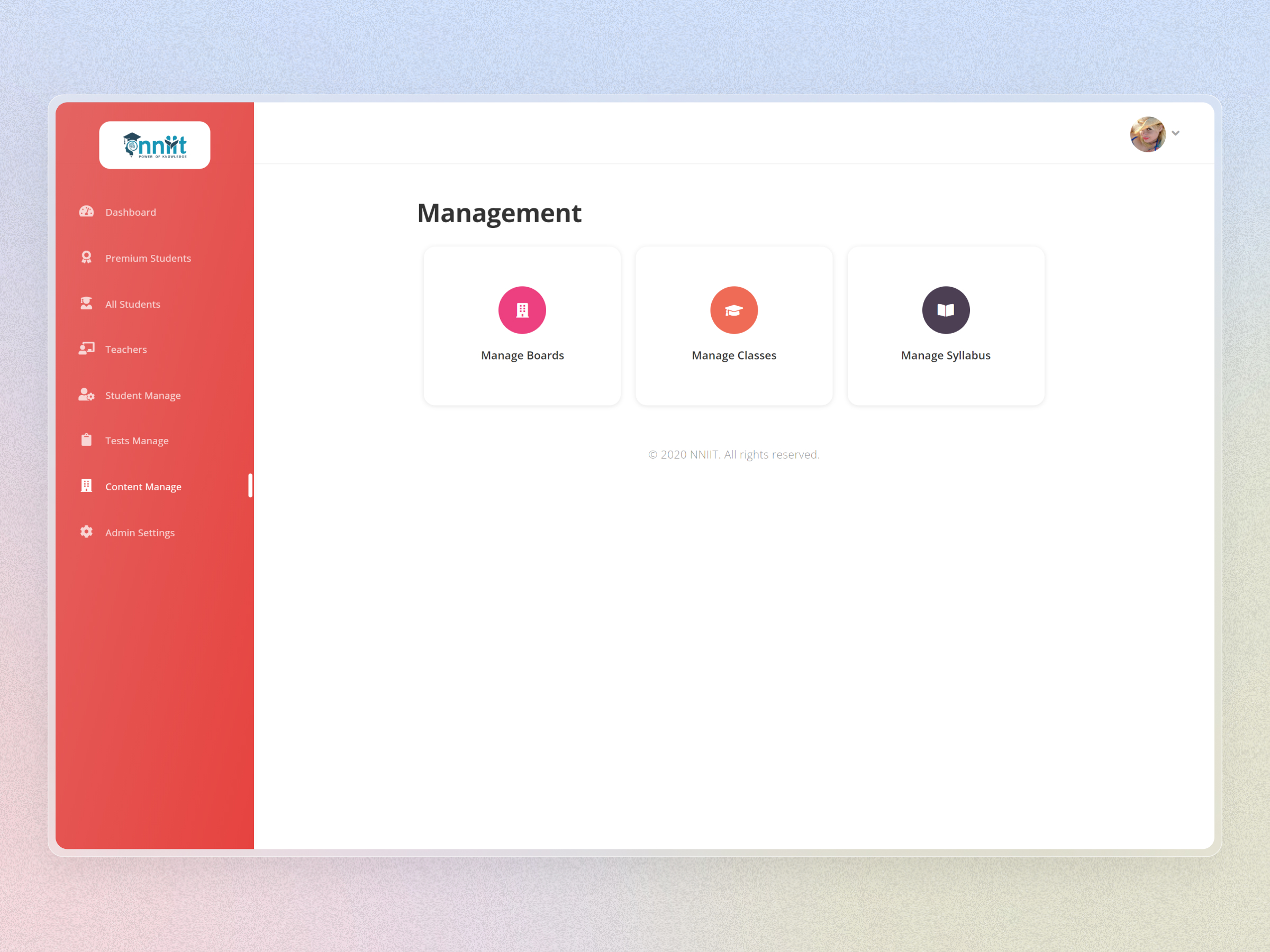
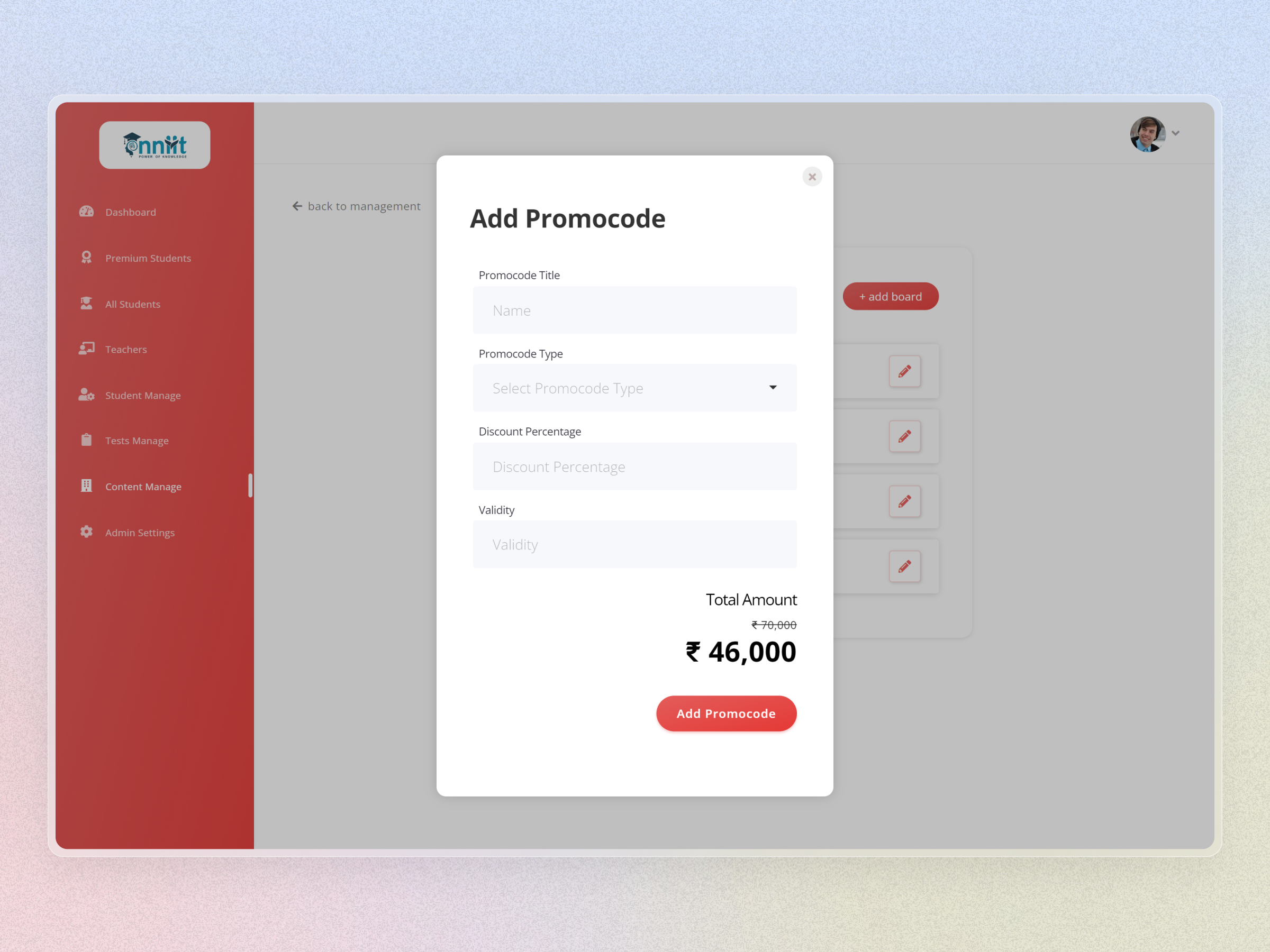
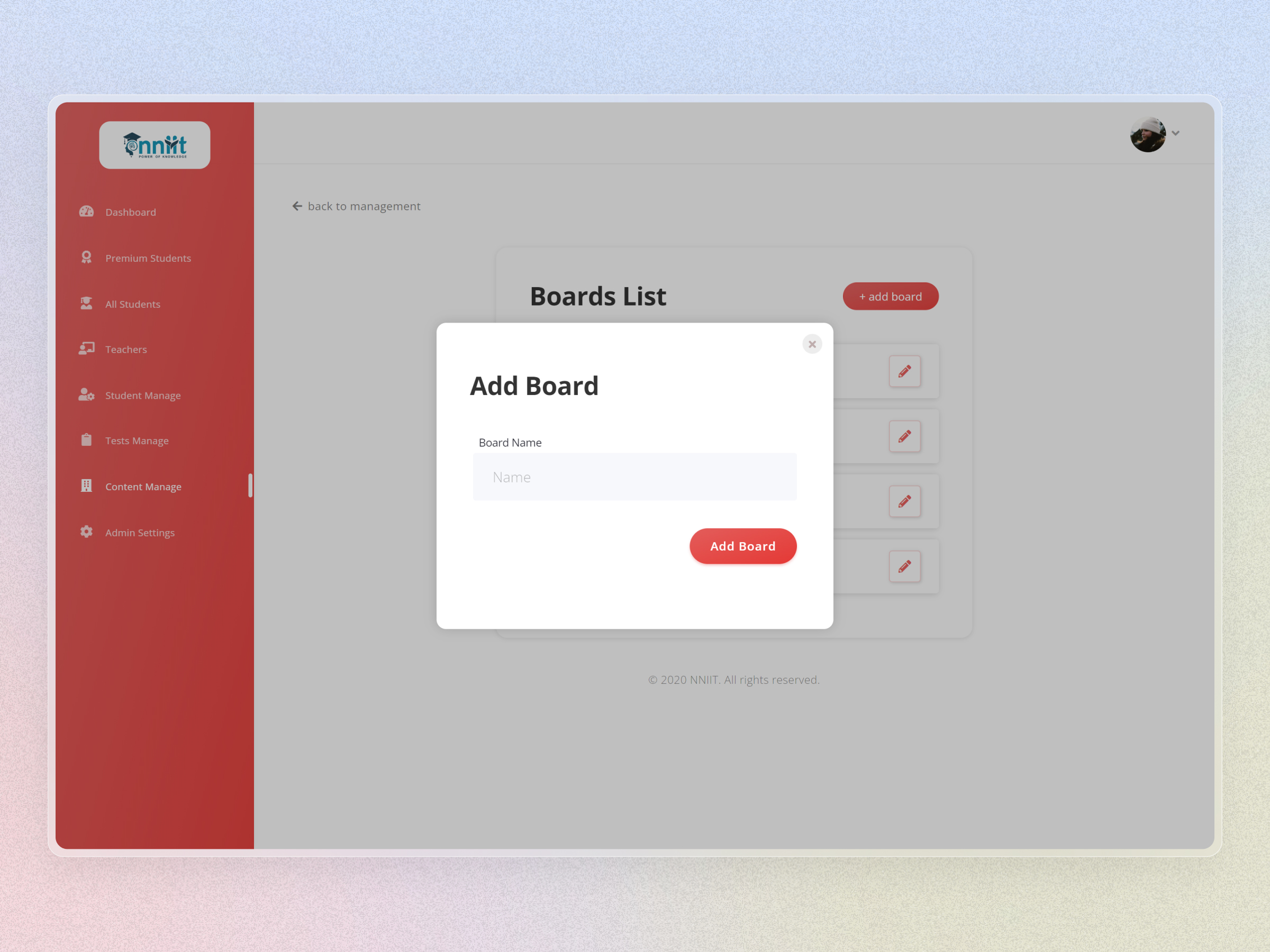
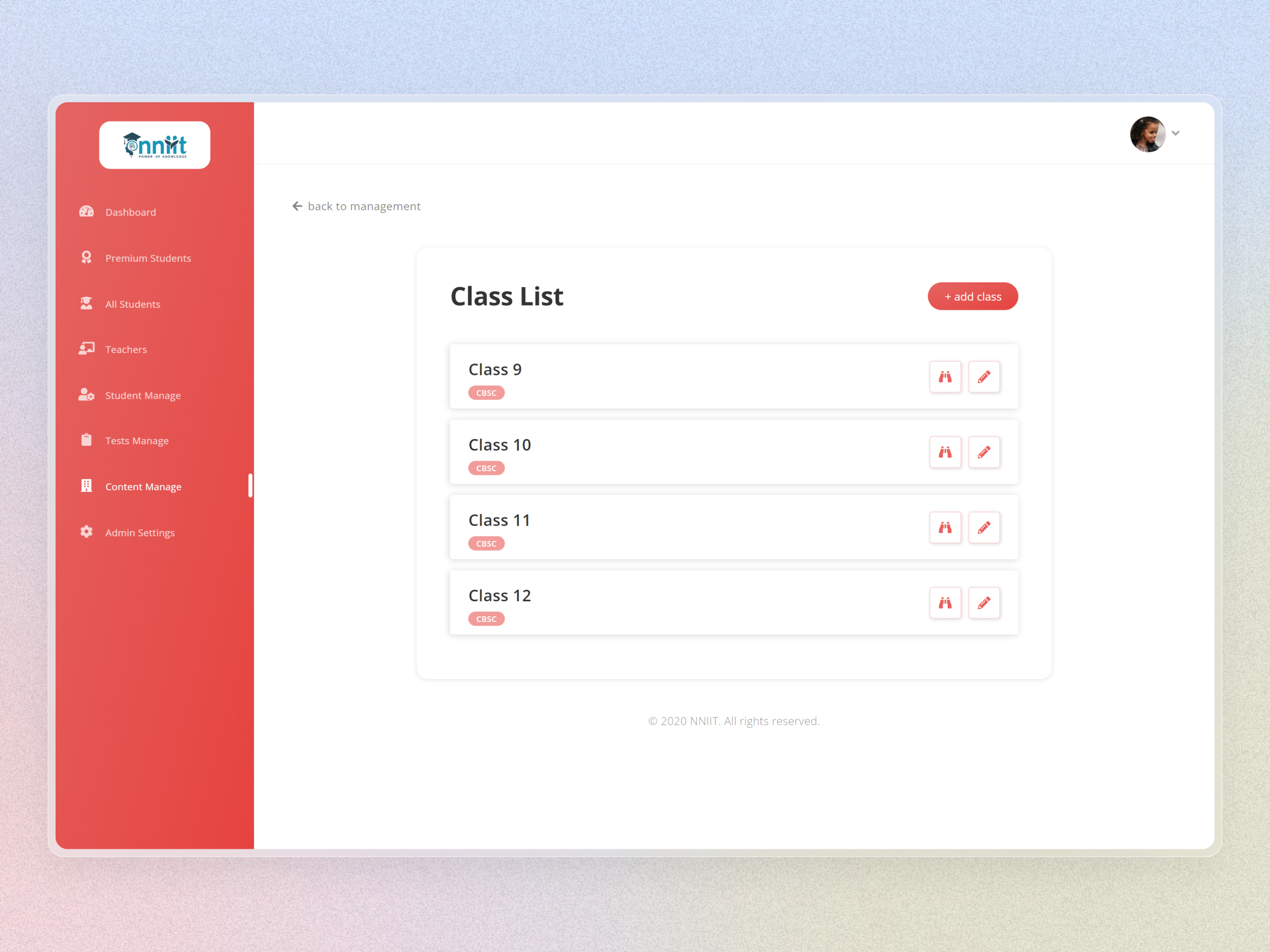
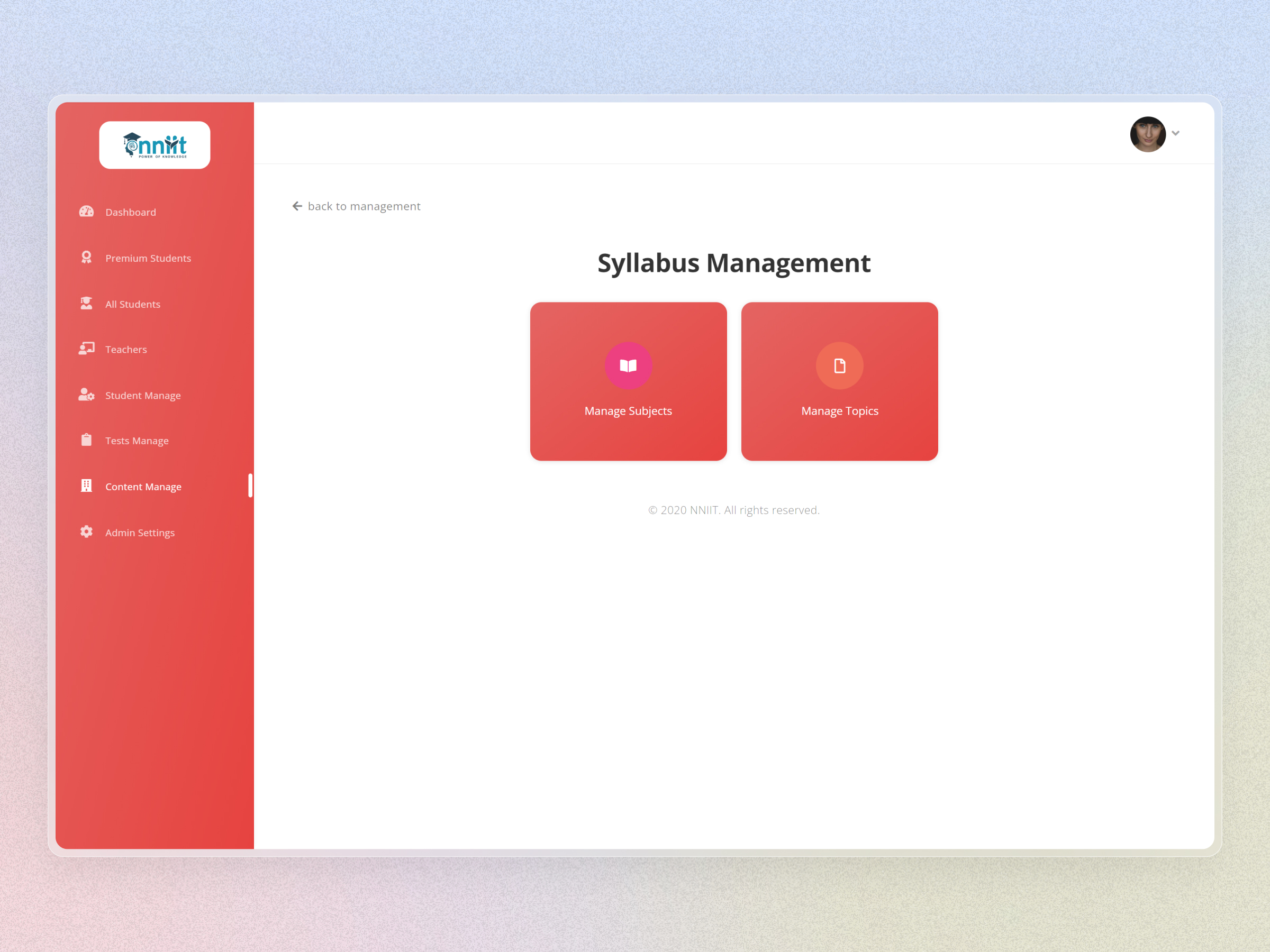
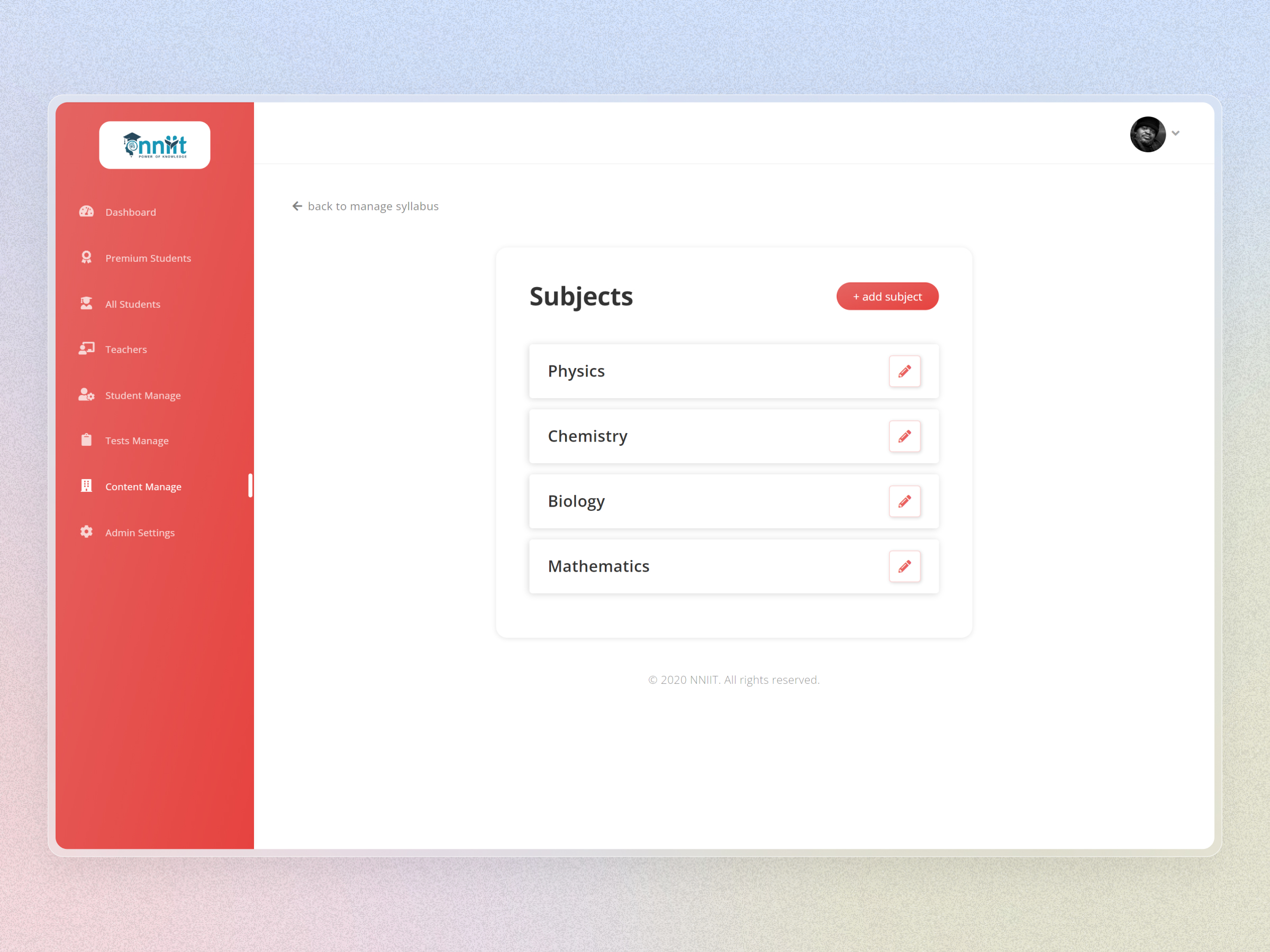
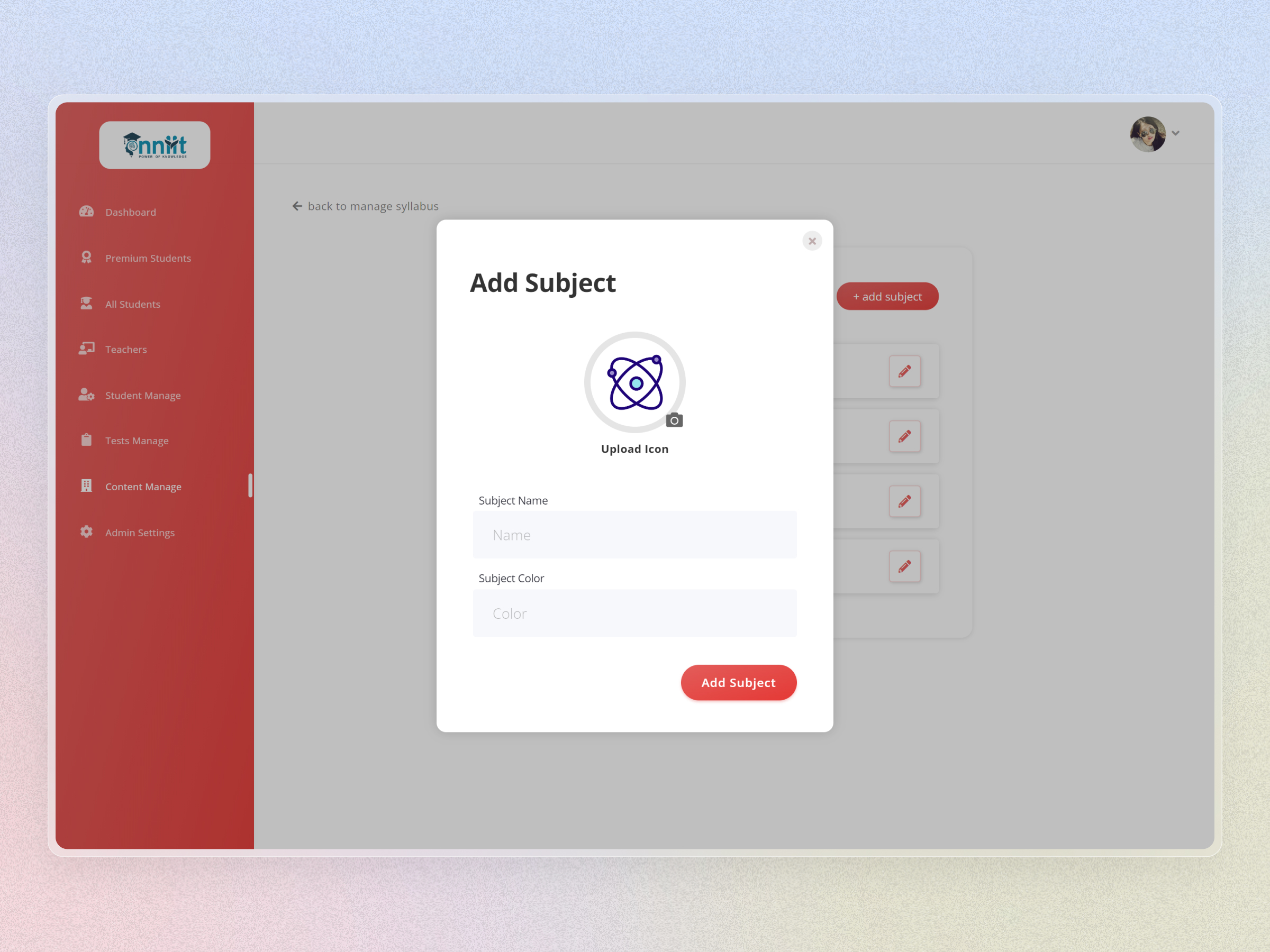
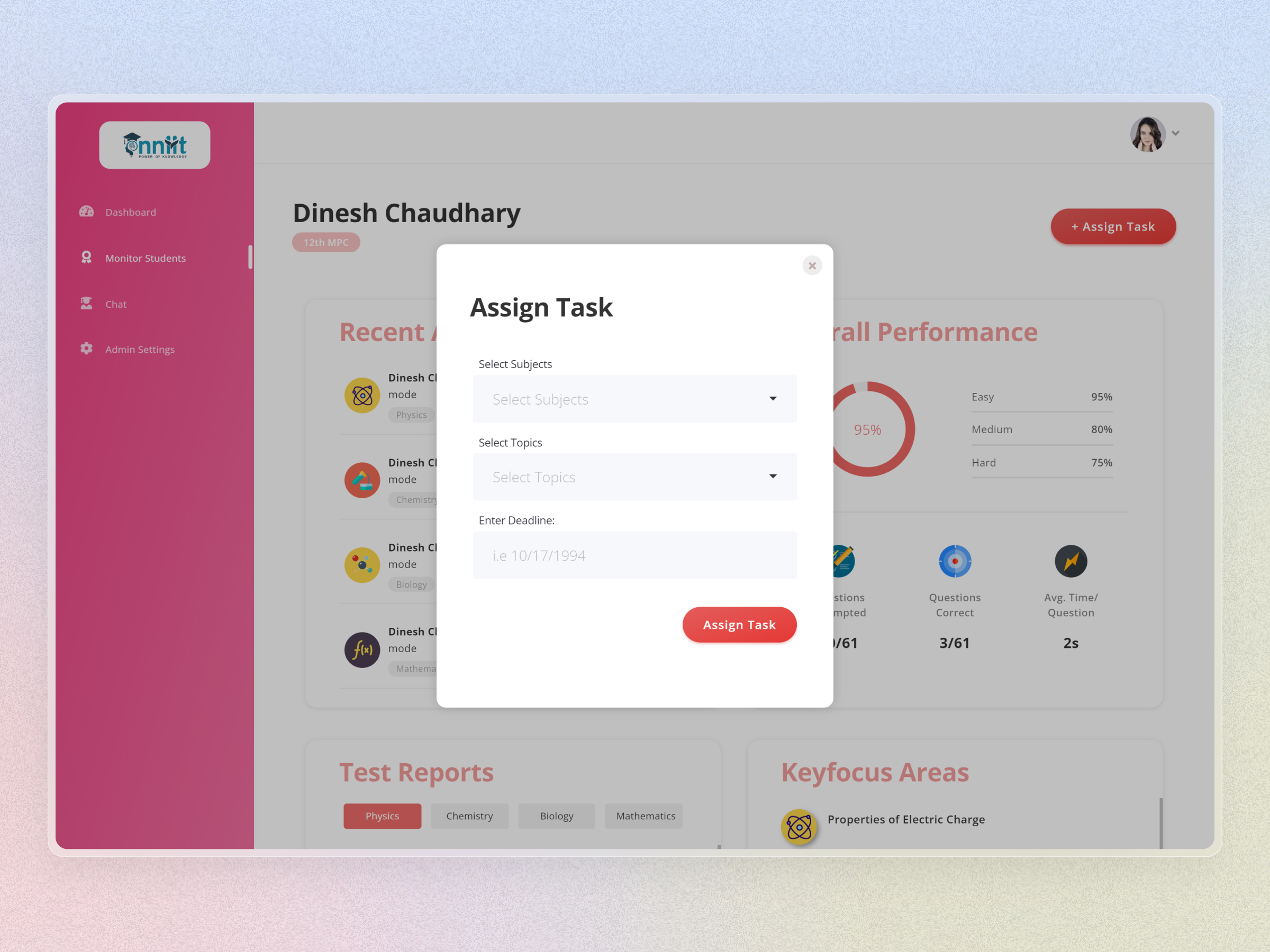
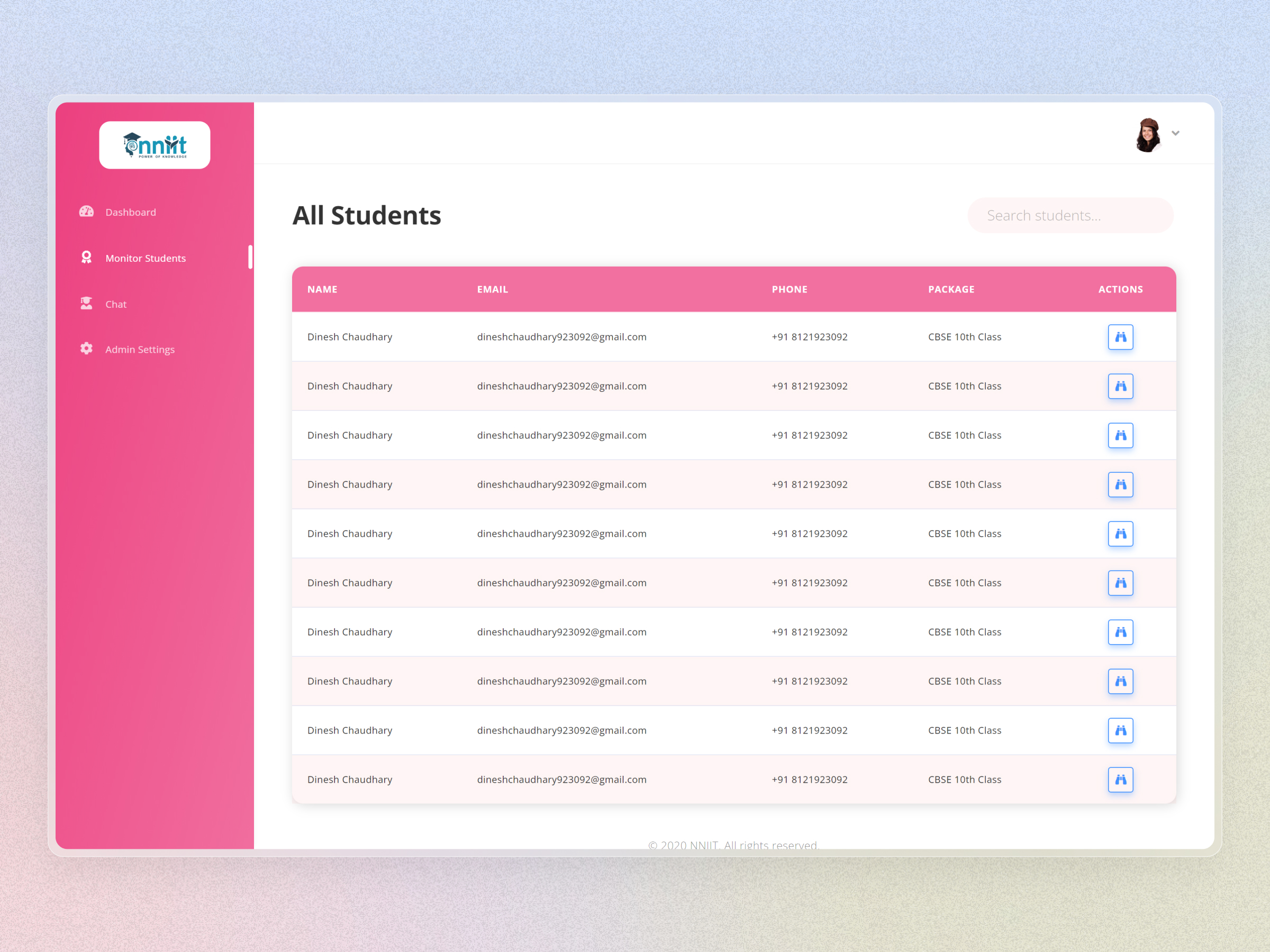
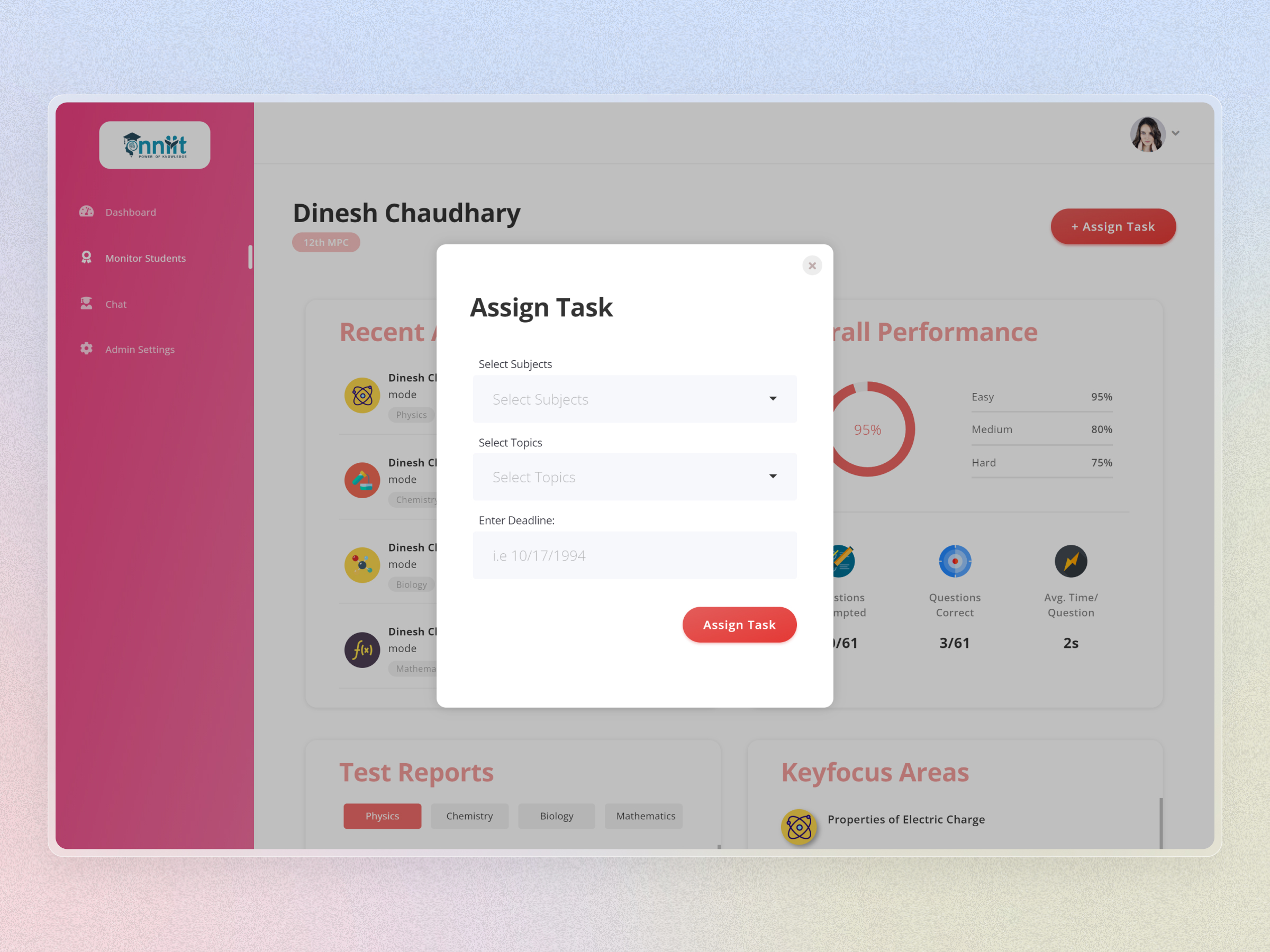
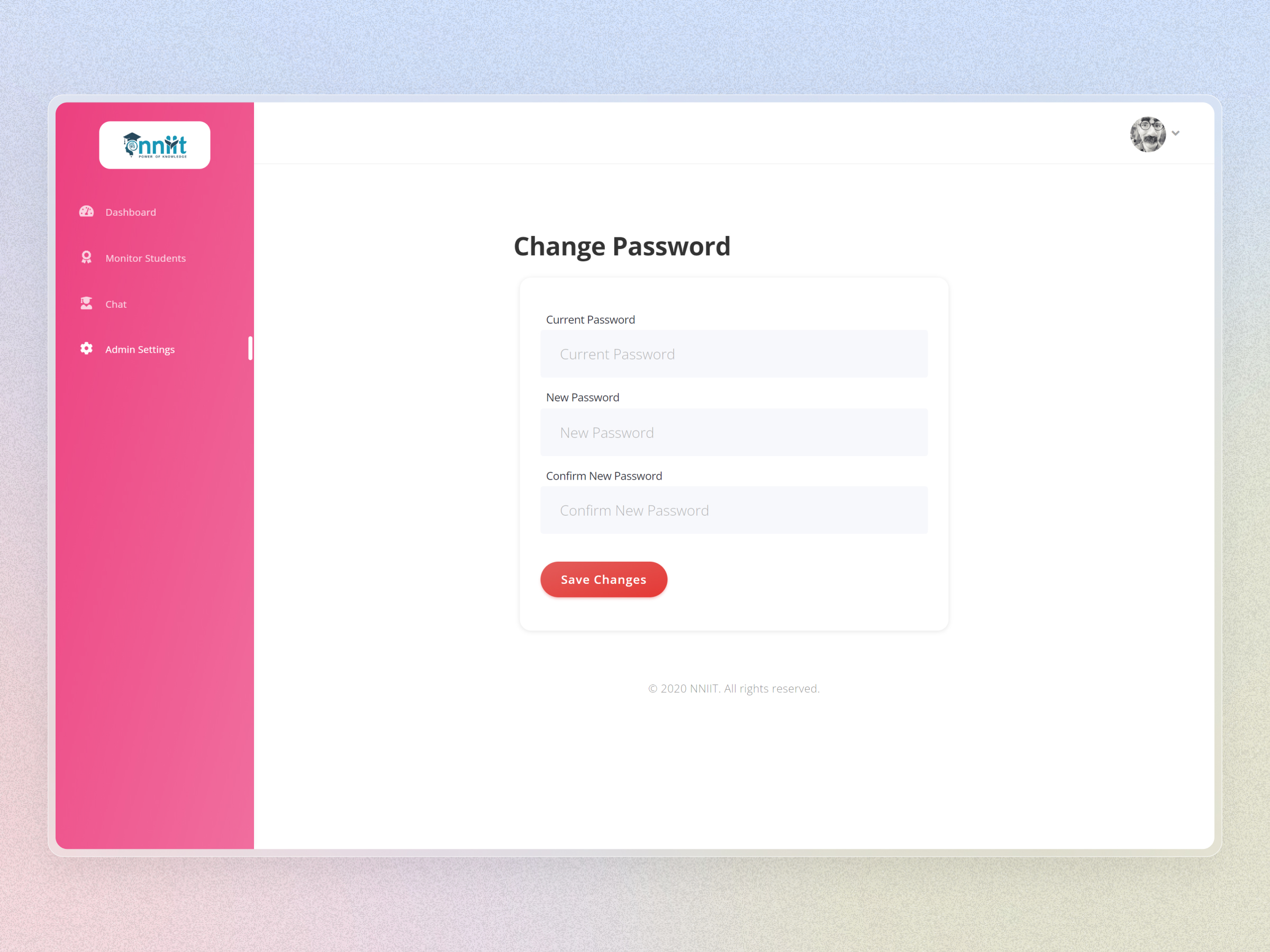
Each user type gets their own experience. Students see their courses, upcoming exams, results, and practice recommendations. Teachers manage their courses, question banks, and student performance data. Admins handle user accounts, course structures, and platform settings. Everyone sees what they need — nothing else cluttering the interface.
UI Design Built for Non-Technical Users
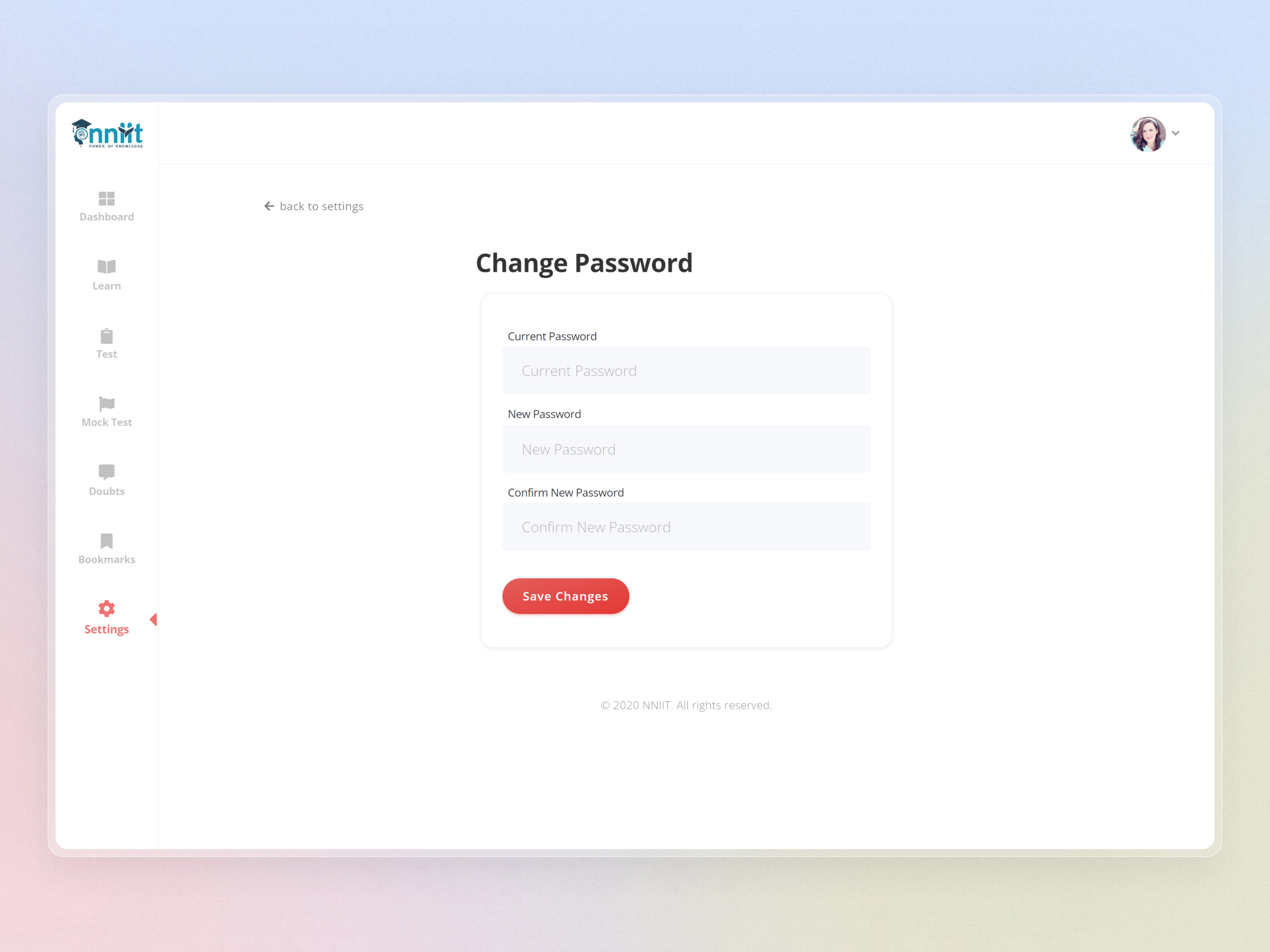
Teachers and administrators at educational institutions aren’t necessarily tech-savvy. We designed the interface specifically for that — clear navigation, minimal clicks to complete common tasks, nothing buried. We did the UX research, the wireframes, the visual design, and the frontend implementation ourselves. The client didn’t need to hire a separate design agency.
What shipped
We delivered the complete LMS in 3 months for ₹2.1 lakhs. NNIIT went from manual processes to a fully digital education platform — online exams, adaptive practice, student tracking, and separate dashboards for every role. The client also got a public website to showcase the product features and drive leads, which we planned, designed, and built alongside the LMS. See the NNIIT public website case study for that side of the project.
Frequently Asked Questions
Questions about LMS builds,
answered clearly.
Questions about the work, scope, delivery context, and next steps.
We planned, designed, and built the NNIIT LMS — with online exam management, a question bank, adaptive practice, and separate portals for students, teachers, and admins — in 3 months for ₹2.1 lakhs. That's on the lean end for a focused MVP with a clearly defined scope. More complex platforms with video hosting, mobile apps, or third-party integrations cost more. Starting with the core features and validating before expanding is almost always the smarter approach.
Related Work
Similar case studies,
selected for context.
Continue exploring related work, with comparable product and delivery challenges.