SaaS ApplicationsMVP DevelopmentWeb ApplicationsAI Solutions
Learn AI Dashboard
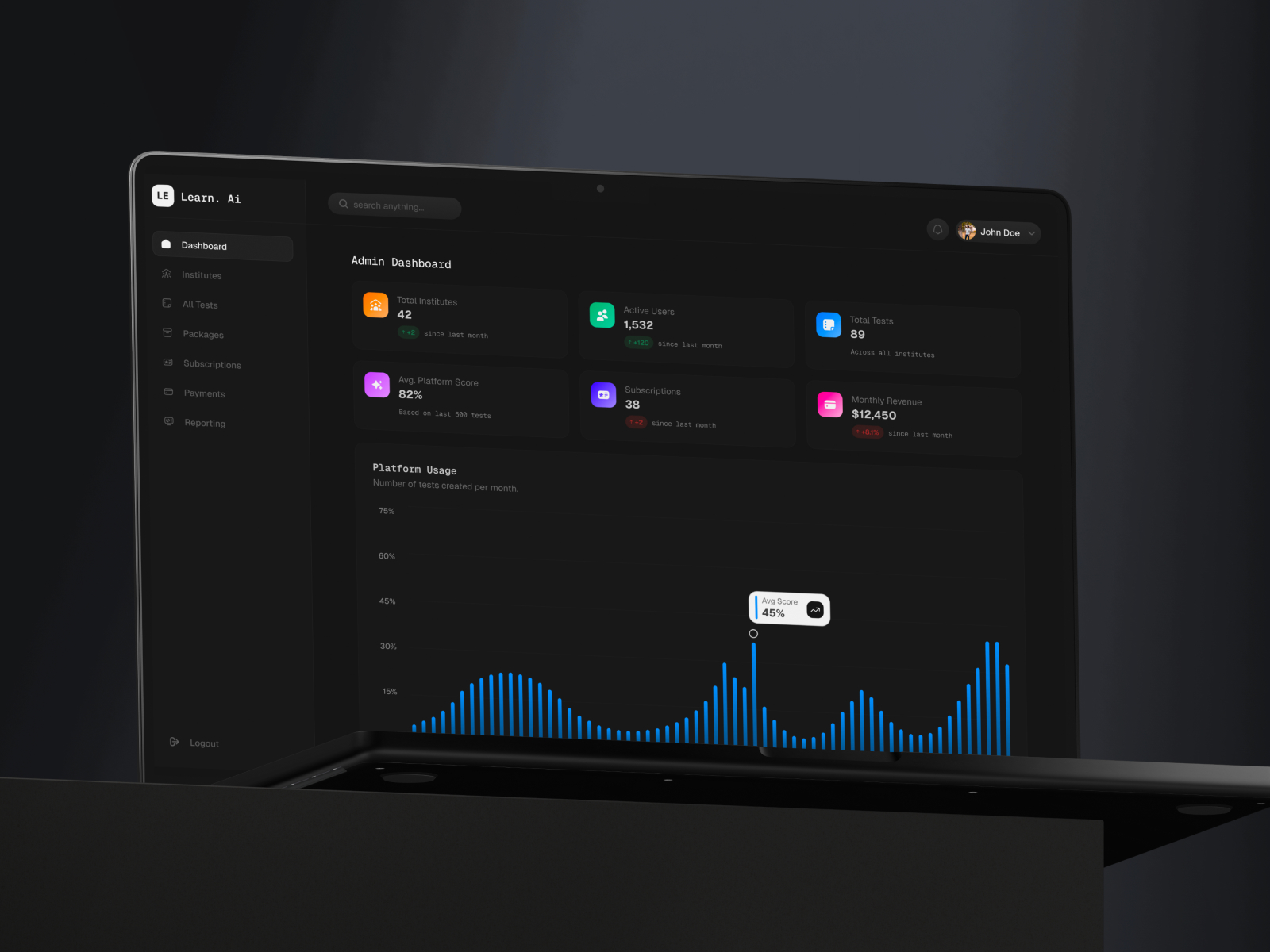
Learn AI Dashboard is the operating core of the Learn AI LMS, helping the team manage users, learning flows, and admin operations in one place.
The dashboard that turns Learn AI into a usable product
Learn AI Dashboard is the operating core of Learn AI, an AI-powered learning management system built for a Hyderabad-based education client. The product gives institutes one place to manage batches, students, AI-generated tests, analytics, and assessment workflows — reducing question paper creation from 4 to 6 hours of manual work down to 15 to 20 minutes.
The dashboard turned the LMS concept into a usable, operationally practical product. It is built for India's coaching institute market — a segment inside an EdTech economy growing from USD 7.5 billion in 2024 toward USD 29 billion by 2030, with the Union Budget 2025-26 specifically allocating ₹500 crore for AI in education initiatives.
The brief
The brief required more than a clean interface. The product had to support real institute operations inside a tight MVP scope, while making AI-generated assessments feel dependable rather than experimental. Many coaching institutes still create question papers manually — a process that takes 2 to 3 hours per test — and manage batches through spreadsheets or disconnected tools, so the dashboard had to close that gap cleanly.
The broader Learn AI product — website and dashboard — was delivered in approximately two months with a budget of around Rs. 2.1 lakh. Within that scope, the dashboard had to feel interactive, data-aware, and immediately practical for institute staff.
The build
We planned, designed, and built an interactive dashboard that organized the key parts of the Learn AI product into one manageable system for institute-side workflows.
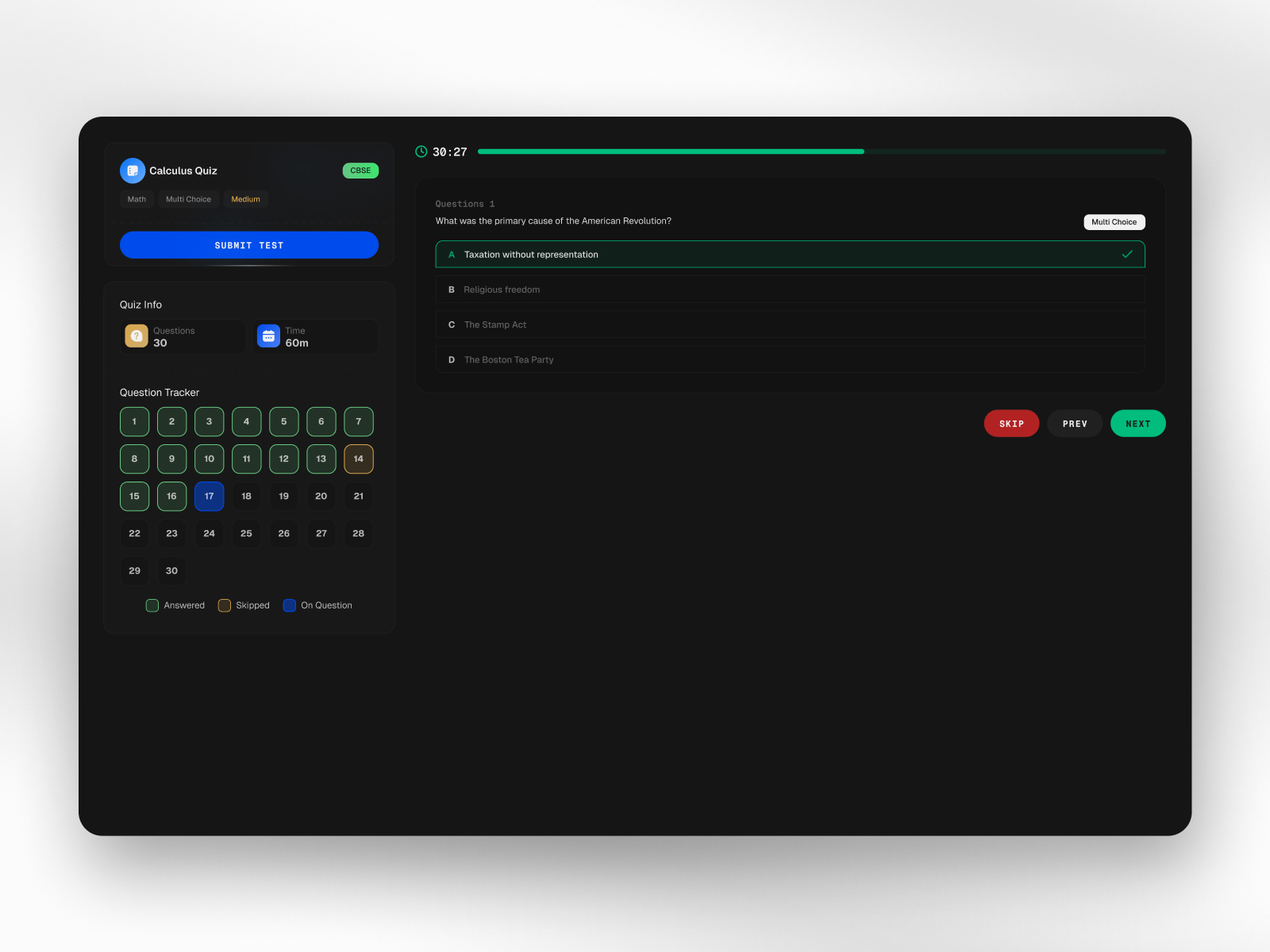
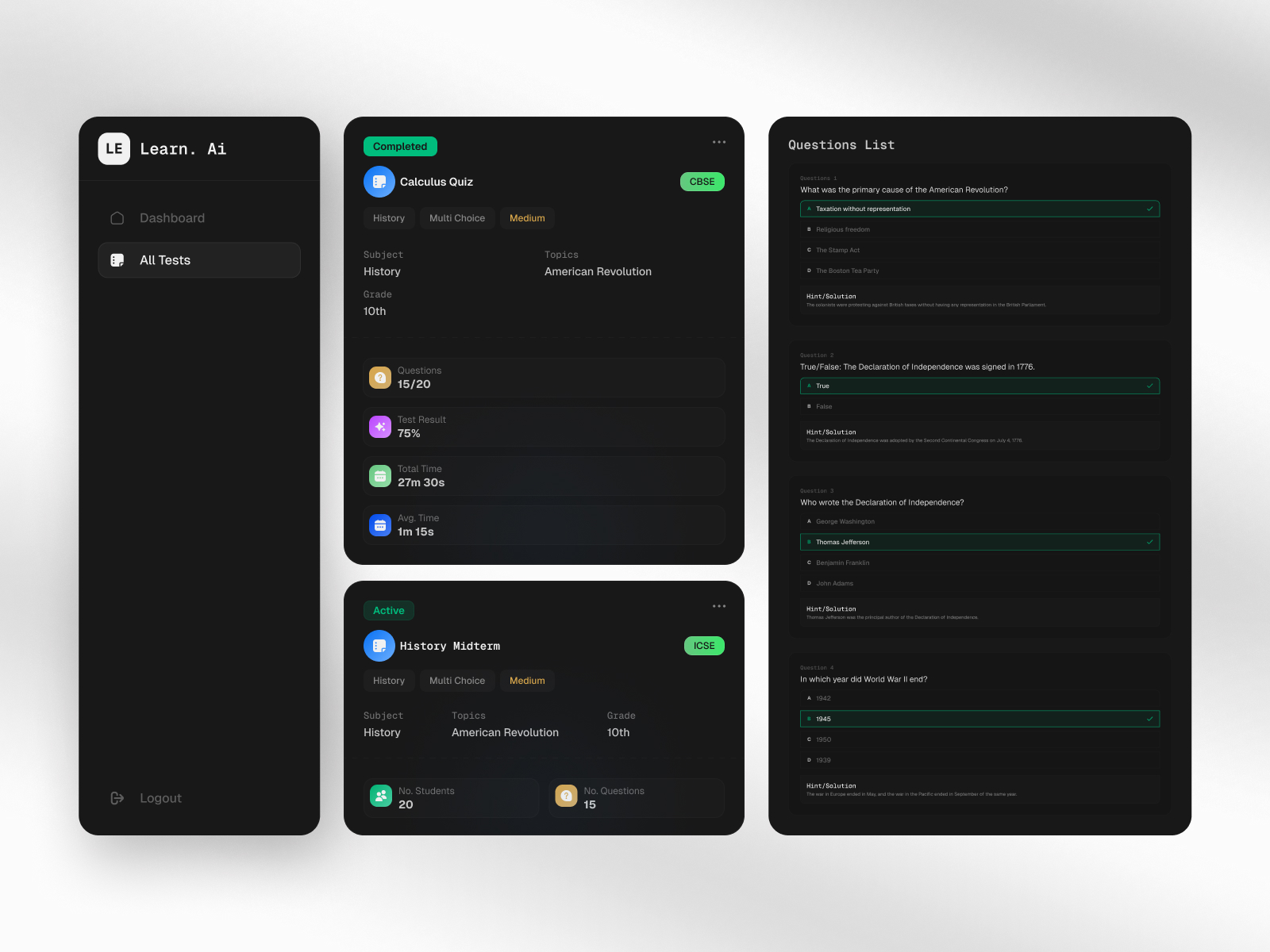
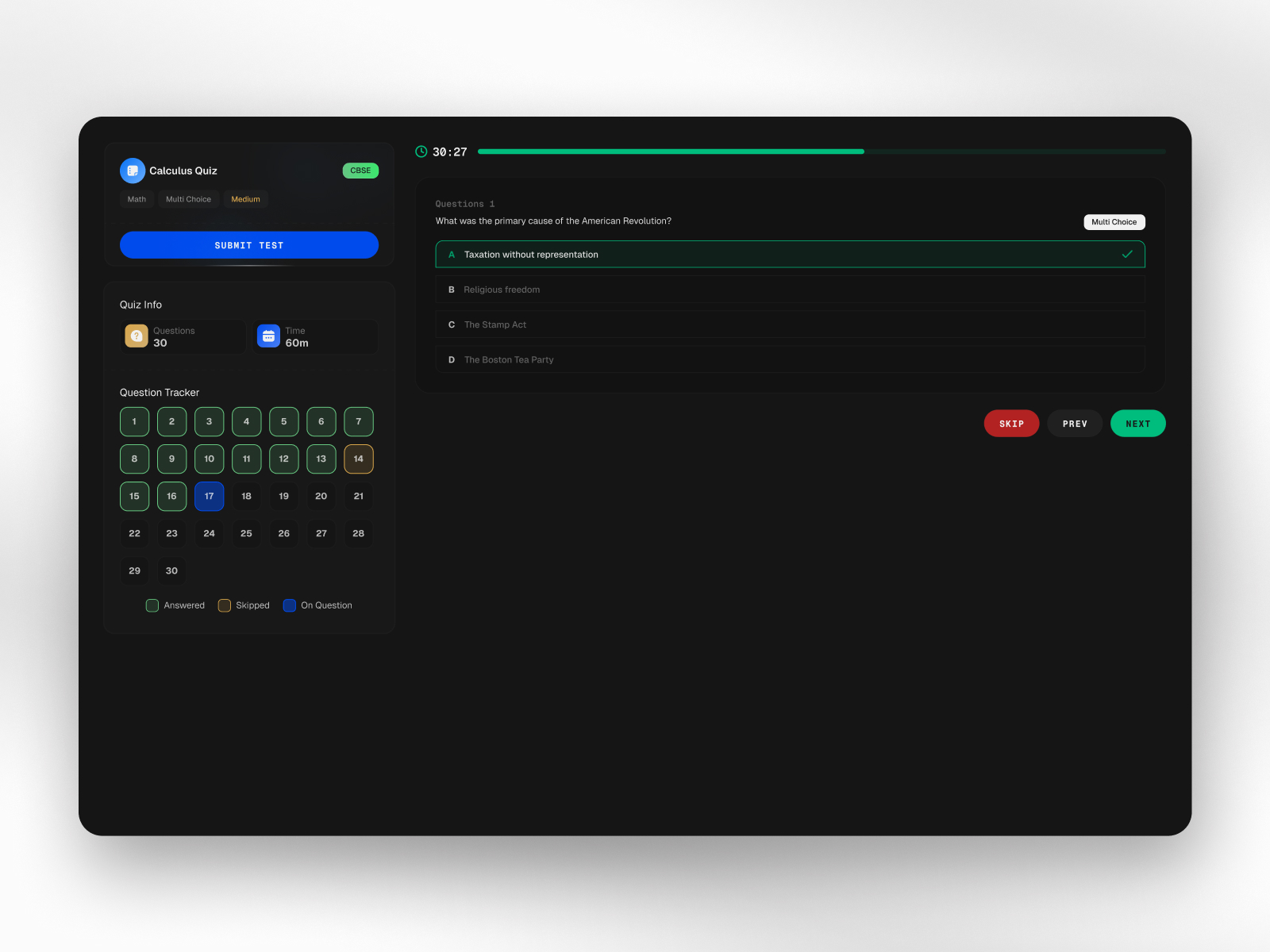
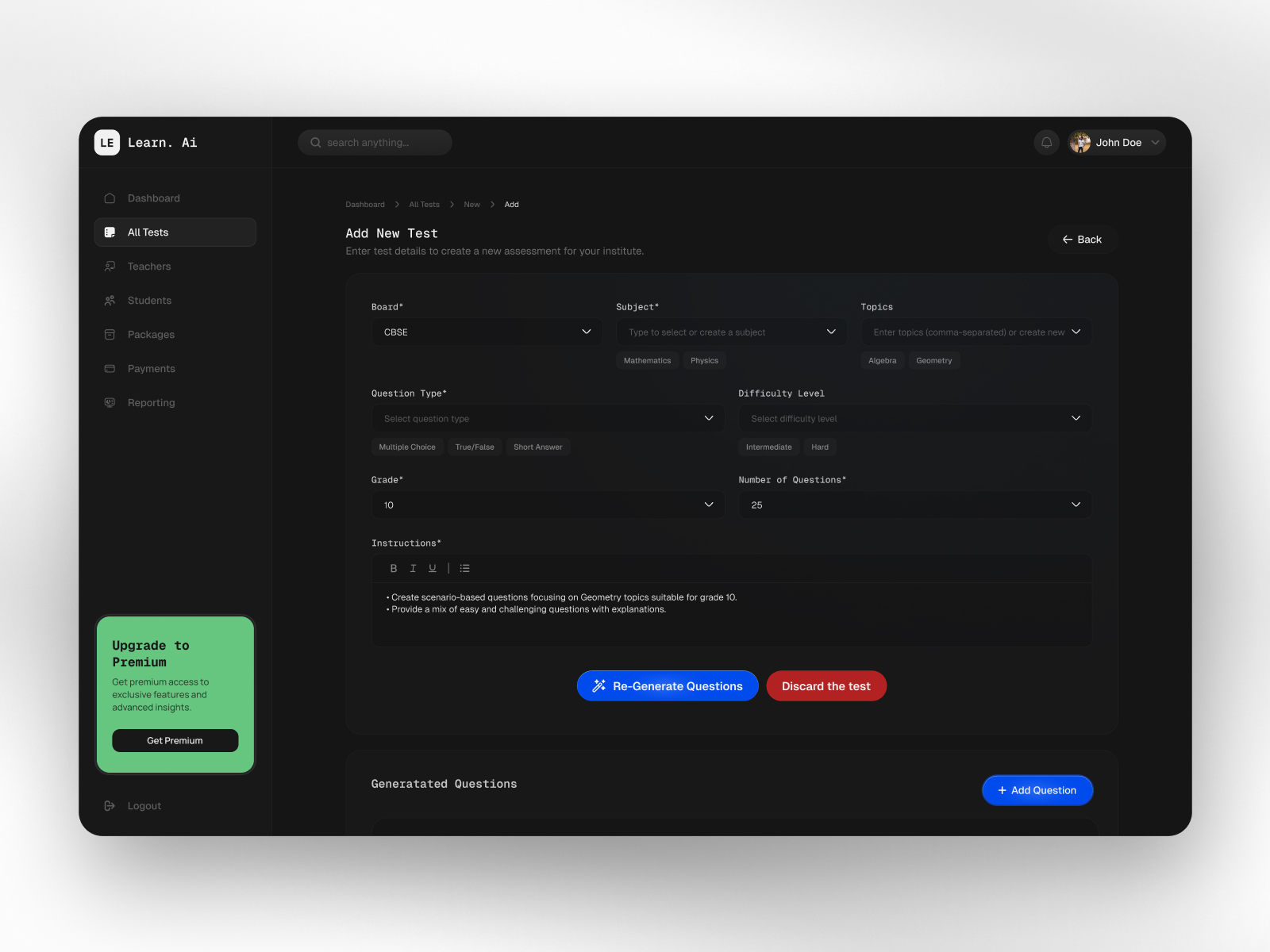
- AI-Generated Tests: The core capability — generating question papers with AI input, reducing test creation from 4 to 6 hours down to 15 to 20 minutes. Supports multiple question formats: MCQ, fill-in-the-blank, short answer, true/false, and matching. This clearly addresses the primary workload concern for institutes and positions Learn AI against Google Forms (no AI generation), ClassMarker (recurring subscription, no India-specific curriculum support), and manual processes that dominate current practice.
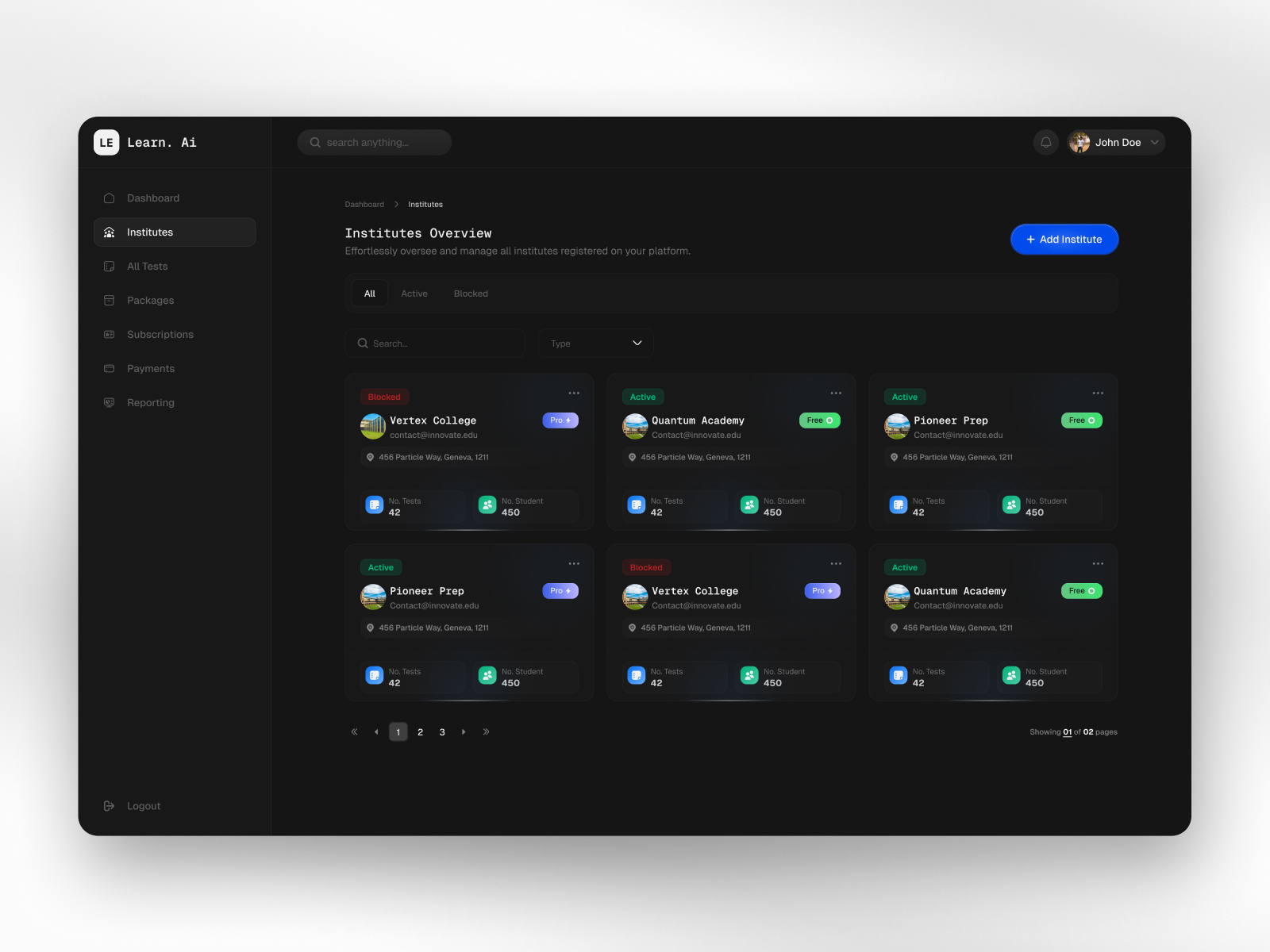
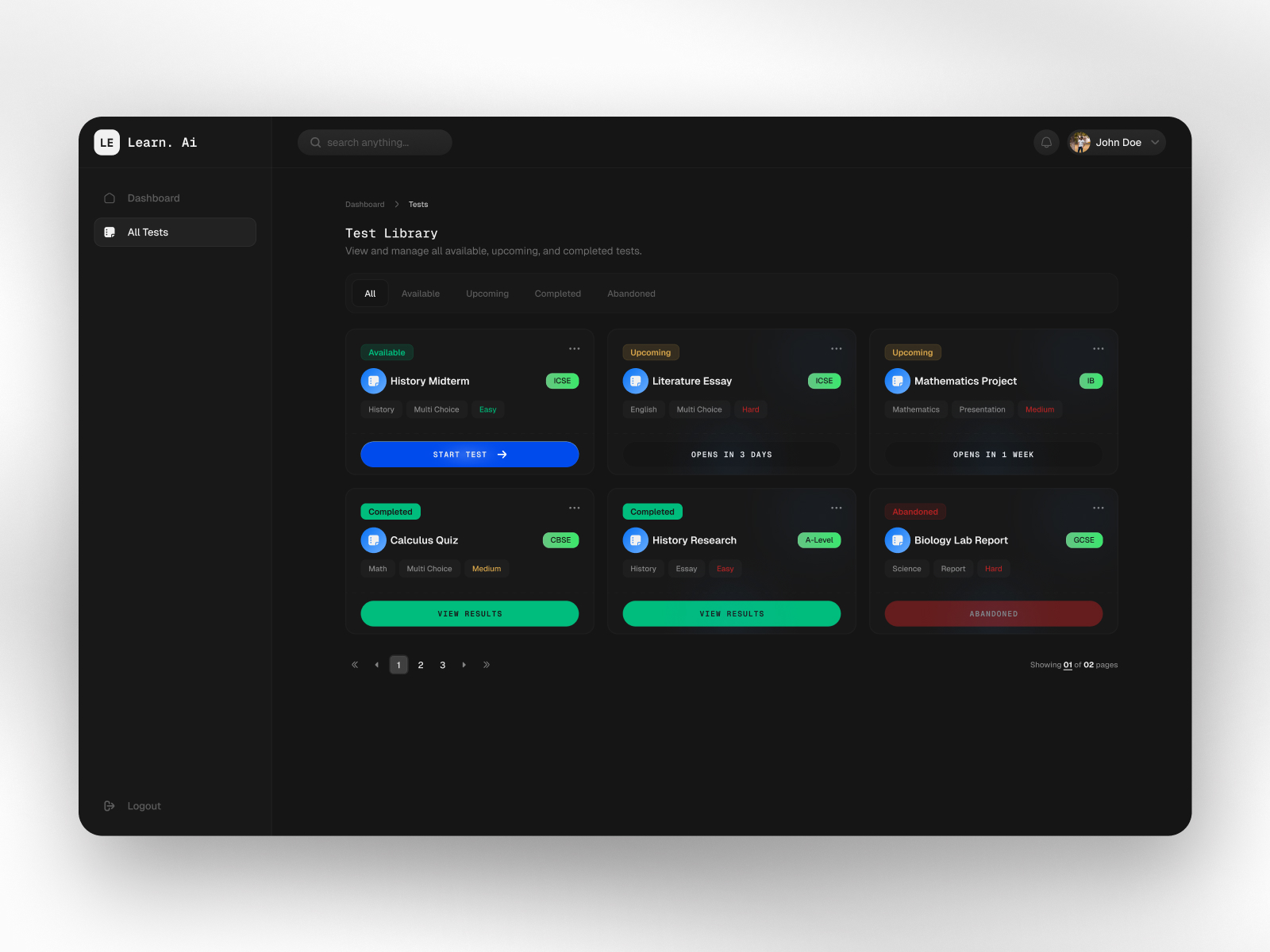
- Institute and Batch Management: Structured tools to manage institute-level access and organize students into batches. Institutes can assign tests to specific groups, track completion by batch, and manage the complete learner lifecycle from one interface.
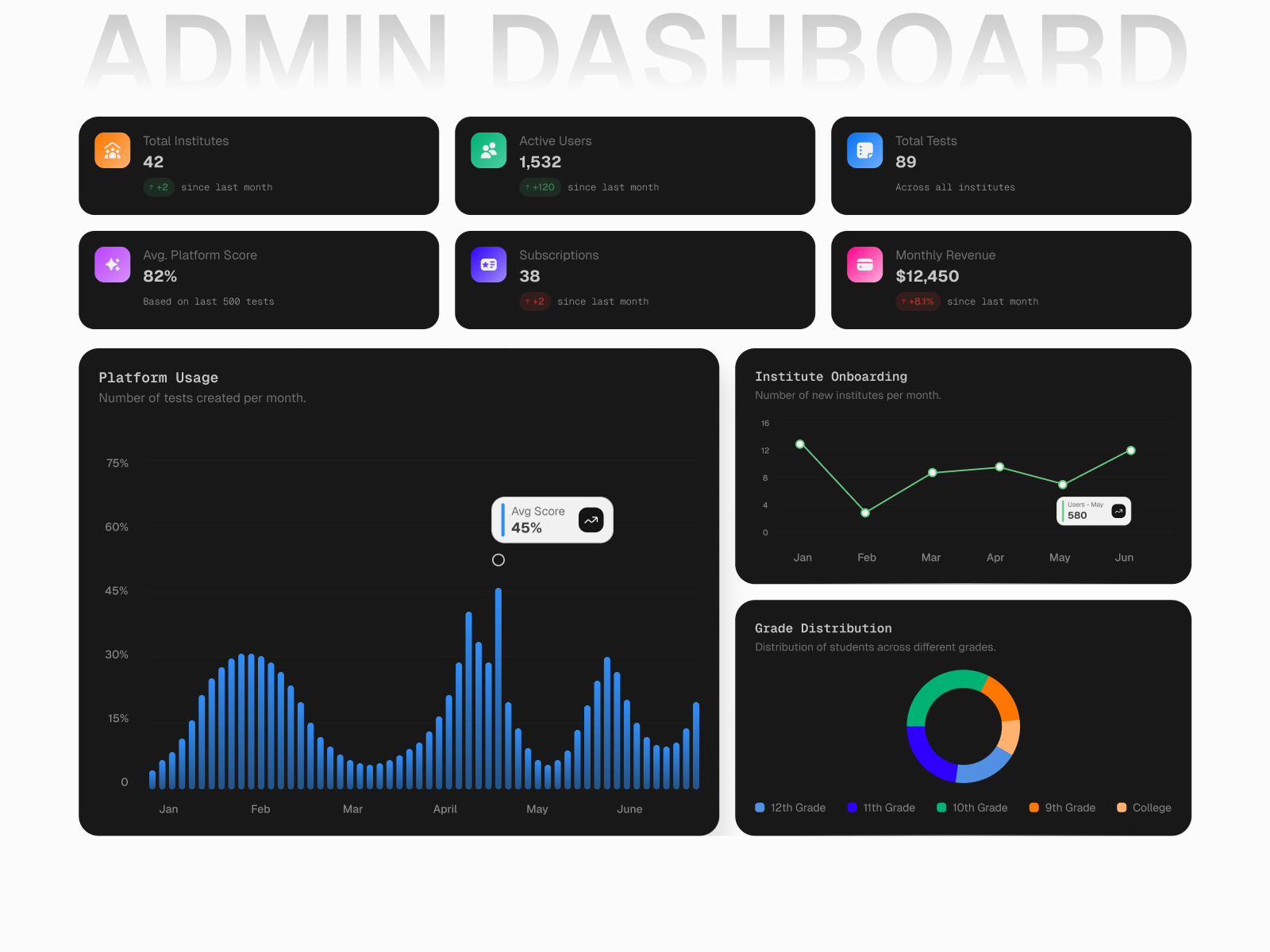
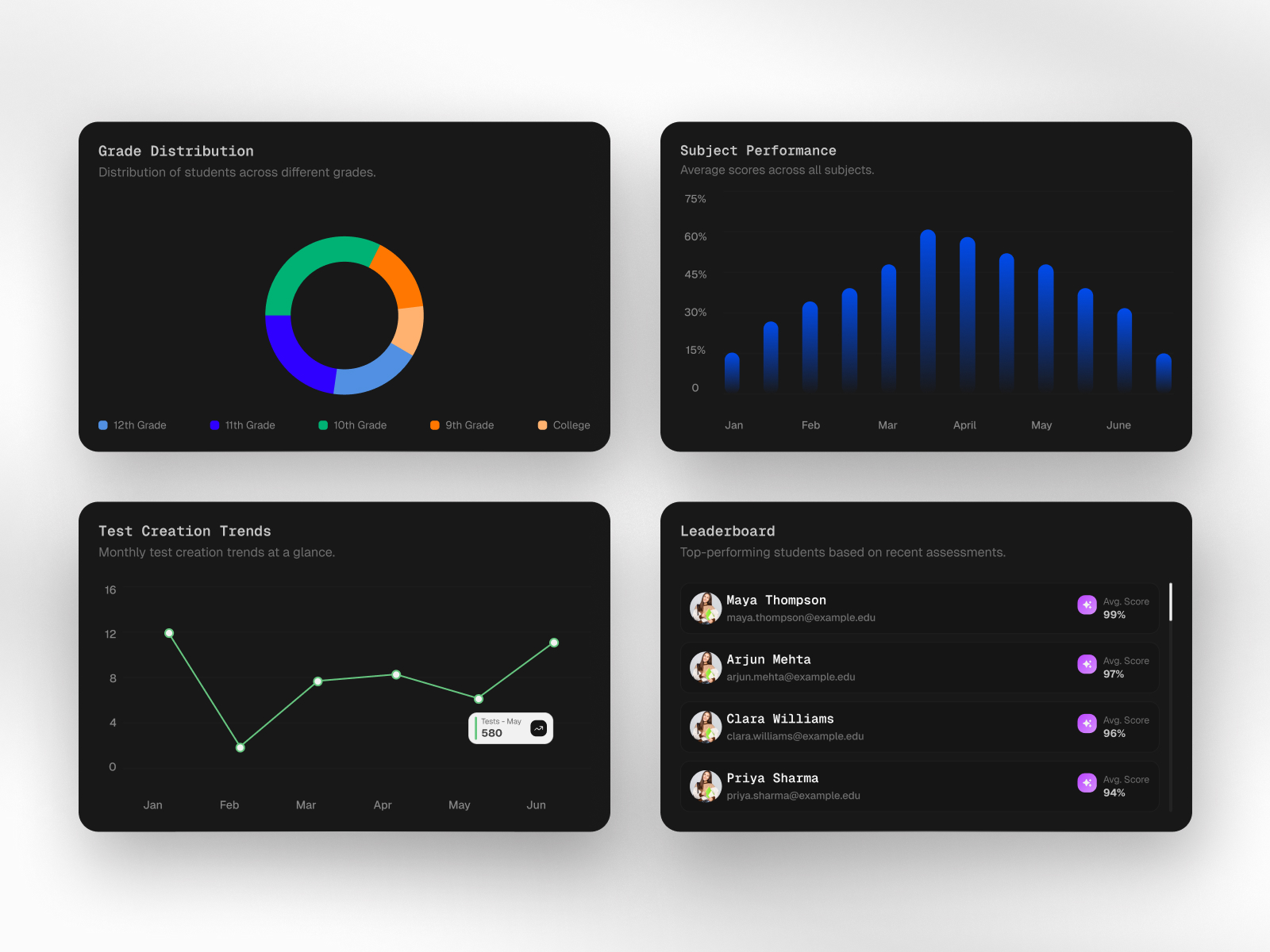
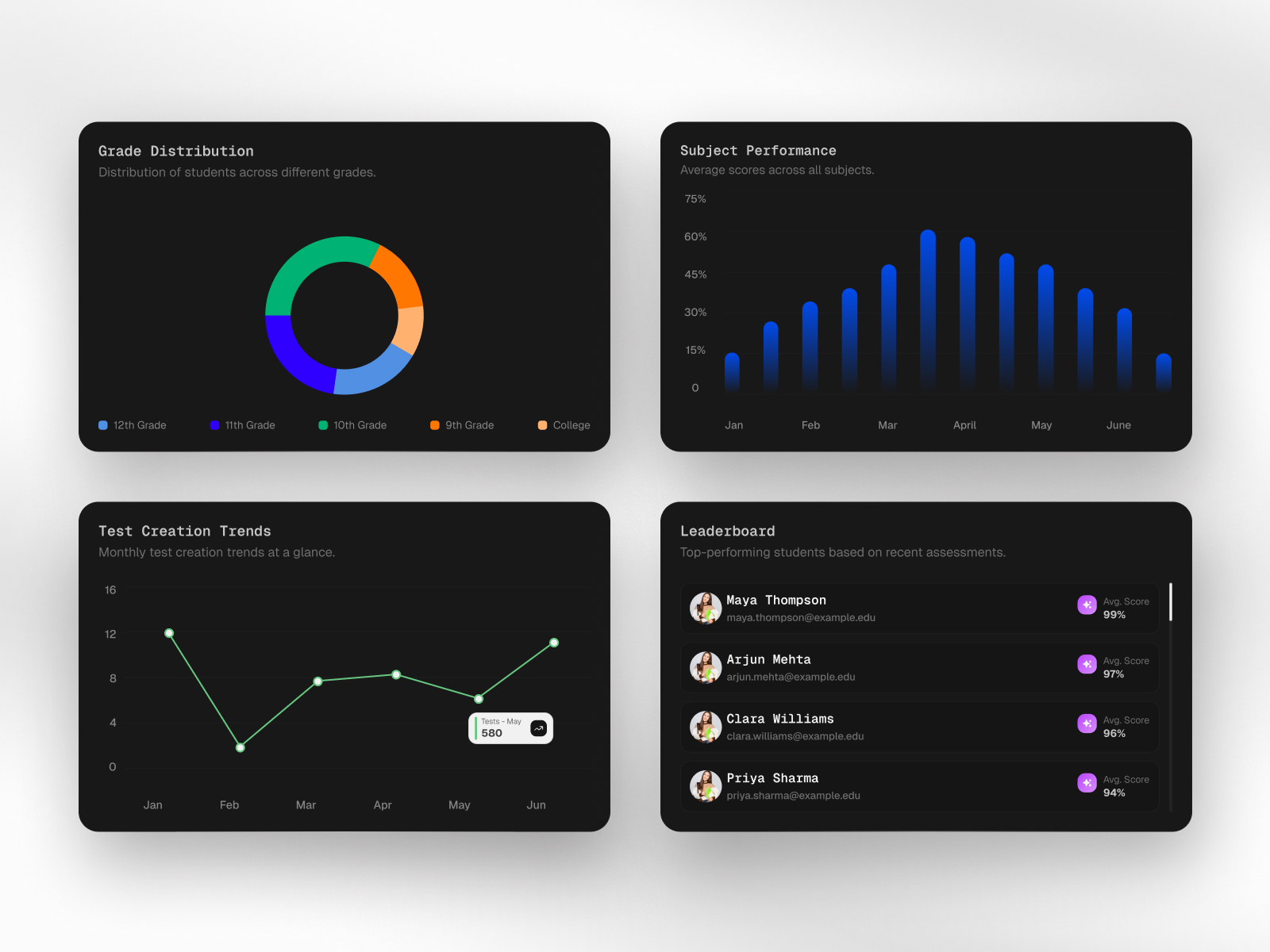
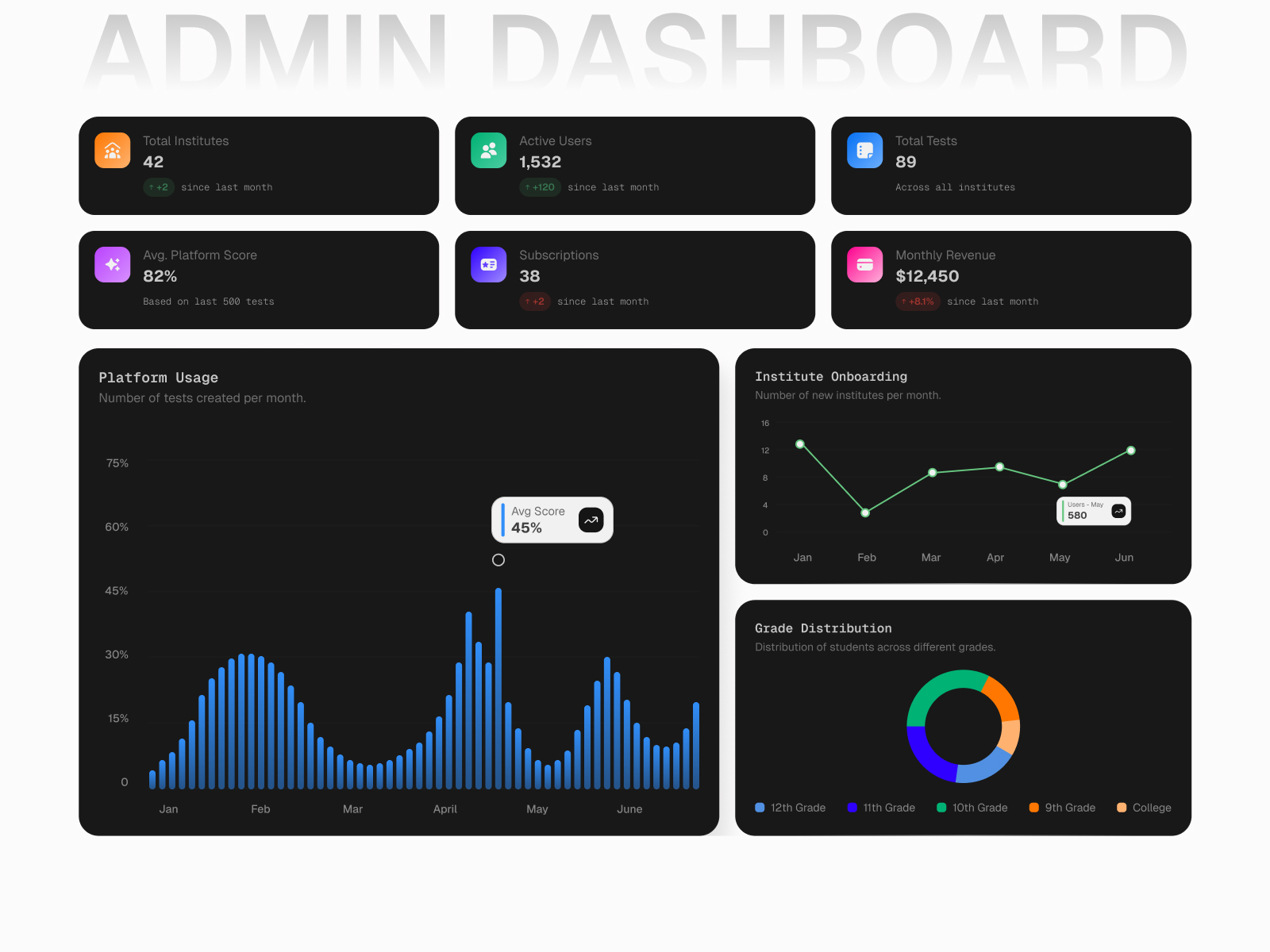
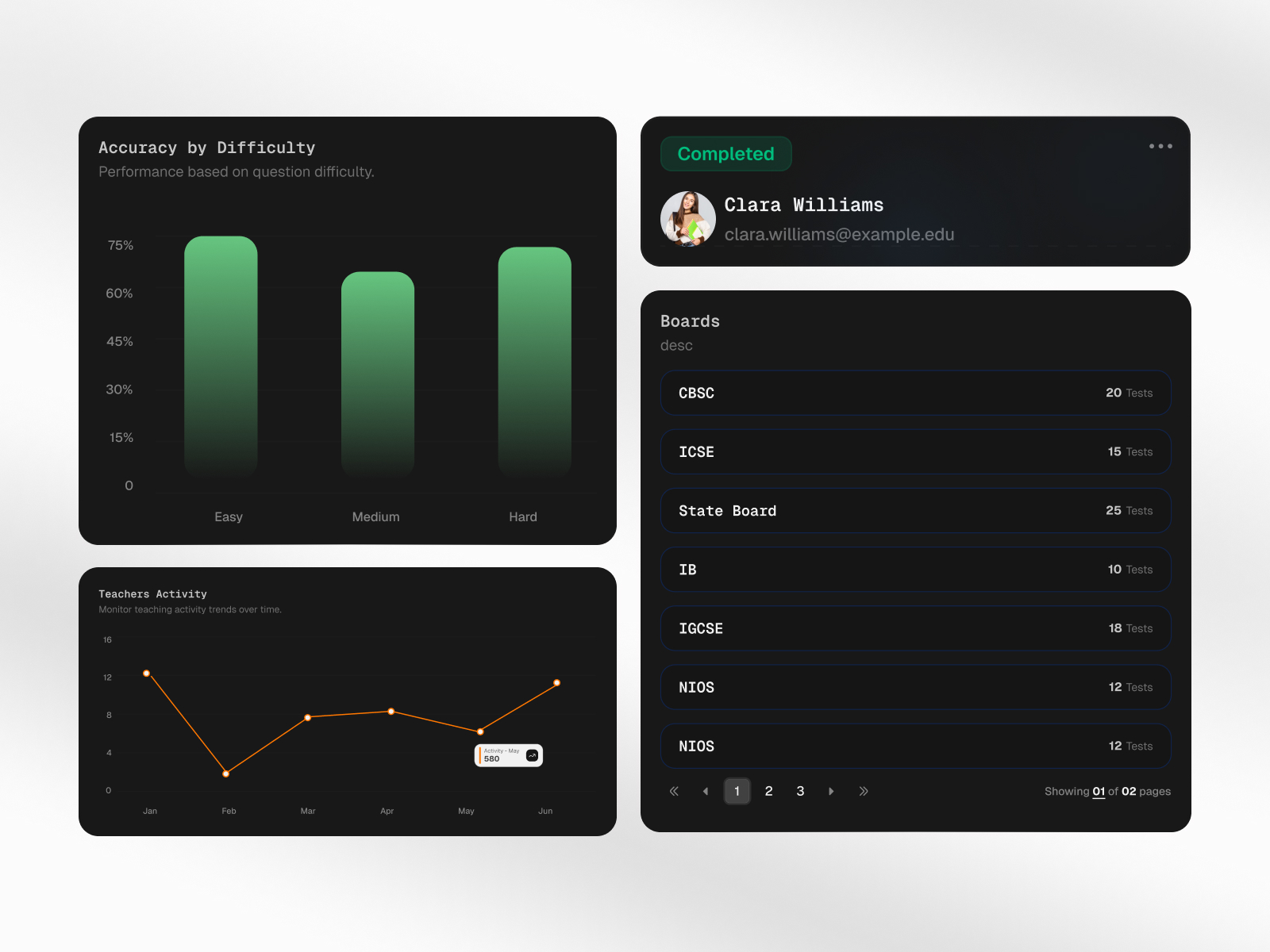
- Analytics Layer: Grade distribution, subject performance, test trends, and leaderboard insights give institutes the data to understand how learners are performing and where to intervene — replacing manual report compilation with an automated view.
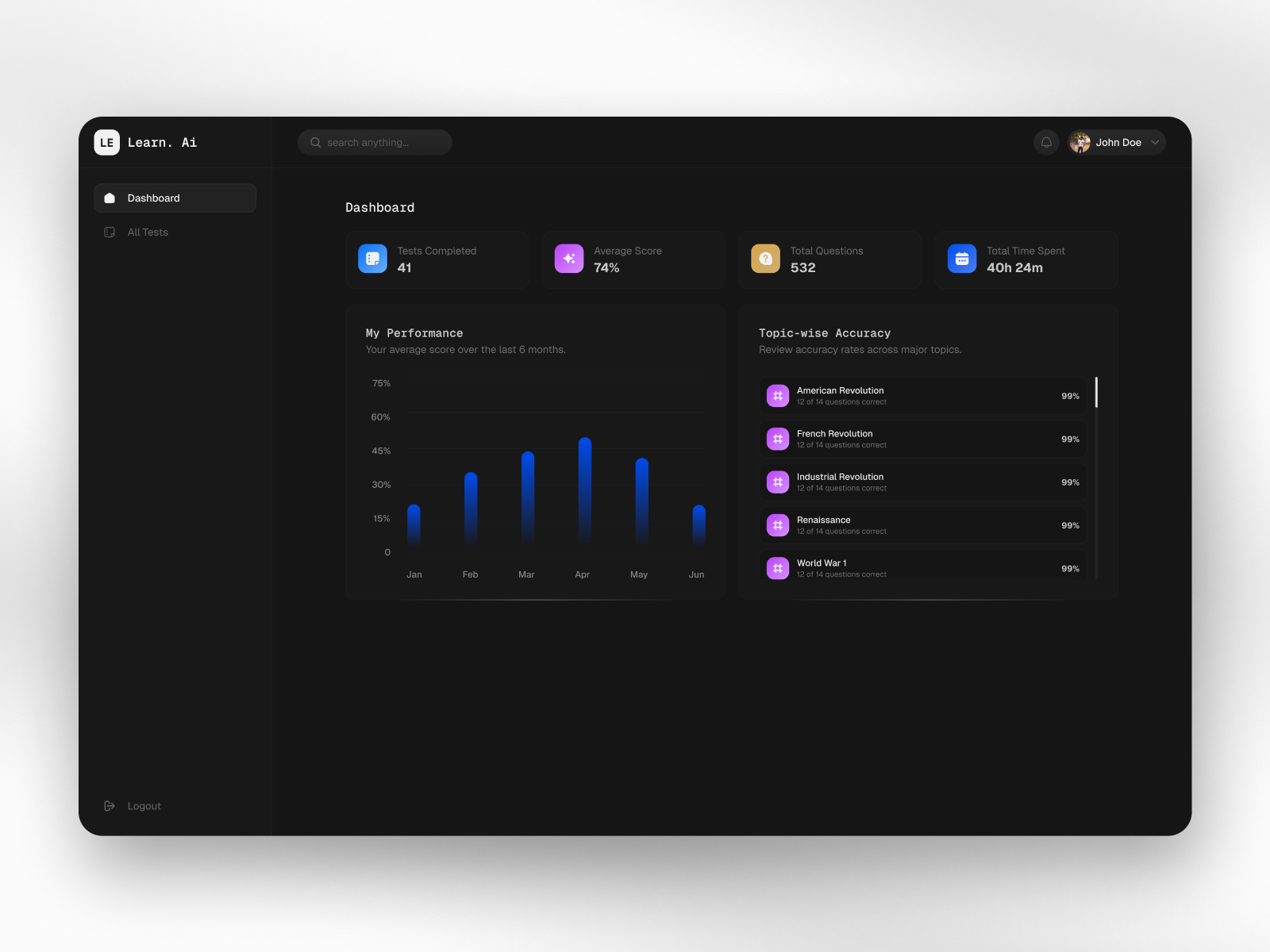
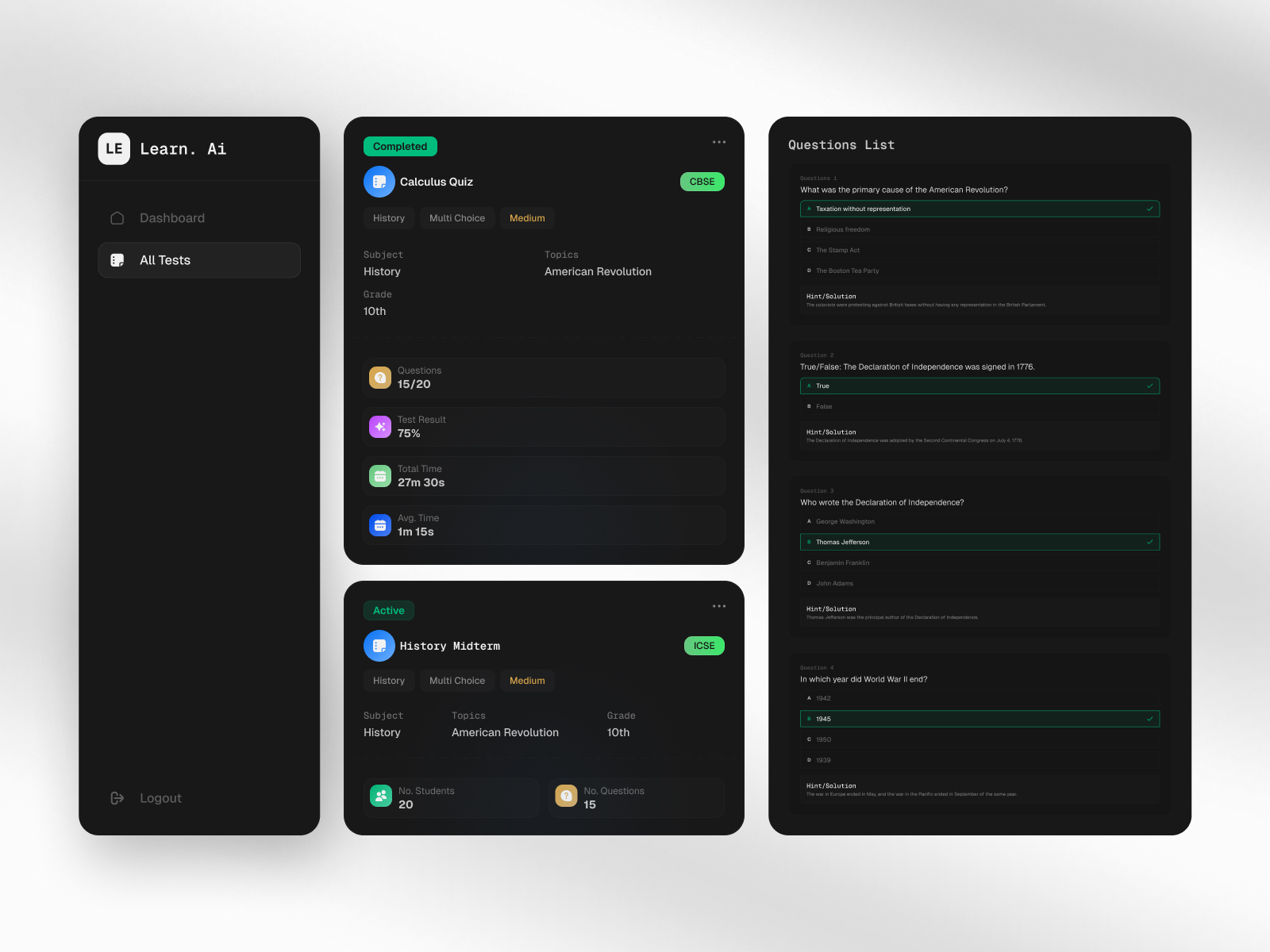
- User and Test Visibility: Clear views of individual user activity, test history, and assessment-level results give institute staff the oversight they need without hunting through disconnected records.
What shipped
The Learn AI Dashboard gave the client a working MVP that institutes could use and demonstrate — not just a design concept. It connected AI test creation with practical admin workflows, making the system easier to understand, present to institute stakeholders, and operate from day one.
For education-focused SaaS products, the combination of automation and operational control is the product. Institutes need AI speed, but they also need batch structure, student visibility, and analytics they can act on. The dashboard is where those needs come together into something usable.
Final note
Learn AI Dashboard demonstrates how an education MVP becomes materially more valuable when AI capabilities are paired with clear operational design. By addressing the specific pain points Indian coaching institutes face — manual test creation, batch management complexity, disconnected analytics — we helped build a platform that has a genuine case to make to the 50,000 coaching institutes across India looking for a better way to run assessments.
Frequently Asked Questions
Questions about AI LMS dashboards,
answered clearly.
Questions about the work, scope, delivery context, and next steps.
Research across AI assessment platforms shows teachers and administrators save 80 to 90 percent of their question paper creation and grading time. A process that previously took 2 to 3 hours — writing questions, formatting papers, and setting answer keys — is reduced to under 10 minutes with AI generation and automated grading. For institutes managing multiple batches across multiple subjects, this compounds quickly into significant weekly time savings.
Related Work
Similar case studies,
selected for context.
Continue exploring related work, with comparable product and delivery challenges.