SaaS ApplicationsWeb ApplicationsMVP DevelopmentInterface Designs
Lyt til Danske Salmer
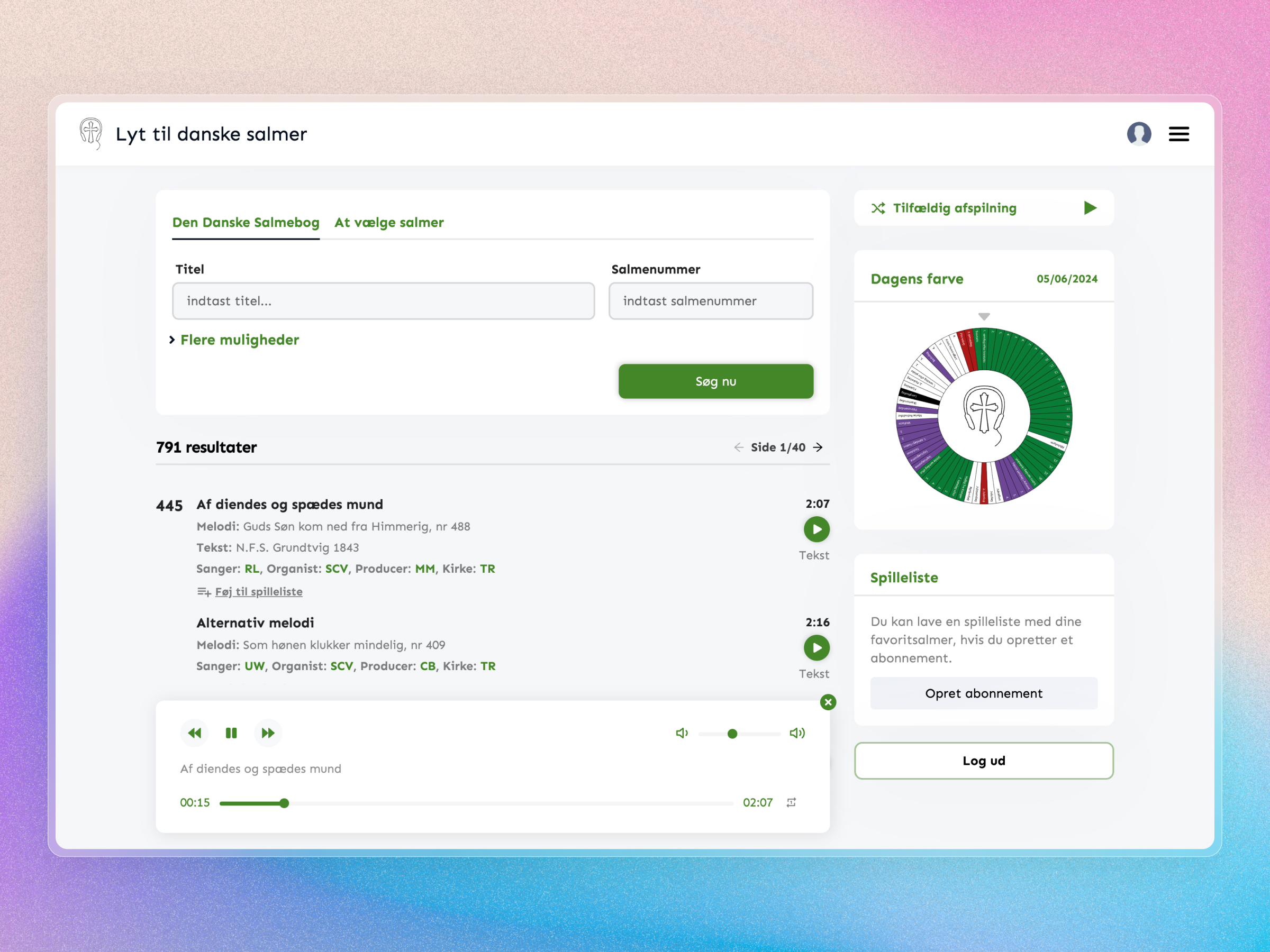
Lyt til Danske Salmer is a subscription-based hymn streaming platform built to make a traditional library feel modern, accessible, and easy to use.
A subscription streaming platform for Danish hymns
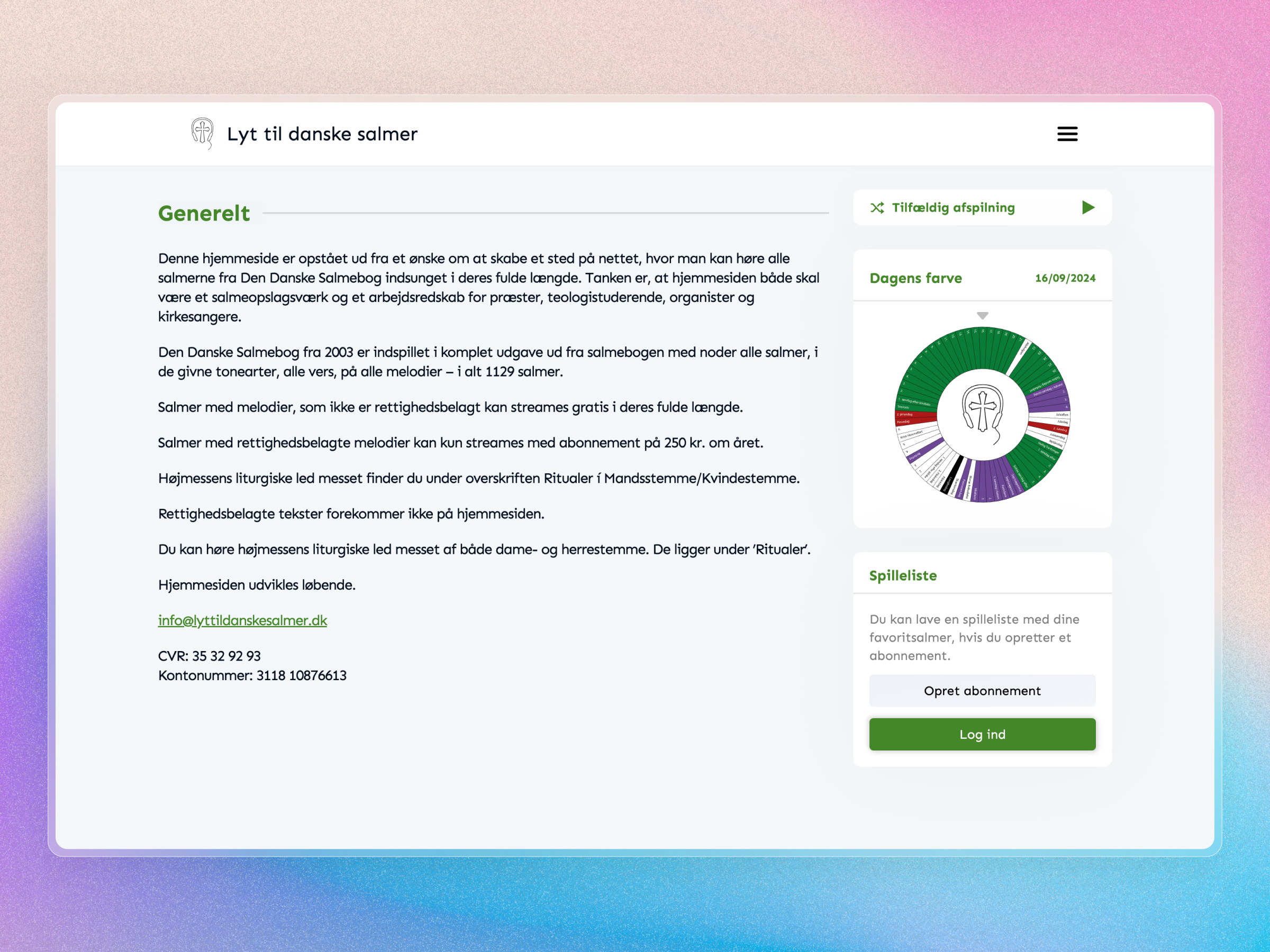
Lyt til Danske Salmer is a subscription-based hymn streaming platform we planned, designed, and built for a Denmark-based client. The idea was simple: create a proper digital home for pre-recorded Danish hymns — something that works like a streaming service but is built entirely around this specific cultural content and audience.
There was nothing like it. Hymn lovers in Denmark had no clean way to access, browse, or listen online. The brief called for to change that with a web app that felt modern, ran on a subscription model, and actually held up under daily use.
What the project needed to do
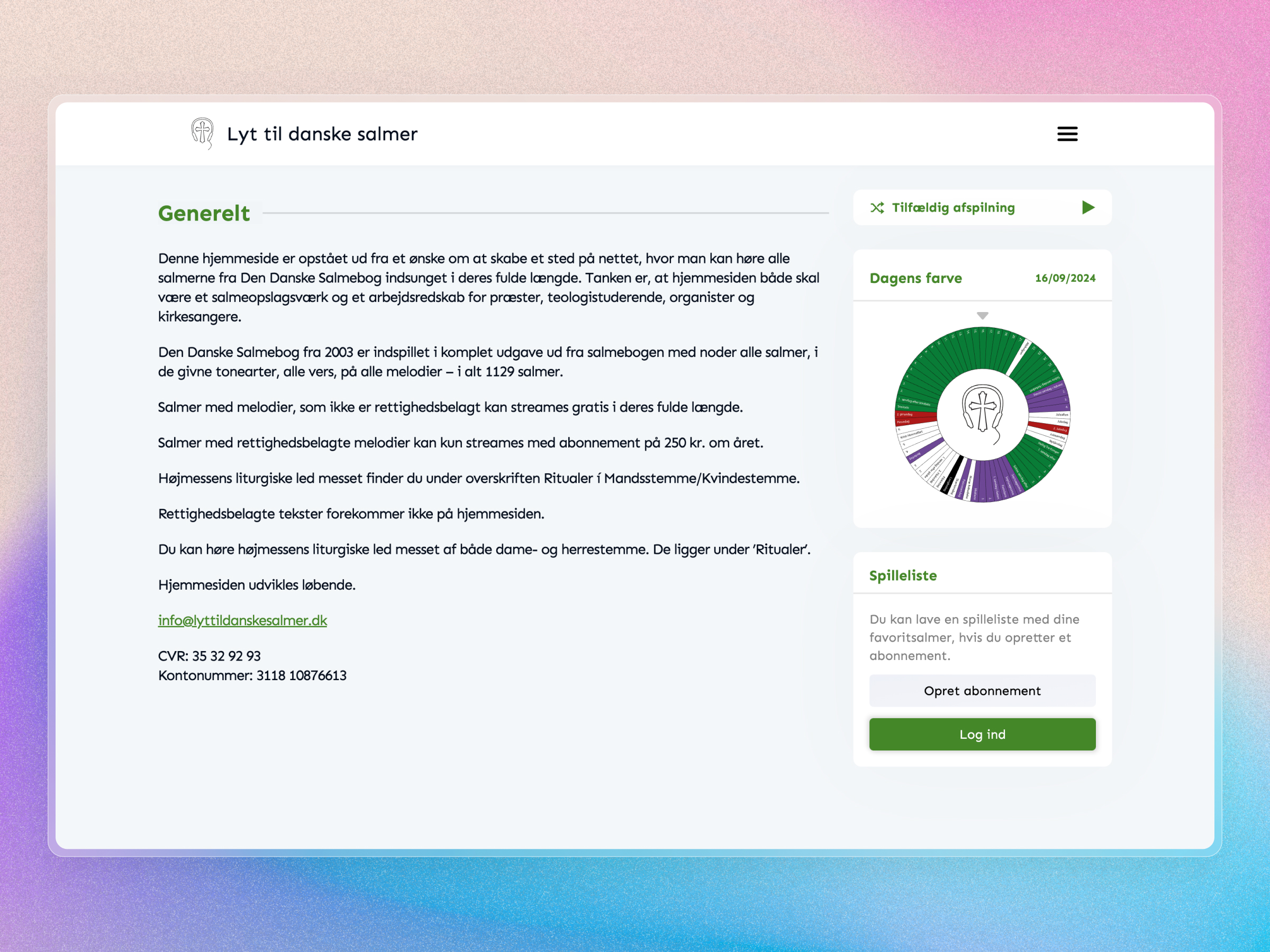
The client had pre-recorded hymns ready to go. What they needed was a platform around them — some hymns freely accessible to anyone, with multiple yearly subscription plans unlocking the complete library. The audience ranged from older users who've sung these hymns their whole lives to younger ones rediscovering them, so the interface had to work for both without feeling dumbed down or cluttered.
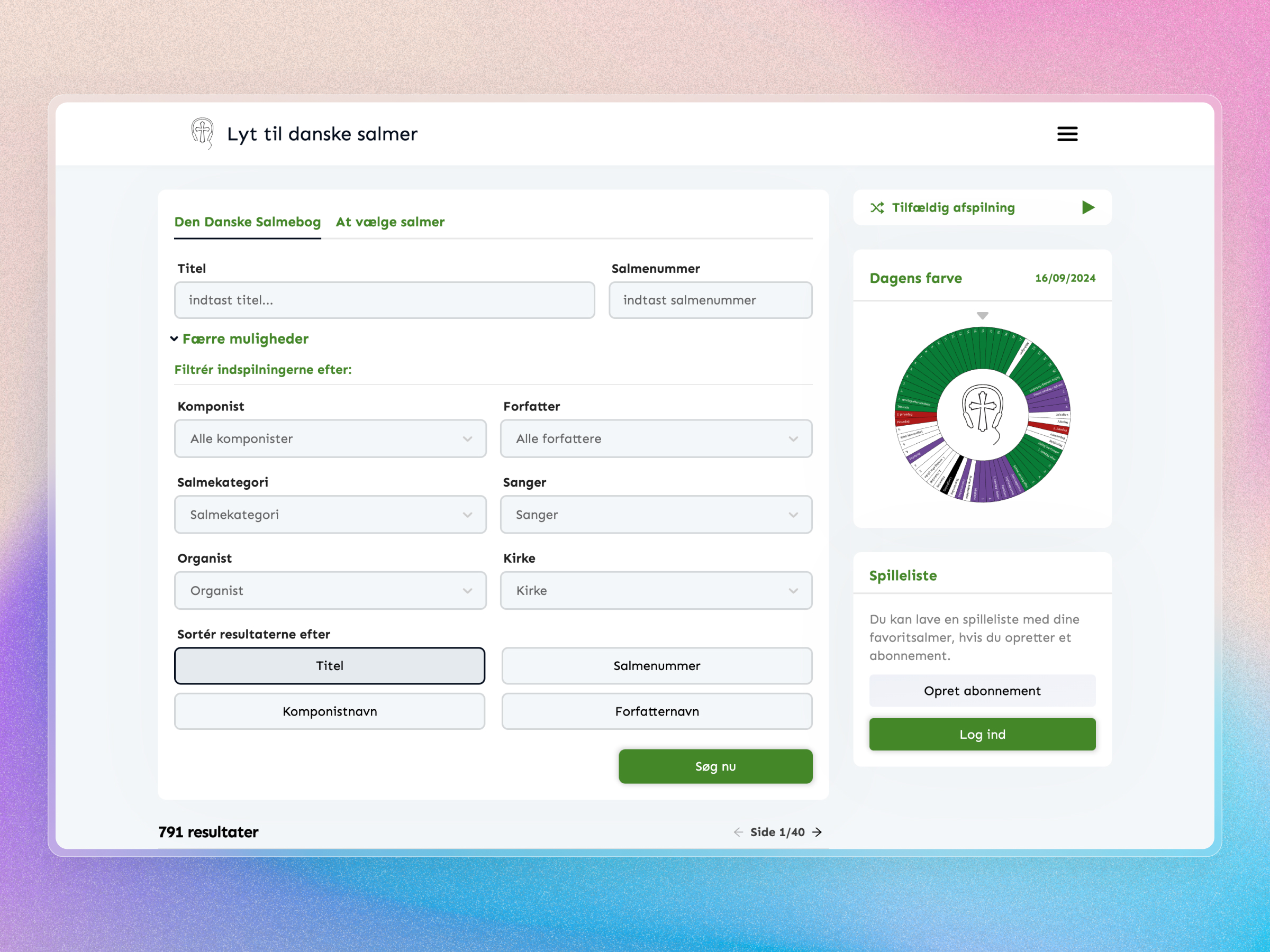
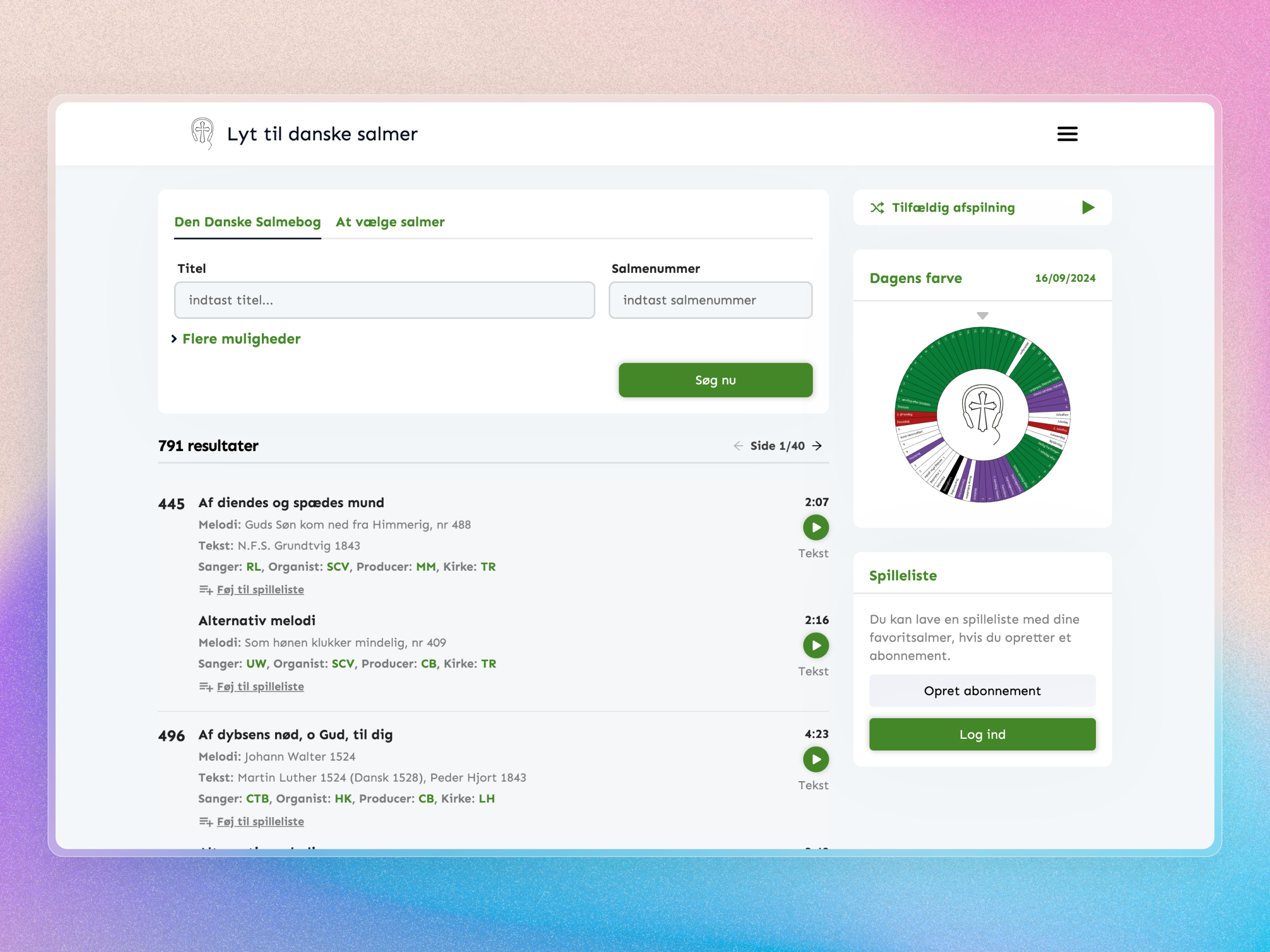
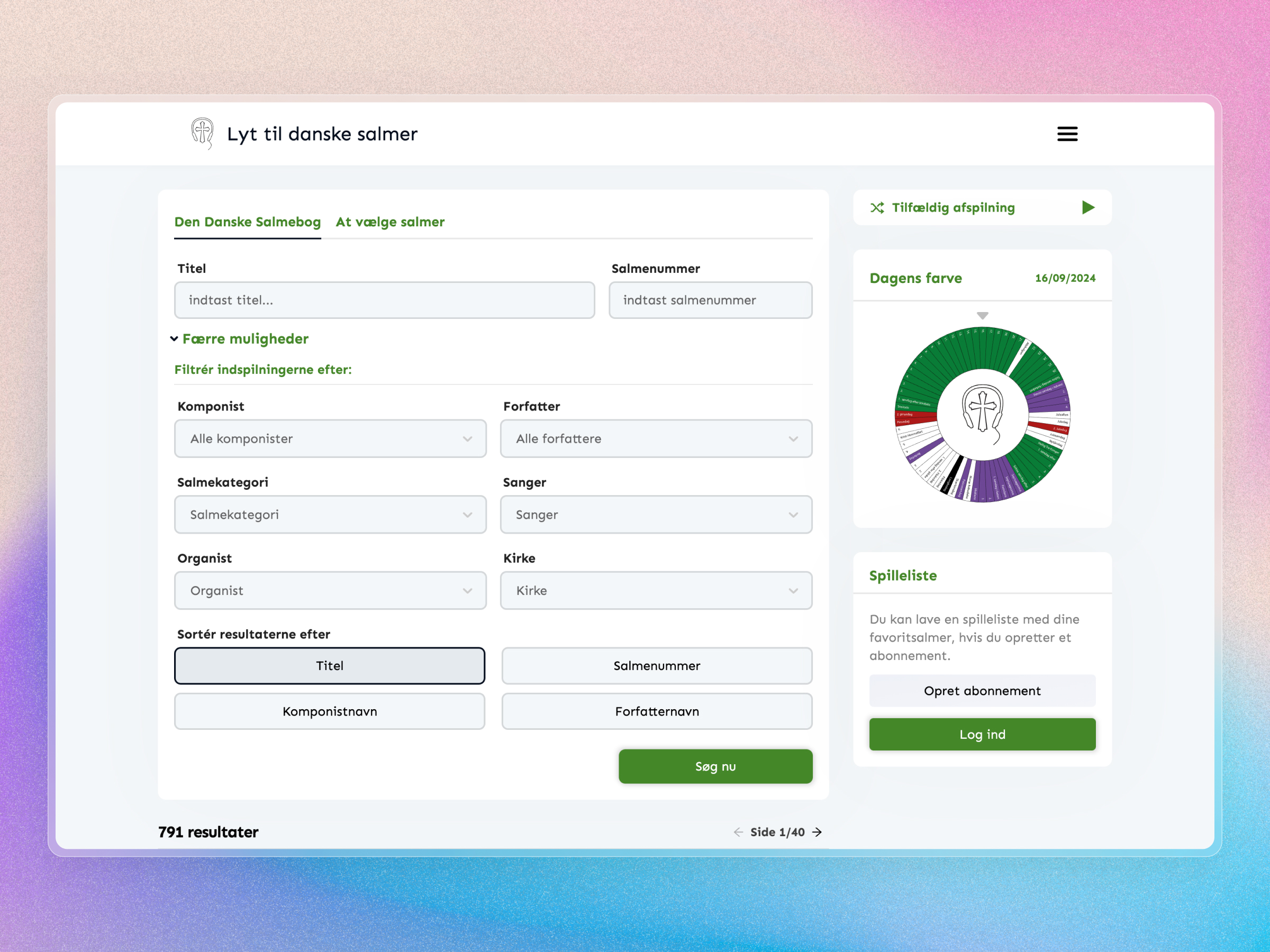
They also needed a search that actually worked. These users know exactly what they're looking for — by title, by first line, by theme. Vague results aren't acceptable.
How we approached it
We planned, designed, and built the product with Next.js on the frontend and Adonis.js on the backend. Next.js gives us fast page loads and good SEO out of the box — important when you want the product to show up when people search for Danish hymns online. Adonis.js handles the API, authentication, content delivery, and subscription management cleanly.
Multiple Yearly Subscription Plans
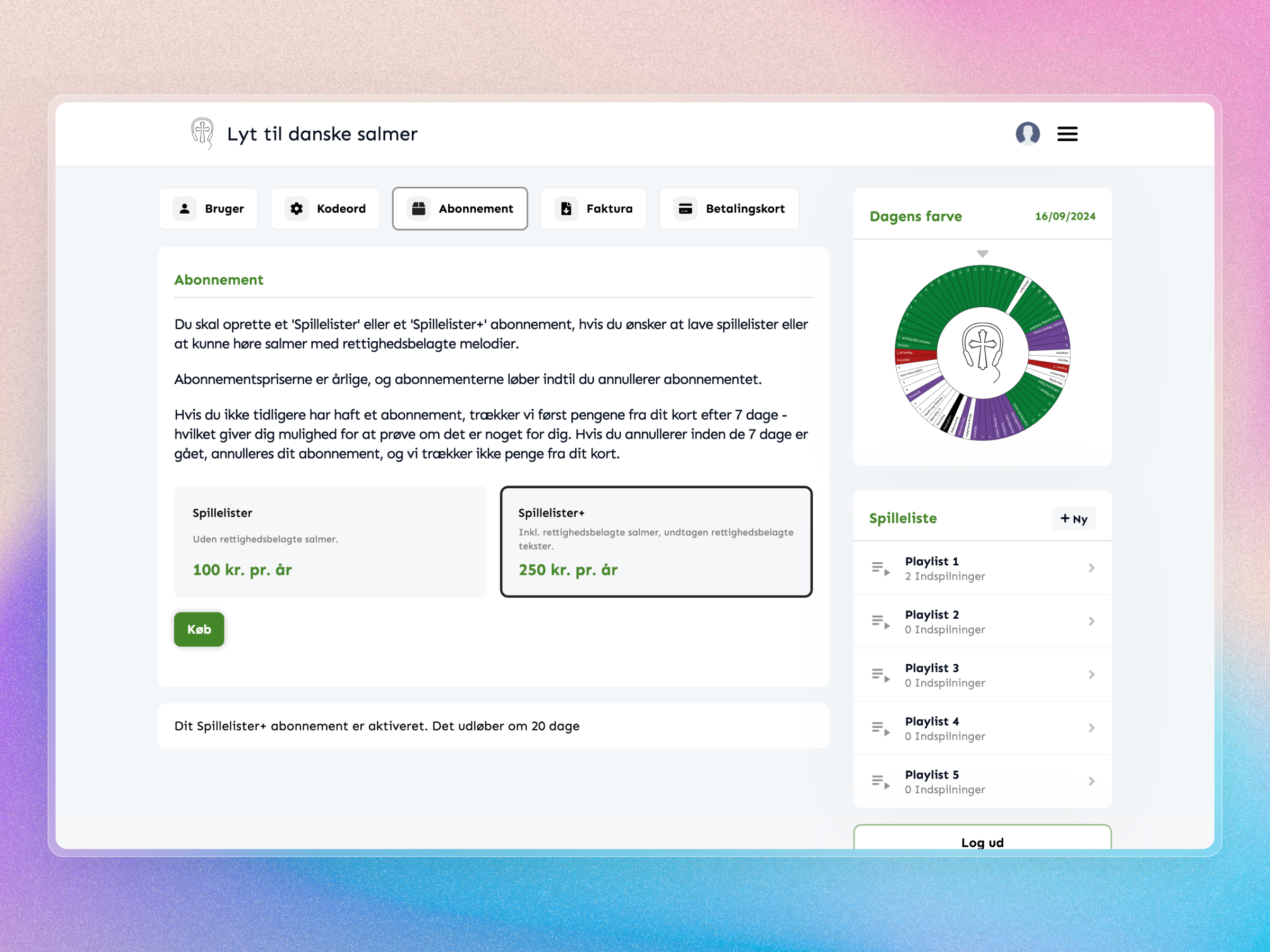
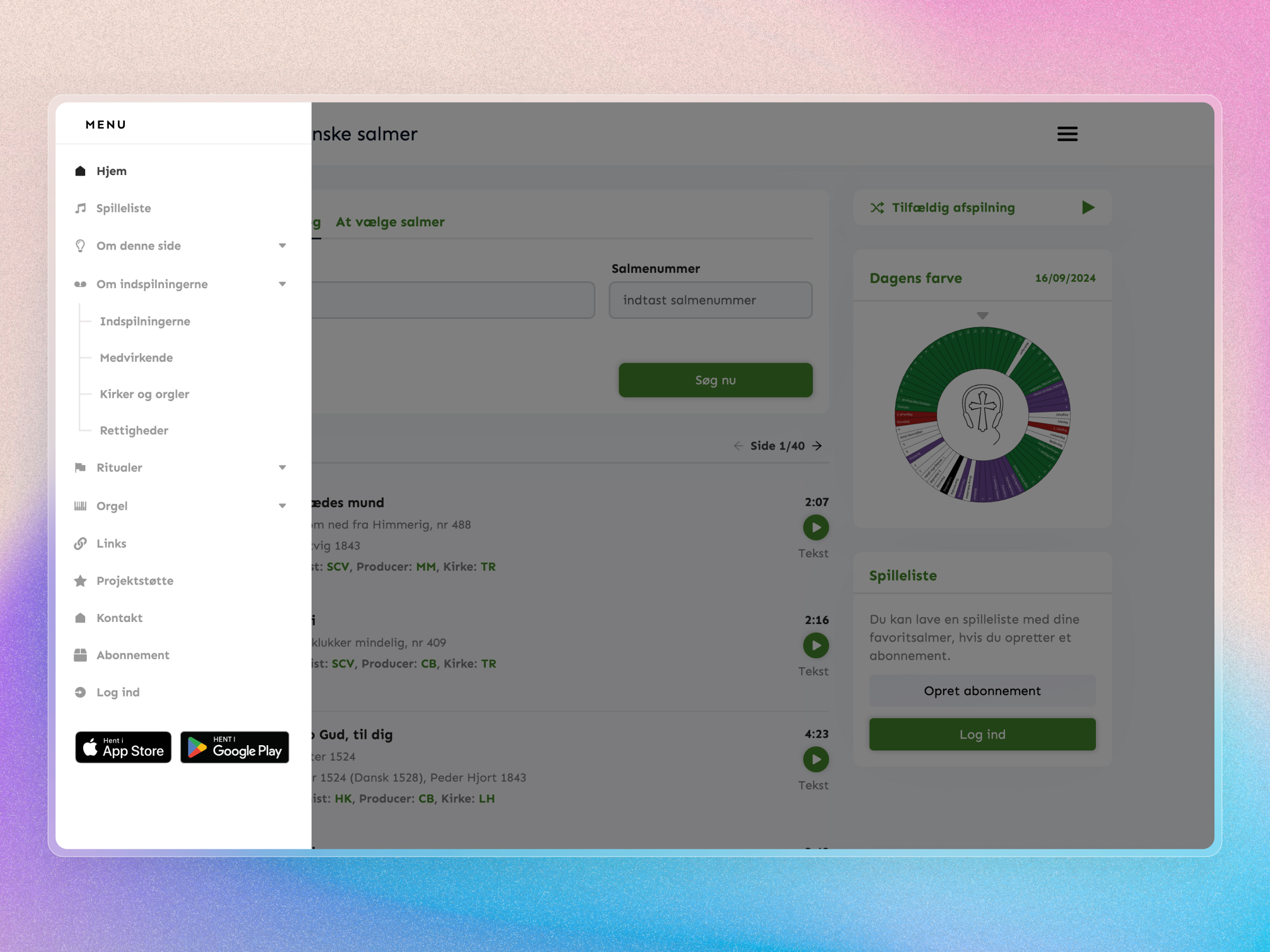
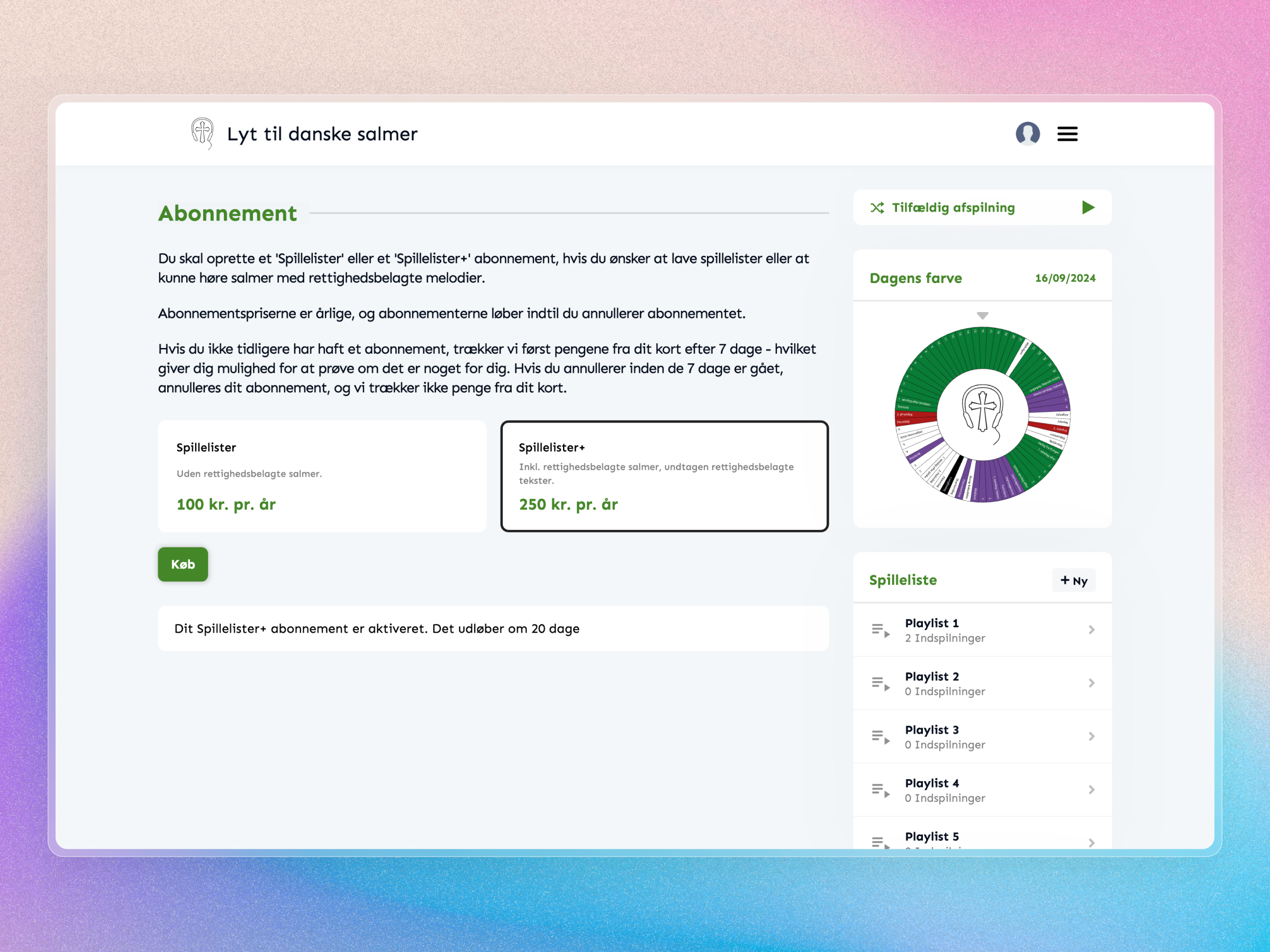
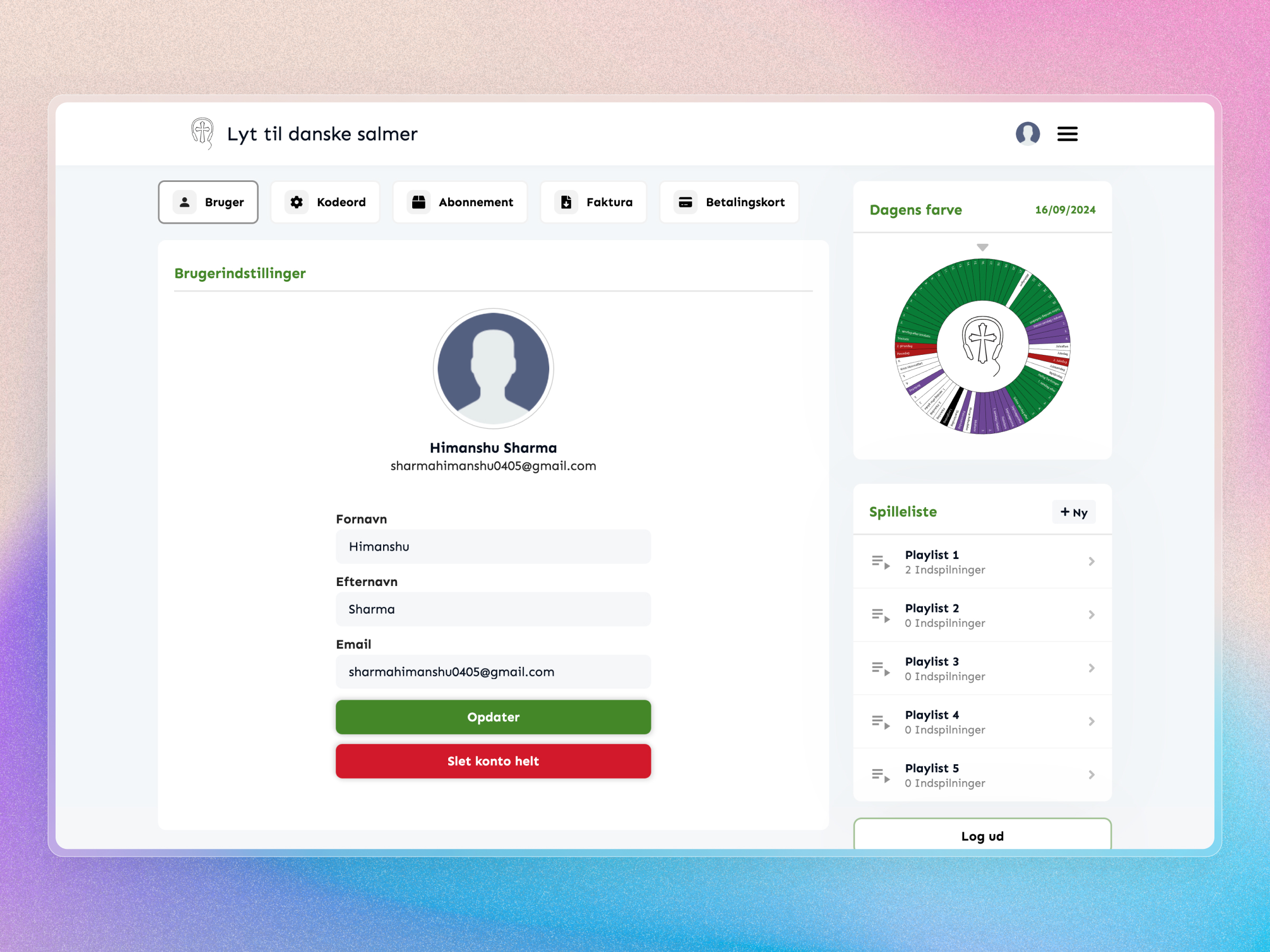
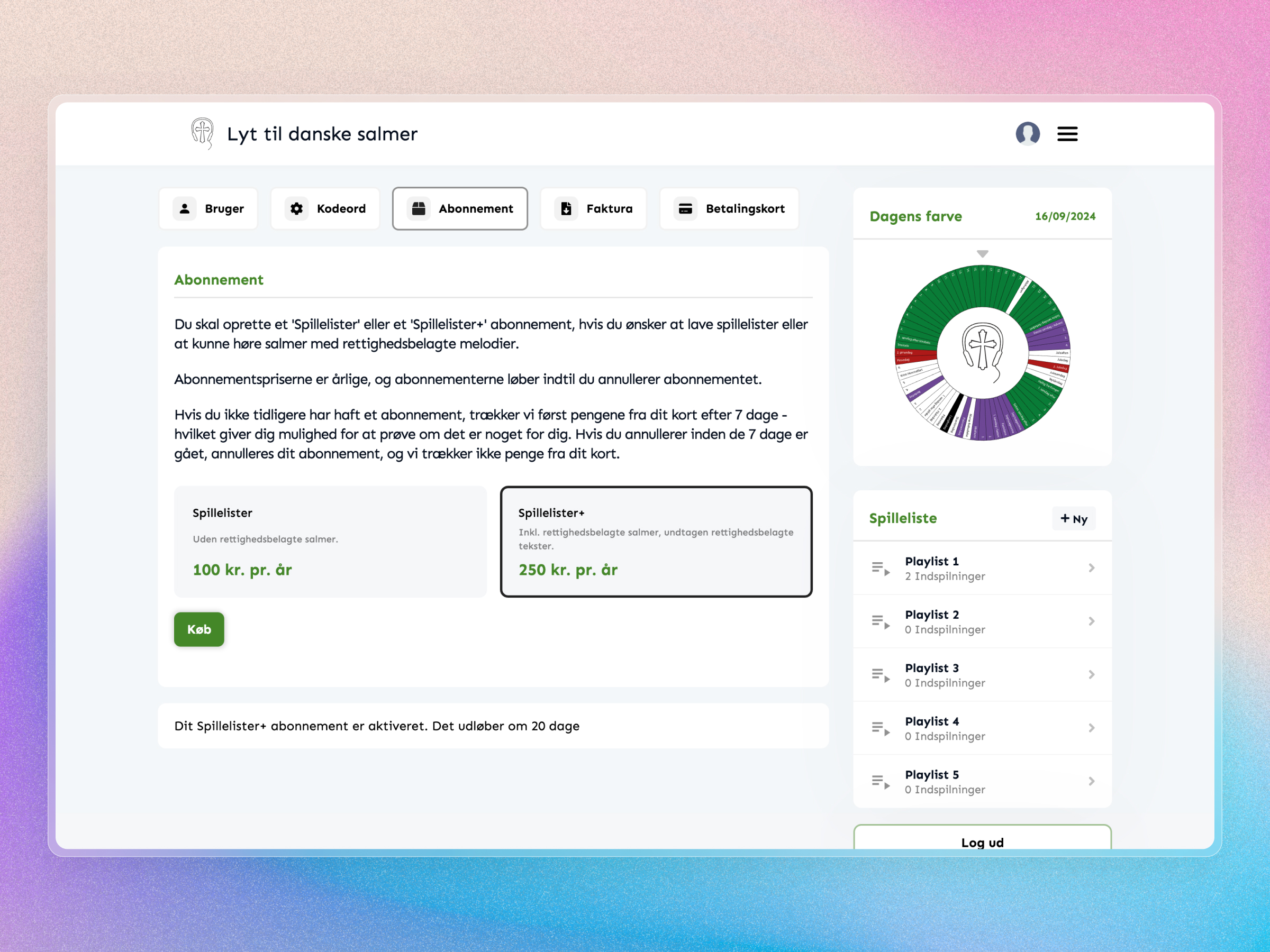
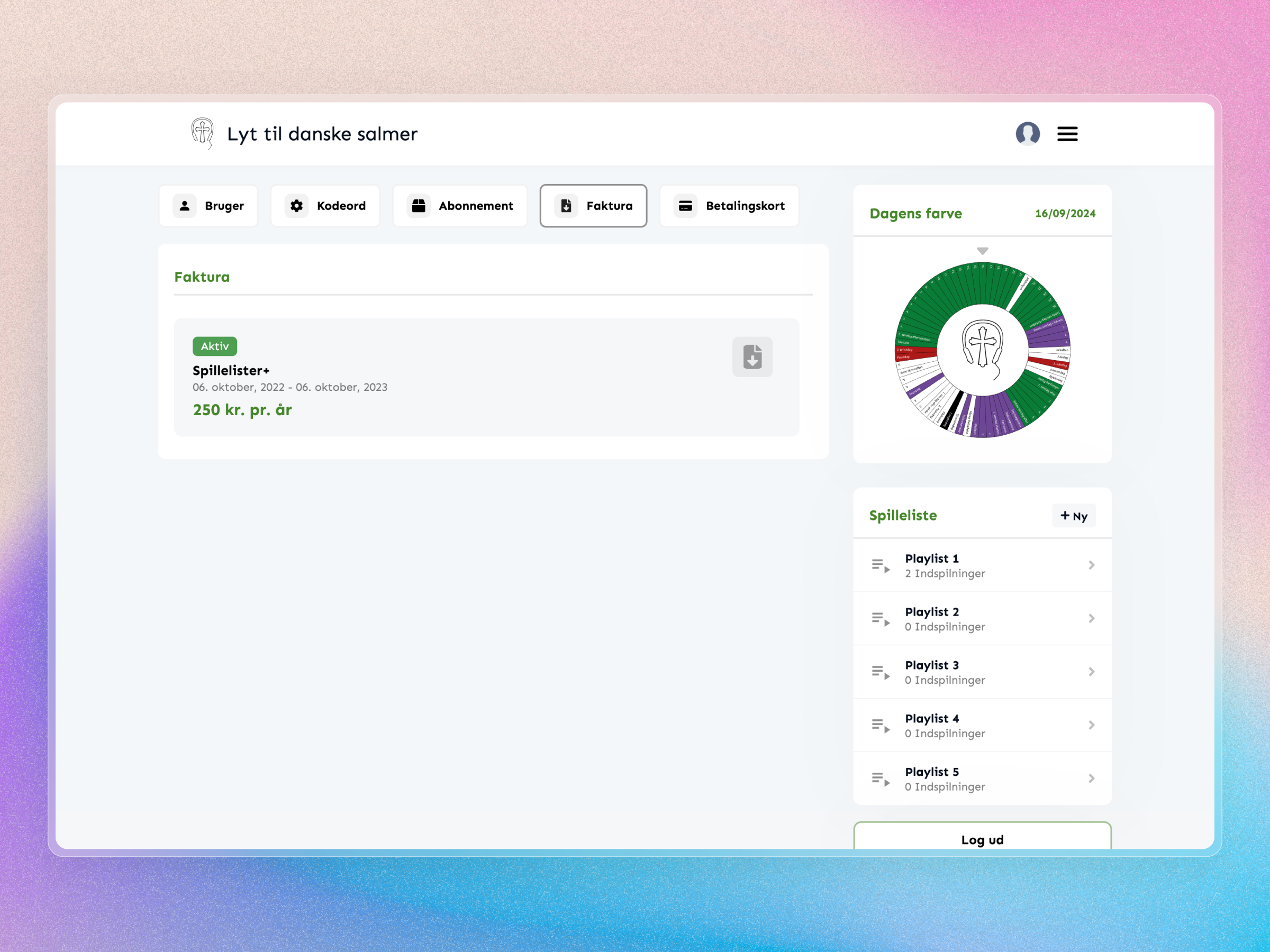
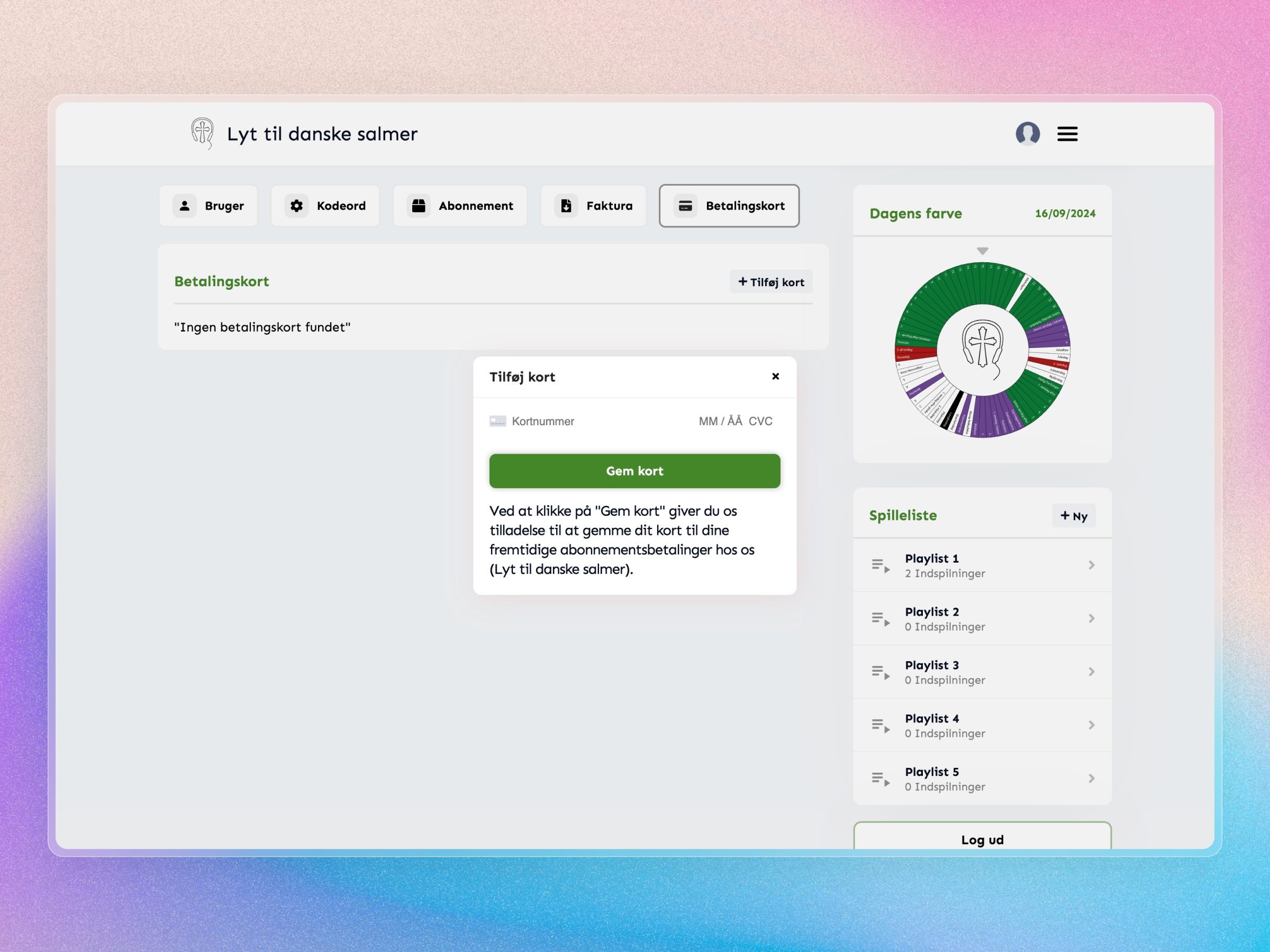
We planned, designed, and built a subscription system with several yearly tiers, each giving different levels of access. Users subscribe, get immediate access to the hymn library, and their plan renews annually. Managing subscriptions, handling upgrades, and tracking access — all handled through the backend without needing manual intervention.
Playlists and Favourites
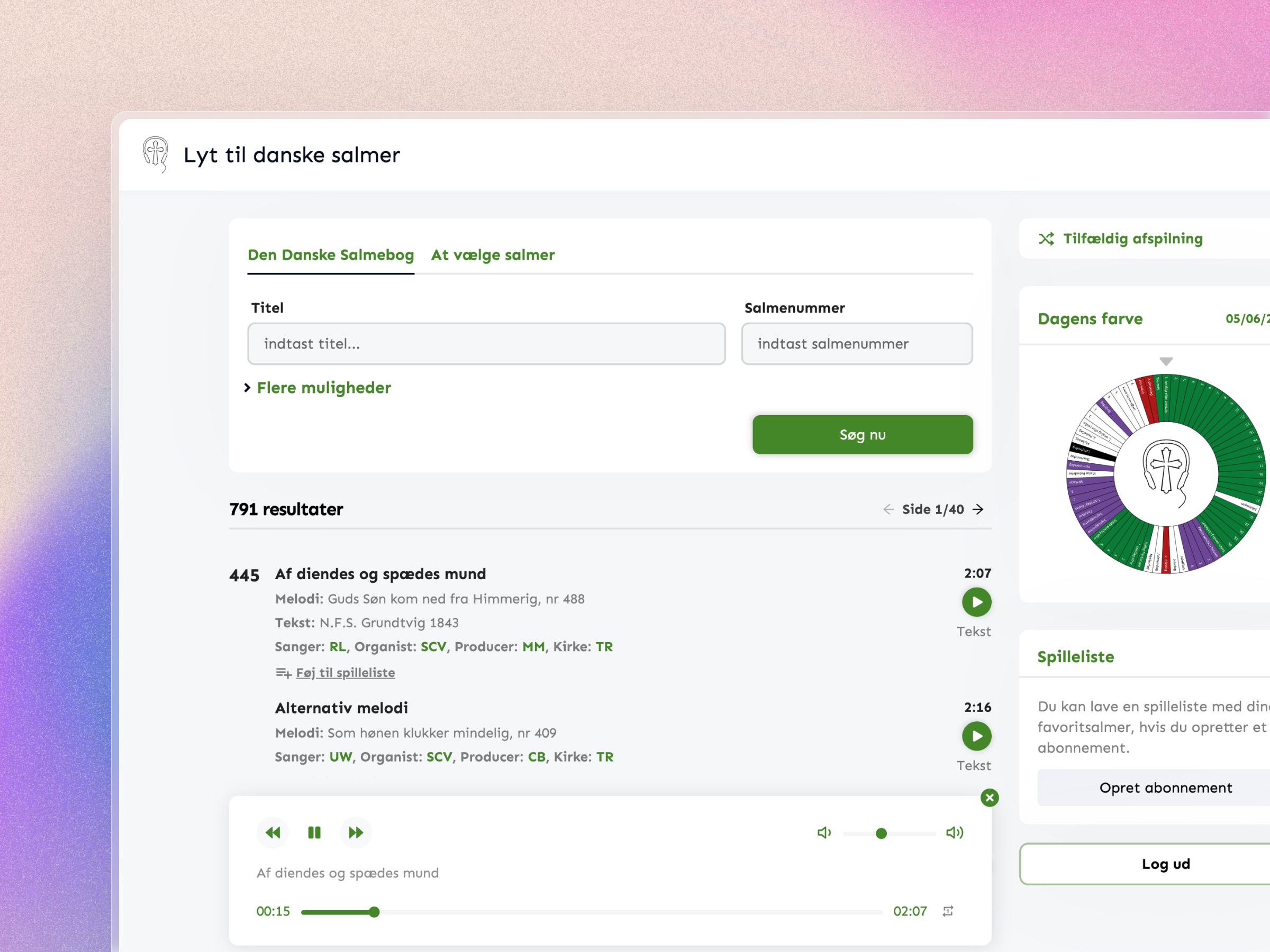
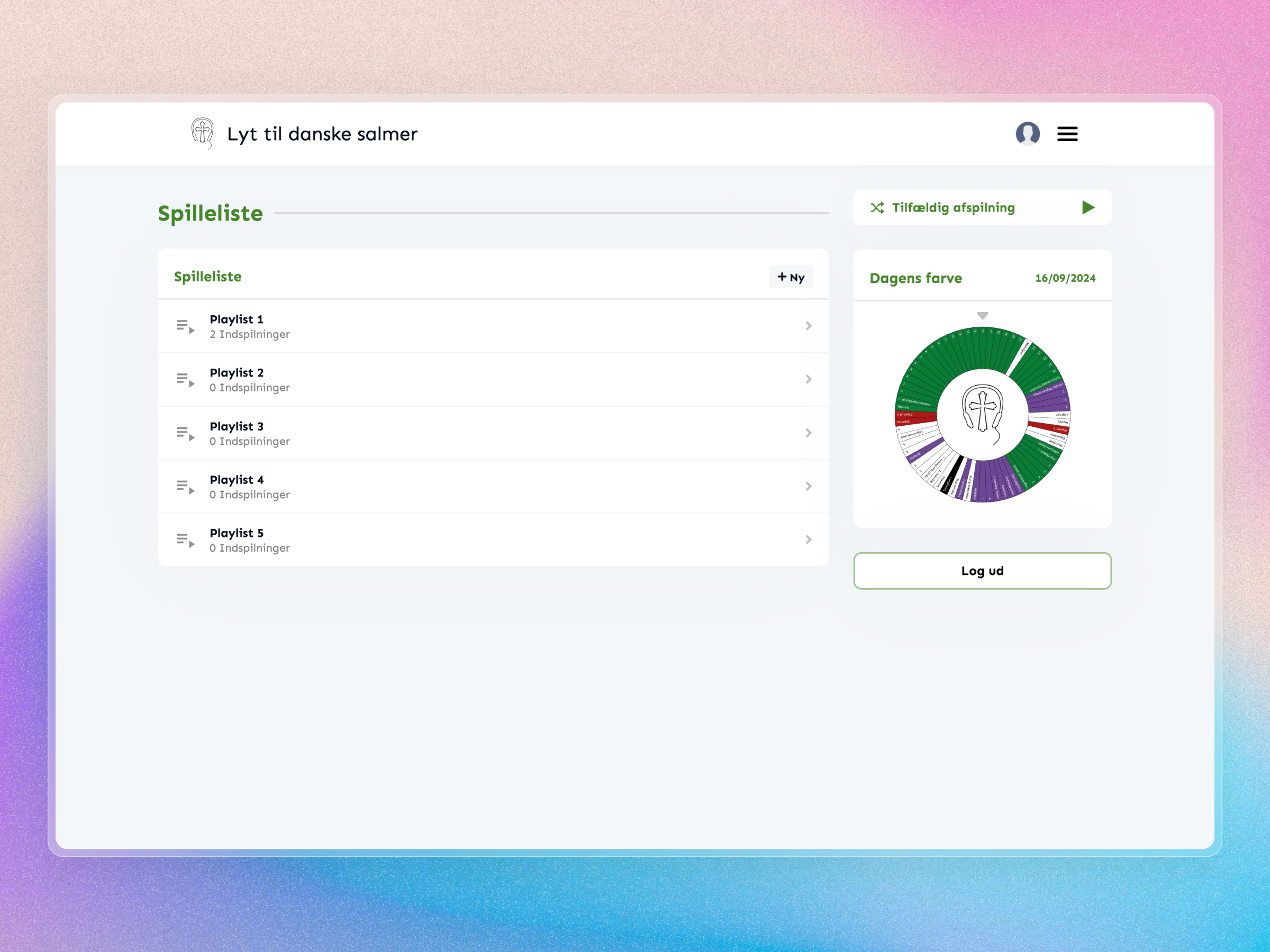
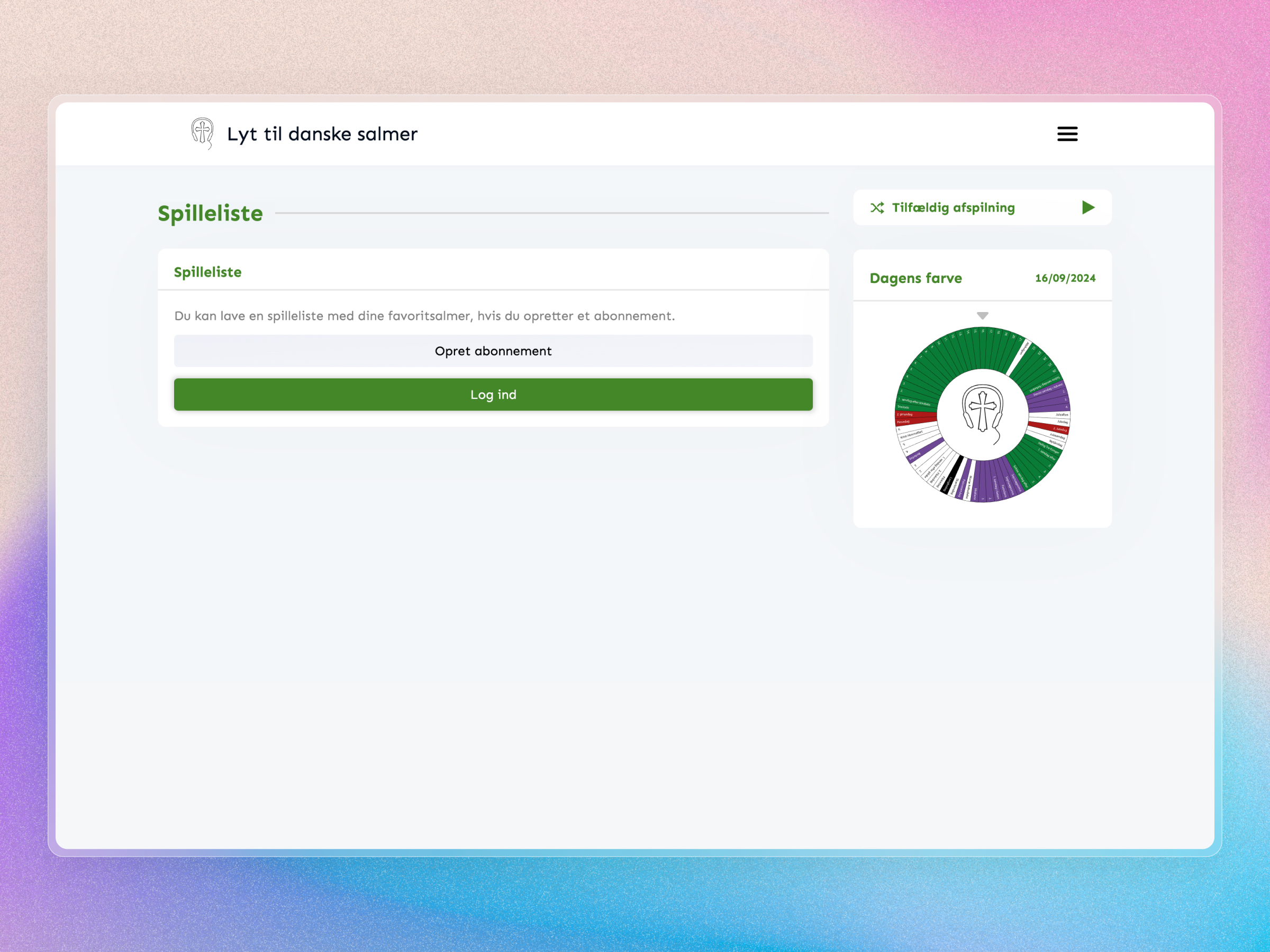
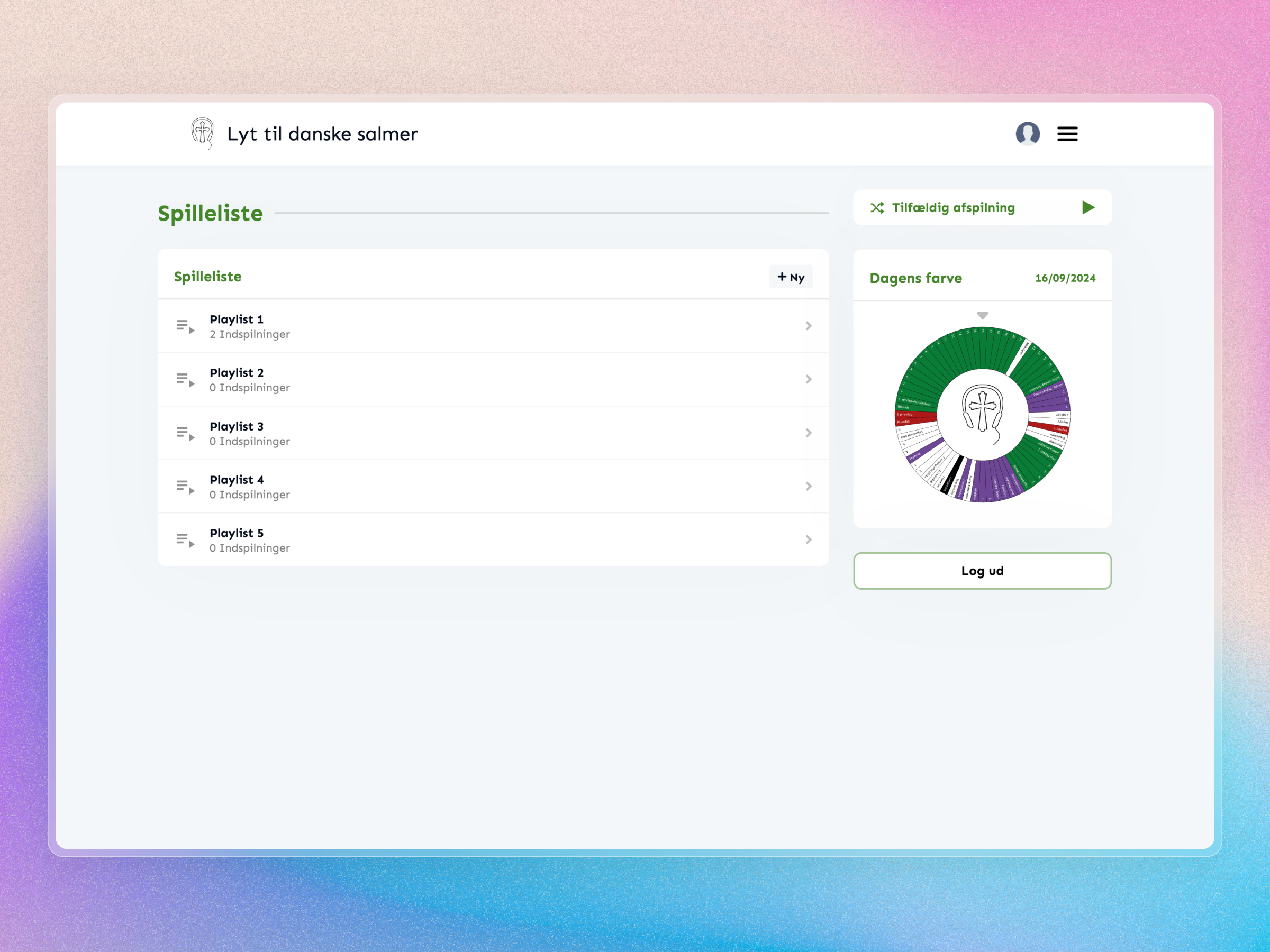
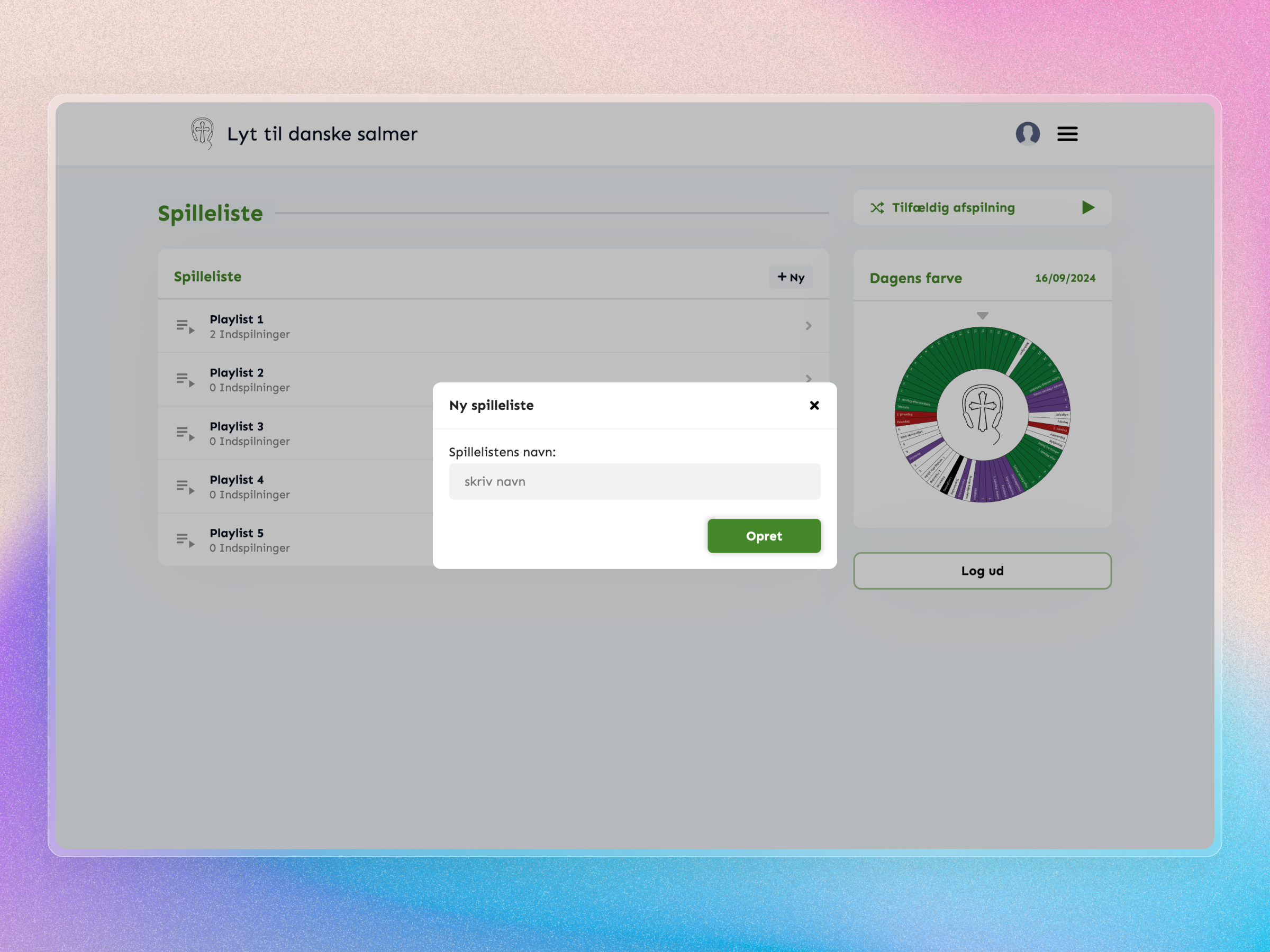
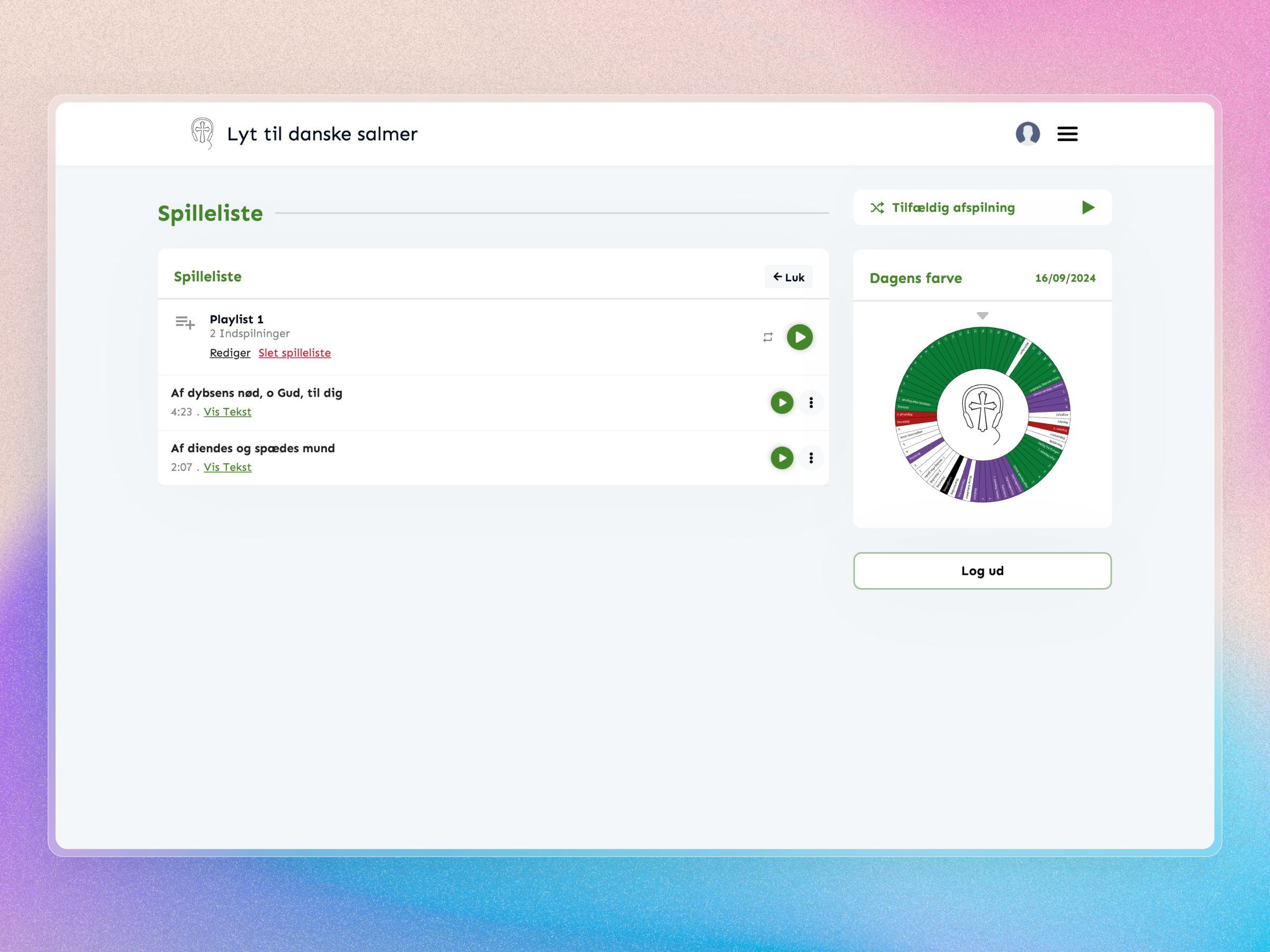
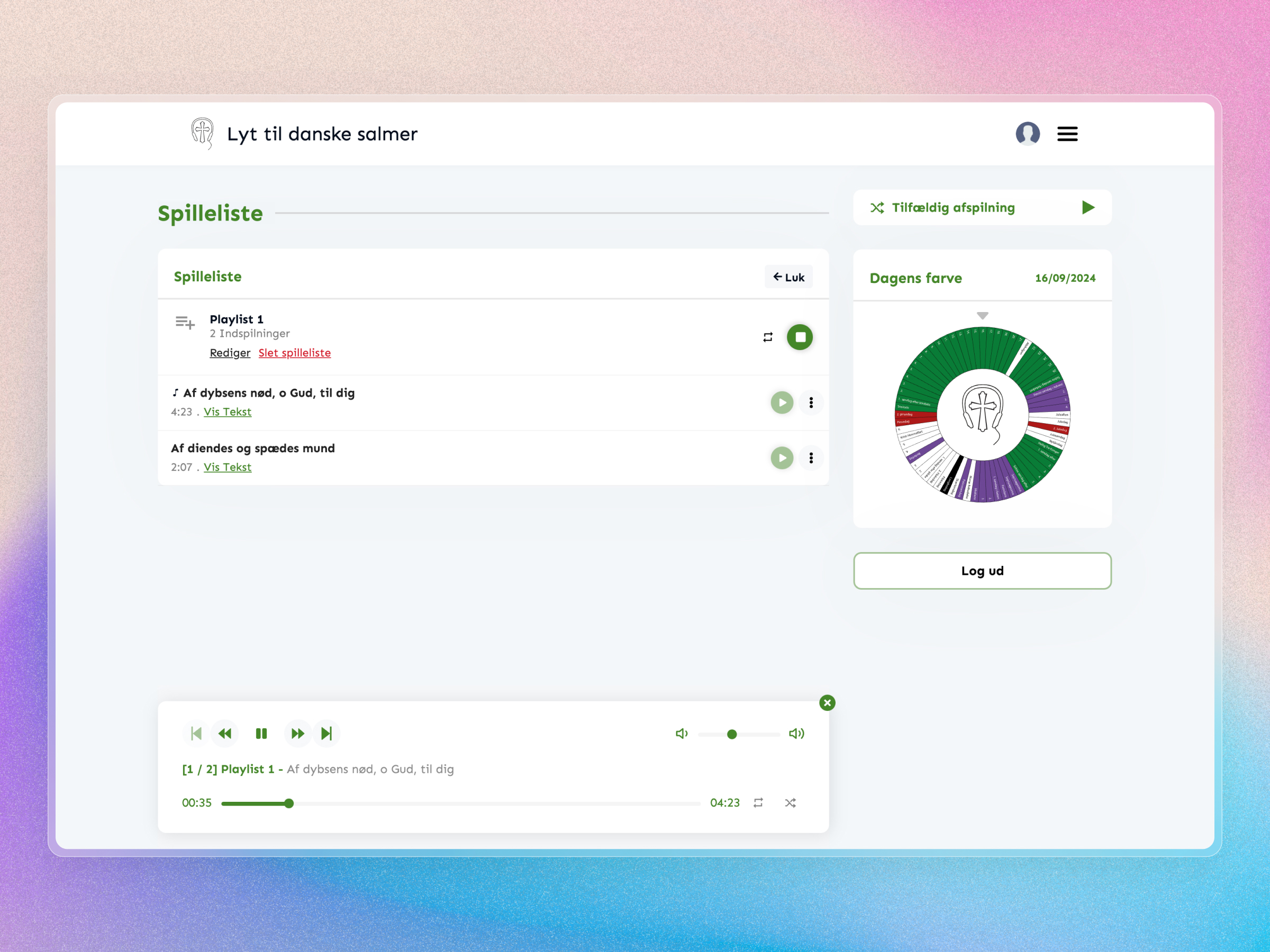
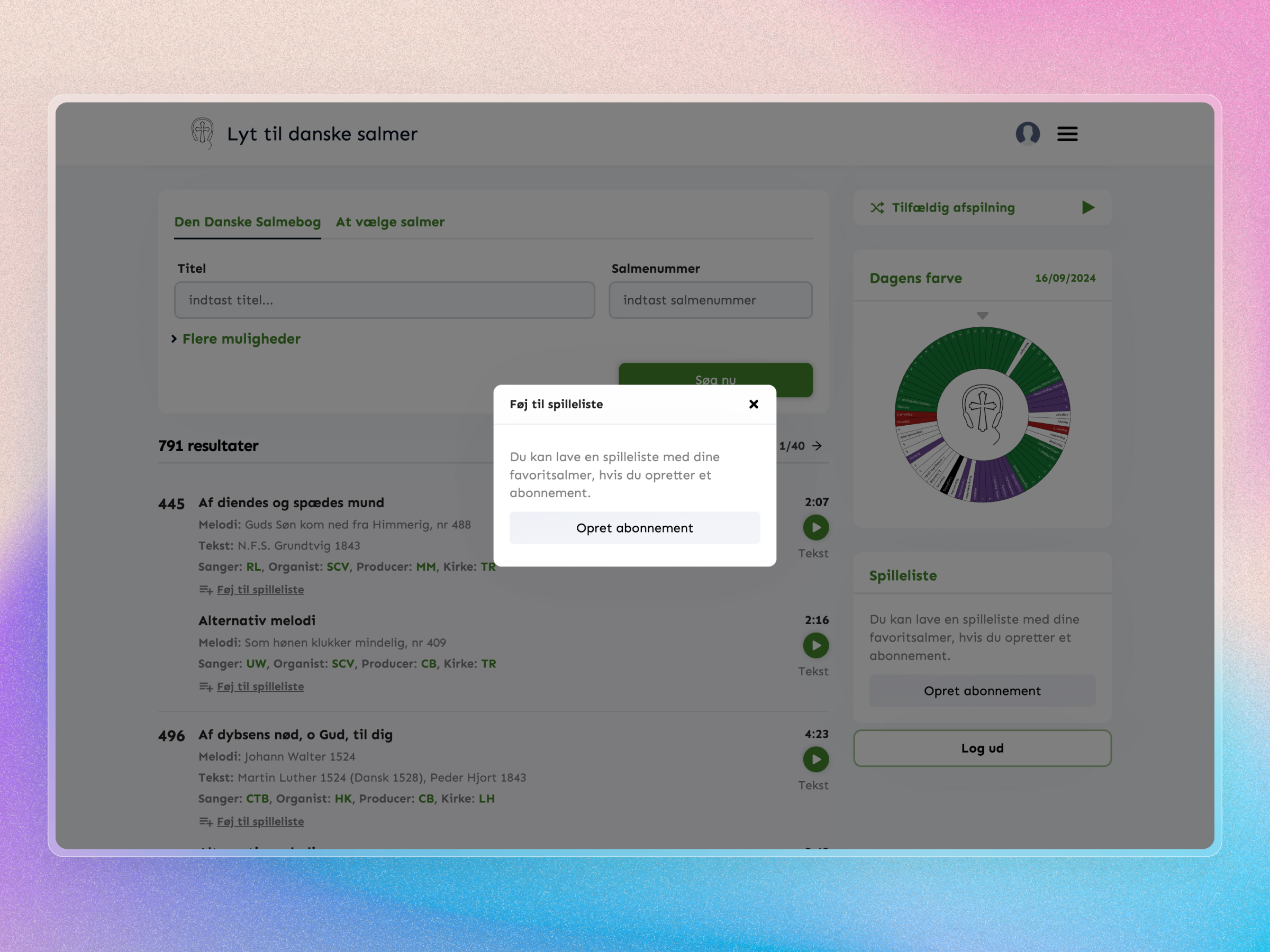
Users can build their own playlists and save favourites. Someone organizing a church service, a choir rehearsal, or just their personal listening can put together exactly what they need. This was one of the features that made the biggest difference in how people actually used the product day-to-day.
Lyrics While You Listen
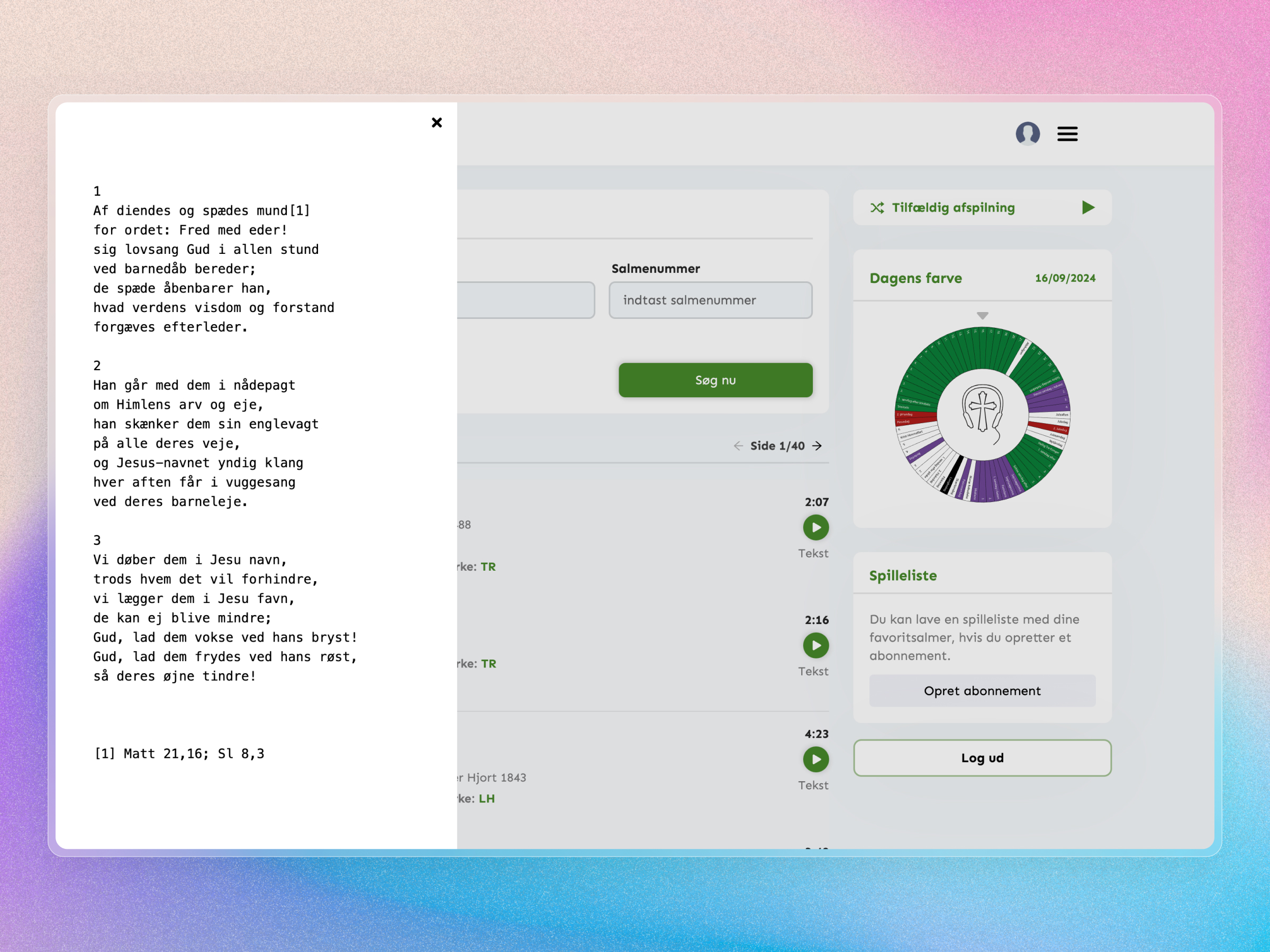
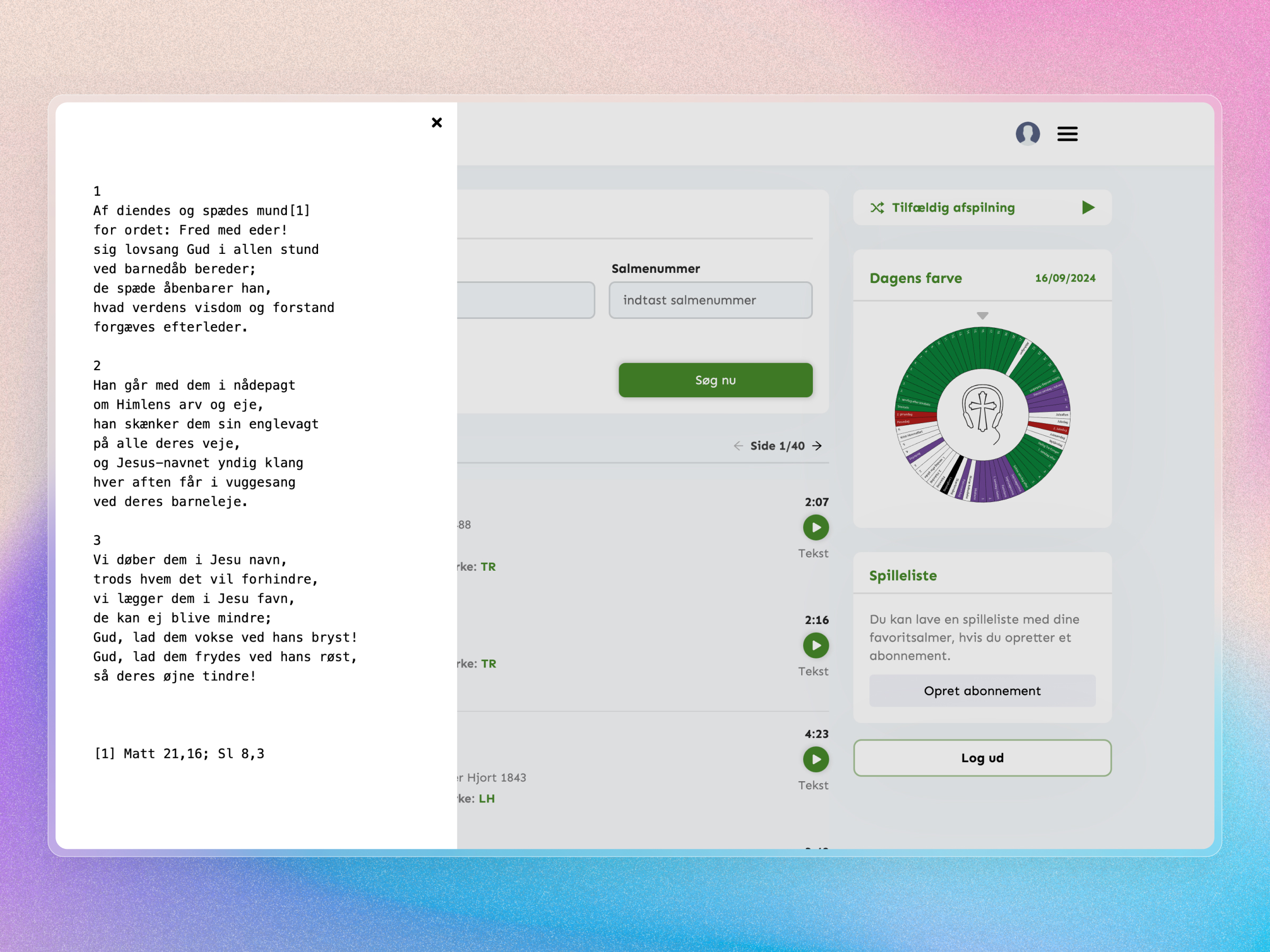
Users can read the complete lyrics of each hymn while the audio plays. For a hymn platform, this matters more than it would on a templated music app — people aren't just listening passively, they're following along, learning the words, or preparing to lead a service. Having the text right there, tied to the audio, makes the product genuinely useful rather than just a playback tool.
Search and Filtering
We planned, designed, and built search that lets users find hymns by title, keywords, or theme. For a library of this kind, search is the most used feature — people aren't browsing randomly, they're looking for something specific. Getting this right was a priority from day one.
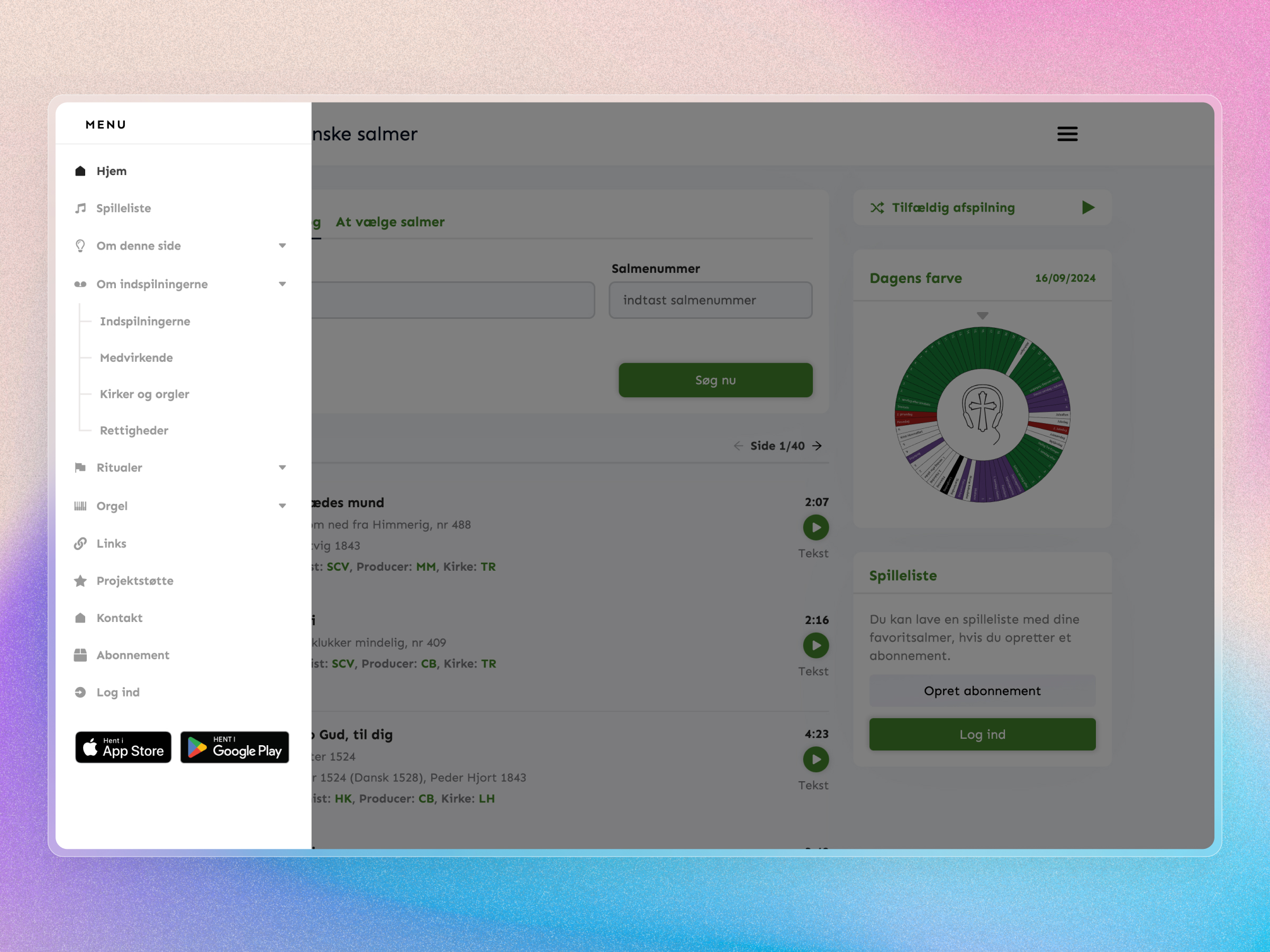
The Liturgical Year Wheel — A UI That Changes with the Church Calendar
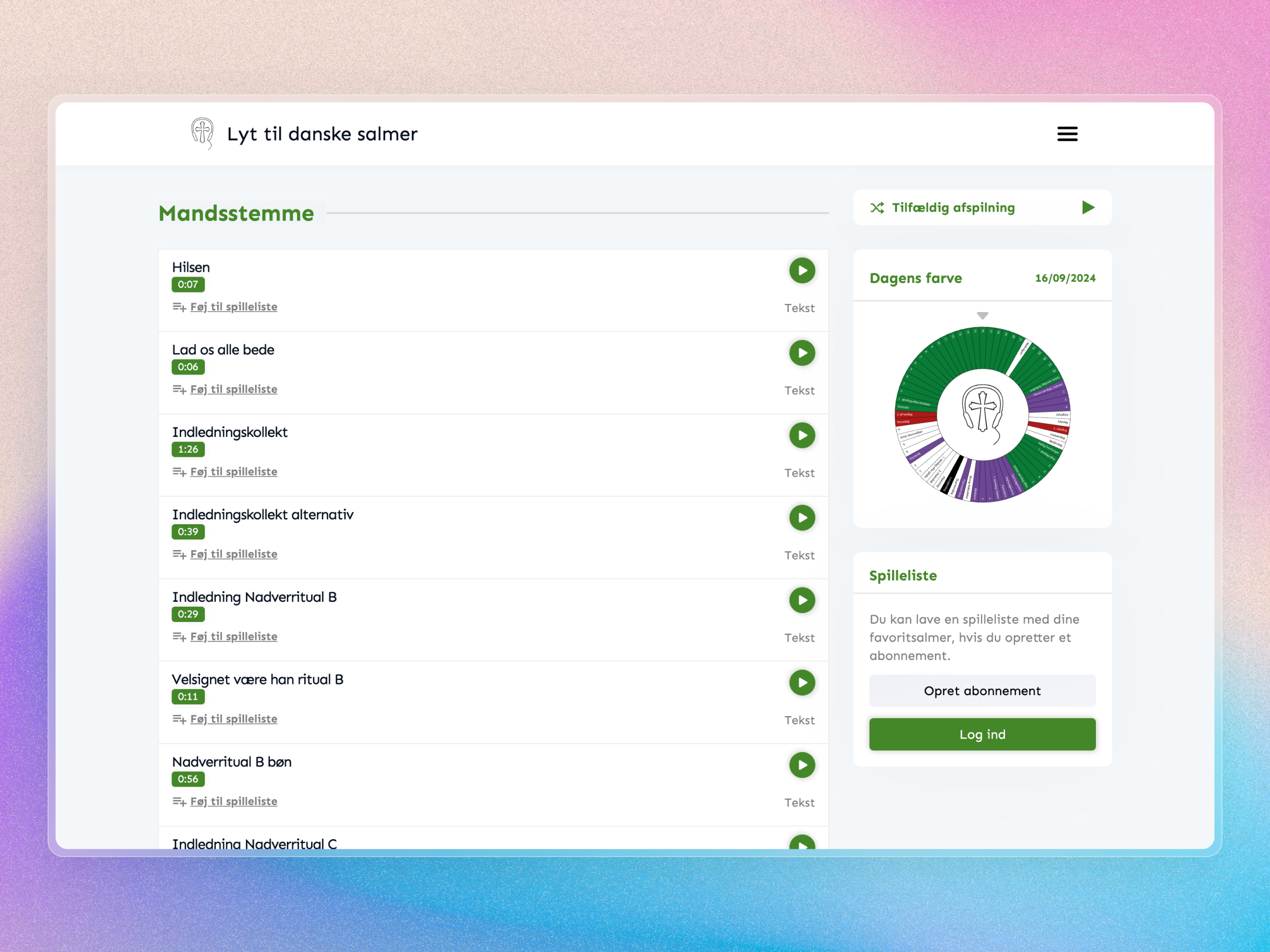
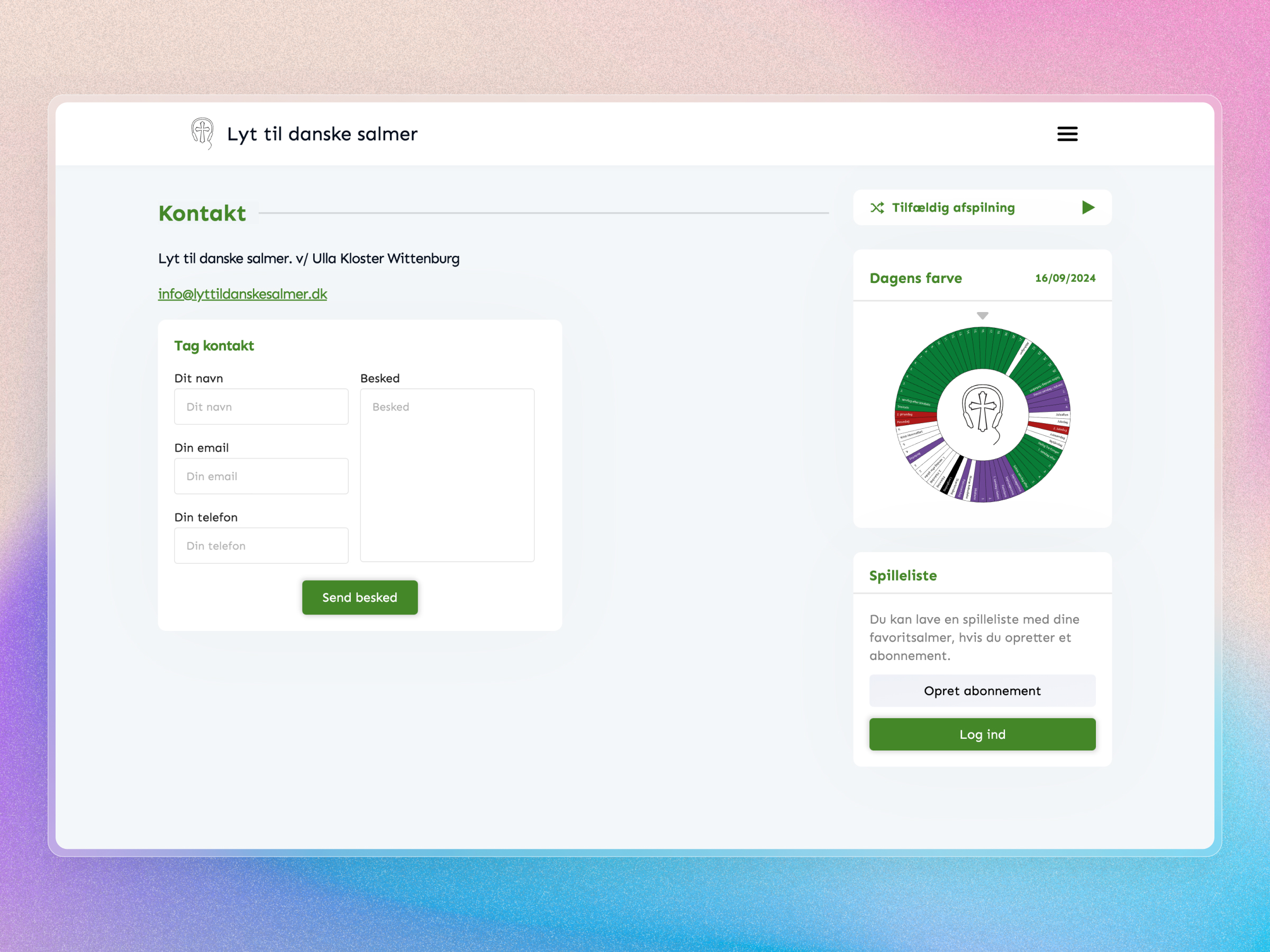
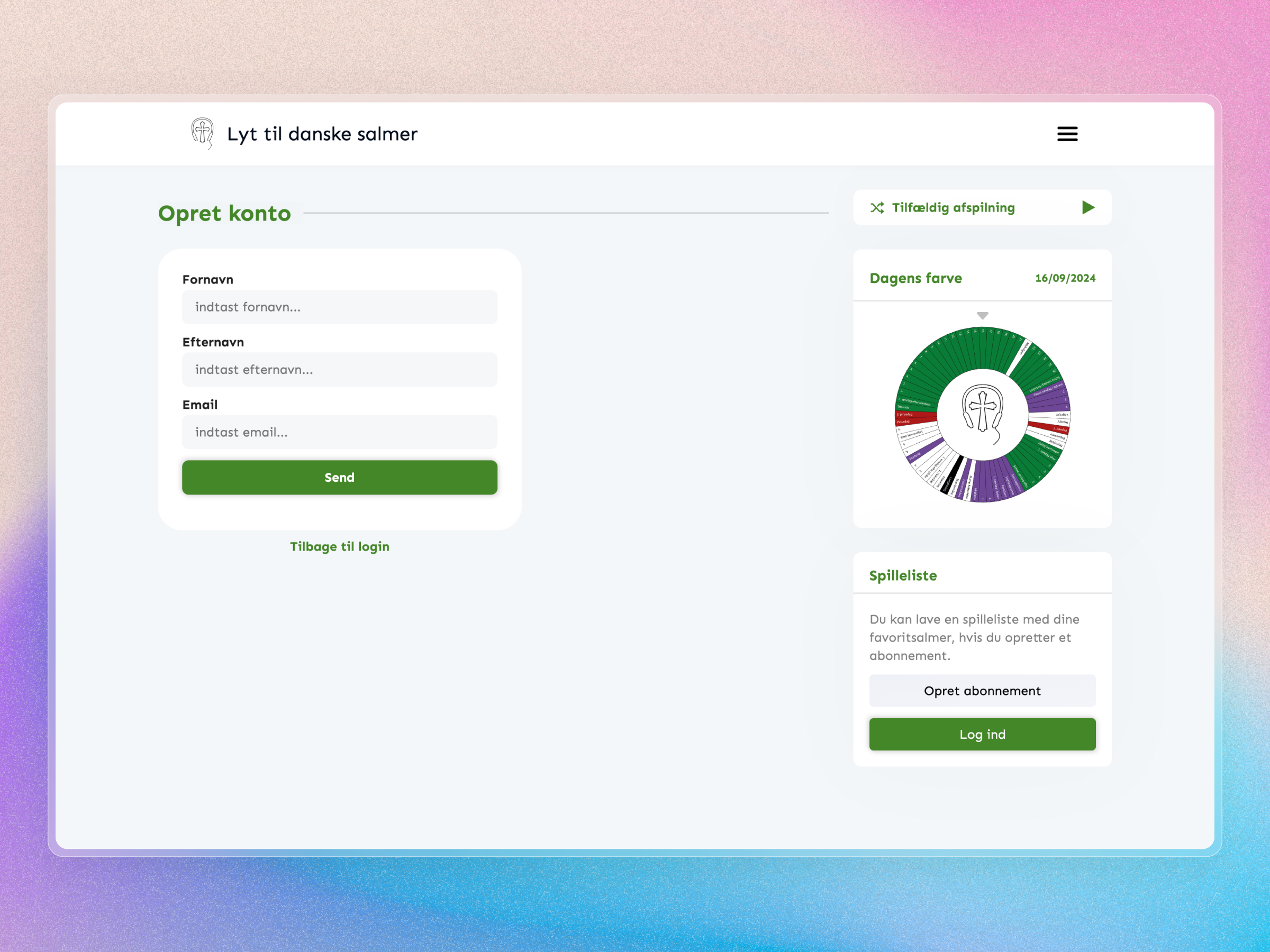
This is the feature that makes the product unlike anything else. The entire interface changes color based on the current liturgical season — automatically, every day of the year, for anyone who opens it. Green for Ordinary Time. Purple for Advent and Lent. White for Christmas and the Easter season. Red for Pentecost and feast days of martyrs. Black on Good Friday.
These colors come from the Liturgical Year Wheel used across Catholic, Lutheran, Anglican, and other Christian traditions to mark the seasons and holy days of the church year. The product knows what season it is and dresses accordingly — so the experience feels alive and connected to something larger than just a streaming app. It was one of the client's core ideas from the beginning, and it required careful implementation: the color system had to be accurate, automatic, and consistent across the complete calendar without manual updates.
Clean Interface for a Wide Audience
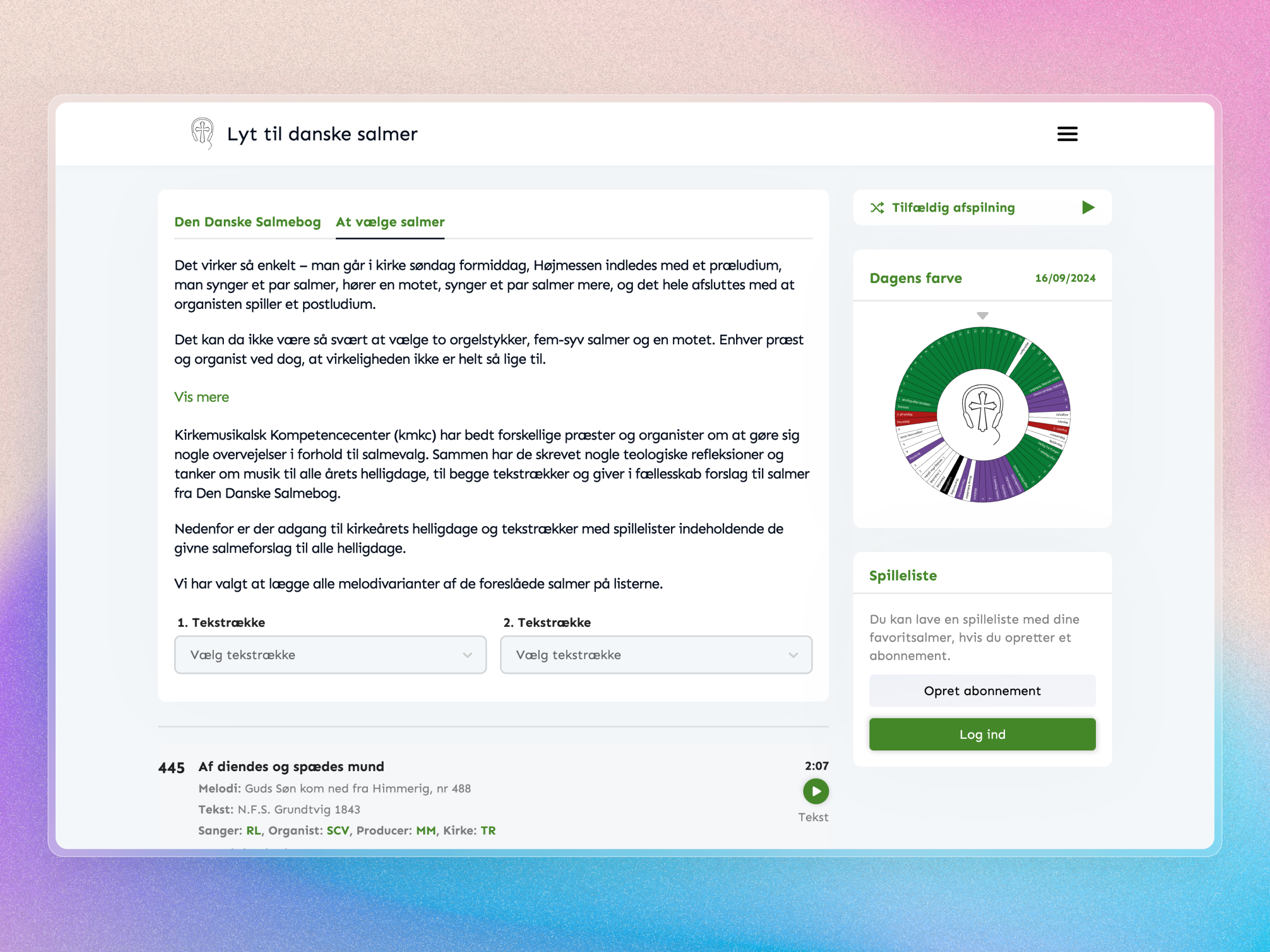
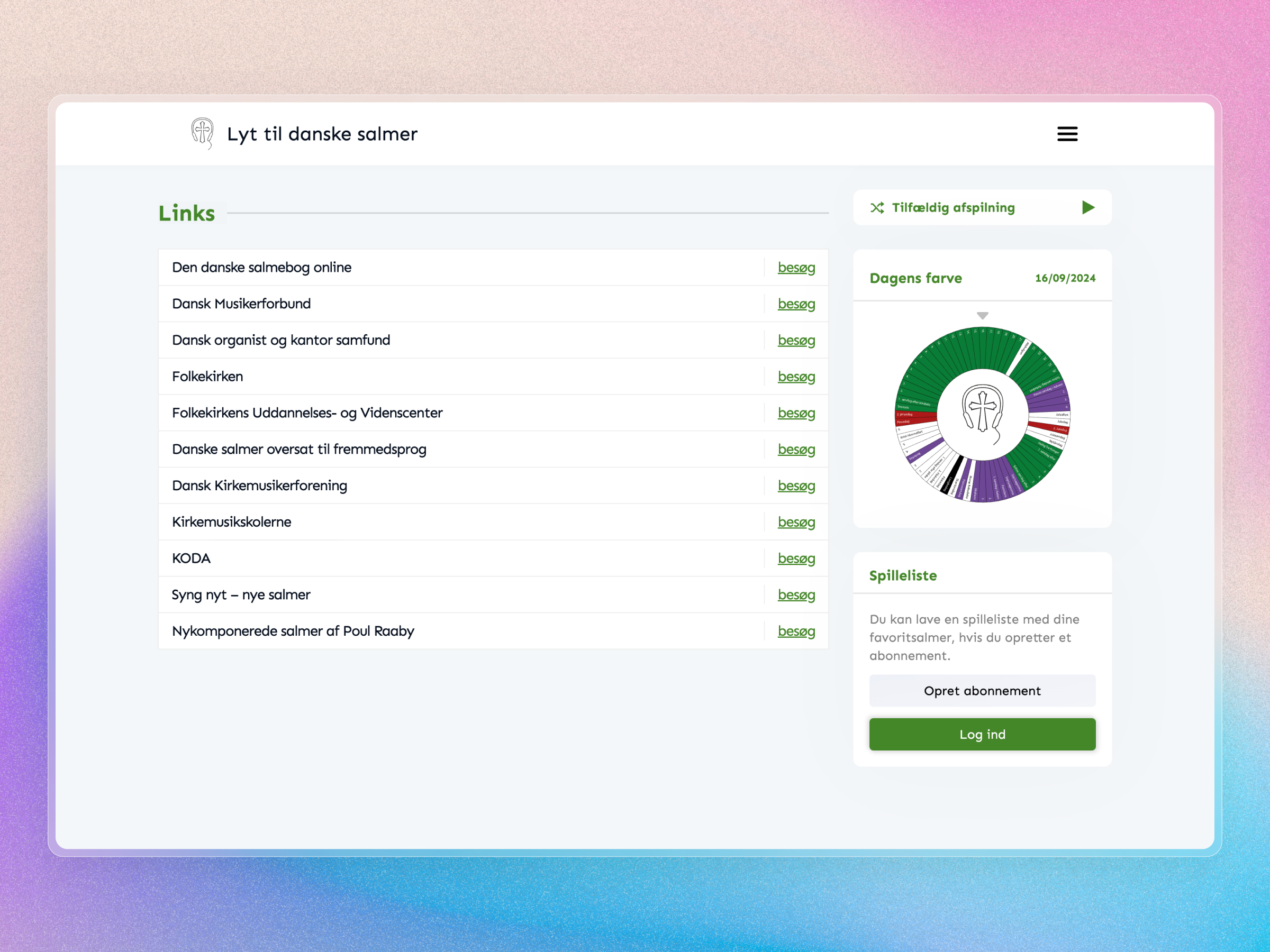
Beyond the seasonal color system, we kept the base UI clean and high-contrast — readable without effort, navigable without instructions. It works for someone in their seventies on a laptop and someone in their twenties on a phone browser. No onboarding needed, no features buried.
What shipped
We delivered the complete web platform in 4 months for $12,000. The client launched it, subscribers started signing up for yearly plans, and the product became the go-to place for Danish hymn streaming. The content was already there — we gave it a proper home.
Part of the broader product
We also built the iOS and Android mobile apps for Lyt til Danske Salmer using React Native — same backend, same subscriptions, same playlists. The web platform and mobile apps were built as a package and launched together.
Frequently Asked Questions
Questions about music streaming platforms,
answered clearly.
Questions about the work, scope, delivery context, and next steps.
Lyt til Danske Salmer — with free access, multiple yearly subscription tiers, playlists, lyrics, search, and the liturgical color system — was delivered for $12,000. That's on the lean end because the scope was tightly defined. More complex streaming platforms with larger libraries, social features, or recommendation engines cost more. Starting focused keeps the budget realistic.
Related Work
Similar case studies,
selected for context.
Continue exploring related work, with comparable product and delivery challenges.